
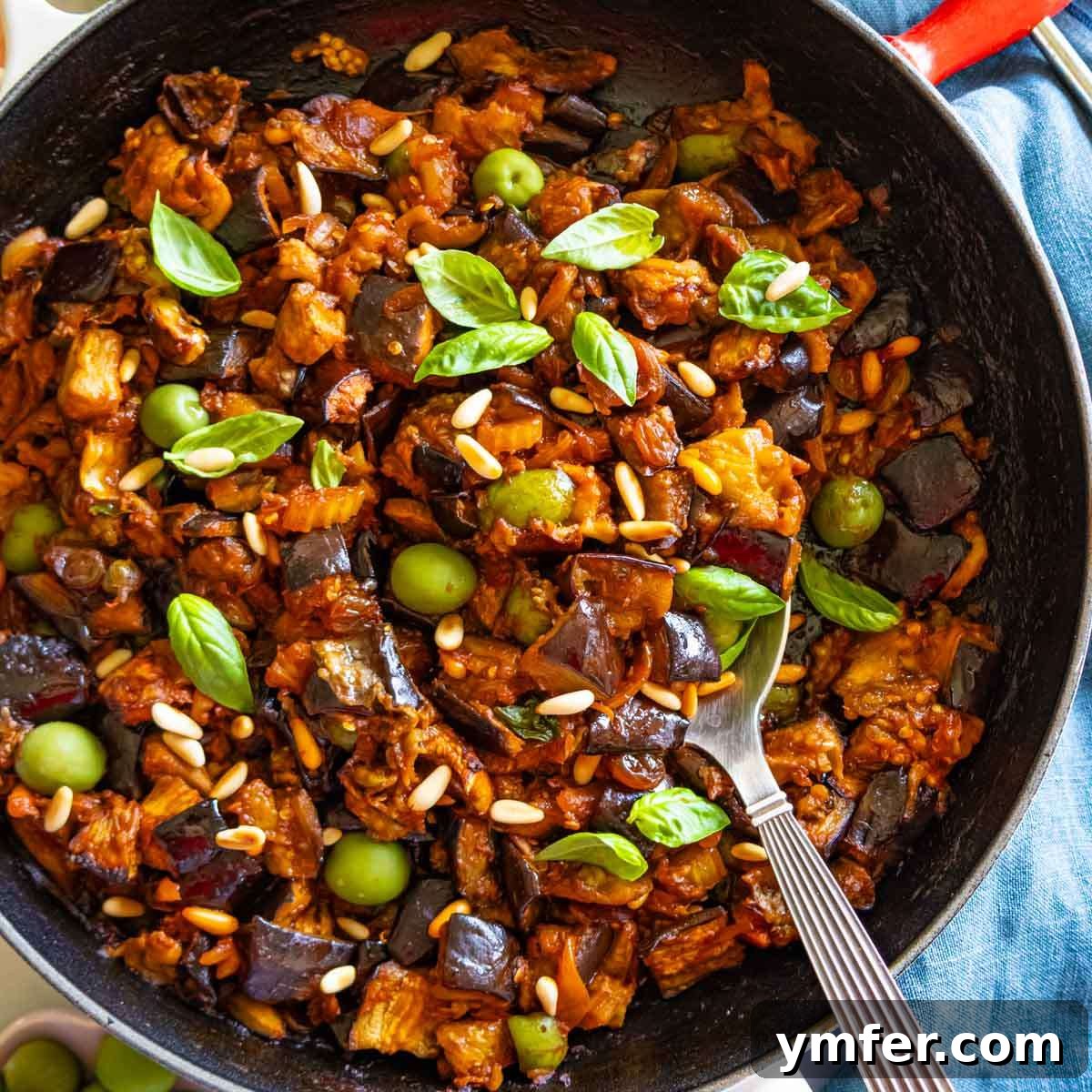
Healthy Eggplant Caponata: A Lighter Taste of Sicilian Tradition
Embark on a culinary journey to Sicily with our healthy **Eggplant Caponata** recipe. This classic Italian dish, reimagined with a lighter touch, is a vibrant celebration of Mediterranean flavors. Bursting with fiber, rich in antioxidants, and exquisitely balanced between sweet, sour, salty, and savory, it offers a truly unforgettable vegetarian experience. Perfect for a summer gathering or a wholesome weeknight meal, this caponata recipe proves that healthy eating never has to compromise on taste.
Seeking more delicious eggplant and summer recipes? Explore our delightful Pasta alla Norma, simple Roasted Eggplant, North African Zaalouk, and comforting Vegan Eggplant Parmigiana.
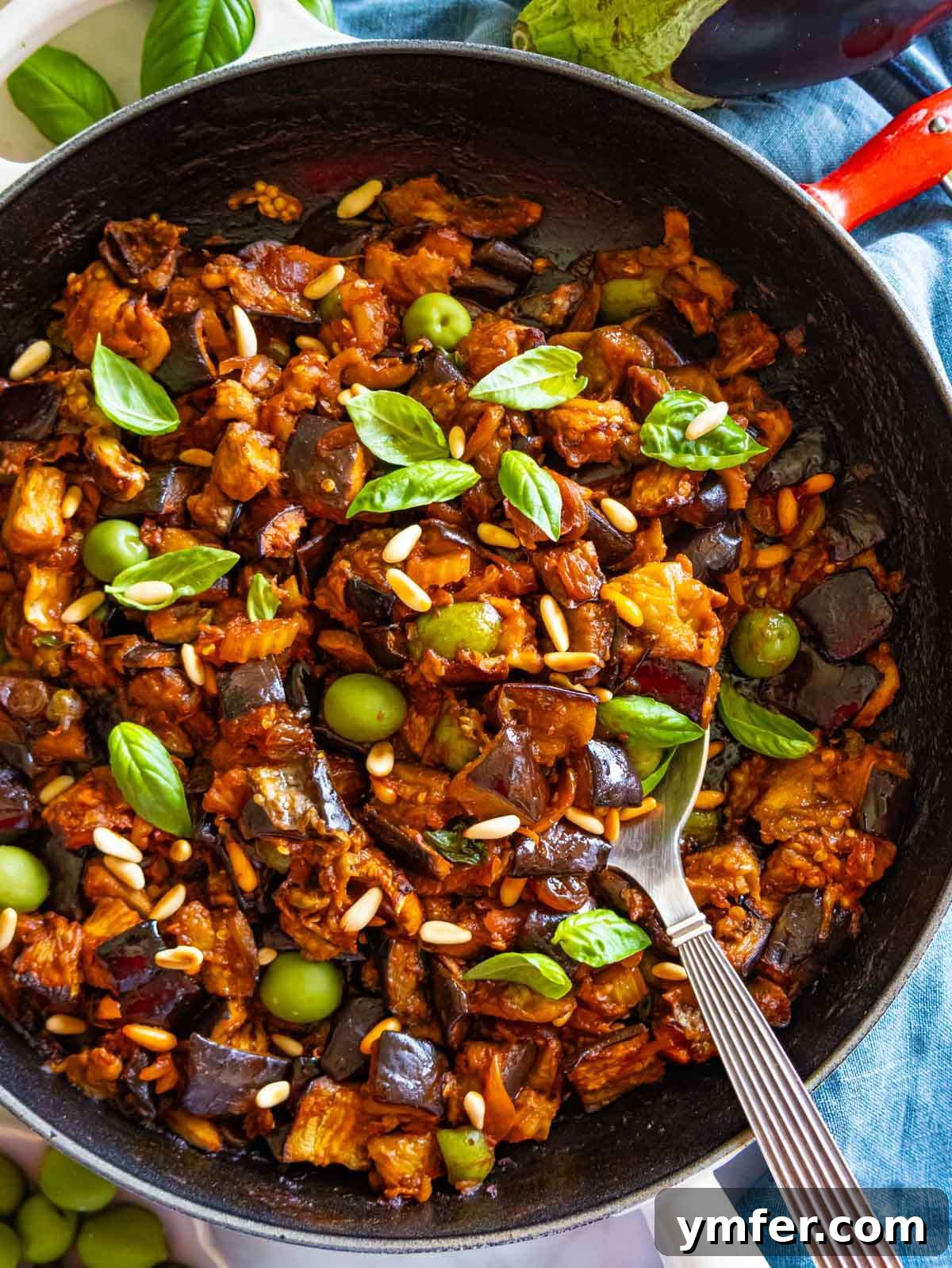
Experience the Authentic Flavors of Sicily, Made Healthier
The enchanting island of Sicily is renowned for its rich culinary heritage, and few dishes capture its essence as perfectly as Caponata. The first time we savored truly authentic caponata was in the charming streets of Ortigia, Sicily. Served on a humble plate at a sun-drenched seaside trattoria, each bite exploded with a complex harmony of flavors: a delicate balance of **sweetness, tartness, saltiness, and umami richness**—known as “agrodolce.” It was a moment that solidified our deep affection for this simple yet sophisticated dish.
Caponata is far more than just an eggplant recipe; it’s a vibrant testament to the principles of the **Mediterranean diet**. It’s abundant with fresh, seasonal vegetables, provides heart-healthy fats, and boasts an incredibly bold, satisfying flavor profile. This dish embodies the joy of eating well, connecting you directly to the culinary soul of southern Italy.
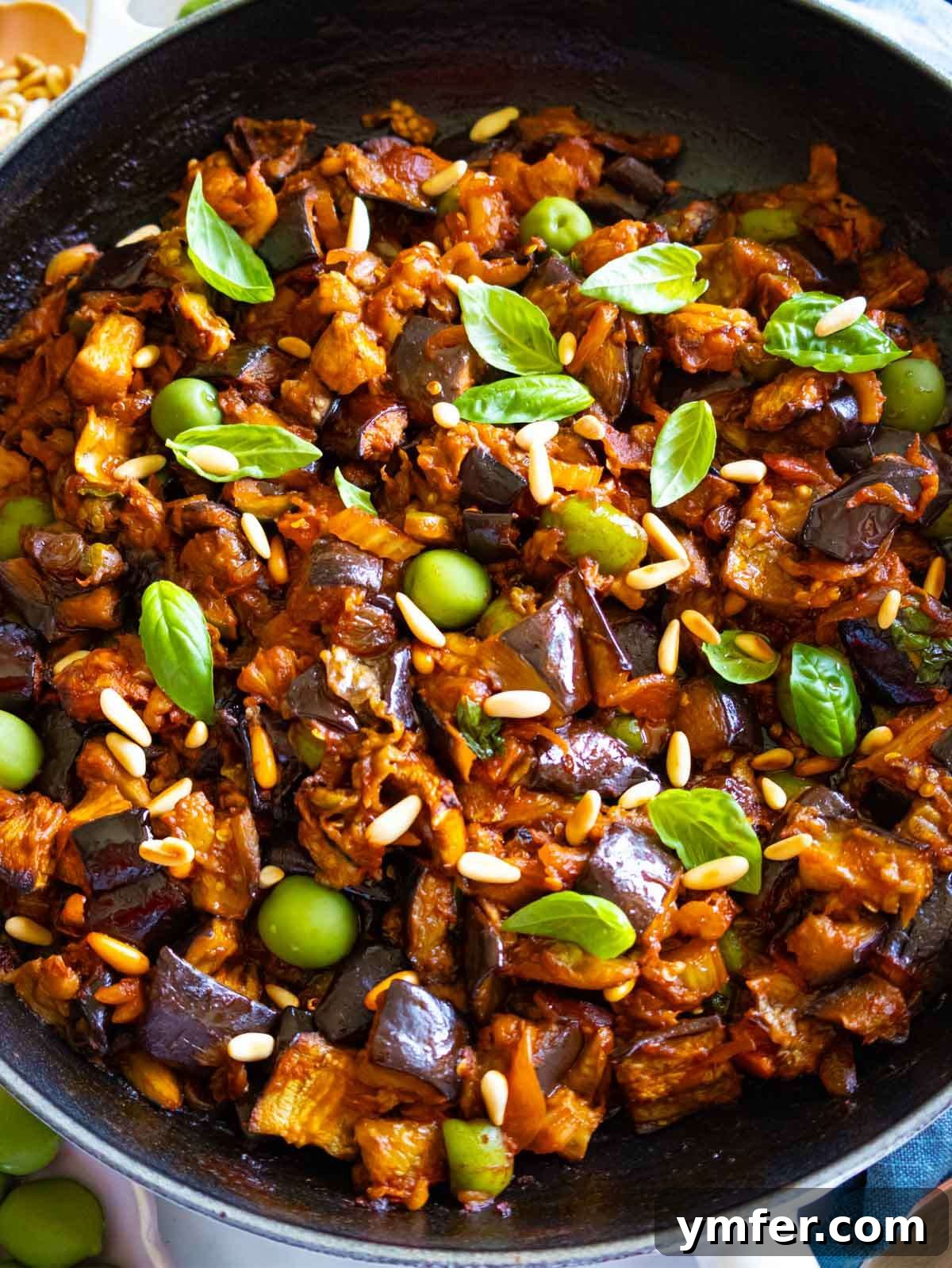
Our rendition of this beloved classic honors its Sicilian roots while introducing a **lighter, healthier methodology**. Traditional caponata often involves deep-frying the eggplant, but we opt for roasting, significantly reducing the oil content and overall calories. By allowing the natural sweetness and texture of the vegetables to shine, we create a **fiber-rich, low-calorie Italian recipe** that’s perfect for anyone seeking to embrace a nutritious lifestyle without compromising on the depth and authenticity of taste. This method not only makes the dish healthier but also simplifies the cooking process and minimizes cleanup.
Crafted with tender eggplant, aromatic onion, crisp celery, and briny olives, this dish is a powerhouse of antioxidants and plant-based goodness. Its versatility is truly remarkable. Serve it as a delightful **healthy summer side dish**, pile generous spoonfuls onto crusty whole-grain toast for a satisfying appetizer, or toss it with protein-packed chickpeas or fluffy couscous to transform it into a robust, **high-protein vegetarian meal**. However you choose to enjoy it, this **comfort food with undeniable benefits** offers a simple, nourishing, and profoundly satisfying experience. It’s a testament to how traditional recipes can be adapted to modern health needs while preserving their timeless appeal.
Key Ingredients for Authentic Caponata
For a precise list of ingredients, exact quantities, and smart substitutions, please refer to the detailed recipe box located at the bottom of this page.
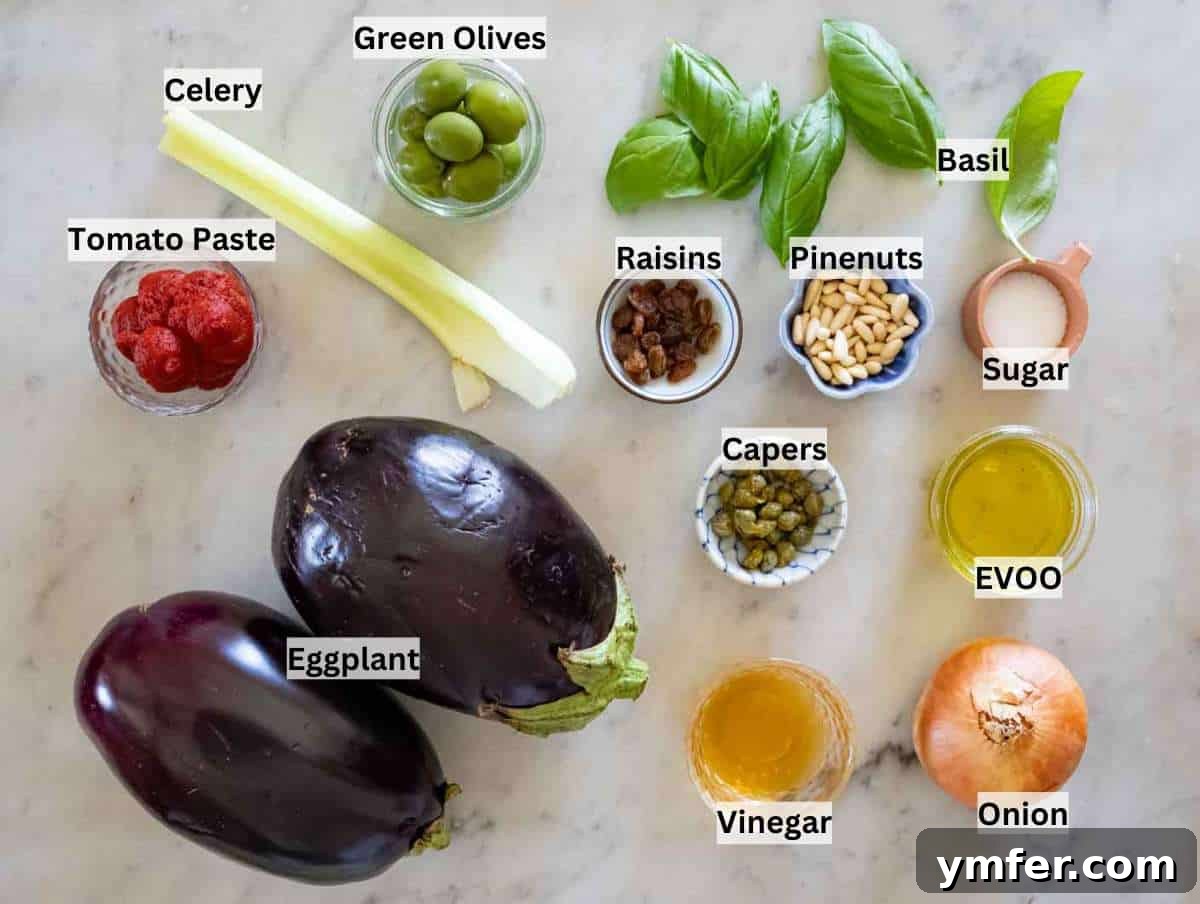
- Eggplant: The undisputed star of caponata. Whether you choose globe, Italian, or striped eggplants, the key is to roast them until golden-brown and tender, ensuring they retain their shape rather than becoming mushy. Achieving those beautifully caramelized edges is crucial for developing the deep, earthy flavor characteristic of the **best Italian eggplant dishes**. Roasting also helps minimize oil absorption compared to frying.
- Celery: This often-underestimated vegetable contributes a vital textural crunch and a delicate, mildly bitter note that beautifully complements the sweetness and acidity in caponata. If celery isn’t available, diced green bell pepper or even tender fennel stalks can provide a similar crisp bite and fresh aroma.
- Onion: Yellow or white onions are ideal for their balanced sweetness when caramelized, forming the aromatic foundation of the sauce. For a slightly softer, sweeter flavor profile, consider using red onion or delicate shallots. Slow cooking the onions is essential for building depth of flavor.
- Tomato Paste: The secret to a robust and concentrated tomato flavor without excess liquid. Double-concentrated tomato paste offers the most intense punch, but regular paste works wonderfully too. In a pinch, you can reduce some crushed tomatoes on the stovetop to achieve a similar thick consistency and rich flavor.
- Olives: They introduce a critical briny, salty element. Mild green olives, such as Castelvetrano, are traditional and provide a buttery texture and subtle fruitiness. For a richer, more intense flavor, Kalamata olives or oil-cured black olives can be fantastic alternatives, adding a deeper Mediterranean essence.
- Capers: While optional, capers are highly recommended for their distinctive salty, piquant burst, which enhances the “agrodolce” profile. If you don’t have capers on hand, a few finely chopped cornichons or a splash of brine from your olive jar can mimic their briny acidity.
- Raisins: These are absolutely essential for achieving the signature **sweet and sour eggplant caponata** balance. They provide natural sweetness and a soft chewiness. If you wish to experiment, try currants, finely diced dried figs, or golden raisins for a slightly different nuance. For those who prefer a purely savory profile, they can be omitted, though the dish will lose some of its classic character.
- Pine Nuts: Toasted pine nuts add a delightful richness, a subtle nutty flavor, and a satisfying crunch that contrasts beautifully with the soft vegetables. For a nut-free version or an alternative, slivered almonds or even toasted sunflower seeds can provide a similar textural element, making it versatile for various **vegetarian Italian recipes**.
- Vinegar: White wine vinegar is the traditional choice, lending a crisp, bright acidity. However, red wine vinegar can add a deeper, more robust tang, while a high-quality balsamic vinegar offers a rich, slightly sweeter complexity. Apple cider vinegar can be used as a serviceable substitute if other options are unavailable.
- Sugar: Crucial for balancing the acidity of the vinegar and tomatoes, creating the harmonious “agrodolce” flavor. Classic white granulated sugar is standard, but natural sweeteners like honey or maple syrup can also be used, slightly altering the overall taste of this **sweet and sour eggplant** preparation.
- Extra Virgin Olive Oil: This is a cornerstone of Mediterranean cuisine and indispensable for caponata. Use the highest quality extra virgin olive oil you can find, as its fruity, peppery notes will significantly impact the final flavor. There is truly no adequate replacement for its distinctive character.
- Fresh Basil: Added at the very end, fresh basil provides a burst of vibrant, aromatic freshness that brightens the entire dish. Its sweet, peppery notes are classic in Italian cuisine. If fresh basil is not available, flat-leaf parsley offers a clean, herbaceous alternative, or a touch of fresh mint can add an unexpected, refreshing twist.
Crafting Your Caponata: A Step-by-Step Guide
1. Perfectly Roast the Eggplant for Maximum Flavor
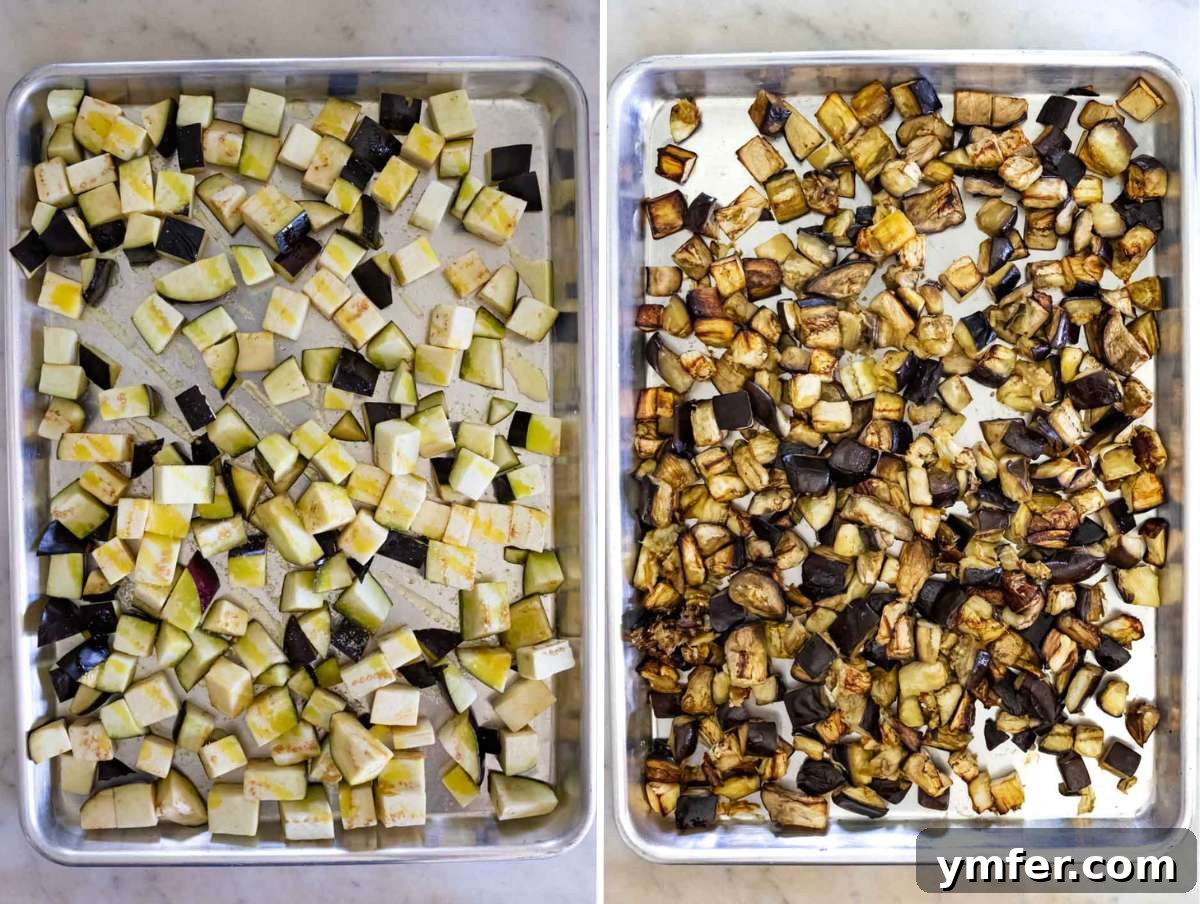
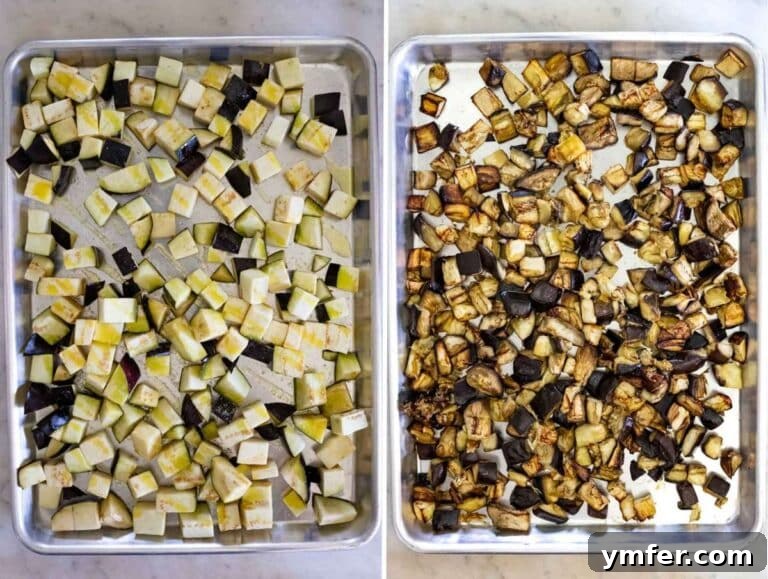
Begin by preheating your oven to a robust 400°F (200°C). Cut your eggplant into uniform, bite-sized chunks, ensuring they are not too small to maintain texture. Spread them evenly across a large baking tray. If your tray is overcrowded, use two to ensure proper roasting rather than steaming. Drizzle generously with high-quality olive oil and season with a sprinkle of salt. Roast for 30–35 minutes, or until the eggplant pieces are beautifully golden brown, deeply caramelized at the edges, and fork-tender. This roasting method is key to developing a firm, flavorful texture that truly shines in this **sweet and sour eggplant** dish, avoiding the greasiness of frying.
Expert Tip: For an even quicker approach, an air fryer works wonderfully! Cook the eggplant in batches, shaking the basket halfway through to ensure even browning and crispness.
2. Blanch the Celery (A Key Optional Step for Refined Taste)
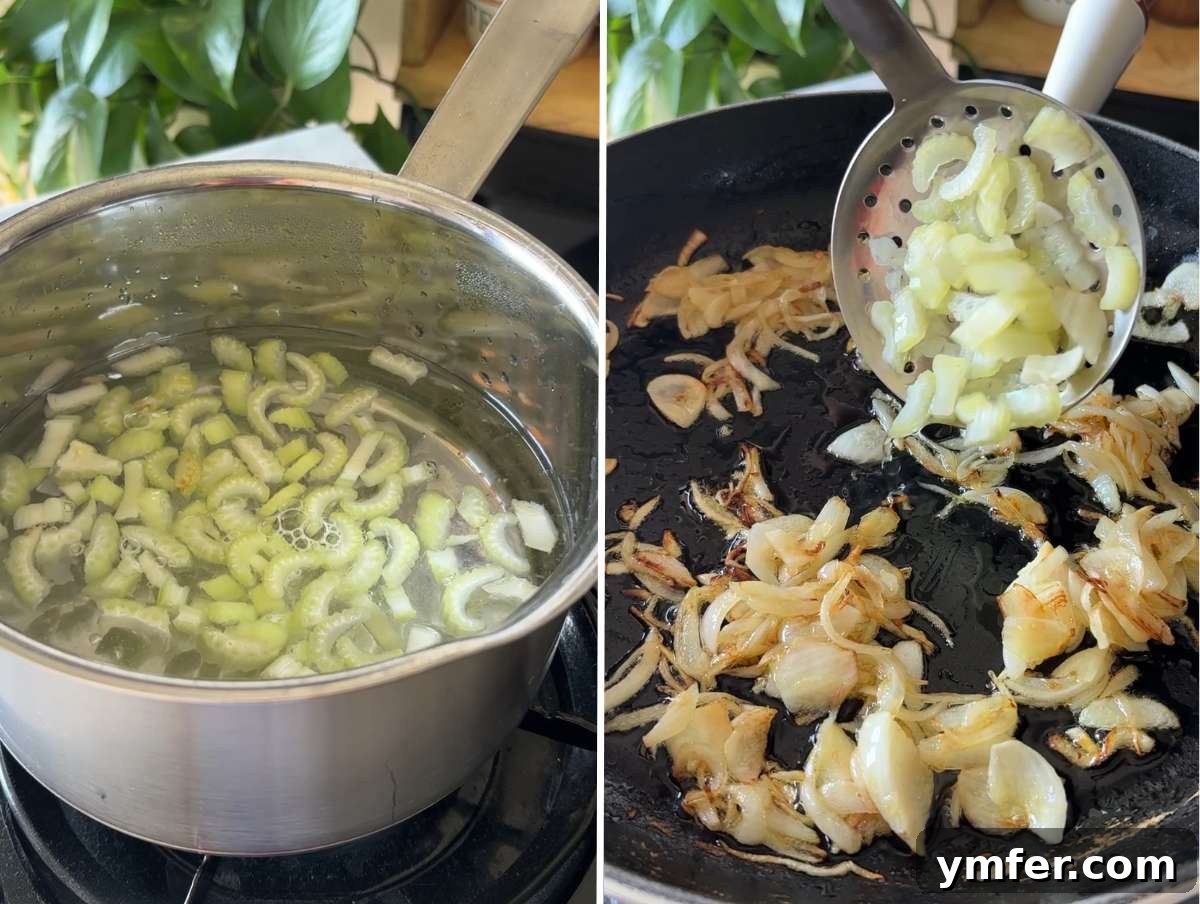
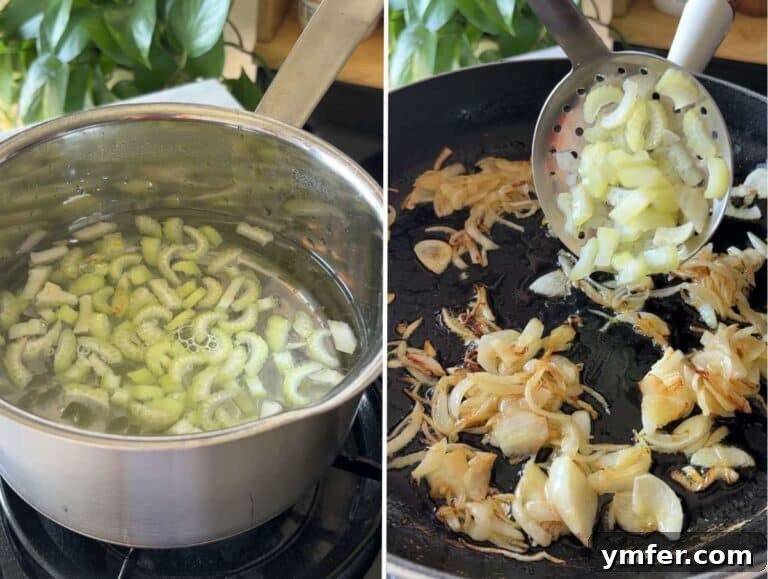
To enhance the celery’s texture and mellow its inherent bitterness, we recommend a quick blanching step. Trim and peel the celery stalks to remove any tough, stringy bits, then chop them into small pieces. Bring a small pot of water to a rolling boil and add a generous splash of vinegar. Add the chopped celery and blanch for just 2–3 minutes, until it’s slightly softened but still retains a pleasant bite. Drain thoroughly and set aside. This small but significant step imparts a gentle tang and ensures the celery integrates harmoniously into the caponata’s complex flavor profile.
3. Gently Caramelize the Onions for a Sweet Base
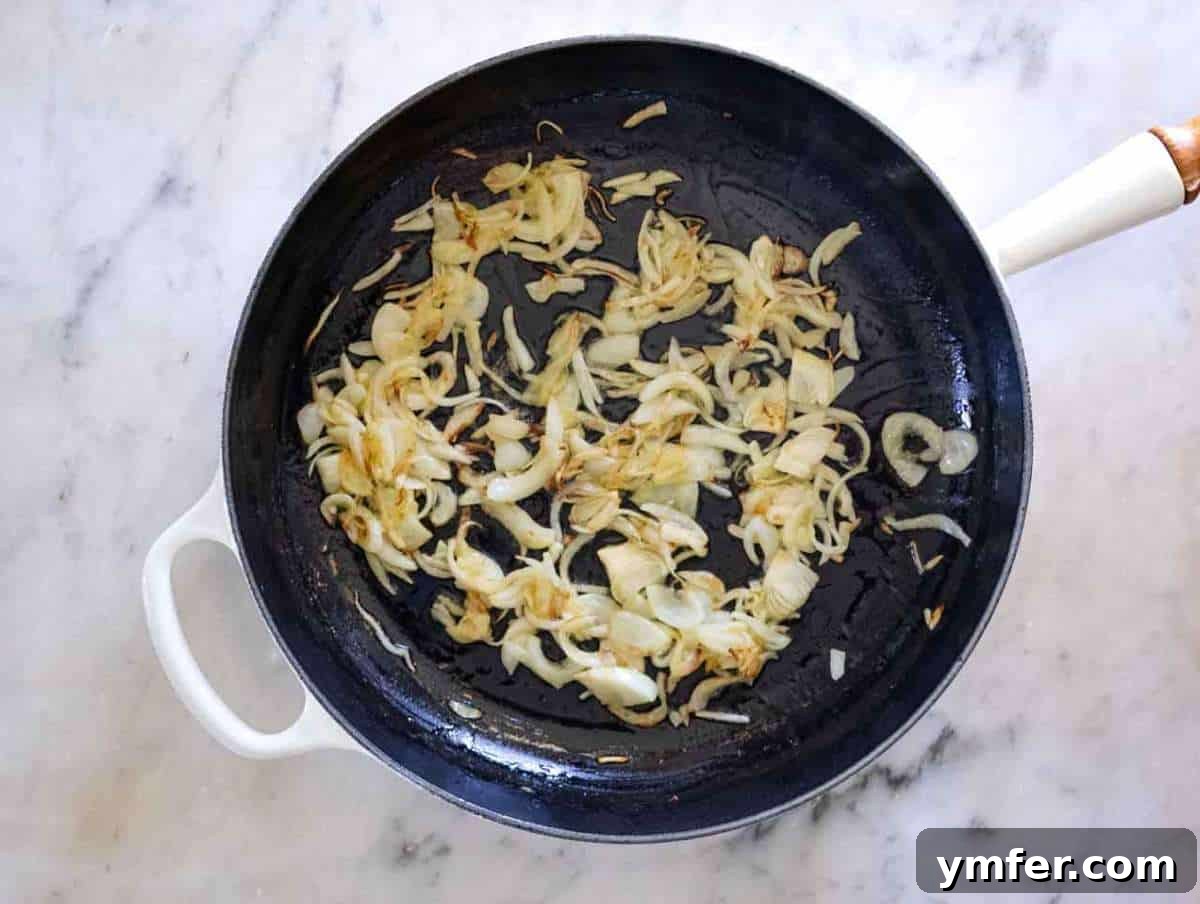
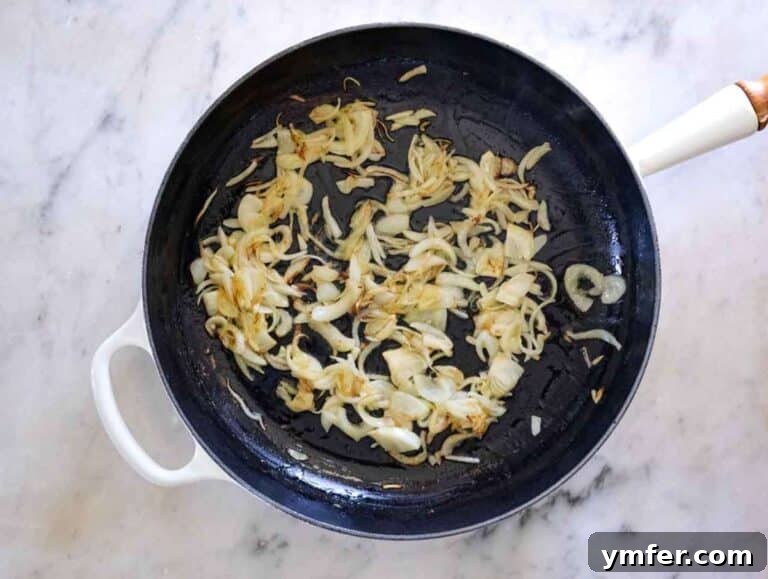
While your eggplant is roasting, begin preparing the sauce. Thinly slice the onion and cook it in a generous amount of olive oil over medium heat in a large pan or skillet. Stir frequently, allowing the onions to gently soften and caramelize until they become translucent, golden, and wonderfully tender. This process usually takes about 10–15 minutes. If the onions start to stick to the pan, simply add a splash of water or vegetable broth to deglaze and prevent burning. The natural sweetness developed during this slow caramelization forms a crucial flavor base for the entire dish, providing a rich, savory depth that balances the other strong flavors.
4. Craft the Iconic Sweet and Sour Sauce
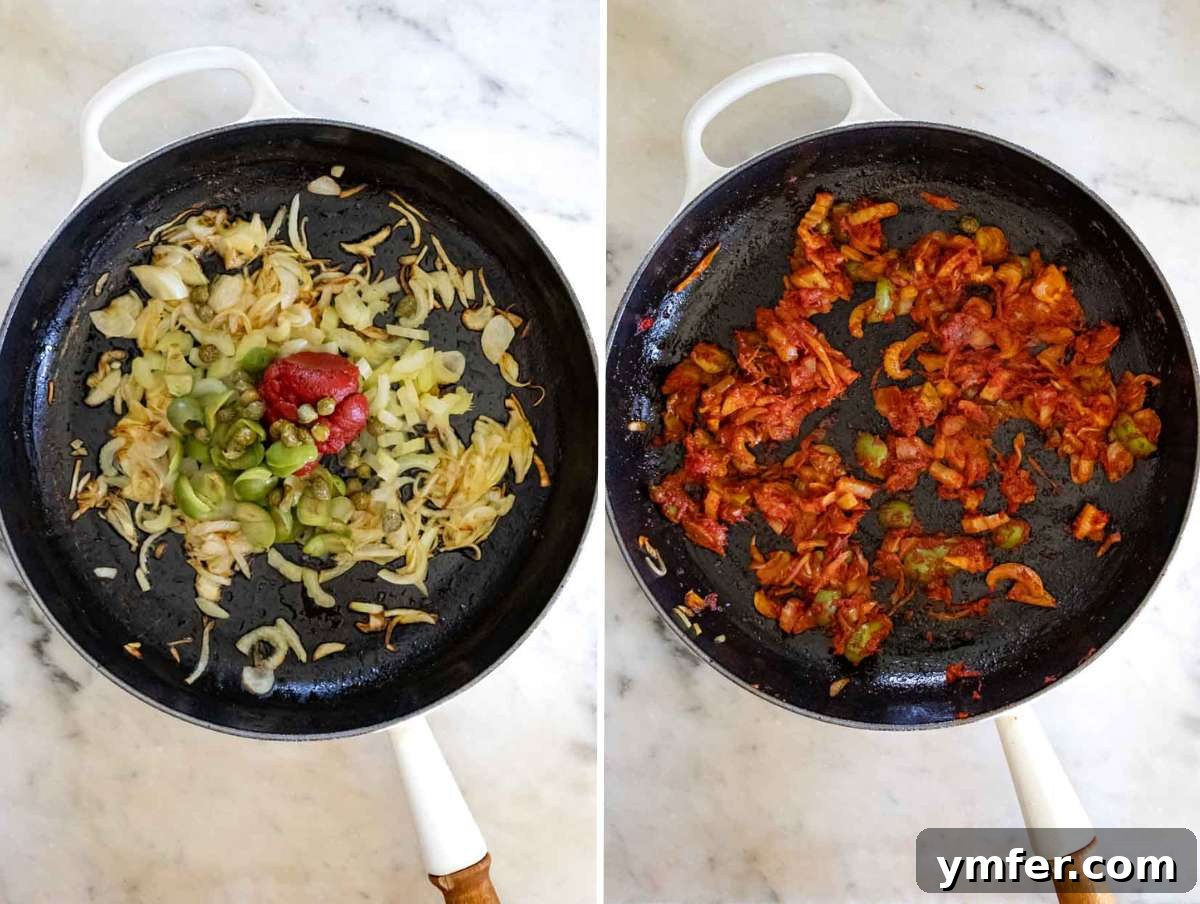
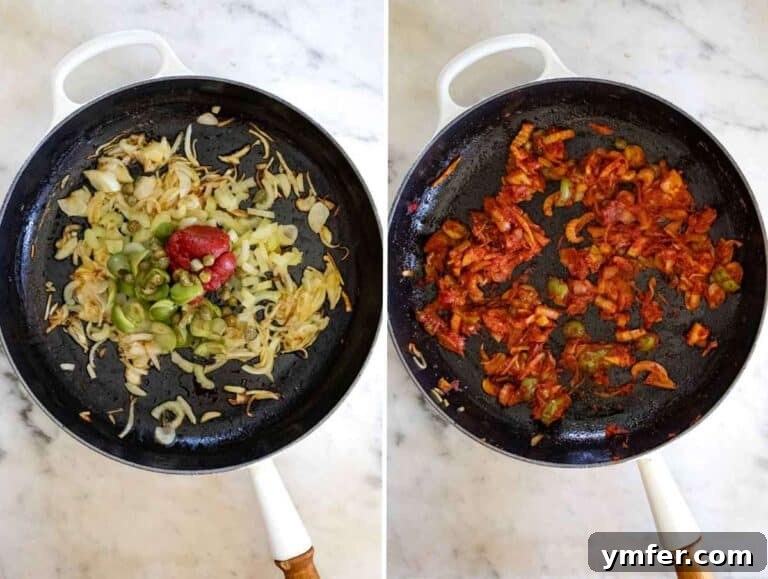
To the softened, caramelized onions, add the blanched celery, concentrated tomato paste, pungent capers, and finely chopped olives. Stir all these ingredients together and let them cook gently for 2–3 minutes, allowing their flavors to meld. Next, introduce the raisins, white wine vinegar, and sugar. Stir everything thoroughly to combine. Increase the heat to medium-high and bring the mixture to a simmer. Allow it to cook, stirring occasionally, until the sauce visibly thickens and develops a beautiful, glossy sheen. This precise combination and cooking process is what creates caponata’s signature “agrodolce” flavor profile – a perfect, unforgettable balance of sweet, sour, salty, and rich umami notes that defines this Sicilian masterpiece.
5. Toast the Pine Nuts for Added Crunch and Aroma
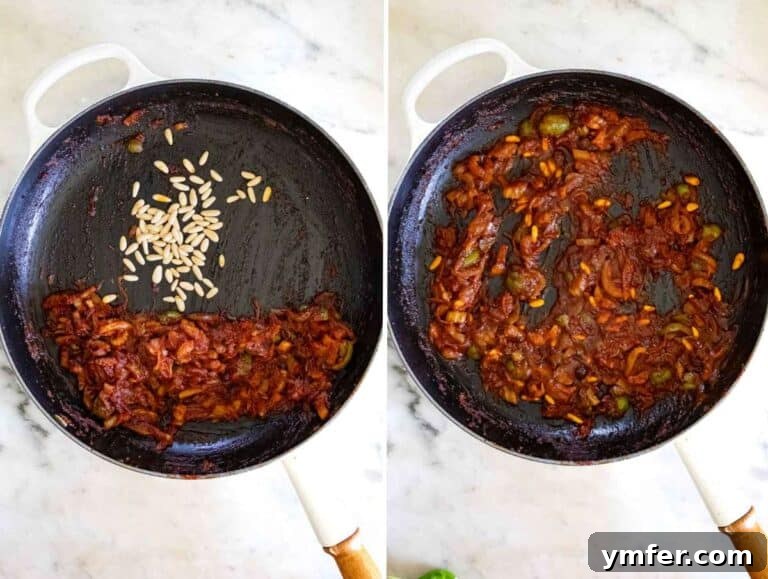
For an extra layer of flavor and delightful texture, quickly toast the pine nuts. Gently push the simmering sauce to one side of your pan, creating a clear space on the other. Add the pine nuts to this dry area. Toast them for just 1–2 minutes, stirring constantly, until they turn a light golden color and become fragrant. Be careful not to burn them, as they can go from toasted to burnt very quickly. Once toasted, mix them thoroughly into the sauce, integrating their subtle nutty flavor and pleasant crunch.
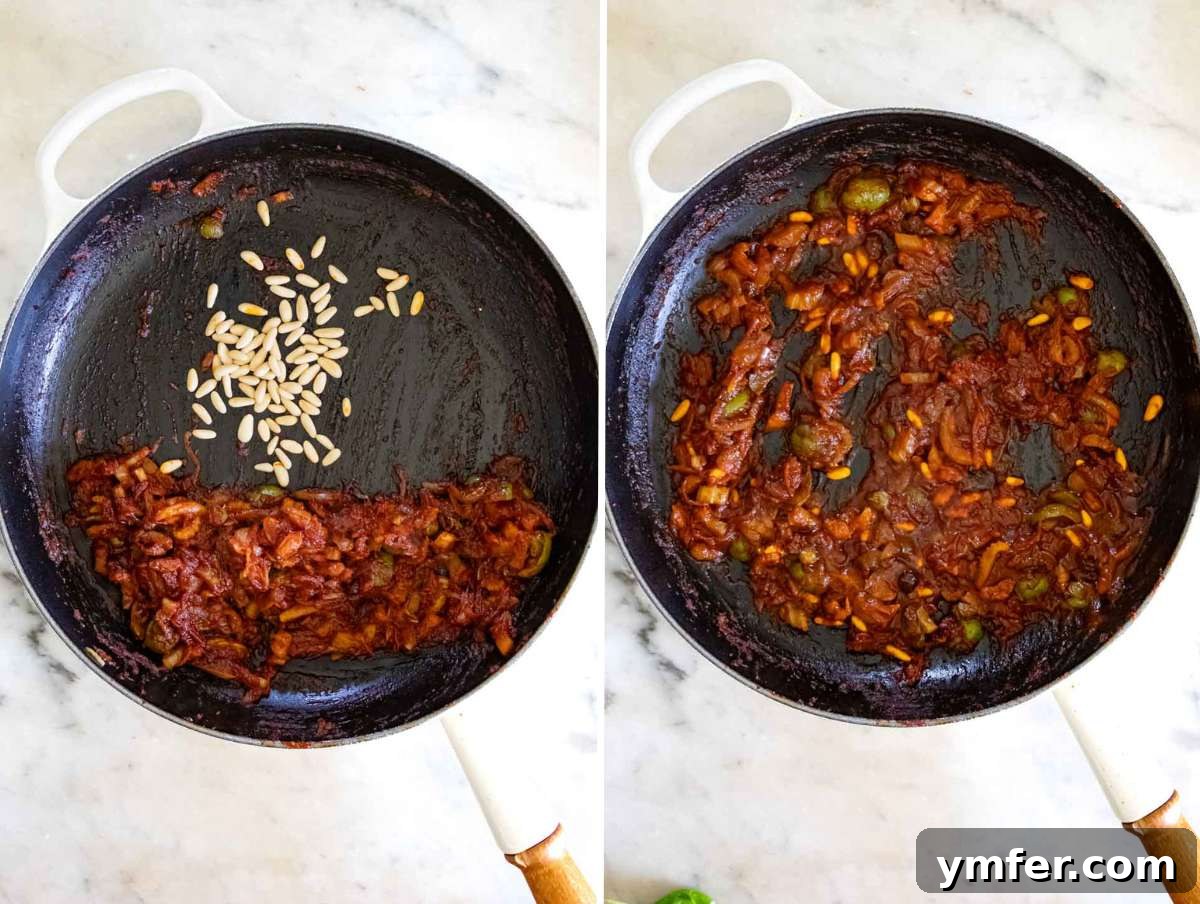
6. Combine, Rest, and Serve Your Exquisite Caponata
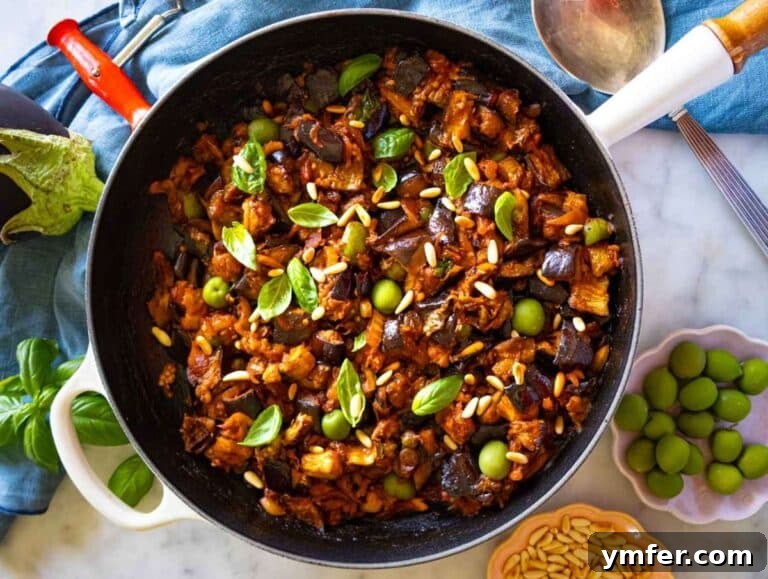
Finally, gently fold the beautifully roasted eggplant chunks into the rich, sweet and sour sauce. Stir carefully to ensure all the eggplant is thoroughly coated. Let the mixture cook together for an additional 5 minutes over low heat, allowing the flavors to fully meld. Then, turn off the heat. Caponata is a dish that truly benefits from patience; it tastes exponentially better as it rests. Allow it to cool for at least 2 hours at room temperature, or, even better, prepare it a day in advance and store it overnight in the refrigerator. Just before serving, tear in a generous handful of fresh basil leaves, which will add a vibrant, aromatic finish and bright color.
This versatile dish can be enjoyed warm, at room temperature, or even chilled. Serve it classically with thick slices of toasted crusty bread for dipping, alongside your favorite plant-based mains as an elegant side, or get creative by tossing it with pasta or couscous for a hearty and flavorful meal. Its complex flavors make it a delightful addition to any table, in any season.
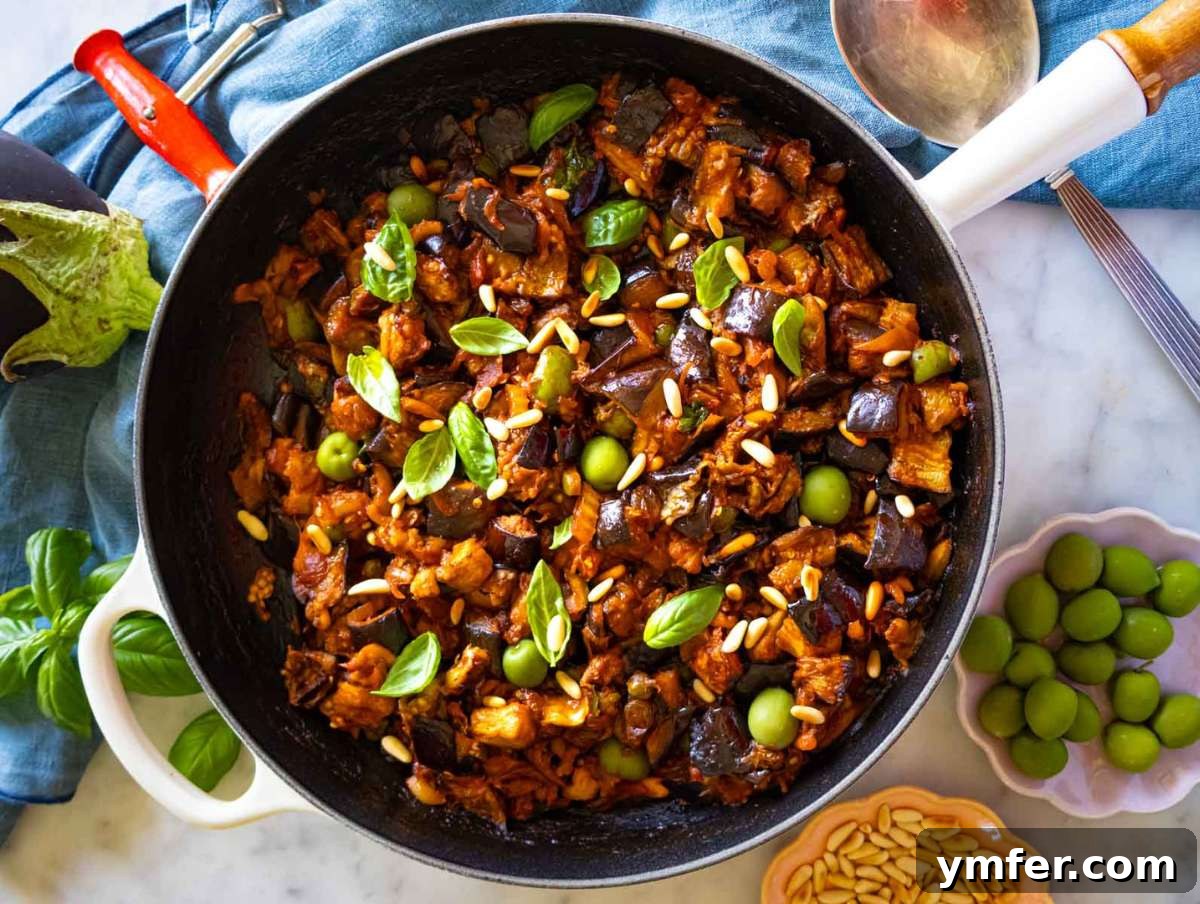
Essential Tips for the Perfect Caponata
- Maximize Roasting Surface: To achieve beautifully golden, tender, and non-soggy eggplant, ensure you spread the pieces in a single layer on a wide baking tray. Overcrowding will cause the eggplant to steam rather than roast, preventing the development of those crucial caramelized edges essential in the **best eggplant recipes**. Use two trays if necessary.
- Embrace Roasting, Skip Frying: While traditional methods might call for frying, roasting the eggplant is a significantly healthier approach. It uses less oil, creates less mess, and still delivers incredibly deep, concentrated flavors and a wonderful texture without the heavy, oily feel of deep-fried versions.
- Master the Onion Caramelization: Don’t rush the onions! Slowly cooking them until they are deeply golden and tender allows their natural sugars to caramelize, building a foundational depth and sweetness that perfectly balances the tartness of the vinegar and tomato in the sauce. This step is crucial for complex flavor.
- Don’t Skip Blanching the Celery: A quick blanch with a splash of vinegar is a game-changer. It softens the celery’s texture, removes any harsh bitterness, and ensures it integrates smoothly into the caponata’s harmonious flavor profile, preventing any raw, stringy elements.
- Taste and Adjust: Caponata’s “agrodolce” balance is personal and can vary based on the acidity of your vinegar and tomatoes. Continuously taste the sauce as you go and adjust with a little more sugar for sweetness or vinegar for tang until you hit your perfect equilibrium. This responsiveness is key to a truly **classic caponata recipe**.
- Patience is a Virtue – Let It Rest: Caponata is not a dish to be eaten immediately after cooking. Its flavors deepen and meld beautifully with time. It tastes significantly better after a few hours of resting at room temperature, and even more exquisite the next day once chilled in the refrigerator.
- Add Fresh Basil Last: Always tear and add fresh basil leaves just before serving or once the caponata has cooled down. The heat can quickly dull basil’s vibrant color and delicate aroma, so adding it at the end preserves its fresh, herbaceous lift.
- Personalize Your Caponata: Sicilian families often have their own unique twists. Feel free to make this recipe your own by adding ingredients like diced bell peppers, toasted almonds, or a different variety of capers. The beauty of caponata lies in its adaptability.
- Versatile Serving Suggestions: Wondering **how to serve caponata**? It’s incredibly versatile! Enjoy it as a light lunch with crusty bread, toss it with hot pasta for a quick meal, incorporate it into a wholesome grain bowl, or serve it chilled as a refreshing and elegant summer side dish.
Frequently Asked Questions About Caponata
Traditionally, caponata is best enjoyed at room temperature or chilled. Allowing it to rest for at least a few hours, or ideally overnight, gives the sweet, sour, and savory flavors ample time to fully meld and deepen. This waiting period is crucial for achieving its signature harmonious taste, making it even more delicious the next day.
Absolutely! Caponata is an excellent make-ahead dish, perfect for meal prepping or entertaining. Its flavors actually improve with time, making it a fantastic option to prepare a day or two in advance. Store it in an airtight container in the refrigerator, where it will keep beautifully for up to 5 days, continually developing richer flavors.
The distinction between **caponata vs ratatouille** lies primarily in their origin and flavor profiles. Both are delightful Mediterranean vegetable stews, but caponata is a proud Sicilian creation characterized by its unique “agrodolce” (sweet-and-sour) taste, achieved through the generous use of vinegar and sugar, alongside eggplant, celery, olives, and capers. Ratatouille, on the other hand, is a classic French Provençal dish, more herb-forward and typically made with zucchini, bell peppers, tomatoes, and various herbs cooked in olive oil, without the pronounced sweet and sour notes. While similar in their vegetable base, their distinct regional seasonings set them apart.
While you technically can, omitting raisins or sugar will significantly alter the dish’s character. These ingredients are fundamental to caponata’s signature sweet-sour “agrodolce” balance, which is what makes it unique. We recommend at least reducing the amounts rather than leaving them out entirely to preserve some of that classic flavor profile. Experiment to find your preferred balance!
Yes, caponata freezes exceptionally well! Once cooked, allow it to cool completely to room temperature. Transfer it to a freezer-safe, airtight container and freeze for up to 2 months. When you’re ready to enjoy it, thaw the caponata overnight in the refrigerator before serving. Its texture and flavor hold up wonderfully after freezing.
Certainly. Pine nuts are primarily added for their delightful texture and subtle nutty flavor. If you prefer to omit them due to allergies or preference, the caponata will still be delicious. Alternatively, you can swap them for toasted sunflower seeds or slivered almonds to maintain that satisfying crunch without pine nuts.
More Easy and Delicious Summer Recipes
- Zucchini fritters
- Greek pasta salad
- Stuffed zucchini
- Stuffed eggplant
- Creamy pasta salad
- Panzanella (Italian bread salad)
- Vegetarian stuffed bell peppers
- Rice salad
- Lentil salad
If you tried this Eggplant Caponata recipe or any other recipe on our blog, we would love to hear from you! Please leave a 🌟 star rating and share your thoughts in the comments below. Your feedback helps us grow and inspires others!

Eggplant Caponata (Healthier)
Share
Ingredients
- 3 medium eggplants (about 3¼ lbs / 1.5 kg), cut into dice
- 1 rib celery (about 2½ oz / 70 g), trimmed and peeled
- 1 large yellow onion (about 5 oz / 150 g), thinly sliced
- 3 tablespoons tomato paste (double concentrate if you can find it)
- 2 tablespoons extra virgin olive oil plus more for roasting eggplant
- 2 tablespoons white wine vinegar plus a splash for blanching celery
- 1 tablespoon capers
- 1 tablespoon sugar
- 1 tablespoon raisins
- 3 tablespoons green olives pitted and roughly chopped
- 1 tablespoon pine nuts sub almonds
- 1 handful basil leaves
- ¾ teaspoon salt or more to taste
Instructions
-
Roast the Eggplant: Cut 3 medium eggplants into chunks, toss with olive oil and salt, and roast at 400°F (200°C) for 30–35 minutes until golden and tender. Air fryer works too — shake halfway through.

-
Blanch the Celery (Optional): Peel and chop 1 rib celery, then boil in water with a splash of vinegar for 2–3 minutes. Drain and set aside.
-
Cook the Onions: Slice 1 large yellow onion and sauté in 2 tablespoons extra virgin olive oil over medium heat until soft and golden, about 10–15 minutes. Add a splash of water if needed.
-
Make the Sauce: Add celery, 3 tablespoons tomato paste, 1 tablespoon capers, and 3 tablespoons green olives to the onions. Cook for 2–3 minutes, then stir in 1 tablespoon raisins, 2 tablespoons white wine vinegar, and 1 tablespoon sugar. Simmer until thick and glossy.
-
Toast the Pine Nuts: Push sauce to one side of the pan and toast 1 tablespoon pine nuts on the other for 1–2 minutes. Mix everything together.
-
Combine and Rest: Add roasted eggplant, cook 5 more minutes, then turn off the heat. Let cool for at least 2 hours (or overnight). Finish with 1 handful basil leaves.
Serve warm, cold, or at room temp — on toast, with pasta, couscous, or as a flavorful side.
Notes
- Eggplant: Globe, Italian, or striped all work — roast until golden and tender.
- Celery: Adds crunch. Swap with fennel stalks or green bell pepper.
- Onion: Yellow or white are best. Red onion or shallots = sweeter flavor.
- Tomato Paste: Double concentrate is ideal. Crushed tomatoes work in a pinch.
- Olives: Castelvetrano for mild flavor, or Kalamata for bold.
- Capers: Optional. Sub with chopped pickles or olive brine.
- Raisins: Key to sweet-sour flavor. Try currants or dried figs — or skip.
- Pine Nuts: Toasted is best. Sub almonds or sunflower seeds for nut-free.
- Vinegar: White wine is classic. Red wine, balsamic, or apple cider work too.
- Sugar: White sugar balances the acid. Honey or maple syrup work too.
- Olive Oil: Use high-quality extra virgin — it makes a difference.
- Fresh Basil: Tear in at the end. Sub parsley or mint if needed.
TIPS
- Use big trays: Spread eggplant out so it roasts, not steams.
- Roast, don’t fry: Easier, lighter, and still full of flavor.
- Slow-cook the onions: Caramelized onions = sweet, rich base.
- Blanch the celery: Softens bite and cuts bitterness.
- Taste and tweak: Adjust vinegar and sugar to balance sweet and sour.
- Let it rest: Flavor improves after a few hours or overnight.
- Add basil last: Keeps it fresh, green, and fragrant.
- Customize it: Add peppers, almonds, or capers — it’s flexible.
- How to serve: With toast, pasta, grain bowls, or as a chilled side.
STORAGE
Store caponata in an airtight container in the fridge for up to 5 days, or freeze it for up to 2 months.