
Mastering Garlic: How to Mince and Make Garlic Paste
Garlic is an indispensable ingredient in kitchens worldwide, forming the aromatic foundation for countless dishes. Its pungent, savory, and slightly sweet notes can elevate everything from simple pasta sauces to robust confit vegetables and crispy flatbread pizzas. Understanding how to properly prepare garlic can significantly impact the final flavor and texture of your culinary creations.
In this comprehensive guide, we’ll delve into two fundamental garlic preparation techniques: mincing garlic with a knife and transforming that mince into a smooth, flavorful garlic paste. We’ll cover everything from peeling to the final product, offering tips to ensure efficiency and safety in your kitchen. Whether you prefer the rustic texture of minced garlic or the subtle infusion of paste, mastering these skills will open up a world of aromatic possibilities.
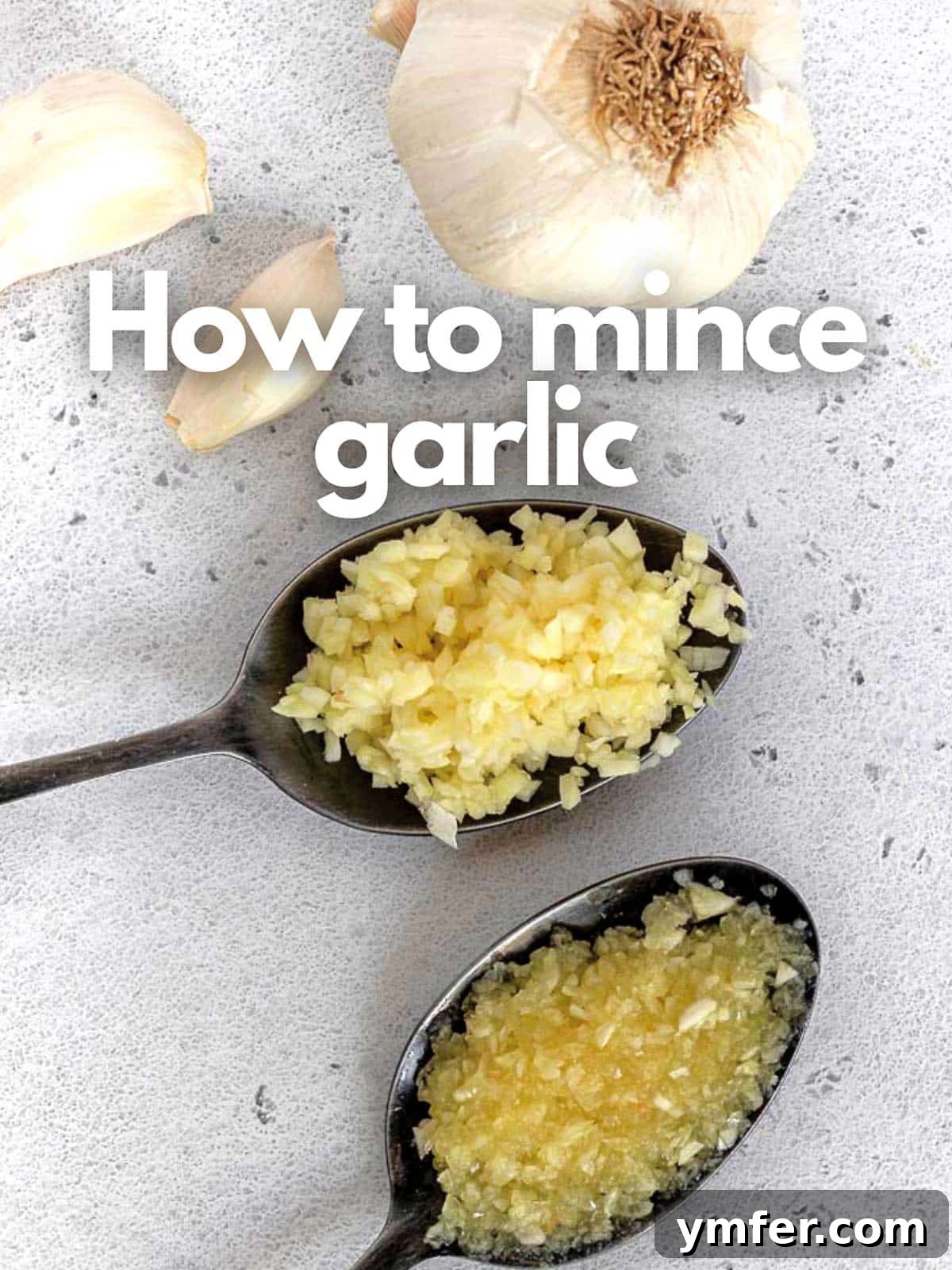
How to Mince Garlic Like a Pro
Mincing garlic is more than just chopping; it’s about breaking down the garlic cloves to release their potent allicin, the compound responsible for garlic’s distinctive flavor and aroma. The finer the mince, the more evenly the flavor will distribute throughout your dish. Here’s a step-by-step breakdown:
Step 1: Peel the Garlic Quickly and Easily
Peeling garlic can sometimes be a fiddly task, but with the right technique, it becomes effortless. The “smash and peel” method is a chef-favorite for its speed and effectiveness.
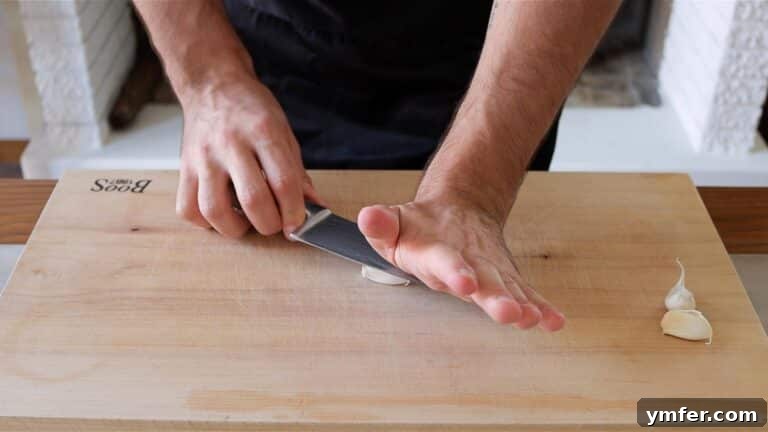
To begin, place an unpeeled garlic clove on a sturdy cutting board. Select a large chef’s knife and lay its flat side directly on top of the garlic clove. Using your dominant hand, firmly grip the knife handle. With your free hand, deliver a swift, decisive smack down onto the flat side of the blade. You might need to repeat this motion two or three times for particularly stubborn cloves. The goal is not to pulverize the garlic, but to gently bruise it, causing the papery skin to separate and loosen from the clove itself. This simple action significantly reduces the effort required for peeling.
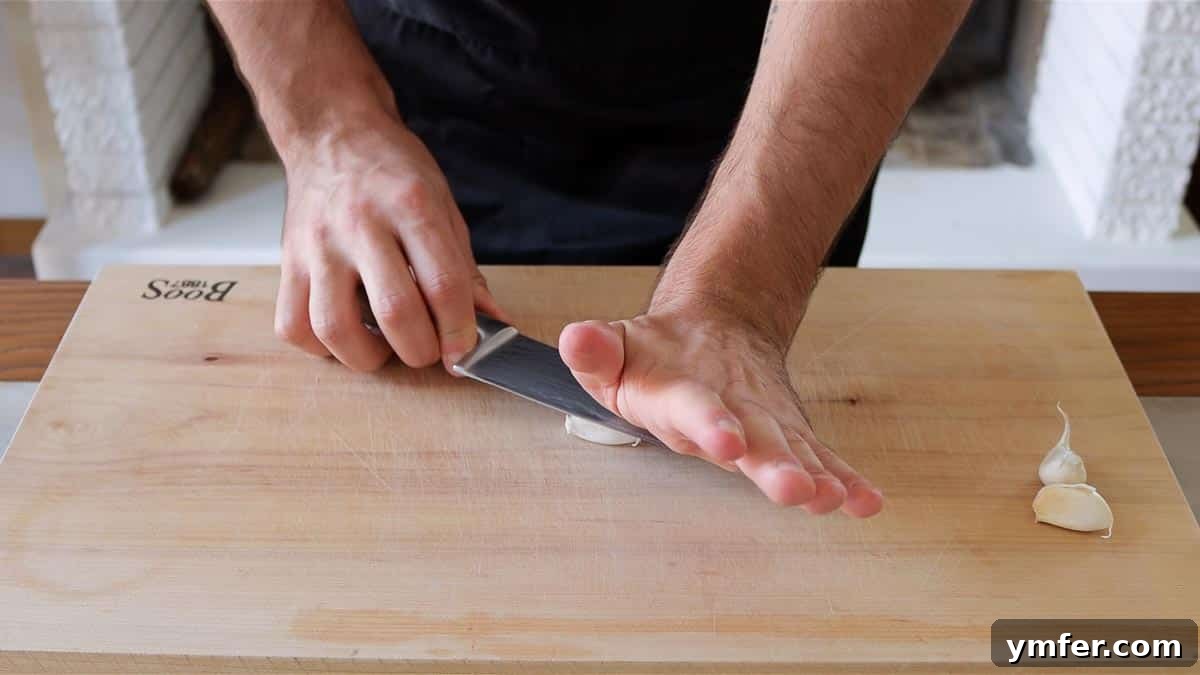
Once the garlic is sufficiently bruised, cut off the root end of the clove. This small, tough part is where the peel is most firmly attached. After removing the root, the loosened peel should now slide off easily, often in one piece. Discard the peel, and you’re left with a perfectly naked garlic clove, ready for the next stage of preparation.
Step 2: Slice the Garlic for Uniformity
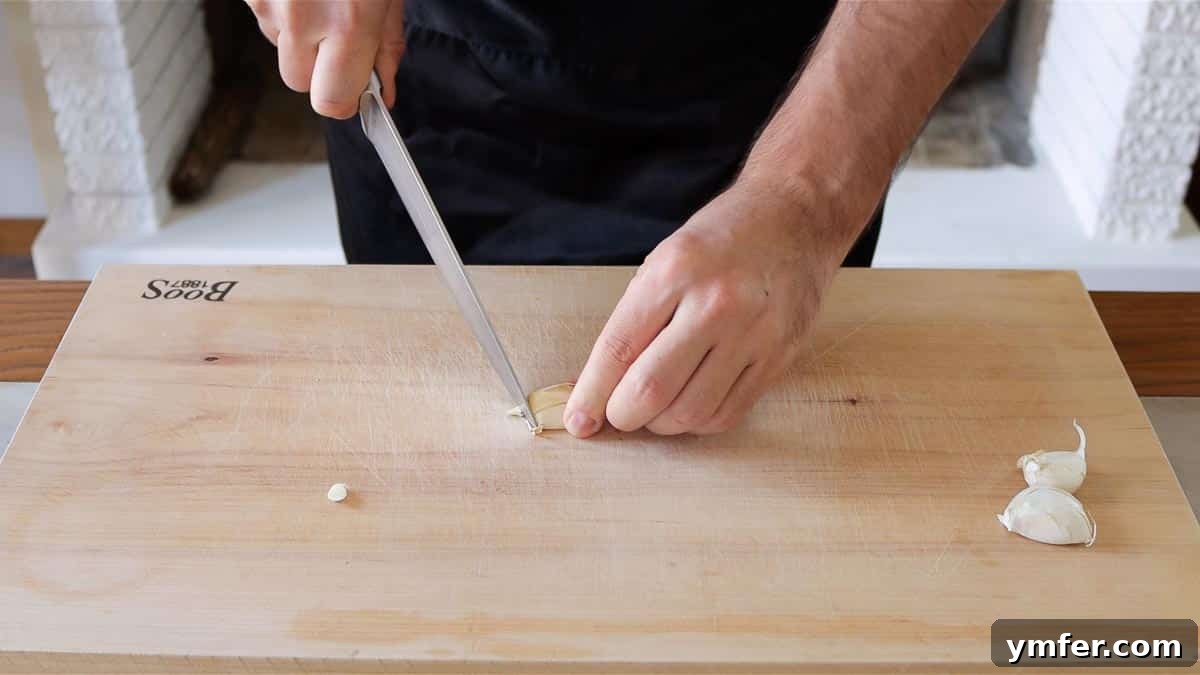
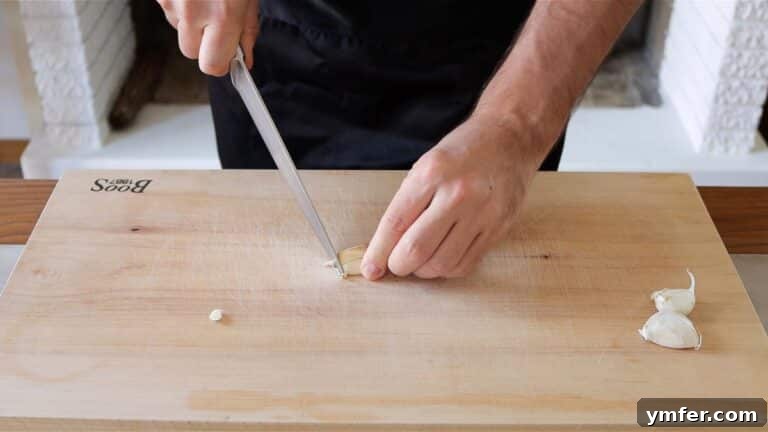
Achieving a consistent mince starts with uniform slices. Lay the peeled garlic clove on its flat side on the cutting board. Using your chef’s knife, carefully slice the garlic clove lengthwise into thin, even strips. Aim for slices that are as consistent as possible, as this will ensure your minced garlic cooks evenly and releases its flavor uniformly.
For optimal cutting technique and safety, always keep your fingertips curled inward in a “claw” shape, pressing against the garlic and guiding the blade. This prevents accidental cuts and allows you to maintain control over the clove as you slice. If you are new to knife skills, watching a video demonstration can be incredibly helpful to visualize the correct hand position and motion.
Step 3: Mince the Garlic to Your Desired Fineness
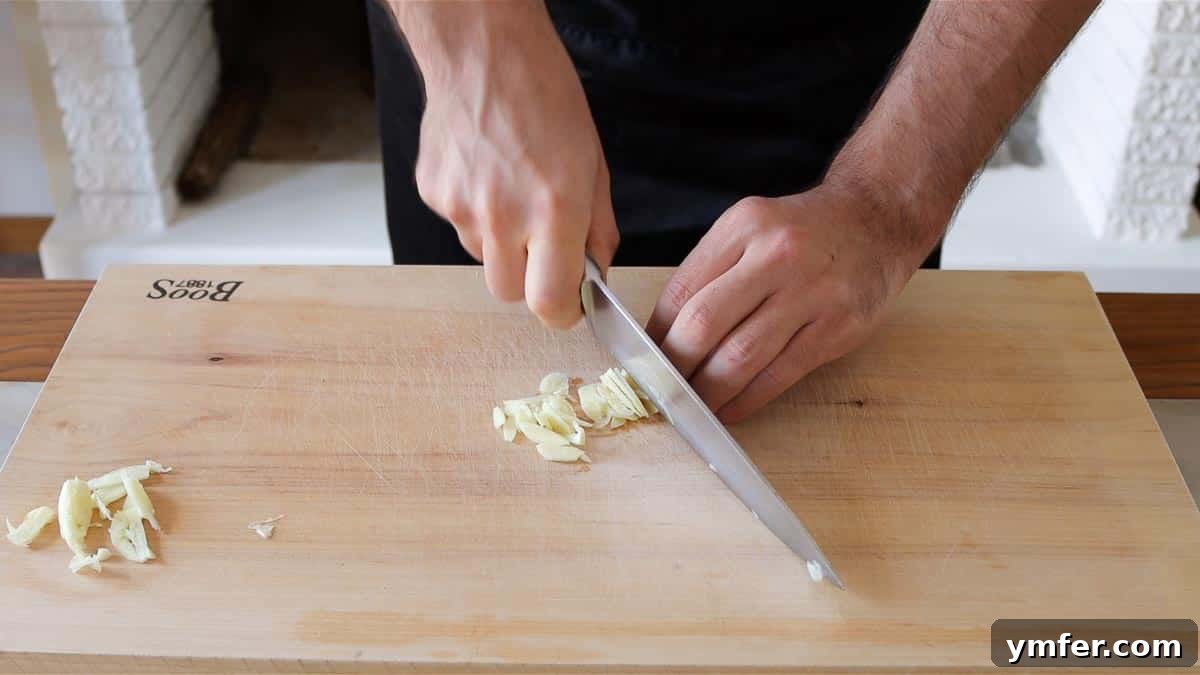
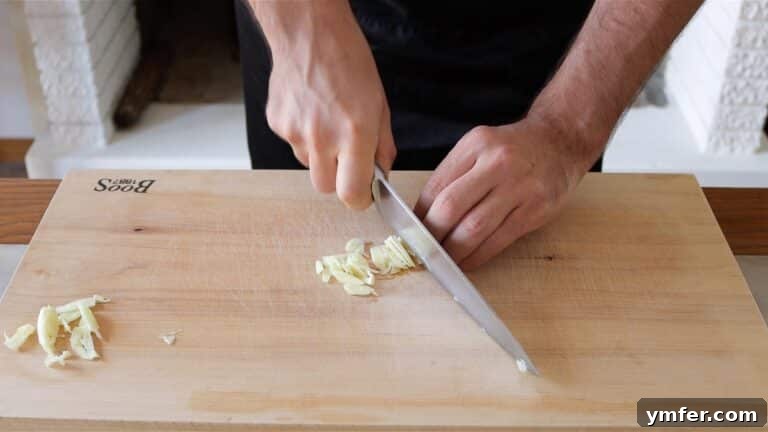
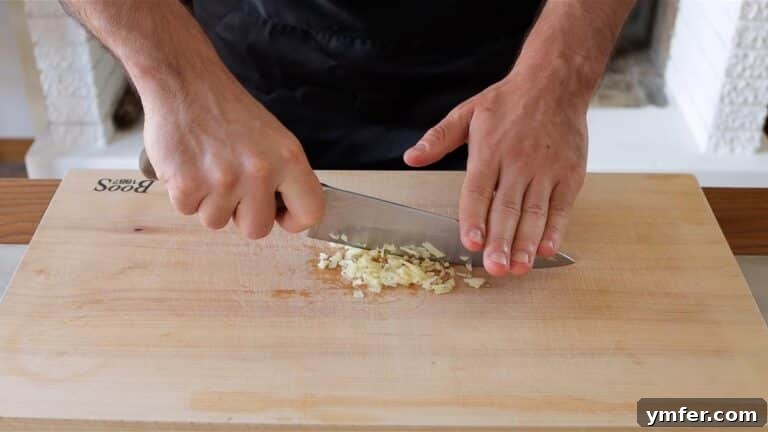
Now it’s time to turn those slices into a fine mince. Gather the sliced garlic into a small pile on your cutting board. Hold your knife firmly with your dominant hand, ensuring a comfortable and secure grip. Place your other hand flat on top of the blade, near the tip, to help stabilize it and apply gentle pressure. This two-hand technique gives you superior control and leverage.
With a continuous rocking motion, begin chopping the garlic. Keep the tip of the knife in contact with the cutting board while the heel moves up and down, cutting through the garlic. Slowly pivot the blade back and forth, moving it across the garlic pile. As you chop, periodically gather the garlic back into a compact pile with the blade of your knife, ensuring all pieces are minced evenly. Remember to keep your guiding fingers straight and slightly cupped to avoid any accidents.
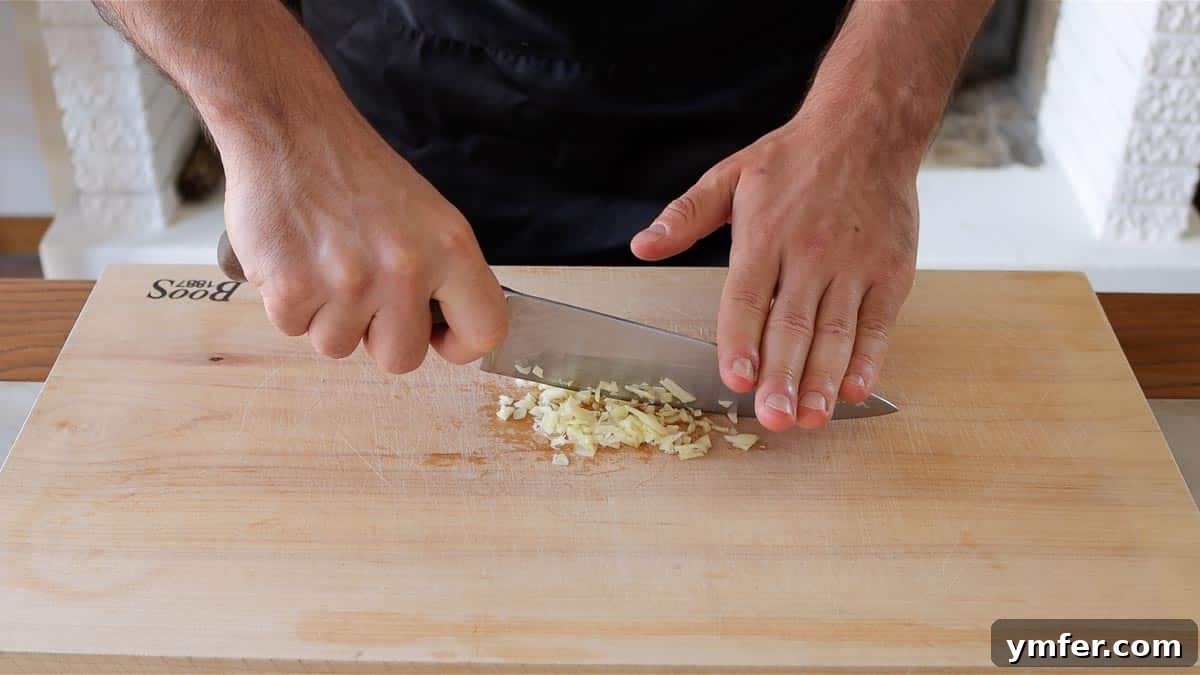
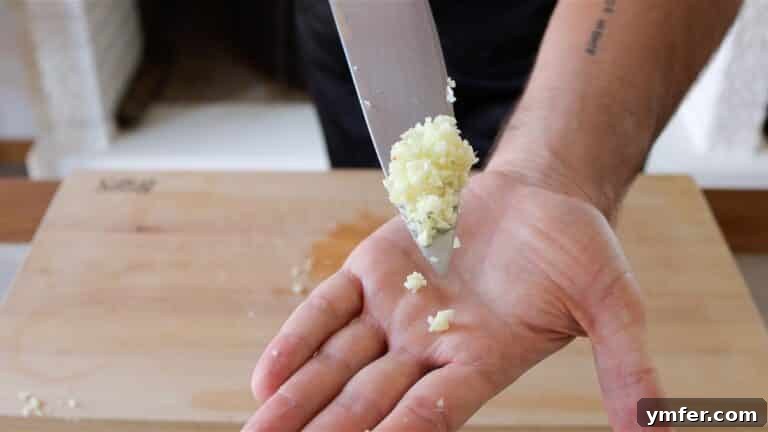
Continue chopping and gathering until you achieve your desired texture. For most recipes, a fine mince is preferred, where the garlic pieces are tiny and uniform. This process typically takes about 30 seconds for a few cloves. The goal is to maximize the surface area, which releases more of garlic’s aromatic compounds, resulting in a more intense and integrated flavor in your cooking.
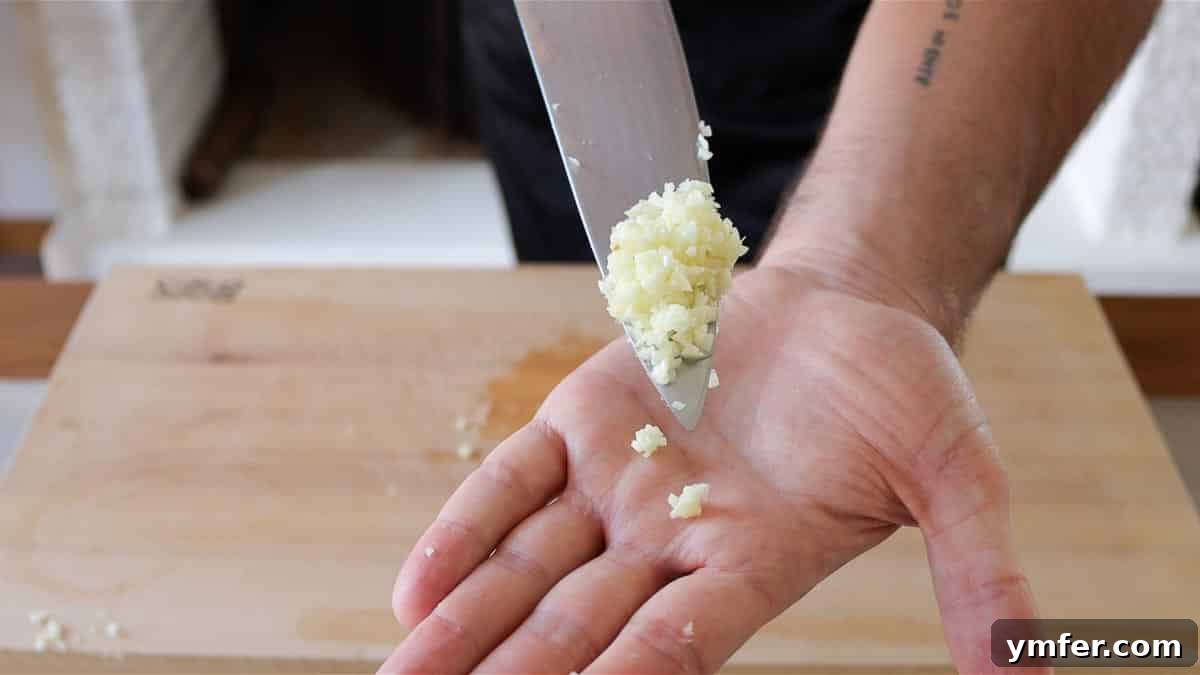
Pro Tip: Sharpen Your Knife! A sharp knife is your best friend when mincing garlic. Not only does it make the task easier and faster, but it also significantly reduces the risk of accidents. Dull knives require more force, increasing the chances of the blade slipping. Regularly sharpen your chef’s knife for efficient and safe garlic preparation.
How to Make Garlic Paste: Unlocking a Smoother Flavor
While minced garlic is fantastic for many applications, some dishes, and indeed some palates, benefit from an even finer texture and a milder, more integrated garlic flavor. This is where garlic paste shines. Turning minced garlic into a paste breaks down the cell walls further, releasing more of its essential oils and creating a smoother, less “aggressive” taste that melts seamlessly into sauces and dressings.
Garlic paste is particularly wonderful in creamy sauces, marinades, dressings, and dishes where you want the flavor of garlic without any discernible pieces. For example, it’s my go-to for a smooth pasta pomodoro, spicy penne arrabbiata, or a rich pizza marinara sauce. It imparts a rounder, more nuanced flavor profile that is truly delightful.
Step 1: Mash the Minced Garlic into a Paste
The transition from minced garlic to garlic paste involves a unique mashing technique using your knife blade. This step is best learned visually, so referring to a video demonstration is highly recommended for mastering the precise motion.
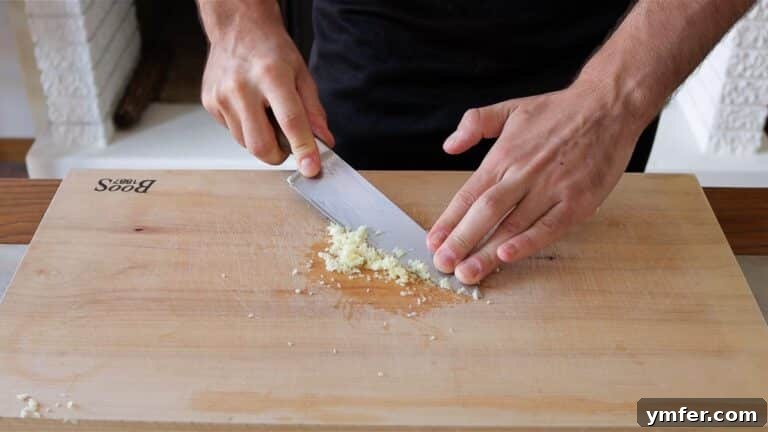
Begin by gathering your finely minced garlic into a compact pile on your cutting board. Tilt the blade of your chef’s knife towards yourself, creating an angle of approximately 45 degrees with the cutting board. This angle is crucial for effectively smearing the garlic rather than just chopping it.
Hold the knife firmly by the handle with your dominant hand. Then, place your other hand flat on the side of the blade (not the sharp edge!), near the tip, to apply downward pressure and guide the movement. This technique leverages your body weight to efficiently transform the mince.
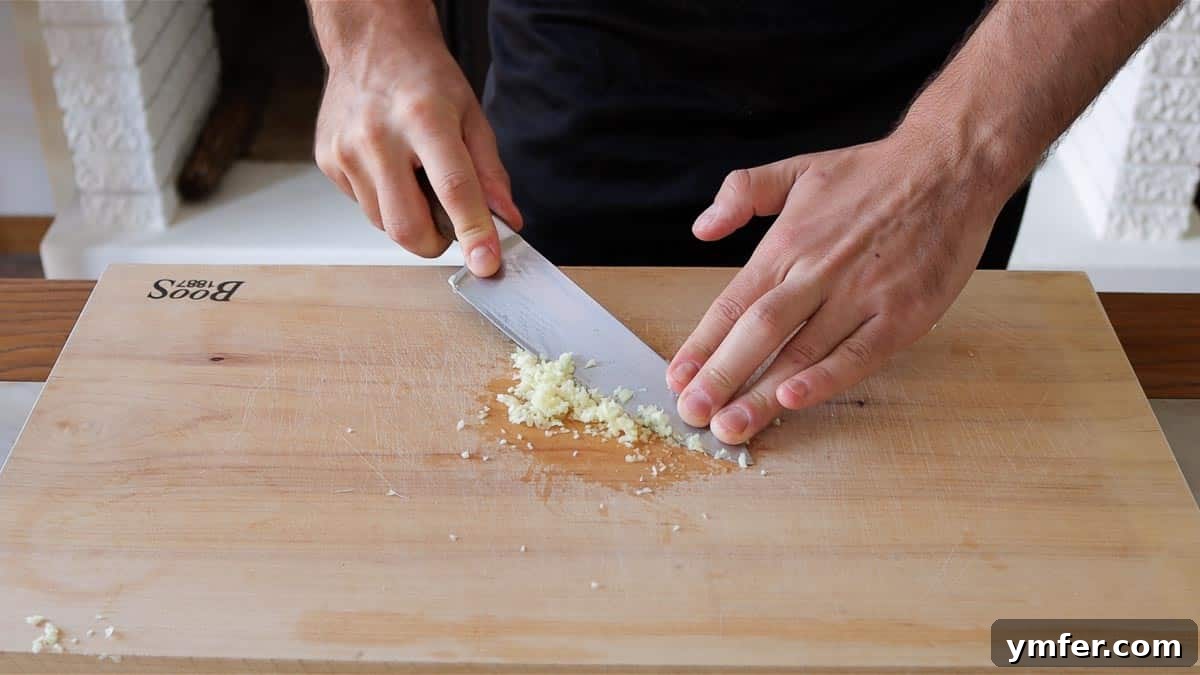
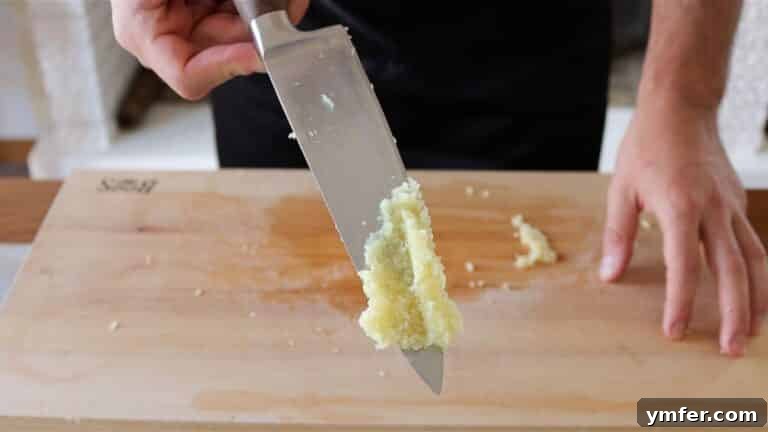
Now, with a smearing or scraping motion, mash the garlic across the cutting board using the side of the blade. It’s not a direct chop, but rather a combination of pressing and dragging the blade across the garlic. Continue this mashing and smearing motion, periodically gathering the garlic back into a pile, until it transforms into a fine, smooth, almost liquid-like paste. The more you work it, the smoother and more potent the paste will become. This process effectively crushes the garlic’s cell walls, releasing its full aromatic potential in a wonderfully smooth form.
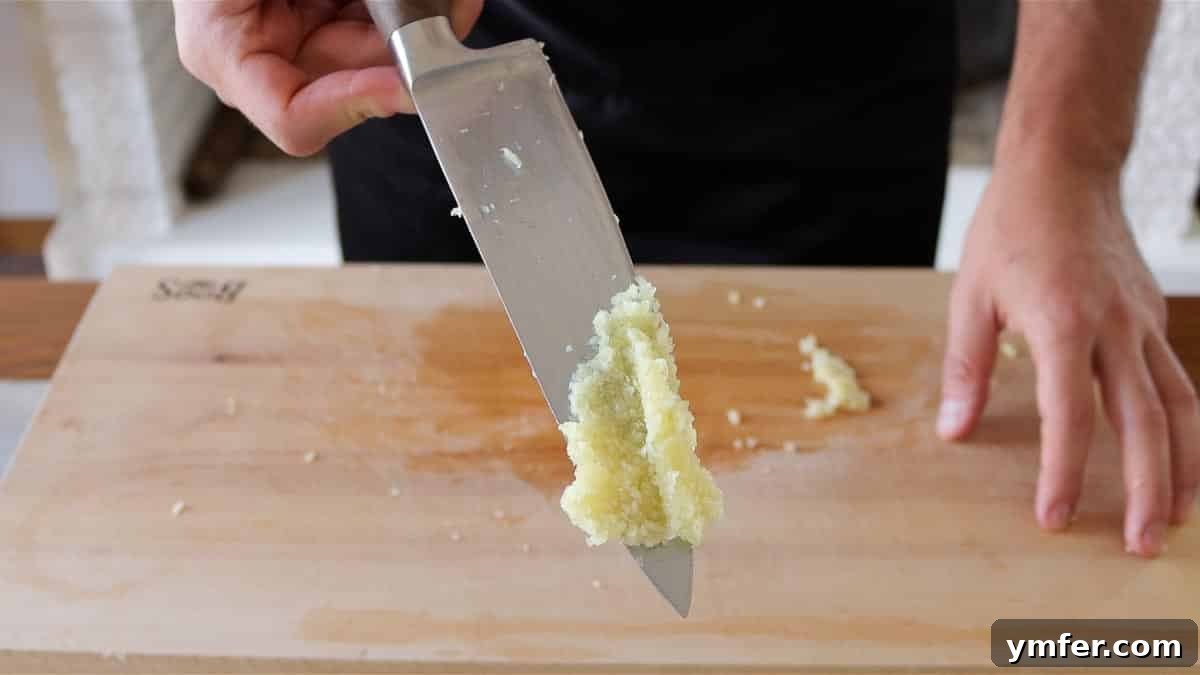
Minced Garlic vs. Garlic Paste: When to Use Which?
Both minced garlic and garlic paste are excellent flavor builders, but they offer distinct characteristics that make them suitable for different culinary applications. Understanding these nuances can significantly enhance your cooking.
- Minced Garlic: This form provides a more robust, sometimes sharper, garlic flavor with a noticeable texture. It’s ideal when you want garlic pieces to be present in your dish, providing bursts of flavor.
- Best for: Stir-fries, marinades for meats or vegetables (where texture is welcome), quick sautés, chunky sauces, and dishes where garlic is cooked quickly and you want to taste its “bite.” Think spaghetti aglio olio, where the garlic is a prominent element.
- Flavor Profile: Stronger, more direct, with a slight textural presence.
- Garlic Paste: The beauty of garlic paste lies in its ability to dissolve almost entirely into your dish while cooking. This means you get all the wonderful aroma and flavor of garlic, but without any discernible pieces. For many, this leads to a milder, more mellow, and easily digestible garlic experience. Anecdotally, many find garlic paste to be less “aggressive” and gentler on the stomach than finely minced garlic.
- Best for: Smooth sauces like marinara, pestos, creamy dressings, dips (hummus, aioli), slow-cooked stews, soups, and dishes where garlic needs to infuse subtly. It’s fantastic for enhancing dishes like lemon pasta with garlic and spinach or vegan mushroom pasta, where a silken texture is desired.
- Flavor Profile: Milder, rounder, more integrated, and disappears into the dish.
In essence, if you want garlic to be seen and tasted with a bit of a kick, go for minced. If you want garlic to melt invisibly into your dish, providing a deep, aromatic background, garlic paste is your secret weapon. Ultimately, you can often use garlic paste anywhere you’d use minced garlic, but the subtle difference in texture and flavor dispersion can elevate your dish to another level.
Where to Use Minced Garlic or Garlic Paste?
Here’s a list of diverse recipes where both minced garlic and garlic paste can shine, demonstrating their incredible versatility:
- Penne Arrabbiata: A perfect candidate for garlic paste to meld into the spicy tomato sauce.
- Spaghetti Aglio e Olio: Minced garlic is traditional here, providing distinct garlic notes.
- Flatbread Pizza: Garlic paste spread on the base or minced garlic sprinkled on top adds immense flavor.
- Confit Tomatoes: Garlic cloves can be added whole, sliced, or as paste for a deep infusion.
- Oven Roasted Broccoli: Minced garlic offers pockets of intense flavor; paste coats more evenly.
- Vegan Mushroom Pasta: Garlic paste creates a smooth, earthy undertone in the sauce.
- Lemon Pasta with Garlic and Spinach: Paste is excellent for a uniform, bright garlic flavor.
- Pasta Pomodoro: Garlic paste ensures a smooth, refined tomato sauce.
- Homemade Dressings and Vinaigrettes: Garlic paste emulsifies beautifully.
- Soups and Stews: Paste dissolves to add depth without texture.
- Garlic Bread: Both forms work, paste yields a smoother spread.
- Stir-fries: Minced garlic adds a vibrant, quick-cooked flavor.
Storage Tips for Fresh Garlic Preparations
Proper storage is essential to maintain the freshness, flavor, and safety of your prepared garlic. Both minced garlic and garlic paste can be stored, but they require airtight conditions to prevent flavor loss and contamination.
You can store freshly minced garlic or garlic paste in the refrigerator for up to a week. The key is to use an airtight container or a reliable zip-lock bag. Garlic’s strong aroma can easily permeate other foods in your fridge, so a good seal is crucial. For an extra layer of protection and to extend shelf life slightly, you can cover minced garlic with a thin layer of olive oil in a small jar. However, be cautious: garlic in oil, especially at room temperature, can pose a risk of botulism. Always refrigerate immediately and use within a week.
For longer storage, freezing is an excellent option. Place small portions of minced garlic or garlic paste into ice cube trays, cover with a little olive oil if desired, and freeze until solid. Once frozen, transfer the garlic cubes to a freezer-safe bag or container. Frozen garlic will maintain its quality for several months, allowing you to have pre-prepped garlic on hand whenever inspiration strikes, without the daily chopping.
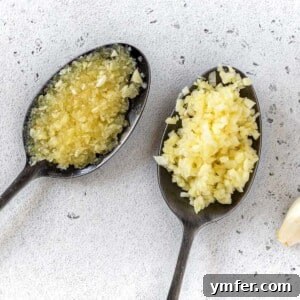
Minced Garlic & Garlic Paste
Nico Pallotta
Here we’ll show you how to first mince garlic with a knife, then how to turn minced garlic into a smooth garlic paste.
10
0
10
1
tablespoon
How to, Plant-Basics
Italian
Share
Equipment
-
large chef’s knife
-
cutting board
Ingredients
-
3
cloves
garlic
Instructions
HOW TO MINCE GARLIC
-
Place an unpeeled garlic clove on a cutting board, then take a large knife and lay the flat side of the knife on top of a garlic clove.
With your dominant hand hold the knife firmly in place by the handle.
With your free hand, smack down on the flat side of the knife to crush the garlic. You might have to smack two or three times.

-
Now cut off the root end of the garlic clove and remove the peel. The peel should now come off on its own.
STEP 2: SLICE THE GARLIC
-
Slice the garlic clove on the long side.
STEP 3: MINCE THE GARLIC
-
Hold the knife firmly with your dominant hand, then place your other hand straight on top of the blade.
With a rocking motion, start chopping. Keep your fingers curled in a “claw” shape so they won’t accidentally end up under the blade.
-
Keep chopping until you reach your desired texture. This should take you about 30 seconds.
HOW TO MAKE GARLIC PASTE
-
Tilt the blade of your knife towards yourself to create approximately a 45-degree angle with the cutting board.
Hold the knife firmly by the handle with your dominant hand, then place the other hand flat on the side of the blade.
-
Mash and smear the garlic with the side of the blade until it turns into a fine, smooth garlic paste. This is a pressing and scraping movement, using the side of the blade.
Nutrition
Calories:
13
kcal
Carbohydrates:
3
g
Protein:
1
g
Fat:
1
g
Saturated Fat:
1
g
Polyunsaturated Fat:
1
g
Potassium:
36
mg
Dietary Fiber:
1
g
Sugar:
1
g
Vitamin A:
1
IU
Vitamin B6:
1
mg
Vitamin C:
3
mg
Vitamin E:
1
mg
Vitamin K:
1
µg
Calcium:
16
mg
Folate:
1
µg
Iron:
1
mg
Manganese:
1
mg
Magnesium:
2
mg
Zinc:
1
mg
Tried this recipe?
Leave a comment below or mention @theplantbasedschool on Instagram. We love hearing from you!
Happy cooking!
Nico