
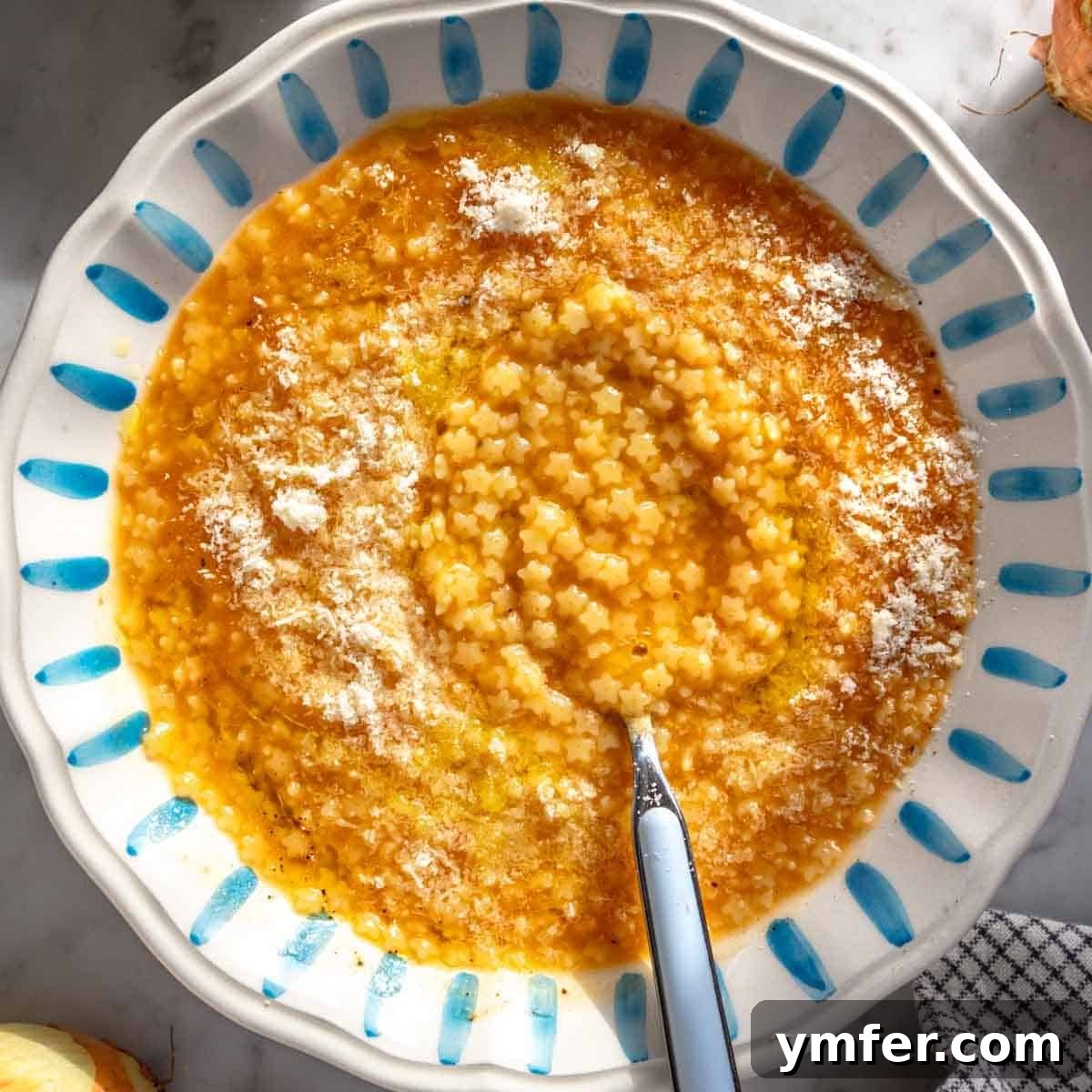
The Ultimate Italian Comfort Food: Creamy Pastina Soup Recipe
Step into the heartwarming world of Italian culinary tradition with Pastina, a delightful **one-pot meal** that captures the essence of comfort in every spoonful. Imagine tiny, delicate pasta shapes lovingly embraced by a rich, **creamy tomato and vegetable broth**, finished with a delicate sprinkle of Parmesan cheese. This isn’t just a meal; it’s a culinary hug, a dish steeped in nostalgia and the simplicity of good food.
In many Italian households, including my own, Pastina holds a special place. My Nonna, a maestra in the kitchen, would often prepare Pastina when she desired an **easy, nourishing, and healthful dinner**. It shares a comforting kinship with other beloved Italian brothy pasta dishes like Pasta e Fagioli and Minestrone, each offering a unique symphony of comforting **Italian flavors** and aromas.
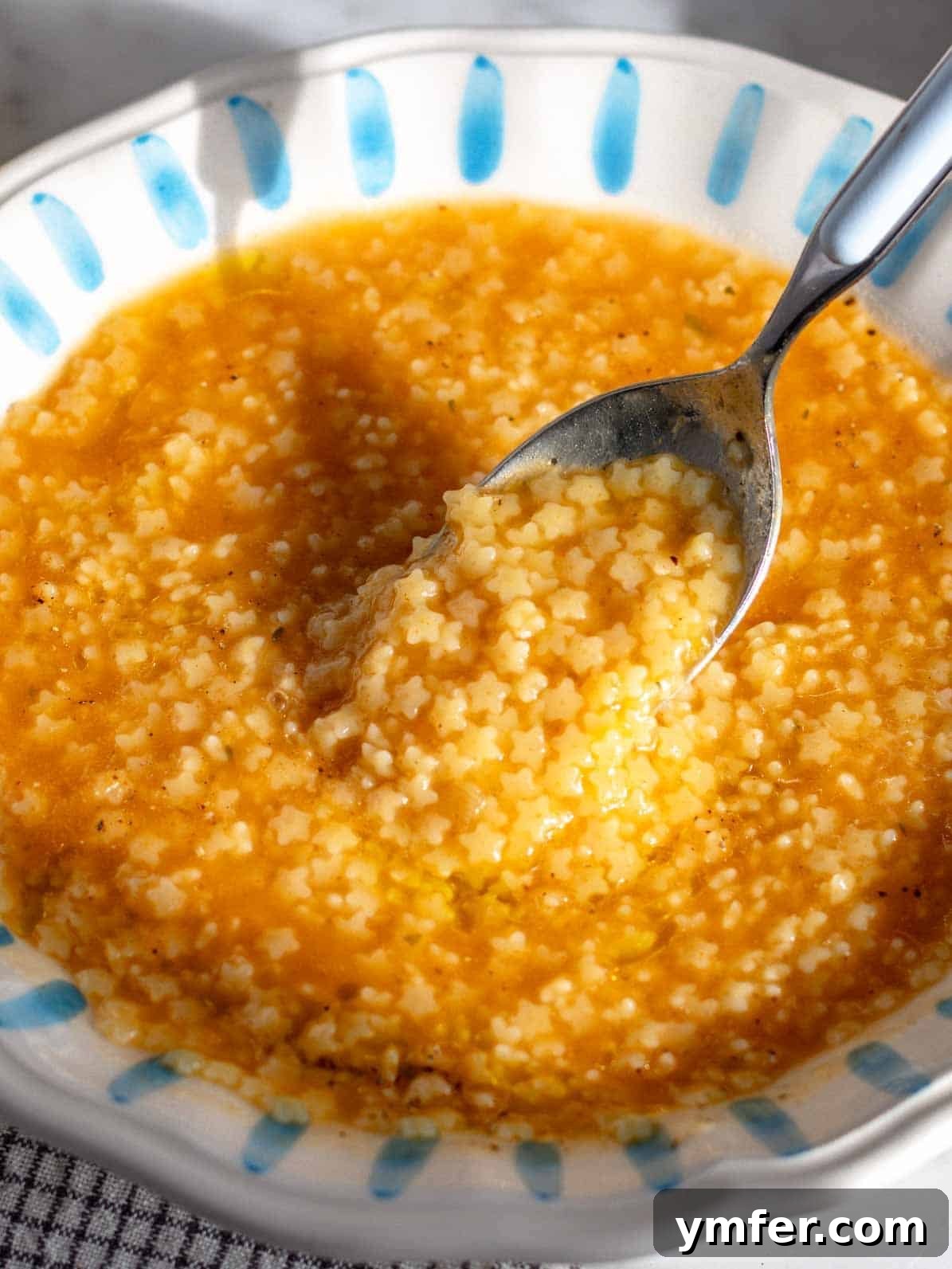
Table of Contents
- What is Pastina? A Dive into Italian Comfort Food
- Why You’ll Love This Pastina Recipe
- Ingredients for the Perfect Pastina
- How to Make the Creamiest Pastina: A Step-by-Step Guide
- How to Serve Pastina: From Primo Piatto to Main Meal
- Creative Variations & Customizations
- Frequently Asked Questions About Pastina
- Storage Tips for Leftover Pastina
- Similar Recipes You Might Enjoy
- Printable Pastina Recipe Card

True story: The very first time I prepared this Pastina for Louise, she was deeply moved. After just one spoonful, her eyes welled up, and she exclaimed, “This is truly a grandma’s hug in a bowl!”
For me, Pastina is more than just food; it’s a tapestry woven with cherished childhood memories – the vibrant tomato flavor, the charmingly tiny pasta, and that delicate dusting of Parmesan. It evokes a sense of home, warmth, and the unconditional love of family.
I am absolutely certain that this comforting pasta dish will capture your hearts and taste buds as much as it has ours. It’s a simple pleasure that transcends generations. Buon appetito ❤️.
What is Pastina? A Dive into Italian Comfort Food
Pastina, literally meaning “small pasta” in Italian, is a quintessential **Italian comfort food** often referred to affectionately as “penicillin soup” or “minestrina” (little soup). This humble yet profoundly satisfying dish finds its roots in the resourceful tradition of la cucina povera, the “poor kitchen” philosophy where simple, readily available ingredients are transformed into exquisite meals. It’s a testament to how basic components can create something truly extraordinary and deeply comforting.
This **easy pasta recipe** begins with a robust tomato-vegetable broth, which can be customized to your preferred consistency—whether you like it more soupy or wonderfully thick and creamy. We personally adore our Pastina to be quite **creamy** and bursting with a **rich tomato flavor**, reminiscent of other beloved Italian classics like Pasta e Ceci, hearty Barley Soup, and wholesome Vegetable Soup. It’s a versatile dish that adapts beautifully to individual tastes while maintaining its core comforting essence.
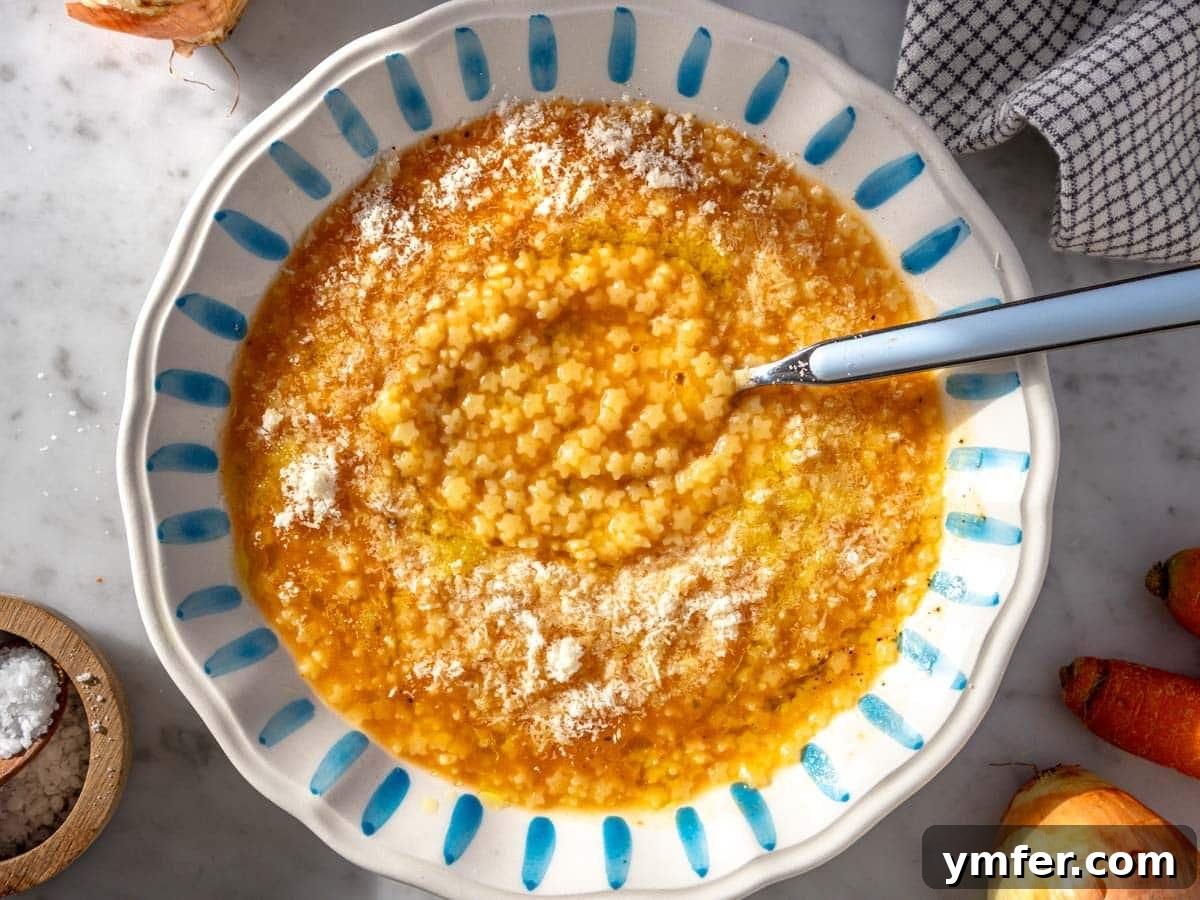
Why You’ll Love This Pastina Recipe
Our Pastina recipe starts with a foundational **vegetable broth**, meticulously crafted from aromatic celery, sweet carrots, and pungent onion. This trio forms the classic Italian soffritto, the flavor base that underpins countless Italian soups and savory dishes, lending unparalleled depth and character.
My Nonna’s unique touch to Pastina involved incorporating a generous spoonful of **tomato paste** and a small potato. This ingenious addition creates a **truly comforting** and wonderfully creamy **texture**, transforming the simple soup into a substantial and incredibly satisfying meal. The potato, often overlooked, is the secret to its luscious consistency.
This versatile **one-pot meal** is ideal as a light dinner option. Serve it simply with some crusty toasted bread, alongside vibrant roasted vegetables, or with a wholesome side of sautéed greens. The beauty of Pastina lies in its adaptability, allowing you to pair it with various sides to create a complete and balanced meal.
As the name suggests, “Pastina” refers to any small pasta. If you don’t have the star-shaped stelline, fret not! This recipe is incredibly forgiving, allowing you to **use any small pasta** you might have lingering in your pantry. Common substitutions include ditalini, puntine, risoni (rice-shaped pasta), or orzo. This flexibility, combined with its fantastic **”clean-up-your-fridge” properties**, makes this Italian recipe an absolute winner for busy weeknight dinners.
Oh, and did I forget to mention that this delightful dish is also incredibly **budget-friendly**? It proves that exquisite flavor and profound comfort don’t have to come with a hefty price tag.😋
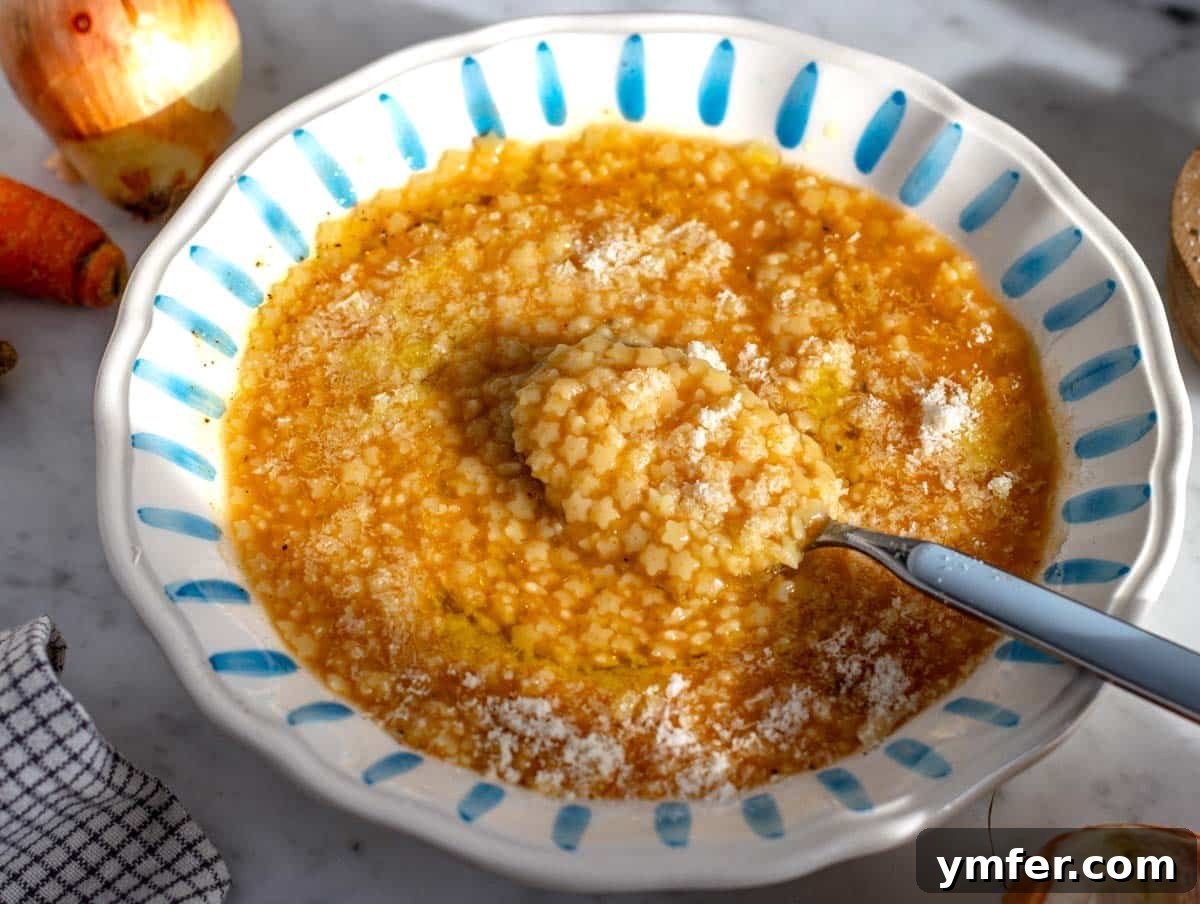
Ingredients for the Perfect Pastina
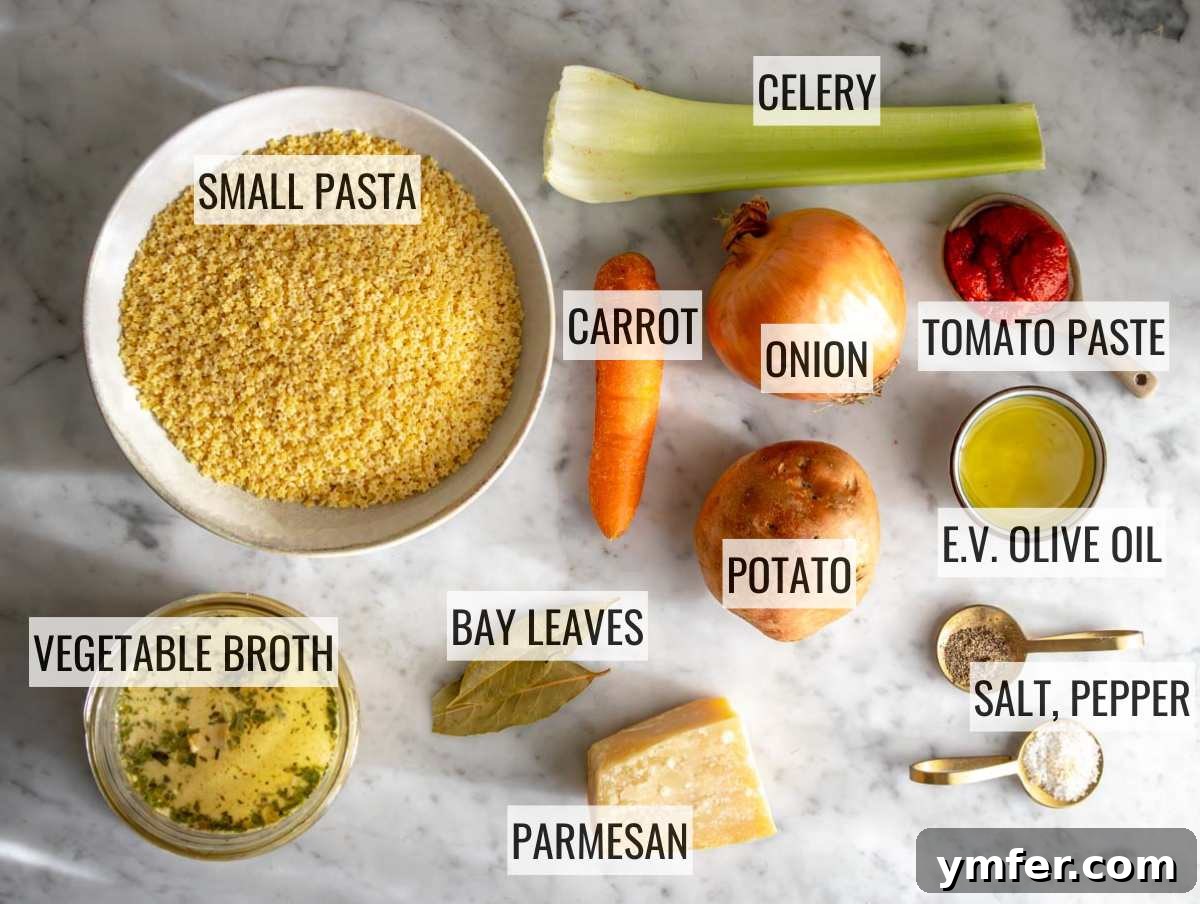
Exact quantities for each ingredient can be found in the recipe card at the bottom of the page.
The Tiny Pasta (Pastina)
As we’ve established, “Pastina” is the Italian term for small pasta. For this recipe, we lovingly used “stelline,” adorable star-shaped pasta that adds a whimsical touch. However, the beauty of Pastina lies in its flexibility. You can easily substitute stelline with a wide array of other tiny pasta shapes, ensuring you can make this dish with whatever you have on hand. Consider using filini (thin strands), ricciutelli, quadretti (small squares), farfalline (tiny bow ties), corallini (small tubes), ditalini (small thimbles), grattini, risoni (orzo), anellini (tiny rings), or puntine.
The Rich Vegetable Broth
The foundation of our creamy Pastina is a flavorful **vegetable broth**. We elevate a standard vegetable bouillon by enriching it with a classic Italian soffritto base: finely diced **onion**, **carrot**, and **celery**. To add another layer of aromatic complexity, we include a fragrant **bay leaf**. Once these vegetables have simmered and infused the broth with their sweet and savory notes, we blend them directly into the liquid. This ingenious step creates an incredibly smooth, naturally creamy, and intensely flavorful broth without the need for any dairy, making our Pastina truly stand out.
Nonna’s Secret: The Humble Potato
This is my Nonna’s time-honored trick, a simple yet transformative addition that turns Pastina into one of the most irresistible comfort foods. A small **potato**, peeled and cooked in the broth, breaks down and thickens the soup, imparting an unparalleled creaminess and velvety texture. It’s a natural thickener that adds body and a subtle sweetness, making the dish wonderfully hearty and satisfying.
Vibrant Tomato Paste
To achieve a beautiful color and a profound depth of savory-sweet flavor, we incorporate a couple of tablespoons of rich **tomato paste** into the simmering broth. This concentrated tomato essence provides a robust backbone to the soup. For an intriguing umami boost and a subtle cheesy note, you can also substitute the tomato paste with a leftover Parmesan rind, allowing it to simmer in the broth before removal.
Finishing Touches: Parmesan and Olive Oil
Pastina is traditionally served with minimal fuss, highlighting its inherent deliciousness. Each bowl is graced with a generous sprinkle of freshly grated **Parmesan cheese**, adding a salty, nutty, and irresistible finish. A final drizzle of high-quality **extra virgin olive oil** provides a silky richness and fruity aroma. This simple combination is all it takes to elevate the dish to pure perfection—simple, fulfilling, and utterly delicious.
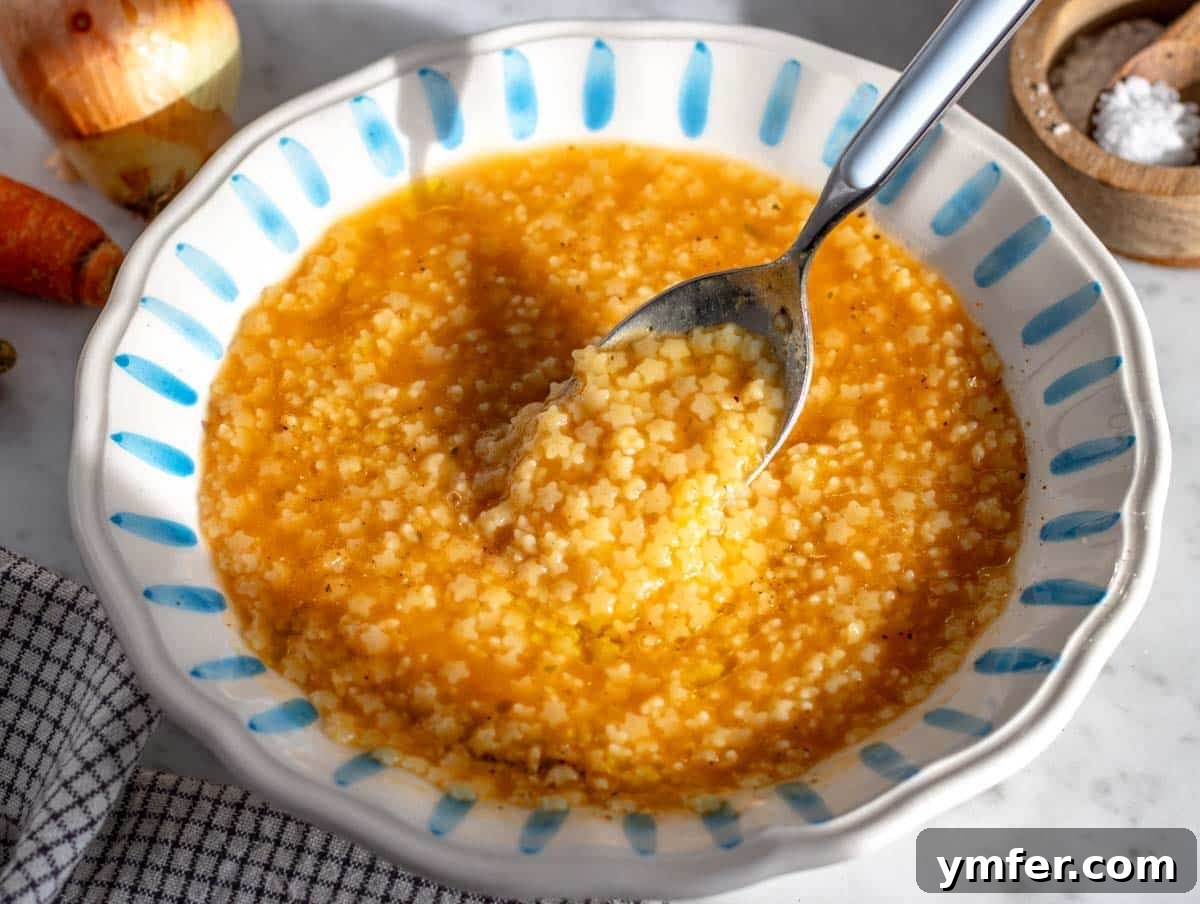
How to Make the Creamiest Pastina: A Step-by-Step Guide
Crafting this delightful Pastina is a straightforward process, beginning with the heart of the dish: the rich vegetable broth.
Building the Flavor Base (Soffritto & Broth)
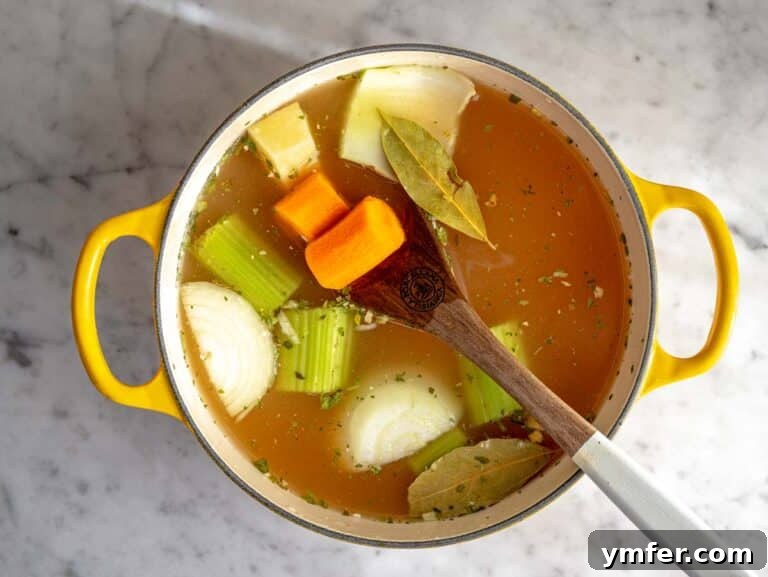
In a medium-sized pot, combine 6 cups of your preferred **vegetable broth** (or use 6 cups of water with 2 tablespoons of vegetable bouillon for convenience). Into this, stir 2 tablespoons of concentrated **tomato paste**, a teaspoon of **salt** (you can adjust later), and 2 fragrant **bay leaves**.
Now, prepare your vegetables: dice 1 rib of **celery**, 1 **onion**, 1 **carrot**, and 1 **peeled potato** into similarly-sized small chunks. Add these to the pot. Bring the mixture to a gentle boil, then reduce the heat, cover with a lid, and allow it to **simmer for 20 to 30 minutes**, or until all the vegetables are tender enough to be easily pierced with a fork.
Chef’s Tip: Cutting the vegetables into smaller pieces ensures they cook more quickly and blend smoothly. While you *could* skip the fresh vegetables, traditional Italian Pastina always features these vibrant aromatics for a truly authentic and flavorful broth.
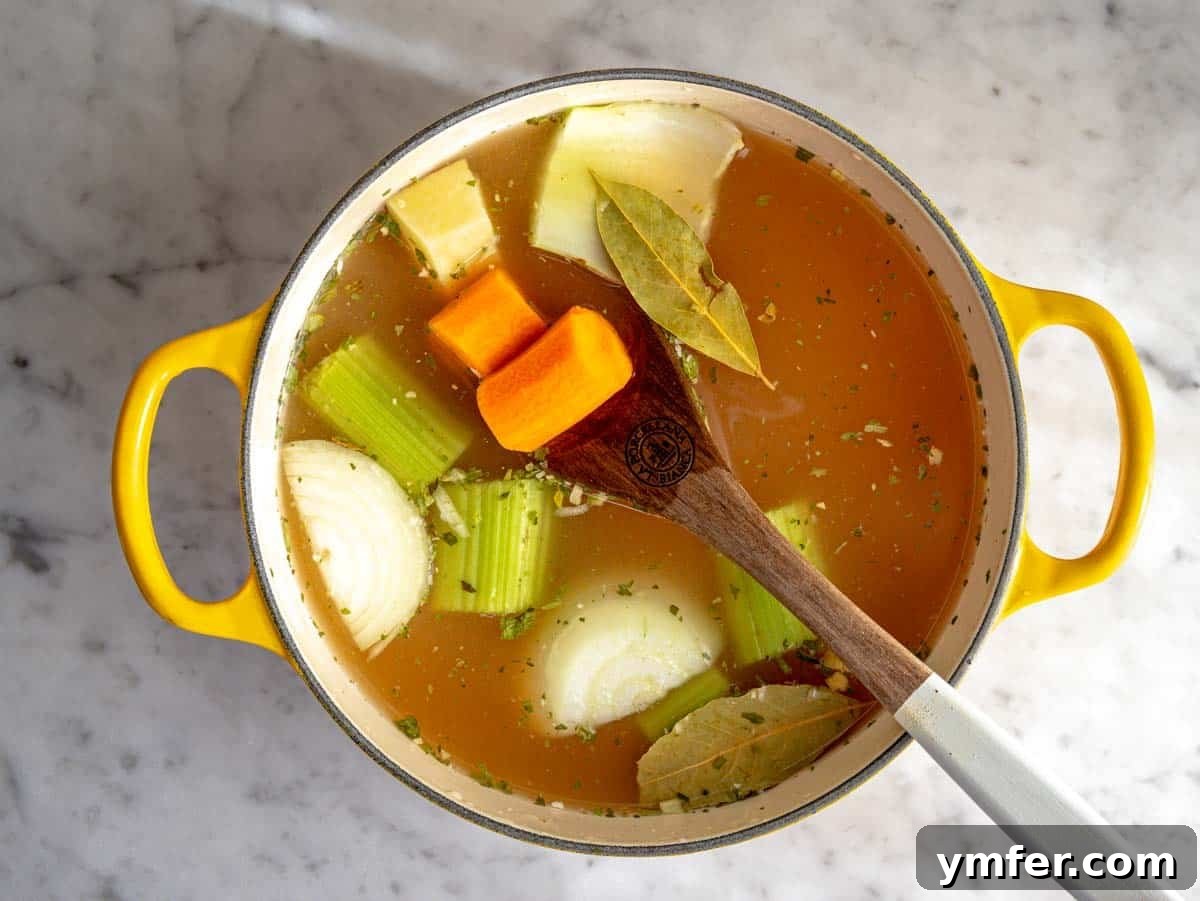
The Creamy Secret (Blending the Veggies)
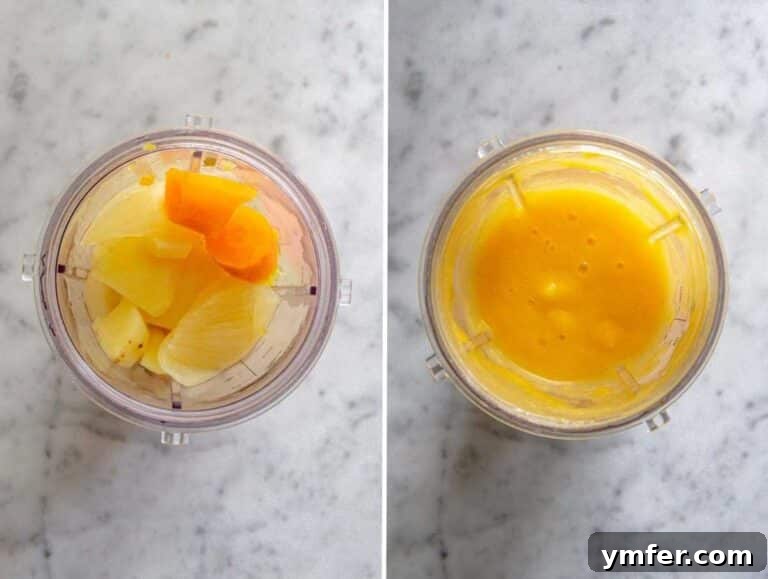
Once the **vegetables are beautifully tender**, carefully remove the bay leaves. Then, using a slotted spoon, transfer the cooked vegetables into a blender. Add about a cup of **cold tap water** to help facilitate blending and achieve a perfectly smooth consistency. **Blend until completely smooth and creamy**, then set this vegetable purée aside. This step is key to achieving that luscious, thick broth that defines our Pastina.
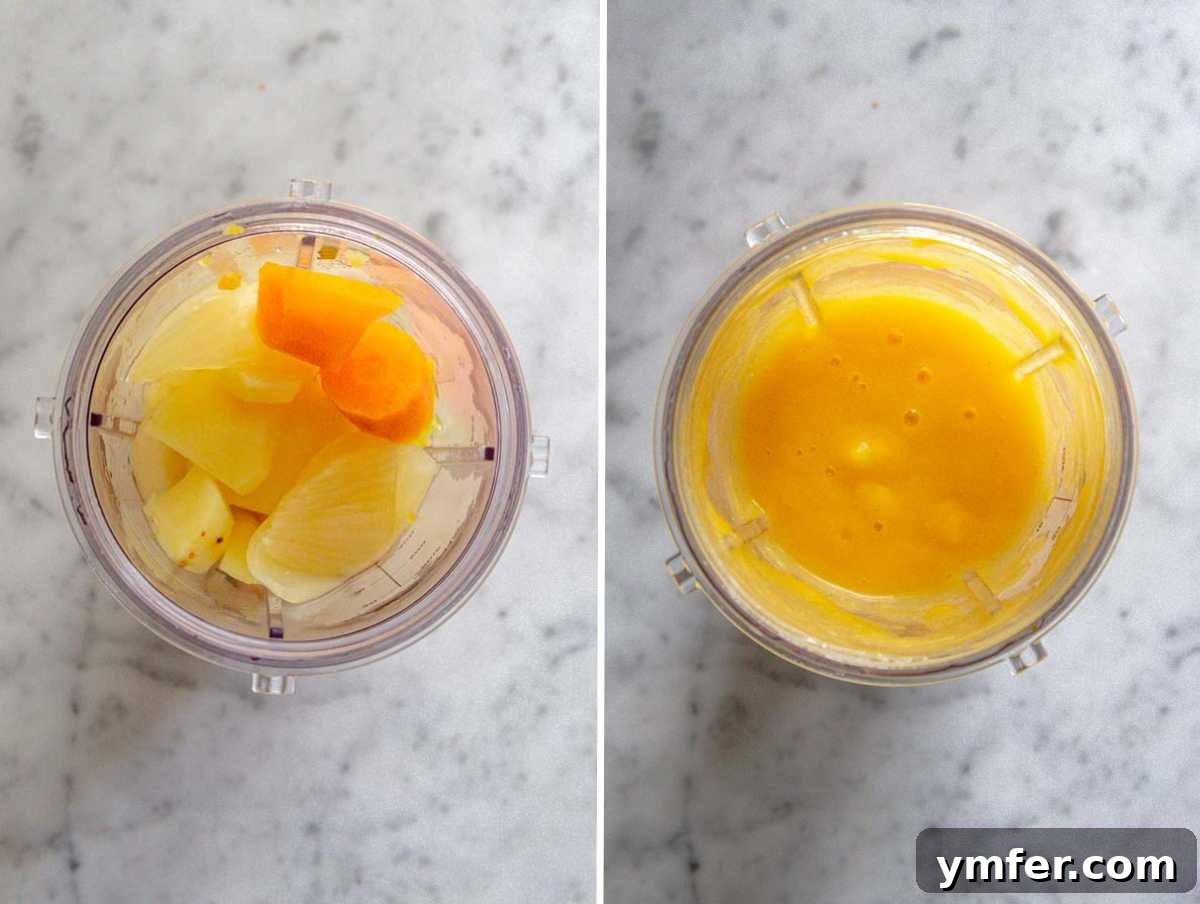
Cooking the Tiny Pasta to Perfection
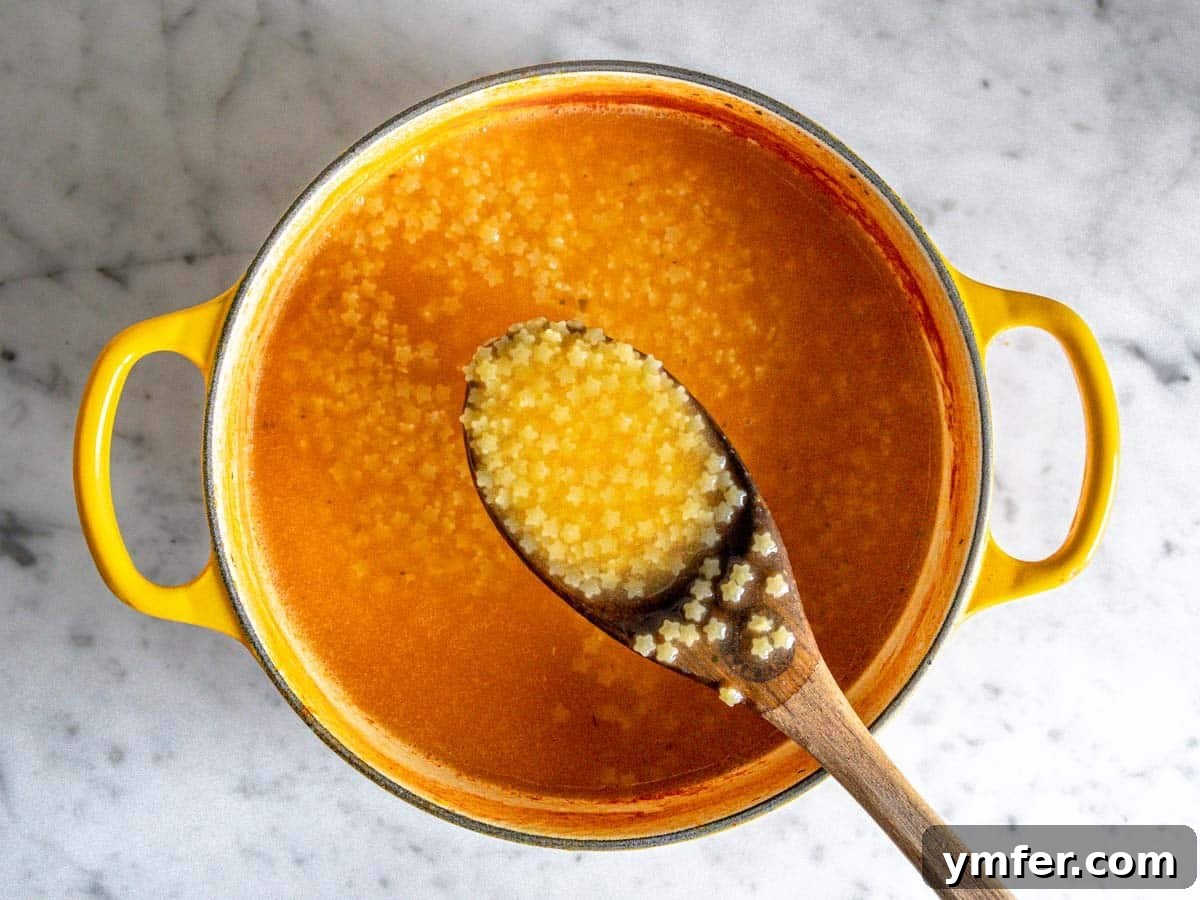
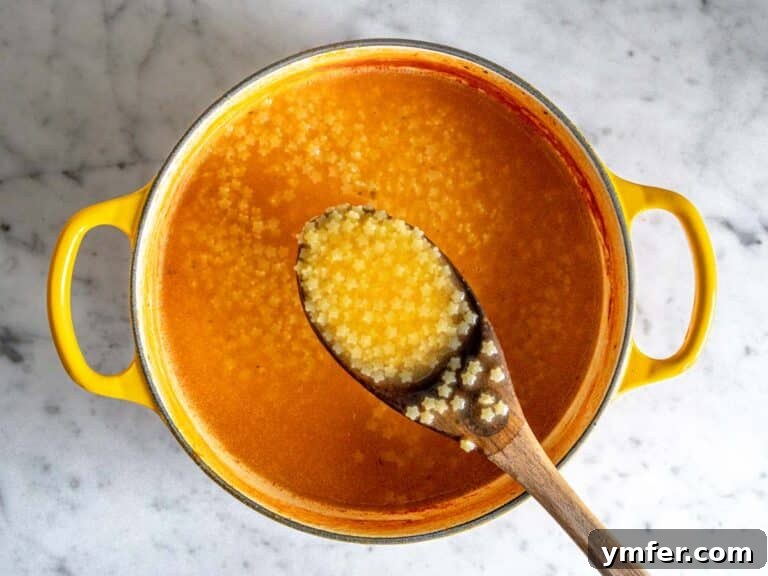
Return the pot of vegetable broth to a gentle simmer. Add your **small pasta of choice** (approximately 1.5 cups or 10 ounces / 280 grams). We love using stelline for their charming shape. Cook the pasta according to the package instructions, but with a crucial adjustment: **undercook it by one minute**. This prevents the pasta from becoming mushy as it continues to cook in the residual heat of the broth.
Once the pasta is nearly cooked, **stir in the reserved blended vegetables**. Give it a good mix, then taste and adjust for salt and consistency as needed. If you prefer a thinner soup, you can add a splash more hot broth or water.
Important Tip: Tiny pasta cooks incredibly fast, so keep a close eye on it and set a timer! Undercooking by a minute is essential, as the pasta will continue to absorb liquid and cook after the heat is off, ensuring a perfect al dente texture when served.
Serving Your Comforting Bowl
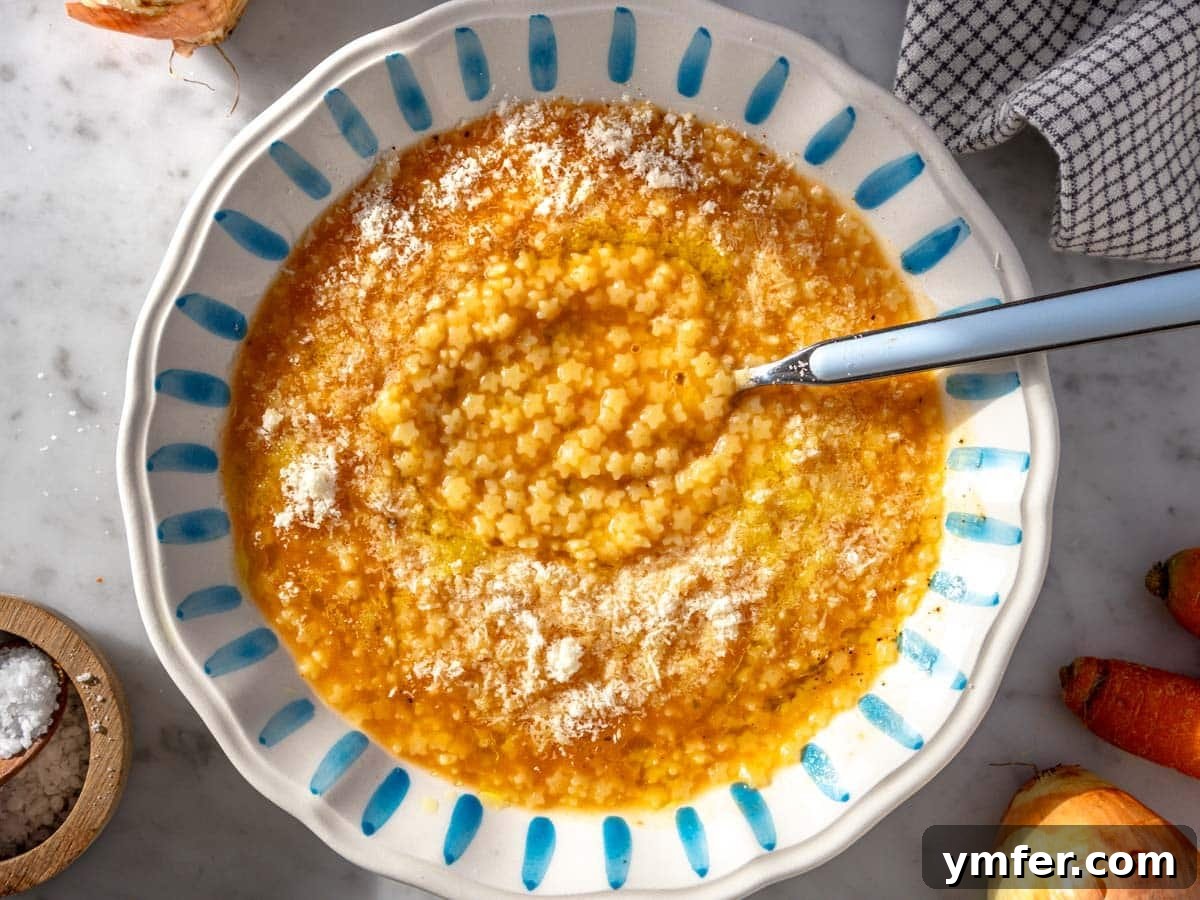
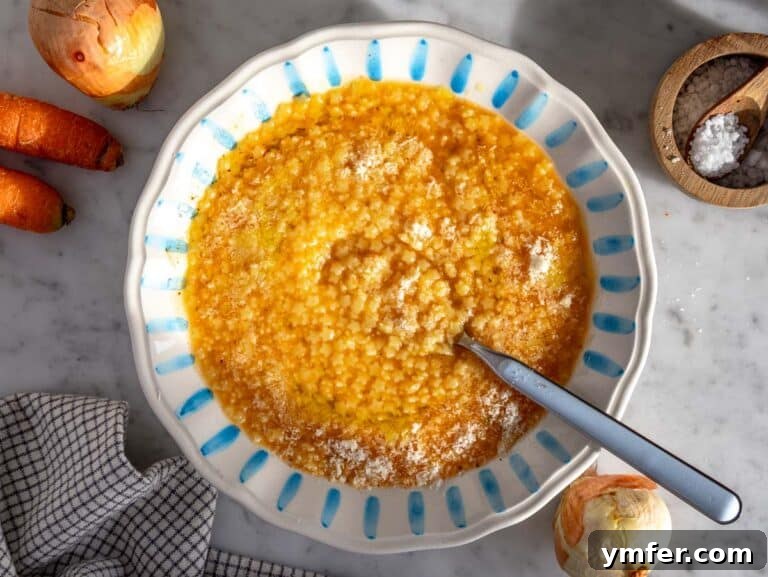
Serve the Pastina immediately in a wide-rimmed pasta plate or a cozy soup bowl. Finish each serving with a generous drizzle of fragrant **extra virgin olive oil**, a sprinkle of freshly **grated Parmesan cheese**, and a grind of freshly cracked **black pepper**. The aroma alone will transport you straight to an Italian Nonna’s kitchen.
How to Serve Pastina: From Primo Piatto to Main Meal
Pastina’s versatility makes it suitable for various dining occasions, reflecting different Italian culinary traditions.
As a Primo Piatto (First Course)
Traditionally in Italy, Pastina is often served as a primo piatto, a delicate first course that precedes a lighter main course. This typically means a smaller portion, perhaps followed by a simple grilled chicken, a piece of baked fish, or a plate of steamed vegetables. When served this way, no additional bread is usually needed; the soup itself is the star, enhanced only by freshly grated Parmesan cheese and a dash of black pepper. It’s about savoring the subtle, comforting flavors before moving on to the next course.
As a Wholesome Main Meal
For those times when you crave a lighter yet incredibly satisfying dinner, Pastina truly shines as a main dish. It’s a weekly favorite for Louise and me, especially when we desire a broth-based meal packed with pasta, wholesome legumes, and any leftover vegetables we might have. We love to enjoy our Pastina as a fulfilling main course, often accompanied by a thick slice of crusty artisan bread, a piece of airy focaccia, or savory schiacciata. These breads are perfect for “fare la scarpetta“—mopping up every last drop of that delicious, creamy tomato broth!
To conclude our meal with a refreshing **palate-cleanser**, we often opt for a crisp side salad. When seasonal ingredients are abundant, we particularly enjoy vibrant fennel and orange salad or a delicate pear salad, offering a light and refreshing finish to a truly comforting dinner.
Bread Recipes
No-Knead Focaccia
Bread Recipes
Schiacciata
Salads
Pear Salad
Salads
Fennel and Orange Salad
Creative Variations & Customizations
Hearty Pastina with Legumes
To transform Pastina into an even more substantial and protein-rich meal, consider incorporating your favorite **legumes**. It’s exceptionally delicious with sweet **frozen peas**, hearty canned or cooked chickpeas, creamy white beans, earthy brown lentils, or nutrient-dense black lentils. Add the legumes to the broth after you’ve removed the cooked vegetables for blending. Keep in mind that legumes will absorb some liquid, so you might need to add an **extra cup of water** or broth to maintain the desired consistency.
Herb and Spice Twists
While classic Pastina is simple, you can experiment with herbs and spices. A pinch of dried oregano or basil added with the tomato paste can deepen the Italian flavor profile. A tiny dash of red pepper flakes can introduce a subtle warmth if you enjoy a hint of spice. Fresh parsley stirred in at the end brightens the dish wonderfully.
Green Vegetable Boost
For an extra boost of nutrients and color, finely chopped spinach, kale, or Swiss chard can be stirred into the Pastina during the last few minutes of cooking. Their tender leaves will wilt beautifully into the creamy broth, adding a fresh, earthy note without overpowering the core flavors.
Frequently Asked Questions About Pastina
Do Italians Eat Pastina?
Absolutely! Pastina is not only eaten but deeply cherished across Italy, stemming from the rich traditions of **la cucina povera** (the poor peasant kitchen). For countless Italians, Pastina represents the ultimate **healthy comfort food** for myriad occasions, serving as an ideal light yet flavorful dinner, especially during colder months or when one needs a gentle, nourishing meal.
More profoundly, it is a **multi-generational dish**, lovingly prepared by grandmas (Nonna) for their grandchildren. These grandchildren grow up with the distinctive flavor and comforting texture of Pastina imprinted in their memory, creating a lifelong craving for its warmth and simplicity. For many, enjoying a bowl of Pastina is a beautiful way to **remember their grandparents** and reconnect with cherished family traditions. Beyond its sentimental value, Pastina is simply delicious, widely appreciated for its soothing and warming properties during cold winter days.
What is So Special About Pastina?
Pastina’s special appeal lies in its combination of being an **easy, tasty, and affordable Italian recipe**. Its inherent charm makes it particularly **kid-friendly**, thanks to its appealing creamy tomato flavors and those adorably small pasta shapes. Growing up in Italy, Pastina was the quintessential **beloved comfort food**, almost always prepared by my Nonna Lidia, who had a magical touch with simple ingredients.
For me, Pastina evokes vivid memories of childhood, holding its own against other legendary dishes from my Grandma’s recipe archives, such as tortellini in brodo, classic lasagna, and her famous meatballs. It’s a dish that symbolizes love, care, and the enduring power of family traditions through food.

Can I Make Pastina Vegan?
Absolutely! This recipe is inherently vegetarian, and making it vegan is incredibly simple. Just ensure you use a certified vegan vegetable broth and substitute the Parmesan cheese with a good quality plant-based Parmesan alternative. Nutritional yeast can also add a cheesy, umami flavor without dairy. Our recipe’s natural creaminess comes from blended vegetables and potato, not dairy, making it perfectly adaptable for a vegan diet without compromising on taste or texture.
What is the Best Type of Pastina to Use?
The “best” type of pastina is truly a matter of personal preference! While stelline (stars) are iconic and often evoke childhood nostalgia, any small pasta shape works wonderfully. Consider ditalini for a slightly more substantial bite, risoni (orzo) for a rice-like texture, or anellini (tiny rings) for a playful twist. The key is that the pasta is small enough to be easily eaten with a spoon, blending harmoniously with the creamy broth. Don’t hesitate to use whatever tiny pasta you have in your pantry.
Storage Tips for Leftover Pastina
Pastina is truly at its peak enjoyment shortly after it’s prepared, as the tiny pasta can easily overcook and absorb too much liquid if left sitting in the hot broth. However, if you find yourself with any delicious leftovers, here’s how to store them effectively:
- **Immediate Transfer:** To prevent the pasta from continuing to cook and becoming mushy, remove any leftover Pastina from the cooking pot immediately after serving.
- **Cool Down:** Allow the Pastina to cool completely to room temperature before storing.
- **Airtight Container:** Transfer the cooled Pastina to an airtight container.
- **Refrigerate:** Keep refrigerated for up to one day. Beyond that, the pasta’s texture may degrade significantly.
- **Reheating:** Reheat gently in the microwave or on the stovetop in a small pot. You will likely need to add a splash of water or vegetable broth during reheating to restore its desired consistency, as the pasta will absorb more liquid in the fridge.
- **Freezing:** This recipe is unfortunately not suitable for freezing, as the delicate pasta shapes and creamy texture do not hold up well after thawing.
Similar Recipes You Might Enjoy
If you’ve loved this Pastina, you’re sure to enjoy these other comforting and easy-to-make recipes:
ONE-POT PASTA RECIPES: Explore the convenience and flavor of these simple one-pot wonders: Zucchini Pasta, Lentil Pasta, Pasta e Fagioli, Pasta e Ceci, Fregola Pasta, and Tortellini Soup.
NONNA’S RECIPES: Relish more cherished recipes inspired by traditional Italian home cooking: Minestrone, Lentil Soup, Pasta Pomodoro, Bruschetta, Gnocchi alla Sorrentina, Eggplant Parmigiana, Vegetable Lasagna, and Schiacciata.
One-pot Meals
Lentil Pasta
30-minute meals
Tortellini Soup
Mains
Vegan Eggplant Parmigiana
Pasta
Vegetable Lasagna
Pastina (Creamy Italian Tiny Pasta Soup)
Nico Pallotta
My Italian Nonna made this easy and healthful dinner frequently, and it’s a taste of pure nostalgia.
5 mins
30 mins
35 mins
4 people
light main
Italian
Share
Ingredients (USA Units)
- 1½ cups (10 ounces) pastina of your choice such as stelline, puntine, risoni, or other
- 6 cups vegetable broth
- 1 small onion
- 1 carrot
- 1 rib celery
- 1 small potato peeled
- 2 tablespoons tomato paste
- 2 bay leaves
- 1 teaspoon salt or more to taste
- 4 tablespoons parmesan cheese grated + black pepper to taste, for serving
- 4 drizzles extra virgin olive oil or 4 knobs of butter for serving
Instructions
-
Chop 1 small onion, 1 carrot, 1 rib celery, and 1 small peeled potato into small chunks. Add them to a medium-sized pot with 6 cups vegetable broth.
Stir in 2 tablespoons tomato paste, 2 bay leaves, and 1 teaspoon salt.
Cover with a lid and simmer for 20 to 30 minutes or until the vegetables are fork tender.

-
Discard the bay leaves. Using a slotted spoon, fish out the cooked vegetables and transfer them to a blender. Add 1 cup of cold water.
Blend until completely smooth and creamy, then set aside.
-
Add 1½ cups (10 ounces) pastina to the vegetable broth and cook it according to package instructions, but reduce the cooking time by one minute to prevent overcooking.
When the pasta is nearly cooked, stir in the blended vegetables. Taste and adjust for salt and consistency as desired.
-
When the pastina is fully cooked (al dente), serve immediately in a wide-rimmed pasta plate or soup bowl. Finish with a drizzle of extra virgin olive oil, a sprinkle of grated Parmesan cheese, and freshly cracked black pepper. Enjoy!
Notes
Pastina: Pastina means tiny pasta in Italian. You can use any tiny pasta shape such as stelline, filini, ricciutelli, quadretti, farfalline, corallini, ditalini, grattini, risoni, orzo, anellini, and puntine.
Vegetable broth: You can use ready-made vegetable broth or water + vegetable bouillon.
Potato: Optional, but highly recommended to add extra creaminess and heartiness to the dish.
Tomato paste: You can substitute with 2 tablespoons of tomato passata (purée) or 1 ripe tomato, finely chopped.
Parmesan: You can substitute Pecorino Romano for Parmesan cheese, or a plant-based alternative for a vegan option.
Extra virgin olive oil: You can substitute a knob of butter for olive oil if preferred.
STORAGE
Pastina should ideally be consumed immediately after preparation for the best texture. To store leftovers:
- Transfer leftover pastina from the cooking pot immediately to prevent overcooking.
- Allow to cool to room temperature.
- Store in an airtight container.
- Keep refrigerated for up to one day.
- Pastina is not suitable for freezing.
For reheating, you can use the microwave or a small pot on the stovetop with a splash of water or broth to loosen the consistency.
Nutrition Facts (per serving)
Tried this recipe?
Leave a comment below or mention @theplantbasedschool on Instagram. We love hearing from you ⭐️ 💚.
You might also enjoy:
Collections
45 Easy Pasta Recipes
Collections
30 Easy Italian Recipes
Recipes
45 Easy Vegetarian Dinner Recipes
Mains
30 One Pot Meals