
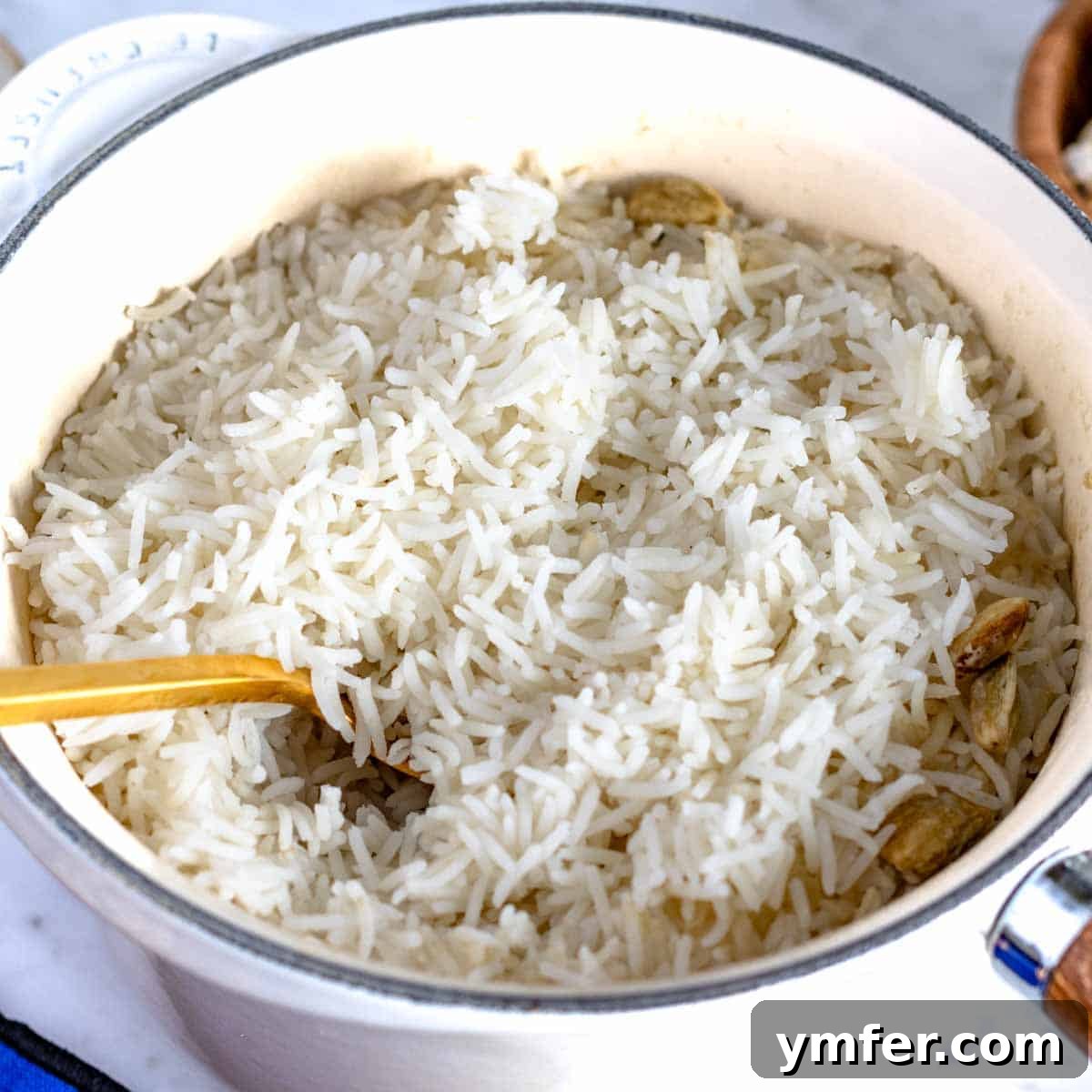
Unlock the secrets to effortlessly cooking **fluffy, perfectly separated basmati rice** right in a small pot on your stovetop. This comprehensive guide will equip you with two distinct, foolproof methods, ensuring you achieve aromatic, restaurant-quality results every single time.
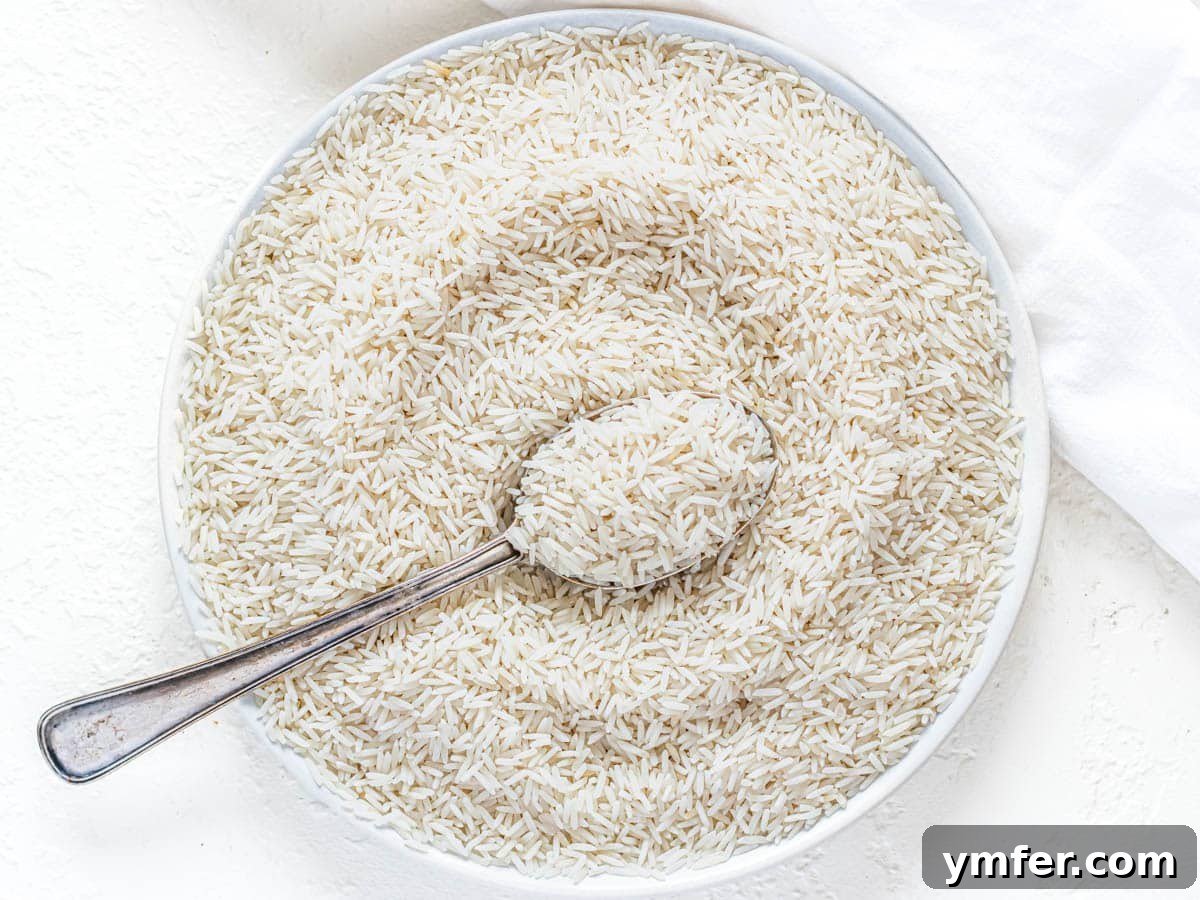
Basmati, a globally celebrated **aromatic, thin, and long-grain rice** variety, is not just a staple but a delicacy. Known for its distinctive fragrance and delicate, non-sticky texture, it serves as an **exceptionally versatile and elegant side dish** that can elevate a vast array of culinary creations.
Elevate your meals with perfectly cooked basmati rice! **Pair it beautifully with vibrant dishes** such as a comforting hearty lentil curry, a rich creamy chickpea curry, the traditional and satisfying mujaddara, or a warming savory chickpea stew. Its subtle fragrance and light texture make it the ideal companion for robust, spiced flavors.
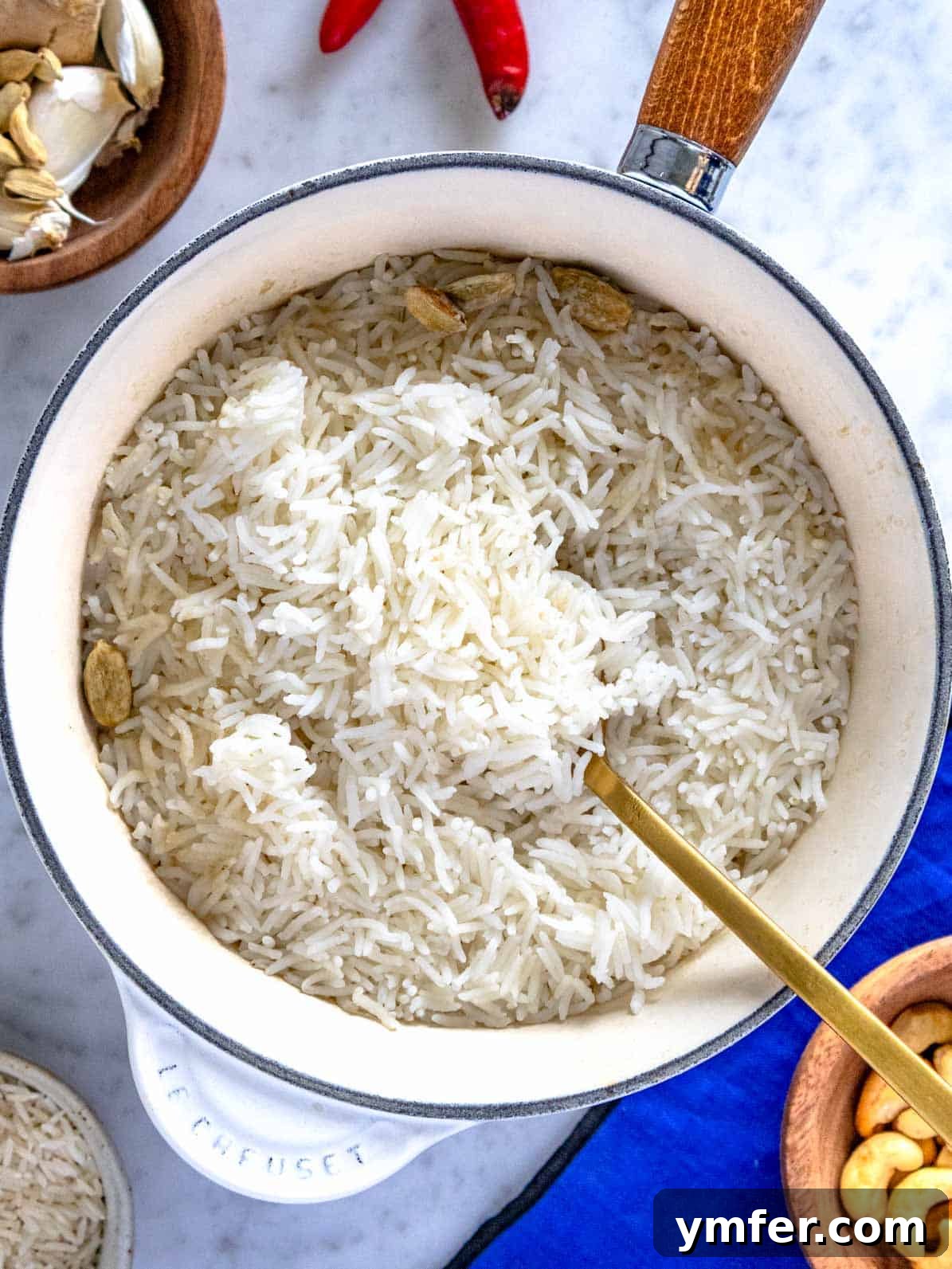
Table of Contents: Your Guide to Perfect Basmati
- Understanding Basmati Rice: History, Characteristics, and Appeal
- Mastering Basmati: An Overview of Stovetop Cooking Methods
- The Absorption Method: How to Cook Basmati Rice for Concentrated Flavor
- The Immersion Method: How to Cook Basmati Rice for Consistent Fluffiness
- Cooking Wholesome Whole Grain Basmati Rice
- Inspiring Serving Suggestions: What to Pair with Basmati
- Beyond the Recipe: Why Cultures Soak and Rinse Rice
- Storage and Reheating Tips for Cooked Basmati Rice
- Recipe Card: Fluffy Basmati Rice (Absorption Method)
Understanding Basmati Rice: History, Characteristics, and Appeal
Basmati rice, translating to “fragrant one” in Hindi, is more than just a grain; it’s a culinary experience. Cultivated for centuries in the fertile plains at the foothills of the Himalayas, particularly in India and Pakistan, this **thin, long-grain, aromatic rice** variety stands apart from its counterparts. Its signature characteristic is its remarkable fragrance, often described as reminiscent of pandan leaf, roasted nuts, or even popcorn – a complex aroma that intensifies upon cooking.
What truly makes basmati special is its unique ability to elongate significantly during cooking, with individual grains remaining light, separate, and delightfully fluffy. Unlike sticky or clumpy rice varieties, basmati grains hold their shape, creating an elegant texture that doesn’t overwhelm other ingredients. This quality makes it the perfect accompaniment for rich gravies, flavorful curries, and saucy stews, allowing each component of the meal to shine.
Beyond its traditional role as a side, basmati rice is incredibly versatile, lending its distinct character to a multitude of dishes. We are confident you will fall in love with its adaptability. It beautifully complements vibrant and savory meals such as hearty lentil curry, creamy chickpea curry, wholesome spinach stew, authentic chana saag, and comforting dal. But its potential doesn’t stop there; basmati can also be the star of your plate.
Imagine crafting exquisite main courses like the beloved lentil and rice dish, mujaddara (consistently one of our reader’s top favorite recipes!), vibrant Mexican rice, an elaborate Biryani, or classic stuffed bell peppers. Whether white or brown, basmati rice transforms ordinary meals into extraordinary culinary experiences.
Mastering Basmati: An Overview of Stovetop Cooking Methods
The journey to consistently perfect basmati rice on the stovetop often sparks discussions among cooks. The good news is, achieving outstanding results is simpler than you might think, mainly relying on two highly effective cooking techniques. Each method has its unique advantages, and understanding them will help you choose the best approach for your desired outcome.
- ABSORPTION METHOD: This technique involves cooking the rice in a precise, limited amount of water until all the liquid is fully absorbed by the grains. The pot remains covered, trapping steam and allowing the rice to gently cook through. This method is often praised for concentrating the rice’s delicate flavor and aroma, yielding distinct, tender grains. It requires careful attention to ratios and heat control.
- IMMERSION METHOD (BOILING): Sometimes referred to as the “pasta method,” this approach involves boiling the rice in a generous quantity of water, similar to how you cook pasta. Once the rice reaches the desired tenderness, the excess water is drained. This method is incredibly forgiving, less prone to scorching, and excellent for achieving ultra-separated, fluffy grains, especially beneficial when dealing with varying rice brands or qualities.
Both the absorption and immersion methods are excellent pathways to deliciously cooked basmati rice. Your choice can depend on your comfort level, the type of meal you’re preparing, or simply which technique you prefer. We highly recommend trying both to see which yields your favorite results. In our kitchen, we frequently lean towards the immersion or boiling method. We find it to be a slightly faster process from start to finish, and more importantly, it consistently delivers reliable fluffiness and separation across different basmati rice brands, offering a no-fail outcome every time.
The Absorption Method: How to Cook Basmati Rice for Concentrated Flavor
The absorption method is a time-honored technique that allows basmati rice to slowly soak up all the cooking liquid, infusing each grain with flavor and ensuring a perfectly tender, aromatic result. This method relies on a precise water-to-rice ratio and undisturbed simmering for success.
CRITICAL RATIOS: For the classic absorption method, the ideal proportion is **1 cup basmati rice to 1.5 cups water.** This ratio is fundamental for achieving the characteristic light and fluffy texture, preventing both stickiness and dryness.
A NOTE ON RINSING: The practice of rinsing rice is often discussed. For commercially packaged white basmati rice found in most supermarkets, which typically undergoes a polishing process, we have observed **no noticeable difference in texture or fluffiness** in our tests with or without rinsing. Therefore, for convenience, rinsing is generally optional for these varieties. We will explore the cultural and historical reasons for rinsing rice in more detail later in this article.
**Step-by-Step Guide for the Absorption Method:**
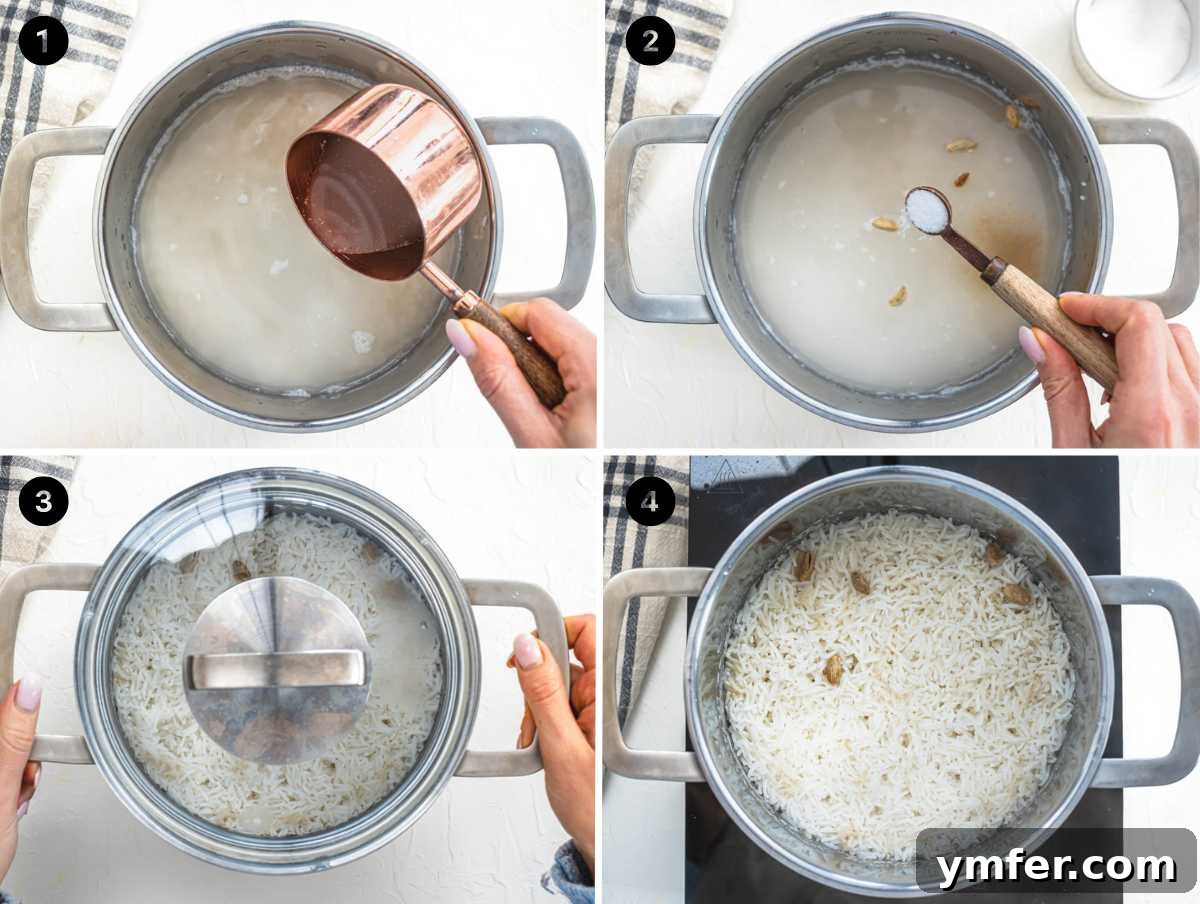
- **Combine Ingredients:** In a sturdy saucepan (preferably non-stick) with a tight-fitting lid, add 1.5 cups of cold water, 1 cup of basmati rice, and ¼ teaspoon of salt. Stir gently once or twice to ensure the rice is evenly distributed.
- **Bring to a Boil:** Place the saucepan over high heat and bring the water to a rapid, rolling boil. Keep the lid off during this initial phase to allow for quick heating and to monitor the boil.
- **Reduce Heat and Simmer:** As soon as the water achieves a vigorous boil, immediately reduce the heat to its lowest setting (medium-low). Place the lid firmly on the saucepan. Allow the rice to simmer undisturbed for precisely **12 minutes**. It is absolutely crucial not to lift the lid during this period, as the trapped steam is vital for the rice to cook evenly and thoroughly. Set a timer to ensure exact timing.
- **Rest and Steam:** Once the 12 minutes of simmering are complete, remove the saucepan from the heat, but importantly, **do not lift the lid**. Let the rice rest, covered, for an additional **5 minutes**. This critical resting period allows the remaining steam to redistribute evenly throughout the grains, ensuring maximum fluffiness and preventing any stickiness.
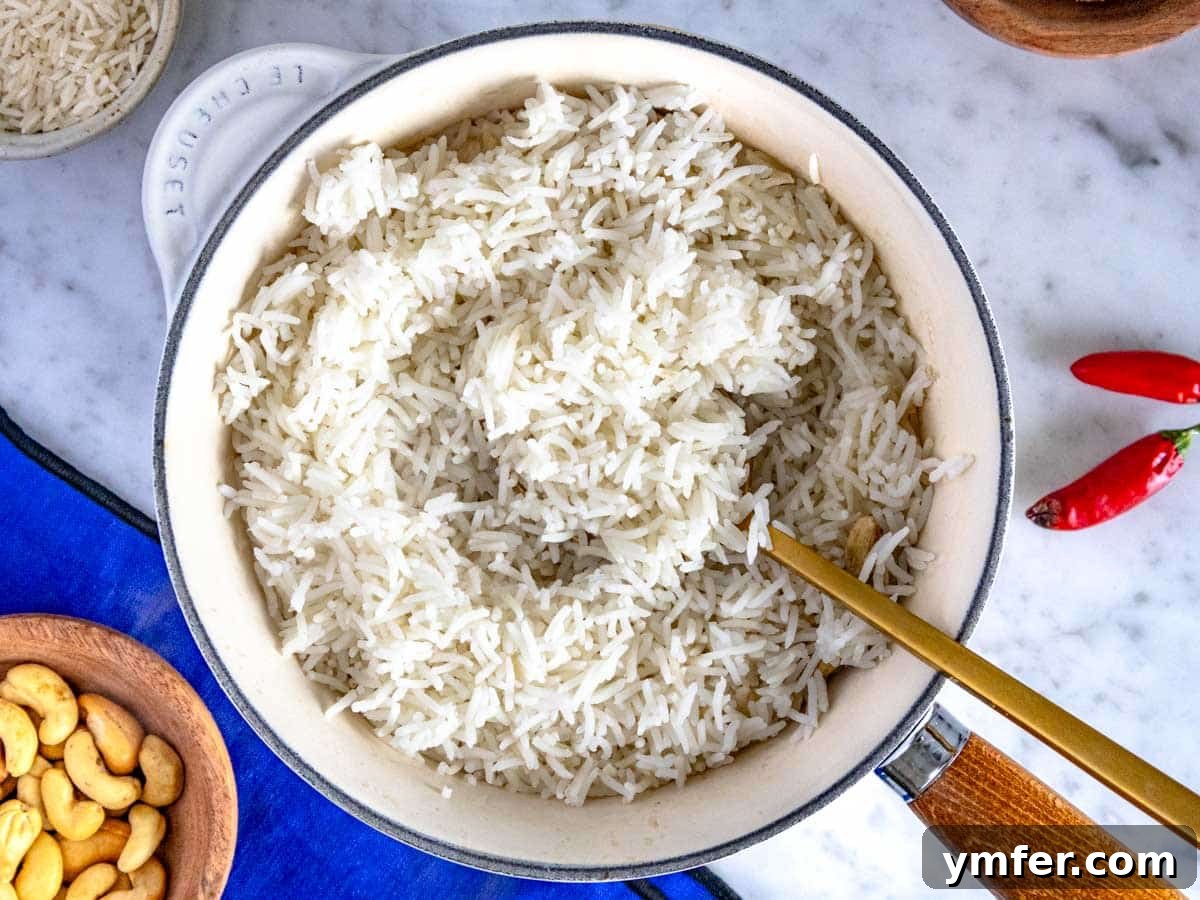
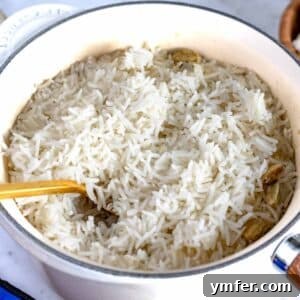
After the resting period, gently lift the lid and use a fork to fluff the rice, separating its elongated grains. Transfer the perfectly cooked, aromatic basmati rice from the pot to your serving dish, and enjoy its delicate texture and flavor!
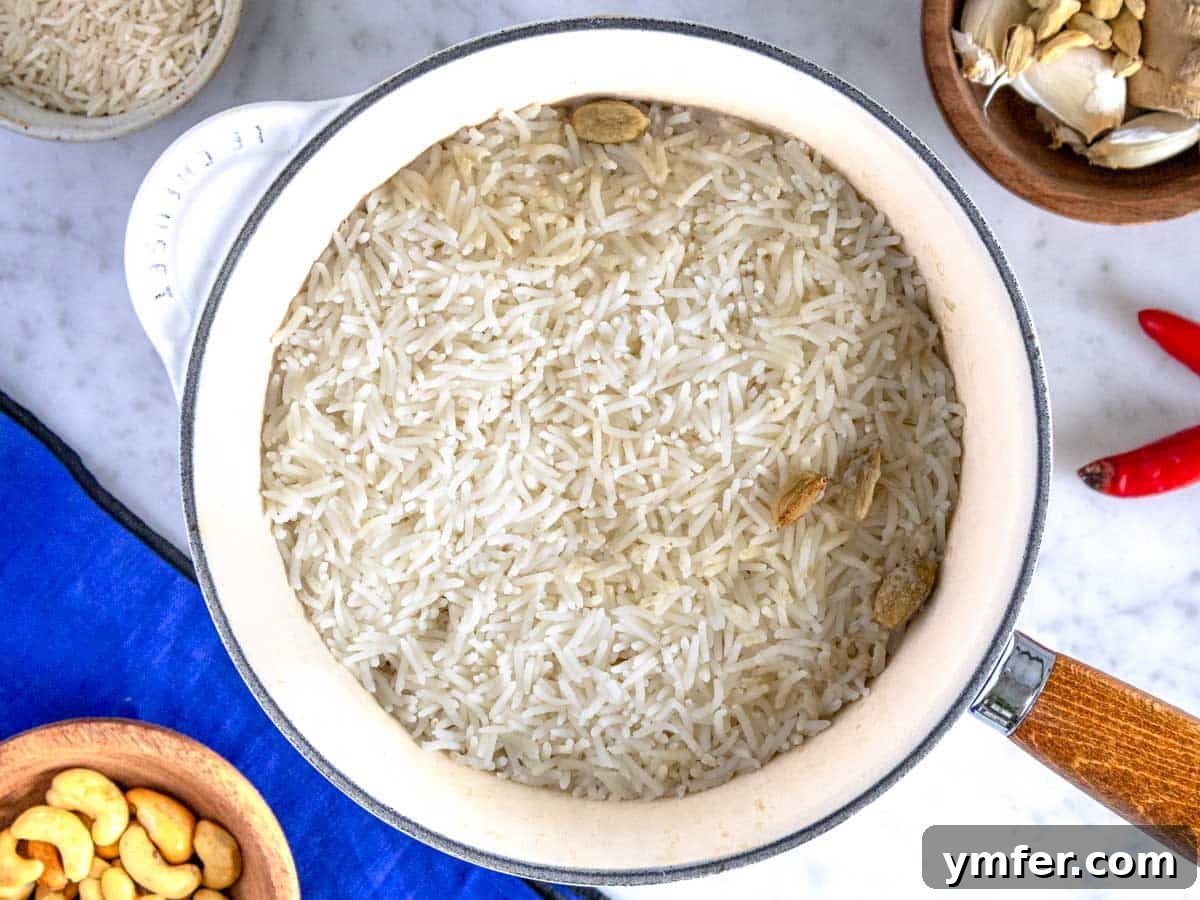
**Expert Tip for Enhanced Aroma:** To infuse your basmati rice with an extra layer of exotic fragrance, consider adding a few whole spices to the pot along with the water and rice in Step 1. Excellent choices include 4 green cardamom pods, 2 bay leaves, or a small stick of cinnamon. These spices will gently release their aromas as the rice cooks, creating a truly sensory experience.
The Immersion Method: How to Cook Basmati Rice for Consistent Fluffiness
The immersion method, often called the boiling method, offers a robust and incredibly forgiving way to cook basmati rice. Much like cooking pasta, this technique involves using a generous amount of water and then draining the excess, ensuring each grain cooks perfectly and remains distinct and separate. This is our go-to method for its unparalleled reliability, especially when dealing with different brands of basmati rice, guaranteeing consistent fluffiness every time.
OPTIMAL RATIOS: For the immersion method, you’ll need plenty of water to allow the rice to move freely. We recommend a ratio of **1 cup of basmati rice to 6 cups of water.** This ample liquid ensures thorough cooking and prevents clumping, resulting in beautiful, separated grains.
**Step-by-Step Guide for the Immersion Method:**
- **Bring Water to a Rolling Boil:** In a large pot, bring 6 cups of water to a vigorous, rolling boil over high heat. The larger the pot, the better, as it gives the rice more room to expand.
- **Add Rice and Salt:** Once the water is boiling intensely, add 1 cup of basmati rice and 1 teaspoon of salt. Stir gently just once to ensure the grains don’t stick to the bottom.
- **Boil Until Tender:** Continue to boil the rice, uncovered, for approximately **10 minutes**. The exact cooking time may vary slightly depending on the age and brand of your rice, as well as your preferred texture. Begin tasting the rice around the 8-minute mark; it should be tender but still possess a slight, pleasant chew. If it’s not quite ready, continue boiling and taste every minute until it reaches your desired doneness.
- **Drain Thoroughly and Steam:** Once the rice is perfectly cooked, immediately drain it through a fine-mesh sieve or a colander. For the crucial step of achieving truly fluffy, non-soggy rice, place the sieve (with the rice still inside) directly back over the empty hot pot. Let it sit and steam off for a full **3 minutes**. This allows any residual surface moisture to evaporate.
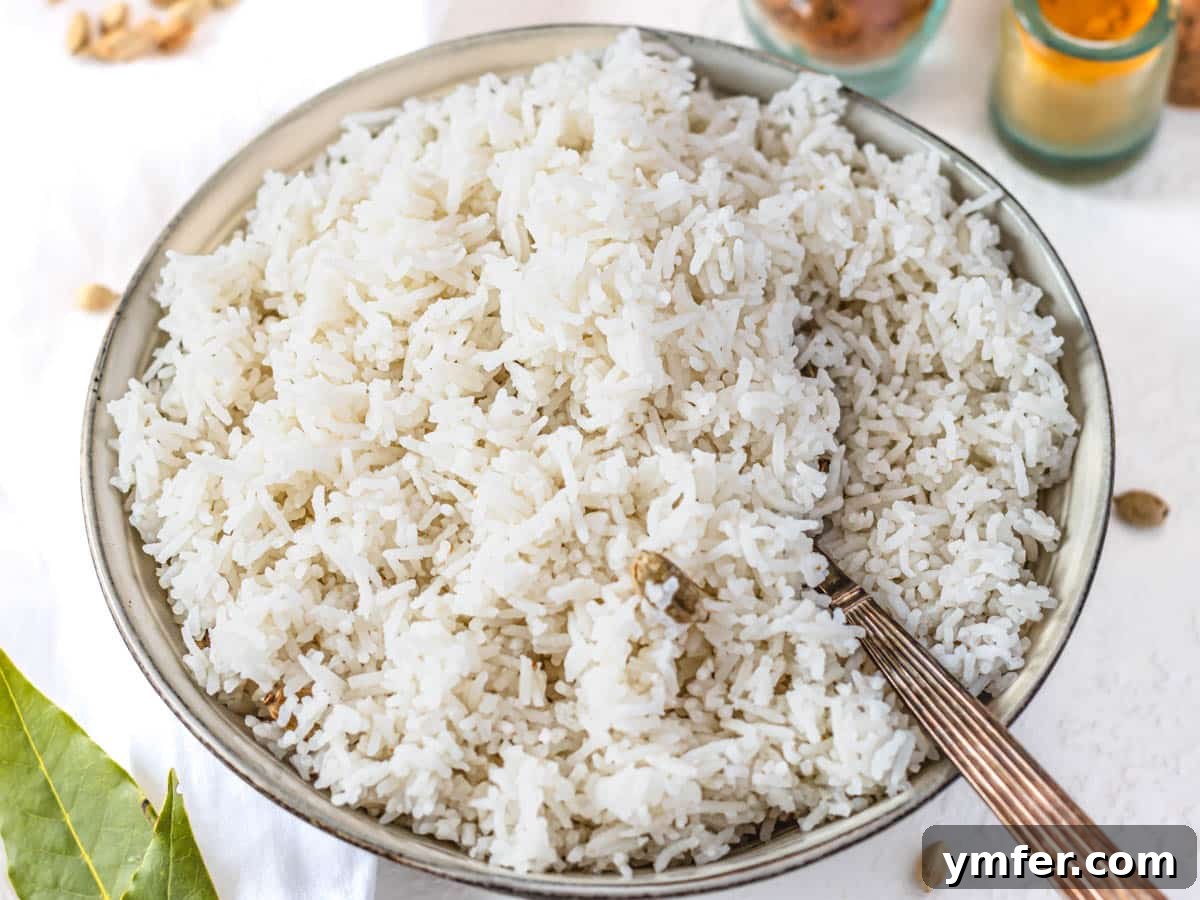
- **Fluff and Serve:** Gently fluff the perfectly cooked basmati rice with a fork, encouraging the grains to separate and become even lighter. Transfer it to your serving bowl or a container for storage, and serve promptly with your favorite curries or stews.
Cooking Wholesome Whole Grain Basmati Rice
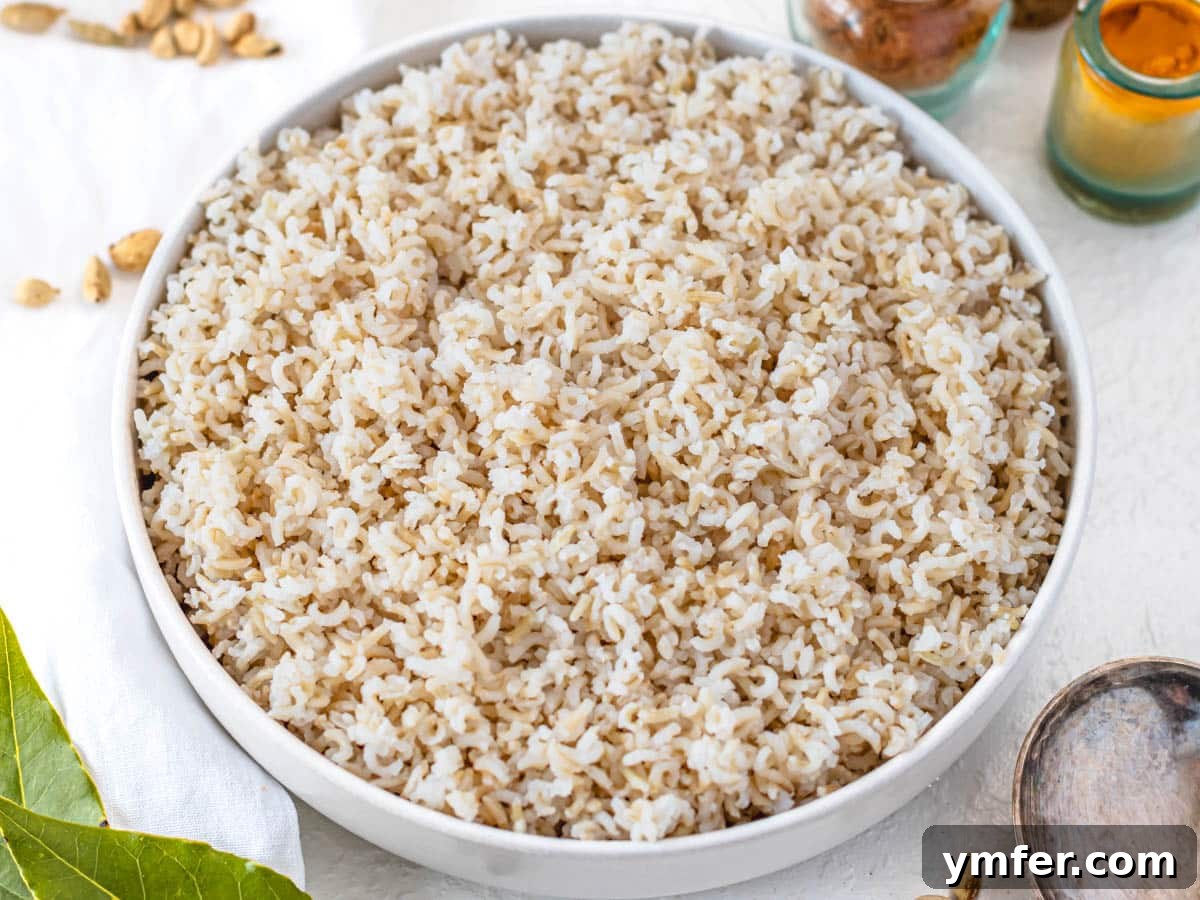
Whole grain basmati rice, often referred to as brown basmati, is a nutritional powerhouse. Unlike white basmati, it retains its outer bran and germ layers, which are rich in fiber, vitamins, and minerals. These intact layers give brown basmati a nuttier flavor and a chewier texture. Due to its unprocessed nature, it requires a different approach to cooking compared to white basmati – specifically, a longer cooking time and more water.
For cooking whole-grain basmati rice, the **immersion (boiling) method is highly recommended.** This technique ensures that the grains have ample water to absorb over a longer period, resulting in tender, distinct grains without becoming gummy or undercooked.
WHOLE GRAIN RATIOS: For every **1 cup of whole-grain basmati rice, you’ll need approximately 8 cups of water** for the boiling method.
**Step-by-Step Guide for Whole Grain Basmati (Immersion Method):**
- **Bring Water to a Vigorous Boil:** In a large pot, bring 8 cups of water to a strong, rolling boil over high heat. A larger pot is beneficial to accommodate the rice’s expansion.
- **Add Rice and Salt:** Carefully add 1 cup of whole-grain basmati rice and 1 teaspoon of salt to the vigorously boiling water. Give it a quick stir to prevent sticking.
- **Boil to Perfect Tenderness:** Boil the rice, uncovered, according to the specific package instructions, which typically suggest around **30 minutes**. However, it’s crucial to start tasting the rice after about 25 minutes. Continue cooking until the grains are tender throughout but still retain a pleasant, slightly firm chew.
- **Drain and Steam:** Once the whole grain basmati is cooked to your preference, drain it thoroughly using a fine-mesh sieve or colander. To achieve optimal fluffiness and remove any excess surface moisture, place the sieve (with the rice) back over the empty hot pot and let it steam off for at least **3 minutes**.
- **Fluff and Serve:** Using a fork, gently fluff the brown basmati rice to separate the grains. Transfer it to a serving bowl and enjoy this nutritious and flavorful grain.
Inspiring Serving Suggestions for Basmati Rice
Basmati rice, with its elegant texture and subtle fragrance, is an incredibly versatile grain that complements a vast spectrum of culinary traditions. Its ability to remain separate and fluffy makes it the perfect foundation for absorbing the rich flavors of various dishes.
**BASMATI RICE AS THE PERFECT SIDE DISH:**
Elevate your main courses by serving beautifully cooked basmati rice alongside vibrant and aromatic dishes. It’s an ideal companion for Lentil Curry, creamy Creamy Dal, wholesome Vegetable Curry, spicy Chana Masala, flavorful Vegan Curry, savory Tofu Curry, nutritious Moong Dal, robust Chana Dal, decadent Navratan Korma, and numerous other delightful curries and Indian-inspired recipes. Beyond Indian cuisine, basmati pairs wonderfully with Middle Eastern stews, stir-fries, grilled vegetables, and various plant-based proteins.
**ESSENTIAL HOW-TO GUIDES FOR COMPLEMENTARY DISHES:**
Expand your cooking repertoire and create complete, balanced meals by mastering other kitchen staples. Explore our helpful guides on how to cook chickpeas, how to cook lentils, how to cook black beans, how to cook couscous, how to cook quinoa, and how to cook barley. These foundational skills will enable you to create endless healthy and delicious combinations with your perfectly cooked basmati rice.
You Might Also Like: More Plant-Based Recipe Ideas
30-minute meals
Dal – Creamy Split Lentils
Curry Recipes
Lentil Curry
30-minute meals
Chana Masala in 30 Minutes (Protein Rich and Flavorful)
Curry Recipes
Chickpea Curry
Beyond the Recipe: Why Cultures Soak and Rinse Rice
The preparation of rice, particularly basmati, often involves more than just cooking; it’s a practice steeped in cultural tradition and practical wisdom. Not long ago, my partner Louise and I had the privilege of attending an illuminating cooking class in Berlin, Germany, hosted by Divia, an Indian woman whose passion for her heritage food was truly infectious.
Divia recounted her journey of rediscovering her roots through cooking after moving abroad, driven by a deep yearning for the authentic, comforting flavors of her childhood in India. Her class was an immersive experience, blending recipes with fascinating insights into Indian culinary practices and the profound connection between food and culture. It was, without a doubt, one of the most memorable cooking lessons we’ve ever had.
A particular detail from Divia’s class struck me profoundly: her reliance on basmati rice and specific spices, like the exquisite garam masala she graciously shared with us, sent directly from India by her mother. I had to ask why the basmati from India was so distinct.
Divia patiently explained that traditional Indian basmati rice differs significantly from the varieties commonly found in Western supermarkets. This authentic rice is often **less polished, retaining a natural yellowish-off-white hue** due to minimal processing. She showed us samples, vividly illustrating the difference. Crucially, this rice is also typically **aged**—a vital process that deepens its inherent aroma, enhances its flavor profile, and dramatically improves its cooking texture. As she elaborated, the longer the rice has been aged, the higher its perceived quality and distinctiveness, a concept I hadn’t fully appreciated until then.
This traditional preparation, Divia emphasized, is the very reason **many cultures meticulously rinse and soak their rice before cooking.** Rinsing serves a dual purpose: it effectively washes away excess surface starch, which, if left on, can cause the rice grains to clump together, hindering the desired fluffy and separate texture. Additionally, rinsing removes any residual dust, impurities, or stray particles that might accumulate during harvesting, milling, and packaging, ensuring a cleaner final product.
Soaking, on the other hand, is a critical pre-hydration step. It allows the dry rice grains to absorb water gradually, initiating the cooking process even before heat is applied. This not only helps the rice cook more uniformly and significantly faster but also contributes to a superior texture, making the cooked grains wonderfully tender and less prone to breakage. It’s a testament to ancient culinary wisdom, refined over generations, focused on maximizing both purity and palate pleasure.
However, Divia also provided an important clarification for those of us purchasing rice in Western markets: if you typically buy **white basmati rice from a mainstream supermarket, which has usually undergone extensive polishing by manufacturers, the imperative for rinsing and especially soaking is largely reduced.** This commercial polishing process removes much of the surface starch and impurities, rendering the benefits of pre-washing less pronounced. Furthermore, for those concerned about trace elements, some scientific studies indicate that the immersion (boiling) method is often more effective at reducing potential arsenic levels in rice than rinsing alone, offering a compelling health-conscious perspective on cooking methodology.
Storage and Reheating Tips for Cooked Basmati Rice
Proper storage and careful reheating of cooked basmati rice are essential to maintain its quality and ensure food safety. Cooked rice, if left at room temperature for prolonged periods, can become a breeding ground for bacteria, so swift cooling and proper refrigeration are key.
- **Refrigerator Storage:** Once your basmati rice has finished cooking, it should be cooled to room temperature as quickly as possible, ideally within one hour. Promptly transfer the cooled rice into an airtight container. Store it in the main compartment of your refrigerator for up to **3 days**. A well-sealed container prevents the rice from drying out and absorbing unwanted odors from other foods.
- **Freezer Storage:** For extended preservation, cooked basmati rice freezes exceptionally well. To maximize convenience and ensure even thawing, it is best to freeze the rice in airtight containers or freezer bags, divided into single-serving portions. Cooked rice can be safely stored in the freezer for up to **3 months** without a significant loss in flavor or texture.
- **Thawing and Reheating:** When you’re ready to enjoy frozen basmati rice, you can defrost it overnight in the refrigerator or use the defrost setting on your microwave for a quicker option. For reheating, sprinkle a tablespoon or two of water over the rice before warming. This helps reintroduce moisture and keeps the grains from drying out. Reheat in the microwave for approximately **2 minutes** per single portion, or gently warm it on the stovetop over low heat, stirring occasionally, until it is thoroughly heated through.
Always ensure that reheated rice is piping hot all the way through before serving, and it is generally advised to avoid reheating rice more than once to minimize health risks and maintain optimal texture.
Perfect Fluffy Basmati Rice (Absorption Method)
Nico Pallotta
This aromatic, thin, and long-grain rice is a perfect and versatile side dish, offering a delicate texture and fragrant appeal to any meal.
0 minutes
12 minutes
5 minutes
17 minutes
3
servings
Rice, Side dish
International
Share
Ingredients
-
1
cup
basmati rice -
1½
cups
water -
½
teaspoon
salt
+ 4 green cardamom pods, 2 bay leaves, or 1 small cinnamon stick, optional, for added fragrance.
Instructions
STEP PICTURES (Always Shown)
-
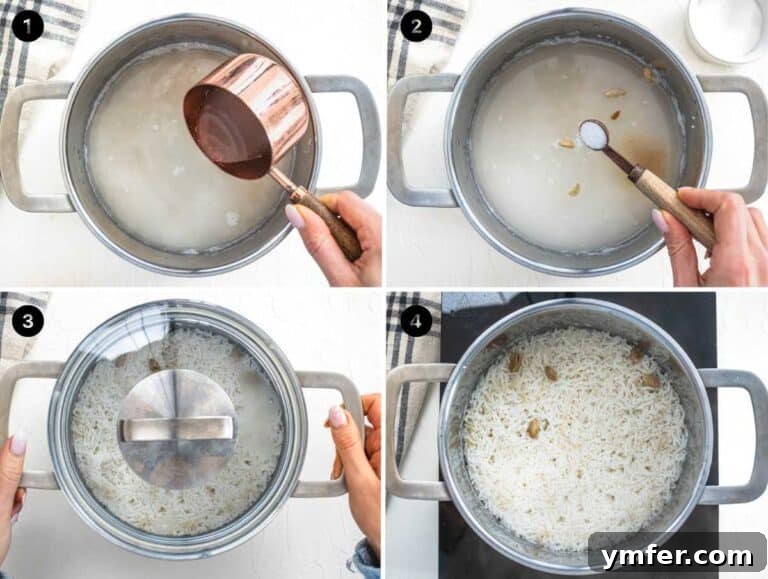
**Step 1: Combine Ingredients.** In a saucepan, combine 1½ cups water, 1 cup basmati rice, and ½ teaspoon salt. If desired, add your choice of whole spices for extra aroma. Stir gently to mix.
**Step 2: Bring to a Boil.** Place the saucepan over high heat and bring the water to a rapid, rolling boil. Keep the lid off during this stage.
**Step 3: Simmer Undisturbed.** As soon as it boils, reduce the heat to medium-low. Cover the pot tightly with a lid and **simmer for precisely 12 minutes**. Do not lift the lid during this crucial simmering period; rely on the timer.
**Step 4: Rest for Fluffiness.** Once simmering is complete, remove the pot from the heat. Keep the lid firmly on and let the rice **rest for 5 minutes**. This allows the steam to redistribute, creating perfectly separate and fluffy grains.

-
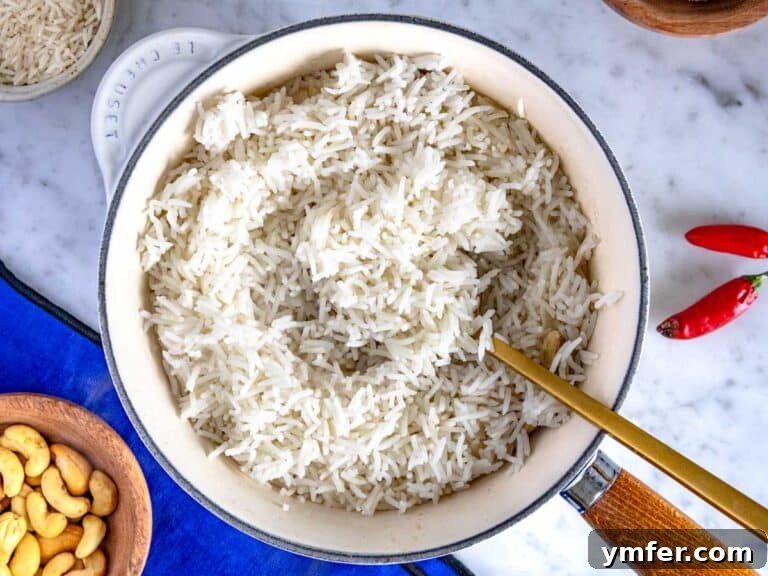
**Step 5: Fluff and Serve.** Gently remove the lid and use a fork to fluff the cooked basmati rice, separating the individual, elongated grains. Transfer it to your serving dish and enjoy this fragrant side!
Recipe Notes & Expert Tips for Perfect Basmati Rice
Should I rinse basmati rice before cooking?
As detailed in our main article, rinsing commercially processed white basmati rice (typically found in supermarkets) is generally optional. Our tests indicate minimal impact on texture or fluffiness for these varieties. If you do opt to rinse, consider reducing the cooking water by approximately 2 tablespoons per cup of rice to compensate for any absorbed moisture. While rinsing helps remove surface starch and dust, for potential arsenic reduction, the immersion (boiling) method is often cited by experts, including the FDA, as more effective.
Can you boil basmati rice instead of using the absorption method?
Absolutely! The boiling (immersion) method is an excellent alternative, particularly known for yielding consistently separate and fluffy grains. Here’s a concise guide for this method:
- Bring 6 cups of water to a vigorous boil in a large pot.
- Add 1 cup of basmati rice and 1 teaspoon of salt to the boiling water.
- Boil, uncovered, for about 10 minutes, or until the rice is tender but still firm to the bite. Taste regularly to check for doneness.
- Drain the rice thoroughly in a fine-mesh sieve. Place the sieve over the empty hot pot and allow it to steam off for 3 minutes to remove excess moisture and enhance fluffiness.
- Fluff with a fork, transfer to a serving dish or container, and enjoy immediately.
Can I cook more than 1 cup of basmati rice at a time?
Yes, this recipe is easily scalable. When increasing the quantity, the cooking time will extend slightly, especially with the absorption method. As a general rule, for each additional cup of rice, you might need to add approximately 1 minute to the simmering time. It’s crucial to maintain the correct water-to-rice ratios (1.5 cups water per cup of rice for absorption, 6-8 cups water per cup of rice for immersion) and ensure you use a pot large enough to prevent overcrowding, which can lead to uneven cooking.
How to store cooked basmati rice?
- **Refrigerator:** Let the rice cool completely within an hour, then store it in an airtight container in the fridge for up to 3 days.
- **Freezer:** For longer-term storage, freeze the rice in airtight, single-portion containers for up to 3 months.
- **Thaw & Reheat:** Defrost frozen rice in the refrigerator or microwave. Reheat with a splash of water in the microwave for about 2 minutes (per portion) or gently on the stovetop until piping hot.
Nutrition Information (per serving)
Tried this recipe?
We’d love to hear your feedback! Leave a comment below or mention @theplantbasedschool on Instagram. Your ratings and comments help our community thrive! ⭐️ 💚.
You Might Also Like: More Plant-Based Recipe Ideas
Collections
Indian Vegetarian Recipes
Recipes
45 Easy Vegetarian Dinner Recipes
Mains
40 High Protein Vegetarian Meals
Collections