
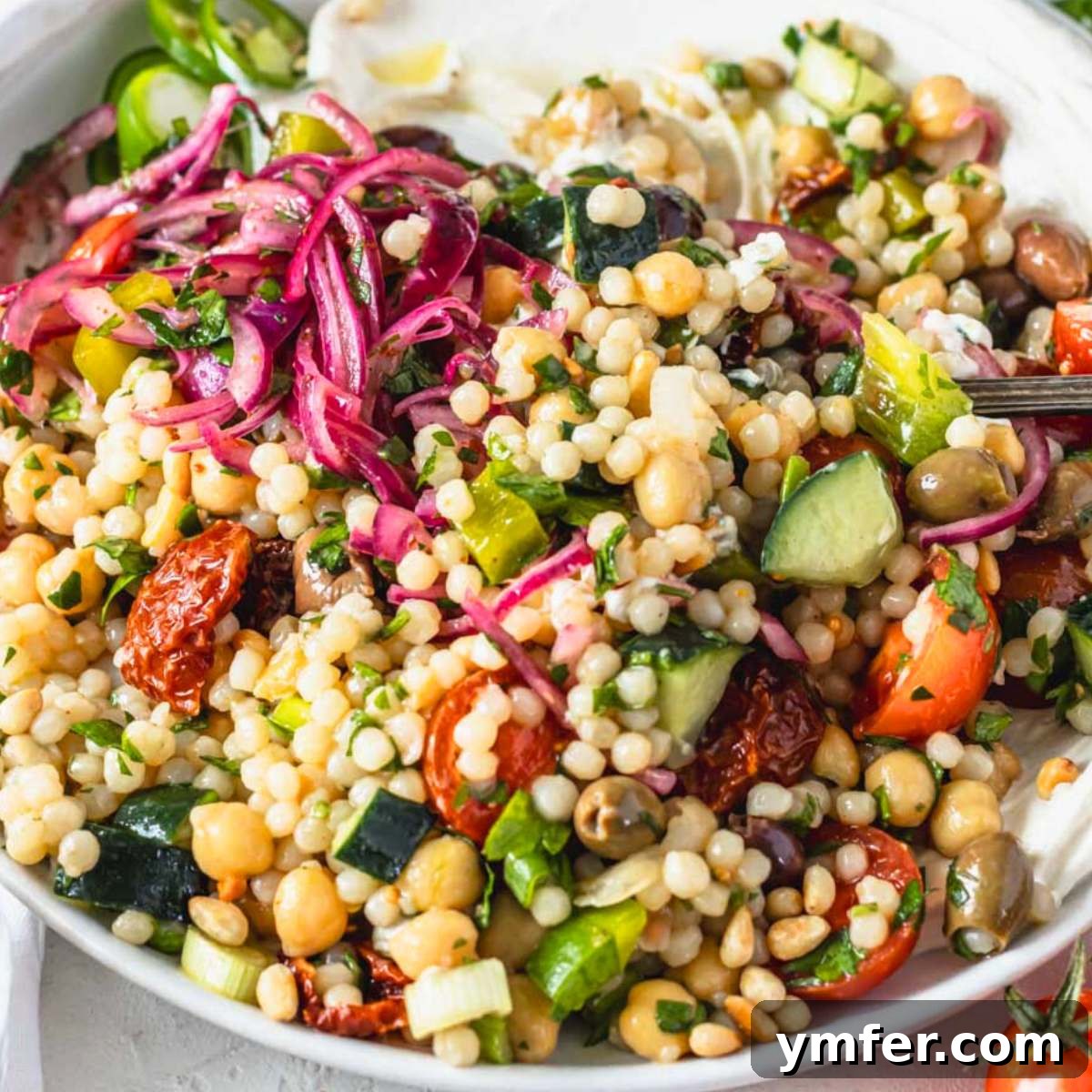
Delicious & Healthy Pearl Couscous Salad: A Mediterranean Delight
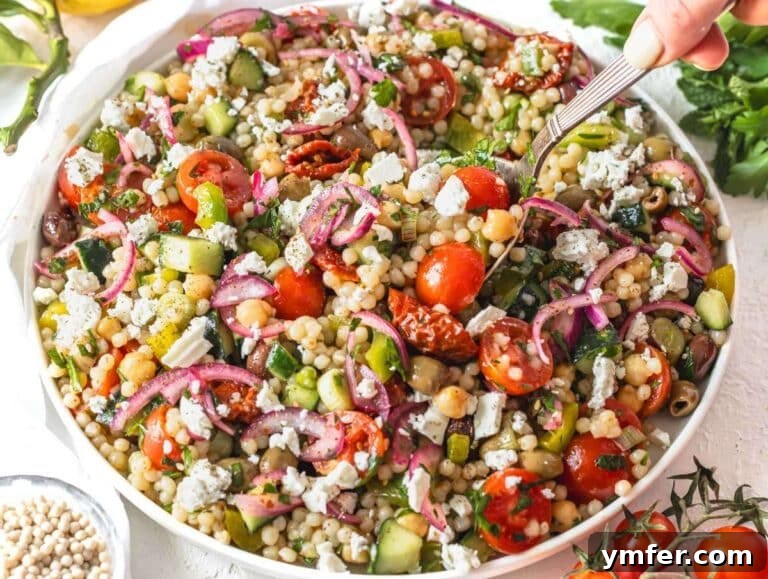
Our Pearl Couscous Salad is a truly healthy and vibrant Mediterranean recipe, featuring chewy Israeli couscous, an abundance of fresh vegetables, protein-rich chickpeas, and the optional creamy tang of feta cheese. This delightful dish embodies the fresh, wholesome flavors characteristic of Mediterranean cuisine, making it a perfect addition to any meal plan.
Looking for more inspiring Mediterranean Diet recipes? Explore our collection including Greek Chickpea Salad, refreshing Shirazi Salad, our classic Mediterranean Salad, and a hearty White Bean Salad.
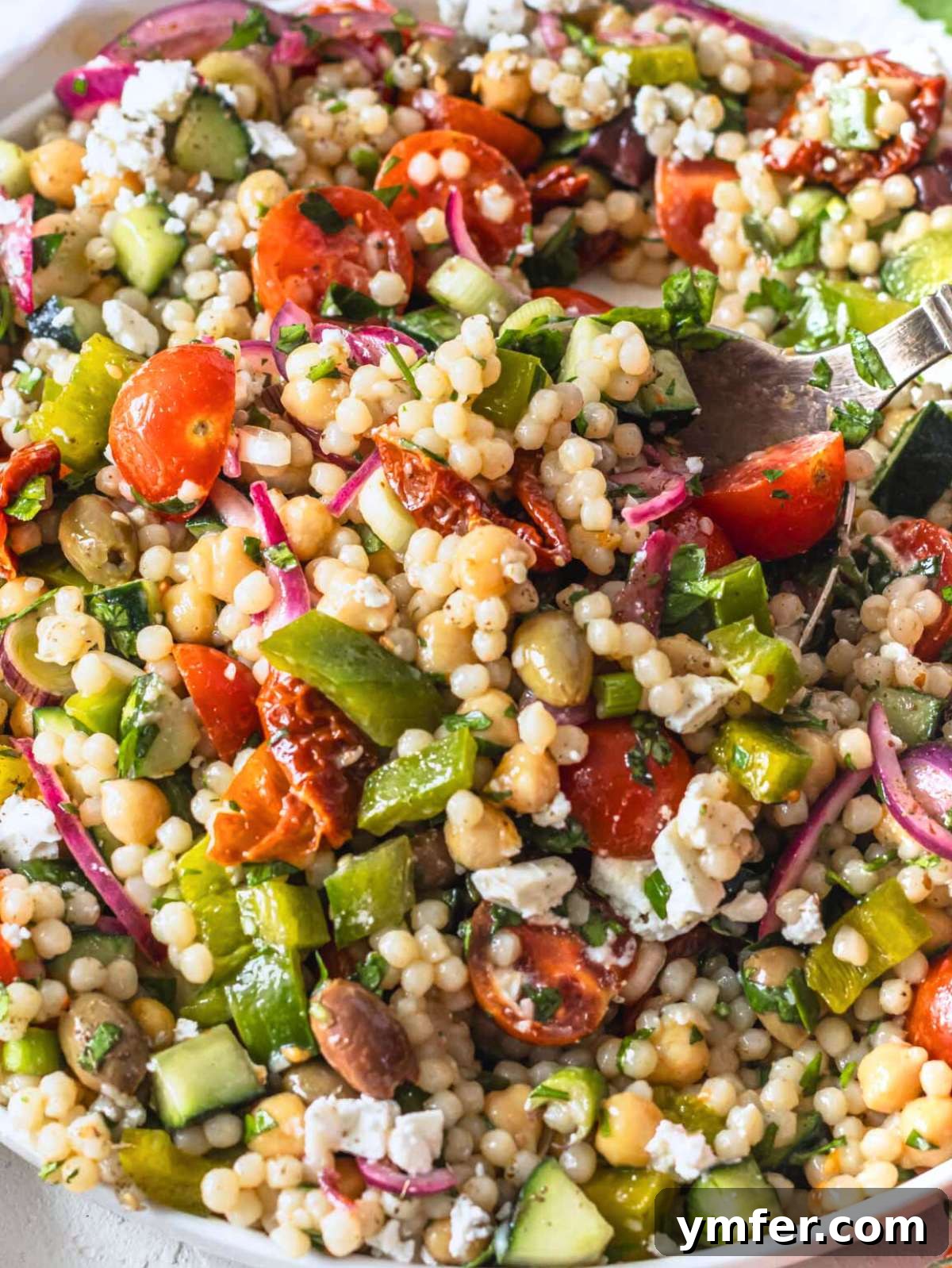
Watch Our Easy Pearl Couscous Salad Recipe Video
Get a visual guide to preparing this fantastic pearl couscous salad with our easy-to-follow video tutorial. See just how simple it is to combine these fresh ingredients for a truly satisfying meal.
A Wholesome and Versatile Mediterranean Pearl Couscous Salad
This Mediterranean pearl couscous salad recipe is not just delicious; it’s incredibly versatile and perfectly suited for a variety of occasions. Whether you’re planning your weekly meal prep, contributing to a potluck, hosting a barbecue, packing lunches for work or school, or simply looking for a quick and satisfying everyday meal, this salad fits the bill beautifully.
Inspired by some of our most cherished and popular recipes, including our beloved chickpea salad and the aromatic Moroccan couscous, this pearl couscous salad brings together the best elements of fresh, flavorful, and filling dishes. Just like our other grain-based salads such as farro salad, rice salad, and orzo salad, it’s generously packed with an array of crisp, fresh vegetables, rich umami notes from sun-dried tomatoes, and a bright, zesty mustard dressing that ties all the flavors together.
We particularly enjoy elevating this salad with delightful toppings. A sprinkle of sumac onions adds a tangy, slightly tart kick, while a generous drizzle of thick yogurt tahini sauce provides creamy indulgence. For those who appreciate a salty counterpoint, crumbled feta cheese is an absolute must-try, offering a classic Mediterranean touch that enhances every bite.
Understanding Pearl Couscous (Israeli Couscous or Ptitim)
Often referred to as Israeli couscous or Ptitim, pearl couscous is a fascinating ingredient with a unique history. Developed in Israel during the 1950s, this ingredient was originally created as a rice substitute. Despite its common English names, it’s important to note that pearl couscous is not a traditional couscous but rather a type of small, spherical pasta. It’s made from durum wheat semolina flour and water, much like Sardinian fregola pasta, to which it bears a striking resemblance in both composition and texture.
The allure of pearl couscous lies in its ease of preparation and its delightful texture. It cooks remarkably quickly, typically in less than 10 minutes (around 7 minutes in boiling water or vegetable broth), making it an ideal choice for busy weeknights. Its slightly chewy and satisfying texture provides a wonderful contrast to the crispness of fresh vegetables in a salad. Unlike traditional couscous, which is much finer and fluffier, pearl couscous offers a more substantial bite, akin to tiny pasta balls, making it a hearty base for salads and side dishes.
With this recipe, we aim to celebrate the vibrant colors and bold flavors that define the Mediterranean Diet. We hope this dish inspires you to embrace wholesome, plant-forward eating and join us in savoring the delicious benefits of this incredible culinary tradition!
Key Ingredients for Your Pearl Couscous Salad
For a comprehensive list of ingredients, exact quantities, and potential substitutions, please refer to the detailed recipe box located at the bottom of this page.
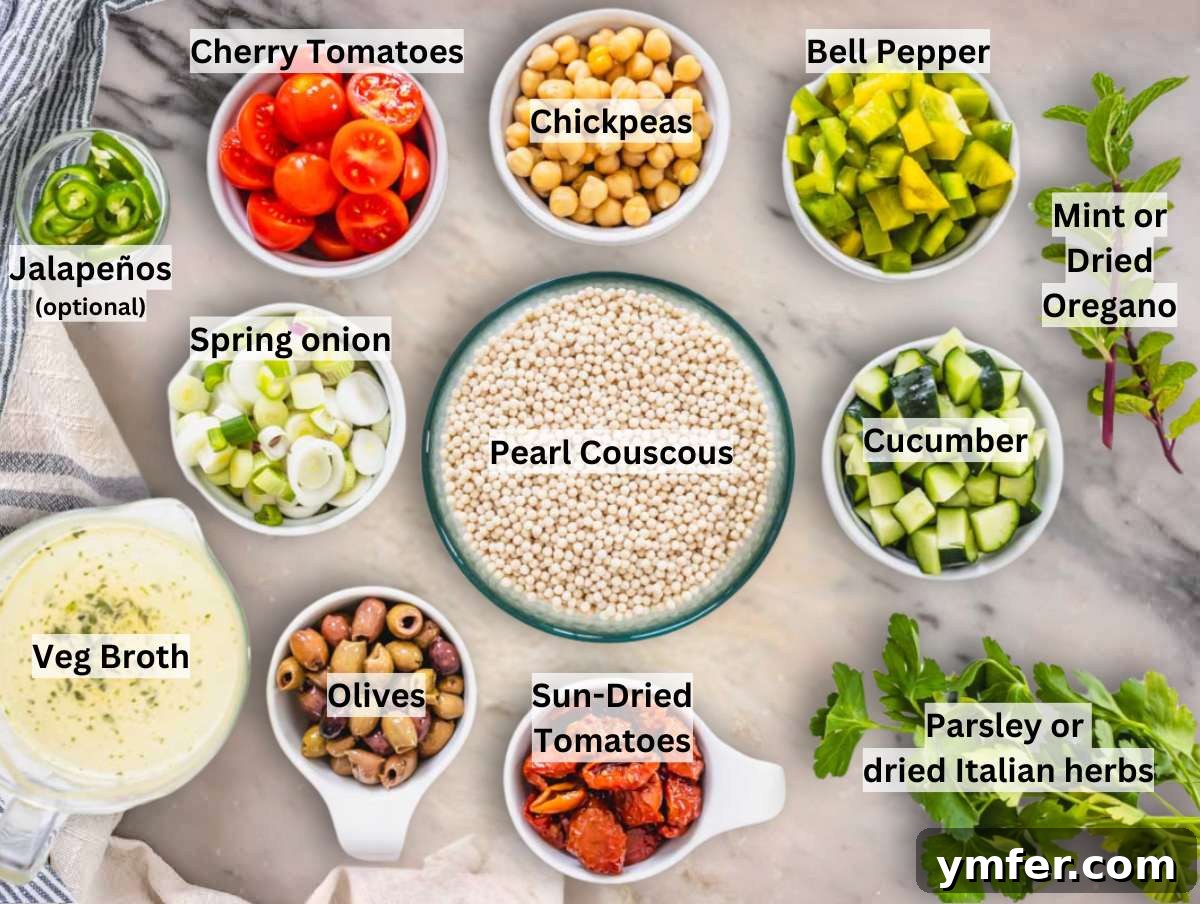
Building Blocks of Flavor:
- Pearl Couscous: The star of our salad, also known as ptitim or Israeli couscous. For an enhanced flavor profile, cook it in vegetable broth instead of just water. If pearl couscous isn’t available, excellent alternatives include farro, orzo, barley, rice, fregola, or even Moroccan couscous, though the texture will vary.
- Chickpeas: These legumes are essential for adding substantial protein and a satisfying heartiness to the salad. You can use either canned chickpeas (rinsed and drained) or home-cooked ones. Other great substitutes include black beans, edamame, or lentils, each offering a slightly different flavor and texture.
- Bell Pepper: We often opt for vibrant green bell pepper for its crisp texture and slightly bitter notes, but red or yellow bell peppers work equally well, adding a touch of sweetness.
- Cucumber: Any variety of cucumber—English, American, or Persian—will contribute a refreshing crunch and cool contrast.
- Scallions: Their mild, oniony flavor is perfect for this salad, adding depth without overpowering other ingredients. Shallots or finely diced red onions can be used as alternatives.
- Cherry Tomatoes: Halved cherry tomatoes burst with sweet and juicy flavor. Plum, date, or other small tomato varieties are also excellent choices.
- Fresh Herbs: Flat-leaf parsley is our preferred herb, lending a fresh, vibrant taste. However, don’t hesitate to experiment with fresh mint, basil, dill, or oregano for different aromatic profiles.
- Olives: Rich, briny Kalamata or Taggiasche olives are our top picks, providing a characteristic Mediterranean saltiness. Feel free to use your favorite olive variety.
- Sun-Dried Tomatoes: Choose oil-packed sun-dried tomatoes for the best flavor and a delightful chewy texture. Marinated artichoke hearts make a wonderful substitution, adding a similar tang and savory depth.
- Feta Cheese: While optional, crumbled feta is highly recommended for its salty, tangy, and creamy texture that beautifully complements the other ingredients. For a vegan option, skip the feta or use a non-dairy alternative.
- Zesty Dressing: The dressing is crucial! It’s a vibrant mix of high-quality extra virgin olive oil, freshly squeezed lemon juice (or a good vinegar), a touch of sweetness from maple syrup or honey, sharp mustard (American or Dijon), pungent garlic, earthy cumin or sumac, and balanced with salt and black pepper. This dressing brightens the entire salad.
Crafting Your Perfect Israeli Pearl Couscous Salad: Step-by-Step
Making this delightful Israeli couscous salad is straightforward and enjoyable. Follow these simple steps for a perfect result every time.
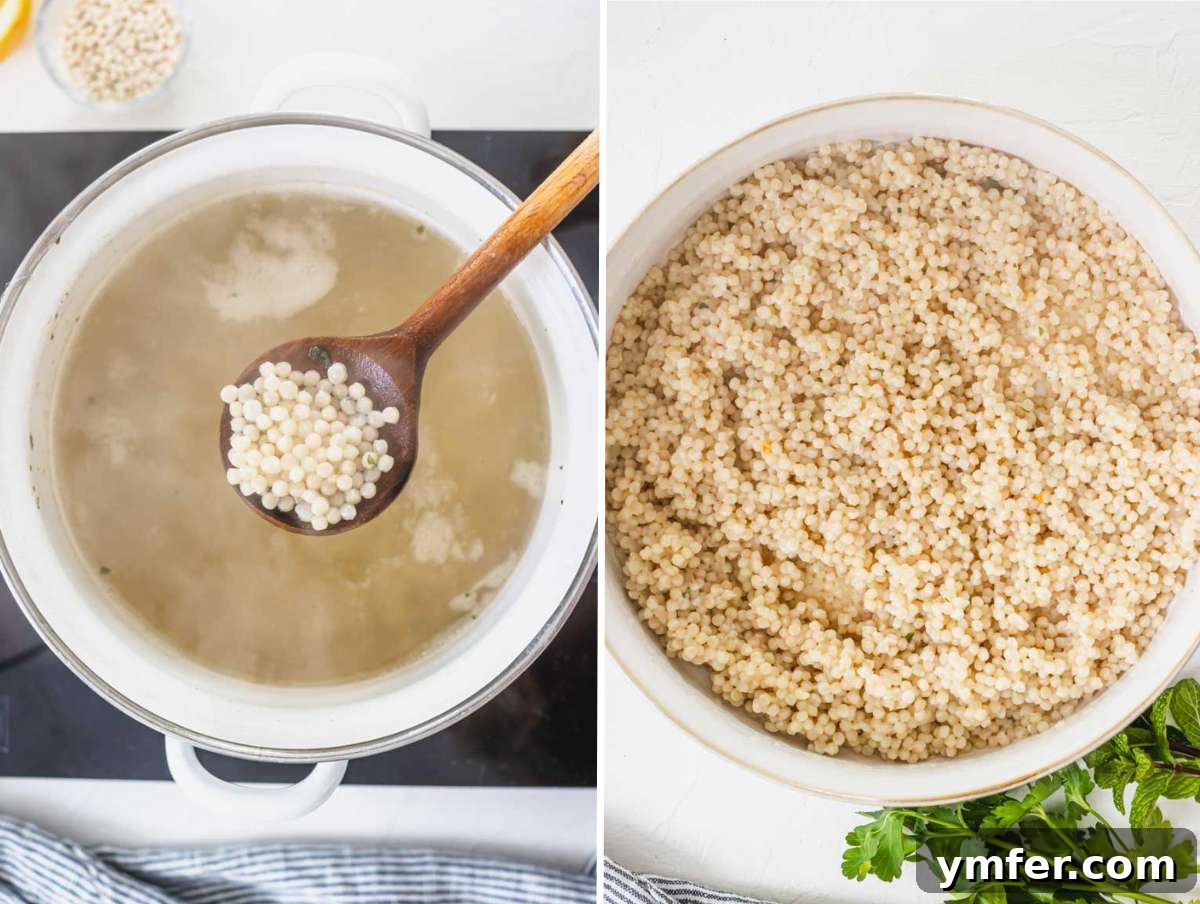
1. Cook the Pearl Couscous to Perfection
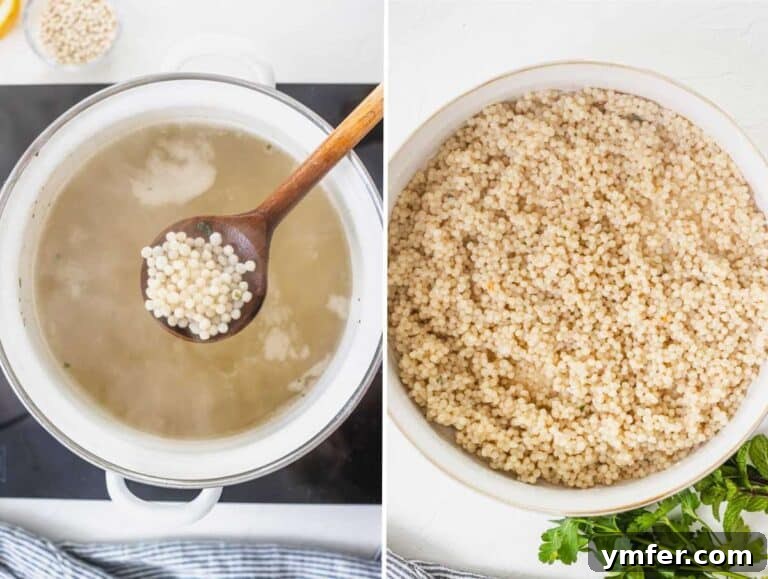
Begin by bringing a pot of salted water or vegetable broth to a rolling boil. Add your pearl couscous and cook for approximately 7 to 10 minutes, or until the pearls are al dente – tender with a slight chewiness in the center. While the couscous is cooking, you can start preparing your vegetables to save time. Once cooked, drain the couscous thoroughly and transfer it to a large mixing bowl. Allow it to cool for about 10 minutes. Don’t worry if some of the pearls stick together at this stage; they will naturally loosen up once tossed with the vibrant dressing and other ingredients.
2. Prepare and Combine Your Fresh Vegetables
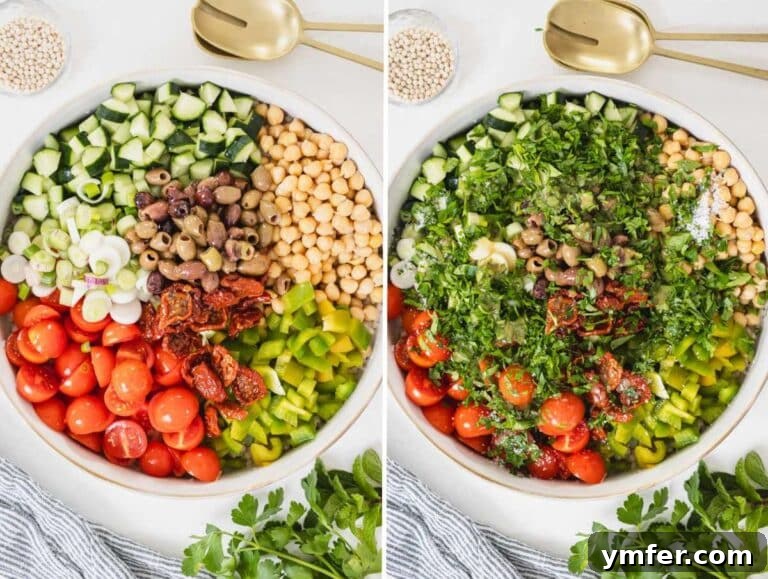
While the couscous cools, dedicate your time to preparing the fresh produce. Halve the cherry tomatoes, dice the cucumber and bell pepper into small, uniform pieces, and thinly slice the scallions. Rinse and drain the canned chickpeas. Roughly chop the sun-dried tomatoes and drain any excess oil from the olives. Finally, finely chop the fresh flat-leaf parsley. Add all these prepared vegetables and herbs to the bowl with the cooled pearl couscous. At this stage, if you’re using feta, crumble it directly into the bowl with the other ingredients.
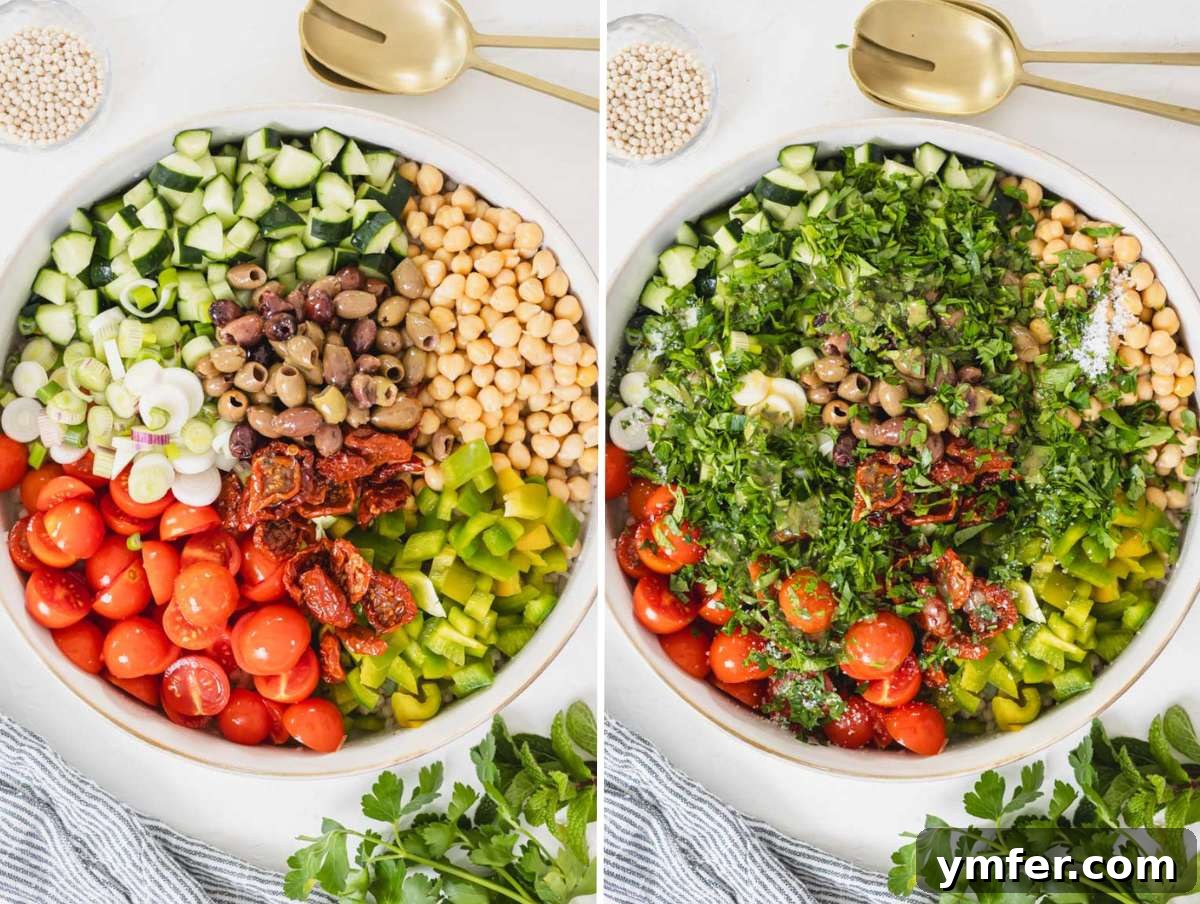
3. Whisk Together and Dress the Salad
In a separate small bowl or jar, prepare the zesty dressing. Whisk together the extra virgin olive oil, fresh lemon juice, Dijon mustard, maple syrup (or honey), finely grated garlic, ground cumin (or sumac), salt, and black pepper until well combined and emulsified. Pour this vibrant dressing generously over the couscous and vegetable mixture. Toss everything together gently but thoroughly, ensuring that every pearl and piece of vegetable is beautifully coated and infused with the dressing’s delicious flavors.
4. Taste, Adjust, and Serve Your Creation
Before serving, always taste your salad. Adjust the seasoning as needed, adding a little more salt, a squeeze of lemon juice, or a pinch of pepper to truly bring out the flavors. This salad is versatile and can be served as a refreshing main course or a hearty side dish. For an extra layer of flavor and texture, consider topping it with tangy sumac onions, a hint of spicy jalapeños, or crunchy toasted pine nuts. It’s also exceptionally delicious when served alongside a creamy yogurt-tahini sauce, which adds a wonderful cooling contrast.
Furthermore, this pearl couscous salad is an excellent component of a traditional Mezze platter, complementing other delightful small Mediterranean dishes. Pair it with creamy hummus, crispy falafel, rich muhammara, smoky baba ganoush, or refreshing tzatziki for an unforgettable communal dining experience.
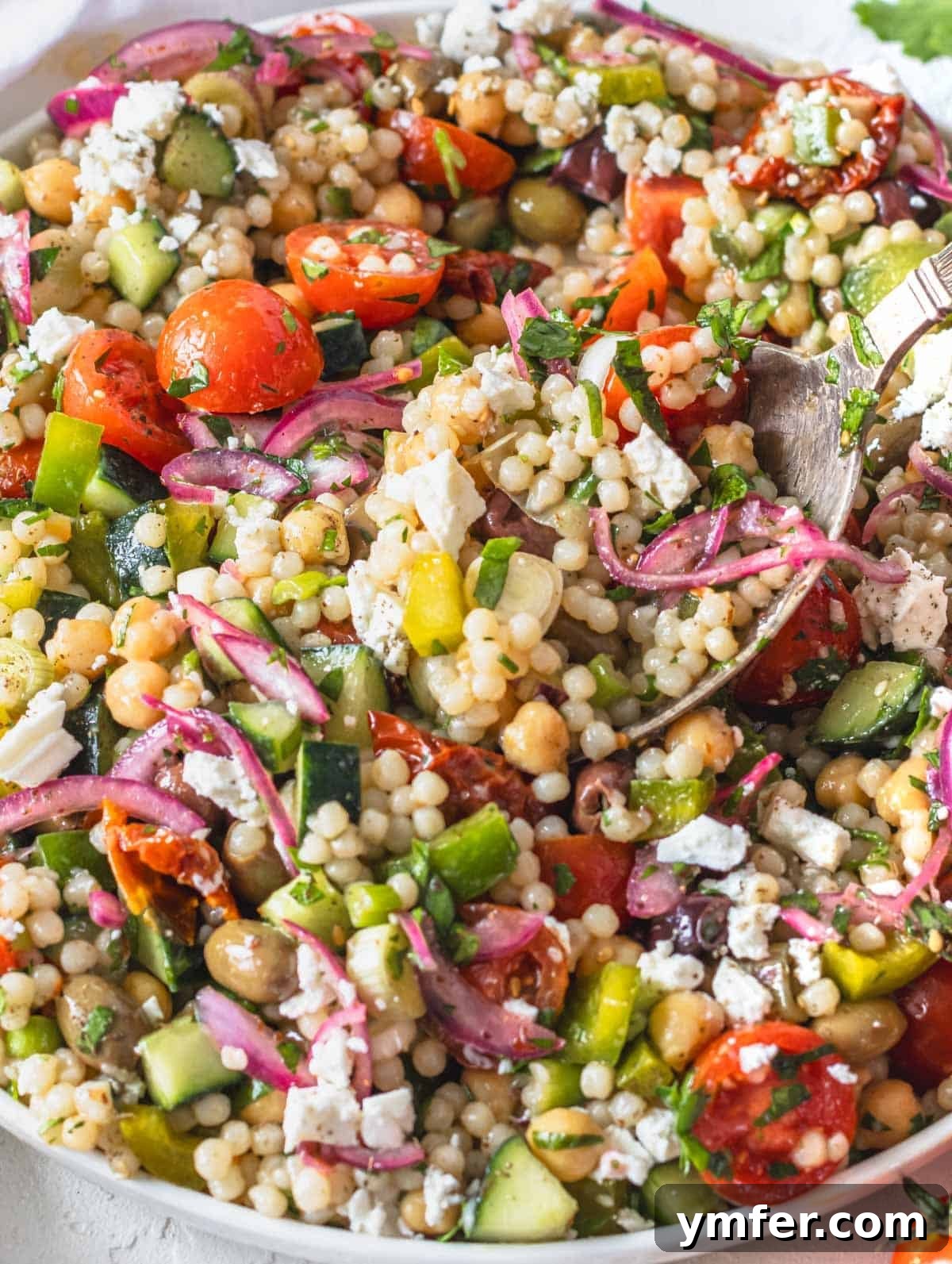
Expert Tips for the Best Pearl Couscous Salad
Achieving a truly exceptional pearl couscous salad is easy with these helpful tips:
- Cook Couscous Al Dente: The key to a great texture is cooking the pearl couscous just until it’s al dente. Boil for precisely 7 minutes, then taste. Drain it promptly when it reaches that perfect tender-chewy consistency. Overcooked couscous can become mushy, which is undesirable in a salad.
- Season Your Cooking Liquid: Always salt the boiling water or, even better, cook the couscous in well-seasoned vegetable broth. This infuses flavor directly into the pearls from the start, rather than relying solely on the dressing to carry all the taste.
- Cool Down Completely: It’s crucial to let the cooked couscous cool for at least 10 minutes, or even longer, before mixing it with the fresh vegetables. Adding hot couscous to cold ingredients can wilt delicate herbs and make vegetables less crisp.
- Enhance Nutty Flavor (Optional): For an added depth of flavor, you can toast the dry pearl couscous in a tablespoon of olive oil in a pan for a few minutes before boiling it. This simple step brings out a rich, nutty aroma and taste.
- Chop Evenly: Ensure all your vegetables are chopped into small, uniform pieces. This not only makes the salad more visually appealing but also ensures that you get a balanced mix of flavors and textures in every single bite.
- Don’t Be Shy with Seasoning: Pearl couscous, like other grains, can absorb a lot of flavor. Taste the dressed salad generously and adjust the seasoning with more lemon juice, salt, pepper, or fresh herbs. This final touch makes all the difference.
- Allow Flavors to Meld: While tempting to serve immediately, allowing the finished salad to rest for 10–15 minutes (or even longer in the fridge) before serving gives the flavors time to meld and deepen, resulting in a more harmonious taste experience.
- Creamy or Crunchy Toppings: Experiment with toppings to add contrasting textures and flavors. Crumbled feta or a non-dairy alternative, toasted pine nuts, thinly sliced quick-pickled red onions, or even some chopped fresh avocado can elevate the salad.
- Ideal for Meal Prep: This salad is fantastic for making ahead of time. In fact, many find it tastes even better the next day as the ingredients have more time to soak up the dressing. It holds up beautifully in the refrigerator.
Frequently Asked Questions About Pearl Couscous Salad
What is the difference between Israeli couscous and regular couscous?
Despite its common English name, Israeli couscous, also known as Ptitim or pearl couscous, is fundamentally different from traditional North African couscous. Regular couscous is a tiny, granular pasta made from semolina, often steamed, resulting in a light and fluffy texture. In contrast, Israeli couscous is a type of small, toasted pasta ball, developed in Israel as a rice substitute. It’s made from durum wheat semolina flour and water, much like regular pasta. Its appearance and chewy texture are more akin to Sardinian fregola pasta or Italian orzo, offering a more substantial bite than its North African counterpart.
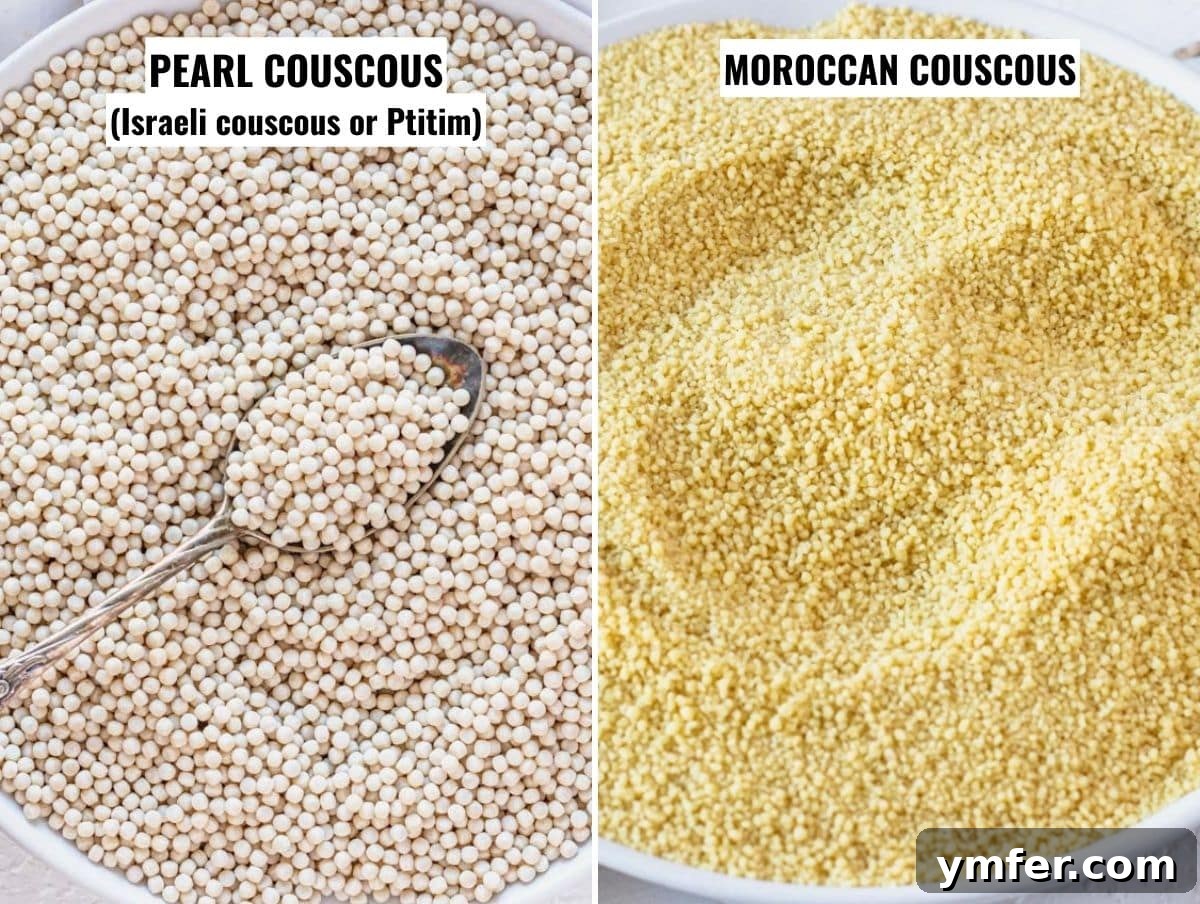
What does Israeli couscous taste like?
Israeli couscous has a relatively neutral flavor profile with very mild, subtle nutty notes. Its main charm lies in its ability to absorb the flavors of the ingredients and condiments it’s paired with. When cooked al dente, it boasts a delightful, slightly chewy and satisfying texture, making it an excellent canvas for vibrant dressings and fresh vegetables, as seen in this Mediterranean salad.
Can I use regular couscous instead of pearl couscous?
While you can substitute regular couscous for pearl couscous in some recipes, the resulting texture of the salad will be entirely different. Pearl couscous is celebrated for its distinct chewiness and ability to hold its shape well in salads, contributing to a heartier feel. Regular couscous, being much finer, will yield a fluffier and more delicate salad. If you prefer the fluffier texture, go ahead, but be aware it won’t be the same experience. For guidance on preparing regular couscous, see our guide on how to cook couscous.
Can I make pearl couscous salad ahead of time?
Absolutely! This pearl couscous salad is an ideal candidate for meal preparation. In fact, many people find its flavors deepen and meld even better after a few hours or, ideally, overnight in the refrigerator. The ingredients have more time to marinate in the dressing, enhancing the overall taste. Just store it in an airtight container in the fridge, and it will be ready to enjoy.
How do I keep pearl couscous from sticking together?
To prevent pearl couscous from sticking together, especially after cooking, you have a couple of options. One method is to rinse it thoroughly under cold water immediately after draining. Another effective way is to toss it with a small amount of olive oil while it’s still warm. Even if some clumping occurs while it cools, don’t fret; the pearls will naturally loosen up and separate beautifully once you mix them with the dressing and other salad ingredients.
How do I store this pearl couscous salad?
This Israeli couscous salad is perfectly suited for meal prep. Store any leftovers in an airtight container in the refrigerator for up to 3 days. For optimal enjoyment, allow the salad to sit at room temperature for approximately 15 minutes before serving, as this helps the flavors open up. It’s an ideal choice for picnics, potlucks, and packed lunches. Please note that freezing is not recommended as it can negatively impact the texture of the couscous and vegetables.
Explore More Easy Mediterranean Salads
If you’ve enjoyed this delightful pearl couscous salad, we encourage you to explore other fresh and healthy Mediterranean salad recipes from our collection:
- Hearty Farro Salad
- Refreshing Rice Salad
- Wholesome Cauliflower Lentil Salad
- Simple Lentil Salad
- Authentic Greek Chickpea Salad
- Flavorful Moroccan Carrot Salad
- Classic Tabouli Salad
- Traditional Moroccan Couscous
If you tried this Pearl Couscous recipe or any other recipe on our blog, please leave a 🌟 star rating and let us know how it goes in the comments. We love hearing from you!
Pearl Couscous Salad Recipe
By: Nico Pallotta
Our pearl couscous salad is a healthy Mediterranean recipe with Israeli couscous, fresh veggies, feta, and chickpeas.
Prep Time: 20 mins
Cook Time: 7 mins
Total Time: 27 mins
Servings: 4 people
Course: Main Course, Salad, Side
Cuisine: Mediterranean
Print Recipe
Share Recipe
Video Guide for Pearl Couscous Salad
Ingredients
- 1½ cups pearl couscous + 4 cups/1 liter water or vegetable broth & 1 tablespoon salt
- 2 cups cherry tomatoes, halved
- 1½ cups cucumber, diced
- 1 cup green bell pepper, diced
- 4 scallions, thinly sliced
- 1 can (15 ounces) chickpeas or 3 cups cooked chickpeas
- ½ cup kalamata olives
- ½ cup sun-dried tomatoes in oil (chopped)
- 1 cup flat-leaf parsley, chopped (or sub 1 teaspoon dried oregano)
For the Dressing
- 3 tablespoons extra virgin olive oil
- 2 tablespoons fresh lemon juice
- 1 tablespoon Dijon mustard
- 1 tablespoon maple syrup (or honey)
- 1 small garlic clove, grated
- ¾ teaspoon salt + pepper to taste
- 1 teaspoon cumin (optional)
Instructions
-
Cook Couscous: Boil 1½ cups pearl couscous in salted water or broth for 7–10 minutes until al dente. Drain, transfer to a large bowl, and let cool for 10 minutes.

-
Prep Veggies: Chop 2 cups cherry tomatoes, 1½ cups cucumber, 1 cup green bell pepper, 4 scallions, ½ cup kalamata olives, ½ cup sun-dried tomatoes in oil, and 1 cup flat-leaf parsley. Rinse 1 can (15 ounces) chickpeas. Add everything to the cooled couscous. Optionally, crumble in feta.
- Make Dressing: Whisk 3 tablespoons extra virgin olive oil, 2 tablespoons lemon juice, 1 tablespoon Dijon mustard, 1 tablespoon maple syrup, 1 clove grated garlic, ¾ teaspoon salt, 1 teaspoon cumin, and pepper. Pour over the salad and toss to combine thoroughly.
-
Serve: Adjust seasoning to taste. Top with sumac onions, jalapeños, pine nuts, or yogurt-tahini sauce if desired. Serve cold or at room temperature.
Notes
SUBSTITUTIONS
- Pearl couscous: Use farro, orzo, barley, fregola, rice, or Moroccan couscous for textural variation.
- Chickpeas: Black beans, lentils, or edamame are excellent protein alternatives.
- Bell pepper: Red or yellow bell peppers can be used instead of green for a sweeter flavor.
- Scallions: Replace with finely chopped red onion or shallots for a similar aromatic base.
- Parsley: Fresh mint, basil, dill, or oregano can offer different aromatic profiles.
- Sun-dried tomatoes: Marinated artichoke hearts provide a similar savory and tangy element.
- Cherry tomatoes: Any small tomato variety, like plum or date tomatoes, works well.
- Feta: For a dairy-free or vegan option, use non-dairy feta or simply omit it for a lighter salad.
- Lemon juice: Red wine vinegar can be used if lemon juice is unavailable.
- Maple syrup: Honey or agave nectar are good alternatives for sweetness.
- Dijon mustard: Yellow mustard can be used for a milder mustard flavor.
- Cumin: Sumac or paprika can add a different Middle Eastern spice twist.
TIPS
- Cook couscous al dente for the best chewy texture; avoid overcooking.
- Salt the cooking water or use vegetable broth to infuse flavor into the couscous from the start.
- Allow the couscous to cool completely before mixing with fresh vegetables to prevent wilting and maintain crispness.
- Toast dry couscous in a little olive oil before boiling for a deeper, nutty flavor.
- Chop all vegetables into small, even pieces for balanced bites.
- Taste and season generously after dressing, as couscous absorbs flavors readily.
- Let the salad rest for 10–15 minutes before serving to allow flavors to meld beautifully.
- Top with creamy (feta) or crunchy (pine nuts, pickled onions) extras for added texture.
- This salad is perfect for meal prep and often tastes even better the next day.
STORAGE
This Israeli couscous salad is excellent for meal prep. Store leftovers in an airtight container in the refrigerator for up to 3 days. For optimal enjoyment, allow the salad to sit at room temperature for approximately 15 minutes before serving. It’s an ideal choice for picnics, potlucks, and packed lunches. Please note that freezing is not recommended as it can negatively impact the texture of the couscous and vegetables.
Nutrition Facts (per serving)
- Serving: 1 of 4
- Calories: 509 kcal
- Carbohydrates: 78g
- Protein: 16g
- Fat: 16g
- Saturated Fat: 2g
- Polyunsaturated Fat: 2g
- Monounsaturated Fat: 10g
- Trans Fat: 0g
- Cholesterol: 0mg
- Sodium: 686mg
- Potassium: 799mg
- Dietary Fiber: 11g
- Sugar: 10g
- Vitamin A: 1214 IU
- Vitamin B6: 0.4mg
- Vitamin C: 69mg
- Vitamin E: 3mg
- Vitamin K: 124µg
- Calcium: 101mg
- Folate: 150µg
- Iron: 4mg
- Manganese: 1mg
- Magnesium: 90mg
- Zinc: 2mg
Tried this recipe? Leave a comment below or mention @theplantbasedschool on Instagram. We love hearing from you ⭐️ 💚.