
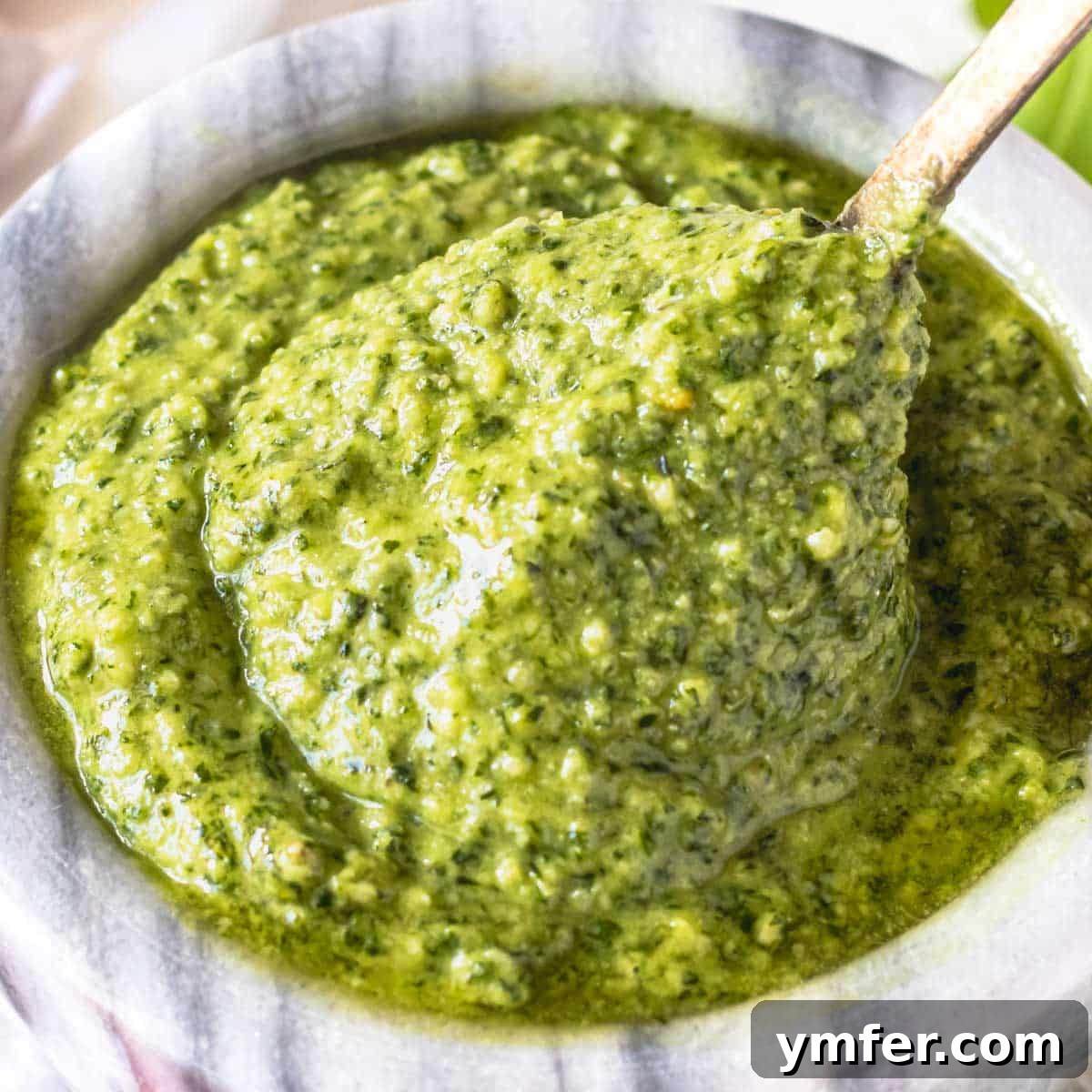
Authentic Homemade Basil Pesto: The Ultimate Italian Sauce Recipe
Homemade basil pesto is a culinary gem, a quintessential Italian sauce renowned for its vibrant flavor and incredible versatility. This classic recipe transforms fresh basil, rich cheese, aromatic pine nuts, garlic, and high-quality olive oil into a lush, aromatic condiment that elevates any meal. Whether tossed with your favorite pasta, spread onto a sandwich, or used as a flavorful base for wraps and pizzas, basil pesto promises a taste of authentic Italian tradition.
For more delightful pasta sauce recipes that complement a plant-based lifestyle, explore our tomato pesto, roasted red pepper sauce, and creamy broccoli pasta.
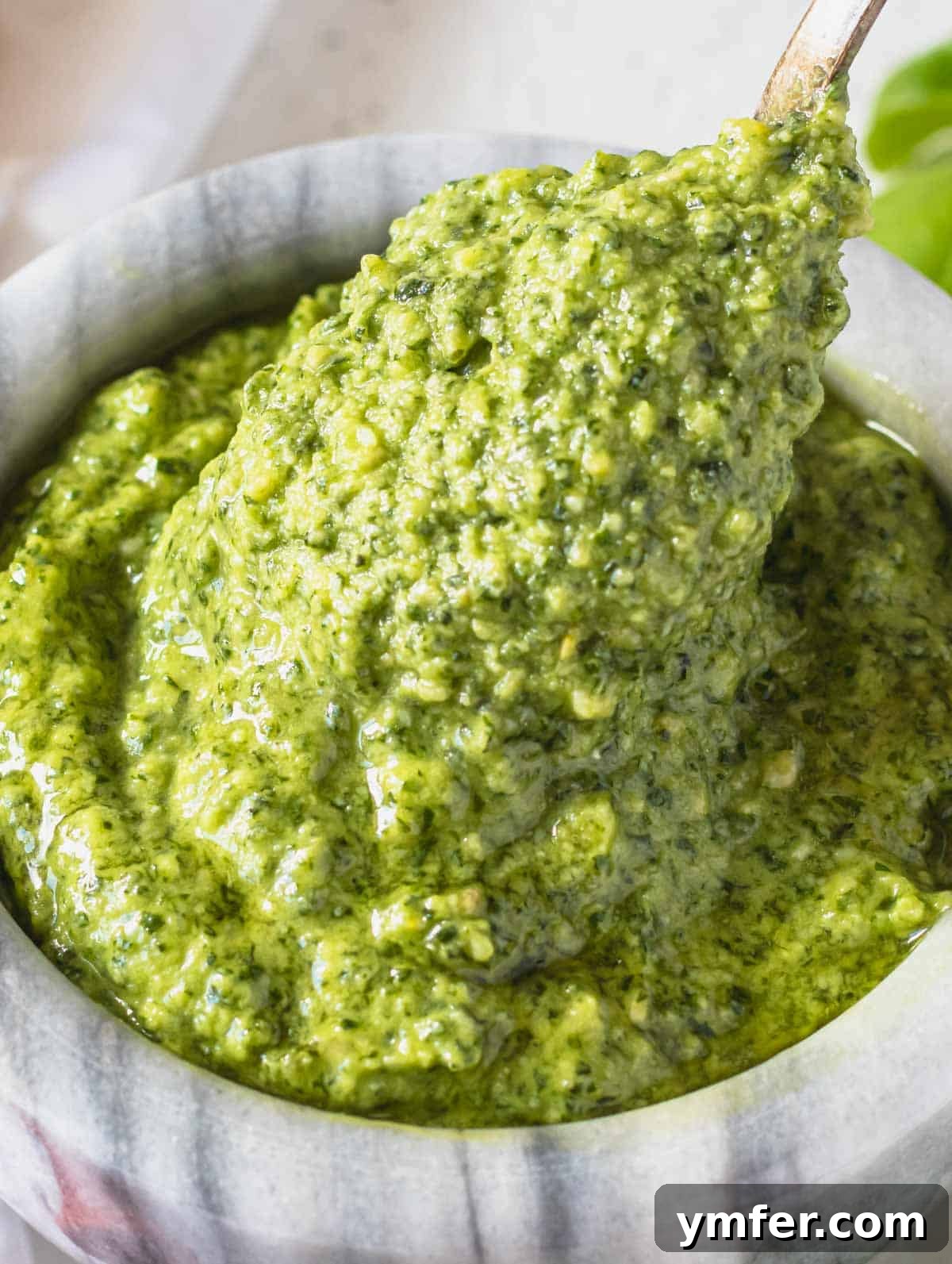
Table of Contents
- What is Authentic Basil Pesto?
- Why Make Homemade Basil Pesto?
- Ingredients for the Perfect Basil Pesto
- Fresh Basil Leaves
- Parmesan Cheese
- Pecorino Cheese
- Pine Nuts
- Garlic
- Extra Virgin Olive Oil
- Sea Salt
- Common Pesto Additions & Myths
- Step-by-Step Guide: How to Make Basil Pesto
- Mastering Pesto Pasta: Tips & Tricks
- Versatile Serving Suggestions
- Creative Pesto Variations
- Delicious Vegan Pesto
- Simple Nut-Free Pesto
- Other Herb & Vegetable Pestos
- Storage & Make Ahead: Keeping Your Pesto Fresh
- Explore More Delicious Pesto Recipes
- Basil Pesto Recipe Card
Dietary Note: This authentic basil pesto recipe is naturally suitable for a gluten-free diet. For those following vegetarian or vegan diets, the recipe can be easily adapted by substituting the traditional cheeses with plant-based alternatives, as detailed in our variations section.
Short on time? JUMP DIRECTLY TO THE RECIPE HERE!
What is Authentic Basil Pesto?
Our recipe faithfully reproduces the traditional **Pesto alla Genovese**, a celebrated sauce originating from Genoa, the capital of Liguria, Italy. This exquisite condiment is crafted from a harmonious blend of fresh basil, high-quality pine nuts, genuine Parmesan cheese (Parmigiano Reggiano), Pecorino Sardo or Romano, garlic, and the finest extra virgin olive oil.
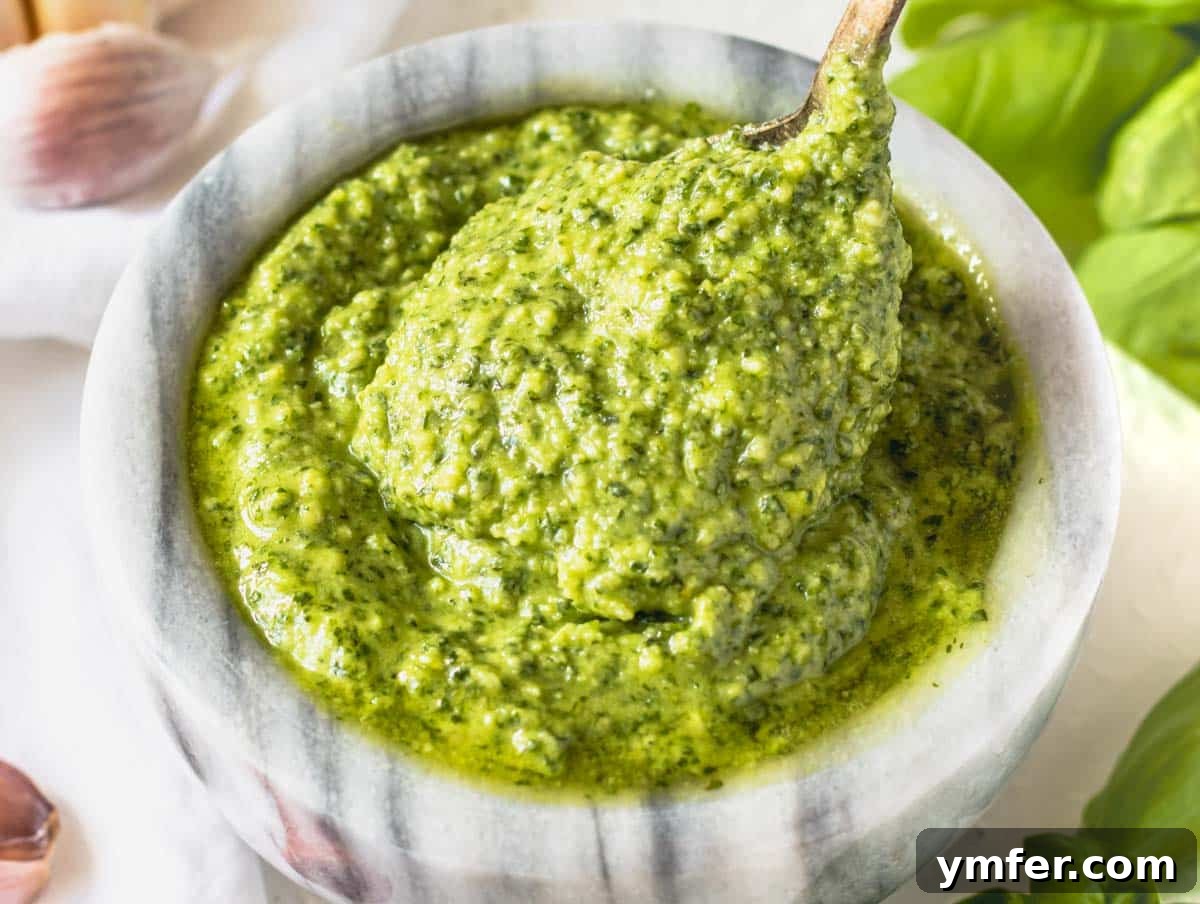
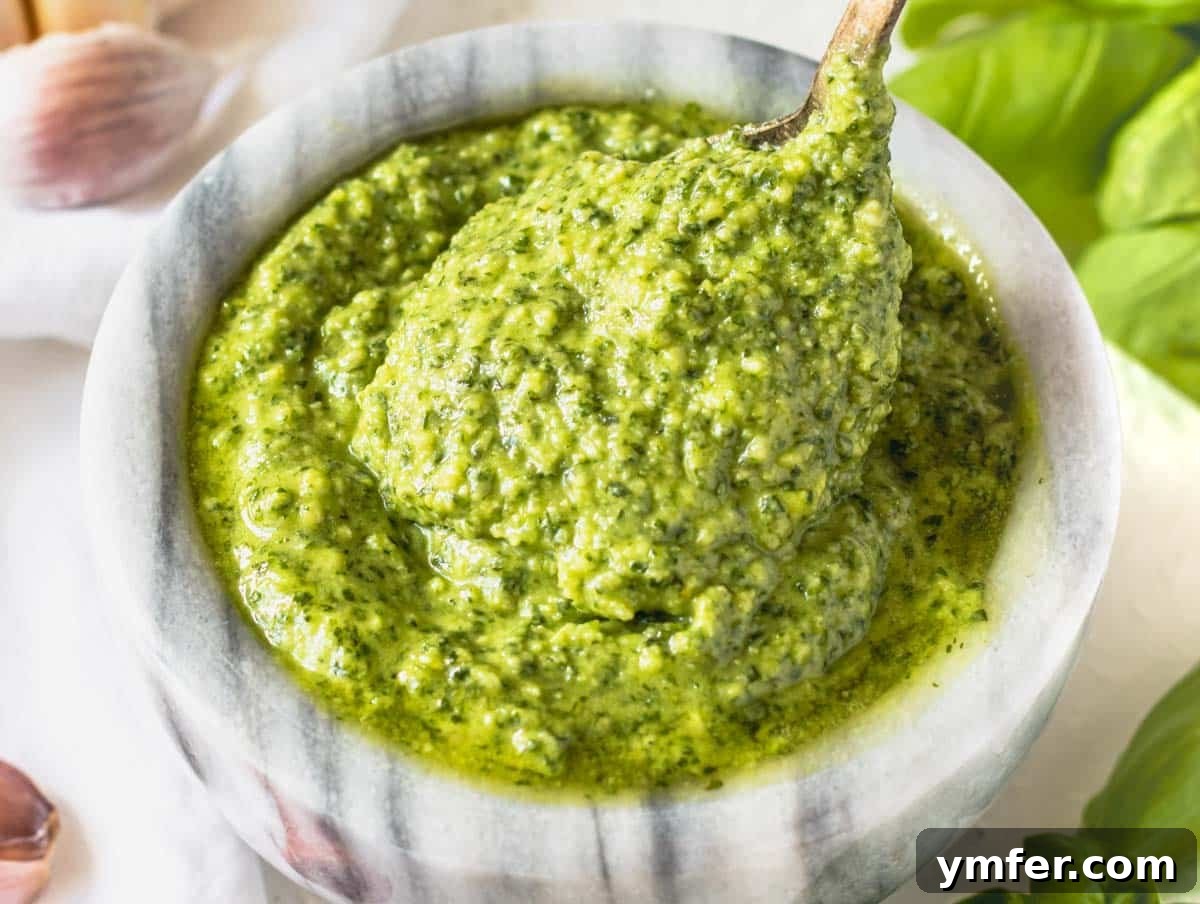
The very name “pesto” derives from the **Italian verb “Pestare,”** meaning “to pound” or “to crush.” This etymology speaks volumes about the sauce’s traditional preparation method. Authentically, pesto is made in a rustic marble mortar, where ingredients are patiently pounded with a wooden pestle until they meld into a beautifully creamy, aromatic sauce. This gentle, manual process prevents the basil from oxidizing and heating, preserving its vibrant green color and delicate flavor compounds that can be lost with rapid blending.
Homemade basil pesto, often referred to as **pesto alla Genovese,** traces its roots back to the Ligurian region, where local ingredients flourished. Its rich history is intertwined with the culinary traditions of Genoa, passed down through generations.
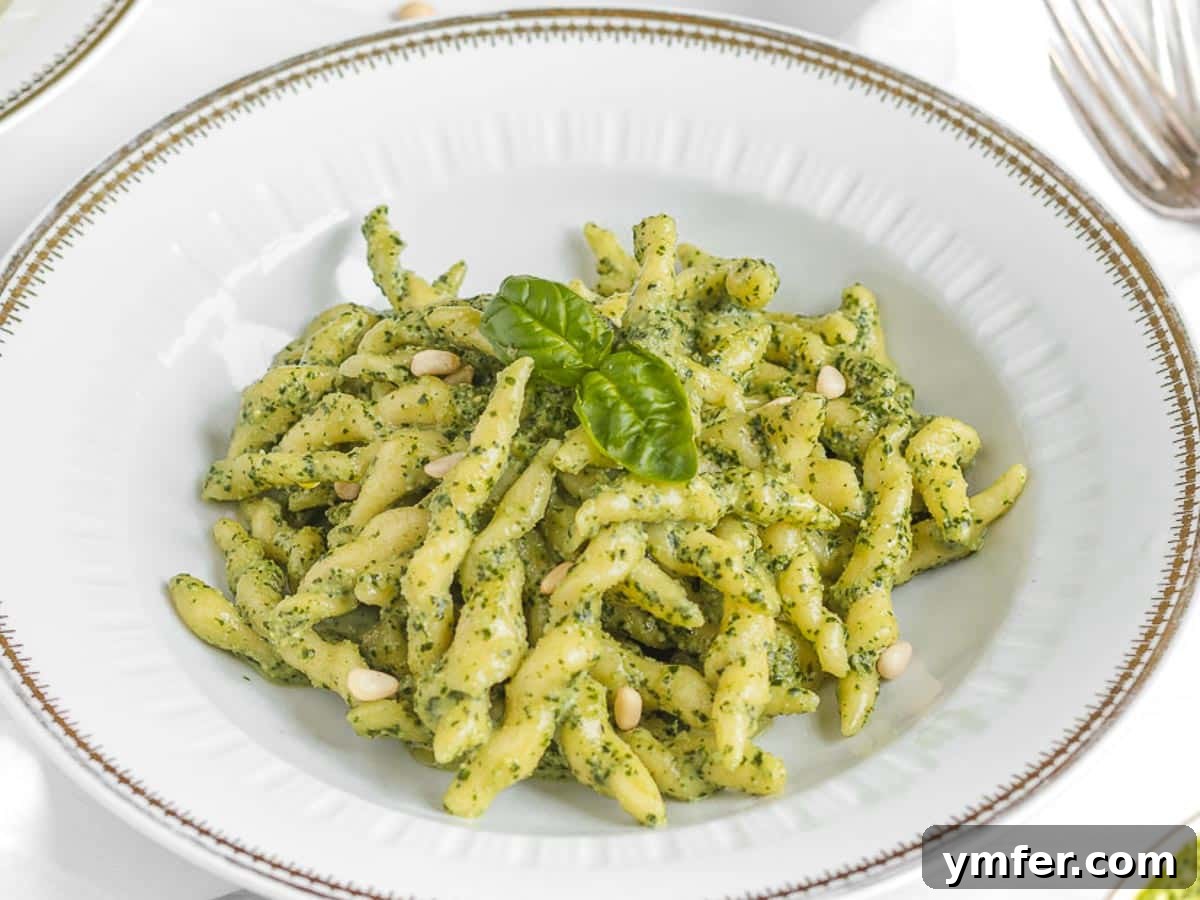
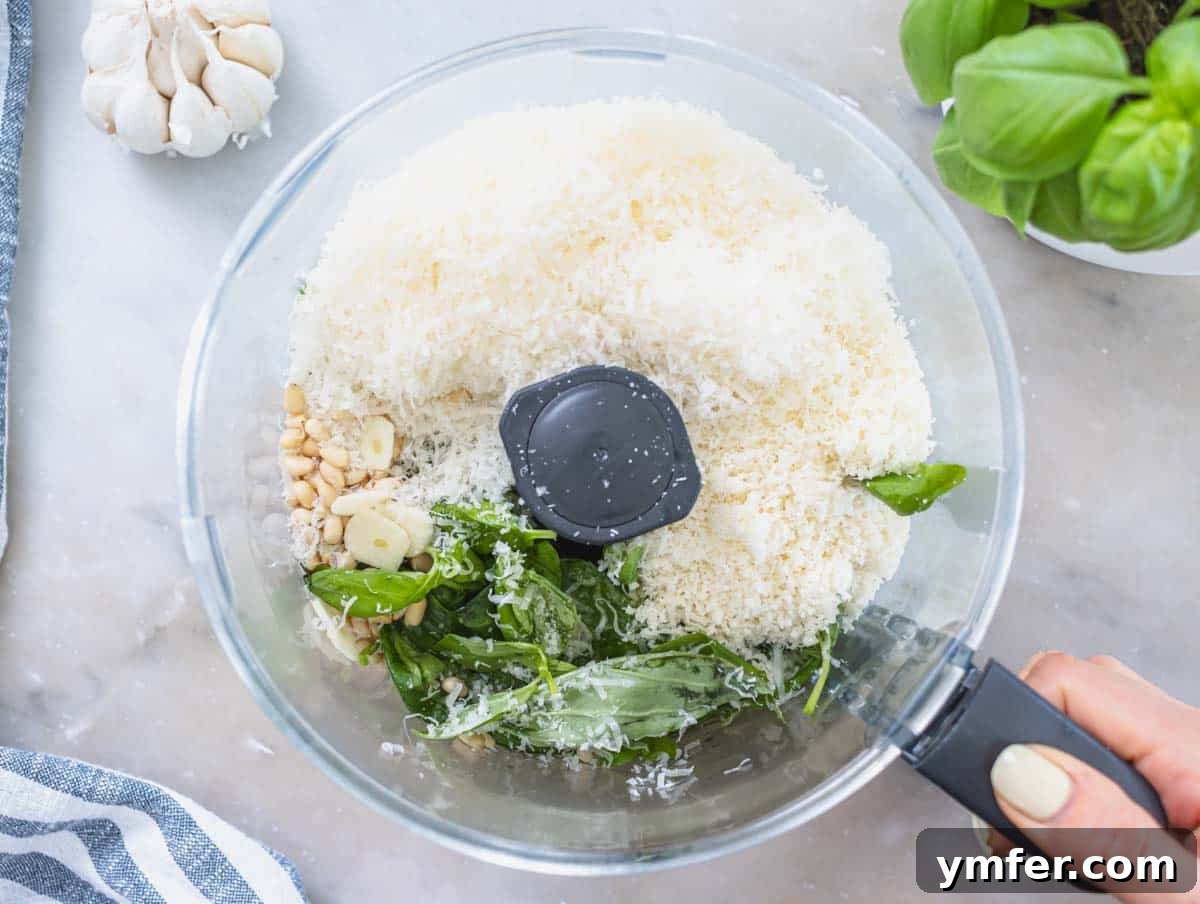
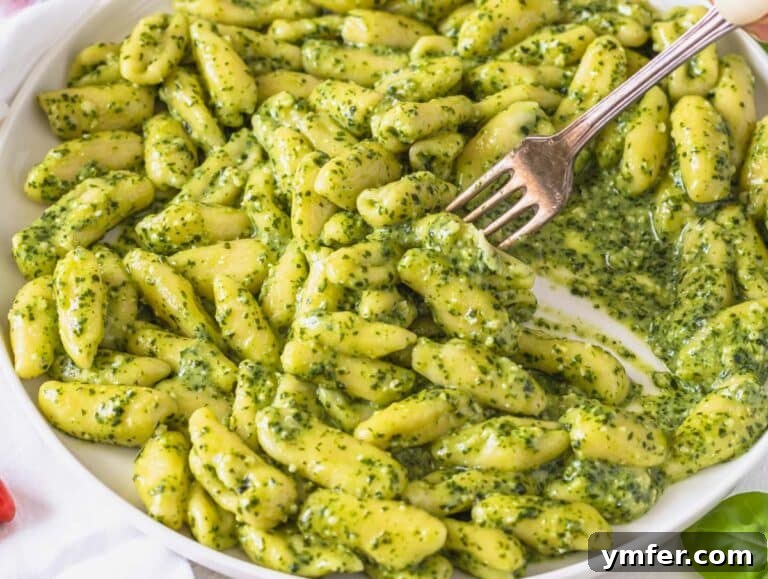
While commonly associated with pasta, especially homemade trofie pasta, pesto’s applications extend far beyond. In Liguria, it’s traditional to serve pesto with pasta, sometimes enriched with boiled **green beans and potatoes**, offering a hearty and complete meal. Beyond pasta, it shines in a delicious caprese sandwich, providing a fresh, herbaceous counterpoint to ripe tomatoes and mozzarella.
Our recipe meticulously follows the authentic Genovese tradition, featuring fresh basil leaves, pine nuts, a hint of garlic, premium extra virgin olive oil, Parmigiano Reggiano, and Pecorino cheese. However, the world of pesto is vast and accommodating. You can create delightful variations using many other herbs and vegetables, such as a flavorful vegan pesto that omits cheese entirely.
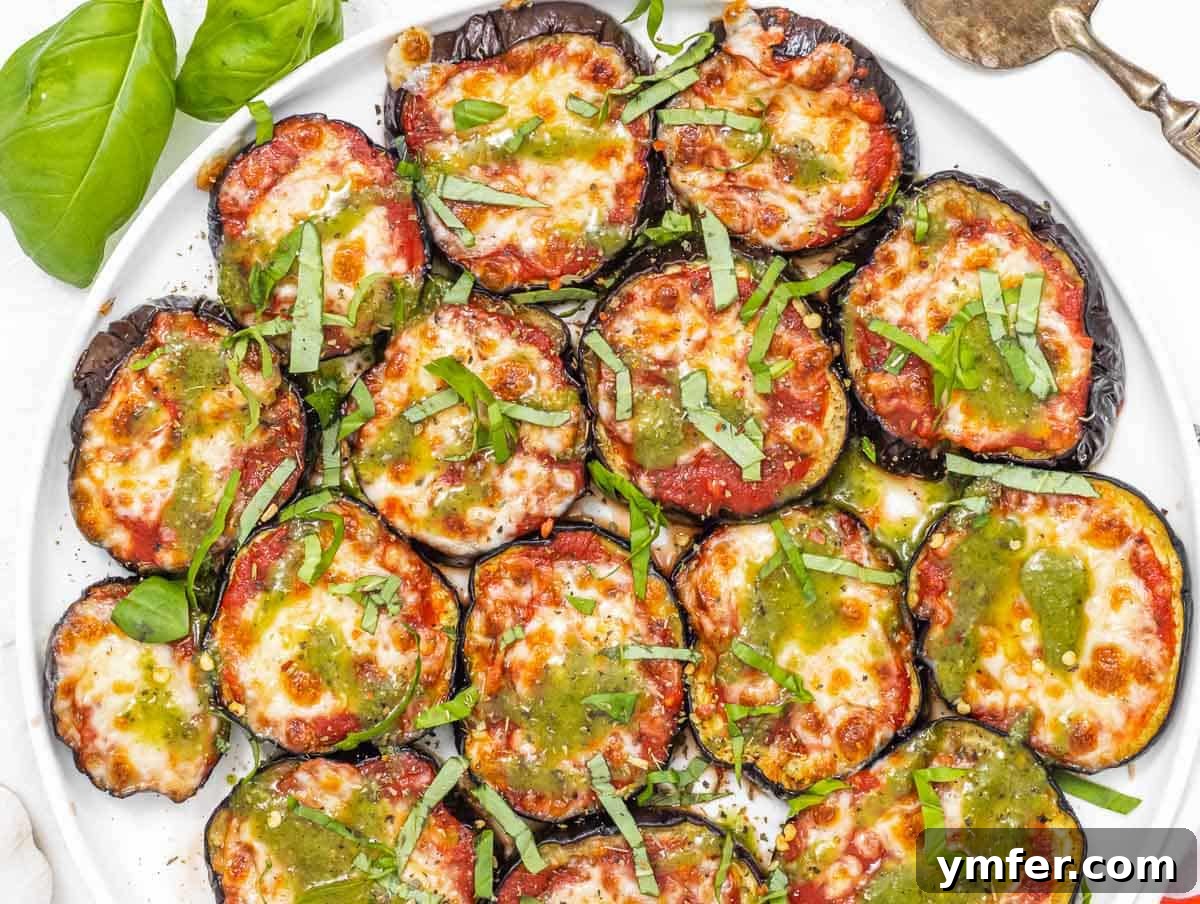
We’ve experimented with a wide array of pesto types, including arugula pesto, sun-dried tomato pesto, kale pesto, artichoke pesto, parsley pesto, and zucchini pesto. Each variation offers a unique flavor profile, but all share the characteristic ease of preparation and suitability for meal prepping.
These versatile sauces are perfect for enhancing pasta dishes, pizzas, spreading on bread or focaccia sandwiches, accompanying roasted and grilled vegetables, or enlivening salads. The classic basil pesto recipe uses cheeses like Parmigiano Reggiano and Pecorino to impart a complex savory flavor and a rich, creamy texture. However, for those with dietary preferences, excellent substitutions are readily available, as detailed below.
If you’re embracing a vegan lifestyle, we’ve developed a truly delicious vegan pesto recipe that captures the essence of traditional pesto without any dairy, ensuring everyone can enjoy this Italian classic.
Why Make Homemade Basil Pesto?
While store-bought pesto offers convenience, crafting your own basil pesto at home is a game-changer for several compelling reasons:
- Unparalleled Freshness: The flavor of homemade pesto, especially when made with freshly picked basil, is incomparable. The vibrant aroma and taste of basil are most potent right after preparation, something that pre-made jars simply cannot replicate due to oxidation and preservatives.
- Superior Flavor & Aroma: Homemade pesto allows you to control the quality of each ingredient. Using premium extra virgin olive oil, freshly grated cheeses, and plump pine nuts makes a world of difference in the final taste profile. The aroma alone is enough to transport you straight to the Italian Riviera.
- No Preservatives or Artificial Additives: Store-bought pestos often contain preservatives, artificial colors, or unnecessary oils to extend shelf life. When you make it yourself, you know exactly what goes into your food – pure, wholesome ingredients.
- Customization: Homemade pesto is incredibly adaptable. You can adjust the garlic level, saltiness, cheese ratio, or even the type of nuts to suit your personal preference. Want it nut-free? Easy. Prefer a stronger garlic kick? Go for it.
- Cost-Effective: Buying individual ingredients, especially when basil is in season, can often be more economical than purchasing high-quality pre-made pesto, especially if you plan to make it in larger batches.
- Quick & Easy: Despite its gourmet reputation, basil pesto is remarkably simple and fast to make. With a food processor, it comes together in under 10 minutes, making it an ideal choice for a quick weeknight meal or an impromptu gathering.
Embrace the joy of creating this classic Italian sauce from your kitchen and taste the difference that fresh, homemade ingredients make!
Ingredients for the Perfect Basil Pesto
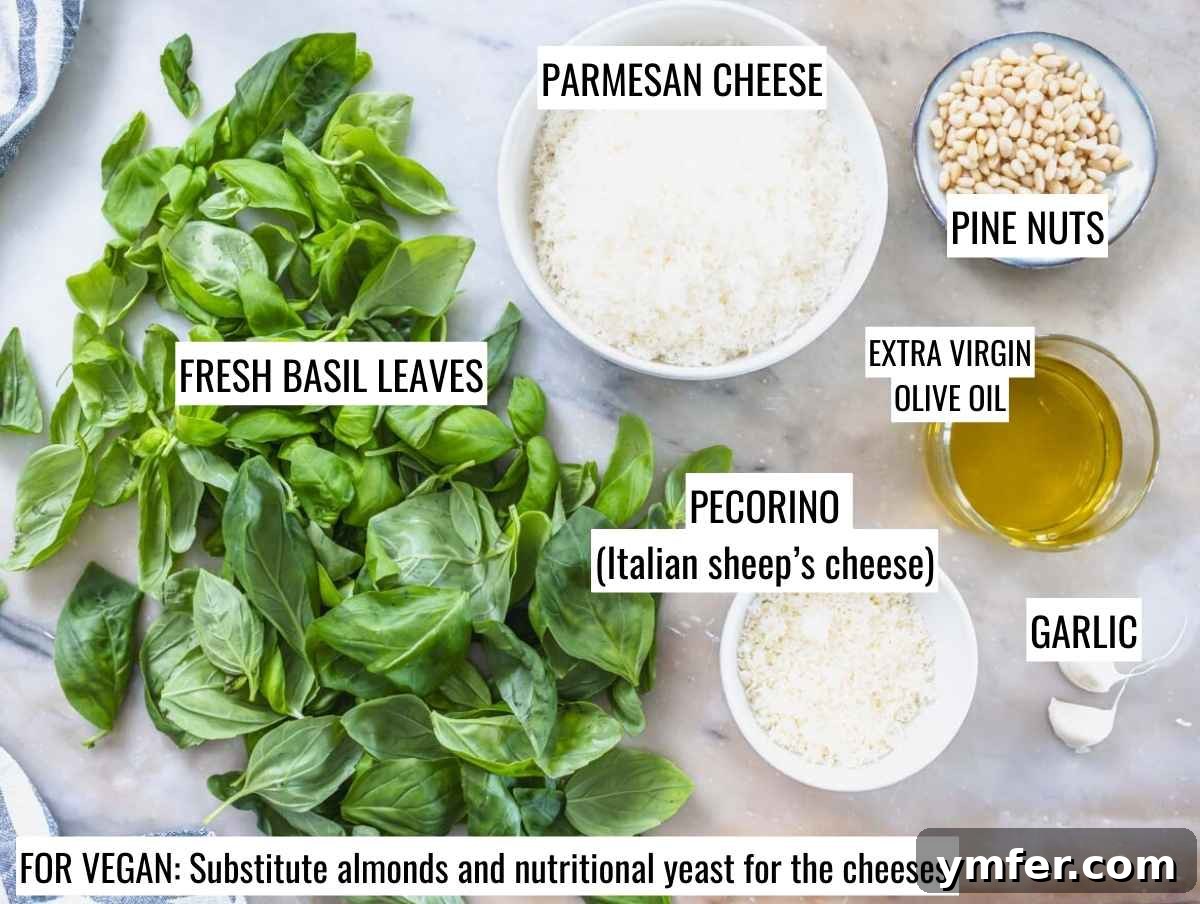
Detailed quantities for each ingredient are provided in the recipe box at the bottom of this page.
Fresh Basil Leaves
The star of the show! For the most authentic and flavorful pesto sauce, it’s crucial to use the freshest possible Italian basil. Look for vibrant green leaves, free from blemishes. Genovese basil, if you can find it, is ideal. If your basil isn’t freshly picked and might have dust or dirt, rinse it thoroughly with cold water and pat it very gently but completely dry with a clean kitchen towel before use. Any moisture can affect the pesto’s consistency and shelf life.
While this recipe focuses on basil, you can certainly substitute other herbs to create different types of pesto. However, please refer to our other pesto recipes (like arugula or kale pesto) as the ratios of ingredients like nuts, oil, and cheese may need to be adjusted to balance the stronger or milder flavors of alternative herbs.
Parmesan Cheese
For an authentic basil pesto recipe, the gold standard is **Parmigiano Reggiano DOP** (Denominazione di Origine Protetta) or **Grana Padano DOP**. These hard, granular Italian cheeses offer a deep, complex, savory flavor that is essential to classic pesto. They contribute not only taste but also a crucial texture and saltiness.
If true DOP cheeses are unavailable, a good quality regular Parmesan cheese can be used as a substitute, but be aware that the flavor profile might be slightly less nuanced. For our vegan friends, we have an incredible vegan basil pesto recipe that brilliantly uses a combination of nuts and nutritional yeast to replicate the cheesy texture and umami flavor without any dairy.
Pecorino Cheese
Pecorino is a bold, intensely savory Italian sheep’s milk cheese that adds a distinct punch to pesto. In the most traditional recipes for pesto alla Genovese, Pecorino Fiore Sardo, a hard sheep’s cheese from Sardinia, is often recommended. However, the more commonly available **Pecorino Romano** is an excellent and widely accepted substitute.
If Pecorino is difficult to find, or if you prefer a milder cheese flavor, you can simply add more Parmesan cheese to achieve a similar creamy consistency and savory depth. The combination of both Parmesan and Pecorino offers a balanced and complex cheese flavor that is truly characteristic of authentic pesto.
Pine Nuts
Pine nuts are the traditional nut used in basil pesto, lending a delicate, buttery richness and a subtle texture that is hard to replicate. We highly recommend using them for this recipe. It’s important that the pine nuts are **raw, not toasted**, as toasting them changes their flavor profile and can make the pesto taste less authentic.
If you need an alternative due to availability or preference, macadamia nuts, almonds, cashews, or walnuts can be substituted. Each will impart a slightly different flavor and texture to the pesto, but will still create a delicious sauce. Ensure any substituted nuts are also raw and unsalted.
Garlic
Fresh garlic cloves provide a pungent, aromatic kick to basil pesto, enhancing its overall flavor. Traditionally, only a small amount is used, and some purists even omit it entirely. This is often because Italians are quite conscious about their breath, especially in social or work settings.
So, if you prefer a milder pesto, or have a sensitivity to garlic, feel free to reduce the amount or omit it altogether. The pesto will still be incredibly flavorful due to the other robust ingredients.
Extra Virgin Olive Oil
Extra virgin olive oil is not merely a carrier; it’s a critical flavor component of basil pesto. Its quality directly impacts the final taste and texture of your sauce. Opt for a good quality, mild, fruity extra virgin olive oil. A strong, bitter oil can overpower the delicate basil, so choose wisely. The oil helps emulsify the ingredients, creating the smooth, creamy consistency of a well-made pesto.
Sea Salt
We recommend using good quality sea salt. Salt is vital for seasoning and bringing out the flavors of the other ingredients. Start with a pinch, then taste and adjust as necessary. Remember that both Parmesan and Pecorino cheeses are salty, so add salt incrementally to avoid over-salting your pesto.
Common Pesto Additions & Myths
While many recipes for basil pesto might include lemon juice, black pepper, or red pepper flakes, it’s important to note that classic Genovese pesto does not traditionally contain these ingredients. The authentic flavor profile relies on the purity of the core components.
However, culinary creativity knows no bounds! If you enjoy more acidity in your homemade pesto sauce, a squeeze of fresh lemon juice can be a delightful addition, especially if you’re making a vegan version or want to brighten the flavor. Similarly, a touch of black pepper or a hint of red pepper flakes can add a subtle kick if that’s what you desire.
Step-by-Step Guide: How to Make Basil Pesto
Making basil pesto is surprisingly simple and quick, especially with modern kitchen appliances. While the traditional marble mortar and pestle method yields an unparalleled texture and flavor due to the gentle crushing, a food processor or blender can achieve excellent results in minutes.
For exact US cups and grams measurements, please refer to the recipe box at the bottom of the page.
- Prepare the Basil: If your fresh basil leaves haven’t been pre-washed, gently rinse them under cold water. It is crucial to thoroughly pat them dry with a clean kitchen cloth or paper towels. Excess water can dilute the pesto and compromise its consistency and storage quality.
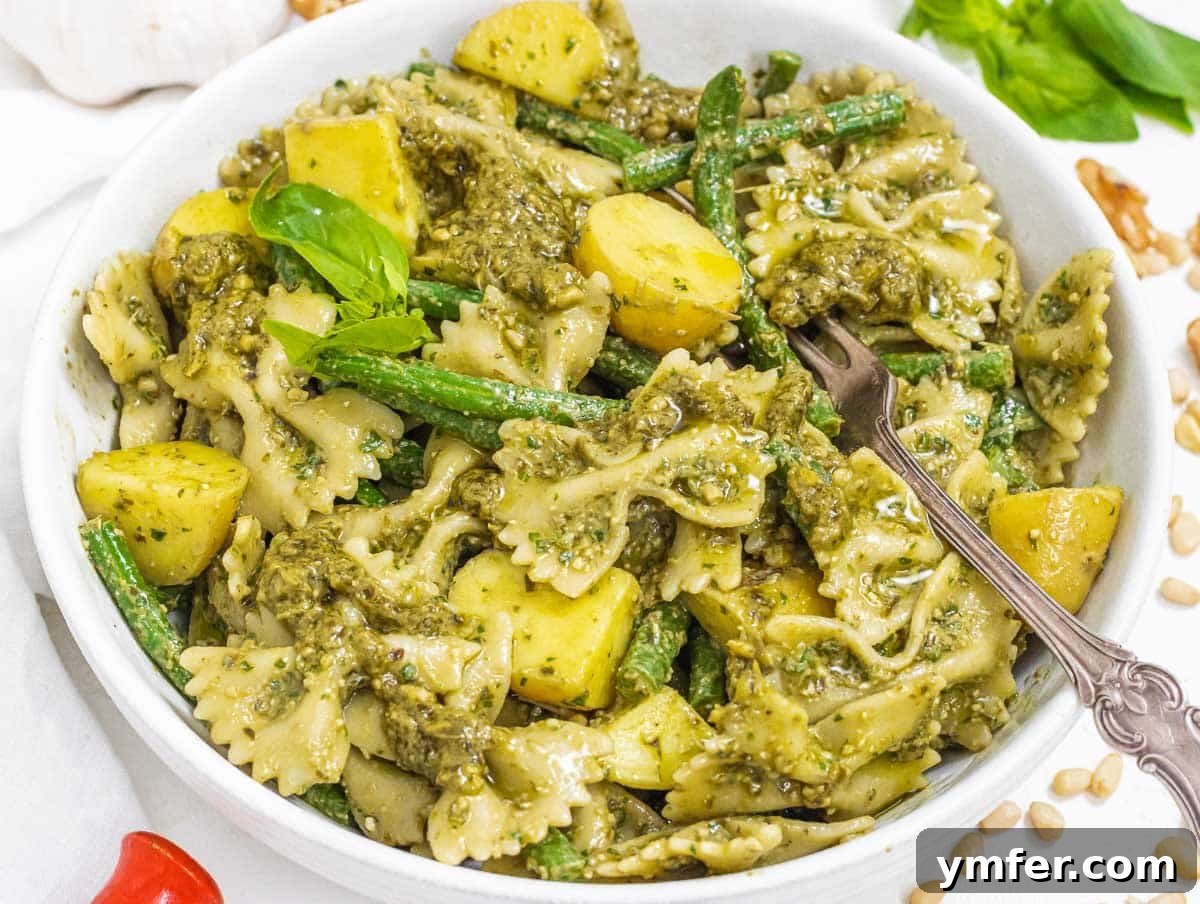
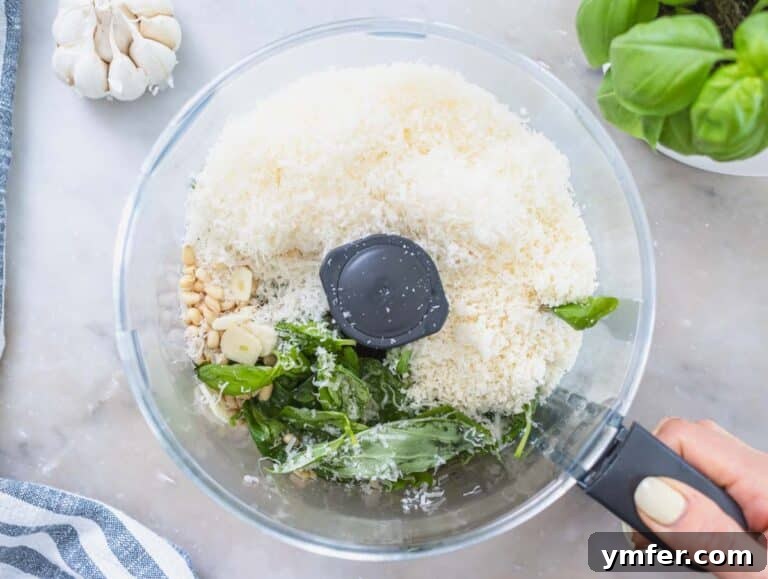
- Combine Ingredients in a Food Processor: Gather all your ingredients: the grated Parmigiano Reggiano, grated Pecorino cheese, chopped garlic (if using), fresh basil leaves, raw pine nuts, sea salt, and extra virgin olive oil. Add them all to the bowl of a food processor or a high-speed blender.
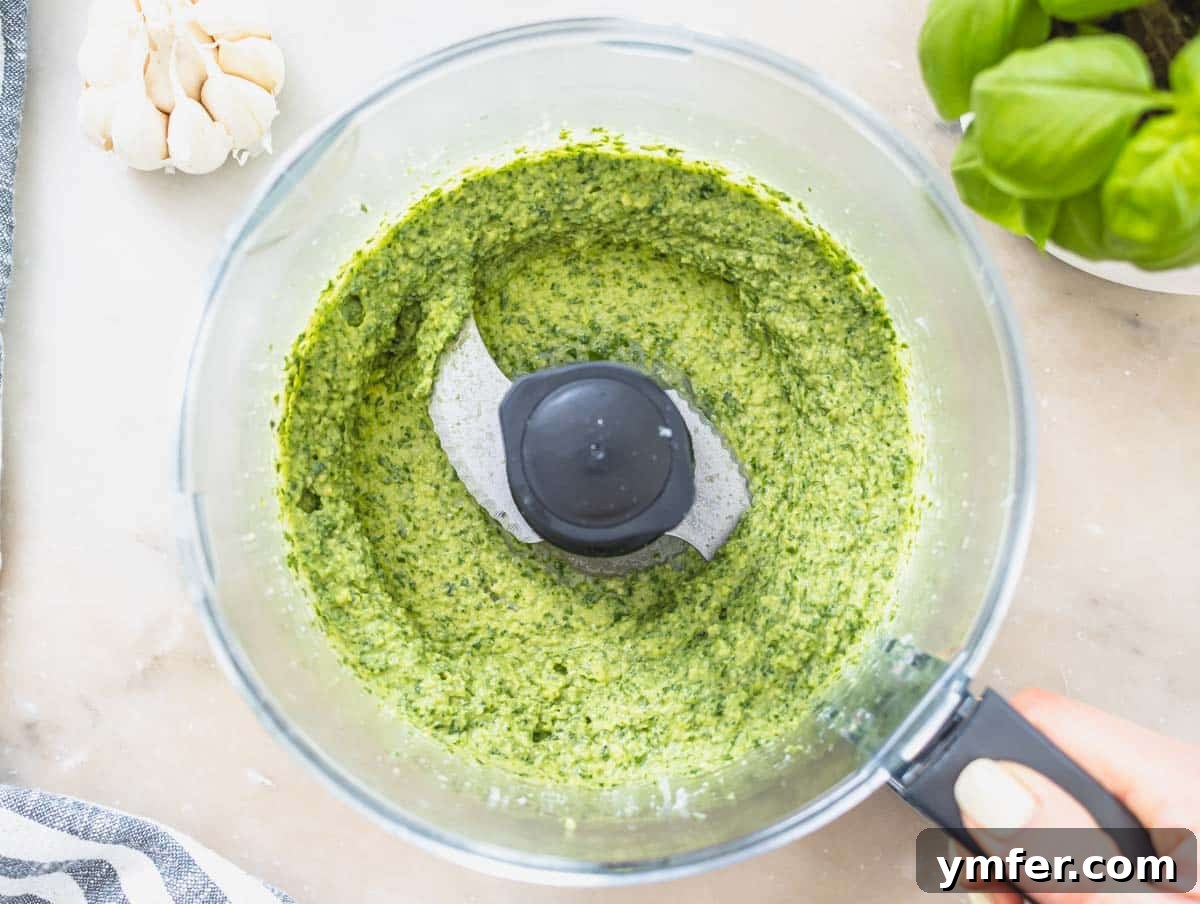
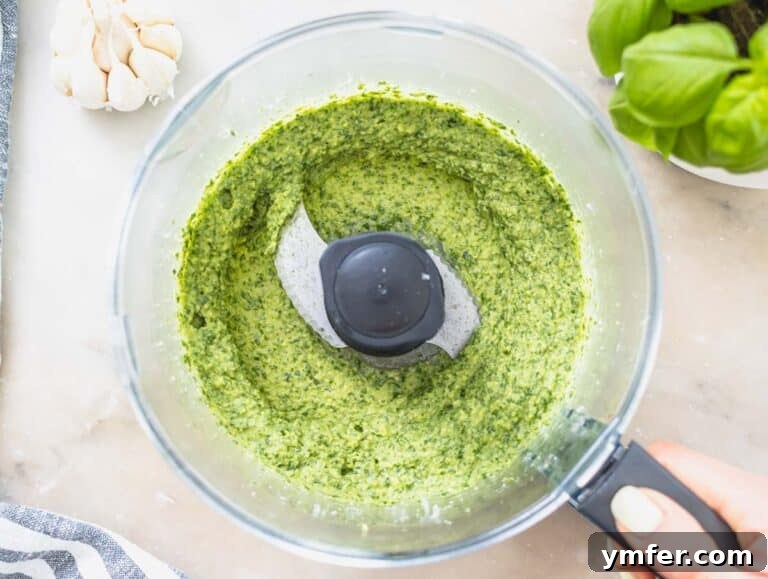
- Pulse to Combine: Secure the lid and pulse the mixture a few times. The key is to use short pulses rather than continuous blending. This technique helps to achieve a creamy texture while retaining a slightly coarse, rustic quality, and more importantly, it prevents the basil from overheating. Continuous blending can cause the basil to oxidize and heat up, which can turn the pesto a darker, less appetizing green and diminish its fresh flavor. You might need to pause and scrape down the sides of the food processor bowl once or twice to ensure all ingredients are evenly incorporated.
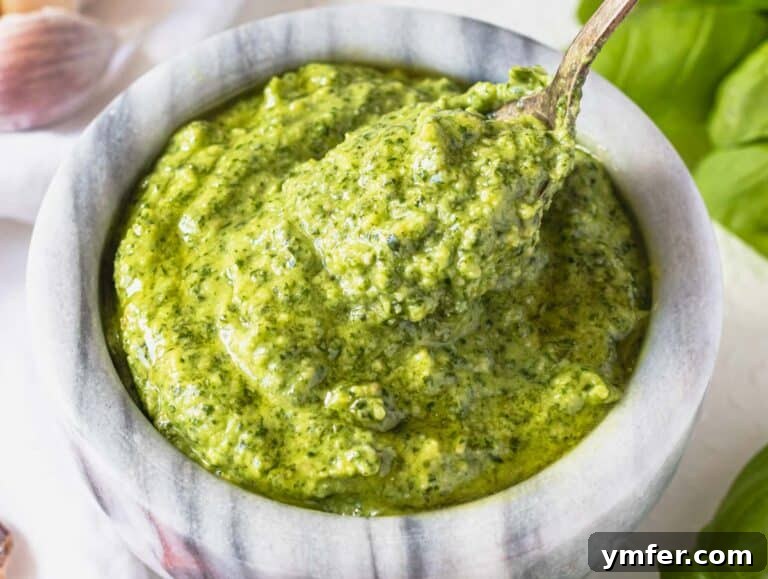
- Adjust and Serve: Once the pesto reaches your desired consistency – creamy but with some texture – taste it and adjust for salt if necessary. If you prefer a thinner pesto, gradually add a little more extra virgin olive oil and pulse briefly to combine. Your fresh, homemade basil pesto is now ready to be enjoyed!
Mastering Pesto Pasta: Tips & Tricks
The most common and utterly traditional way to enjoy basil pesto is as a sauce for pasta. While making pesto pasta is simple, a few Italian secrets can elevate your dish from good to extraordinary:
- Tip 1: Avoid Direct Heat at All Costs: This is perhaps the most crucial rule for pesto pasta. Pesto is a fresh sauce and does not respond well to direct heat. Heating it on a pan will “cook” the delicate basil, causing it to lose its vibrant green color, fresh aroma, and nuanced flavor. Instead, transfer your prepared pesto to a large mixing bowl.
- Tip 2: Cook the Pasta Al Dente for Perfect Texture: “Al dente” is an Italian term meaning “to the tooth,” referring to pasta that is cooked to be firm to the bite, not soft or mushy. This texture is essential for absorbing the pesto sauce and providing a satisfying mouthfeel. To achieve this, taste your pasta about one minute before the cooking time indicated on the package.
- Tip 3: Use Plenty of Salted Boiling Water: For perfectly cooked pasta, it’s vital to use a generous amount of rapidly boiling, salted water. This allows the pasta to cook evenly and prevents it from sticking together. Here’s a quick guide to pasta-to-water-to-salt ratios:
- 8 ounces of pasta (approx. 230 grams): Cook in 2 quarts (8 cups or 2 Liters) of boiling water with 1 tablespoon of sea salt (15 grams). This quantity typically serves 2 to 3 people.
- 12 ounces of pasta (approx. 340 grams): Cook in 3 quarts (12 cups or 3 Liters) of boiling water with 1 ½ tablespoons of sea salt (21 grams). This quantity is suitable for 4 people.
- 1 pound of pasta (approx. 450 grams): Cook in 1 gallon (16 cups or 4 Liters) of boiling water with 2 tablespoons of sea salt (30 grams). This quantity will serve 5-6 people.
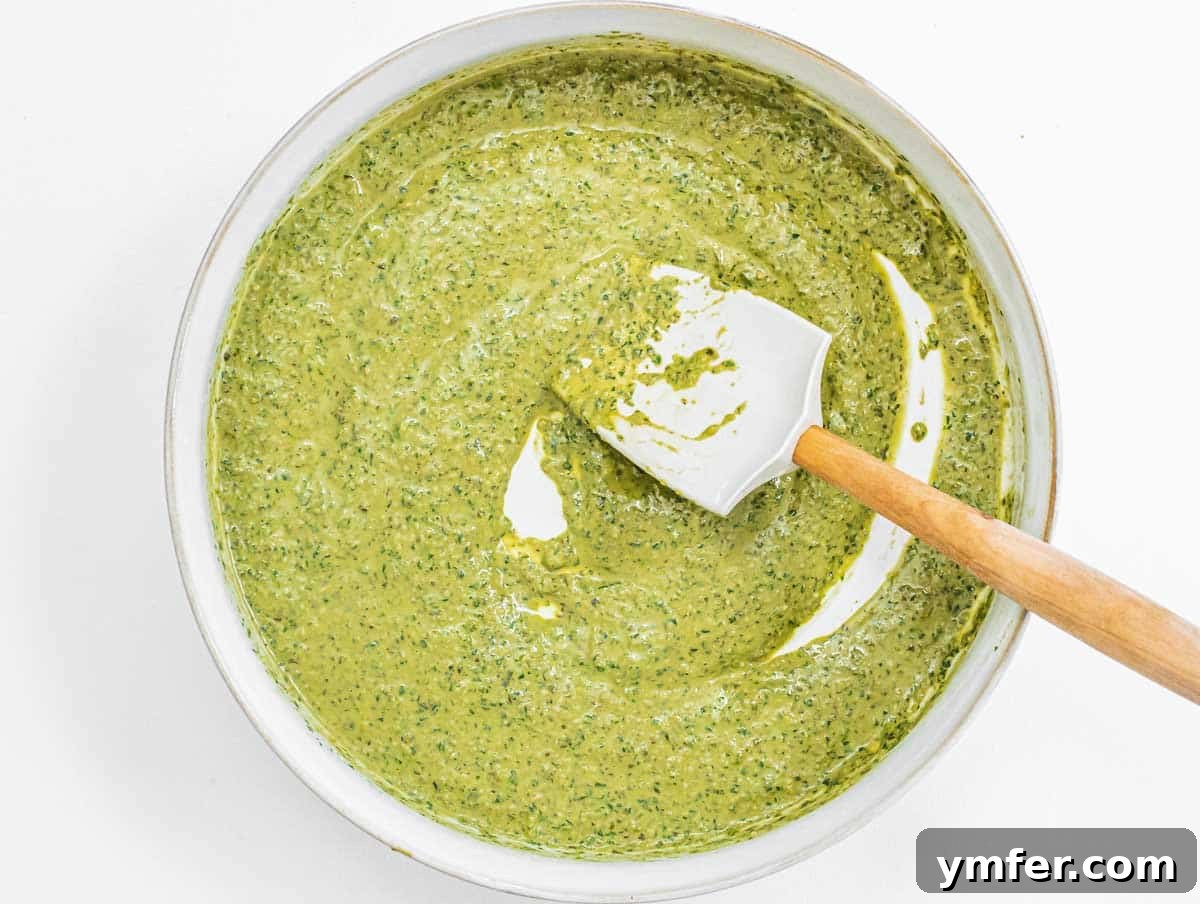
Once your pasta is cooked, add a ladleful or two of hot pasta cooking water to the pesto in the mixing bowl. This starchy water helps to warm the pesto gently, emulsify the sauce, and create a silky coating that perfectly adheres to every strand of pasta.
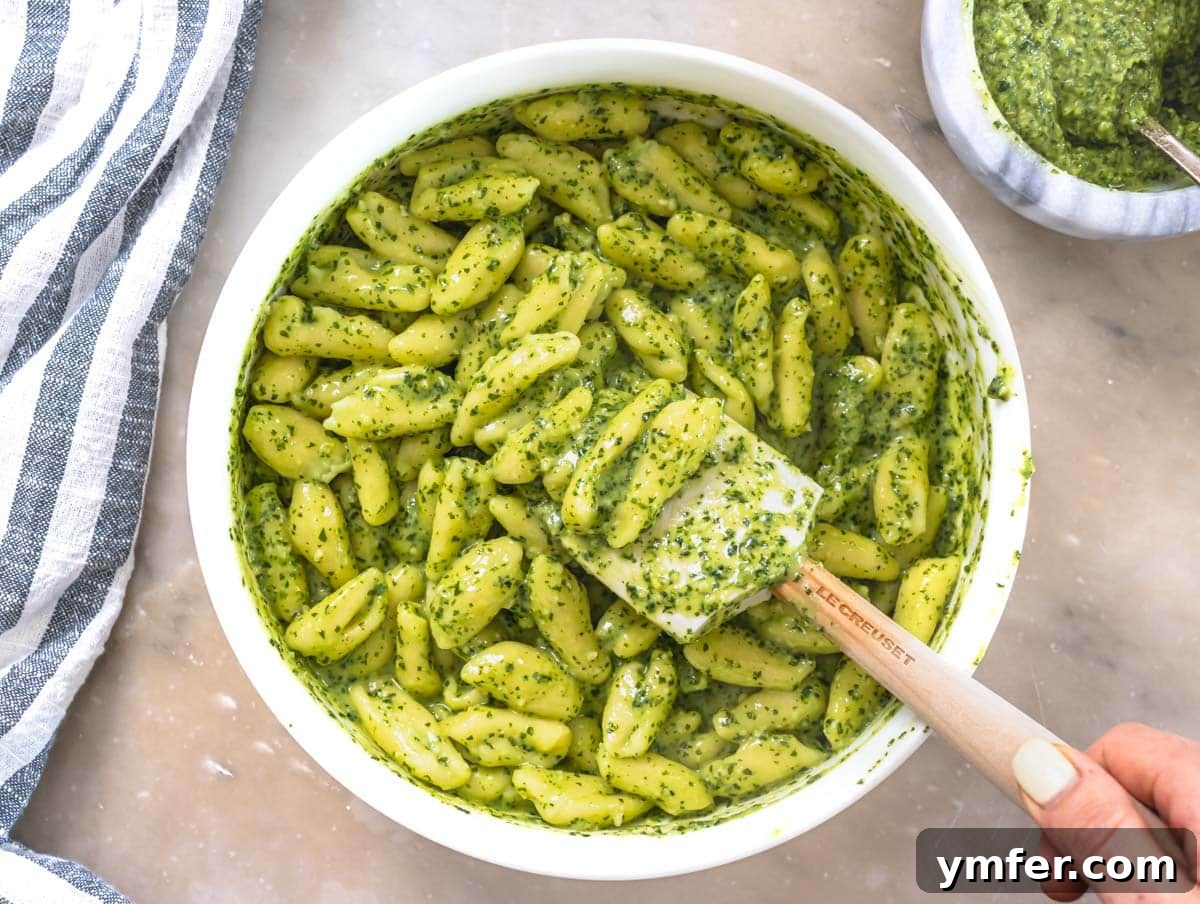
Rather than completely draining the pasta in a colander (and losing all that precious pasta water!), use a slotted spoon or a pasta spider to directly transfer the cooked pasta from the pot into the mixing bowl with your prepared pesto and pasta water mixture. Toss thoroughly to combine. This method ensures you have reserved pasta water on hand to add more if needed, helping you achieve the perfect sauce consistency.
Versatile Serving Suggestions
This homemade basil pesto recipe is incredibly versatile, transforming ordinary dishes into culinary delights. While most commonly cherished as a pasta sauce, its vibrant flavor profile makes it suitable for a myriad of applications:
Classic Pasta Pairings:
- Homemade Trofie: A traditional Ligurian pasta shape, perfect for scooping up every drop of pesto.
- Homemade Cavatelli: Small, shell-like pasta that beautifully cradles the rich sauce.
- Homemade Gnocchi: Soft potato dumplings, made even more irresistible with a coating of fresh pesto.
- Pesto Pasta with Store-Bought Pasta: Any short pasta (like penne, fusilli, orecchiette) or long pasta (spaghetti, linguine) works wonderfully.
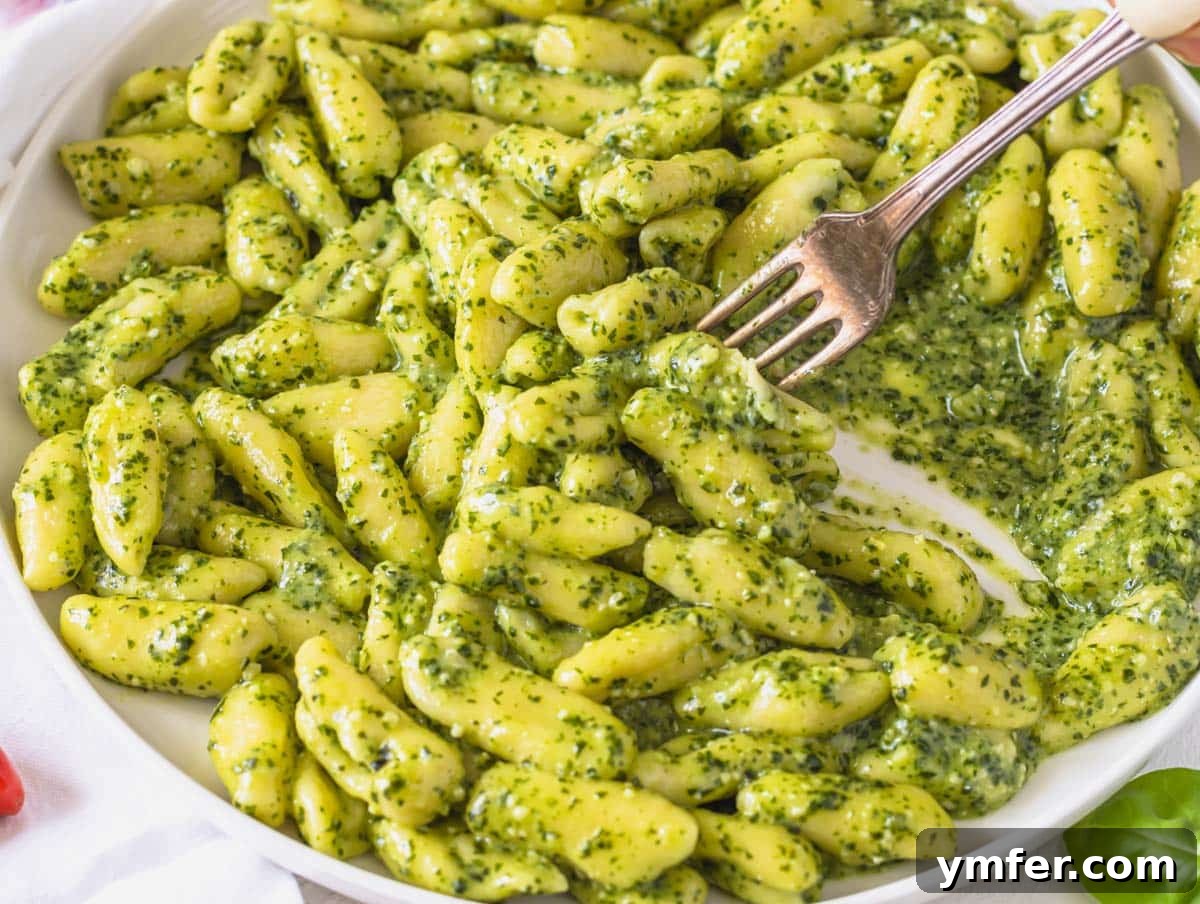
Beyond Pasta: Creative Ways to Enjoy Pesto:
Pesto is not just for pasta; it’s a fantastic spread, dip, or flavor enhancer for countless dishes. Here are some innovative ideas:
- Sandwiches & Wraps: Elevate your lunch with a generous spread of pesto. Try it in a Focaccia sandwich or a classic Caprese sandwich.
- Salads: Toss it with a Pesto pasta salad (especially delicious with green beans!) or drizzle over a fresh green salad.
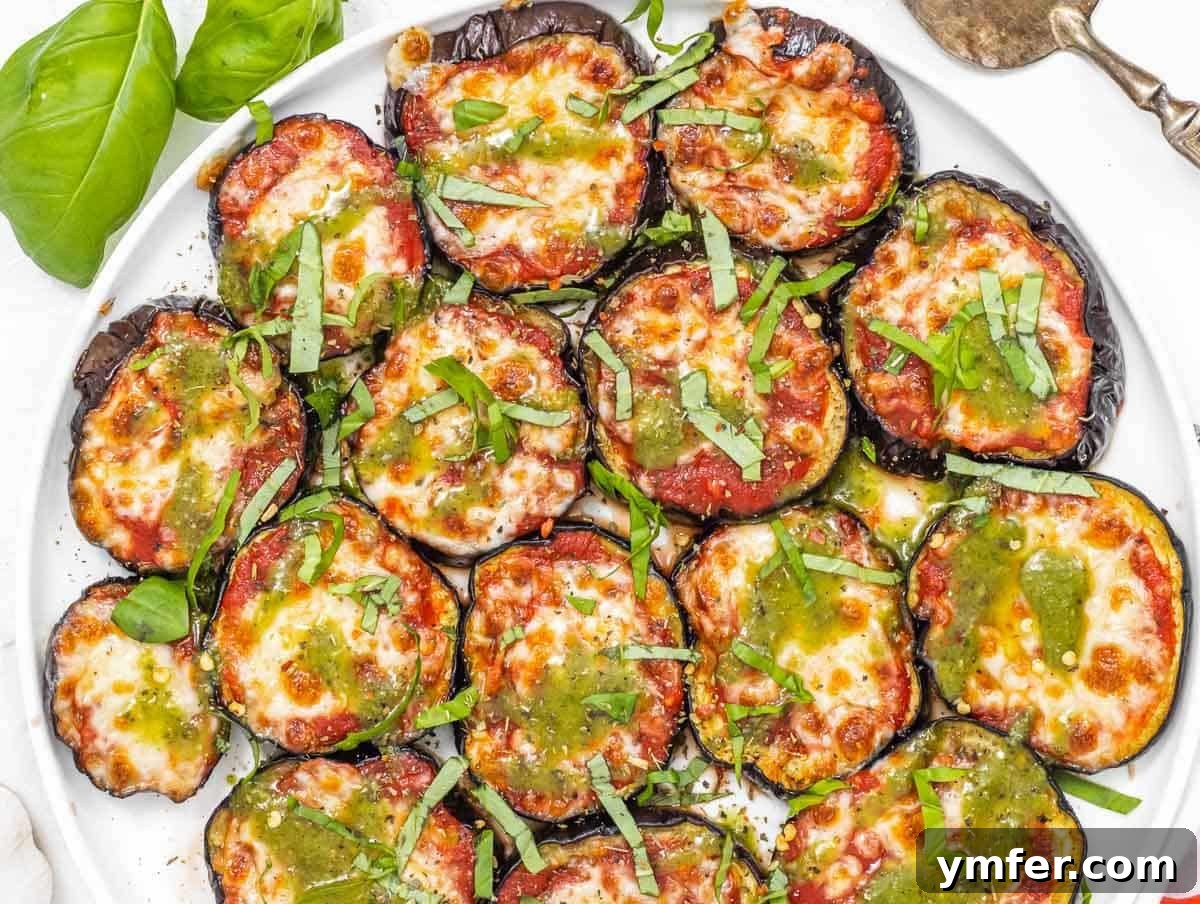
- Pizzas & Flatbreads: Use it as a vibrant base instead of tomato sauce for an Eggplant pizza, Flatbread pizza, or Focaccia pizza.
- Bruschetta & Crostini: Spread on toasted bread for a quick appetizer. Perfect with sautéed zucchini on toasted bread.
- Vegetables: Drizzle over roasted, grilled, or steamed vegetables. Fantastic with grilled eggplant and grilled zucchini.
- Stuffed Vegetables: Mix with breadcrumbs or other fillings for dishes like stuffed eggplant.
- Soups: Swirl a spoonful into vegetable soups or minestrone for an extra burst of flavor.
- Eggs: A dollop of pesto can brighten up scrambled eggs or an omelet.
Mains
Stuffed Eggplant
Recipes
Flatbread Pizza
Sides
Sautéed Zucchini
Pasta
Pesto Pasta Salad (With Green Beans)
Creative Pesto Variations
While the classic basil pesto is a culinary masterpiece, its fundamental technique lends itself beautifully to endless variations. Don’t be afraid to experiment and customize your pesto to suit different tastes or dietary needs.
Delicious Vegan Pesto
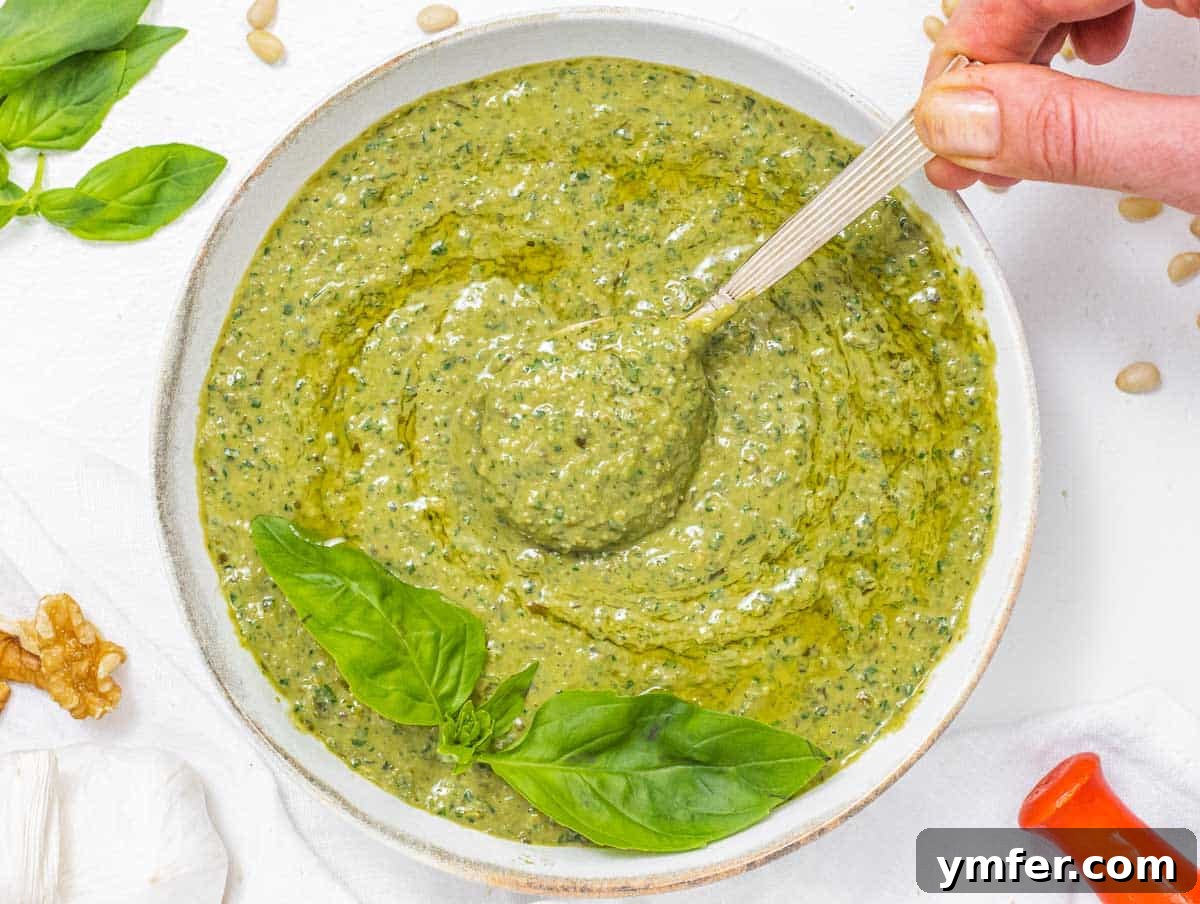
For those seeking a dairy-free alternative, vegan pesto is a fantastic option that sacrifices none of the flavor or creaminess. To create a delicious dairy-free pesto, you’ll need to substitute the traditional Parmesan and Pecorino cheeses.
The key ingredients for a rich vegan pesto are **nutritional yeast**, which provides a cheesy, umami depth, and a blend of nuts such as almonds, macadamia nuts, or walnuts. These nuts, when blended, contribute a creamy texture and nutty flavor that perfectly mimics the richness of cheese. Our dedicated vegan pesto recipe provides specific ratios and tips to achieve a truly satisfying dairy-free sauce.
Simple Nut-Free Pesto
Creating a nut-free pesto is incredibly easy and ensures that individuals with nut allergies can still enjoy this delightful sauce. The simplest substitution is to replace the pine nuts with **sunflower seeds** or **pumpkin seeds (pepitas)**. These seeds offer a similar texture and a mild, earthy flavor that blends beautifully with the other pesto ingredients. Just ensure they are raw and unsalted before adding them to your food processor. Roasting them slightly before adding them can also impart a deeper flavor, but for traditional pesto, raw is preferred.
Other Herb & Vegetable Pestos
The pesto concept isn’t limited to basil. Virtually any leafy green or soft vegetable can be transformed into a vibrant pesto. This allows for seasonal creativity and endless flavor combinations. Consider pestos made with:
- Arugula: For a peppery, slightly bitter kick.
- Kale: A nutritious option, offering an earthy, robust flavor.
- Parsley or Cilantro: For a fresher, brighter, and more herbaceous sauce, often used in Mexican or Middle Eastern cuisine.
- Sun-Dried Tomatoes: To create a rich, sweet, and tangy “red pesto” or pesto Rosso.
- Roasted Red Peppers or Zucchini: For a sweeter, milder pesto, fantastic in summer.
- Artichoke Hearts: Lending a distinct, slightly tangy flavor.
Each of these variations offers a unique culinary experience, proving that pesto is truly a canvas for flavor exploration. Feel free to explore our other pesto recipes for specific guidance on these exciting alternatives.
Storage & Make Ahead: Keeping Your Pesto Fresh
One of the many advantages of homemade basil pesto is its excellent keeping qualities, making it a perfect candidate for meal prep. Preparing a batch ahead of time ensures you always have a vibrant, flavorful sauce ready to elevate your meals.
Make Ahead Convenience:
This basil pesto recipe is truly fantastic for meal preparation. It holds up beautifully for several days in the refrigerator and for months in the freezer. For optimal freshness, we highly recommend freezing it immediately after it’s made, especially if you won’t be using the entire batch within a few days.
Refrigerator Storage:
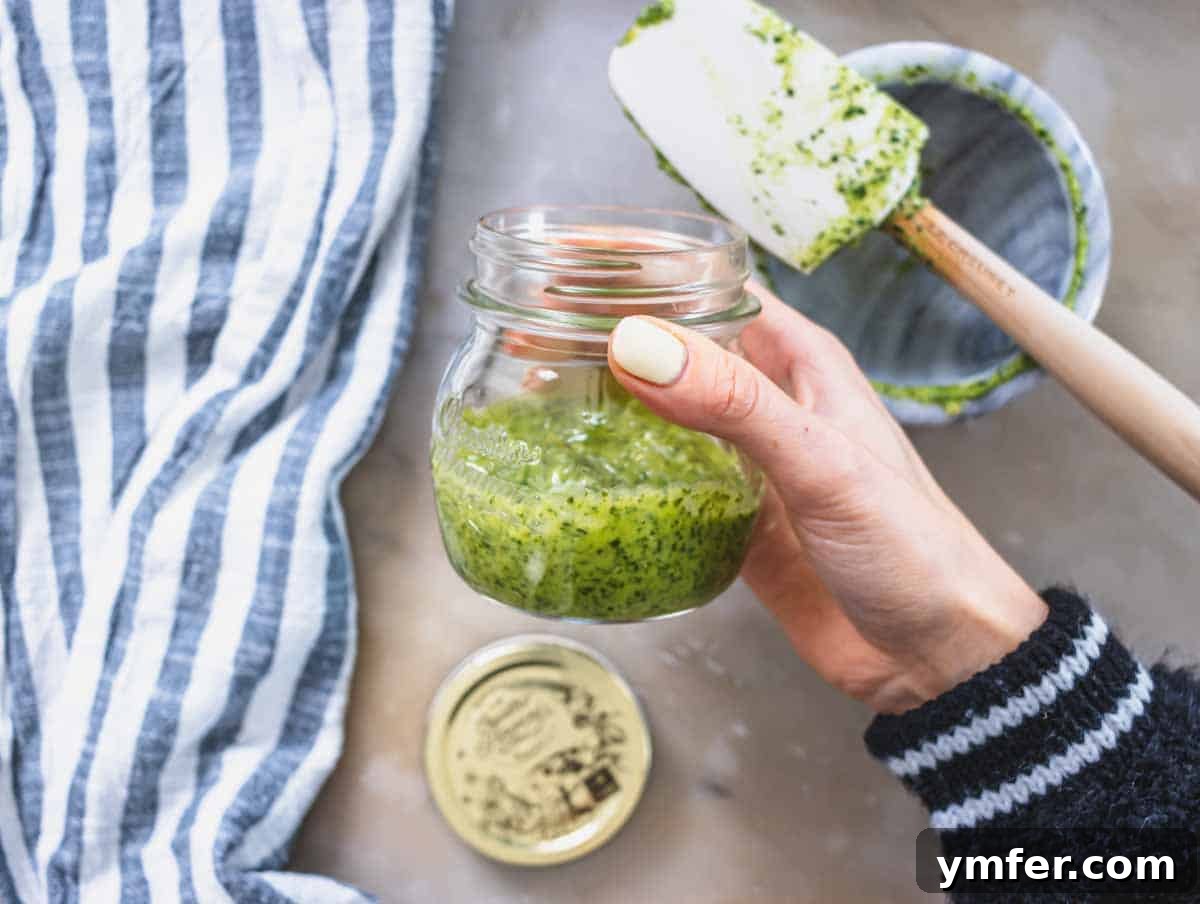
To store pesto in the refrigerator, transfer it to a small, airtight glass jar. Before sealing, pour a thin layer of extra virgin olive oil over the top of the pesto. This oil layer acts as a natural barrier, preventing air from reaching the pesto and significantly slowing down oxidation, which can cause the basil to brown. Close the jar tightly and store it in the fridge for 3 to 5 days. If you notice any browning on the surface, simply scrape it off, and the pesto underneath should still be fresh and green.
Freezer Storage:
Freezing is arguably the best method for preserving the intense freshness, vibrant color, and potent flavor of your homemade pesto for longer periods. To freeze, transfer the pesto into small airtight containers, freezer-safe bags, or, for single-serving portions, clean ice-cube trays. Once frozen solid in the ice-cube trays, you can pop out the pesto cubes and transfer them to a larger freezer bag for more compact storage.
Pesto can be safely stored in the freezer for up to three months. This way, you can enjoy the taste of summer basil long after the season has passed.
Thawing Frozen Pesto:
When you’re ready to use your frozen pesto, simply remove the desired amount from the freezer. Defrost it at room temperature for about 10 to 15 minutes, or in the refrigerator overnight for larger quantities. **Crucially, avoid thawing pesto with direct heat (like in a microwave or on the stovetop)**, as this will damage the delicate basil and olive oil, just as direct heat does during cooking.
Explore More Delicious Pesto Recipes
If you’ve enjoyed making and tasting this authentic basil pesto, you’ll be delighted to explore the broader world of pestos! Our collection features a variety of unique and equally delicious pesto recipes, perfect for adding fresh, vibrant flavors to your meals. Each recipe offers a distinct profile, inviting you to experiment with different herbs, nuts, and vegetables.
- Arugula Pesto: A peppery and slightly bitter alternative, perfect for salads or robust grains.
- Sun-Dried Tomato Pesto (Pesto Rosso): A rich, sweet, and tangy red pesto, excellent for sandwiches and pasta.
- Roasted Red Pepper Pesto: A vibrant and slightly smoky sauce, ideal for grilling or as a pizza base.
- Zucchini Pesto: A mild and fresh pesto, wonderfully light and perfect for summer dishes.
- Artichoke Pesto: A unique pesto with a distinct savory and slightly tangy flavor from artichoke hearts.
- Creamy Chestnut Pesto: A rich and earthy pesto, perfect for colder months and hearty pasta dishes.
- Kale Pesto Pasta: A super nutritious and flavorful pesto that’s easy to incorporate into your diet.
Sauces and Dressings
Kale Pesto
Sauces and Dressings
Sun-Dried Tomato Pesto
Sauces and Dressings
Artichoke Pesto
Sauces and Dressings
Roasted Red Pepper Sauce
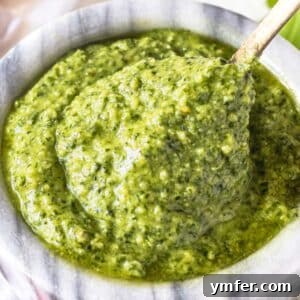
Basil Pesto
Nico Pallotta
You can make it in 10 minutes in a food processor and keep it in the fridge or freezer for months, ready for your next meal.
10 minutes
0 minutes
10 minutes
6
people
Dressing & Sauces
Italian
👍 Share
Prevent your screen from going dark
Equipment
-
Food processor or blender
Ingredients
- ¼ cup extra virgin olive oil or more for a thinner pesto (approx. 60 ml)
- 2 packed cups fresh basil leaves (approx. 80-100 grams)
- ½ cup Parmigiano Reggiano grated (approx. 50 grams)
- ¼ cup Pecorino Romano grated / substitute more parmesan (approx. 25 grams)
- 3 tablespoons pine nuts (approx. 30 grams)
- ½ teaspoon sea salt or more to taste (approx. 3 grams)
- 1 small garlic clove (optional, chopped)
Instructions
-
If your basil has not been washed, rinse it with cold water and gently pat it dry with a clean kitchen cloth.
To a food processor, add: ¼ cup extra virgin olive oil, 2 packed cups fresh basil leaves, ½ cup Parmigiano Reggiano, ¼ cup Pecorino Romano, 3 tablespoons pine nuts, ½ teaspoon sea salt, and 1 small garlic clove (chopped).

-
Pulse a few times until creamy but with a coarse texture. You might have to scrape down the sides of the food processor once or twice.
-
Taste and adjust for salt. Add more olive oil for a thinner pesto.
MAKE IT A MEAL
-
Toss with your favorite pasta, or have it as a spread in a sandwich, on pizza, roasted veggies, or stuffed veggies.
For more ideas, check out our “Serving suggestions” chapter linked in the notes below.
Notes
STORAGE & MAKE AHEAD
Make ahead: This basil pesto recipe is excellent for meal prep. It keeps well for days in the fridge and months in the freezer. We recommend freezing it right after it’s made.
Refrigerator: Transfer the pesto to a small airtight glass jar and cover it with a thin layer of extra virgin olive oil. Close the jar and keep in the fridge for 3 to 5 days.
Freezer: Freezing pesto is the best method for preserving its freshness. To do so, transfer the pesto to small airtight jars or clean ice-cube trays and freeze for three months.
Thaw: Defrost pesto at room temperature for 10 to 15 minutes. Avoid direct heat.
ALSO ON THIS PAGE
- What is basil pesto?
- Substitutions for basil pesto
- How to eat pesto with pasta?
- Serving suggestions
- Variations
- More Pesto recipes
Nutrition
Carbohydrates: 1g,
Protein: 5g,
Fat: 17g,
Saturated Fat: 4g,
Polyunsaturated Fat: 3g,
Monounsaturated Fat: 9g,
Trans Fat: 0g,
Cholesterol: 9mg,
Sodium: 368mg,
Potassium: 72mg,
Dietary Fiber: 0.4g,
Sugar: 0.3g,
Vitamin A: 608IU,
Vitamin B6: 0.04mg,
Vitamin C: 2mg,
Vitamin E: 2mg,
Vitamin K: 50µg,
Calcium: 154mg,
Folate: 9µg,
Iron: 1mg,
Manganese: 1mg,
Magnesium: 24mg,
Zinc: 1mg
Tried this recipe?
Leave a comment below or mention @theplantbasedschool on Instagram. We love hearing from you ⭐️ 💚.
If you loved this authentic basil pesto, you might also enjoy:
Mains
40 High Protein Vegetarian Meals
Collections
30 Easy Italian Recipes
Recipes
45 Easy Vegetarian Dinner Recipes
Mains
Mediterranean Diet Recipes