
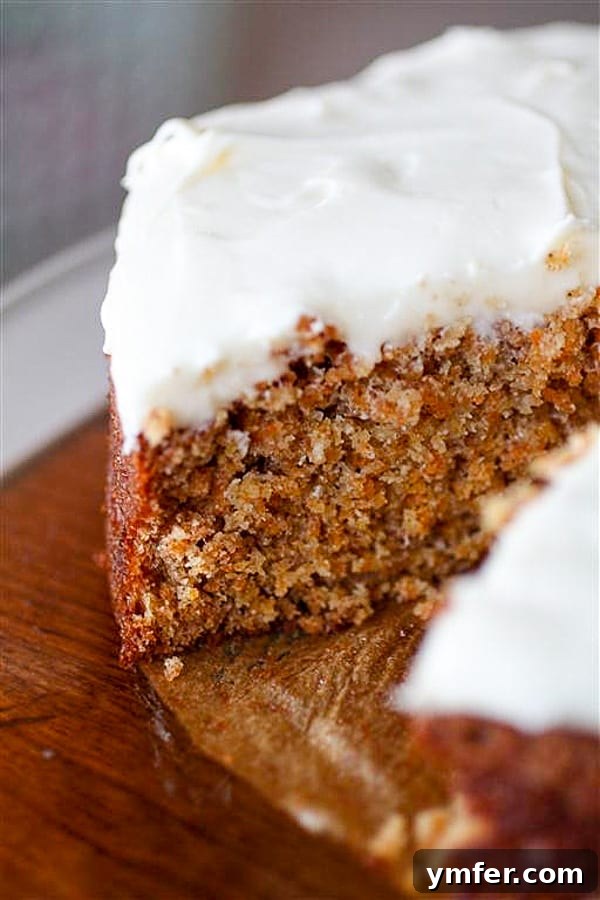
There’s an undeniable magic to a perfectly baked carrot cake, especially when crowned with a rich, tangy cream cheese frosting. This isn’t just any dessert; it’s a comforting classic that evokes warmth, a blend of sweet and spiced notes, and a tender crumb that melts in your mouth. Whether it’s the crisp days of autumn or the fresh bloom of spring, this simple yet sublime carrot cake recipe promises to be a beloved addition to any gathering, or a delightful treat just for you.
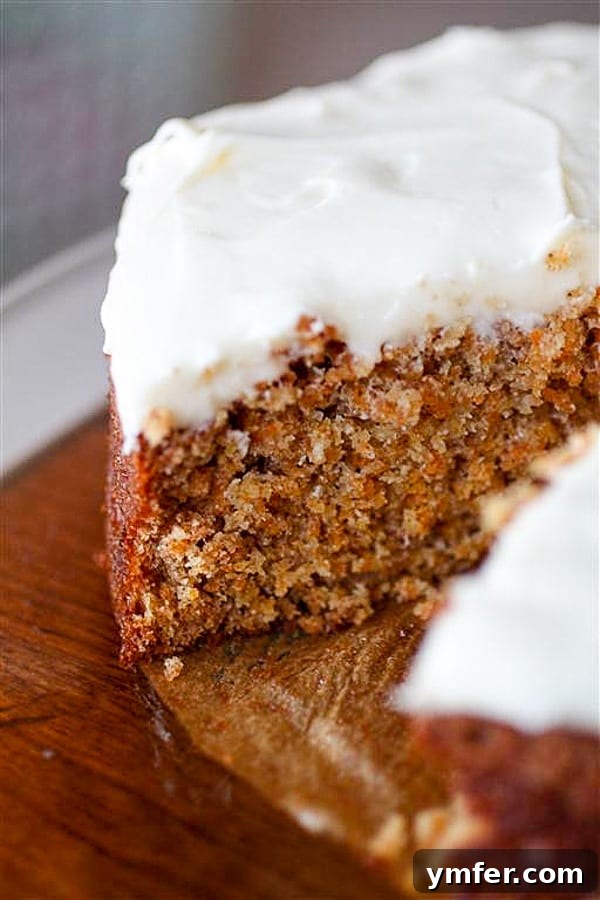
My adoration for carrot cake with its luscious cream cheese frosting runs deep. It truly feels like the quintessential dessert, versatile enough for any season. While many, including myself, associate its warm spices with fall, it undeniably shines brightly during Easter celebrations, bringing a touch of home-baked goodness to spring tables. This particular recipe, inspired by the culinary genius Alton Brown, achieves sheer perfection. The cake consistently emerges from the oven incredibly moist, infused with just the right balance of aromatic spices that dance on your palate. And the creamy, dreamy frosting? It’s not merely an accompaniment; it’s the star that elevates this cake to an unforgettable experience.
The Classic Carrot Cake Unveiled
At its heart, carrot cake is, quite simply, a cake made with carrots! While that might seem obvious, a quick search for carrot cake recipes reveals an astonishing variety. Some versions embrace tropical additions like shredded coconut or crushed pineapple, while others feature crunchy walnuts or pecans. Each variation offers a unique twist, catering to diverse preferences. However, this particular recipe champions simplicity, focusing on the pure essence of carrots and a carefully selected blend of spices. You won’t find coconut, pineapple, or nuts in this rendition, allowing the natural sweetness of the carrots and the warmth of the spices to truly shine.
The history of carrot cake is fascinating, tracing its roots back to medieval times when carrots were used as a sweetener in desserts due to sugar’s scarcity. Over centuries, it evolved into the beloved treat we know today, gaining significant popularity in the 20th century. Its enduring appeal lies in its unique combination of textures and flavors: the tender, moist crumb, the subtle crunch of grated carrots, and the aromatic warmth from spices like cinnamon, nutmeg, and allspice. It’s a cake that feels wholesome yet utterly indulgent, making it a timeless favorite across generations.
Why Carrots in Cake? The Secret to Moisture and Flavor
Carrots do more than just add a hint of color to your cake; they are the unsung heroes of moisture and subtle sweetness. As the cake bakes, the carrots soften and release their natural sugars, contributing to the cake’s incredibly tender and moist texture. They also impart a delicate, earthy sweetness that beautifully complements the robust spices. Beyond flavor and texture, carrots are packed with nutrients, offering a healthier twist to this delightful dessert. The finely grated carrots integrate seamlessly into the batter, ensuring that every bite is not only delicious but also wonderfully succulent.
Expert Tips for Grating Carrots
Preparing your carrots effectively is a crucial step in achieving the perfect carrot cake texture. The fastest and most convenient method is undoubtedly using a food processor. With its grating attachment, you can transform whole carrots into fine, even shreds in mere seconds, saving you considerable time and effort. This method ensures uniform pieces, which cook evenly and blend seamlessly into the cake batter, creating a smooth and consistent crumb.
However, I often find myself reaching for a trusty box grater, despite the food processor’s speed. Sometimes, the thought of cleaning multiple food processor parts can outweigh the desire for speed. A box grater, while requiring a bit more manual effort, provides excellent control over the fineness of the shred. For this recipe, a medium grate is ideal, offering enough texture without being overly chunky. Whichever method you choose, aim for uniformly grated carrots to ensure they distribute evenly and bake perfectly into the cake.
The Magic of Our Creamy Cream Cheese Frosting
What gives this frosting its irresistible creaminess? The secret lies in a generous combination of full-fat cream cheese and high-quality butter. Yes, it’s decadent, and no, it’s not a low-fat option, but the rich, smooth, and tangy flavor it delivers is absolutely worth every bite! The ratio of cream cheese to butter is carefully balanced to create a frosting that is firm enough to hold its shape yet soft enough to spread like a dream. The tanginess of the cream cheese perfectly cuts through the sweetness of the cake, creating a harmonious flavor profile that is truly addictive.
Achieving a truly creamy frosting also depends on starting with room temperature ingredients. Cold cream cheese or butter will result in a lumpy, inconsistent frosting that is difficult to work with. Allow your ingredients to soften on the counter for at least an hour before you begin mixing. This ensures they blend smoothly, creating that silky texture we all crave. If you prefer a frosting that’s a bit lighter and fluffier, you might enjoy my fluffy cream cheese frosting recipe, which offers a slightly different, airier consistency while retaining all the classic flavor.
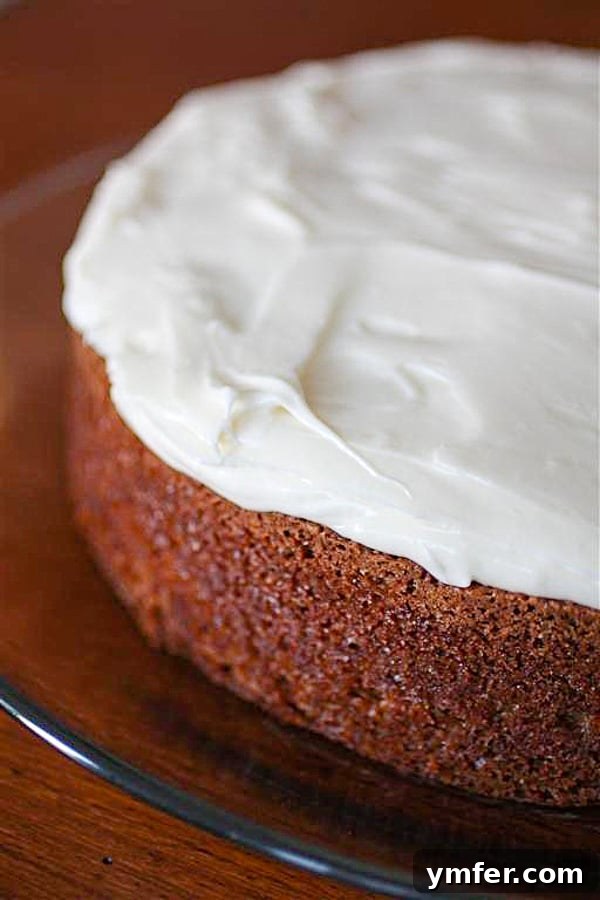
Mastering Your Carrot Cake: Baking Tips
Baking a carrot cake to perfection is a rewarding experience, and a few key tips can elevate your results from good to extraordinary. Firstly, ensure all your ingredients are at room temperature. This is especially crucial for the eggs, yogurt, cream cheese, and butter, as it allows them to emulsify properly, creating a smooth batter and a consistently creamy frosting. Cold ingredients can lead to a dense cake or a lumpy frosting, so plan ahead.
Do not overmix your cake batter. Once you’ve combined the wet and dry ingredients, mix only until just combined. Overmixing develops the gluten in the flour, leading to a tough, dry cake. A few small lumps in the batter are perfectly fine and often preferred. For the frosting, start with softened cream cheese and butter and beat them together until light and fluffy before gradually adding the powdered sugar. This technique prevents lumps and ensures a smooth, spreadable consistency.
Using a kitchen scale for measuring ingredients, especially flour and sugar, can significantly improve your baking accuracy. While cup measurements are common, they can vary widely depending on how ingredients are scooped. A scale provides precise measurements, ensuring the correct ingredient ratios for a consistently perfect cake every time. Finally, trust your oven thermometer. Ovens can fluctuate in temperature, so an external thermometer can help you maintain the exact temperature required for even baking. Don’t open the oven door too frequently during baking, especially in the initial stages, as this can cause the cake to sink.
Storage and Make-Ahead Options
Carrot cake is a fantastic dessert for making ahead, and it actually tastes even better the next day as the flavors meld and deepen. To store your frosted carrot cake, place it in an airtight container and refrigerate for up to 5 days. For longer storage, you can freeze individual slices or the entire cake (unfrosted is best, but frosted works too). Wrap slices tightly in plastic wrap, then in foil, and freeze for up to 2-3 months. Thaw in the refrigerator overnight before serving. If freezing an unfrosted cake, allow it to cool completely, wrap it tightly, and then thaw and frost when ready to serve.
Love this Carrot Cake Recipe? Explore More Desserts!
If you’ve fallen in love with the comforting flavors of this carrot cake, you’ll be thrilled to discover more delightful recipes. Here are a few other tasty cake recipes from my kitchen that I think you’ll enjoy, each bringing its own unique charm and deliciousness to your table:
- Sourdough Discard Cinnamon Crumb Cake
- Vanilla Cranberry Buttermilk Cake
- Butterscotch Pumpkin Bundt Cake
- Mixed Berry Coffee Cake
- Chocolate Zucchini Date Cake
Carrot Cake with Creamy Cream Cheese Frosting
Share by Email
Print Recipe
This carrot cake with creamy cream cheese frosting is the perfect fall dessert! Warm scented cake topped with the best creamy cream cheese frosting!
Equipment
-
9-inch cake pan
-
Boxed Grater
-
Food Processor
Ingredients
For cake:
- 12 ounces 340 grams medium grated carrots
- 2-1/2 cups 340 grams all-purpose flour
- 1 teaspoon baking powder
- 1 teaspoon baking soda
- 1/4 teaspoon ground allspice
- 1/4 teaspoon ground cinnamon
- 1/4 teaspoon freshly ground nutmeg
- 1/2 teaspoon kosher salt
- 1-1/3 cup 283 grams granulated sugar
- 2 ounces 55 grams dark brown sugar, approximately 1/4 cup firmly packed
- 3 large eggs
- 6 ounces 180 grams plain yogurt
- 6 ounces 160 grams vegetable oil
For frosting:
- 8 ounces 227 grams block cream cheese, room temperature
- 2 ounces 60 grams unsalted butter, room temperature
- 1 teaspoon vanilla extract
- 2 cups 255 grams powdered sugar
Instructions
For cake:
-
Preheat oven to 350 degrees F (175 degrees C).
-
Lightly spray a 9-inch cake pan with non-stick cooking spray and set aside.
-
Place the grated carrots into a large mixing bowl.
-
In a food processor, combine the all-purpose flour, baking powder, baking soda, ground allspice, ground cinnamon, freshly ground nutmeg, and kosher salt. Process for 5 seconds to thoroughly mix.
-
Add the flour mixture to the grated carrots and toss until the carrots are well-coated with the dry ingredients. This step helps prevent the carrots from sinking to the bottom of the cake.
-
In the bowl of the food processor, combine the granulated sugar, dark brown sugar, large eggs, and plain yogurt. Process until smooth and well-blended.
-
With the food processor still running, slowly drizzle in the vegetable oil until fully incorporated into the mixture.
-
Pour the wet mixture from the food processor into the large bowl with the carrot and flour mixture. Stir gently with a spatula until just combined. Be careful not to overmix.
-
Transfer the batter into the prepared 9-inch cake pan and spread evenly. Bake on the middle rack of the preheated oven for 45 minutes.
-
Reduce the oven temperature to 325 degrees F (160 degrees C) and continue baking for another 20 minutes, or until a wooden skewer inserted into the center comes out clean, and the internal temperature of the cake reaches 205 to 210 degrees F (96 to 99 degrees C).
-
Remove the cake pan from the oven and allow the cake to cool in the pan for 15 minutes. This helps the cake set and prevents it from breaking when inverted.
-
After 15 minutes, carefully invert the cake onto a wire cooling rack and allow it to cool completely to room temperature. This is essential before frosting.
-
Once the cake has cooled completely, spread evenly with the prepared cream cheese frosting.
For frosting:
-
In the bowl of a stand mixer fitted with the paddle attachment, combine the room temperature block cream cheese and unsalted butter. Beat on medium speed until just blended and smooth, scraping down the sides of the bowl as needed.
-
Add the vanilla extract and beat until well combined, ensuring the vanilla is evenly distributed.
-
With the mixer speed on low, gradually add the powdered sugar in 4 batches. Beat until smooth between each addition, ensuring no lumps remain and the frosting is creamy.
-
For optimal spreading consistency, place the frosting in the refrigerator for 5 to 10 minutes to firm up slightly before applying it to the cooled cake.
Nutrition
Calories: 844kcal
Carbohydrates: 138g
Protein: 7g
Fat: 31g
Saturated Fat: 7g
Polyunsaturated Fat: 22g
Trans Fat: 1g
Cholesterol: 90mg
Sodium: 437mg
Fiber: 2g
Sugar: 111g
Nutrition information is automatically calculated, so should only be used as an approximation.
Additional Info
Tried this recipe?
Mention @NutmegNanny or tag #nutmegnanny!