
Perfectly Boiled Asparagus: Your Ultimate Guide to Tender, Flavorful Spears
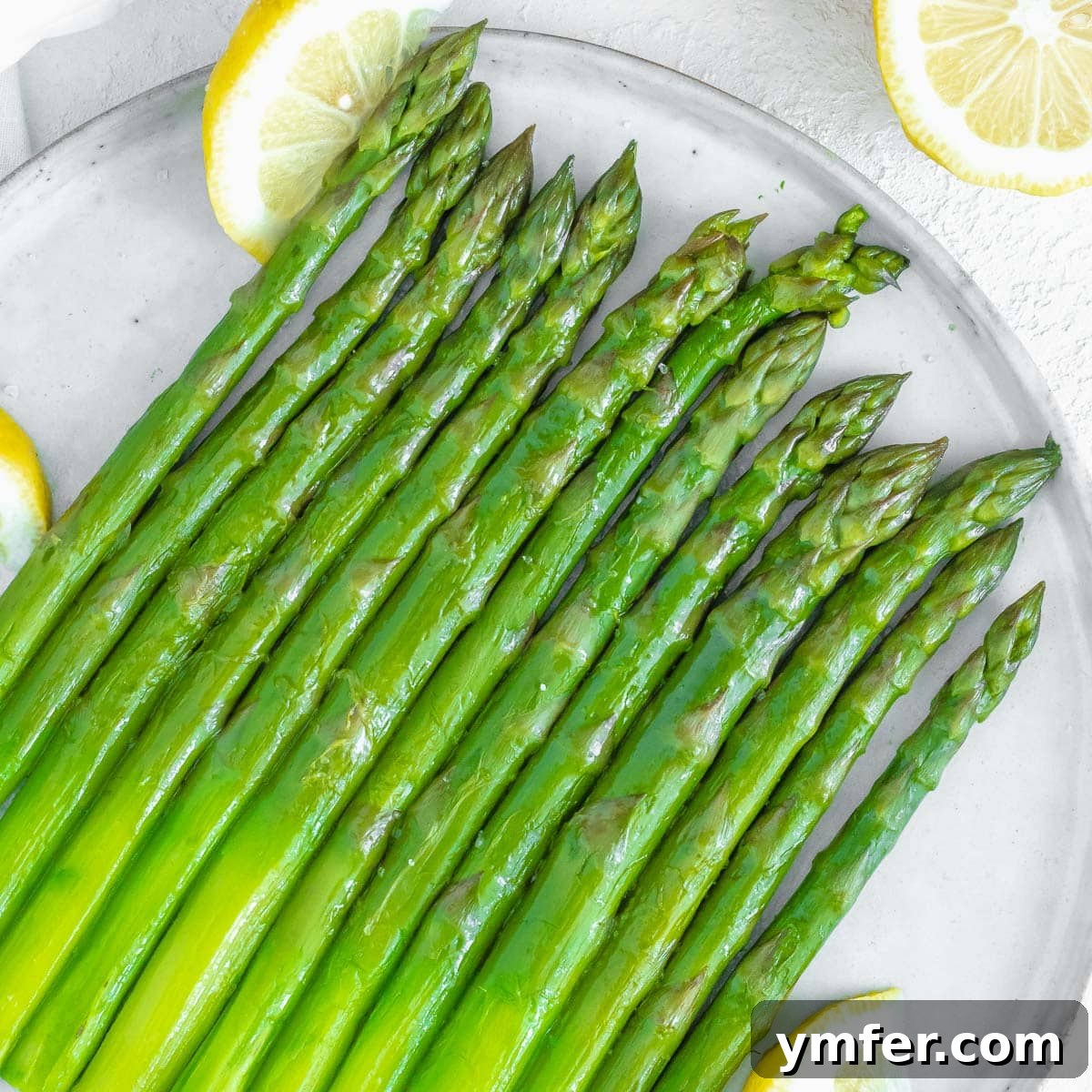
Forget bland and mushy! Learning how to boil asparagus to perfection is surprisingly simple, yielding bright green, tender, juicy, and incredibly healthy spears. This guide will show you how to prepare the best-looking and best-tasting boiled asparagus you’ve ever had, using just water and a touch of salt.
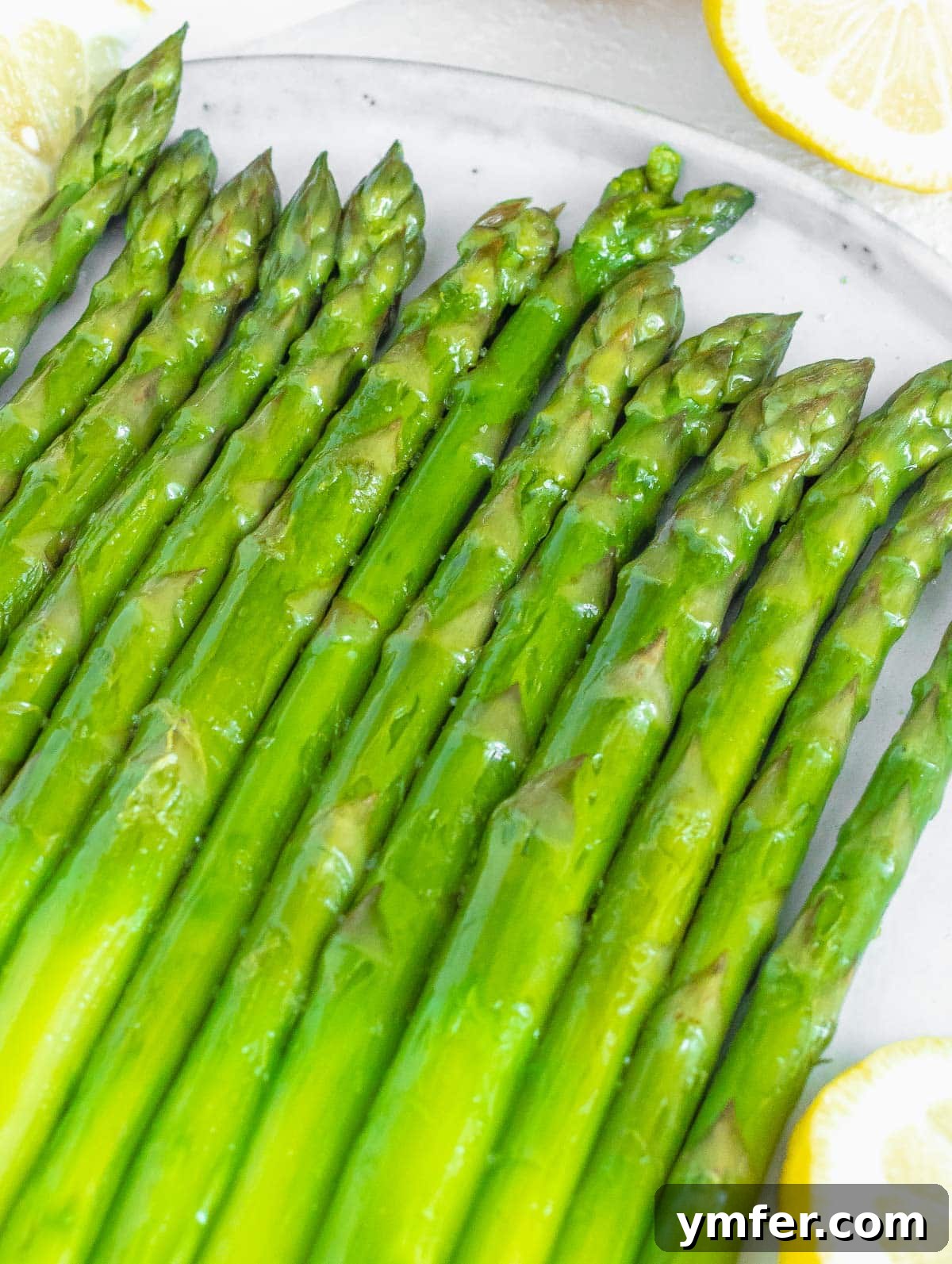
Table of Contents
- Why Master Boiled Asparagus?
- Ingredients for Perfectly Boiled Asparagus
- Enhance the Flavor: Condiment Suggestions
- Step-by-Step Guide: How to Boil Asparagus
- Elevate Your Boiled Asparagus: Creative Serving Suggestions
- Expert Tips for Flawless Boiled Asparagus
- Health Benefits of Asparagus
- More Asparagus Delights
- Storage & Reheating
- Boiled Asparagus Recipe Card
Explore our best vegetable sides recipe collection for more culinary inspiration!
Why Master Boiled Asparagus?
While boiling asparagus might seem straightforward, there are a few expert tips that transform it from a basic side into a culinary delight. We want to ensure your asparagus turns out absolutely perfect every time, and by “perfect,” we mean:
- Deliciously Flavorful: Packed with its natural, earthy essence, enhanced simply by the cooking process and a touch of salt. No blandness here!
- Velvety Tender: Cooked through to a beautiful tenderness that melts in your mouth, free from any tough or fibrous texture.
- Crisp “Al Dente”: Retaining a slight bite and firm structure, ensuring it’s cooked just right without becoming flabby or mushy. This is the hallmark of perfectly prepared asparagus.
Boiled asparagus is far from boring! While methods like grilled asparagus or air-fried asparagus offer different textures, properly seasoned boiled asparagus is a delicious, vibrant, and quick side dish that can be ready in less than 10 minutes, making it ideal for any weeknight meal or special occasion.
Ingredients for Perfectly Boiled Asparagus
Crafting exceptional boiled asparagus requires just a few key components. The quality of your ingredients significantly impacts the final taste and texture.
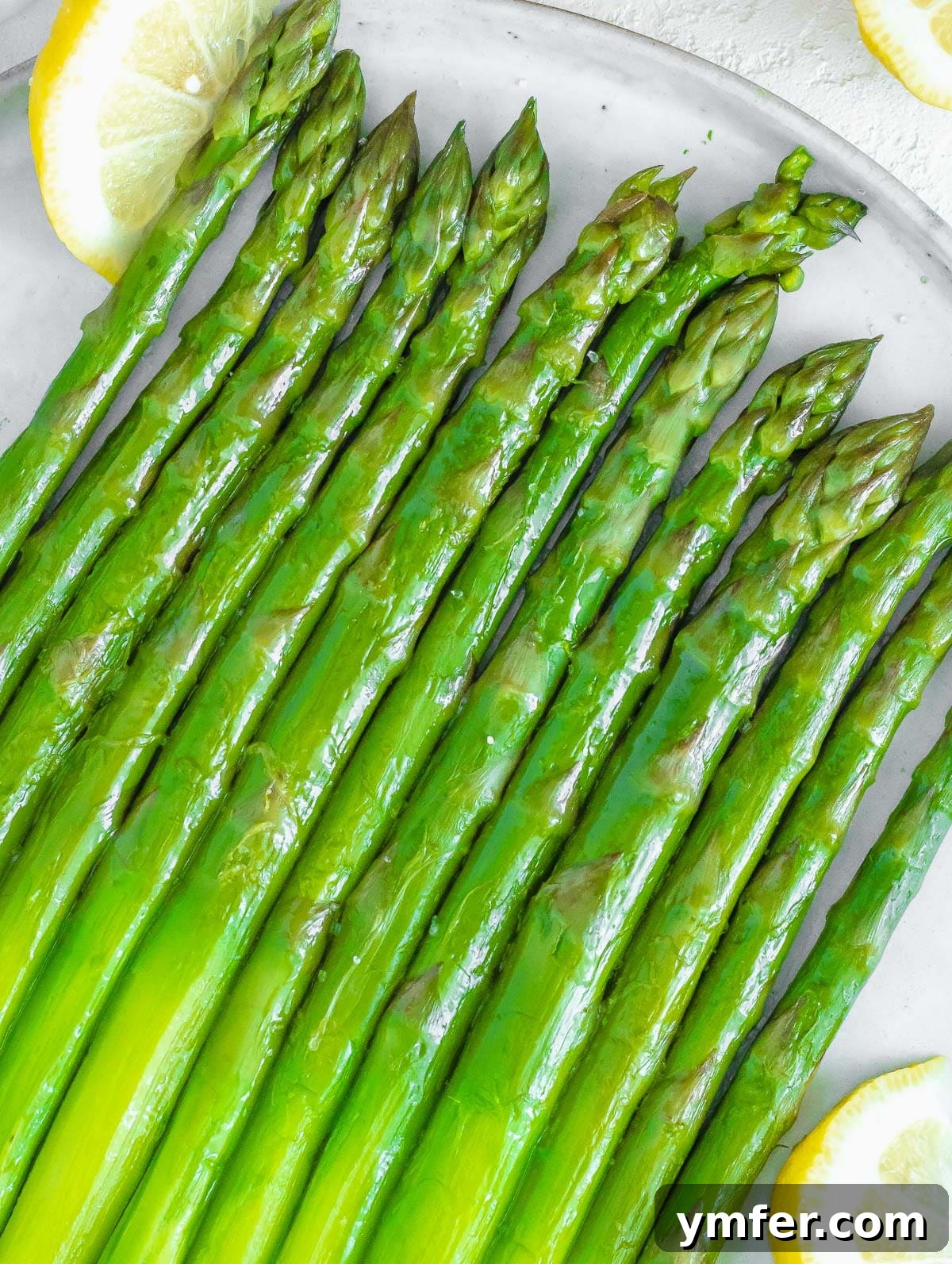
Asparagus: The star of our show! You can successfully boil both fresh and frozen asparagus. For the absolute best results, especially when in season (typically spring), we highly recommend using fresh asparagus. Look for spears that are firm, vibrant green, and have tightly closed tips. Wild asparagus and white asparagus varieties are also excellent choices for boiling, each offering a slightly different flavor profile.
Salt: A non-negotiable ingredient for seasoning the boiling water. Just like cooking pasta, adding salt to the water drastically enhances the natural flavors of the asparagus, preventing it from tasting bland. It also helps to maintain that beautiful bright green color. We suggest using sea salt or kosher salt for their clean flavor, but any good quality table salt will work.
Enhance the Flavor: Condiment Suggestions
While perfectly boiled asparagus is delicious on its own, these additions can elevate its flavor profile, transforming a simple side into a gourmet experience.
Olive Oil: A generous drizzle of high-quality extra virgin olive oil introduces a fruity, aromatic complexity that beautifully complements boiled asparagus. It also imparts a silky, luxurious texture. Just a few drops after cooking make a significant difference.
Lemon Juice or Balsamic Vinegar: Acidity is a powerful flavor enhancer. A squeeze of fresh lemon juice or a splash of good quality balsamic vinegar will make the asparagus’s natural flavors “pop,” adding a bright, zesty finish that cuts through any richness.
Salt & Freshly Ground Black Pepper: Even if you salted the boiling water, a final pinch of flaky sea salt and a few twists of freshly ground black pepper right before serving will layer the seasoning and ensure every bite is bursting with taste. Freshly ground pepper offers a more potent aroma and flavor.
Butter (or Vegan Butter): For a richer, more indulgent side dish, a knob of butter (we often opt for vegan butter for a dairy-free option) adds a creamy, velvety texture that feels truly luxurious. It melts beautifully over the warm spears, coating them in decadent flavor.
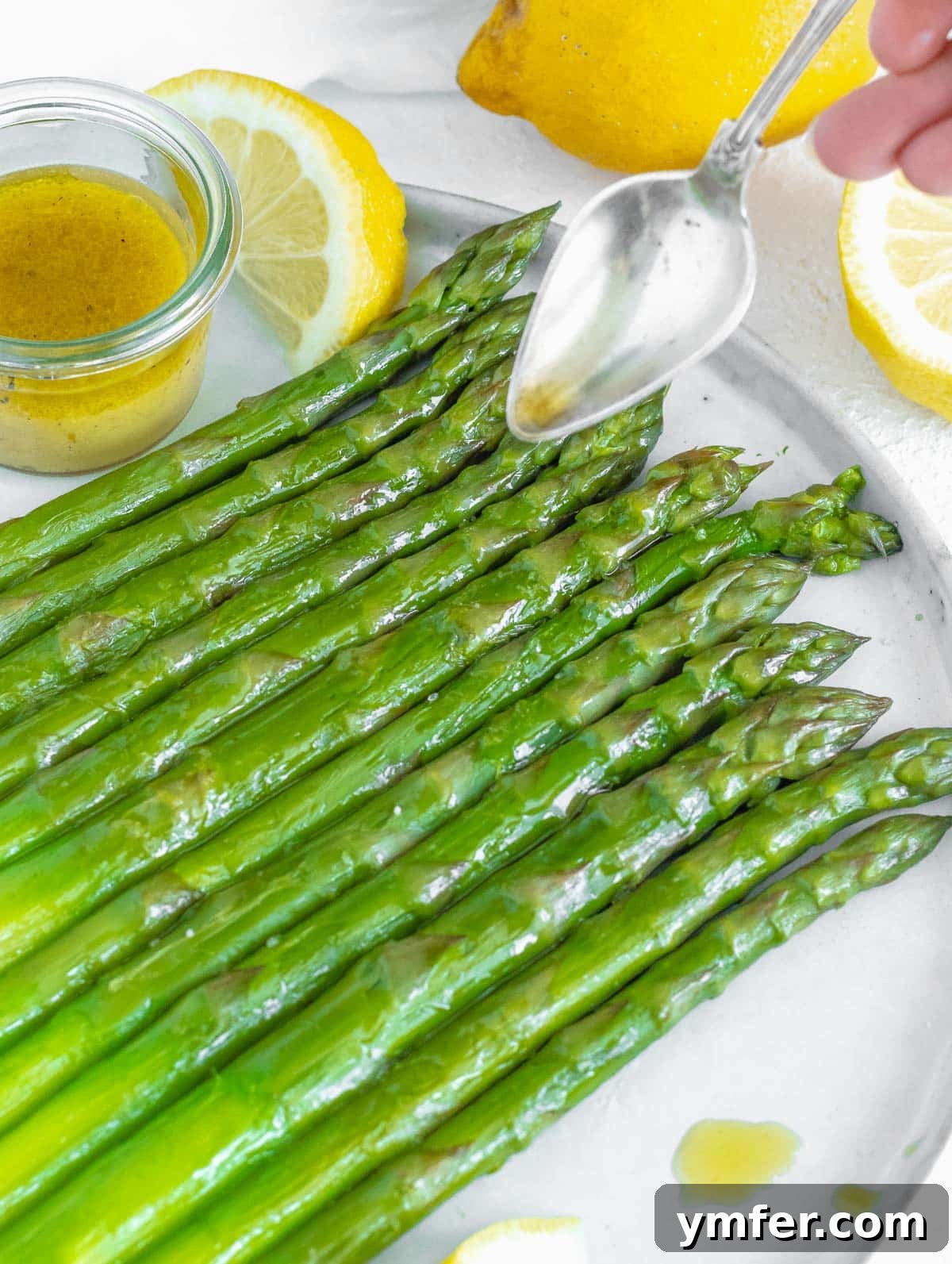
Mustard Dressing / Vinaigrette: The piquant notes of mustard perfectly complement the subtle sweetness of asparagus. Consider a simple mustard vinaigrette made with Dijon mustard, a touch of maple syrup, olive oil, lemon juice, salt, pepper, and a hint of grated garlic. This creates a tangy, sweet, and savory dressing that coats the asparagus in an irresistible glaze.
Fresh Herbs: Finely chopped fresh herbs add an incredible burst of freshness and aroma. Flat-leaf parsley is a classic pairing, but don’t shy away from basil, dill, chives, or mint. Sprinkle them generously over the asparagus just before serving for vibrant color and fragrance.
Toasted Nuts: For added texture and a nutty depth of flavor, consider sprinkling toasted pine nuts, walnuts, almonds, or hazelnuts over your boiled asparagus. Toast them lightly in a dry pan until fragrant, then roughly chop before scattering them on top. The crunch provides a delightful contrast to the tender spears.
Step-by-Step Guide: How to Boil Asparagus
There are generally two approaches to boiling asparagus: either cooking them whole in a large pan or chopping them into shorter pieces in a smaller pot. We prefer boiling them whole as it maintains their elegant appearance, making for a more appealing presentation.
1. Prepare Your Water and Asparagus
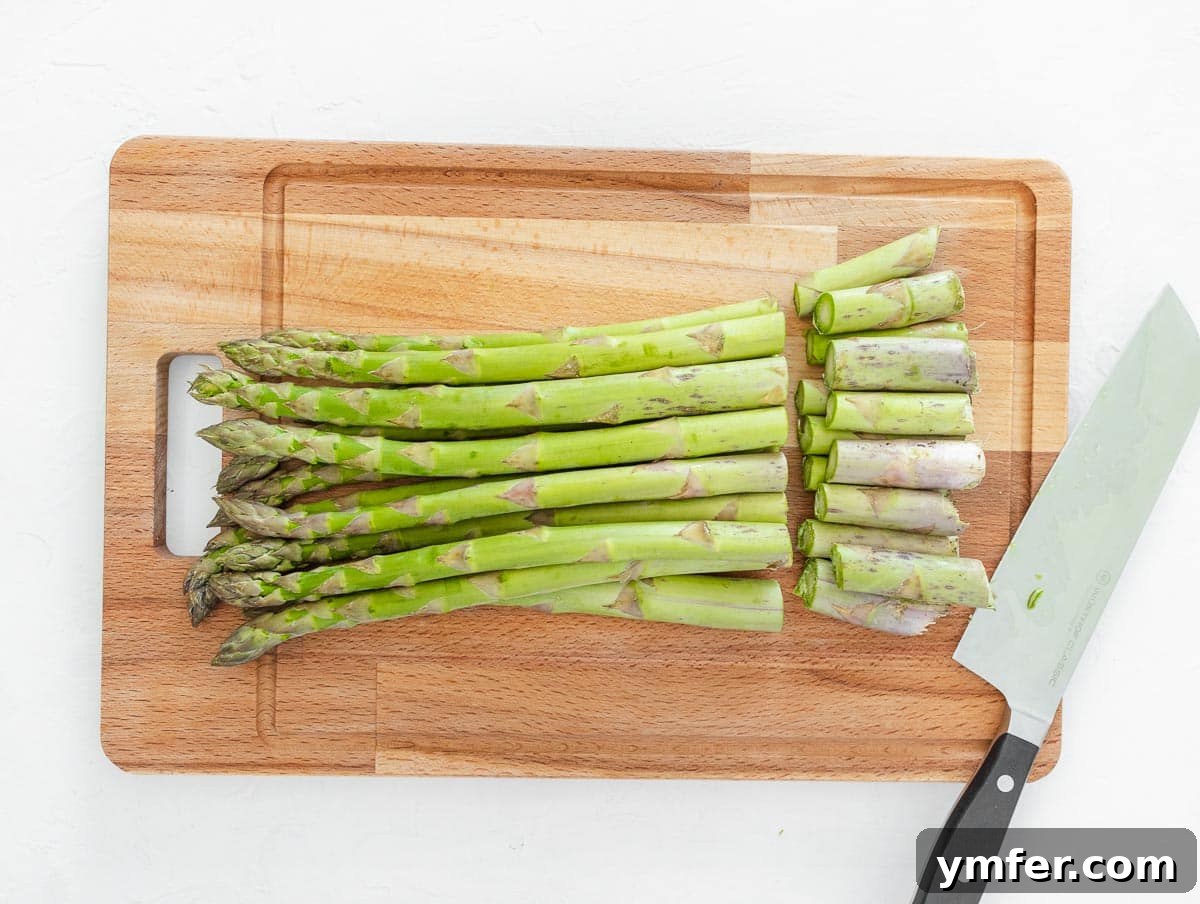
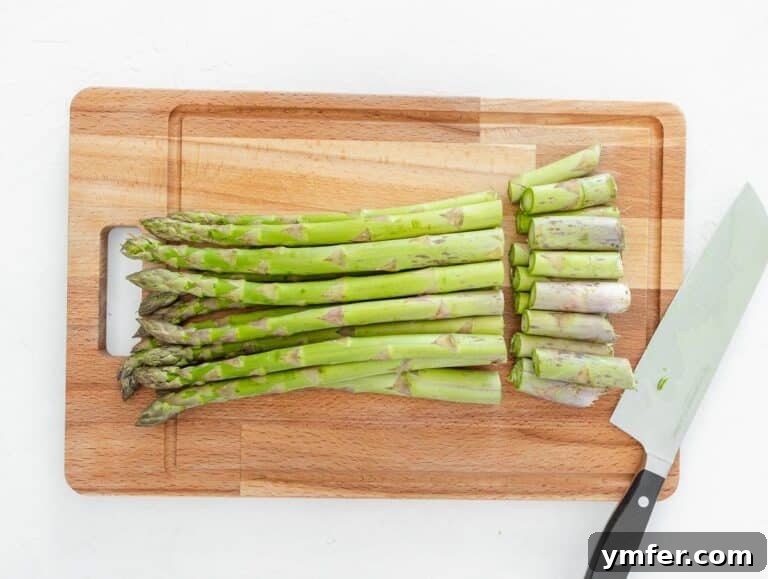
Begin by adding about 5 cups of water to a large, wide pan (one that can comfortably fit the asparagus spears horizontally). Bring the water to a rolling boil over high heat. While the water heats, meticulously rinse your fresh asparagus under cold running water. Next, prepare the asparagus by trimming the woody ends. The easiest way to do this is to hold a spear firmly and bend it; it will naturally snap where the tender part meets the tough, woody end. Discard the woody portions.
2. Peel for Ultimate Tenderness
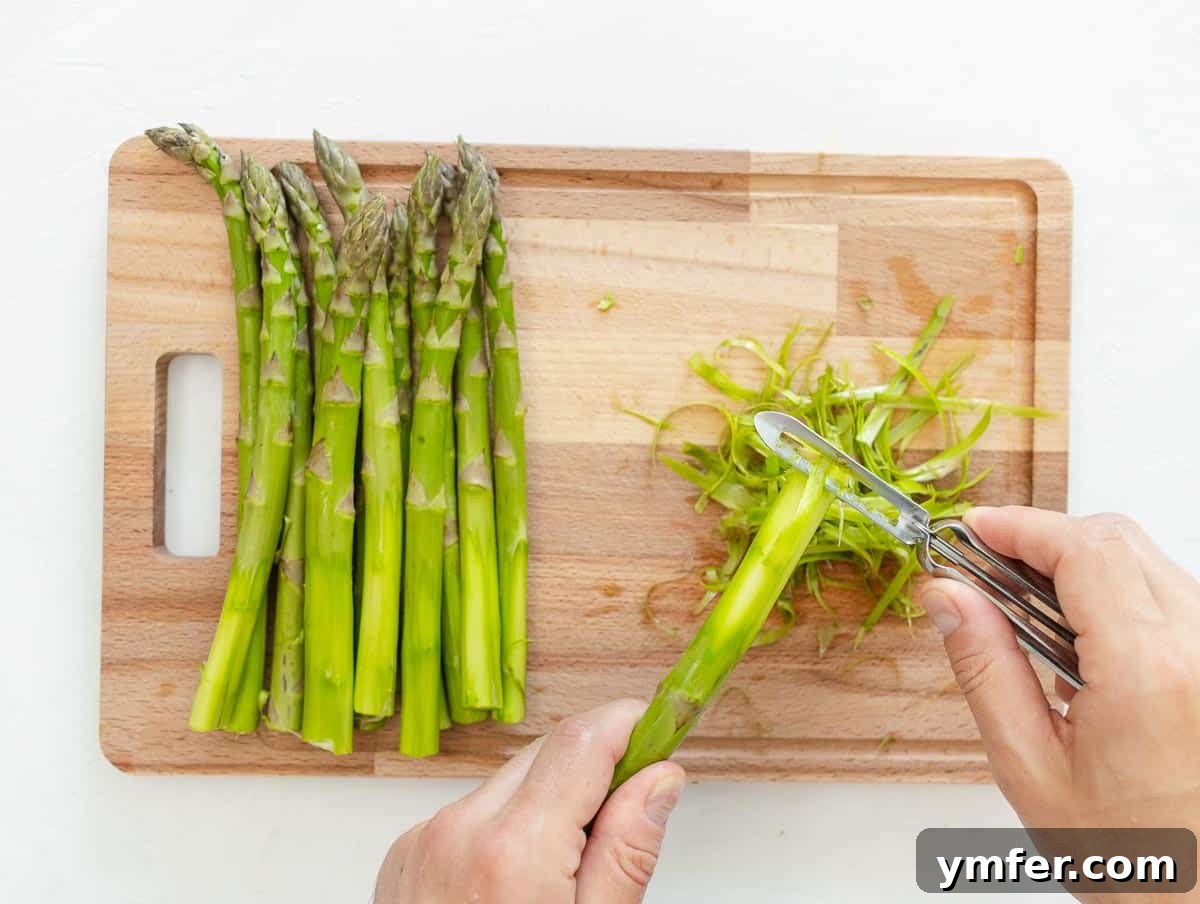
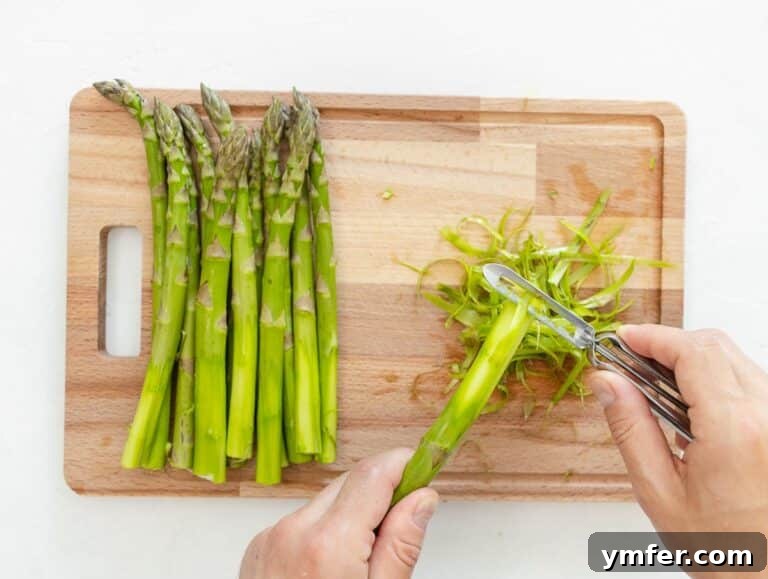
For an even more refined and consistently tender texture, especially with thicker spears or if your asparagus isn’t exceptionally fresh, use a vegetable peeler to lightly peel the bottom two to three inches of the stalk. This part can often be slightly fibrous and chewy after boiling, even if the woody end is trimmed. This extra step takes less than a minute but ensures your asparagus cooks more evenly and results in a wonderfully buttery, melt-in-your-mouth experience.
3. Boil the Asparagus
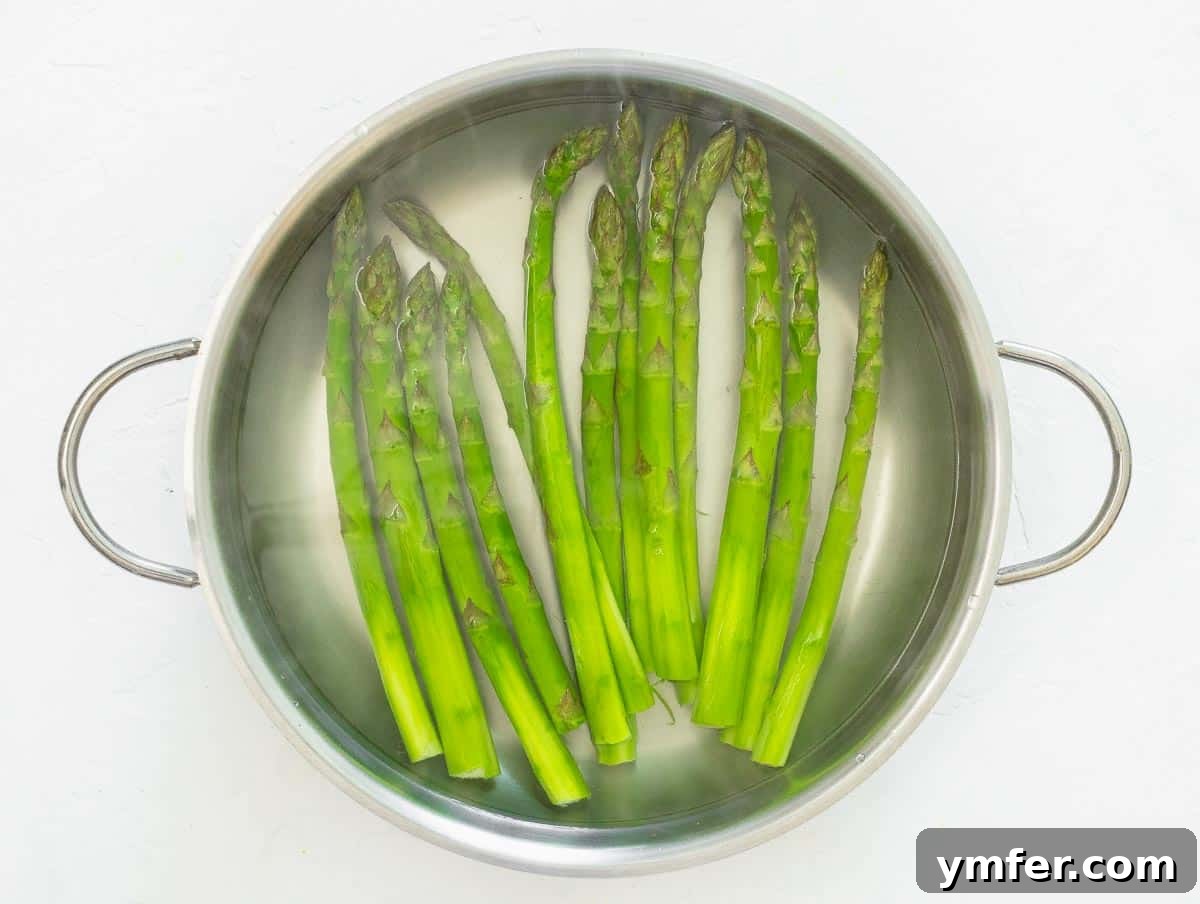
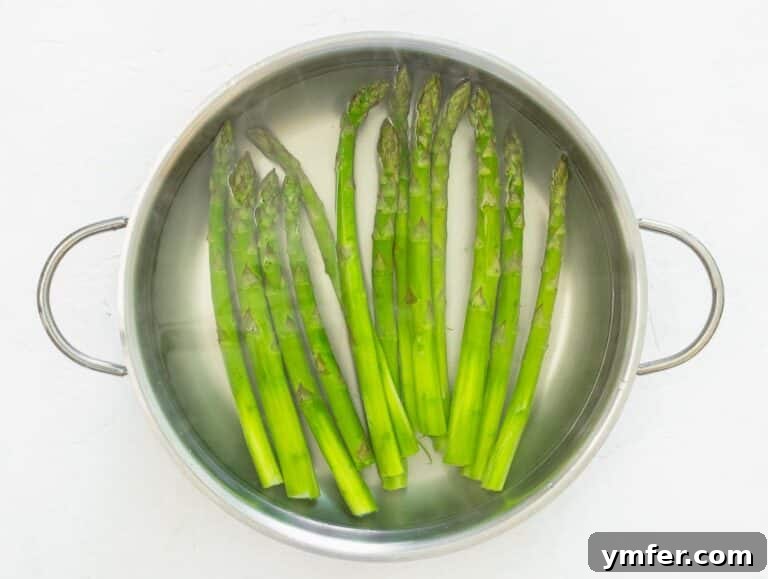
Once the water is boiling vigorously, add 1 teaspoon of salt (adjust if using significantly more or less water). Then, carefully add the trimmed and peeled asparagus spears to the boiling water. Cook on medium heat for approximately 6 to 10 minutes. The exact cooking time will depend heavily on the thickness of your asparagus stalks. Thinner spears will cook faster, while thicker ones require more time.
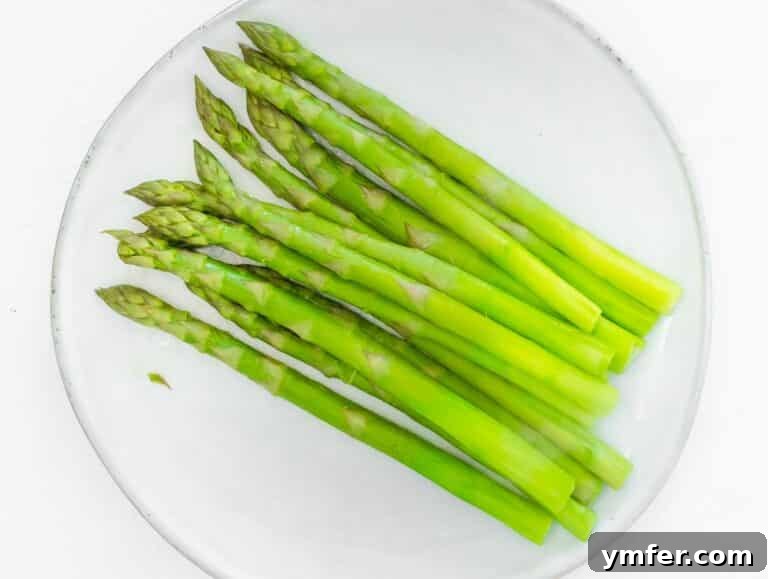
To check for doneness, gently poke a spear with a fork. It should feel tender but still have a slight texture and a pleasant “al dente” bite, not mushy. For reference, the asparagus in our pictures, which were of medium thickness, took exactly 10 minutes to reach perfect tender-crispness.
4. Serve Immediately or Cool
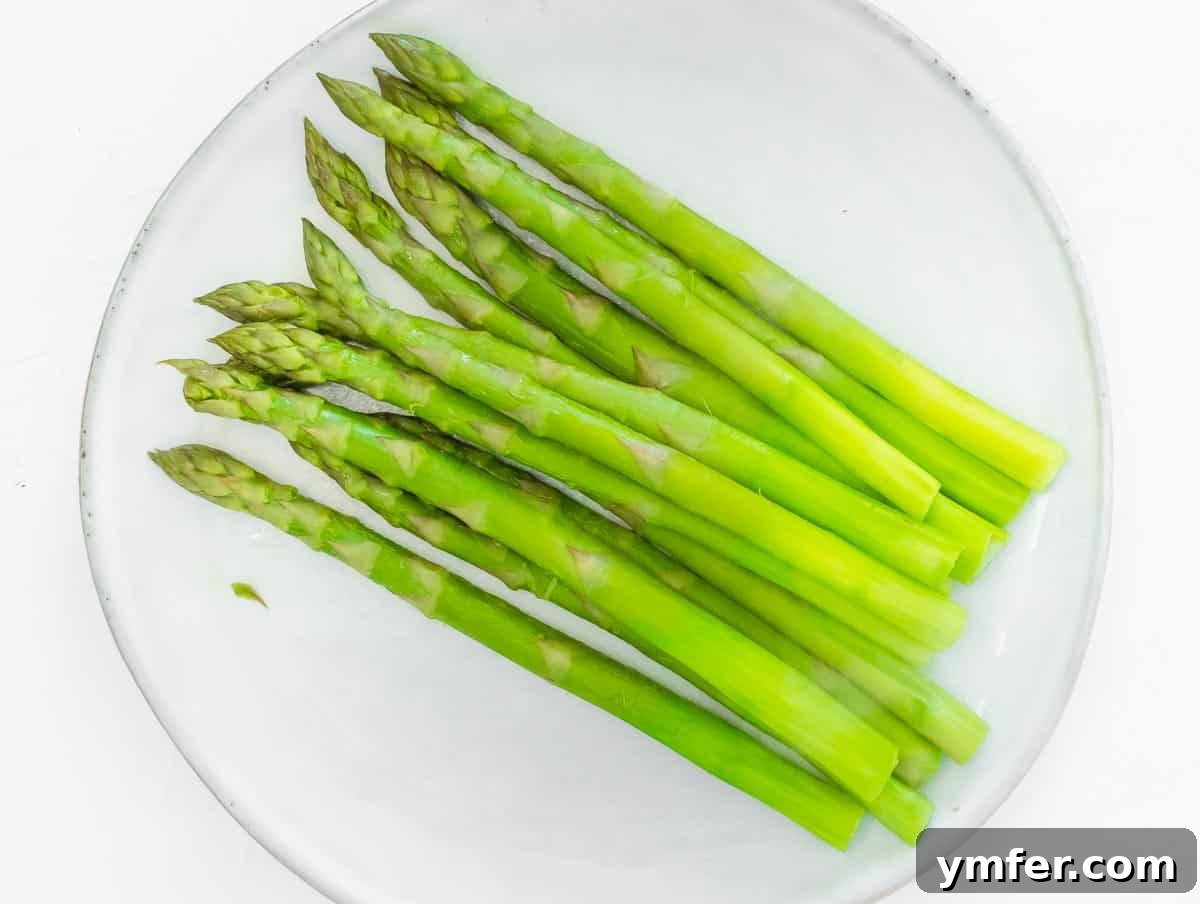
As soon as the asparagus reaches your desired tenderness, carefully remove it from the boiling water. You can either serve it immediately, allowing the residual heat to carry over a little more cooking, or, if you want to stop the cooking process completely and preserve its vibrant green color, plunge the spears into an ice bath (a bowl of cold water with ice cubes) for about 10 seconds. This “shocking” method is excellent for make-ahead purposes or if you desire an extra crisp texture. Drain well before serving.
Elevate Your Boiled Asparagus: Creative Serving Suggestions
Once your asparagus is perfectly boiled, the possibilities for serving are endless. Here are some of our favorite ways to enjoy this versatile vegetable:
1. The Classic & Simple Drizzle
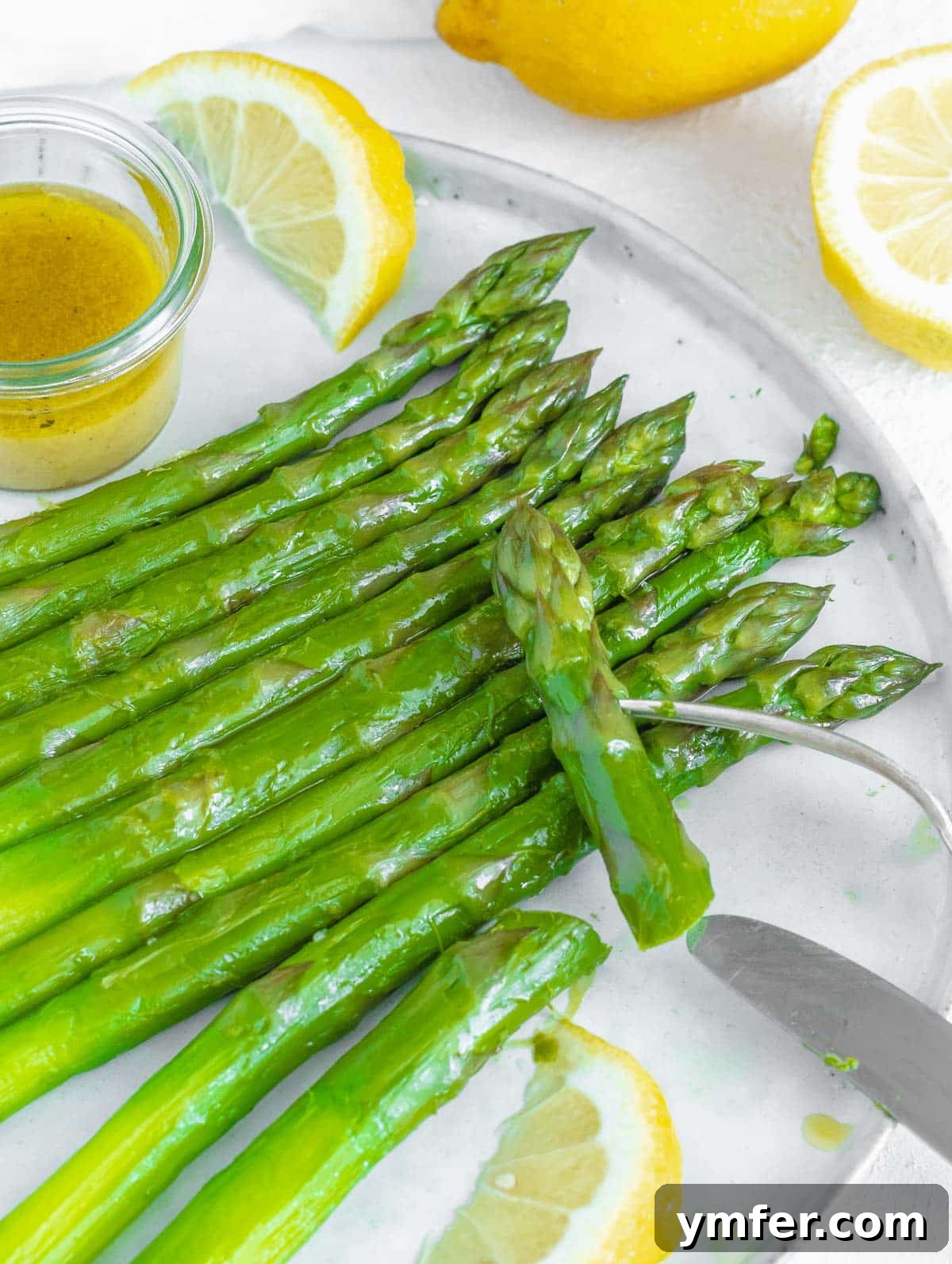
The easiest and arguably most popular way to serve boiled asparagus is with a minimal yet impactful dressing. Sprinkle with a pinch of flaky sea salt and freshly ground black pepper. Then, finish with a generous drizzle of extra virgin olive oil and a bright squeeze of fresh lemon juice or a dash of aged balsamic vinegar. This combination highlights the asparagus’s natural flavor, making it a super healthy, fresh, and irresistibly tasty side dish that pairs well with almost any main course, from roasted chicken to pan-seared fish or a hearty pasta.
2. Rich & Decadent with Butter and Herbs
For a richer experience, embrace the creamy texture that butter provides. Add a teaspoon or two of your preferred butter (dairy or high-quality vegan butter works beautifully). As the butter melts, sprinkle with salt, pepper, and a handful of freshly chopped flat-leaf parsley or chives. A final squeeze of lemon adds a welcome zing to balance the richness. This preparation transforms boiled asparagus into a more luxurious side, perfect for holiday meals or an elevated weeknight dinner.
3. Tangy & Zesty Mustard Vinaigrette
If you’re looking to add a burst of complex flavors, our quick and easy mustard vinaigrette is a game-changer. Whisk together 2 tablespoons of extra virgin olive oil, 2 tablespoons of fresh lemon juice, 1 tablespoon of maple syrup (or honey), 1 teaspoon of Dijon mustard, ½ teaspoon of salt, a few twists of black pepper, and a small clove of grated garlic (or a pinch of garlic powder). Whisk until emulsified. Serve this vibrant vinaigrette alongside the boiled asparagus, allowing guests to drizzle it to their liking. This dressing is tangy, zesty, subtly sweet, and wonderfully sour, making boiled asparagus an unforgettable dish. It’s especially good with main courses that benefit from a bright, flavorful counterpoint.
4. Asparagus with Parmesan or Nutritional Yeast
For a savory, umami-rich finish, grate fresh Parmesan cheese over the warm asparagus. For a dairy-free and vegan alternative, a sprinkle of nutritional yeast provides a cheesy, nutty flavor that is equally delightful. Both options add a fantastic depth and savory dimension.
5. As Part of a Vibrant Salad
Boiled asparagus can also be cooled and incorporated into various salads. Toss it with mixed greens, cherry tomatoes, cucumbers, and your favorite light vinaigrette. It adds a lovely texture and robust flavor to spring and summer salads, making them more substantial and interesting.
Expert Tips for Flawless Boiled Asparagus
Achieving perfectly cooked, tender-crisp, and flavorful boiled asparagus every time is easy if you follow these simple yet crucial tips:
- Always Salt the Water: This is perhaps the most important tip. Adding a generous amount of salt (about 1 teaspoon per 5 cups of water) to the boiling water seasons the asparagus from the inside out. Without salt, the asparagus will taste bland, no matter how much seasoning you add afterwards. The salted water also helps to preserve the asparagus’s vibrant green color.
- Peel the Lower Stalks for Uniform Tenderness: While snapping off the woody ends is standard, taking an extra minute to lightly peel the bottom 2 to 3 inches of the asparagus stalks can make a significant difference. This removes any potentially fibrous outer layers, ensuring that every part of the spear, from tip to base, is wonderfully tender and buttery. This is especially beneficial for thicker spears.
- Don’t Overcook – Aim for “Al Dente”: Overcooked asparagus is mushy, flabby, and loses its beautiful color and delicate flavor. Keep a close eye on your asparagus and begin checking for doneness around the 5-6 minute mark. It should be tender when poked with a fork but still offer a slight bite and firmness. This “al dente” stage retains the best texture and nutrient content.
- Shock in Ice Water (Optional, but Recommended for Brightness): If you’re not serving the asparagus immediately, or if you want to ensure the brightest green color and crispest texture, transfer the cooked spears directly into an ice bath (a bowl of ice water) for about 10 seconds. This rapidly stops the cooking process, locking in color and crunch. Make sure to drain them thoroughly afterwards.
- Use a Wide Pan for Even Cooking: When boiling whole spears, choose a pan that is wide enough to lay the asparagus flat in a single layer. This ensures that all spears cook evenly and have consistent contact with the boiling water. Overcrowding the pan can lower the water temperature and lead to unevenly cooked asparagus.
Health Benefits of Asparagus
Beyond its delicious taste and versatility, asparagus is a powerhouse of nutrition. It’s low in calories but rich in essential vitamins and minerals, making it an excellent addition to any diet.
- Rich in Vitamins: Asparagus is an excellent source of Vitamin K, crucial for blood clotting and bone health, and Vitamin A (in the form of beta-carotene), important for vision and immune function. It also provides a good amount of Vitamin C, an antioxidant, and several B vitamins, including folate, which is vital for cell growth and DNA formation.
- Abundant in Antioxidants: This green vegetable contains various antioxidants, including flavonoids and polyphenols, which help protect your cells from harmful free radicals and reduce inflammation.
- Good Source of Fiber: Asparagus is packed with dietary fiber, which aids in digestion, promotes gut health, and can help maintain stable blood sugar levels.
- Natural Diuretic: Asparagus is known for its natural diuretic properties, which can help flush excess fluid and sodium from the body, potentially reducing bloating.
More Asparagus Delights
If you’ve fallen in love with asparagus and are eager to explore more ways to prepare it, check out our other fantastic recipes:
- Air Fryer Asparagus: Our absolute favorite method for achieving crispy, perfectly roasted asparagus with minimal oil and effort.
- Tofu Soup with Asparagus: An incredibly simple, light, and satisfying soup that highlights the fresh flavor of asparagus in a comforting broth.
- Steamed Asparagus: A healthy and gentle cooking method that yields tender-crisp and incredibly juicy asparagus, retaining maximum nutrients.
- Grilled Asparagus: Perfect for barbecue season, offering smoky, crisp, lemony, and lightly charred asparagus spears that are full of flavor.
Storage & Reheating
Storage: Leftover boiled asparagus can be stored in an airtight container in the refrigerator for up to 4 days. Ensure it’s completely cooled before storing to prevent condensation and sogginess.
Reheating: For best results, gently reheat boiled asparagus in the microwave for 30-60 seconds, or briefly sauté it in a pan with a tiny bit of olive oil until just warmed through. Avoid over-reheating, as this can make it mushy.
Freezing: We generally do not recommend freezing boiled asparagus as it tends to become very soft and lose its desirable texture upon thawing. For freezing, it’s best to blanch fresh asparagus briefly (2-3 minutes) and then immediately plunge into an ice bath before freezing.
For many more delicious side dish ideas, explore our extensive sides category page.
Boiled Asparagus
Nico Pallotta
5
8
13
4 people
Side dish
International
Print Recipe
Share on Facebook
Equipment
-
Large pan (wide enough to fit asparagus whole)
-
Vegetable peeler (optional, for extra tender stalks)
Ingredients
- 16 ounces (1 lb) fresh asparagus
- 1 teaspoon sea salt (for boiling water)
- 5 cups water
Instructions
-
To a large pan, add 5 cups of water and bring to a rolling boil. In the meantime, rinse the asparagus and trim the woody ends by bending each spear until it naturally snaps.

-
(Optional for extra tenderness) With a vegetable peeler, peel two to three inches from the lower, thicker part of the asparagus stalk. This removes any potentially fibrous outer layers, ensuring uniform tenderness.
-
When the water boils, add 1 teaspoon of salt and then carefully add the prepared asparagus. Boil on medium heat for about 6 to 10 minutes, depending on how thick the stalks are. Thinner spears will cook faster (6-7 min), while thicker spears will take longer (8-10 min).
To check for doneness, poke a spear with a fork. It should be soft but still have a slight texture and a little bite to it (al dente).
-
Once cooked, take the asparagus out of the water. Either serve immediately with your favorite toppings or pass them under cold running water for 10 seconds (or into an ice bath) to stop the cooking process and preserve their bright green color. Serving suggestions are detailed above and below.
Notes
SERVING SUGGESTIONS
CLASSIC OLIVE OIL & LEMON
The simplest way to serve boiled asparagus is with a sprinkle of salt, freshly ground black pepper, a drizzle of extra virgin olive oil, and a squeeze of fresh lemon or balsamic vinegar. They are super healthy, fresh, and packed with flavor.
RICH BUTTER & HERBS
Another delicious way is adding a teaspoon or two of butter (vegan butter works great!). Sprinkle with salt, pepper, freshly chopped parsley, and a squeeze of lemon for a rich and aromatic side.
TANGY MUSTARD VINAIGRETTE
For a vibrant dressing, try our quick mustard vinaigrette: combine 2 tablespoons of extra virgin olive oil, 2 tablespoons of lemon juice, 1 tablespoon of maple syrup, 1 teaspoon of mustard, ½ teaspoon of salt, a few twists of black pepper, and some grated garlic (or garlic powder). Whisk well and drizzle over the asparagus. This vinaigrette is tangy, zesty, a little sweet, and sour – it’s incredibly delicious with boiled asparagus.
Nutrition Information (per serving)
Calories: 23 kcal, Carbohydrates: 4g, Protein: 2g, Fat: 1g, Saturated Fat: 1g, Polyunsaturated Fat: 1g, Cholesterol: 0mg, Potassium: 229mg, Dietary Fiber: 2g, Sugar: 2g, Vitamin A: 857 IU, Vitamin B6: 1mg, Vitamin C: 6mg, Vitamin E: 1mg, Vitamin K: 47 µg, Calcium: 36mg, Folate: 59 µg, Iron: 2mg, Manganese: 1mg, Magnesium: 19mg, Zinc: 1mg
Tried this recipe?
Leave a comment below or mention @theplantbasedschool on Instagram. We love hearing from you!
If you enjoyed this recipe, you might also like these collections:
Related Recipe Collections
Collections
45 Vegetable Side Dishes
Collections
35 Easy Dinners
Collections
35 Healthy Pasta Recipes