
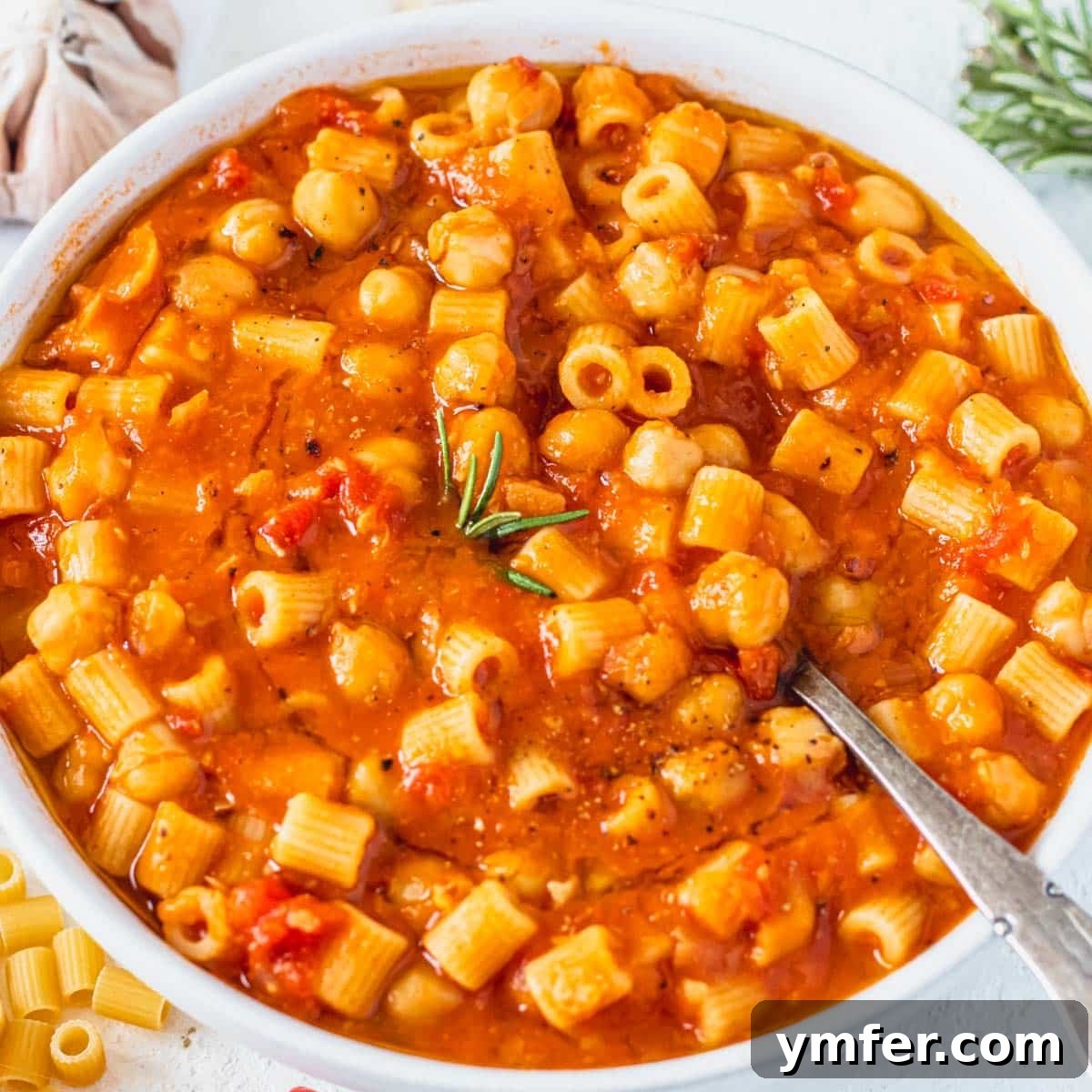
Pasta e Ceci: The Ultimate Italian Pasta and Chickpea Comfort Dish
Pasta e ceci, or pasta and chickpeas, is a cherished Italian recipe renowned for its heartwarming flavors, incredible simplicity, and profound nutritional value. This timeless dish embodies the very soul of Italian home cooking, offering a satisfying and wholesome meal that brings families together.
For those seeking more delightful chickpea creations, explore our collection of vegetable tagine, hearty chickpea soup, and vibrant Mediterranean chickpea salad recipes.
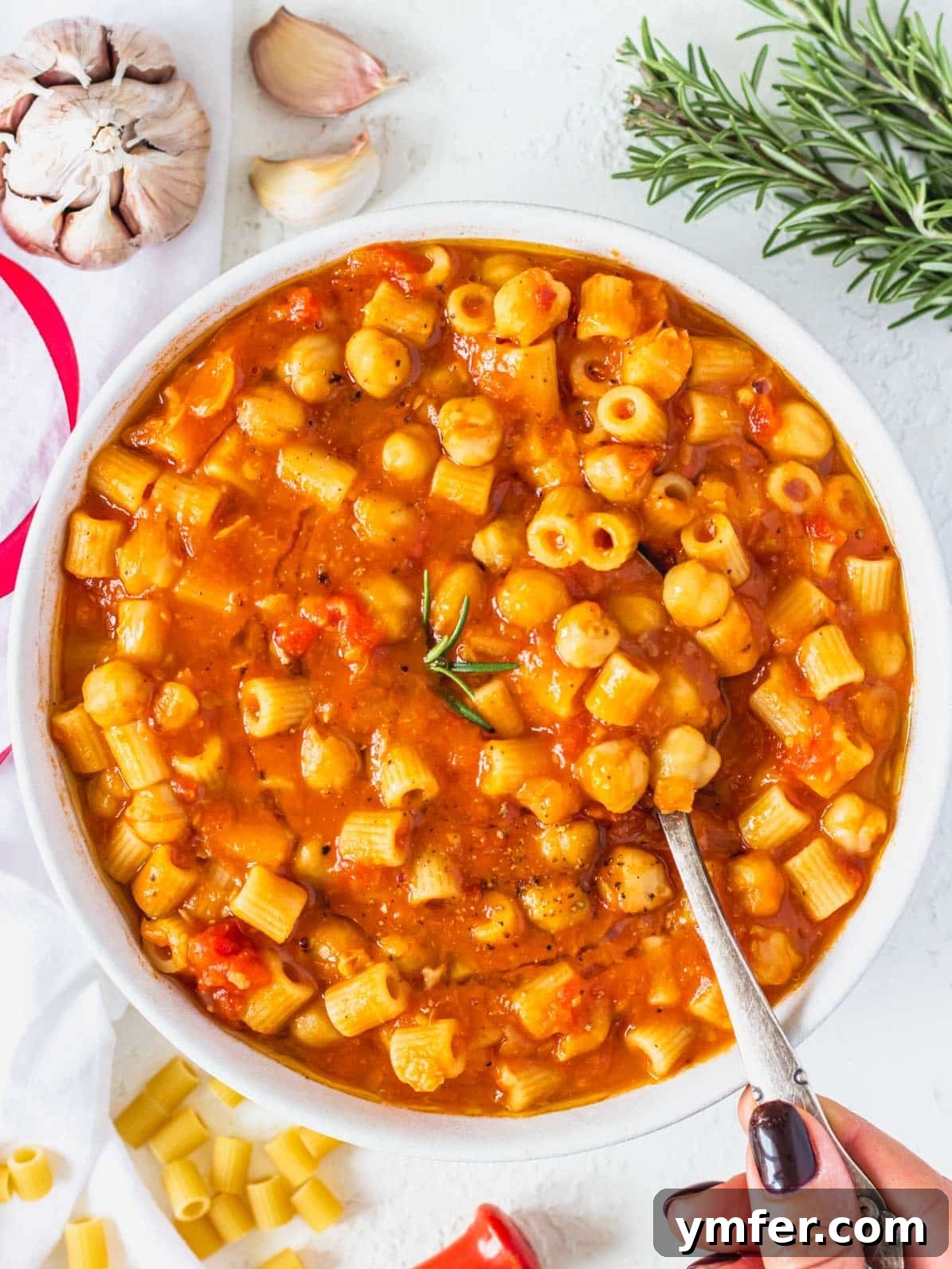
Dietary Note: This versatile recipe is inherently suitable for both vegetarian and vegan diets. To easily adapt it for a gluten-free lifestyle, simply opt for your favorite gluten-free pasta variety.
Pasta e ceci captures the very essence of authentic Italian culinary tradition: it combines readily available and affordable ingredients, transforms them into a symphony of bold flavors, and culminates in a truly satisfying and deeply nourishing meal for everyone at the table.
The marriage of tender pasta and wholesome, nutty chickpeas creates a harmonious blend, offering a complete and balanced meal that excels both nutritionally and in taste.
This traditional dish truly shines when cooked in a single pot, allowing all the flavors to meld beautifully. The foundation of this exquisite flavor comes from a carefully prepared base, aromatic vegetable broth, ripe tomatoes, fragrant garlic, and a selection of fresh herbs.
The ultimate secret to achieving an irresistibly creamy pasta e ceci lies in a simple yet transformative technique: blending a portion of the cooked chickpeas directly in the pot just before introducing the pasta. This ingenious step, easily accomplished with an immersion blender, creates a rich, velvety texture that elevates the entire dish. It’s a game-changer!
Furthermore, we highly recommend cooking the pasta directly in the same pot with the other simmering ingredients. As the pasta cooks, its starches are released into the sauce, naturally thickening it and imparting an unparalleled creaminess to your pasta e ceci, making every bite incredibly luscious.
Essential Ingredients & Thoughtful Substitutions for Perfect Pasta e Ceci
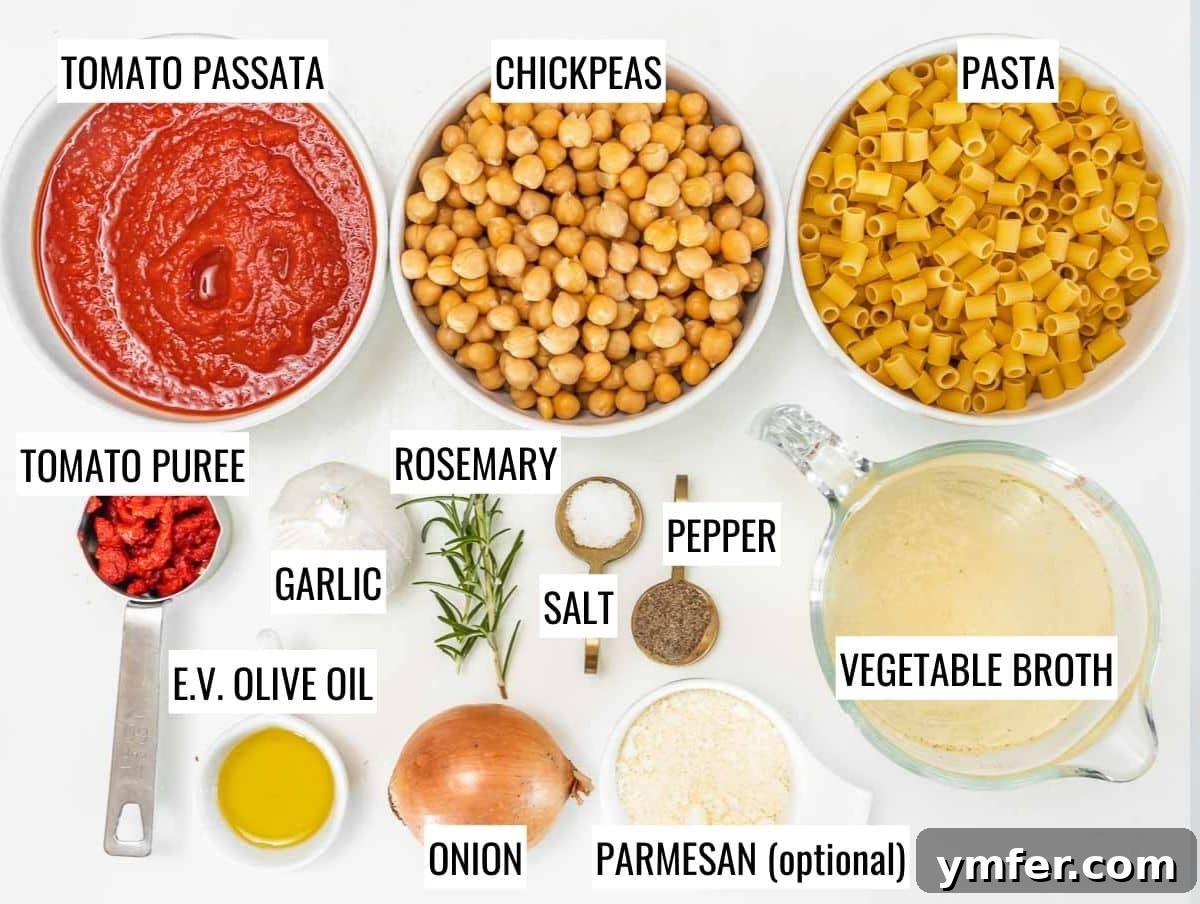
You’ll find precise quantities and measurements for this comforting Pasta e Ceci recipe in the detailed recipe box located at the bottom of this page.
Pasta
Traditionally, the authentic Italian recipe for Pasta e Ceci calls for ditalini or ditaloni pasta. These small, tube-shaped pasta varieties are ideal for this dish as they easily catch the rich sauce and chickpeas, creating a delightful texture in every spoonful. You can readily find ditalini in most well-stocked supermarkets.
Should ditalini not be available, or if you prefer a different shape, feel free to substitute with other small, short pasta types. Excellent alternatives include conchiglie (small shells), elbows, pipette, campanelle, casarecce, maltagliati, or any other small pasta that can effectively scoop up the delicious chickpea mixture. The key is to choose a pasta that contributes to the hearty, stew-like consistency of the dish.
Chickpeas
The star of our dish, chickpeas, can be sourced in two convenient forms: canned chickpeas or dried chickpeas. Both yield delicious results, though preparation differs slightly.
If you opt for canned chickpeas for their convenience, ensure you drain them thoroughly and rinse them under cold running water. This step helps remove excess sodium and any canning liquid, leading to a cleaner flavor profile.
For dried chickpeas, planning ahead is essential. Begin by soaking them in water, ideally with a teaspoon of baking soda, for 8 to 12 hours or overnight. The baking soda helps tenderize the chickpeas, reducing cooking time. After soaking, drain and rinse the chickpeas, then cook them in plenty of lightly salted boiling water until they become wonderfully tender, which typically takes about 2 hours, depending on their age and variety.
For a delightful twist, consider substituting chickpeas with other legumes to create equally delicious and nourishing variations. You could make a robust lentil pasta or a classic Italian pasta e fagioli, using cannellini or borlotti beans instead.
The Essential Flavor Base (Soffritto)
Just like many iconic Italian recipes, Pasta e Ceci hinges on a foundational flavor base, known in Italian as soffritto. This aromatic mixture is gently sautéed to unlock and deepen the flavors of the core ingredients, providing a rich, savory backdrop for the entire dish.
To craft this indispensable flavor base, you will need:
- Extra Virgin Olive Oil: The cornerstone of Italian cooking, providing a fruity and robust flavor. If unavailable, a good quality regular olive oil can be used as a substitute.
- Yellow Onion: Finely chopped, the onion provides a sweet, savory depth when caramelized. A white onion or milder shallots can be used if yellow onion is not at hand.
- Garlic: Fresh garlic is paramount for its pungent aroma and flavor. Whether minced, pressed, or finely chopped, ensure it’s fresh for the best results.
Rosemary: The Rustic Herb
Fresh rosemary is undoubtedly the best choice for this hearty dish. Its sturdy needles release an intoxicating, earthy, and slightly peppery aroma that is synonymous with rustic Italian cuisine. It infuses the pasta e ceci with a traditional flavor that is deeply comforting and universally loved.
If fresh rosemary is not accessible, you can substitute with dried rosemary. Start with about 1/2 teaspoon, as dried herbs are more concentrated, and add more to taste if desired. Remember to crush dried rosemary between your fingers to release its oils.
For an added layer of herbal complexity, you can also include bay leaves, a sprig of fresh thyme, or a few fragrant sage leaves, depending on your personal preference.
Tomatoes
To create the rich and flavorful tomato base that the chickpeas simmer in, we utilize a combination of canned crushed tomatoes and concentrated tomato paste. This duo ensures a vibrant color and deep, umami-rich tomato flavor.
As alternatives, you can substitute whole canned peeled tomatoes (which you can crush by hand or with a blender) or a smooth tomato puree for the crushed tomatoes. The consistency might vary slightly, but the flavor will remain robust.
Some culinary enthusiasts prefer a pasta e ceci without tomato for a lighter, more broth-focused profile. In this case, simply increase the quantity of vegetable broth and omit the tomatoes entirely for a “bianco” (white) version.
Vegetable Broth
The quality of your broth significantly impacts the overall flavor of your pasta e ceci. You can use either a rich homemade vegetable broth or a high-quality store-bought variety. If purchasing, we highly recommend selecting a low-sodium vegetable broth to better control the seasoning of your dish.
While this recipe is plant-based, chicken broth can also be used if it aligns with your dietary preferences and flavor profile. However, for a truly vegetarian or vegan dish, stick to vegetable broth.
Salt and Black Pepper
Seasoning is crucial for bringing out the best in every ingredient. We prefer using a good quality sea salt or kosher salt for its clean taste. Freshly ground black pepper adds a sharp, aromatic warmth that complements the other flavors beautifully.
For those who appreciate a gentle kick of heat, a pinch of red pepper flakes or a dash of cayenne pepper can be incorporated to add a pleasant warmth to the stew.
Optional Add-ins for Enhanced Flavor & Nutrition
While the traditional Pasta e Ceci is a marvel in its simplicity, these add-ins, though not part of the original Italian recipe, can introduce delicious new dimensions and nutritional boosts. They are entirely optional but highly recommended for those looking to customize their dish.
- Potatoes: For an even heartier and more substantial stew, peel and chop potatoes into bite-sized pieces. Add them into the pot along with the chickpeas, allowing them to soften and absorb the rich flavors.
- Kale: Boost the nutritional content with fresh kale. Rinse, chop, and stir it in with the chickpeas; it will wilt beautifully into the stew.
- Spinach: A quicker-cooking green, fresh spinach can be rinsed and added directly with the pasta, wilting quickly into the hot broth.
- Carrots and Celery: For an even more complex soffritto, finely chop carrots and celery and sauté them along with the onion at the very beginning of the cooking process. They add a subtle sweetness and aromatic depth.
Parmesan: A Classic Topping (Optional)
Many inquiries have been made about incorporating Parmesan rind into pasta e ceci. This is indeed a fantastic way to infuse deep umami flavor into your stew!
For the best results and to ensure it’s safe to eat, the Parmesan must be authentic Italian cheese, specifically Parmigiano Reggiano or Grana Padano, as these varieties do not contain any undesirable chemicals or additives. To use it, simply scrape the outer surface of the rind with a knife to remove any hard, exterior parts, give it a quick rinse, and add it to the pot when you introduce the vegetable broth.
The Parmesan cheese rind will slowly soften as the stew simmers, gradually infusing the entire dish with a rich, savory, and complex flavor. Once cooked and tender, the rind itself can even be enjoyed as a chewy, flavorful bite.
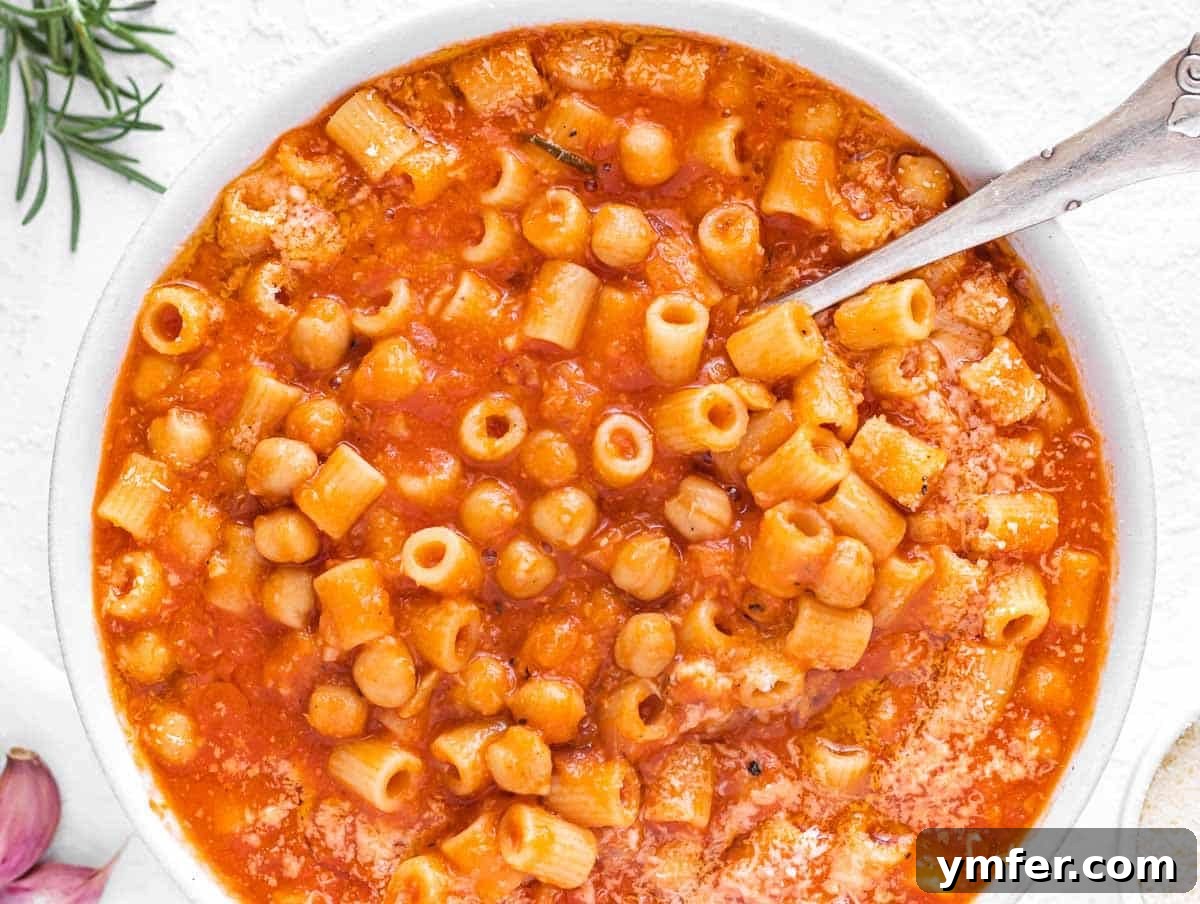
Optionally, for serving, you can enhance the dish with a generous sprinkle of freshly grated Parmesan cheese or a dairy-free alternative on top. Pecorino Romano, with its sharper, saltier profile, also makes an excellent substitute for Parmesan if you prefer its distinct taste.
Note: In traditional Italian preparation, Parmesan cheese is typically not cooked directly into the pasta e ceci. Instead, it is offered as an optional topping, allowing each individual to add it to their preference when eating the stew.
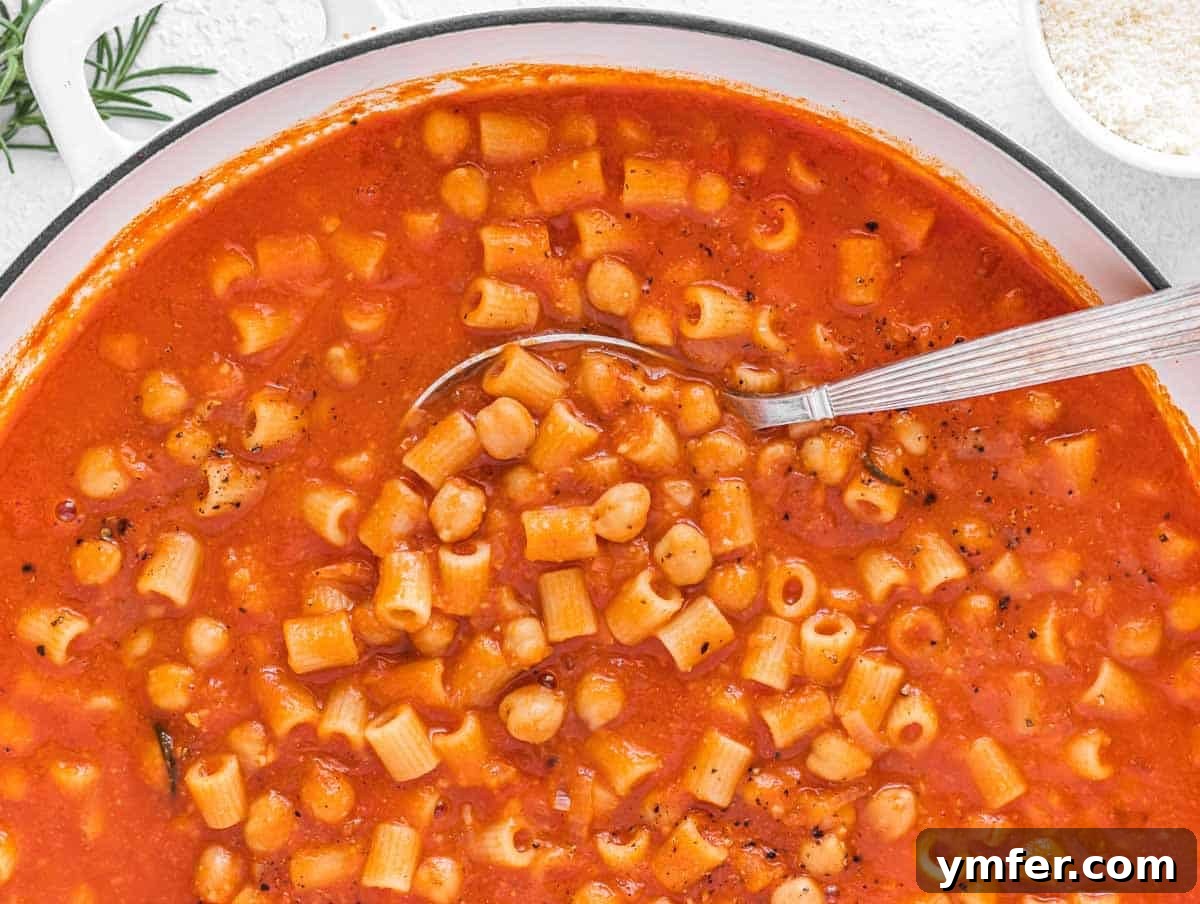
How to Craft Your Delicious One-Pot Pasta e Ceci
Detailed measurements in US cups and grams are conveniently provided in the comprehensive recipe box at the bottom of the page.
Begin by heating the extra virgin olive oil in a spacious skillet or a sturdy Dutch oven over medium heat. This initial step sets the stage for our flavor-rich base.
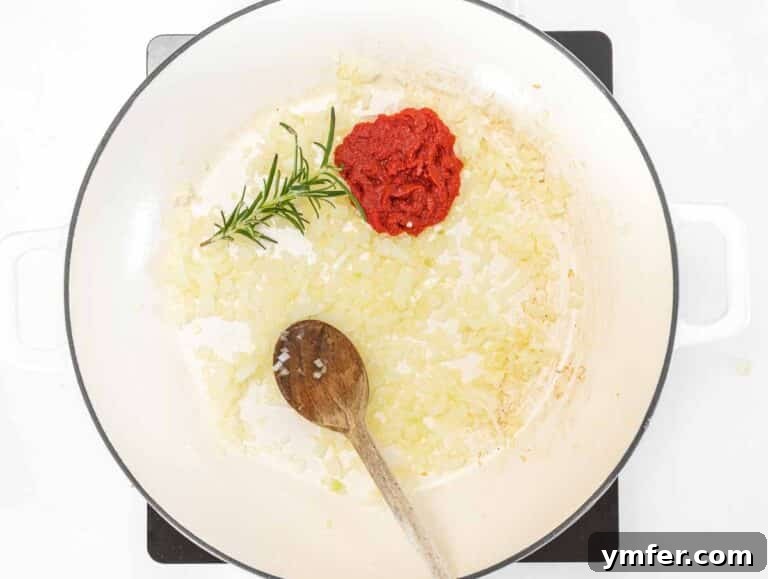
Once the oil is shimmering, add the finely chopped onion to the pot. Sauté gently for approximately 4 minutes, allowing the onion to soften and become translucent without browning too much. Next, introduce the pressed garlic, a sprig of fragrant rosemary, and the robust tomato paste. Continue to fry this aromatic mixture for 1 more minute, stirring continuously to prevent sticking and to toast the tomato paste, which intensifies its flavor.
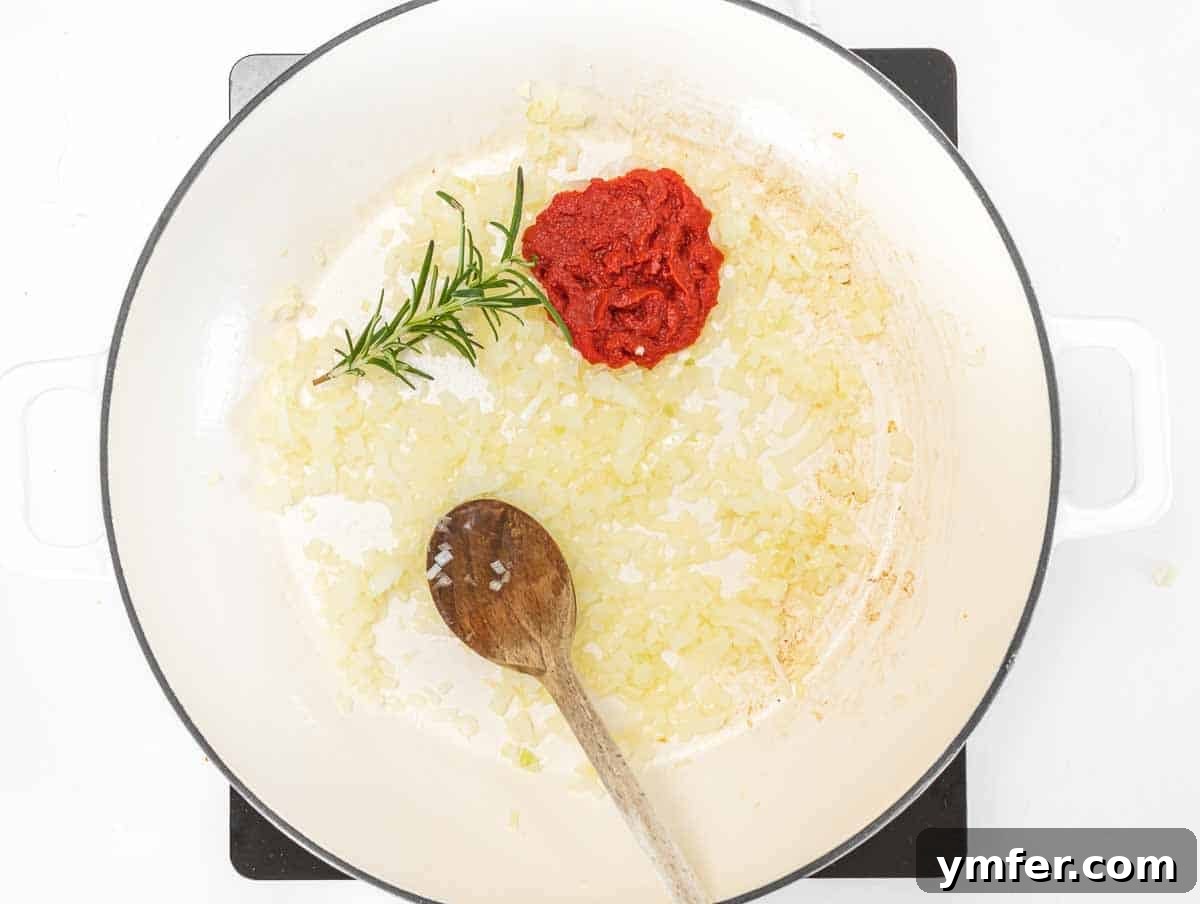
Now, it’s time to build the heart of the stew. Stir in the prepared chickpeas (if using canned, ensure they are thoroughly drained and rinsed), the rich crushed tomatoes, and approximately 3/4 of the total vegetable broth specified in the recipe. This combination will form a luxurious, flavorful liquid for simmering.
Season the mixture generously with salt and freshly ground black pepper. For those who enjoy a subtle warmth, a pinch of red pepper flakes can also be added at this stage.
Bring the entire mixture to a gentle boil, then reduce the heat to medium-low and allow it to simmer for about 10 minutes. During this simmering period, remember to stir occasionally to prevent the chickpeas from adhering to the bottom of the pot and to ensure even cooking and flavor distribution.
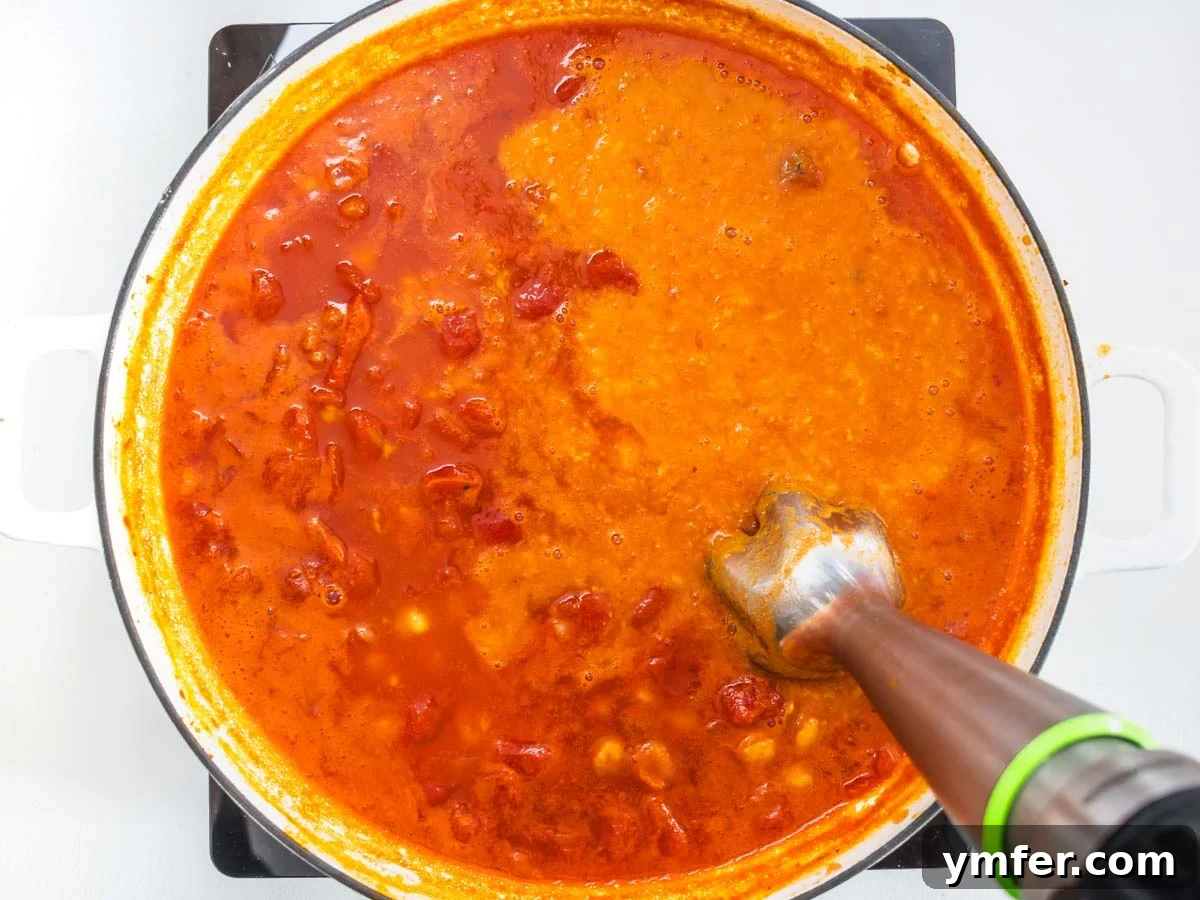
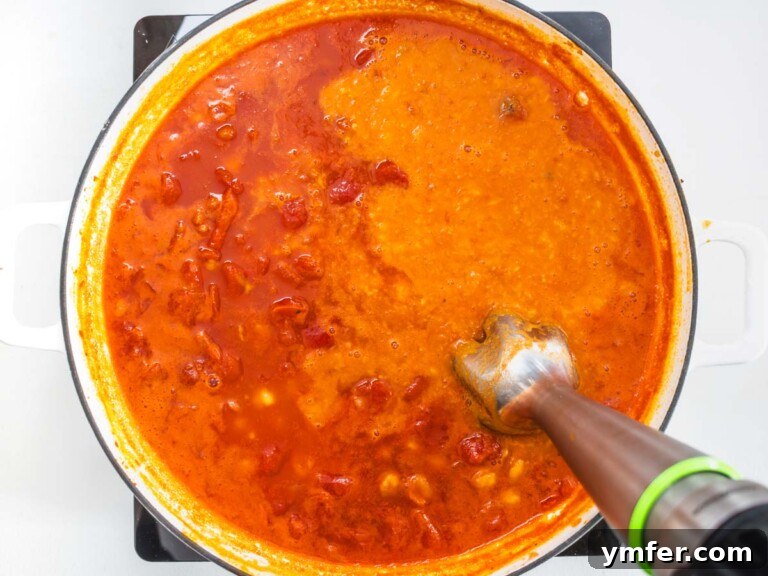
After the simmering, carefully discard the rosemary sprig – its job of infusing flavor is complete. Now for the secret to ultimate creaminess: blend a portion of the chickpeas directly in the pot using an immersion blender. Aim to blend only about 1/4 to 1/3 of the chickpeas; you still want plenty of whole chickpeas for texture. This step naturally thickens the sauce and creates an incredibly smooth, velvety base without the need for cream.
Tip: This crucial step of blending some of the chickpeas significantly enhances the creaminess of the dish. If you don’t have an immersion blender, you can carefully scoop out about a cup of the chickpea mixture, blend it in a standing blender until smooth, and then return it to the pot.
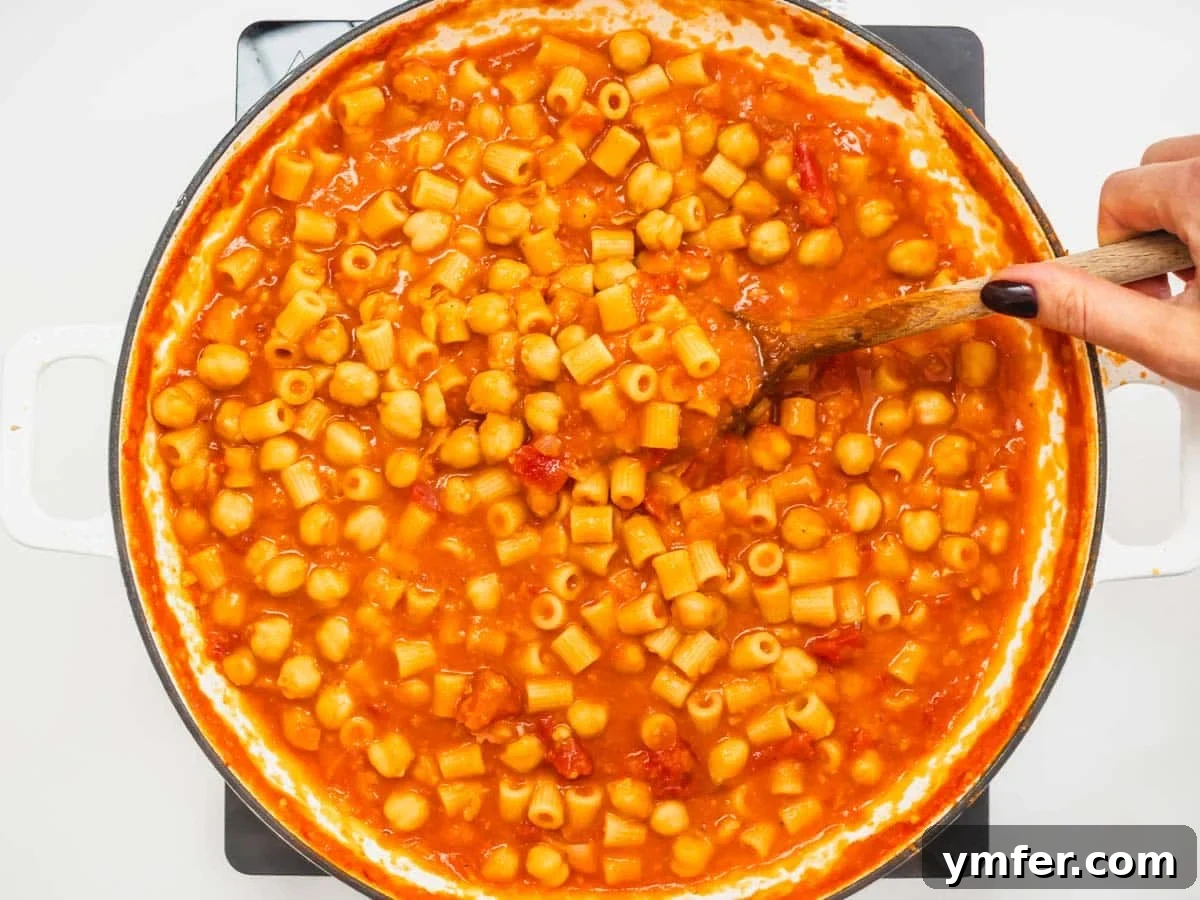
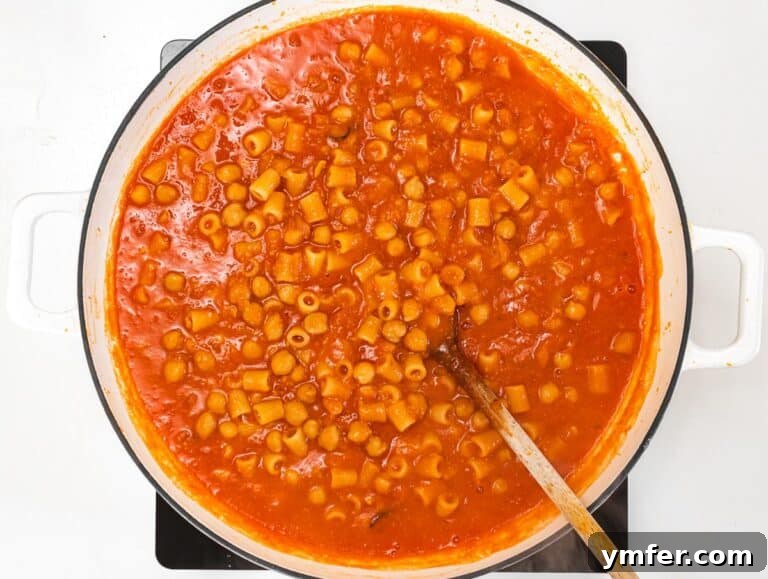
Finally, incorporate the pasta along with the remaining vegetable broth into the pot. Continue to simmer for an additional 10 minutes, or until the pasta is cooked perfectly al dente – tender yet still firm to the bite.
It is vital to stir frequently during this final cooking stage. Small pasta shapes, especially when cooking directly in the sauce, tend to stick to the bottom of the pot if left undisturbed.
You have full control over the consistency. If you find the sauce too thick and prefer a more soupy pasta e ceci, feel free to add more vegetable broth to taste, adjusting until it reaches your desired consistency.
Delightful Serving Suggestions for Your Pasta e Ceci
Before serving, take a moment to taste and adjust for salt, ensuring the flavors are perfectly balanced. Then, turn off the heat and allow the dish to cool for a couple of minutes; this allows the flavors to settle and the pasta to absorb a little more liquid, thickening slightly.
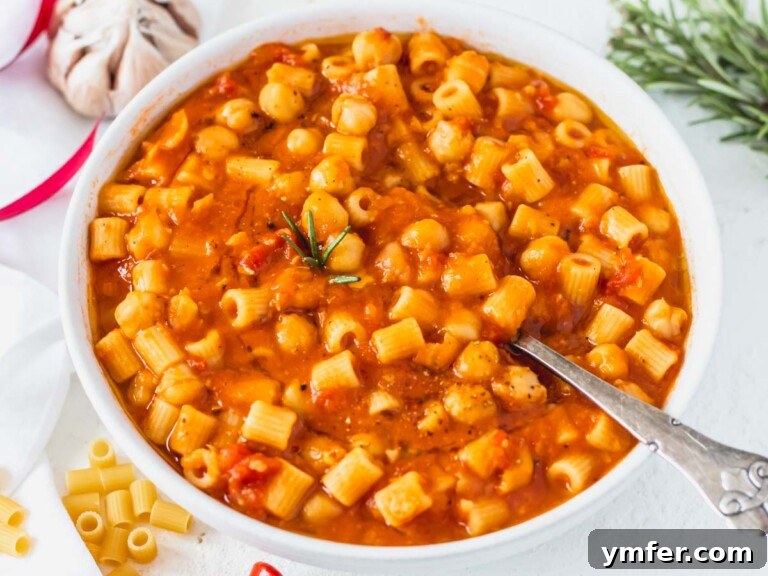
Serve your comforting pasta e ceci hot in individual bowls. Finish each portion with a luxurious drizzle of high-quality olive oil, a generous grinding of fresh black pepper, and, if desired, a grating of fine Parmesan cheese or its dairy-free counterpart. The fresh olive oil adds a beautiful aroma and silky texture, while the pepper and cheese provide a final flavor flourish.
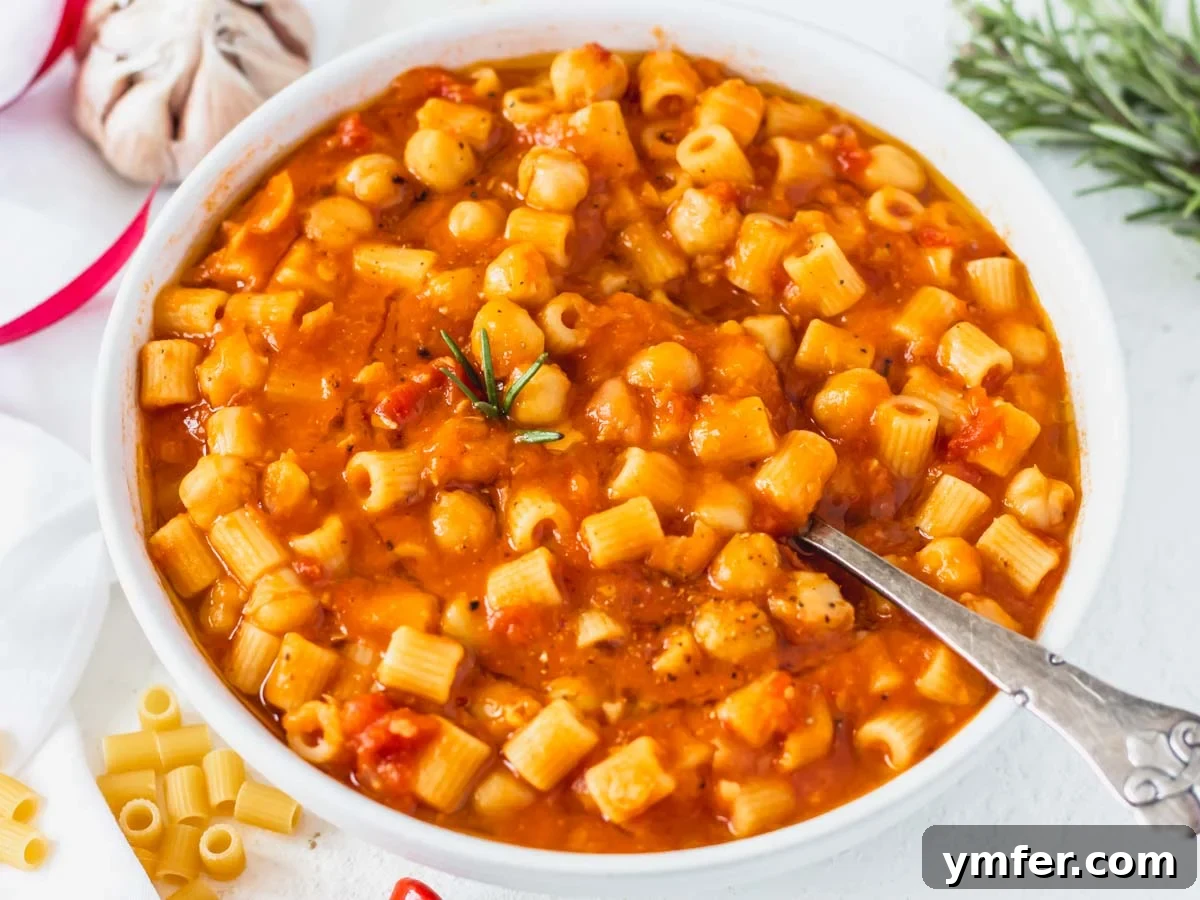
Pasta e ceci is a robust, nutritious, and incredibly fulfilling main dish on its own. However, it pairs beautifully with a simple, light side dish of fresh greens or roasted vegetables to complete the meal. Consider these excellent companions:
- Roastedeggplant slices, enhanced with grated garlic and a sprinkle of fresh herbs like parsley or mint, offer a smoky and tender contrast.
- Sautéed green beans, lightly blanched and then quickly tossed with olive oil and a hint of lemon, provide a crisp and fresh element.
- Sautéed kale, cooked down with aromatic garlic and a touch of red pepper flakes, adds a healthy, slightly bitter counterpoint to the rich pasta.
- Roasted broccoli florets, caramelized in the oven with garlic and a squeeze of fresh lemon juice, offer a delightful texture and bright flavor.
- An easy 5-minute side salad featuring crisp mixed greens and juicy cherry tomatoes, dressed with a light vinaigrette, provides a refreshing palate cleanser.
- A vibrant arugulasalad with thinly sliced apple and a zesty lemon vinaigrette introduces a peppery, sweet, and tangy dimension.
Sides
Roasted Eggplant
Sides
Sautéed Kale
Salads
Arugula Salad
Sides
Roasted Broccoli
Exciting Variations of Pasta e Ceci and Similar Italian Delights
While the classic Pasta e Ceci is a masterpiece, Italian cuisine is rich with regional variations and similar comforting dishes that deserve exploration. These recipes share the same spirit of simplicity, wholesome ingredients, and incredible flavor.
Lagane e Ceci: A Taste of Ancient Tradition
Lagane e Ceci offers a slightly different, equally delicious approach, highlighting the fresh, rustic flavors of Italy. This variation often uses a broader, flatter pasta, reminiscent of ancient Roman recipes.
In a large skillet, gently fry 2 cloves of minced garlic in 2 tablespoons of good quality olive oil for about one minute until fragrant but not browned. Add 8 cherry tomatoes, halved, which will burst and release their sweet juices. Season with a pinch of salt and freshly ground black pepper, and cook for another 2 minutes.
Next, stir in 2 cans (15-ounce each, or approximately 3 cups cooked) of drained and rinsed chickpeas, along with a handful of freshly chopped parsley, cooking for just 1 minute to warm through and combine flavors.
Pour in 2 cups of aromatic vegetable broth and bring the mixture to a simmer. Allow it to cook gently on low heat for 20 minutes, allowing the flavors to deepen and meld beautifully.
Finally, stir in 12 ounces or 340 grams of Lagane pasta (or any broad, flat pasta like pappardelle or fettuccine), adding 1 more cup of vegetable broth if using dry pasta. Cook until the pasta is perfectly al dente, ensuring you stir often to prevent it from sticking to the bottom of the pan and to encourage starch release into the sauce.
Serve this rustic dish immediately with a generous drizzle of the finest extra virgin olive oil to enhance its fresh flavors.
Pasta e Fagioli (Pasta and Beans): A Hearty Classic
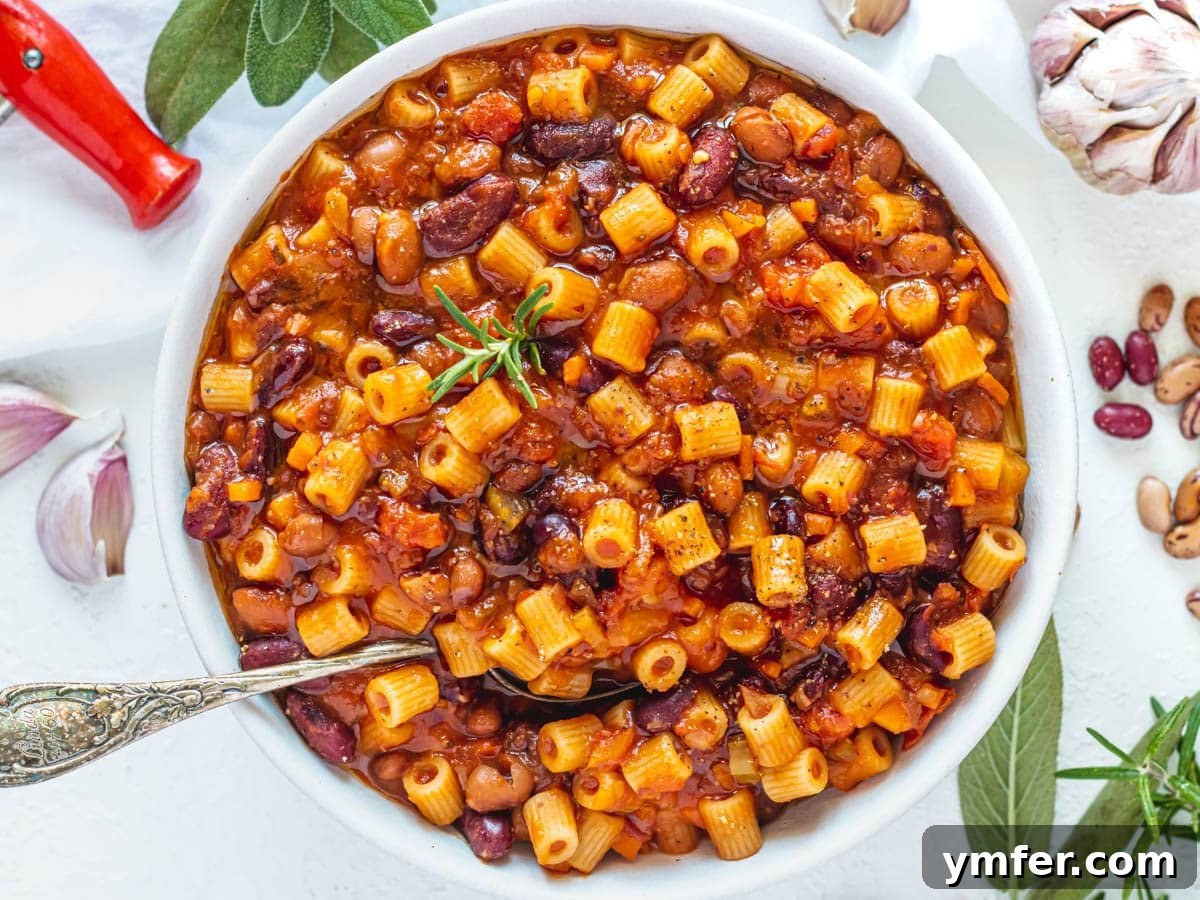
Pasta e fagioli, meaning “pasta with beans,” is another iconic and deeply comforting Italian recipe. This versatile dish is celebrated for its ability to provide a nourishing, wholesome, and incredibly tasty family dinner, especially on colder evenings. It beautifully showcases how simple ingredients can create profound flavor.
Crafting this classic is surprisingly easy, and it offers great flexibility, allowing you to use your favorite types of beans—from cannellini and borlotti to kidney beans. Each bean variety brings its own unique texture and flavor to the hearty broth.
Discover the full guide to making this beloved Italian staple with our comprehensive pasta e fagioli recipe.
Wholesome Lentil Pasta
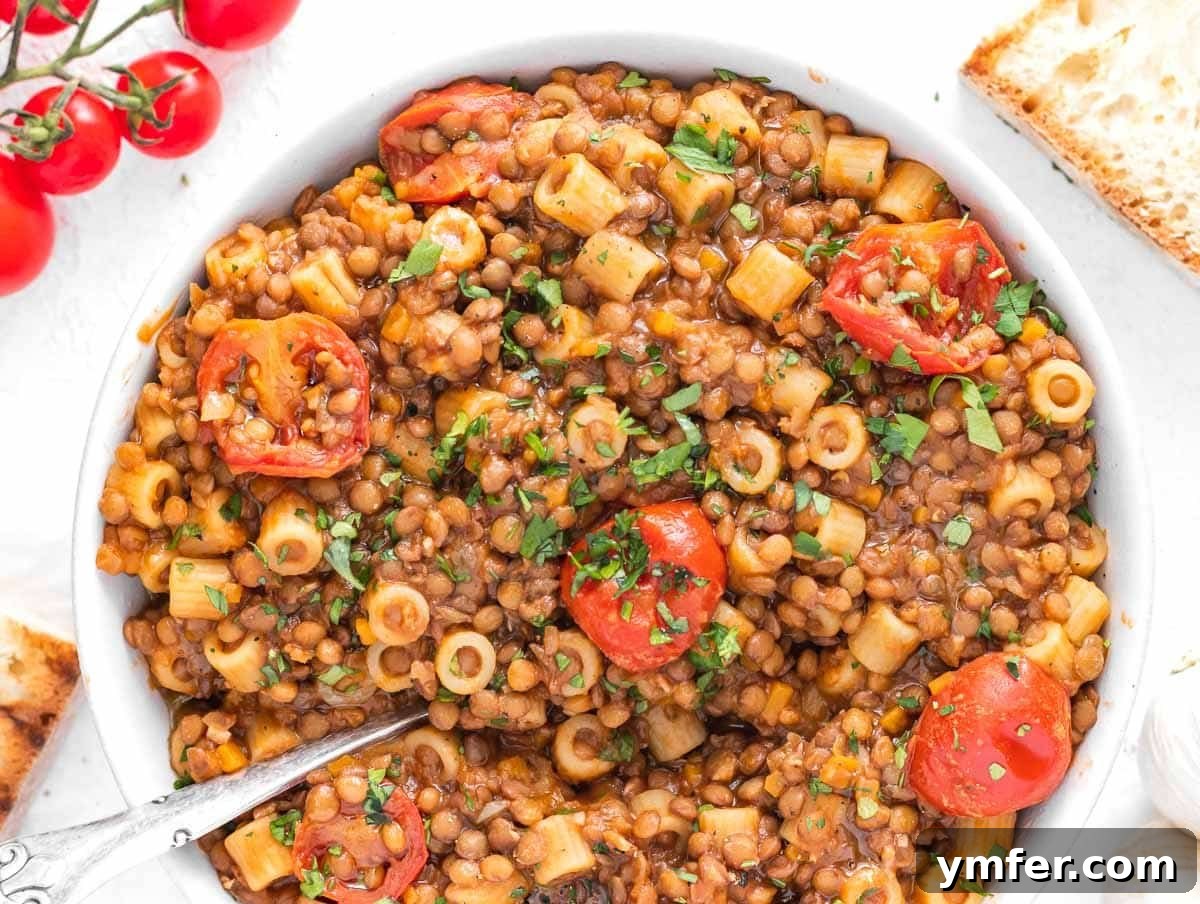
You’ll absolutely adore lentil pasta for its delightful ease of preparation and its incredibly rich, earthy flavor profile. This dish can be effortlessly made with either green or brown lentils, offering a slightly different nuance depending on your choice. It’s a fantastic alternative to chickpea-based dishes, providing a similar comforting feel.
Beyond its fantastic taste, lentil pasta is exceptionally nutritious and healthy. Lentils are packed with plant-based protein and dietary fiber, ensuring you stay full and satisfied for longer. It’s a truly wholesome meal that doesn’t compromise on flavor.
Explore the full recipe and embrace the goodness of this hearty dish with our dedicated lentil pasta recipe.
Expert Tips for Your Best Pasta e Ceci Ever
Achieving the perfect Pasta e Ceci is simple with these invaluable tips that enhance flavor, texture, and overall enjoyment:
Cook everything in one pot: This is a fundamental technique for superior Pasta e Ceci. Resist the urge to cook the pasta separately. By cooking the pasta directly in the same pot with the sauce and chickpeas, you allow the beneficial starches that naturally leach out of the pasta to thicken the sauce. This results in an incredibly creamy, cohesive, and richly flavored stew that wouldn’t be possible otherwise.
Blend some of the chickpeas before adding the pasta. This clever step is the key to achieving that luxurious, velvety texture. Using an immersion blender directly in the pot (or a standing blender for a portion of the mixture) to purée a small part of the chickpeas creates a natural thickener. This adds a profound creaminess that makes this pasta dish utterly irresistible, without needing any dairy cream.
Adjust broth quantity to match your preference. Our recipe yields a creamy and relatively thick Pasta e Ceci, perfect for a hearty meal. However, personal preference varies. If you lean towards a soupier consistency, reminiscent of a true pasta soup, don’t hesitate to add an additional one to two cups of vegetable broth during the final cooking stage. Taste as you go and adjust until it’s just right for you.
Use quality ingredients: The simplicity of Pasta e Ceci means that each ingredient shines. Opt for good quality extra virgin olive oil, fresh herbs like rosemary, and flavorful vegetable broth to elevate the dish.
Taste and adjust seasoning: Always taste your stew at different stages of cooking. Adjust salt, pepper, and red pepper flakes as needed. The flavors will deepen and change as it simmers, so a final check before serving is essential.
Frequently Asked Questions About Pasta e Ceci
Pasta e ceci is an ancient Italian dish, predating the unification of Italy itself, showcasing the timeless appeal of simple, wholesome ingredients. Its roots stretch back to antiquity, with historical records pointing to variations of this meal being enjoyed centuries ago. The Roman poet Horace notably writes about a dish similar to pasta e ceci in his work “Satires,” which was published in Latin around 35 BC.
He famously writes: “…inde domum me ad porris et ciceri refero laganique catinum”. This translates to: “…and so I home, back to my dish of leeks, chickpeas and lagane”. Lagane refers to a type of broad, flat pasta, clearly indicating a historical precedent for combining pasta and legumes in a nourishing stew.
While chickpeas are traditional, this recipe is highly adaptable. You can absolutely substitute chickpeas with other beans like cannellini (white kidney beans) for a classic “pasta e fagioli” feel, or even borlotti beans. Each bean type will impart a slightly different flavor and texture, offering delightful variations.
Pasta e Ceci beautifully blurs the lines between a hearty soup and a comforting pasta dish. Its consistency can range from quite thick and stew-like to more brothy, depending on personal preference and the amount of liquid added. Our recipe aims for a creamy, thick consistency, making it a substantial main course, but it can easily be made soupier.
Storage & Make-Ahead Guide for Pasta e Ceci
Proper storage ensures you can enjoy your delicious Pasta e Ceci for days to come, and a little planning allows for convenient make-ahead meals:
Make ahead: If you intend to prepare pasta e ceci in advance, we strongly recommend undercooking the pasta by about 5 minutes from its usual al dente time. This crucial step prevents the pasta from becoming overcooked and mushy as it continues to absorb liquid while sitting in the warm stew. When you are ready to serve, gently warm up the dish in a pot on the stove with an extra cup of water or vegetable broth for a few minutes until heated through and the pasta is perfectly tender. This method ensures optimal texture.
Refrigerator: Leftovers of pasta e ceci can be stored safely in an airtight container in the fridge for up to 3 days. It’s important to note that the pasta will continue to absorb most of the liquid during refrigeration, causing the dish to thicken considerably. To reheat, simply place it in a pot on the stovetop or in the microwave, adding a splash of water or broth to loosen the consistency and restore its creamy texture.
Freezer: This particular recipe is generally not the best candidate for freezing due to the pasta. Once thawed and reheated, pasta tends to get mushy and lose its desirable texture. The chickpeas, however, freeze well.
If you don’t mind a softer pasta texture, you can certainly freeze pasta e ceci in a freezer-friendly, airtight container for up to 3 months. When ready to enjoy, thaw it in the refrigerator overnight and then reheat in the microwave or on the stovetop, again adding a bit of liquid to achieve your preferred consistency.
Explore More Incredible Pasta Recipes
Dive into more family-friendly pasta ideas that are perfect for busy weeknights, with these delicious 30-minute dinner recipes:
- Broccoli pasta: A vibrant dish featuring a unique mashing technique that creates an ultra-creamy, healthy sauce.
- Aglio e olio: The epitome of Italian simplicity, this elegant pasta recipe requires just 5 pantry staples for maximum flavor.
- Pasta Puttanesca: A bold and sassy dish packed with briny olives, capers, and a rich, spicy tomato sauce.
- Rigatoni Arrabbiata: Fire up your taste buds with this classic Roman dish featuring a flavor-packed tomato-chili sauce that’s delightfully spicy.
- PastaPomodoro: The quintessential Italian tomato pasta, featuring a fresh and vibrant 20-minute tomato sauce that’s both simple and elegant.
Pasta
Pasta Puttanesca
Pasta
Broccoli Pasta
Pasta
Spaghetti Aglio e Olio
Pasta
Pasta Pomodoro
For many more pasta ideas, including regional specialties and modern twists, be sure to explore our extensive pasta category page.
Pasta e Ceci (Pasta with Chickpeas)
You’ll love its creamy texture, earthy flavor, and the warm and rustic taste of chickpeas simmered in a rich broth with garlic, rosemary, and tomato.
Share
Equipment
-
Immersion blender or standing blender.
Ingredients
- 2 tablespoons extra virgin olive oil
- 1 large onion chopped
- 2 cloves garlic pressed or minced
- 1 sprig rosemary
- 2 tablespoons tomato paste
- 2 cans (15-ounces each) chickpeas or 3 cups of cooked chickpeas
- 1 can (15-ounce) crushed tomatoes
- 4 cups vegetable broth + 1 cup to finish cooking the pasta or more if you like a soupier consistency.
- 1 teaspoon salt
- ⅛ teaspoon black pepper
- ⅛ teaspoon red pepper flakes or more to taste
- 1½ cup ditalini pasta or other dry Italian pasta
Instructions
-
Heat 2 tablespoons extra virgin olive oil in a large skillet or Dutch oven.
Add 1 large onion (chopped) and fry gently for 4 minutes.
Add 2 cloves garlic (pressed), 1 sprig rosemary, 2 tablespoons tomato paste, and fry while stirring for 1 more minute.

-
Now stir in the 2 cans (15-ounces each) chickpeas, 1 can (15-ounce) crushed tomatoes, and 4 cups vegetable broth.
Season with 1 teaspoon salt, ⅛ teaspoon black pepper, and ⅛ teaspoon red pepper flakes.
Bring to a boil, then simmer on medium heat for 10 minutes, stirring occasionally.
Discard the rosemary and blend some of the chickpeas – not a lot – with an immersion blender.
-
Add 1½ cup ditalini pasta with 1 more cup vegetable broth and simmer for 10 more minutes until the pasta is cooked al dente.
Stir often; the pasta will stick to the bottom if you don’t stir it.
You can add more vegetable broth to taste if the sauce is too thick and you prefer a soupier pasta e ceci.
-
Taste and adjust for salt, then turn the heat off and let cool down for a couple of minutes.
Serve in a bowl with a drizzle of olive oil, some freshly cracked pepper, and optionally a grating of parmesan cheese.
Notes
STORAGE & MAKE AHEAD
Make ahead: to make pasta e ceci in advance, we recommend undercooking the pasta by 5 minutes so that it doesn’t overcook as it sits in the hot stew. Then, when you are ready to serve, warm up the dish with an extra cup of water for a few minutes, and you are good to go.
Refrigerator: store leftovers in an airtight container in the fridge for up to 3 days. The pasta will absorb most of the liquid and thicken the dish. Reheat with a dash of water, either in a pot or in the microwave.
Freezer: this recipe is not the best for freezing because the pasta will get mushy once thawed.
If you don’t mind that, you can freeze it in a freezer-friendly container for up to 3 months, then reheat it in the microwave.
ALSO ON THIS PAGE
- Substitutions
- Serving suggestions
- Variations
- Tips
- Questions
- More chickpea recipes
- More pasta recipes
Nutrition
If you enjoyed this comforting pasta e ceci, you might also find inspiration in these delightful recipes:
Mains
40 High Protein Vegetarian Meals
Recipes
45 Easy Vegetarian Dinner Recipes
Collections
30 Easy Soup Recipes
Collections