
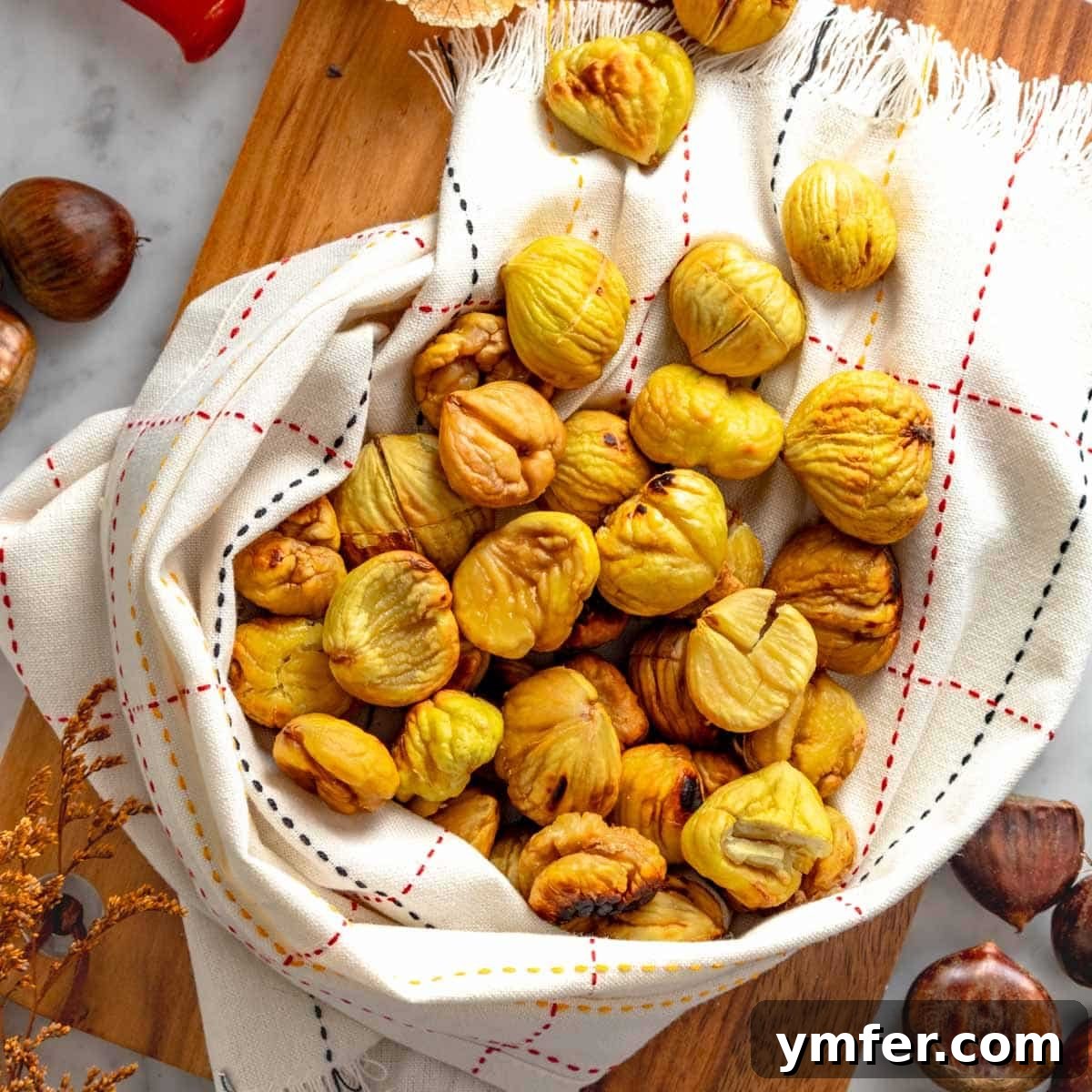
Perfectly Roasted Chestnuts: Your Guide to Oven, Air Fryer, Skillet & Microwave Methods
There’s an undeniable charm to **roasted chestnuts**, a simple pleasure that effortlessly conjures feelings of warmth and festivity. Whether you’re craving a wholesome **healthy snack** on a chilly evening, seeking a delightful addition to your **holiday gatherings**, or simply indulging in the earthy sweetness of this seasonal delight, chestnuts are a perfect choice. This comprehensive guide will walk you through preparing them with ease in your **oven**, **air fryer**, or a classic **cast-iron skillet**. The best part? For fresh chestnuts, **no soaking is required**!
As an added bonus, we’ll also reveal a super-fast method to cook chestnuts in just **10 minutes in the microwave**, perfect for when time is of the essence.
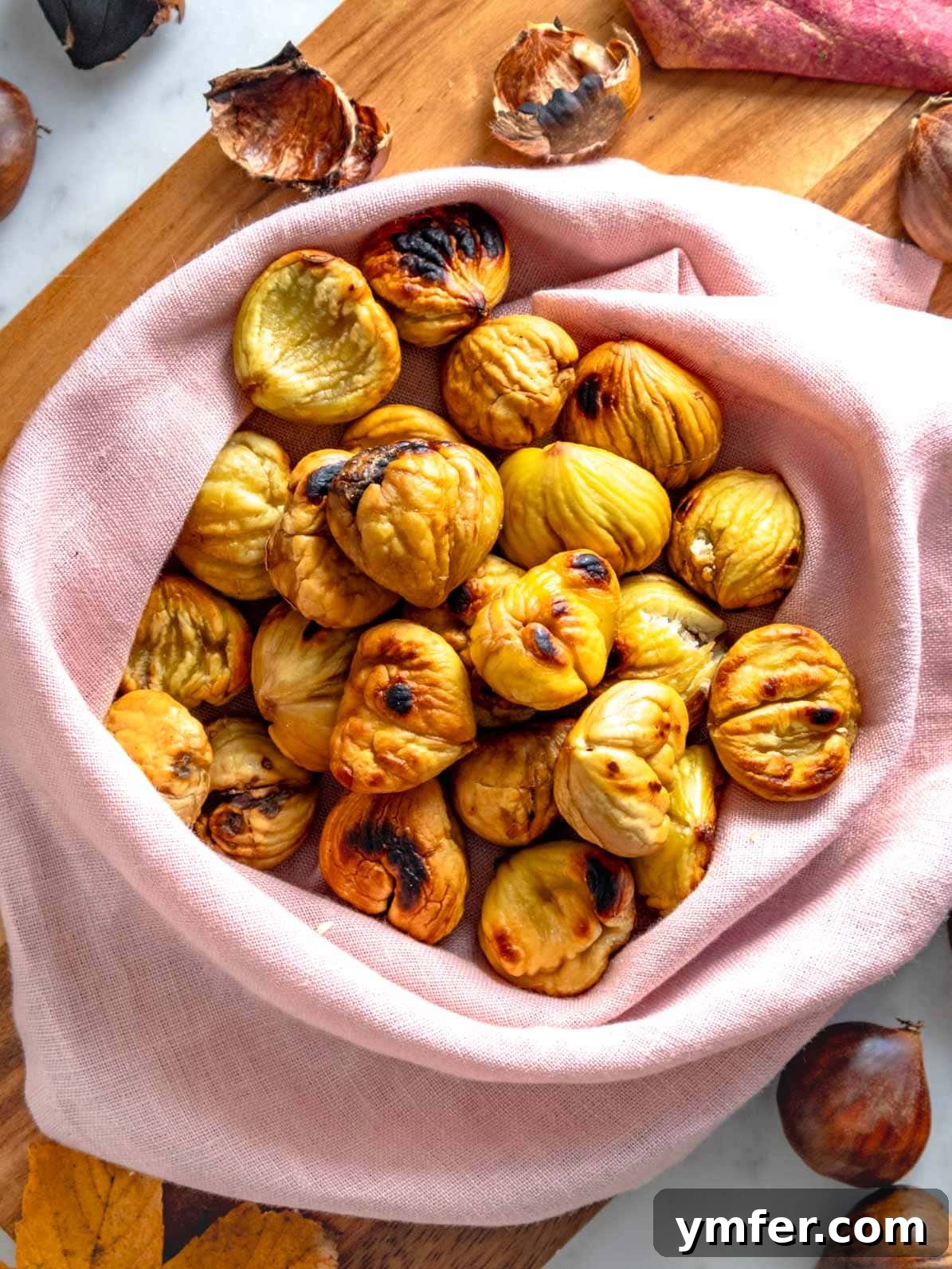
Table of Contents
- The Enchantment of Roasted Chestnuts
- Selecting the Best Fresh Chestnuts
- To Soak or Not to Soak Chestnuts Before Roasting?
- How to Make Roasted Chestnuts in the Oven
- Frequently Asked Questions (FAQ)
- Serving Suggestions for Roasted Chestnuts
- Storage Tips for Roasted Chestnuts
- Discover More Chestnut Recipes
- Roasted Chestnuts Recipe Card
The Enchantment of Roasted Chestnuts
Every autumn, my partner Louise and I partake in a cherished tradition. We embark on a picturesque journey through the heart of central Italy, winding our way to the charming hilltop village of Morre. Here, as October draws to a close, the town bursts into life with its annual “Sagra delle Castagne,” a vibrant chestnut festival.
It’s a magical experience where you can savor the unparalleled taste of **freshly harvested chestnuts** straight from the local “castagneti,” or chestnut groves. The air fills with an irresistible aroma as locals roast chestnuts over open fires on the ancient cobblestone streets, their warm glow inviting families to gather and celebrate this humble yet versatile fruit.
Whole families come together, not just to roast, but to transform these seasonal treasures into an array of **delicious dishes**. From the rustic sweetness of Castagnaccio to the rich indulgence of creamy chestnut pasta, and from hearty chestnut soups to decadent chocolate and chestnut truffles and other creative desserts, the culinary possibilities seem endless.
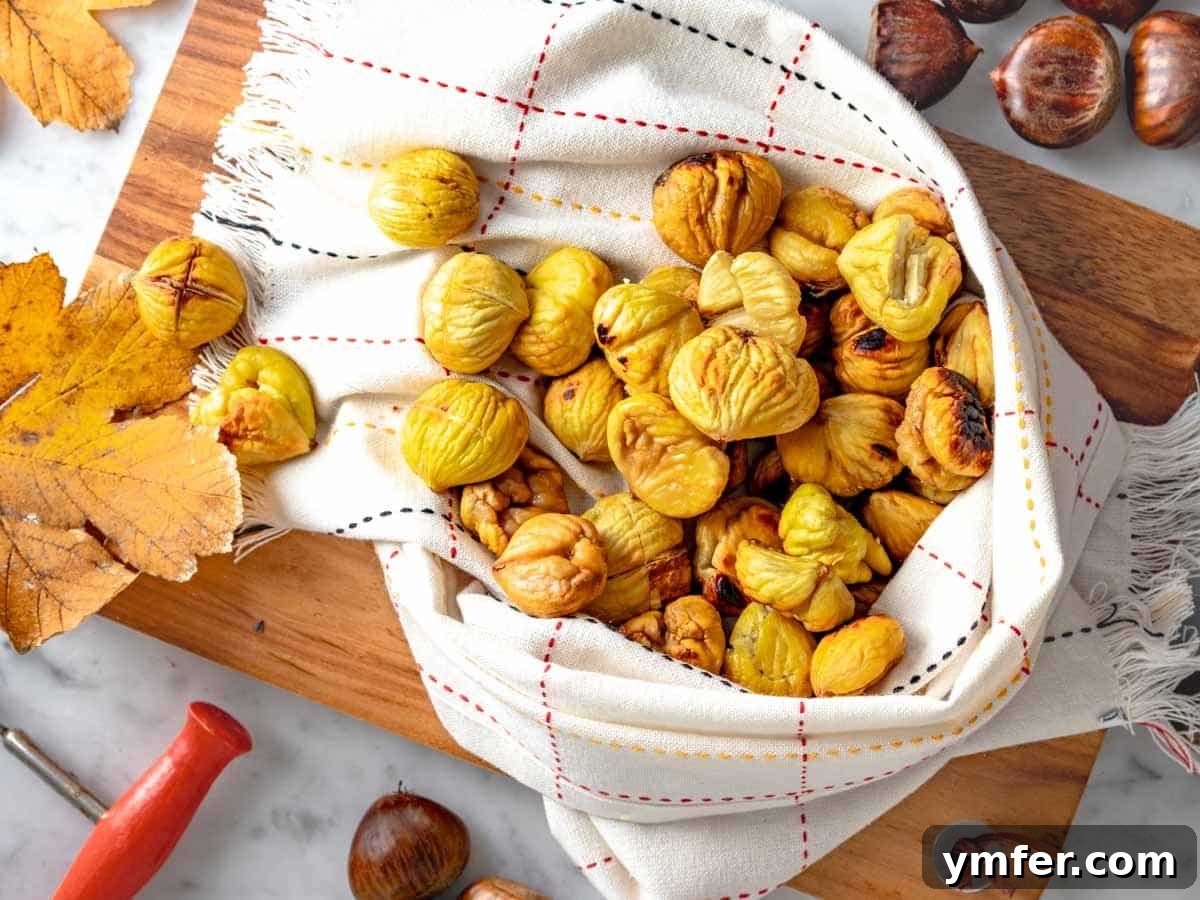
The entire town of Morre becomes imbued with the delightful scent of roasted chestnuts – it’s truly an enchanting atmosphere. Back home, the appearance of chestnuts in supermarket produce aisles marks the delightful herald of winter’s approach, a signal to pull out your coziest sweaters and warm socks.
Beyond their cozy appeal, chestnuts also offer a surprising array of health benefits. They are naturally gluten-free, a good source of Vitamin C (one of the few nuts to contain it), rich in dietary fiber, and packed with minerals like potassium and manganese. This makes them not just a comforting treat, but a nutritious one too, perfect for fueling your body during the colder months.
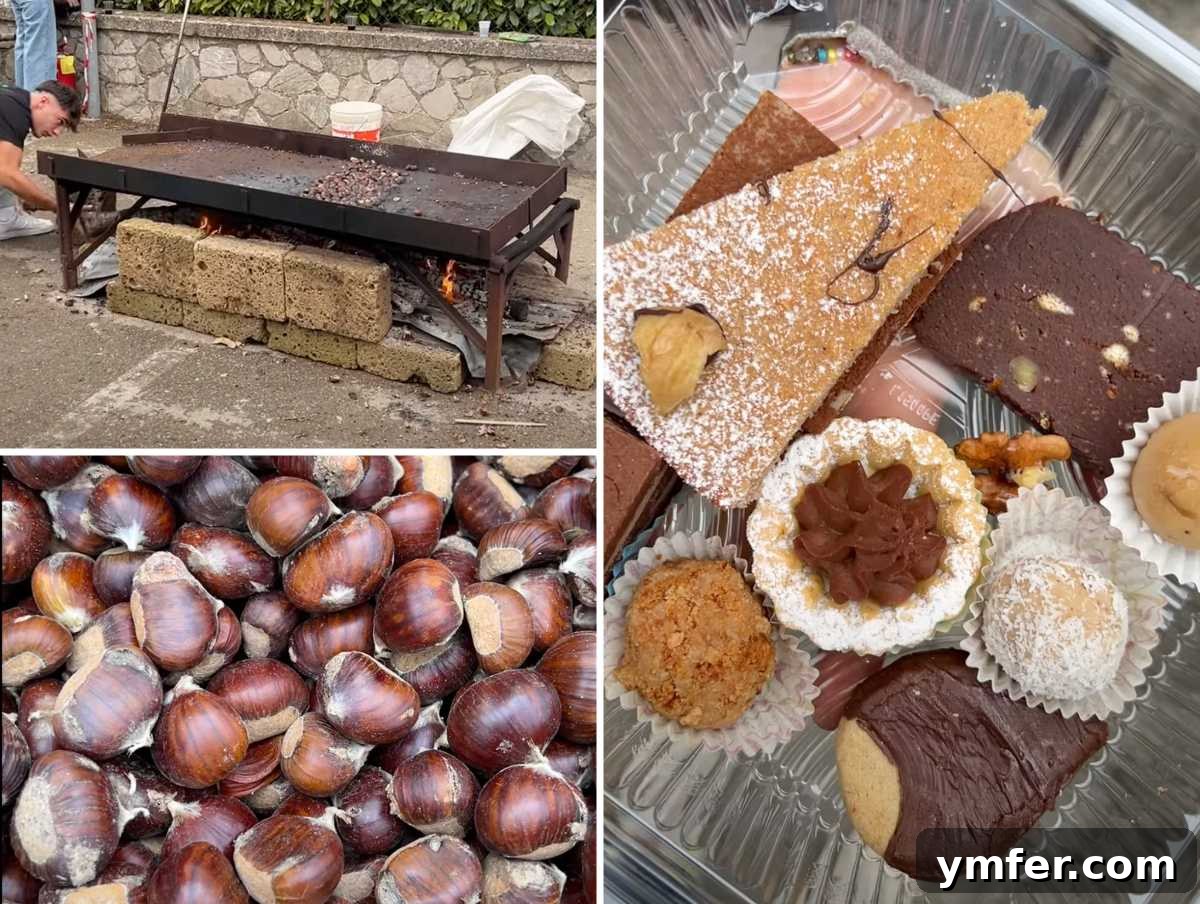
In this comprehensive guide, we’re excited to share just how incredibly simple it is to cook delicious **roasted chestnuts** right in your own kitchen. We’ll cover popular methods including the **oven**, **air fryer**, and **cast-iron skillet**. For ultimate versatility, we’ll also touch upon boiling and, for the quickest result, cooking them in the **microwave**.
Our hope is to bring a piece of that authentic Italian chestnut magic and a dash of winter comfort directly into your home, making it easy for you to enjoy this delightful seasonal delicacy.
Selecting the Best Fresh Chestnuts
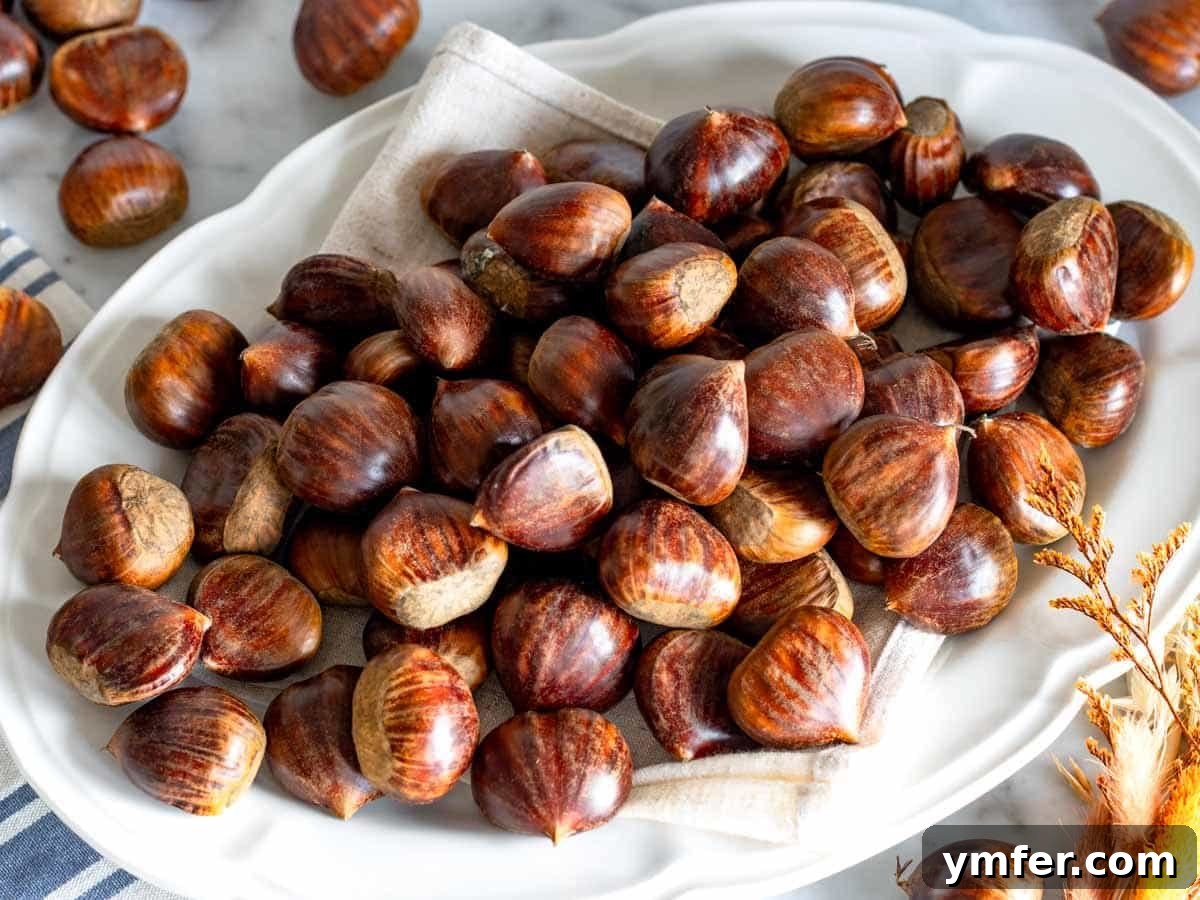
The secret to truly excellent **roasted chestnuts** begins with selecting the freshest possible specimens. Fresh chestnuts not only cook faster and more evenly but also yield a sweeter flavor and are significantly easier to peel. This means you won’t need to go through the extra step of soaking them, making your cooking process smoother and more enjoyable.
Here’s what to look for when choosing fresh chestnuts:
- Appearance: Fresh chestnuts should have a smooth, glossy, and vibrant shell. Their color can range from a light golden brown to a rich dark brown, but they should always be uniform without any dullness, dark spots, or unusual blemishes. Avoid any chestnuts that appear shriveled or dry.
- Integrity: Inspect the shells for any imperfections such as holes, cracks, or signs of mold. These can indicate that the chestnut has been compromised or is past its prime.
- Texture: When you gently squeeze a chestnut, it should feel firm and compact. The skin should be tightly adhered to the fruit inside, not loose or rattling.
- Weight and Sound: A good, fresh chestnut will feel heavy for its size. If you shake a chestnut and hear rattling inside, or if it feels unusually light, it’s a strong indicator that the flesh has dried out and is likely old or moldy. Discard these, as they won’t taste good and will be difficult to peel.
The “Float Test” for Older Chestnuts
If you’ve had chestnuts sitting in your pantry for a while and you’re unsure of their freshness, a quick “float test” can save you from roasting bad ones:
- Place the chestnuts in a bowl of cold water.
- **Good chestnuts will sink** to the bottom, indicating they are dense and full of moisture.
- **Bad chestnuts will float** to the surface. This means they have dried out, and their internal flesh has likely shriveled or molded. It’s best to discard any floaters.
By following these simple selection tips, you’ll ensure that your culinary efforts with chestnuts are always rewarded with the most flavorful and satisfying results.
To Soak or Not to Soak Chestnuts Before Roasting?
This is a common question, and the answer largely depends on the freshness of your chestnuts.
For Fresh Chestnuts: No Soaking Needed!
If your chestnuts are truly fresh—meaning they were recently harvested this season, possess a shiny, firm exterior, and pass the float test—then there’s absolutely **no need to soak them**. In fact, our testing has shown that soaking fresh chestnuts can actually make them *harder* to peel after roasting, which is the opposite of what we want! The natural moisture content of fresh chestnuts is sufficient for proper cooking.
The most crucial step for easy peeling, regardless of soaking, is to make a **clear, deep cross-cut on the rounded side of each chestnut** before cooking. The longer and deeper this cut is, the easier the shell and inner membrane will come off after roasting.
For Older or Drier Chestnuts: Soaking Can Help!
If your chestnuts have been sitting in your pantry for a while and feel a bit drier, a soak can rehydrate them, making them less prone to drying out during cooking and potentially easier to peel. In this case, you can soak them in cold water for anywhere from 1 to 12 hours in the refrigerator. Just remember to pat them dry before scoring and roasting.
How to Make Roasted Chestnuts in the Oven
Roasting chestnuts in the oven is a classic and reliable method that produces tender, flavorful results. Follow these steps for perfectly cooked chestnuts every time:
Step-by-Step Oven Roasting Guide:
- Preheat Your Oven: Start by preheating your oven to a robust **430°F (220°C)**. This high heat helps to cook the chestnuts quickly and creates steam within the shell, which is essential for easy peeling.
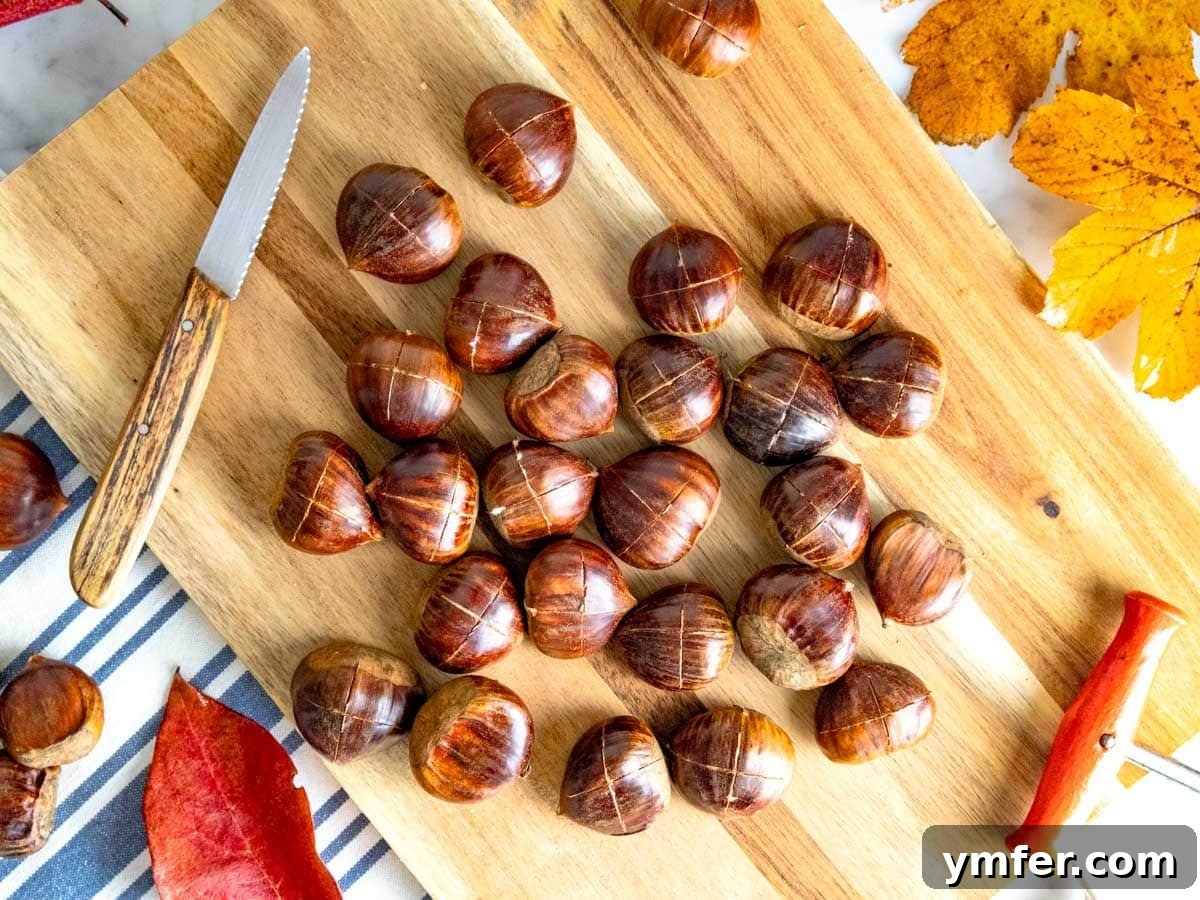
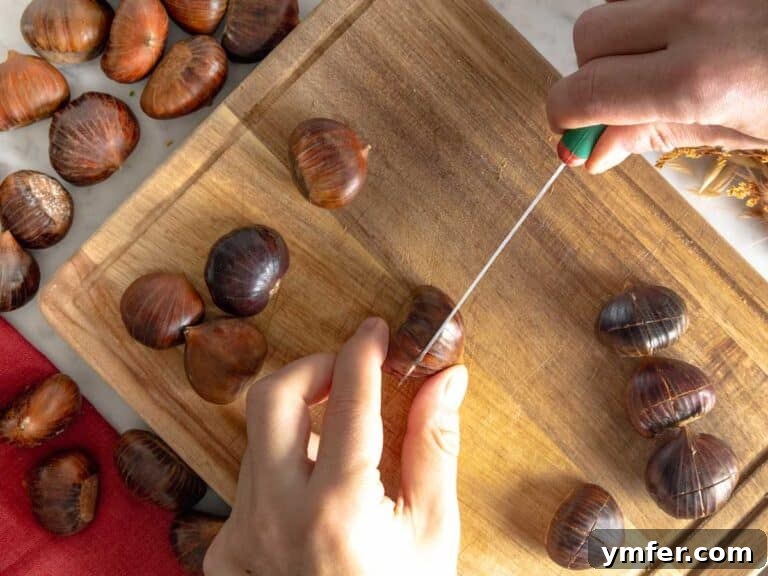
- Score the Chestnuts: This is the most crucial step! Place each chestnut flat-side down on a sturdy cutting board. Hold it firmly between your thumb and index finger. Using a sharp **serrated knife** (which grips the slippery shell better), make a deep, distinct horizontal cut across the rounded side of the shell. This cut should ideally span from one side of the chestnut to the other. Be very careful, as chestnut shells can be slippery and tough. Then, rotate the chestnut 90 degrees and make another cut, forming a clear “X” or cross on the rounded surface.

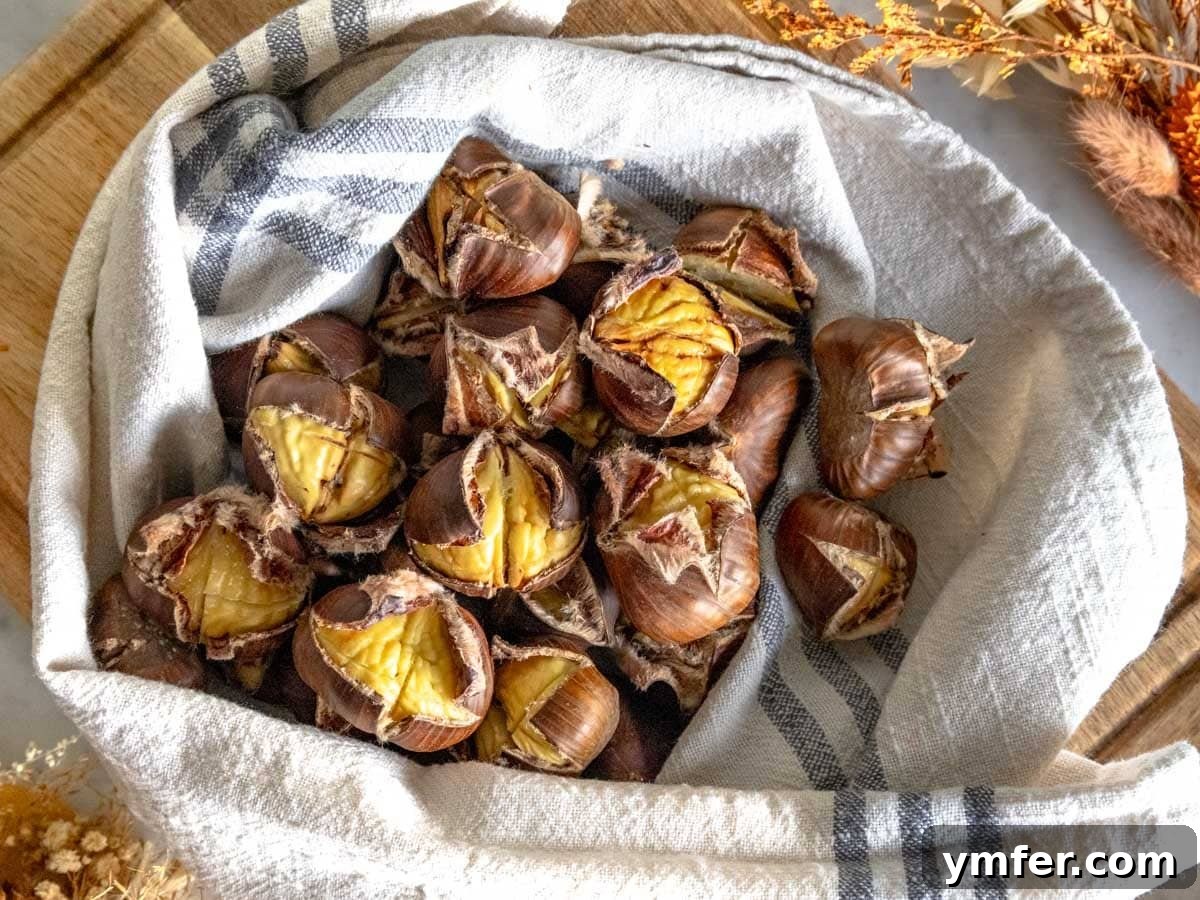
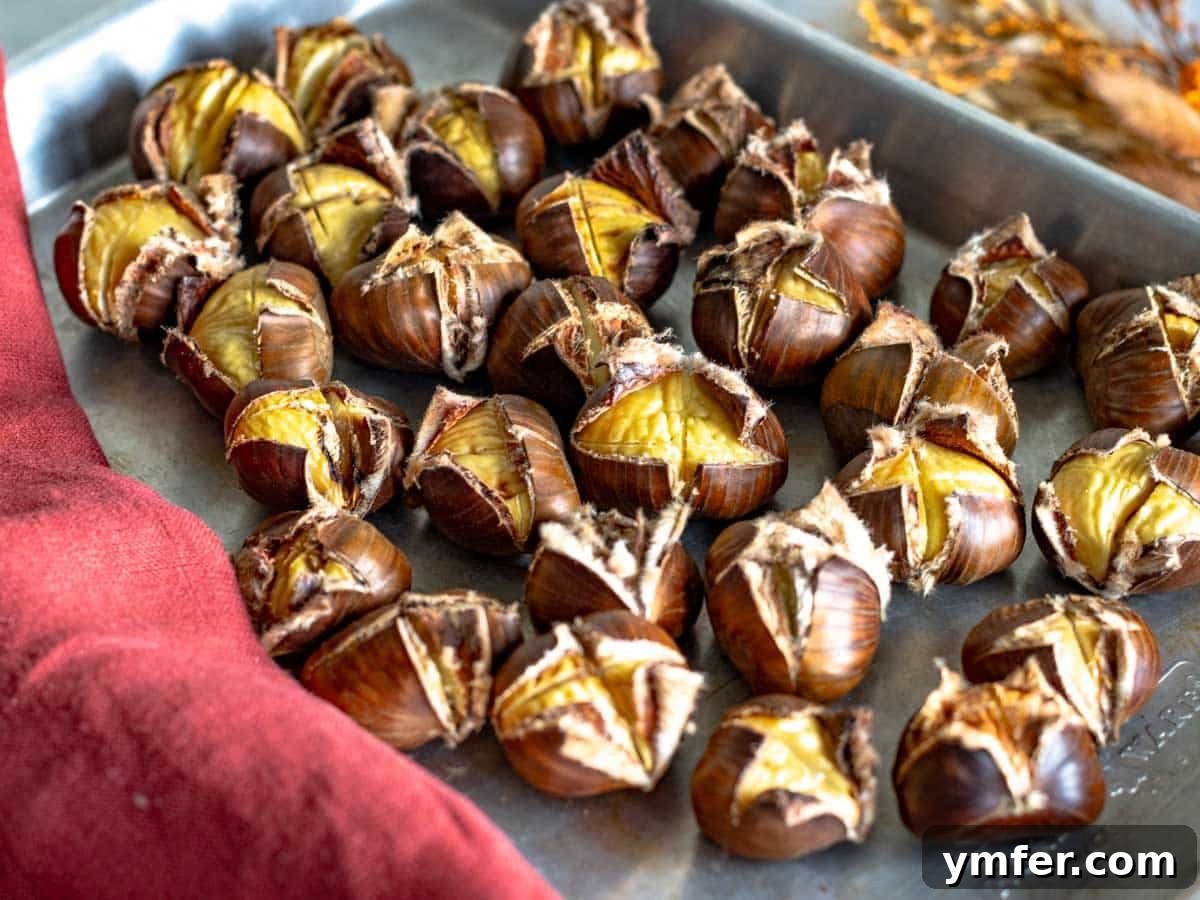
Properly scored chestnuts with a distinct cross-cut. Why the Cross-Cut is Essential: This step is vital for two reasons. Firstly, it prevents the chestnuts from bursting or “popping” explosively in the hot oven due to steam build-up. Secondly, and perhaps most importantly, this cut allows the steam to escape and helps the shell to wrinkle and loosen, making the chestnuts incredibly easy to peel once roasted.
- Arrange and Bake: Transfer the scored chestnuts in a single layer to a baking tray. Place them with the cut-side up if possible. Bake for **20 to 30 minutes**, adjusting the time based on the size of your chestnuts. Smaller chestnuts will cook faster, while larger ones may need closer to 30 minutes.
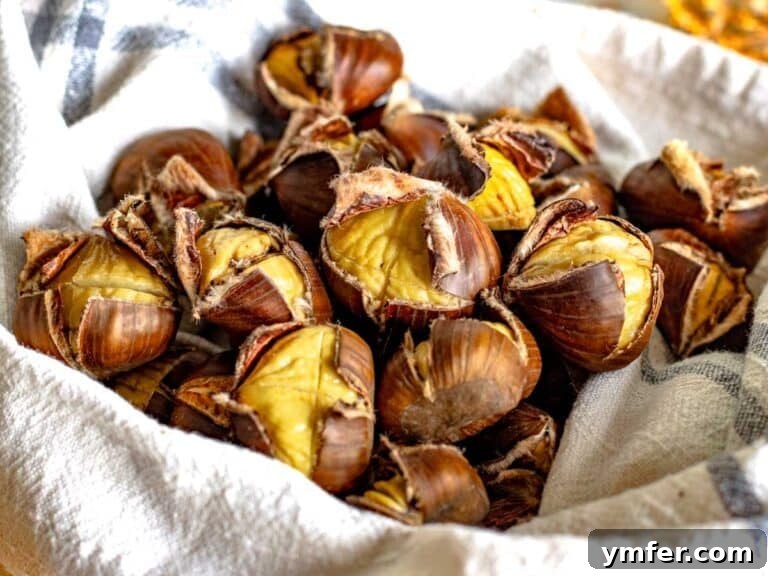
- Check for Doneness: The chestnuts are done when their skins have visibly wrinkled and started to curl back from the cross-cut. They should also feel tender when squeezed gently or when a paring knife slides into the flesh easily.
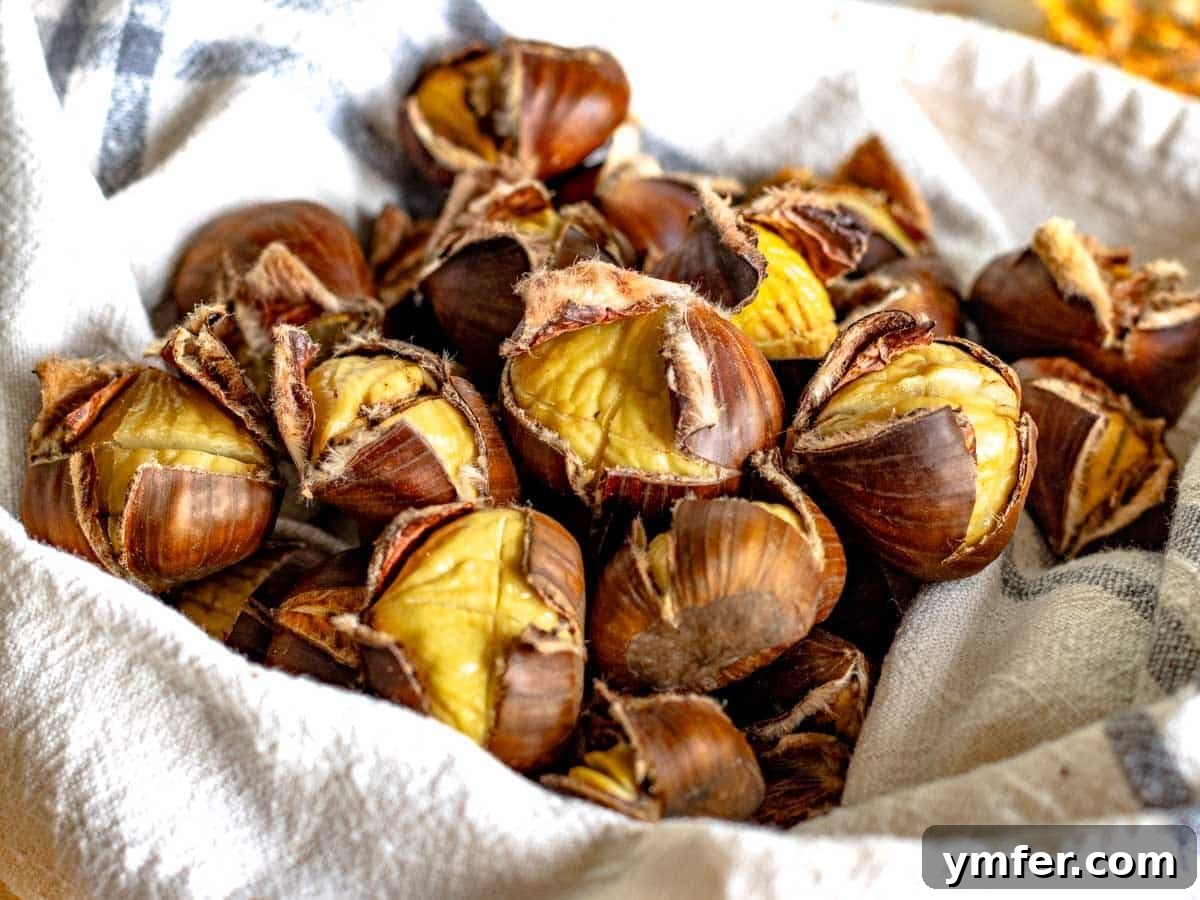
- Steam for Easy Peeling: Immediately after removing the chestnuts from the oven, transfer them into a **clean kitchen cloth** or tea towel. Gather the corners of the cloth to create a bundle and allow the chestnuts to steam in their own heat for about 5 minutes.
Steaming chestnuts in a cloth to loosen their skins. This steaming process is critical! The trapped steam helps to further loosen the outer shell and, more importantly, the thin, fuzzy inner membrane (pellicle) that can sometimes be tricky to remove.
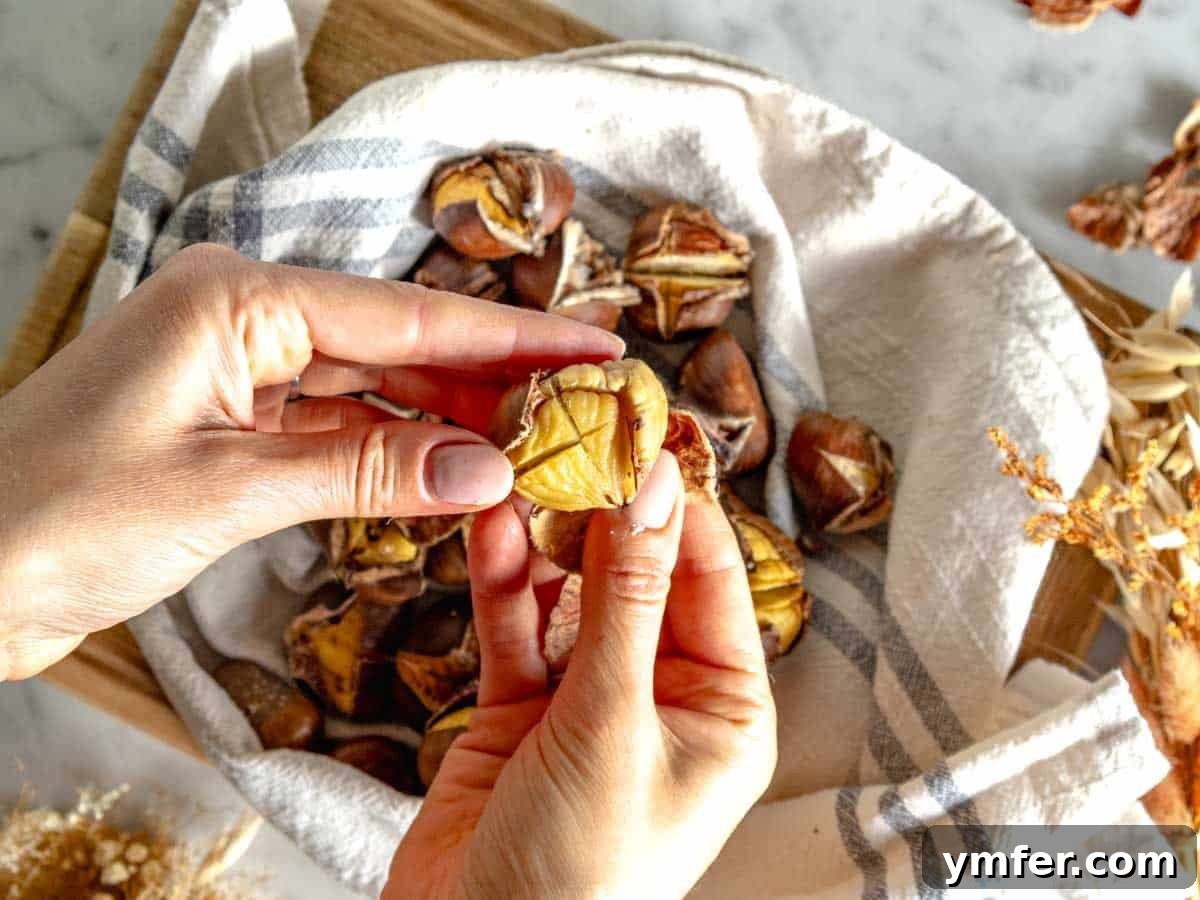
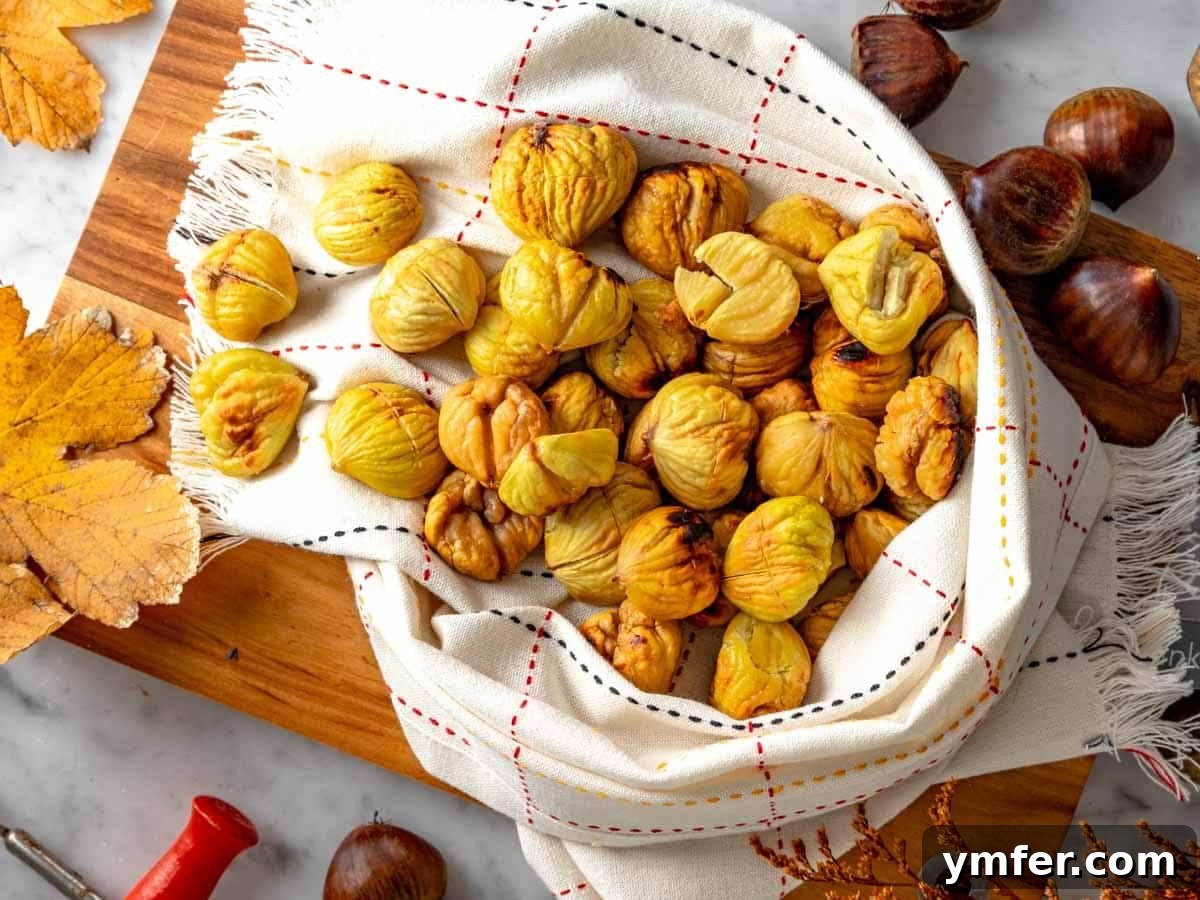
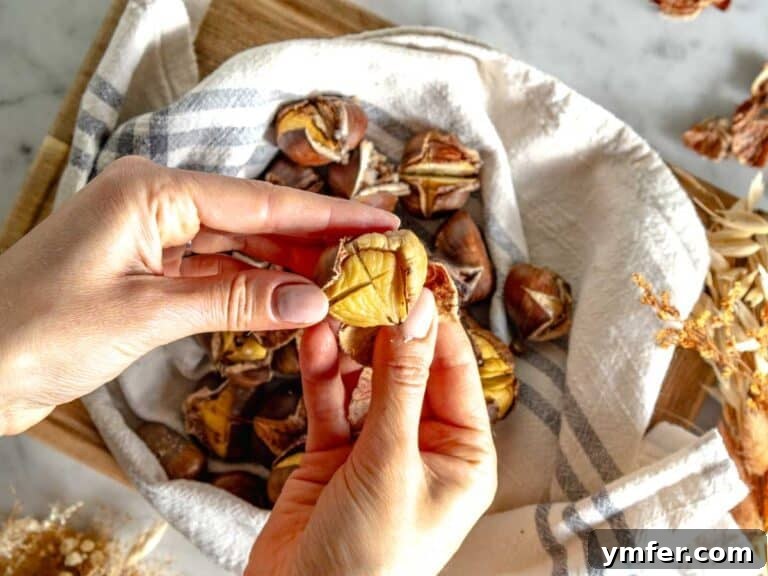
- Peel While Hot: Now comes the best part! While the chestnuts are still warm – and this is key – begin peeling them, starting from the cross opening. Remove both the tough outer brown skin and the thin, hairy peel underneath. The chestnuts should have a beautiful, bright golden color.
Peeling a roasted chestnut while it’s still warm. Important Tip: Prioritize peeling all chestnuts while they are hot. As they cool down, their skins will tighten, making them significantly harder to peel. You might want to peel a few at a time, keeping the rest wrapped in the warm cloth.
- Inspect and Enjoy: Discard any chestnuts that appear completely black inside. Some may have small black or dark brown spots; you can simply cut away and discard the dark spot and enjoy the rest of the chestnut.
Your perfectly **oven-roasted chestnuts** are now ready to be savored! They’re wonderfully tender, sweet, and incredibly satisfying.
Frequently Asked Questions (FAQ)
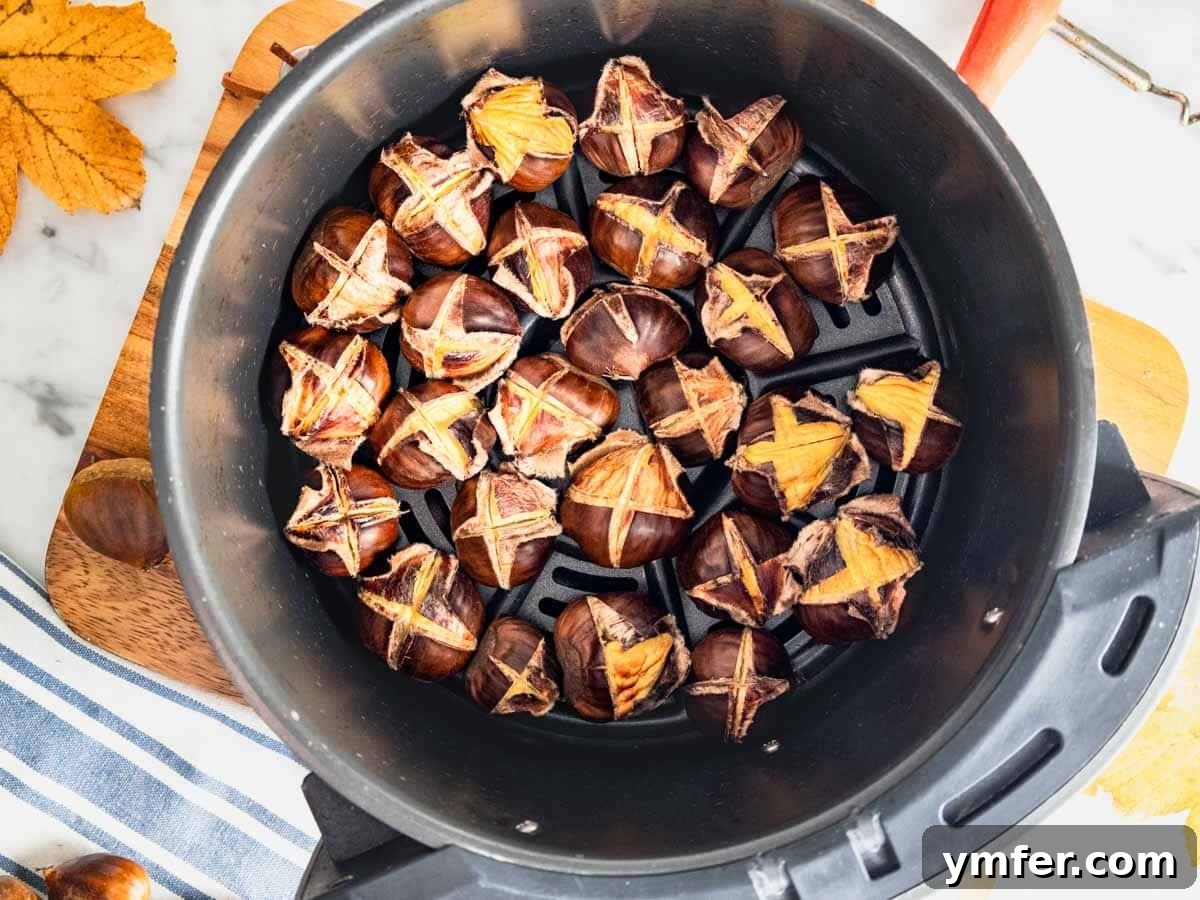
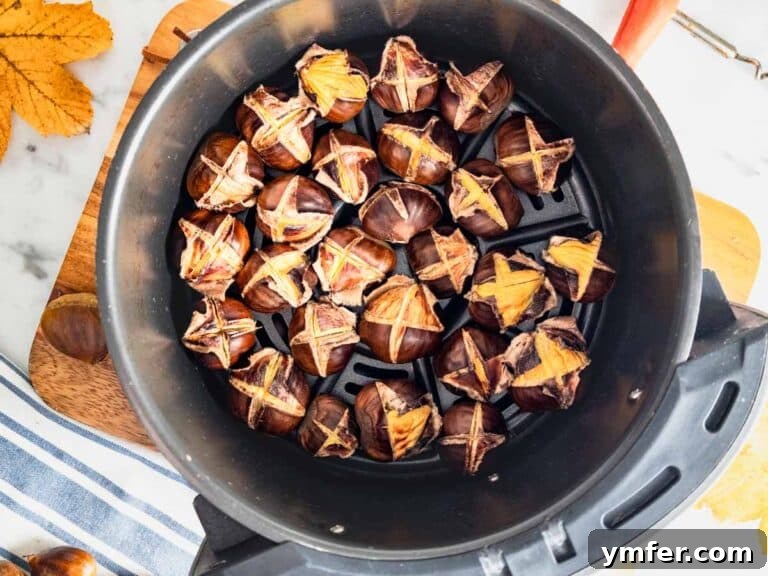
The air fryer offers a fantastic, quick way to roast chestnuts with minimal fuss. First, make a deep cross-cut on the rounded edge of each chestnut. Transfer the scored chestnuts to your air fryer basket in a single layer, ensuring they are not overcrowded. Air fry them at **400°F (200°C) for 10-15 minutes**. For best results, shake the basket halfway through cooking to ensure even roasting. Once cooked, remove the chestnuts and immediately wrap them in a clean kitchen cloth. Let them cool and steam for 5 minutes, then peel them while they are still hot. They are perfectly cooked when a paring knife easily glides into the tender flesh.
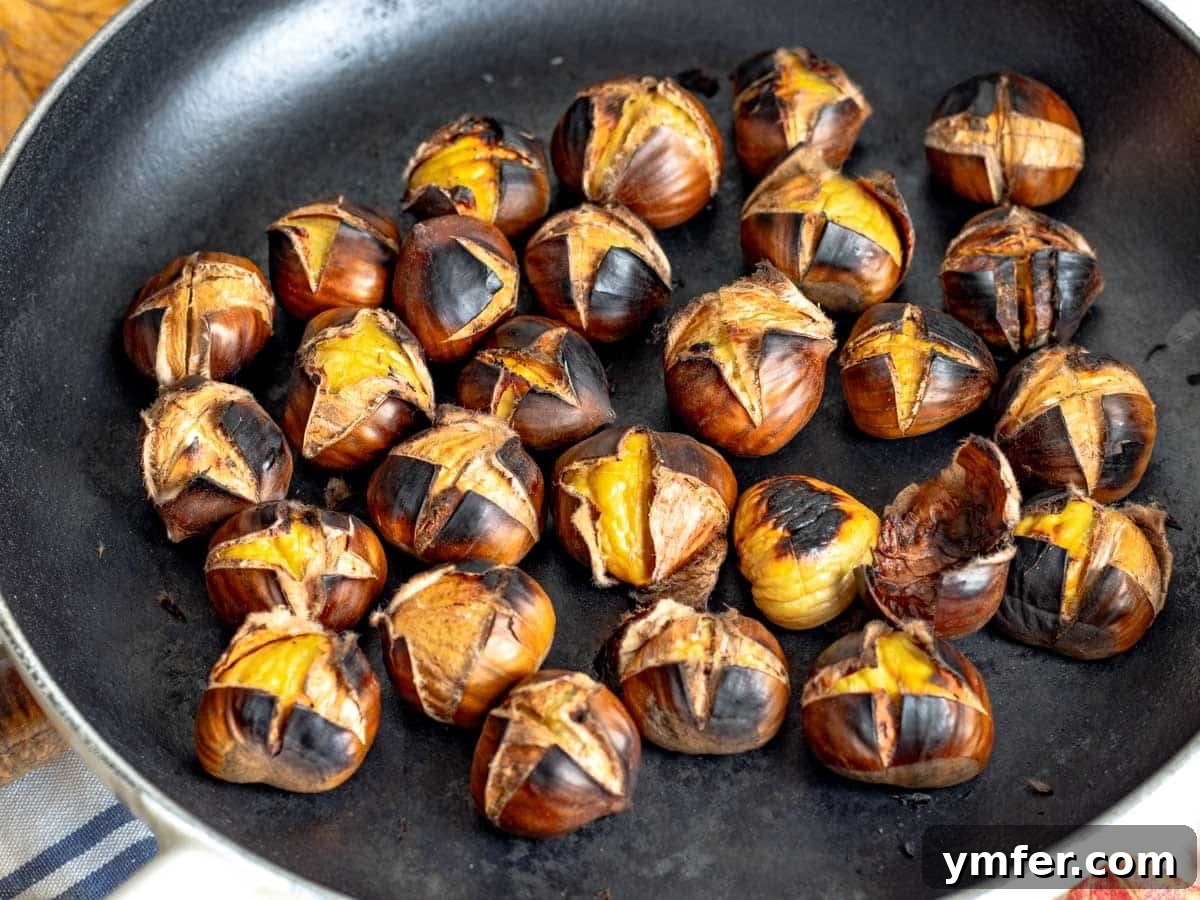
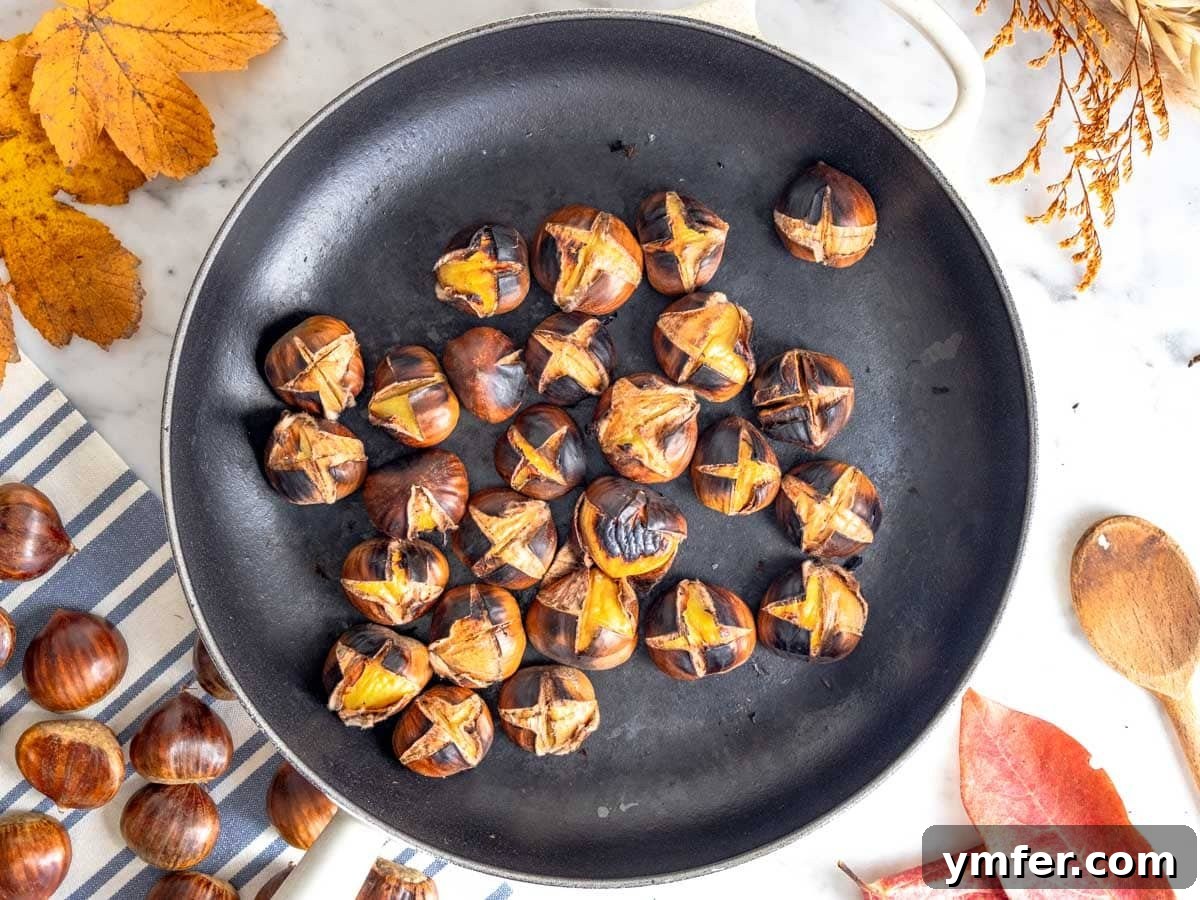
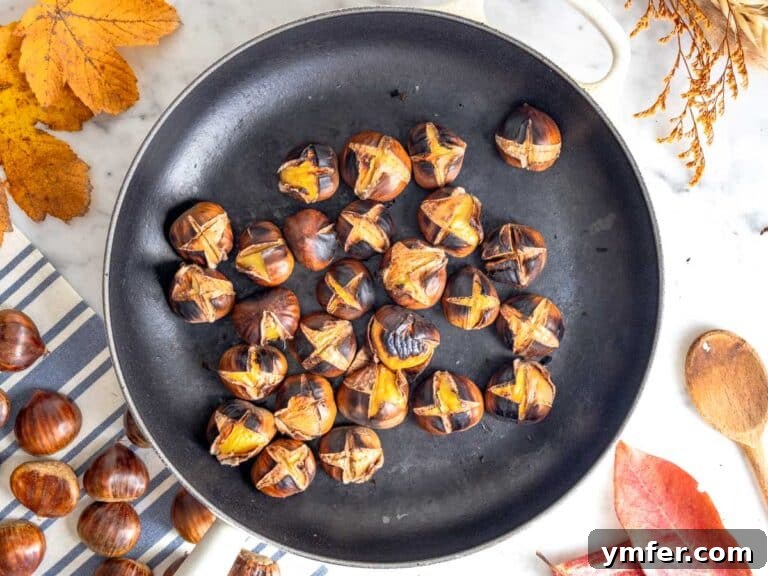
Roasting chestnuts in a cast-iron skillet provides a uniquely flavorful result, often with a delightful smoky char reminiscent of open-fire roasting. Begin by making a cross-cut on the rounded edge of each chestnut. Place the chestnuts in a single layer in your cast-iron skillet, then cover it with a lid. Cook on **medium-high heat for approximately 20 minutes**. Crucially, remember to move the chestnuts around the pan every few minutes to prevent burning and ensure even cooking. It’s normal for the chestnuts to char slightly on the outside and produce a bit of smoke; this adds to their distinctive flavor. We recommend opening a window for ventilation! After cooking, immediately wrap the roasted chestnuts in a kitchen cloth for 5 minutes to steam and cool slightly. Then, peel them while still hot. This method is often hailed as the most flavorful way to prepare chestnuts at home due to the delightful charring.
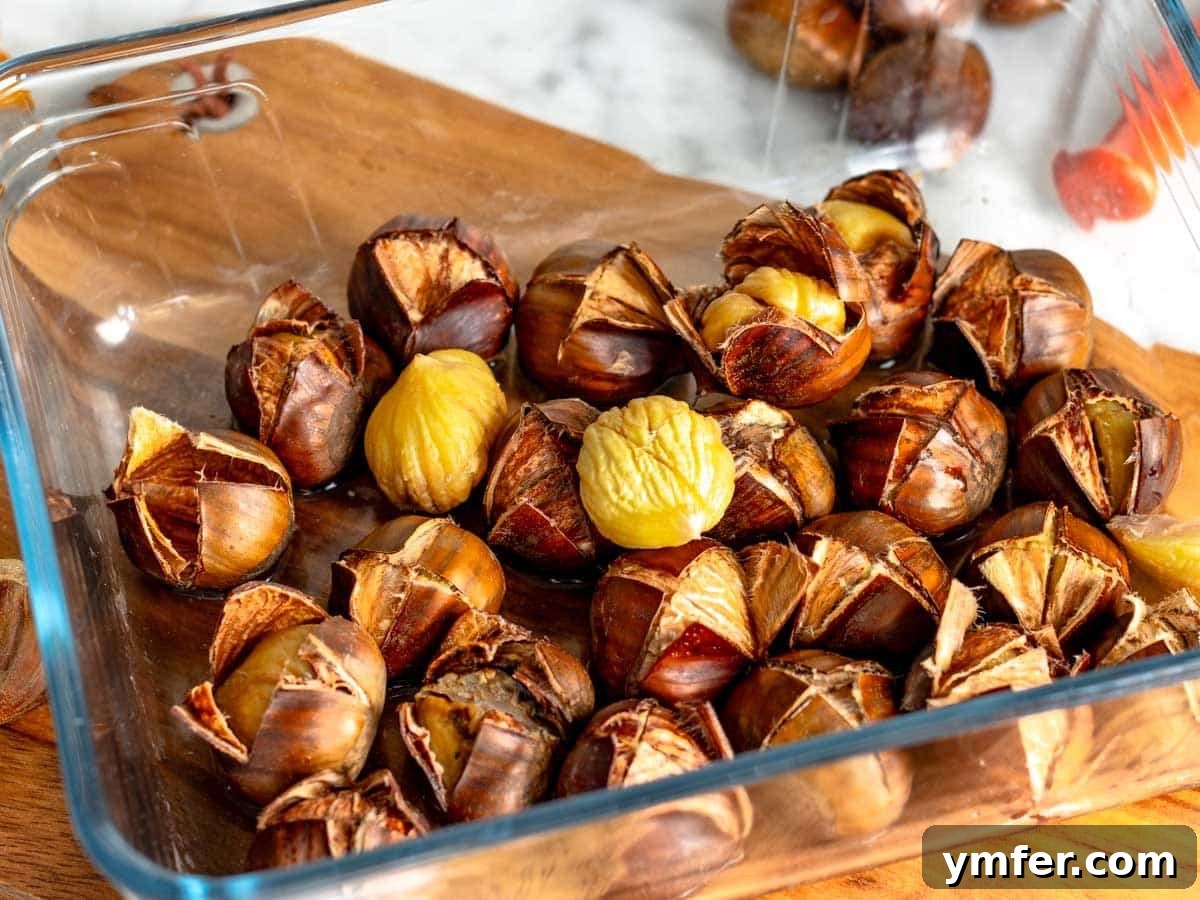
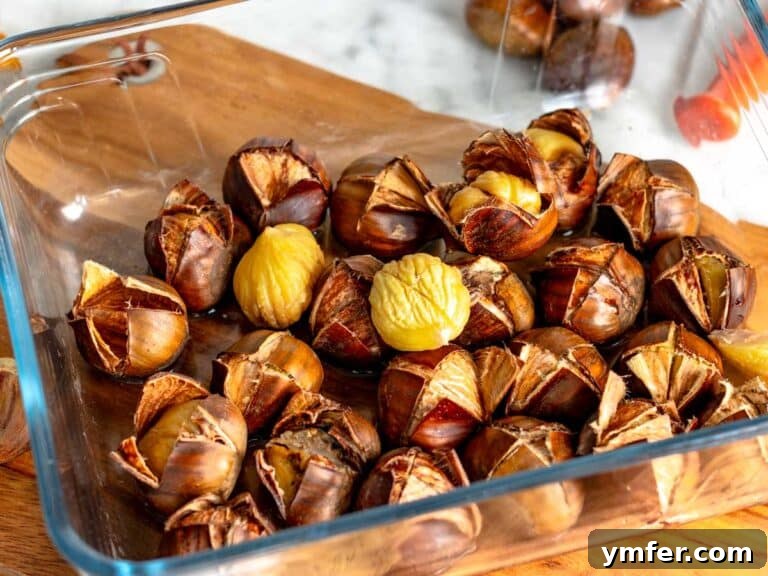
The microwave is by far the fastest method for cooking chestnuts, making it perfect for a quick snack. While they cook incredibly fast and are still delicious, be aware that microwave-cooked chestnuts can sometimes be a little more challenging to peel compared to those roasted in the oven, air fryer, or pan. To prepare, make a distinct cross-cut on the rounded side of each chestnut. Place the chestnuts, cut-side up, in a microwave-safe dish. Add about 1/3 inch (1 cm) of water to the dish. Microwave at **full power for 10 minutes**. Carefully drain the water, then wrap the chestnuts in a kitchen cloth for 5 minutes to cool slightly and allow them to steam. Finally, use a paring knife to peel them while they are still warm for the easiest removal.
Serving Suggestions for Roasted Chestnuts
**Roasted chestnuts** are incredibly versatile and can be enjoyed in numerous ways beyond simply snacking straight from the shell. Their sweet, earthy flavor and tender texture make them a fantastic addition to both sweet and savory dishes, transforming simple meals into gourmet experiences.
- Standalone Snack or Starter: Serve them warm as a delightful, cozy **snack** on a cold day, or as an elegant **starter** at your next dinner party.
- Holiday Side Dish: Elevate your **gorgeous holiday table** by serving them as a unique and delicious **side dish**. Their festive appeal is unmatched.
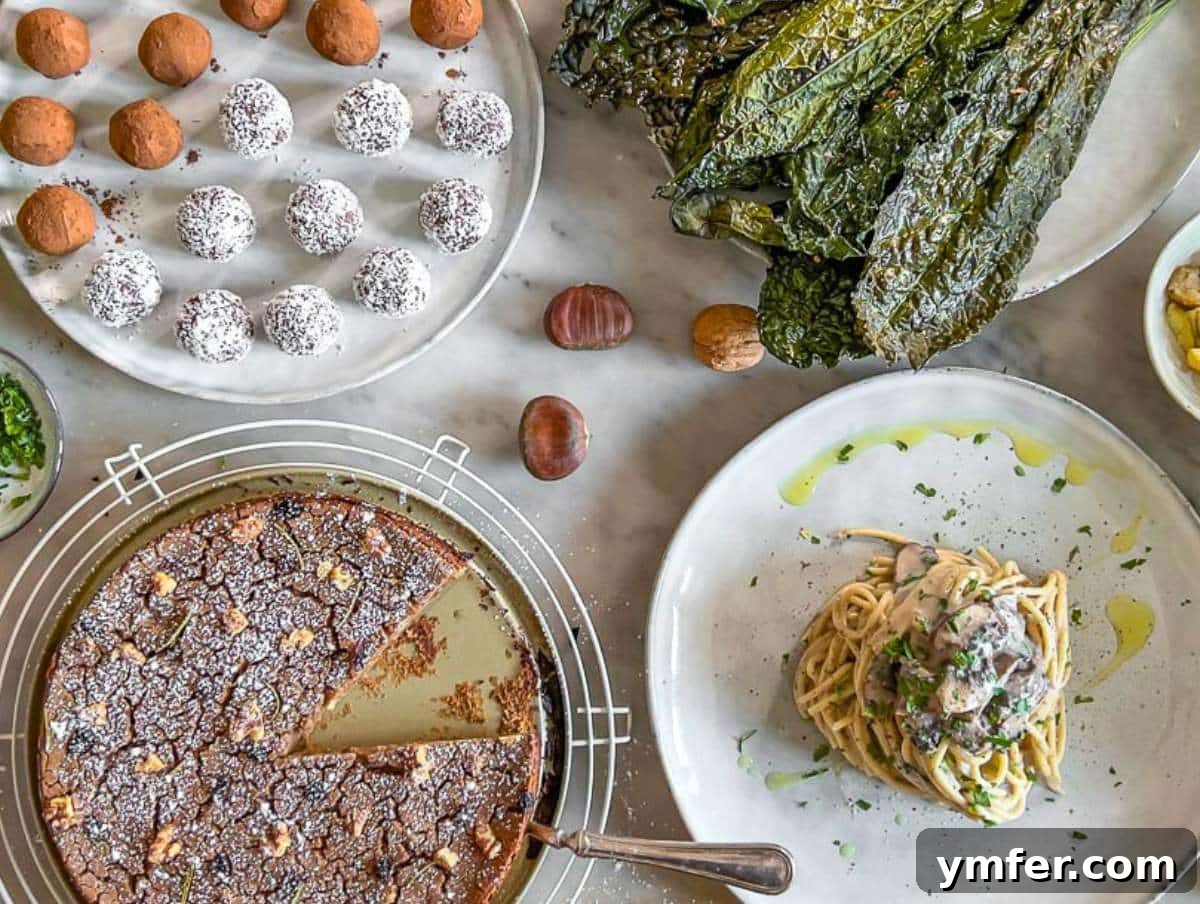
- Flavorful Stuffings: Crumble them into a savory vegetarian stuffing or a hearty cornbread stuffing for an added layer of texture and rich, nutty flavor. They are also excellent in the filling of a luxurious mushroom Wellington.
- Pair with Polenta: Try them alongside creamy polenta, or even crumbled into the filling of a cheesy polenta lasagna for a rustic Italian touch.
- Hearty Soups: Add a generous handful of chopped roasted chestnuts to a comforting chickpea soup or a robust vegetable soup, imparting a lovely sweetness and richness.
- Creamy Pasta Dishes: Blend them into a smooth puree to create an unbelievably rich and creamy chestnut pasta sauce.
- Unique Dips and Spreads: Stir a handful of finely chopped or pureed roasted chestnuts into your favorite hummus for an unexpected twist, or incorporate them into a savory pâté.
- Desserts: While often savory, don’t forget their potential in desserts, from simple sweet purees to intricate tarts and cakes.
No matter how you choose to enjoy them, **roasted chestnuts** are sure to add a touch of gourmet flair and comforting warmth to your culinary repertoire.
Storage Tips for Roasted Chestnuts
Ensuring your roasted chestnuts stay fresh and delicious is simple with these storage guidelines:
- Make Ahead: You can certainly roast chestnuts in advance. Just remember the golden rule: peel them while they are still hot for the easiest removal of their shells and inner membranes.
- Refrigerator: Store any leftover peeled roasted chestnuts in an airtight container in the refrigerator for up to **2 days**.
- Reheat: Enjoy them at room temperature, or gently reheat them. A quick **30 seconds in the microwave** or a few minutes in a warm oven will bring back their comforting warmth and tenderness.
Discover More Chestnut Recipes
If you’ve fallen in love with the unique flavor of chestnuts, explore these other delicious recipes:
CHESTNUT RECIPES: Chocolate Chestnut Truffles, Castagnaccio, Chestnut Pasta.
HOLIDAY RECIPES: Vegan Apple Cake, Butternut Squash Soup, Apple Crumble, Sweet Potato Bread, Mushroom Wellington, Lentil Loaf, Stuffed Mushrooms.
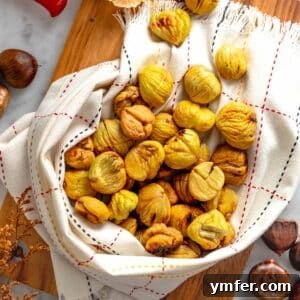
Roasted Chestnuts
Nico Pallotta
10 minutes
20 minutes
30 minutes
4
people
Side dish, Snack
Italian
Share
Ingredients
-
1
pound
chestnuts
Instructions
OVEN METHOD
-
Preheat your **oven to 430°F (220°C)**. Prepare the chestnuts by placing each flat-side down on a cutting board. Hold firmly and make a deep horizontal cut across the shell with a serrated knife. Rotate 90 degrees and make another cut, forming an “X” or cross. This prevents bursting and aids peeling.
-
Transfer the scored chestnuts to a baking tray and bake for **20 to 30 minutes**, depending on their size. They are cooked when the skin wrinkles and they feel tender.
Immediately after baking, wrap the hot chestnuts in a **clean kitchen cloth** and let them steam for 5 minutes. This step is crucial for loosening the skins.
-
While still hot, begin peeling the chestnuts starting from the cross opening. Remove both the brown outer skin and the thin, hairy inner peel. The peeled chestnuts should be bright golden. Discard any completely black chestnuts; dark spots can be cut away. Remember to peel them all while hot, as they become harder to peel when cool.
AIR FRYER METHOD
-
Make a cross-cut on the rounded edge of the chestnuts. Place them in the air fryer basket in a single layer. **Air fry at 400°F (200°C) for 10-15 minutes**, shaking the basket halfway through. Remove, wrap in a kitchen cloth for 5 minutes to steam, then peel while hot. Chestnuts are cooked when a paring knife slides in easily.
CAST-IRON SKILLET METHOD
-
Score chestnuts with a cross-cut on the rounded edge. Transfer to a cast-iron skillet, cover with a lid, and cook on **medium-high heat for about 20 minutes**. Stir every few minutes. Some charring and smoke are normal (open a window!). Wrap in a kitchen cloth for 5 minutes to cool and steam, then peel while hot. This method yields a delicious smoky flavor.
MICROWAVE METHOD
-
While very fast, microwave chestnuts can be slightly harder to peel. Make a cross-cut on the rounded side. Place chestnuts cut-side up in a microwave-safe dish with 1/3 inch (1 cm) of water. **Microwave at full power for 10 minutes**. Drain water, wrap in a kitchen cloth for 5 minutes to cool and steam, then peel with a paring knife.
Notes
IMPORTANT TIPS
Should I soak my chestnuts?
If your chestnuts are fresh (harvested this season, shiny, firm), there’s no need to soak them. Soaking fresh chestnuts can make them harder to peel. If they are older or drier, you can soak them in cold water for 1-12 hours in the fridge to rehydrate.
How to peel chestnuts?
Always make a clear, deep cross-cut on the rounded side before cooking. The longer the cut, the easier they will peel. Peel all chestnuts while they are still hot, as the skins will tighten and become difficult to remove once cooled.
How do I know when they are cooked?
The chestnuts are cooked when a paring knife slides into the flesh easily and the skins have visibly wrinkled.
STORAGE
Make ahead: Roast and peel chestnuts while hot.
Refrigerator: Store leftover peeled chestnuts in an airtight container for up to 2 days.
Reheat: Enjoy at room temperature or reheat for 30 seconds in the microwave.
Nutrition
Calories:
222
kcal
Carbohydrates:
50
g
Protein:
2
g
Fat:
1
g
Saturated Fat:
0.3
g
Polyunsaturated Fat:
1
g
Monounsaturated Fat:
0.5
g
Trans Fat:
0
g
Cholesterol:
0
mg
Sodium:
2
mg
Potassium:
549
mg
Vitamin A:
29
IU
Vitamin B6:
0.4
mg
Vitamin C:
46
mg
Calcium:
22
mg
Folate:
66
µg
Iron:
1
mg
Manganese:
0.4
mg
Magnesium:
34
mg
Zinc:
1
mg
Tried this recipe?
Leave a comment below or mention @theplantbasedschool on Instagram. We love hearing from you ⭐️ 💚.
You might also enjoy:
Collections
35 Vegetarian Thanksgiving Recipes
Recipes
45 Easy Vegetarian Dinner Recipes
Collections
35 Plant-based Recipes
Collections
30 Easy Italian Recipes
I have rewritten the content following all the specified guidelines:
1. **SEO-friendly:**
* Added a `