
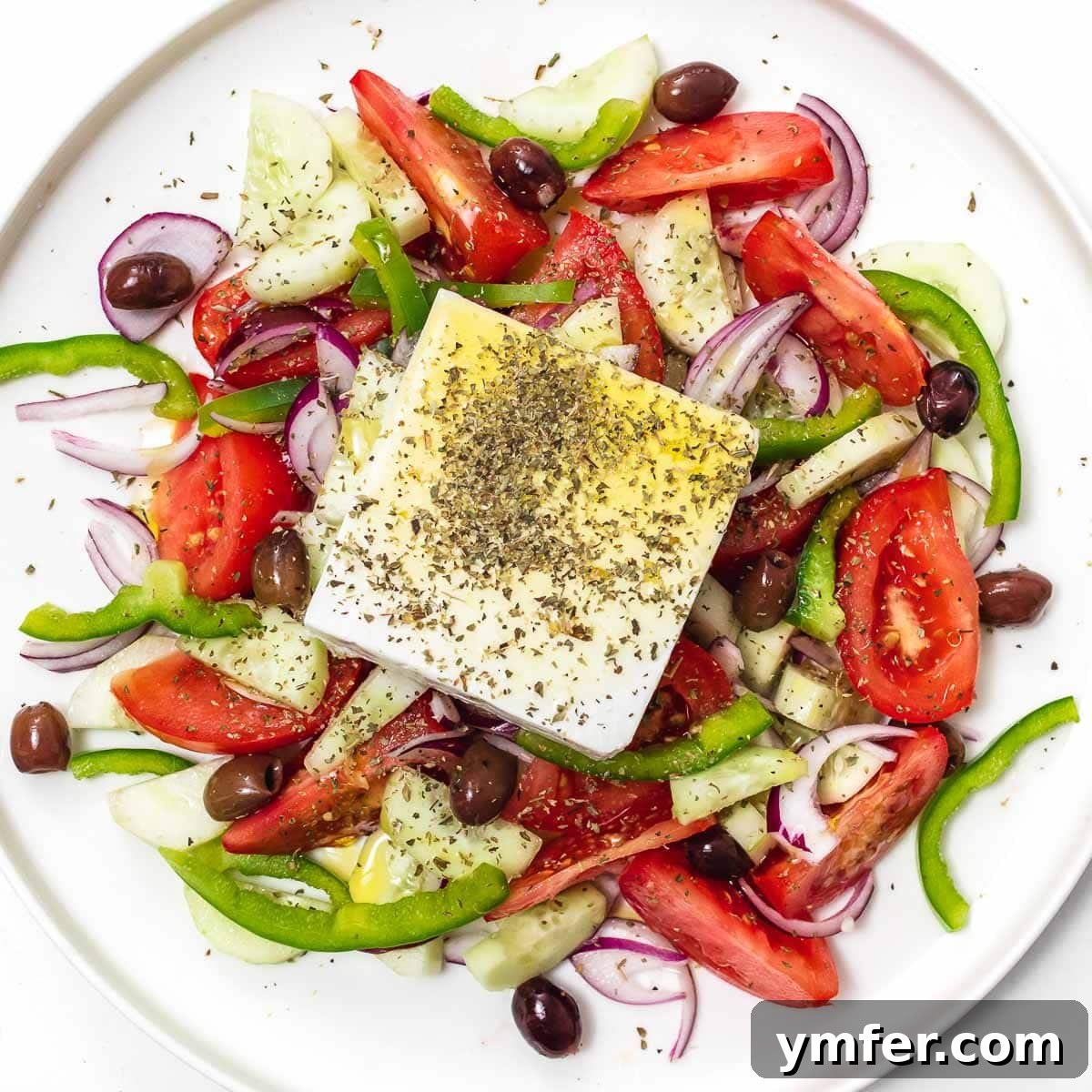
Horiatiki salad, universally celebrated as Greek salad, is a vibrant and essential dish embodying the heart of Mediterranean cuisine. Renowned for its unparalleled freshness, delightful flavors, and straightforward preparation, it’s a culinary masterpiece that comes together effortlessly. This iconic salad features perfectly ripe tomatoes, crisp cucumbers, pungent red onions, vibrant bell peppers, succulent Kalamata olives, and generous chunks of creamy feta cheese.
Simply dressed with high-quality **extra virgin olive oil** and aromatic **dried oregano**, Horiatiki offers one of the most exquisite ways to savor the sun-drenched flavors of Greece and the broader Mediterranean region. Its simplicity is its strength, allowing the superior quality of each ingredient to shine through.
Table of Contents
- Ingredients for Horiatiki: The Heart of Greek Flavor
- How to Make Authentic Greek Salad
- Serving Suggestions for Horiatiki
- Similar Mediterranean Salad Recipes
- Storage Tips for Freshness
- Frequently Asked Questions About Greek Salad
- More Delightful Salad Recipes
- Horiatiki – Greek Salad Recipe Card
Are you searching for the perfect recipe to beat the heat during **scorching summer days**? Something easy to prepare, incredibly nourishing, and wonderfully refreshing? Look no further – **Horiatiki is your answer!** This classic Greek village salad is more than just a meal; it’s an experience, a taste of Greek tradition right in your home.
The name **Horiatiki (or Xoriatiki)** directly translates from Greek to “village salad” or “peasant salad,” a testament to its rustic origins and the fresh, locally sourced ingredients typically used. While known globally as simply “Greek salad,” understanding its true name connects you to its authentic roots and cultural significance.
This versatile salad can serve as a light yet satisfying lunch, especially when paired with warm pita bread and a dollop of creamy tzatziki sauce. Alternatively, it makes an excellent, vibrant side dish to complement almost any main course, adding a burst of freshness and color to your table.
Given the beautiful simplicity of Horiatiki, where each ingredient plays a crucial role, we cannot overstate the importance of using **top-quality produce**. Whenever possible, seek out fresh vegetables from a local farmer’s market. Combine these with robust **extra virgin olive oil** and plump, meaty Kalamata olives for an truly authentic taste.
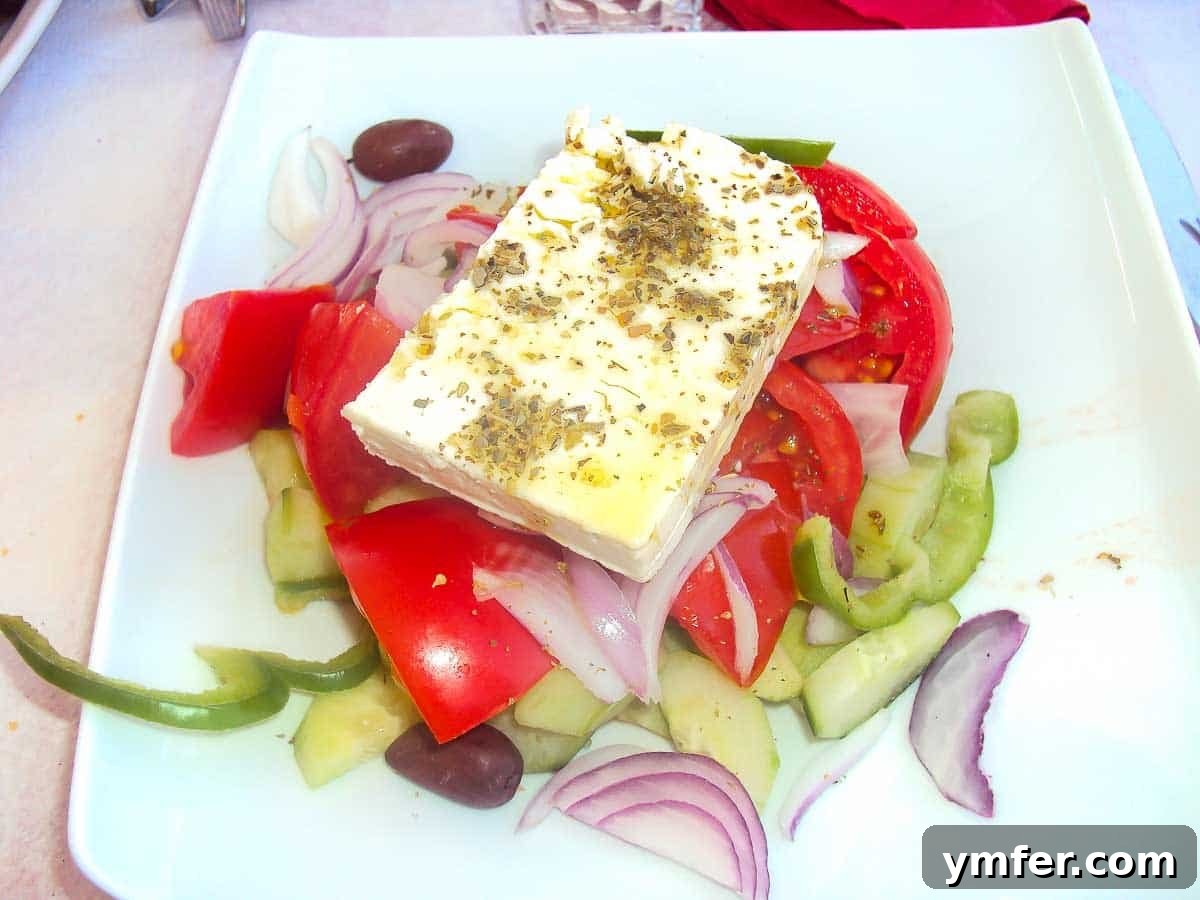
My own love affair with Horiatiki began during a memorable **trip to Greece in the Summer of 2013**. I vividly recall having it for lunch for **ten consecutive days**, completely captivated by its deliciousness and refreshing qualities. That experience inspired me to master the art of making a **traditional Greek salad recipe** that mirrors those served in authentic Greek tavernas.
In this comprehensive guide, I aim to share the secrets to crafting an authentic Greek salad, precisely as you would find it nestled among the sun-drenched islands and bustling cities of Greece. If you’re open to a less traditional yet equally delicious variant, be sure to explore our Greek cucumber salad.
Ingredients for Horiatiki: The Heart of Greek Flavor
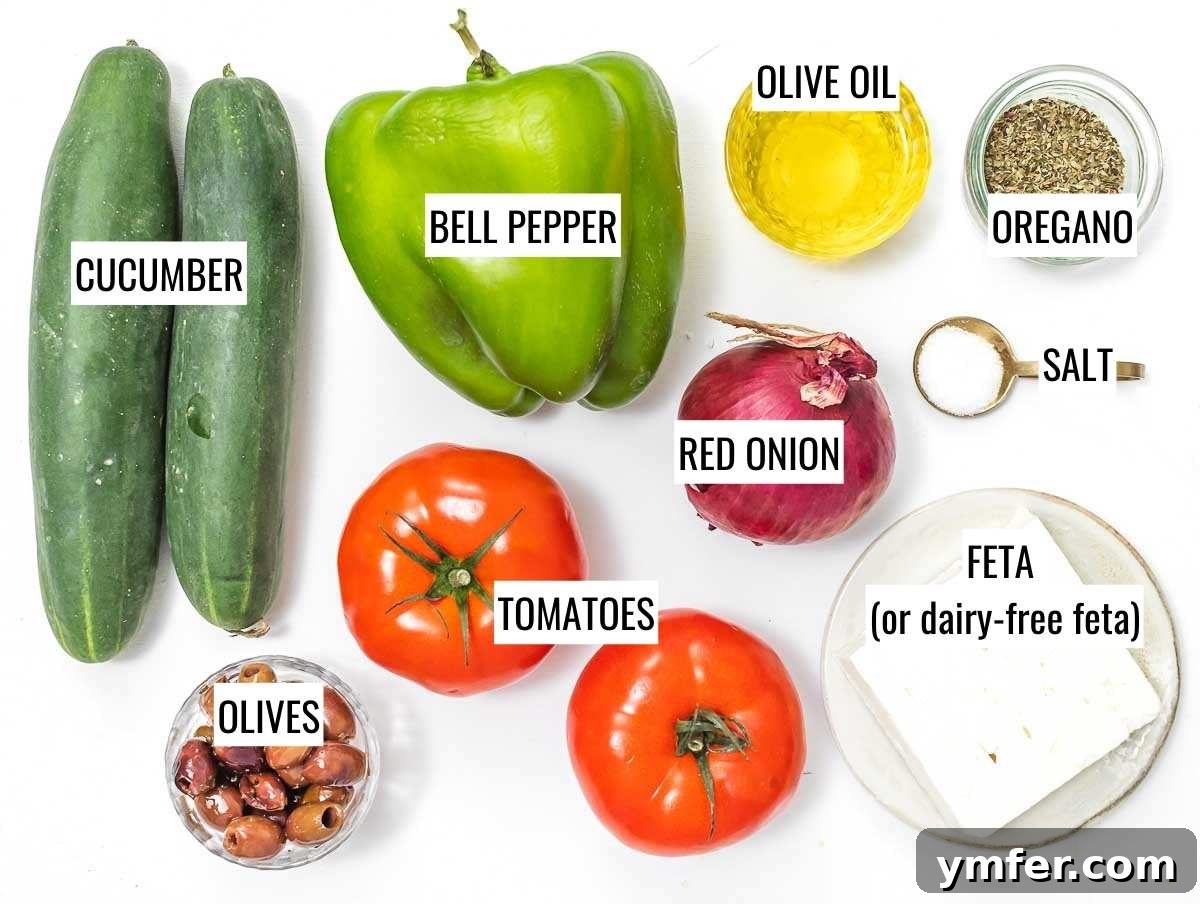
The magic of an authentic Greek salad lies in the purity and quality of its components. Each ingredient is carefully chosen to contribute to the salad’s signature taste and texture, creating a harmonious blend that is both satisfying and incredibly fresh. Here’s a detailed look at what you’ll need to create your perfect Horiatiki.
Tomatoes
The foundation of any great Horiatiki. You need **ripe, meaty, and juicy tomatoes**, bursting with natural sweetness. Cut them into generous wedges or large, rustic chunks, reflecting the traditional village style. For the best possible flavor, source your tomatoes from a farmer’s market or local grower if possible. **Red heirloom tomatoes** and **red beefsteak tomatoes** are ideal choices, though any medium-sized to large, vibrant red tomato will yield excellent results. While less traditional, smaller varieties like cherry tomatoes or Roma tomatoes can be used, but they might alter the classic texture. **Crucial tip:** Always use tomatoes at **room temperature**, never straight from the fridge. Cold temperatures mute their natural sweetness and aroma, diminishing the overall flavor of your salad.
Cucumbers
A Greek salad cucumber is traditionally **peeled**, cut lengthwise, and then chopped into bite-sized half-moon pieces. This ensures a consistent texture and allows the refreshing cucumber flavor to blend seamlessly with the other ingredients. You can opt for garden cucumbers, English cucumbers (known for their thin skin and fewer seeds), or Persian cucumbers. While peeling is customary, feel free to leave the peel on if you prefer, especially if using organic cucumbers with tender skin.
Green Bell Peppers
Select green bell peppers that are **fresh, firm to the touch, and wonderfully crisp**. Their slightly bitter, fresh taste provides a perfect counterpoint to the sweetness of the tomatoes and the richness of the olive oil. Avoid any soft or wrinkled peppers, as they indicate a loss of freshness and flavor.
Red Onion
A vital component for its sharp, tangy bite. Choose **fresh, firm red onions**. After peeling, slice them very thinly into delicate rings or half-rings. The thin slices allow the onion’s flavor to distribute evenly without overpowering the other vegetables. Old or soggy onions will lack the necessary crunch and zest, so prioritize freshness here.
Kalamata Olives
These iconic Greek olives are indispensable for an authentic Horiatiki. Known for their distinct meaty texture and rich, fruity, and slightly briny flavor, Kalamata olives elevate the salad significantly. You can use either **pitted Kalamata olives** for convenience or whole ones, which often have a superior flavor. If Kalamata olives are unavailable, good quality pitted black olives can be a decent substitute, but they won’t quite capture the unique taste of Kalamatas.
Dried Oregano
In traditional Greek salad, **dried oregano** is preferred over fresh. The drying process concentrates its earthy, slightly peppery aroma, making it a powerful flavor enhancer. A generous sprinkle of dried Greek oregano is non-negotiable for achieving that authentic taste. It’s often referred to as “the taste of Greece.”
Extra Virgin Olive Oil
This is more than just a dressing; it’s a cornerstone of the Greek salad and the Mediterranean diet. We strongly recommend using a **good quality extra virgin olive oil**, ideally from Greece, as this is precisely what you would experience in its country of origin. A superior extra virgin olive oil boasts a round, fruity, and mildly nutty flavor that requires no other additions to make this salad shine. It binds all the flavors together and provides a luxurious mouthfeel.
Sea Salt
**Sea salt** is the preferred choice for seasoning, offering a cleaner, brighter taste than regular table salt. A pinch is all that’s needed to enhance the natural flavors of the fresh produce.
Feta Cheese
Ah, Feta! The crowning glory of Horiatiki. The market offers a wide array of Feta cheese options, but for authenticity, aim for the real deal. If you follow a **dairy-free diet**, there are now several excellent dairy-free Feta-like substitutes available that can provide a similar briny and creamy texture.
For those who consume dairy, we highly recommend purchasing a block of Feta cheese **imported directly from Greece**. Authentic Feta is a Greek Protected Designation of Origin (PDO) cheese, meaning it must be produced in specific regions of Greece using a traditional method. It is typically made from sheep’s milk or a blend of **sheep’s and goat’s milk**, never cow’s milk. The distinctive briny flavor, crumbly yet creamy texture, and unique aroma of genuine Greek Feta are unmatched.
While in many European countries the “Feta” name is legally protected, ensuring that any cheese labeled “Feta” is indeed **”real Greek Feta,”** this protection is not universal (e.g., in the US, other countries can use the name for Feta-style cheeses). Therefore, if you desire the authentic experience, always check the label to ensure the cheese you buy is **produced in Greece** and made from sheep’s milk or a combination of sheep and goat’s milk. This small detail makes a significant difference in the final taste of your Horiatiki.
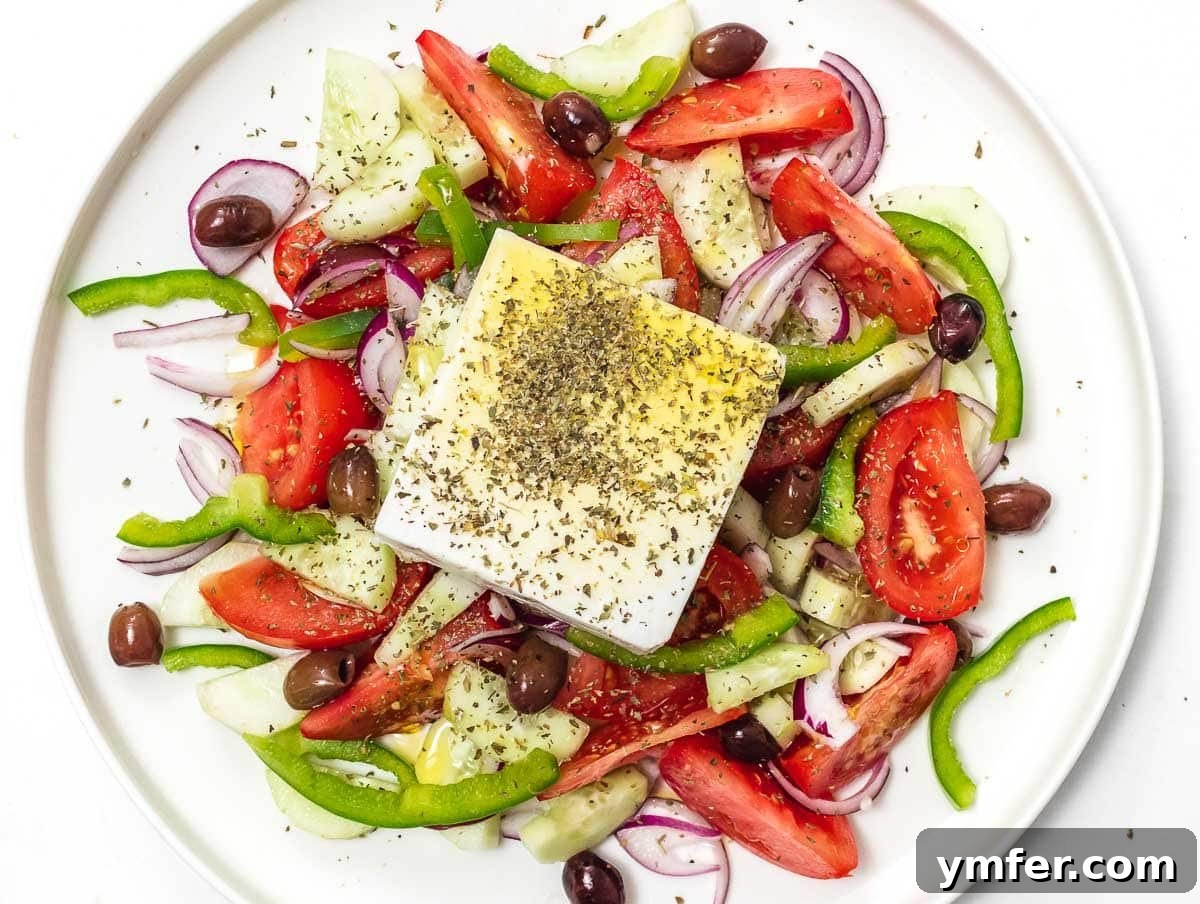
How to Make Authentic Greek Salad
Creating Horiatiki is a straightforward process that emphasizes fresh ingredients and minimal fuss. The beauty of this salad lies in its simplicity, allowing the natural flavors to truly shine. Follow these steps to prepare your own traditional Greek salad:
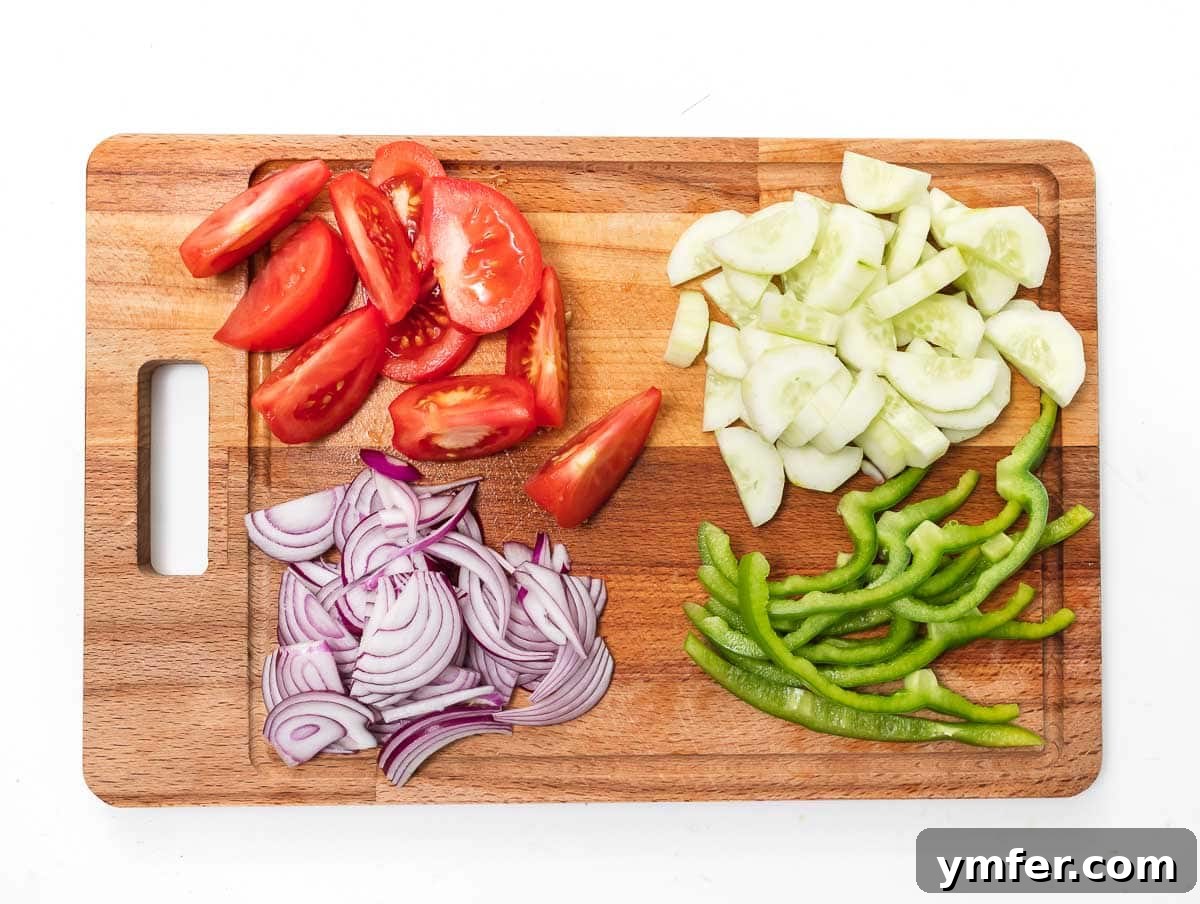
Start by preparing your **tomatoes**. Wash them thoroughly, remove their stems, and then slice them into generous wedges or large, rustic chunks. Remember our earlier tip: ensure your tomatoes are at **room temperature** to maximize their flavor and sweetness.
Next, tackle the **cucumber**. **Peel** it (unless you prefer the skin on), cut it in half lengthwise, and then slice each half into charming bite-sized half-moons. This classic cut provides a pleasant texture throughout the salad.
Prepare the **green bell pepper**. Wash it, then cut it into four lengthwise pieces. Carefully remove the stem, seeds, and any white pith from the inside, as these can be bitter. Once cleaned, slice the pepper into thin strips or chunks, depending on your preference.
Finally, the **red onion**. Cut the onion in half, peel away the outer layers, and then **thinly slice it**. You can separate the rings if you like, allowing the onion to meld more easily with the other ingredients.
Chef’s Tip: When I visited Greece, I often observed that tomatoes were cut into quite large chunks, sometimes larger than typical bite-size pieces. This rustic approach is part of the charm of a true Horiatiki. Feel free to adjust the size of your tomato pieces to your liking – smaller pieces are perfectly acceptable if that’s what you prefer!
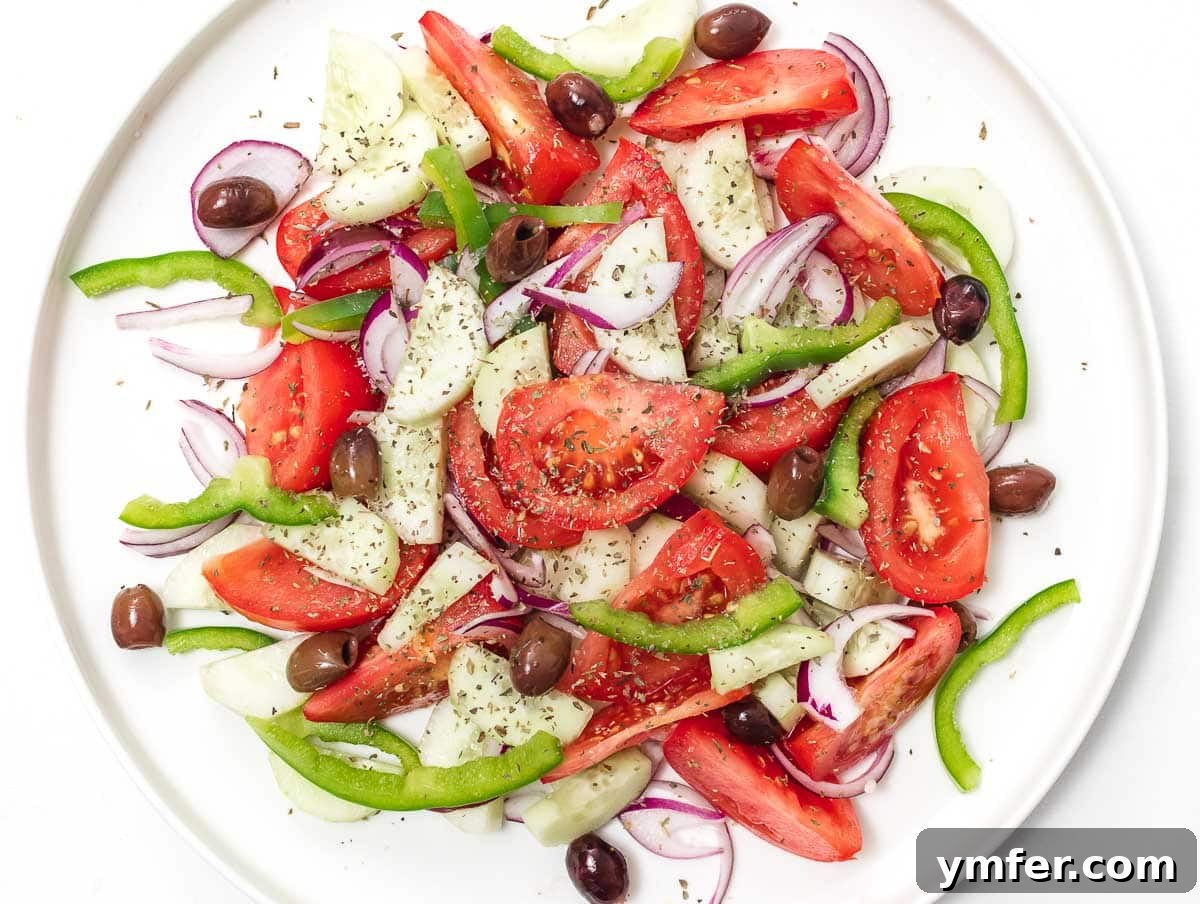
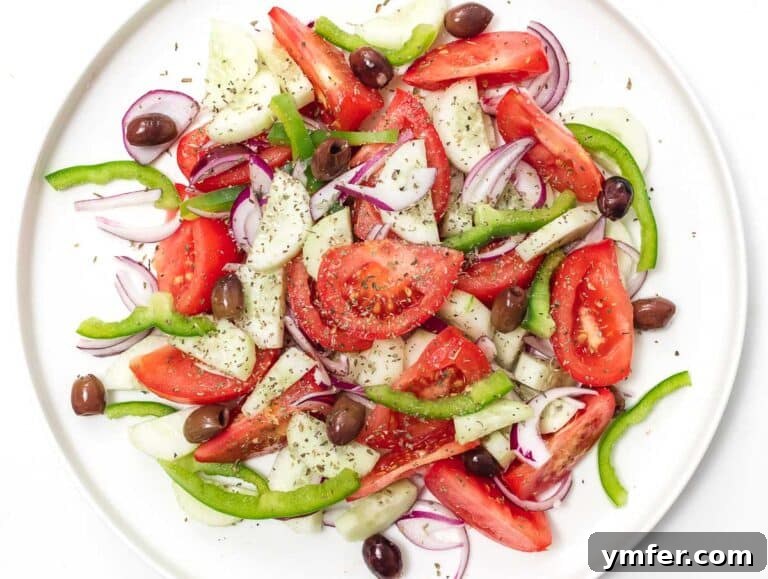
Once all your vegetables are chopped, arrange the tomatoes, cucumbers, and bell pepper beautifully onto a large plate, a spacious bowl, or a festive serving platter. This not only looks appealing but also makes for easier tossing and sharing.
Scatter the juicy **Kalamata olives** evenly over the vegetables. Then, generously sprinkle with **dried oregano**, add a delicate **pinch of sea salt** (adjust to taste), and drizzle with a good quantity of fragrant **extra virgin olive oil**. Give all the ingredients a gentle, quick toss to ensure they are lightly coated and the flavors begin to meld.
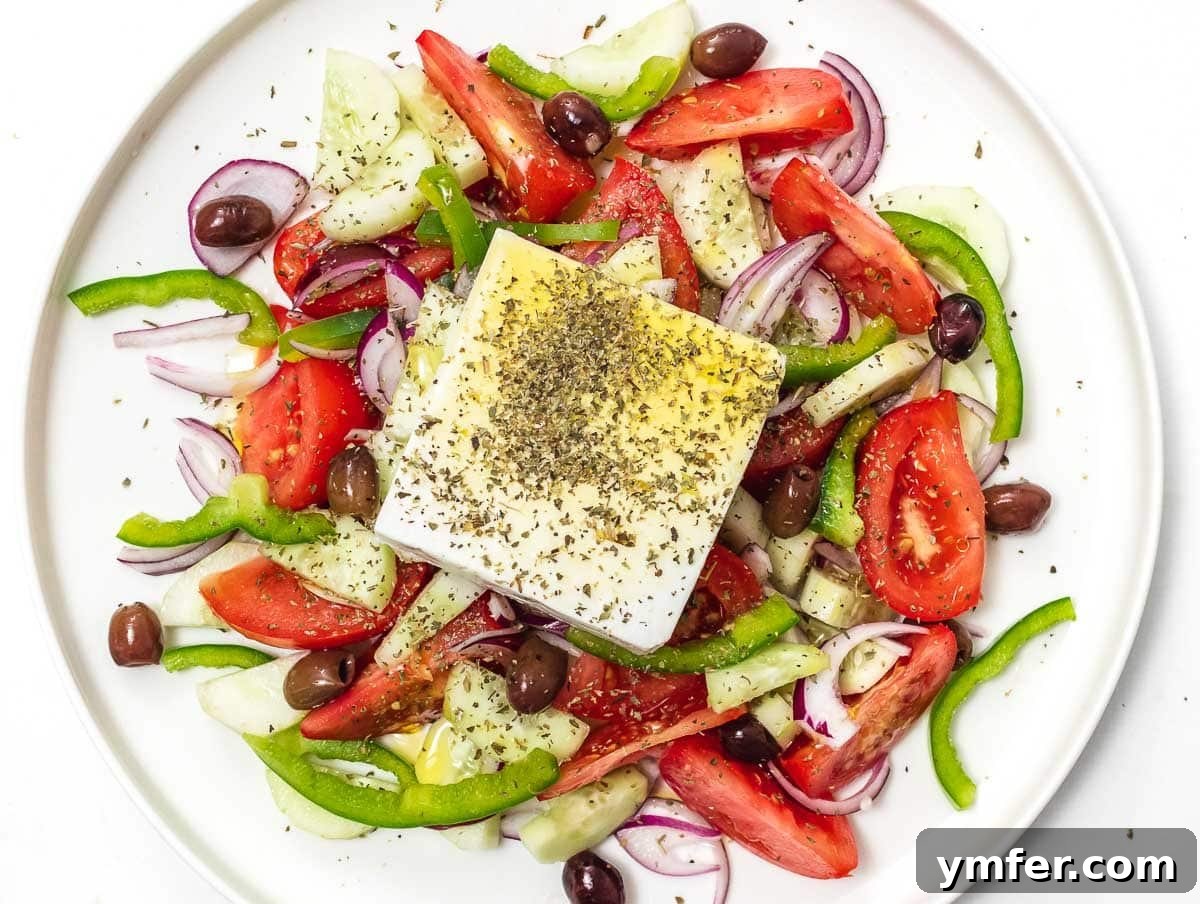
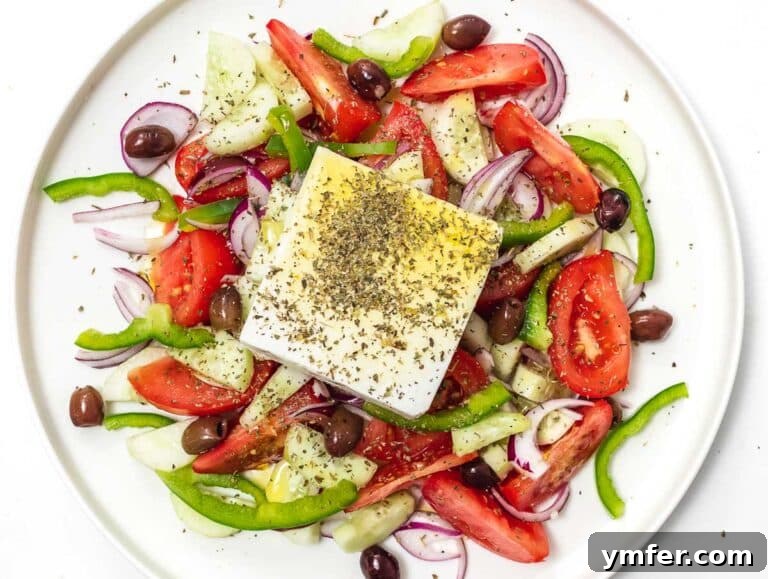
The final, iconic touch: place a substantial **block of Feta cheese** directly on top of the colorful bed of vegetables. This is the traditional presentation in Greece, allowing diners to break off pieces of Feta as they enjoy the salad. Finish with another light sprinkle of **dried oregano** and a final elegant drizzle of **extra virgin olive oil**. Serve immediately and savor the authentic taste of Greece!
Serving Suggestions for Horiatiki
Horiatiki is incredibly versatile and can be enjoyed in numerous ways, adapting perfectly to various meal types and occasions. Its refreshing profile makes it a beloved staple in the Mediterranean diet.
You can revel in the simplicity of Greek salad as a fulfilling and **light main dish** on its own, especially during warm weather. Alternatively, it serves as an exquisite **side dish** alongside your favorite Mediterranean-inspired meal. It’s particularly well-suited to accompany grilled meats or vegetables, warm breads, and a variety of creamy dips and spreads.
Light Lunch
For a truly satisfying lunch, we highly recommend serving Horiatiki with warm, fluffy pita bread. The combination is divine! You can tear off pieces of pita and dip them directly into the flavorful olive oil at the bottom of the salad bowl, or serve it alongside exotic spice blends like Dukkah or za’atar for an added aromatic kick. This creates a wholesome and incredibly flavorful midday meal.
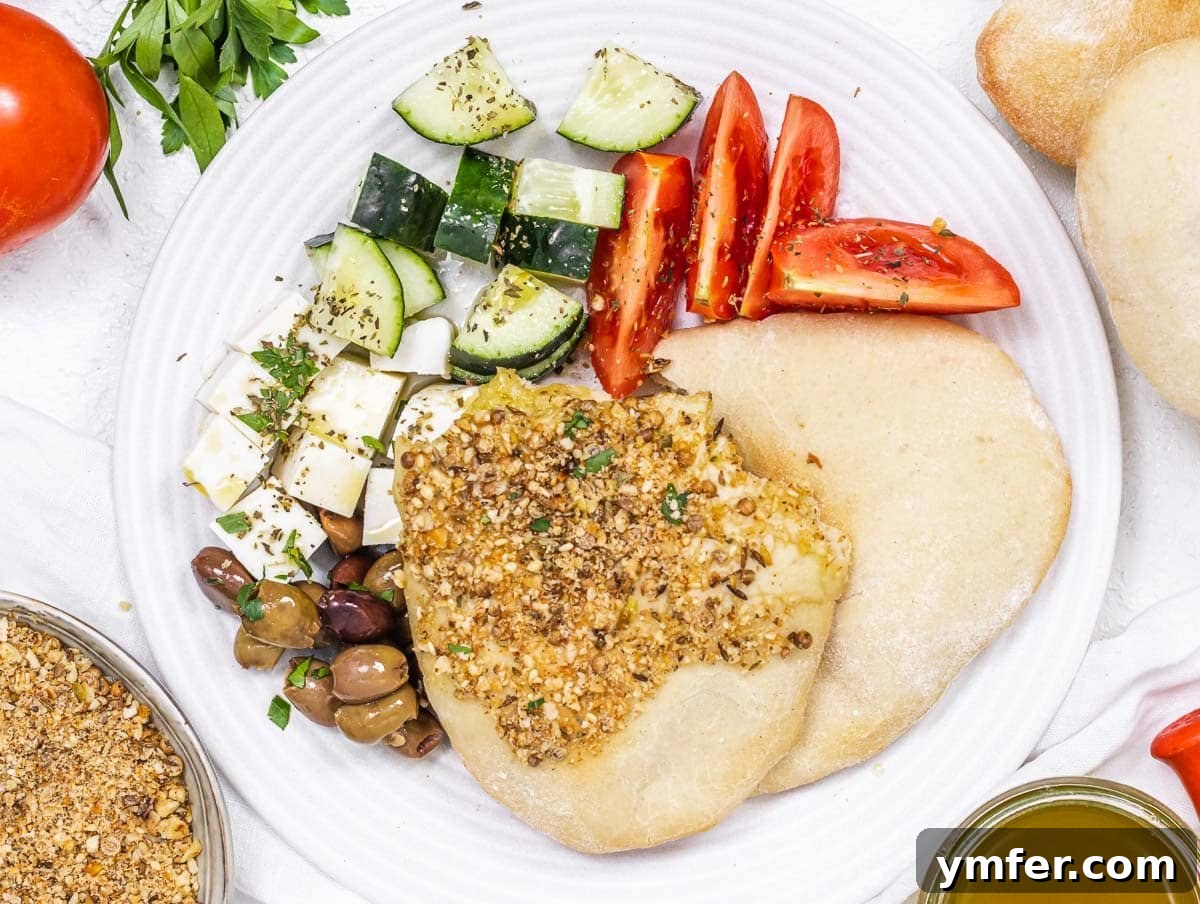
Hearty Main Dish
To transform Horiatiki into a more substantial and complete meal, pair it with an array of delicious Mediterranean dips and spreads. It’s fantastic with refreshing tzatziki sauce, silky smooth creamy-dreamy hummus, savory eggplant dip (Melitzanosalata), rich avocado spread, smoky muhammara, or the delightful mutabal. Add some grilled halloumi or plant-based protein for an even more filling option.
Appetizer or Mezze
Horiatiki can also be beautifully adapted as a starter for a larger meal or as part of a traditional Greek mezze platter. Create **smaller, individual portions** by dicing the Feta cheese and arranging the salad attractively on small plates. Serve it alongside other tempting Mediterranean bites such as crispy bruschetta, delicate crostini, flavorful olive tapenade, a light zucchini frittata, or sweet and savory tomato confit. The fresh flavors of Horiatiki will perfectly complement a diverse selection of appetizers.
For more inspiration, explore our comprehensive collection of favorite starter recipes, perfect for any gathering.
Versatile Side Dish
Finally, Horiatiki excels as a **tasty and nutritious side dish** for almost any meal. It pairs wonderfully with a wide array of easy plant-based dinners, grilled fish, chicken, or any Mediterranean-inspired main course. Its crisp texture and bright flavors provide a refreshing contrast and a healthy balance to heartier dishes.
Similar Mediterranean Salad Recipes
The culinary landscape of the Mediterranean is rich with vibrant salads that share a common appreciation for fresh, seasonal ingredients. If you enjoy the classic Horiatiki, you’ll likely love these related and equally delicious recipes, each offering its unique twist on vegetable-forward dining.
Greek Cucumber Salad
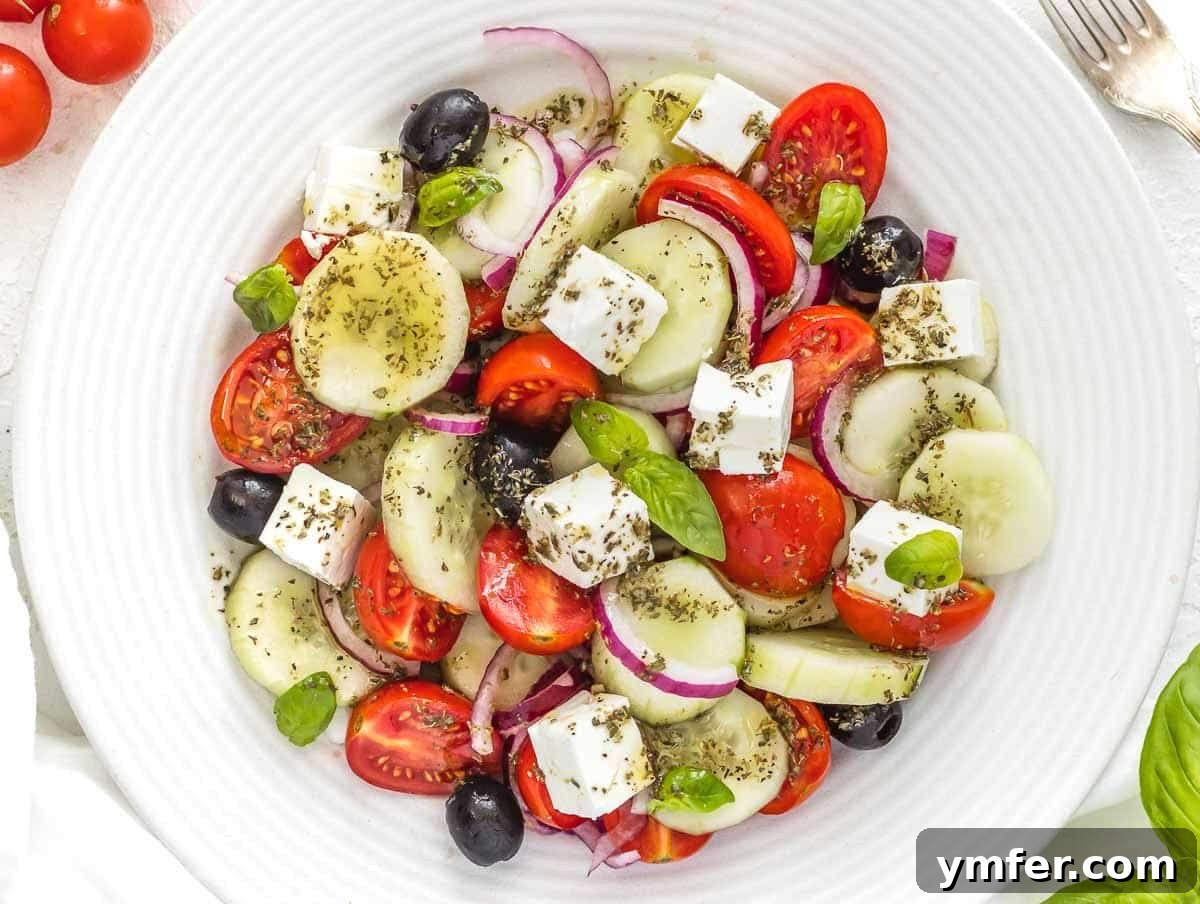
Our Greek cucumber salad offers a delightful and tangy alternative to traditional Horiatiki. While it shares many of the same core ingredients, it features a more elaborate and zesty dressing. This dressing is typically crafted from a harmonious blend of **olive oil**, **red wine vinegar**, a touch of sweetness from **maple syrup**, the piquancy of **mustard**, and a robust seasoning of **dried oregano**, **salt**, **black pepper**, and **garlic powder**. This salad is especially recommended when your fresh vegetables might not be at their peak ripeness, as the dressing adds an extra layer of flavor and brightness.
Discover the full recipe here: Greek cucumber salad recipe.
Italian Panzanella Salad
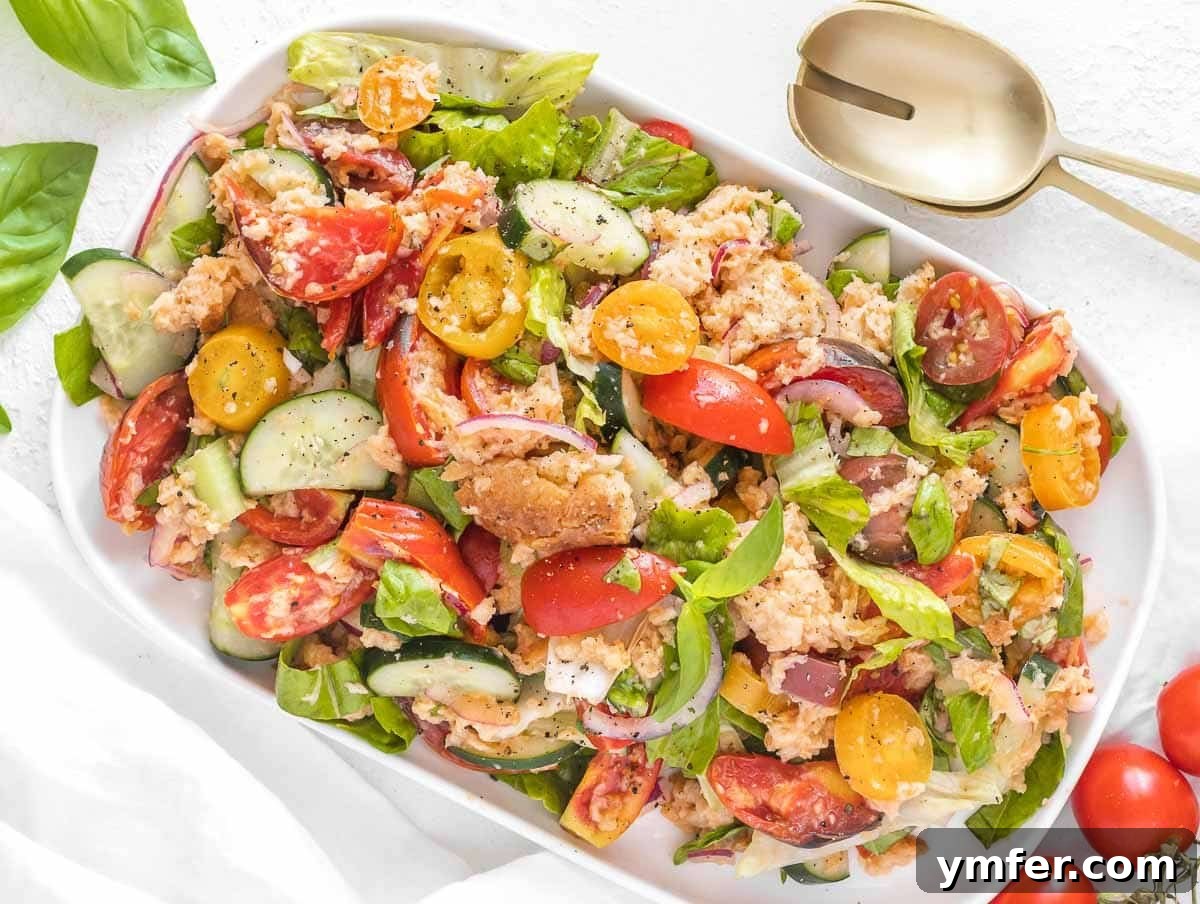
**Panzanella** is a quintessential Italian bread salad, a brilliant way to utilize simple **summer vegetables** and leftover stale bread. The bread is briefly soaked in water or vinegar to soften, then tossed with ripe tomatoes, cucumbers, onions, and basil. It shares an undeniable kinship with Greek salad, as both Mediterranean culinary traditions wisely make the most of abundant fresh tomatoes, crisp cucumbers, aromatic onions, and fragrant herbs during the warmer months. This rustic Italian classic offers a comforting yet fresh take on a vegetable-rich meal.
Explore our recipe for this rustic Italian favorite: Italian Panzanella salad recipe.
Fattoush Salad
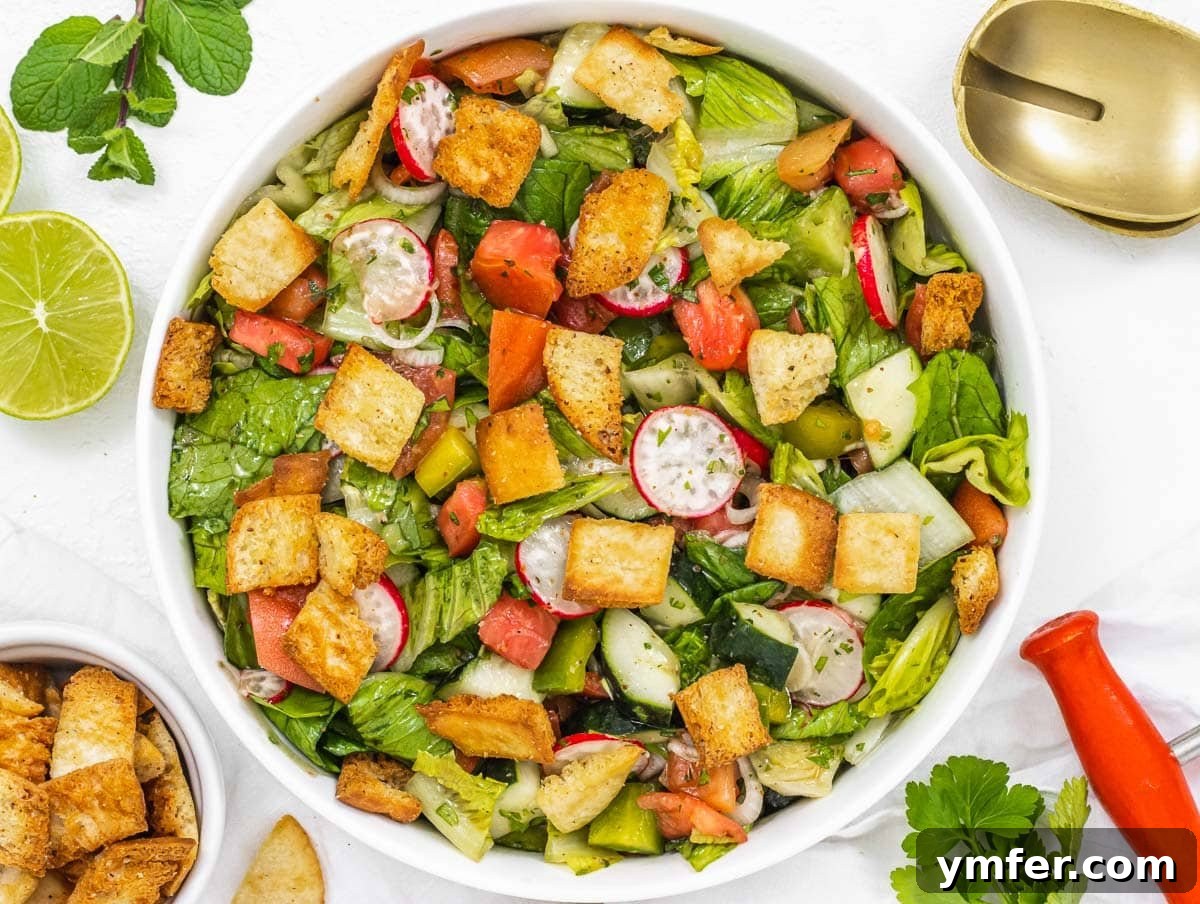
**Fattoush** is a truly **delicious, crunchy, and remarkably refreshing salad** originating from the Levant region, particularly popular in Lebanon, Syria, and Palestine. This vibrant salad combines an assortment of fresh vegetables and aromatic herbs with unique element of toasted or fried Arabic bread (pita bread). The bread adds an irresistible crunch and depth of flavor that sets Fattoush apart. It’s an exceptional way to experience the rich and diverse flavors of the **eastern Mediterranean countries**. Fattoush is perfect as a light lunch or a versatile side dish for any meal, offering a delightful textural contrast and a burst of fresh flavor.
Learn how to make this delightful Levantine salad: Fattoush recipe.
Watermelon Salad with Feta
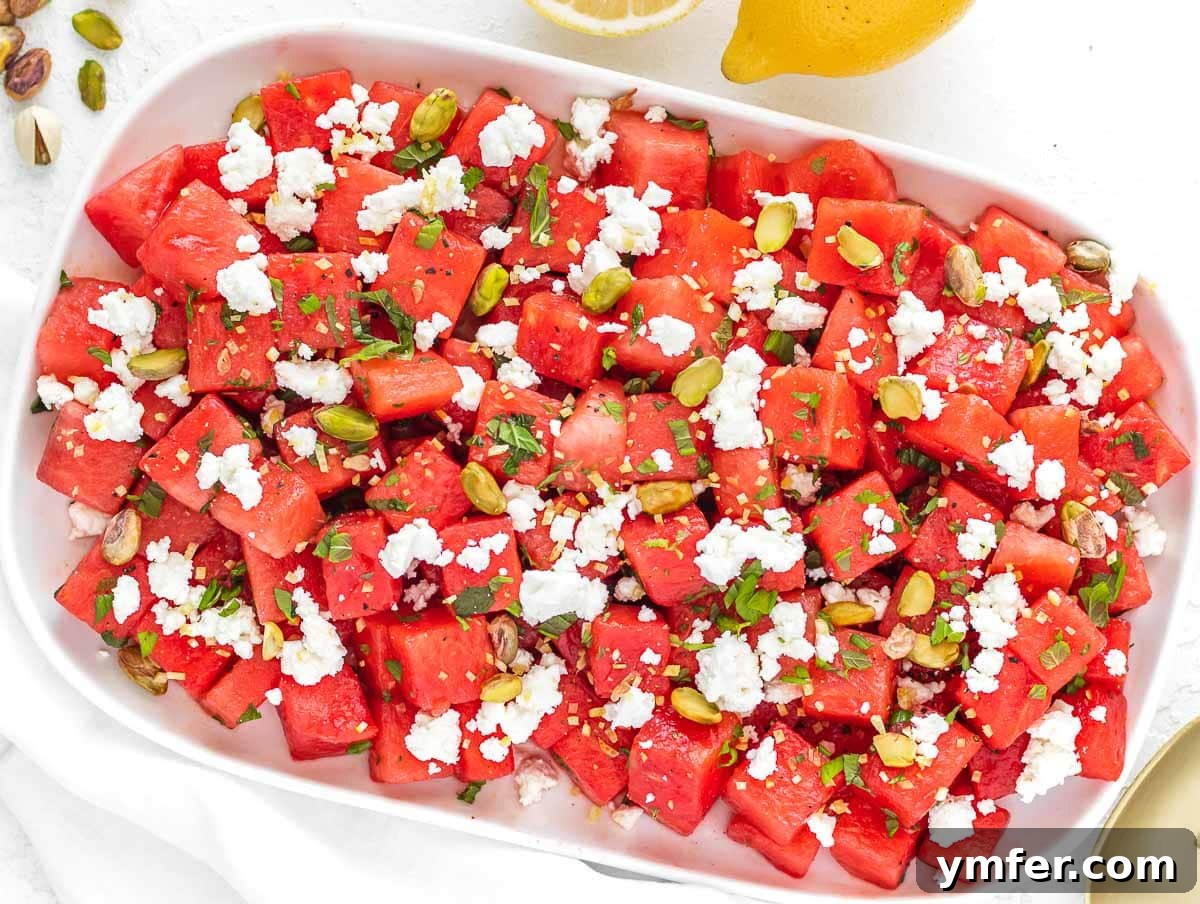
This **Greek-inspired** watermelon salad with Feta offers a wonderfully unexpected twist on traditional flavors, substituting sweet watermelon cubes for the customary tomatoes. The combination of juicy, cool watermelon with salty, creamy Feta, often enhanced with fresh mint and a drizzle of balsamic glaze, creates a truly delicious and invigorating salad. If you’ve never tried this delightful pairing, you are in for a refreshing treat! We can’t wait to hear your thoughts on this unique and beloved dish.
Get the recipe for this surprising sweet-and-savory salad: watermelon salad recipe.
Cucumber Tomato Salad
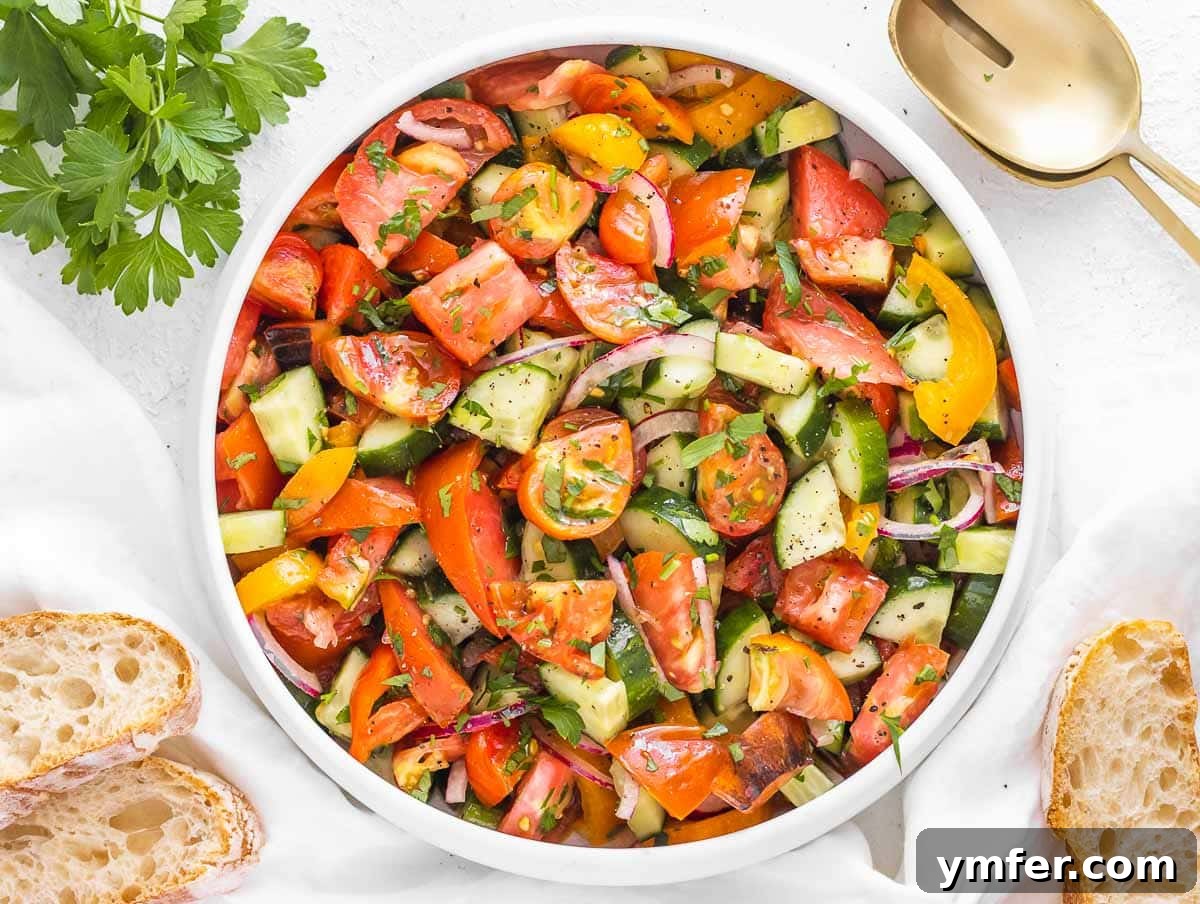
Our cucumber tomato salad is a close cousin to the Greek salad, focusing on the core refreshing elements of ripe tomatoes and crisp cucumbers. It typically omits the Feta cheese and bell pepper found in Horiatiki but often incorporates a medley of fresh herbs like parsley or dill, adding another layer of aromatic complexity. This **crunchy and exceptionally easy recipe** is ideal for staying cool and hydrated during those **scorching hot summer days**. To transform it into a quick, healthy main course, simply add a source of protein such as chickpeas, grilled chicken, or tofu.
Find the recipe for this simple yet satisfying salad here: cucumber tomato salad recipe.
Storage Tips for Freshness
Make Ahead: We generally advise against preparing Greek salad too far in advance. The beauty of Horiatiki lies in its fresh, crisp textures, which can be compromised if made hours before serving. The vegetables tend to release their juices over time, making the salad watery and diminishing its delightful crunch. Since it takes less than 15 minutes to assemble from scratch, fresh preparation is always best.
Refrigerator: If you happen to have leftovers, store them in an airtight container in the refrigerator for up to 24 hours. Beyond this, the vegetables will soften considerably.
Freezer: Horiatiki, due to its high water content and fresh vegetable components, is **not suitable for freezing**. Freezing and thawing will destroy the texture of the vegetables, rendering them mushy and unappetizing.
Frequently Asked Questions About Greek Salad
The core ingredients in a truly traditional Greek salad (Horiatiki) are ripe tomatoes, crisp cucumbers, green bell peppers, thinly sliced red onion, briny Kalamata olives, aromatic dried oregano, a generous drizzle of high-quality extra virgin olive oil, and a pinch of sea salt. In certain regions of Greece, particularly on some islands, capers might also be added for an extra layer of flavor.
No, a traditional Greek salad (Horiatiki) does not contain lettuce or any leafy greens. The absence of lettuce is one of the key distinctions of an authentic Greek village salad.
There is no separate, prepared “Greek salad dressing” in a traditional Horiatiki. Instead, the salad is simply seasoned directly with generous amounts of high-quality extra virgin olive oil, a sprinkle of dried Greek oregano, and a pinch of sea salt. The natural juices from the fresh vegetables, combined with the olive oil, create a light and flavorful dressing as you eat.
Ingredients typically NOT found in a traditional Greek salad include lemon juice, romaine lettuce, fresh dill, Dijon mustard, and chicken. While some variations exist outside of Greece, these additions depart from the authentic Horiatiki style.
Horiatiki is also commonly referred to as Xoriatiki, Greek village salad, or most widely, simply Greek salad.
More Delightful Salad Recipes
If your palate gravitates towards vibrant meals brimming with fresh vegetables and wholesome ingredients, then you’ll love exploring our collection of most cherished recipes that highlight raw, natural goodness. These salads are perfect for healthy lunches, refreshing sides, or light dinners.
- Avocado Salad (featuring creamy avocado, sweet cherry tomatoes, fresh parsley, sharp red onion, and a simple olive oil dressing)
- Farro Salad (a hearty grain salad with chewy farro, crisp cucumber, protein-rich chickpeas, bright lemon, fresh parsley, and a drizzle of olive oil)
- Zucchini Salad (a light and refreshing mix of thinly sliced zucchini, zesty lemon, juicy cherry tomatoes, fragrant basil, cool mint, and quality olive oil)
- Chickpea Salad (a filling and flavorful salad with tender chickpeas, savory olives, creamy avocado, sweet corn, fresh parsley, and a hint of mustard)
Salads
Farro Salad
Salads
Avocado Salad
Salads
Tomato Salad
Salads
Side Salad
For many more delicious and healthy salad ideas, be sure to check out our dedicated salads category page.
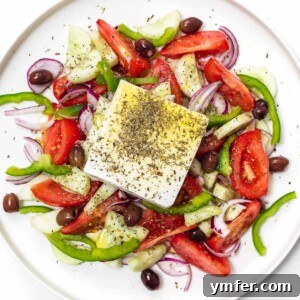
Horiatiki – Greek Salad
By: Nico Pallotta
5 out of 5 stars from 3 votes
Horiatiki salad, also known as Greek salad, is a wonderfully tasty, refreshing, and incredibly easy-to-make dish. It’s crafted from the freshest ripe tomatoes, crunchy cucumbers, tangy red onions, crisp bell peppers, meaty olives, and a luscious block of creamy feta cheese.
Dressed simply with robust extra virgin olive oil and fragrant dried oregano, it offers one of the best ways to truly enjoy the authentic **flavors of the Mediterranean.**
Prep Time: 15 mins
Cook Time: 0 mins
Total Time: 15 mins
Servings: 2 people
Course: Light Main, Salad
Cuisine: Greek, Mediterranean
Print Recipe
Share on Facebook
Video
Ingredients
- 2 large tomatoes, cut in wedges
- 1 large cucumber, peeled and sliced into half moons
- 1 small red onion, thinly sliced
- 1 small green bell pepper, cored, seeded, and sliced
- 20 Kalamata olives
- 1 block (7oz or 200g) Feta cheese (or non-dairy feta substitute)
- 2 tablespoons extra virgin olive oil
- 2 teaspoons dried oregano
- 1 pinch salt
Instructions
-
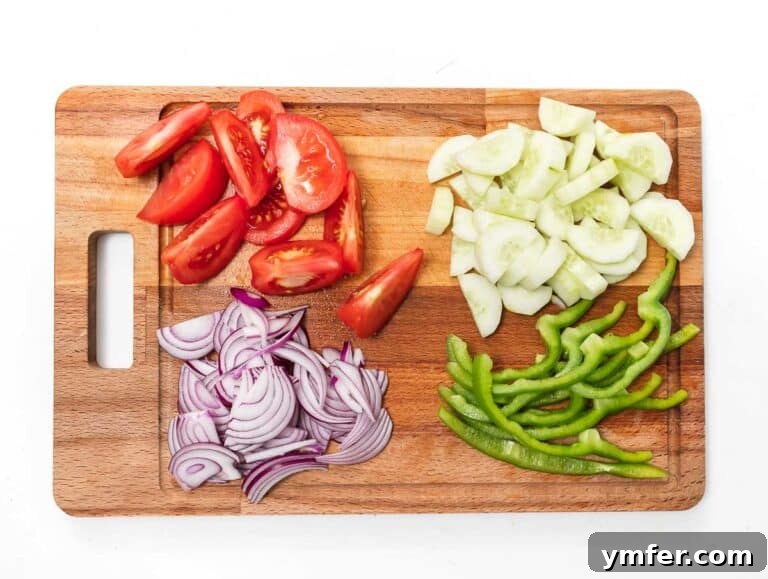
Prepare the vegetables: Cut the **2 large tomatoes** into wedges after removing their stems. Ensure they are at room temperature for optimal flavor. Peel the **1 large cucumber**, cut it in half lengthwise, then slice it into bite-size half moons. Cut the **1 small green bell pepper** into four lengthwise pieces, remove its stem, seeds, and white flesh, then slice it. Finally, cut the **1 small red onion** in half, peel it, and thinly slice it.

-
Assemble the salad: Arrange the prepared tomatoes, cucumbers, onion, and bell pepper onto a large plate or serving platter. Add the **20 Kalamata olives**, a generous sprinkle of **2 teaspoons dried oregano**, a **pinch of salt**, and a drizzle of **2 tablespoons extra virgin olive oil**. Gently toss the ingredients to combine.
-
Serve: Place the **1 block of Feta cheese** directly on top of the colorful vegetables. Sprinkle with a little more dried oregano and drizzle with an additional touch of olive oil before serving. Enjoy immediately for the freshest taste!
Notes
Nutrition information is an estimate for one large portion of horiatiki out of two servings.
STORAGE:
Make ahead: We do not recommend preparing Greek salad ahead of time as it takes only about 15 minutes to make from scratch. The vegetables will release their juices, resulting in a watery and less crunchy salad if stored too long.
Refrigerator: Any leftovers can be stored in an airtight container in the refrigerator for up to 24 hours.
Freezer: Horiatiki is absolutely not suitable for freezing, as the fresh vegetables will lose their texture and become mushy.
Nutrition
Calories: 238kcal, Carbohydrates: 19g, Protein: 4g, Fat: 18g, Saturated Fat: 3g, Polyunsaturated Fat: 2g, Monounsaturated Fat: 13g, Trans Fat: 0g, Cholesterol: 0.3mg, Potassium: 801mg, Dietary Fiber: 6g, Sugar: 10g, Vitamin A: 1867IU, Vitamin B6: 0.4mg, Vitamin C: 63mg, Vitamin E: 4mg, Vitamin K: 49µg, Calcium: 97mg, Folate: 66µg, Iron: 2mg, Manganese: 1mg, Magnesium: 54mg, Zinc: 1mg
Tried this recipe?
Leave a comment below or mention @theplantbasedschool on Instagram. We love hearing from you ⭐️ 💚.
If you enjoyed this authentic Greek salad, you might also like these collections:
Collections
27 Zucchini Recipes
Collections
30 Vegetarian Recipes
Collections
35 Best Vegetarian Lunch Ideas
Collections
30 Vegan Lunch Ideas