
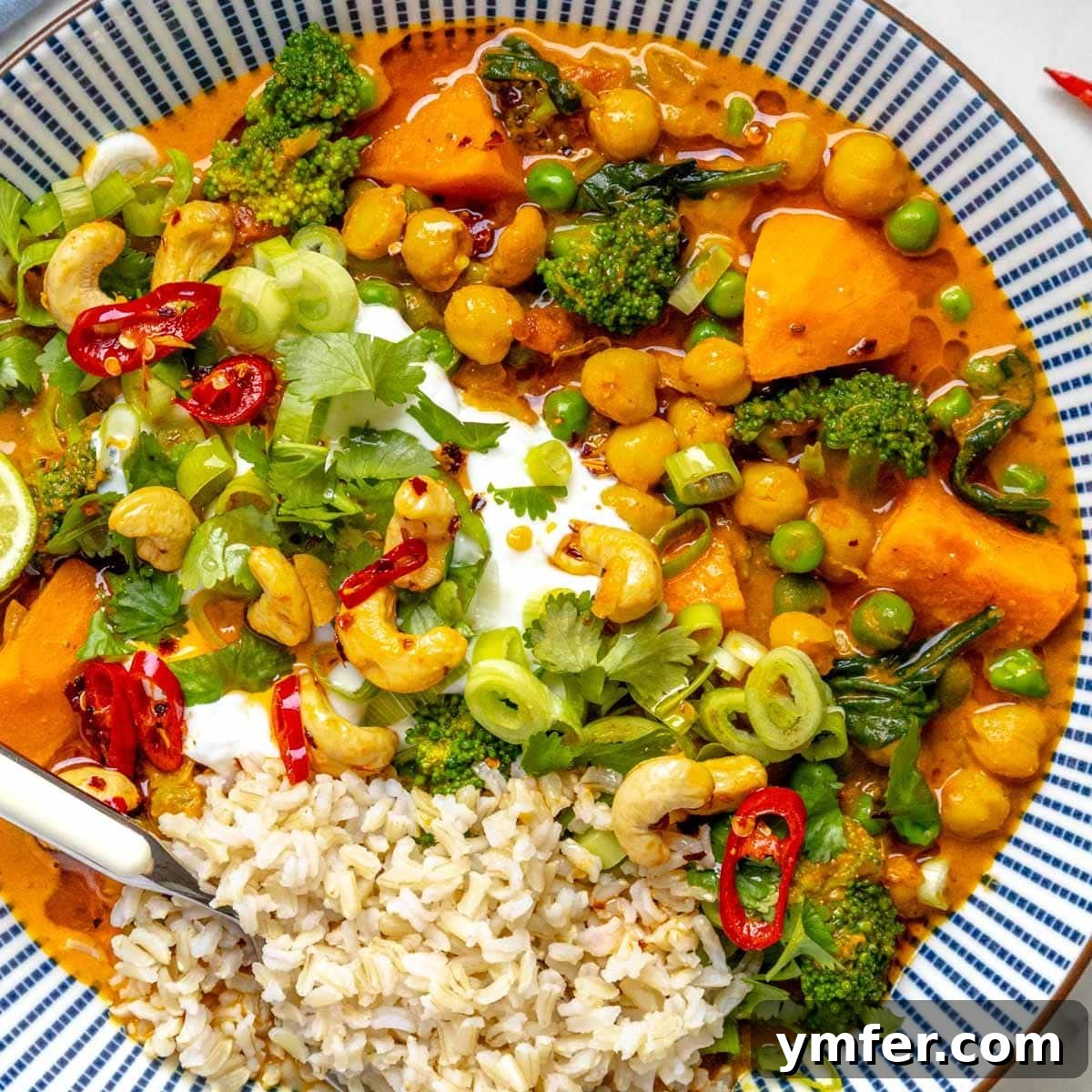
Delicious & Easy One-Pot Vegetable Curry: A Flavorful Plant-Based Meal
Discover the ultimate healthy and delicious weeknight meal with our easy one-pot vegetable curry recipe. Bursting with aromatic Indian-inspired spices, creamy coconut milk, and a medley of nutritious vegetables like sweet potatoes, broccoli, chickpeas, and peas, this dish comes together in just 30 minutes. Perfect for a quick family dinner or a cozy meal prep option, this vibrant curry is designed to nourish your body and delight your taste buds. Get ready to transform simple ingredients into an extraordinary culinary experience!
Explore more of our satisfying curry creations: try our Lentil Curry, Eggplant Curry, and Chickpea Curry.
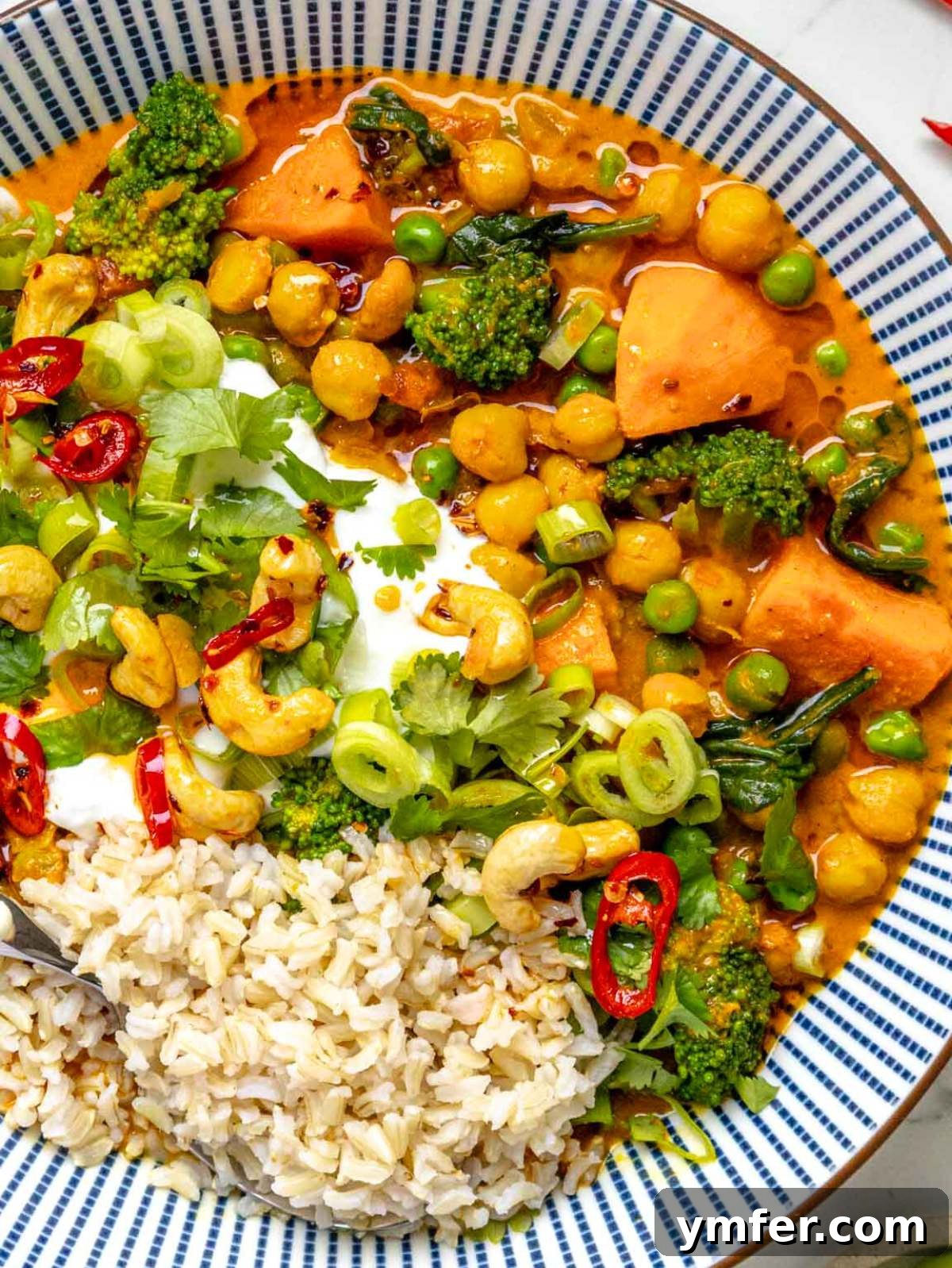
Why You’ll Adore This Vegetable Curry Recipe
This vegetable curry isn’t just another dish; it’s a culinary hug in a bowl! It has quickly become one of our most requested one-pot dinners, and for good reason. Here’s why this recipe deserves a permanent spot in your rotation:
- Effortless One-Pot Wonder: Say goodbye to stacks of dirty dishes! This entire meal cooks in a single pot, simplifying both the cooking process and cleanup. It’s the ultimate solution for busy weeknights when you crave a homemade meal without the fuss.
- Nutrient-Dense & Wholesome: Packed with a colorful array of vegetables like sweet potatoes, broccoli, and spinach, alongside protein-rich chickpeas and peas, this curry is a powerhouse of essential vitamins, minerals, and fiber. It’s a deliciously sneaky way to get your daily dose of greens and legumes.
- Flavor Explosion: The carefully selected blend of Indian-inspired spices creates a complex, fragrant, and deeply satisfying flavor profile. Each spoonful offers a harmonious balance of warmth, earthiness, and a subtle hint of heat, all mellowed by the luscious coconut milk.
- Incredibly Versatile: We affectionately call this our “clean-up-your-fridge” curry. It’s wonderfully adaptable, allowing you to use almost any vegetables you have on hand. Don’t have sweet potatoes? Use regular potatoes or butternut squash! Leftover zucchini or bell peppers? Toss them in! This flexibility makes it a cost-effective and waste-reducing meal.
- Speedy & Satisfying: Despite its rich flavors, this curry is surprisingly quick to prepare, ready in approximately 30 minutes from start to finish. It’s the perfect solution for those evenings when you need a hearty, comforting meal but are short on time.
- Meal Prep Perfection: This curry tastes even better the next day as the flavors meld and deepen. It’s an ideal candidate for meal prepping, allowing you to cook a larger batch and enjoy wholesome, homemade meals throughout the week with minimal effort.
Louise, one of our founders, absolutely adores this curry – it’s her favorite way to enjoy a variety of vegetables in one delicious meal. And we’re confident you’ll feel the same!
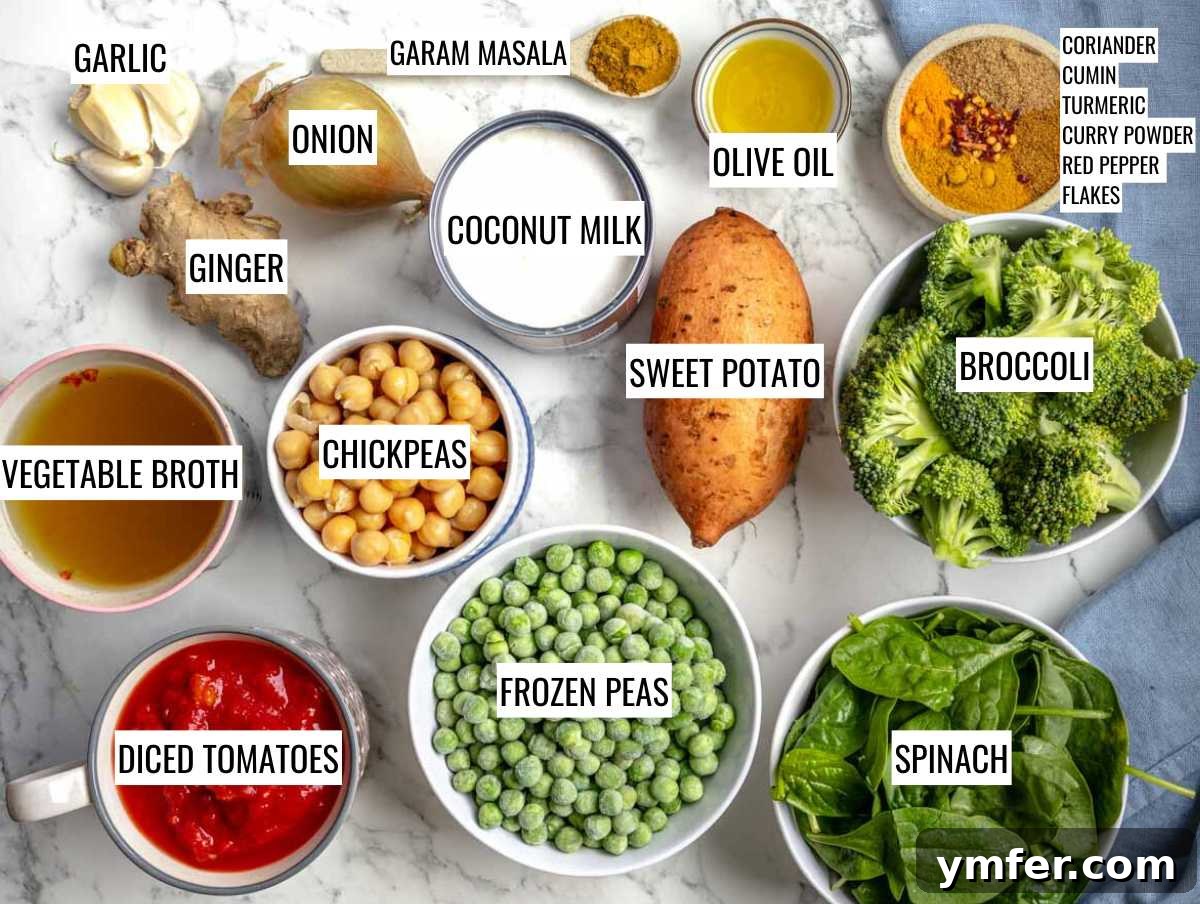
Essential Ingredients for a Flavorful Vegetable Curry
Crafting a delicious vegetable curry begins with selecting fresh, high-quality ingredients. This recipe balances accessibility with authentic flavor, ensuring you can create a truly memorable meal. The quantities for all ingredients can be found in the recipe box at the bottom of the page.
The Aromatic Flavor Base
- Olive Oil: The starting point for sautéing our aromatics. We recommend good quality olive oil or extra virgin olive oil for its flavor and health benefits. You can easily substitute with coconut oil for a slightly different aroma, or avocado oil or any other neutral vegetable oil.
- Onion: A fundamental aromatic that provides a sweet, savory depth. White, red, or yellow onions work perfectly, as do shallots if you prefer a milder onion flavor.
- Garlic: Freshly grated garlic is key for that pungent, aromatic punch. If fresh isn’t available, a good quality garlic paste can be used in a pinch.
- Ginger: Freshly grated ginger adds a warm, spicy, and zesty note that is indispensable in Indian-inspired dishes. Like garlic, a good ginger paste can be a convenient alternative.
The Heart of Indian Flavors: Spices
This blend of spices creates the signature warmth and complexity of our vegetable curry:
- Curry Powder: A versatile blend of ground spices often including coriander, turmeric, cumin, and fenugreek. It forms the backbone of the curry’s flavor.
- Turmeric Powder: Known for its vibrant golden color and earthy, slightly bitter notes, turmeric also boasts impressive anti-inflammatory properties.
- Ground Cumin: Adds a warm, earthy, and slightly pungent flavor that is characteristic of many Indian dishes.
- Ground Coriander: Provides a mild, lemony, and sweet aroma that complements the other spices beautifully.
- Red Pepper Flakes: For a touch of heat! Adjust the quantity to your preferred spice level.
- Black Pepper & Salt: Essential for seasoning and enhancing all the other flavors. Adjust to taste throughout the cooking process.
- Garam Masala: A finishing spice blend that adds a final layer of warmth and aromatic complexity. It’s typically added at the very end of cooking to preserve its delicate flavors.
Wholesome & Hearty Vegetables (Fresh or Frozen)
- Sweet Potato: Contributes a lovely sweetness, creamy texture, and a wealth of nutrients. Excellent substitutions include regular potatoes, eggplant, carrots, butternut squash, pumpkin, or kabocha squash.
- Broccoli: Adds a fresh, slightly bitter note and beautiful green color. Cauliflower, cabbage, red bell pepper, or mushrooms are great alternatives.
- Chickpeas: Our primary protein source in this vegan curry, offering a satisfying texture and rich fiber content. You can use canned chickpeas (drained and rinsed) or dried chickpeas that you’ve cooked beforehand. If using dried, here’s our guide on how to cook dried chickpeas.
- Green Peas: These small, sweet additions provide pops of color and delicate flavor. Snap peas, green beans, or even black beans can be used instead.
- Spinach: A quick-cooking leafy green that wilts down beautifully, adding a boost of iron and vitamins. Kale, bok choy, or Swiss chard are good substitutes, though they might require a slightly longer cooking time to soften.
The Creamy Coconut Broth
- Coconut Milk: The star of the creamy sauce! Use full-fat coconut milk for a richer, more decadent curry, or light coconut milk for a slightly less caloric option.
- Vegetable Broth: Enhances the savory depth of the curry. Reduced-sodium vegetable broth is a good choice to control salt levels, or simply use water if preferred.
- Canned Tomatoes: Diced or crushed tomatoes provide a tangy acidity that brightens the curry and contributes to the gravy’s body. If you have ripe fresh tomatoes, chop them finely and use them as a delicious alternative.
Step-by-Step Guide to Making the Perfect Vegetable Curry
Creating this flavorful vegetable curry is incredibly straightforward. Follow these simple steps for a comforting and satisfying meal:
1. Building the Aromatic Foundation
- Heat the Oil: Begin by heating the olive oil in a large pot or Dutch oven over medium heat. A wide pot helps ensure even cooking.
- Sauté the Onion: Add the chopped onion to the hot oil and sauté for about 3 minutes, stirring frequently until it softens and becomes translucent. This step is crucial for building a sweet base flavor.
- Toast the Spices: Stir in the grated garlic and ginger, along with the curry powder, turmeric powder, ground cumin, coriander, red pepper flakes, salt, and black pepper. Continue to stir and cook for one minute. Toasting the spices awakens their essential oils, intensifying their fragrance and flavor. If the pan seems too dry, add a couple of tablespoons of water to prevent burning and help form a fragrant paste.
-
Pro Tip: Don’t forget the rice! Now is a great time to start your rice so it finishes cooking around the same time as your curry. Brown rice typically takes about 30 minutes, while white rice (like basmati or jasmine) takes around 10-12 minutes.

2. Simmering to Perfection
- Add Liquids & Heartier Veggies: Pour in the vegetable broth, coconut milk, and crushed tomatoes. Add the drained chickpeas and the peeled and diced sweet potatoes. Give everything a good stir to combine.
- First Simmer: Bring the mixture to a gentle simmer, then cover the pot and let it cook for 10 minutes. This allows the sweet potatoes to start tenderizing in the flavorful liquid.
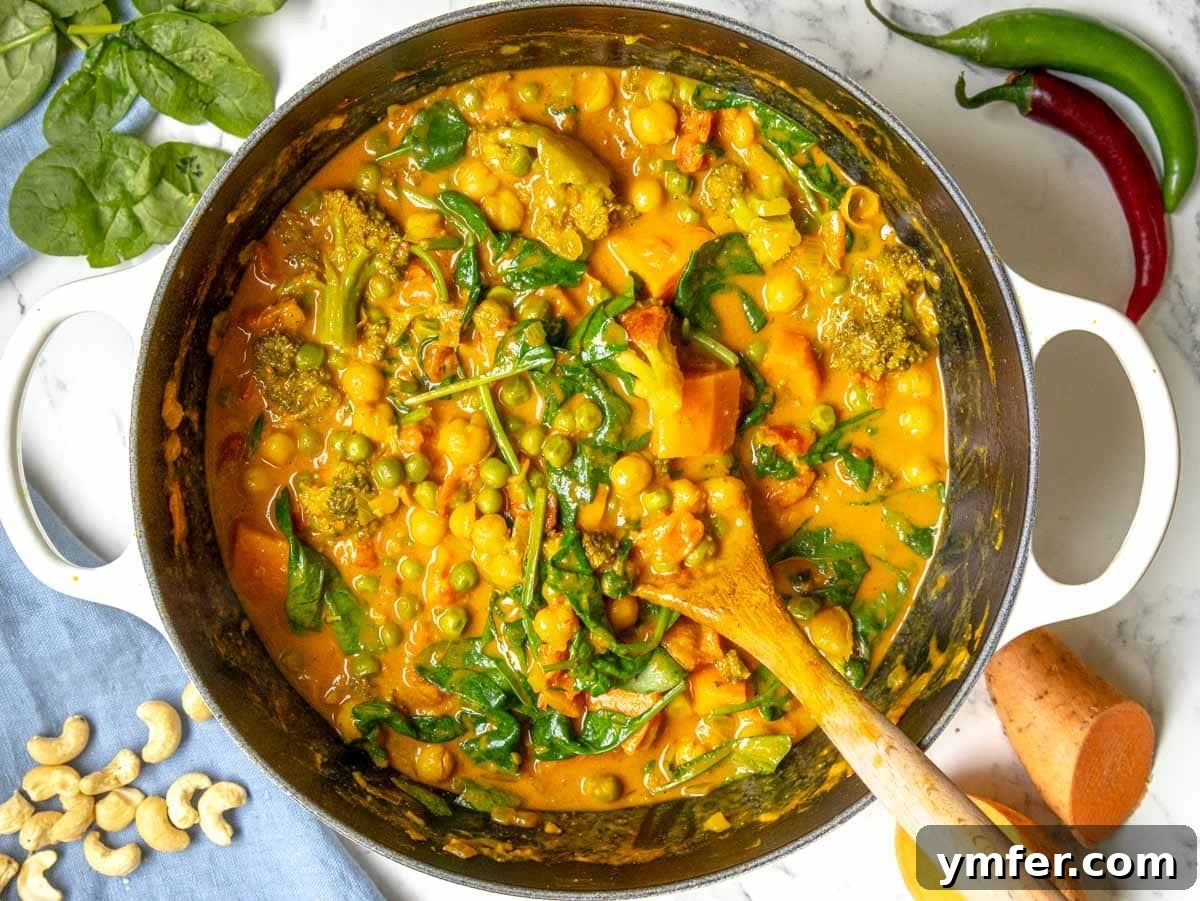
- Add Quick-Cooking Veggies: After 10 minutes, add the broccoli florets and frozen green peas. Continue to simmer, uncovered, for another 15 to 20 minutes, or until the sweet potatoes are fork-tender and the broccoli is cooked but still vibrant. Stir occasionally to prevent sticking and ensure even cooking.
3. The Finishing Touches
- Final Stir & Seasoning: Turn off the heat. Stir in the fresh spinach (it will wilt quickly from the residual heat) and the garam masala. Taste the curry and adjust the salt if needed. Serve hot!
How to Serve Vegetable Curry for a Complete Meal
This vegetable curry is a complete meal on its own, but it truly shines when paired with a few complementary sides and toppings that enhance its vibrant flavors and textures. Here are our favorite ways to serve it:
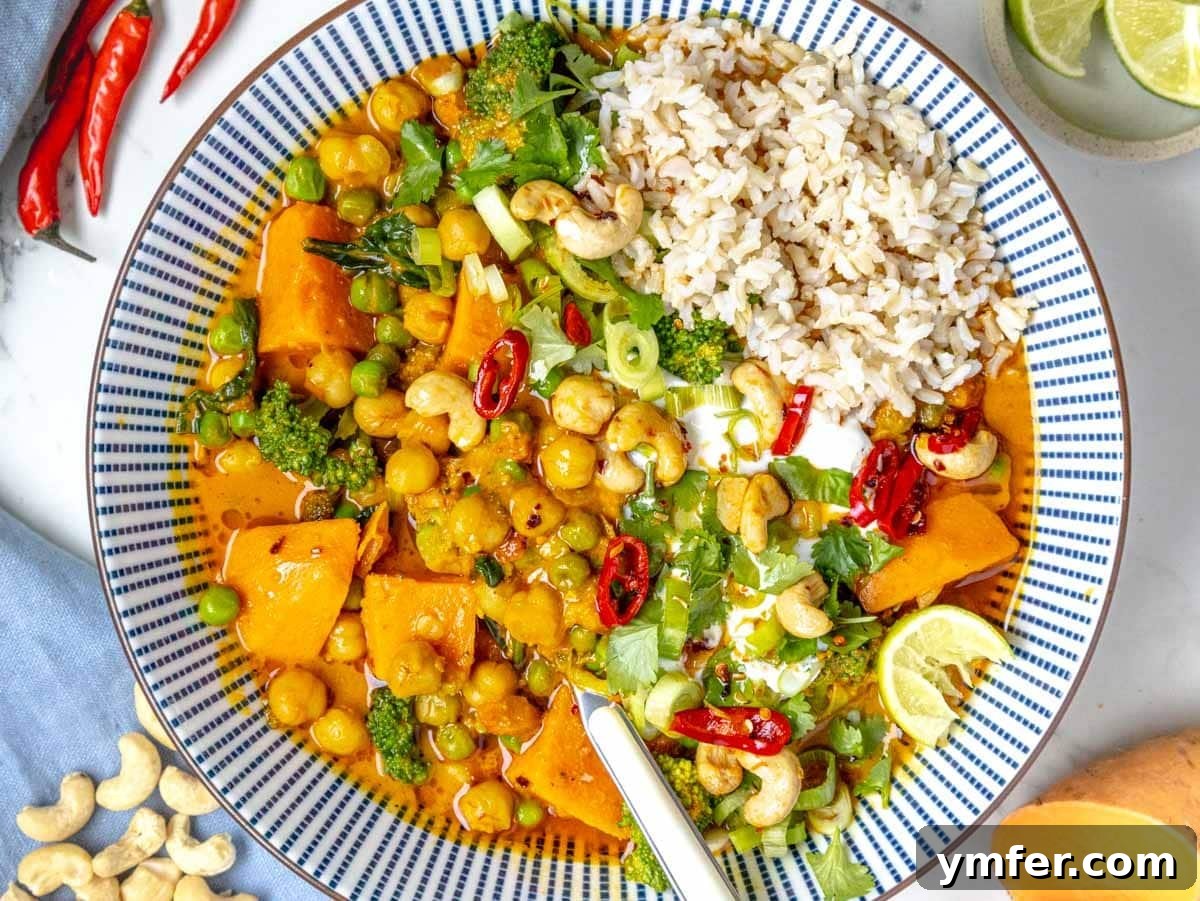
- With Rice: The classic pairing! Serve your curry in a bowl alongside fluffy cooked basmati rice or wholesome brown whole-grain rice. The rice absorbs the creamy sauce beautifully.
- With Indian Breads: For a delightful alternative to rice, serve your vegetable curry with warm, soft naan bread or flaky roti. These are perfect for scooping up every last drop of the rich sauce.
- Refreshing Yogurt: Add a dollop of plain Greek yogurt or a non-dairy yogurt alternative (like coconut or soy yogurt) on top. The coolness and slight tang of the yogurt provide a lovely contrast to the warm, spiced curry. For an extra treat, try it with our homemade raita.
- Fresh Herbs & Citrus: Garnish generously with freshly chopped cilantro or scallions for a burst of freshness and color. A squeeze of fresh lemon or lime juice just before serving brightens all the flavors and adds a zesty finish.
- Crunchy Toppings: Sprinkle with toasted cashews or almonds for an added layer of texture and nutty flavor.
- Flavorful Oil Drizzle: For an authentic touch, consider a drizzle of tadka (flavored oil) over your curry just before serving. This infuses an extra layer of spice and aroma.
Expert Tips for Your Best Vegetable Curry
Maximize the flavor and convenience of your homemade vegetable curry with these helpful tips:
- Meal Prep for the Win: This recipe is fantastic for meal prepping! Make a double or even triple batch in a large Dutch oven. Once completely cooled, divide the curry into individual freezer-safe containers. It will keep beautifully in the freezer for up to 3 months, providing you with healthy, ready-made meals for busy days.
- The “Clean Out Your Fridge” Method: Don’t feel limited by the vegetables listed in the recipe. This curry is incredibly forgiving and perfect for using up any produce nearing its end in your fridge or freezer. Think carrots, zucchini, mushrooms, bell peppers, green beans, or even leftover roasted vegetables. Just aim to keep the total quantity of vegetables roughly similar to maintain the perfect sauce-to-veggie ratio.
- Adjusting Spice Levels: If you prefer a milder curry, simply reduce or omit the red pepper flakes. For extra heat, add a pinch more red pepper flakes or a finely chopped fresh green chili along with the garlic and ginger.
- Enhancing Sweetness: For a slightly sweeter curry, you can add a teaspoon of maple syrup or a date paste while simmering, especially if your vegetables aren’t naturally sweet.
Storage & Reheating for Maximum Enjoyment
Vegetable curry is not only delicious fresh but also an excellent candidate for meal prepping and enjoying as leftovers. The flavors often deepen and meld beautifully over time.
- Make Ahead: This curry is ideal for making ahead. Prepare a larger batch and store it to enjoy throughout the week or month.
- Refrigerator: Store any leftover vegetable curry in an airtight container in the refrigerator for up to 4 days.
- Freezer: To freeze, allow the curry to cool down completely to room temperature. Transfer it to freezer-friendly containers or bags, leaving a little headspace. It can be frozen for up to 3 months.
- Thaw: For best results, defrost frozen curry in the refrigerator overnight. If you’re in a hurry, you can gently thaw it in the microwave using the defrost setting for a few minutes.
- Reheat: Reheat thawed curry gently on the stovetop in a saucepan over medium-low heat, stirring occasionally until heated through. Alternatively, reheat individual portions in the microwave. If the curry has thickened too much during storage, add a splash of water or vegetable broth to achieve your desired consistency.
More Delicious Indian-Inspired Recipes to Explore
If you loved this vegetable curry, you’ll surely enjoy these other Indian-inspired plant-based dishes from our kitchen:
- Chana Saag (Chickpea & Spinach Curry)
- Pumpkin Curry
- Aloo Gobi
- Hearty Chickpea Stew
- Classic Chana Masala
- Nourishing Mung Bean Soup
- Flavorful Chana Dal
- Comforting Curry Lentil Soup

Vegetable Curry Recipe
By: Nico Pallotta
Vegetable curry is a creamy, Indian-inspired one-pot recipe that you can make in 30 minutes with peas and chickpeas for protein.
Ingredients
- 2 tablespoons olive oil
- 1 medium onion, chopped
- 3 cloves garlic, grated
- 1 teaspoon ginger, grated
- 2 teaspoons curry powder
- 1 teaspoon ground coriander
- 1 teaspoon ground cumin
- 1 teaspoon turmeric powder
- ¼ teaspoon red pepper flakes
- 1 teaspoon salt (or more to taste)
- ¼ teaspoon black pepper
- 1 cup vegetable broth
- 1 can (14-ounces) coconut milk
- 1 can (15-ounces) crushed tomatoes
- 1 can (15-ounces) chickpeas, drained
- 2 cups sweet potatoes, diced
- 1 cup green peas
- 2 cups broccoli florets
- 4 cups spinach
- 1 teaspoon garam masala
SERVING SUGGESTIONS
- 4 wedges lime or lemon
- 1 handful fresh cilantro or scallions, chopped
- 4 servings brown rice or basmati rice, naan, or roti
- 4 dollops yogurt (dairy or non-dairy)
- 4 tablespoons tadka + toasted cashews (optional)
Instructions
-
MAKE THE FLAVOR BASE:
Heat 2 tablespoons olive oil in a large pot. Add 1 medium chopped onion and sauté on medium heat for 3 minutes, stirring often. Add 3 cloves grated garlic, 1 teaspoon grated ginger, 2 teaspoons curry powder, 1 teaspoon ground coriander, 1 teaspoon ground cumin, 1 teaspoon turmeric powder, ¼ teaspoon red pepper flakes, 1 teaspoon salt, and ¼ teaspoon black pepper.
Stir and toast the spices for one minute until you smell their fragrant aroma. If the pan gets dry, add 2 tablespoons of water and stir until a paste forms.

Building the flavorful base for our vegetable curry. -
LET IT SIMMER:
Add 1 cup vegetable broth, 1 can (14-ounces) coconut milk, 1 can (15-ounces) crushed tomatoes, 1 can (15-ounces) drained chickpeas, and 2 cups diced sweet potatoes. Stir, cover, and simmer for 10 minutes.
Add 1 cup green peas and 2 cups broccoli florets, and simmer uncovered for 15 to 20 minutes or until the sweet potatoes are fork-tender. Stir occasionally. Turn the heat off and stir in 4 cups spinach and 1 teaspoon garam masala, then taste and adjust for salt before serving.
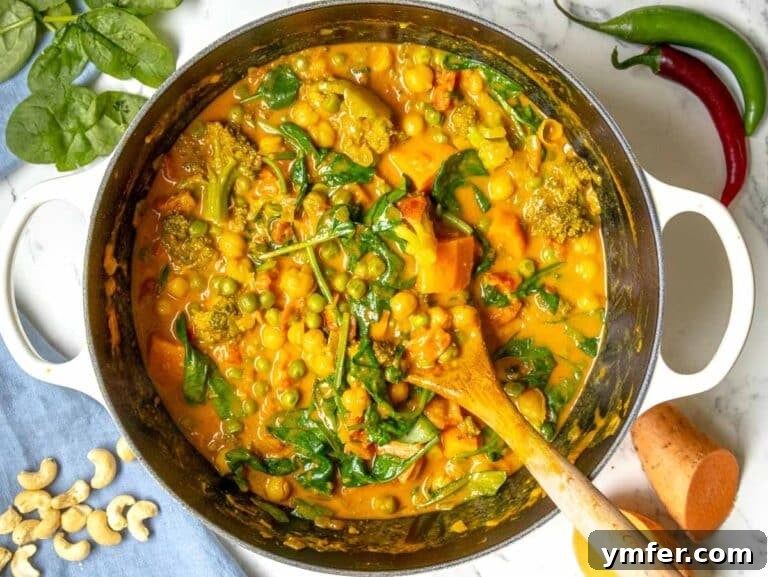
The curry simmering to perfection with all the vegetables. -
SERVING SUGGESTIONS:
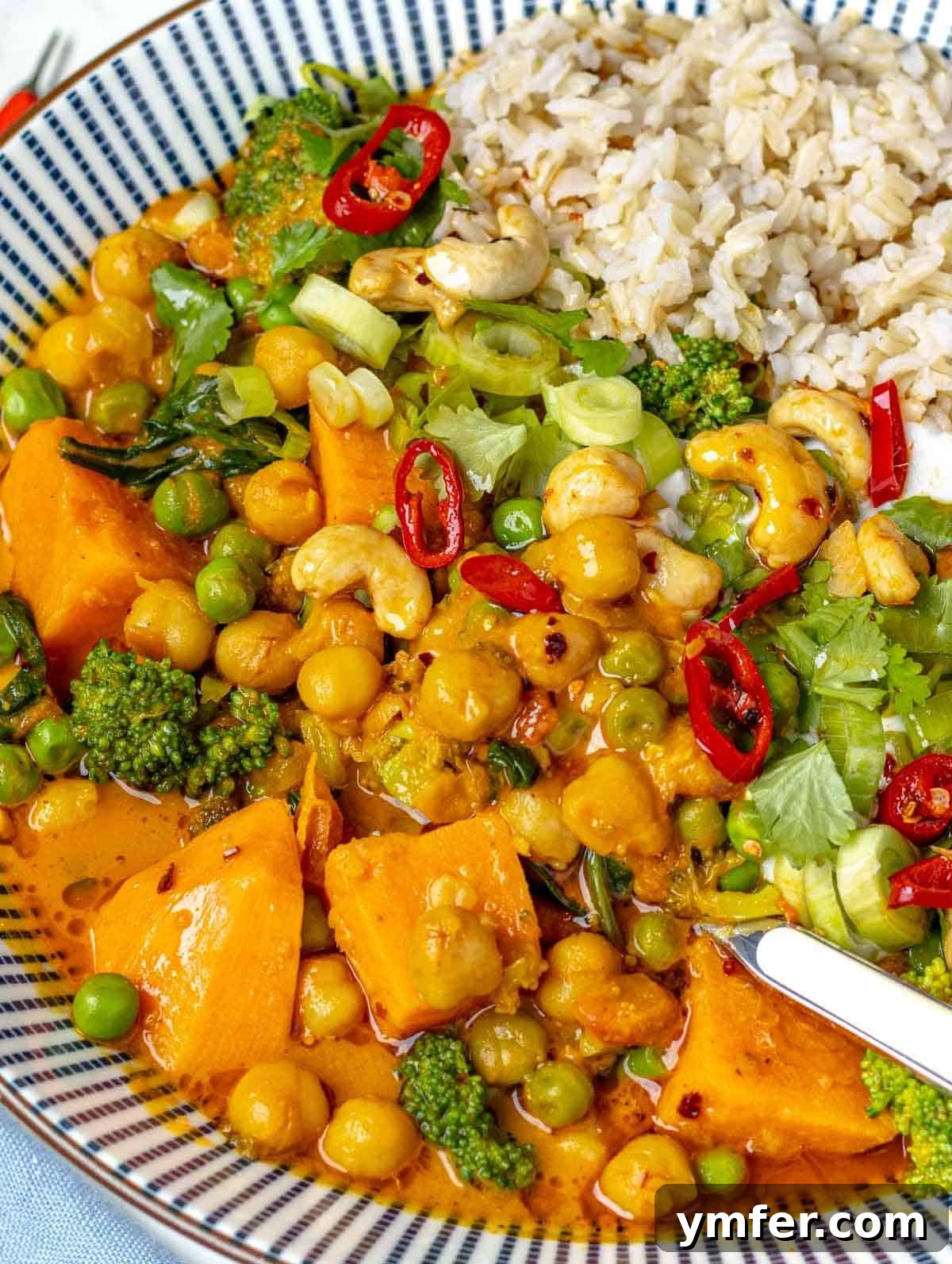
Excellent with basmati rice, brown rice, roti or naan. We recommend a dollop of Greek yogurt, a squeeze of lemon, chopped cilantro, toasted cashews, and a drizzle of tadka.
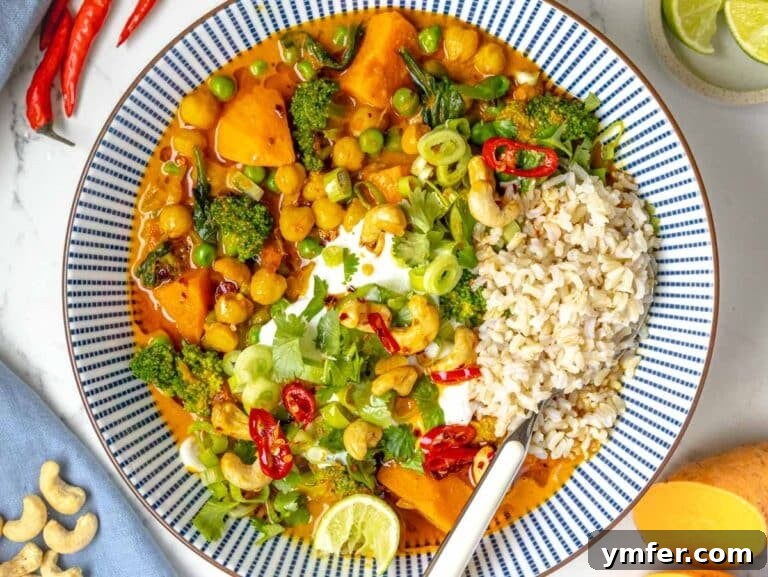
Ready to serve, garnished with fresh toppings.

Notes
- Nutrition Information: This is an estimate for 1 large serving of vegetable curry out of 4 servings with a 1/2 cup cooked brown rice, 4 cashews, and 1 dollop of fat-free Greek yogurt per serving.
- Substitutions:
- Olive oil: Substitute coconut oil, avocado oil, or another vegetable oil.
- Sweet potato: Substitute potatoes, eggplant, carrots, butternut squash, pumpkin, kabocha squash, or other orange-fleshed squashes.
- Peas: Substitute snap peas, green beans, or black beans.
- Broccoli: Substitute cauliflower, cabbage, red bell pepper, or mushrooms.
- Spinach: Substitute kale, bok choy, or Swiss chard.
- Storage:
- Make ahead: Vegetable curry is an excellent meal prep recipe as it keeps well for days.
- Refrigerator: Keep leftovers in an airtight container for four days.
- Freezer: Let the curry cool down completely, then transfer it to a freezer-friendly container and freeze for up to 3 months.
- Thaw: Defrost it in the fridge over several hours, or pop it in the microwave for a few minutes.
- Reheat: Thaw in the microwave or a saucepan on the stove. If it is too dense, add a splash of water.
Nutrition Information (Estimated)
- Calories: 545 kcal
- Carbohydrates: 92 g
- Protein: 19 g
- Fat: 19 g
- Saturated Fat: 9 g
- Polyunsaturated Fat: 2 g
- Monounsaturated Fat: 7 g
- Trans Fat: 0 g
- Cholesterol: 1 mg
- Sodium: 892 mg
- Potassium: 1323 mg
- Dietary Fiber: 15 g
- Sugar: 15 g
- Vitamin A: 12860 IU
- Vitamin B6: 1 mg
- Vitamin C: 67 mg
- Vitamin E: 4 mg
- Vitamin K: 206 µg
- Calcium: 204 mg
- Folate: 244 µg
- Iron: 7 mg
- Manganese: 3 mg
- Magnesium: 198 mg
- Zinc: 4 mg
If you tried this Vegetable Curry or any other recipe on our blog, please leave a 🌟 star rating and let us know how it goes in the comments. We love hearing from you! You can also mention @theplantbasedschool on Instagram. ⭐️ 💚.
You might also like:
Recipes
45 Easy Vegetarian Dinner Recipes
Mains
40 High Protein Vegetarian Meals
Collections
35 Potluck Ideas
Collections