
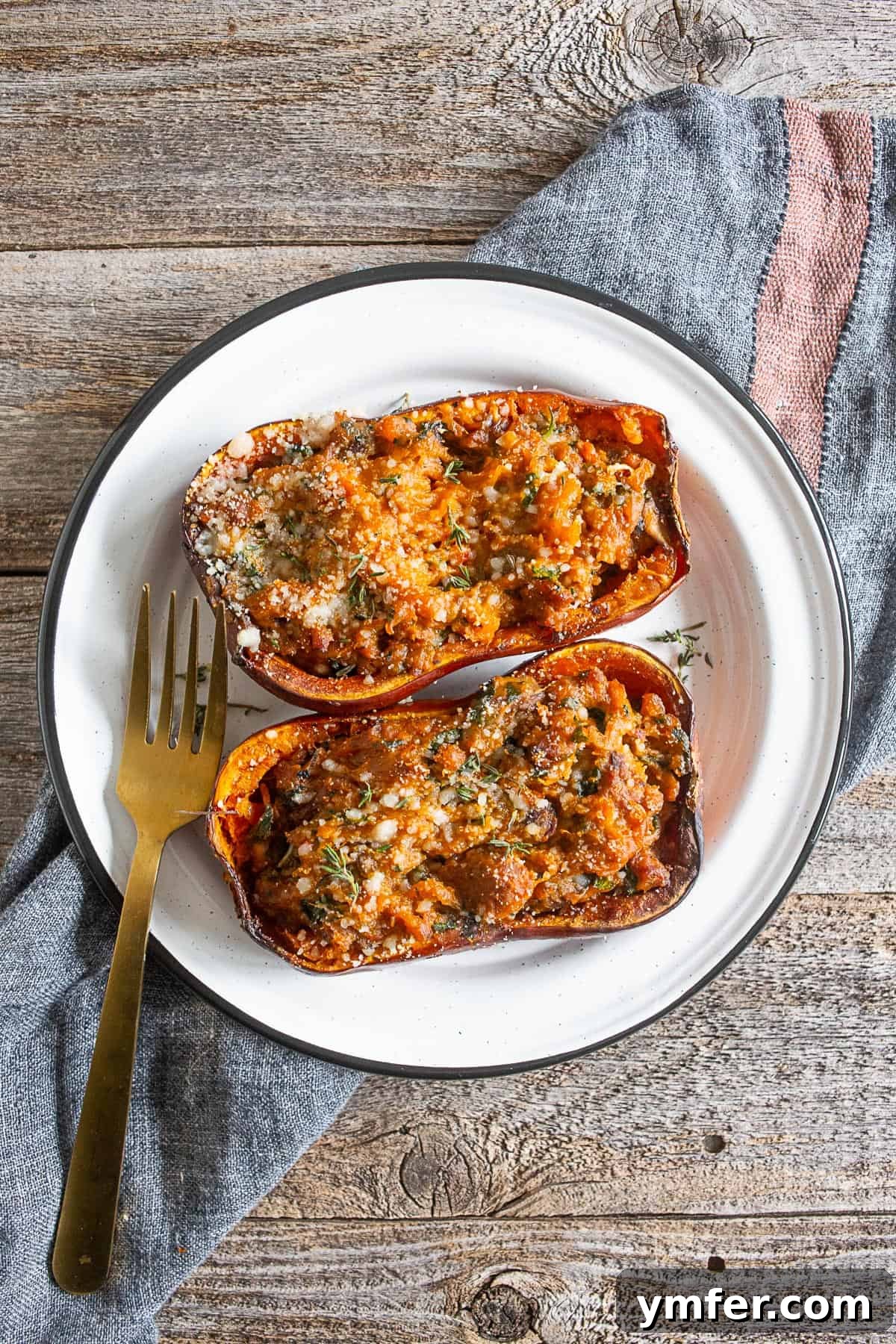
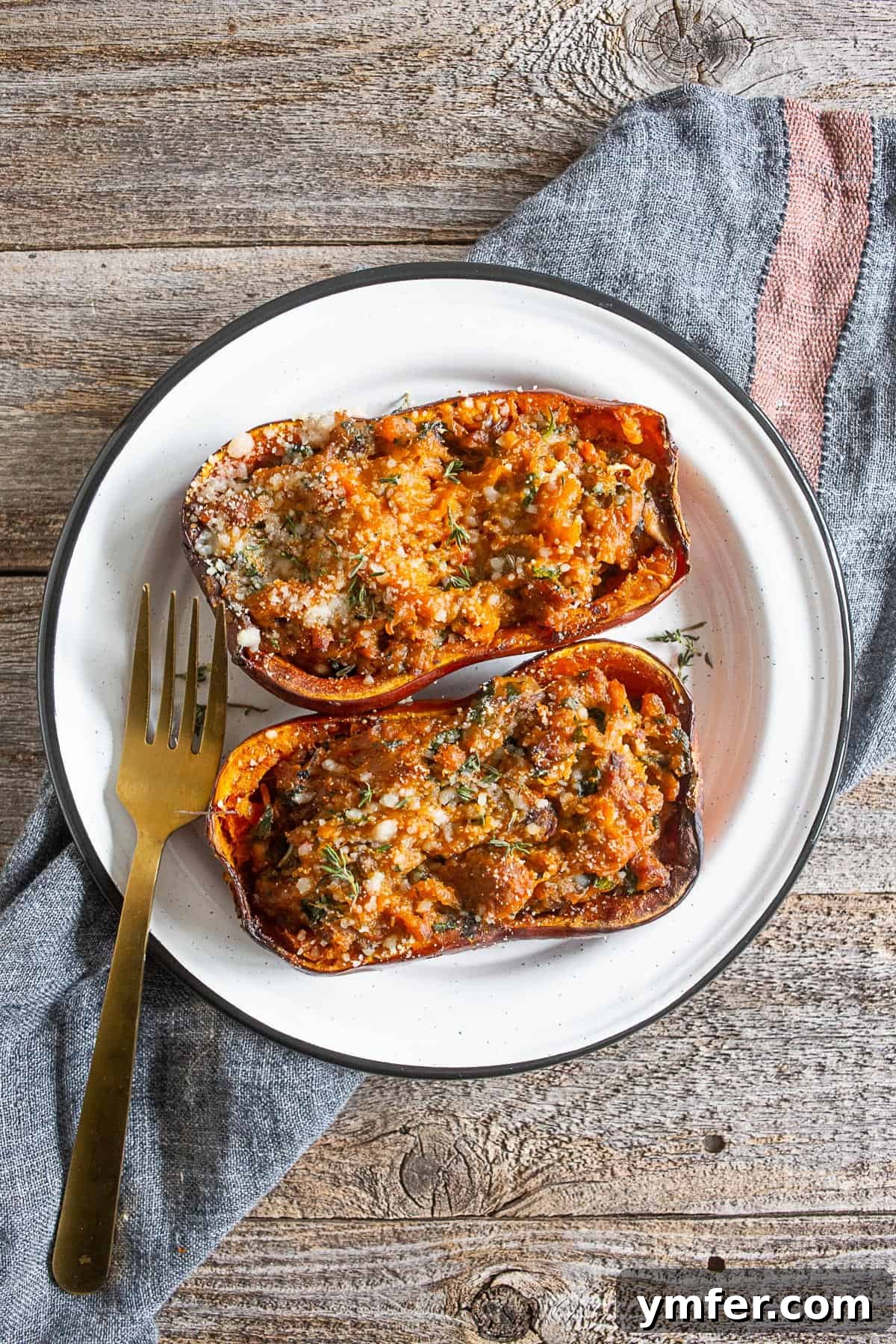
Prepare to elevate your autumn dining experience with this incredible **Stuffed Honeynut Squash** recipe. Imagine perfectly roasted honeynut squash halves, filled to the brim with a rich, savory mixture of zesty Italian sausage, earthy mushrooms, nutrient-packed spinach, and a delicate touch of Parmesan cheese. This dish masterfully balances the natural sweetness of the squash with the robust flavors of the filling, creating a comforting yet elegant meal that’s surprisingly simple to prepare. Whether you’re a seasoned chef or a home cook looking for a show-stopping seasonal dish, this recipe promises to deliver a delightful culinary experience that will leave a lasting impression.
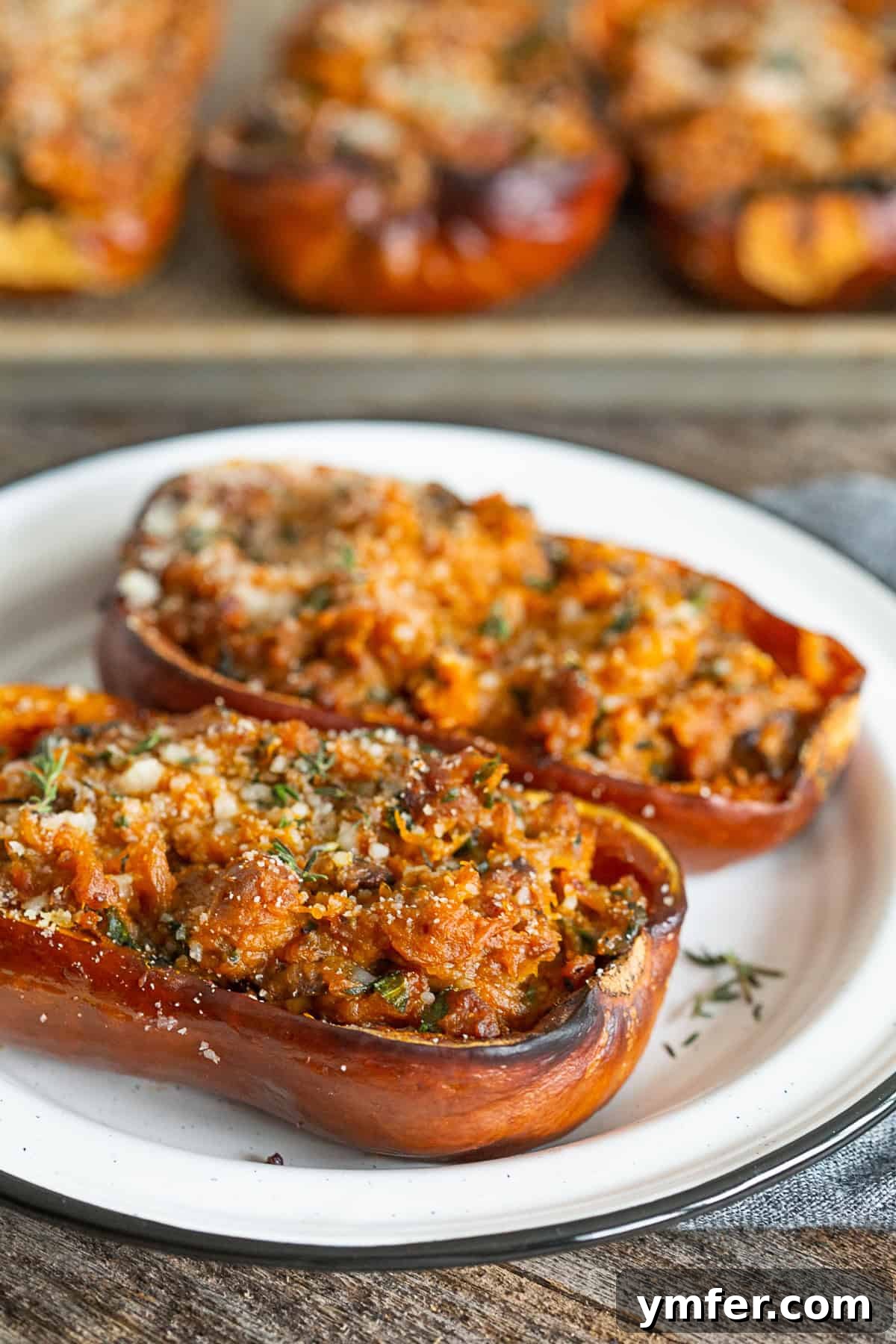
As the leaves begin to change and a crispness fills the air, our culinary cravings naturally shift towards warm, hearty, and comforting dishes. This **Stuffed Honeynut Squash** perfectly encapsulates the essence of fall. It’s a versatile recipe that works beautifully as a satisfying weeknight dinner, an impressive side dish for holiday gatherings, or even the star of a special occasion meal. The sweet, buttery flesh of the honeynut squash provides the ideal vessel for a savory filling, creating a symphony of textures and tastes that is both familiar and exciting. We’re talking about a dish that takes the best of autumn’s bounty and transforms it into something truly extraordinary.
If you’re new to the world of honeynut squash, prepare to fall in love. This miniature relative of the butternut squash is quickly becoming a favorite among food enthusiasts for its intensified sweetness and rich, nutty flavor. Unlike its larger counterparts, honeynut squash boasts a tender skin that doesn’t require peeling, saving you precious prep time and making it an absolute joy to cook with. For those seeking a more foundational approach, don’t miss our comprehensive guide on How to Roast Honeynut Squash, where we delve into the simple techniques that bring out its natural caramelization and irresistible sweetness.
However, if you’re ready to dive into a truly flavor-packed dinnertime recipe, you’ve found your match right here. This creation is akin to a “twice-baked” concept, where the squash is first roasted, its tender flesh is then mixed with a delectable stuffing, and finally, it’s baked again to warm everything through and achieve that perfect golden finish. We’ve simplified the name to **Stuffed Honeynut Squash** to keep it concise, but rest assured, the layers of flavor and the thoughtful preparation truly shine through. Each bite offers a delightful combination of savory Italian sausage, earthy mushrooms, vibrant spinach, and the salty, creamy notes of Parmesan cheese, all complemented by the inherent sweetness of the honeynut squash. It’s a culinary journey that will undoubtedly convert even the most skeptical of squash eaters!
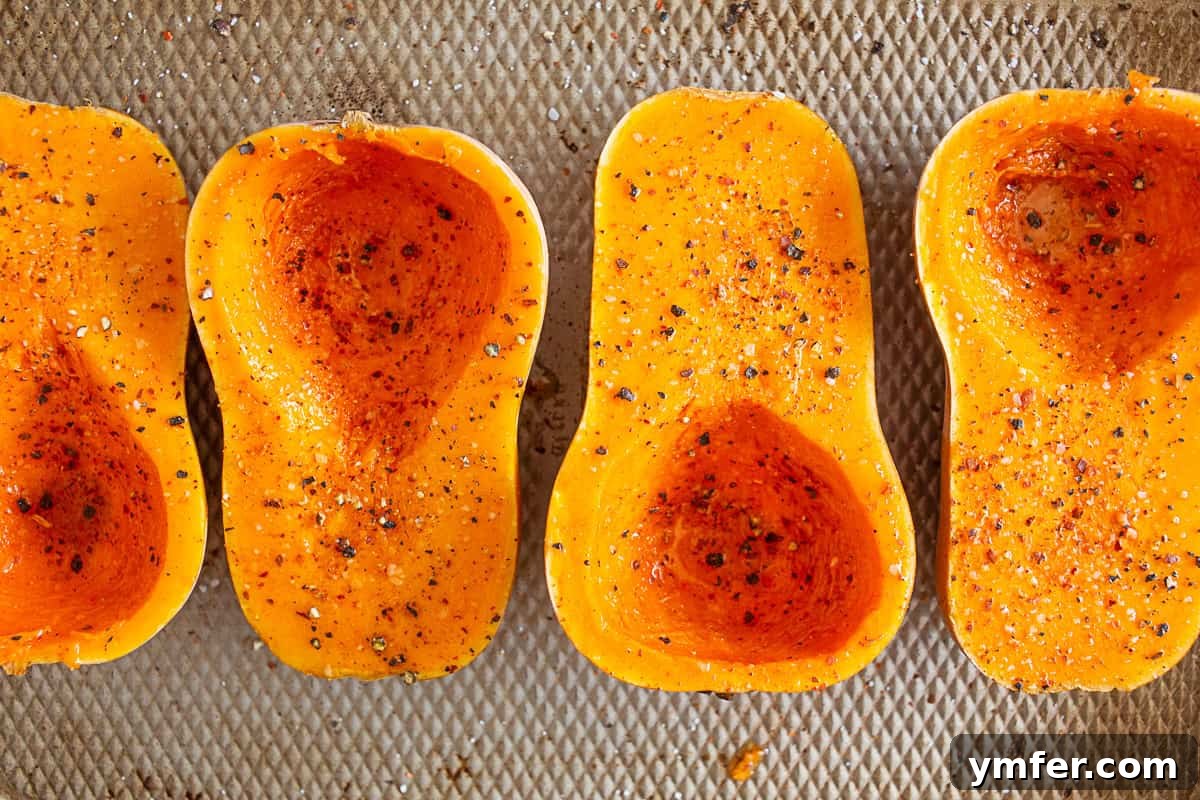
What is Honeynut Squash? A Culinary Gem Explained
Many might glance at a honeynut squash and mistakenly identify it as a mini butternut. While it shares a similar shape, the honeynut squash is, in fact, its own distinct variety, boasting a flavor profile and characteristics that set it apart. Developed through a collaborative effort between Michael Mazourek, an Associate Professor at Cornell University, and acclaimed Chef Dan Barber, the honeynut squash emerged from a desire for a smaller, sweeter, and more nutrient-dense squash that was also easier to prepare.
Despite being a relatively new addition to the culinary scene – only about ten years old – this compact dynamo has rapidly gained popularity. Its concentrated sweetness and rich, nutty undertones surpass those of many other winter squash varieties. Over the past three years, its presence has notably expanded, especially across the Northeast, becoming a staple at farmers’ markets and, more recently, even in mainstream grocery stores. This increasing availability is a testament to its exceptional taste and convenience.
Beyond its delightful flavor, honeynut squash offers several practical advantages and impressive nutritional benefits:
- Nutritional Powerhouse: Honeynut squash is an incredible source of beta-carotene, a powerful antioxidant that the body converts into Vitamin A. This makes it excellent for vision, immune function, and skin health. It also provides a good dose of fiber, Vitamin C, and potassium.
- Edible Skin: One of its most celebrated features is its thin, tender skin, which doesn’t need to be peeled. This saves a significant amount of prep time and effort, making it a favorite for busy cooks. Simply wash, halve, and cook!
- Revolutionary Breeding: Its development was a deliberate culinary innovation, focusing on taste, nutrition, and user-friendliness, rather than just size or yield. This thoughtful breeding truly makes a difference in the final product.
- Selecting the Best: When choosing honeynut squash, look for those with a deep golden-tan color and hints of green. Avoid any with soft spots or blemishes. A vibrant color often indicates higher beta-carotene content and richer flavor.
In essence, honeynut squash isn’t just a vegetable; it’s a testament to how thoughtful agricultural innovation can bring truly superior produce to our tables, combining convenience with outstanding taste and nutrition.
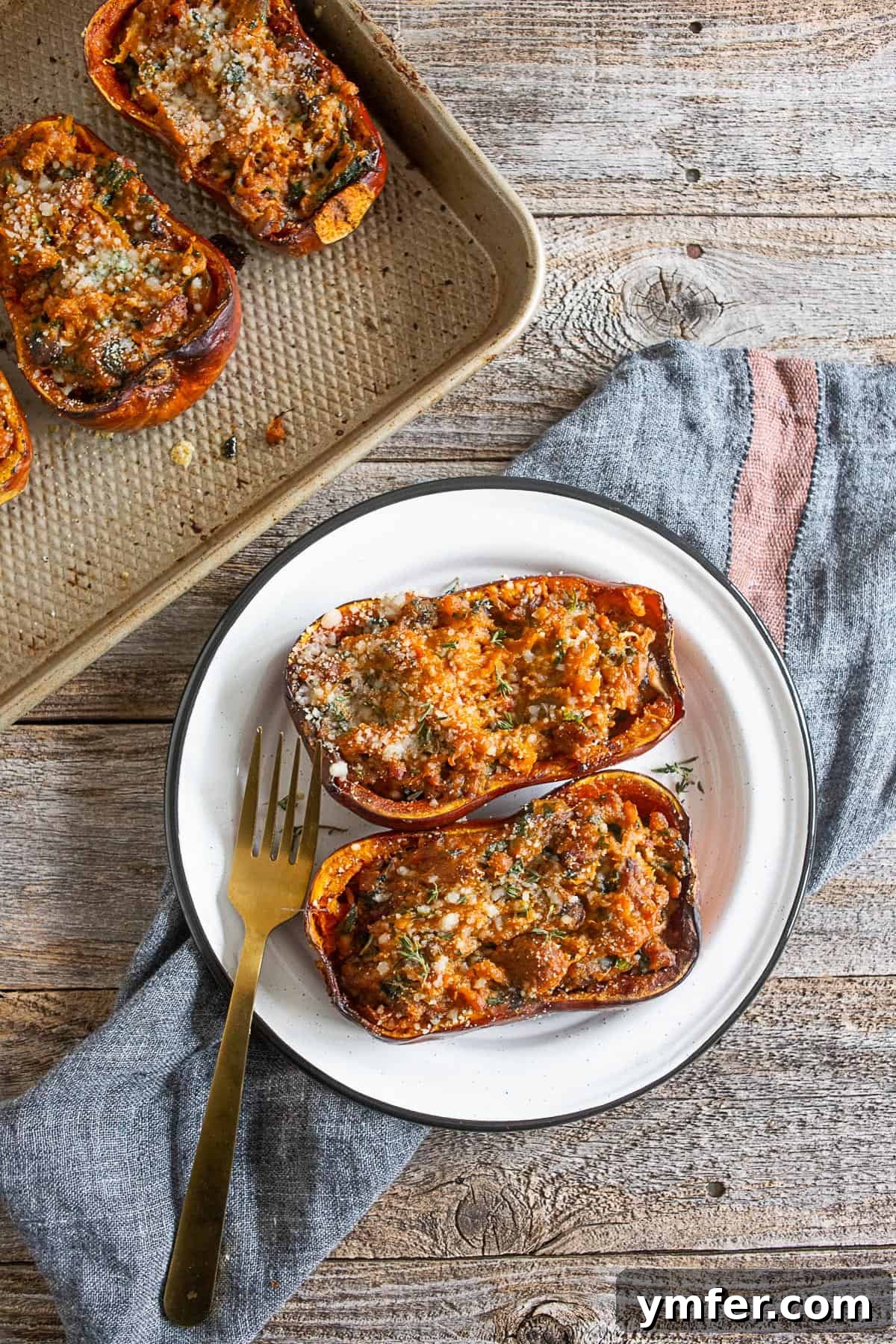
Where to Find and Source Your Honeynut Squash
Don’t let the “new kid on the block” status of honeynut squash deter you from seeking it out. Its growing popularity means it’s becoming increasingly accessible. During the autumn and early winter months, which is its prime season, you’ll have the best luck finding this delightful squash. Start your hunt at local farmers’ markets, where growers often prioritize unique and flavorful varieties. These markets are excellent places to chat with farmers about their produce and even get tips on preparation.
Beyond farmers’ markets, most well-stocked grocery stores are now carrying honeynut squash, particularly in regions like the Northeast, where its cultivation and demand have taken off. Check the produce aisle alongside other winter squashes like butternut and acorn. If you don’t immediately spot it, don’t hesitate to inquire with the produce manager. Your feedback and requests are invaluable to grocery stores, helping them understand consumer demand and influencing their stocking decisions. A simple call or a friendly chat can sometimes lead to your local store bringing in new and exciting items like honeynut squash. Additionally, consider exploring specialty food stores or organic markets, which often stock a wider array of seasonal and less common produce.
Its charming small size and beautiful golden hue make it an appealing addition to any kitchen. So, if you’re eager to try this incredible squash, a little searching will surely pay off. Its rich flavor and ease of preparation are well worth the effort of finding it.
Mastering the Art of Cooking Honeynut Squash
While our stuffed honeynut squash recipe takes this vegetable to gourmet heights, the beauty of honeynut squash lies in its versatility and ease of preparation even in its simplest forms. Its naturally sweet and tender flesh makes it a joy to cook, whether you’re aiming for a quick side dish or a more elaborate meal.
One of the most popular and straightforward methods is roasting. Simply cut the squash in half, scoop out the seeds, drizzle with olive oil, and season with salt and pepper. Roast it cut-side down until the flesh is fork-tender and beautifully caramelized. This method truly highlights its inherent sweetness, creating a comforting side dish that pairs well with almost any main course. In fact, we dedicated an entire post to this simple yet essential technique: How to Roast Honeynut Squash. This guide covers everything you need to know to achieve perfectly roasted squash every time, transforming it into a sweet, slightly smoky delight.
Beyond roasting, honeynut squash can be steamed, pureed into creamy soups, added to hearty stews, or even incorporated into baked goods for a touch of natural sweetness. Its small size also makes it ideal for individual servings, as seen in this delicious **stuffed honeynut squash** recipe. The ability to cook it without peeling is a major time-saver, encouraging even novice cooks to experiment with this fantastic fall vegetable. Whichever method you choose, you’re in for a treat with this incredibly flavorful and nutritious squash.
Creative Substitutions: When Honeynut Squash is Hard to Find
While honeynut squash is truly unique, we understand that its availability can sometimes be limited, especially outside its peak season or specific regions. But don’t let that stop you from enjoying this wonderful stuffed squash concept! This recipe is incredibly adaptable, and you can easily substitute honeynut squash with other readily available winter squashes like butternut squash or acorn squash.
When using **butternut squash**, a common and excellent substitute, keep in mind that it’s generally larger than honeynut squash and has a thicker skin that requires peeling. For this recipe, you would typically use one standard-sized butternut squash to replace the four honeynut squashes. Be sure to peel the butternut squash thoroughly, then cut it in half lengthwise and scoop out the seeds. You might need to adjust the roasting time slightly, as larger pieces will take longer to become tender. You can either roast the butternut halves and then proceed with scooping and stuffing, or you can cube and roast the butternut squash to mix directly into the filling if you prefer a casserole-style presentation rather than individual stuffed halves.
**Acorn squash** is another fantastic alternative. It has a slightly less sweet and more earthy flavor than honeynut or butternut, which can add a lovely dimension to the dish. Like honeynut, acorn squash generally has a tender skin that can be eaten, though some prefer to remove it. You would prepare acorn squash in a similar manner to honeynut, cutting it in half and roasting it. Depending on the size of your acorn squashes, you might use two to three medium ones to yield a similar amount of flesh to four honeynuts.
Remember, the honeynut squashes used in this recipe are approximately 6 inches in height. When choosing your substitute, use your best judgment. If you find smaller butternut or acorn squashes, you might need to use a few more to achieve the desired amount of squash flesh for the filling. Always aim for an amount that feels right for the savory mixture, ensuring a good balance of flavors and textures in your final dish. These substitutions allow you to enjoy the comforting flavors of this recipe no matter what squash varieties are available to you.
Explore More Delicious Squash Recipes
If you’ve enjoyed the versatile and comforting nature of this stuffed honeynut squash, you’re in luck! There’s a whole world of squash recipes waiting to be discovered, offering endless possibilities for delicious and healthy meals. From hearty main courses to delightful sides, winter squashes are incredibly adaptable. Here are a few more favorites to inspire your next culinary adventure:
- Southwest Taco Stuffed Spaghetti Squash: A vibrant and zesty dish that transforms spaghetti squash into a flavorful taco shell, perfect for a lighter meal.
- Pressure Cooker Butternut Squash Congee: A warming and creamy congee recipe featuring the subtle sweetness of butternut squash, ideal for a cozy breakfast or light dinner.
- Sausage and Peppers Stuffed Spaghetti Squash: Another fantastic stuffed squash option, combining classic Italian flavors with the unique texture of spaghetti squash.
- How to Roast Honeynut Squash: A fundamental guide to perfectly roasting honeynut squash, unlocking its natural sweetness and making it a simple yet satisfying side.
Stuffed Honeynut Squash
Brandy O’Neill
4 servings
30 mins
50 mins
1 hr 20 mins

Equipment
-
Baking Sheet Pan
-
Glass Mixing Bowl Set (3-Piece)
Ingredients Servings: 4
For squash:
- 4 (6-8 inch) honeynut squash, cut in half lengthwise and seeds scooped out
- 2 tablespoons olive oil
- 1 teaspoon kosher salt
- 1 teaspoon black pepper
For sausage filling:
- 1 pound spicy Italian sausage, ground or links, remove casing on links
- 8 ounces white mushrooms, sliced
- 1 small yellow onion, diced
- 2 cloves garlic, minced
- 1 teaspoon dried Italian seasoning
- ½ teaspoon kosher salt
- ½ teaspoon black pepper
- 6 ounces baby spinach, chopped
- ⅓ cup Parmesan cheese, divided
Instructions
For roasted squash:
-
Preheat the oven to 400 degrees F.
-
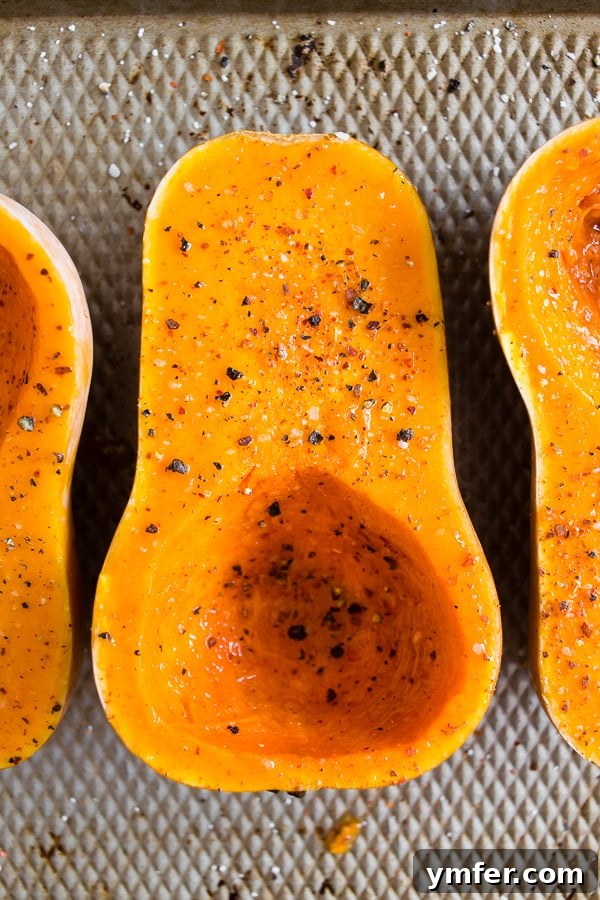
Lay the honeynut squash halves onto a large baking sheet and rub the inside flesh of the squash with olive oil and sprinkle it with the kosher salt and black pepper.
-
Flip the squash over so the cut side is down. Roast for 20-25 minutes or until the squash is soft.
-
Remove from the oven and let it cool slightly.
For filling:
-
While the squash is roasting, add a 12-inch skillet set over medium-high heat.
-
When the pan is hot, add the Italian sausage and break it up with a spatula so it can be evenly brown and no large chunks remain.
-
When half of the sausage is browned add in the mushrooms and diced onions and continue cooking until the sausage if fully cooked and the onion and mushrooms are soft.
-
Add in the garlic, Italian seasoning, kosher salt, and black pepper and let cook for 30 seconds or until fragrant.
-
Remove from heat and set aside.
For assembly and baking:
-
Scoop out the flesh of the squash into a large bowl. Be sure to leave a small amount of the flesh around the skin of the squash so it can hold its shape.
-
Stir the scooped-out squash and add in the cooked sausage mixture, the chopped baby spinach, and 1/4 cup of the Parmesan cheese.
-
Add the filling to the squash halves and top with remaining Parmesan cheese. Bake for another 5-10 minutes or until the filling is warmed through and the cheese is browned.
Notes
- If you cannot find honeynut squash you can substitute it by using butternut squash or acorn squash.
- These honeynut squashes are approximately 6 inches in size, so adjust the recipe accordingly if using different-sized squash.
- If you prefer not to stuff the squash directly, you can combine all ingredients in a casserole dish and bake it to warm thoroughly, creating a delicious squash and sausage bake.
- For a milder flavor, feel free to use mild or sweet Italian sausage as a substitute for hot Italian sausage. This allows you to customize the spice level to your preference.
- Consider garnishing with fresh parsley or chives before serving for an extra touch of freshness and color.
- This dish pairs wonderfully with a crisp green salad or a simple grain like quinoa or wild rice.
Nutrition
Nutrition information is automatically calculated, so should only be used as an approximation.
Additional Info
Main Course
American