
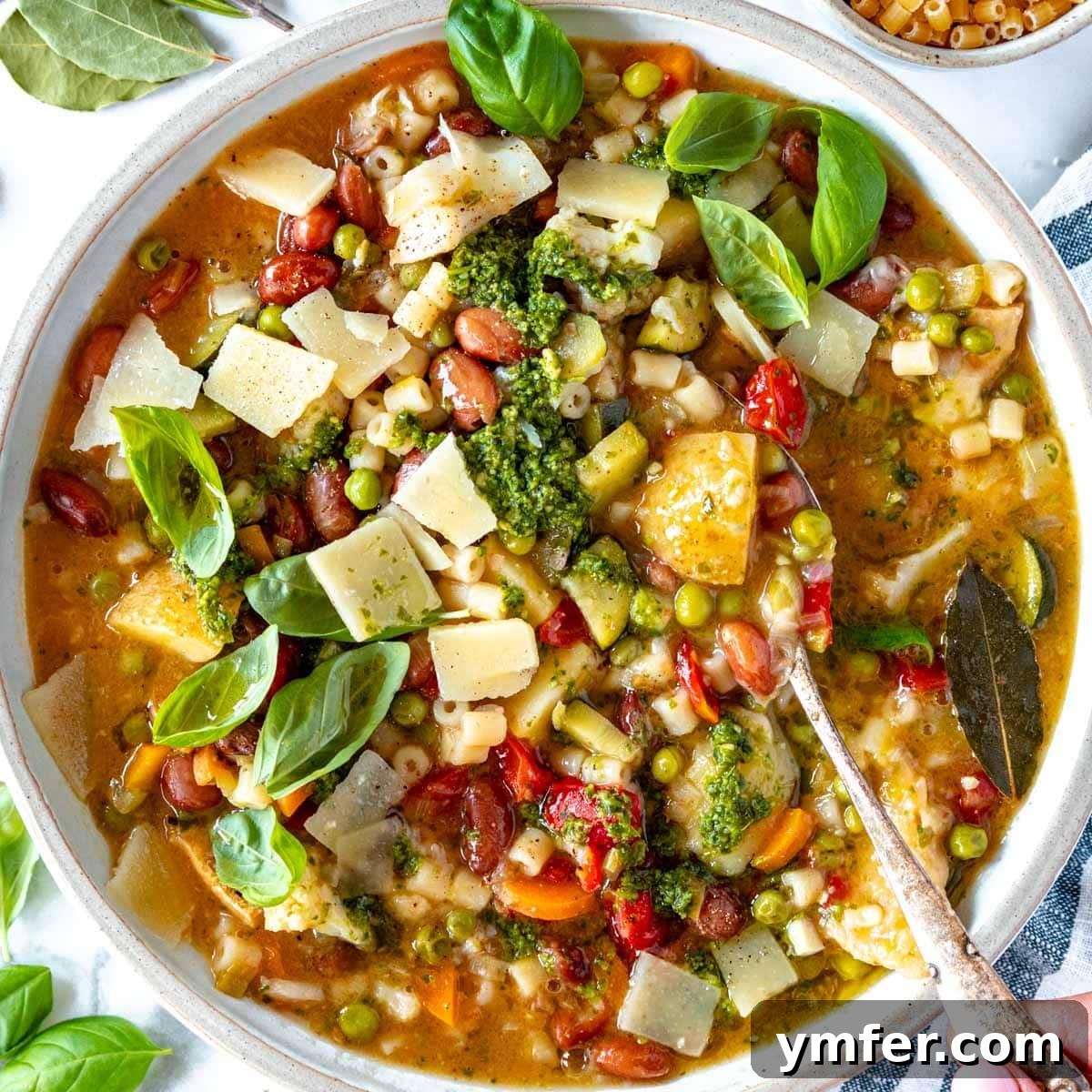
Authentic Minestrone Soup: Your Guide to a Hearty Italian One-Pot Wonder
Minestrone is more than just a soup; it’s the quintessential one-pot vegetable celebration, embodying the warmth and generosity of Italian cooking. This robust and flavorful dish brings together a vibrant medley of seasonal vegetables, protein-rich legumes, aromatic herbs, and often, pasta or grains, culminating in one of Italy’s most iconic and cherished recipes.
Beyond its rich taste, Minestrone offers incredible nutritional value, making it a wholesome addition to any diet. Its comforting nature makes it ideal for cozy evenings, while its versatility ensures it’s perfect for efficient meal prep or a delicious, wholesome family dinner that everyone will love.
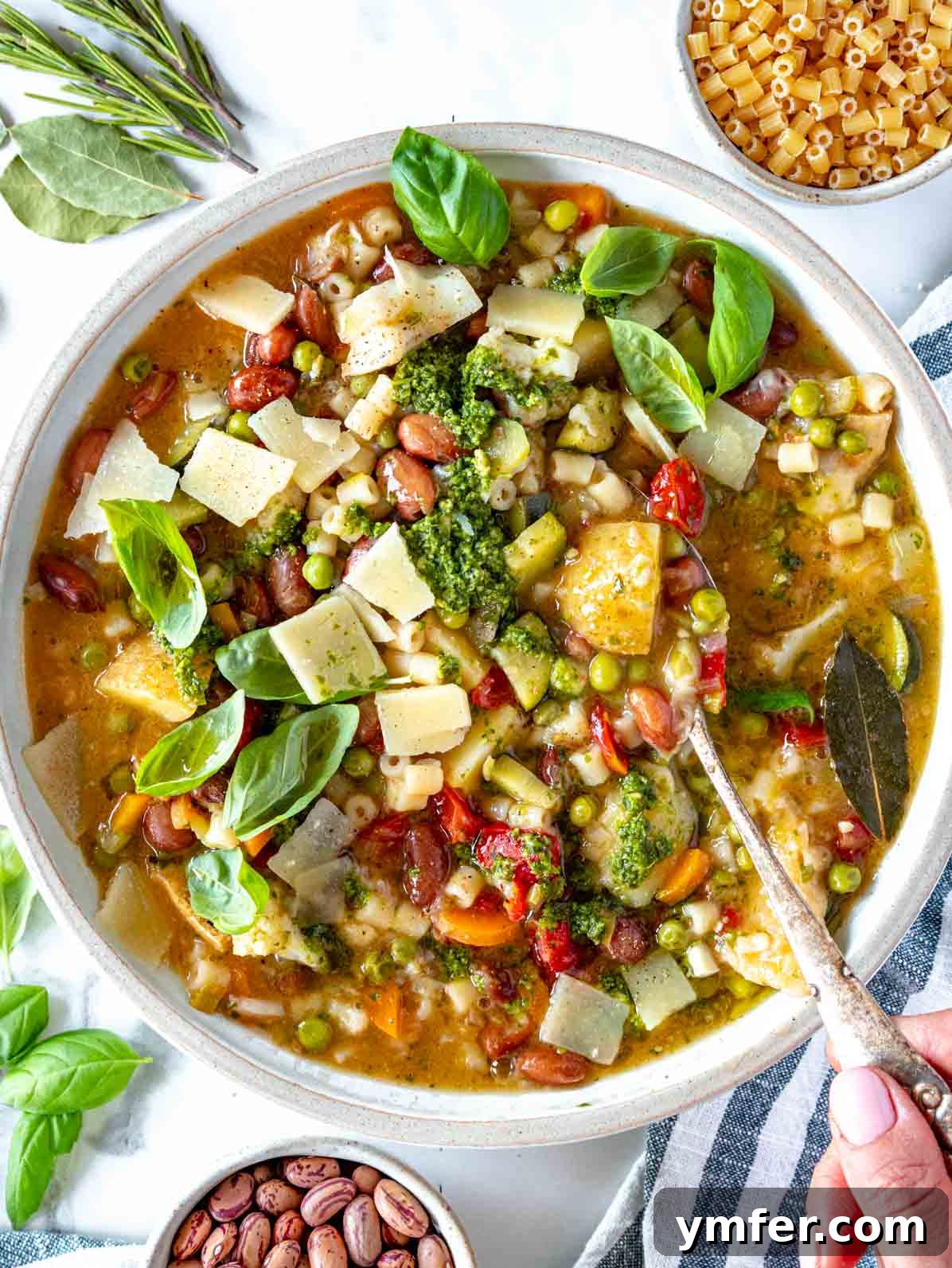
Table of Contents
- What is Minestrone? History and Versatility
- Essential Ingredients for the Best Minestrone
- How to Make Minestrone Soup: Step-by-Step Guide
- Serving Suggestions for Minestrone
- Storage Tips for Minestrone
- Explore More Hearty Soup Recipes
- Minestrone Soup Recipe Card
What is Minestrone? History and Versatility
The name “Minestrone” literally translates to “big soup” in Italian, a fitting description for this substantial and often chunky meal-in-a-bowl. Its origins trace back to ancient Rome, initially as a simple vegetable pottage. Over centuries, as new ingredients became available, especially after the discovery of the Americas introduced tomatoes and potatoes to Europe, Minestrone evolved. Today, it remains a cornerstone of Italian cuisine, cherished for its adaptability and heartiness.
One of Minestrone’s most beautiful characteristics is its incredible flexibility. There isn’t a single, definitive Minestrone recipe; rather, each region, and often each family, boasts its unique variation. This reflects Italy’s diverse agricultural landscape and culinary traditions. Similar to other beloved Italian soups like Tuscan white bean soup, Lentil Soup, Chickpea Soup, and Tortellini Soup, Minestrone expertly combines seasonal vegetables and robust herbs with protein-rich legumes, creating a symphony of flavors and textures.
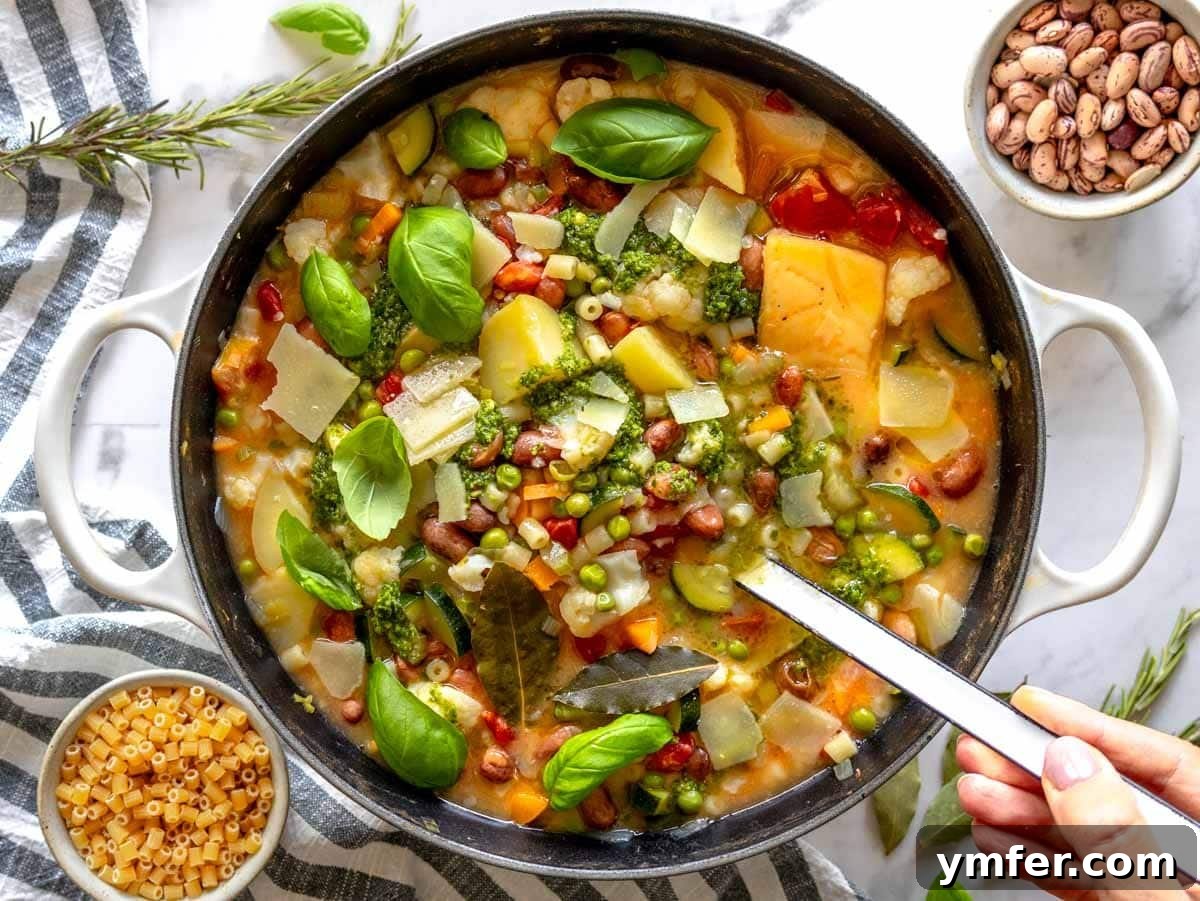
To transform Minestrone into a truly satisfying and complete meal, it often includes a starchy component. Traditionally, this could be pasta, rice, or farro. For our recipe, we’ve opted for small pasta, which thickens the soup beautifully and adds a delightful chewiness.
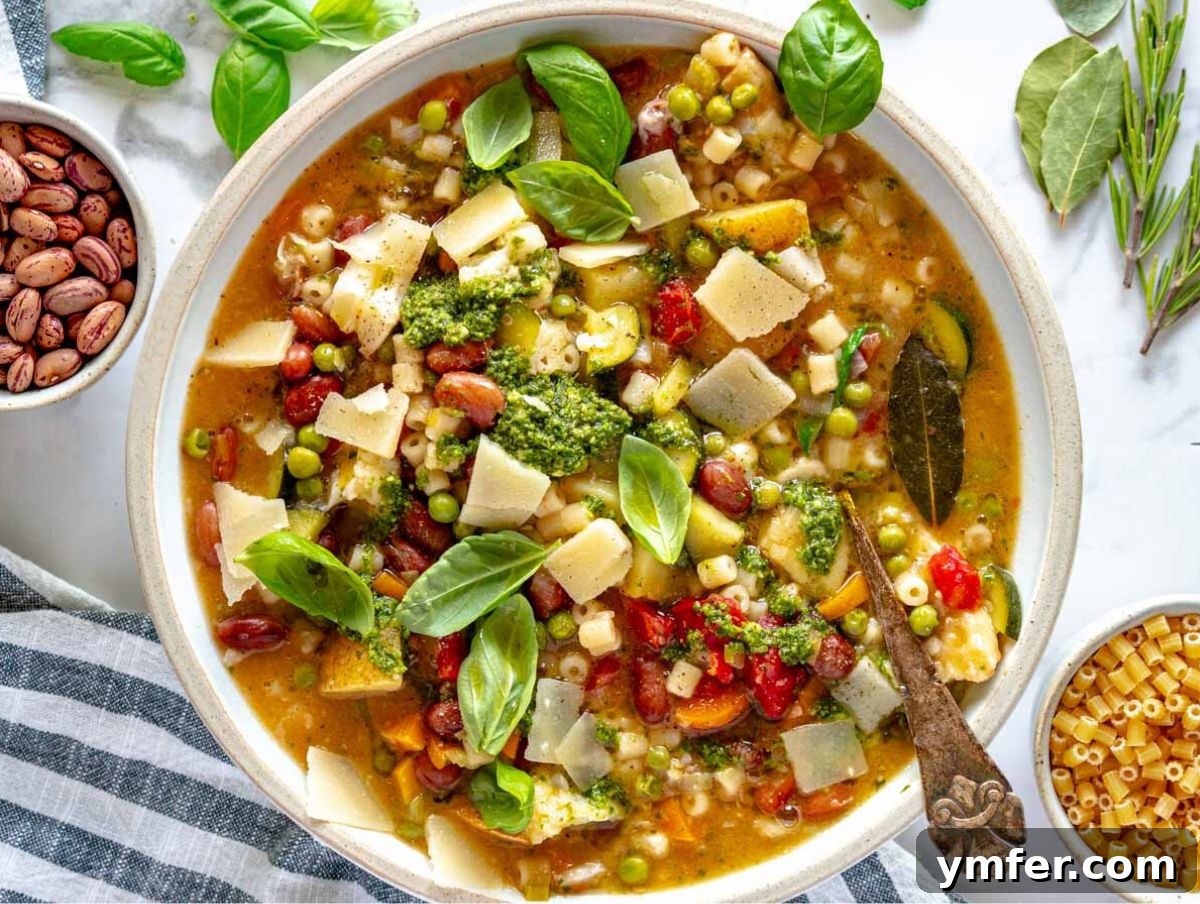
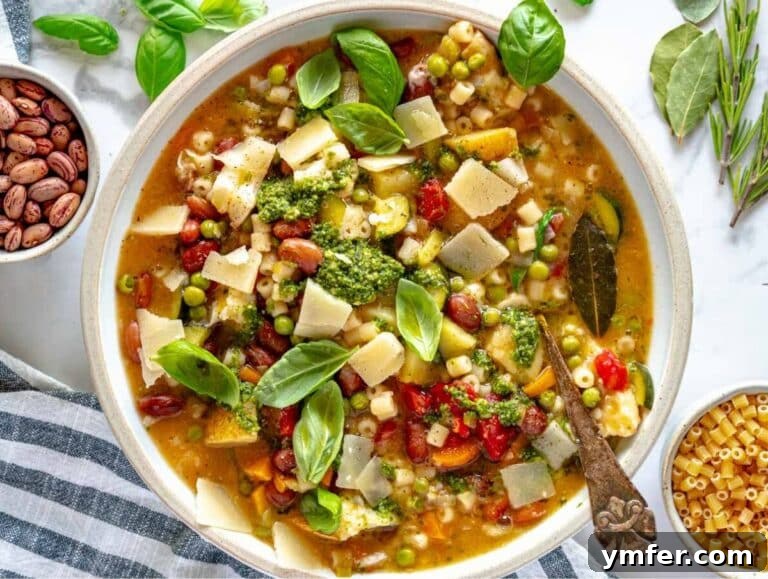
For an authentic Italian touch, we highly recommend adding a piece of Parmigiano Reggiano or Grana Padano crust to the pot while the soup simmers. This infuses the Minestrone with an incredible depth of umami flavor. Before serving, a spoonful or two of homemade basil pesto and a sprinkle of freshly shaved Parmesan elevate the dish to new heights.
The final result is a thick, creamy, wonderfully chunky, and profoundly satisfying one-pot meal that promises to be a hit with your entire family.
Quick Tip: While Minestrone is straightforward to make and cooks relatively quickly (around 30 minutes), the preparation of vegetables can be the most time-consuming part. To speed up your cooking process, don’t hesitate to use pre-chopped vegetables from the grocery store or frozen vegetable mixes. This simple hack can cut down prep time significantly without compromising on flavor or nutrition.
Essential Ingredients for the Best Minestrone
The beauty of Minestrone lies in its adaptability, allowing you to use whatever fresh, seasonal produce is available. Here’s a look at the core components that make our Minestrone so delicious, along with suggestions for substitutions:
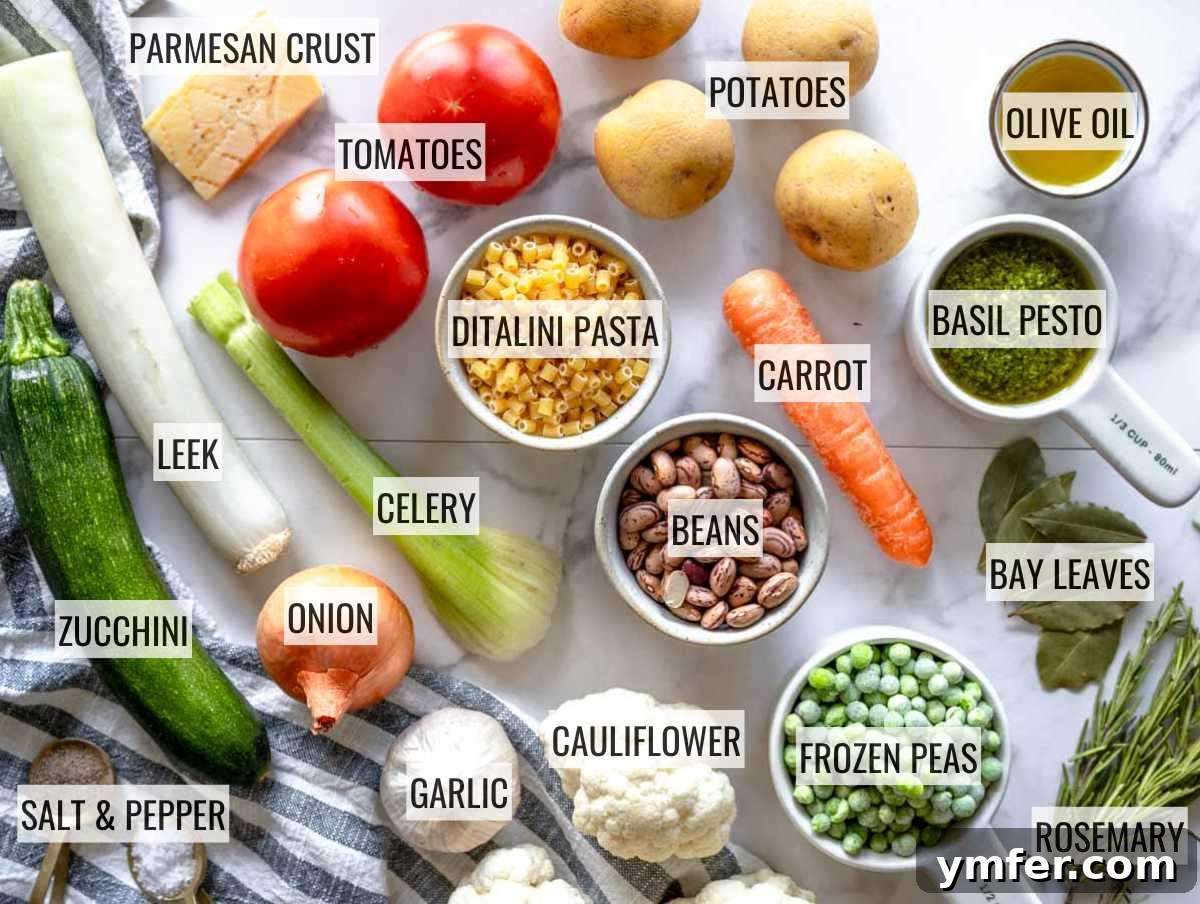
Exact quantities for each ingredient can be found in the recipe card at the bottom of this page.
The Flavor Foundation: Soffritto
Like many traditional Italian soups and stews, our Minestrone begins with a classic soffritto. This aromatic base is crucial for developing a deep, complex flavor profile right from the start. Our soffritto includes:
- Extra virgin olive oil: The fat base for sautéing, adding a rich, fruity note.
- Onion, celery, and carrot: The holy trinity of Italian soffritto, providing a sweet and savory foundation.
- Leek: Adds a milder, slightly sweeter onion flavor that complements the other vegetables.
- Garlic: Essential for its pungent aroma and depth.
These vegetables are finely chopped and gently sautéed in olive oil until softened and fragrant. This initial step is paramount, as it coaxes out their natural sugars and aromas, infusing the Minestrone soup with a rich and robust flavor that builds the entire dish. While some traditional regional variations might include a small piece of lard, pancetta, or prosciutto in this initial base, we’ve opted to omit these to keep our recipe deliciously vegetarian and widely accessible.
Seasonal Vegetables for Minestrone
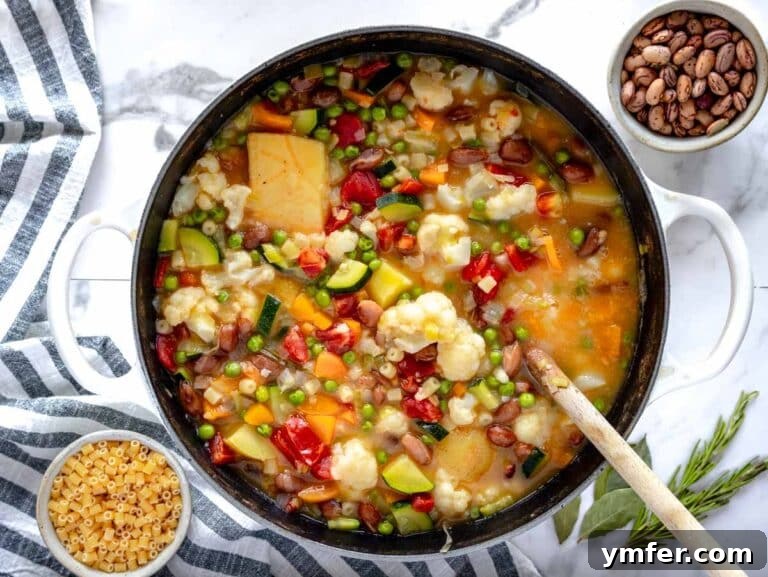
This is where Minestrone truly shines. Feel empowered to customize your soup with whatever seasonal vegetables you love or have on hand. For our recipe, we use a balanced mix to ensure a beautiful color and nutritional variety:
- Potatoes: Provide a starchy heartiness that thickens the soup slightly. Substitute with sweet potatoes for a touch of sweetness and extra nutrients.
- Cauliflower: Adds a tender, subtly nutty flavor. Easily swapped with broccoli, chard, or kale for different textures and nutrients.
- Vine tomatoes: Fresh tomatoes burst with bright, tangy flavor. If fresh aren’t available, canned tomatoes (crushed, diced, or whole peeled and then crushed) are excellent alternatives.
- Frozen peas: A pop of vibrant green and delicate sweetness, added towards the end to retain their texture and color. Consider green beans, snap peas, or snow peas as substitutes.
- Zucchini: A summer squash that cooks quickly and adds a fresh, mild taste. Any summer squash or courgette works well. Mushrooms or bell peppers are also great options for a different flavor profile.
Protein-Rich Beans
Legumes are a cornerstone of Minestrone, adding plant-based protein, fiber, and a creamy texture. You have many choices:
- Beans: White beans (such as cannellini), kidney beans, pinto beans, or borlotti beans are all traditional and delicious. Whether you use canned beans (rinsed and drained) for convenience or dried beans cooked from scratch, they are indispensable for a truly filling Minestrone.
Aromatic Herbs
Herbs are vital for the characteristic aroma and flavor of Minestrone:
- A fresh rosemary sprig and fragrant bay leaves are commonly added to the simmering soup, releasing their essential oils. You can substitute thyme for rosemary and sage for bay leaves if preferred.
- For a final flourish, we highly recommend garnishing the soup with fresh basil leaves, which provide a burst of fresh, peppery aroma just before serving.
Pasta or Grains (Optional but Recommended)
While optional, pasta is a popular addition that makes Minestrone even more substantial:
- Pasta: Traditionally, small pasta shapes like ditali or ditalini pasta are used. We favor ditalini for its perfect size. The beauty of cooking pasta directly in the soup is that its starch releases, naturally thickening the broth and making it wonderfully ultra-creamy, cozy, and comforting.
- You can substitute pearled farro or barley for pasta. However, these grains take longer to cook (about 30 minutes), so we recommend either pre-cooking them or adding them at the very beginning of the simmering process.
The Liquid Base: Water or Broth
The vegetables and other ingredients are primarily cooked with water. This allows the natural flavors of the produce to shine through.
- While you can certainly substitute vegetable broth for water, it’s often not necessary. The abundance of fresh vegetables in Minestrone provides plenty of natural flavor, making the broth largely redundant.
Parmigiano Crust (Optional but Highly Recommended)
This is a secret weapon for deeply savory Minestrone:
- If you happen to have a rind or Parmigiano Reggiano or Grana Padano crust in your fridge, do not discard it! Add it to the Minestrone pot while it simmers. The crust softens and slowly infuses the soup with an incredibly rich, salty, and savory umami flavor. You don’t have to eat the softened crust, though some people enjoy doing so.
Finishing Touches: Toppings
Toppings add flavor, texture, and visual appeal:
- We enthusiastically recommend topping each portion with a generous sprinkle of shaved or grated Parmesan cheese and a tablespoon of fragrant basil pesto. These additions introduce an extra layer of richness and freshness.
- To make this recipe entirely vegan, you can easily use vegan Parmesan and vegan pesto.
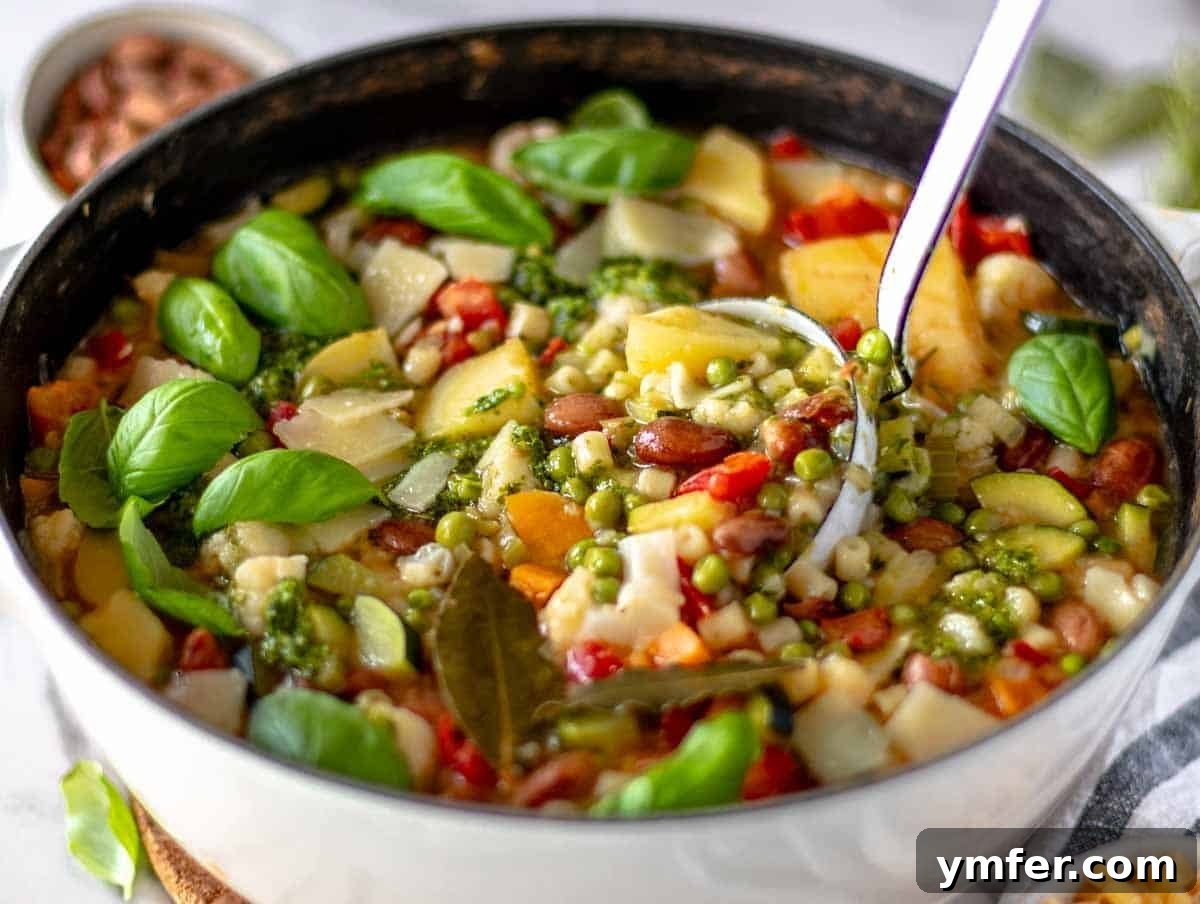
How to Make Minestrone Soup: Step-by-Step Guide
Crafting a delicious Minestrone is a rewarding experience, and with our step-by-step guide, you’ll achieve perfect results every time. Follow these instructions for a flavorful and satisfying meal.
1. Prepare Your Vegetables with Precision
Chef’s Tip: For seasoned cooks, the rhythm of peeling and chopping vegetables as the Minestrone cooks can be efficient. However, if you’re less experienced in the kitchen, we strongly advise taking a few minutes to meticulously chop all your vegetables before you even begin heating the pot. This pre-preparation ensures a smoother cooking process and prevents anything from burning while you’re busy chopping.
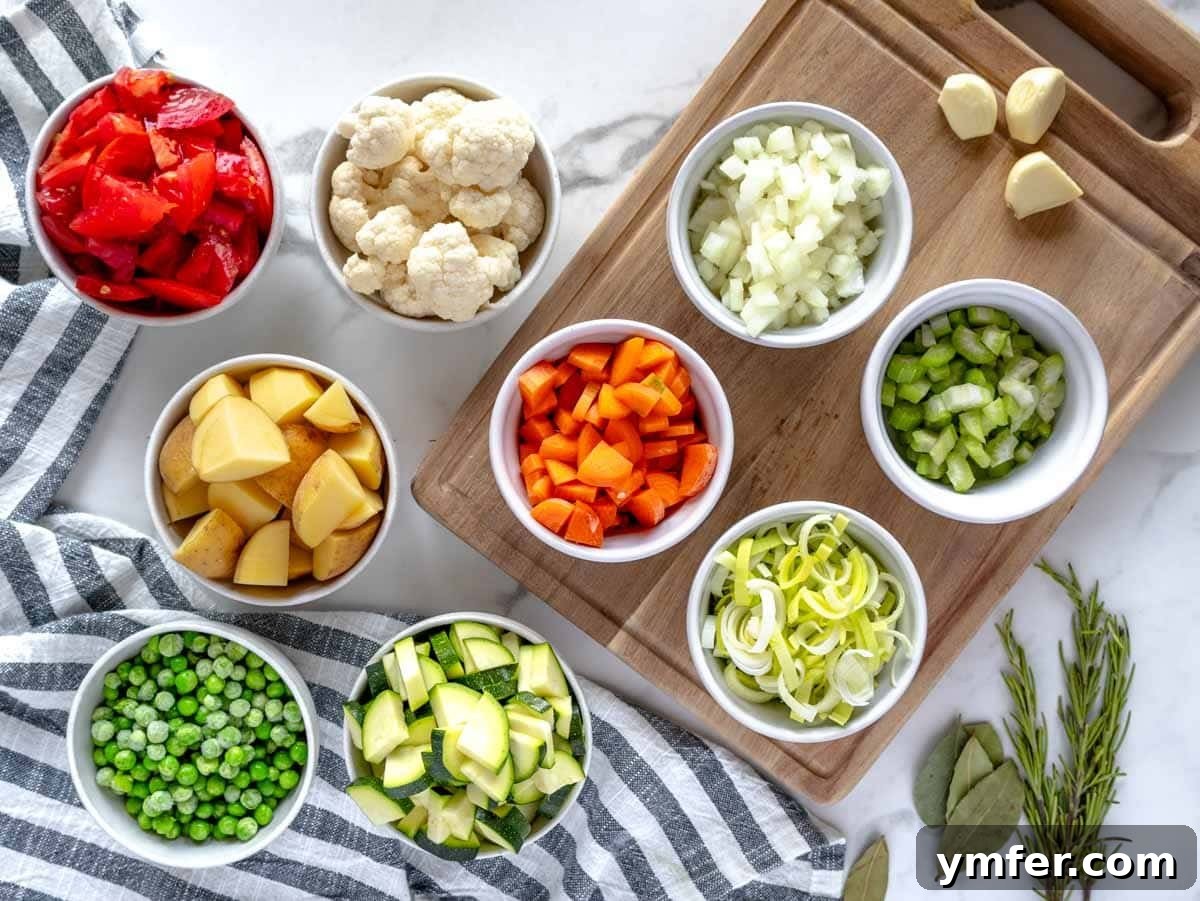
- Start by preparing the leek: cut it in half lengthwise, thoroughly rinse between its layers under running water to remove any hidden dirt, then thinly slice it.
- Chop the onion, celery, and carrot into uniform small pieces. This ensures they cook evenly and form a harmonious soffritto.
- Next, chop the potatoes, cauliflower, tomatoes, and zucchini into slightly larger but still manageable pieces. Aim for bite-sized chunks that will hold their shape in the soup.
2. Build the Aromatic Flavor Base (Soffritto)
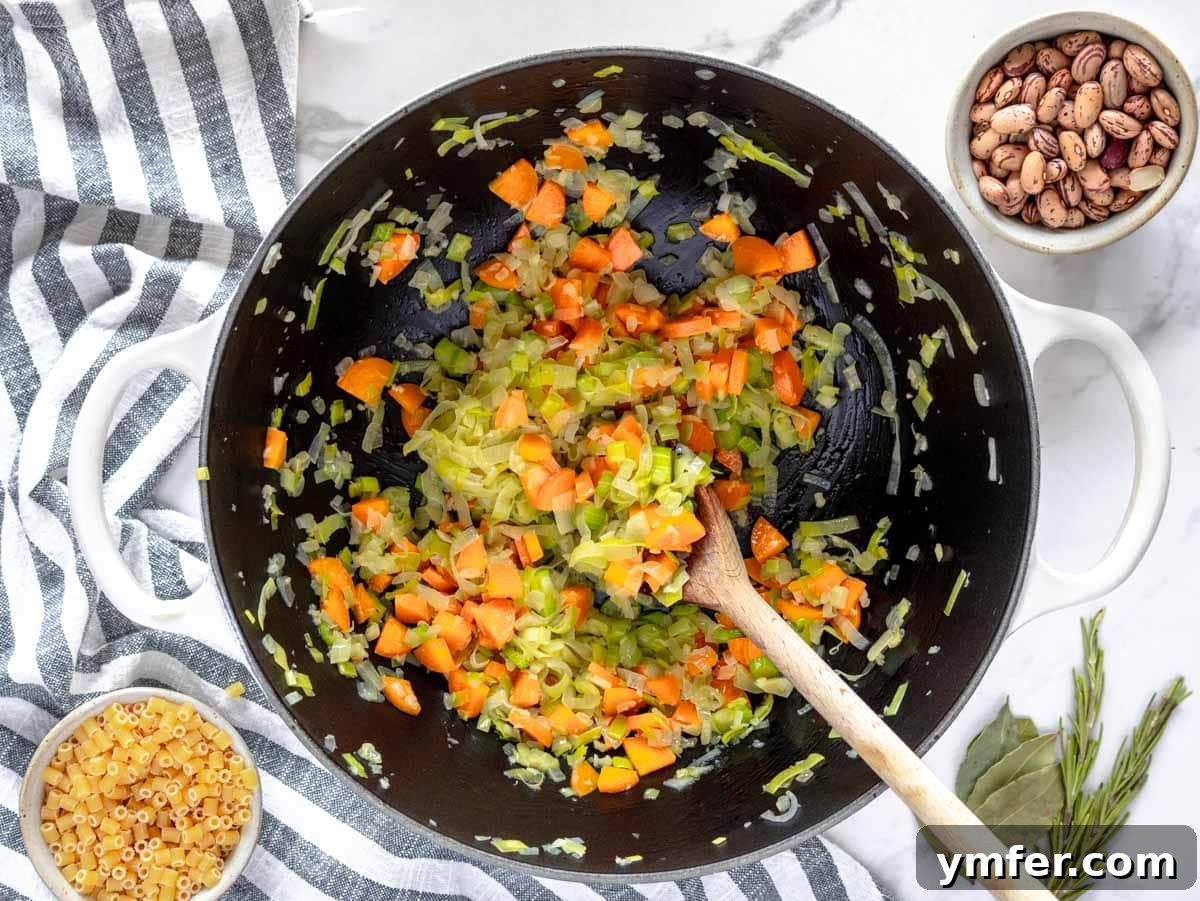
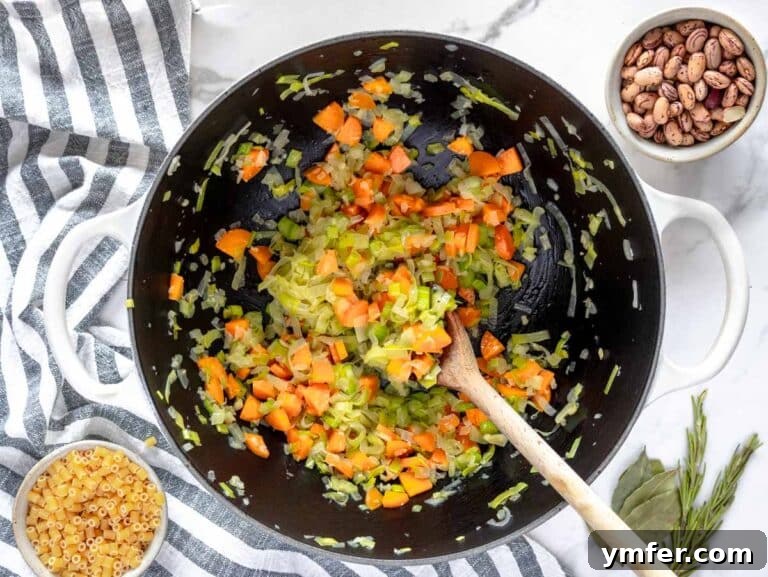
- In the largest pot you own (a Dutch oven or heavy-bottomed pot is ideal), heat the extra virgin olive oil over medium heat.
- Once shimmering, add the chopped onion, celery, carrot, leek, and grated garlic.
- Sauté these aromatics for about 5 minutes, stirring frequently. The goal is to soften the vegetables and allow them to release their sweet fragrances, forming the rich foundation for your Minestrone. Avoid browning them; gentle sautéing is key.
3. Simmer to Perfection: Layering Flavors
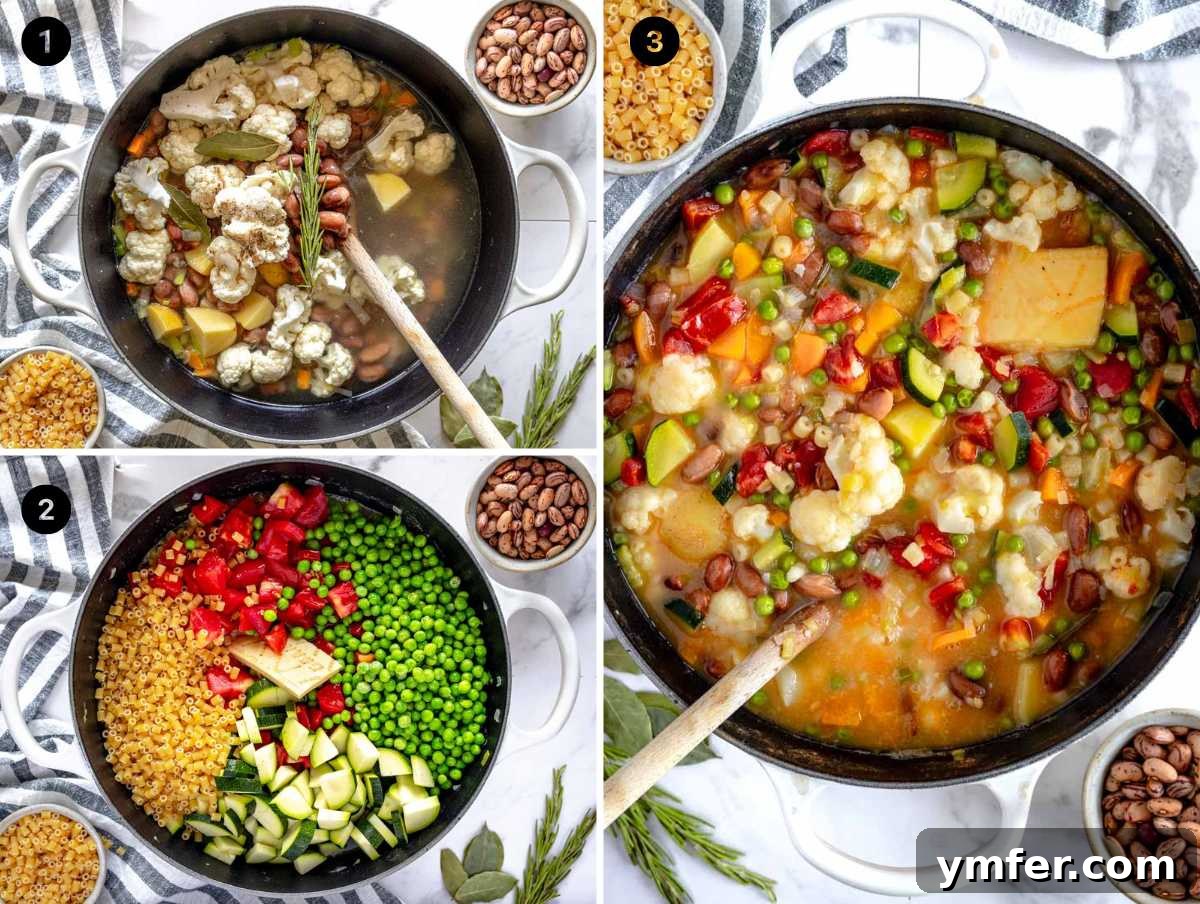
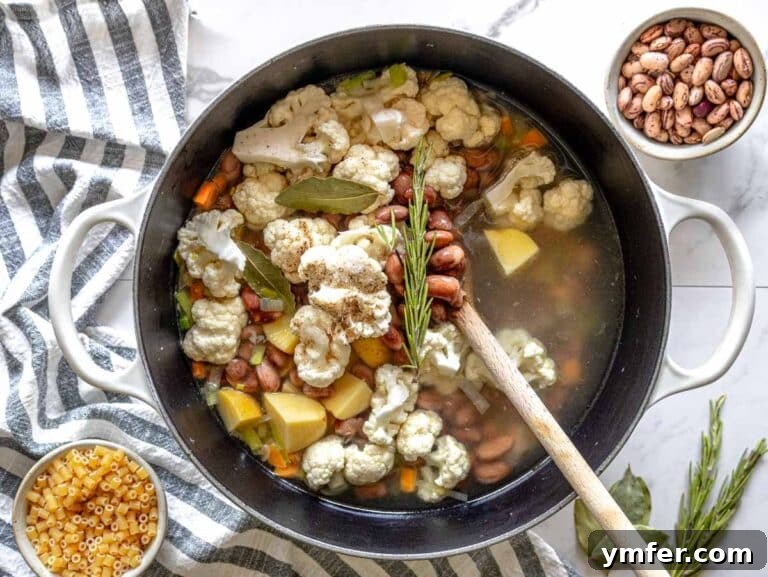
- To the softened soffritto, add the chopped potatoes, cauliflower florets, and the pre-cooked or drained beans. Stir everything together.
- Pour in the specified amount of hot water (or vegetable broth). Add the fresh rosemary sprig and bay leaves.
- Season generously with salt and freshly ground black pepper. Bring the soup to a gentle boil, then reduce the heat to a simmer.
- Allow the soup to simmer, partially covered, for approximately 12 minutes. Stir occasionally to prevent sticking and ensure even cooking. This initial simmer allows the harder vegetables to soften and flavors to begin melding.
- After 12 minutes, introduce the more tender vegetables: the chopped tomatoes, zucchini, and frozen peas. If you’re using a Parmigiano crust, add it now.
- Finally, stir in the ditalini pasta. Add an extra cup of water (or more, depending on your desired consistency, as pasta absorbs a lot of liquid).
- Continue cooking for another 12 minutes, or until the pasta is cooked al dente—meaning it’s tender but still has a slight bite. Monitor the soup’s consistency; if it becomes too thick, add more water or broth a little at a time until it reaches your preferred richness.
- Taste the Minestrone and adjust the salt and pepper as needed. Remove the rosemary sprig and bay leaves.
- Turn off the heat and let the Minestrone rest for 5 to 10 minutes. This crucial resting period allows the flavors to deepen and meld together beautifully.
Serving Suggestions for Minestrone
Minestrone is a complete meal in itself, but a few thoughtful additions can transform it into an even more exquisite dining experience. Serve your hot Minestrone in deep bowls, allowing ample space for toppings.
- Parmesan Cheese: A generous topping of freshly shaved or grated Parmigiano Reggiano adds a salty, nutty, umami kick that is simply essential.
- Fresh Herbs: A scatter of fresh basil leaves provides a burst of color and a fragrant, peppery note.
- Extra Virgin Olive Oil: A drizzle of high-quality extra virgin olive oil over each bowl enhances the richness and adds a smooth finish.
- Basil Pesto: A spoonful of vibrant basil pesto swirled into the hot soup introduces an incredible depth of herbaceous flavor.
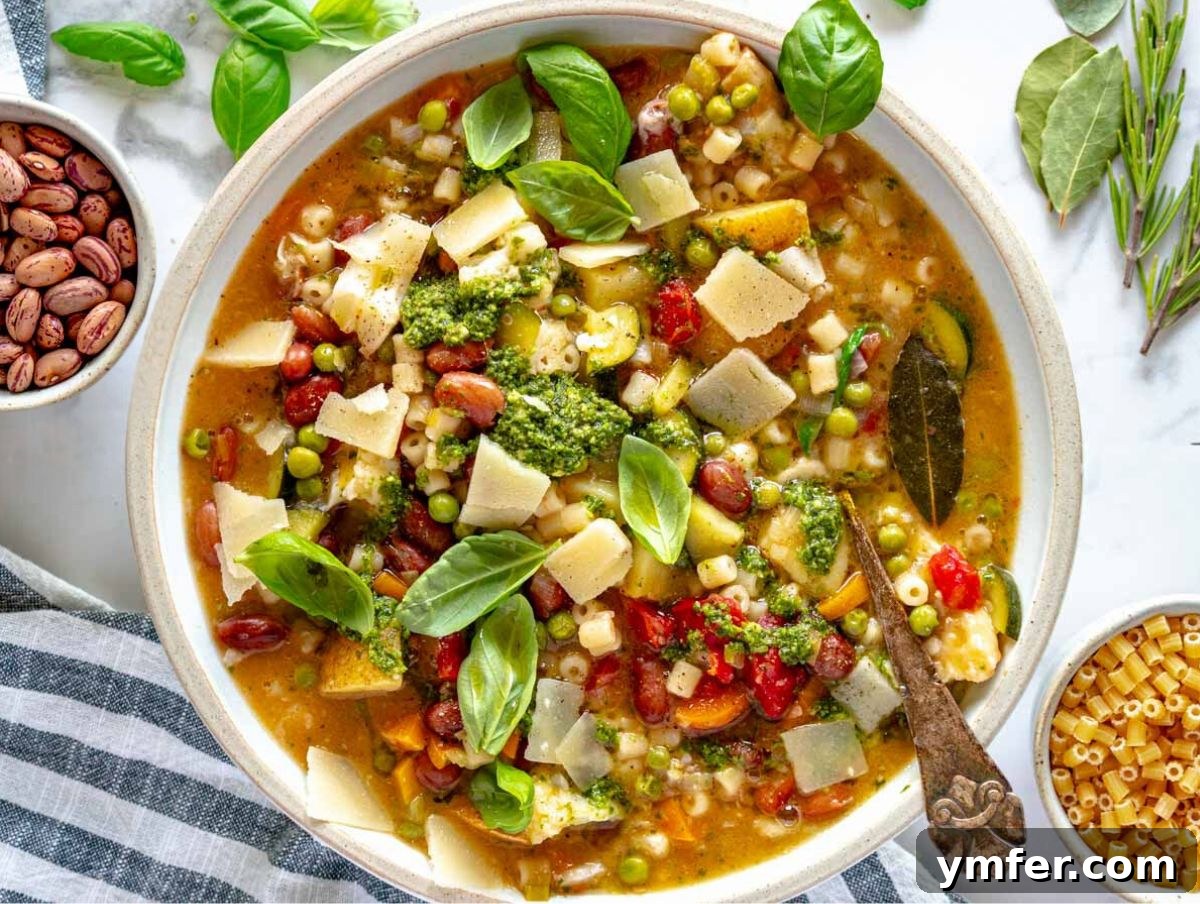
Nico’s Signature Serving Tip: For an unforgettable meal, place a thick slice of freshly toasted crusty bread (such as sourdough or ciabatta) at the bottom of your soup bowl. Generously cover the bread with grated Parmesan cheese. Then, carefully ladle the piping hot Minestrone over the cheesy bread. Finish with all the recommended toppings—more shaved Parmesan, a drizzle of olive oil, and fresh basil leaves. The hot soup will melt the cheese into a luxurious blanket and soften the bread into a delectable, absorbent base, creating a truly indulgent and deeply satisfying dish. You are in for a treat!
Storage Tips for Minestrone
Minestrone is not just delicious; it’s also an excellent candidate for making ahead, making it a fantastic choice for meal prepping throughout the week. Its flavors often deepen and improve overnight!
- Meal Prep Perfection: For the longest storage and best texture, especially if you plan to keep it for more than a couple of days, it’s often best to prepare Minestrone without the pasta. You can cook and add the pasta freshly when reheating individual portions.
- Refrigerator Storage:
- With Pasta: Minestrone containing pasta will keep well for up to 2 days when stored in an airtight container in the refrigerator. The pasta will continue to absorb liquid and soften over time.
- Without Pasta (or with grains): If you make your Minestrone without pasta (or opt for grains like farro or barley, which hold up better), it will last beautifully for up to 4 days in an airtight container in the fridge.
- Freezer Storage: Minestrone made with fresh vegetables freezes exceptionally well. Allow the soup to cool down completely before transferring it to freezer-safe containers or bags. It can be frozen for up to 2 months.
- Thawing and Reheating:
- Thaw: Defrost frozen Minestrone overnight in the refrigerator, or gently reheat it directly from frozen in a saucepan over low heat.
- Reheat: When reheating on the stovetop, you may need to add a splash of water or vegetable broth to achieve your desired consistency, as the soup can thicken during storage.
Explore More Hearty Soup Recipes
If you’ve enjoyed our Minestrone, you’ll love exploring other comforting and nutritious soup recipes from our collection:
THICK AND CHUNKY SOUPS: Dive into the rich textures and flavors of our Black Bean Soup, wholesome Vegetable Soup, hearty Split Pea Soup, aromatic Curry Lentil Soup, nutritious Mung Bean Soup, comforting Lentil Vegetable Soup, vibrant Kale Soup, and exotic Harira Soup.
SMOOTH AND CREAMY SOUPS: For those who prefer a velvety texture, try our invigorating Carrot Ginger Soup, sweet Sweet Potato Soup, wholesome Broccoli Soup, elegant Cauliflower Soup, classic Potato Leek Soup, delicate Asparagus Soup, and flavorful Turkish Lentil Soup.
For even more culinary inspiration, be sure to check out our comprehensive compilation of our best soup recipes, guaranteed to warm your soul and nourish your body.
Soups
Tuscan White Bean Soup
30-minute meals
Tortellini Soup
Soups
Black Bean Soup
Soups
Curry Lentil Soup

Minestrone Soup
Nico Pallotta
A colorful, flavorful, and nutritious combination of seasonal vegetables, legumes, and herbs come together into one of the most iconic Italian dishes.
15
30
45
4 people
Main Course
Italian
Share
Video
Ingredients
- 2 tablespoons extra virgin olive oil
- 1 small onion chopped
- 1 medium carrot chopped
- 1 rib celery chopped
- 1 leek cut in half lengthwise, rinsed, and thinly sliced
- 3 cloves garlic pressed
- 1 sprig rosemary
- 2 bay leaves
- 1 can (15-ounces) beans or 1½ cups cooked beans. You can use borlotti, kidney, pinto or cannellini beans.
- 2 medium potatoes (10 oz) – diced
- 2½ cups cauliflower florets (10 oz)
- 2½ cups vine tomatoes (12 oz) – diced
- 1½ cup frozen peas (7 oz)
- 1 cup ditalini pasta (5 oz)
- 1 medium zucchini (7 oz) – chopped
- 4 cups water or vegetable broth
- 1½ teaspoon salt or more to taste
- ¼ teaspoon black pepper
- 1 crust parmesan optional. Use only if from Parmigiano Reggiano or Grana Padano.
Serves well with
- ½ cup parmesan shaved or grated
- 4 tablespoons basil pesto + basil leaves for garnish + crusty bread
Instructions
-
MAKE FLAVOR BASE: Heat 2 tablespoons extra virgin olive oil in a large pot.
Add 1 small onion, 1 medium carrot, 1 rib celery, all chopped.
Stir in 1 leek (thinly sliced) and 3 cloves garlic (pressed).
Sauté for 5 minutes, stirring often.
-
COOK MINESTRONE: Add 2 medium potatoes (diced), 2½ cups cauliflower florets, 1 can (15-ounces) beans (drained), 1 sprig rosemary, and 2 bay leaves.
Pour in 3 cups water. Season with 1½ teaspoon salt and ¼ teaspoon black pepper.
Bring to a boil and simmer for 12 minutes. Stir occasionally.
-
Add 2½ cups vine tomatoes (diced), 1 medium zucchini (chopped), 1½ cup frozen peas, 1 crust parmesan, and 1 cup ditalini pasta.
Add 1 more cup water and finish cooking for 12 minutes.
The pasta should be cooked, but with a bite. Add more water to reach your desired consistency.
Taste and adjust for salt.
Turn heat off. Let the Minestrone cool down for 5 to 10 minutes to allow the flavors to meld.
-
SERVING TIP: Add a thick slice of toasted crusty bread to the bowl. Cover the bread with grated Parmesan cheese.
Pour the hot Minestrone over the bread and cheese. Garnish with shaved parmesan and basil pesto.
The cheese will melt and the bread will soften, creating a delicious and satisfying dish.
Notes
TIPS
For experienced cooks, you can peel and chop the vegetables as you cook the Minestrone.
For those with less kitchen experience, it’s recommended to take a few minutes to chop the vegetables before starting to cook.
SUBSTITUTIONS
- Potatoes: substitute sweet potatoes.
- Cauliflower: substitute broccoli, chard, or kale.
- Vine tomatoes: substitute canned tomatoes, canned, crushed, or whole peeled.
- Frozen peas: substitute green beans, snap peas, or snow peas.
- Zucchini: you can use any summer squash or courgette. Substitute mushrooms or bell peppers.
- Beans: You can use white beans, kidney beans, pinto beans, or borlotti beans. You can also use canned beans or dried ones cooked in water.
- Rosemary: Substitute thyme.
- Bay leaves: Substitute sage or oregano:
- Pasta: Substitute pearled farro or barley, but we recommend precooking them first or adding them at the start, as they take about 30 minutes.
STORAGE
Minestrone is an excellent meal prep recipe:
- With pasta, it keeps in the fridge for up to 2 days.
- Without pasta (use farro or barley instead), it lasts up to 4 days in the fridge.
- Minestrone made with fresh vegetables can be frozen for up to 2 months.
- When reheating frozen Minestrone, defrost it in the fridge or add a dash of water while reheating in a saucepan.
Nutrition
Carbohydrates: 81g,
Protein: 23g,
Fat: 16g,
Saturated Fat: 4g,
Polyunsaturated Fat: 2g,
Monounsaturated Fat: 6g,
Trans Fat: 0g,
Cholesterol: 9mg,
Sodium: 971mg,
Potassium: 1558mg,
Dietary Fiber: 15g,
Sugar: 13g,
Vitamin A: 5311IU,
Vitamin B6: 1mg,
Vitamin C: 104mg,
Vitamin E: 2mg,
Vitamin K: 65µg,
Calcium: 293mg,
Folate: 233µg,
Iron: 5mg,
Manganese: 2mg,
Magnesium: 133mg,
Zinc: 3mg
You might also like:
Mains
40 High Protein Vegetarian Meals
Mains
30 One Pot Meals
Collections
40 Meatless Dinner Ideas
Collections
Vegetarian Meal Prep Ideas