
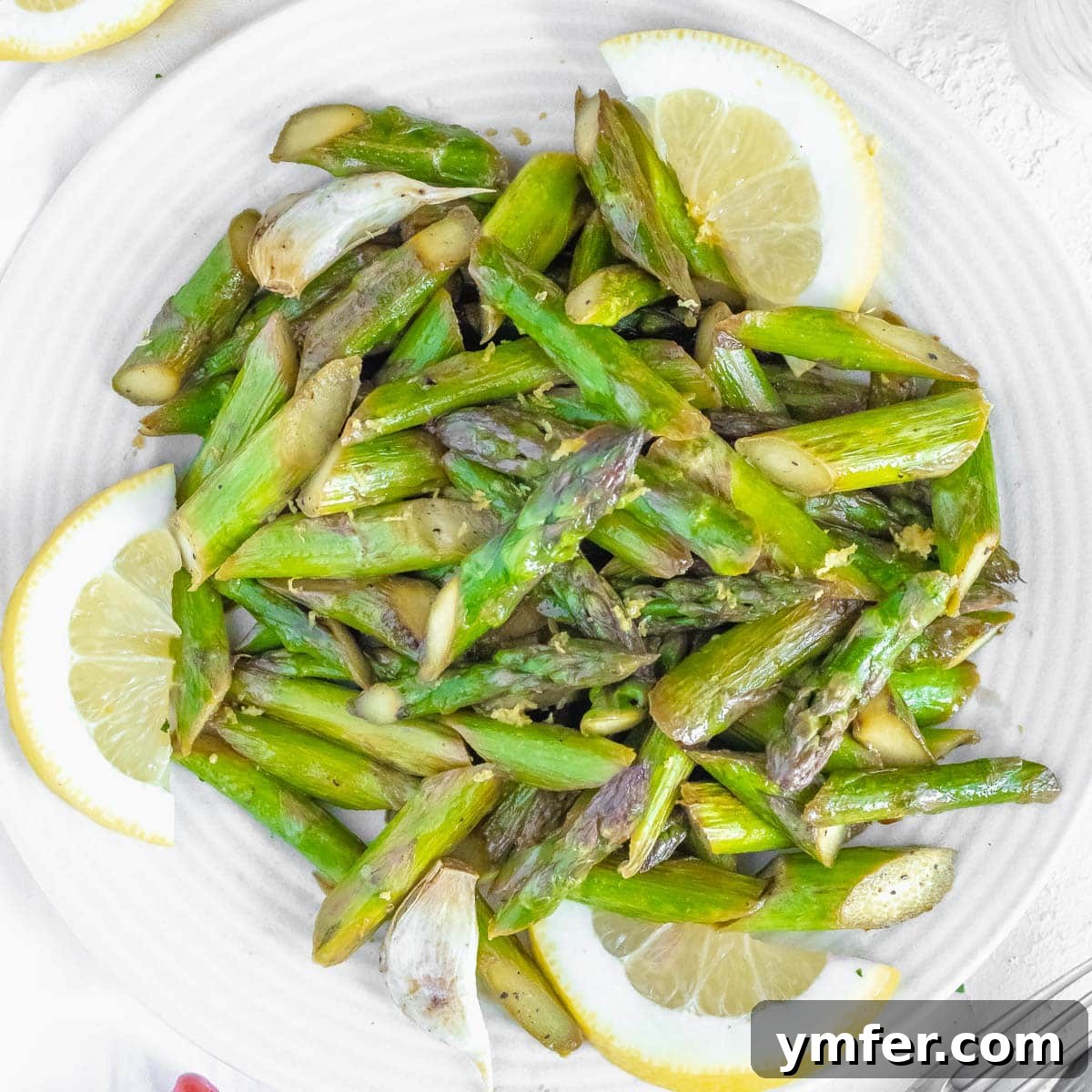
Sautéed asparagus is more than just a quick vegetable side dish; it’s a vibrant celebration of spring, bursting with fresh flavor and delightful texture. This effortless recipe transforms humble asparagus spears into an elegant appetizer or a versatile accompaniment to almost any meal in mere minutes.
Following a cherished Italian tradition, we elevate this simple green vegetable with nothing more than a generous drizzle of fresh lemon juice, the rich fruitiness of extra virgin olive oil, and a sprinkle of savory Parmesan cheese. For a truly complete and satisfying experience, we highly recommend serving it alongside a slice of warm homemade bread or our irresistibly soft no-knead focaccia, perfect for soaking up all the delicious juices.
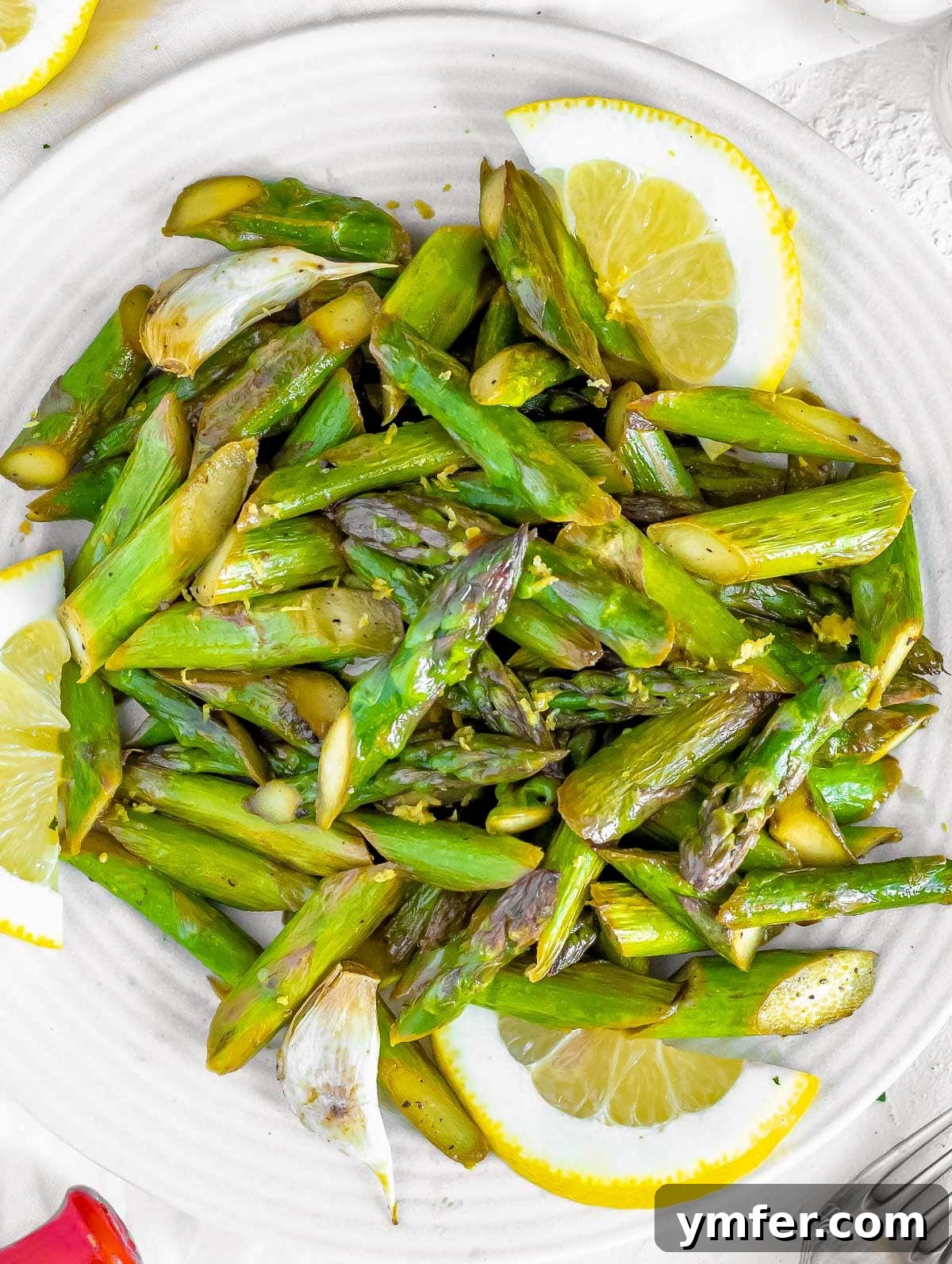
Table of Contents
- Why You Will Love This Recipe
- Choosing the Best Asparagus
- Essential Ingredients
- Step-by-Step Instructions
- Expert Tips for Success
- Serving Suggestions
- Common Questions
- Storage and Meal Prep
- More Asparagus Recipes
- Sautéed Asparagus Recipe Card
Why You Will Love This Recipe
Sautéing is undeniably one of the quickest and most delightful ways to prepare asparagus right on your stovetop. It’s often hailed as one of the easiest methods to cook asparagus, delivering tender-crisp perfection every time. If you’re seeking a fast, healthy, and incredibly flavorful vegetable dish, look no further.
The beauty of sautéed asparagus lies in its incredible versatility. These perfectly cooked spears can be incorporated into a myriad of dishes, instantly elevating their taste and nutritional value. Imagine them stirred into a savory Italian asparagus pasta, blended into a comforting creamy asparagus soup, or adding a fresh crunch to a vibrant Mediterranean couscous salad or an easy pasta salad.
Here at The Plant Based School, we adore our vegetables, especially when they can be prepared with minimal fuss and maximum flavor. The sautéing method, sometimes referred to as stir-frying, achieves exactly that. Asparagus cooks until beautifully tender-crisp in approximately 10 minutes, making it an ideal choice for busy weeknights or when you need a speedy side.
Much like our popular recipes for sautéed zucchini and sautéed eggplant, this asparagus dish utilizes a few simple, high-quality ingredients to enhance the natural sweetness and distinct earthy notes of the asparagus. The result is a genuinely satisfying vegetable recipe that tastes gourmet yet is incredibly simple to execute.
Enjoy this exquisite dish as a standalone side, brightened with a finishing touch of extra virgin olive oil, a grating of fine Parmesan cheese (or a vegan alternative), and a generous dusting of fresh lemon zest. Alternatively, transform it into a stunning Mediterranean appetizer by arranging the spears on a bed of creamy homemade hummus or smoky baba ganoush, served with warm pita bread. Let’s get sautéing!
Choosing the Best Asparagus
The foundation of a great sautéed asparagus dish begins with selecting the finest spears. Asparagus is in its prime from late February to June, making spring the ideal time to enjoy it at its freshest and most flavorful. When choosing asparagus, look for:
- Firm Stalks: They should be rigid and snap easily, not limp or rubbery.
- Tight Tips: The tips should be closed and compact, not spread out or slimy.
- Vibrant Color: A bright green hue is a sign of freshness. Avoid spears with dull or yellowing spots.
- Uniform Thickness: While not essential, choosing spears of similar thickness will ensure more even cooking. Thinner spears cook faster and tend to be more tender, while thicker ones offer a satisfying crunch.
While fresh asparagus is always recommended for its superior crispness and intense flavor, frozen asparagus can be used in a pinch. If opting for frozen, thaw it completely and pat it very dry before sautéing to prevent excess moisture from steaming the asparagus rather than truly sautéing it. You might also encounter wild asparagus at farmer’s markets, which are often thinner and boast a more concentrated, earthy flavor, offering a delightful variation.
Essential Ingredients
- Asparagus: As discussed, fresh is best when in season for that desirable tender-crisp texture. Choose spears that are firm with tight, vibrant green tips. Both farmed and wild varieties work beautifully.
- Extra Virgin Olive Oil: The quality of your olive oil truly shines through here. Extra virgin olive oil, with its high smoke point and rich antioxidant content, is not only stable at sautéing temperatures but also imparts a wonderful depth of flavor that complements the asparagus perfectly.
- Garlic: We use crushed garlic in this recipe. This method ensures that the asparagus is infused with a lovely, subtle garlic aroma without the risk of the garlic burning and turning bitter, which can often happen with finely minced garlic when sautéing.
- Lemon: Both lemon zest and fresh lemon juice are crucial for brightening the dish. A sprinkle of zest over the finished asparagus adds aromatic oils, while a squeeze of juice provides a tangy counterpoint that makes all the flavors pop.
- Salt & Black Pepper: Simple seasonings are all you need to enhance the natural taste of the asparagus. Freshly ground black pepper offers a subtle kick.
- White Wine (Optional, or Water): A splash of dry white wine adds a layer of sophisticated acidity and helps deglaze the pan, picking up any flavorful bits. If you prefer to skip the wine, water works just as well to create a steamy environment that helps tenderize the asparagus.
- Fresh Parsley (Optional Garnish): A final sprinkle of finely chopped fresh parsley adds a touch of color and a fresh, herbaceous note.
- Parmesan Cheese (Optional Garnish): For a truly Italian touch, grate some fresh Parmesan cheese over the warm asparagus just before serving. For a vegan option, nutritional yeast can offer a similar cheesy flavor.
Step-by-Step Instructions
Achieving perfectly sautéed asparagus is incredibly simple. Just follow these easy steps:
1. Prepare the Asparagus
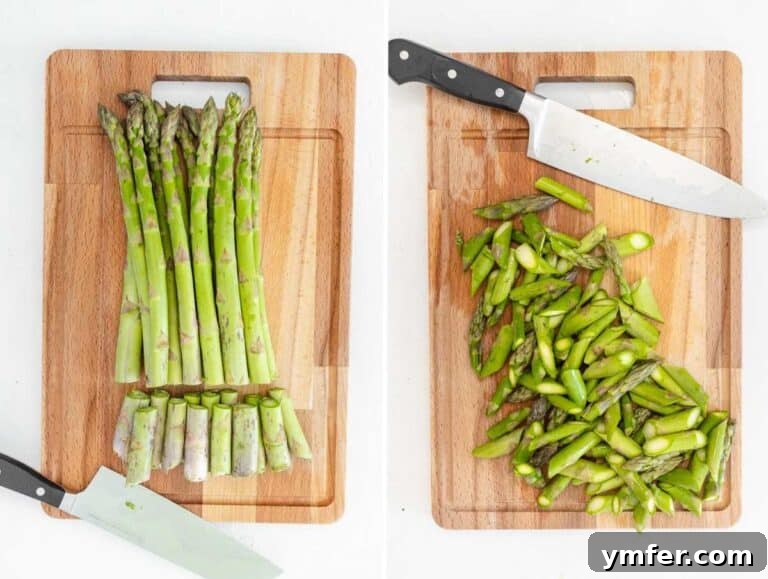
Begin by thoroughly rinsing your asparagus spears under cold water. Next, it’s crucial to trim the woody ends. The easiest way to do this is to hold each spear firmly and bend it gently; it will naturally snap where the tender part meets the tough, woody end. Alternatively, use a sharp knife to cut off the bottom 1-2 inches (2-5 cm) where the stalk feels firm and fibrous.
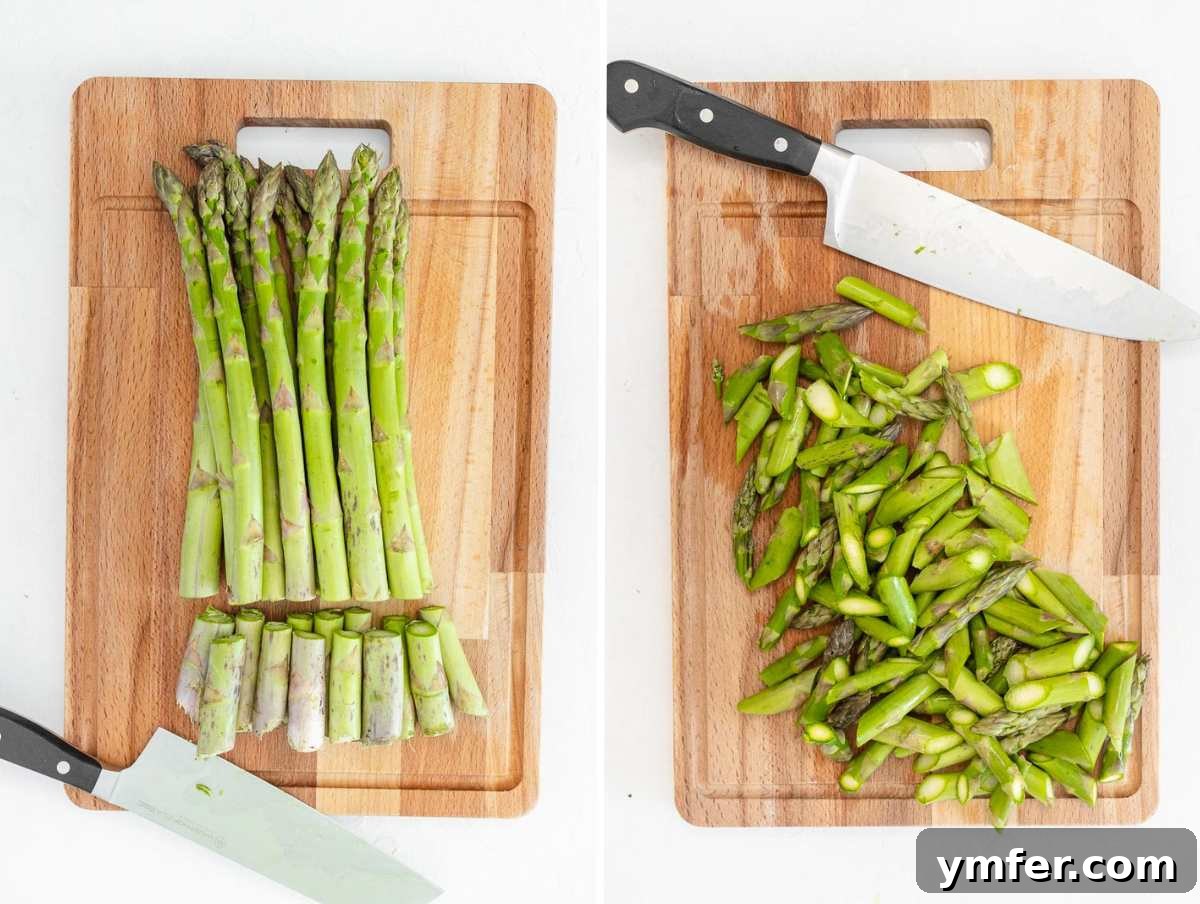
For even cooking and easier serving, chop the asparagus spears into smaller chunks, typically 1 to 2-inch pieces. If you prefer to sauté the asparagus whole, ensure you have a large skillet that can comfortably accommodate them in a single layer without overcrowding.
2. Sauté the Asparagus
On a large skillet (cast iron or stainless steel works best), warm up one tablespoon of extra virgin olive oil over medium-high heat. You want the oil to shimmer but not smoke.
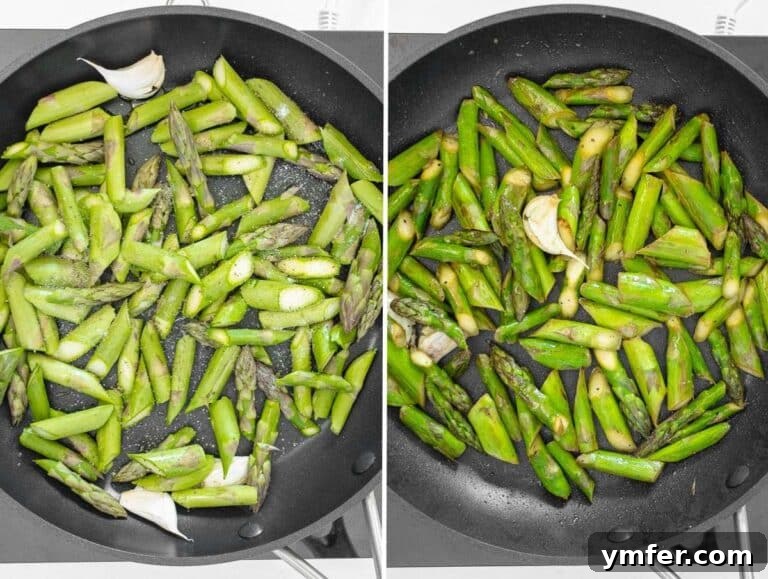
Add the prepared asparagus chunks (or whole spears), crushed garlic, a generous pinch of salt, and a few twists of fresh black pepper to the hot skillet. Sauté, stirring frequently, for about 2 minutes. At this stage, the asparagus should start to turn a brighter green and develop a slight char.
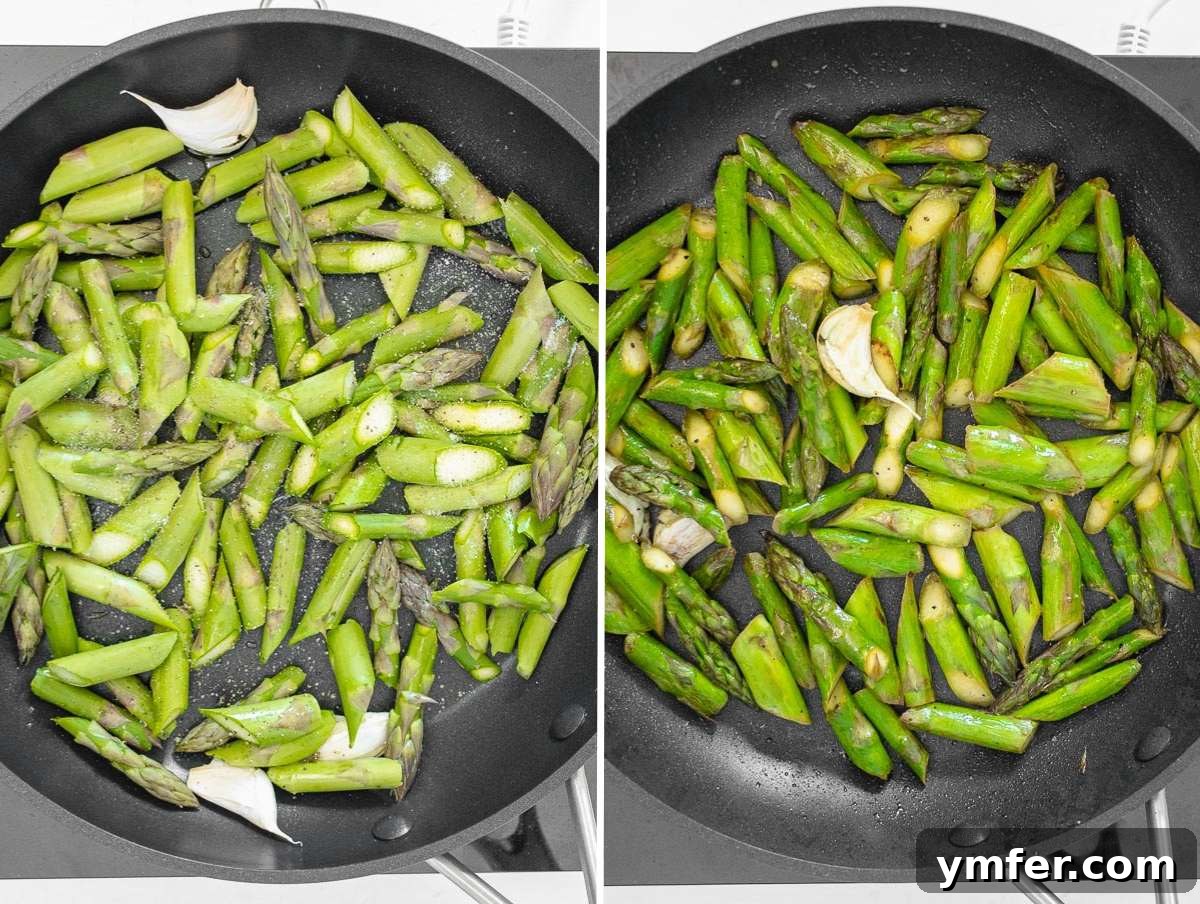
Next, carefully add a splash of white wine (approximately ¼ cup) or water to the skillet. Stir well, allowing the liquid to deglaze the pan and create steam. Let the wine or water mostly evaporate, which usually takes about 30 seconds to 1 minute.
Reduce the heat to medium-low, cover the skillet with a tight-fitting lid, and continue to cook for another 5 to 7 minutes. The exact cooking time will vary depending on the thickness of your asparagus spears; thinner spears will cook faster, while thicker ones will require a few extra minutes under the lid.
3. Check for Doneness and Serve
To determine if the asparagus is perfectly cooked, pierce a stalk with a fork. It should be tender-crisp – meaning it offers a slight resistance but is easily bitten through – and never mushy or overcooked. Overcooked asparagus loses its vibrant color and pleasant texture.
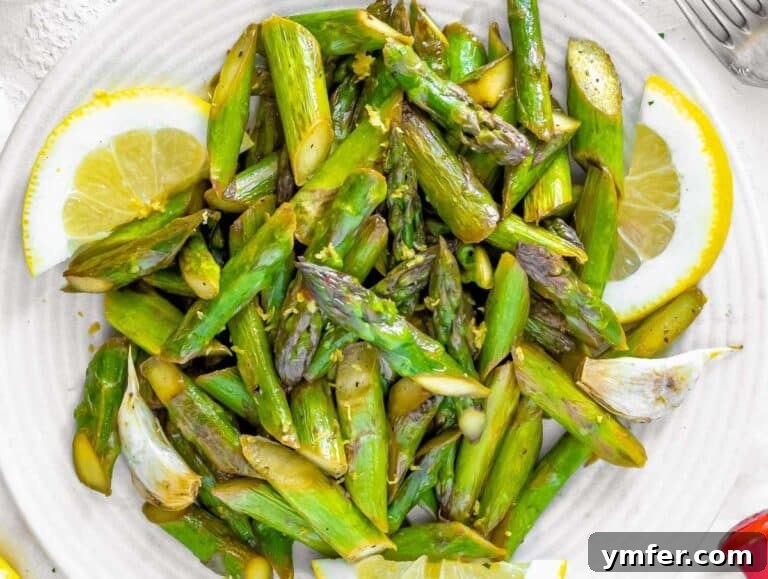
Once cooked to your liking, remove the asparagus from the heat. Serve immediately with a generous squeeze of fresh lemon juice and a garnish of finely chopped fresh parsley. Optionally, grate some quality Parmesan cheese over the top just before serving for an extra layer of savory flavor.
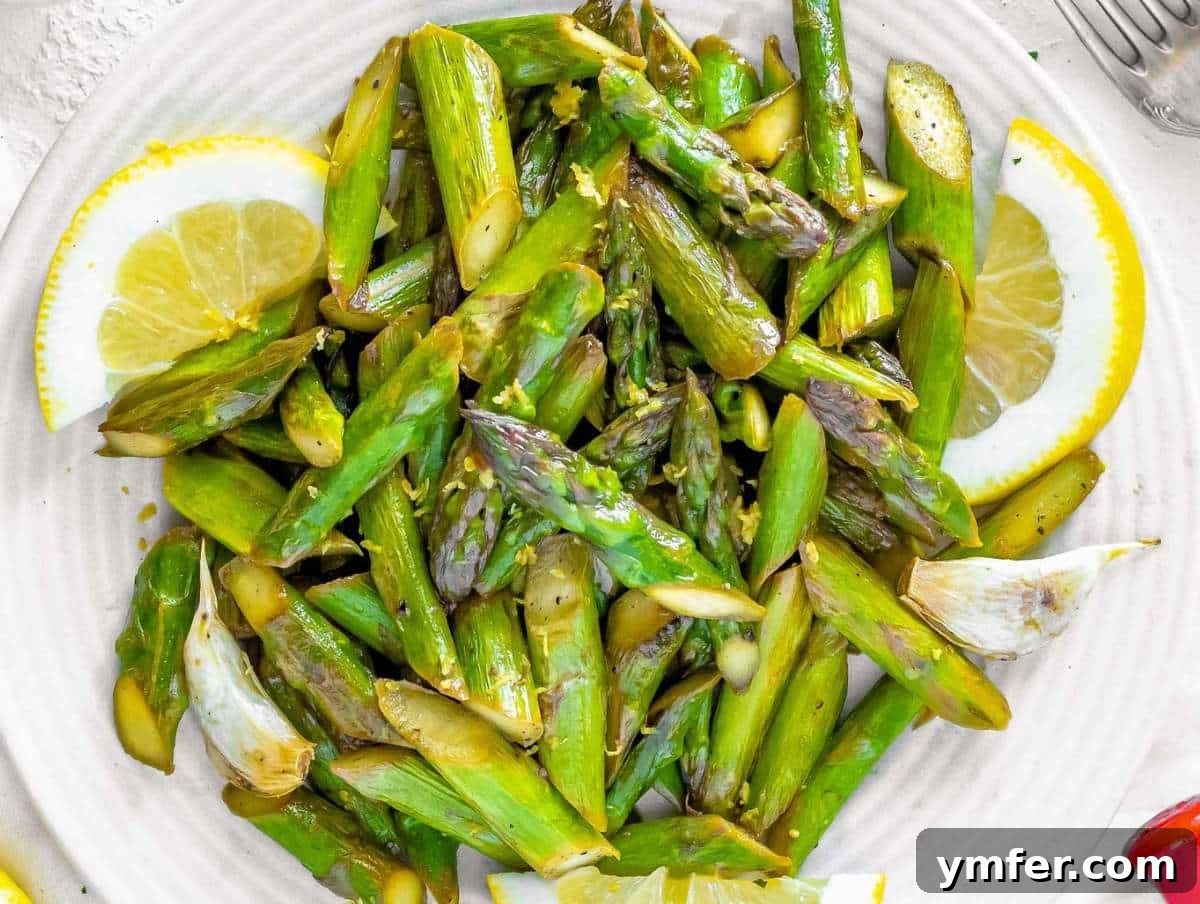
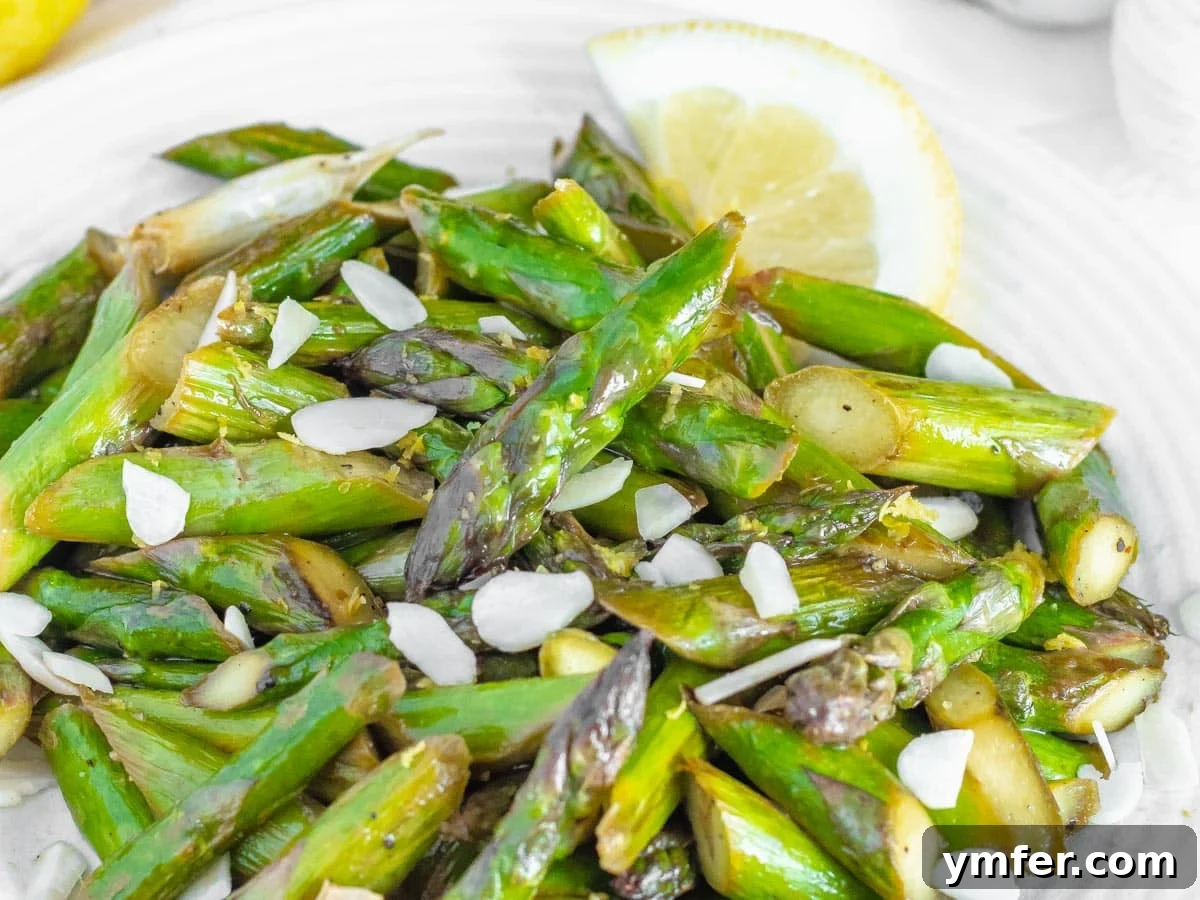
Variation with Toasted Almonds: For those special occasions or when entertaining guests, elevate your sautéed asparagus by garnishing it with a sprinkle of lightly toasted slivered almonds. The nutty crunch provides a wonderful textural contrast to the tender asparagus.
Expert Tips for Success
- Blanching for Vibrant Color: If you desire an even brighter green color and slightly more uniform tenderness, consider blanching the asparagus before sautéing. Simply cook the trimmed asparagus in salted boiling water for about 1 minute, then immediately drain and rinse under very cold water (or plunge into an ice bath) for 20 seconds to stop the cooking process. Pat them thoroughly dry with a kitchen towel before proceeding with sautéing them with garlic and olive oil. This pre-step locks in the vibrant color and ensures a crisp yet tender bite.
- The Art of Deglazing: Deglazing the skillet with white wine (or water) is more than just adding liquid; it’s a flavor-enhancing technique. By adding a cold liquid to a hot pan, you release all the delicious caramelized bits stuck to the bottom, incorporating their savory essence back into your dish. The acidity from a dry white wine particularly helps the asparagus flavor to truly pop and adds a layer of complexity. If using water, it still helps create steam and release those fond bits.
- Crushed Garlic for Optimal Flavor: While minced garlic is common, I’ve found it often burns quickly when sautéing asparagus, leading to a bitter taste that can overpower the delicate flavor of the vegetable. Using crushed garlic instead provides ample garlic aroma and flavor, but in a much more subtle and pleasant way, without the risk of charring. You still get that wonderful allium essence without it dominating the dish.
- Don’t Overcrowd the Pan: For truly sautéed (not steamed) asparagus, it’s essential to cook the spears in a single layer without overcrowding the skillet. If your pan is too full, the asparagus will release moisture and steam rather than caramelize, resulting in a less desirable texture. Cook in batches if necessary.
- Uniform Cuts Matter: When chopping your asparagus, aim for pieces of roughly the same size. This ensures that every piece cooks evenly, preventing some from being overcooked while others remain underdone.
Serving Suggestions
Sautéed asparagus is incredibly versatile and pairs beautifully with a wide array of dishes. Here are some ideas to inspire your next meal:
- Classic Side Dish: It’s the perfect accompaniment to roasted chicken, grilled fish (salmon, cod, or sea bass), steak, or even a simple omelet.
- Italian Inspired: Serve with any pasta dish, especially those with light, creamy sauces or olive oil bases. It also complements risotto beautifully.
- Mediterranean Mezze: Arrange on a platter with creamy hummus, baba ganoush, olives, and warm pita bread for a delightful appetizer spread.
- Breakfast & Brunch: Add to scrambled eggs, frittatas, quiches, or serve alongside poached eggs on toast for an elegant start to your day.
- Salad Booster: Cool the sautéed asparagus and toss it into green salads, grain bowls, or pasta salads for added texture and nutrients.
- Gourmet Topping: Use as a topping for bruschetta, crostini, or even a homemade pizza.
- Sauce & Dressing Pairings: While lemon and olive oil are classic, consider drizzling with a balsamic glaze, a quick mustard vinaigrette, or a sprinkle of chili flakes for a touch of heat.
Common Questions
Generally, it takes between 5 to 10 minutes to sauté asparagus in a skillet with a tablespoon of oil. The exact time depends significantly on the thickness of your asparagus spears. Thicker asparagus will require closer to 7-10 minutes of cooking (including the covered period), while thinner spears can be perfectly tender-crisp in as little as 5 minutes.
To avoid mushy asparagus, do not overcook it. Asparagus should be tender-crisp, not soft. Start by sautéing on medium-high heat for a few minutes, then reduce heat and cover for a short period (3-7 minutes). Pierce with a fork to check for doneness; remove from heat as soon as it reaches your desired tenderness. Also, ensure you don’t overcrowd the pan, as this can lead to steaming rather than sautéing.
Yes, you can use frozen asparagus, but it’s important to thaw it completely before cooking. Pat the asparagus very dry with paper towels to remove as much excess moisture as possible. This prevents it from releasing too much water into the pan and steaming instead of sautéing, which can result in a softer texture compared to fresh asparagus.
If you prefer not to use white wine, or don’t have any on hand, a splash of vegetable broth or simply water works perfectly as a substitute for deglazing and creating steam. While white wine adds a specific acidic flavor profile, water or broth will still help tenderize the asparagus and pick up the flavorful bits from the pan.
Storage and Meal Prep
Storing Fresh Asparagus (Before Cooking)
To keep fresh asparagus at its best, trim about an inch off the bottoms of the stalks. Stand the asparagus upright in a glass jar or container with about an inch of water at the bottom. Cover the tips loosely with a plastic bag and store in the refrigerator. It can stay fresh this way for up to a week.
Storing Cooked Asparagus
Store any leftover sautéed asparagus in an airtight container in the fridge for up to 4 days. While it won’t have the same crispness as freshly cooked, it will still be delicious and retain much of its flavor.
Reheating Cooked Asparagus
You can reheat leftovers easily in the microwave until warmed through. For a slightly crisper texture, briefly warm them in a skillet over medium heat with a tiny bit of olive oil until heated through and lightly re-charred. Avoid over-reheating, which can make them mushy.
We generally do not recommend freezing cooked sautéed asparagus, as its texture can become overly soft and watery upon thawing.
More Asparagus Recipes
If you’re as big a fan of asparagus as we are, be sure to check out our other fantastic recipes that highlight this versatile spring vegetable:
- Air Fryer Asparagus: Perfectly crispy with minimal oil.
- Tofu Soup with Asparagus: A hearty and comforting meal.
- Steamed Asparagus: A classic, healthy preparation.
- Grilled Asparagus: Smoky and tender, ideal for BBQ season.
- Boiled Asparagus: Simple and straightforward.
Explore More Asparagus Dishes
Pasta
Asparagus Pasta
Soups
Asparagus Soup
Collections
How to Cook Asparagus
Sides
Grilled Asparagus
If you tried this Sautéed Asparagus recipe or any other recipe on our blog, please leave a 🌟 star rating and let us know how it goes in the comments section below. We absolutely love hearing from you and seeing your culinary creations!
Sautéed Asparagus
Nico Pallotta
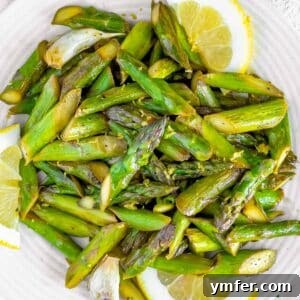
For an irresistible finish, serve these tender-crisp spears with a generous squeeze of fresh lemon juice and a drizzle of good quality extra virgin olive oil.
5
7
12
4
people
Side dish
International
Share
Ingredients
- 16 ounces (1 lb) asparagus
- 1 tablespoon extra virgin olive oil
- 2 cloves garlic crushed
- ½ teaspoon salt
- 2 twists freshly ground black pepper
- ¼ cup dry white wine or water
- 4 wedges lemon for squeezing on top and zest
- Fresh parsley finely chopped, for garnish (optional)
- Parmesan cheese freshly grated, for garnish (optional)
Instructions
-
Rinse your asparagus thoroughly and trim the woody ends. You can snap them by hand where they naturally break, or use a sharp knife to cut off the bottom 1-2 inches.
For even cooking, chop the asparagus spears into 1-2 inch chunks. If you prefer to sauté asparagus whole, ensure you have a large skillet to fit them in a single layer.

-
On a large skillet, warm up one tablespoon of extra virgin olive oil over medium-high heat. Add the prepared 16 ounces (1 lb) asparagus, 2 cloves crushed garlic, ½ teaspoon salt, and 2 twists freshly ground black pepper.
Sauté on medium-high heat, stirring occasionally, for about 2 minutes until the asparagus brightens and starts to char slightly. Then, add ¼ cup dry white wine (or water) and stir to deglaze the pan.
Let the liquid largely evaporate (about 30-60 seconds), then turn the heat to medium-low. Cover the skillet with a lid and cook for another 3 to 7 minutes, depending on the thickness of your asparagus.
-
To check for doneness, pierce a stalk with a fork. It should be tender-crisp, offering a slight resistance but easily edible – never mushy or overly soft.
Serve immediately with a squeeze of fresh lemon juice, a sprinkle of lemon zest, and optionally, finely chopped fresh parsley and grated Parmesan cheese.
Notes
The best way to enjoy sautéed asparagus is fresh from the pan, with a generous squeeze of lemon juice, a drizzle of high-quality extra virgin olive oil, and a sprinkle of finely chopped parsley.
For an even richer flavor, especially for special occasions, we love to serve them with a grating of fresh Parmesan cheese just before eating.
Add nuts: To make this dish a little fancier and add textural contrast, garnish the finished asparagus with a scattering of lightly toasted slivered almonds.
STORAGE
Store leftover sautéed asparagus in an airtight container in the fridge for up to 4 days. Reheat gently in the microwave or quickly in a skillet.
We do not recommend freezing cooked sautéed asparagus, as its texture can become undesirably soft upon thawing.
Nutrition
Calories:
68
kcal
,
Carbohydrates:
5
g
,
Protein:
3
g
,
Fat:
4
g
,
Saturated Fat:
1
g
,
Polyunsaturated Fat:
1
g
,
Monounsaturated Fat:
3
g
,
Cholesterol:
0
mg
,
Potassium:
247
mg
,
Dietary Fiber:
2
g
,
Sugar:
2
g
,
Vitamin A:
858
IU
,
Vitamin B6:
1
mg
,
Vitamin C:
7
mg
,
Vitamin E:
2
mg
,
Vitamin K:
49
µg
,
Calcium:
32
mg
,
Folate:
59
µg
,
Iron:
3
mg
,
Manganese:
1
mg
,
Magnesium:
18
mg
,
Zinc:
1
mg
Tried this recipe?
Leave a comment below or mention @theplantbasedschool on Instagram. We love hearing from you ⭐️ 💚.