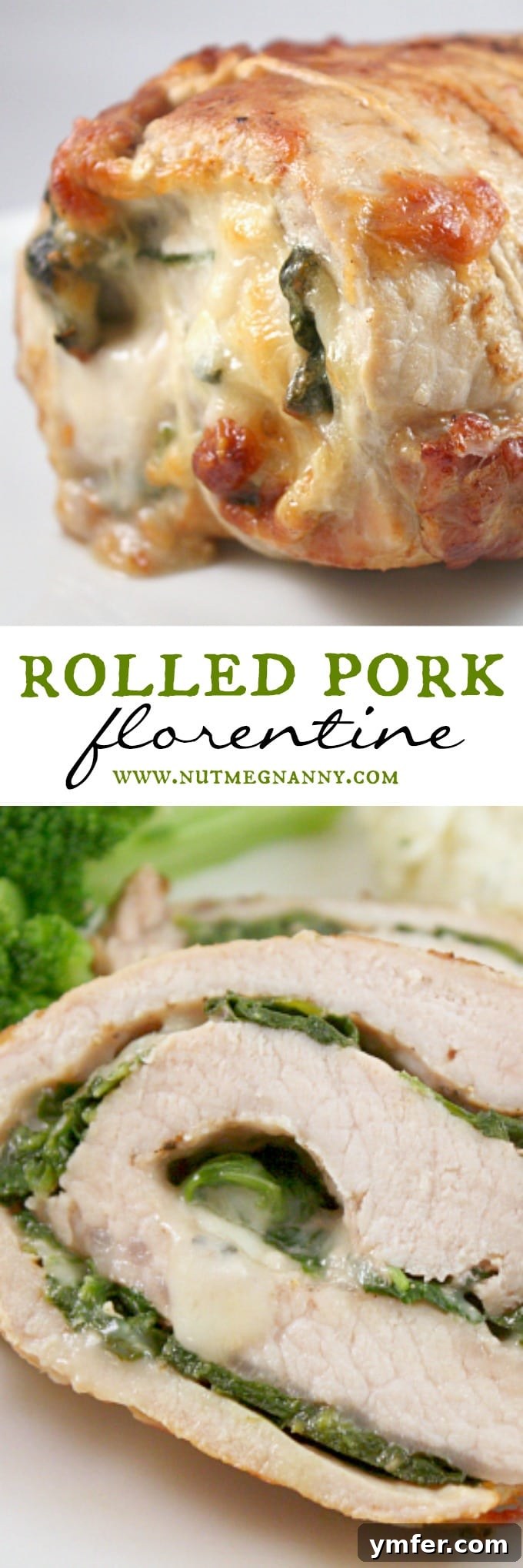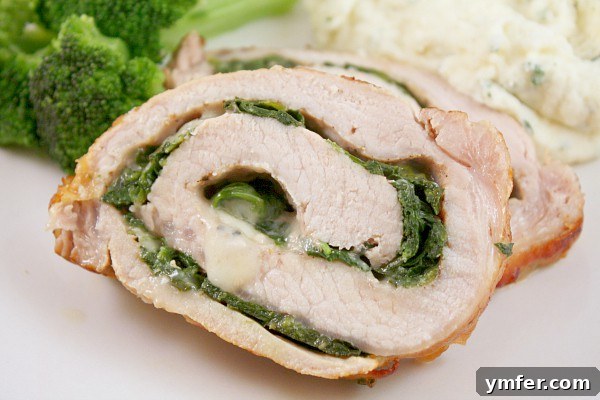
This Rolled Pork Florentine recipe may look gourmet and challenging, but it’s surprisingly simple to prepare. Imagine succulent, tender pork loin, generously stuffed with creamy provolone cheese and vibrant, sautéed spinach. It’s a dish that brings elegant flavor to your dinner table with minimal fuss, making it perfect for both weeknight meals and special occasions.
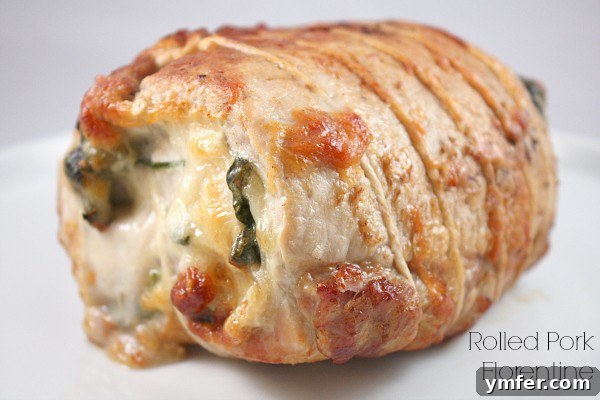
Crafting Layers of Delicious Flavor: The Art of Stuffed Pork Florentine
Every great recipe often begins with an unexpected inspiration. Mine came from a delightful conversation with my neighbor, who happens to be an excellent butcher. One day, while contemplating dinner options and eyeing a beautiful cut of lamb, my attention was drawn to a couple of exquisite pork roasts. They looked too good to pass up, promising a hearty and satisfying meal. My butcher, with his expert eye, suggested a creative approach: “Why not roll-cut that roast and stuff it with provolone cheese and spinach?”
The idea immediately resonated. The combination of savory pork, melted provolone, and earthy spinach sounded not just good, but exceptional. This inspiration quickly evolved into what you see today: a mouth-watering Rolled Pork Florentine. Despite initial intimidation, having never made a stuffed or rolled roast before, I found the preparation process remarkably straightforward. The key steps, like butterflying the pork and securing it with butcher’s twine, turned out to be simpler than anticipated, leading to a perfectly cooked, wonderfully flavorful result.
The “Florentine” style, traditionally referring to dishes prepared with spinach, is a classic pairing that elevates many proteins, and pork is no exception. The rich, slightly salty provolone complements the delicate sweetness of the pork, while the garlic-infused spinach adds a layer of freshness and an appealing texture contrast. This dish truly is a symphony of flavors, designed to impress without requiring hours in the kitchen.
Mastering the Roll: Tips for a Perfect Stuffed Pork Roast
Creating a beautifully stuffed pork roast, like this Rolled Pork Florentine, might seem like a technique reserved for professional chefs, but it’s entirely achievable in your home kitchen. The first step, and perhaps the most crucial, is preparing the pork itself. We start with a boneless center-cut pork roast, known for its lean texture and even cooking. To create the perfect canvas for our filling, the pork needs to be “roll-cut” or butterflied.
If your butcher, like mine, is kind enough to do this for you, you’re off to a great start! However, if you’re tackling it yourself, it’s a valuable skill to learn. The goal is to slice the pork horizontally, almost all the way through, and then open it up like a book, creating a large, flat rectangle of meat. This uniform thickness ensures even cooking and allows for a generous, consistent layer of filling. For a visual guide, many online tutorials can demonstrate this technique effectively. Just search for “how to butterfly a pork loin” to get started.
Once your pork is properly butterflied, the magic of the Florentine stuffing begins. The combination of provolone cheese and sautéed spinach is not only delicious but also provides a delightful textural element to the roast. Provolone, with its mild, slightly nutty flavor and excellent melting properties, creates a creamy layer that binds the spinach to the pork. The spinach itself is quickly sautéed with garlic, which enhances its natural sweetness and adds an aromatic depth that permeates the entire dish. It’s important to squeeze out any excess moisture from the spinach after cooking to prevent the roast from becoming watery.
The Art of Rolling and Tying
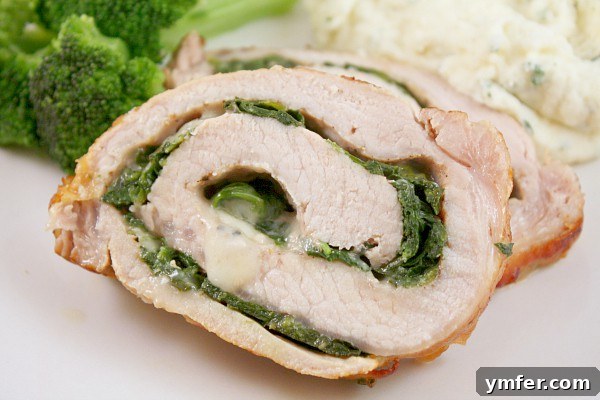
After spreading the flavorful filling evenly across the butterflied pork, it’s time to roll it up. Start from one of the shorter ends and roll the pork tightly and evenly. This ensures that the filling stays securely inside and that each slice of the finished roast will have a beautiful swirl of spinach and cheese. Once rolled, placing the seam side down on your cutting board helps to stabilize it for the next step: tying.
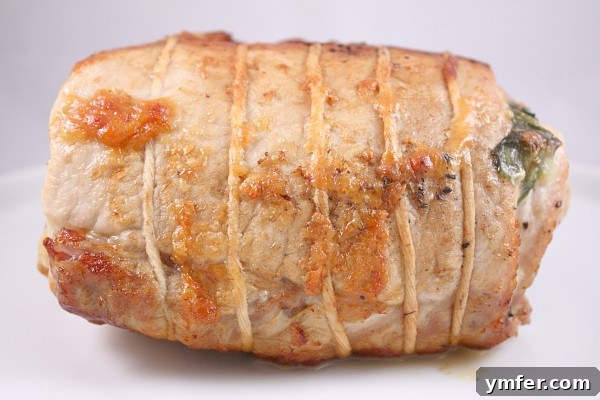
Tying the roast with butcher’s twine is essential for maintaining its shape during cooking. This prevents the filling from spilling out and ensures that the roast cooks evenly, resulting in a consistent texture from end to end. If you’re new to tying roasts, don’t fret; there are many helpful videos available online that demonstrate simple and effective tying techniques. A series of evenly spaced loops along the length of the roast, followed by a knot, will do the trick. A well-tied roast is not just about functionality; it also makes for a stunning presentation when sliced.
The beauty of this Rolled Pork Florentine lies in its simplicity and the depth of flavor achieved through these classic techniques. It’s a dish that looks sophisticated but is surprisingly forgiving for home cooks. If I, a first-timer, could achieve a perfect and delicious result, you certainly can too!
Explore More Delicious Pork Recipes
Roast Pork Loin with Dried Fruit Compote
Stuffed Pork Tenderloin
Pork Chops with Apples
Pork Chile Verde
Rolled Pork Florentine
Brandy O’Neill
6 servings
30
1 10
1 40
Ingredients
- 2 pounds boneless center cut pork roast, roll cut (butterflied)
- 1 teaspoon kosher salt
- ½ teaspoon freshly ground black pepper
- 1 teaspoon unsalted butter
- 6 ounces fresh spinach, washed and thoroughly dried
- 1 clove garlic, finely minced
- 12 thin slices provolone cheese
- 1 tablespoon extra virgin olive oil
- 1 cup dry white wine, such as Sauvignon Blanc or Pinot Grigio
- Butcher’s twine
Instructions
-
Preheat your oven to 375 degrees F (190 degrees C). This ensures the oven is at the correct temperature for even cooking once the roast goes in.
-
Carefully unroll the butterflied pork roast on a clean cutting board. Season both sides generously with kosher salt and freshly ground black pepper. This seasoning will infuse flavor throughout the meat.
-
Lay the 12 thin slices of provolone cheese evenly over the seasoned pork, making sure to leave a one-inch space from the edges. This margin helps keep the cheese from seeping out too much during rolling.
-
In a 12-inch skillet, add the butter and set it over medium heat. Allow the butter to melt and just begin to foam.
-
Add the fresh spinach and minced garlic to the melted butter in the skillet. Sauté just until the spinach becomes soft and wilted, which usually takes only 2-3 minutes. Avoid overcooking the spinach to maintain its vibrant color and flavor. Once cooked, briefly press out any excess liquid from the spinach.
-
Spread the sautéed spinach and garlic mixture evenly on top of the provolone cheese layer on the pork, again maintaining a small border from the edges. Ensure it’s spread as evenly as possible for consistent flavor in every slice.
-
Starting from one of the shorter ends, tightly roll up the pork roast. Once rolled, place it seam-side down on your cutting board. Using butcher’s twine, tie up the roast at 1-inch intervals to secure its shape and keep the filling intact during cooking. This step is crucial for an attractive and evenly cooked roast.
-
In a 12-inch oven-safe skillet (preferably cast iron), heat 1 tablespoon of olive oil over medium-high heat until shimmering.
-
Carefully add the tied pork roast to the hot skillet and brown it on all sides. This browning step, known as the Maillard reaction, creates a rich, caramelized crust and locks in moisture, contributing significantly to the flavor. This should take about 2-3 minutes per side.
-
Once the roast is beautifully browned on all sides, pour in the dry white wine. The wine will deglaze the pan, picking up all the flavorful browned bits. Transfer the skillet directly into the preheated oven to continue cooking.
-
After 30 minutes of cooking in the oven, carefully flip the roast over to ensure even cooking and browning. Continue to roast until the internal temperature reaches 145-150 degrees F (63-65 degrees C) when measured with a meat thermometer inserted into the thickest part of the roast, avoiding the filling.
-
Cooking time will vary depending on the size and thickness of your roast. My 2lb. stuffed roast took approximately 60 minutes to reach the desired internal temperature. Some of the cheese may leak out while cooking, which is normal. If you notice your pan getting dry, you can add a splash more white wine or water to keep the pan juices from burning.
-
Once cooked, remove the roast from the oven and transfer it to a cutting board. Tent it loosely with foil and let it rest for at least 10-15 minutes before slicing. This resting period is crucial as it allows the juices to redistribute throughout the meat, resulting in a more tender and moist roast.
-
When you are ready to serve, carefully cut off and remove the butcher’s twine. Gently slice the roast into thick, elegant rounds, showcasing the beautiful swirl of provolone and spinach. Serve immediately with your favorite side dishes.
Additional Info
Main Course
American