
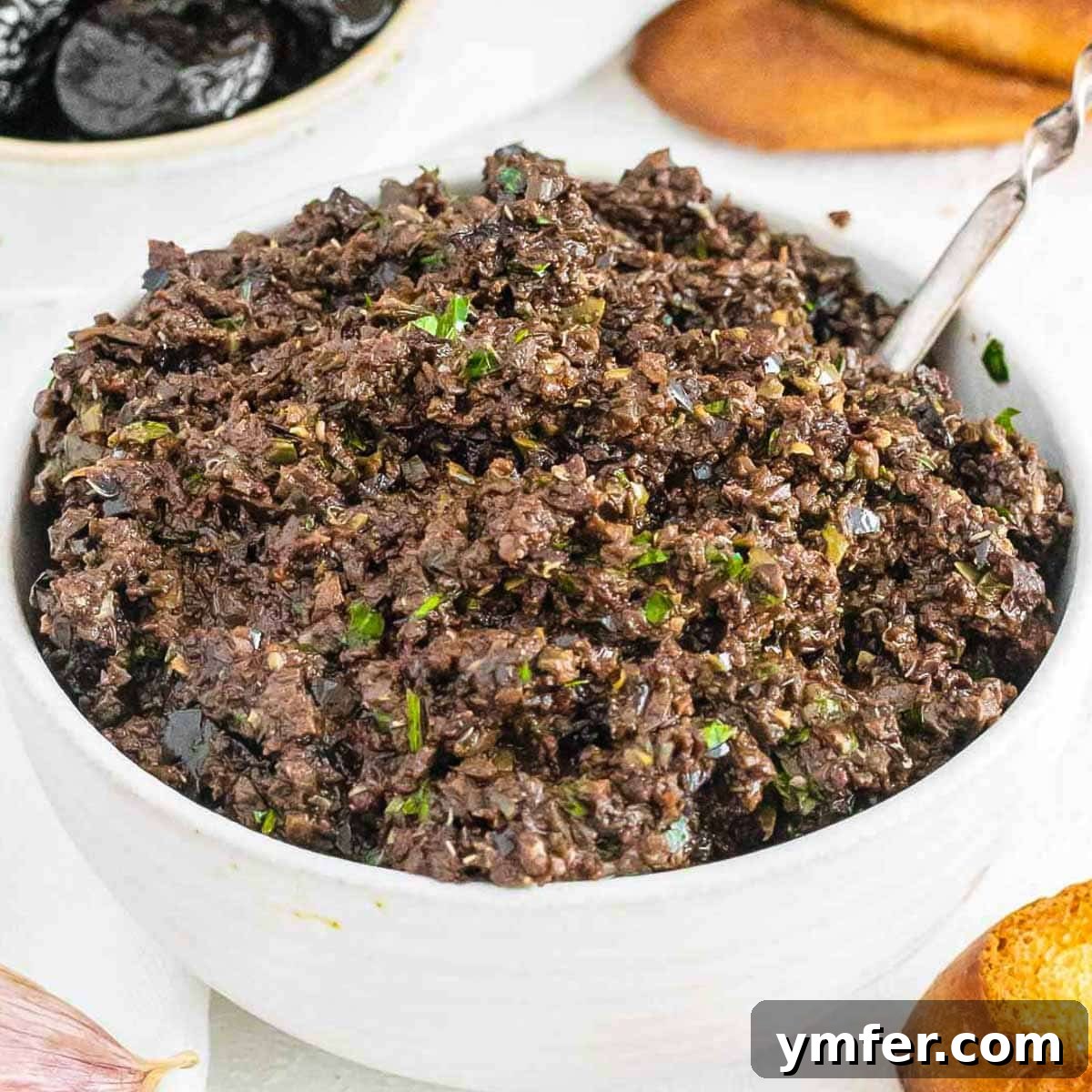
Authentic 5-Minute Olive Tapenade Recipe: A Mediterranean Delight
Olive Tapenade is a vibrant, savory Mediterranean condiment that promises to elevate any dish. Crafted in mere minutes with the simplicity of a food processor, this versatile spread is ideal for slathering on crusty bread, crisp crostini, or hearty sandwiches. Its harmonious blend of robust flavors and luxurious, velvety texture makes it an impressive appetizer for guests or a delightful treat for your family.
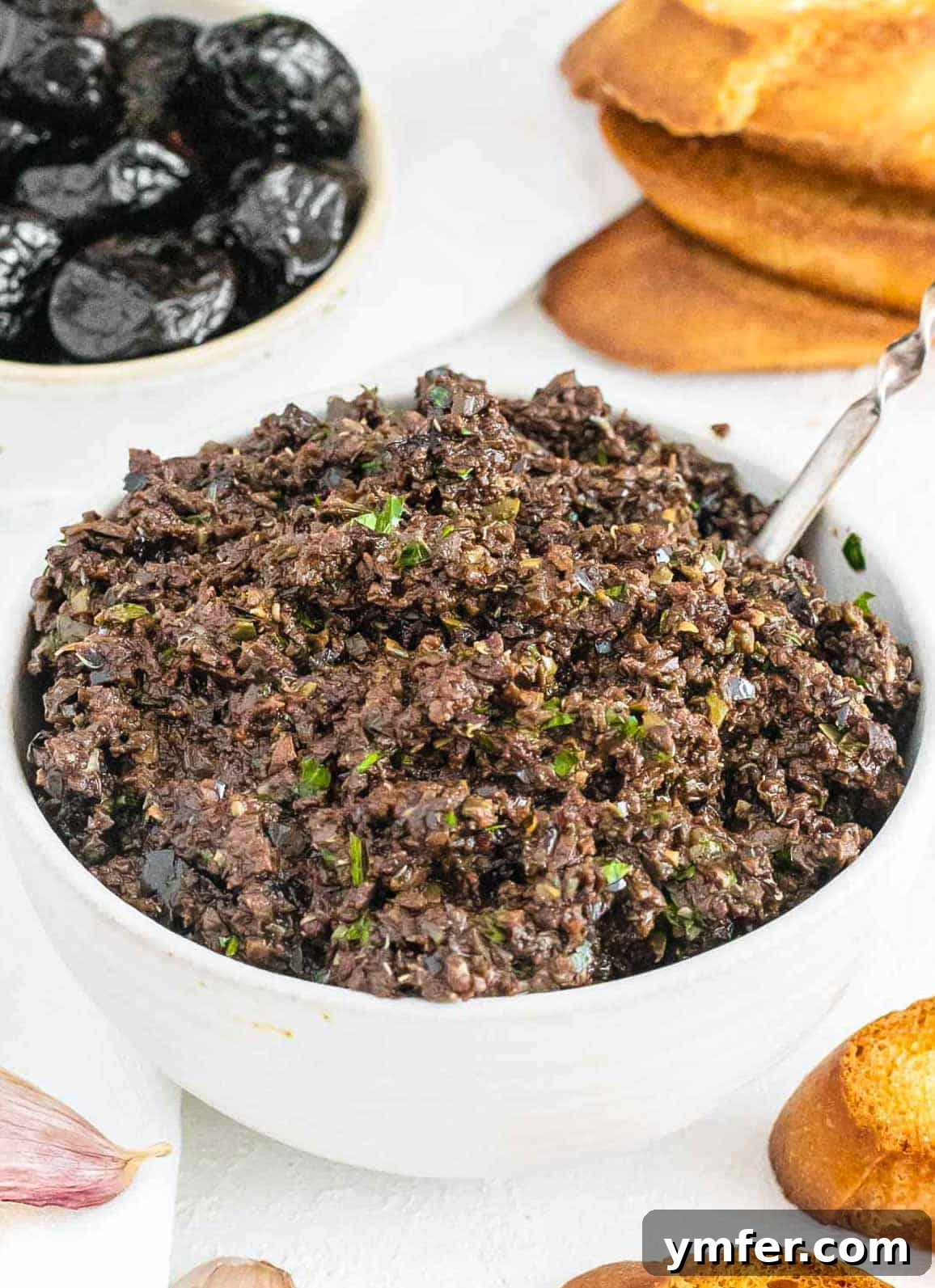
Table of Contents
- What is Olive Tapenade?
- Ingredients & Essential Substitutions
- How to Make Olive Tapenade: A Step-by-Step Guide
- Versatile Serving Suggestions
- Storage Tips for Freshness
- More Mediterranean Appetizer Recipes
- Olive Tapenade Recipe Card
- Frequently Asked Questions (FAQs)
What is Olive Tapenade? Unveiling a French Classic
Tapenade is a cherished traditional spread hailing from the sun-drenched Provence region of Southern France. Its name, surprisingly, doesn’t come from olives but from the Provencal word “Tapeneī,” meaning capers – a testament to this ingredient’s crucial role in defining tapenade’s characteristic salty and acidic flavor. At its heart, tapenade is a luxurious purée, finely chopped, or blended mixture of luscious olives, tangy capers, rich olive oil, and occasionally, anchovies for an extra layer of umami depth.
Beyond its rich history, tapenade is celebrated for its incredible versatility. The most common way to savor tapenade is as an elegant starter or aperitif. Picture it generously spread over crisp toasted crostini, offering a delightful crunch with every bite, or served alongside a colorful assortment of fresh vegetable sticks for a lighter option.
However, the culinary applications of tapenade extend far beyond appetizers. It transforms effortlessly into a zesty spread for sandwiches, infusing everyday lunches with Mediterranean flair. Furthermore, it can be a quick and flavorful sauce for a simple pasta dish, much like an olive pesto but with its own distinct salty and rich profile. Imagine it as your secret weapon for adding an instant burst of gourmet flavor to a multitude of meals.
While often associated with black olives, tapenade can be crafted with black olives, green olives, or a captivating mix of both. Our recipe focuses on the quintessential, most classic version, showcasing the deep, complex flavors of black olives. Traditionally, olive tapenade was made by hand, patiently crushing all ingredients with a pestle in a mortar until they achieved a beautifully coarse puree. Other skilled cooks would meticulously chop the ingredients with a chef’s knife before blending them with oil.
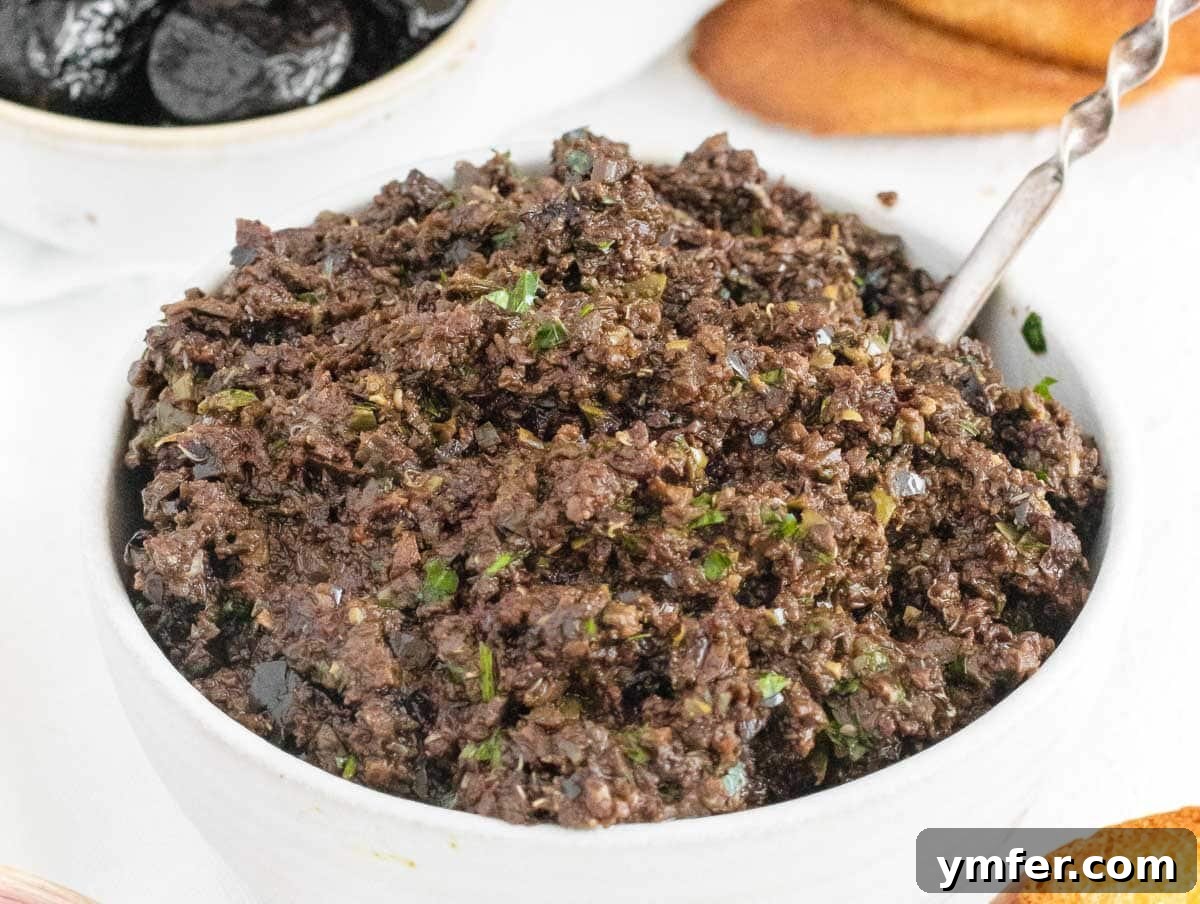
Today, modern kitchens embrace efficiency without compromising flavor. We make our tapenade with a food processor, a method that allows you to pulse the ingredients together to perfection in less than 5 minutes, ensuring the olives are blended just enough to create that desired texture without becoming overly smooth. This quick preparation means you can enjoy this gourmet spread anytime!
And speaking of perfect pairings, remember to whip up our irresistible crostini recipe to accompany this olive tapenade. They truly are a match made in culinary heaven!
Ingredients & Essential Substitutions for the Perfect Tapenade
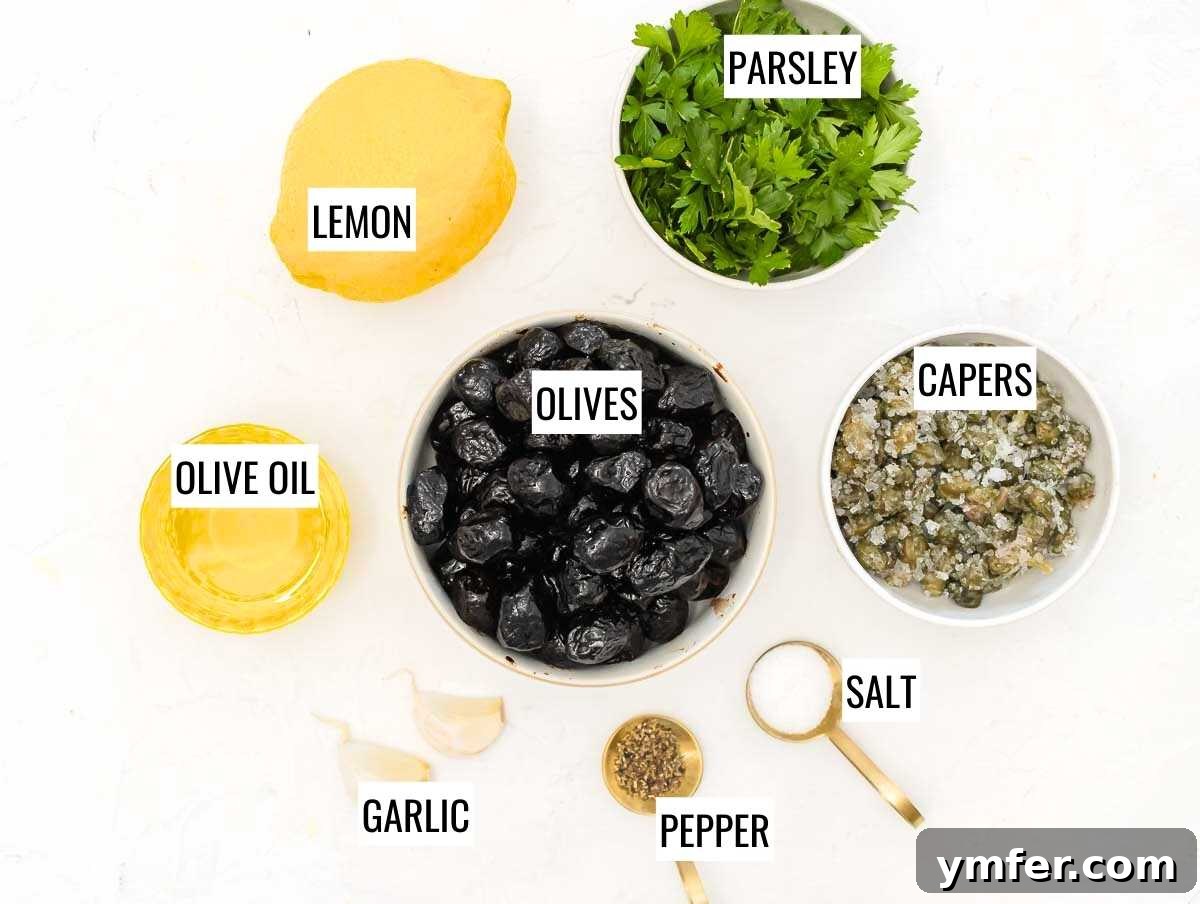
Olives: The Heart of Your Tapenade
The choice of olives significantly influences the final flavor profile of your tapenade. Historically, the finest olives for tapenade are the delicate Niçoise olives from Southern France, renowned for their mild, fruity notes. While authentic Niçoise can be a treasure to find, fear not! You can achieve a fantastic result with readily available black pitted olives.
For those seeking a more gourmet touch, consider Italian Taggiasche Olives, which share a similar growing region and elegant flavor profile with their French counterparts. Another excellent option for a rich, black olive tapenade is Kalamata Olives, known for their distinct fruity and somewhat smoky taste. If you prefer a brighter, tangier green olive tapenade, we highly recommend Castelvetrano olives, a vibrant Sicilian variety celebrated for its buttery texture and mild, sweet flavor, making it perfect for this recipe.
Capers: The Non-Negotiable Zing
Capers are unequivocally non-negotiable in this recipe. Their briny, tangy punch is essential for balancing the richness of the olives and truly defines tapenade’s character. You have several options for capers: you can use those preserved in vinegar, in olive oil, or packed in salt. If using salt-packed capers, remember to rinse them thoroughly under cold water to remove excess salt before blending, preventing an overly salty tapenade. A good rule of thumb is to use one heaping teaspoon of chopped capers or two teaspoons of whole capers for every cup (approximately 130 grams) of pitted olives.
Olive Oil: The Unifying Elixir
The quality of your olive oil makes a noticeable difference. We strongly recommend using extra virgin olive oil if possible. A good quality extra virgin olive oil contributes subtle sweet and fruity notes, which beautifully round off and harmonize the intense, savory flavors of the olives and capers, adding depth and a silky smooth texture to your spread.
Garlic: A Hint of Pungency (Optional)
Garlic is an optional addition, and indeed, traditional French tapenades often omit it entirely. However, if you appreciate a subtle hint of pungency, feel free to add it, but do so in moderation. We suggest adding a very small amount, such as 1/4 of a clove, to enhance without overpowering the delicate balance of flavors.
Fresh Herbs: Brightness and Aroma (Optional)
Fresh parsley is another optional ingredient and is rarely found in the most authentic French tapenade recipes. Nevertheless, we find that a small quantity of fresh flat-leaf parsley can instantly brighten this recipe, adding a touch of verdant freshness and a hint of peppery flavor. For a delightful twist, you can substitute fresh basil, fragrant fresh thyme, or other complementary fresh herbs according to your preference.
Lemon Juice: A Touch of Zest (Optional)
Lemon juice is also optional and not part of the original, purist tapenade recipe. However, we enjoy adding a splash of freshly squeezed lemon juice to introduce a light, refreshing acidity that lifts and lightens the tapenade’s rich profile. For true lemon aficionados, a tiny bit of lemon zest can intensify that bright, citrusy aroma. If lemon proves too sharp for your palate, consider an intriguing variation with a touch of subtly grated orange zest for a warmer, sweeter citrus note.
Salt and Pepper: Season to Taste
Salt and black pepper are both optional additions. Your need for them will largely depend on the inherent saltiness of your chosen capers and olives. We highly recommend tasting your tapenade before adding any extra salt or pepper, allowing the natural flavors to guide your seasoning. Our recipe does not include anchovy fillets, as they are an optional ingredient often added for an extra savory kick, but we prefer to keep our version purely plant-based.
How to Make Olive Tapenade: A Step-by-Step Guide
Making a delicious, restaurant-quality olive tapenade at home is incredibly simple, especially with a food processor. Follow these easy steps to create your own Mediterranean masterpiece:
-
First, prepare your capers by rinsing them thoroughly if they are salt-packed, then gently pat them dry. Next, if your olives are not already pitted, carefully remove the pits.
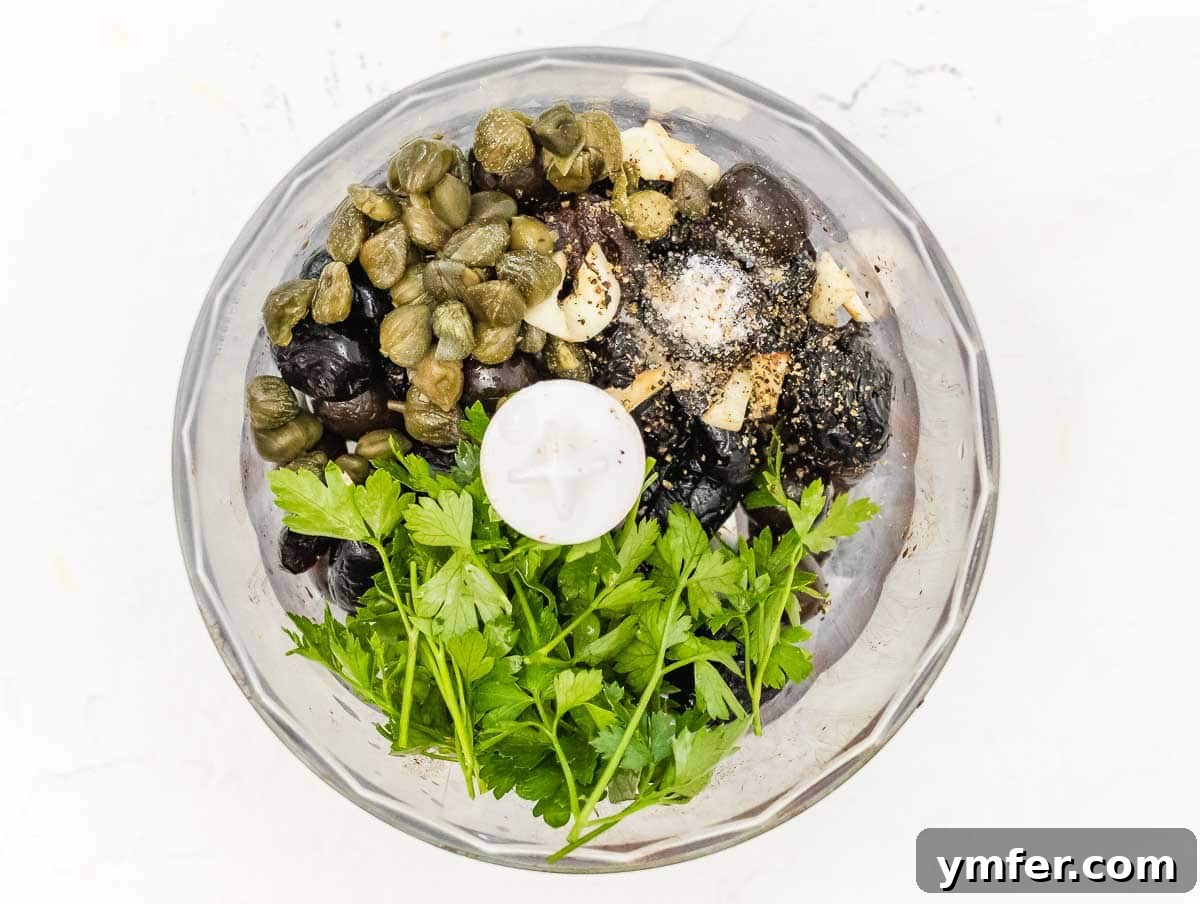
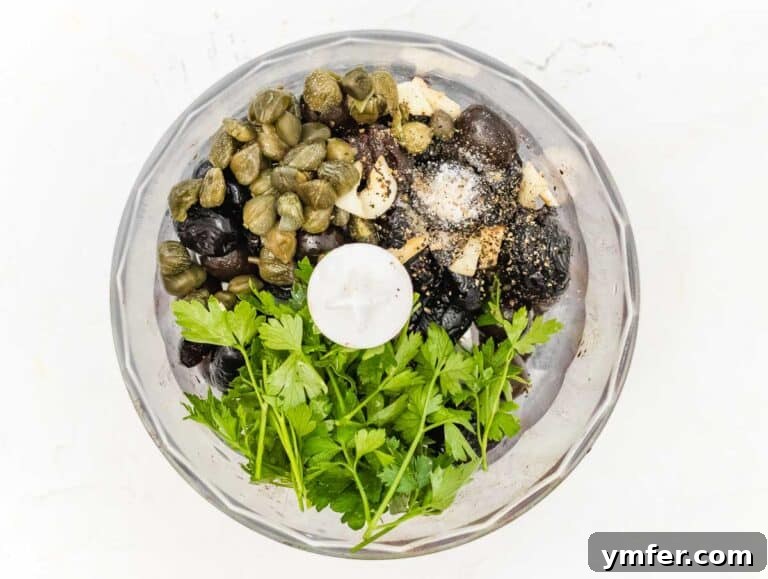
Now, add the star ingredients to your food processor: the pitted black olives, prepared capers, a hint of garlic (if using), fresh flat-leaf parsley (optional), and a dash of refreshing lemon juice (optional).
All main ingredients gathered in the food processor, ready for blending. -
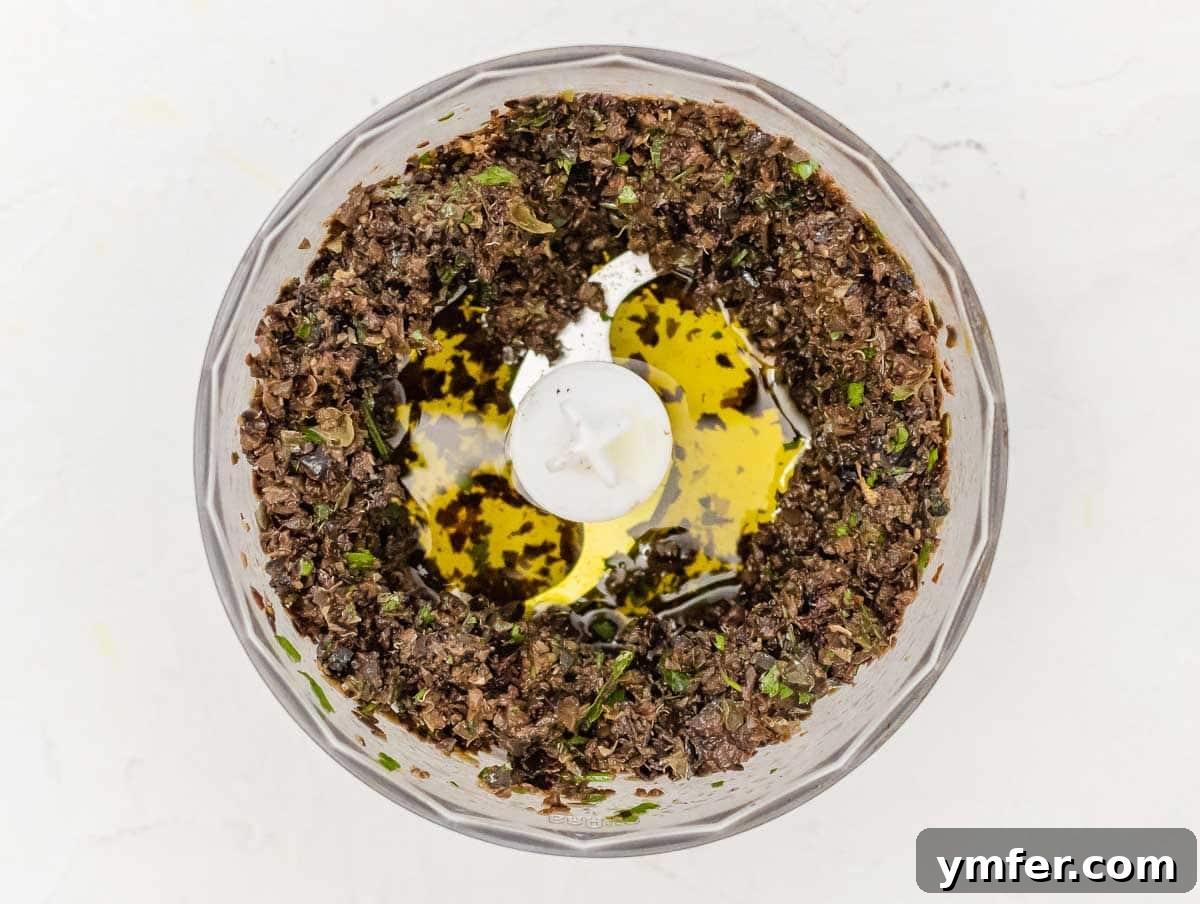
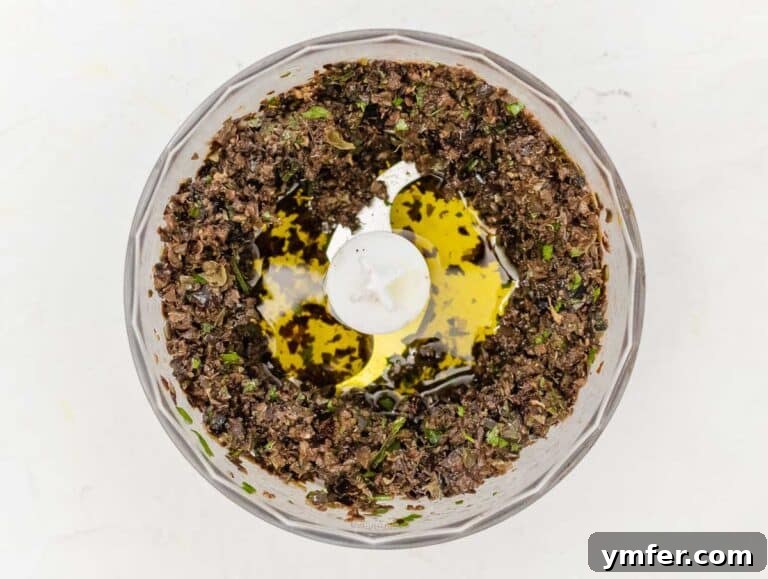
Pulse the mixture a few times. Your goal is to achieve a coarse olive purée, not a completely smooth paste. Remember to stop periodically and scrape down the sides of the food processor bowl to ensure all ingredients are evenly incorporated.
Next, gradually add the extra virgin olive oil. Begin with two tablespoons and add up to four tablespoons, depending on your desired consistency and the natural oil content of your olives. Some olives are naturally oilier, so you might need slightly more or less oil to reach the perfect spreadable texture.The tapenade reaching a coarse, puréed consistency after initial blending and olive oil addition. -
Pulse a few more times until your tapenade reaches your desired consistency. Continue to stop once or twice to scrape down the edges, ensuring a uniform blend.
Finally, taste your tapenade. Now is the time to add salt and freshly ground black pepper if you feel it needs further seasoning, keeping in mind the natural saltiness of the olives and capers.
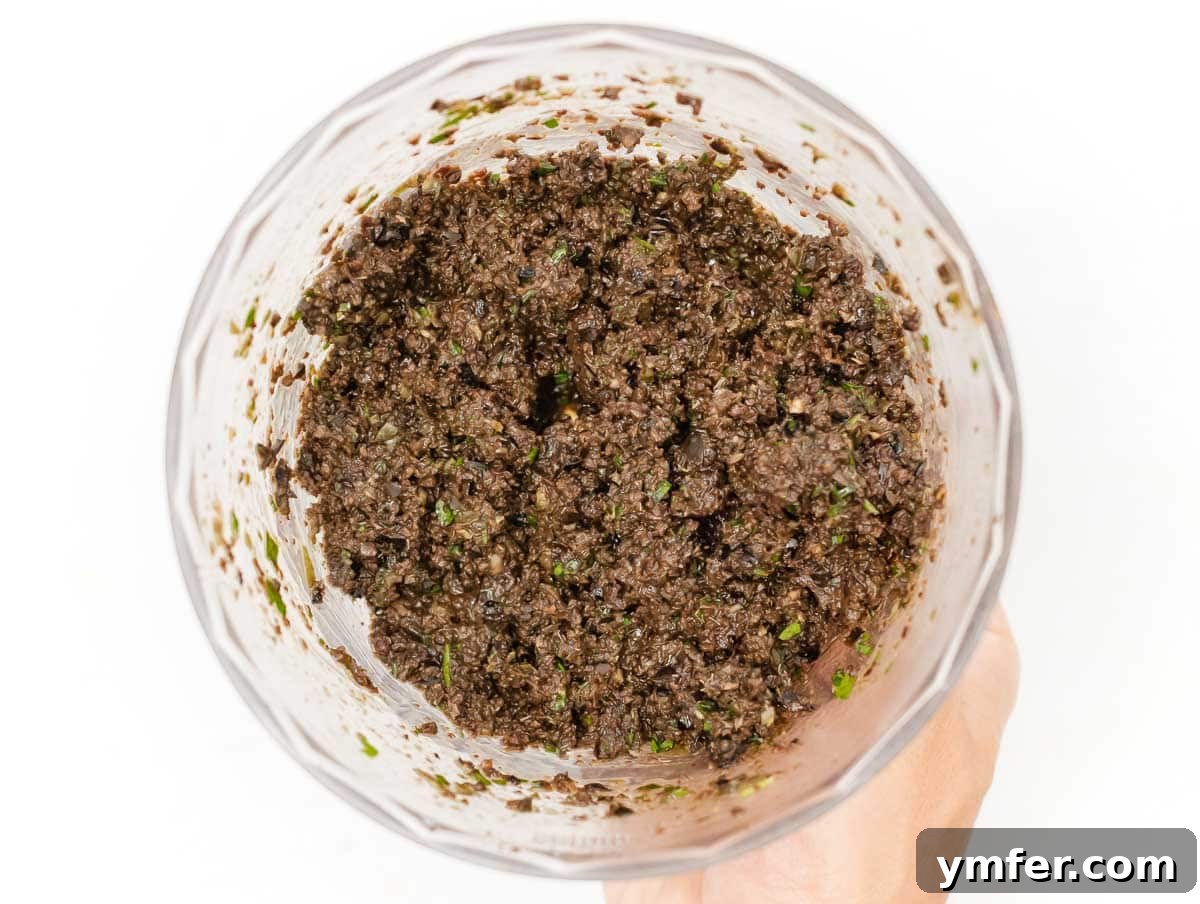
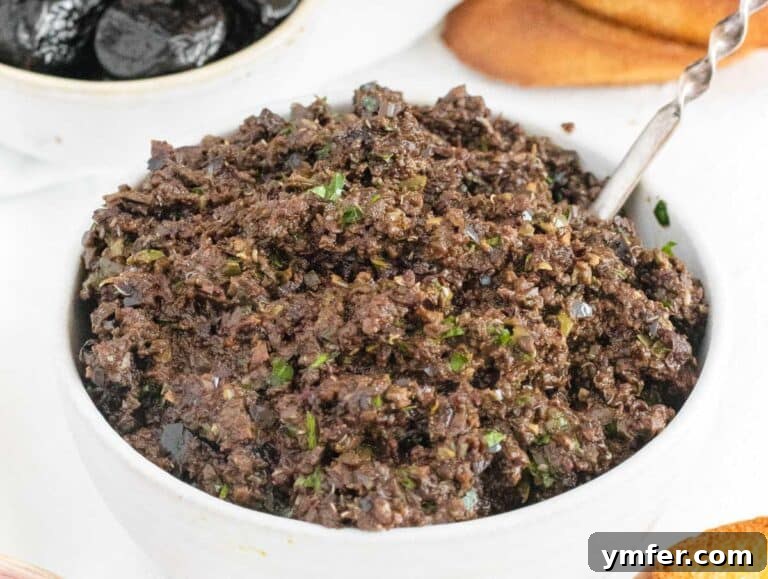
Your homemade olive tapenade is perfected when it boasts a coarse purée texture that is effortlessly easy to spread, bursting with Mediterranean flavors.The finished tapenade, perfectly blended and ready for serving. -
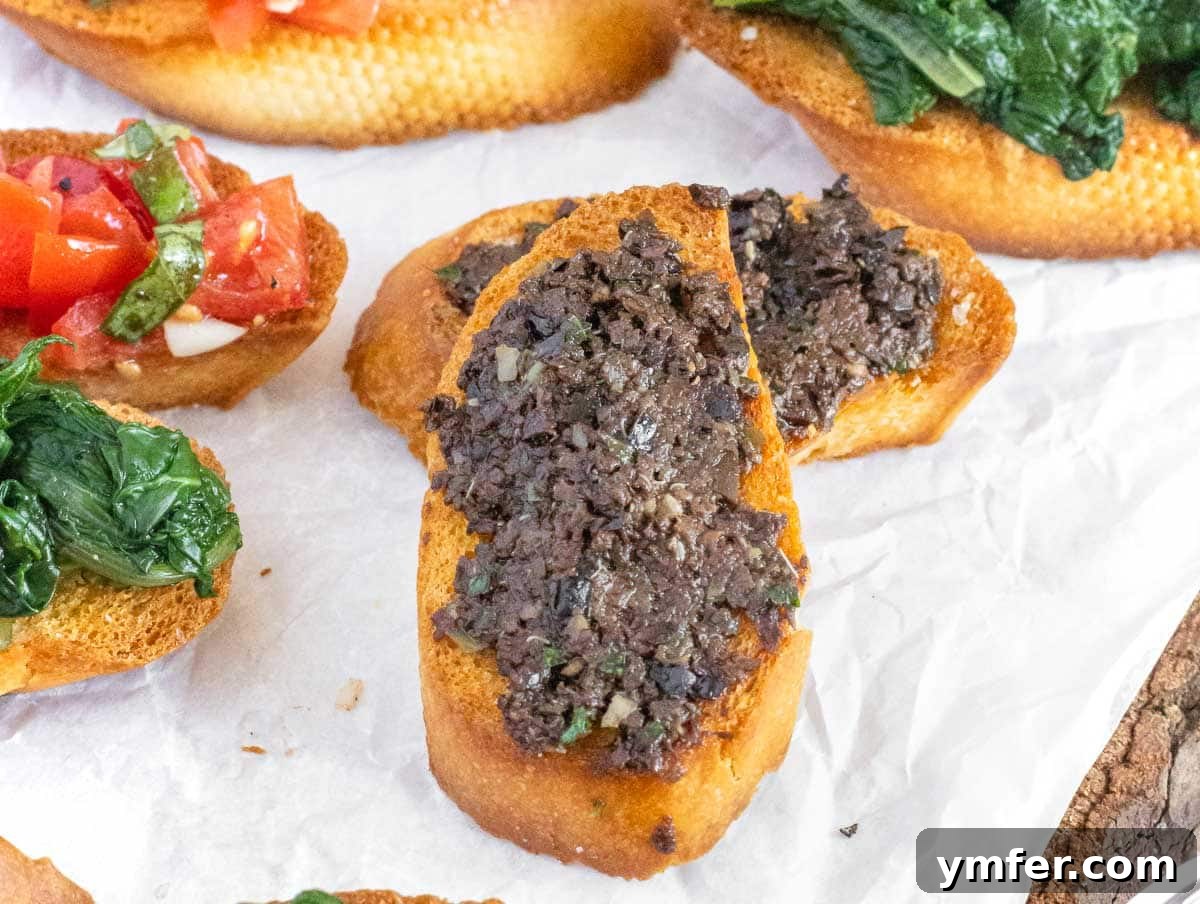
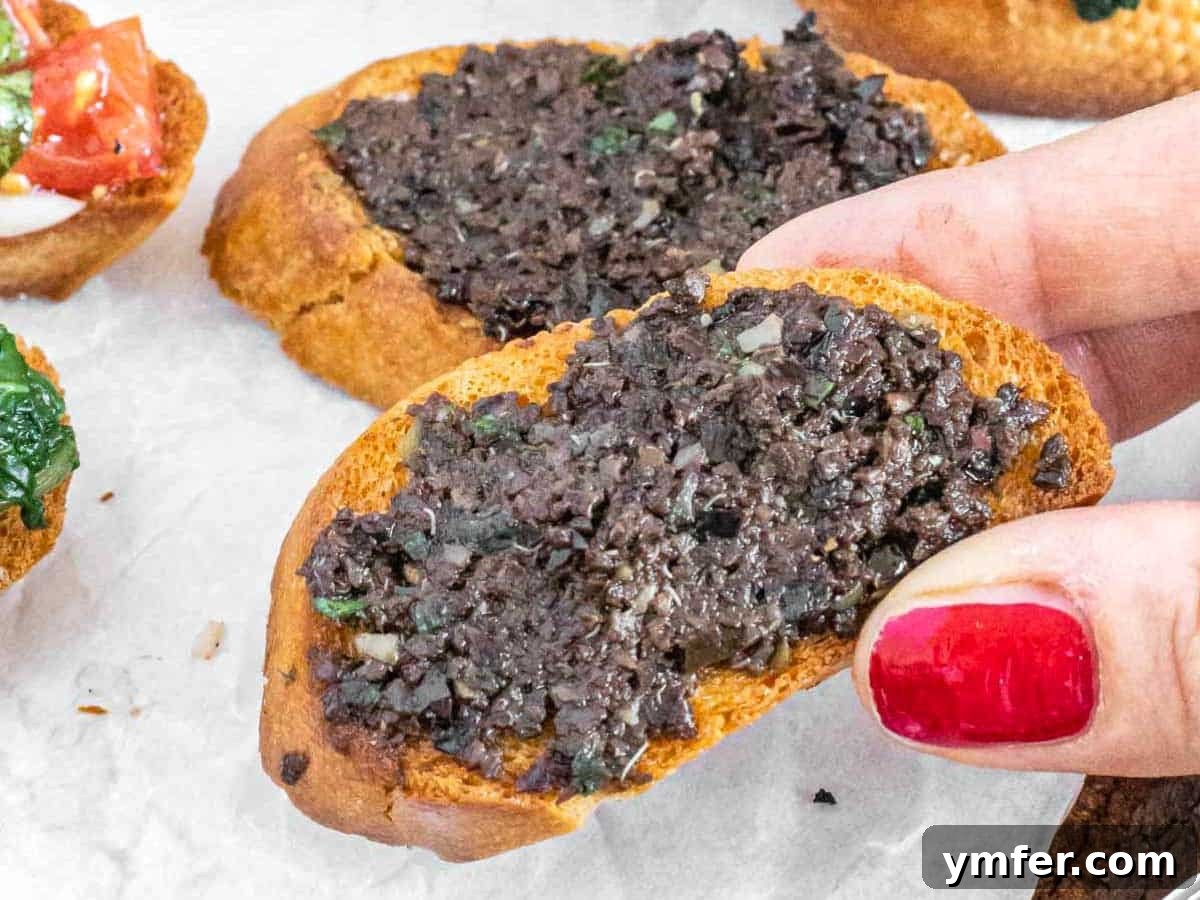
Serve your delightful olive tapenade generously on crispy crostini or crackers for an irresistible crunchy and tasty appetizer. Explore even more creative serving suggestions in the dedicated chapter below the recipe box.
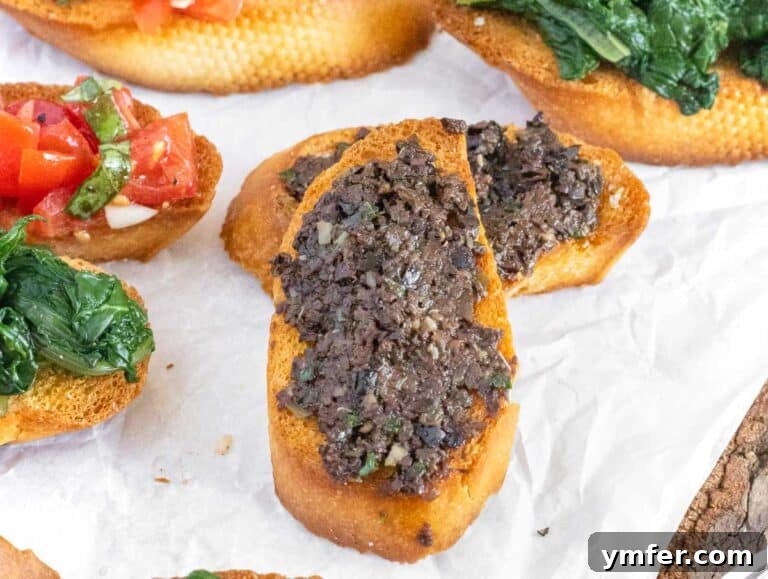
Freshly prepared crostini adorned with homemade olive tapenade, ready for any gathering.
Versatile Serving Suggestions: How to Enjoy Your Olive Tapenade
Olive tapenade’s rich, complex flavors make it an incredibly versatile ingredient. Here are numerous ways to incorporate this Mediterranean spread into your culinary repertoire:
Elegant Appetizer or Aperitivo
The most celebrated way to enjoy olive tapenade is as an exquisite appetizer or aperitivo. Spread generously on thin slices of toasted baguette or our crunchy crostini, it’s an instant crowd-pleaser. For a truly special dinner, consider crafting a diverse platter featuring tapenade alongside other delightful crostini toppings. You can also pair it with traditional bruschetta for a delightful Italian twist.
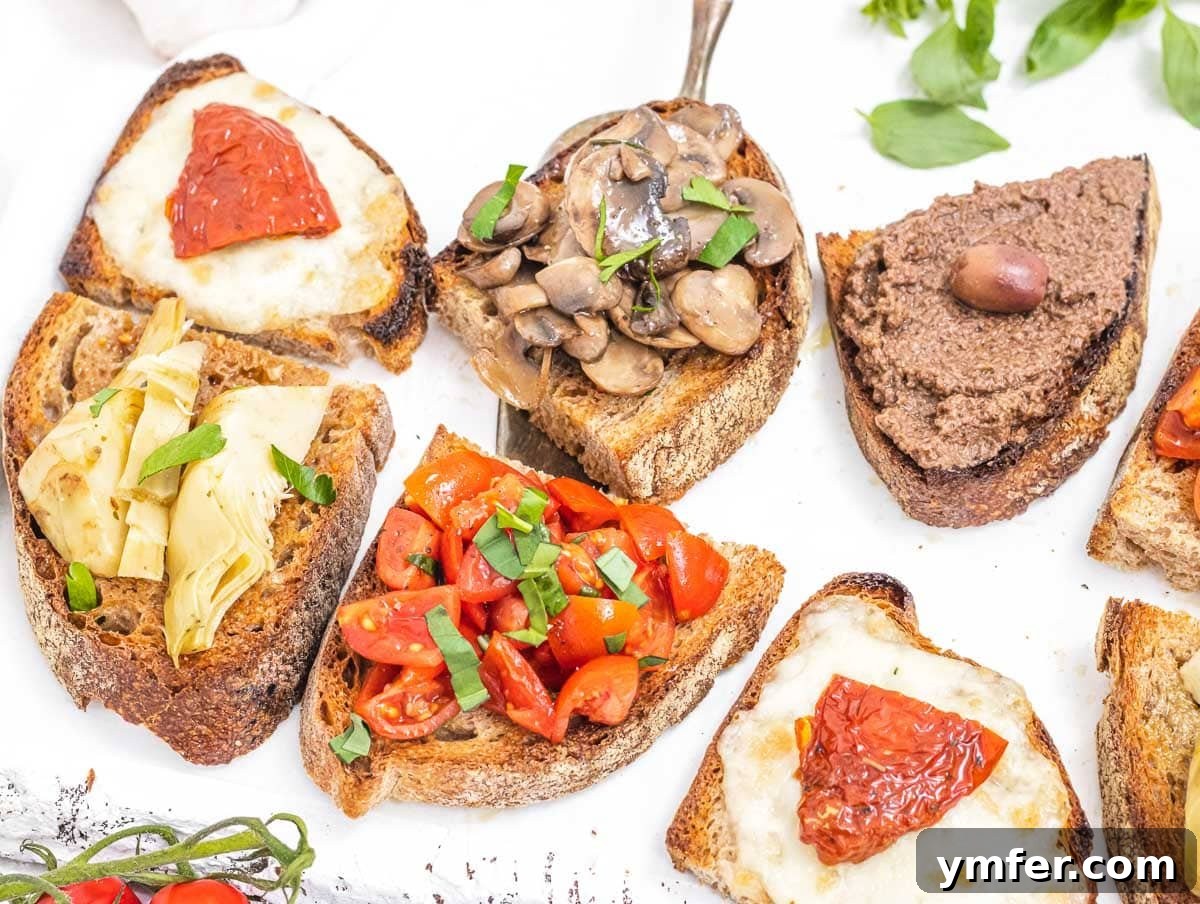
Beyond bread, tapenade works wonders to boost the flavor of most grilled or baked vegetables. As pictured, it pairs beautifully with roasted cherry tomatoes and savory grilled mushrooms. It’s also a fantastic addition to a cheese board, offering a salty, briny counterpoint to various cheeses – even dairy-free varieties, which we’ve found to be utterly delicious with it.
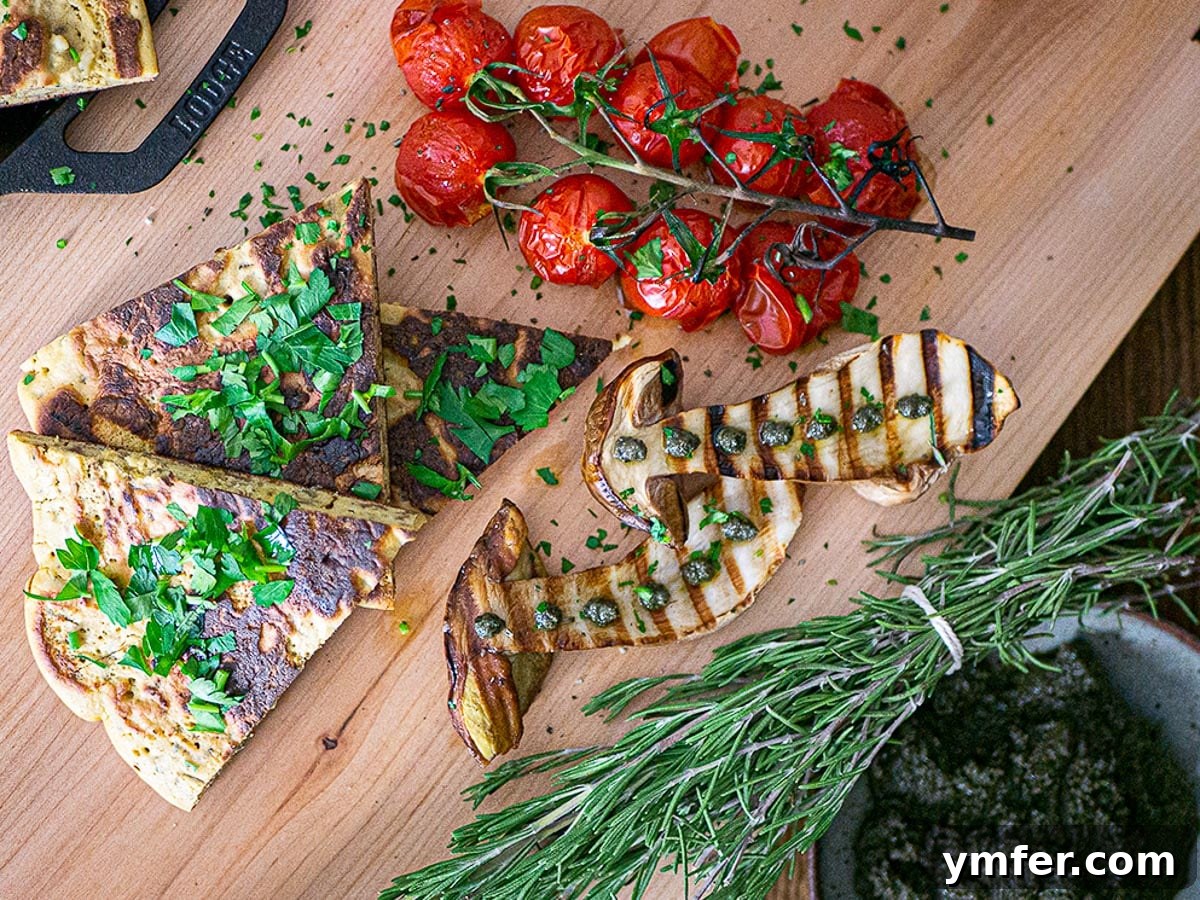
Flavorful Sandwich Spread
Elevate your sandwiches from ordinary to extraordinary by using olive tapenade as a rich and flavorful spread. It pairs exceptionally well with a variety of fillings:
- Homemade Pita Bread (flour, water, olive oil, instant dry yeast)
- Savory Grilled Tofu (tofu, olive oil, salt, paprika)
- Tender Roasted Eggplant (parsley, eggplant, apple cider vinegar, garlic)
- Sweet and tangy Marinated Bell Peppers (bell pepper, olive oil, basil, balsamic vinegar)
- Creamy Hummus (cumin, chickpeas, tahini, lemon juice, garlic, paprika)
For instance, we often enjoy it for a quick, satisfying breakfast or as a nutritious snack, layered between two slices of wholesome whole-grain bread with creamy hummus and juicy, ripe tomatoes.
Perfect Pairings for Your Tapenade Sandwiches
Bread Recipes
Pita Bread
Sides
Roasted Eggplant
30-minute meals
Grilled Tofu
Dips and Spreads
Hummus
Dynamic Condiment or Pasta Sauce
Beyond being a simple spread, tapenade shines as a tasty pasta sauce or a vibrant condiment for various main dishes and salads:
- Enhance a Pasta Salad (cherry tomatoes, cucumber, corn, white beans, bowtie pasta)
- Brighten a refreshing Rice Salad (olives, rice, pickled cucumber, cherry tomatoes, parsley)
- Flavor a hearty Barley Salad (roasted vegetables, sundried tomatoes, barley)
- Dress up a Simple Side Salad (mixed leaves, tomatoes, olive oil)
- Serve alongside Homemade Gnocchi or Sweet Potato Gnocchi (flour, potato, sage)
- Spread on grilled fish or chicken for a Mediterranean twist.
- Dollop onto roasted potatoes or baked sweet potatoes.
- Stir into scrambled eggs or tofu scrambles for a unique breakfast.
Its rich, umami-packed flavor profile makes it a fantastic addition to almost any savory dish needing an extra layer of complexity.
Storage Tips for Freshness
One of the many advantages of olive tapenade is its excellent shelf life, making it a perfect make-ahead option for meal prepping or entertaining.
Make Ahead: This is truly an excellent recipe for making in advance, as its flavors deepen and meld beautifully over a day or two. It keeps remarkably well for days, becoming even more delicious with a little time.
Refrigerator: To store leftover tapenade, transfer it to an airtight container (a mason jar is highly recommended) and refrigerate for up to one week. For best results, you can pour a thin layer of olive oil over the top before sealing to prevent oxidation and keep it fresh. It’s delightful served cold straight from the refrigerator.
Freezer: For longer storage, tapenade freezes beautifully. Portion it into small, freezer-safe jars or even ice cube trays, then transfer the frozen cubes to a freezer bag. It can be frozen for up to 3 months. When ready to use, simply thaw it overnight in the refrigerator. Stir well before serving.
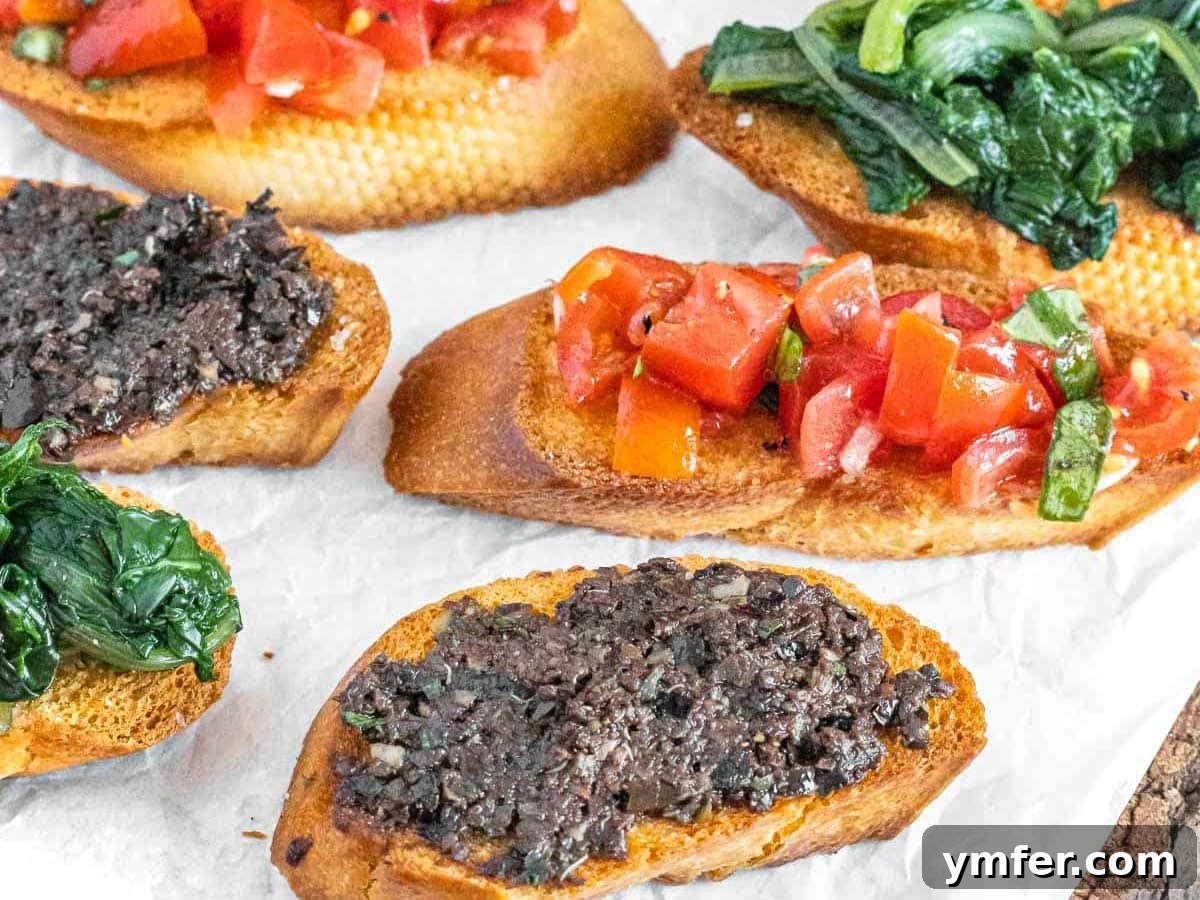
More Mediterranean Appetizer Recipes to Explore
If you’ve fallen in love with the vibrant flavors of tapenade and enjoy creating easy, delicious spreads and dips, you’ll adore these other appetizer ideas:
- Easy Vegan Pesto (nutritional yeast, basil, garlic, walnuts, water, olive oil)
- Refreshing Tzatziki (cucumber, Greek-style yogurt, garlic, olive oil, mint, dill)
- Classic Guacamole (avocado, red onion, lime juice, cilantro)
- Creamy Avocado Spread (tahini, avocado, garlic, lemon juice, salt)
- Smoky Eggplant Dip (Baba Ganoush) (eggplant, tahini, cumin, garlic, water, lemon juice)
- Rich Sun-Dried Tomato Pesto (olive oil, garlic, walnuts, sun-dried tomatoes)
Discover More Delicious Dips & Spreads
Dips and Spreads
Avocado Spread
Dips and Spreads
Tzatziki
Dips and Spreads
Baba Ganoush
Sauces and Dressings
Vegan Pesto
For even more condiment ideas and ways to add flavor to your meals, explore our extensive dressing and sauces category page.
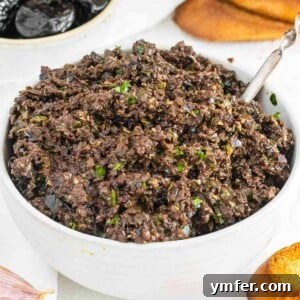
Classic Olive Tapenade
Nico Pallotta
With its robust flavor and irresistibly velvety texture, this tapenade serves as an outstanding appetizer, guaranteed to impress your guests or bring joy to your family.
10 mins
0 mins
10 mins
1 cup
Condiment, Starter, Appetizer, Spread
French, Mediterranean
Vegan, Vegetarian, Gluten-Free
Share
Video Tutorial
Watch this video to see how easily you can make delicious olive tapenade at home!
Equipment
-
Food processor
Ingredients (USA Units)
- 1 heaping cup pitted black olives (about 130 grams)
- 3 teaspoons capers (or 2 teaspoons whole capers)
- 2 – 4 tablespoons extra virgin olive oil
- ¼ teaspoon salt (adjust to taste)
- ¼ clove garlic (optional, very finely minced)
- ¼ cup flat-leaf parsley (optional, fresh)
- 1 teaspoon lemon juice (optional, freshly squeezed)
- 2 twists black pepper (optional, freshly ground)
Instructions
-
To a food processor, add the pitted black olives, capers, garlic (if using), flat-leaf parsley (if using), and lemon juice (if using).
Tip: If your capers are salt-packed, be sure to rinse and dry them thoroughly before adding to the food processor.
-
Pulse a few times until you achieve a coarse olive purée. Remember to stop and scrape down the sides of the food processor to ensure all ingredients are well combined.
Next, slowly add the extra virgin olive oil, starting with two tablespoons and increasing up to four tablespoons at most, depending on your desired consistency and the natural moisture content of your olives.
-
Pulse a few more times until your tapenade reaches the perfect consistency – a coarse purée that is easy to spread. Again, stop once or twice to scrape down the edges for an even blend.
Taste and adjust seasoning, adding additional salt and pepper if necessary, keeping in mind the inherent saltiness of the olives and capers.
Your homemade olive tapenade is now ready to be enjoyed!
-
Serve this delectable tapenade on top of crunchy crostini or crackers for a perfect appetizer. Refer to the “Serving Suggestions” section above the recipe card for more creative ways to enjoy your tapenade.
Notes
STORAGE:
Make Ahead: This recipe is fantastic for making ahead of time as the flavors tend to deepen and enhance after a day or two.
Refrigerator: Store any leftover tapenade in an airtight container (a glass mason jar works wonderfully) in the refrigerator for up to one week. You can serve it directly from the fridge.
Freezer: For longer preservation, tapenade can be frozen in a small jar or freezer-safe container for up to 3 months. To use, simply thaw it overnight in the refrigerator.
ALSO ON THIS PAGE:
- Ingredients & Substitutions
- Serving Suggestions
- More Appetizer Recipes
Nutrition Information (per cup)
Tried this recipe?
Leave a comment below or mention @theplantbasedschool on Instagram. We love hearing from you ⭐️ 💚.
Frequently Asked Questions (FAQs) About Olive Tapenade
What kind of olives are best for tapenade?
For a classic black olive tapenade, Niçoise or Italian Taggiasche olives are traditionally preferred for their rich, nuanced flavor. Kalamata olives are also an excellent and widely available choice. If you’re making a green olive tapenade, Castelvetrano olives offer a buttery and mild taste that works beautifully.
Can I make tapenade without a food processor?
Absolutely! While a food processor makes it incredibly quick and easy, you can also make tapenade the traditional way. Finely chop all the ingredients by hand with a chef’s knife until they form a coarse paste. Alternatively, a mortar and pestle will give you a wonderfully rustic texture with a bit more effort.
Is tapenade naturally vegan and gluten-free?
Yes, traditional olive tapenade is naturally vegan and gluten-free, provided you omit anchovies (which are optional and not included in our recipe) and serve it with suitable accompaniments like gluten-free bread or vegetable sticks. Our recipe is 100% plant-based and free of gluten.
How can I vary my tapenade recipe?
Tapenade is highly adaptable! You can experiment with different types of olives (black, green, or a mix). Add fresh herbs like basil, thyme, or oregano. A touch of sun-dried tomatoes, roasted red peppers, or even artichoke hearts can introduce new flavor dimensions. For a spicy kick, add a pinch of red pepper flakes.
Why is it called tapenade if olives are the main ingredient?
The name “tapenade” comes from the Provençal word “tapeneī,” which refers to capers. This highlights the critical role capers play in giving tapenade its distinctive salty and tangy flavor profile, even though olives constitute the largest portion of the spread.
Can I use jarred minced garlic or lemon juice?
While fresh garlic and freshly squeezed lemon juice always provide the best flavor, jarred minced garlic or bottled lemon juice can be used in a pinch. Just be mindful that their flavors can be less vibrant, so adjust quantities to taste.
If you liked this olive tapenade, you might also enjoy these related recipes and collections:
More Culinary Inspirations
Collections
25 Easy Vegan Sauces
Collections
40 Best Vegan Recipes
Collections
30 Lazy Sunday Dinner Ideas
Collections
35 Best Vegetarian Lunch Ideas