

This cabbage soup recipe offers a deeply comforting, effortlessly simple, and incredibly warming meal perfect for any day. It features tender chopped cabbage simmering harmoniously with a medley of hearty vegetables, ripe tomatoes, protein-rich white beans, and aromatic herbs, all bathed in a robust and flavorful broth.
Designed for convenience, this recipe is remarkably easy to prepare, requiring just one pot and a handful of accessible, budget-friendly ingredients found in any kitchen. Its straightforward nature makes it an ideal choice for both novice cooks and seasoned chefs alike.
Transforming this humble soup into a truly healthy and satisfying meal is simple with the right accompaniments. Elevate its flavor and nutritional profile by serving it with wholesome toppings such as fluffy brown rice, a dollop of creamy yogurt, fresh aromatic herbs, and crunchy toasted nuts. These additions not only enhance the taste but also add diverse textures and essential nutrients, making each spoonful a delightful experience.

Table of Contents
- What is Cabbage Soup?
- The Nutritional Powerhouse of Cabbage
- How to Make Cabbage Soup: A Step-by-Step Guide
- Building the Perfect Flavor Base
- Adding the Hearty Elements
- Simmering to Perfection
- How to Serve Your Delicious Cabbage Soup
- Versatile Substitutions for Cabbage Soup
- Storage & Meal Prep Tips
- Explore More Hearty & Healthy Recipes
- Cabbage Soup Recipe Card
What is Cabbage Soup?
Our signature cabbage soup is more than just a meal; it’s a testament to the fact that wholesome eating can be both profoundly satisfying and incredibly flavorful. This recipe yields a soup that is wonderfully chunky and hearty, packed with nutrients, and designed to leave you feeling genuinely nourished and content. Unlike lighter broths, our rendition embraces a rich texture and deep flavor profile.
Drawing inspiration from beloved Italian culinary traditions, similar to our popular Tuscan White Bean Soup, Minestrone, and Lentil Soup, this cabbage soup begins with a foundational flavor base. We meticulously build this base by sautéing a classic blend of finely chopped onion, celery, carrots, and garlic. This aromatic quartet, known as “soffritto” in Italian cooking, is then enhanced with concentrated tomato paste and fragrant thyme. The slow simmering of these ingredients unlocks a complex “whirlwind of aromas” that deeply infuses the soup with a rich, savory, and profound depth of flavor that truly sets it apart.

Just as in our hearty Kale Soup, we incorporate tender white beans into this recipe. These versatile legumes serve as an excellent source of plant-based protein and dietary fiber, contributing significantly to the soup’s robust and filling nature. A clever technique we employ is blending a portion of the white beans with some broth. This creates a natural, velvety creaminess that enriches the soup’s texture without the need for dairy, adding a luxurious mouthfeel that complements the chunky vegetables beautifully.
While delicious on its own, this cabbage soup truly shines when served with generous toppings. These thoughtful additions don’t just garnish; they transform a simple bowl of soup into a magnificent and complete meal experience. We wholeheartedly recommend a selection of additions to elevate your bowl.
Imagine the delightful crunch of toasted nuts (such as pine nuts or almonds), the bright, zesty aroma of fresh lemon zest, the subtle bite of chopped scallions, and the cooling creaminess of Greek yogurt (or a dairy-free alternative). Paired with a serving of wholesome brown rice, these elements combine to turn a nourishing soup into a truly gorgeous, fulfilling, and nutritionally balanced meal. Each spoonful offers a harmonious blend of flavors and textures, making it an experience to savor.

The Nutritional Powerhouse of Cabbage
Cabbage, often overlooked, is a true superstar in the world of vegetables, especially when it comes to nutrition. As the star of this comforting soup, it brings a wealth of health benefits that make this dish not just delicious but also incredibly good for you. Cabbage is remarkably low in calories yet rich in essential vitamins and minerals, including a high concentration of Vitamin C and Vitamin K.
Vitamin C is a powerful antioxidant, crucial for immune system support and skin health, while Vitamin K plays a vital role in blood clotting and bone health. Beyond these, cabbage provides a good dose of dietary fiber, which is essential for digestive health, promoting regularity and contributing to a feeling of fullness. This fiber content, combined with its high water content, makes cabbage a fantastic ingredient for weight management and overall gut well-being.
Moreover, cabbage belongs to the cruciferous vegetable family, known for its potent anti-inflammatory and antioxidant properties. These compounds are believed to help protect the body against various chronic diseases, including certain types of cancer. Incorporating cabbage into your diet regularly, through delicious recipes like this soup, is an excellent way to harness these protective benefits.
The versatility of cabbage also means it pairs well with a multitude of flavors, absorbing the rich aromas of the herbs and spices in this soup to create a harmonious and deeply satisfying experience. Its mild, slightly peppery flavor becomes beautifully mellow and sweet once cooked, adding a delightful texture and taste to every bite.
How to Make Cabbage Soup: A Step-by-Step Guide
Making this hearty cabbage soup is a straightforward and rewarding process, perfect for a cozy evening or meal prepping. You’ll find the full ingredient quantities listed in the recipe card at the bottom of the page, but here’s a detailed breakdown of each step.
1. Gather Your Ingredients
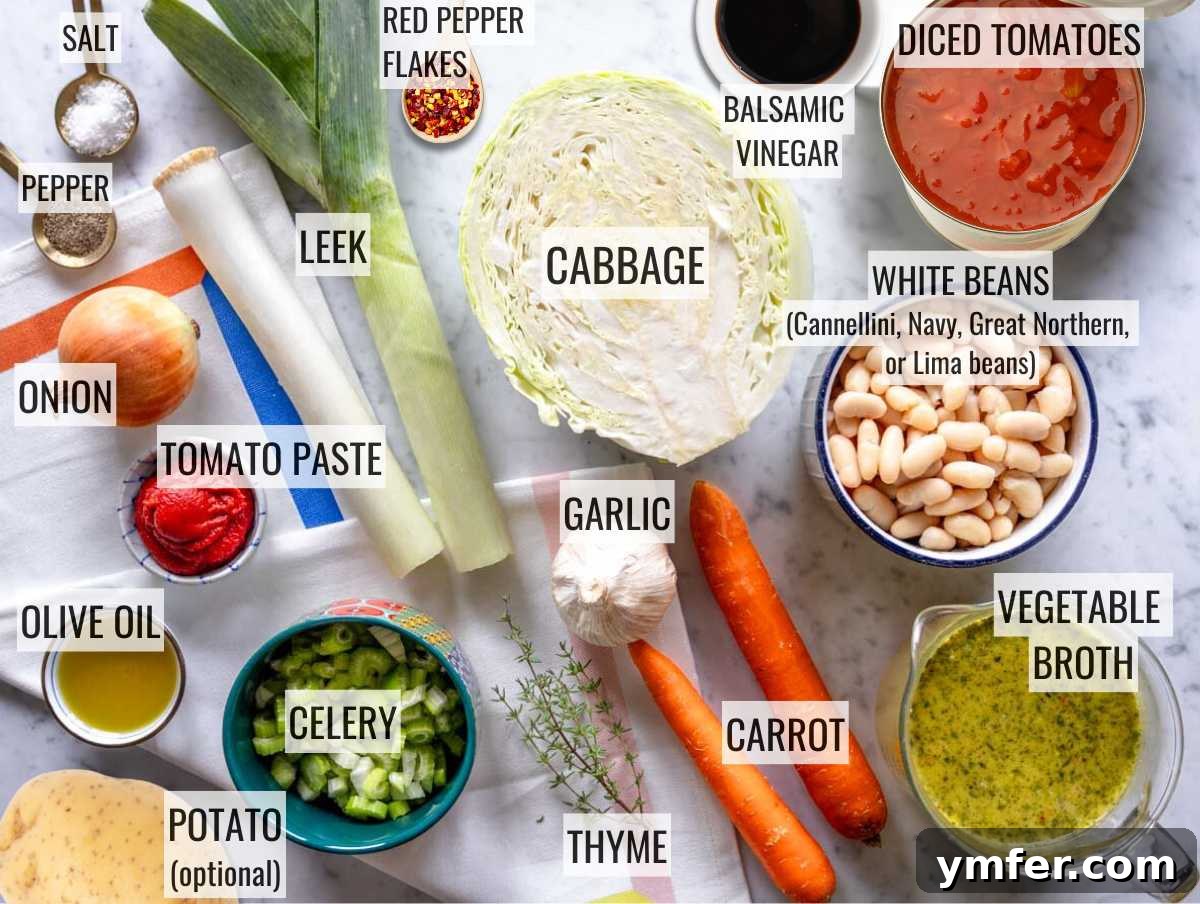
The secret to a truly flavorful cabbage soup lies in a well-prepared flavor base. For this, you will need: extra virgin olive oil for sautéing, finely chopped onion, celery, and carrots (the classic mirepoix), pungent garlic, and the subtle sweetness of leek. Aromatic dried thyme and rosemary will impart warmth and depth, while rich tomato paste adds umami and color.
The main components of the soup include a generous amount of green or white cabbage, either crushed or diced tomatoes for a tangy base, creamy white beans (such as cannellini or navy beans), a starchy potato for body and creaminess, and robust vegetable stock to bring everything together. Seasoning will be simple yet crucial: salt and freshly ground black pepper.
To finish, we suggest stirring in a touch of balsamic or apple cider vinegar to brighten the flavors. For serving, prepare an array of delightful toppings like cooling yogurt (dairy or non-dairy), crunchy toasted nuts (pine nuts are a fantastic choice), fresh scallions, and wholesome brown rice. These additions will elevate your soup from simple to extraordinary.
2. Build the Flavor Base (Soffritto)
Begin by heating the extra virgin olive oil in a large, heavy-bottomed pot over medium-low heat. Once shimmering, add your finely chopped onion, celery, carrot, and leek. This combination forms the aromatic foundation of your soup.
Season these vegetables with a generous pinch of salt, a grind of black pepper, and a dash of red pepper flakes for a hint of warmth. Sauté gently for 5 to 8 minutes, stirring frequently. The goal here is to soften the vegetables without browning them, allowing their natural sugars to caramelize slightly and deepen in flavor. This slow sautéing process is critical for developing the rich base of the soup.
Tip: Preparing the leek correctly is key. Slice it lengthwise, then rinse its layers thoroughly under running water to remove any hidden dirt or grit before chopping it.
Tip: Don’t skip seasoning the vegetables at this stage! A pinch of salt helps draw out moisture, allowing them to soften more effectively and enhancing their natural flavors. You’ll adjust the final salt content later.
Oil-free option: For an oil-free alternative, simply sauté the vegetables on medium-low heat using a tablespoon of water or vegetable broth. Add more liquid, one tablespoon at a time, if the pot starts to dry out, stirring constantly to prevent sticking.
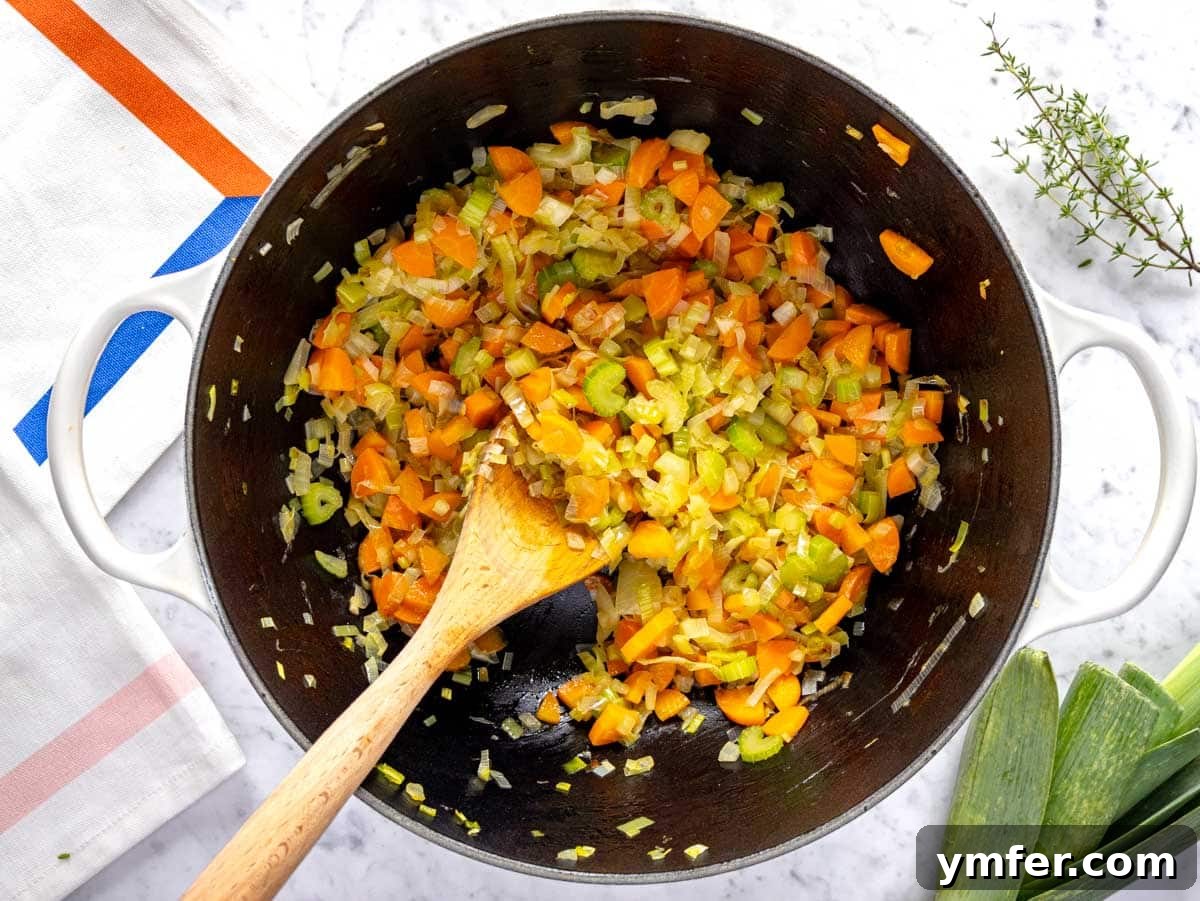
Next, introduce the pressed garlic, thyme, rosemary, and tomato paste to the pot. Sauté for an additional two minutes, stirring constantly. This step helps to bloom the spices and cook out the raw flavor of the tomato paste, intensifying its richness.
Tip: You’ll know it’s time to move to the next step when you can distinctly smell the wonderfully fragrant aroma of the thyme and garlic permeating the air, indicating their flavors have fully developed.

3. Add Vegetables and Simmer
While your flavor base is gently sautéing, prepare your main vegetable. Take your cabbage, cut it in half, then into quarters, and finally into convenient bite-size pieces. The size can vary slightly based on your preference, but aim for pieces that are easy to eat with a spoon.
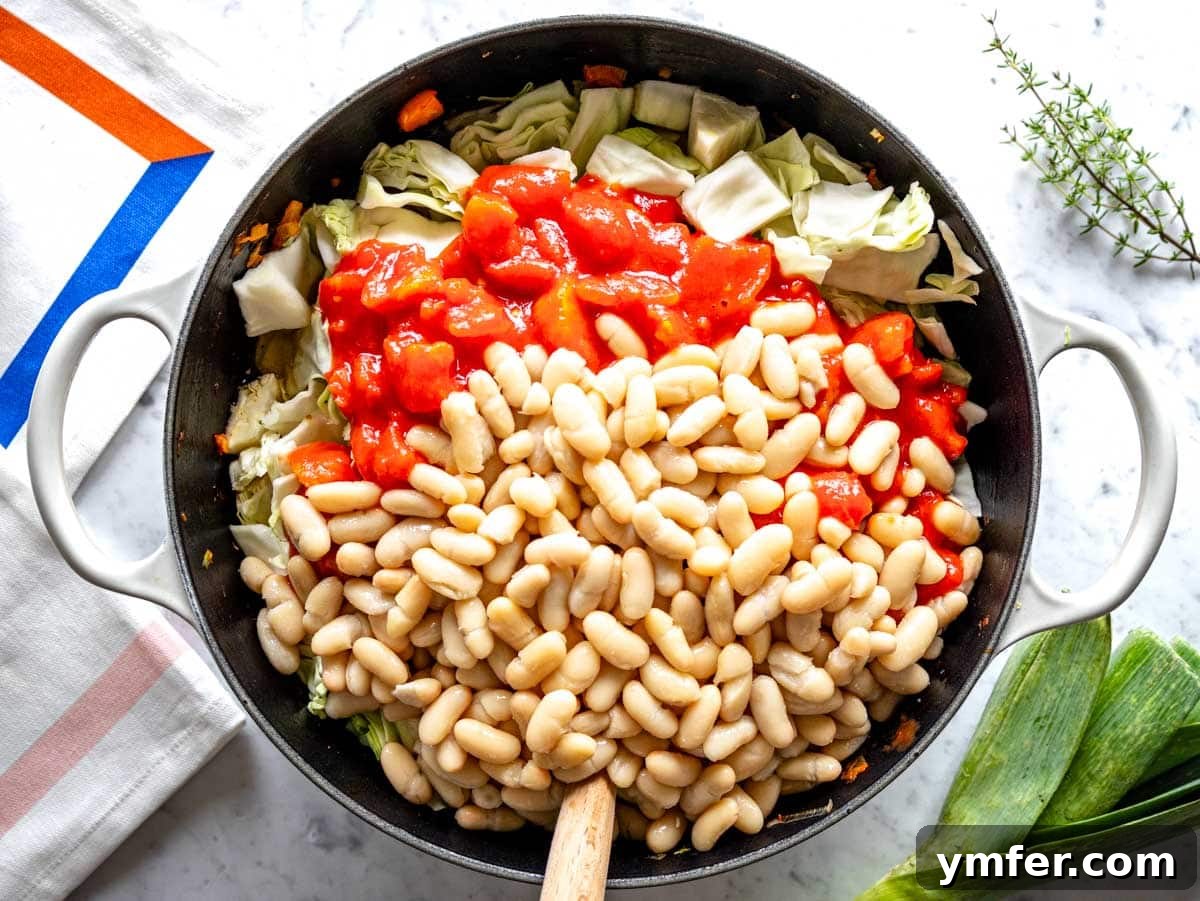
Once chopped, add the cabbage, along with the canned tomatoes, a potato (chopped into small dice for quick cooking and added creaminess), three cups of vegetable broth, and two cans of drained white beans (or about 3 cups of pre-cooked white beans) to the pot with the aromatic base.
To achieve a delightful creamy texture without dairy, take the remaining can of white beans (or 1½ cups cooked white beans) and blend them with the remaining 1 cup of vegetable broth until smooth. This creates a natural thickening agent and adds extra body and richness to the soup. Incorporate this creamy bean mixture into the pot, stirring well to combine all ingredients.
Tip: You can easily blend the beans and broth using an immersion blender directly in a measuring jug or transfer them to a standing blender for a super smooth consistency. The blended white beans are the secret to making this soup wonderfully creamy and extra filling.
Simmering to Perfection
Now, it’s time to bring all those beautiful flavors together. Season the soup generously with the remaining salt to taste, stir everything well, and bring the mixture to a gentle boil. Once boiling, reduce the heat to a simmer, cover the pot, and let it cook for approximately 20 to 30 minutes. The simmering time may vary slightly depending on how finely you’ve chopped your vegetables.
Cook until both the cabbage and potatoes are fork-tender and the soup has thickened to a wonderfully creamy consistency, thanks to the blended white beans. Periodically stir the soup to ensure even cooking and prevent sticking.
As a final touch, just before serving, stir in the balsamic vinegar. This acidic element brightens the soup’s overall flavor profile, adding a subtle complexity and enhancing the savory notes. Taste the soup and adjust for salt and pepper as needed. A perfect balance of seasoning is crucial for a truly exceptional soup.

4. How to Serve Your Delicious Cabbage Soup
Serving this cabbage soup is an opportunity to add personal flair and additional nutritional boosts. While the soup is delightful on its own, we highly recommend embracing a variety of toppings to create a dynamic and fulfilling meal.
Consider serving your warm bowl with a side of fluffy brown rice for added texture and complex carbohydrates. A dollop of creamy Greek yogurt (or a rich non-dairy alternative like coconut or cashew yogurt) adds a refreshing tang and coolness. Brighten the soup further with a sprinkle of freshly chopped scallions and parsley, which contribute fresh, herbaceous notes.
A final squeeze of fresh lemon juice and a dusting of lemon zest will awaken the flavors with their vibrant acidity and aroma. For a delightful crunch and healthy fats, sprinkle toasted pine nuts (or any toasted nut of your choice, like almonds or walnuts) over the top. These thoughtful additions are entirely optional, but they genuinely transform this simple recipe into an exceptional culinary experience, adding layers of flavor, texture, and visual appeal.

Versatile Substitutions for Cabbage Soup
This cabbage soup recipe is wonderfully flexible, allowing for various substitutions based on what you have on hand or your dietary preferences. Here are some ideas to customize your soup:
Extra virgin olive oil: While extra virgin olive oil provides a superior flavor, regular olive oil or even avocado oil can be used as a suitable substitute for sautéing.
Onion: If you don’t have a large onion, you can easily substitute with two to three shallots, which offer a slightly milder, sweeter onion flavor.
Leek: Leek adds a unique, subtle oniony sweetness that pairs exceptionally well with cabbage. If unavailable, use three green onions (scallions) or two additional shallots. Try to keep the leek in the recipe if possible for the best flavor!
Tomato paste: Tomato paste is a cornerstone of the soup’s deep umami flavor. It provides a concentrated tomato essence that is hard to replicate. We highly recommend sticking to tomato paste for the best results.
Thyme & rosemary: Fresh herbs are always excellent, but for convenience, a teaspoon of a good quality Italian herb mix (dried) can be used in place of individual dried thyme and rosemary.
Green cabbage: This recipe is incredibly versatile when it comes to cabbage varieties. Feel free to substitute green cabbage with white cabbage, pointed cabbage (also known as sweet heart cabbage), Savoy cabbage, red cabbage (which will lend a lovely purple hue to your soup), bok choy, kale, napa cabbage, or even Swiss chard. Each will offer a slightly different texture and flavor profile.
White beans: The creamy white beans are essential for texture and protein. You can interchangeably use cannellini beans (our preferred choice), navy beans, great northern beans, or lima beans. Using pre-rinsed canned beans is the quickest option, but you can also cook dried beans from scratch. For a detailed guide on how to prepare them, check out our resource on how to cook dried white beans.
Potato: The potato is an optional but recommended addition. It breaks down slightly during simmering, adding natural starch and creaminess to the soup, making it more substantial and filling. If you omit it, the soup will be slightly thinner but still delicious.
Diced tomatoes: Crushed tomatoes can be used as a direct substitute for diced tomatoes, offering a smoother tomato base without large chunks.
Red pepper flakes: A touch of heat wonderfully complements the sweetness of cabbage. If you prefer a different kind of spice, substitute red pepper flakes with a thinly sliced fresh chili or a spoonful of Korean gochujang, adjusted to your taste.
Balsamic vinegar: We use balsamic vinegar to introduce a balanced sweet, savory, and acidic complexity to the finished soup. For alternatives, apple cider vinegar, soy sauce, or tamari (for a gluten-free option) can provide a similar brightening effect.
Serves well with: Beyond the suggested toppings, this hearty cabbage soup pairs beautifully with crusty bread for dipping. Try serving it with toasted focaccia, schiacciata, or a thick slice of rustic bread brushed with garlic oil.
Storage & Meal Prep Tips
One of the many benefits of this cabbage soup is how well it stores, making it an excellent candidate for meal preparation throughout the week or for future quick meals.
Make ahead: Cabbage soup is truly a meal prep champion. Its flavors tend to meld and deepen over time, often tasting even better the day after it’s made. It holds up exceptionally well in both the refrigerator and the freezer.
Refrigerator: Once the soup has cooled completely to room temperature, transfer it to an airtight container. It will keep fresh and delicious in the refrigerator for up to four days. This makes it perfect for packing lunches or having a convenient dinner ready.
Freezer: For longer storage, allow the cabbage soup to cool entirely before transferring it to freezer-safe containers or bags. Ensure there’s a little headspace if using rigid containers, as liquids expand when frozen. The soup can be safely frozen for up to three months, making it a fantastic stash for busy weeks.
Thaw and Reheat: To thaw, simply transfer the frozen soup to the refrigerator overnight. Alternatively, for a quicker thaw, you can use the defrost setting on your microwave or gently heat it in a saucepan over low heat with a splash of water or broth, stirring occasionally. Reheat the thawed soup in the microwave or on the stovetop in a saucepan until piping hot, ensuring it reaches a safe internal temperature.
Explore More Hearty & Healthy Recipes
If you loved this comforting cabbage soup, you’ll be delighted to explore more of our wholesome and satisfying recipes. We specialize in dishes that are both delicious and nutritious, often featuring plant-based ingredients and simple cooking methods.
Hearty Soups: For more warming bowls that nourish the soul, try our Lentil Soup, a fragrant Curry Lentil Soup, the classic comfort of Potato Leek Soup, a robust Black Bean Soup, creamy Broccoli Soup, a medley of vegetables in our Lentil Vegetable Soup, delicious Tortellini Soup, wholesome Chickpea Soup, and the vibrant Red Lentil Soup.
For even more inspiring and easy soup ideas, don’t miss our comprehensive compilation of 30 Easy Soup Recipes – there’s something for everyone!
Cruciferous Vegetable Delights: If you enjoy the health benefits and versatile flavors of cruciferous vegetables, discover more ways to incorporate them into your diet with recipes like our vibrant Red Cabbage Slaw, the deeply flavored Braised Red Cabbage, a classic and creamy Coleslaw, perfectly Roasted Brussels Sprouts with Maple Syrup, a refreshing Shaved Brussels Sprouts Salad, our indulgent Creamy Broccoli Salad, quick and flavorful Broccoli Pasta, and a comforting Cauliflower Soup.
Soups
Lentil Soup
One-pot Meals
Lentil Stew
Salads
Broccoli Salad
Pasta
Broccoli Pasta

Hearty One-Pot Cabbage Soup
Nico Pallotta
This healthy, one-pot meal is simple to prepare using everyday pantry staples and offers fantastic versatility with various toppings.
15 minutes
30 minutes
45 minutes
4 people
Main, Soup
International
Share
Prevent your screen from going dark
Ingredients
- 2 tablespoons extra virgin olive oil
- 1 onion chopped
- 1 rib celery chopped
- 3 medium carrots chopped
- 1 leek chopped
- 3 cloves garlic
- ⅓ cup tomato paste
- ½ teaspoon dried thyme or 3 sprig fresh thyme
- ½ teaspoon dried rosemary or 1 sprig fresh rosemary
- 2 pounds green cabbage
- 1 large potato optional, cut into small bite-size pieces
- 1 can (15 ounces) diced tomatoes
- 4 cups vegetable stock
- 3 cans (15 ounces each) white beans or 4½ cups cooked white beans. You can use cannellini, navy, lima, or great northern beans.
- 1 teaspoons salt or more to taste + 2 twists black pepper
- ¼ teaspoon red pepper flakes or more to taste
- 1½ tablespoon balsamic vinegar substitute 1 tablespoon apple cider vinegar
Instructions
-
MAKE FLAVOR BASE: Heat 2 tablespoons extra virgin olive oil in a large pot. Add chopped 1 onion, 1 rib celery, 3 medium carrots, and 1 leek.
Season with a pinch of salt, black pepper, and ¼ teaspoon red pepper flakes and sauté for 5 to 8 minutes, stirring often.
Add pressed 3 cloves garlic, ⅓ cup tomato paste, ½ teaspoon dried thyme, and ½ teaspoon dried rosemary and sauté for 2 more minutes.
Tip: To prepare the leek, cut it in half lengthwise and rinse its layers under running water to remove dirt before chopping it.

-
ADD VEGETABLES: Chop 2 pounds green cabbage into quarters, then into bite-size pieces. Add it to the pot with diced 1 large potato, 1 can (15 ounces) diced tomatoes, 3 of the 4 cups vegetable stock, and 2 of the 3 cans (15 ounces each) white beans.
Blend the remaining 1 cup of broth with the remaining 1 can of white beans (drained) and add this creamy mixture to the pot.
-
SIMMER: Season with 1 teaspoons salt, stir, and simmer for 20 to 30 minutes or until the cabbage and potatoes are tender.
Finally, stir in 1½ tablespoon balsamic vinegar then taste and adjust for salt before serving.
-
SERVING SUGGESTIONS: We recommend serving cabbage soup with brown rice, a dollop of Greek yogurt or non-dairy yogurt, chopped scallions and parsley, a squeeze of lemon, lemon zest, and toasted pinenuts.



Notes
SERVES WELL WITH
We recommend serving this with brown rice or toasted bread, chopped scallions or parsley, lemon zest and juice, toasted pinenuts or almonds, and Greek yogurt or non-dairy yogurt.
SUBSTITUTIONS
Extra virgin olive oil: Substitute regular olive oil.
Onion: Substitute shallots.
Leek: Substitute three green onions or two scallions.
Tomato paste: Try not to substitute tomato paste.
Thyme & rosemary: Substitute a teaspoon of Italian herbs mix.
Green cabbage: Substitute white cabbage, pointed cabbage, Savoy cabbage, red cabbage, bok choy, kale, napa cabbage, or Swiss chard for green cabbage.
White beans: You can interchangeably use cannellini, navy, great northern, or lima beans. We use cannellini beans. You can also use rinsed canned beans or cook dried beans yourself. Here’s our guide on how to cook dried white beans.
Potato: Optional.
Diced tomatoes: Substitute crushed tomatoes for diced.
Red pepper flakes: Substitute a thinly sliced fresh chili or some gochujang to taste for the red pepper flakes.
Balsamic vinegar: We use balsamic vinegar to add a sweet, savory, and acidic twist to the soup. You can substitute apple cider vinegar, soy sauce, or tamari for balsamic vinegar.
STORAGE
Make ahead: Cabbage soup is excellent for meal prep as it keeps well in the fridge and freezer.
Refrigerator: Let the soup cool down at room temperature, then store it in an airtight container for four days.
Freezer: Let the cabbage soup cool down entirely, then freeze it for three months.
Thaw and Reheat: Thaw slowly in the refrigerator, microwave, or saucepan with a splash of water. Reheat in the microwave or saucepan.
Nutrition
Carbohydrates: 84g,
Protein: 20g,
Fat: 8g,
Saturated Fat: 1g,
Polyunsaturated Fat: 1g,
Monounsaturated Fat: 5g,
Trans Fat: 0g,
Cholesterol: 0mg,
Sodium: 958mg,
Potassium: 2131mg,
Dietary Fiber: 20g,
Sugar: 18g,
Vitamin A: 8671IU,
Vitamin B6: 1mg,
Vitamin C: 119mg,
Vitamin E: 5mg,
Vitamin K: 210µg,
Calcium: 322mg,
Folate: 269µg,
Iron: 9mg,
Manganese: 2mg,
Magnesium: 173mg,
Zinc: 3mg
Tried this recipe?
Leave a comment below or mention @theplantbasedschool on Instagram. We love hearing from you ⭐️ 💚.