
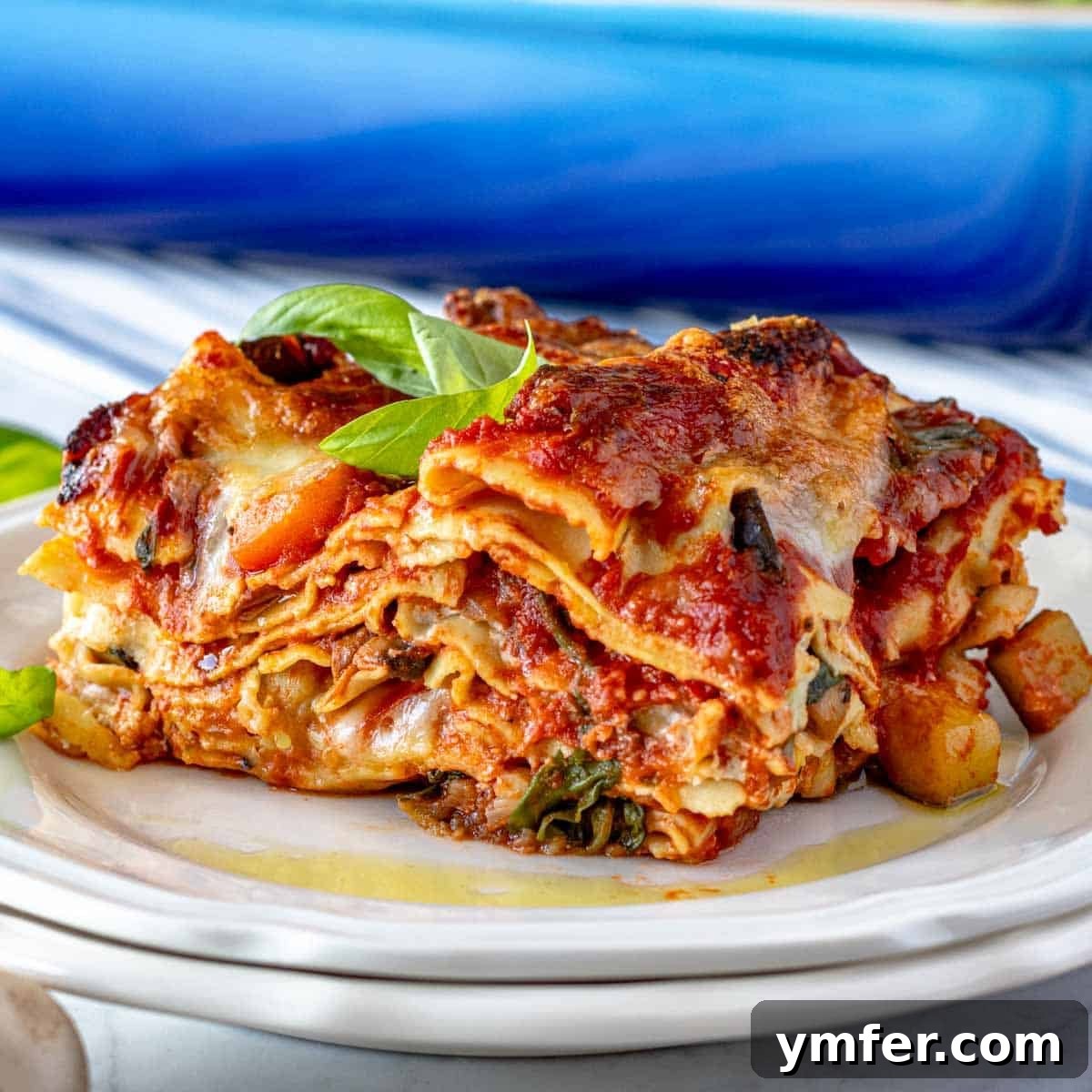
Few dishes evoke the warmth and comfort of home quite like a classic lasagna. While traditional versions often feature meat, our **Vegetable Lasagna** offers an equally **deeply satisfying** and wholesome experience, making it a perfect **Italian casserole dish** for any occasion. Imagine tender **layers of pasta** harmoniously melding with a **rich, flavorful tomato sauce** bursting with a medley of fresh, diced vegetables. This isn’t just a meal; it’s an invitation to gather around the table, a celebration of vibrant flavors, and a testament to the power of delicious plant-based cooking.
This recipe is designed to be approachable yet incredibly rewarding. We’ve meticulously crafted it to ensure every forkful delivers a delightful balance of textures and tastes. Our vegetable lasagna proudly features a luxuriously **creamy ricotta-parmesan sauce** that adds a tangy richness, complemented by generous amounts of **melty mozzarella cheese**. This thoughtful combination makes it the ideal **meat-free option** for vegetarians, flexitarians, and even the most discerning omnivores. Whether you’re planning a cozy **family gathering**, hosting friends, or looking for an efficient **meal prepping** solution for the week ahead, this vibrant and hearty lasagna is guaranteed to impress and become a staple in your culinary repertoire.
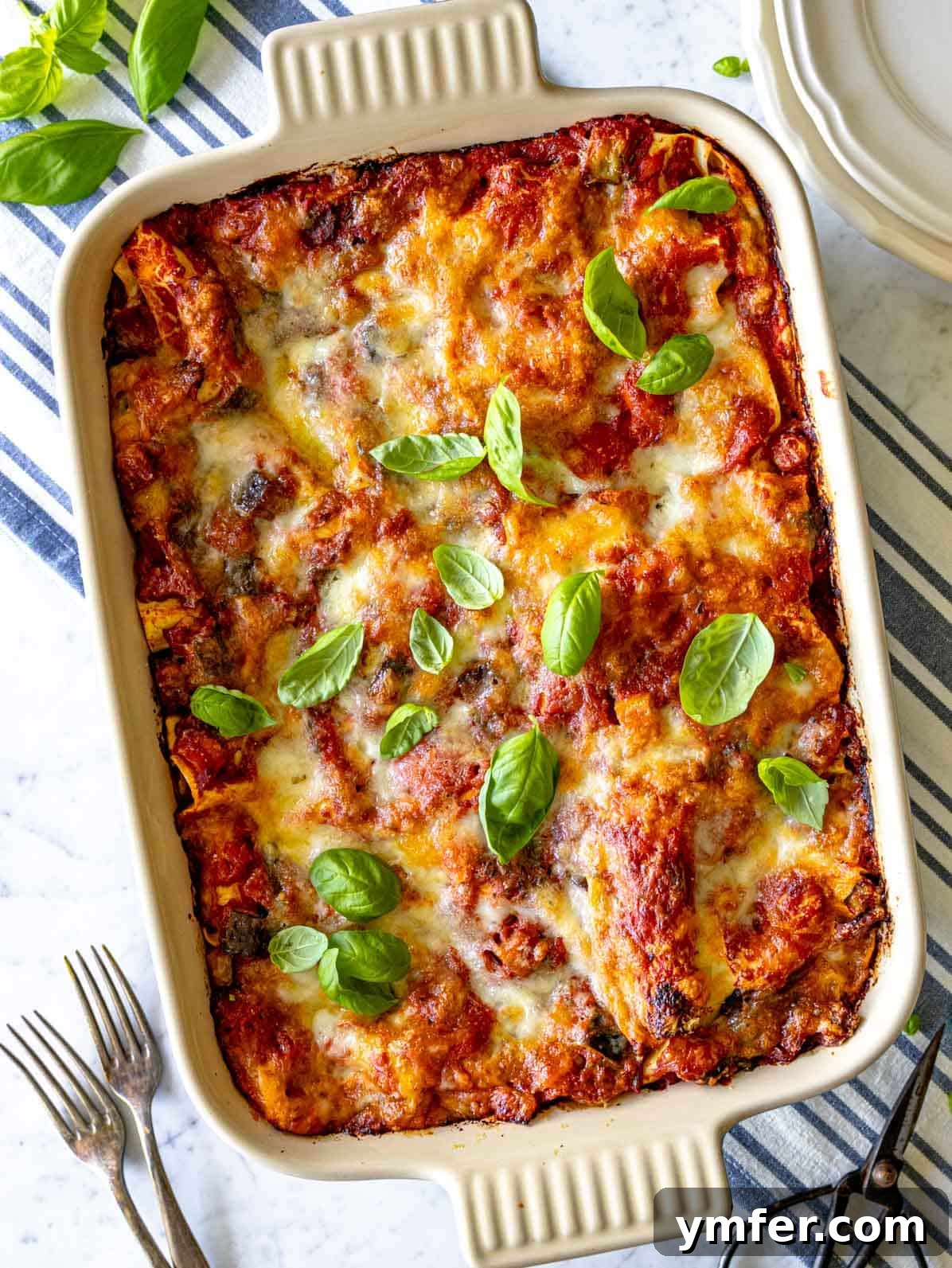
Table of Contents
- What is Vegetable Lasagna? A Timeless Italian Classic
- How to Make the Perfect Vegetable Lasagna: Step-by-Step Guide
- Flavorful Substitutions: Customize Your Lasagna
- Storage & Meal Prep Tips: Enjoying Lasagna Anytime
- Similar & Complementary Recipes: Italian and Holiday Favorites
- Vegetable Lasagna Recipe Card
What is Vegetable Lasagna? A Timeless Italian Classic Reinvented
Vegetable lasagna, at its heart, is a vibrant twist on a beloved Italian classic. It’s a baked pasta dish composed of alternating layers of wide, flat pasta sheets, a rich tomato-based sauce, a creamy cheese filling, and various vegetables. Unlike its meat-centric counterparts, this version shines a spotlight on the fresh, earthy flavors of seasonal produce, making it an incredibly versatile and inclusive dish. It’s the perfect **casserole dish to feed a crowd with diverse dietary preferences** during holidays, celebrations, or any large family gathering, offering a satisfying alternative that doesn’t compromise on the traditional Italian essence.
Our particular recipe is a labor of love, developed to capture the authentic spirit of Italian cooking while being remarkably **easy to put together** and ideally suited for efficient **meal prep**. It delivers a robust flavor profile and substantial texture that will satisfy everyone at the table, ensuring that **it will delight vegetarians, flexitarians, and omnivores alike**. We took great care to stay **100% true to Italian flavors**, drawing inspiration from iconic dishes like Neapolitan pizza, gnocchi alla sorrentina, eggplant parmigiana, and pasta pomodoro. There’s an undeniable magic in the oozy combination of slow-simmered tomato sauce, fragrant fresh basil, and perfectly melted cheese, and this lasagna proudly embodies that magic.
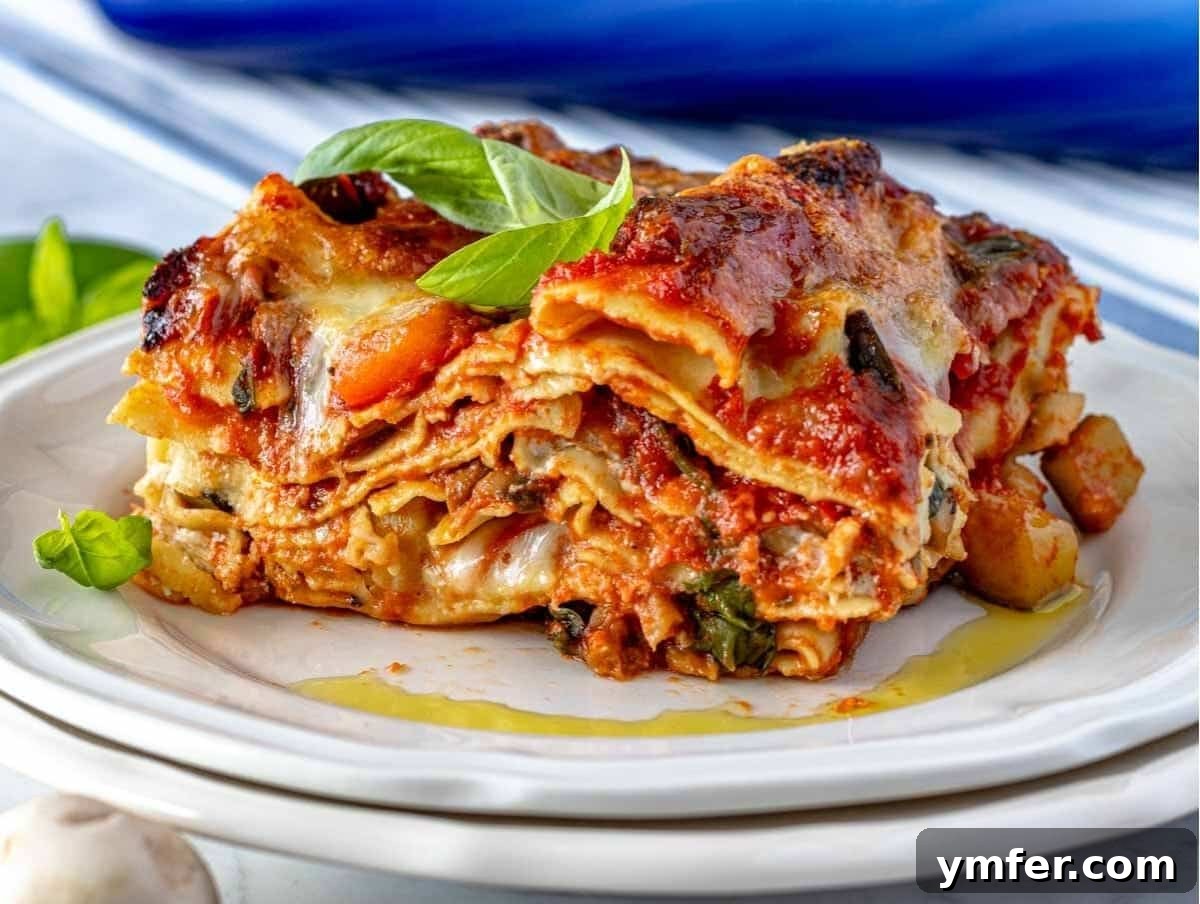
What truly sets our **easy vegetable lasagna** apart is our commitment to simplifying the cooking process without compromising on taste or authenticity. To **save effort and precious time** in the kitchen, we highly recommend using high-quality no-boil lasagna noodles. These “oven-ready” sheets are designed to absorb moisture directly from the sauce as they bake, completely eliminating the messy and time-consuming step of pre-boiling pasta. This not only makes the assembly much quicker but also ensures the pasta cooks perfectly al dente within the casserole, yielding a consistently tender and delightful texture.
For the essential creamy cheese layer, we’ve crafted a stellar, uncooked sauce that comes together in minutes. This vibrant mixture of **creamy ricotta, rich parmesan, and bright lemon zest** requires no cooking whatsoever – simply whisk it together until smooth! This innovative technique, proven successful in our pumpkin pasta bake, artichoke pasta, and pasta al limone recipes, guarantees a beautifully smooth, tangy, and flavorful cheese layer that contributes significantly to the lasagna’s overall succulence and depth. This thoughtful combination ensures a truly memorable culinary experience, whether you’re a seasoned chef or a beginner in the kitchen, eager to create a fantastic Italian meal.
How to Make the Perfect Vegetable Lasagna: Step-by-Step Guide
Crafting this delightful vegetable lasagna is a rewarding experience, and with our clear, detailed instructions, you’ll achieve culinary perfection every time. For your convenience, the full quantities for each ingredient can be found in the recipe card at the very bottom of this page, but here’s a comprehensive breakdown of the entire process, from ingredient preparation to final serving.
1. Gather and Prepare Your Ingredients for Success
The beauty of this vegetable lasagna lies in its accessible ingredients, most of which are readily available at any well-stocked grocery store. We’ll also cover various substitutions in the “Flavorful Substitutions” section below if you wish to customize your dish with different seasonal produce or specific dietary needs.
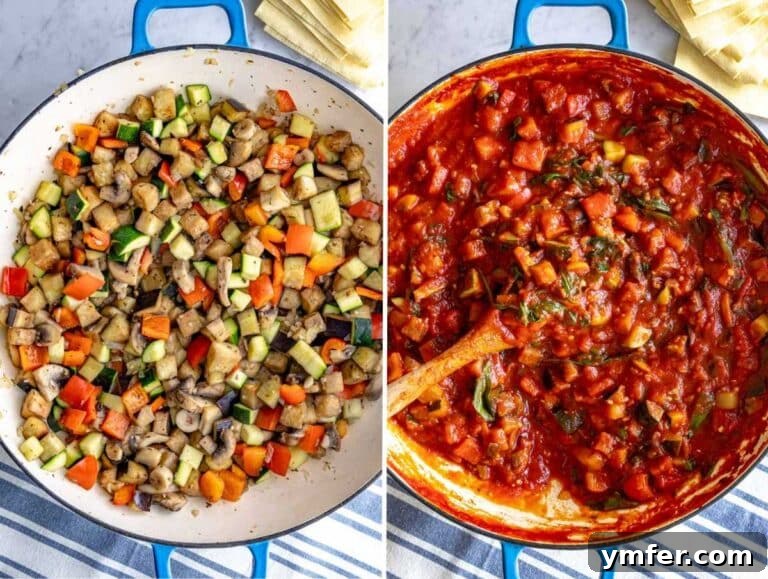
For the **rich and hearty tomato sauce**, you’ll need high-quality tomato puree or passata as the foundational base, ideally an Italian imported brand for authentic flavor. We enhance this with aromatic finely chopped onion, pungent pressed garlic, good quality extra virgin olive oil, fragrant dried oregano, a generous handful of fresh basil leaves, and a colorful array of mixed vegetables, all cut into small, uniform dice. Our chosen medley for this recipe includes succulent eggplant (also known as aubergine), tender zucchini (courgette), sweet red bell pepper, earthy mushrooms, and nutrient-rich fresh spinach. These vegetables cook down beautifully, infusing the sauce with diverse textures and a wonderful balance of sweet and savory notes.
For the **luxuriously creamy cheese sauce**, simplicity and fresh ingredients are key. You’ll combine fresh, whole-milk ricotta cheese for its smooth texture, finely grated parmesan cheese for that essential salty and nutty depth, a touch of bright lemon zest to elevate and cut through the richness of the cheeses, and a splash of warm water to achieve the perfect pourable consistency.
The remaining **essential components** are no-boil lasagna sheets, which are a true time-saver and contribute to the dish’s ease, and fresh mozzarella cheese, which melts into glorious, gooey perfection, forming a delectable top layer.
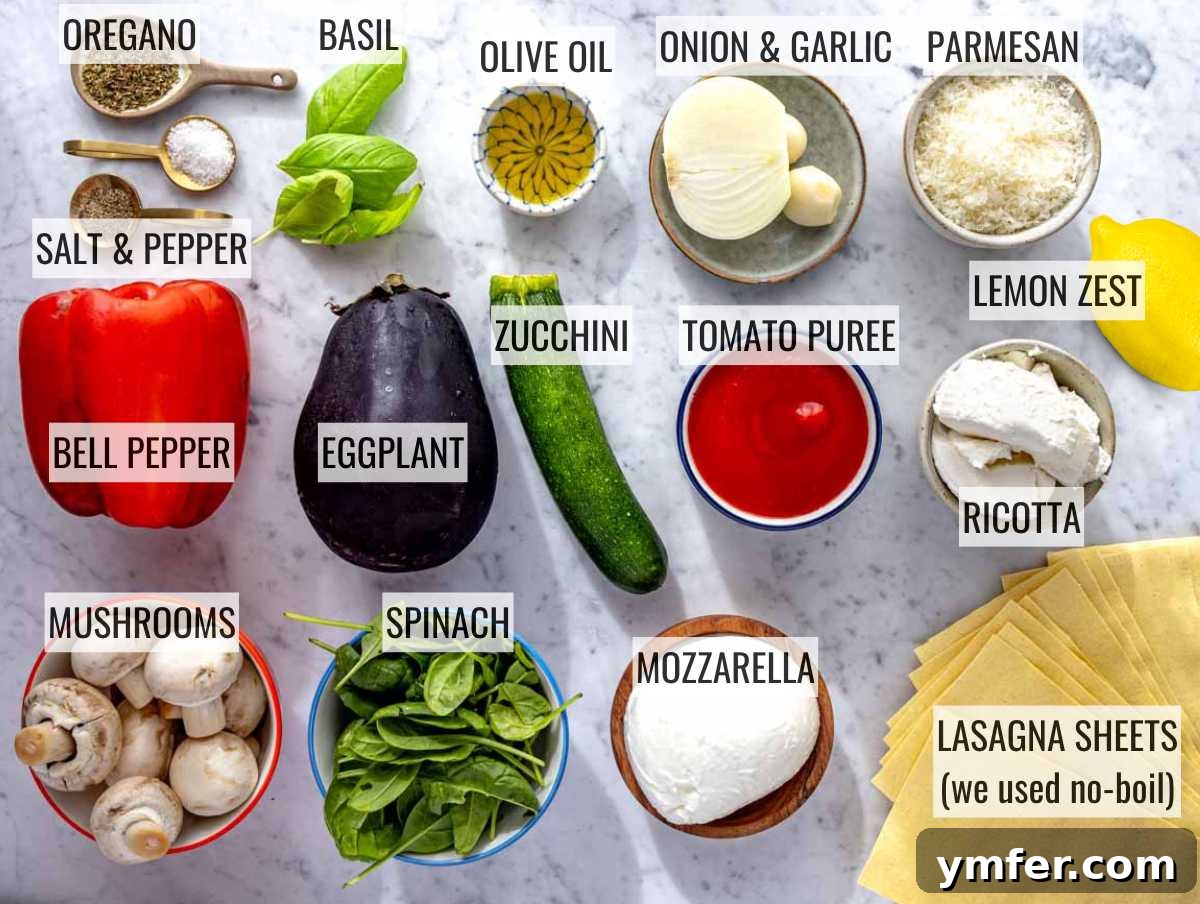
2. Craft the Flavorful Vegetable Tomato Sauce
Begin by heating the **olive oil** in a large, heavy-bottomed skillet or Dutch oven over medium heat. Once the oil is shimmering, add the **chopped onion** and sauté gently for about 4 minutes until it becomes translucent and fragrant, releasing its natural sweetness. Next, stir in the **pressed garlic** and cook for just one more minute; it’s crucial to be careful not to let the garlic burn, as scorched garlic can impart a bitter flavor to your sauce.
Now, introduce the diced **eggplant**, **zucchini**, **bell pepper**, and **mushrooms** to the skillet. Season generously with **dried oregano**, a good pinch of **salt**, and freshly ground **black pepper**. Increase the heat to high and sauté the vegetables for approximately 5 minutes, stirring frequently. This high-heat sautéing step is vital as it helps to tenderize the vegetables quickly and develop deeper, more complex flavors by allowing them to lightly caramelize and release their moisture.
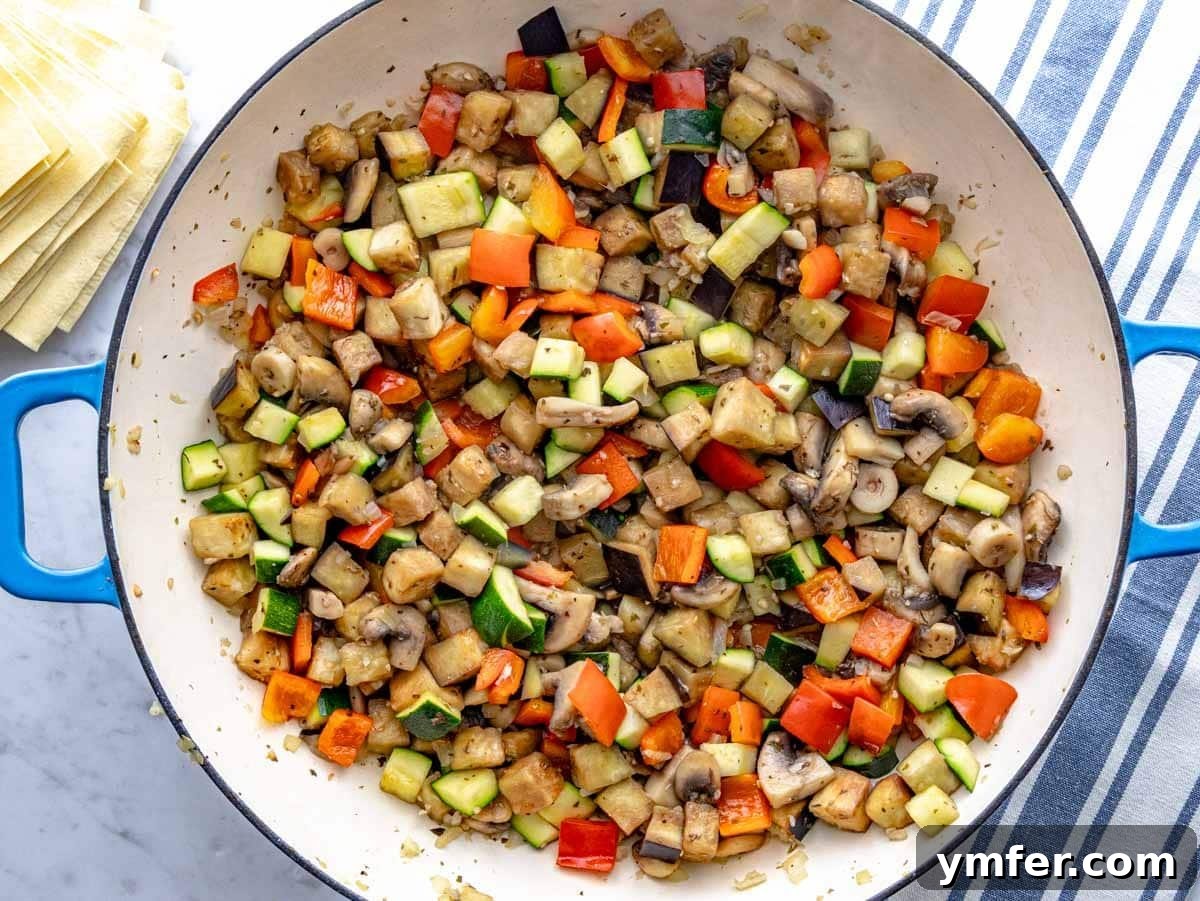
Pour in the **tomato puree** and a cup of **water**. A clever trick is to use this water to rinse out the tomato puree bottle, ensuring you get every last bit of rich flavor! Bring the sauce to a gentle simmer, then reduce the heat to low, cover the skillet, and let it cook for about **20 minutes**, or until all the vegetables are tender and the sauce has thickened slightly. The longer the sauce simmers, the more the flavors will meld and intensify, creating a beautifully rich foundation for your lasagna.
Finally, stir in the fresh **spinach** and fragrant **basil leaves**. Allow them to wilt into the hot sauce for about 2 minutes, adding a fresh, green vibrancy and aromatic lift. Before removing the skillet from the heat, taste the sauce and adjust the seasoning with additional salt or pepper if needed to achieve your perfect balance of flavors.
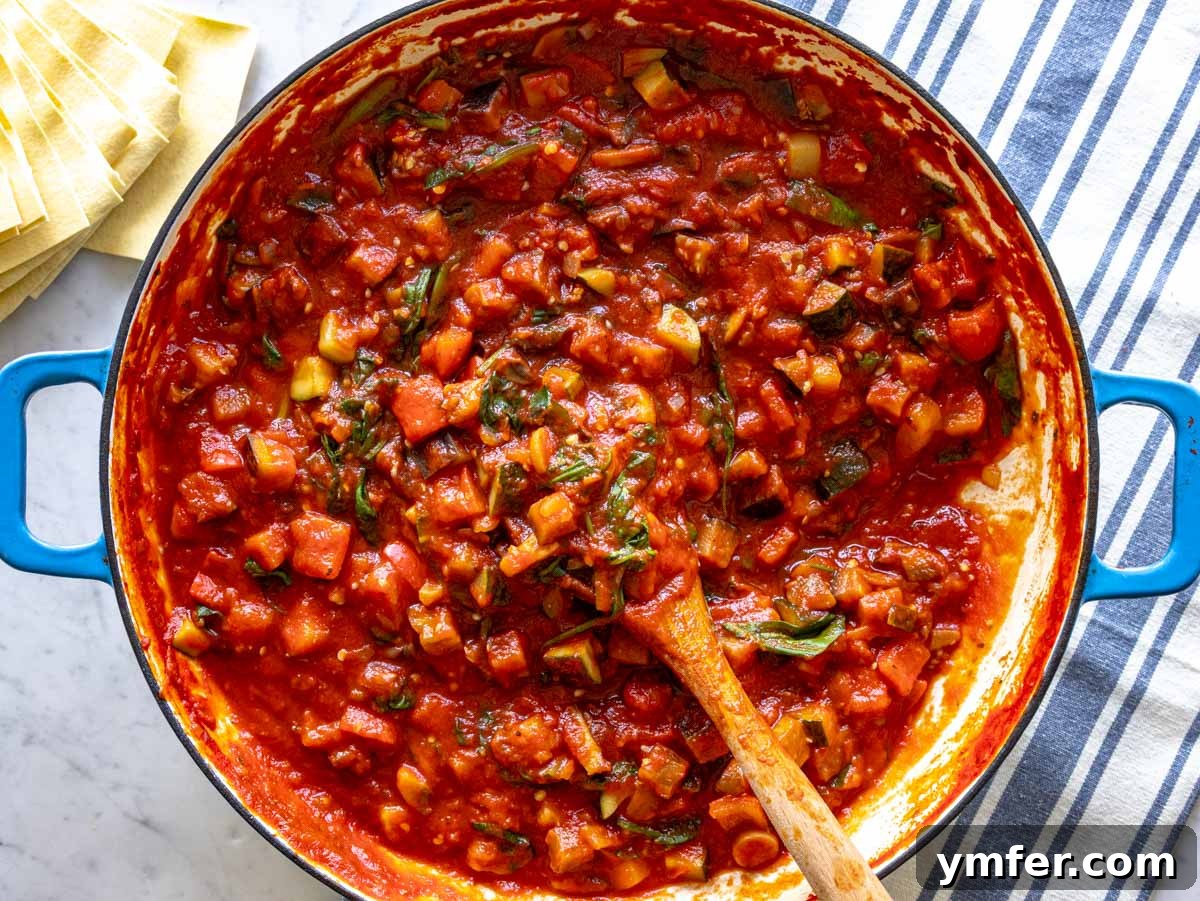
Pro Tip for Sauce Consistency: It’s crucial that your vegetable tomato sauce maintains a slightly liquid consistency. A thinner sauce, rather than a thick one, plays a vital role in hydrating the no-boil lasagna sheets during baking. This ensures they cook through perfectly to an al dente texture and prevents your delicious casserole from drying out in the oven, resulting in a perfectly moist and tender final dish. Don’t be afraid to add a little more water if the sauce appears too thick after simmering.
3. Prepare the Creamy Ricotta-Parmesan Sauce
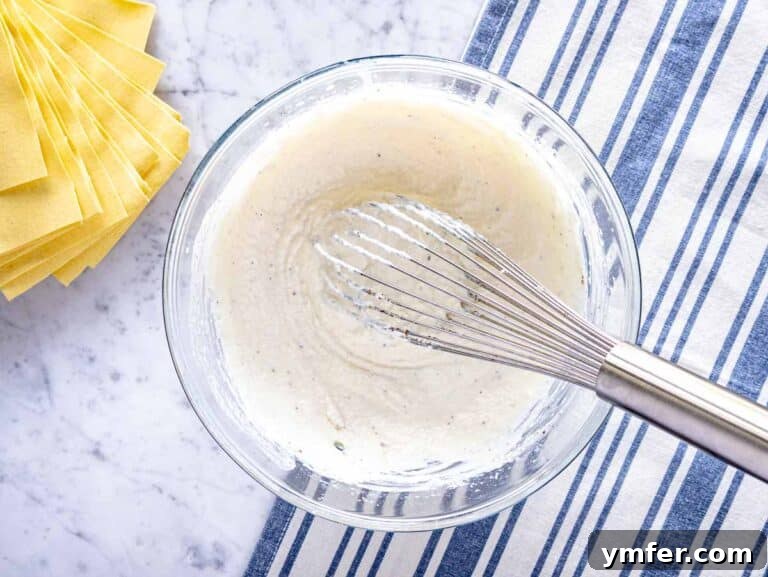
In a medium-sized mixing bowl, combine the fresh, whole-milk **ricotta cheese**, the finely **grated parmesan cheese**, a cup of **warm water**, and the bright, aromatic **lemon zest**. Add a small pinch of **salt** and a dash of freshly ground **black pepper** to taste. This lemon zest is optional but highly recommended; it adds a wonderful, subtle brightness that beautifully cuts through the richness of the cheeses, elevating the overall flavor profile of the lasagna.
Using a whisk, gently but thoroughly blend all the ingredients until they are completely combined and you have a smooth, pourable sauce. The texture should be fluid enough to spread easily and evenly between the pasta layers without being too watery. If it seems too thick, add another tablespoon or two of warm water, whisking well after each addition, until the desired pourable consistency is achieved. This no-cook cheese sauce is remarkably quick and easy to prepare, contributing a refreshing creaminess and tangy depth to your vegetable lasagna.
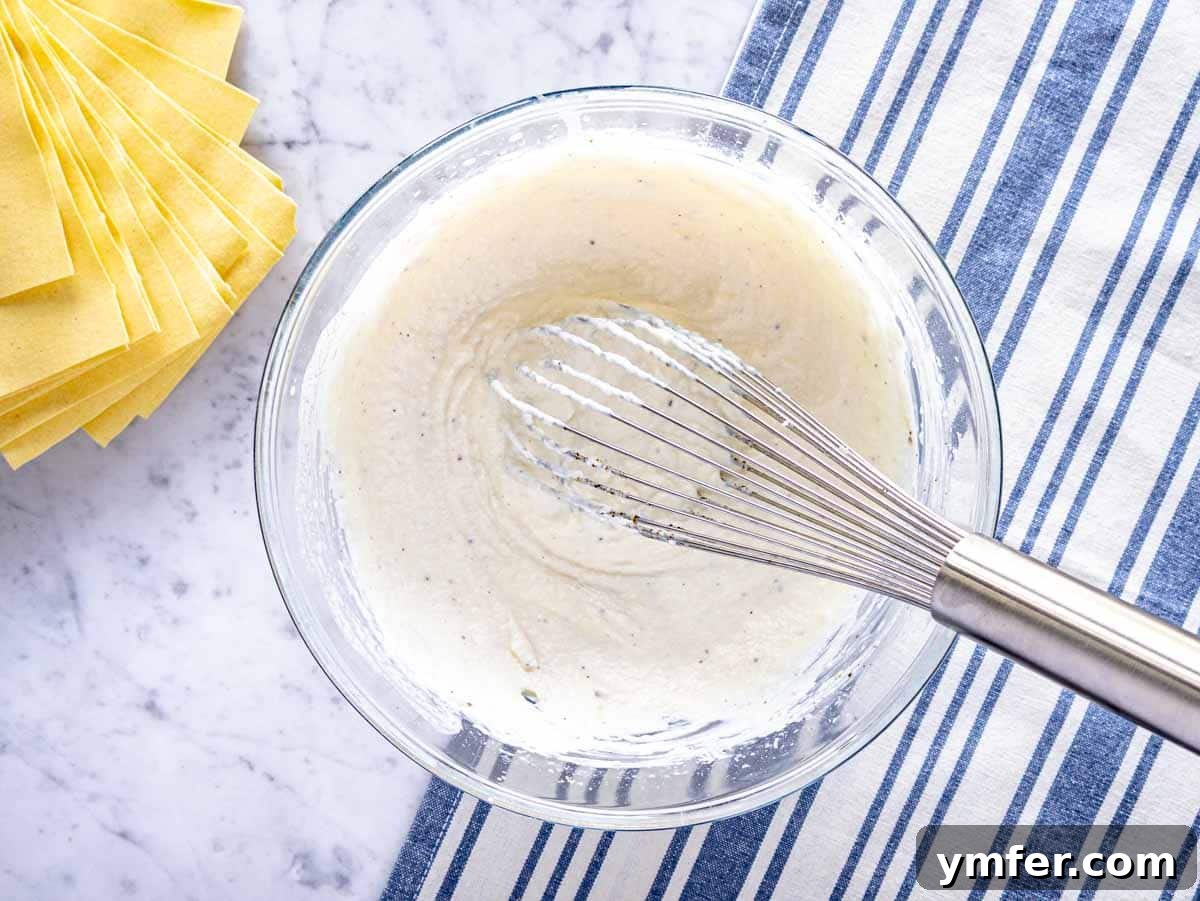
Chef’s Note on Cheese Sauce: The cheese sauce should indeed be quite liquid and pourable. This is by design, not a mistake! Its fluidity, much like the tomato sauce, contributes significantly to the overall moisture content of the lasagna. This ample moisture is crucial for helping the no-boil noodles to hydrate and cook evenly and thoroughly during baking, resulting in a perfectly tender, juicy, and delicious final dish that isn’t dry.
4. Expertly Assemble Your Lasagna Layers for Perfection
Before you begin the exciting layering process, preheat your oven to 350°F (180°C). For the ideal **sauce-to-pasta ratio** and a truly satisfying experience with every bite, we strongly recommend building your lasagna with four distinct layers of pasta sheets. A standard 9×13 inch baking dish works perfectly for this recipe, ensuring ample servings.
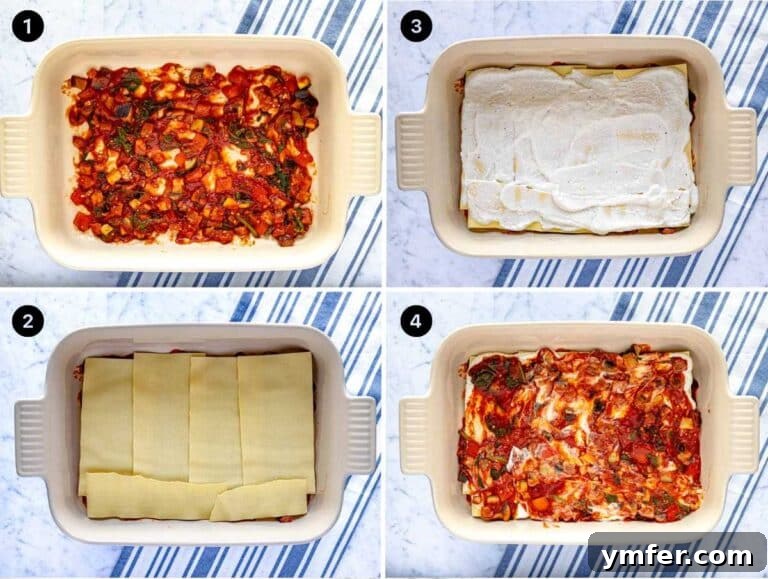
- Start by spreading a thin, even layer of your flavorful **vegetable tomato sauce** across the bottom of your baking dish. This crucial first layer prevents the initial pasta sheets from sticking to the pan and provides essential moisture for them to begin cooking.
- Carefully place your **no-boil lasagna sheets** over the sauce. We typically use about 5 sheets per layer for a standard 9×13 inch dish, arranging them to cover the entire surface. Don’t hesitate to break the sheets to fit any gaps, and a slight overlap between sheets is perfectly fine and often necessary.
- Evenly spread about **one-third of the creamy ricotta-parmesan sauce** over the pasta sheets using the back of a spoon or an offset spatula, ensuring a consistent layer of cheesy goodness.
- Follow this with slightly less than **one-quarter of the vegetable tomato sauce**, ensuring good coverage over the cheese layer to keep things moist and flavorful.
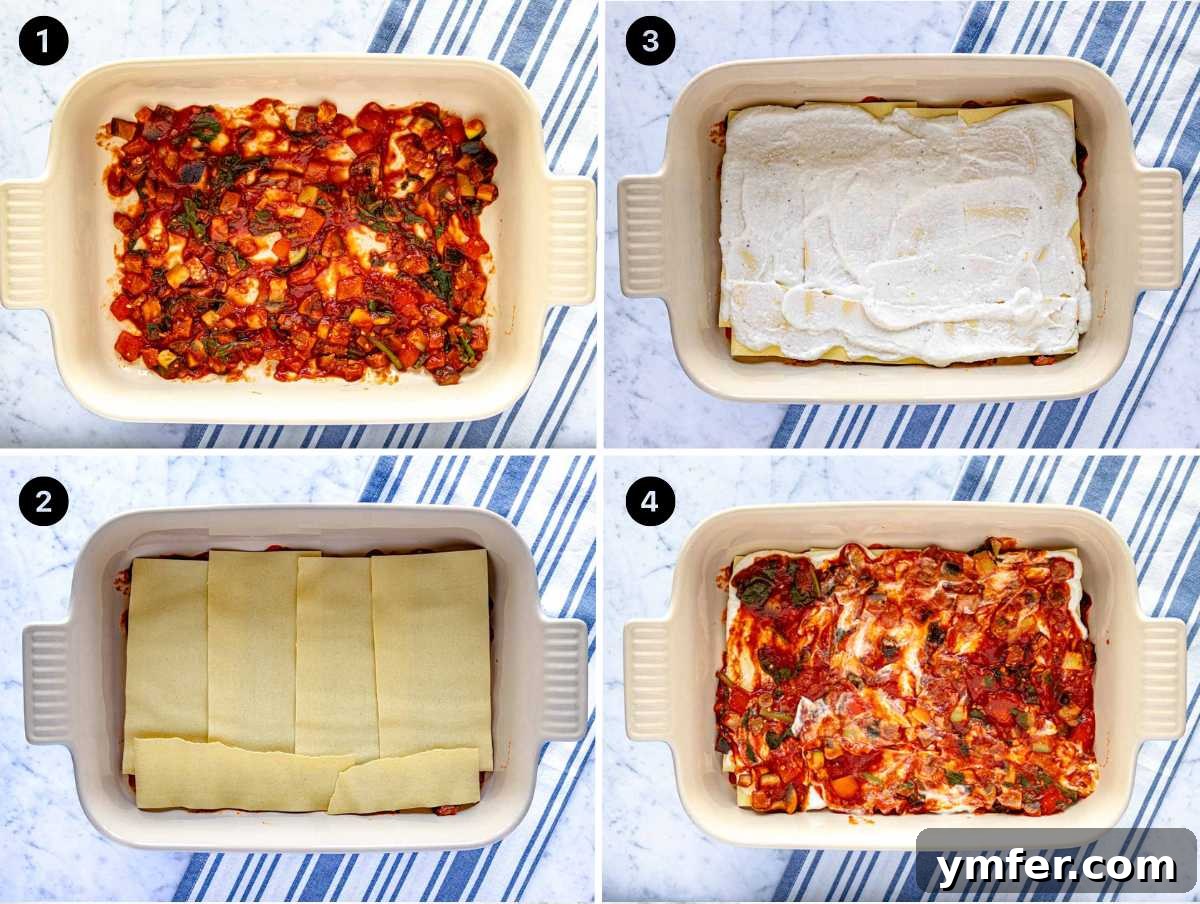
Continue this layering process (pasta sheets, cheese sauce, tomato sauce) until you have constructed **four robust layers of pasta sheets**. For enhanced structural integrity and to make serving much easier, try to arrange each new layer of pasta sheets in the **opposite direction** of the previous one (e.g., if the first layer is vertical, the next is horizontal, then vertical again). This cross-hatch method helps hold the lasagna together beautifully when it’s time to slice and serve.
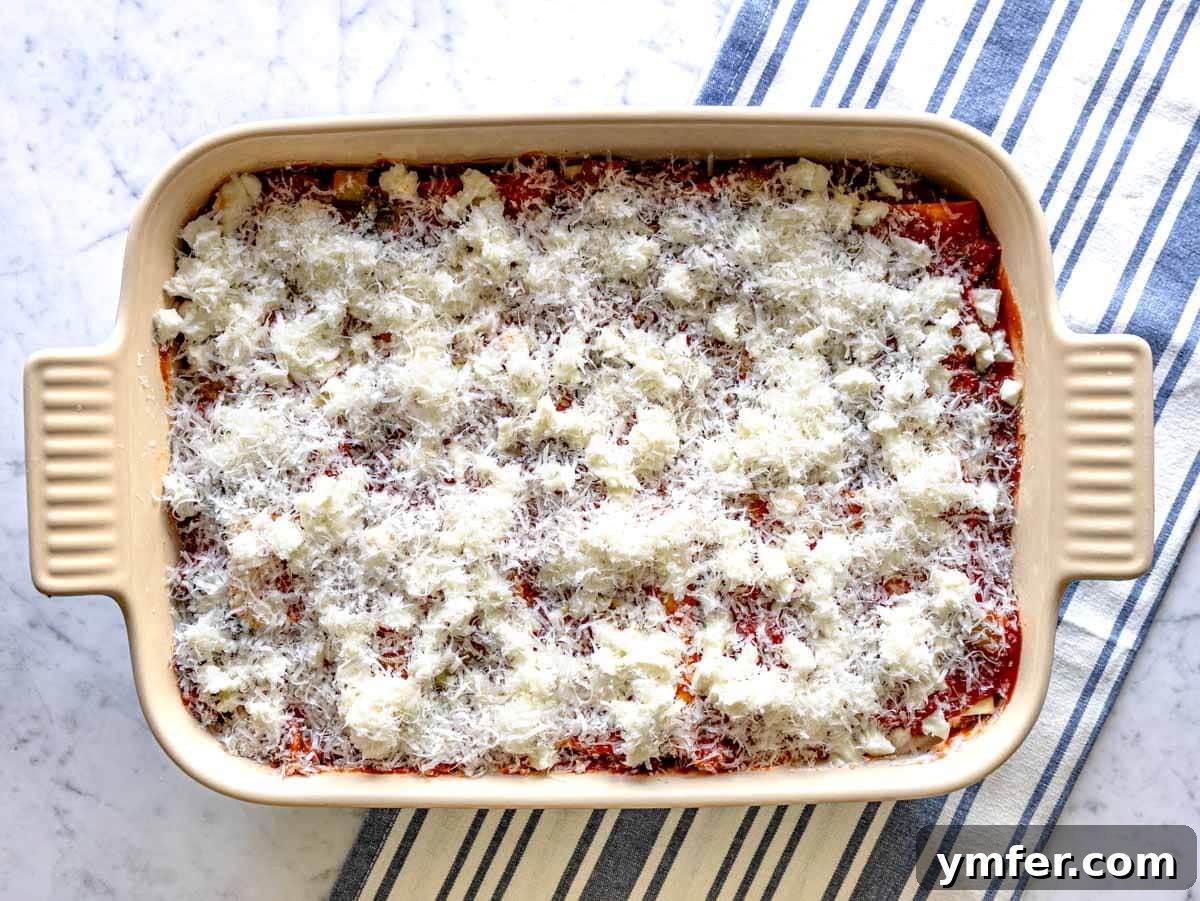
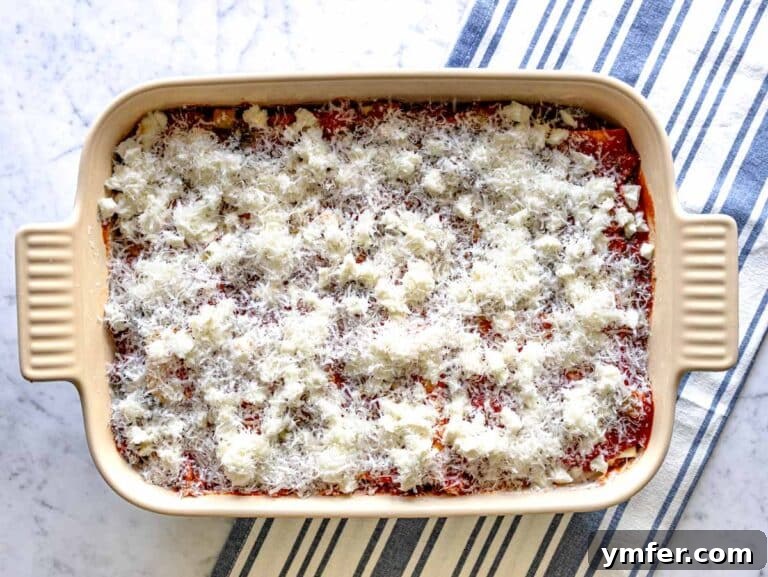
**Important Consideration for the Top Layer:** As you build your layers, remember that the very top layer will receive only tomato sauce, chopped mozzarella, and grated parmesan – not the ricotta-parmesan mixture. Therefore, be mindful to reserve slightly more tomato sauce for this grand finale layer than you used for the middle layers to ensure a rich, bubbling, and intensely flavorful top crust. Finish your masterpiece by topping the final pasta layer with the remaining generous portion of **vegetable tomato sauce**, scattering plenty of freshly **chopped mozzarella** over it, and finishing with a final generous sprinkle of **grated parmesan cheese** for that golden, irresistible crust.
5. Bake to Perfection and Serve with Fresh Basil
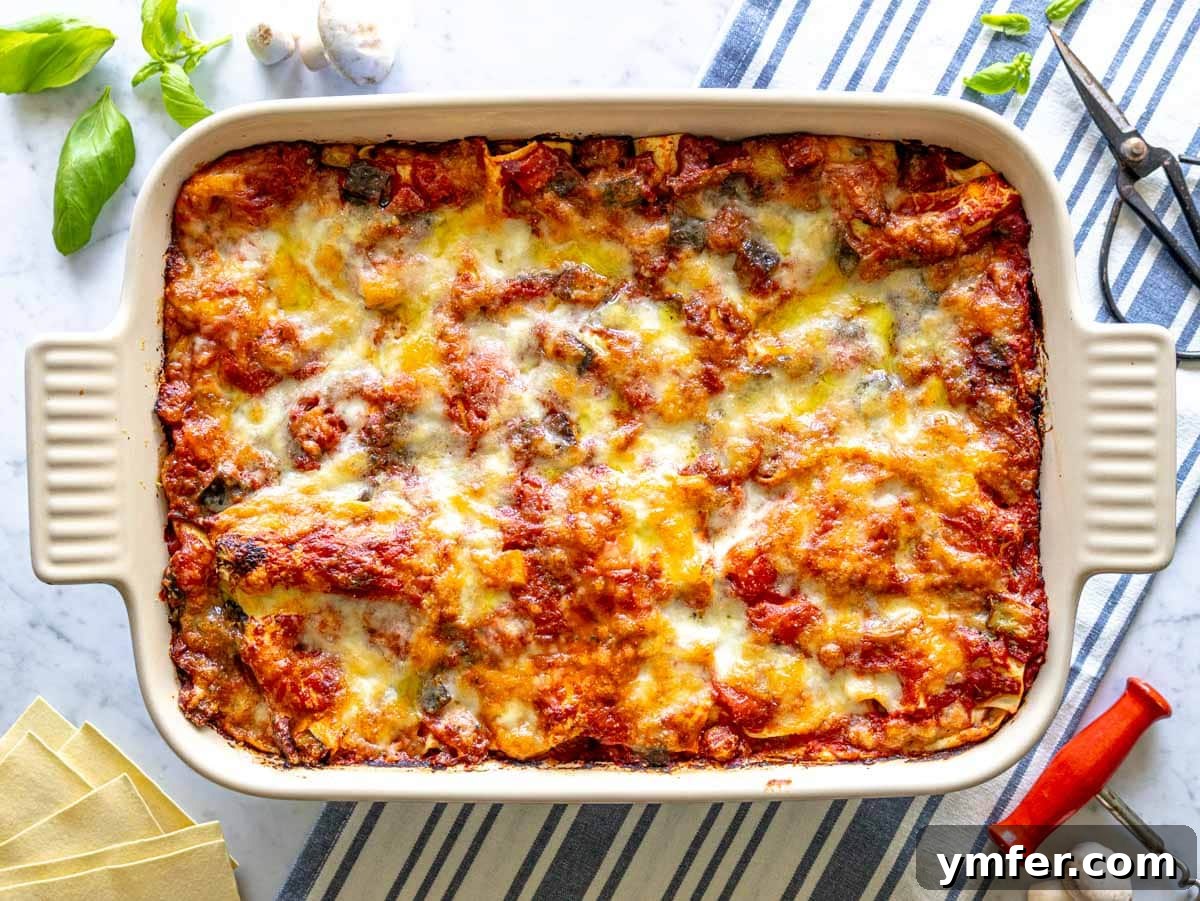
Once your lasagna is expertly assembled, cover the baking dish tightly with aluminum foil. Place it in the center rack of your preheated oven (350°F / 180°C) and bake for an initial period of **15 minutes**. This initial covered baking is absolutely essential for allowing the no-boil noodles to properly steam and soften, absorbing the delicious moisture from the sauces without the top layer drying out or becoming too crispy prematurely.
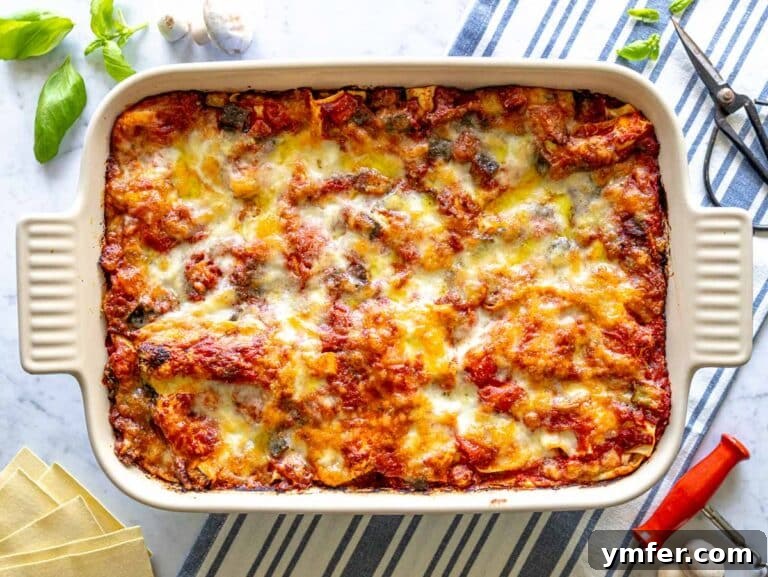
After the first 15 minutes, carefully remove the aluminum foil. Return the lasagna to the oven and continue baking for another **15 minutes**. During this uncovered phase, the cheeses on top will melt into a luscious, bubbling crust, turning beautifully golden brown, and the edges will become wonderfully caramelized. For an extra touch of deep golden-brown perfection and a slightly crispier cheese topping, you can utilize your oven’s **grill or broiler function** during the final 5 minutes of baking. Remember to keep a very close eye on it during this step to prevent any burning.
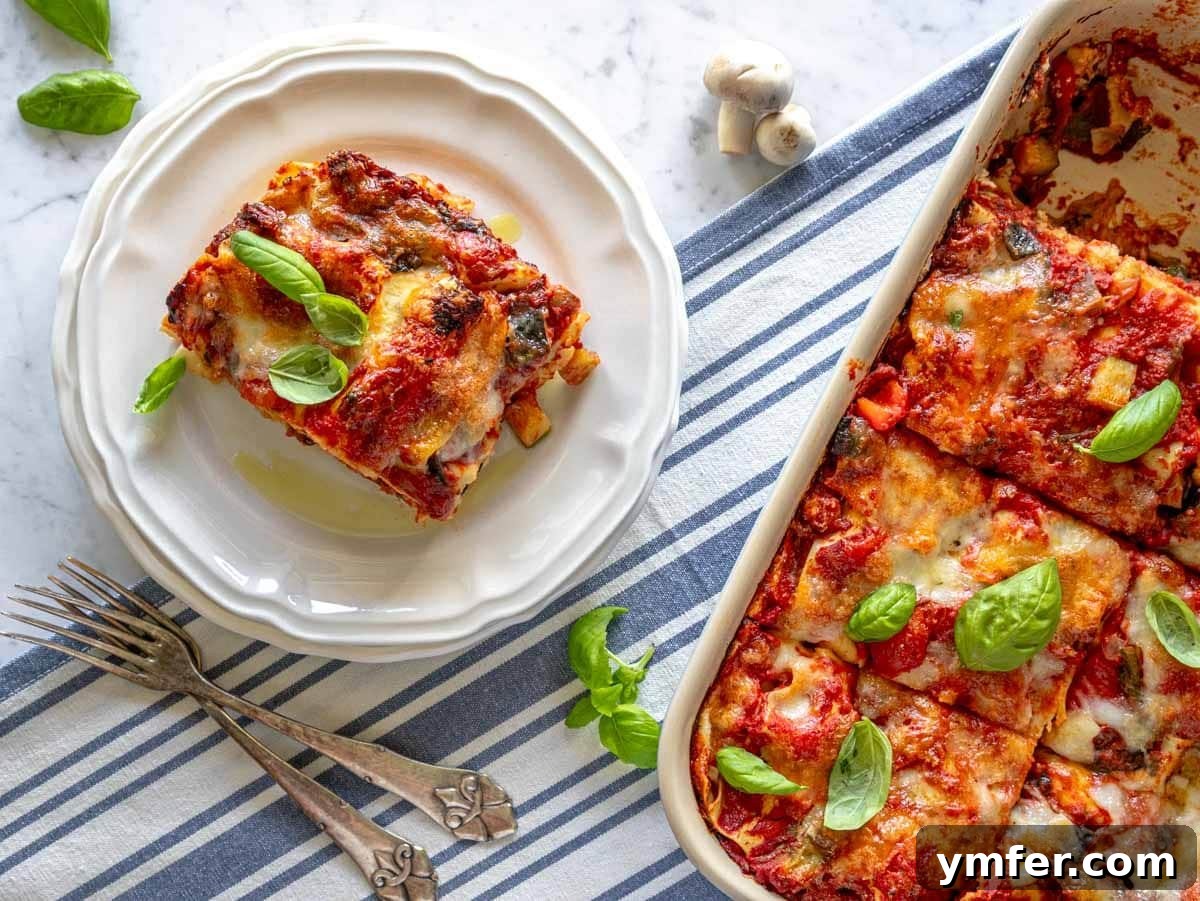
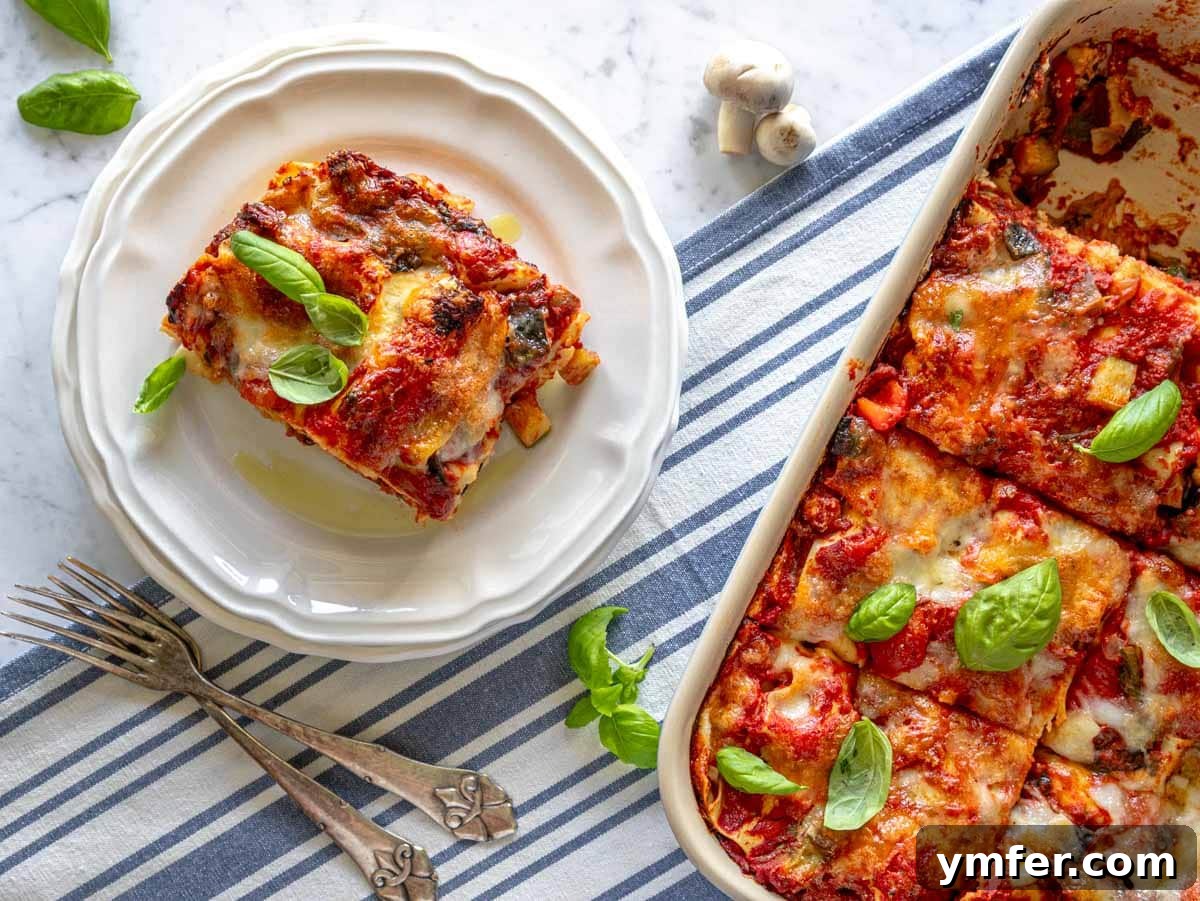
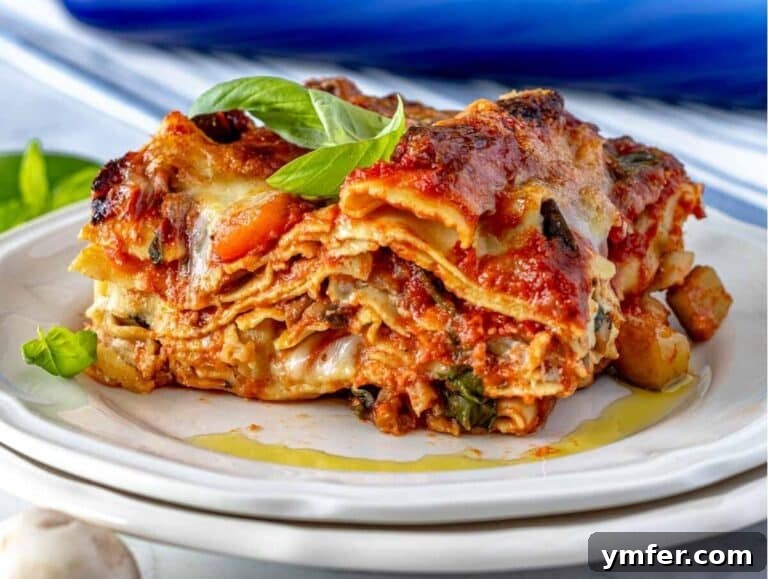
Once baked to perfection, resist the urge to cut into it immediately! It’s crucial to let the lasagna cool and **set for at least 15 minutes** (or even up to 20 minutes for firmer, cleaner slices) before portioning. This vital resting period allows the layers to settle, the sauces to redistribute, and the cheese to firm up slightly, making it much easier to cut into neat, beautiful **6 to 8 pieces** without it falling apart on the plate.
Before serving, generously garnish each warm slice with a scattering of fresh basil leaves. The vibrant green color and aromatic essence of fresh basil add a final flourish of authentic Italian flavor and a beautiful, inviting presentation. Serve warm and savor every comforting bite of this homemade vegetable lasagna – a true masterpiece of meat-free cooking!
Flavorful Substitutions: Customize Your Vegetable Lasagna
One of the many joys of cooking lasagna is its remarkable adaptability. While our recipe offers a perfectly balanced and incredibly satisfying flavor profile, feel free to get creative with your favorite seasonal vegetables or tailor it to specific dietary needs. The vegetables we’ve included are merely suggestions; you can easily substitute them with other delightful options to make this dish truly your own. Here are some ideas to inspire your culinary adventures:
- Eggplant: For a slightly different texture and flavor profile, consider substituting eggplant with tender, thinly sliced fennel (which offers a subtle anise note), vibrant artichoke hearts (fresh or canned, ensuring they are well-drained), or crisp asparagus spears (lightly blanched before adding to ensure tenderness).
- Zucchini: This mild and versatile vegetable can be replaced with various winter squashes, which will offer a sweeter, heartier, and often nuttier flavor to the sauce. Think roasted and diced butternut squash, acorn squash, delicate delicata squash, or even kabocha squash, all pre-cooked slightly to ensure they soften properly in the sauce.
- Bell Pepper: Instead of bell peppers, try adding finely diced carrots for natural sweetness and color, celeriac for a subtle earthy and celery-like flavor, or parsnips for a unique, slightly spicy, and sweet root vegetable note. Remember to lightly sauté these firmer vegetables before adding them to the sauce to kickstart their cooking.
- Mushrooms: If mushrooms aren’t your preference, or you’re looking for something else, consider florets of broccoli or cauliflower (lightly steamed or roasted first), or even topinambur (Jerusalem artichokes), which offer a unique nutty and earthy taste and a satisfying crunch if not fully softened.
- Spinach: Any tender leafy green works wonderfully here. Substitute spinach with finely chopped kale (ensure to remove tough stems), Swiss chard, or even slightly peppery mustard greens. Just remember that tougher greens like kale might need a little extra wilting time in the hot sauce.
- Tomato Puree or Passata: This is the heart of any great Italian sauce! While Italian passata in a glass bottle is ideal for its smooth consistency and rich, concentrated tomato flavor, high-quality canned crushed tomatoes make an excellent and widely available substitute. They offer a slightly chunkier texture that can add to the rustic appeal of the lasagna.
- Dried Oregano: This classic Italian herb can be swapped for a robust Italian herb mix, which often includes a blend of thyme, rosemary, marjoram, and other complementary herbs, for a more complex aromatic profile in your tomato sauce.
- Fresh Basil: Fresh basil is undeniably the soul of Italian tomato dishes, offering a sweet, peppery, and incredibly fragrant lift. While dried basil can be used in a pinch (about ⅓ of the amount of fresh), it simply won’t offer the same bright, vibrant essence. It’s truly best not to substitute fresh basil if possible, especially when used as a garnish for its aromatic properties.
- Ricotta: For the creamiest results and a traditional Italian flavor, we always recommend whole-milk ricotta. However, if you’re looking for a slightly tangier or denser cheese profile, sheep’s milk ricotta is a fantastic, authentic Italian alternative that will add a unique depth.
- Parmesan: Grated Pecorino Romano cheese can be used as a substitute for Parmesan, offering a sharper, saltier, and more pungent flavor that pairs beautifully with the rich vegetables and tomato sauce. You might use slightly less due to its intensity.
- Mozzarella: We prefer fresh fiordilatte mozzarella for its superior melt, delicate milky flavor, and beautiful stretch. If fresh mozzarella is not readily available, pre-shredded mozzarella designed for pizza will certainly work, though be aware it might contain anti-caking agents that can slightly affect its melt and texture.
- No-Boil Lasagna Noodles: These are a true game-changer for convenience in this recipe. If you opt for traditional lasagna noodles that require boiling, you will need to pre-boil them until al dente before assembling. Be sure to lay them flat on a clean kitchen towel after boiling to prevent them from sticking together.
- Vegan Adaptation: To make this incredibly delicious recipe entirely vegan, simply replace the dairy ricotta, parmesan, and mozzarella with high-quality, meltable non-dairy alternatives. The market now offers many excellent plant-based cheeses that mimic the texture and flavor of their dairy counterparts, ensuring a delightful vegan lasagna.
- Gluten-Free Adaptation: Making this recipe gluten-free is straightforward. Simply use gluten-free lasagna sheets. Most brands now offer “oven-ready” or no-boil gluten-free options, making the adaptation seamless and just as convenient as the traditional version.
Storage & Meal Prep Tips: Enjoying Lasagna Beyond Baking Day
This vegetable lasagna is not only exquisitely delicious fresh from the oven but also an outstanding candidate for **meal prep**, making your weeknights significantly easier or ensuring you have a comforting dish ready for unexpected guests or busy days. Its flavors tend to meld and deepen over time, often tasting even better the next day!
Make Ahead Options:
- Assemble and Refrigerate (Unbaked): You can fully assemble the entire lasagna, just as described in the instructions, cover it very tightly with plastic wrap or aluminum foil, and store it in the refrigerator for up to 12-16 hours before you plan to bake it. This is a perfect strategy for preparing dinner the night before or in the morning before a busy day. When you’re ready to bake, add an extra 10-15 minutes to the initial covered baking time to account for the lasagna starting from a chilled temperature.
- Assemble and Freeze (Unbaked): For a truly long-term meal planning solution, assemble the lasagna in a freezer-safe baking dish (preferably one that can go from freezer to oven). Cover it extremely tightly with a layer of plastic wrap directly touching the top surface of the lasagna, and then seal it thoroughly with a layer of heavy-duty aluminum foil. Label it with the date and freeze for up to 2-3 months. When ready to bake, you can cook it directly from frozen. Place the foil-covered frozen lasagna in a preheated oven (350°F/180°C) and bake for approximately 60-75 minutes, or until the center is bubbling. Remove the foil and bake for an additional 15-20 minutes, or until the cheese on top is beautifully golden and bubbly.
Storing Leftovers (Baked Lasagna):
- Refrigerator: Any leftover baked lasagna can be kept in the same casserole dish, tightly wrapped in plastic or foil, for up to 4 days. This keeps it fresh and moist. Alternatively, transfer individual portions to airtight containers; this is ideal for convenient grab-and-go lunches or dinners throughout the week.
- Freezer: If you have baked leftovers and want to save them for an extended period, allow the lasagna to cool completely. For single servings, cut into slices, wrap each slice individually in plastic wrap, and then in aluminum foil. Place these wrapped portions in freezer-safe bags or containers. This method is excellent for easily reheating just what you need. Freeze for up to 2-3 months.
Reheating Instructions for Best Results:
- Oven: For the best texture and flavor, reheat slices or larger portions in an oven preheated to 300°F (150°C). Cover loosely with aluminum foil to prevent the top from drying out or over-browning. Reheat until warmed through, usually about 15-20 minutes for individual slices or 30-40 minutes for a larger portion.
- Air Fryer: This is a fantastic and quick option for individual slices! Place a slice directly in the air fryer basket (you might want to line it with parchment paper for easier cleanup). Heat at 325°F (160°C) for 8-12 minutes, or until it’s hot throughout and the cheese is deliciously re-melted and slightly crispy.
- Microwave: The fastest method for single servings when time is of the essence. Place a slice on a microwave-safe plate, cover it with a microwave-safe lid or damp paper towel to retain moisture, and heat on high for 2-4 minutes, or until heated through. Be aware that the pasta and cheese texture might be slightly softer compared to oven-reheated lasagna.
Similar & Complementary Recipes: Italian and Holiday Favorites
If you’ve enjoyed crafting and savoring this delicious vegetable lasagna, you’ll surely appreciate these other Italian-inspired and holiday-friendly dishes from our extensive collection. They are perfect for expanding your culinary repertoire, exploring new flavors, and impressing your guests with authentic and wholesome meals.
More Italian Delights: Dive deeper into the rich and diverse world of Italian cuisine with these fantastic recipes. From comforting soups to classic pasta dishes, there’s something for everyone to enjoy: Lentil Soup, Pasta alla Norma, Minestrone, Mushroom Risotto, Spaghetti Aglio Olio, Penne Arrabbiata, Eggplant Parmigiana, No-Knead Focaccia, Pizza Dough, Pasta e Fagioli, Fregola Pasta, Casarecce Pasta, and Pesto Pasta. For many more incredible Italian meal ideas, be sure to check out our comprehensive compilation with over 60+ Italian recipes.
Hearty Holiday & Celebration Recipes: Planning for a special occasion, holiday feast, or a festive gathering? These delightful dishes are perfect for celebrations, offering delicious and satisfying meat-free options that are sure to be a hit with everyone at your table: Stuffed Butternut Squash, Vegetarian Lasagna, Cannelloni (Manicotti), Lentil Loaf, Mushroom Wellington, Baked Ziti, Cauliflower Mac and Cheese, Apple Crisp, Sweet Potato Casserole, and Vegetarian Stuffing. For even more inspiring holiday ideas, explore our dedicated holiday recipe compilation.
Explore More Delicious Recipes: Find Your Next Favorite Meal
Recipes
45 Easy Vegetarian Dinner Recipes
Mains
40 High Protein Vegetarian Meals
Collections
40 Meatless Dinner Ideas
Collections
30 Easy Italian Recipes
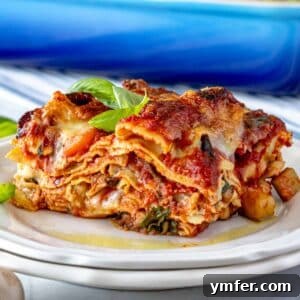
Vegetable Lasagna
This comforting Italian casserole dish is perfect for family gatherings or meal prepping. Layers of tender pasta, rich tomato sauce with fresh vegetables, creamy ricotta-parmesan, and melty mozzarella create a deeply satisfying, meat-free option for everyone.
Equipment
- Baking dish (9 x 13 inches / 20 x 30 cm)
Ingredients
TOMATO SAUCE
- 2 tablespoons olive oil
- 1 onion, chopped
- 3 cloves garlic, pressed
- 1 eggplant (3 cups / 8½ ounces / 240 grams), diced
- 1 zucchini (1½ cup / 7 ounces / 200 grams), diced
- 1 red bell pepper (1½ cup / 5½ ounces / 160 grams), diced
- 6 ounces mushrooms (2 cups), diced
- 4 ounces spinach (4 cups)
- 4 cups tomato puree + 1 cup water (to rinse the bottle)
- 1 teaspoon dried oregano
- 10 fresh basil leaves
- 1 teaspoon salt, or more to taste
- ⅛ teaspoon black pepper
CHEESE SAUCE
- 1½ cups ricotta (whole-milk recommended)
- 2 cups grated parmesan cheese (3½ ounces)
- 1 teaspoon grated lemon zest (optional)
- 1 cup warm water
OTHER INGREDIENTS
- 11 ounces no-boil lasagna noodles (*see notes for alternatives)
- 8 ounces mozzarella (best if fresh, chopped) + more parmesan cheese for sprinkling on top
Instructions
MAKE TOMATO SAUCE
- Heat 2 tablespoons olive oil in a large skillet. Add 1 chopped onion and sauté for 4 minutes until translucent. Then, add 3 pressed garlic cloves and sauté for one more minute, being careful not to burn.

- Add the diced eggplant, zucchini, red bell pepper, and mushrooms. Season with 1 teaspoon dried oregano, 1 teaspoon salt, and ⅛ teaspoon black pepper. Sauté on high heat for 5 minutes, stirring often.
- Stir in 4 cups tomato puree and 1 cup water (use water to rinse the tomato bottle). Simmer for about 20 minutes, or until the vegetables are cooked.
- Now, add 4 ounces spinach and 10 fresh basil leaves, and let them wilt (about 2 minutes). Taste and adjust for salt. The sauce should be slightly liquid to help cook the lasagna sheets and prevent drying in the oven.
MAKE CHEESE SAUCE
- Add 1½ cups ricotta, 2 cups grated parmesan, 1 cup warm water, 1 teaspoon grated lemon zest (optional), a pinch of salt, and black pepper to a bowl. Whisk until combined. The cheese sauce should be pretty liquid and pourable.
ASSEMBLE LASAGNA
- Preheat the oven to 350°F (180°C). We recommend making lasagna with four layers of pasta for the best sauce-to-pasta ratio.
- Add a thin layer of tomato sauce to a 9×13 inch baking dish. Cover with no-boil lasagna sheets (approx. 5 sheets per layer; break to fit, slight overlap is fine).
- Add ⅓ of the cheese sauce and spread it evenly. Cover with slightly less than ¼ of the tomato sauce.
- Repeat the steps (pasta sheets + cheese sauce + tomato sauce) until you have 4 layers of noodle sheets. Arrange pasta sheets in the opposite direction of the previous layer (vertical, horizontal, etc.).
- Finish the top layer with the remaining tomato sauce, 8 ounces chopped mozzarella, and grated parmesan cheese. (The top layer has more tomato sauce than middle layers and no ricotta sauce).
BAKE THE LASAGNA
- Cover with foil and bake in the center of the oven at 350°F (180°C) for 15 minutes.
- Remove the foil and bake for 15 more minutes. You can use the grill/broiler function for the last 5 minutes to brown the cheese, watching carefully.
- Let the lasagna cool and set for 15-20 minutes before cutting into 6-8 pieces. This ensures cleaner slices.
- Top with plenty of fresh basil leaves and enjoy.
Notes
Nutrition Information: The provided nutrition information is an estimate for 1 piece of vegetable lasagna, assuming 8 servings per dish. Actual values may vary based on specific ingredients and brands used.
About Lasagna Noodles: This recipe primarily uses no-boil lasagna sheets for convenience. If using traditional boil-first noodles, pre-boil them until al dente and lay flat to cool before assembly. Fresh noodles also work well and usually don’t require pre-boiling.
Substitutions: Feel free to customize with your favorite seasonal vegetables or dietary needs. Refer to the “Flavorful Substitutions” section above for a comprehensive list of suggested alternatives.
Storage & Meal Prep: This lasagna is excellent for making ahead or storing leftovers. Please refer to the “Storage & Meal Prep Tips” section above for detailed instructions on refrigeration, freezing, and reheating to maintain optimal taste and texture.
Nutrition
Calories: 474kcal, Carbohydrates: 51g, Protein: 25g, Fat: 21g, Saturated Fat: 10g, Polyunsaturated Fat: 1g, Monounsaturated Fat: 7g, Trans Fat: 0g, Cholesterol: 76mg, Sodium: 790mg, Potassium: 1088mg, Dietary Fiber: 6g, Sugar: 11g, Vitamin A: 3161IU, Vitamin B6: 0.4mg, Vitamin C: 50mg, Vitamin E: 4mg, Vitamin K: 81µg, Calcium: 416mg, Folate: 78µg, Iron: 4mg, Manganese: 1mg, Magnesium: 71mg, Zinc: 3mg
Tried this recipe? We’d love to hear from you! Leave a comment below or mention @theplantbasedschool on Instagram. Your feedback and photos are always appreciated! ⭐️ 💚