

This butternut squash soup recipe offers a comforting embrace, perfect for the crisp days of fall and the chilly nights of winter. It’s a truly warm and inviting bowl of velvety goodness, brimming with the rich, earthy, and naturally sweet flavors of perfectly roasted butternut squash, carrots, onions, and fragrant herbs.
Crafted with simplicity in mind, this vibrant recipe is surprisingly easy to master. The secret to its profound depth of flavor lies in one crucial step: roasting all the core ingredients in the oven. This caramelization process brings out their inherent sweetness and creates an unparalleled aromatic base. Once roasted, these tender vegetables are simply blended into a luxuriously creamy soup, requiring minimal effort for maximum taste.
More than just a simple soup, this butternut squash creation is a cozy yet elegantly presented dish. Its beautiful golden hue and silky texture make it suitable as a gorgeous appetizer, a nourishing and satisfying main course, or a delightful addition to a special holiday meal. Whether you’re seeking a quick weeknight dinner or an impressive dish for guests, this soup promises to be a staple in your culinary repertoire.

Table of Contents
- What is Butternut Squash Soup?
- Why You Will Love This Butternut Squash Soup
- How to Make Butternut Squash Soup: A Step-by-Step Guide
- Serving Suggestions for Your Butternut Squash Soup
- Smart Substitutions for Butternut Squash Soup
- Frequently Asked Questions About Butternut Squash Soup
- Storage & Meal Prep Tips for Butternut Squash Soup
- Similar Comforting Recipes You Might Enjoy
- Butternut Squash Soup Recipe Card
What is Butternut Squash Soup?
Butternut squash soup is a timeless classic, celebrated for its smooth texture and delightful flavor profile. At its core, it’s a wonderfully low-effort recipe that is easy to prepare with a handful of simple, wholesome ingredients. This simplicity allows the inherent sweetness and earthiness of the butternut squash to truly shine, making it a beloved dish for home cooks and gourmands alike.
While butternut squash proves incredibly versatile in various culinary applications – from enriching pasta dishes and elegant ravioli to creamy risotto, hearty stuffed preparations, or fresh salads – this soup offers one of the most sublime ways to appreciate its unique sweet, earthy flavor. The cooking process is designed to highlight these natural characteristics, transforming humble vegetables into a gourmet experience.
Our rendition of this beloved soup elevates the flavor through careful roasting. Oven-roasted and subtly caramelized onions, garlic, carrots, and butternut squash meld harmoniously with fragrant aromatic herbs like fresh sage and thyme, bright ginger, and savory vegetable broth. The result is a deeply satisfying and balanced symphony of flavors, creating the perfect comforting dish for autumn and winter seasons. This process not only cooks the vegetables until tender but also intensifies their natural sugars, adding an irreplaceable depth that mere boiling cannot achieve.

Making this incredible soup can be broken down into three straightforward and simple steps:
- Roast the vegetables: Begin by roasting chunks of butternut squash in the oven alongside garlic, onion, and carrots. Infuse them with aromatic herbs like sage and thyme to build a rich flavor base. This step is crucial for caramelization and deep flavor development.
- Blend until smooth: Once perfectly tender and slightly browned, transfer the roasted vegetables to a blender. Combine them with high-quality vegetable broth and fresh ginger, then blend until you achieve a wonderfully smooth and creamy consistency.
- Simmer to perfection: Gently simmer the blended soup for a few minutes. This final step allows all the incredible flavors to fully meld together, enhancing the soup’s overall richness and warmth before serving.
We prefer to keep our butternut squash soup relatively light and simple to allow the pure, delicious flavor of the squash to shine through. However, for those who enjoy an even richer texture, you have the option to enrich it with a touch of creamy coconut milk (for a dairy-free option), luxurious heavy cream, tangy sour cream, or a knob of butter. These additions can transform the soup into an even more decadent treat, catering to your personal preference without overpowering the natural goodness of the butternut squash.
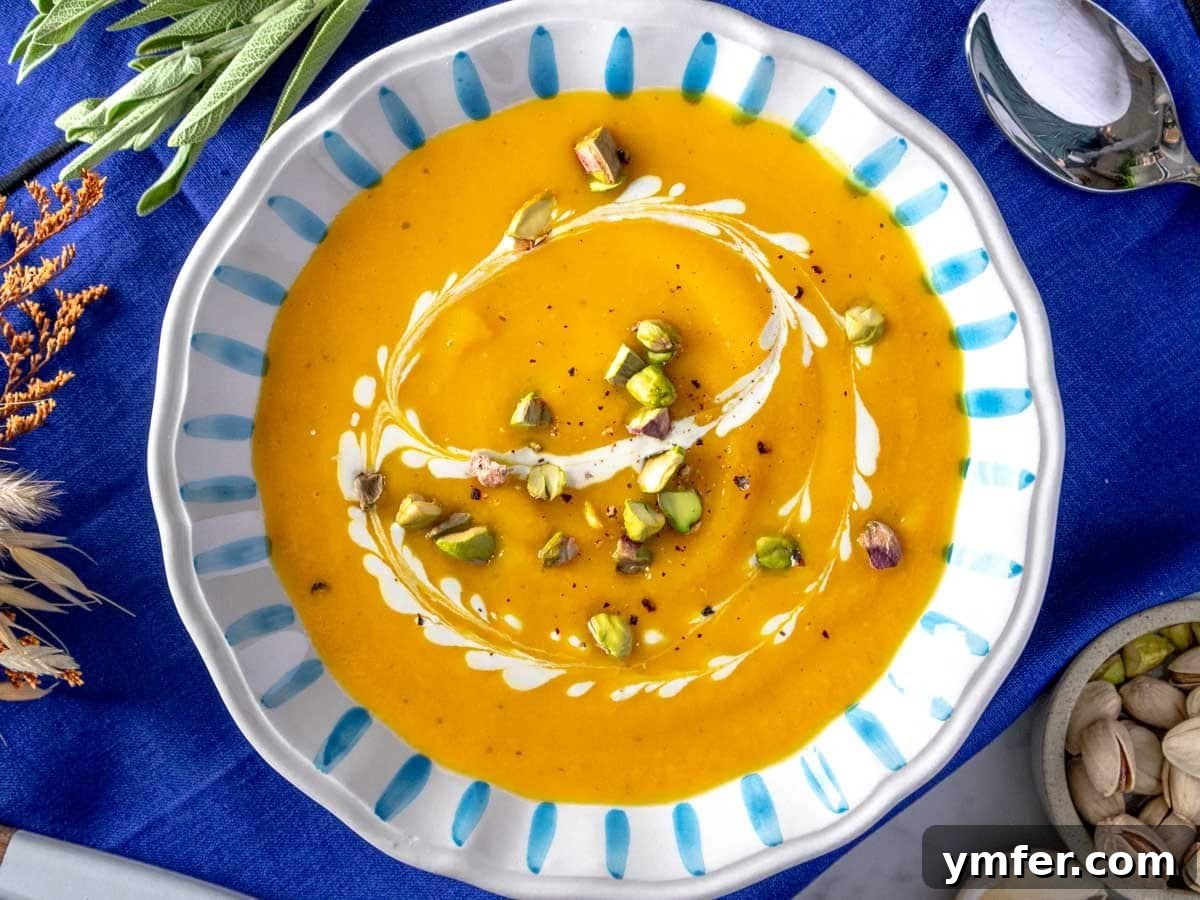
Why You Will Love This Butternut Squash Soup
This butternut squash soup isn’t just a recipe; it’s a culinary experience designed to bring warmth, comfort, and exquisite flavor to your table. Here’s why you’ll find yourself making it again and again:
- Unforgettable Flavor Profile: The magic truly happens in the oven. Roasting the butternut squash, carrots, onions, and garlic intensifies their natural sweetness and creates a deep, complex, and slightly nutty flavor that can’t be achieved by simply boiling. The aromatic herbs like sage and thyme complement these roasted notes perfectly, creating a harmonious blend that is both earthy and subtly sweet.
- Luxuriously Creamy Texture (Without Heavy Cream!): Thanks to the high starch content of butternut squash and thorough blending, this soup achieves an incredibly smooth, velvety, and creamy texture. You might be surprised that it can be incredibly satisfying even without a drop of heavy cream, making it a healthy and lighter option. Of course, you can always add cream for extra indulgence!
- Effortlessly Simple to Make: Despite its gourmet taste and elegant appearance, this soup is remarkably easy to prepare. With just three main steps—roast, blend, and simmer—even novice cooks can achieve fantastic results. It’s a low-stress recipe that delivers high rewards.
- Wholesome and Nutritious: Butternut squash is packed with vitamins A and C, fiber, and antioxidants, making this soup a nutritional powerhouse. Carrots add more beta-carotene, while garlic and ginger provide immune-boosting properties. It’s a meal that nourishes both body and soul.
- Perfect for Any Occasion: Whether you’re looking for a cozy weeknight dinner, a sophisticated appetizer for a dinner party, or a vibrant addition to your holiday spread, this butternut squash soup fits the bill. Its beautiful color and comforting nature make it versatile for all seasons and gatherings.
- Highly Customizable: This recipe provides a fantastic base, but it’s also wonderfully adaptable. You can easily adjust the spices, add a touch of heat, or incorporate different toppings to match your cravings or dietary needs. It’s naturally vegetarian and can be made vegan with a simple swap of broth and toppings.
- Excellent for Meal Prep: This soup holds up beautifully in the refrigerator for several days and freezes exceptionally well. Make a large batch and enjoy healthy, delicious meals throughout the week, or save it for those busy days when you need a quick, comforting option.
From its inviting aroma to its satisfying finish, this roasted butternut squash soup is designed to be a delightful addition to your kitchen. Get ready to fall in love with its simplicity, flavor, and nourishing qualities.
How to Make Butternut Squash Soup: A Step-by-Step Guide
You’ll find precise quantities for each ingredient in the comprehensive recipe card located at the bottom of this page. For detailed ideas on ingredient swaps, please refer to the “Substitutions” chapter below.
1. Prepare Your Ingredients with Care
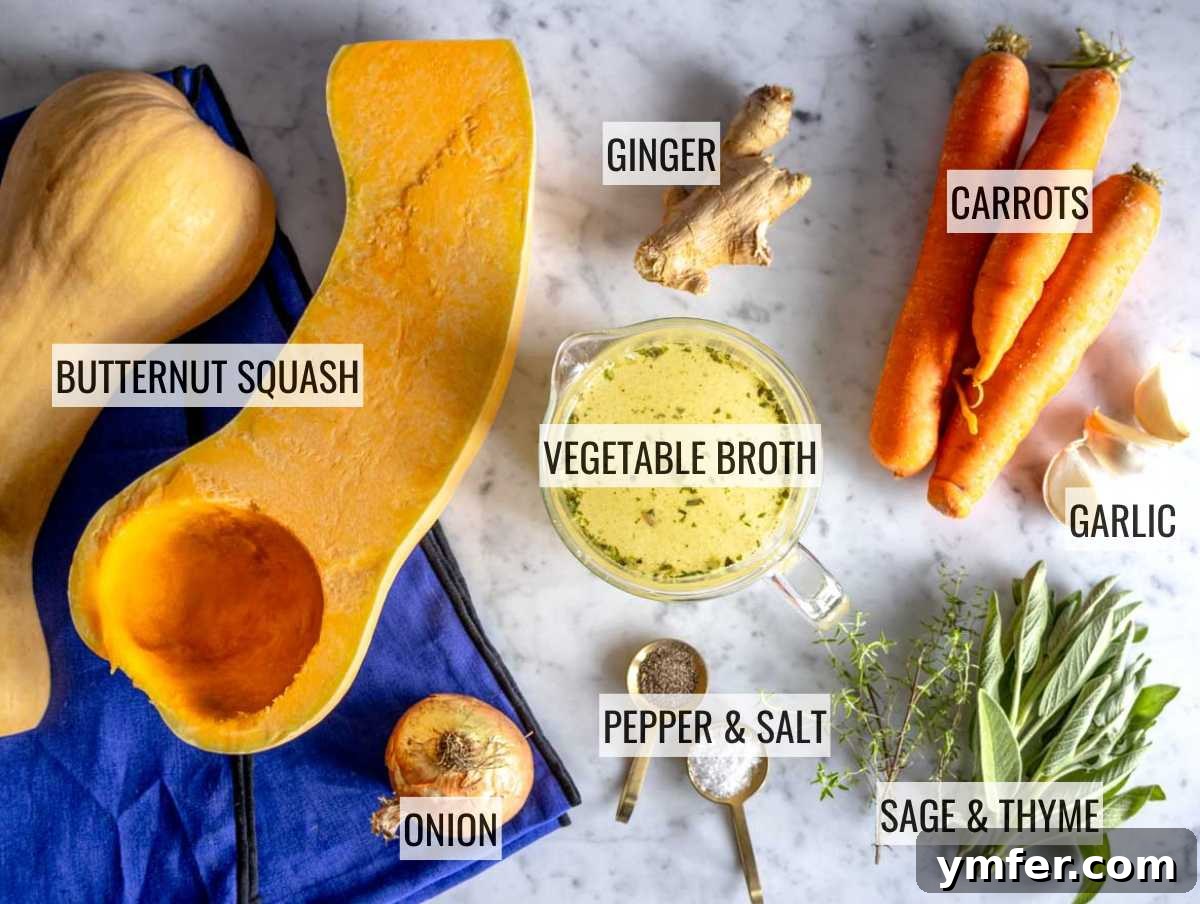
Begin by preheating your oven to a consistent 400°F (200°C). This ensures your oven is perfectly ready to roast the vegetables, creating that desirable caramelization. Gather your core ingredients: a medium-sized butternut squash, one large onion, fresh garlic cloves, vibrant carrots, and sturdy aromatic herbs such as fresh thyme and sage. These herbs infuse a beautiful, earthy fragrance into the soup.
Additionally, you’ll need fresh ginger for a delightful zesty kick, good quality vegetable broth to form the liquid base, and essential seasonings like salt and freshly ground black pepper. To elevate the soup’s presentation and add a textural contrast, we highly recommend preparing a topping of toasted pistachios, walnuts, or pecans. A final drizzle of rich heavy cream or luscious coconut cream (for a dairy-free option) will complete this inviting dish.
2. Roast the Vegetables for Maximum Flavor
The roasting step is where the magic happens, transforming simple vegetables into deeply flavorful components. First, carefully peel the butternut squash using a sturdy vegetable peeler. Once peeled, cut it in half lengthwise and use a spoon to scoop out the seeds and fibrous strands. Chop the squash into roughly 1-inch chunks to ensure even roasting. Place these squash chunks onto a large baking tray. For easier cleanup, you can line the tray with parchment paper.
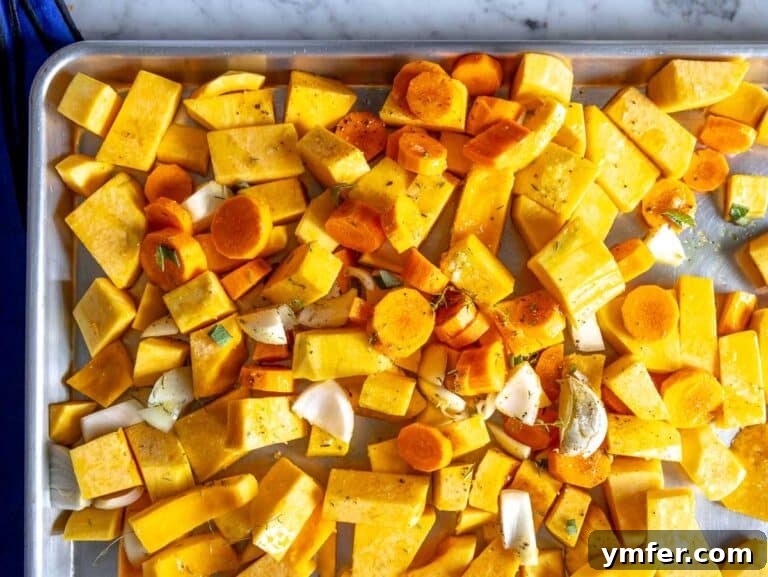
Next, add the other vegetables to the tray: an onion, cut into quarters (no need for perfect dicing here, as it will be blended), carrots, chopped into small bite-size pieces to ensure they soften at the same rate as the squash, and crushed garlic cloves, left with their peels on. Crushing the garlic helps release its flavor while the peel protects it from burning, allowing it to become wonderfully tender and sweet. Add fresh sage leaves and thyme leaves, stripped from their stems, along with a generous sprinkle of salt, a few grinds of black pepper, and a drizzle of high-quality extra virgin olive oil.
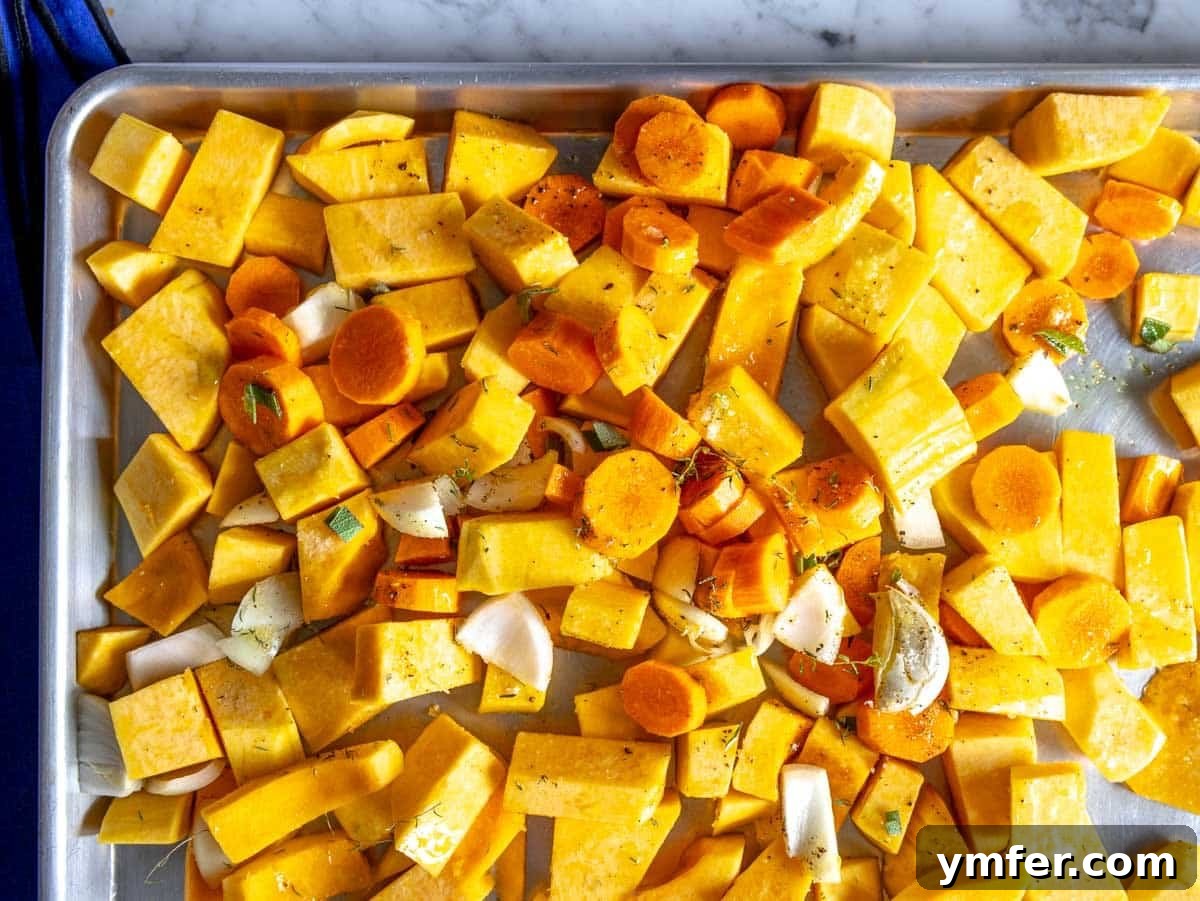
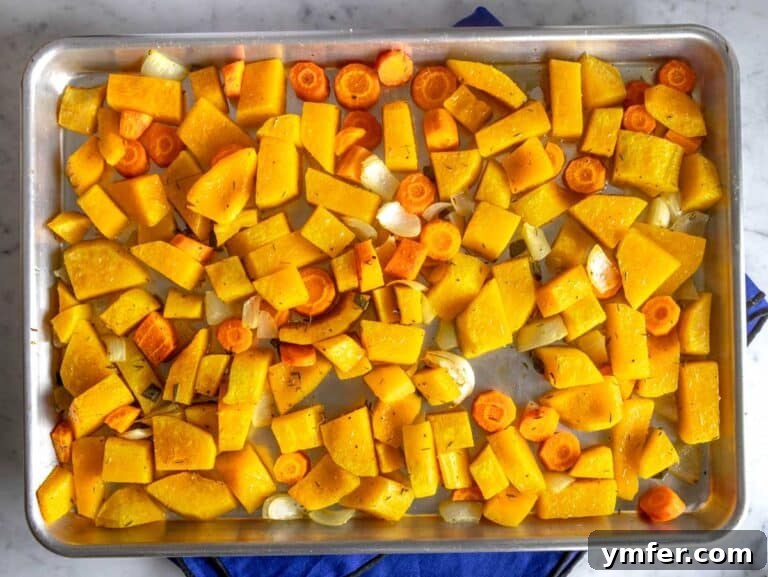
Toss all the ingredients thoroughly on the baking tray to ensure they are evenly coated with oil and seasonings. Then, arrange them in a single layer, making sure the pieces do not overlap. This is crucial for proper roasting and caramelization; overcrowding the pan will steam the vegetables instead of roasting them, hindering flavor development.
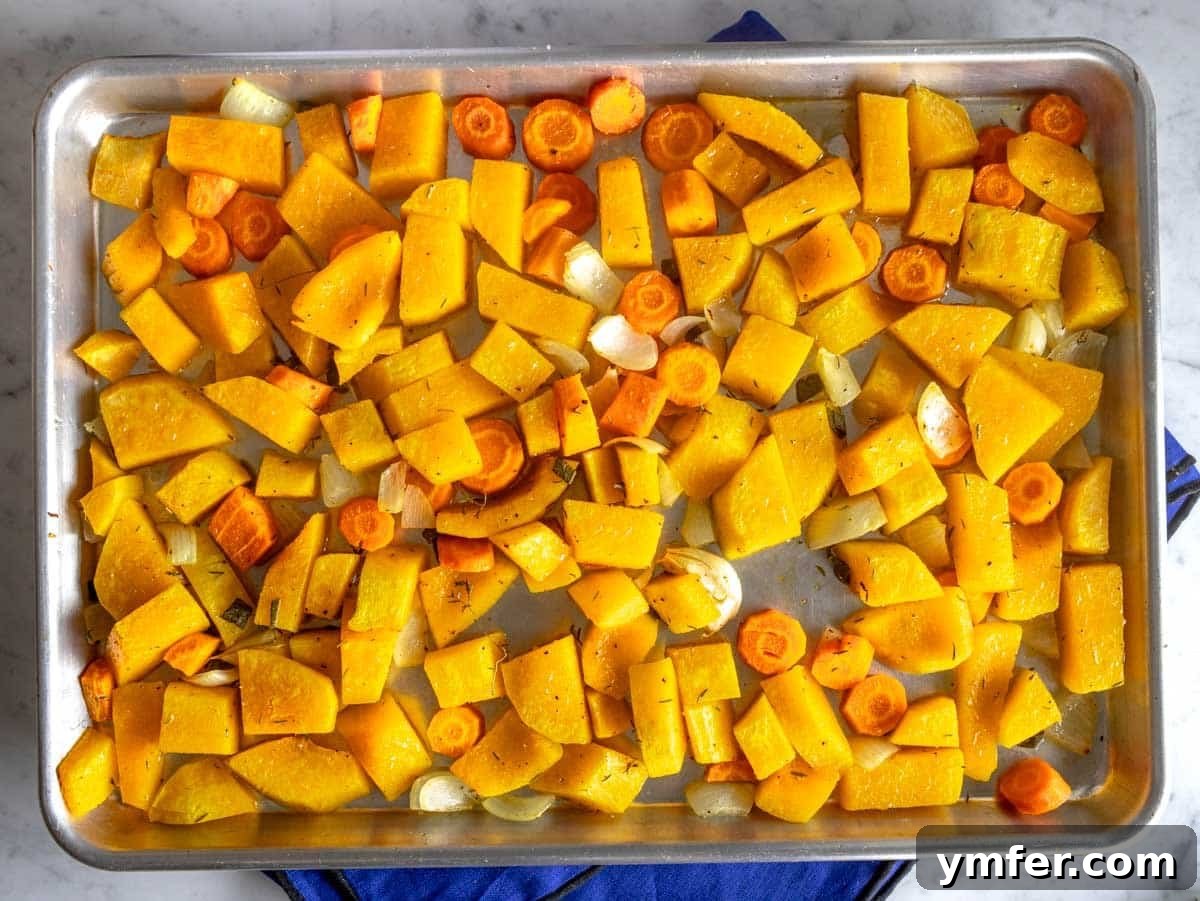
Bake for approximately 30 minutes, or until the butternut squash and carrots are wonderfully fork-tender and slightly caramelized at the edges. The aroma filling your kitchen will be incredible! Once roasted, carefully remove the tray from the oven. Squeeze the tender, roasted garlic cloves out of their peels—they should be soft and buttery. Discard the garlic peels and any herb stems if they remain.
3. Blend and Simmer for a Creamy Finish
Once your vegetables are perfectly roasted, it’s time to transform them into a smooth, luxurious soup. Transfer the roasted vegetables (including the softened garlic pulp and roasted herbs) to a large pot. Add the freshly grated ginger, which provides a bright, warming counterpoint to the sweetness of the squash, and a couple of cups of vegetable broth.
Using an immersion blender, blend the ingredients directly in the pot until the soup is completely smooth and free of any lumps. For those without an immersion blender, you can alternatively blend the ingredients in a standing blender. If doing so, work in batches to avoid overfilling the blender and be cautious with hot liquids by venting the lid. Once blended, transfer the silky smooth soup back into a large pot.
Gently simmer the soup over medium-low heat for about 5 minutes. This simmering period is essential for allowing the flavors to fully meld and deepen, creating a more harmonious taste. During this time, you can also adjust the consistency; if the soup is too thick for your liking, gradually add more vegetable broth until you reach your desired texture. Before serving, always taste and adjust the seasoning, adding more salt, black pepper, or any optional spices to perfectly balance the flavors.

Chef’s Tip: Roasted butternut squash soup is naturally creamy and satisfying due to the squash’s texture. However, for an extra layer of richness and indulgence, feel free to stir in a splash of creamy coconut milk, decadent heavy cream, a dollop of tangy sour cream, or a small pat of butter just before serving. These additions enhance the soup’s luxurious feel and flavor profile.
Serving Suggestions for Your Butternut Squash Soup
Elevate your butternut squash soup experience with thoughtfully chosen garnishes and accompaniments. We love to crown our soup with a delicate drizzle of either rich coconut cream (for a vegan option) or classic heavy cream, which adds a beautiful swirl and extra richness. A sprinkle of freshly cracked black pepper brings a subtle heat, and a generous scattering of toasted pistachios, pecans, almonds, or walnuts provides a delightful crunch and nutty flavor contrast.

To make it a truly complete and satisfying meal, serve your luscious soup with a piece of warm, crusty bread. Excellent choices include fluffy rosemary focaccia bread, rustic schiacciata, comforting cornbread, or soft, tender pita bread. These breads are perfect for soaking up every last drop of the flavorful soup.
Beyond the basics, explore these other fantastic topping ideas to customize your bowl: a squeeze of fresh lime juice adds a bright, tangy lift; crunchy pumpkin seeds or sunflower seeds offer a great texture; a few fresh thyme leaves enhance the herbal notes; crispy homemade croutons or lighter air-fried croutons provide a delightful chew; and savory roasted chickpeas can add a protein boost and satisfying crunch. Each addition allows you to personalize your soup, making every serving a unique culinary adventure.

Smart Substitutions for Butternut Squash Soup
This recipe is incredibly flexible, allowing for various substitutions to suit your pantry, preferences, or dietary needs. Don’t hesitate to experiment!
BUTTERNUT SQUASH: If time is a constraint, feel free to use pre-chopped butternut squash found in many grocery stores. This can significantly reduce prep time. Beyond butternut, this recipe works beautifully with other winter squashes like delica squash, kabocha squash, or even sweet potato and pumpkin. Each will impart a slightly different nuance, but the core flavors will remain delicious.
OLIVE OIL: We typically use high-quality extra virgin olive oil for its flavor and health benefits. However, you can easily substitute it with another neutral-flavored vegetable oil, such as avocado oil, grapeseed oil, or even melted coconut oil if you prefer.
SAGE: Fresh sage pairs exceptionally well with the sweetness of squash, making it a classic and highly recommended herb for this soup. It’s truly hard to replace its unique earthy aroma. If fresh sage isn’t available, you could try a pinch of dried Italian herb mix, a touch of dried rosemary, or even a small amount of poultry seasoning for a similar aromatic profile.
THYME: Fresh thyme adds a subtle, peppery, and slightly minty note. If you don’t have thyme, fresh rosemary can be an excellent substitute, offering a more pungent, piney flavor. Use one fresh sprig of rosemary for every five sprigs of thyme. If using dried herbs, approximately 1/2 teaspoon of dried rosemary can replace the fresh thyme.
GINGER: Freshly grated ginger provides a bright, zesty, and warming element that beautifully complements the squash. For convenience, you can substitute ground ginger; use about 1/4 to 1/2 teaspoon of ground ginger for every teaspoon of fresh, adjusting to your taste.
SALT & PEPPER: We always recommend using sea salt or kosher salt for a cleaner flavor, and freshly ground black pepper for its superior aroma and gentle heat. Adjust quantities to your personal preference.
OPTIONAL SPICES: To add another layer of complexity and warmth, consider incorporating a pinch of grated nutmeg, 1/2 teaspoon of ground cinnamon, 1/2 teaspoon of ground cumin, or 1/2 teaspoon of curry powder. These spices pair wonderfully with butternut squash, but choose just one or two to avoid overpowering the main flavors. A dash of cayenne pepper or a pinch of red pepper flakes can also add a subtle kick if you enjoy a touch of heat.
Frequently Asked Questions About Butternut Squash Soup
We highly recommend peeling butternut squash when making soup. Peeled butternut squash yields a significantly creamier, smoother, and more velvety soup texture, which is often desired for this dish. The skin, while edible, can introduce a slightly stringy or fibrous texture, even after blending.
However, if you’re looking to save time or maximize nutritional content, butternut squash skin is indeed perfectly edible when cooked until very tender. If you choose not to peel it, ensure the squash is roasted until exceptionally soft to minimize any textural impact, and blend the soup thoroughly.
The easiest way to peel butternut squash is by using a sturdy vegetable peeler. First, slice a small piece off both ends of the squash to create a stable base. Place the squash on a cutting board, ensuring it is secure and won’t roll. Always peel away from your hand and body to prevent accidents. Peel in long, even strokes down the length of the squash.
Alternatively, for a more robust method, you can cut the squash in half lengthwise after trimming the ends. Place each half cut-side down on a cutting board. Then, using a sharp chef’s knife, carefully cut off the skin by running the knife downwards along the curve of the squash. This method requires a bit more care but can be very effective for larger, tougher squashes.
Absolutely! Butternut squash soup is an incredibly healthy and nutrient-dense meal. Butternut squash is rich in vitamins A and C, which are powerful antioxidants and crucial for immune health. It’s also a good source of dietary fiber, promoting digestive health, and contains essential minerals like potassium and magnesium. When prepared with vegetable broth and minimal added fats (as in this recipe), it’s naturally low in calories and saturated fat. It’s a fantastic way to boost your vegetable intake!
Yes, this recipe is naturally vegan! We use vegetable broth, and all main ingredients are plant-based. To ensure it remains vegan, simply opt for coconut cream instead of heavy cream for garnishing, and choose vegan-friendly toppings like toasted nuts, seeds, or croutons. It’s a delicious and wholesome option for anyone following a plant-based diet.
Storage & Meal Prep Tips for Butternut Squash Soup
Butternut squash soup is a fantastic recipe for meal preparation, as it holds its flavor and texture beautifully over several days, making it ideal for busy schedules.
Make Ahead: This roasted butternut squash soup is an excellent candidate for meal prep. Prepare a large batch, and you’ll have delicious, healthy meals ready to go for almost a week. The flavors often deepen and improve after a day or two in the fridge.
Refrigerator: Store any leftover soup in an airtight container in the fridge for up to 3 to 4 days. Ensure it’s fully cooled before transferring it to the container to maintain freshness and prevent condensation.
Reheat: When you’re ready to enjoy it again, simply warm the soup gently in the microwave or in a pot on the stovetop over medium-low heat. If the soup has thickened in the fridge, add a dash of water or vegetable broth while reheating to restore its desired consistency.
Freezer: Butternut squash soup freezes exceptionally well. Allow the soup to cool down completely to room temperature before portioning it into freezer-friendly containers or heavy-duty freezer bags. It can be frozen for up to 3 months. When freezing in bags, lay them flat for easy stacking.
Thaw: To thaw, simply transfer the frozen soup from the freezer to the refrigerator overnight. For a quicker thaw, you can use the defrost setting on your microwave or gently reheat it directly from frozen on the stovetop over low heat, stirring frequently until thawed and warmed through.
Similar Comforting Recipes You Might Enjoy
If you’ve loved this butternut squash soup, you’ll be thrilled to explore these other comforting and delicious recipes featuring butternut squash and other hearty soups:
More BUTTERNUT SQUASH Delights: For more ways to enjoy this versatile winter squash, try our Stuffed Butternut Squash, a savory main; simple Baked Butternut Squash; a refreshing Butternut Squash Salad; hearty Butternut Squash Pasta; easy Roasted Butternut Squash; delightful Butternut Squash Ravioli; or a creamy Butternut Squash Risotto.
More SOUP Sensations: If soup is what you crave, don’t miss our vibrant Kabocha Squash Soup, sweet and creamy Sweet Potato Soup, classic Potato Leek Soup, nutrient-rich Kale Soup, wholesome Lentil Vegetable Soup, traditional Minestrone, silky Cauliflower Soup, hearty Split Pea Soup, robust Lentil Soup, or zesty Carrot Ginger Soup.
For even more delicious and inspiring soup ideas, be sure to check out our comprehensive compilation of 30+ easy soup recipes, perfect for any season or occasion.

Butternut Squash Soup
This vibrant and colorful recipe is incredibly straightforward to make. The key to its deep flavor profile lies in roasting all the ingredients in the oven to unlock their maximum sweetness and aroma. After roasting, simply blend them into a wonderfully creamy and smooth soup, ready to be savored.
Print Recipe
Share on Facebook
Video
Ingredients
- 2½ pounds butternut squash (about 1 medium-sized), peeled, seeded, and cut into chunks
- ½ pound carrots, cut into small bite-size pieces
- 1 large onion, quartered
- 2 cloves garlic, crushed with the peel on
- 5 sprigs thyme (leaves only, no stem)
- 5 leaves sage
- 2 tablespoons extra virgin olive oil
- 1 teaspoon salt (or more to taste)
- ⅛ teaspoon black pepper (freshly ground)
- 2 cups vegetable broth (or more if the soup is too thick)
- 1 teaspoon ginger, peeled and grated
Serves well with
- 1 squeeze lime juice, a swirl of heavy cream or coconut cream, a pinch of toasted nuts (like pistachios or walnuts), and rosemary focaccia.
Instructions
-
Preheat your oven to 400°F (200°C).
Peel, seed, and chop 2½ pounds of butternut squash into chunks. Place these on a large baking sheet.
To the baking sheet, add ½ pound of chopped carrots, 1 large quartered onion, 2 cloves of garlic (crushed with the peel on), 5 sprigs of fresh thyme (leaves only), and 5 fresh sage leaves.
Season all the vegetables generously with 2 tablespoons of extra virgin olive oil, 1 teaspoon of salt, and ⅛ teaspoon of black pepper. Toss everything together to ensure an even coating.

-
Arrange the seasoned vegetables on the baking sheet in a single layer, making sure pieces do not overlap for optimal roasting. Bake for approximately 30 minutes, or until the squash and carrots are beautifully fork-tender and slightly caramelized at the edges.
-
Once roasted, carefully discard the garlic peels. Transfer all the roasted vegetables and herbs into a large pot. Add 2 cups of vegetable broth and 1 teaspoon of freshly grated ginger.
Use an immersion blender to blend the mixture directly in the pot until it reaches a perfectly smooth and creamy consistency. Alternatively, you can carefully blend the ingredients in batches using a standing blender.
-
If you used a standing blender, transfer the soup back to a large pot. Gently simmer the soup for about 5 minutes over medium-low heat, allowing all the wonderful flavors to meld together. Add more broth if needed to achieve your desired consistency.
Before serving, taste and adjust for salt and any additional spices. Ladle the warm soup into bowls and garnish with a squeeze of lime juice, a swirl of heavy cream or coconut milk, a sprinkle of toasted nuts, and a dash of freshly cracked pepper. Enjoy!


Notes
SUBSTITUTIONS
Butternut squash: To save prep time, consider using pre-chopped butternut squash from the grocery store. You can also successfully substitute other winter squashes like delica squash, sweet potato, pumpkin, or kabocha squash for butternut.
Olive oil: We recommend extra virgin olive oil for its flavor, but avocado oil or another neutral-flavored vegetable oil can be used as a substitute.
Sage: Fresh sage provides a unique earthy flavor that pairs perfectly with squash. If unavailable, a dried Italian herb mix or a small amount of dried rosemary could be used, though the flavor profile will differ slightly.
Thyme: Fresh rosemary can be used as a substitute for thyme. Use one fresh sprig of rosemary for every five sprigs of thyme, or about 1/2 teaspoon of dried rosemary.
Ginger: Freshly grated ginger adds a vibrant zest. Ground ginger can be substituted; use 1/4 to 1/2 teaspoon of ground ginger for every teaspoon of fresh, adjusting to taste.
Salt & Pepper: For best results, use sea salt and freshly ground black pepper, adjusting quantities to your preference.
Optional spices: For added depth, a pinch of grated nutmeg, 1/2 teaspoon of cinnamon, 1/2 teaspoon of ground cumin, or 1/2 teaspoon of curry powder can be incorporated. Choose one to enhance the flavor without overwhelming the squash.
STORAGE
- Make ahead: This soup is excellent for meal prep and keeps well for several days.
- Refrigerate: Store leftovers in an airtight container in the fridge for up to 3 days.
- Reheat: Warm in the microwave or a pot on the stovetop with a dash of water or broth to adjust consistency.
- Freeze: Let the soup cool completely, then transfer to a freezer-friendly container and freeze for up to 3 months.
- Thaw: Thaw in the refrigerator for several hours or use the microwave’s defrost setting.
Nutrition
You might also like:
Mains
40 High Protein Vegetarian Meals
Collections
35 Vegetarian Thanksgiving Recipes
Recipes
45 Easy Vegetarian Dinner Recipes
Collections
45 Easy Pasta Recipes