
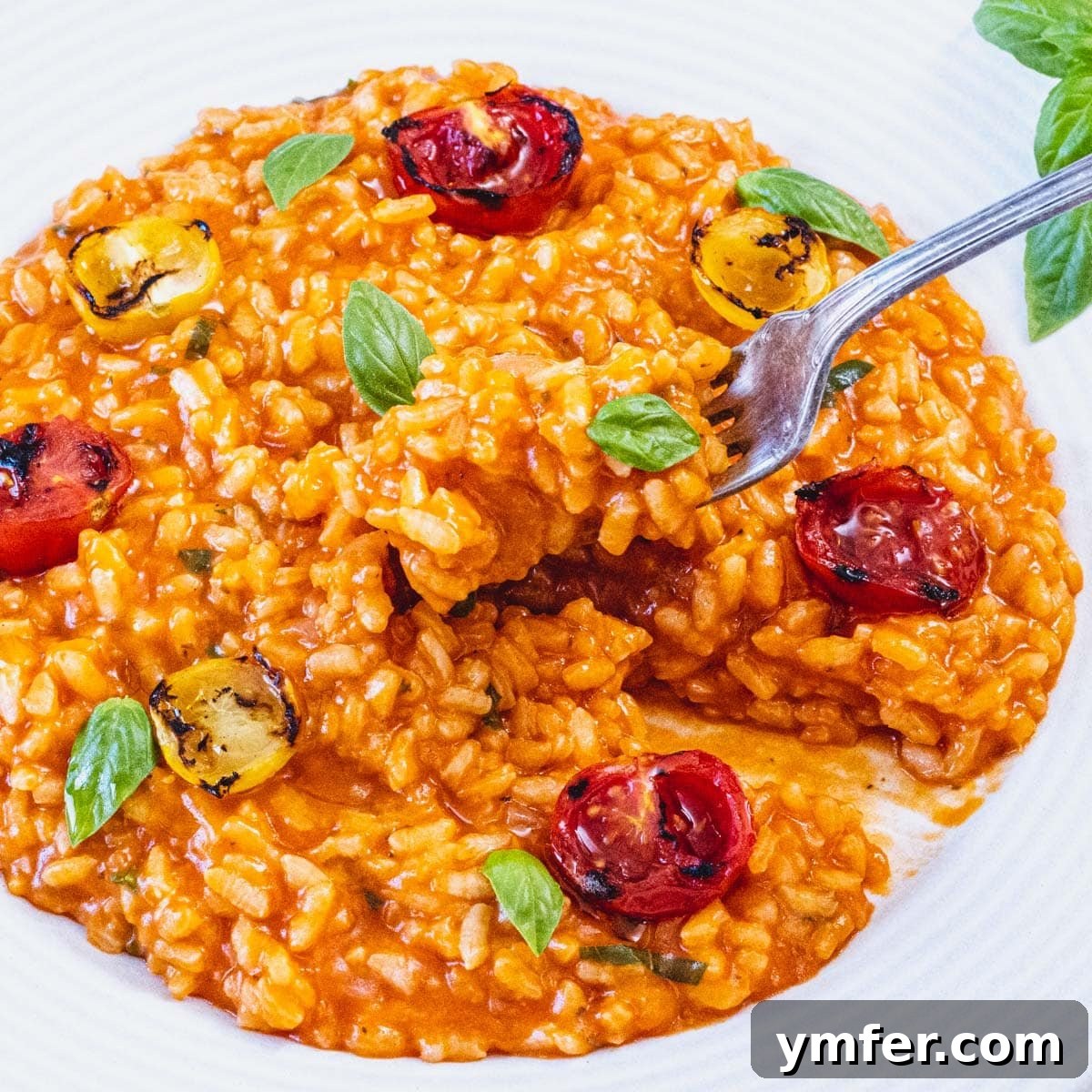
Creamy Tomato Risotto: An Authentic Italian Family Recipe
Indulge in the unparalleled comfort of a classic **Tomato Risotto**, a dish that beautifully embodies the rustic charm and simple elegance of Italian home cooking. This recipe promises a **heartwarming and satisfying family dinner**, bringing the authentic flavors of Italy directly to your table.
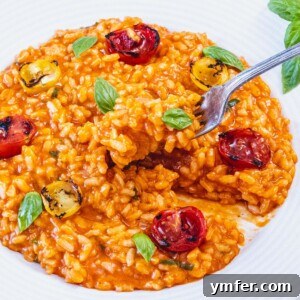
Prepare to fall in love with the luscious **creamy texture** achieved by perfectly cooked Arborio rice, enveloped in a rich, vibrant **tomato sauce**, and enhanced by the savory depth of Parmesan cheese. For an optional touch of gourmet flair, we suggest topping your risotto with sweet, **charred cherry tomatoes** and creamy burrata – a true culinary delight that takes this already exquisite dish to new heights.
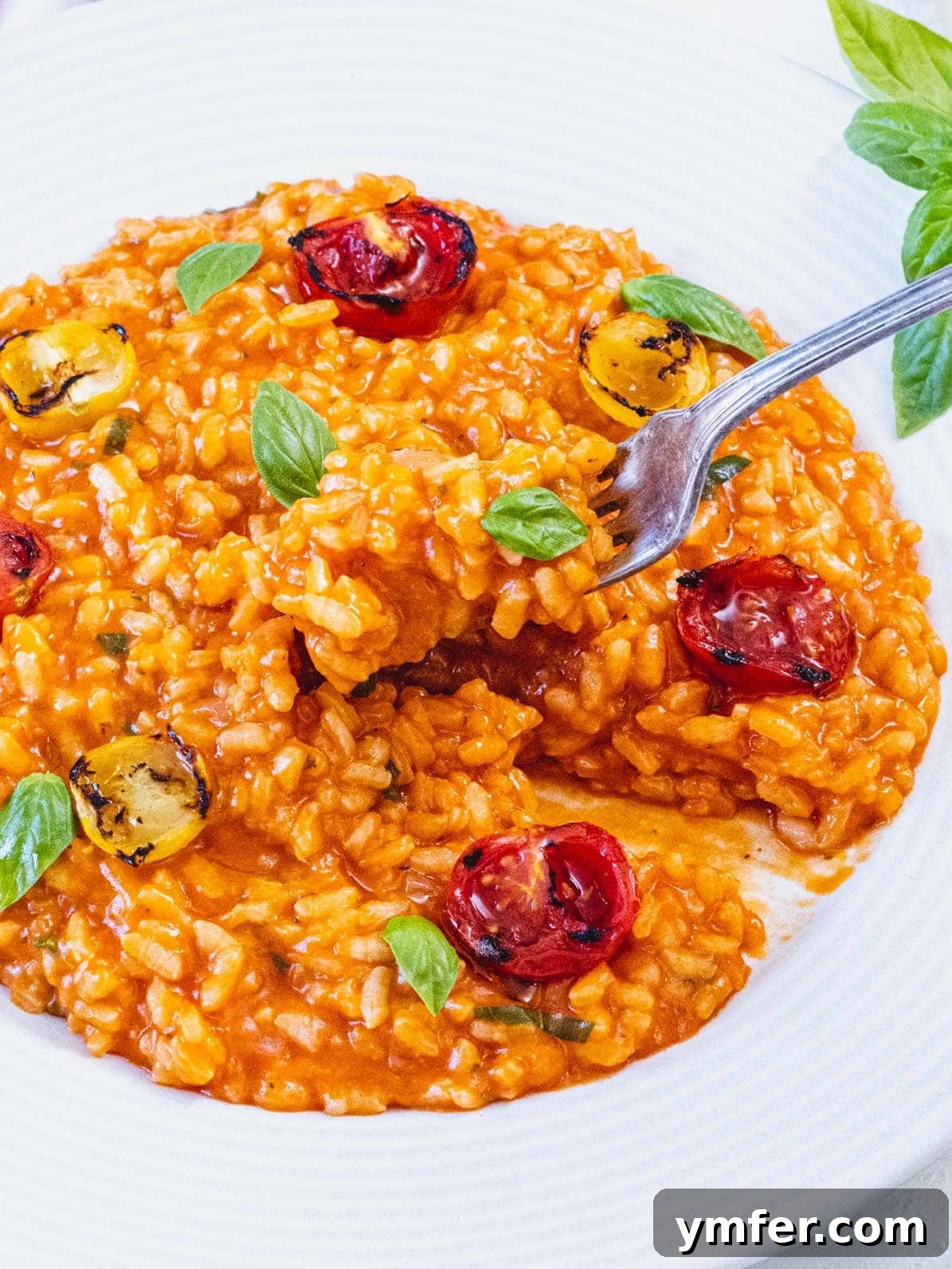
Table of Contents
- The Essence of Italian Risotto
- Tomato Risotto Video
- Essential Ingredients for the Perfect Tomato Risotto
- How to Master Tomato Risotto
- Serving Suggestions for Tomato Risotto
- Delightful Risotto Variations
- Creative Uses for Leftover Risotto
- Expert Tips for Flawless Risotto
- Common Questions About Risotto
- Storage and Reheating Your Risotto
- More Creamy Risotto Recipes to Explore
- Classic Tomato Risotto Recipe Card
The Essence of Italian Risotto
Few dishes evoke the warmth and comfort quite like a bubbling pot of **creamy tomato risotto**. This versatile Italian staple is celebrated for its rich flavor, velvety texture, and comforting embrace.
In Italy, risotto traditionally holds its place as a “primo piatto,” or first course, often preceding a main meat or fish dish. However, its hearty nature also makes it a superb **main course** on its own, offering a fulfilling and nutritious meal. It pairs wonderfully with a simple green salad or a selection of roasted vegetables. While preparing risotto does involve a mindful stirring process, this **tomato risotto recipe** is surprisingly easy to follow, using readily available ingredients and coming together in approximately **30 minutes**.
One of the hidden joys of making risotto is the delicious potential of its **leftovers**. Transform any remaining risotto into delightful Italian treats such as savory rice balls, crispy risotto cakes, or the Roman specialty, supplì. These creations are so irresistible, they alone make the small effort of preparing a fresh batch of risotto entirely worthwhile.
Our recipe is lovingly **adapted from my Nonna’s traditional methods**, ensuring an authentic taste that has been passed down through generations. While the heart of the dish remains true to its roots, we’ve added an optional modern twist with **charred cherry tomatoes** and a dollop of fresh burrata as toppings. These additions elevate the flavors and textures, but the risotto is perfectly splendid even without them.
Tomato Risotto Video
Watch our step-by-step video guide to see how easily this creamy tomato risotto comes together. Perfect for visual learners!
Essential Ingredients for the Perfect Tomato Risotto
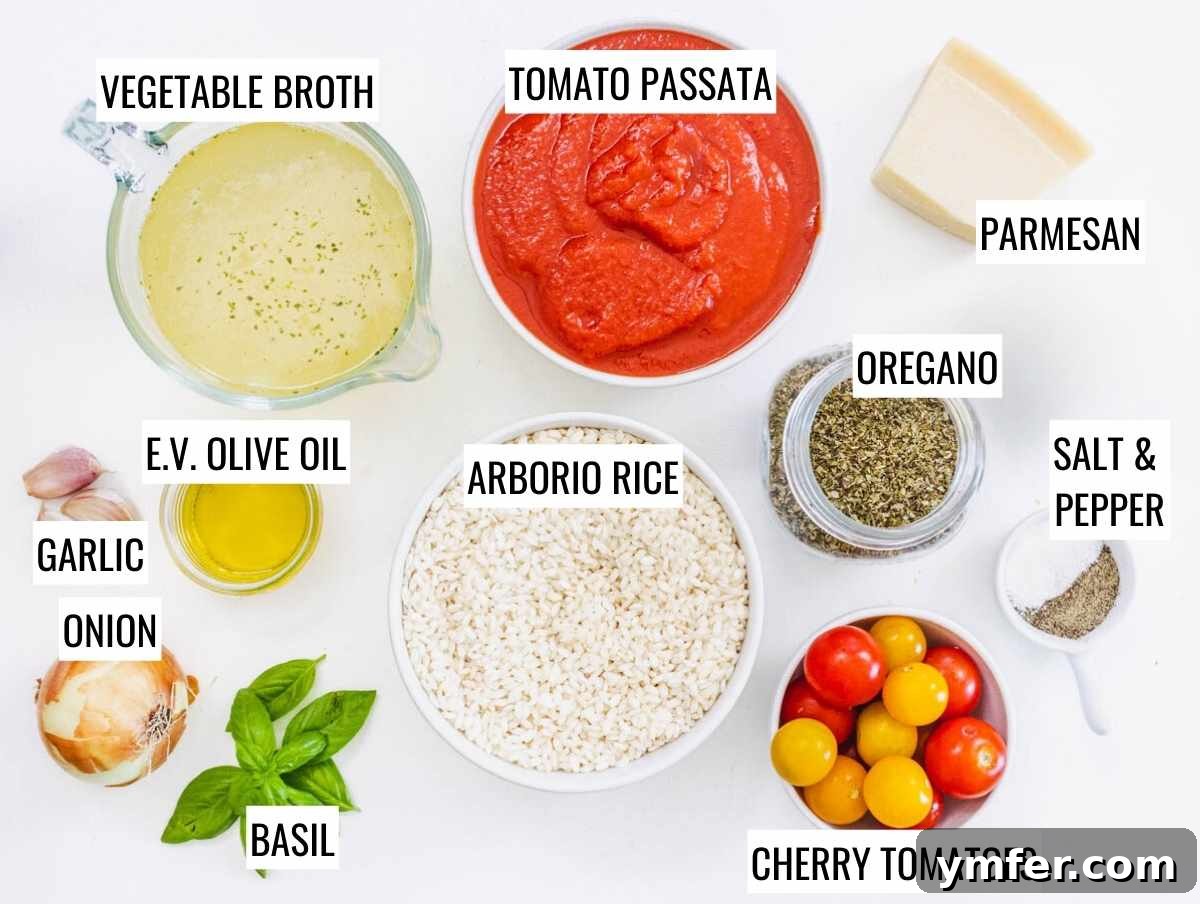
For the exact measurements and detailed instructions, please refer to the **recipe card at the bottom of this page.**
Risotto Rice: The Foundation of Creaminess
The choice of rice is paramount for an authentic and creamy risotto. Not just any rice will do! The best varieties for risotto, prized for their high starch content and ability to absorb liquid while maintaining an al dente bite, include **Arborio Rice**, **Carnaroli Rice**, **Vialone Nano**, **Baldo**, and **Roma**. These short to medium-grain rices release starch slowly, creating that signature velvety texture.
If these specific varieties are hard to find in your local grocery store, simply look for packages labeled **”risotto rice.”** Avoid long-grain or instant rices, as they won’t yield the desired creaminess and texture.
Tomato Puree: The Heart of the Flavor
The rich, savory foundation of our **tomato risotto** comes from quality tomato puree. You can use either **canned or bottled tomato puree**, often known as **tomato passata** when imported from Italy. This ingredient imparts a deep, concentrated tomato flavor and contributes significantly to the risotto’s creamy consistency.
For a lighter, fresher take, especially during summer months, you can substitute the puree with fresh cherry tomatoes. While both are delicious, **tomato puree** results in a more decadent, intensely flavored risotto, whereas **cherry tomatoes** offer a brighter, more subtle tomato essence. We highly recommend experimenting with both to discover your preference!
Olive Oil, Onion, and Garlic: The Flavor Base (Soffritto)
Every great Italian dish begins with a soffritto, and our **tomato risotto** is no exception. **Finely chopped onion** and **minced or crushed garlic cloves** are gently sautéed in fragrant **extra virgin olive oil**. This aromatic base builds layers of flavor that will infuse every grain of rice, providing a warm, savory foundation for the entire dish.
For a more pronounced garlic kick, mince the cloves. For a milder, more subtle aroma, simply crush them. Don’t rush this step; allowing the onions to soften and sweeten is key.
Vegetable Broth: Essential for Absorption and Flavor
The broth is crucial for cooking the rice and creating the risotto’s hallmark creaminess. You can use **store-bought vegetable broth** for convenience, or elevate your dish with a **homemade vegetable broth** for a richer flavor profile.
To prepare a simple homemade broth, simmer a roughly chopped carrot, a stalk of celery, a halved onion, a few bay leaves, and a pinch of coarse sea salt in plenty of water for about 30 minutes. We opt for vegetable broth over chicken broth to ensure this delicious recipe is enjoyable for everyone, including vegetarians and vegans (with appropriate cheese substitutions).
Dried Oregano: An Aromatic Touch
A touch of **dried oregano** adds a pleasant, earthy, and herbaceous aroma that complements the tomato perfectly. It’s a classic Italian pairing that enhances the overall depth of flavor. If you don’t have oregano, dried thyme can be a suitable substitute, offering a slightly different but equally lovely fragrant note.
Fresh Basil: The Finishing Fragrance
**Fresh basil** is a non-negotiable ingredient in authentic **tomato risotto**. Its sweet, peppery, and slightly anise-like notes bring a burst of freshness that brightens the entire dish. To preserve its delicate aroma and vibrant color, we add fresh basil leaves towards the very end of the cooking process, just before serving.
If fresh basil is unavailable, you can experiment with other fresh herbs like parsley, or add a hint of spice with red pepper flakes, or even a tiny pinch of nutmeg for an unexpected warmth. However, fresh basil remains our top recommendation.
Parmesan Cheese: Umami and Creaminess
**Parmesan cheese (Parmigiano Reggiano)** is indispensable for adding a salty, nutty, and deeply savory umami flavor to the risotto. Its fine texture melts beautifully, contributing to the dish’s creamy consistency. We stir it in at the very end, off the heat, to prevent it from becoming stringy and to retain its distinct flavor.
For those following a vegan diet, a high-quality **vegan cheese alternative** that mimics Parmesan can be used with excellent results.
Butter: Optional Richness
In our particular recipe, we choose **not to add butter** to our tomato risotto. The rich flavors from the Parmesan, a generous drizzle of extra virgin olive oil, and the optional burrata topping provide ample richness and creaminess. Omitting butter makes this dish significantly lighter and allows the vibrant tomato and rice flavors to shine through more clearly.
However, if you prefer the traditional richness of a butter-enriched risotto, feel free to add a tablespoon or two of unsalted butter (or vegan butter) at the very end, along with the Parmesan, when you take the risotto off the heat. This final step is known as “mantecare,” contributing to the dish’s silky finish.
Optional Toppings: Elevating Your Risotto
- **Charred Cherry Tomatoes:** Halved cherry tomatoes, quickly charred on a grill pan for a few minutes, develop a subtle sweetness and smoky depth. They add a fantastic burst of fresh flavor and texture to the creamy risotto.
- **Burrata:** Cold, torn bits of fresh burrata melting into the warm risotto create an incredibly luxurious and creamy experience. The cool, rich cheese beautifully complements the hot, savory rice and tomato sauce. This is an optional indulgence that we highly recommend!
Note: While many risotto recipes call for white wine to add acidity and deepen flavor, **tomato risotto typically doesn’t require it.** The natural acidity from the tomatoes provides a similar balance, making white wine unnecessary in this specific preparation.
How to Master Tomato Risotto
You’ll find the full ingredient list and detailed instructions in the **recipe box at the very bottom of this page.**
The secret to a perfect risotto lies in patient stirring and gradual broth addition. Here’s how to achieve that exquisite creamy consistency:
Step 1: Prepare Your Broth
Begin by pouring the **vegetable broth** into a large saucepan and bring it to a **gentle simmer**. It’s crucial to keep the broth hot throughout the entire cooking process, as adding cold broth would shock the rice and hinder its even cooking and starch release.
Step 2: Build the Soffritto
In a separate **large, heavy-bottomed skillet or Dutch oven**, heat the olive oil over medium heat. Add the **finely chopped onion** and sauté for about three minutes, or until it softens and becomes translucent. Then, stir in the **minced garlic** and cook for another minute until fragrant. Be careful not to burn the garlic, as this can make it bitter.
Step 3: Toast the Rice (Tostatura)
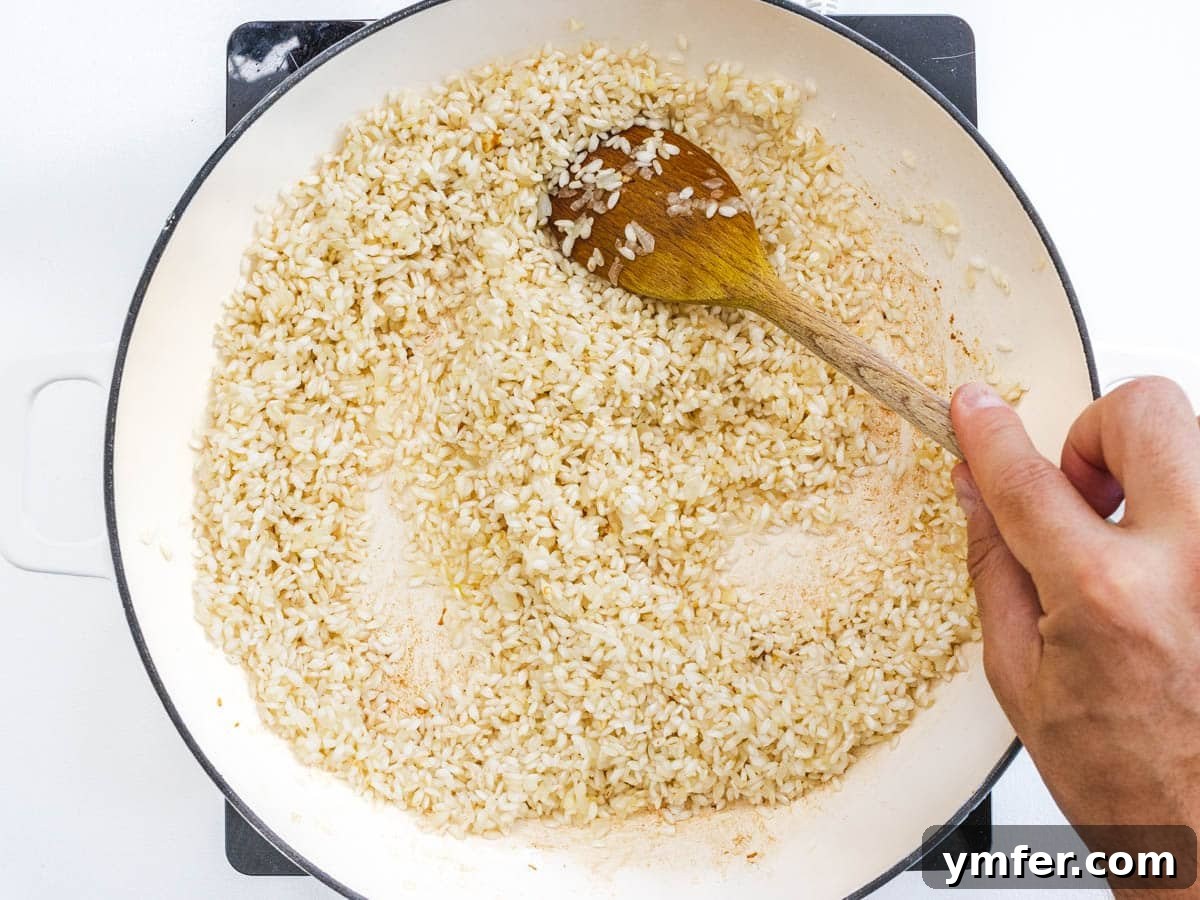
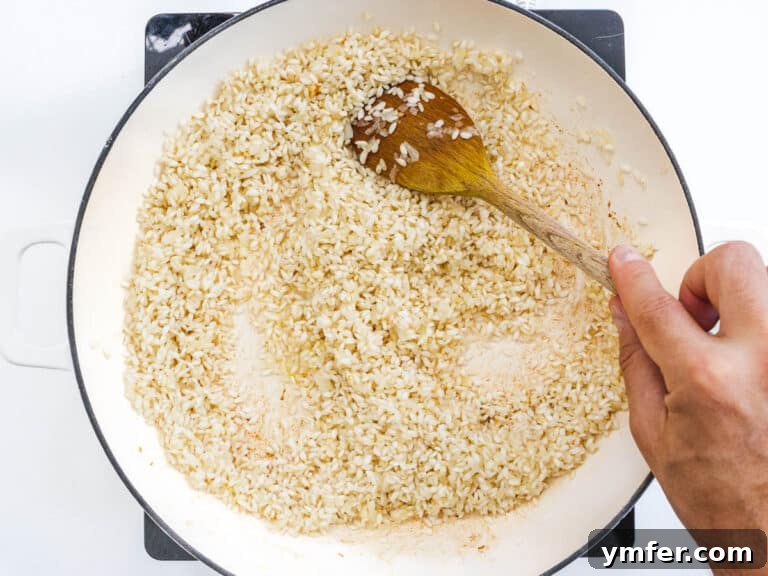
Add the **risotto rice** to the skillet with the onion and garlic. Stir it continuously for one to two minutes until the edges of the rice grains become **translucent** but the center remains opaque. This “tostatura” step is essential; it seals the outside of the rice grains, allowing them to absorb liquid slowly and cook evenly, while preventing them from becoming mushy. This process also enhances the rice’s nutty flavor.
Step 4: Introduce the Tomato and Seasonings
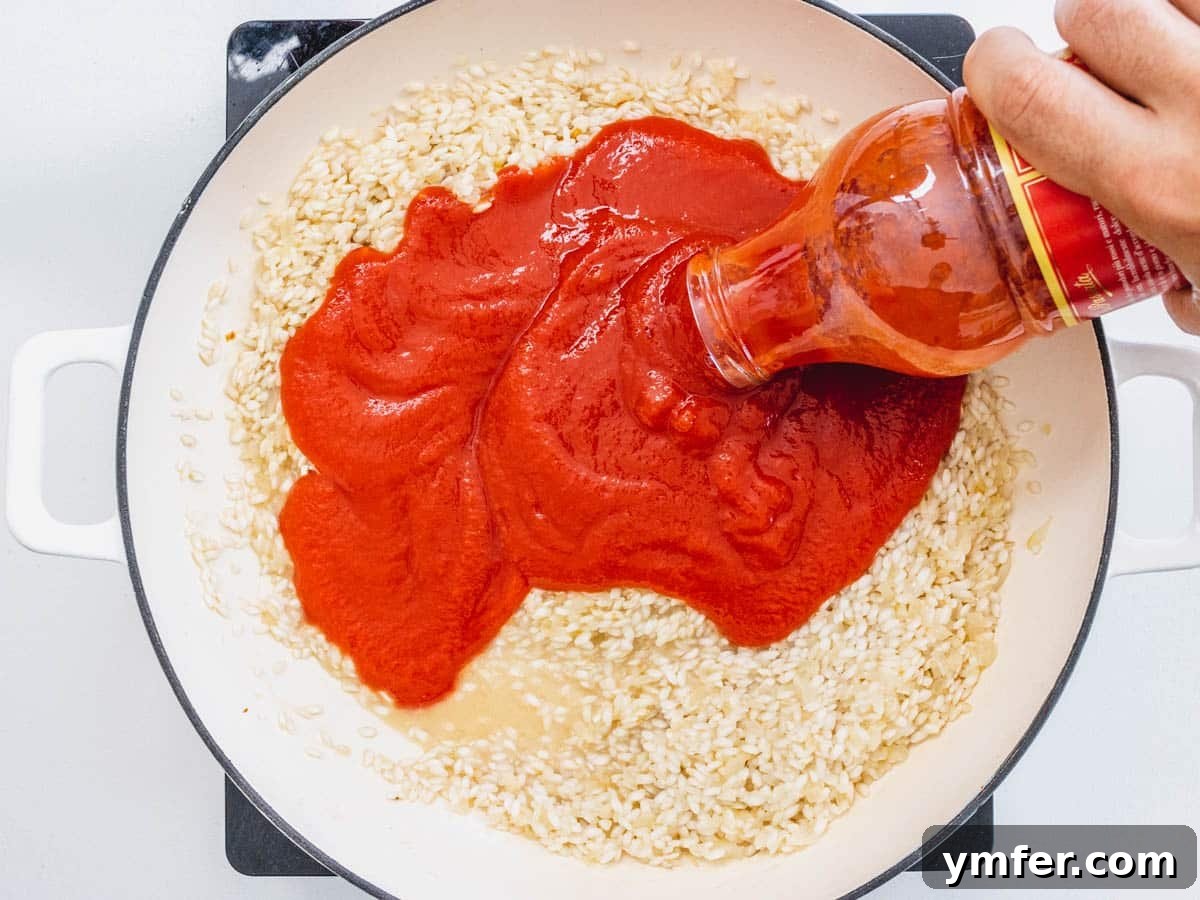
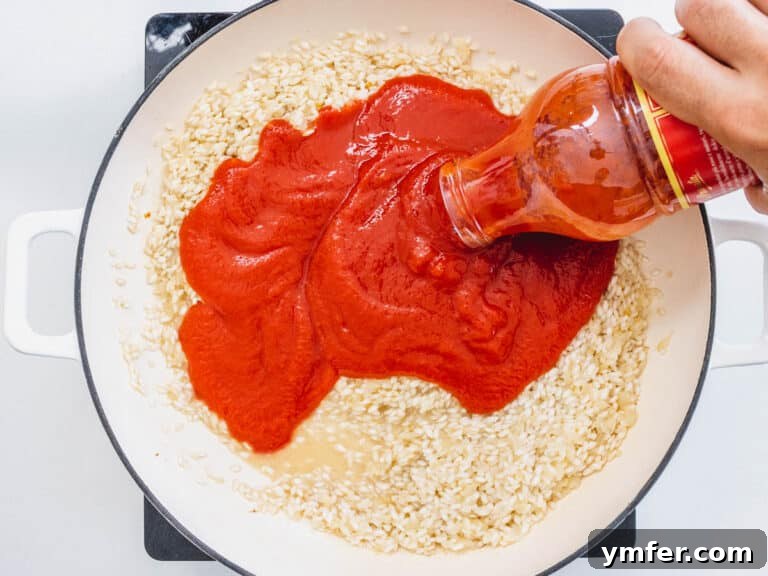
Pour in one cup of the warm **vegetable broth**, followed by the **tomato puree**, **dried oregano**, **salt**, and **black pepper**. Stir everything well to combine, ensuring the rice is fully coated in the vibrant tomato mixture. The initial liquid addition helps set the primary flavor profile of your risotto.
Step 5: The Gradual Broth Absorption (Aggiunta del Brodo)
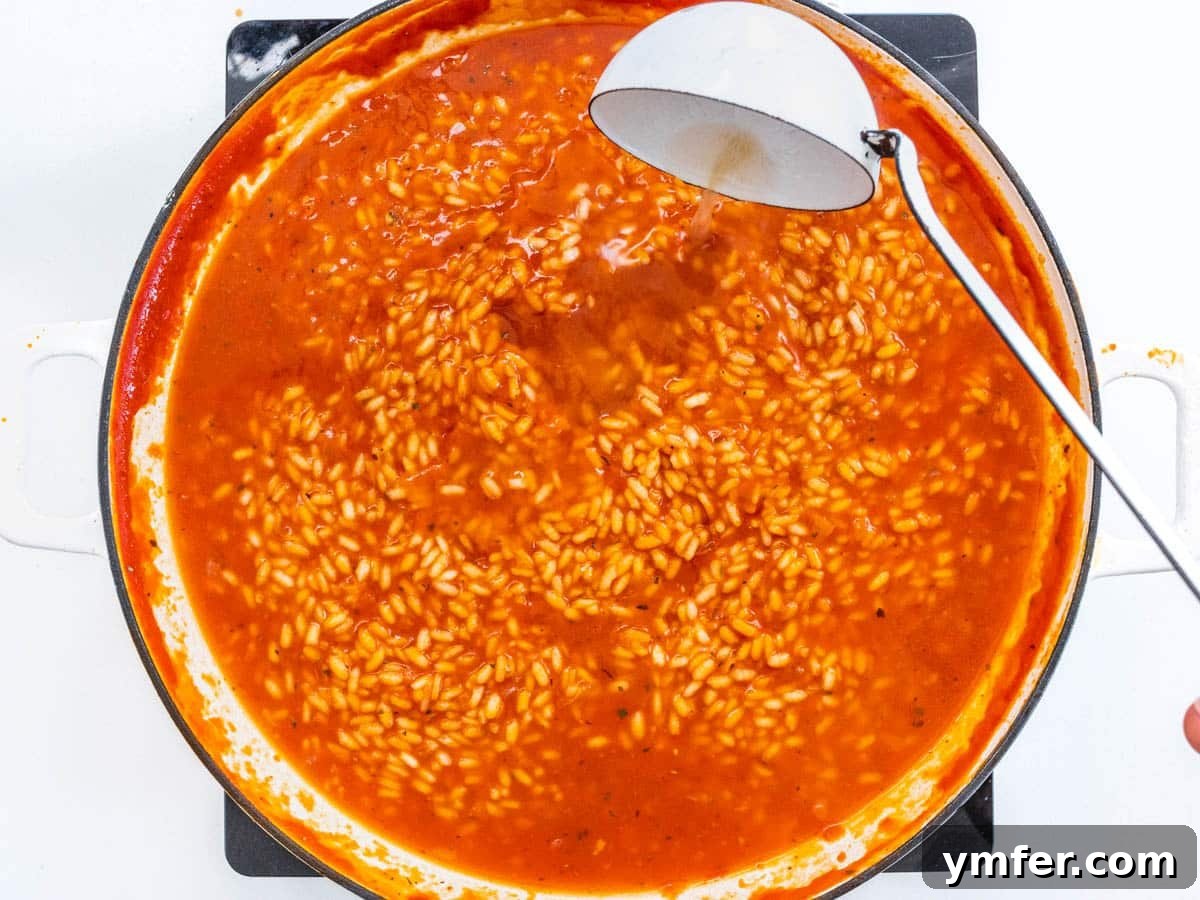
Continue to cook the risotto over a **gentle simmer**, stirring with a wooden spoon **almost continuously**. This consistent stirring is vital for two reasons: it prevents the rice from sticking to the bottom of the pan, and more importantly, it encourages the rice grains to gently rub against each other, releasing their starches into the liquid. This starch is what creates the luxurious creamy texture of risotto.
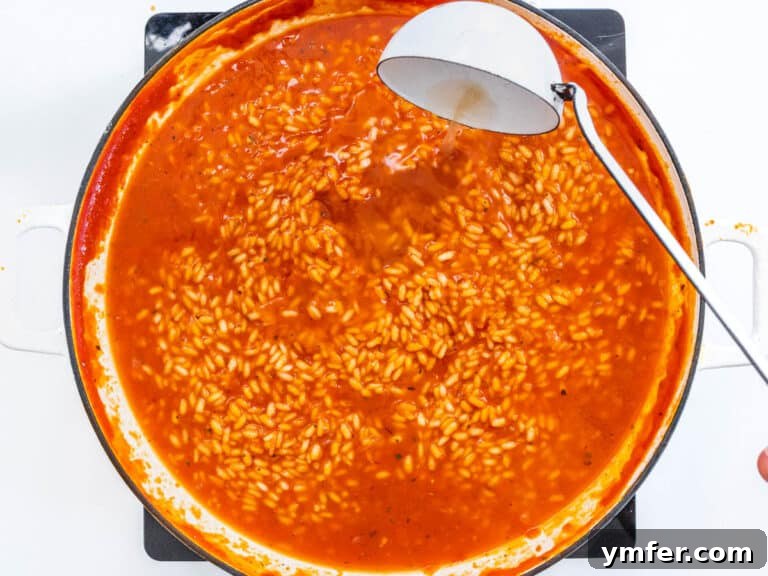
Add **one cup of warm vegetable broth at a time**, allowing the previous cup to be almost completely absorbed by the rice before adding the next. This gradual feeding of liquid ensures the rice cooks evenly and releases its starch optimally. This process will typically take between 15 to 20 minutes, or until the rice is perfectly **al dente** – tender yet with a slight chewiness in the center.
Step 6: Finishing Touches (Mantecare)
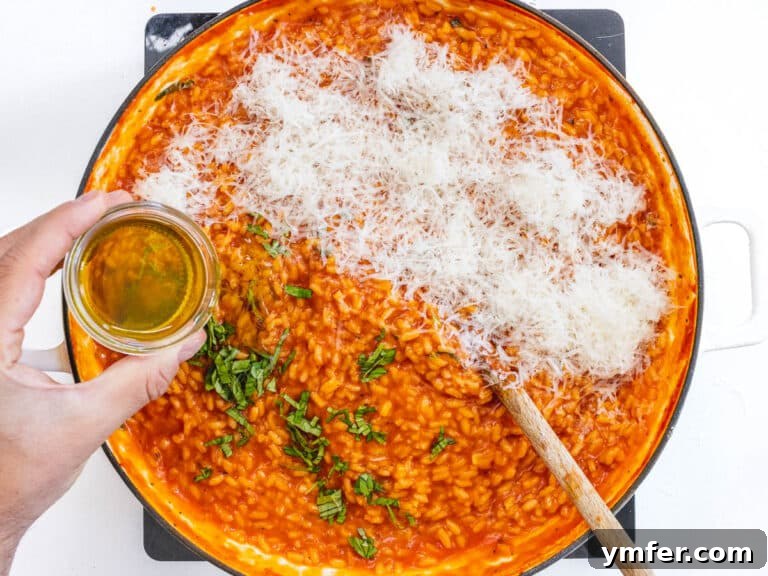
Once the rice reaches the desired al dente stage, **turn off the heat**. Stir in the **grated Parmesan cheese**, a final drizzle of **extra virgin olive oil**, and the fresh **basil leaves** (torn or roughly chopped). This crucial step, known as “mantecare” in Italian, involves vigorously stirring the ingredients off the heat for about two minutes. This process emulsifies the fats and starches, resulting in a wonderfully creamy and cohesive risotto.
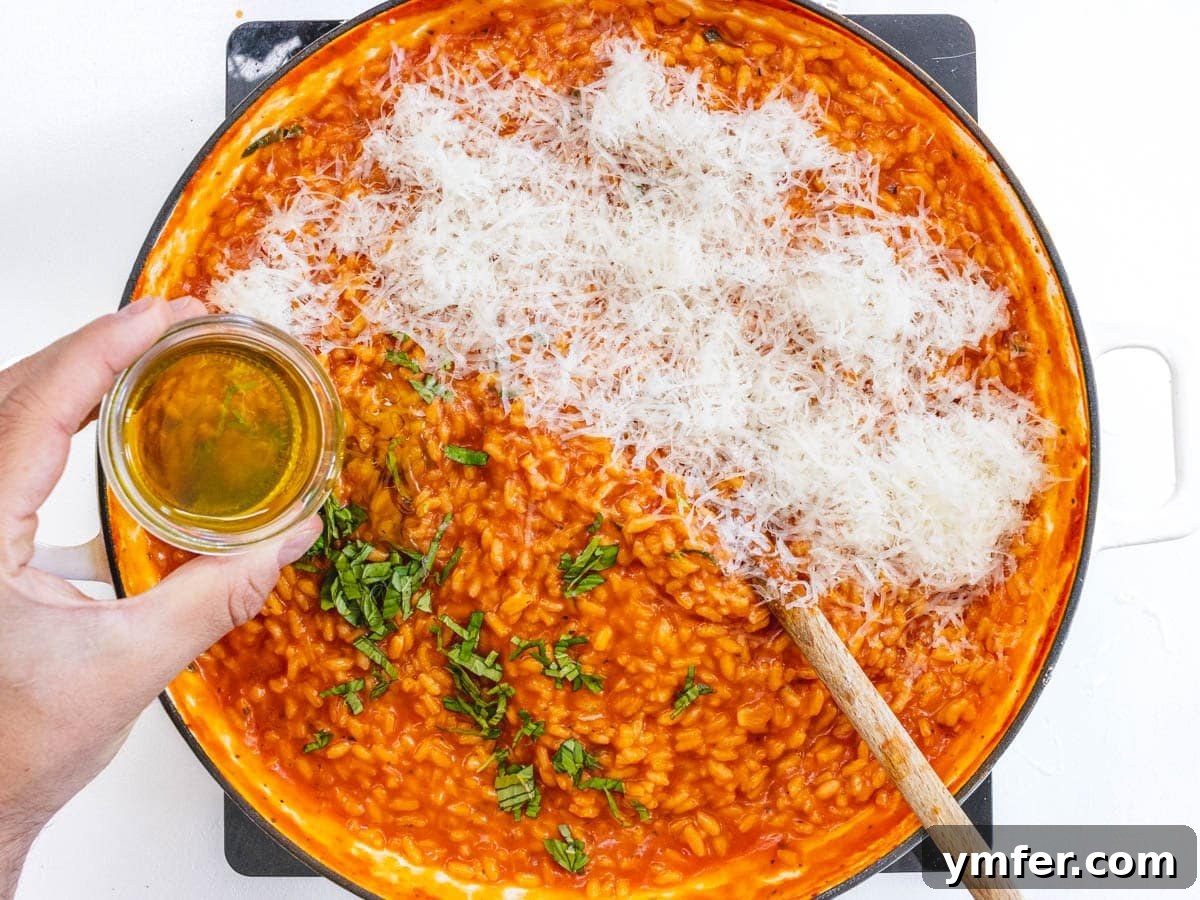
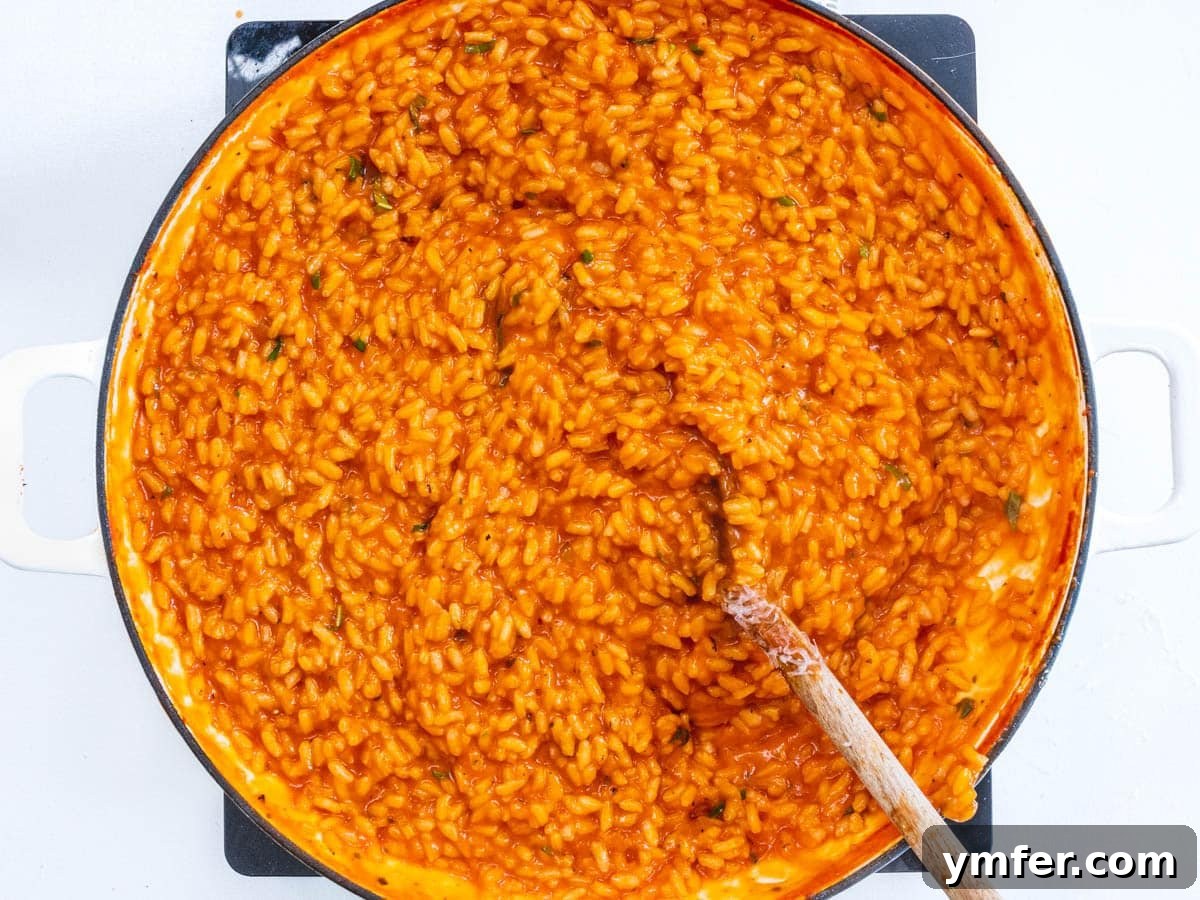
Step 7: Adjust Consistency and Serve
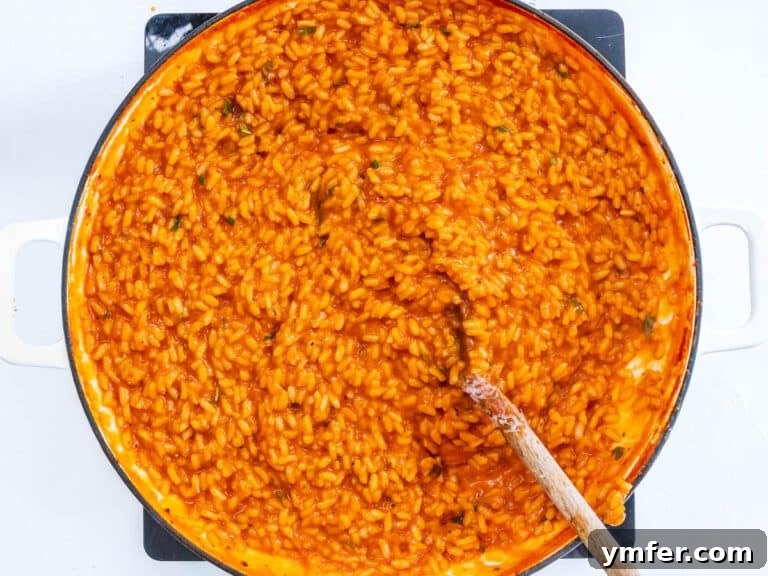
The risotto should be **very creamy**, fluid enough to spread slightly on a plate, but not overly runny or thick. If it appears too thick, add a little more warm vegetable broth, a tablespoon at a time, until you achieve the perfect consistency.
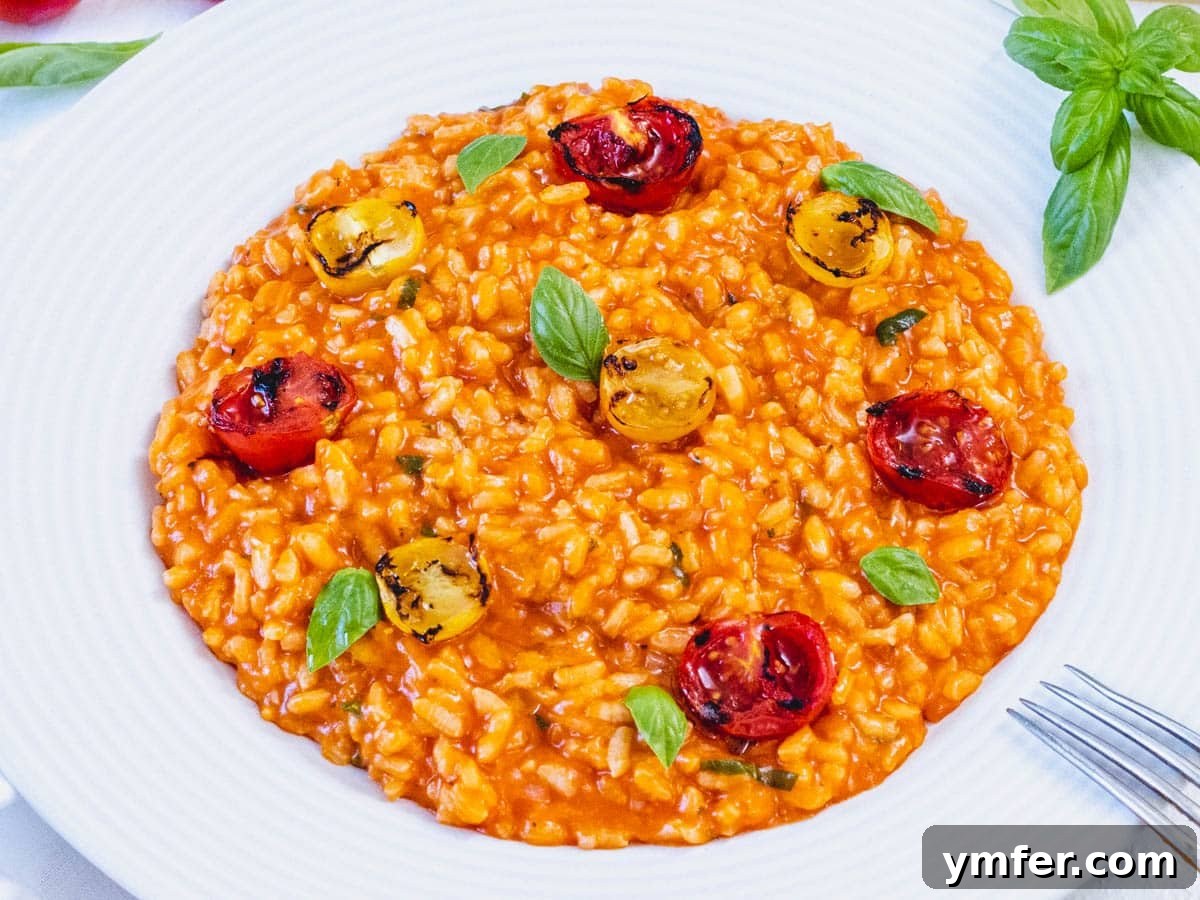
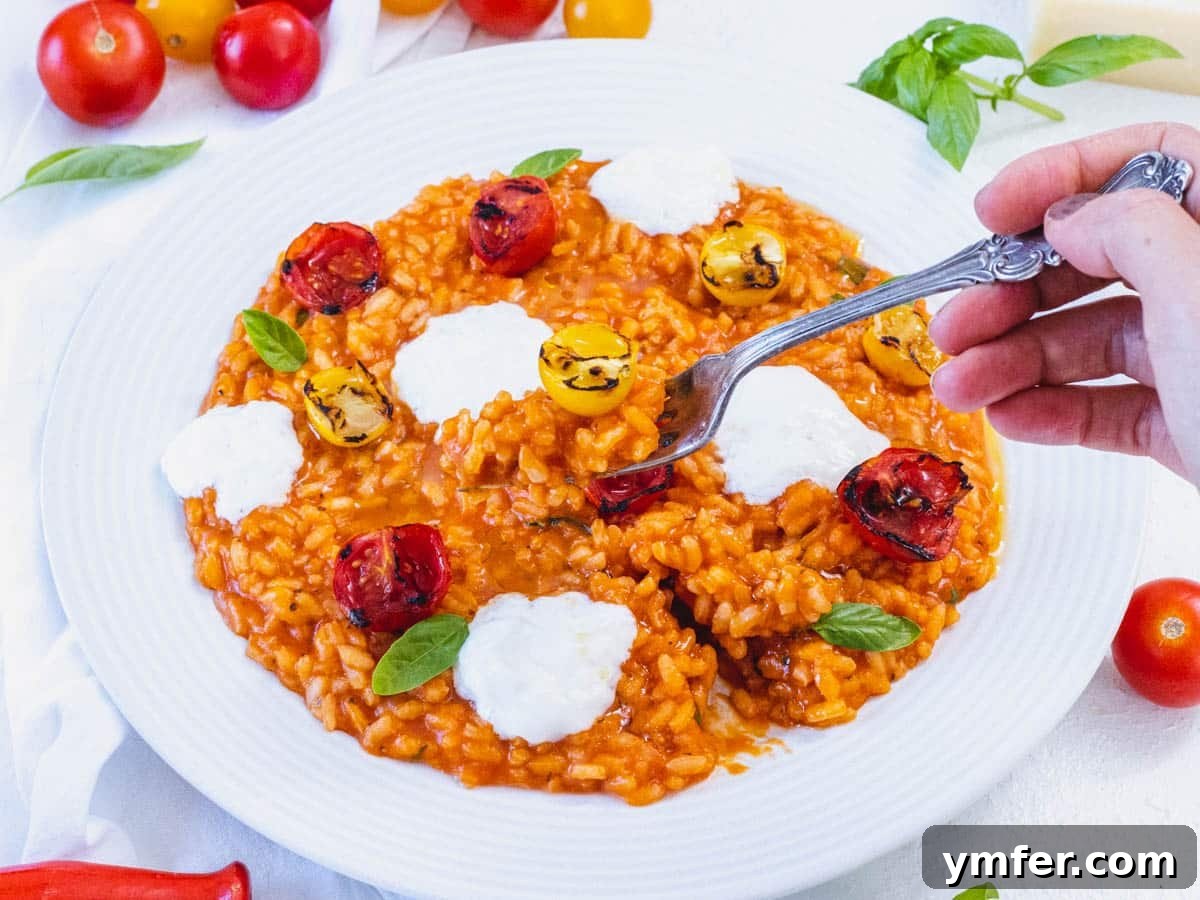
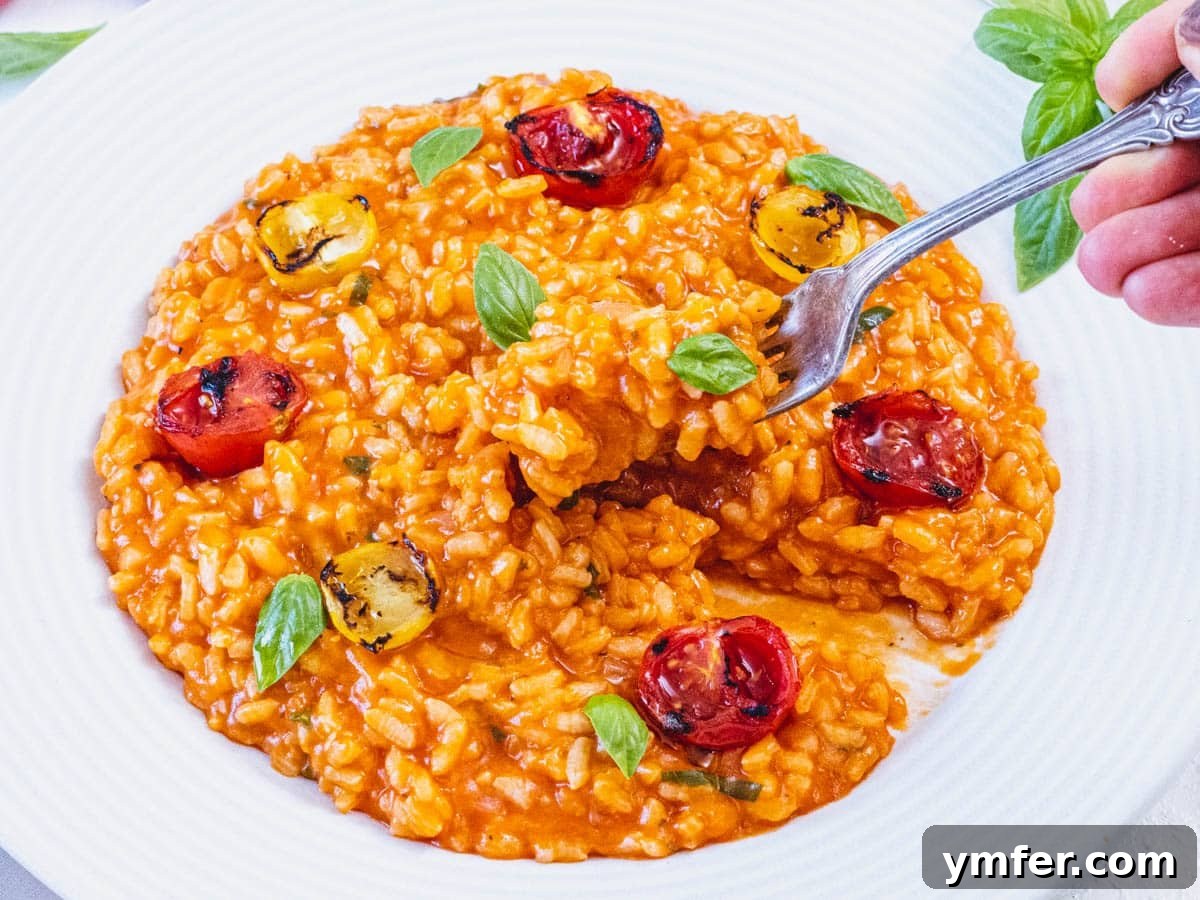
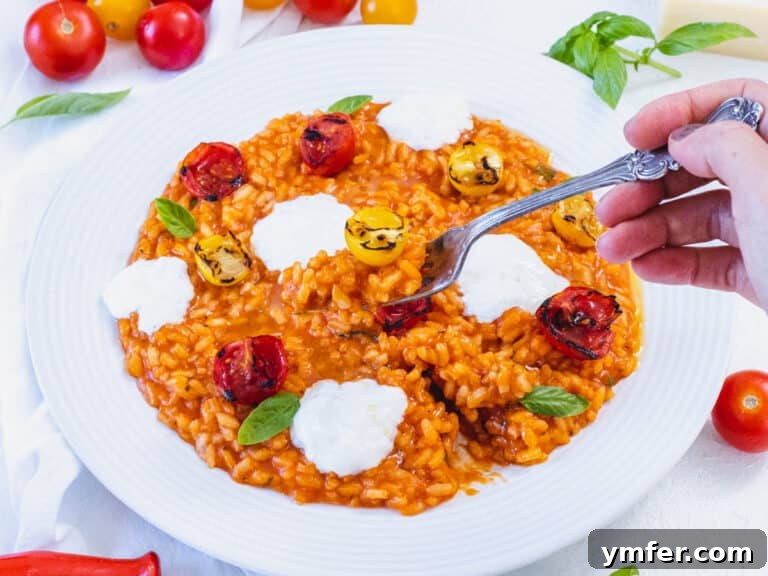
We love to serve this **creamy tomato risotto** immediately on a flat plate, garnished with a sprinkle of fresh, small basil leaves and our optional **charred cherry tomatoes**. These tomatoes can be quickly prepared on a grill pan while your risotto cooks, adding a delightful fresh and mildly caramelized contrast.
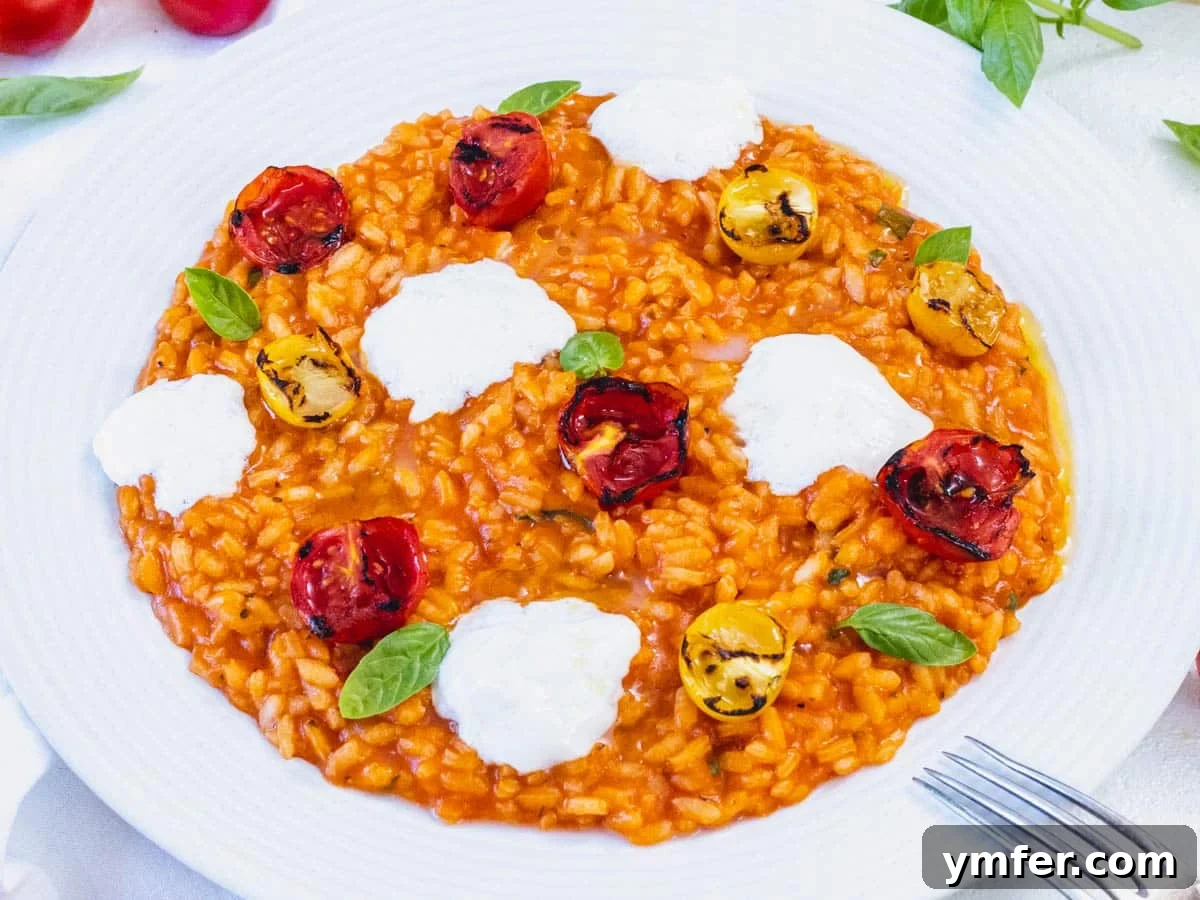
For an extra touch of indulgence, scatter **small burrata bits** over the hot risotto just before serving. The cool, fresh creaminess of the burrata melts into the warm rice, creating an exquisite harmony with the charred tomatoes and rich tomato sauce.
Serving Suggestions for Tomato Risotto
Tomato risotto is a wonderfully nutritious and fulfilling dish on its own. While in Italy it’s often a “primo piatto” (first course), its substantial nature makes it a perfect **main meal**. To balance its richness and add a refreshing contrast, we highly recommend serving it alongside crisp, fresh greens or lightly cooked vegetables.
Perfect Pairings:
- Light Side Salad: A simple salad with crisp lettuce, juicy cherry tomatoes, thinly sliced red onion, and crunchy celery offers a refreshing counterpoint.
- Arugula Salad: The peppery bite of arugula, combined with sweet apple slices, toasted walnuts, and a zesty lemon dressing, creates a sophisticated side.
- Fennel and Orange Salad: A vibrant and aromatic combination of thinly sliced fennel, sweet orange wedges, and pomegranate seeds provides a refreshing zest.
- Shaved Zucchini Salad: Delicate ribbons of zucchini tossed with cherry tomatoes, crunchy pine nuts, fresh lemon, and a hint of mint make for an elegant and light accompaniment.
- Explore even more ideas with our comprehensive list of 25 Risotto Sides.
Alternatively, **oven-roasted seasonal vegetables** are always a fantastic choice to serve with tomato risotto. Their natural sweetness and tender texture complement the creamy rice beautifully. Consider our recipes for:
- Grilled Asparagus: Tender-crisp with a hint of smoky char.
- Grilled Zucchini: Soft and savory, a classic summer side.
- Grilled Eggplant: Earthy and substantial.
- Roasted Peppers: Sweet and vibrant.
More Fresh Salad Ideas
Salads
Side Salad
Salads
Fennel and Orange Salad
Salads
Arugula Salad
Salads
Zucchini Salad
Delightful Risotto Variations
While our classic **tomato risotto** is a masterpiece on its own, its versatility allows for exciting variations. Don’t hesitate to customize this dish based on seasonal ingredients or your personal preferences.
Tomato Risotto with Fresh Cherry Tomatoes
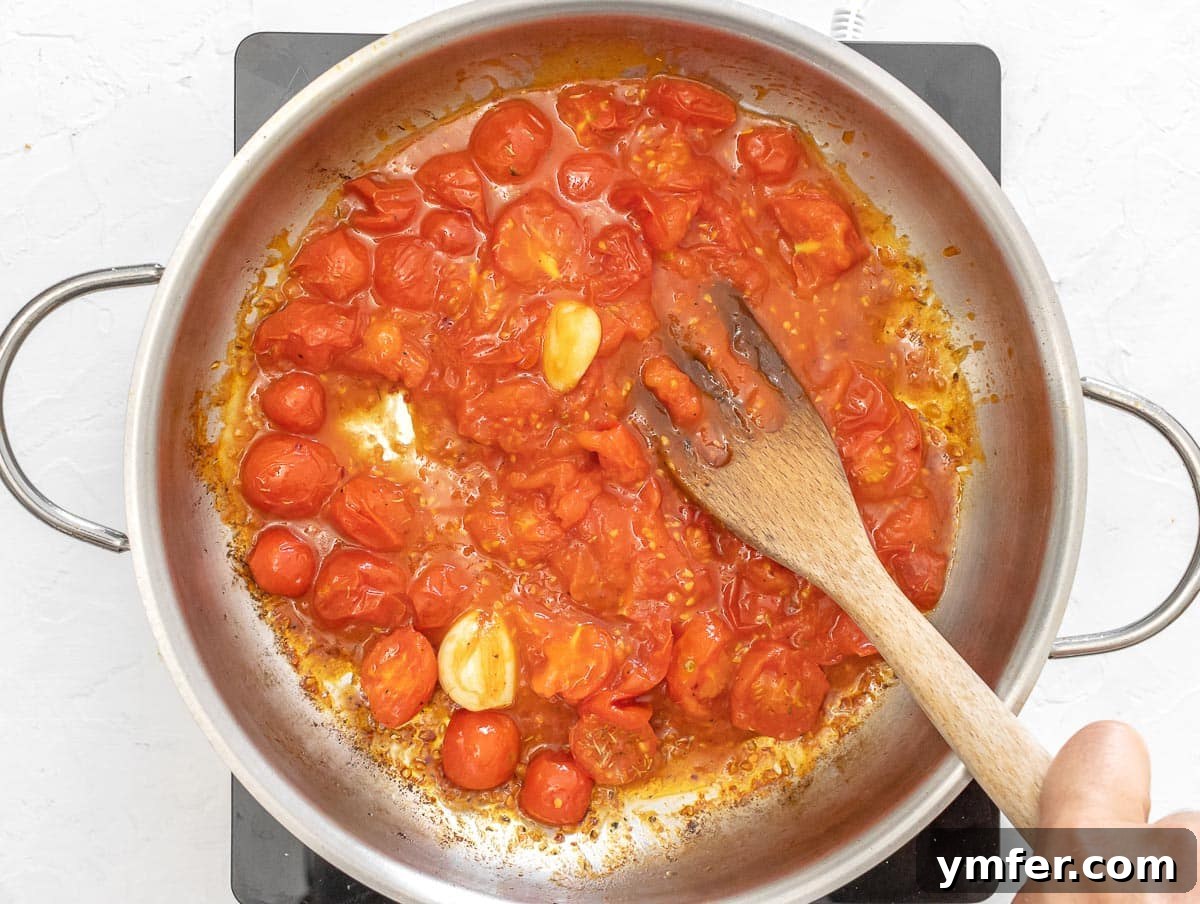
For a vibrant and lighter version, particularly perfect during the summer when cherry tomatoes are at their peak, try making this risotto with fresh cherry tomatoes instead of passata. The process is similar, but with a slight adjustment to the initial steps:
First, warm your **vegetable broth** and keep it simmering. In a large skillet, sauté **olive oil** and **finely chopped onion** for about 3 minutes. Add **crushed or finely chopped garlic** and cook for another 2 minutes. Then, introduce **halved cherry tomatoes** and a tablespoon of **tomato paste** (for concentrated flavor) to the skillet. Fry on medium heat for about 5 minutes, gently crushing the tomatoes with a fork as they begin to burst and release their juices. This creates a fresh, bright tomato base. Then, add your risotto rice and continue to cook the risotto by adding **vegetable broth** one ladleful at a time, following the main recipe instructions. The result is a lighter, intensely fresh tomato flavor that sings of summer.
Tomato and Eggplant Risotto
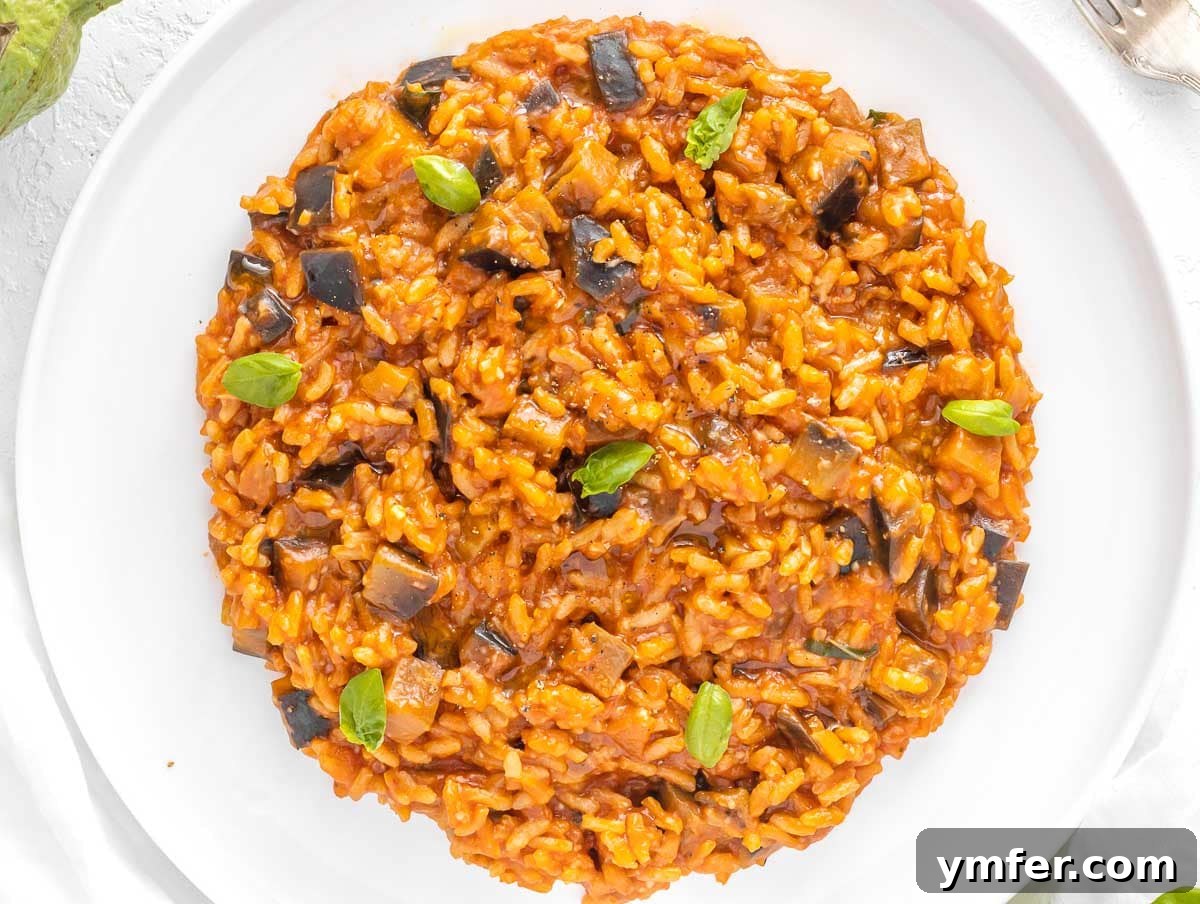
This hearty variation builds upon the classic **tomato risotto** by incorporating tender cubes of eggplant. It’s an excellent way to add more vegetables and a lovely texture to your meal, making it even more satisfying for a family dinner.
To prepare it, simply **cut your eggplant into ¼-inch dice** and add it to the pan at the same time you introduce the tomato puree. The eggplant will soften and meld beautifully with the creamy rice and tomato sauce. You might need a slightly larger pan for this version, as eggplant takes up more space initially. The **tomato and eggplant risotto** is a rich, nutritious, and incredibly delicious dish that kids and adults alike will adore. For detailed instructions, explore our dedicated eggplant risotto recipe.
Creative Uses for Leftover Risotto
Don’t let any leftover risotto go to waste! Risotto leftovers are a true culinary treasure, perfect for transforming into delicious appetizers or even entirely new main dishes. Here are some fantastic ideas to breathe new life into your extra creamy tomato risotto:
Crispy Italian Rice Balls (Arancini)
**Italian rice balls**, often called Arancini (meaning “little oranges” due to their shape and color), are one of the most popular and tastiest ways to use leftover risotto. Simply shape the chilled leftover risotto into small balls, bread them with breadcrumbs for a crispy exterior, and then **deep-fry** or **air-fry them** until golden brown and delicious. Serve these delightful morsels warm with our homemade marinara sauce for dipping. They make an excellent appetizer or a fun, satisfying dinner with a simple side salad.
Golden Risotto Cakes with Salad

**Risotto cakes are incredibly flavorful and satisfying!** Take your chilled risotto leftovers and gently shape them into burger-like patties. Bread them lightly with breadcrumbs, then **shallow-fry** them in a pan with a little oil until golden and crispy, or for a healthier option, **air-fry** them. Serve these warm, golden cakes atop a fresh, simple side salad, and perhaps drizzle with our easy marinara sauce. This is an ingenious and delicious method to repurpose leftover risotto – especially for varieties like eggplant risotto – and it’s guaranteed to be a hit with everyone, even the pickiest eaters!
Authentic Italian Supplì

For a taste of Central Italian street food, use your leftover risotto to make **Italian supplì**. These are a popular type of fried rice ball, similar to arancini but often filled with mozzarella and tomato sauce. They are traditionally served as an appetizer and are a slightly simpler take on the classic arancini, making them a perfect project for using up any remaining risotto.
Expert Tips for Flawless Risotto
Creating the perfect creamy risotto is an art, but with these expert tips, you’ll achieve restaurant-quality results in your home kitchen every time. Mastering these techniques will transform your risotto-making experience.
Embrace the Starch: Don’t Rinse the Rice
Unlike many other rice dishes, **risotto rice should never be rinsed**. Rinsing removes the crucial starch coating on the grains, and this starch is precisely what creates the characteristic creamy texture of risotto. Keeping the starch intact is the first step towards a luscious, velvety dish that’s rich in both flavor and consistency.
Select the Right Rice: The Key to Texture
The type of rice you use is fundamental. Always choose a rice variety specifically designed for risotto, such as **Arborio, Vialone Nano, Carnaroli, Roma, or Baldo**. These short to medium-grain rices are selected for their high starch content and ability to absorb a lot of liquid without becoming mushy, while still retaining a pleasant al dente bite. If these specific varieties are unavailable, look for any package clearly labeled “risotto rice.”
Avoid using long-grain rices like Basmati, Jasmine, wild rice, wholegrain rice, or generic short-grain rice. Their different starch profiles and cooking characteristics will prevent you from achieving the desired creaminess and firm texture essential for authentic risotto.
Patience and Persistence: Add Broth Gradually and Stir
**Risotto demands your attention, but it’s a rewarding process.** The technique involves adding warm broth, typically two ladles or about 1 cup at a time, and then stirring often – almost continuously – until that liquid is nearly absorbed. Only then should you add the next batch of broth. This methodical approach allows the rice to cook evenly and, most importantly, encourages the slow release of starch from the grains. This continuous stirring is crucial for building the creamy texture of the dish.
If you stop stirring for too long, the rice can quickly stick to the bottom of your pan and burn. More critically, the integrity of the individual rice grains will be compromised, leading to an inconsistent texture rather than the desired “al dente” bite and creamy sauce.
Unlocking Natural Creaminess: It’s All About the Starch
There’s a common misconception that the creaminess of risotto comes primarily from adding butter at the end. **This is not entirely accurate.** While butter can add a final touch of richness, the true, authentic creaminess of risotto is developed through the slow, gentle release of starch from the rice grains during cooking. This process is optimized by using the correct type of rice and consistent, gentle stirring.
Relying solely on butter for creaminess can result in a dish that feels heavy, overly fatty, and even greasy, often leading to a post-meal “food coma.” By focusing on the starch, you achieve a lighter, yet incredibly luxurious and satisfying creamy texture.
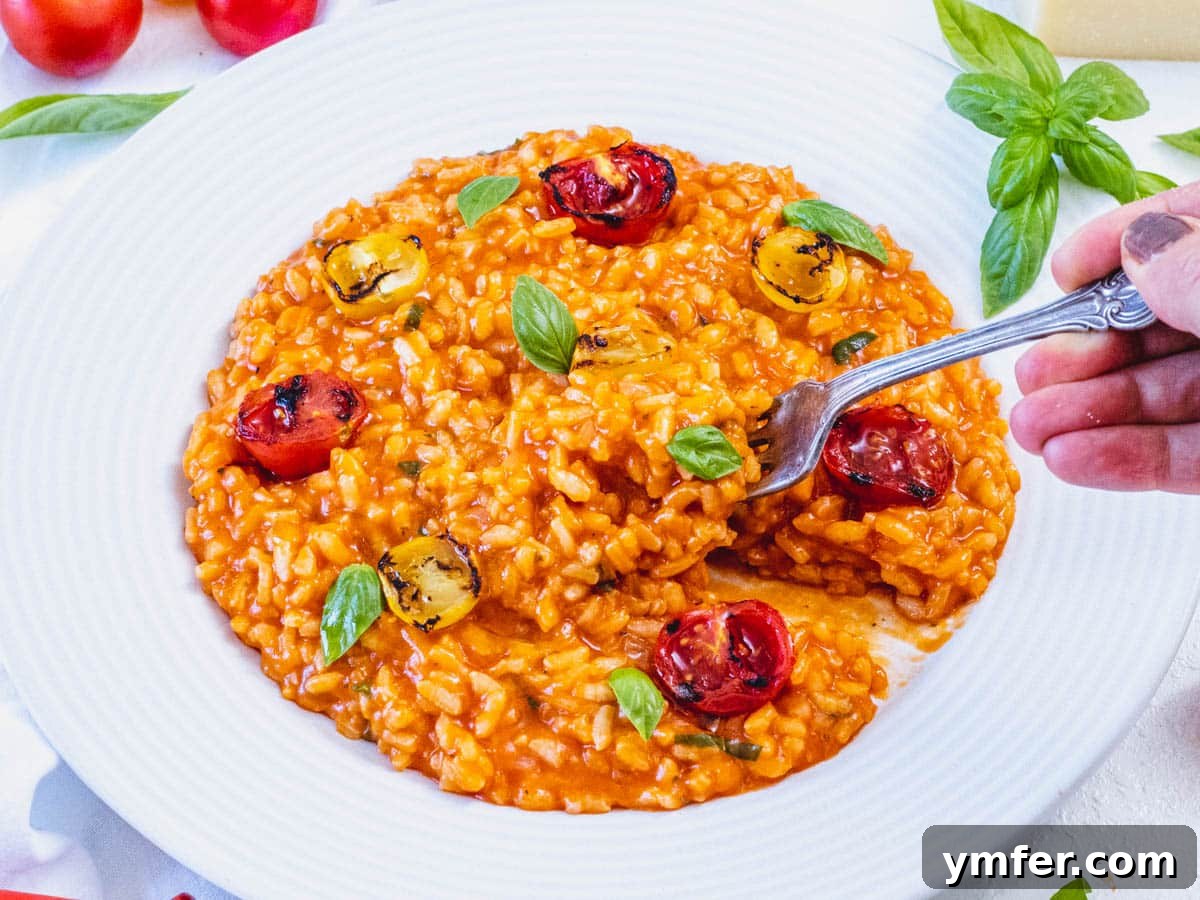
Starch is the Star: A Scientific Approach to Creaminess
To reiterate, the **real reason** why risotto becomes so wonderfully creamy is due to its high **starch content**. As the rice cooks and is continuously stirred, the starch molecules are gradually released into the surrounding liquid. Then, as the risotto cools slightly, these starches thicken, creating that characteristic creamy, velvety texture. Our goal during cooking is to enhance this natural process, rather than trying to compensate with excessive fats.
The first and most important step is selecting a high-quality risotto rice. Following our cooking method – toasting the rice, gradually adding broth, and consistent stirring – will naturally yield a **tomato risotto that is creamier and more flavorful than most**. As a final, secret tip for those who might struggle to find exceptionally starchy risotto rice: consider adding **one teaspoon of rice starch or corn starch** (diluted in a tablespoon of cold water) towards the very end of cooking, just before the mantecare step. This can provide an extra boost of creaminess without adding unnecessary fat. Give it a try and tell us what you think!
Common Questions About Risotto
Traditional risotto can sometimes be high in saturated fats due to generous amounts of butter and cheese. However, you can easily make risotto healthier by reducing the quantity of butter and cheese, or by opting for plant-based alternatives as done in this recipe, while still maintaining its delicious flavor and creamy texture.
No, Arborio is not the same as risotto, but it is one of the most popular types of rice used to make risotto. Arborio is a short-grain, starchy rice variety, making it ideal for absorbing liquids and releasing starches to create a creamy dish. Other suitable varieties include Carnaroli, Vialone Nano, Roma, and Baldo.
Risotto is incredibly versatile, much like pasta, and can be made with almost anything! We encourage you to follow the seasons and get creative with your ingredients. For instance, in spring, try asparagus risotto; in summer, a refreshing lemon risotto; in autumn, a hearty mushroom risotto or pumpkin risotto; and in winter, a luxurious saffron risotto or this comforting tomato risotto.
While preferences vary, Carnaroli is often considered the “king of risotto rice” due to its higher starch content and ability to hold its shape perfectly. Arborio is also an excellent and widely available choice, known for its consistent results. Vialone Nano, Roma, and Baldo are other fantastic options that yield superb creamy risotto.
No, Jasmine rice is generally **unsuitable** for making risotto. Its grains are too long and thin, which means they tend to break down and become mushy during the long cooking and stirring process required for risotto. Furthermore, Jasmine rice lacks the high starch content necessary to achieve the desired creamy consistency and distinct al dente bite.
Storage and Reheating Your Risotto
While risotto is always best served immediately after it’s made, understanding how to store and reheat it properly can help you enjoy its flavors later, or repurpose leftovers creatively.
Make Ahead: Tomato risotto truly shines when freshly made, offering the peak of its creamy texture and vibrant flavors. However, any leftovers are fantastic for transforming into delightful dishes like risotto cakes or rice balls, which can be made ahead of time for later enjoyment.
Refrigerator: Store any leftover tomato risotto in an airtight container in the refrigerator for up to 4 days. Proper sealing is key to preventing the rice from drying out and absorbing unwanted odors from other foods.
Reheat: As risotto cools and sits in the fridge, the rice grains will absorb much of the remaining liquid, causing it to become drier and more compact. To reheat, transfer your desired portion to a microwave-safe dish or a saucepan. Add a splash of water or vegetable broth (about 1-2 tablespoons per serving) to help rehydrate the rice. Heat gently, stirring occasionally, until warmed through and creamy again. Be careful not to overheat, which can make the rice mushy.
Freezer: Risotto is generally **not suitable for freezing**. The delicate texture of the cooked rice, especially the al dente quality, does not hold up well to freezing and thawing, often resulting in a mushy or grainy consistency. It’s best to enjoy it fresh or repurpose leftovers within a few days.
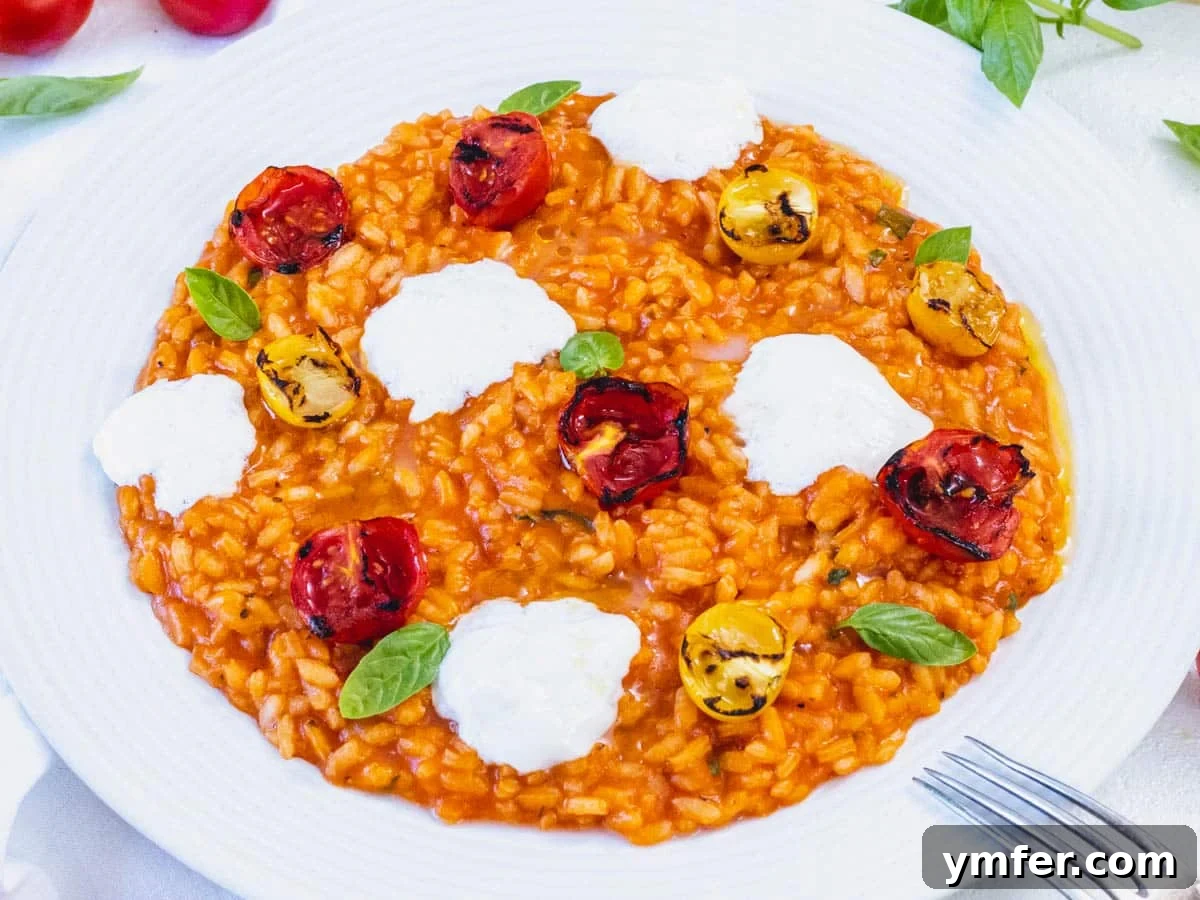
More Creamy Risotto Recipes to Explore
If you’ve fallen in love with the comforting creaminess of this tomato risotto, you’re in for a treat! We have a collection of equally delicious risotto recipes, all crafted with simple ingredients and bursting with bold, authentic flavors. Expand your culinary repertoire with these creamy delights:
- Zucchini Risotto: A fresh and light risotto featuring delicate shredded zucchini, perfect for a subtle flavor.
- Asparagus Risotto: A vibrant and green spring classic, celebrating the fresh taste of asparagus.
- Saffron Risotto: A bright and golden risotto, often called “Risotto alla Milanese,” known for its aromatic and luxurious saffron threads.
- Easy Vegan Risotto: A versatile recipe packed with four different vegetables, proving that creamy risotto can be entirely plant-based.
- Eggplant Risotto: A hearty and comforting dish with tender cubes of eggplant, adding a wonderful depth of flavor and texture.
- Risotto Cakes: A brilliant way to transform leftover risotto into crispy, savory patties – a fantastic appetizer or light meal.
- Rice Balls (Arancini): Another incredibly popular and delicious idea for using up any leftover risotto, creating a crispy, fried delight.
For many more delicious dinner inspirations, be sure to check out our full mains category page.
Classic Tomato Risotto
Nico Pallotta
★
★
★
★
You’ll love the creamy texture of arborio rice, the rich tomato sauce, and the parmesan flavor. And the optional charred tomatoes are the cherry on top!
10 mins
20 mins
30 mins
6 people
Main Course, Side dish
Italian
Share
Video
Ingredients
- 2 tablespoons olive oil
- 1 white onion finely chopped
- 2 cloves garlic minced or pressed
- 2 cups arborio rice
- 8 cups vegetable broth
- 24 ounces tomato puree
- 1 teaspoon dried oregano
- ½ teaspoon salt
- ¼ teaspoon black pepper
- 15 leaves basil
- ½ cup parmesan cheese or non-dairy cheese, grated
Optional Toppings
- cherry tomatoes halved and charred on a grill pan for a few minutes
- burrata or non-dairy burrata
Instructions
-
Warm 8 cups vegetable broth and keep hot.
In a large skillet, fry 1 white onion (finely chopped) in 2 tablespoons olive oil for 3 minutes.
Add 2 cloves garlic (minced) and 2 cups arborio rice and fry 1 to 2 minutes.

-
Add 1 cup of vegetable broth, 24 ounces tomato puree, 1 teaspoon dried oregano, ½ teaspoon salt, and ¼ teaspoon black pepper.
-
Cook the risotto on a gentle simmer until al dente (15 to 20 minutes). Stir with a wooden spoon almost continuously.
Add one cup of vegetable broth at a time after the previous broth is absorbed.
-
When the rice is al dente, turn the heat off and add ½ cup parmesan cheese, a drizzle of extra virgin olive oil, and 15 leaves basil.
-
Stir with the heat off for 2 minutes (this step is called mantecare in Italian).
Add more vegetable broth if the rice gets too thick.
Risotto should be very creamy, not too thick or too runny.
-
Nico’s serving tip: serve on a flat plate topped with charred cherry tomatoes, small basil leaves, and optionally some burrata bits.
Notes
STORAGE
Make ahead: tomato risotto is best served shortly after it is made. However, leftovers are great for making risotto cakes and rice balls.
Refrigerator: keep leftover tomato risotto in an airtight container in the fridge for up to 4 days.
Reheat: the rice will get dry and compact as it sits in the fridge. You can reheat it with a dash of water in the microwave.
Freezer: not suitable for freezing.
ALSO ON THIS PAGE
- Substitutions
- Serving suggestions
- Variations
- How to use leftover risotto?
- Tips
- Questions
- More Risotto Recipes
Nutrition
Tried this recipe?
Leave a comment below or mention @theplantbasedschool on Instagram. We love hearing from you ⭐️ 💚.
If you like this tomato risotto, you might also like:
Delicious & Healthy Meals
Mains
40 High Protein Vegetarian Meals
Collections
30 Cherry Tomato Recipes
Collections
40 Meatless Dinner Ideas
Collections
What to Serve with Risotto: 25 Sides