
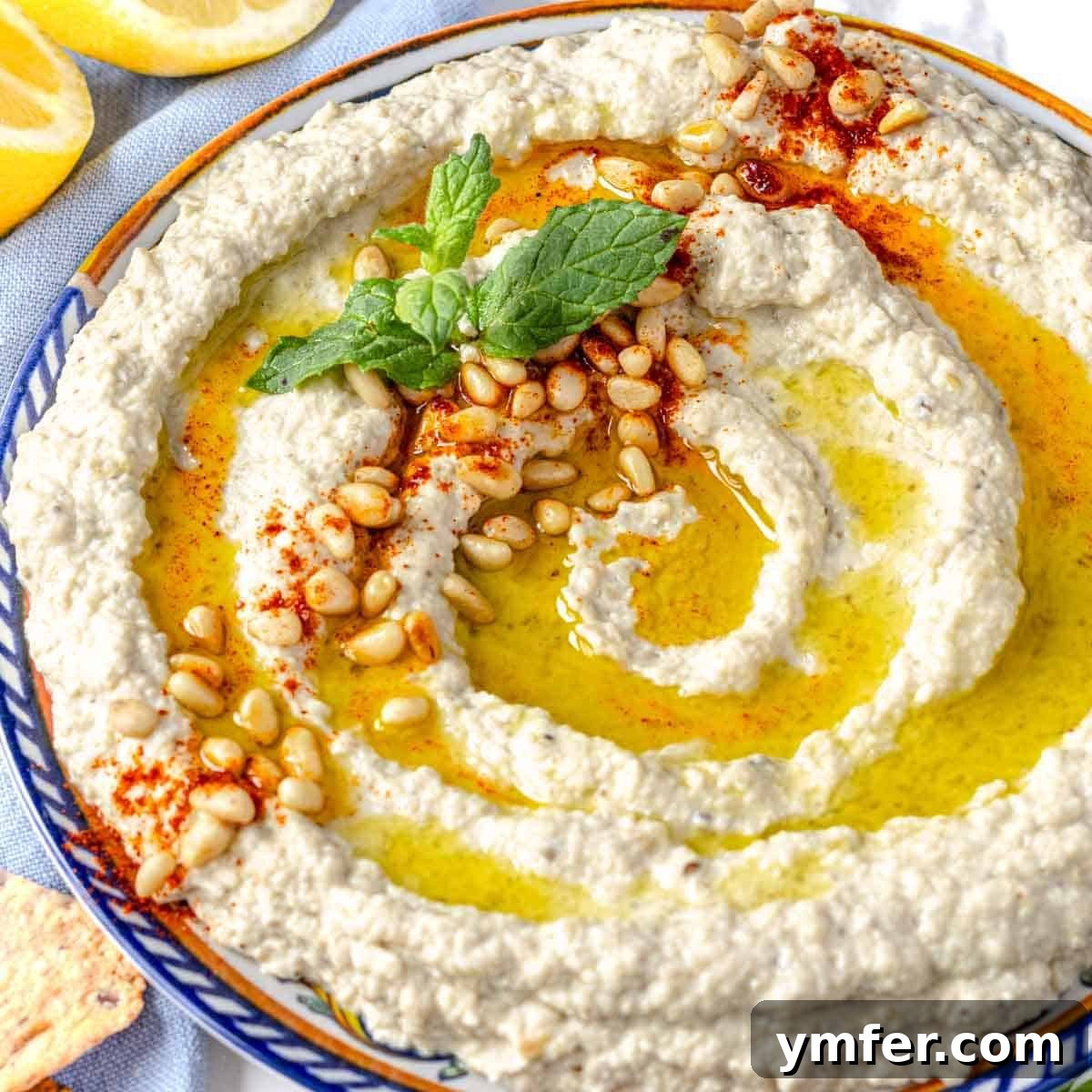
Embark on a culinary journey to the heart of the Middle East with Mutabal, a luxurious and effortlessly delightful creamy eggplant dip. Renowned for its silky smooth texture and deeply resonant smoky flavor, Mutabal stands as a testament to the exquisite simplicity of Levantine cuisine.
Crafted from the tender, charred flesh of roasted eggplants, meticulously blended with the rich creaminess of tahini, the subtle tang of yogurt, the pungent kick of fresh garlic, and the bright zest of lemon juice, this dip achieves a harmonious symphony of creamy, nutty, and tangy flavors. Each spoonful offers a captivating experience, a perfect balance that tantalizes the taste buds.
Mutabal is an exceptional choice, whether presented as an elegant appetizer to awaken the palate or as an integral component of a vibrant meze platter. Paired with an array of other delectable dips, spreads, and refreshing salads, it forms the cornerstone of a truly gorgeous Middle Eastern-inspired dinner, inviting guests to share and savor the rich culinary heritage of the region.
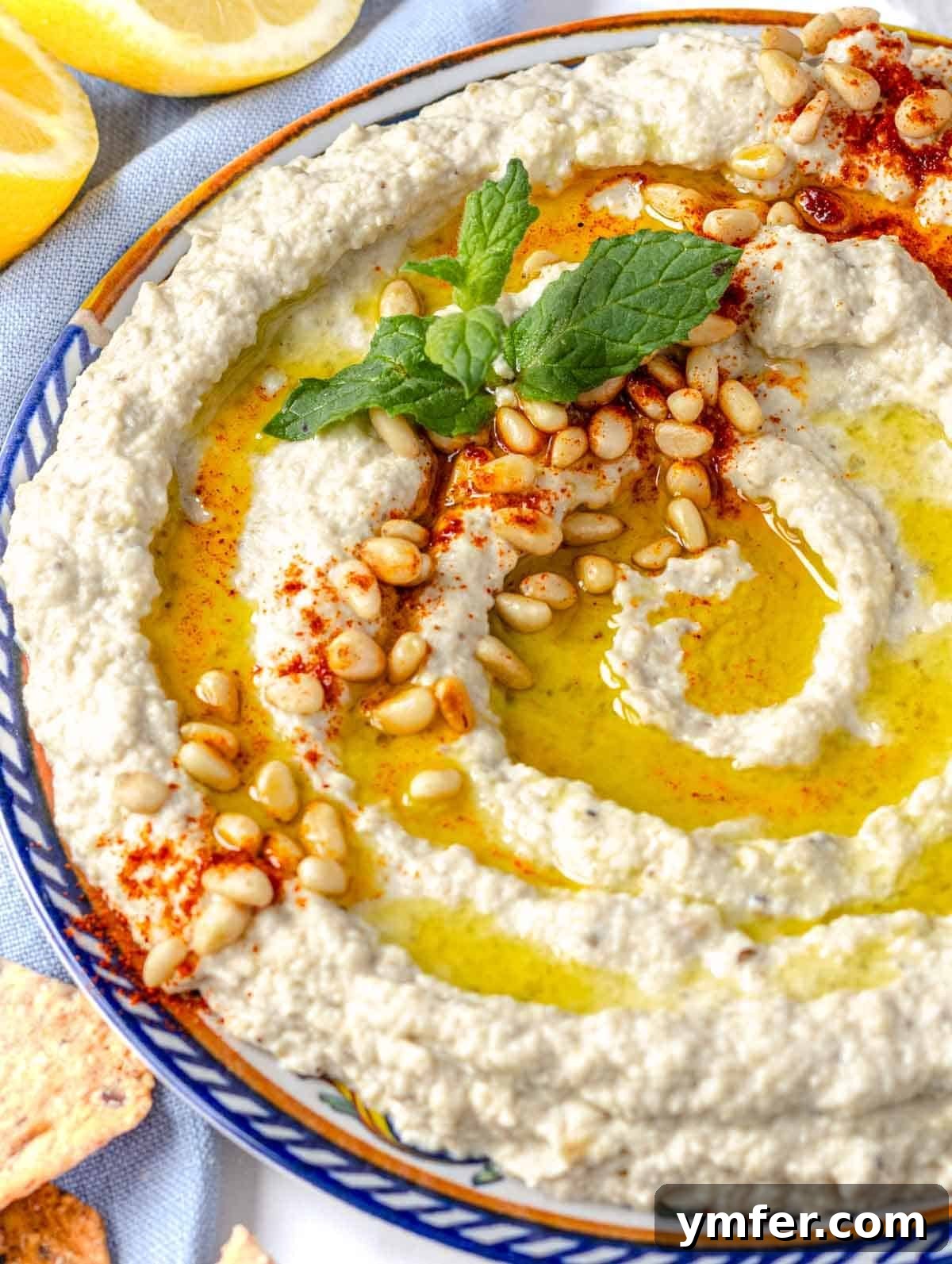
What is Mutabal? Unveiling the Middle Eastern Eggplant Masterpiece
Mutabal, sometimes spelled moutabal or mutabbal, is a celebrated Middle Eastern, Levantine, and Eastern Mediterranean eggplant dip. While often compared to its famous cousin, baba ganoush, Mutabal possesses its own distinct characteristics and charm that make it a favorite across the region.
The core of Mutabal’s allure lies in the roasted eggplant, which undergoes a transformative process to achieve its signature smoky depth. Traditionally, eggplants are expertly charred over an open flame – be it a gas stovetop, a charcoal grill, or even a wood fire – until their skin beautifully blisters and blackens, yielding a remarkably tender and intensely smoky flesh within. This traditional method is key to developing the profound flavor profile that truly defines authentic Mutabal. While some recipes for eggplant dips omit yogurt, a defining feature of our Mutabal recipe and many authentic preparations is the inclusion of creamy yogurt, which lends a luxurious tang and velvety smoothness unmatched by other versions.
While the open flame method is highly recommended for its unmatched smoky essence, modern kitchens offer convenient alternatives. You can replicate a delicious, albeit slightly less intense, smoky flavor by baking eggplants in the oven or utilizing an air fryer, often complemented by a touch of smoked paprika to enhance the roasted notes. These methods provide excellent results for home cooks, making this exquisite dip accessible to everyone.
Mutabal is more than just a dip; it’s a culinary staple enjoyed across various settings. It excels when scooped up with crispy crackers, fresh vegetables, or, most traditionally, with soft, warm pita bread. For a truly authentic Middle Eastern dining experience, we heartily recommend serving Mutabal alongside other vibrant dishes such as a refreshing tabouli or shirazi salad, classic hummus, and crispy falafel. Together, these elements create a rich tapestry of flavors and textures, perfect for sharing and celebration.
The Cultural Significance of Mutabal
Mutabal holds a cherished place in Levantine culinary traditions, particularly in countries like Lebanon, Syria, Jordan, and Palestine. It’s not merely food; it’s a symbol of hospitality and communal dining. Often found on large mezze spreads, Mutabal embodies the spirit of sharing and abundance. Its preparation, often involving charring eggplants over an open fire, connects diners to ancient cooking methods and the rich history of the region’s agricultural bounty. The simplicity of its ingredients belies the complexity and depth of flavor it delivers, making it a beloved dish for everyday meals and festive occasions alike.
Essential Ingredients for a Perfect Mutabal
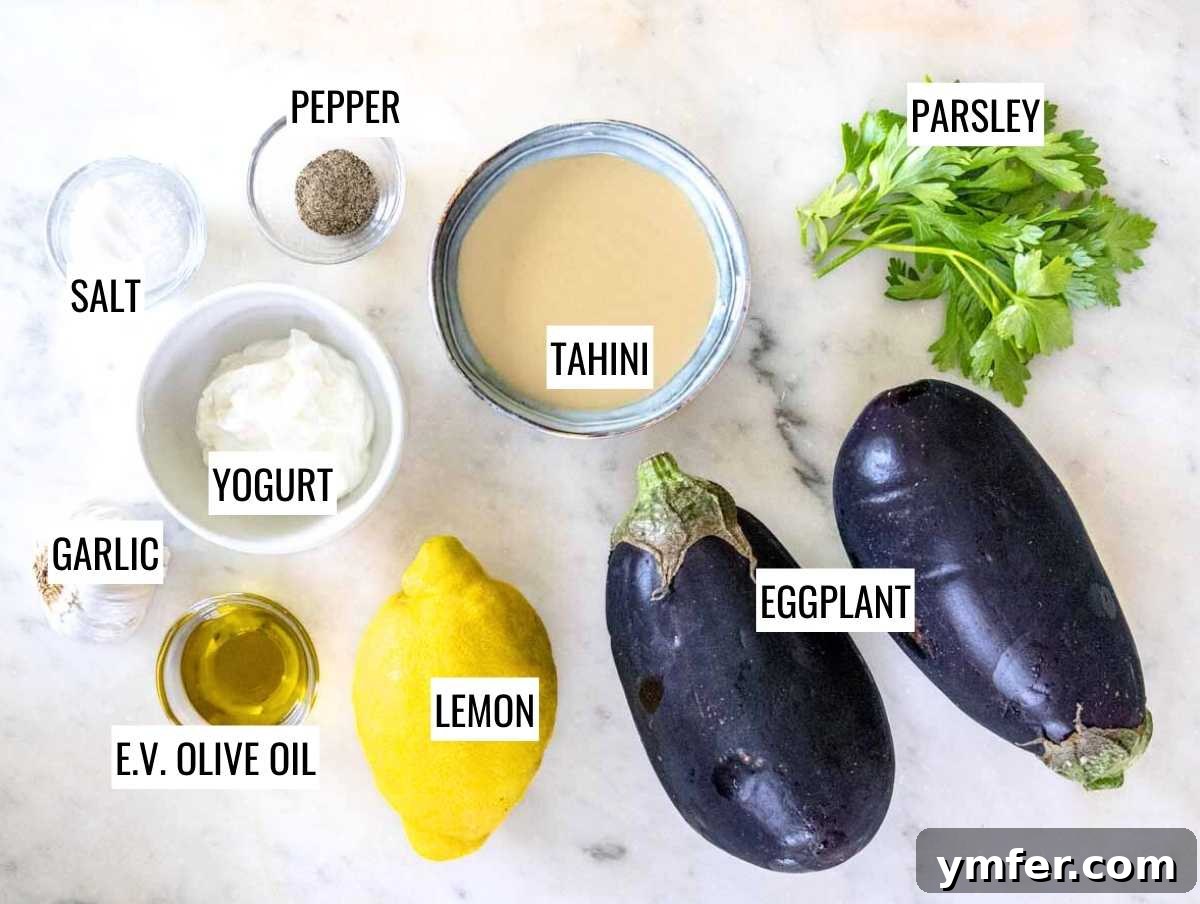
Creating an exceptional Mutabal begins with selecting the finest ingredients. Each component plays a crucial role in building the dip’s signature flavor and texture. Specific quantities can be found in the recipe box at the bottom of the page, but here’s a detailed guide to what makes this dish shine:
Eggplants: The Heart of the Dip
For the best Mutabal, opt for globe eggplants or Italian eggplants. These are typically large, with smooth, dark purple, almost black skin. Their size and flesh-to-seed ratio are ideal for roasting, yielding a substantial amount of creamy pulp once cooked. Smaller, more slender eggplants can be used, but you might need more of them to achieve the desired volume and texture.
Tahini: The Silky Foundation
Tahini is a fundamental ingredient, providing the nutty depth and characteristic creaminess. We highly recommend using tahini made from 100% hulled sesame seeds. Look for a brand that is light in color and has a pourable, rather than pasty, consistency. High-quality tahini will have a smooth, slightly sweet, and earthy flavor. Avoid dark, gritty, or overly thick tahini, as these can often be bitter and are less traditional for authentic Middle Eastern preparations. A good tahini should easily mix into the dip, contributing to its luxurious texture.
Yogurt: The Tangy Secret
The inclusion of yogurt is a hallmark of Mutabal, distinguishing it from baba ganoush. We prefer to use Greek yogurt due to its inherent thickness and creamy consistency, which adds body and a delightful tang to the dip. However, you have flexibility here. Feel free to use plain yogurt, fat-free yogurt, or for a vegan version, any high-quality unsweetened non-dairy yogurt (such as almond or soy-based Greek-style yogurt) will work beautifully, ensuring the same creamy texture and tangy notes.
Lemon: The Brightening Zest
Fresh lemon juice is indispensable for brightening the rich flavors of Mutabal and adding a crucial tangy counterpoint. Always use freshly squeezed lemon juice. Bottled lemon juice often lacks the vibrant acidity and fresh aroma that elevates this dip from good to extraordinary.
Garlic: The Aromatic Punch
For an authentic and aromatic flavor, fresh garlic is a must. It provides a sharp, savory kick that balances the other ingredients. Avoid garlic powder, as it cannot replicate the complex, fresh notes that a clove of raw garlic brings to the dip.
Olive Oil: The Finishing Touch
A drizzle of good quality extra virgin olive oil is essential, both in the preparation and as a garnish. Its fruity, peppery notes complement the smoky eggplant beautifully. If extra virgin is unavailable, a good regular olive oil can be substituted, but for the best flavor, extra virgin is always preferred.
Parsley: The Fresh Herb Accent
To add a touch of freshness and a subtle herbaceous aroma, try to use flat-leaf parsley, also known as Italian parsley. It is more aromatic in flavor and boasts a more delicate texture compared to curly parsley, making it the preferred choice in Eastern Mediterranean and Levantine recipes. Fresh mint can also be a delightful alternative, offering a different, yet equally refreshing, profile.
Salt and Pepper: The Seasoning Essentials
Seasoning is key to bringing all the flavors together. Use a high-quality sea salt or kosher salt to taste, and freshly ground black pepper for a subtle aromatic warmth. Always taste and adjust seasonings as you blend.
Elevate Your Mutabal: Delicious Topping Ideas
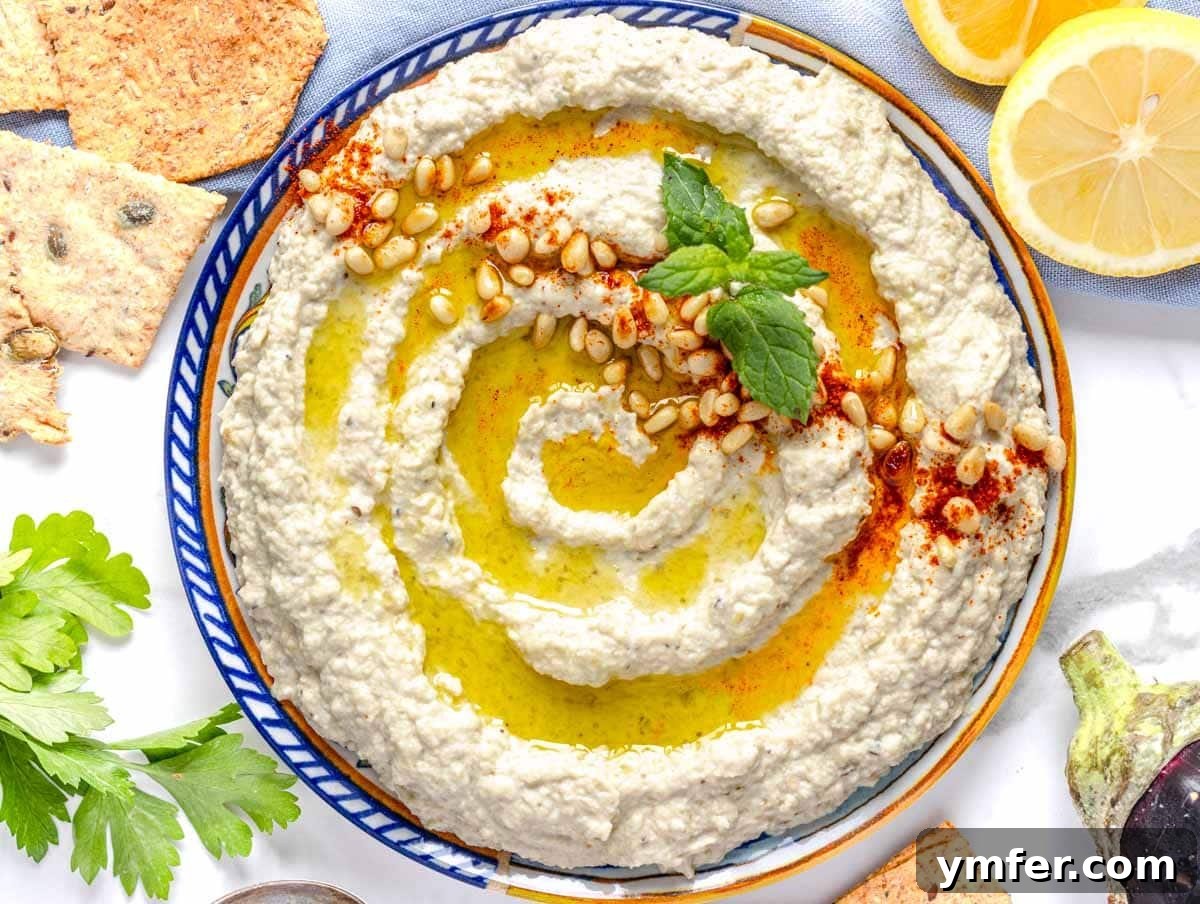
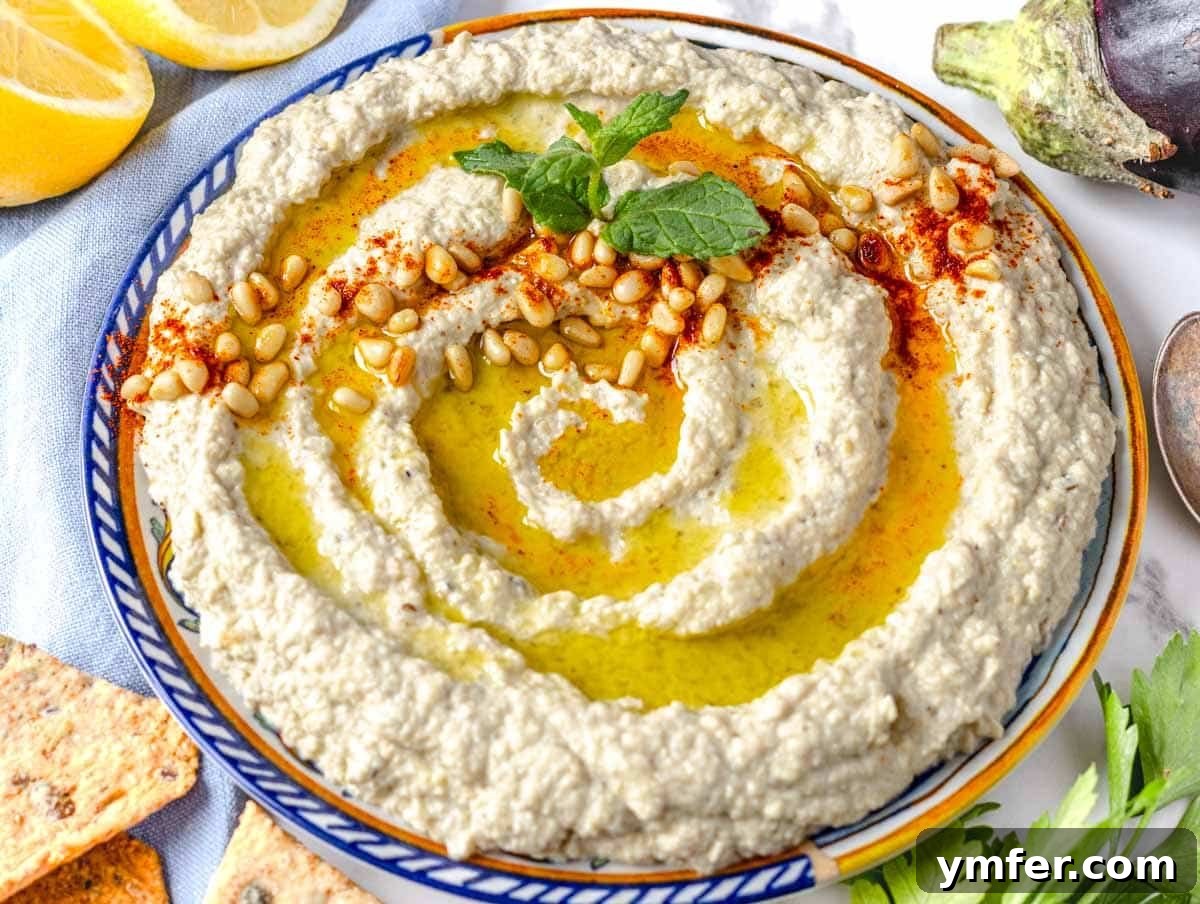
While Mutabal is incredibly flavorful on its own, thoughtful toppings can elevate its presentation and enhance its taste and texture. The most basic and classic topping involves a generous drizzle of extra virgin olive oil, a sprinkle of finely chopped parsley, and a delicate pinch of smoked paprika for color and an extra hint of smokiness.
For those looking to explore more intricate layers of flavor and texture, consider these optional additions:
- Pine Nuts: These small, buttery nuts are a beloved topping in Middle Eastern cuisine. While they can be a bit expensive, their unique flavor and satisfying crunch are truly worth it. Lightly toast them in a dry pan over medium heat until golden brown and fragrant before sprinkling them generously over the dip. This simple step vastly improves their flavor and aroma.
- Pomegranate Seeds: For a burst of vibrant color, freshness, and a delightful tangy counterpoint, pomegranate seeds are an excellent choice. Their juicy, tart pop cuts through the creaminess of the Mutabal, creating an exciting contrast that brightens every bite.
- Dukkah: An Egyptian spice and herb mix, dukkah offers a complex nutty, savory, and aromatic crunch. Typically made with toasted nuts (like hazelnuts), seeds (sesame, coriander, cumin), and spices, it adds an intriguing textural and flavor dimension.
- Sumac: A staple in Middle Eastern kitchens, sumac is a ground spice derived from the sumac berry. It provides a distinct tangy, slightly fruity flavor and a beautiful deep red hue, perfect for sprinkling over Mutabal for an extra layer of authentic taste.
- Fresh Mint Leaves: Beyond parsley, a few fresh mint leaves, either whole or finely chopped, can add a refreshing coolness and aromatic lift to the rich dip.
How to Make Mutabal: A Step-by-Step Guide
Crafting this exquisite Middle Eastern dip is simpler than you might imagine, yielding impressive results with minimal effort. Here’s a detailed breakdown of the process to help you achieve the perfect creamy, smoky Mutabal. (For US cups and grams measurements, refer to the recipe box at the bottom of the page.)
1. Cook the Eggplant: Achieving that Smoky Perfection
The most crucial step in making authentic Mutabal is properly cooking the eggplant to impart its signature smoky flavor and tender texture.
-
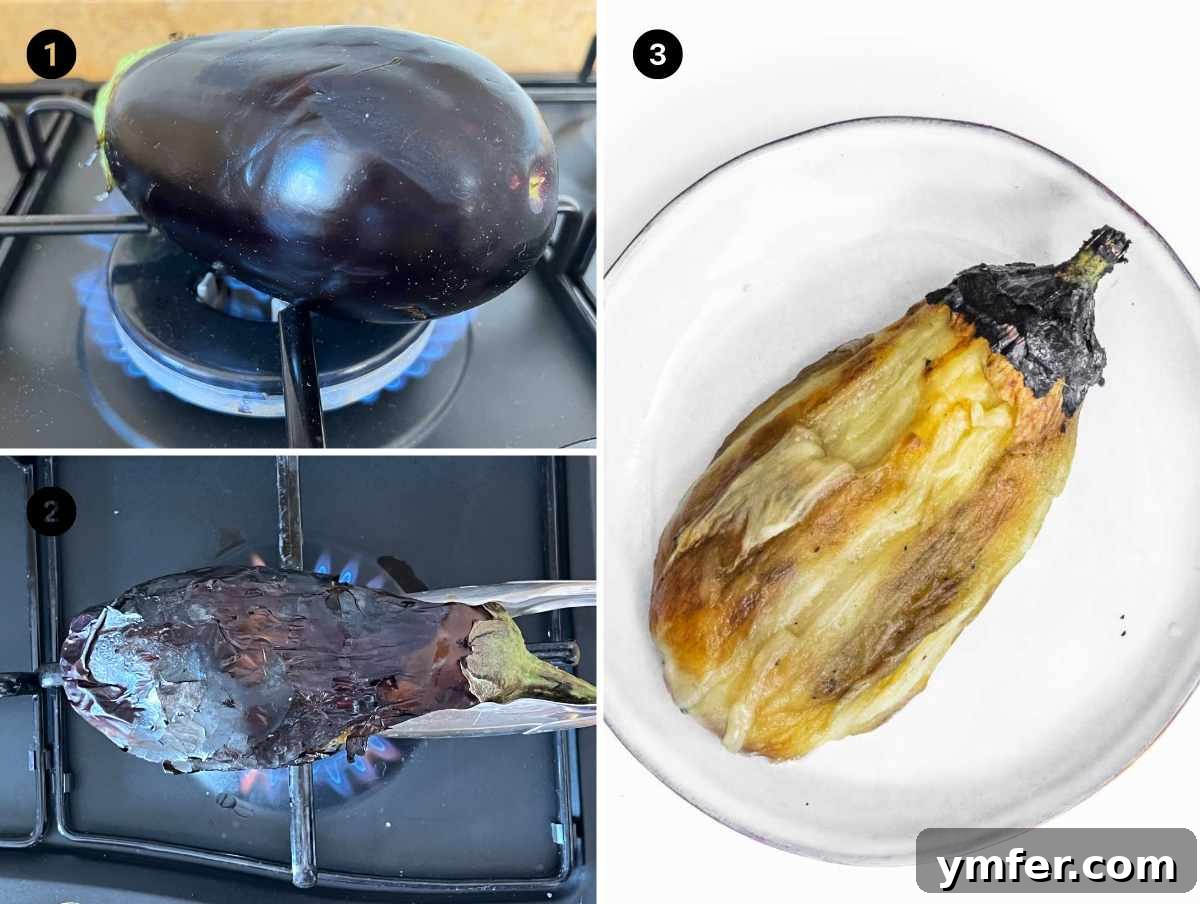
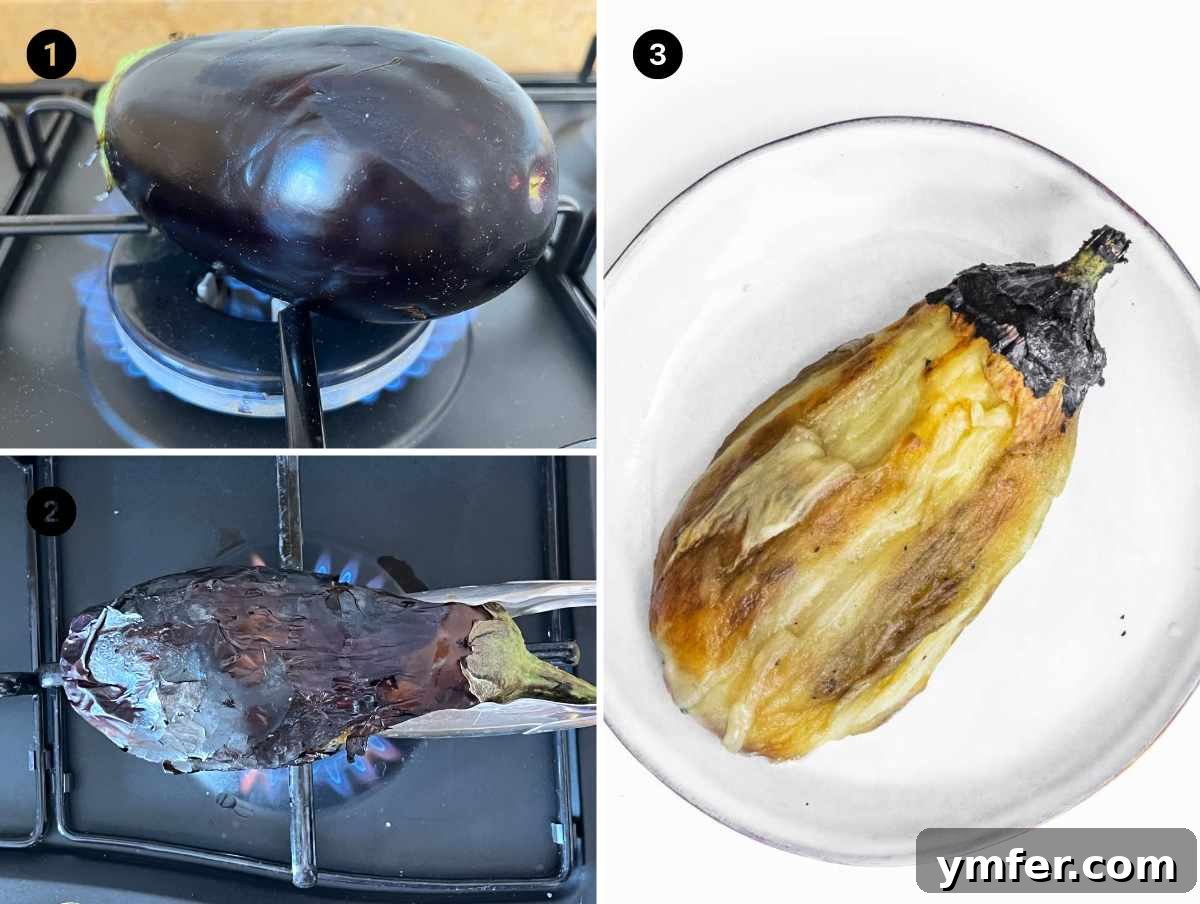
Traditional Charring Method (Highly Recommended): For the most intense and authentic smoky flavor, the traditional method is to grill the whole eggplants on an open fire. You can achieve this at home using your gas stovetop or an outdoor barbecue grill. Pierce each eggplant a few times with a fork to prevent it from bursting. Place the whole eggplants directly over the flame (if using a gas stovetop, turn the burner to medium-high). Turn the eggplant frequently with tongs until its skin is completely blackened and blistered on all sides, and the flesh feels very tender when pressed. This process can take anywhere from 10 to 20 minutes depending on the size of the eggplant and the intensity of the flame. The charring will create a strong smoky aroma that infuses deeply into the flesh.

Once charred, transfer the eggplants to a bowl and cover tightly with plastic wrap or a lid. Let them cool for about 10-15 minutes. This steaming process helps the skin detach easily. After cooling, carefully scrape the charred peel away with a paring knife or your hands, leaving only the soft, smoky flesh. Discard the stem and any overly fibrous bits.
-
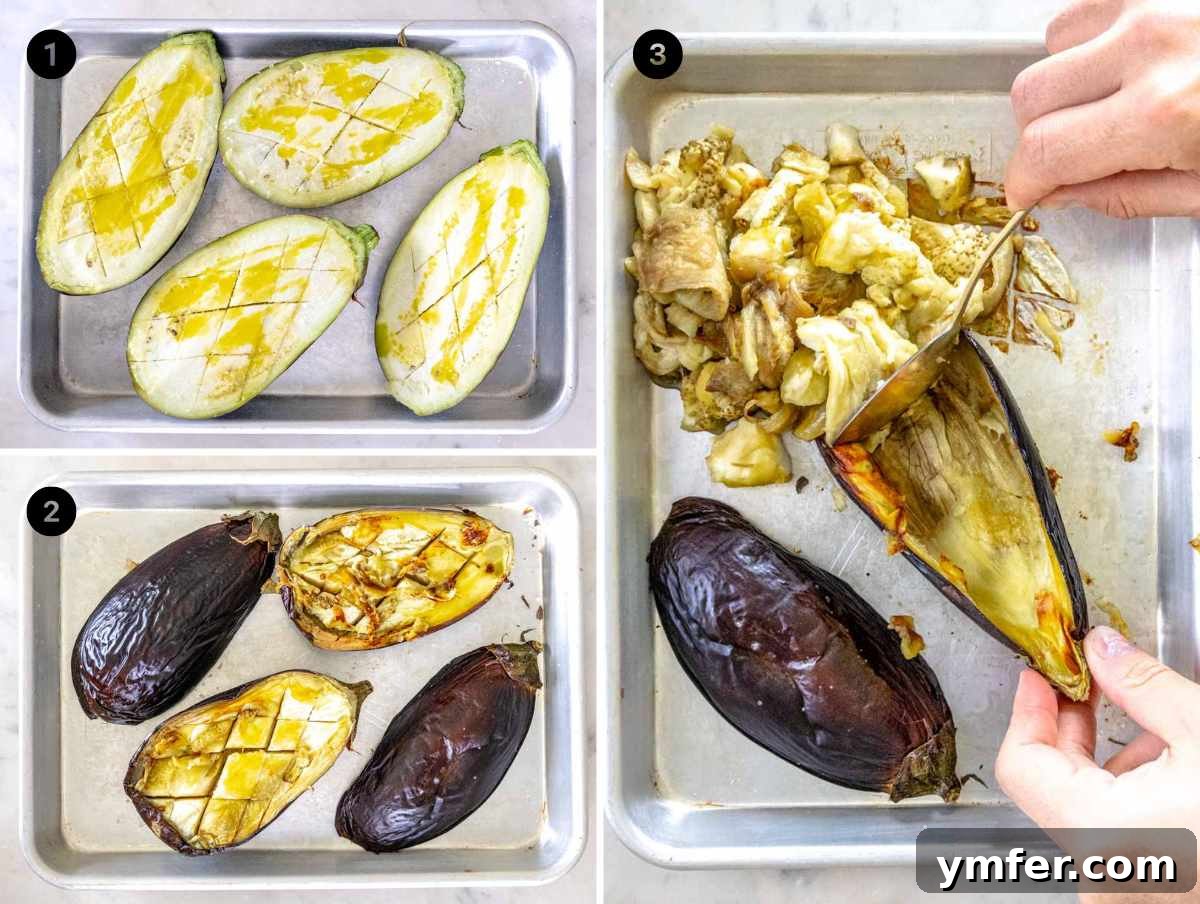
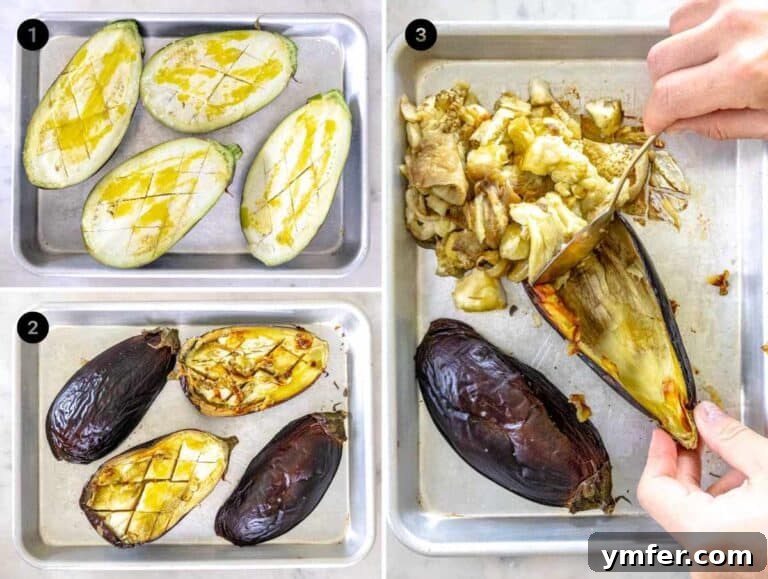
Alternative Baking/Air Frying Method: If you don’t have access to an open flame or prefer a less hands-on approach, you can bake or air fry the eggplants. Cut each eggplant in half lengthwise. Score the flesh deeply with a knife in a crosshatch pattern (without cutting through the skin), then drizzle with olive oil and a pinch of salt. Place them cut-side down on a baking sheet.
- Oven: Bake in a preheated oven at 400°F (200°C) for approximately 30-40 minutes, or until the flesh is extremely tender and easily scooped out.
- Air Fryer: Air fry at 400°F (200°C) for about 20-25 minutes, checking for tenderness.
Let them cool down slightly, then scoop out the tender flesh with a spoon. While this method won’t yield the same deep smokiness as charring, you can add a touch of smoked paprika to the dip later to enhance the flavor.
2. Purée the Ingredients: Crafting the Creamy Dip
Once your eggplant flesh is ready, the next step is to combine it with the other key ingredients to create the smooth, creamy Mutabal.
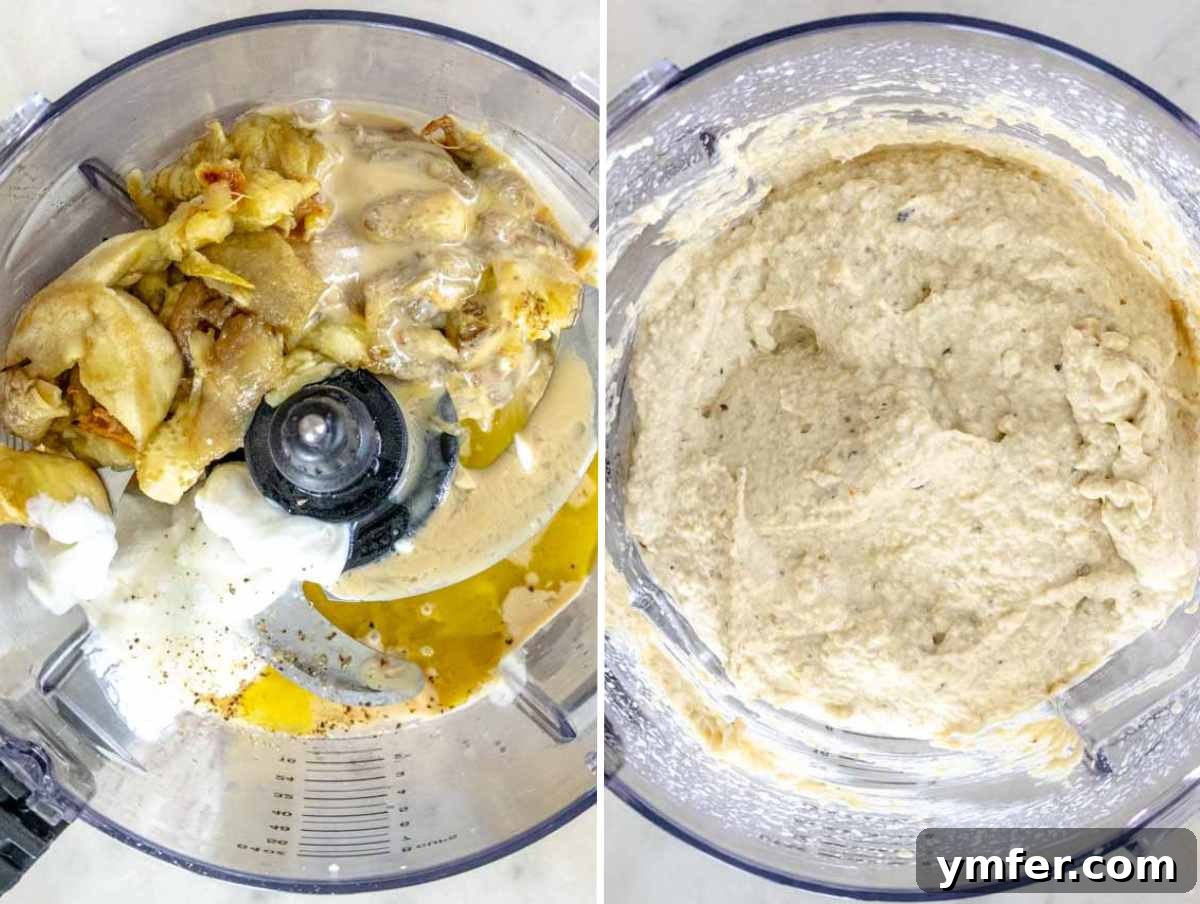
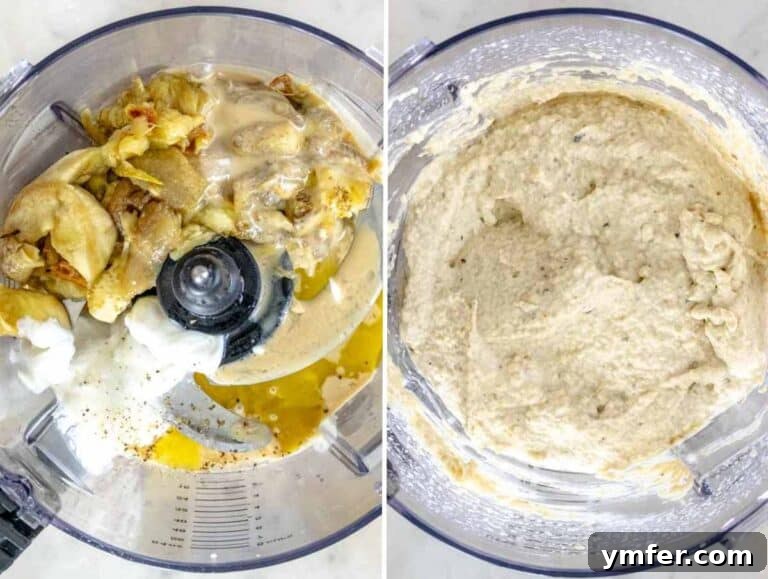
Transfer the cooked eggplant flesh to a food processor. Add the fresh garlic (we recommend one clove, but adjust to your taste), tahini, yogurt, lemon juice, a tablespoon of extra virgin olive oil, and season with salt and black pepper.
Pulse a few times until the mixture becomes wonderfully creamy and smooth. Avoid over-processing, as a slightly rustic texture is often preferred over a completely liquid one. Taste the dip and adjust the seasoning as needed; you might want to add more salt or a splash more lemon juice to achieve your desired balance of flavors. The goal is a rich, tangy, and smoky spread.
3. Plate and Garnish: The Grand Finale
Presenting your Mutabal beautifully is part of the Middle Eastern culinary experience.
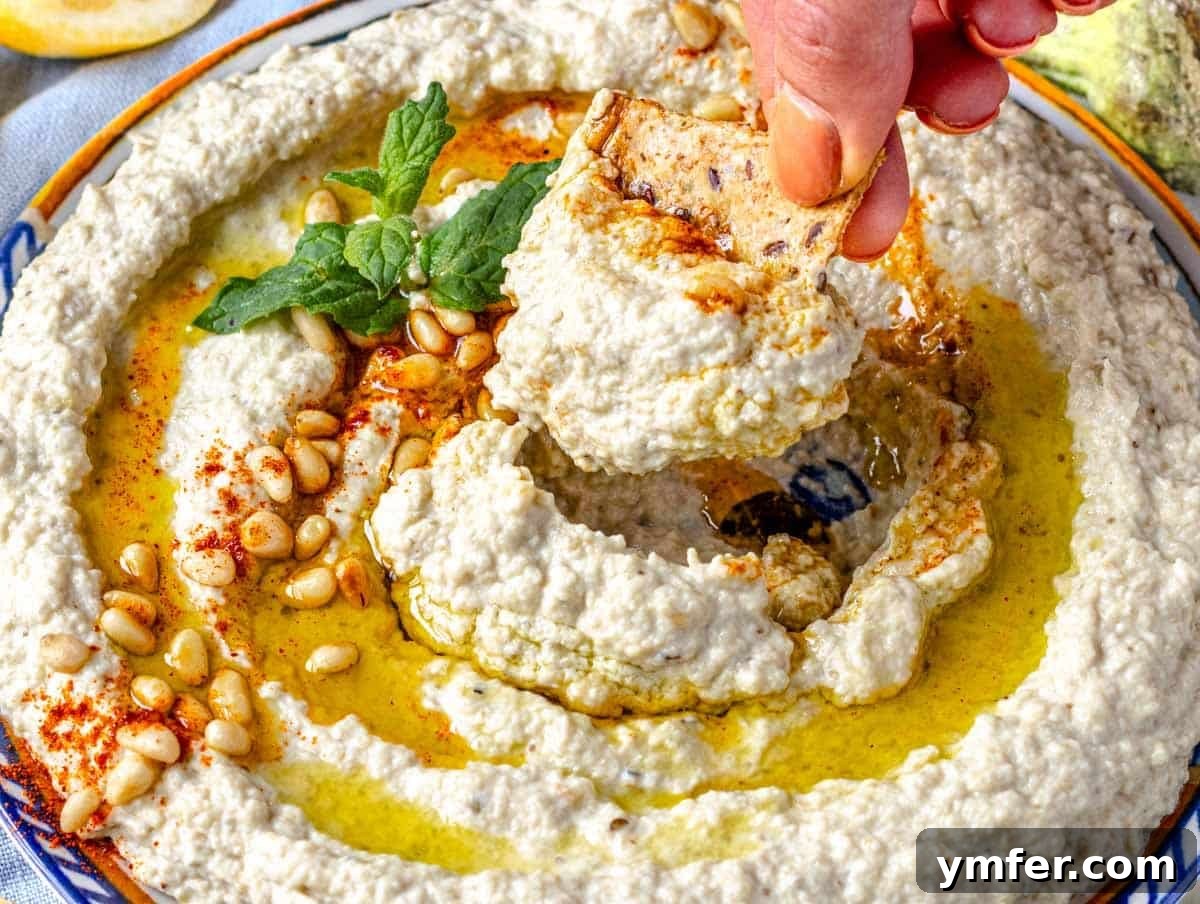
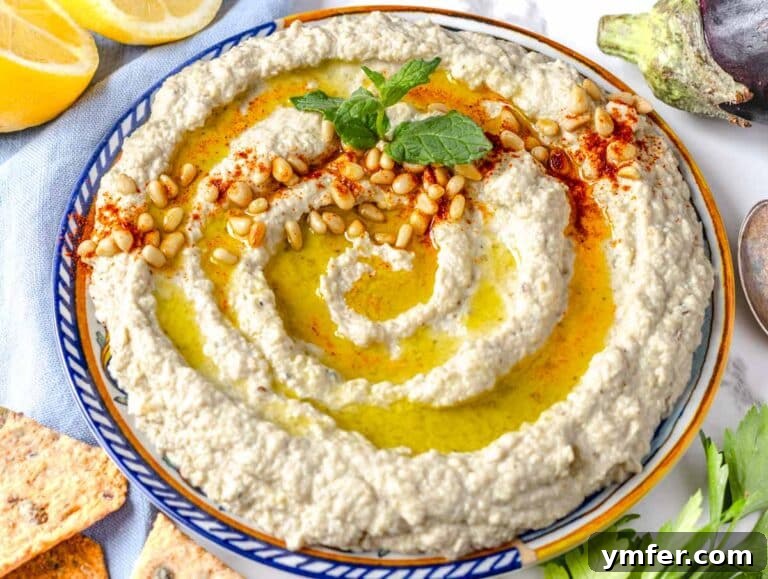
Transfer the creamy Mutabal to a shallow serving bowl. Use the back of a spoon to create a swirling pattern on the surface; this not only looks appealing but also creates small reservoirs for the olive oil. Drizzle generously with a final touch of extra virgin olive oil, allowing it to pool in the indentations.
Finally, garnish your masterpiece. Optionally, sprinkle with toasted pine nuts or vibrant pomegranate seeds, a scattering of fresh parsley or mint, and a pinch of sumac or smoked paprika for an added visual and flavor flourish. Serve immediately at room temperature for the best flavor experience.
How Do You Serve Mutabal? Embracing the Mezze Tradition
Mutabal’s versatility makes it a fantastic addition to almost any meal. It can be served simply as a delightful appetizer or transformed into a more substantial offering as part of a main course spread. The simplest way to enjoy it is with crisp veggie sticks, hearty crackers, or, most authentically, with warm, fluffy pita bread, perfect for scooping.
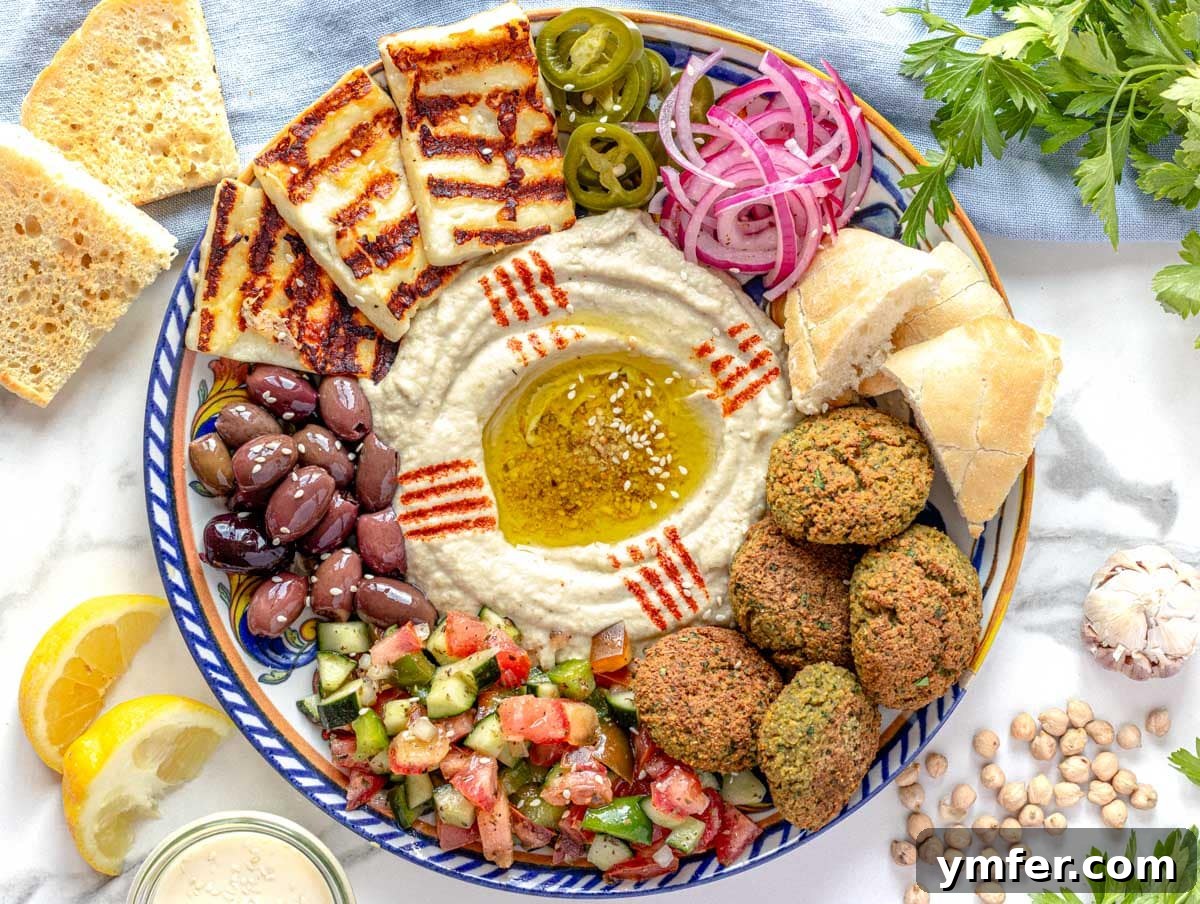
However, to truly appreciate Mutabal in its element, serve it as part of a traditional Middle Eastern mezze platter. Mezze is an array of small dishes served as appetizers, designed for sharing and convivial dining. This dish pairs exceptionally well with other Middle Eastern dips and spreads, creating a rich tapestry of flavors and textures that excite the palate. Consider these classic companions:
- Hummus: The quintessential chickpea and tahini dip, offering a creamy, savory contrast.
- Sumac Onions: Tangy, slightly sweet, and vibrant red onions marinated in sumac, adding a sharp, zesty bite.
- Falafel: Crispy, deep-fried chickpea patties, providing a satisfying crunch and hearty protein.
- Cucumber Tomato Salad (Salatit Bandora): A fresh, bright salad with finely diced cucumbers and tomatoes, often dressed with lemon and mint, offering a cooling counterpoint.
- Lentil Tabbouleh: A heartier version of the classic parsley and bulgur salad, packed with fresh herbs and a delightful chew.
- Olives: A selection of briny, marinated olives for a salty kick.
- Feta or Grilled Halloumi: Crumbly feta cheese or salty, grilled halloumi cheese can add a dairy element for those who consume it.
Arranging these items on a large platter creates an inviting feast for the senses, perfect for gatherings, celebrations, or a relaxed weekend meal. The vibrant colors, diverse textures, and enticing aromas of a mezze spread, with Mutabal at its heart, promise a memorable dining experience.
Storage and Meal Prep Tips for Mutabal
Mutabal is an excellent dish for meal preparation, as its flavors often deepen and meld beautifully after a day or two in the refrigerator. This makes it perfect for making ahead of time for parties or simply to have on hand for healthy snacks throughout the week.
- Make Ahead: Mutabal is incredibly forgiving and actually tastes even better the next day! Prepare it 24-48 hours in advance to allow the flavors to fully develop and meld.
- Refrigerator: Store any leftover Mutabal in an airtight container in the fridge for up to 4 days. Before serving, remove it from the refrigerator at least 15-30 minutes beforehand. Mutabal is best enjoyed at room temperature, as this allows its complex flavors and creamy texture to truly shine.
- Freezer: Yes, you can freeze Mutabal! Transfer the dip to a freezer-safe airtight container, leaving a little headspace, and freeze for up to 3 months. To thaw, slowly move it to the refrigerator over several hours or overnight. Once thawed, give it a good stir, and you might need to add a fresh drizzle of olive oil, a squeeze of lemon juice, or a dash of salt to refresh its consistency and flavor.
Frequently Asked Questions About Mutabal
While both Mutabal and baba ganoush are popular roasted eggplant dips originating from the Eastern Mediterranean and Levantine regions (like Lebanon, Palestine, and Syria), the primary distinction lies in their ingredients and resulting flavor profiles. Both are made with smoky charred eggplant, tahini, lemon juice, and garlic. However, Mutabal traditionally and most commonly includes creamy yogurt, which lends it a smoother, tangier, and often lighter texture. Baba ganoush, on the other hand, typically omits yogurt, focusing more on the pure smoky eggplant and tahini flavor, sometimes incorporating chopped vegetables like tomatoes or onions directly into the dip for texture. The inclusion of yogurt in Mutabal creates a distinct culinary experience that sets it apart.
Yes, Mutabal is generally considered a very healthy dip! It’s rich in nutrients from eggplant, which is a good source of fiber, vitamins (like B6 and C), and minerals (like potassium and manganese). Tahini provides healthy fats, protein, and calcium. Yogurt adds probiotics for gut health and additional protein. When prepared with fresh ingredients and olive oil, it’s a wholesome option for an appetizer or snack, especially when paired with fresh vegetables.
Absolutely! To make Mutabal vegan, simply substitute traditional dairy yogurt with an unsweetened non-dairy yogurt. Options like almond-based, soy-based, or coconut-based yogurts that have a thick, Greek-style consistency work best to maintain the dip’s creamy texture and tangy flavor profile. All other ingredients (eggplant, tahini, lemon, garlic, olive oil, spices) are naturally vegan.
More Eggplant Recipes to Explore
If you’ve fallen in love with the versatility and rich flavor of eggplant through this Mutabal recipe, there’s a world of culinary possibilities waiting for you. Eggplant is a star ingredient in many cuisines, offering a diverse range of textures and tastes depending on how it’s prepared. Expand your eggplant repertoire with these delicious ideas:
- Try our simple yet flavorful Stuffed Eggplant for a comforting main dish.
- Discover the ease and deliciousness of Roasted Eggplant, perfect as a side or a base for other meals.
- Whip up a quick and tasty Sautéed Eggplant, ideal for a weeknight dinner.
- Dive into the aromatic spices of our Eggplant Curry, a warming and satisfying meal.
For even more culinary inspiration, be sure to check out our comprehensive compilation of 25+ Eggplant Recipes, where you’ll find everything from light salads to hearty stews, all featuring this incredible vegetable.
Sides
Roasted Eggplant
Mains
Stuffed Eggplant
Sides
Sautéed Eggplant
Mains
Eggplant Curry
Mutabal: Creamy Middle Eastern Eggplant Dip
Mutabal is a creamy Middle Eastern eggplant dip with a velvety texture and a smokey flavor.
The flesh of roasted eggplant is mixed with tahini, yogurt, garlic, and lemon juice, creating a perfect blend of creamy, nutty, and tangy flavors.
Print Recipe
Share on Facebook
Equipment
- Food processor
Ingredients
Measurements are provided in USA (cups) and Metric (grams) systems.
- 2 eggplants (globe or Italian variety)
- ¼ cup tahini (high-quality, light-colored)
- ¼ cup Greek yogurt (or plain, fat-free, or unsweetened non-dairy yogurt)
- 2 tablespoons lemon juice (freshly squeezed)
- 1 tablespoon extra virgin olive oil
- 1 clove garlic (fresh)
- ¾ teaspoons salt or more to taste
GARNISH WITH (Optional)
- 1 tablespoon flat-leaf parsley, chopped (or fresh mint)
- ½ teaspoon smoked paprika (or sumac)
- 2 tablespoons pine nuts, lightly toasted on a pan, or pomegranate seeds
Instructions
-
Cook the Eggplant (Choose your preferred method):
Method 1 (Traditional Charring): Pierce whole eggplants with a fork. Char them directly on an open gas stovetop flame or barbecue grill, turning often, until the skin is blistered and blackened, and the flesh is very tender. Let cool for 10-15 minutes, then scrape away the charred peel to reveal the smoky flesh.
Method 2 (Oven/Air Fryer): Preheat oven or air fryer to 400°F (200°C). Cut eggplants in half lengthwise, score the flesh, season with olive oil and salt. Bake in the oven for about 30-40 minutes or air fry for about 20-25 minutes, until very tender. Let cool slightly, then scoop out the flesh.
-
Puree the Ingredients: To a food processor, add the cooked eggplant flesh, ¼ cup tahini, ¼ cup Greek yogurt, 2 tablespoons lemon juice, 1 tablespoon extra virgin olive oil, 1 clove garlic, and ¾ teaspoons salt. Pulse a few times until creamy. Taste and adjust for salt and lemon juice as needed.
-
Plate and Garnish: Transfer the Mutabal to a serving bowl. Spread it with a spoon and drizzle generously with extra virgin olive oil. Optionally, garnish with 2 tablespoons pine nuts (or pomegranate seeds), 1 tablespoon flat-leaf parsley (or mint), and a ½ teaspoon smoked paprika (or sumac). Serve at room temperature.
Notes
Nutrition information is an estimate for 1 serving of mutabal out of 4 servings.
TIP FOR AUTHENTIC SMOKY FLAVOR
For a more intense and authentic smoky flavor, you can cook one or all eggplants on the open flame of your gas stovetop or grill.
To do this, pierce the eggplant with a fork then char it on the open flame of your gas stove top or on a grill.
Turn it often and cook until its skin blisters and the flesh is tender.
Let cool for 10 minutes, then scrape the peel away with a paring knife until you are left with the flesh.
Add the flesh to food processor with the other roasted eggplant.
SUBSTITUTIONS
Fat-free Greek yogurt: substitute full-fat Greek yogurt, plain yogurt, or unsweetened non-dairy yogurt.
Extra virgin olive oil: substitute regular olive oil.
Parsley: substitute fresh mint.
Pine nuts: they are optional. Substitute pomegranate seeds, dukkah, or za’atar.
STORAGE
Make ahead: Mutabal is excellent for meal prep because it keeps well for days.
Refrigerator: Store leftovers in an airtight container in the fridge for up to 4 days. Take it out of the refrigerator at least 15 minutes before serving, as its best consumed at room temperature.
Freezer: You can freeze mutabal for up to 3 months. Thaw slowly in the refrigerator over several hours.
Nutrition
Calories: 222 kcal, Carbohydrates: 19g, Protein: 7g, Fat: 15g, Saturated Fat: 2g, Polyunsaturated Fat: 6g, Monounsaturated Fat: 7g, Trans Fat: 0g, Cholesterol: 1mg, Sodium: 451mg, Potassium: 663mg, Dietary Fiber: 8g, Sugar: 9g, Vitamin A: 273IU, Vitamin B6: 0.2mg, Vitamin C: 10mg, Vitamin E: 2mg, Vitamin K: 29µg, Calcium: 61mg, Folate: 71µg, Iron: 2mg, Manganese: 1mg, Magnesium: 62mg, Zinc: 1mg
Tried this recipe? Leave a comment below or mention @theplantbasedschool on Instagram. We love hearing from you ⭐️ 💚.
If you liked this eggplant mutabal, you might also enjoy the following:
Mains
40 High Protein Vegetarian Meals
Collections
30 Eggplant Recipes
Collections
30 Middle-Eastern Recipes
Collections