
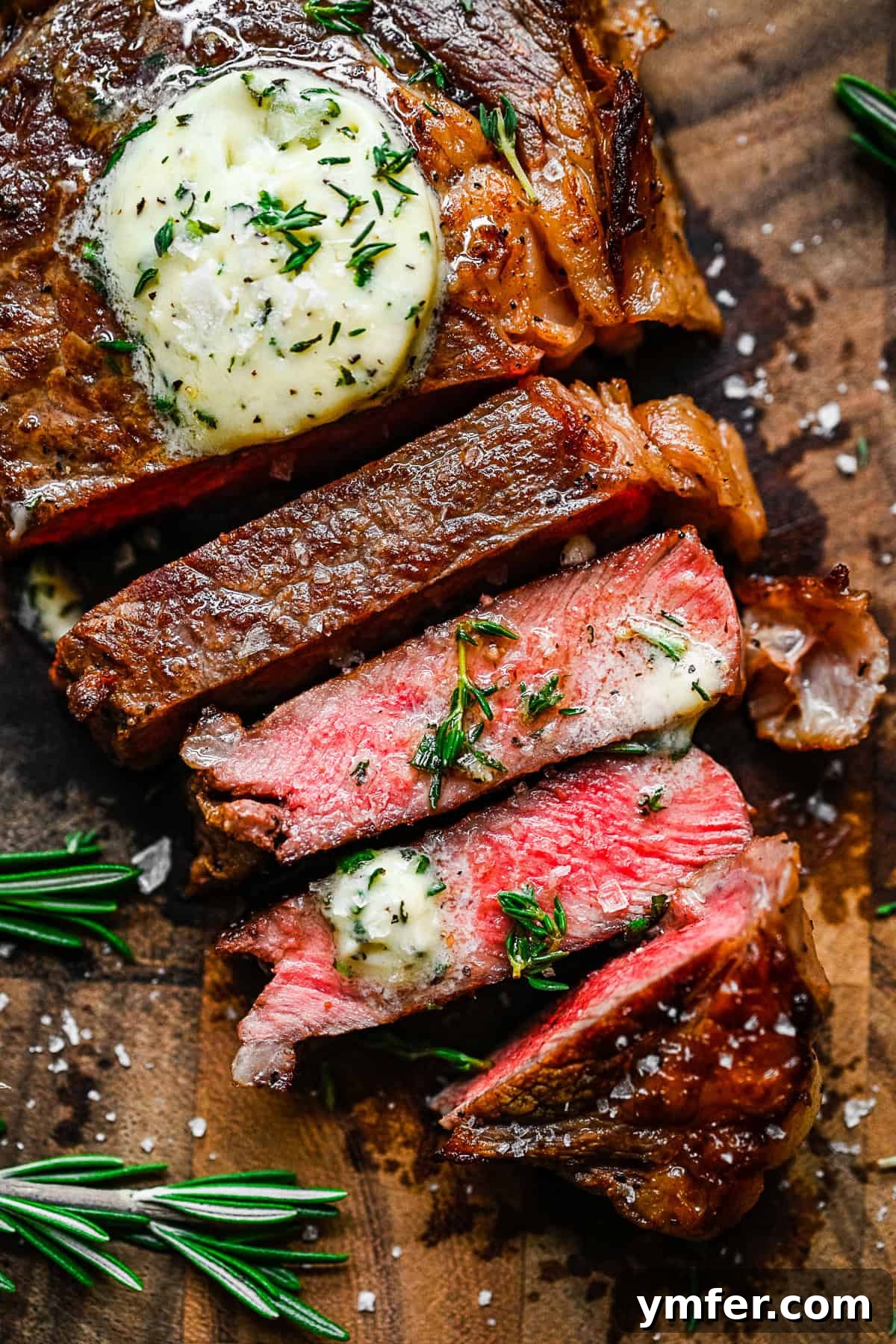
Welcome to the definitive guide for achieving a truly exceptional pan-fried ribeye steak. Forget the expensive steakhouses – with this detailed recipe, you’ll master the art of cooking a perfectly crusted, incredibly juicy, and flavor-packed ribeye right in your own kitchen. This isn’t just about cooking steak; it’s about crafting an unforgettable culinary experience, where a crispy, savory exterior gives way to a tender, succulent interior, all enhanced by the rich aromatics of a compound butter pan sauce. Prepare to elevate your home cooking and impress even the most discerning meat lovers.
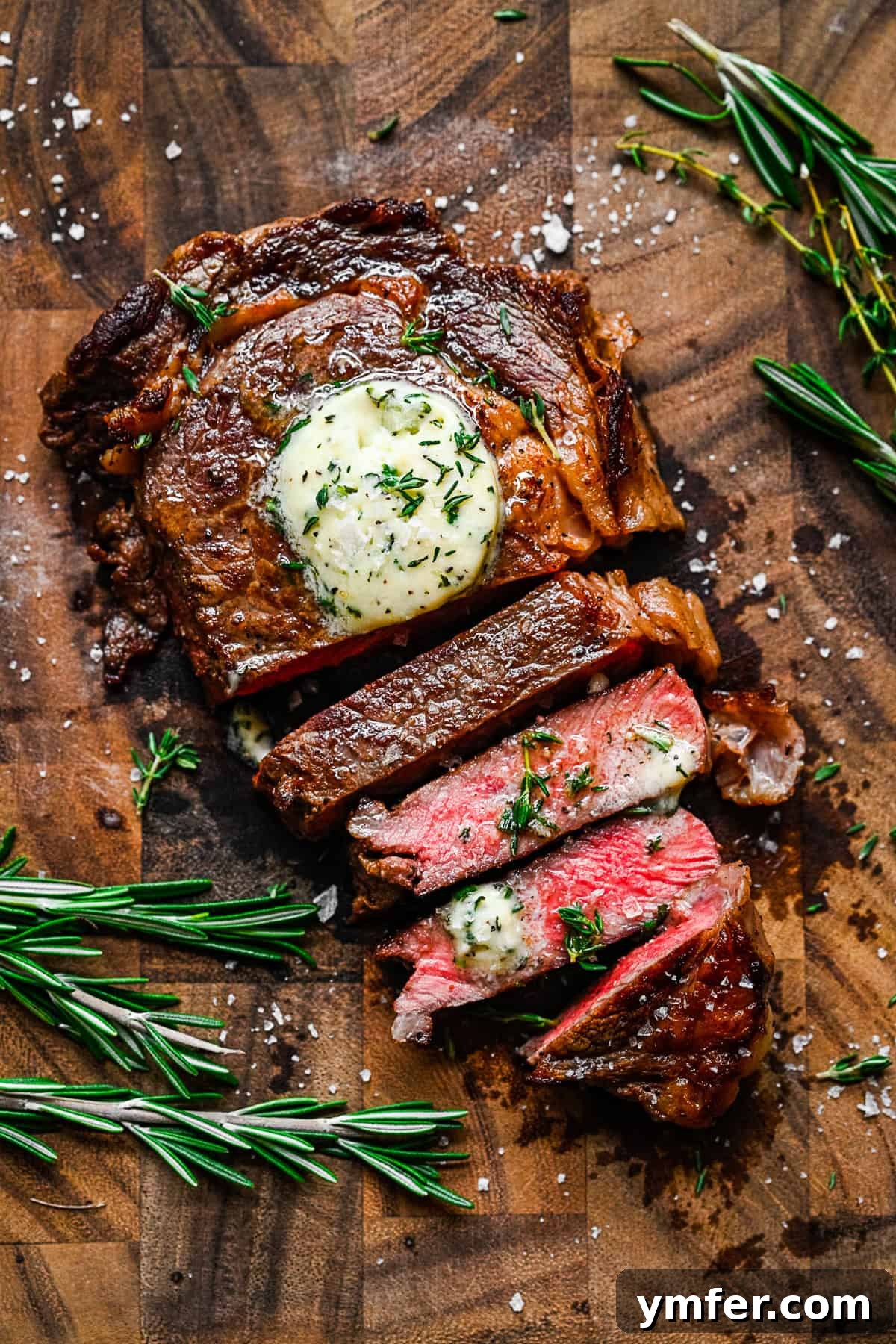
The secret to a truly outstanding steak lies not just in the quality of the meat, but in the precision of the cooking method. For this pan-fried ribeye, we champion the use of a hot, sizzling cast iron skillet – a time-tested tool that delivers an unparalleled sear. We keep seasonings simple with just kosher salt and freshly ground black pepper, allowing the natural, robust flavor of the ribeye to take center stage. To add an extra layer of gourmet richness, we introduce a fragrant garlic herb compound butter towards the end of the cooking process. This not only infuses the steak with incredible flavor but also creates a luscious pan sauce from the drippings, turning a simple meal into a luxurious feast.
Whether you’re planning a romantic dinner for two, a special holiday gathering, or simply want to treat yourself to a gourmet meal any night of the week, a perfectly pan-fried ribeye is an ideal choice. It’s a versatile dish that pairs beautifully with a wide array of sides, making it adaptable to any occasion. Once you master this straightforward recipe, you’ll discover that achieving steakhouse-quality results at home is not only easy but incredibly rewarding.
Choosing the Perfect Ribeye Steak
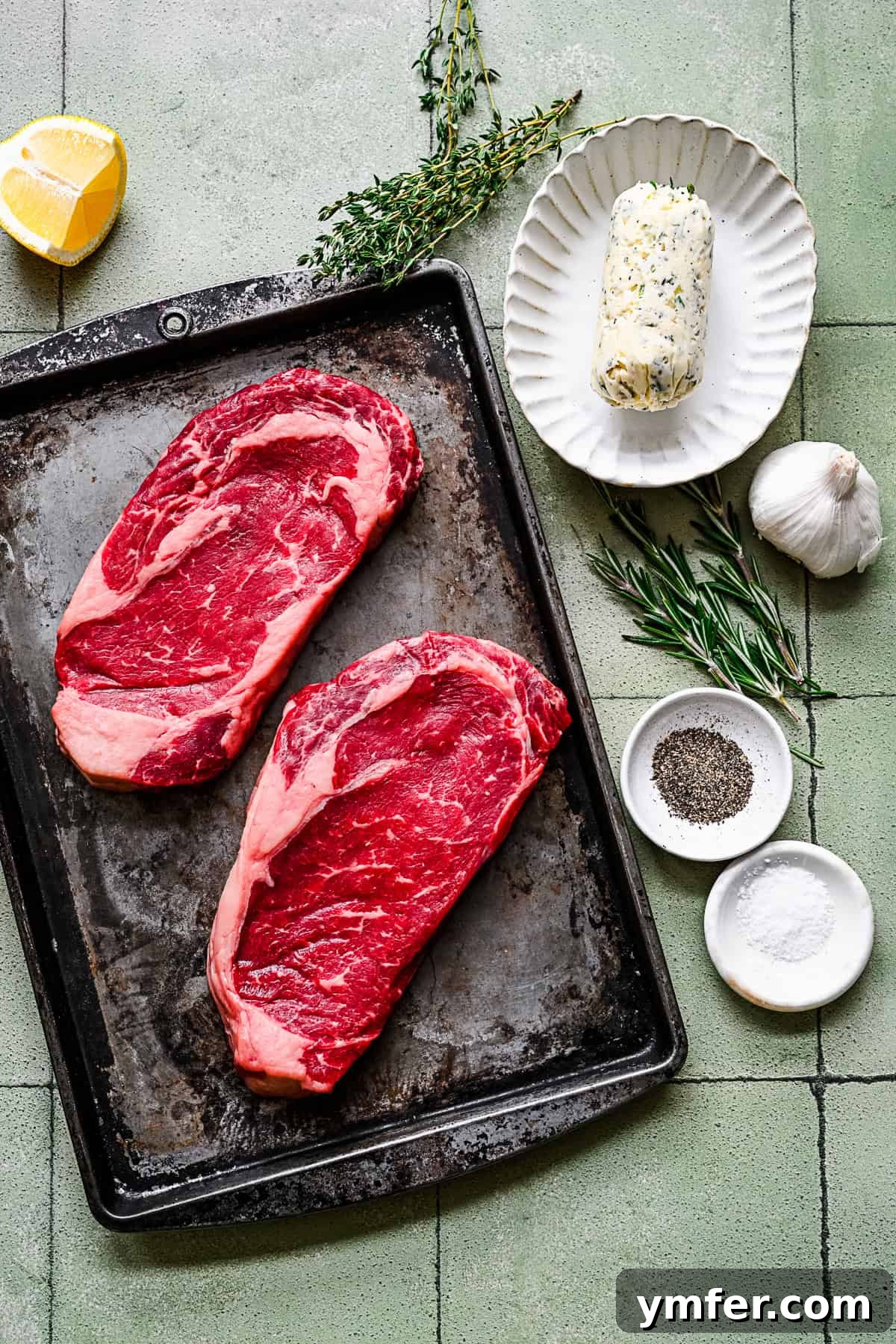
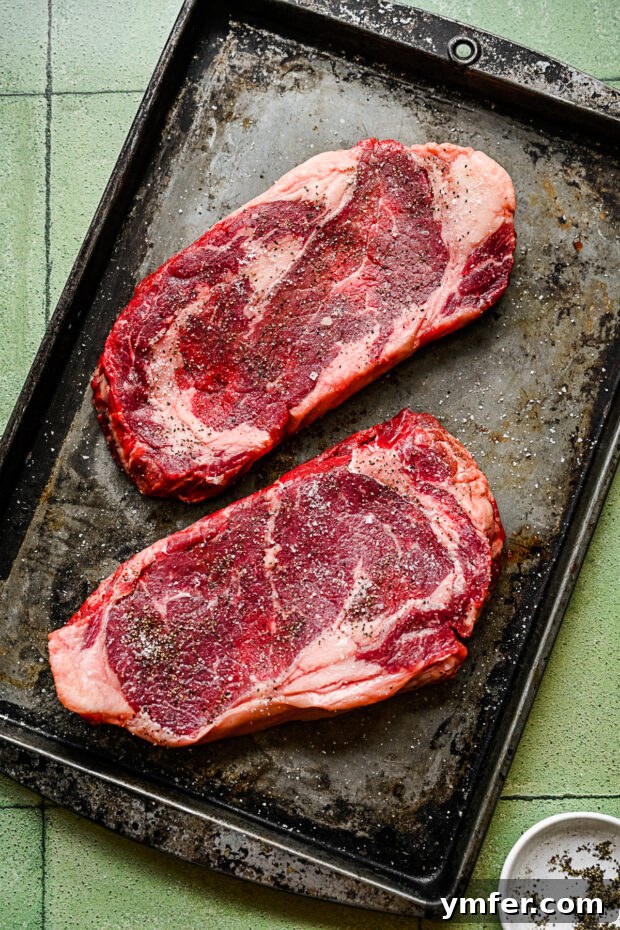
Selecting the right cut is the first step to a magnificent pan-fried ribeye. Ribeye steaks are celebrated for their rich flavor and tender texture, primarily due to their excellent marbling – the intramuscular fat that melts during cooking, basting the meat from within. When choosing a ribeye, look for steaks that are 1.25 to 1.5 inches thick. This thickness is crucial for achieving a deep, crusty sear on the exterior while allowing the interior to cook evenly to your desired doneness, preventing it from overcooking too quickly.
Observe the marbling carefully; evenly distributed streaks of white fat throughout the red muscle indicate a higher quality steak that will be more flavorful and tender. The color of the meat should be a vibrant red, and the fat should be creamy white. While prime grades offer the most marbling, a good choice grade ribeye will still yield fantastic results. Don’t be afraid to ask your butcher for recommendations – they can often guide you to the best cuts available.
Essential Ingredients for Your Pan-Fried Ribeye
Crafting the perfect pan-fried ribeye requires a handful of high-quality ingredients. Each component plays a vital role in building the incredible flavors and textures that make this dish truly special.
- 2 (12-ounce) Ribeye Steaks: As discussed, the ribeye’s marbling makes it incredibly juicy and tender, ideal for pan-frying. Aim for a thickness of 1.25 to 1.5 inches for optimal searing and internal cooking.
- Kosher Salt and Freshly Ground Black Pepper: These are your primary seasonings. The coarse grains of kosher salt help to create that coveted crust, while black pepper adds a pungent, aromatic kick that complements the rich beef flavor. Don’t be shy with your seasoning – a generous coating is key for flavor penetration and crust development.
- Compound Butter: Our homemade garlic herb compound butter (featuring fresh garlic, rosemary, and thyme) is a game-changer. It melts into the hot pan, infusing the steak with incredible herbaceous notes and creating a rich, savory pan sauce from the drippings. This butter also helps to keep the steak moist and adds a beautiful sheen as you baste. If you don’t have homemade, a good quality plain salted butter can work, but consider adding fresh herbs to the pan for extra flavor.
- Avocado Oil: This oil is chosen for its remarkably high smoke point, allowing your cast iron skillet to reach the intense temperatures required for a proper sear without burning the oil itself. Using an oil with a high smoke point is critical to achieving that beautiful, dark crust on your steak.
| Product Image | Product Name | Primary Button |
|---|---|---|
|
Cast Iron Skillet
|
|
|
|
Avocado Oil
|
|
|
|
Sea Salt Flakes
|
|
|
Mastering the Pan-Frying Technique: Step-by-Step Guide
Cooking a restaurant-quality ribeye at home is simpler than you might think. Follow these steps to achieve a perfectly seared steak every time.
- Prepare Your Skillet: Begin by placing a 12-inch cast iron skillet over medium-high heat. Add your avocado oil to the pan. Allow the skillet to heat thoroughly until the oil just begins to smoke lightly. This indicates the pan has reached the optimal temperature of around 450 degrees F for a proper sear. High heat is essential for the Maillard reaction, which creates that desirable brown, flavorful crust.
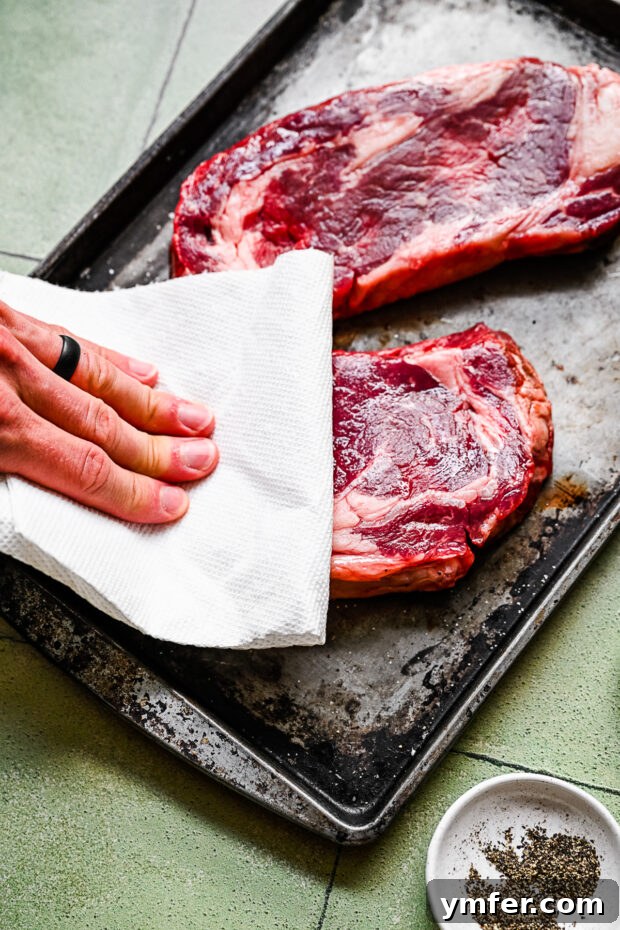
- Prepare Your Steaks: Pat your ribeyes thoroughly dry on both sides with paper towels. Removing excess moisture is a critical step, as moisture inhibits searing and can steam the meat instead of browning it. Once dry, season generously with kosher salt and freshly ground black pepper on all surfaces, including the edges. Allow the steaks to sit at room temperature for 20-30 minutes before cooking; this helps them cook more evenly.
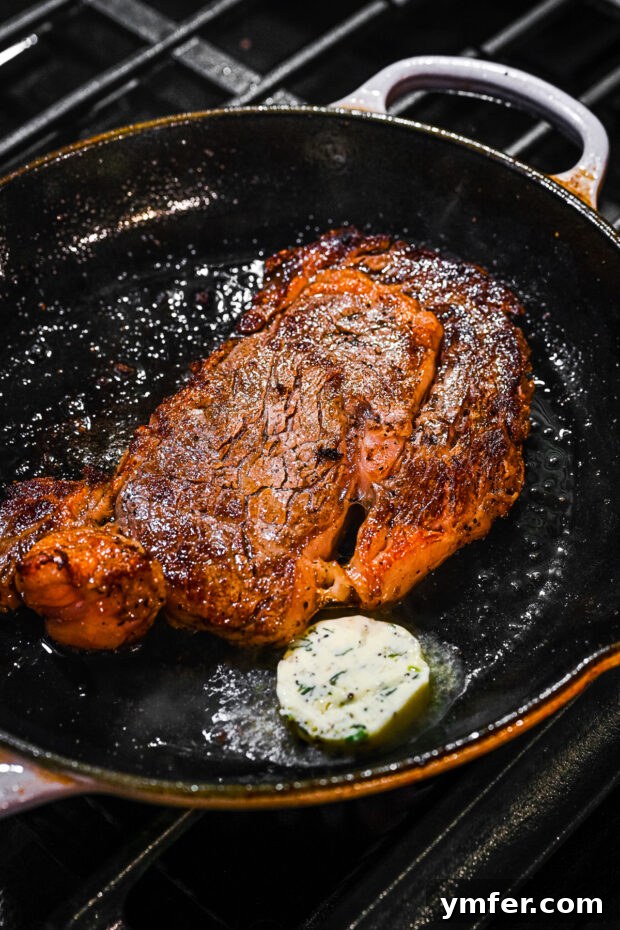
- Sear the Steaks: Carefully place the seasoned ribeye into the hot, smoking cast iron skillet. You should hear an immediate, satisfying sizzle. To develop an even, deep crust, flip the steak every 30 seconds for a total of 5 minutes. This frequent flipping technique ensures both sides are exposed to the intense heat, building a robust crust without overcooking the interior too quickly.
- Baste with Compound Butter: With about one minute left in the total cooking time (around the 4-minute mark), add your compound butter to the pan. As the butter melts, it will mix with the pan drippings, creating an aromatic sauce. Tilt the pan slightly and use a spoon to continuously baste the melting butter and pan sauce over the steak. This step not only adds incredible flavor but also helps to keep the steak moist and tender. For extra aroma, you can add a sprig of fresh rosemary or thyme, and a smashed garlic clove to the pan with the butter.
- Rest the Steaks: Once the steaks have cooked to your desired doneness (see our guide below), remove them from the skillet and place them on a cutting board. Tent them loosely with aluminum foil and let them rest for at least 10 minutes. Resting is crucial; it allows the juices, which have been driven to the center by the heat, to redistribute evenly throughout the meat, resulting in a juicier, more tender steak. Skipping this step will cause the juices to run out onto the cutting board when sliced.
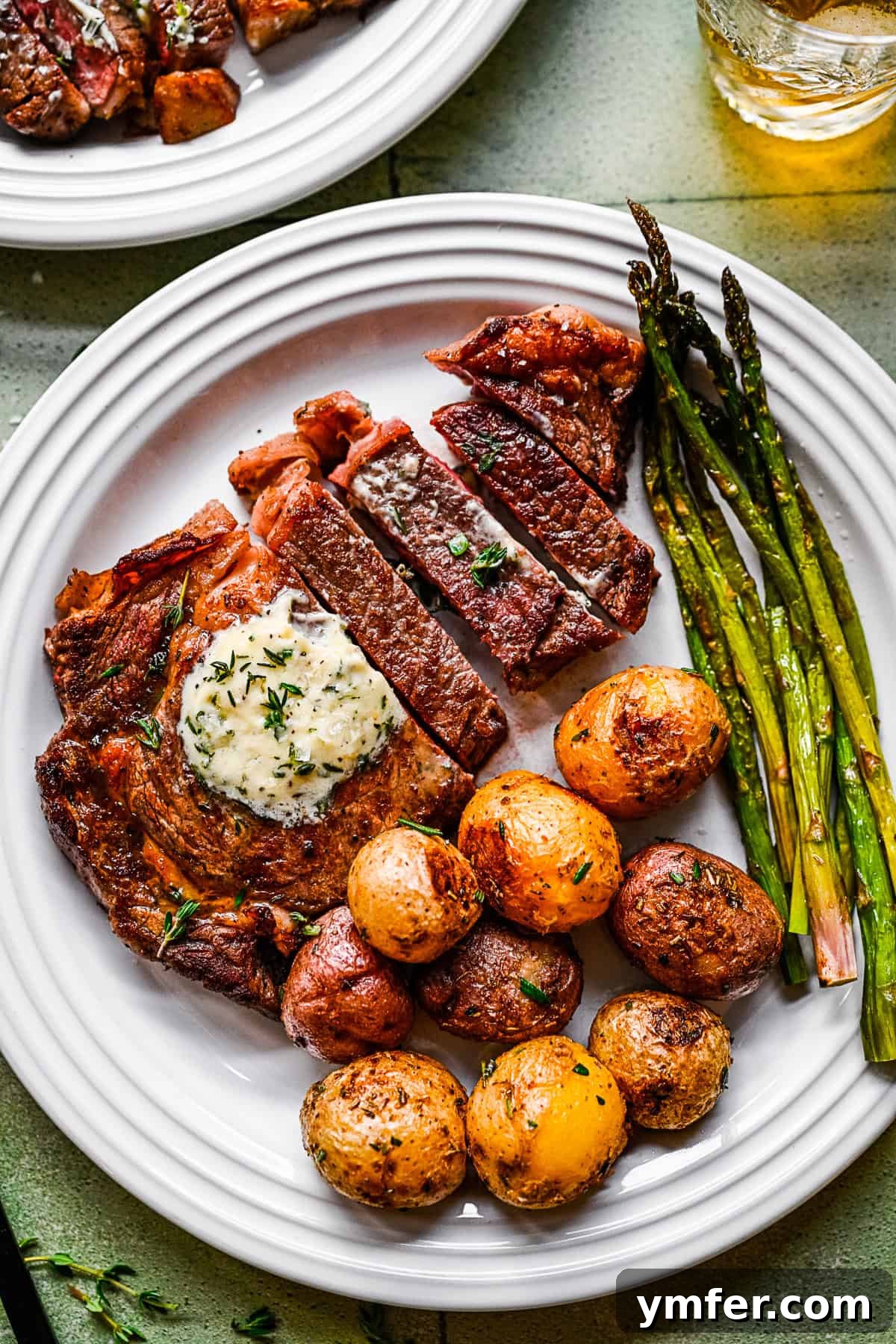
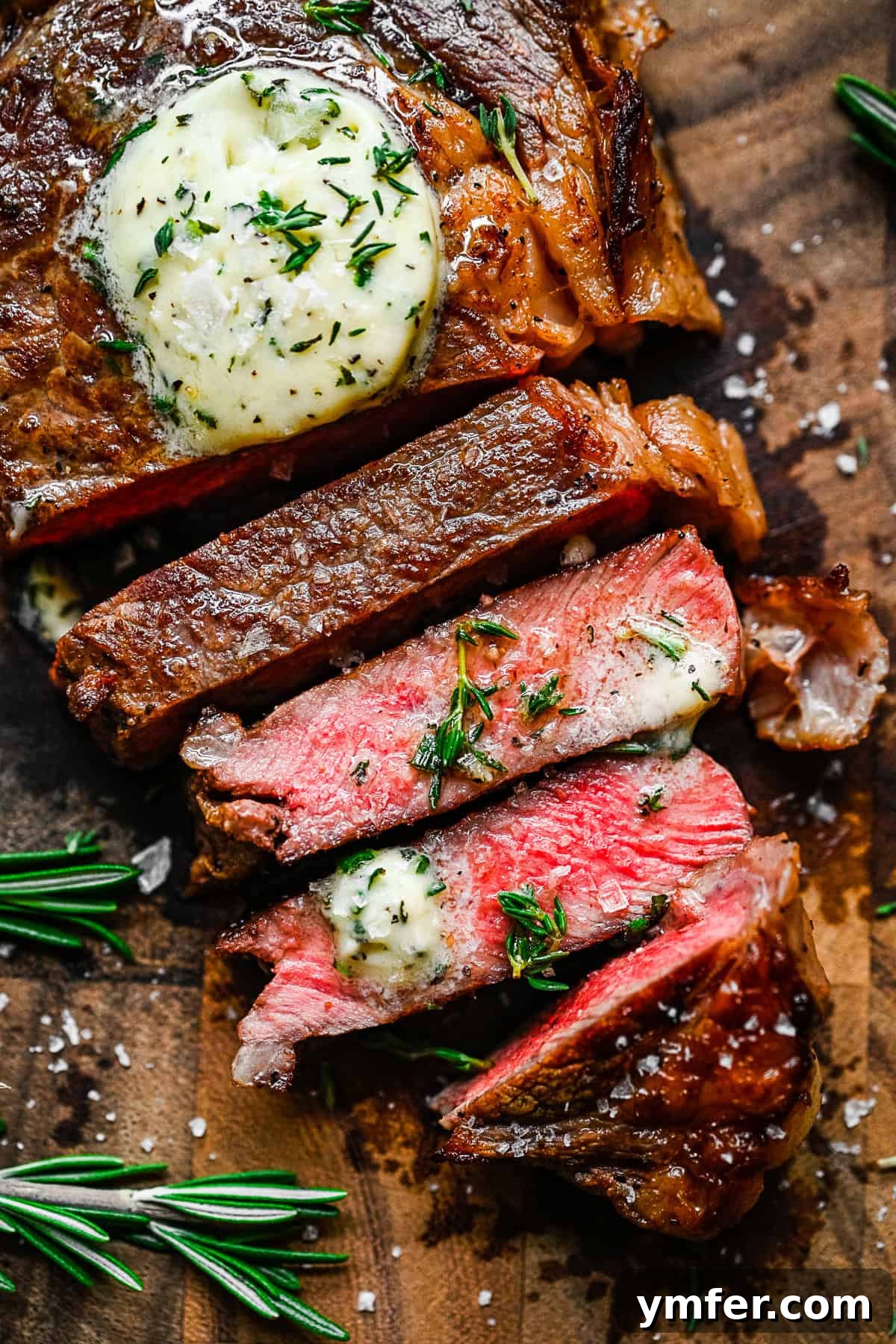
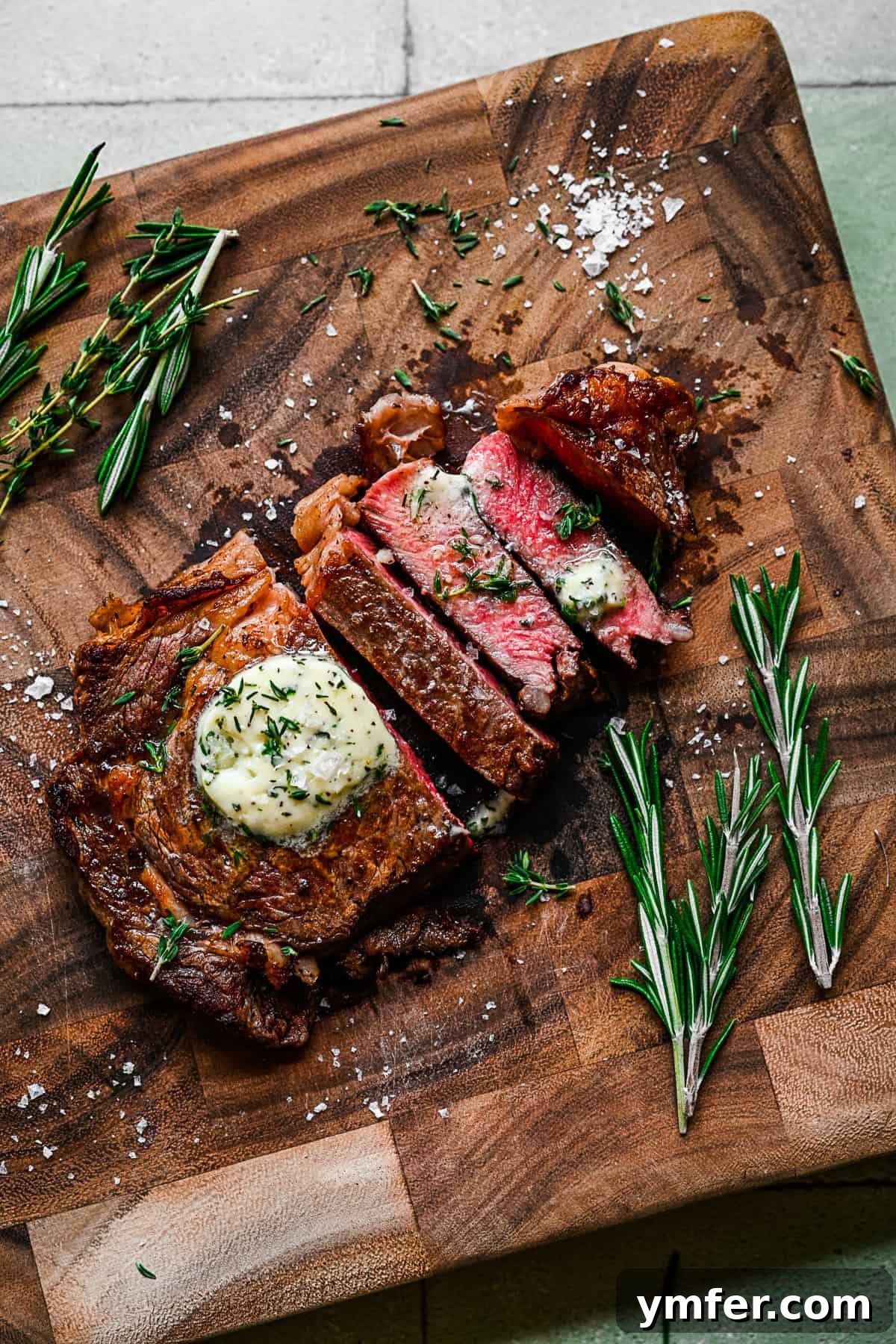
- Slice and Serve: After resting, slice the ribeye against the grain into desired portions. Serve immediately, perhaps with an extra dollop of compound butter melting on top, and enjoy the fruits of your culinary efforts!
Achieving the Perfect Doneness for Your Ribeye
The key to a truly enjoyable steak is cooking it to your preferred level of doneness. The best way to ensure accuracy is by using an instant-read meat thermometer inserted into the thickest part of the steak, avoiding any bones. Remember that steaks will continue to cook slightly after being removed from the heat (this is called carryover cooking), so pull them off a few degrees before your target temperature.
- Rare: 120-125°F (49-52°C) – Cool red center.
- Medium-Rare: 130-135°F (54-57°C) – Warm red center. This is often recommended for ribeye to appreciate its marbling.
- Medium: 135-140°F (57-60°C) – Warm pink center.
- Medium-Well: 145-150°F (63-66°C) – Slightly pink center.
- Well-Done: 150-155°F (66-68°C) and above – Little to no pink.
Why Ribeye Steaks are the Ultimate Choice for Pan Frying
Ribeye steaks hold a special place in the hearts of beef enthusiasts, and for good reason! This cut, sourced from the upper rib area of the cow, is renowned for its rich flavor and exceptional tenderness. Its signature characteristic is the generous marbling – fine streaks of fat interwoven throughout the muscle. This intramuscular fat is what makes the ribeye so juicy and flavorful; as it cooks, the fat renders, basting the meat from within and contributing to an incredibly succulent texture.
The pan-frying method perfectly complements the ribeye’s inherent qualities. The high, direct heat of a cast iron skillet creates a beautiful, caramelized crust, while the melting fat keeps the interior moist and tender. If ribeyes are unavailable, a New York strip steak can serve as a worthy substitute. While it boasts similar marbling and a robust beefy flavor, the NY strip tends to have a slightly firmer texture than the more tender ribeye.
The Importance of High Smoke Point Oils (and Alternatives)
When pan-frying steak, particularly in a screaming hot cast iron skillet, the choice of oil is paramount. We recommend avocado oil due to its exceptionally high smoke point, which is crucial for achieving that coveted deep-brown crust without burning the oil. A high smoke point means the oil can withstand intense heat (around 450 degrees F or higher) before it starts to break down and smoke. If you were to use an oil with a low smoke point, such as extra virgin olive oil, at such high temperatures, it would quickly burn, produce acrid smoke, and impart an unpleasant, bitter flavor to your delicious steak.
Here are several other excellent high smoke point oils that can be used effectively for searing your ribeye, offering flexibility without compromising on results:
- Grapeseed Oil: A neutral-flavored oil with a smoke point around 420°F (215°C).
- Safflower Oil: Offers a very high smoke point, often exceeding 500°F (260°C), and has a mild flavor.
- Sunflower Oil: Similar to safflower, it has a high smoke point (around 450°F / 232°C) and a neutral taste.
- Canola Oil: A widely available and affordable option with a smoke point of about 400°F (204°C).
- Corn Oil: Another common cooking oil, with a smoke point around 450°F (232°C).
- Peanut Oil: Known for its mild, nutty flavor and a smoke point of approximately 450°F (232°C).
- Ghee (Clarified Butter): While butter has a low smoke point, ghee has had its milk solids removed, significantly raising its smoke point to around 485°F (250°C). It imparts a lovely, buttery flavor without burning.
What to Serve with Ribeye Steak
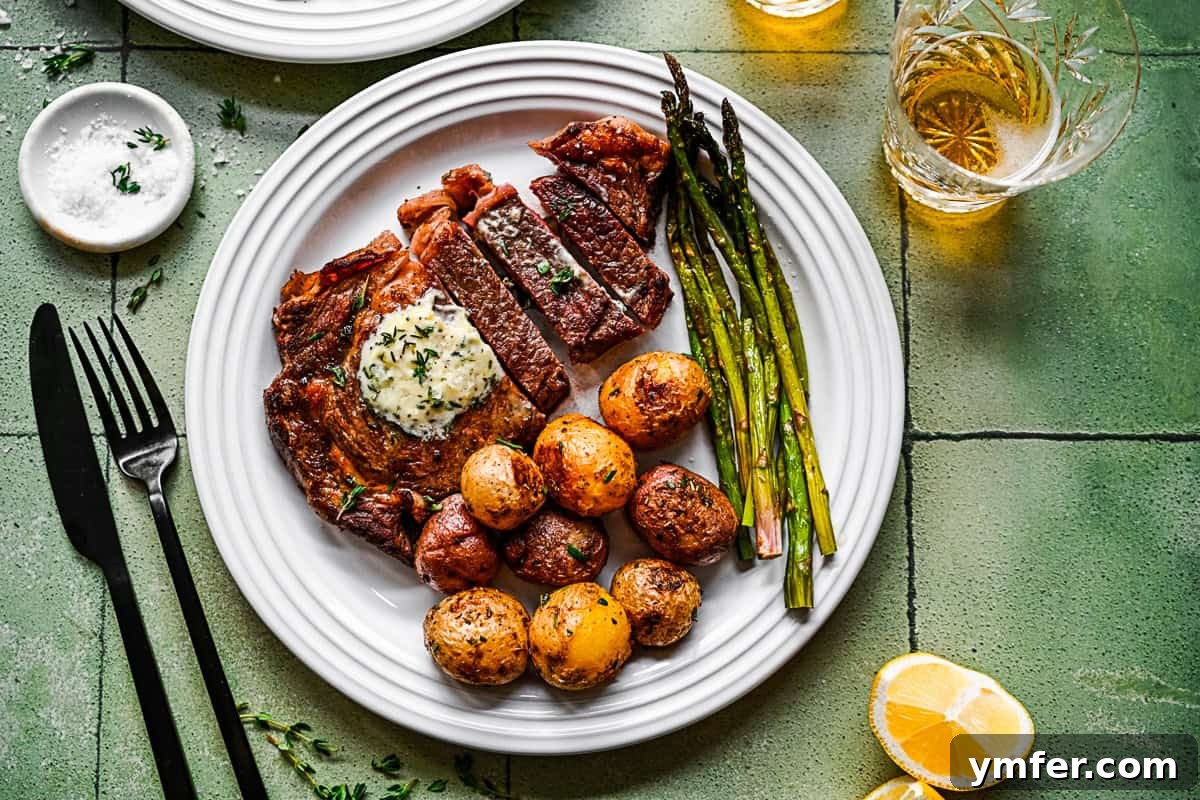
While a perfectly cooked ribeye is certainly capable of standing on its own, pairing it with complementary sides can elevate the meal to new heights. The rich flavor and tender texture of ribeye lend themselves beautifully to a variety of accompaniments. Here are some delicious options to round out your special meal:
- Roasted Asparagus: Simple, elegant, and crisp, roasted asparagus provides a refreshing green counterpoint to the rich steak.
- Air Fryer Roasted Potatoes: Crispy on the outside and fluffy on the inside, these potatoes offer a comforting and satisfying starch.
- Chopped Kale Caesar Salad: A hearty salad with a tangy dressing and crunchy croutons adds a fresh, vibrant element.
- The Best Baked Sweet Potatoes: A touch of natural sweetness and creamy texture offers a delightful contrast.
- On The Stalk Roasted Brussels Sprouts: Earthy, slightly bitter, and caramelized Brussels sprouts provide depth and a lovely texture.
- Creamy Mashed Potatoes: A classic pairing, offering a smooth, luxurious texture that complements the steak.
- Sautéed Mushrooms and Onions: Earthy and savory, these are a traditional steakhouse topping that enhances the beefy flavor.
- Garlic Bread: Perfect for soaking up any leftover pan sauce or juices.
Storage, Reheating, and Enjoying Leftovers
While a fresh, hot-off-the-pan ribeye is hard to beat, any leftover pan-fried ribeye can still be a delicious treat with proper handling. To store, allow the steak to cool completely to room temperature (this prevents condensation and bacterial growth) before placing it in an airtight container. It can be safely stored in the refrigerator for up to 3 days. For best flavor and texture, avoid storing it for longer than this.
When it comes to reheating, the goal is to warm the steak without overcooking it or drying it out. The oven is often the best method: preheat your oven to a low temperature, between 250-300 degrees F (120-150°C). Place the leftover ribeye on a wire rack set over a baking sheet. Heat for 15-25 minutes, or until warmed through, checking the internal temperature with a thermometer to ensure it reaches about 130°F (54°C) for medium-rare, or your preferred doneness. You can also quickly sear it in a hot skillet for 1-2 minutes per side to regain some crust, but be careful not to cook it further. Leftover ribeye is also fantastic sliced thinly and used in steak salads, sandwiches, or even tacos!
More Gourmet Meat Entree Recipes to Explore
If you’ve enjoyed mastering this pan-fried ribeye, you’ll love exploring other impressive meat entrees that are perfect for special occasions or simply to elevate your weeknight meals. Expand your culinary repertoire with these delicious ideas:
- Looking for an impressive main course for a holiday dinner? Try my Garlic Rosemary Roast Leg of Lamb – tender, aromatic, and truly spectacular.
- Enjoy the balance of sweet and savory? My Roast Pork Loin with Dried Fruit Compote offers a delightful fusion of flavors.
- Making good use of your air fryer? My Air Fryer Pork Tenderloin is quick, easy, and incredibly tender.
- Want an easy and delicious roast chicken? Try my Meyer Lemon Mayonnaise Roasted Chicken, featuring a surprisingly simple trick for moist, flavorful results.

Pan Fried Ribeye Steak
Share by Email
Print Recipe
This pan fried ribeye is the ultimate meat lover’s entree, cooked to perfection with a crusty salty exterior, and pan fried in a flavorful compound butter.
Ingredients
- 2 tablespoons avocado oil, or other high smoke point oil
- 2 12 ounce ribeye steaks
- 2 teaspoons kosher salt
- 1 teaspoon black pepper
- 1/4 cup compound butter
Instructions
- Add oil to a 12-inch cast iron skillet and preheat to 450 degrees F. On most stoves, this is medium high heat. The oil should be just barely smoking.
- Pat both sides of the ribeye dry and season with salt and pepper.
- Set a timer for 5 minutes, and move one of the steaks to the pan. Flip repeatedly, every 20-30 seconds, for 5 minutes.
- With one minute left in cooking, add 1 tablespoon of compound or regular butter to the pan and spoon over steak.
- Once the 5 minutes are up, remove from the heat and cover with aluminum foil for 10 minutes to rest before cutting.
- Optional: serve with more compound butter.
Notes
- I’m using my homemade garlic herb compound butter for this recipe, but you can use plain salted butter if you’re not a fan of compound butter.
- A well-seasoned 12-inch cast iron is the best option for this recipe. However, if you do not have a cast iron skillet, you can use any skillet that can handle high heat – 450 degrees F- in its place.
Nutrition
Calories: 128 kcal
Carbohydrates: 1 g
Protein: 0.3 g
Fat: 14 g
Saturated Fat: 2 g
Polyunsaturated Fat: 2 g
Monounsaturated Fat: 10 g
Cholesterol: 1 mg
Sodium: 2326 mg
Potassium: 16 mg
Fiber: 0.3 g
Sugar: 0.01 g
Vitamin A: 6 IU
Calcium: 6 mg
Iron: 0.1 mg
Nutrition information is automatically calculated, so should only be used as an approximation.
Additional Info
Tried this recipe?
Mention @NutmegNanny or tag #nutmegnanny!
Lemon Herb Butter Pan Fried Ribeye
Share by Email
Print Recipe
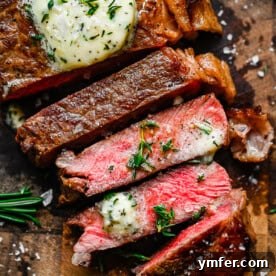
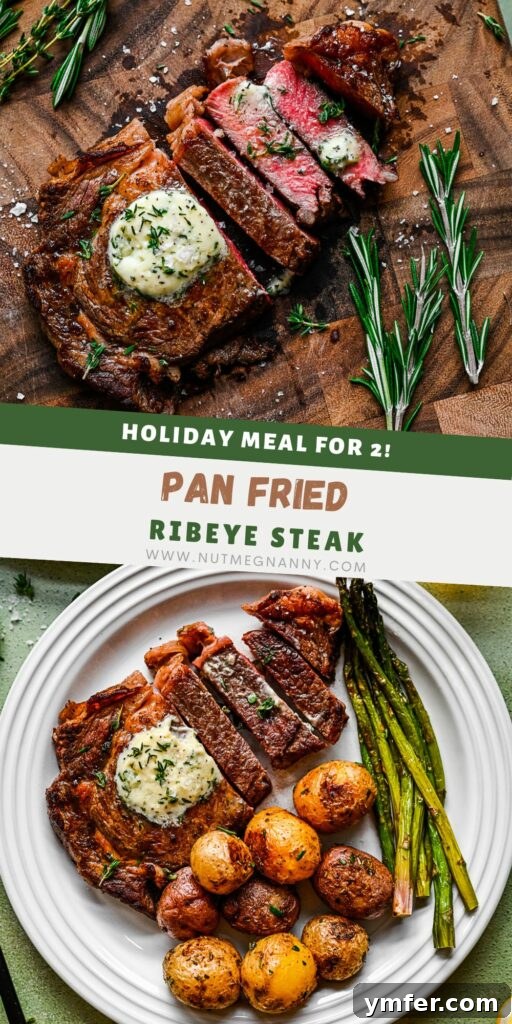
This lemon herb butter pan fried ribeye is the perfect balance of spice to citrus to red meat ratio. Perfectly cooked and it doesn’t even require a grill.
Ingredients
For lemon herb butter:
- 8 tablespoons unsalted butter, room temperature
- 1 lemon, zested
- 1 teaspoon thyme leaves
- 1 teaspoon minced rosemary
- Kosher salt and pepper, to taste
For steaks:
- 2 1-1/2 inch thick ribeye steaks
- 1 tablespoon kosher salt
- 1 tablespoon fresh cracked pepper
- 2 tablespoons butter
- 1 tablespoon vegetable oil
Instructions
For lemon herb butter:
- Mix all ingredients together, and set aside until ready to use.
For steaks:
- Evenly coat your steaks with kosher salt and black pepper, set aside.
- In a large heavy-duty skillet set over medium-high heat add butter and vegetable oil. When the butter is melted and the mixture is hot add the 2 steaks to the pan. You should hear a very nice sizzling noise.
- Cook for about 4 minutes, flip and cook for another 4-5 minutes until medium rare. The cook time can depend on how rare or well done you like your meat.
- Let it rest for at least 5 minutes, top with a pat of herb lemon butter and devour.
Tried this recipe?
Mention @NutmegNanny or tag #nutmegnanny!