
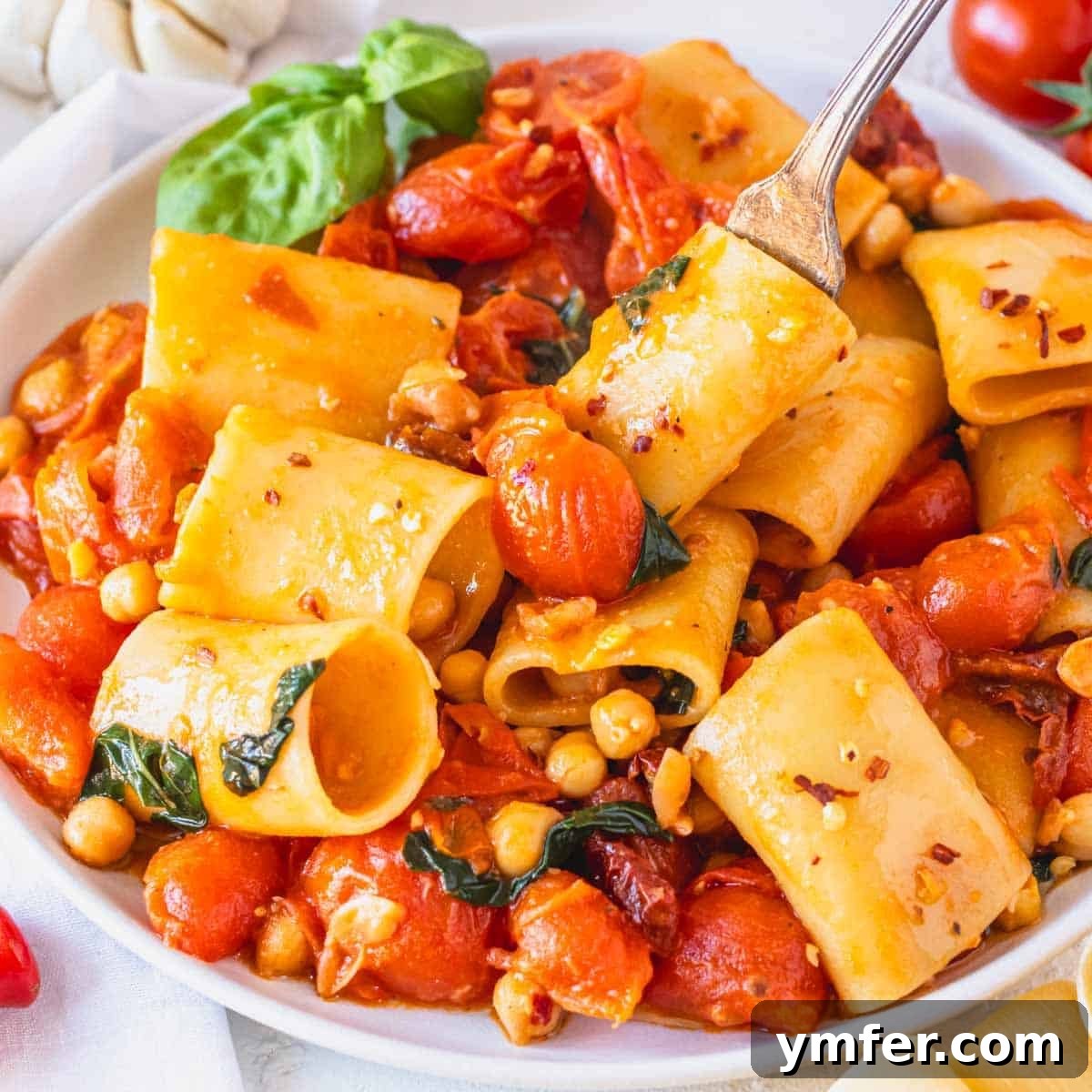
Dive into the world of Italian culinary delight with Paccheri pasta, a truly satisfying, beautifully chewy, and fulfilling pasta type that elevates any meal. Originating from the heart of Neapolitan tradition, Paccheri is renowned for its generous, tube-like shape and incredible ability to capture and hold rich sauces within its hollow center.
In this comprehensive guide, we’ll walk you through preparing an exquisite Paccheri dish featuring a quick, vibrant, and utterly tasty cherry tomato sauce. To boost its nutritional value and make it a complete meal, we enrich this sauce with wholesome chickpeas, adding a delightful texture and a significant protein punch. Get ready to experience Paccheri’s irresistible al dente texture, a quality unrivaled by most other dry pasta shapes.
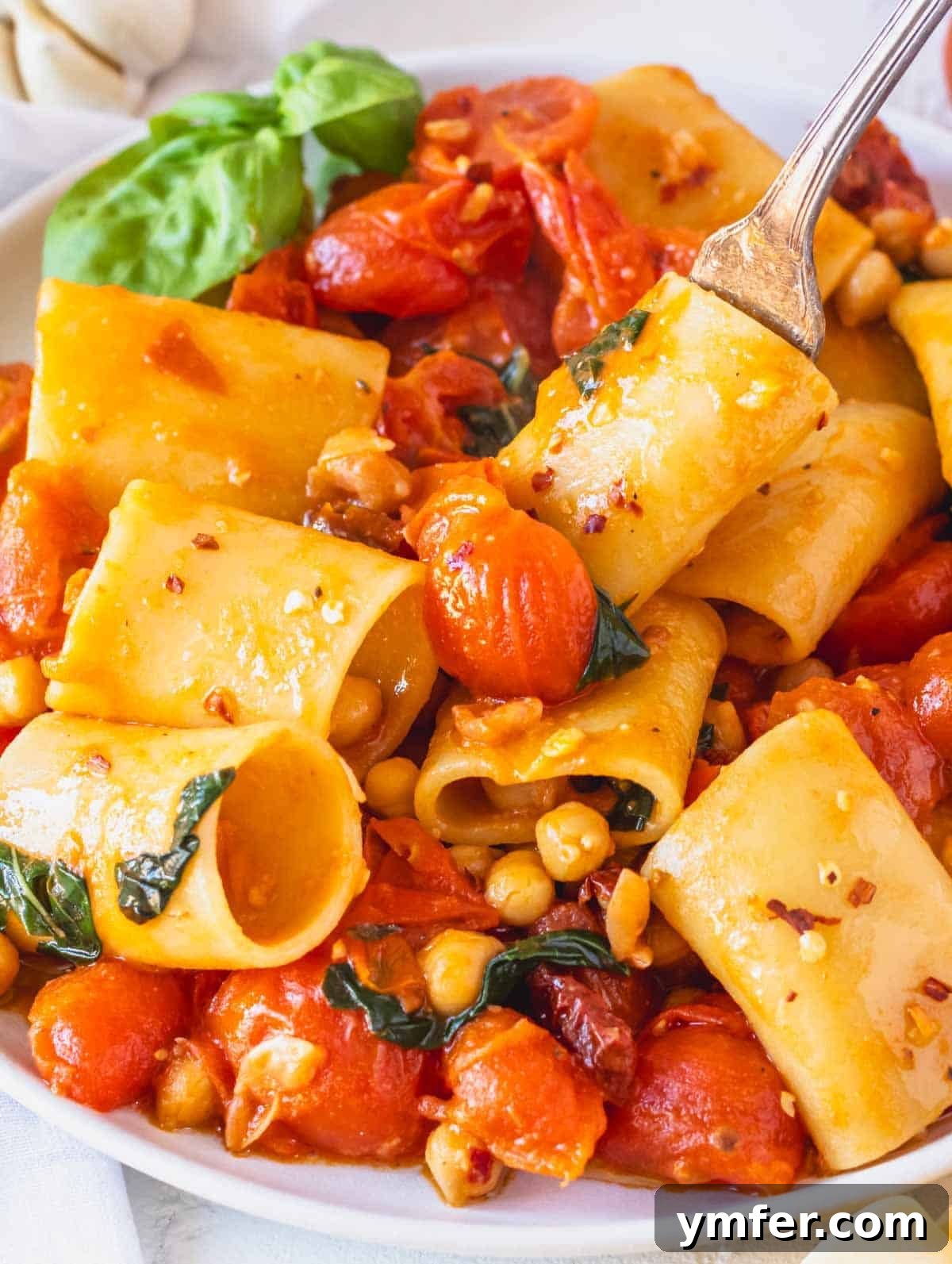
Table of Contents
- What is Paccheri Pasta?
- Ingredients and Substitutions for Our Paccheri Dish
- How to Make Paccheri Pasta with Cherry Tomatoes
- Serving Suggestions
- Tips for Perfect Pasta
- Common Questions About Paccheri Pasta
- Storage & Make Ahead
- Explore More Easy Pasta Recipes
- Discover Traditional Italian Pasta Shapes
- Paccheri Pasta with Cherry Tomatoes Recipe
Dietary Note: This recipe is perfectly suited for both vegetarian and vegan diets when using a delicious dairy-free cheese alternative.
Short on time? JUMP DIRECTLY TO THE RECIPE HERE!
What is Paccheri Pasta?
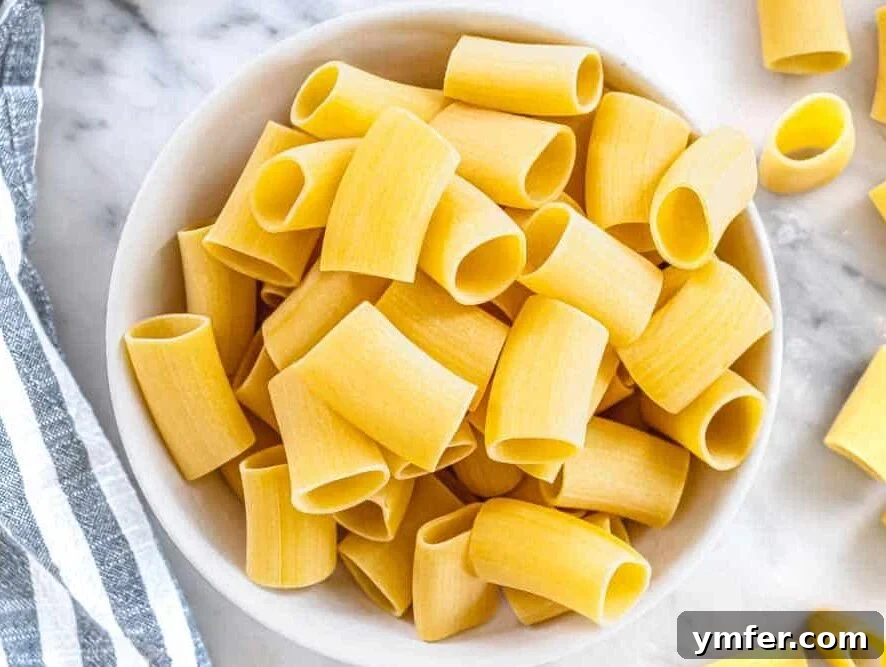
Paccheri is a distinctive Italian pasta type, deeply rooted in the rich pasta-making traditions of Naples, Italy. Its most striking characteristic is its shape: large, wide, and thick tubes, often compared to oversized rigatoni. This substantial form is what makes Paccheri such a delight to eat.
Beyond its impressive size, Paccheri offers an unparalleled culinary experience. Its robust structure ensures it maintains an incredibly satisfying, chewy al dente texture even after cooking. As you bite into a piece, the exquisite sauce, perfectly nestled within its large hollow center, bursts forth, creating an explosion of flavor and texture with every mouthful. This unique interaction with sauces is a hallmark of Paccheri’s appeal.
Like the majority of traditional Italian dry pasta varieties, Paccheri is crafted from a simple yet powerful combination of durum wheat semolina flour and water. Crucially, it contains no eggs, making it a natural choice for both vegetarian and vegan diets. This simplicity in ingredients belies a pasta that is both versatile and incredibly flavorful.
Historically, Paccheri was considered a staple for working-class families due to its affordability and satisfying nature. Today, however, its reputation has transformed. It is now a prized, premium product, gracing the menus of Italy’s finest restaurants and celebrated worldwide for its quality and unique characteristics.
The intriguing name “Paccheri” is derived from the Italian word “pacca,” which translates to a friendly slap or pat. This word itself has ancient Greek origins, stemming from “πας” (pas, meaning “all”) and “χειρ” (cheir, meaning “hand”). The name’s playful meaning is often attributed to the distinctive sound the pasta makes when it’s tossed generously with sauce in a pan or served onto a plate – a gentle, slapping sound that signals a delicious meal is at hand.
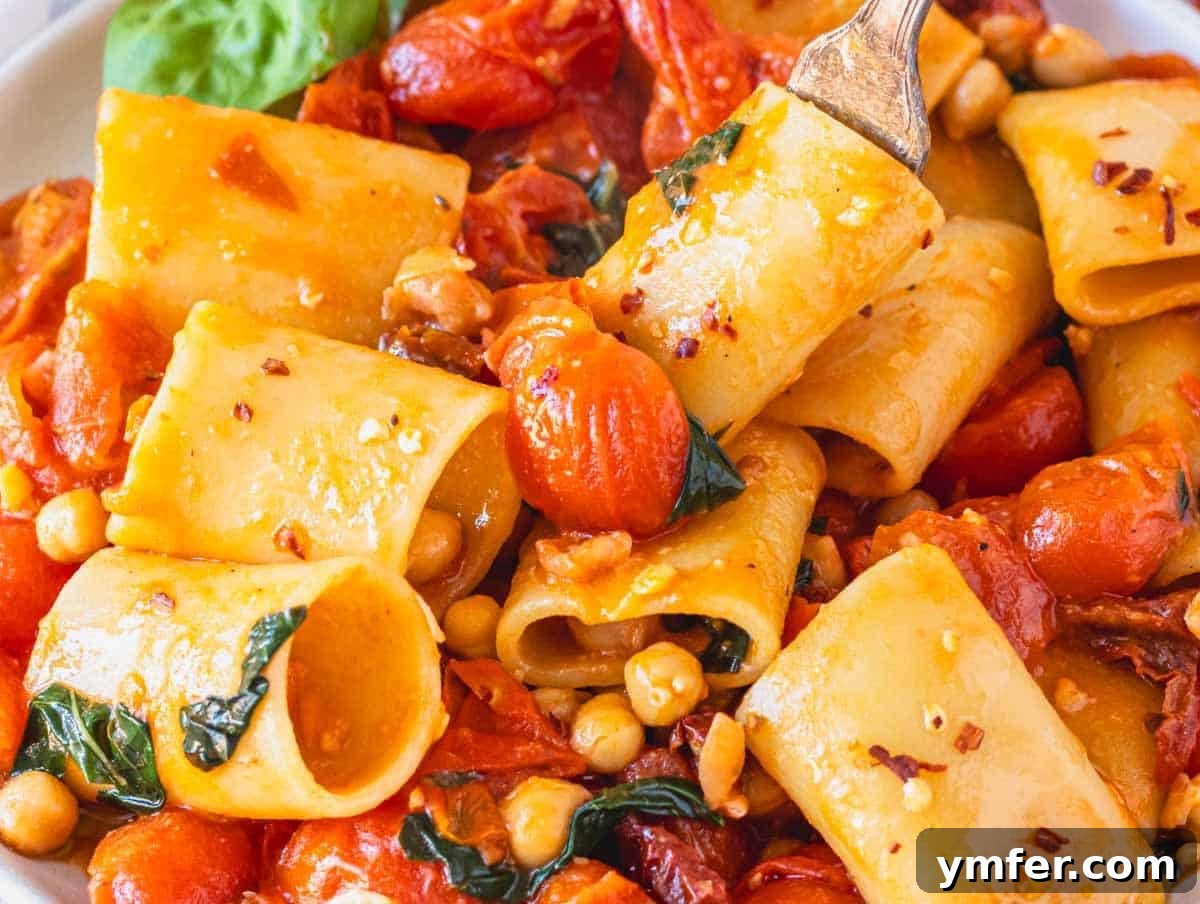
Paccheri’s robust nature makes it incredibly versatile, pairing beautifully with a wide array of sauces. From rich, slow-cooked ragus like a hearty lentil bolognese or a savory mushroom ragu, to vibrant and fresh options such as a bright basil pesto or a zesty puttanesca sauce, Paccheri holds its own, ensuring every bite is a flavorful experience.
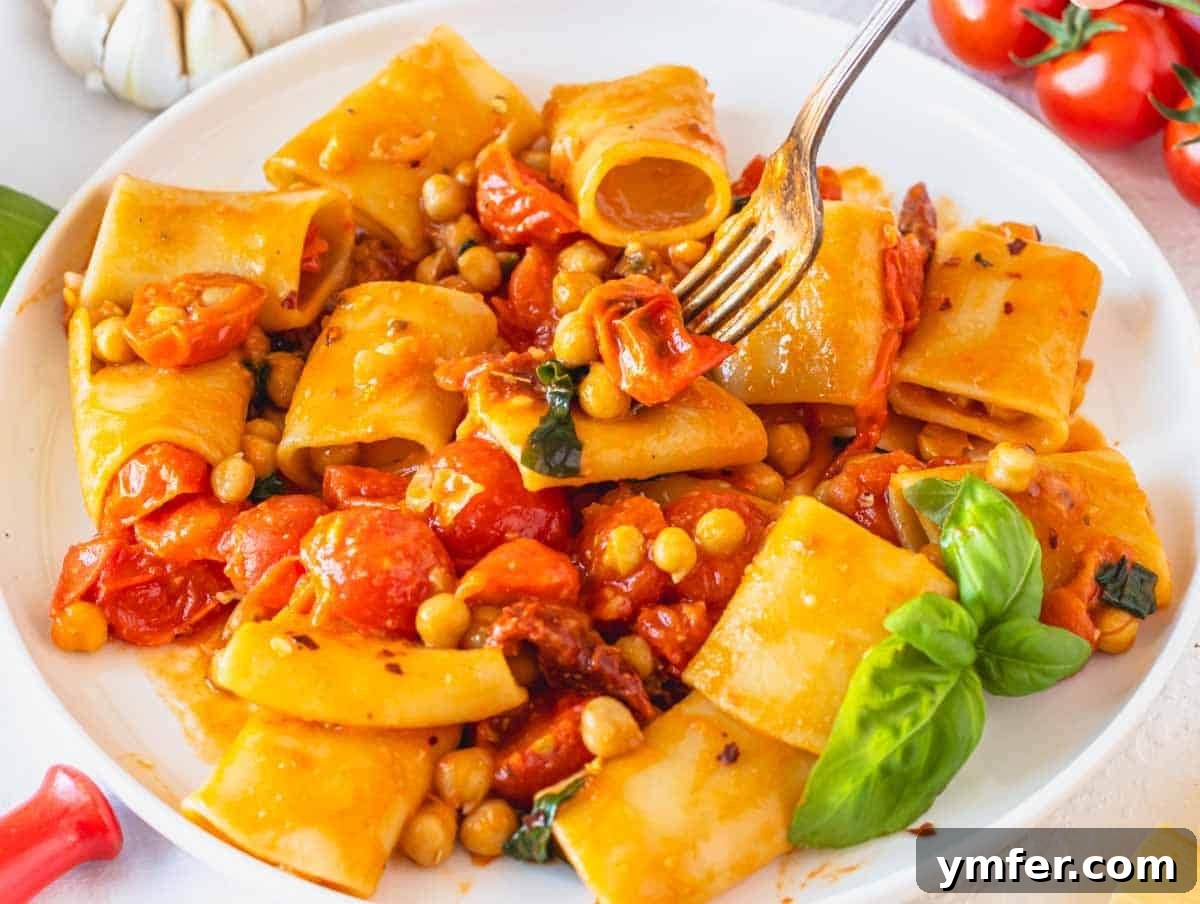
For this recipe, we’re showcasing a swift and simple cherry tomato sauce, elevated by fresh basil and the nutritional boost of chickpeas. This combination creates a light yet deeply satisfying meal that highlights the best qualities of Paccheri.
Ingredients and Substitutions for Our Paccheri Dish
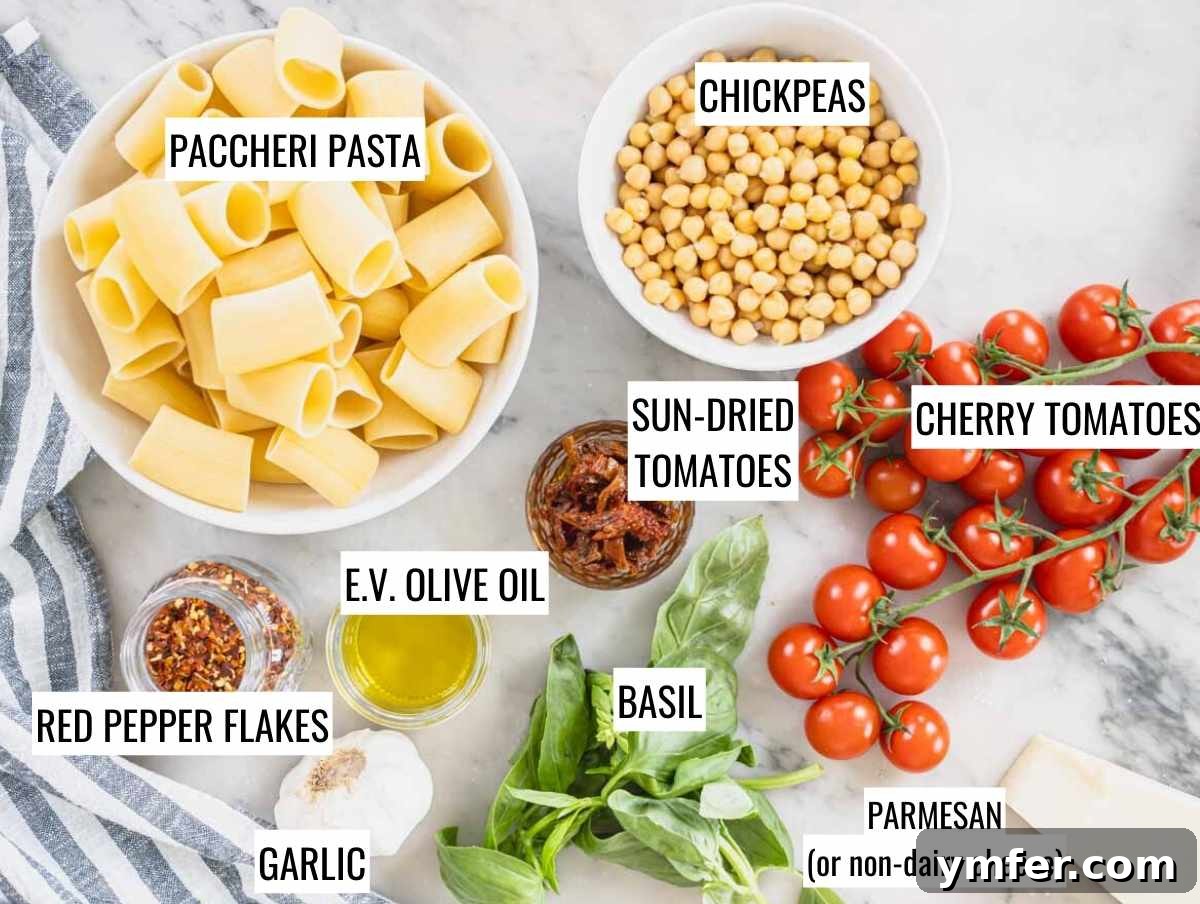
Crafting the perfect Paccheri pasta dish relies on a few key ingredients. Below, you’ll find a detailed list along with thoughtful substitution options to suit your pantry and preferences. Specific quantities are provided in the recipe box at the bottom of this page.
- Paccheri Pasta: For an authentic Italian experience, we highly recommend sourcing imported Italian Paccheri made solely from durum wheat semolina flour and water. Its superior quality ensures that coveted chewy al dente texture. If Paccheri is unavailable, large rigatoni or even conchiglioni (large shells) can make a decent substitute, though the eating experience will differ slightly.
- Chickpeas: A fantastic source of plant-based protein and fiber, chickpeas add heartiness and texture to our sauce. You can use convenient canned chickpeas (ensuring they are thoroughly drained and rinsed) or opt for dry chickpeas that you cook yourself. For guidance, refer to our guide on how to cook chickpeas. White beans, such as cannellini or great northern beans, make an excellent substitute, offering a similar creamy texture.
- Cherry Tomatoes: The star of our sauce, cherry tomatoes bring a burst of natural sweetness and cook down quickly, making this a speedy recipe. Their small size means less prep and faster flavor development. Feel free to substitute with other small, sweet tomatoes like grape tomatoes, or even larger plum tomatoes roughly chopped. The goal is a fresh, vibrant tomato base.
- Extra Virgin Olive Oil: The foundation of any good Italian sauce, extra virgin olive oil provides a rich, fruity base. While extra virgin is preferred for its flavor, good quality regular olive oil can be used.
- Garlic: Fresh garlic cloves are essential for aromatic depth. Avoid powdered garlic if possible, as it lacks the fresh punch. Minced shallots can provide a milder, sweeter alternative if garlic is too strong for your palate.
- Red Pepper Flakes: For those who enjoy a touch of heat, red pepper flakes add a subtle warmth. Adjust the quantity to your liking. For a fresh kick, a thinly sliced fresh chili or a pinch of cayenne pepper can be used.
- Fresh Herbs: Fresh basil is the quintessential partner for cherry tomatoes, offering a sweet, peppery aroma that truly defines this dish. If fresh basil is not available, fresh parsley can provide a complementary green note, though the flavor profile will be different.
- Sun-Dried Tomatoes: We incorporate sun-dried tomatoes (preferably oil-packed and chopped) for an intense umami boost, adding a layer of savory complexity to the sauce. Kalamata olives, finely chopped, can offer a similar salty, briny depth if you prefer.
- Cheese: A sprinkle of cheese at the end adds richness and rounds out the flavors. Traditional Parmigiano Reggiano is a classic choice, but feel free to use your favorite grated cheese or a high-quality non-dairy alternative for vegan versions. Other excellent options include crumbled feta for a tangy twist, creamy ricotta for mildness, small chunks of mozzarella for gooeyness, or sharp Pecorino Romano or Pecorino Sardo for a bolder profile.
How to Make Paccheri Pasta with Cherry Tomatoes
Creating this delicious Paccheri dish is surprisingly straightforward, delivering gourmet flavors in a short amount of time. All measurements, in both US cups and grams, are conveniently located in the recipe box at the bottom of this page.
Begin by setting a large pot of water to boil. While the water heats, take this time to rinse your cherry tomatoes thoroughly and cut each one in half. This ensures they cook evenly and release their sweet juices into the sauce.
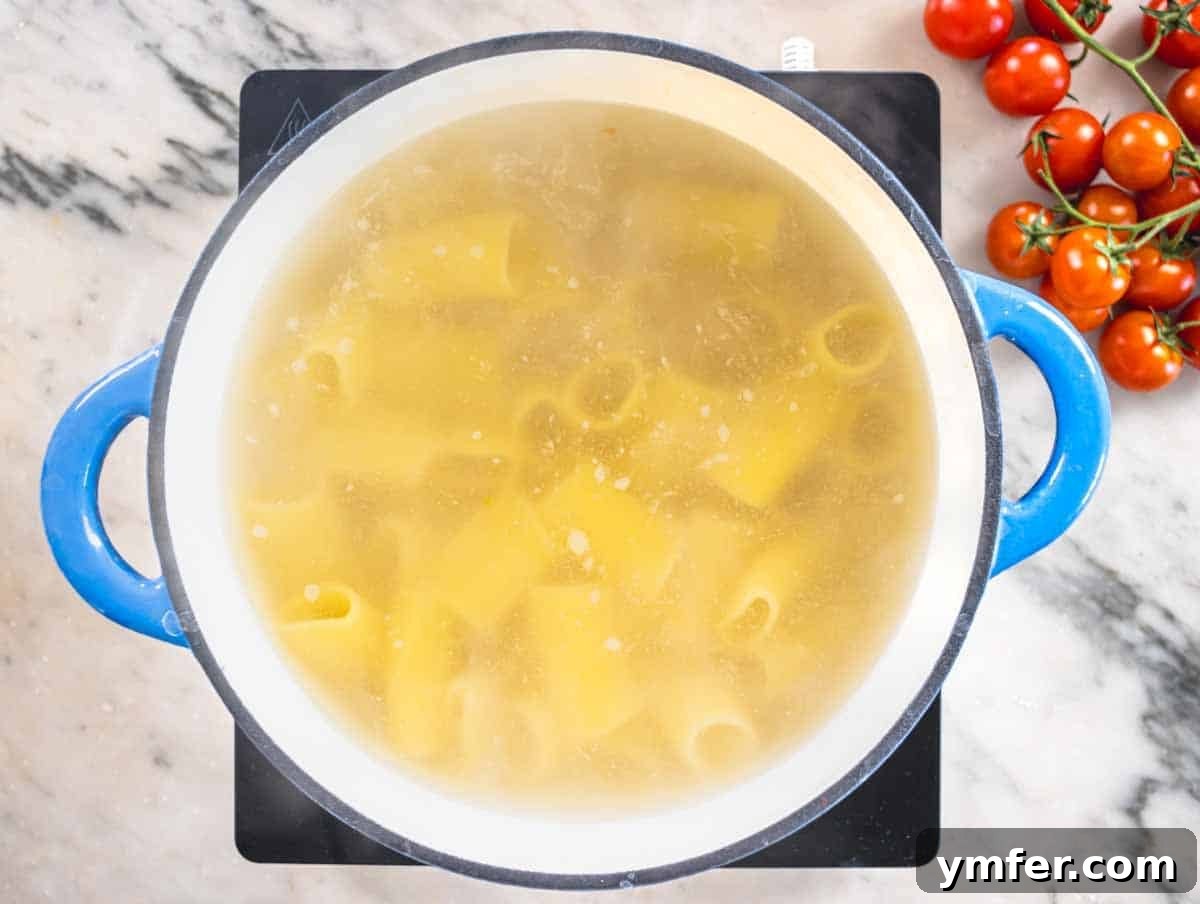
Once the water reaches a rolling boil, generously add salt – this is crucial for flavoring the pasta from within. Then, carefully add the Paccheri pasta to the boiling water. Cook according to the package instructions, deducting one minute from the recommended cooking time. Stir the pasta occasionally to prevent it from sticking together or to the bottom of the pot.
Tip: Intentionally undercooking the pasta slightly is a chef’s secret! This ensures the pasta remains perfectly al dente when it finishes cooking in the skillet with the sauce, absorbing additional flavor and achieving an extra creamy consistency.
In a large skillet, heat the extra virgin olive oil over medium-high heat. Add the halved cherry tomatoes to the hot oil. Season immediately with salt, freshly ground black pepper, red pepper flakes (if using), and your pressed garlic. The high heat at this stage helps to quickly char the tomatoes slightly and release their initial sweetness.
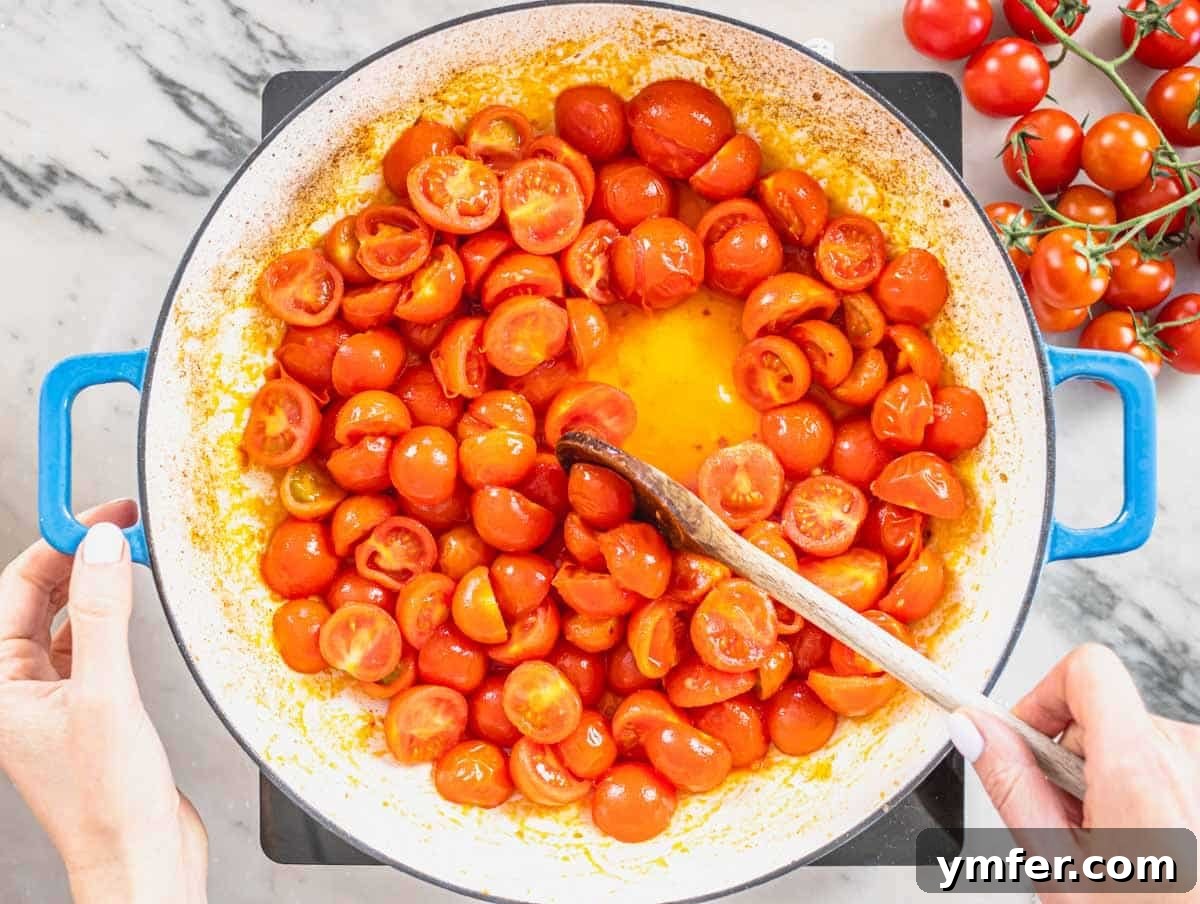
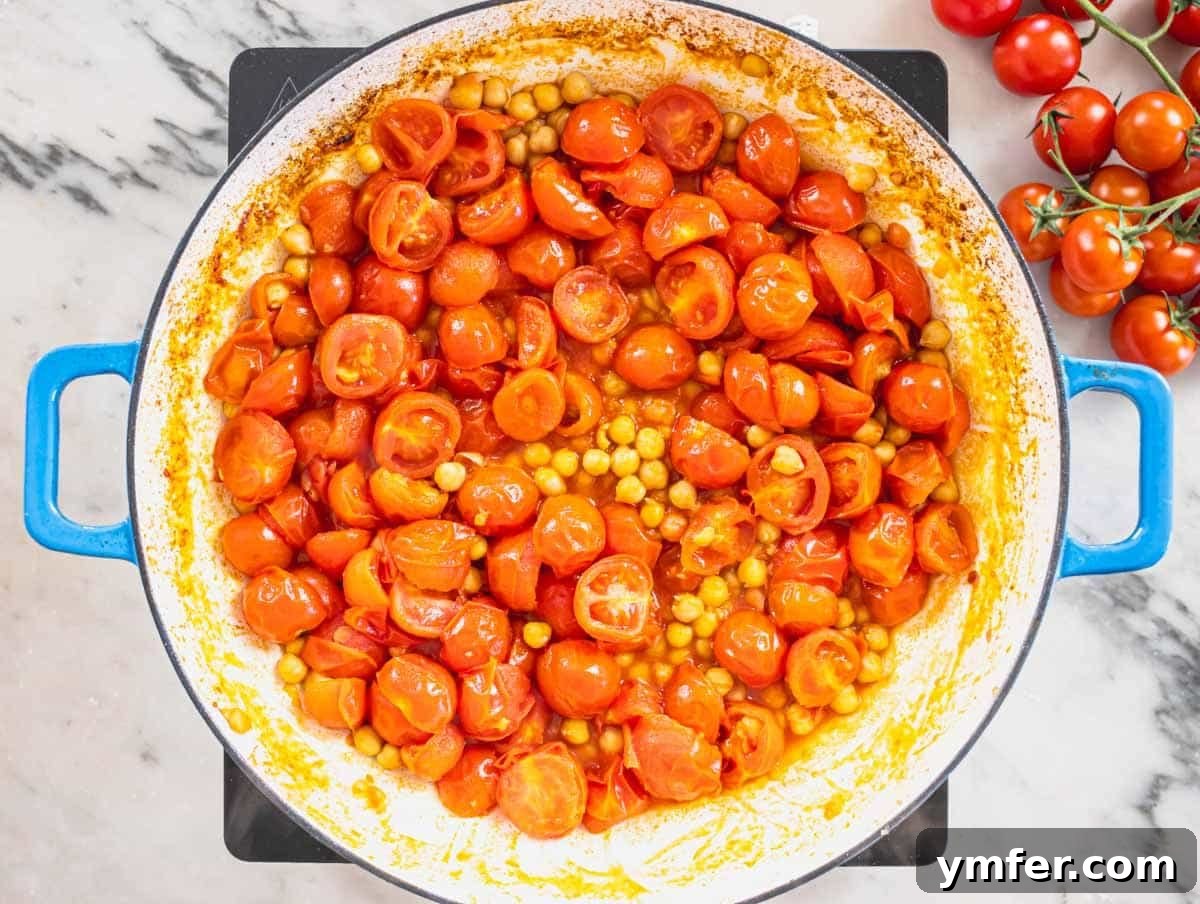
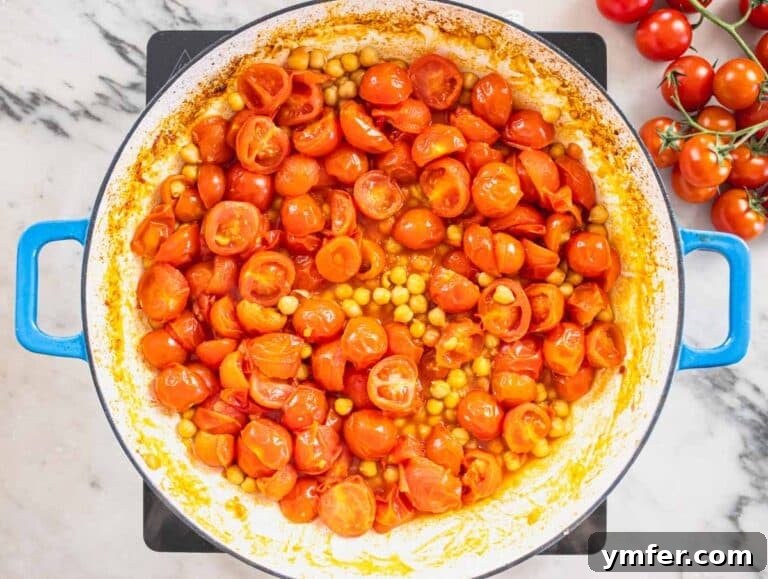
Sauté the tomatoes on high heat for approximately 3 minutes, allowing them to soften and begin to burst. Then, reduce the heat to medium-low. Add the drained and rinsed chickpeas to the skillet. Continue to cook the sauce for about 10 more minutes, or until the tomatoes have fully broken down into a luscious sauce and the chickpeas are warmed through. This slower cooking allows the flavors to meld beautifully. Taste the sauce and adjust the seasoning with additional salt or red pepper flakes as needed.
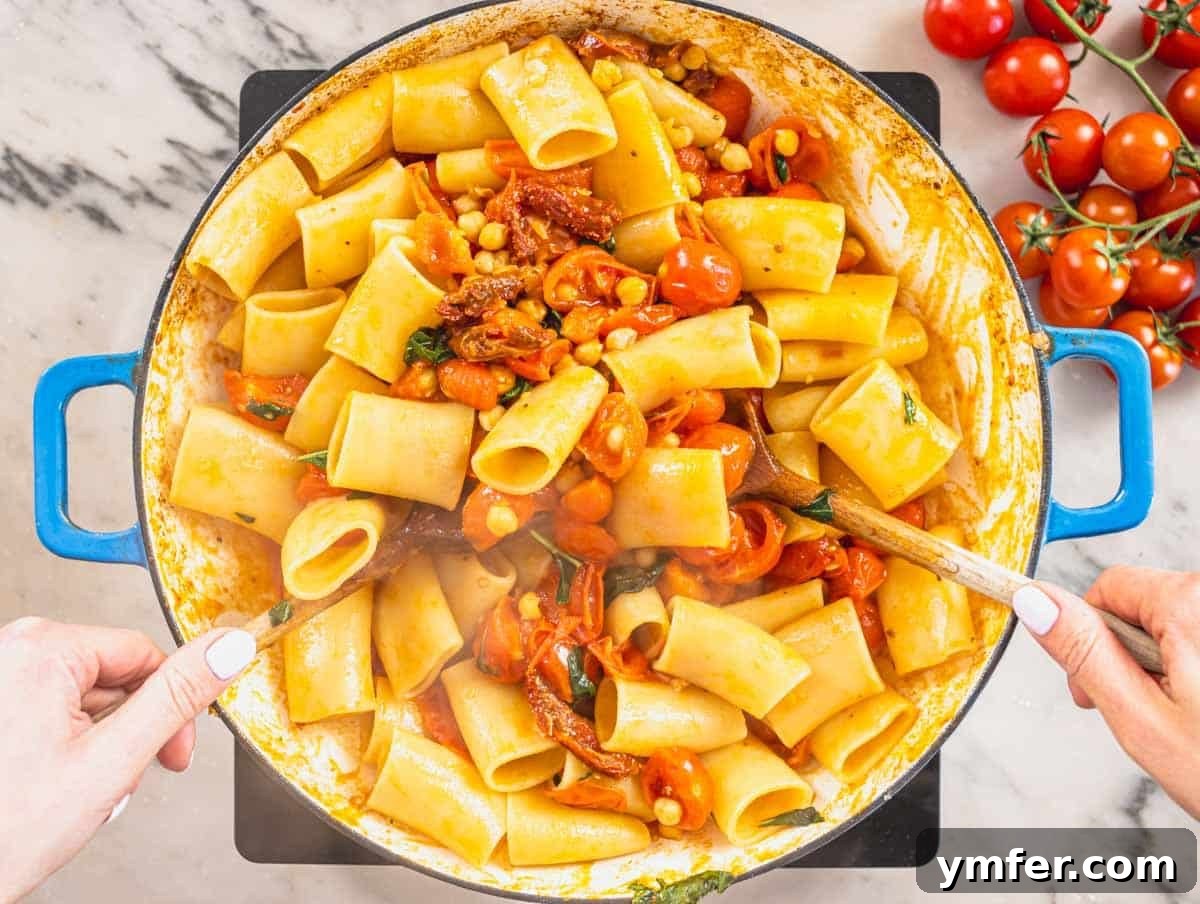
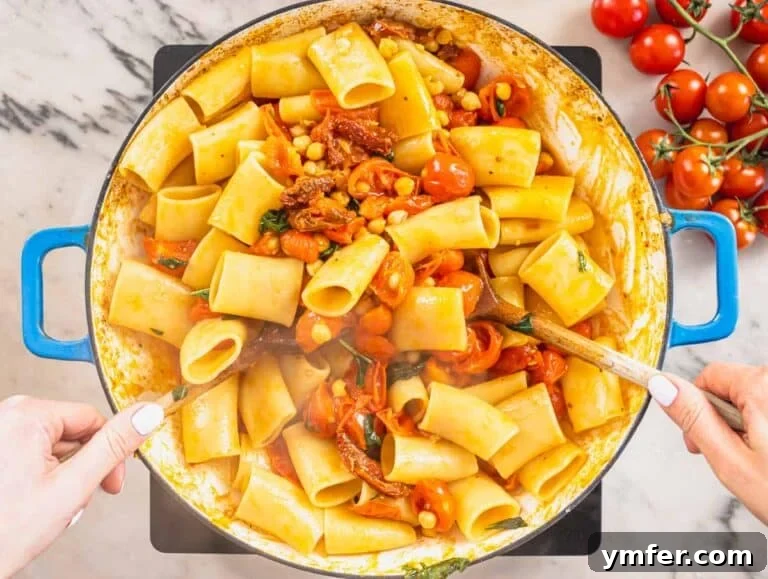
Before draining your Paccheri, remember to reserve one cup of the starchy pasta water. This liquid is a secret weapon for achieving a silky, emulsified sauce. Drain the pasta and immediately add it directly to the skillet with the cherry tomato and chickpea sauce. Stir in the fresh basil leaves (torn or roughly chopped) and the chopped sun-dried tomatoes. Add a ladleful of the reserved pasta water to the skillet. This helps to create a glossy sauce that clings perfectly to the Paccheri.
Finish cooking the pasta and sauce together, tossing continuously for a final minute. This allows the pasta to absorb the flavors of the sauce and release its starches, contributing to the dish’s overall creaminess.
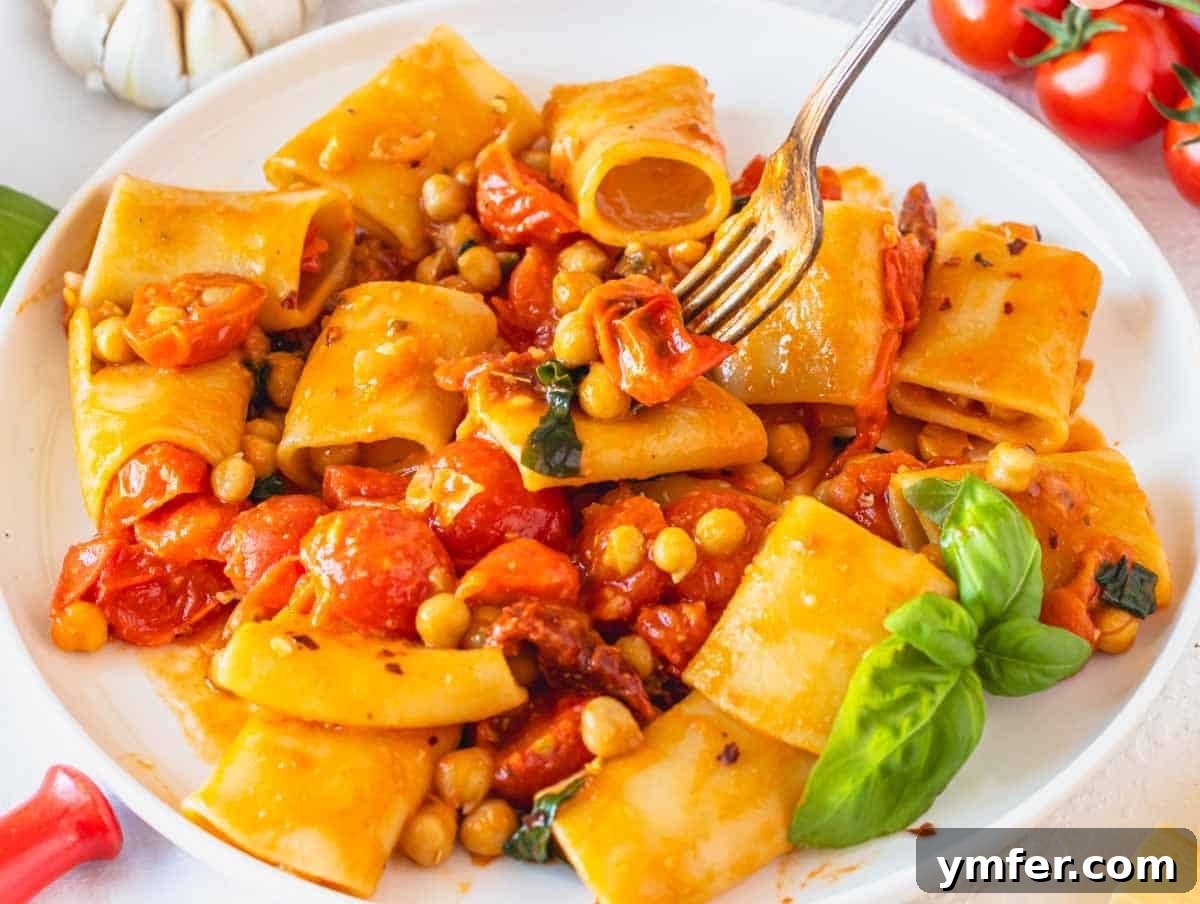
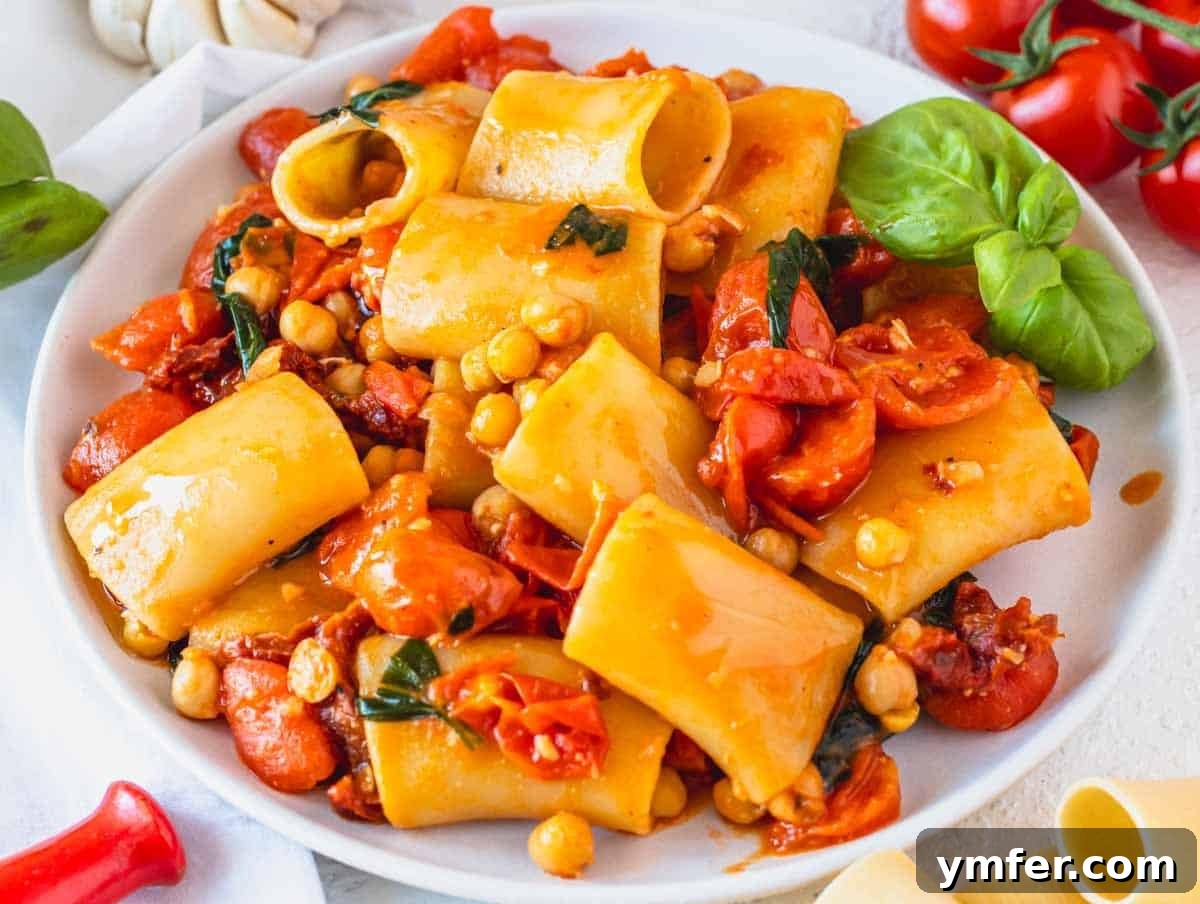
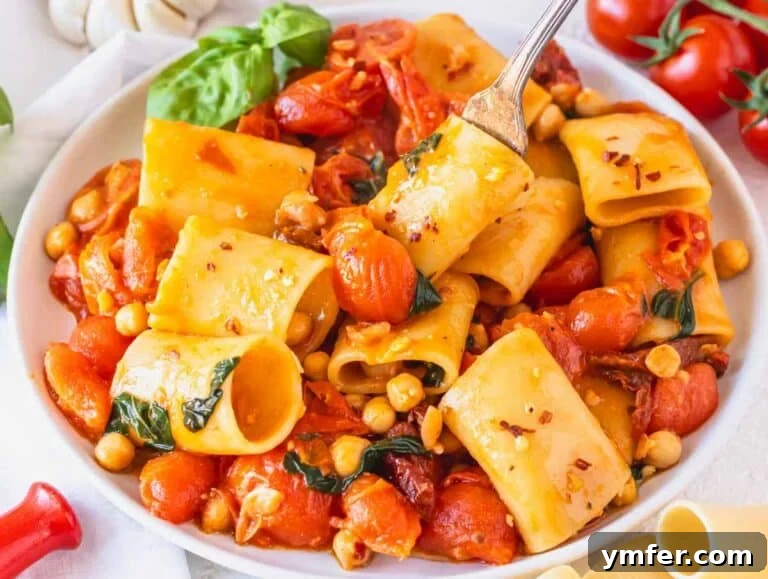
Turn off the heat. Add the grated Parmesan cheese (or your chosen dairy-free alternative) to the skillet. Toss vigorously until the cheese has completely melted into the sauce, creating a beautiful, cohesive coating for the pasta. Serve your Paccheri pasta with cherry tomatoes and chickpeas immediately, garnished with extra fresh basil if desired. Enjoy the harmonious blend of flavors and textures!
Serving Suggestions
Our Paccheri pasta with cherry tomato sauce and chickpeas is a wonderfully fulfilling dish that stands strong as a main course on its own. Its balanced profile of carbs, protein, and fresh vegetables makes it a complete meal. However, for those who enjoy a fuller spread, we recommend pairing it with a light, refreshing salad or a simple, vibrant side dish to complement its rich flavors without overpowering them:
- Simple Side Salad: A crisp green salad with a light vinaigrette offers a refreshing contrast to the pasta’s warmth.
- Sautéed Kale: Earthy and slightly bitter, sautéed kale provides a healthy counterpoint and additional greens.
- Arugula Salad: The peppery bite of arugula, perhaps with a squeeze of lemon, cuts through the richness of the pasta beautifully.
- Sautéed Mushrooms: A side of perfectly browned, savory mushrooms adds another layer of umami.
- Sautéed Zucchini: Lightly cooked zucchini ribbons or chunks can add a fresh, tender element.
Complementary Dishes to Complete Your Meal
Looking for more inspiration? These recipes perfectly complement our Paccheri pasta or offer similar fresh, healthy flavors.
- Side Salad
- Sautéed Mushrooms
- Arugula Salad
- Italian Salad
Tips for Perfect Pasta
How to Cook Pasta Perfectly Every Time
Achieving perfectly cooked pasta is an art, and it all starts with the right pot and adequate salting. Here’s a simple guideline:
- For 8 ounces of pasta (approx. 230 grams): Use at least 2 quarts (8 cups or 2 Liters) of boiling water with 1 tablespoon (15 grams) of salt. This serves 2-3 people.
- For 12 ounces of pasta (approx. 340 grams): Cook in 3 quarts (12 cups or 3 Liters) of boiling water with 1 ½ tablespoons (21 grams) of salt. Ideal for 4 servings.
- For 1 pound of pasta (approx. 450 grams): Requires 1 gallon (16 cups or 4 Liters) of boiling water and 2 tablespoons (30 grams) of salt. Perfect for 5-6 people.
Using enough water prevents the pasta from clumping, and generous salting ensures the pasta itself is seasoned, not just the sauce. The water should taste like the sea!
The Art of Al Dente: Undercooking for Perfection
When preparing pasta that will be tossed and finished in a skillet with its sauce, a crucial tip is to undercook the pasta by 1 to 2 minutes from the package instructions. This technique, known as “finishing in the sauce,” allows the pasta to absorb the rich flavors of your sauce while releasing its starches, which helps to create a luscious, emulsified coating. The pasta will reach its ideal al dente texture in the skillet, ensuring every bite is perfectly cooked and infused with flavor.
Common Questions About Paccheri Pasta
Determining the right pasta portion size can vary based on individual caloric needs and whether the pasta is a main meal or part of a multi-course menu. Generally, guidelines recommend 2.1 to 3.5 ounces (60 to 100 grams) of dry pasta per person. Keep in mind that a simple dish like pasta with tomato and basil will have significantly different calories and macronutrients compared to a hearty dish like baked ziti with cheese and other rich ingredients.
Here’s a concise summary:
- 3.5 ounces (100 grams) per person if the pasta is served as the main and only meal.
- 2.8 to 3 ounces (80 to 90 grams) per person if it’s part of a 2-3 course meal.
- 2 to 2.5 ounces (60 to 70 grams) per person if it’s part of a more extensive 3+ course meal.
Storage & Make Ahead
Make Ahead: Freshly cooked pasta is always best, as it can absorb too much sauce and become soft if stored for too long. For convenience, you can prepare the cherry tomato and chickpea sauce up to three days in advance. Store it in an airtight container in the refrigerator. When you’re ready to eat, simply warm the sauce and toss it with freshly cooked Paccheri.
Refrigerator: Leftovers of the complete pasta dish can be stored in an airtight container in the refrigerator for up to 24 hours. Beyond this, the pasta’s texture may significantly degrade.
Freezer: We do not recommend freezing this specific recipe. The pasta’s texture will become mushy upon thawing and reheating.
Reheat: To reheat, gently warm the pasta in a skillet with a splash of olive oil or water for a couple of minutes until heated through. Alternatively, a minute or two in the microwave will suffice.
Explore More Easy Pasta Recipes
If you’ve enjoyed the simplicity and flavor of this Paccheri dish, you’re in for a treat! Discover more quick and delicious pasta recipes that bring Italian flair to your kitchen:
- Pasta al Pomodoro: The timeless classic, simple yet profoundly flavorful.
- Lemon Ricotta Pasta: A bright, creamy, and zesty delight.
- Broccoli Pasta: Healthy, vibrant, and packed with green goodness.
- Roasted Red Pepper Pasta: A smoky, sweet, and comforting sauce.
- Mushroom Pasta: Rich, earthy, and deeply satisfying.
- Hummus Pasta: An unexpected, creamy, and quick pasta innovation.
- Pesto Pasta: Fresh, aromatic, and always a crowd-pleaser.
- Orecchiette with Broccoli Rabe: A traditional Puglian dish, robust and flavorful.
- Penne Arrabbiata: A fiery and simple Roman classic for chili lovers.
For an even wider selection, be sure to check out our hand-picked compilation of 40 Easy Pasta Recipes – your ultimate guide to delicious, hassle-free pasta meals.
Our Top Picks for Easy Pasta Meals
- Pasta Pomodoro
- Broccoli Pasta
- Red Pepper Pasta
- Hummus Pasta
Discover Traditional Italian Pasta Shapes
Beyond our everyday favorites, Italy boasts an incredible diversity of traditional pasta shapes, many of which are still handmade today. Explore the artistry and history behind these classic creations:
- Homemade Trofie: A Ligurian specialty, these small, twisted pasta pieces are perfect with pesto.
- Homemade Cavatelli: Small, shell-like pasta, often served with hearty vegetable sauces in Southern Italy.
- Homemade Orecchiette: Puglia’s “little ears,” ideal for capturing chunky sauces.
- Homemade Gnocchi: Soft, pillowy potato dumplings that melt in your mouth.
- Homemade Ravioli: Delicious pockets of pasta filled with endless possibilities.
Handmade Pasta Creations to Try
- How to Make Trofie Pasta (Handmade Ligurian Pasta Recipe)
- Cavatelli Pasta
- Orecchiette Pasta
- Gnocchi
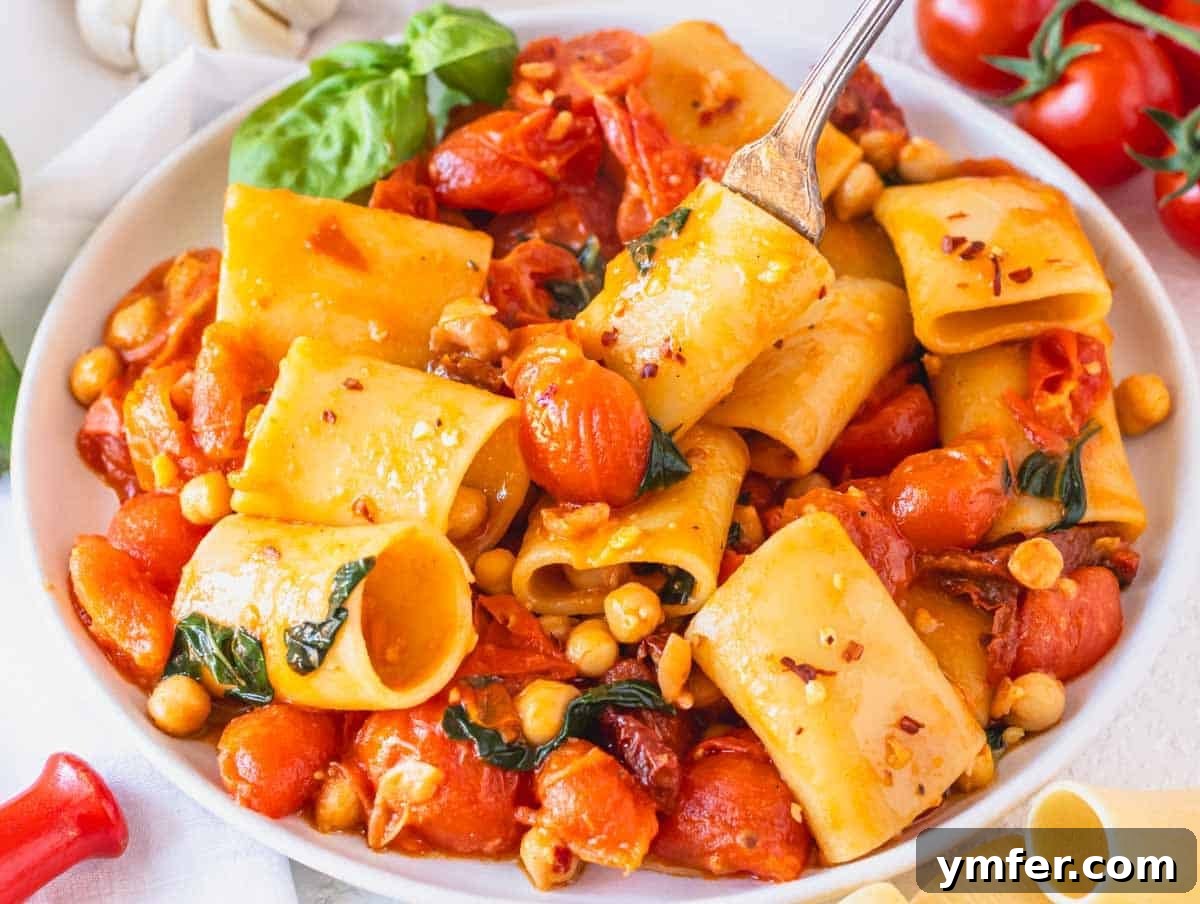
Paccheri Pasta with Cherry Tomatoes and Chickpeas
By: Nico Pallotta
Rating: 5 out of 5 stars (based on 3 votes)
Paccheri pasta is one of the most satisfying, delightfully chewy, and fulfilling pasta types. This recipe shows you how to prepare them quickly and easily in a flavorful cherry tomato sauce, enriched with chickpeas for a protein boost, making it a perfect weeknight meal.
Cook Time: 13 mins
Total Time: 18 mins
Course: Main Course
Cuisine: Italian
Ingredients
- 12 ounces (340g) Paccheri pasta (+ 3 quarts water and 1½ tablespoons salt for cooking)
- 1½ pounds (680g) cherry tomatoes, halved
- 1 can (15 ounces / 425g) chickpeas, drained and rinsed (or 1½ cups cooked chickpeas)
- 2 tablespoons extra virgin olive oil
- 1 clove garlic, pressed
- 1 teaspoon salt (or more to taste)
- 2 twists black pepper, freshly ground
- ¼ teaspoon red pepper flakes (or more to taste)
- ½ cup (75g) sun-dried tomatoes in oil, chopped
- 15 fresh basil leaves
- ½ cup (50g) grated Parmesan or non-dairy cheese (also delicious with crumbled feta, ricotta, or chopped mozzarella. Adjust quantity to taste).
Instructions
-
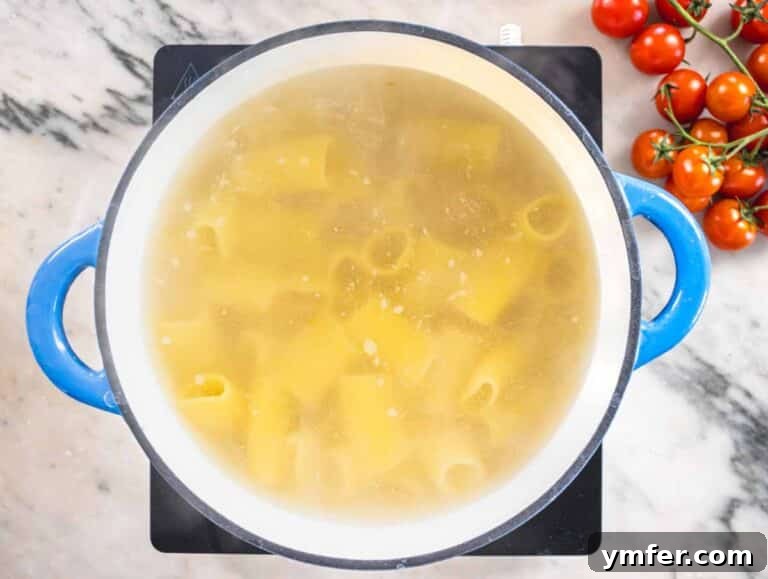
Bring a large pot of water to a rolling boil. While the water heats, rinse and halve the cherry tomatoes. Once boiling, generously salt the water and add the Paccheri pasta. Cook for 1 minute less than the package instructions indicate to ensure it finishes al dente in the sauce. Stir occasionally to prevent sticking.

Paccheri pasta boiling in a blue pot. -
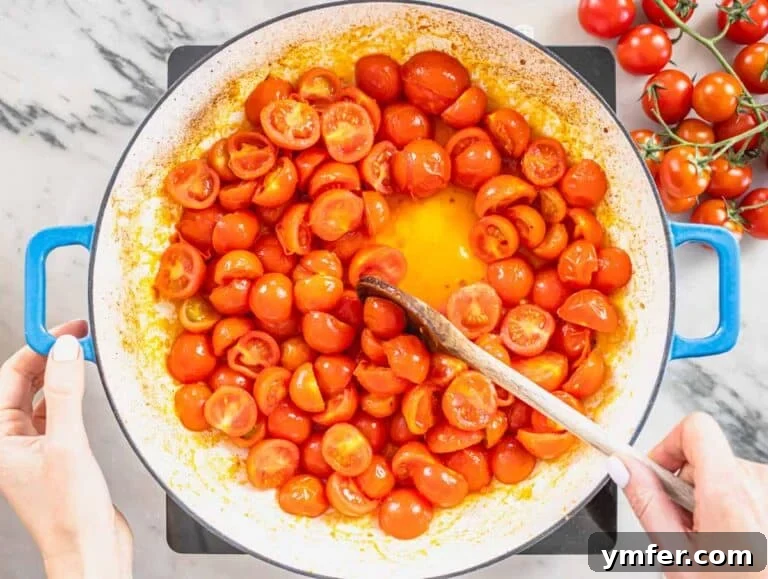
Heat 2 tablespoons of extra virgin olive oil in a large skillet over medium-high heat. Add the halved cherry tomatoes, and season with 1 teaspoon salt, 2 twists black pepper, ¼ teaspoon red pepper flakes, and 1 pressed garlic clove.
Cherry tomatoes and spices in a skillet. -
Sauté on high heat for 3 minutes until tomatoes begin to soften. Reduce heat to medium-low, add the drained and rinsed chickpeas, and continue cooking the sauce for about 10 more minutes, or until the tomatoes have broken down into a sauce. Taste and adjust seasoning as needed.
Chickpeas and cherry tomatoes sautéing together. -
Before draining the Paccheri, reserve one cup of pasta water. Drain the pasta and immediately add it to the skillet with the sauce. Add 15 fresh basil leaves (torn), ½ cup chopped sun-dried tomatoes, and a ladleful of the reserved pasta water. Toss for a final minute to finish cooking the pasta in the sauce, allowing it to absorb flavors and become creamy.
Paccheri pasta combined with the sauce in the skillet. -
Turn off the heat, then add ½ cup of grated Parmesan cheese. Toss until the cheese has melted, creating a rich, cohesive sauce. Serve immediately, garnished with extra fresh basil if desired.
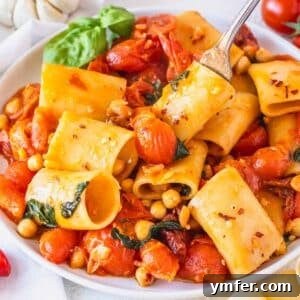
The final dish, plated and ready to enjoy.
Notes
Nutrition information is an estimate for 1 generous portion out of 4 servings.
STORAGE & MAKE AHEAD: For best results, prepare the sauce up to three days in advance and store it in an airtight container in the fridge. Cook the pasta fresh before serving. Leftover pasta can be refrigerated for up to 24 hours. Freezing is not recommended. Reheat gently in a skillet or microwave.
Nutrition Facts (Estimated per Serving)
Calories: 563kcal, Carbohydrates: 89g, Protein: 22g, Fat: 14g, Saturated Fat: 3g, Polyunsaturated Fat: 2g, Monounsaturated Fat: 6g, Trans Fat: 0g, Cholesterol: 11mg, Potassium: 781mg, Dietary Fiber: 9g, Sugar: 9g, Vitamin A: 1194IU, Vitamin B6: 0.4mg, Vitamin C: 40mg, Vitamin E: 2mg, Vitamin K: 28µg, Calcium: 188mg, Folate: 144µg, Iron: 4mg, Manganese: 2mg, Magnesium: 97mg, Zinc: 3mg
Tried this recipe? We’d love to hear from you! Leave a comment below or mention @theplantbasedschool on Instagram. Your feedback means the world to us! ⭐️ 💚
If you loved this Paccheri pasta, you might also enjoy these related articles:
- 45 Easy Vegetarian Dinner Recipes
- 45 Easy Pasta Recipes
- 40 High Protein Vegetarian Meals
- 30 Easy Italian Recipes