
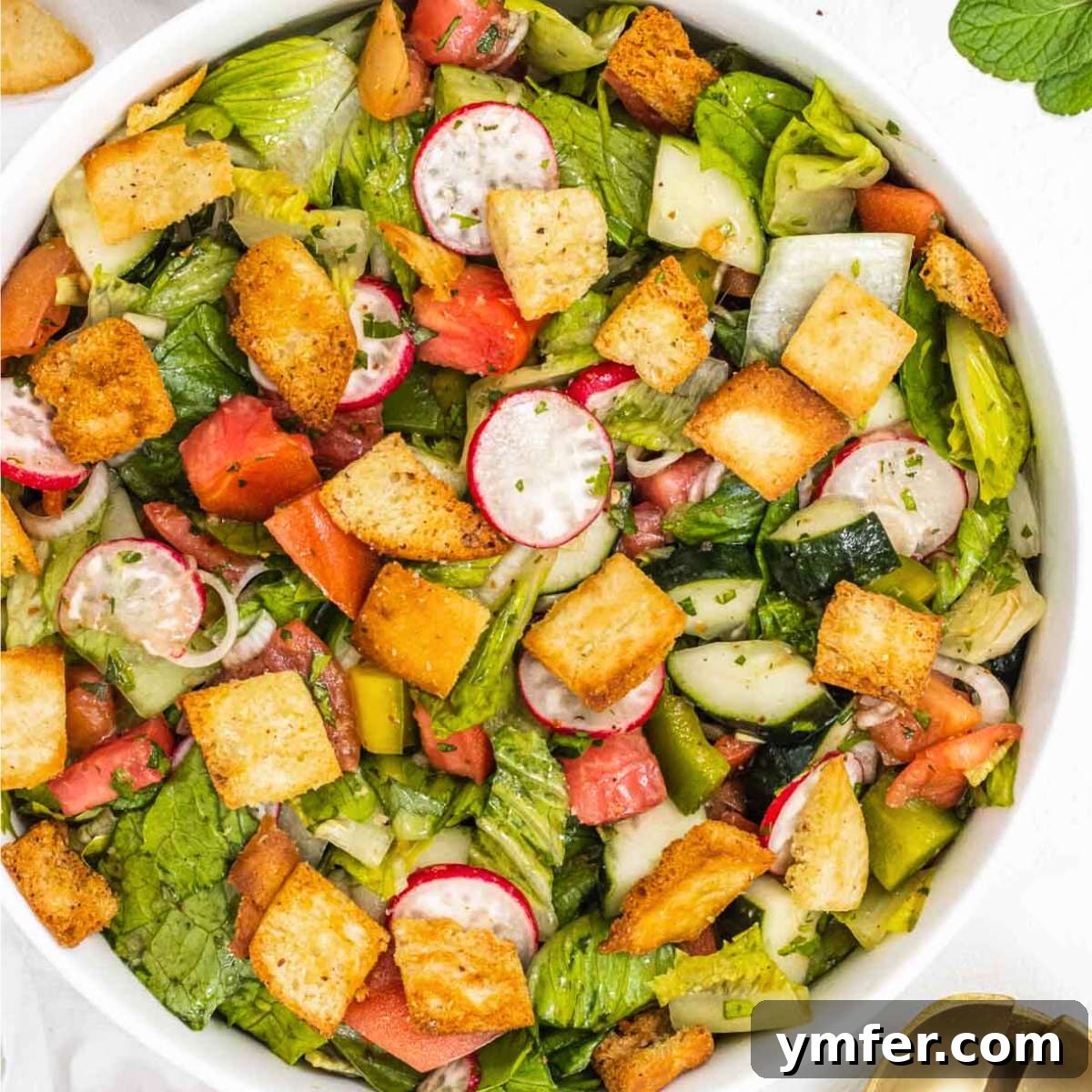
Authentic Fattoush: A Vibrant & Crunchy Eastern Mediterranean Salad Recipe
Discover the delightful world of Fattoush, an easy-to-make and incredibly refreshing bread salad that captures the essence of Eastern Mediterranean cuisine. Bursting with fresh vegetables, fragrant herbs, and satisfyingly crunchy toasted pita bread, Fattoush is a true culinary gem, perfect as a colorful side dish or a light, wholesome meal.
Looking for more healthy and delicious Mediterranean Diet recipes? Explore our collection including Shirazi Salad, Tabbouleh, our classic Mediterranean Salad, and the Italian bread salad, Panzanella.
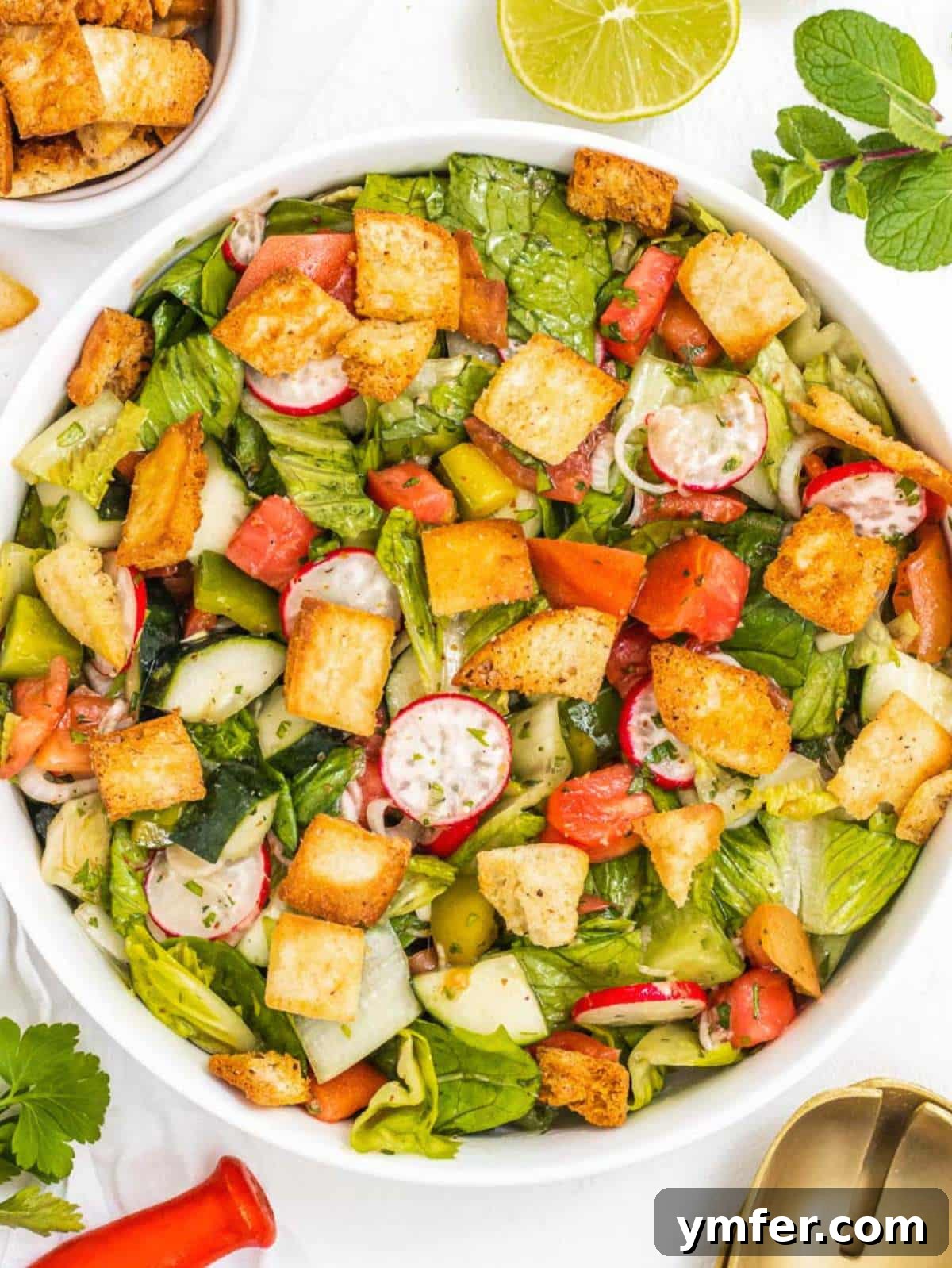
Watch Our Fattoush Recipe Video Tutorial
The Irresistible Charm of Fattoush: More Than Just a Salad
Fattoush is more than just a salad; it’s a culinary experience. For many, including us, it was love at first bite. Its vibrant appearance, tantalizing aroma, and a symphony of flavors and textures make it truly unforgettable. This Eastern Mediterranean bread salad is surprisingly simple to prepare, yet delivers an explosion of taste that can elevate any meal.
Reminiscent of Italy’s classic Panzanella, with its rustic charm and use of bread, Fattoush holds a special place in our hearts. While both utilize day-old bread, Fattoush offers a distinctive tangy and herbaceous profile that sets it apart, thanks to its unique dressing and specific blend of fresh ingredients.
This beloved salad hails from the heart of the Levant region, a historical and geographical area that encompasses Lebanon, Syria, Palestine, Jordan, and Israel, extending into parts of Turkey and Cyprus. Each country, and even each family, often has its own subtle variation, but the core elements of fresh vegetables, herbs, and toasted pita remain constant, creating a unifying culinary tradition across the region.
Fattoush shines brightest when served as part of a lavish mezze platter. Imagine it alongside an array of Middle Eastern dips and sauces, creating a feast for the senses. Its crisp texture and bright flavors perfectly complement richer, creamier dishes.
For a delightful pairing, Louise often enjoys Fattoush with creamy Baba Ghanoush, classic Hummus, and a drizzle of smooth Tahini Sauce. The cool, refreshing crunch of the salad provides a beautiful contrast to the velvety dips, making each bite an adventure.
On the other hand, my preference is to serve Fattoush with the deep, smoky flavors of Zaalouk and the spicy richness of Muhammara. These combinations introduce a layered complexity, offering a more robust and adventurous flavor profile that still benefits from the Fattoush’s inherent freshness.
Together, these dishes transform a simple meal into an inviting and shareable spread, perfect for gatherings, family dinners, or a cozy evening. Beyond mezze, Fattoush is also an excellent standalone light dinner option, a vibrant side dish for almost any main course, or a fantastic addition to a potluck, guaranteed to impress with its fresh appeal and exotic flavors.
Essential Ingredients for Your Perfect Fattoush
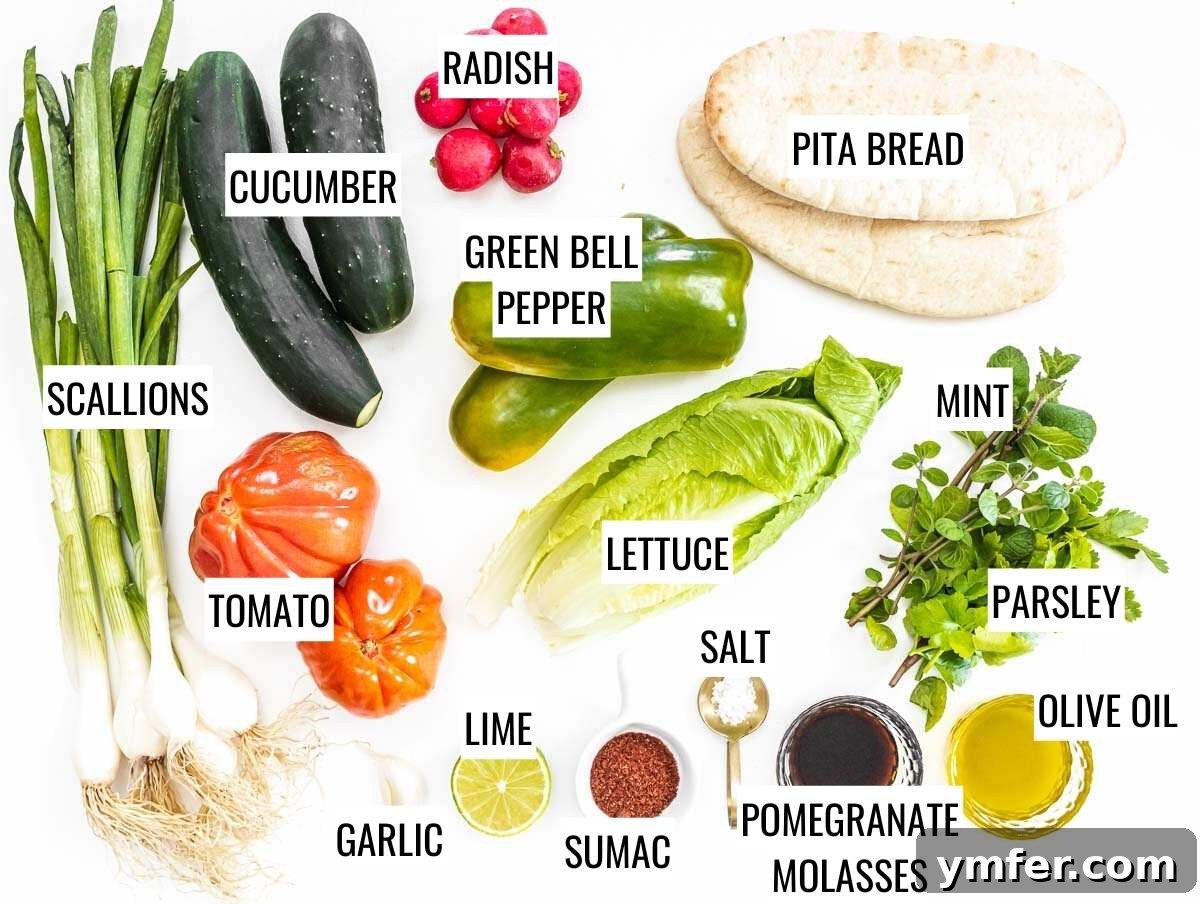
Crafting an authentic Fattoush begins with selecting the freshest, most vibrant ingredients. Each component plays a crucial role in contributing to the salad’s signature taste and texture.
The Salad Base: Fresh Vegetables and Herbs
- Lettuce: We highly recommend using Romaine lettuce for its crisp texture and mild flavor, which stands up well to the dressing. However, any other crunchy lettuce variety like iceberg or even a sturdy spring mix can work beautifully. The key is a lettuce that provides a good bite.
- Scallions (Green Onions): These provide a subtle, fresh onion flavor without being overpowering. They add a delicate pungency and a touch of green. If you don’t have scallions, thinly sliced red onions or shallots can be excellent substitutes, offering a slightly stronger but still complementary taste.
- Cucumber: Essential for a refreshing crunch and cooling effect. Whether you choose Persian, English, Kirby, American, or any small cucumber, ensure it’s firm and fresh. English cucumbers are often preferred as they have fewer seeds and thinner skins, eliminating the need for peeling.
- Radish: A traditional Fattoush ingredient, radishes bring a fantastic peppery, zesty kick and an undeniable crispness. Their vibrant red color also adds visual appeal, making the salad even more inviting. Don’t skip these if you can find them!
- Tomatoes: The sweetness and acidity of ripe tomatoes are vital. Opt for flavorful varieties such as beefsteak, vine-ripened, cherry, Roma, or heirloom tomatoes. If your tomatoes are particularly watery, gently drain any excess liquid after dicing to prevent the salad from becoming soggy.
- Green Bell Pepper: Adds another layer of refreshing crunch and a slightly sweet, earthy note. If you prefer a milder flavor or a different color, red or yellow bell peppers can be used instead, offering a sweeter profile.
- Fresh Herbs: The aromatic heart of Fattoush. Flat-leaf parsley and fresh mint are indispensable, contributing bright, herbaceous notes that define the salad’s character. Parsley offers a clean, earthy flavor, while mint provides a cool, invigorating burst. Traditionally, purslane is also used, offering a slightly sour and crunchy element, though it’s less commonly available outside the Mediterranean. Feel free to add dill or cilantro for a slight variation in flavor if you enjoy them.
The Signature Crunch: Homemade Pita Chips
- Arabic Bread (Pita): The “bread” in bread salad! Traditionally, Fattoush utilizes leftover flatbread, cut into pieces and either fried or toasted until crisp. For a healthier and equally delicious option, we highly recommend making your own pita chips by tossing pita bread pieces with extra virgin olive oil, salt, and a dash of sumac, then toasting them in an oven or air fryer until golden brown and perfectly crunchy. This control over the crispness and seasoning makes all the difference.
The Tangy Fattoush Dressing: A Burst of Flavor
The dressing is what truly ties all the fresh ingredients together, infusing the salad with its characteristic tangy and zesty profile.
- Salt: Essential for seasoning the vegetables and balancing the flavors in the dressing. Sea salt or kosher salt are preferred for their clean taste. Adjust to your personal preference.
- Extra Virgin Olive Oil: A cornerstone of Mediterranean cuisine, high-quality extra virgin olive oil is non-negotiable for authentic flavor. It provides a rich, fruity base for the dressing and coats the vegetables beautifully.
- Lime or Lemon Juice: Freshly squeezed citrus juice provides the vibrant acidity that brightens the entire salad. While lemon is traditional, lime offers a slightly different, equally refreshing tang. Use whichever you prefer or have on hand.
- Pomegranate Molasses: This dark, thick syrup made from reduced pomegranate juice is a star ingredient, offering an unparalleled sweet-tart depth with a hint of fruitiness. It’s crucial for Fattoush’s unique flavor. If unavailable, a good quality balsamic vinegar or balsamic glaze can serve as a decent substitute, though the flavor profile will differ slightly.
- Garlic: Freshly minced or grated garlic adds a pungent, aromatic kick that enriches the dressing. One clove is usually sufficient, but adjust according to your love for garlic!
- Sumac: A reddish-purple spice derived from dried and ground sumac berries, it imparts a distinctive tangy, citrusy flavor without the sharp acidity of lemon juice. Sumac is a hallmark of Middle Eastern cuisine and highly recommended for authentic Fattoush. While optional if unavailable, it truly elevates the dish.
Step-by-Step Guide: Crafting Your Perfect Fattoush
Making Fattoush is wonderfully straightforward, requiring minimal cooking and maximum freshness. Follow these simple steps to bring this vibrant salad to your table.
-
Start by preparing your crunchy pita chips. Take pita bread and cut it into small, bite-sized pieces. In a bowl, toss these pieces with about 2 tablespoons of extra virgin olive oil, ½ teaspoon of salt, and if desired, a generous pinch of sumac for extra tang.
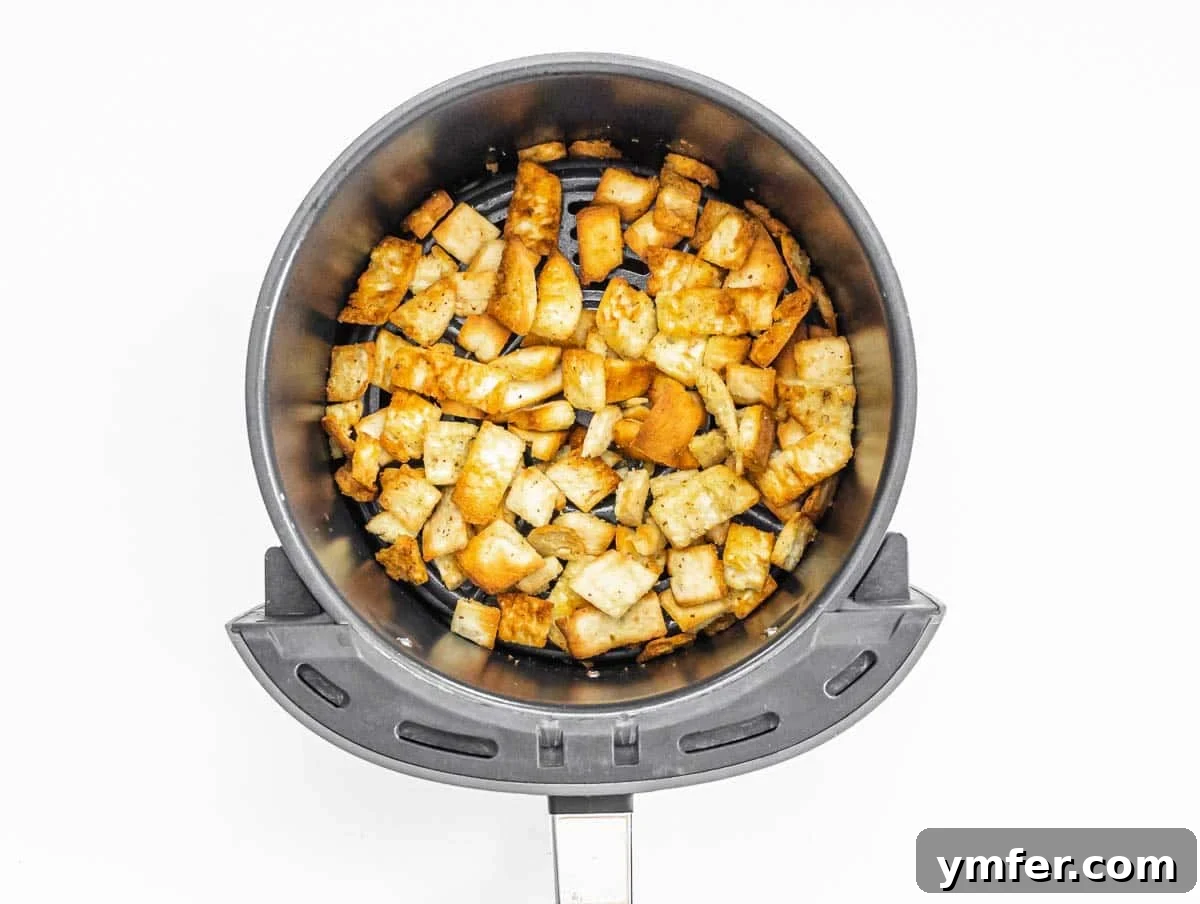
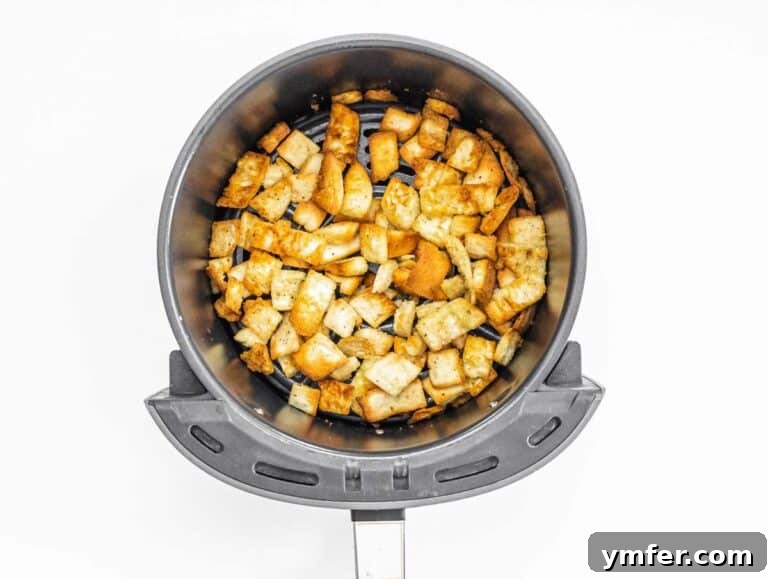
Spread the seasoned pita pieces in a single layer on a baking sheet. Toast them at 400°F (200°C) in your oven or air fryer until they are wonderfully crispy and golden brown. This usually takes approximately 3 to 5 minutes, so keep a close eye on them to prevent burning. They should be perfectly crunchy but not overly hard.
Perfectly toasted pita bread, ready to add its signature crunch to the Fattoush. -
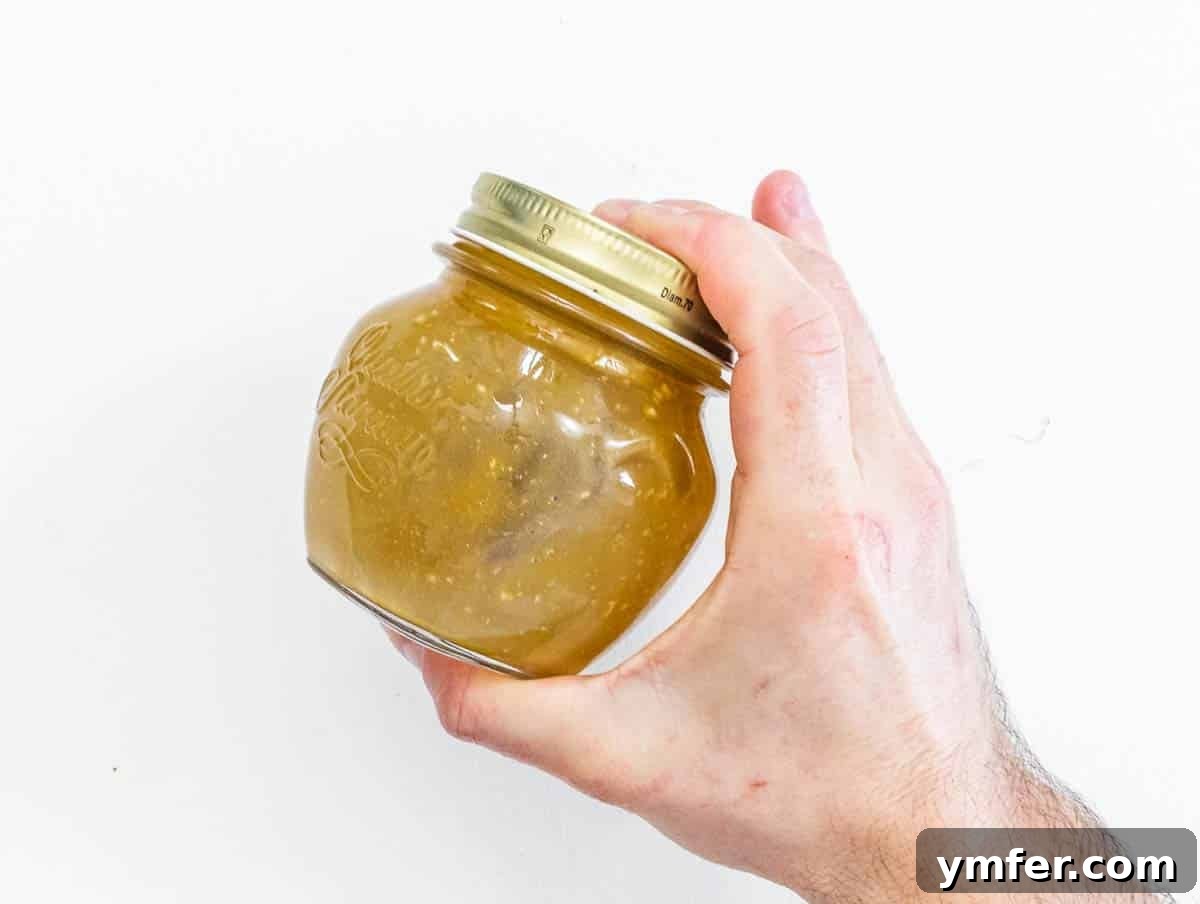
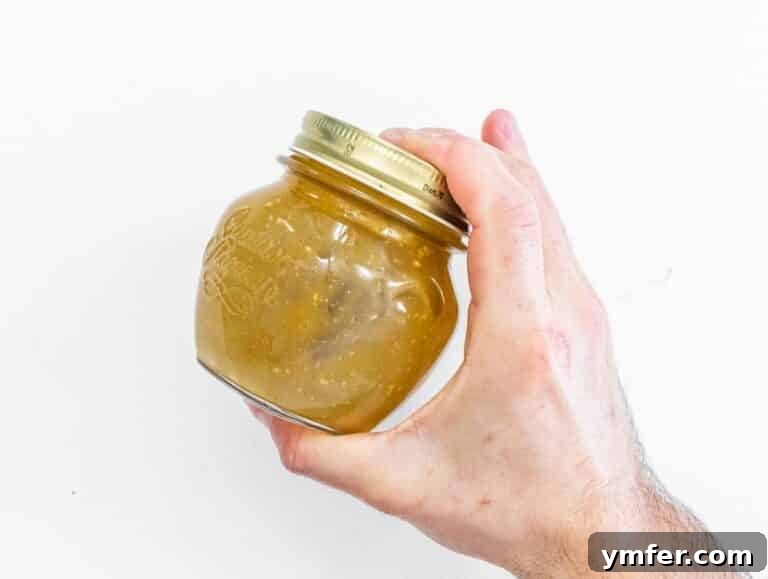
Next, prepare the flavorful Fattoush dressing. In a small jar with a tight-fitting lid, combine ¼ cup of extra virgin olive oil, 3 tablespoons of pomegranate molasses, 2 tablespoons of fresh lime or lemon juice, 2 teaspoons of sumac, 1 teaspoon of salt (or more to taste), and 1 clove of grated garlic.
Close the jar and shake it vigorously until all the ingredients are thoroughly combined and emulsified. Alternatively, you can simply whisk all the dressing ingredients together in a small bowl until smooth. Set aside.The simple yet powerful ingredients for the tangy Fattoush dressing. -
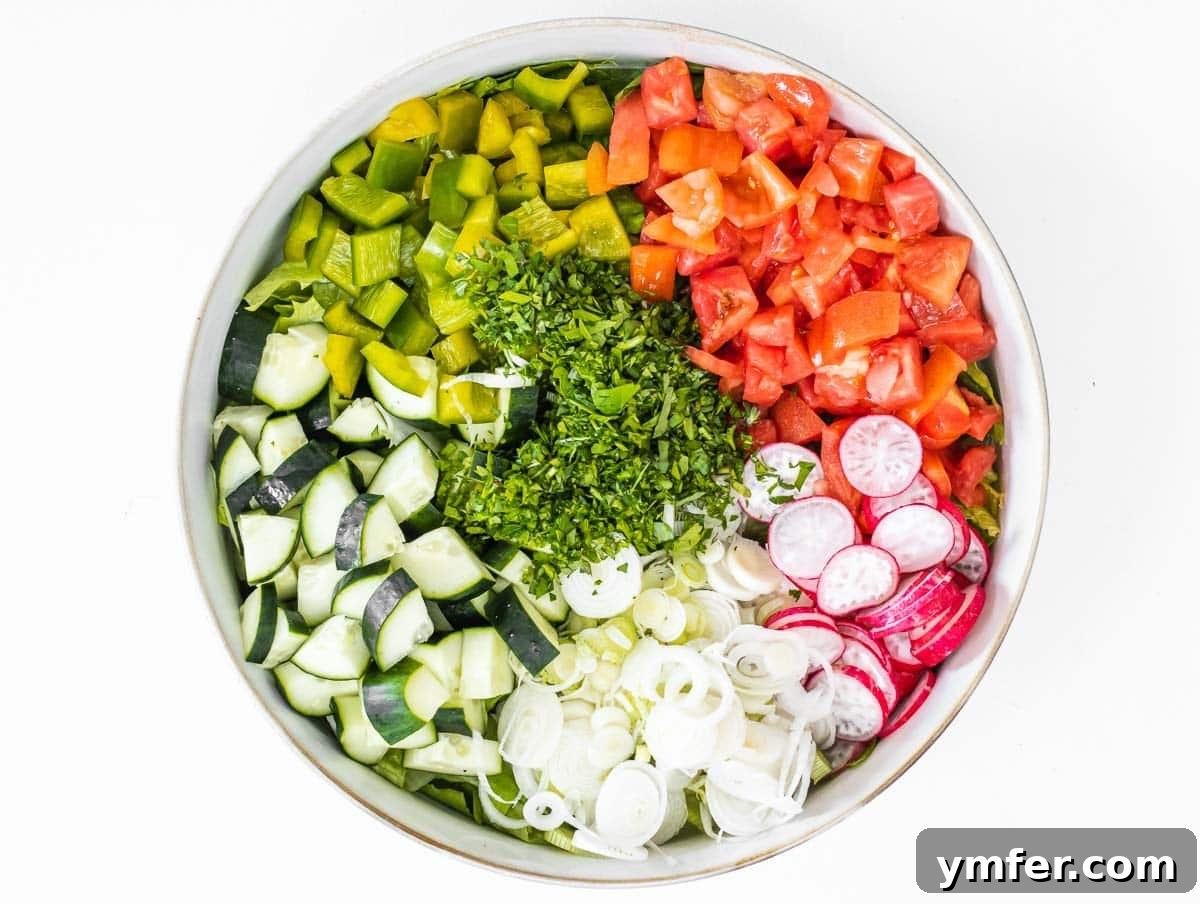
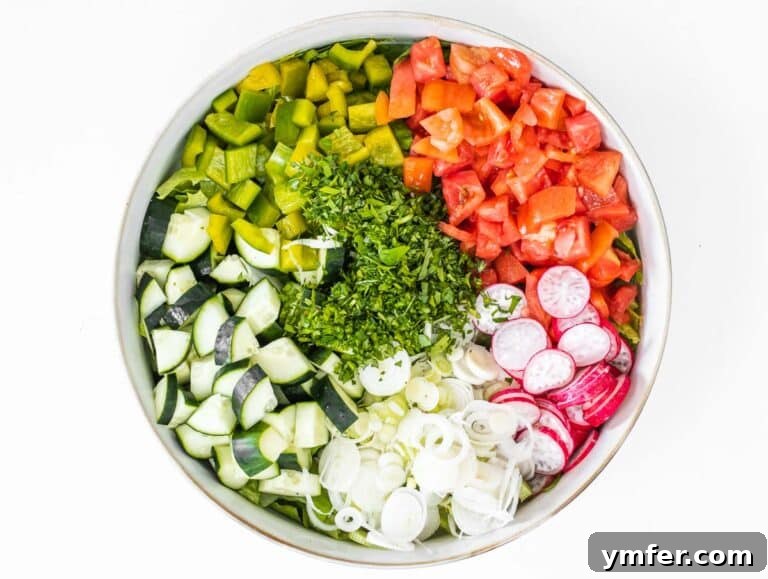
Now, it’s time to assemble the fresh salad base. In a large mixing bowl, combine the chopped Romaine lettuce, diced tomatoes, diced green bell pepper, diced cucumber, thinly sliced radishes, thinly sliced scallions, and finally, the finely chopped fresh parsley and mint. Ensure all vegetables are roughly the same bite-sized pieces for a cohesive salad.
A colorful medley of chopped fresh vegetables for the Fattoush salad. -
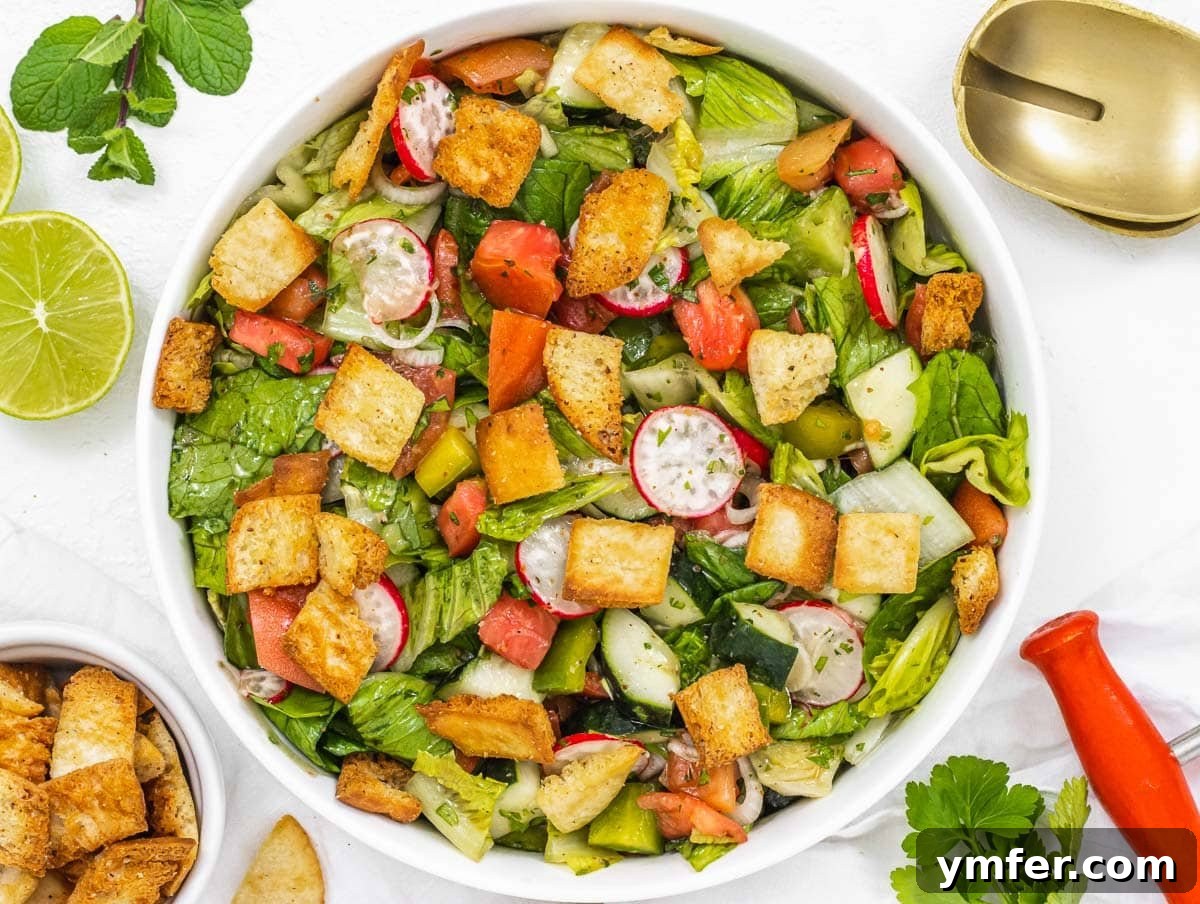
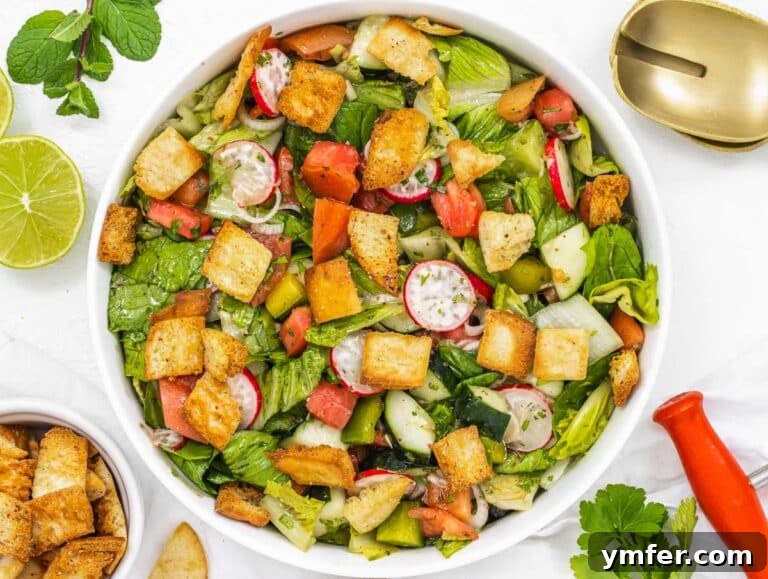
Just before serving, pour the prepared dressing over the mixed vegetables. Toss the salad gently to ensure all ingredients are evenly coated. Finally, top the salad generously with your freshly made, crunchy homemade pita chips.
For an extra touch of richness and visual appeal, you can drizzle a little more extra virgin olive oil and a dash of pomegranate molasses over the finished salad. Serve immediately to enjoy the pita chips at their crispiest!The finished Fattoush salad, glistening with dressing and crowned with crunchy pita.
Delicious Fattoush Variations to Explore
While the classic Fattoush recipe is perfect on its own, its versatility allows for exciting variations that can introduce new flavors and textures. Here are a couple of popular twists:
Fattoush with Crumbled Feta: A Mediterranean Twist
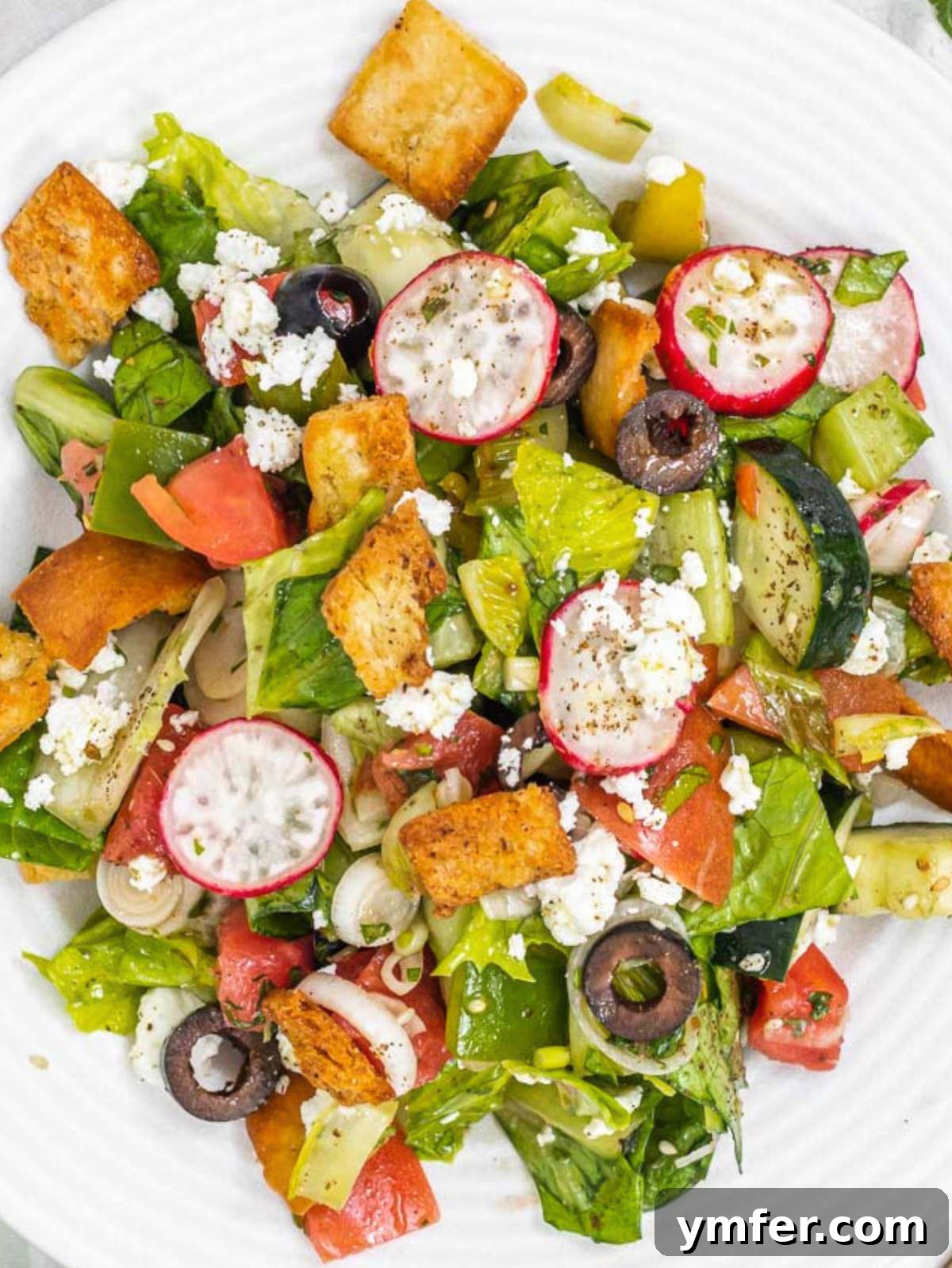
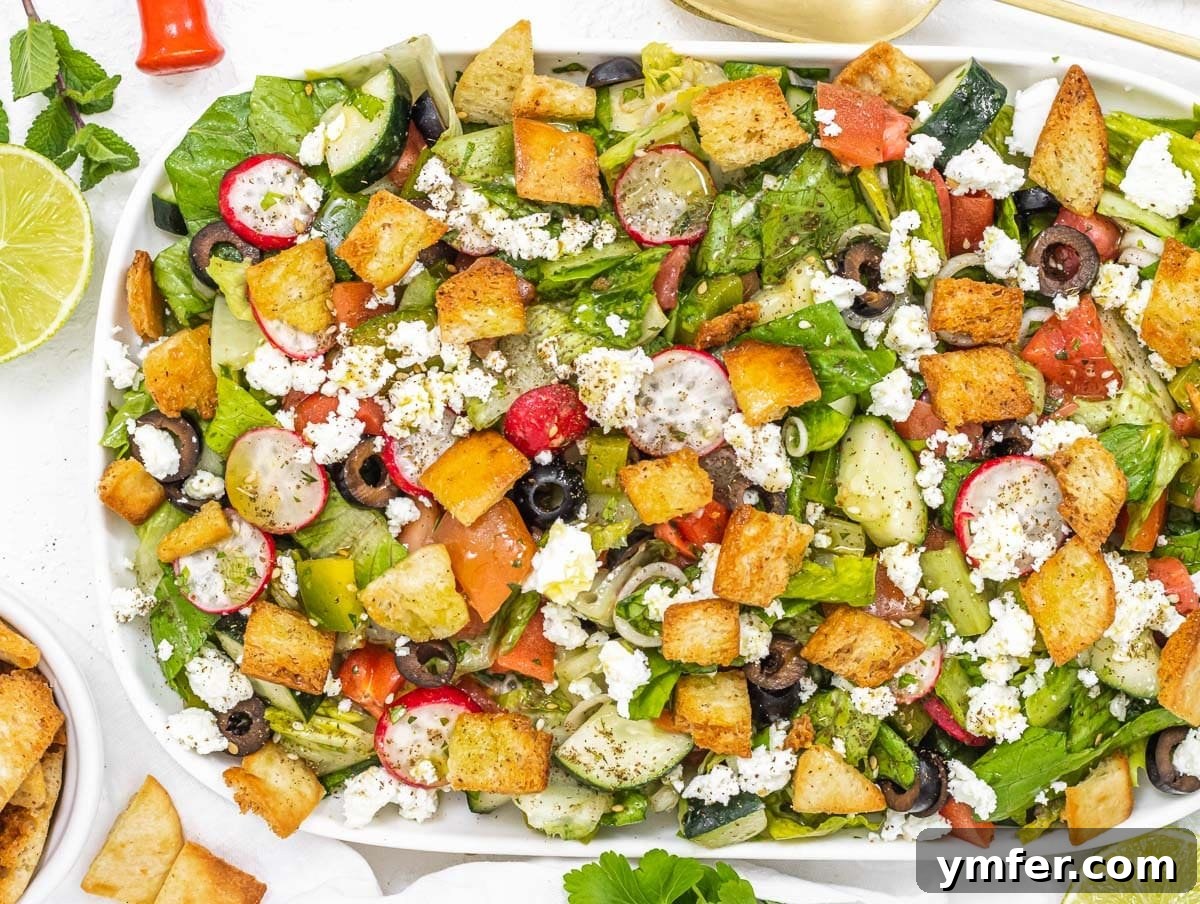
Inspired by the beloved flavors of a Greek salad, this variation adds a creamy, salty dimension. Simply mix in a handful of thinly sliced black or Kalamata olives with your vegetables. Once dressed, top the salad generously with crumbled feta cheese and a sprinkle of dried oregano. The briny olives and tangy feta perfectly complement the fresh vegetables and zesty dressing, creating a fusion of Mediterranean delights.
Creamy Fattoush with Yogurt Tahini Sauce
For those who love a richer, creamier texture, adding a couple of dollops of homemade Yogurt Tahini Sauce on top of your Fattoush salad is an absolute game-changer. The creamy sauce offers an incredible contrast to the fresh, crunchy vegetables, creating a truly harmonious blend of flavors.
To prepare this luscious sauce, combine 1 cup of full-fat Greek yogurt, 2 to 3 tablespoons of tahini (sesame paste), 2 tablespoons of fresh lemon juice, 1 grated clove of garlic, ½ teaspoon of ground cumin, ¾ teaspoon of salt, and a final sprinkle of sumac for an extra layer of tangy complexity. Whisk until smooth and drizzle generously over your Fattoush.
Serving Suggestions: What to Pair with Fattoush
Fattoush is incredibly versatile and can accompany a wide range of dishes. To transform it into a wholesome and complete plant-based meal, consider serving it alongside these protein-rich mains:
- Crispy Falafel: The earthy, spiced flavors of homemade falafel are a classic pairing with the fresh tang of Fattoush.
- Hearty Lentil and Rice Mujaddara: This comforting dish of lentils, rice, and caramelized onions provides a satisfying base that complements the salad’s crispness.
- Flavorful Chickpea Fritters: Light and savory, chickpea fritters offer another excellent plant-based protein option that pairs beautifully.
- Nutritious Lentil Patties: These tender, spiced patties are a perfect match, adding substance and earthy notes to your meal.
More Delicious Plant-Based Mains
Mains
Easy Falafel Recipe
Mains
Mujadara (Lentils and Rice)
Mains
Chickpea Fritters
30-minute meals
Lentil Patties
Make Ahead & Storage Tips for Fattoush
To ensure your Fattoush remains as fresh and crunchy as possible, especially if preparing in advance, consider these tips:
- Make ahead: You can chop all the fresh vegetables, toast the pita bread, and prepare the dressing a few hours in advance. However, store each component separately in airtight containers in the refrigerator. The key is to combine the vegetables, dressing, and pita chips just before serving. This prevents the vegetables from wilting and the pita bread from becoming soggy, ensuring that signature crunch.
- Refrigerator: Fattoush is best enjoyed fresh. If you have any leftovers, store them in an airtight container in the fridge. It will keep for up to 24 hours, though the pita chips will soften over time. For best results, consider storing leftover pita chips separately and adding them just before eating.
- Freezer: This recipe is not suitable for freezing. The high water content of the fresh vegetables and the texture of the pita bread do not hold up well after freezing and thawing.
More Fresh & Delicious Salad Recipes
If you love the fresh, vibrant flavors of Fattoush, you’ll surely enjoy these other healthy salad recipes from our collection:
- Classic Mediterranean Salad
- Hearty Lentil Salad
- Simple Tomato and Cucumber Salad
- Nutritious Lentil Tabbouleh
- Light & Fluffy Couscous Salad
If you tried this Authentic Fattoush Recipe or any other recipe on our blog, please leave a 🌟 star rating and share your thoughts in the comments below. We absolutely love hearing from you and seeing your culinary creations!
Fattoush: Eastern Mediterranean Bread Salad
Nico Pallotta
⭐⭐⭐⭐⭐
This Fattoush salad is a fantastic way to experience the wonderful flavors of the Eastern Mediterranean. It’s ideal for a light lunch, a healthy appetizer, or a vibrant side dish for any meal.
15 mins
5 mins
20 mins
4 – 6 people
Appetizer, Main, Side dish
Eastern Mediterranean, Middle-Eastern
Share
Video
Ingredients
PITA CHIPS
- 2 pita breads, chopped
- 2 tablespoons of extra virgin olive oil
- ½ teaspoon of salt
SALAD
- 1 head of Romaine lettuce, chopped
- 2 medium tomatoes, diced
- 1 large cucumber, diced
- 1 small green bell pepper, diced
- 6 radishes, thinly sliced
- 3 green onions, thinly sliced
- ¼ cup fresh parsley, chopped
- 2 tablespoons fresh mint, chopped
DRESSING
- ¼ cup of extra virgin olive oil
- 3 tablespoons of pomegranate molasses
- 2 tablespoons of lime juice
- 2 teaspoons of sumac
- 1 teaspoon of salt (or more to taste)
- 1 clove of garlic, grated
Instructions
-
Cut the bread into small bite-size pieces, toss it in 2 tablespoons of olive oil, ½ teaspoon of salt, and optionally a pinch of sumac.
Toast it at 400°F or 200°C in the air fryer or oven until crispy and golden brown – about 3 to 5 minutes.
-
To a small jar, add ¼ cup of olive oil, 3 tablespoons of pomegranate molasses, 2 tablespoons of lime juice, 2 teaspoons of sumac, 1 teaspoon of salt, and 1 grated clove of garlic. Close and shake well.
Alternatively, whisk the ingredients together in a small bowl.
-
To a large bowl, add 1 head of chopped Romaine lettuce, 2 diced medium tomatoes, 1 diced large cucumber, 1 diced small green bell pepper, ¼ cup chopped fresh parsley, 2 tablespoons chopped fresh mint, 6 thinly sliced radishes, and 3 thinly sliced green onions.
-
Toss the salad with the dressing and top it with the toasted bread.
Notes
SUBSTITUTIONS
Romaine lettuce: Substitute any crisp lettuce like iceberg or sturdy green leaf lettuce.
Green onions: Substitute with one small shallot or half a red onion, thinly sliced.
Cucumbers: Any type of cucumber works, including Persian, English, or regular garden cucumbers.
Tomatoes: Use any type of ripe, flavorful tomatoes such as cherry, Roma, or vine-ripened.
Green pepper: Substitute with yellow or red bell pepper for a sweeter flavor and different color.
Pita bread: Any traditional Arabic flatbread can be used. Stale bread works best for toasting.
Fresh herbs: You can use a mix of mint, parsley, and for a traditional touch if available, purslane. Dill or cilantro can also be added.
Lime juice: Substitute with an equal amount of freshly squeezed lemon juice.
Pomegranate molasses: Substitute with 2 tablespoons of balsamic vinegar or balsamic glaze for a similar tangy sweetness, though the flavor will vary slightly.
Sumac: You can leave it out if unavailable, but it adds a distinctive citrusy tang.
MAKE AHEAD & STORAGE
Make ahead: For best results, chop the vegetables, toast the pita bread, and prepare the dressing separately. Store them in airtight containers in the refrigerator. Combine all components just before serving to maintain the freshness and crunch.
Refrigerator: Keep Fattoush leftovers in an airtight container in the fridge for up to 24 hours. Be aware that the pita bread will soften.
Freezer: This fresh salad recipe is not suitable for freezing, as the texture of the vegetables and bread will be compromised upon thawing.
Nutrition
Calories: 316kcal
,
Carbohydrates: 34g
,
Protein: 6g
,
Fat: 18g
,
Saturated Fat: 2g
,
Polyunsaturated Fat: 2g
,
Monounsaturated Fat: 12g
,
Trans Fat: 0g
,
Cholesterol: 0mg
,
Potassium: 761mg
,
Dietary Fiber: 6g
,
Sugar: 11g
,
Vitamin A: 14416IU
,
Vitamin B6: 0.3mg
,
Vitamin C: 38mg
,
Vitamin E: 3mg
,
Vitamin K: 213µg
,
Calcium: 109mg
,
Folate: 252µg
,
Iron: 3mg
,
Manganese: 1mg
,
Magnesium: 51mg
,
Zinc: 1mg
Tried this recipe?
Leave a comment below or mention @theplantbasedschool on Instagram. We love hearing from you ⭐️ 💚.
If you enjoyed this authentic Fattoush recipe, you might also be interested in our other culinary guides:
Explore More Recipes
Collections
40 Easy Meatless Dinner Ideas
Collections
What to Eat with Hummus: Ultimate Pairings
Collections
30 Best Vegetarian Recipes for Every Occasion
Collections