
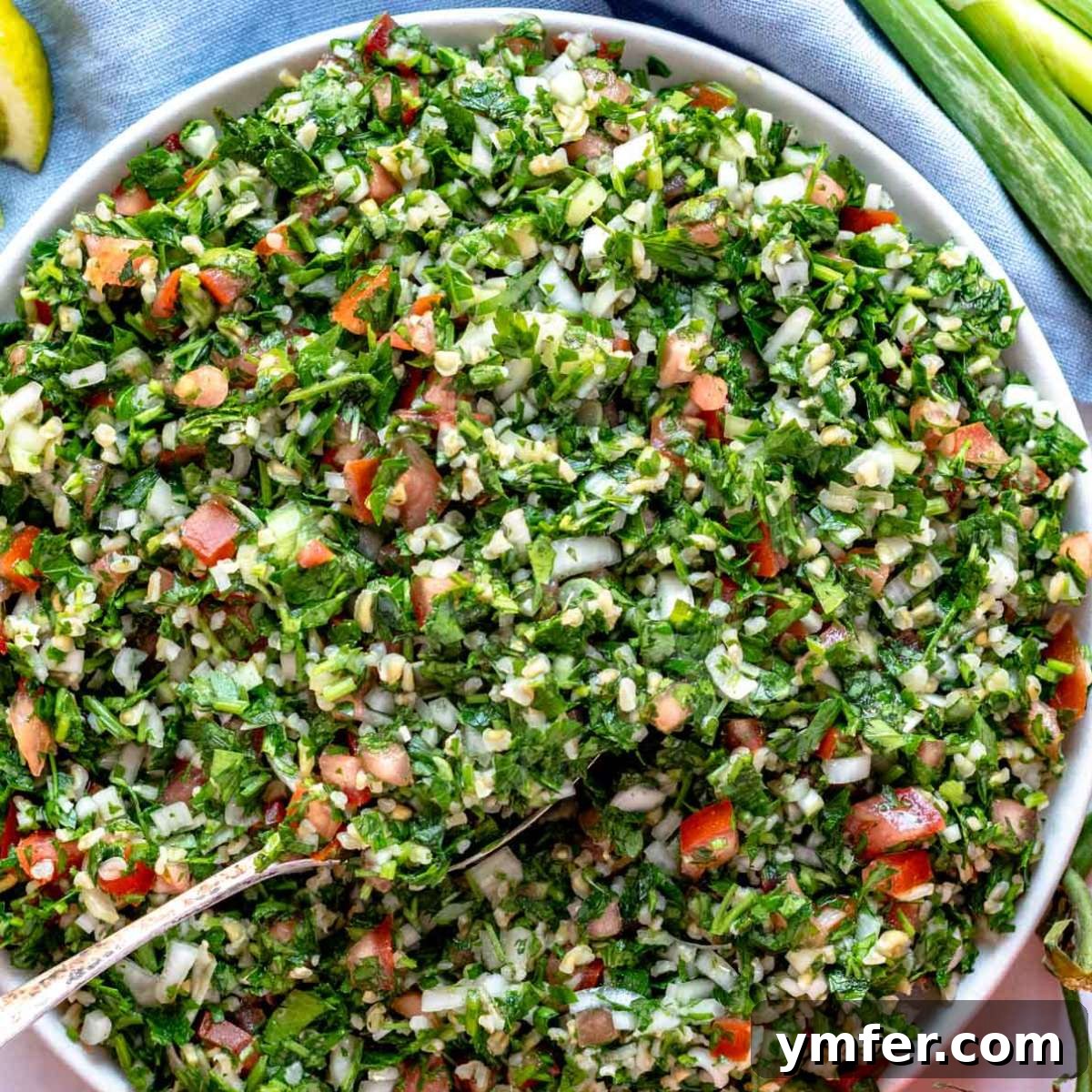
The Ultimate Fresh & Healthy Tabouli (Tabbouleh) Recipe
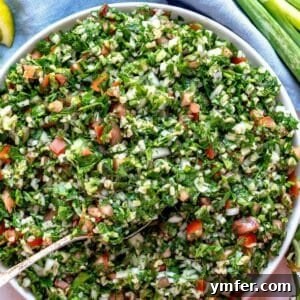
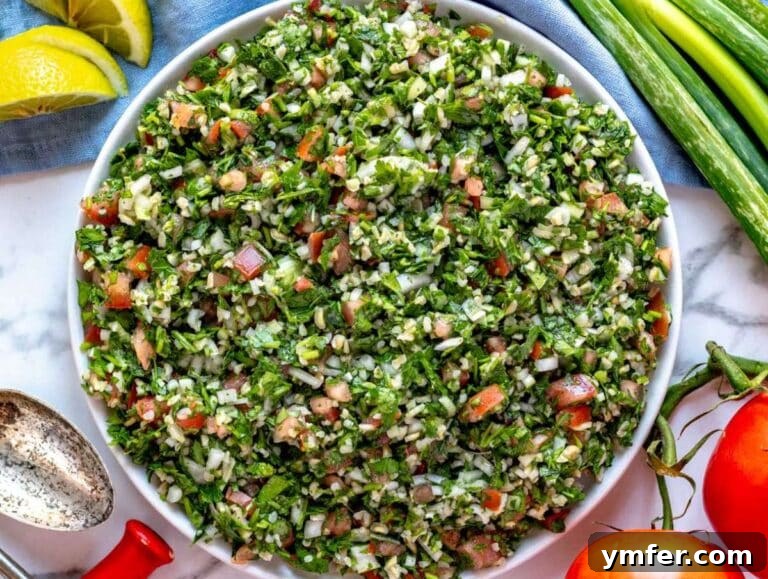
Discover the vibrant flavors of the Mediterranean with our authentic tabouli (tabbouleh) recipe. This refreshing, herb-packed salad, featuring finely chopped parsley, ripe tomatoes, crisp mint, and delicate bulgur, is a culinary delight perfect for any occasion. Whether you’re seeking a light and healthy lunch, a heart-healthy side dish, or a vibrant addition to your next gathering, this traditional Lebanese salad promises to invigorate your palate and nourish your body.
Looking for more delicious Mediterranean salads? Explore our recipes for hearty lentil salad, classic Mediterranean salad, wholesome Greek chickpea salad, and versatile rice salad.
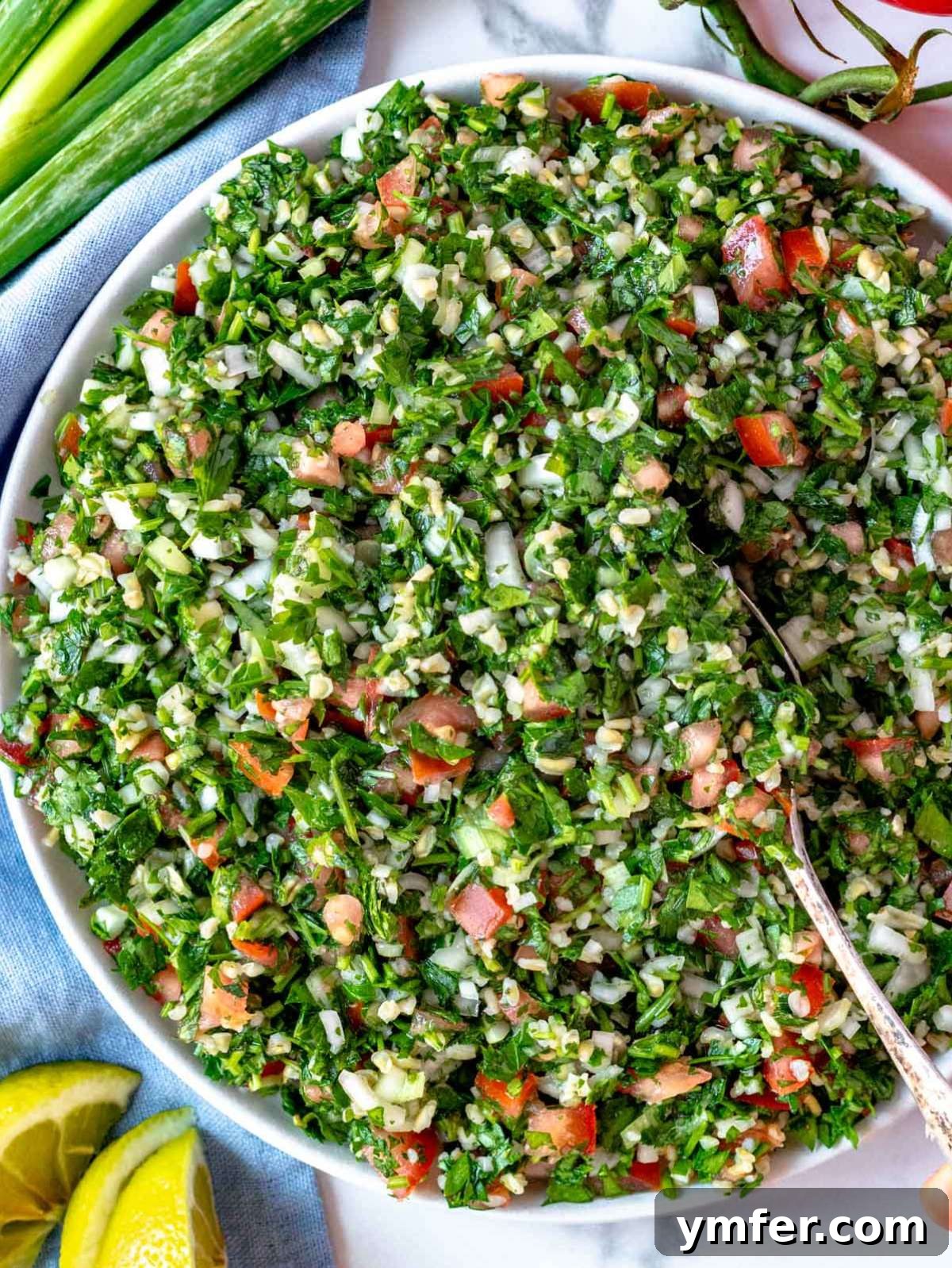
Feel-Good Flavors for a Healthier You
Tabouli (also commonly spelled tabbouleh) is more than just a salad; it’s a celebration of fresh, vibrant ingredients that embody the essence of Levantine cuisine. This classic Middle Eastern dish artfully combines finely chopped fresh parsley, fragrant mint, juicy tomatoes, crisp scallions (or green onions), and tender bulgur wheat, all brought together with a bright dressing of extra virgin olive oil and zesty lemon juice 🍋. Its distinct flavor profile and refreshing texture make it an irresistible addition to any meal.
Beyond its incredible taste, tabouli is a powerhouse of nutrition. Louise and I regularly turn to this dish as one of our preferred low-calorie salad recipes. It’s not only incredibly satisfying but also rich in dietary fiber, heart-healthy, and naturally plant-based. The abundance of fresh herbs like parsley and mint provides a generous dose of antioxidants and anti-inflammatory benefits, contributing to overall well-being. Bulgur wheat, a cornerstone of this salad, offers complex carbohydrates for sustained energy and a delightful, satisfying chew. This is truly the kind of food that leaves you feeling revitalized and light, rather than heavy or sluggish.
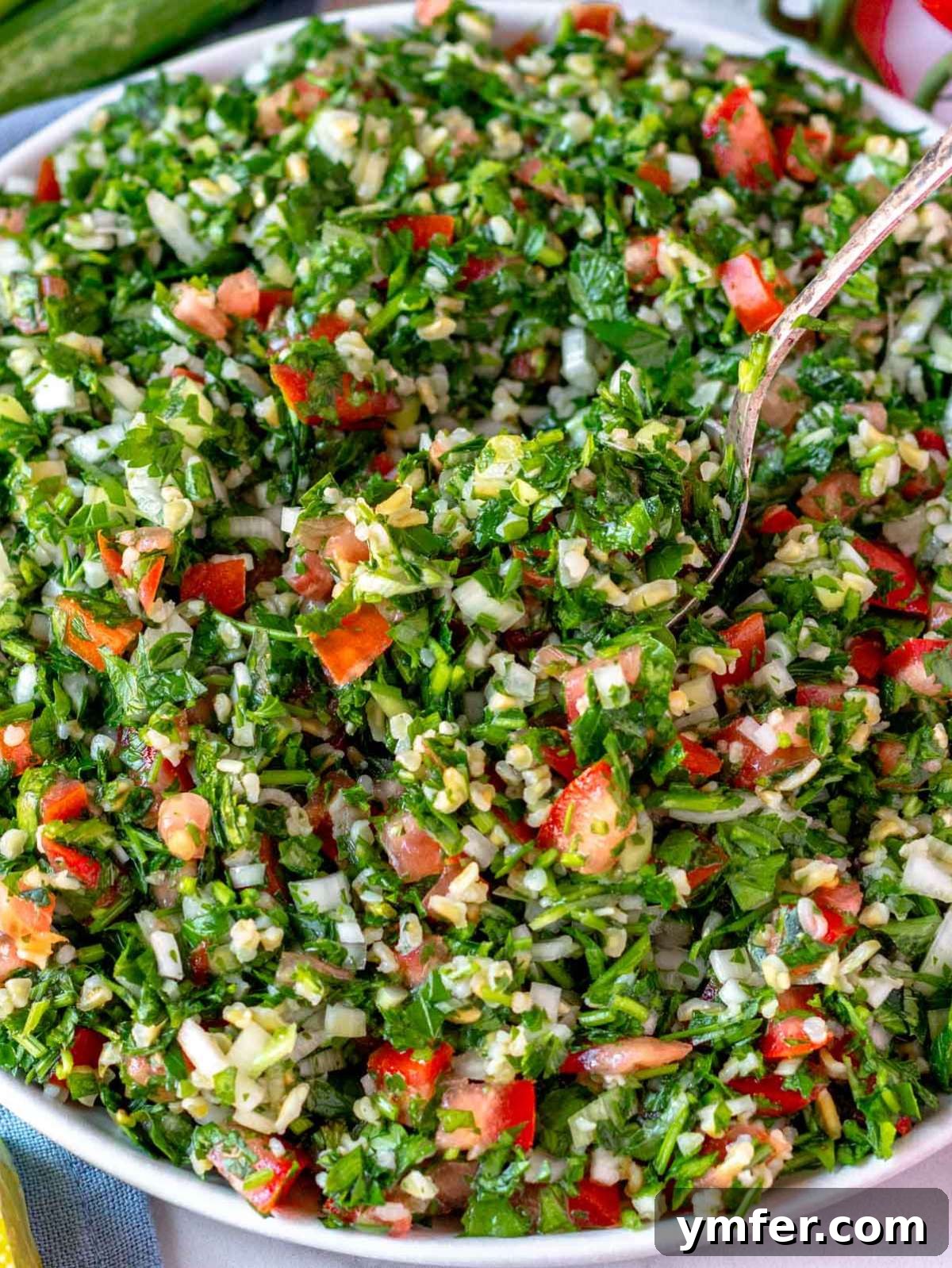
The versatility of tabouli makes it a perfect choice for a variety of occasions. Whether you’re preparing a delicious cold salad for a potluck, packing a nutritious and flavorful lunch for work, or seeking elegant vegetarian sides for grilling season, this tabouli recipe effortlessly checks all the boxes ✅. It’s wonderfully light, bursting with a zesty tang, and infused with an unmistakable fresh flavor. In fact, it often tastes even better after a little time in the refrigerator, allowing the flavors to meld beautifully. You can also easily customize this salad: try it with gluten-free grains, add legumes for extra protein, or serve it in crisp lettuce cups for a fun and healthy summer snack 🥬. Simple, wholesome, and profoundly flavorful, this tabouli recipe embodies everything we cherish in a truly exceptional salad.
Essential Ingredients for Perfect Tabouli
Crafting an authentic and delicious tabouli starts with selecting the freshest, highest-quality ingredients. Each component plays a crucial role in achieving the characteristic flavor and texture of this beloved Mediterranean salad. You’ll find a complete ingredient list, specific quantities, and helpful substitution ideas in the detailed recipe box further down the page.
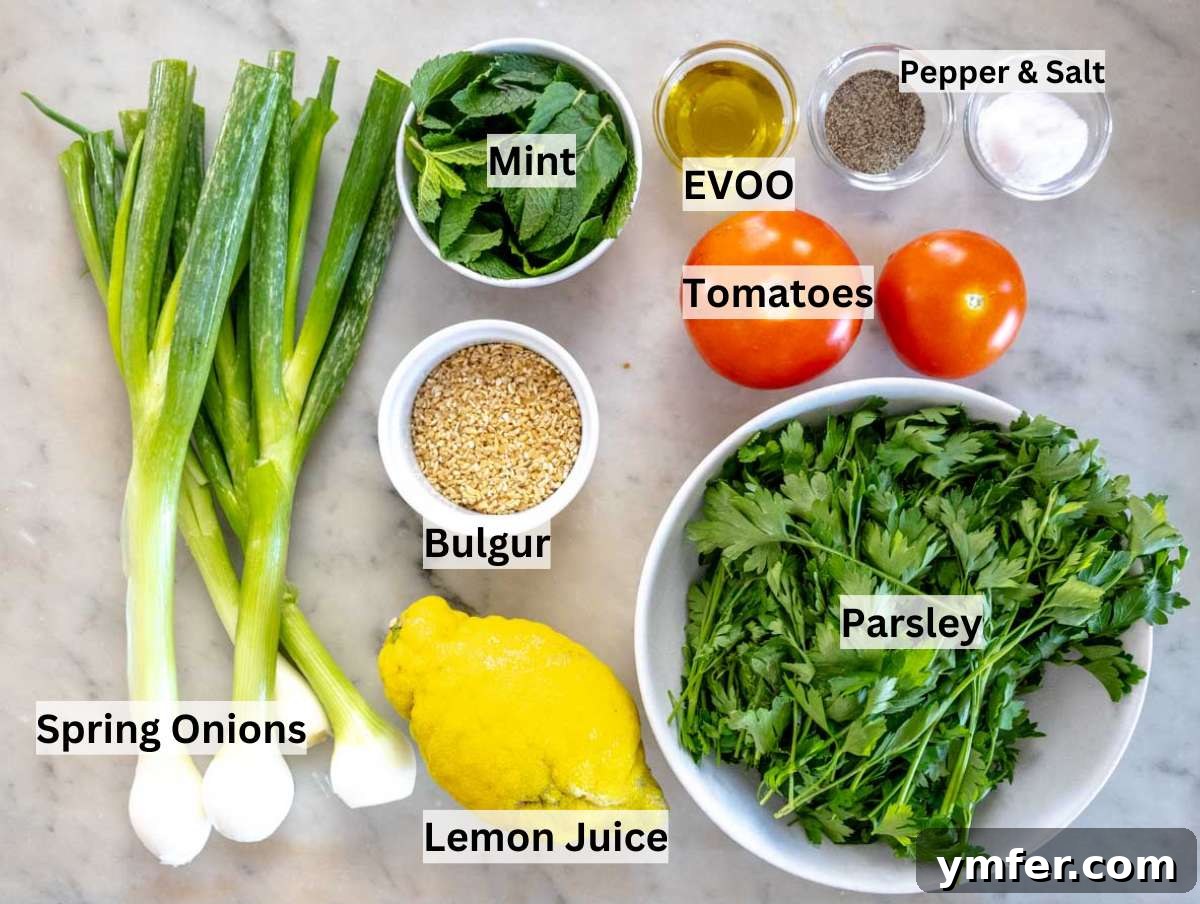
- Fresh Parsley: This is the undeniable star of tabouli salad. We highly recommend using flat-leaf or Italian parsley for its robust flavor and ideal texture. While curly parsley can be used in a pinch, it typically yields a slightly different mouthfeel. Always ensure you remove the thick stems and chop the leaves very finely with a sharp knife to achieve that signature light and fluffy tabouli texture.
- Fresh Mint: A crucial aromatic herb that infuses the salad with a burst of cooling, refreshing flavor. Choose bright green mint leaves for the best results. If fresh mint is unavailable, basil or cilantro can offer an interesting twist, though they will alter the traditional flavor profile significantly.
- Ripe Tomatoes: The tomatoes add sweetness, juiciness, and a beautiful vibrant red hue to the salad. Opt for firm, ripe varieties like Roma, beefsteak, or vine-ripened tomatoes. When tomatoes are out of season or if you desire a different sweetness, consider substituting with pomegranate seeds for a jewel-like burst of flavor, or use sweet cherry tomatoes, halved or quartered.
- Scallions or Green Onions: These provide a gentle, delicate onion flavor that complements the fresh herbs without overpowering them. Use both the white and light green parts, finely sliced. In a pinch, a very small amount of finely minced white or red onion can be substituted, but scallions offer a milder, more authentic taste.
- Bulgur Wheat: The traditional grain for tabbouleh is fine bulgur (#1 grind), which is typically soaked rather than cooked, contributing to the salad’s unique light and chewy texture. For a delicious gluten-free tabouli, excellent alternatives include cooked quinoa, cauliflower rice (raw or lightly steamed), or millet. You can also experiment with small pasta like couscous or cooked buckwheat groats for a novel variation.
- Fresh Lemon Juice: Absolutely essential for brightening all the flavors and providing the characteristic tangy acidity. Always use freshly squeezed lemon juice for the best possible taste; bottled juice simply won’t compare. Lime juice can be a last-resort substitute, but it will lend a distinctly different citrus note.
- Extra Virgin Olive Oil: A high-quality extra virgin olive oil is vital for adding richness, depth, and a silken texture, helping to emulsify and tie all the fresh ingredients together. Its fruity notes are integral to the Mediterranean flavor. If a milder oil is preferred, good quality avocado oil can be used.
- Salt and Freshly Ground Black Pepper: These fundamental seasonings are crucial for balancing and enhancing all the fresh flavors. We recommend sea salt or kosher salt, along with freshly ground black pepper, adjusting quantities to your personal taste preference.
- Lettuce (optional): While not always mixed directly into the salad, crisp romaine lettuce leaves are often served alongside tabouli, acting as edible scoops or elegant serving vessels. Butter lettuce or endive leaves can also be used for a more refined presentation.
- Optional Add-ins for Flavor and Texture: For those looking to put a personal spin on this healthy summer salad, consider adding finely chopped cucumber for extra crunch, a touch of minced garlic for aromatic depth, a handful of briny olives, or a sprinkle of crumbled feta cheese (if not strictly vegan). To boost fiber or protein content, incorporating cooked lentils, more quinoa, or serving with a side of creamy hummus makes for an even more substantial meal.
Exciting Tabouli Variations to Try
While the classic tabouli recipe is perfect as is, it’s also wonderfully adaptable. These variations allow you to customize the salad to suit dietary needs or simply explore new flavor profiles, making it an excellent addition to any meal plan, from casual picnics to elegant dinners.
- Quinoa Tabbouleh: For those seeking a delicious gluten-free option, substituting boiled and cooled quinoa for bulgur is an outstanding choice. Quinoa not only offers a similar light and fluffy texture but also introduces a subtle nutty flavor and a significant boost of complete protein. This variation is exceptionally popular for those prioritizing a healthy summer salad or engaging in meal prep for the week.
- Lentil Tabbouleh: Transform your tabouli into a heartier, more substantial dish by swapping the bulgur with cooked brown, green, or black lentils. This variation significantly increases the fiber and iron content, making it incredibly satisfying. Lentil tabbouleh holds up beautifully, making it an ideal cold salad for potluck gatherings, family barbecues, or packed lunches that need to travel well.
- Chickpea Tabbouleh: Another fantastic way to boost the protein and fiber in your tabouli is to replace the bulgur with canned or freshly cooked chickpeas. Chickpeas add a delightful creamy texture and a satisfying bite, elevating the salad to a fulfilling plant-based main course. This version is especially delicious when served with warm pita bread or as part of a Mediterranean mezze platter.
- Cauliflower Rice Tabbouleh: For a grain-free and low-carb alternative, finely chop or process cauliflower florets into a rice-like consistency. This “cauliflower rice” can be used raw or lightly steamed, providing a wonderfully fresh and crunchy texture that mimics bulgur while keeping the dish light and carb-conscious.
- Herb-Focused Tabbouleh: Experiment with different herb ratios or introduce new herbs like dill, chives, or even oregano for a unique aromatic twist. While parsley remains central, adjusting the balance of mint or adding other fresh greens can create exciting new flavors.
- Spicy Tabbouleh: For those who enjoy a little heat, a finely minced fresh chili pepper (like jalapeño or serrano) or a pinch of red pepper flakes can be added to the dressing. This introduces a subtle kick that beautifully complements the fresh, tangy flavors.
How to Make Perfect Tabouli: A Step-by-Step Guide
Creating fresh, delicious tabouli is simpler than you might think, primarily involving careful chopping and thoughtful assembly. Follow these steps to achieve a perfectly balanced and flavorful Mediterranean salad every time.
Step 1: Prepare the Bulgur Wheat
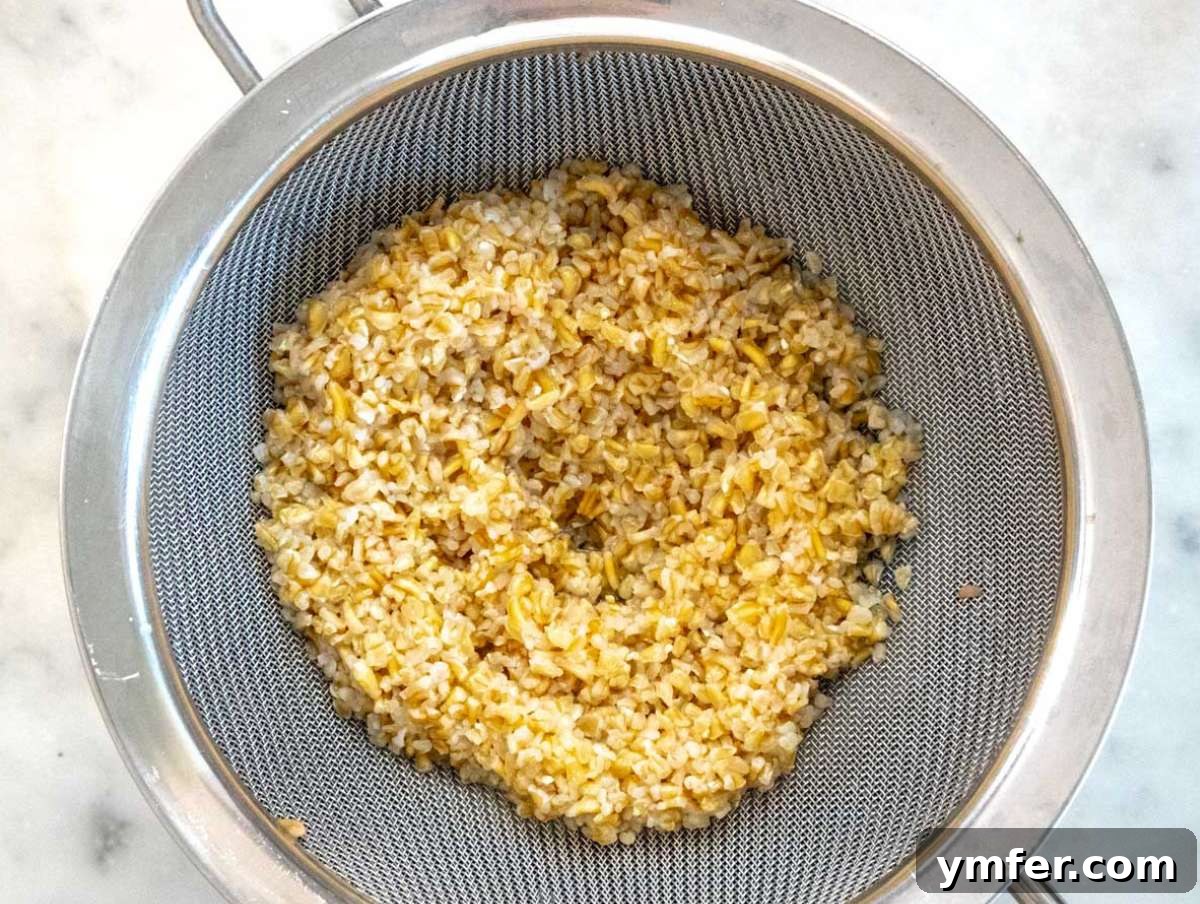
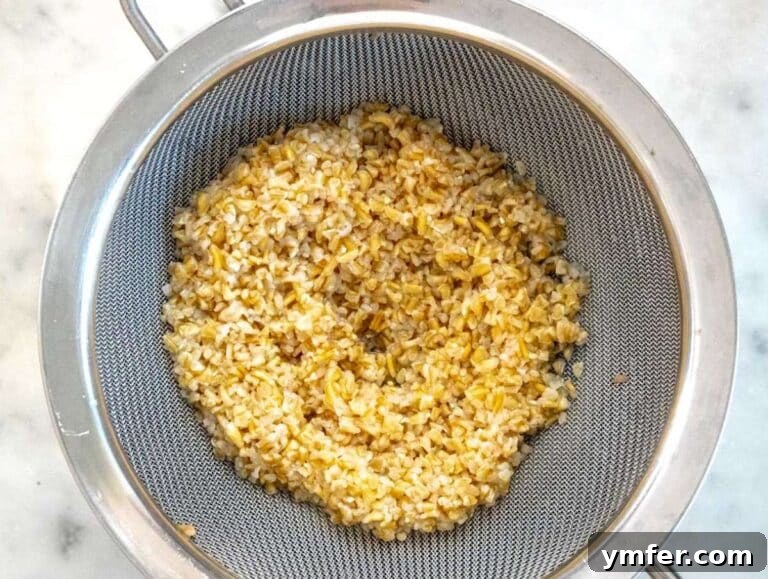
Begin by preparing your bulgur wheat. You have two main options here, depending on your preference for texture and tradition. The quickest method is to boil it according to the package directions, typically for about 10-15 minutes, until tender. Once cooked, drain it thoroughly in a fine-mesh sieve and allow it to cool for at least 10 minutes to prevent it from wilting the fresh herbs.
For a more traditional tabbouleh texture, especially when using fine bulgur, simply soak the grain in hot (but not boiling) water for approximately 20-30 minutes. The bulgur will absorb the water and soften beautifully without needing to be cooked on the stove. Once softened, it’s crucial to squeeze out any excess water using your hands or a clean kitchen towel. This step is vital to prevent the tabouli from becoming watery. Transfer the prepared bulgur to a large mixing bowl, ready for the other ingredients.
Step 2: Finely Chop the Fresh Ingredients
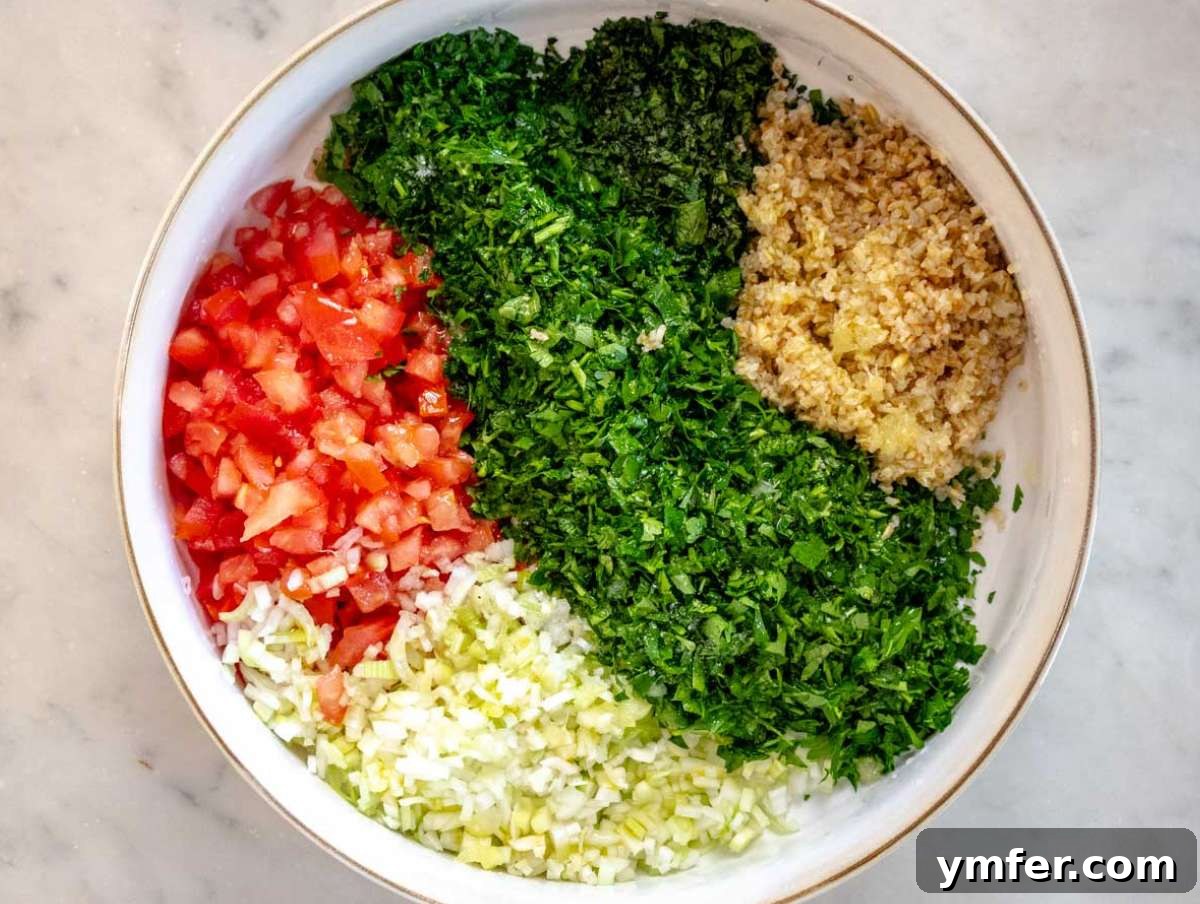
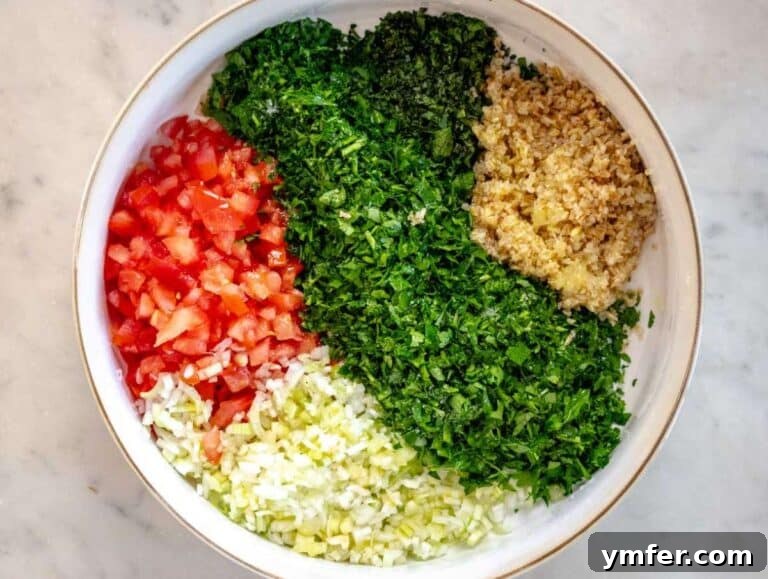
Precision in chopping is key to authentic tabouli. First, finely dice your ripe tomatoes into small, uniform pieces. If your tomatoes are exceptionally juicy, it’s a good idea to let them drain in a mesh strainer for a few minutes while you prepare other ingredients. This simple trick helps prevent the salad from becoming watery.
Next, thoroughly rinse and gently pat dry the fresh parsley and mint leaves. Remove any thick, coarse stems from both herbs, as these can be unpleasant in the salad. Using a very sharp knife, finely chop the parsley and mint leaves. Aim for a consistently fine chop; this ensures the herbs integrate perfectly and release their aromatic oils. Add the chopped herbs and diced tomatoes to the bowl with the bulgur.
Finally, prepare the scallions (also known as green onions). Slice them thinly, utilizing both the white and the light green parts for the best flavor balance. Discard the darker green tips if they appear tough. Toss the sliced scallions into the bowl with the other ingredients.
Expert Tip: Don’t rush the chopping process. Taking your time to finely and consistently chop the herbs and vegetables makes a significant difference in the final texture, presentation, and overall enjoyment of this fresh, herb-packed salad. Uniform pieces ensure every bite is perfectly balanced.
Step 3: Season and Gently Mix the Salad
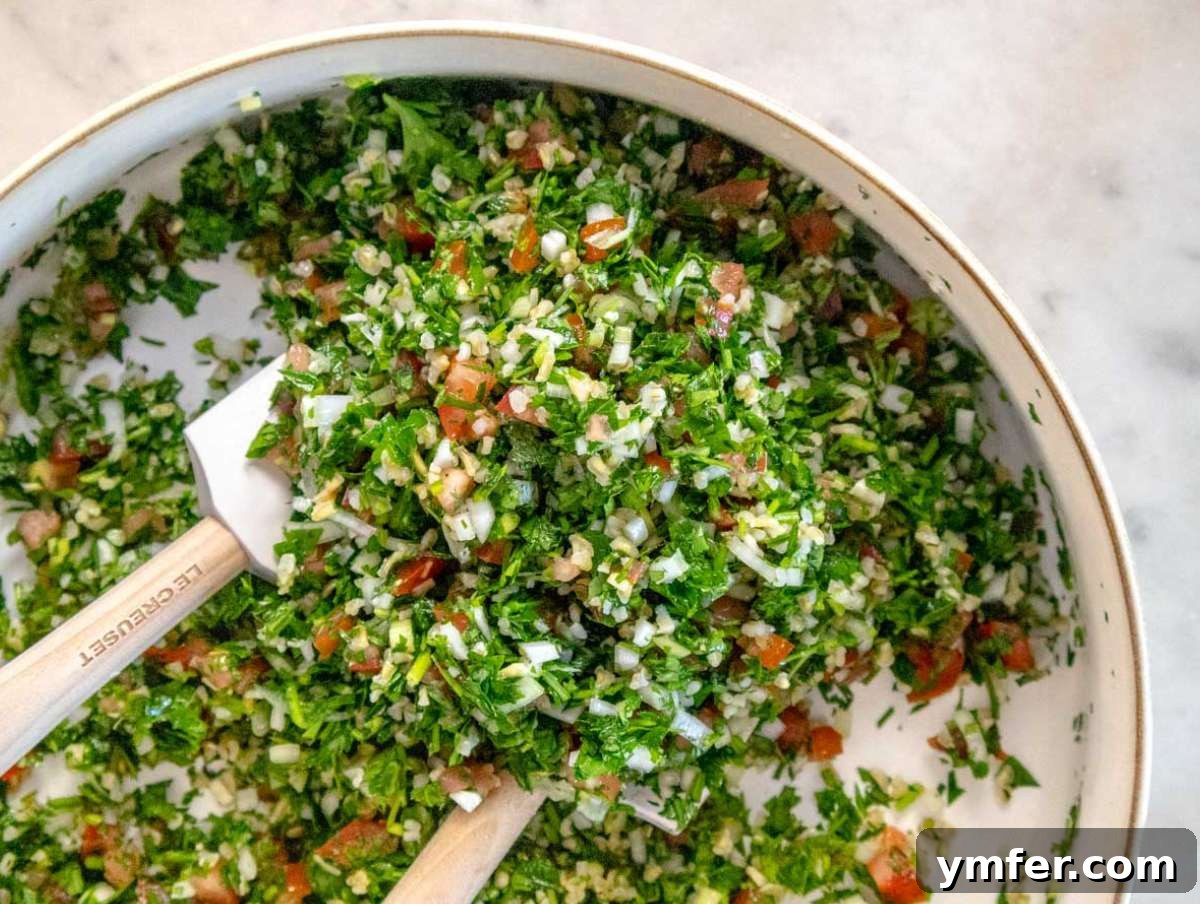
Now it’s time to bring all those wonderful flavors together. Drizzle a generous amount of high-quality extra virgin olive oil over the ingredients in the bowl. Follow with a splash of freshly squeezed lemon juice, which will awaken all the fresh tastes. Season generously with sea salt and a good amount of freshly ground black pepper. These seasonings are crucial for balancing the bright, herbaceous notes.
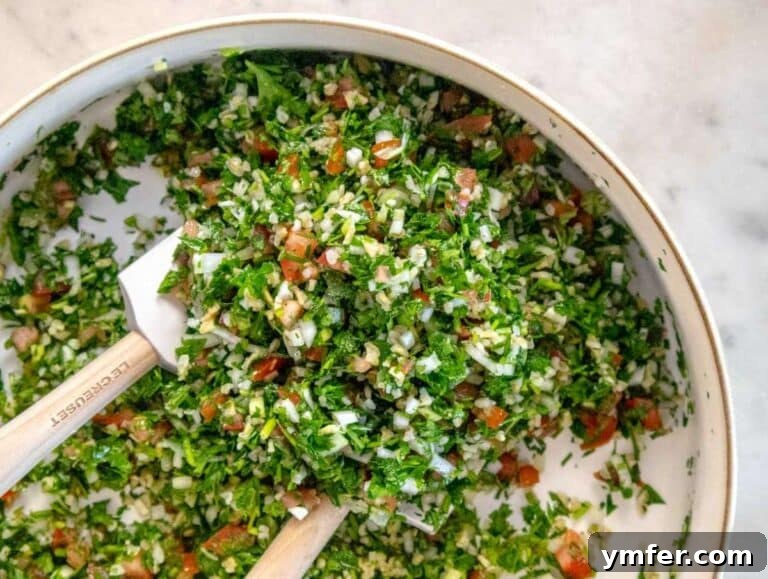
Using a large spoon, or even better, your clean hands, gently mix all the ingredients thoroughly. The goal is to distribute the dressing and seasonings evenly without bruising the delicate herbs. Once mixed, taste the tabouli and adjust the lemon juice or salt as needed to suit your preference. Many find a little extra lemon juice enhances its freshness. While you can serve it immediately, the flavors truly meld and deepen after chilling in the refrigerator for at least 30 minutes, or even an hour. This resting time allows the bulgur to absorb the zesty lemon and tomato juices, resulting in a more harmonious and delicious salad.
Step 4: Serve and Savor
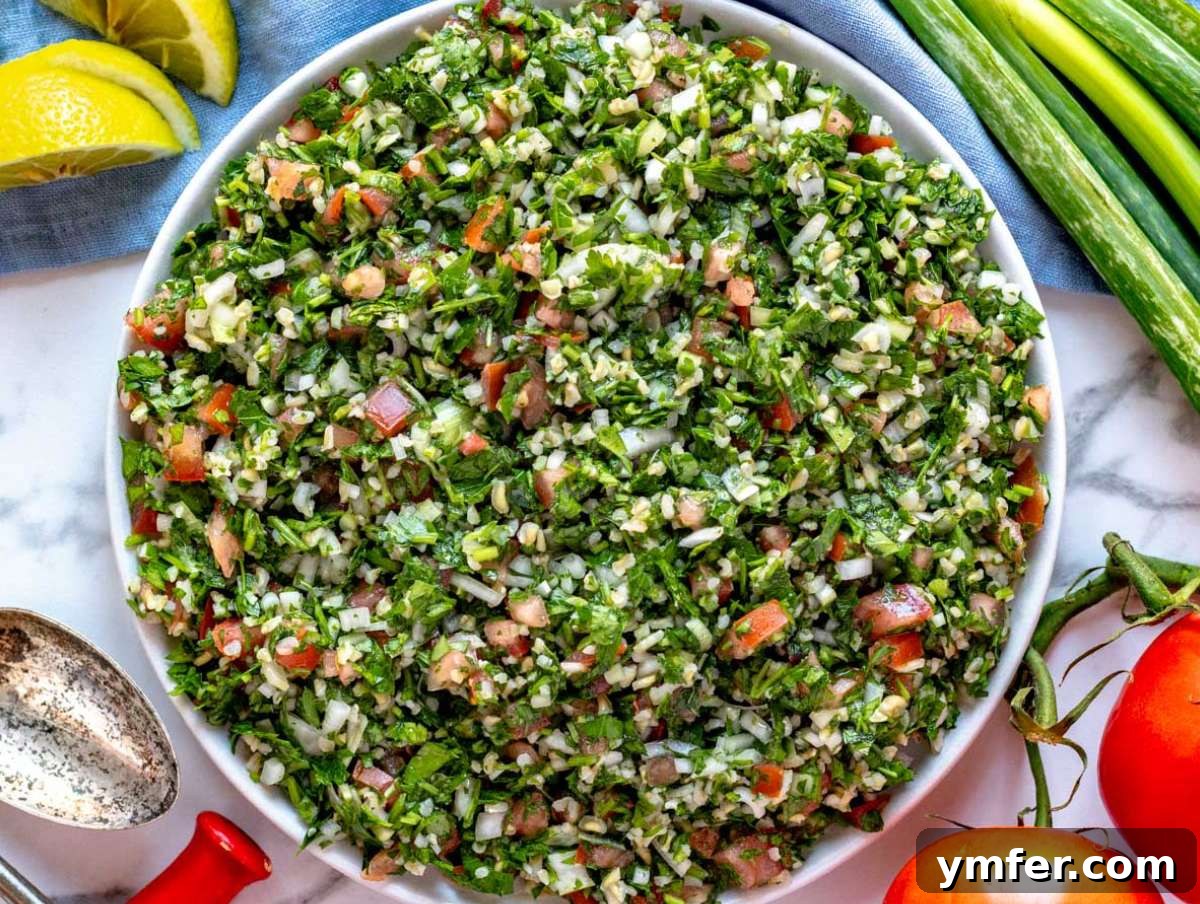
Once chilled and perfectly seasoned, your homemade tabbouleh is ready to be enjoyed! Serve it cold as a refreshing light lunch, a vibrant side dish, or an integral part of a larger Mediterranean feast. It’s truly one of our favorite plant-based side dishes, especially enjoyable during warmer weather months when fresh herbs are at their peak.
Tabouli pairs beautifully with a wide array of other Mediterranean favorites. Consider serving it alongside creamy hummus, smoky baba ganoush, tender grilled eggplant, or crispy falafel. For an interactive and fun way to serve, scoop generous portions into crisp lettuce leaves (like romaine or butter lettuce) or tuck it into warm pita bread pockets. This makes it an ideal, mess-free option for BBQs, picnics, and potlucks, allowing everyone to customize their bites. Enjoy the fresh, healthful flavors of this classic dish!
Essential Tips for the Best Tabouli (Tabbouleh)
- Chop by Hand, Slowly and Mindfully: The secret to truly vibrant tabouli lies in the chopping. In traditional Lebanese homes, parsley is almost always chopped by hand with a very sharp knife. This isn’t just a tradition; it’s a technique that’s gentler on the herbs, preserving their bright green color and preventing bruising, which can lead to a darker, less appealing salad. Avoid over-processing in a food processor, which can turn the herbs into a paste.
- Always Use Fine Bulgur (#1 Grind): Many recipes neglect to specify the grind of bulgur, but this is a critical detail. Fine bulgur (often labeled as #1 grind) is absolutely essential for achieving the authentic light, fluffy, and delicate texture of classic tabbouleh. Coarser bulgur (#2 or #3 grind) has a much firmer texture and is better suited for heartier cooked pilafs or grain salads, not for this fresh herb salad.
- Balance the Green-to-Grain Ratio for Authenticity: A common misconception in many Americanized versions of tabbouleh is to have an equal or even greater proportion of bulgur to herbs. However, true tabouli is fundamentally a herb salad, where parsley should dominate the volume. A rough but accurate guide is to aim for 3 to 4 parts finely chopped parsley to 1 part prepared bulgur. This ratio flips the script on many adaptations and is key to the salad’s fresh, green character.
- Salt the Tomatoes Early for Enhanced Flavor: After finely chopping your tomatoes, toss them with a small pinch of salt and allow them to sit in a separate bowl or strainer while you chop the rest of your herbs. This simple step helps to draw out any excess moisture from the tomatoes, preventing your tabouli from becoming watery, and simultaneously intensifies their sweet, natural flavor.
- Use Your Hands to Gently Mix: Much like many traditional Levantine salads, tabouli benefits from being mixed gently by hand. This allows for a more even distribution of the dressing and seasonings, ensuring every component is coated. Crucially, it also helps to avoid crushing the delicate herbs, maintaining their volume and fresh appearance. Think of it as gently folding the ingredients together.
- Do Not Skip the Resting Time: While you can certainly eat tabouli immediately after preparation, it truly reaches its peak flavor after resting. Chilling the salad for at least 30 minutes, and ideally an hour or more, allows the bulgur to fully absorb the bright lemon juice and the delicious tomato juices. This melding of flavors results in a more harmonious, cohesive, and deeply flavorful salad that is far superior to one eaten straight away.
- Adjust Seasoning Before Serving: Always give your tabouli a final taste test just before serving. Flavors can change as the salad rests. You might find it needs an extra squeeze of lemon, another pinch of salt, or a fresh grind of pepper to perfectly balance all the notes.
- Proper Herb Washing and Drying: Ensure your parsley and mint are thoroughly washed and completely dry before chopping. Excess water clinging to the herbs can make the salad watery and dilute the dressing. Use a salad spinner or pat them dry with paper towels.
Frequently Asked Questions About Tabouli
For authentic and best-textured tabbouleh, always use fine bulgur, which is also commonly labeled as #1 grind. This type of bulgur has a delicate consistency that quickly absorbs moisture without needing to be cooked on the stove, blending seamlessly with the finely chopped herbs. Coarser bulgur varieties (like #2 or #3) are much more robust and are better suited for hot pilafs, soups, or stews, rather than a fresh salad like tabouli. If you can only find coarser bulgur, ensure you soak it longer until it’s tender and squeeze out all excess water.
Absolutely! Making a gluten-free tabouli is very easy and just as delicious. The most popular and recommended substitute for bulgur is cooked quinoa. Quinoa offers a similar light and fluffy texture, a pleasant nutty flavor, and the added benefit of being a complete protein. Other excellent gluten-free alternatives include finely chopped cauliflower rice (used raw or lightly steamed), or cooked millet. Simply prepare your chosen grain according to its package instructions and ensure it’s cooled before mixing with the other ingredients.
Yes, you can, and in fact, making tabbouleh ahead of time is often recommended! The flavors of tabouli truly meld and deepen after resting in the refrigerator for a few hours. This allows the bulgur to fully absorb the zesty lemon juice, the rich olive oil, and the savory juices from the tomatoes, making the salad even more flavorful and harmonious. It’s an ideal make-ahead dish for parties, picnics, or meal prep. Just ensure it’s stored in an airtight container.
Yes, tabouli is exceptionally healthy and considered one of the best low-calorie salad recipes you can incorporate into your diet. It is packed with an impressive array of beneficial nutrients. The high content of fresh parsley and mint provides a powerful dose of antioxidants and anti-inflammatory compounds. The bulgur contributes significant dietary fiber, aiding digestion and promoting satiety. Furthermore, it’s naturally vegan, dairy-free, and rich in vitamins (especially Vitamin K and C) and minerals, thanks to the fresh lemon juice and heart-healthy extra virgin olive oil. It’s a truly nourishing and energizing dish.
Watery tabouli is a common issue, usually stemming from one of two main culprits: overly juicy tomatoes or improperly dried herbs. To prevent this, ensure you select firm, ripe tomatoes and, after dicing them, consider letting them drain in a mesh strainer for a few minutes before adding them to the salad. For the herbs, make sure your parsley and mint are thoroughly washed and then very well dried, either by spinning them in a salad spinner or carefully patting them dry with a clean kitchen towel, before you begin chopping. Also, ensure you squeeze any excess water from the soaked bulgur.
While a food processor can certainly chop herbs quickly, it needs to be used with extreme caution for tabouli. Over-processing in a food processor can easily bruise the delicate parsley and mint, turning them into a mushy paste rather than light, fluffy greens. This will not only compromise the texture but also dull the vibrant green color. For the best results and the most authentic texture, we highly recommend using a very sharp knife and chopping the herbs by hand. If you must use a food processor, pulse very briefly and in small batches to avoid over-processing.
Not necessarily for fine bulgur, which is traditionally used in tabbouleh. Fine bulgur does not typically require stovetop cooking. Instead, it is softened by soaking it in hot (but not boiling) water, allowing it to absorb the moisture naturally. This authentic method yields a lighter, chewier texture that is characteristic of classic tabouli. If you’re using a medium or coarse grind of bulgur, it might benefit from a short boil or a longer soaking period to ensure it reaches the desired tenderness.
More Delightful Mediterranean Recipes to Explore
If you’re a fan of fresh, vibrant, and healthy Mediterranean flavors, you’ll love these other easy-to-make recipes from our collection:
- Spanakopita (Classic Greek spinach pie)
- Greek zucchini patties (Crispy and flavorful vegetable fritters)
- Summer pasta salad (Light and refreshing, perfect for warm days)
- Stuffed tomatoes with rice (A savory and comforting main or side dish)
- Quinoa lentil salad (A protein-packed and nutritious meal)
- Italian potato salad (A fresh, herb-infused twist on a classic)
- Vegetarian stuffed peppers (Wholesome and satisfying bell peppers filled with savory goodness)
- Greek pasta salad (A vibrant and tangy salad bursting with Mediterranean flavors)
If you tried this tabouli recipe or any other recipe on our blog, please leave a 🌟 star rating and let us know how it goes in the comments. We love hearing from you and appreciate your feedback!
Tabouli (Tabbouleh) Recipe Card
Nico Pallotta
This tabouli (tabbouleh) recipe is a fresh, herb-packed Mediterranean salad made with finely chopped parsley, mint, tomatoes, scallions, and soaked bulgur. It’s light, zesty, and perfect as a healthy side dish or plant-based lunch.
20
10
30
4 people
Appetizer, Side dish
Middle-Eastern
Share
Video Tutorial
Ingredients
- ¼ cup fine bulgur (#1 grind)
- 3 packed cups flat-leaf parsley finely chopped
- ¼ cup fresh mint leaves finely chopped
- 5 scallions (green onions) finely chopped
- ½ pound ripe tomatoes cut into small dice
- 2 tablespoons extra virgin olive oil
- 2 tablespoons fresh lemon juice
- 1 teaspoon sea salt or more to taste
- ⅛ teaspoon freshly ground black pepper
Instructions
-
Prepare the Bulgur: Soak ¼ cup fine bulgur in hot water for 20-30 minutes until tender. Thoroughly squeeze out any excess water using your hands or a clean kitchen towel, then transfer the bulgur to a large mixing bowl. Alternatively, boil according to package instructions, drain, and cool completely.

-
Chop the Vegetables and Herbs: Finely chop 3 packed cups flat-leaf parsley and ¼ cup mint leaves, ensuring they are very dry before chopping. Dice ½ pound ripe tomatoes into small, uniform pieces (drain if excessively juicy). Finely slice 5 scallions, using the white and light green parts. Add all these finely chopped ingredients to the bowl with the prepared bulgur.
-
Season and Mix the Salad: Drizzle 2 tablespoons extra virgin olive oil and 2 tablespoons fresh lemon juice over the salad ingredients. Season with 1 teaspoon sea salt and ⅛ teaspoon freshly ground black pepper. Gently mix everything together using a large spoon or your hands, ensuring all components are well combined without bruising the herbs. Taste and adjust lemon juice or salt as needed for optimal flavor balance.
-
Chill and Serve: For the best flavor, cover the bowl and chill the tabouli in the refrigerator for at least 30 minutes to allow the flavors to meld. Serve cold as a refreshing light lunch, a healthy side dish, or with other Mediterranean favorites like pita bread, hummus, or grilled vegetables. It’s perfect for BBQs, picnics, and potlucks!
Notes
SUBSTITUTIONS
- Parsley: Flat-leaf (Italian) parsley is best for its flavor and texture. Curly parsley can be used but chop it very finely.
- Mint: Fresh mint is crucial for the refreshing taste. If unavailable, basil or cilantro can be used for a different flavor profile.
- Tomatoes: Use ripe Roma, beefsteak, or vine tomatoes. Cherry tomatoes or pomegranate seeds are good substitutes, especially when tomatoes are out of season.
- Scallions: Also known as green onions, they provide a mild onion flavor. Finely chopped red or white onion can be used in a pinch.
- Bulgur: Fine bulgur (#1 grind) is traditional. For gluten-free, substitute with cooked quinoa, cauliflower rice, or millet.
- Lemon Juice: Freshly squeezed lemon juice is paramount. Lime juice can be a substitute, but the flavor will be different.
- Olive Oil: Use high-quality extra virgin olive oil. Avocado oil is a milder alternative.
- Salt & Pepper: Adjust sea salt and freshly ground black pepper to taste for perfect balance.
- Lettuce (optional): Romaine, butter lettuce, or endive leaves can be used as serving cups.
- Add-ins: Experiment with chopped cucumber, minced garlic, olives, crumbled feta (if not vegan), cooked lentils, or extra quinoa for variety and added nutrients.
TIPS
- Chop herbs by hand: This preserves the vibrant color and delicate texture, preventing bruising.
- Use fine bulgur (#1): Essential for the traditional light and fluffy texture of tabouli.
- Parsley > Bulgur: Aim for a ratio of 3-4 parts parsley to 1 part bulgur for an authentic, herb-focused salad.
- Salt tomatoes early: This draws out excess moisture and concentrates their flavor, preventing a watery salad.
- Mix by hand: Gently combine ingredients with your hands to evenly distribute dressing and avoid crushing the herbs.
- Let it rest: Chill for at least 30 minutes; flavors deepen and meld beautifully over time.
STORAGE
Store tabouli in an airtight container in the refrigerator for up to 3 days. Freezing is generally not recommended as it significantly alters the texture of the fresh herbs and vegetables.
Nutrition Facts (Approximate per Serving)
Serving: 1 of 4
- Calories: 131 kcal
- Carbohydrates: 15g
- Protein: 3g
- Fat: 8g
- Saturated Fat: 1g
- Polyunsaturated Fat: 1g
- Monounsaturated Fat: 5g
- Trans Fat: 0g
- Cholesterol: 0mg
- Sodium: 602mg
- Potassium: 374mg
- Dietary Fiber: 4g
- Sugar: 2g
- Vitamin A: 2611 IU
- Vitamin B6: 0.1mg
- Vitamin C: 44mg
- Vitamin E: 2mg
- Vitamin K: 409µg
- Calcium: 58mg
- Folate: 60µg
- Iron: 2mg
- Manganese: 1mg
- Magnesium: 43mg
- Zinc: 1mg
Tried this recipe?
Leave a comment below or mention @theplantbasedschool on Instagram. We love hearing from you ⭐️ 💚.