
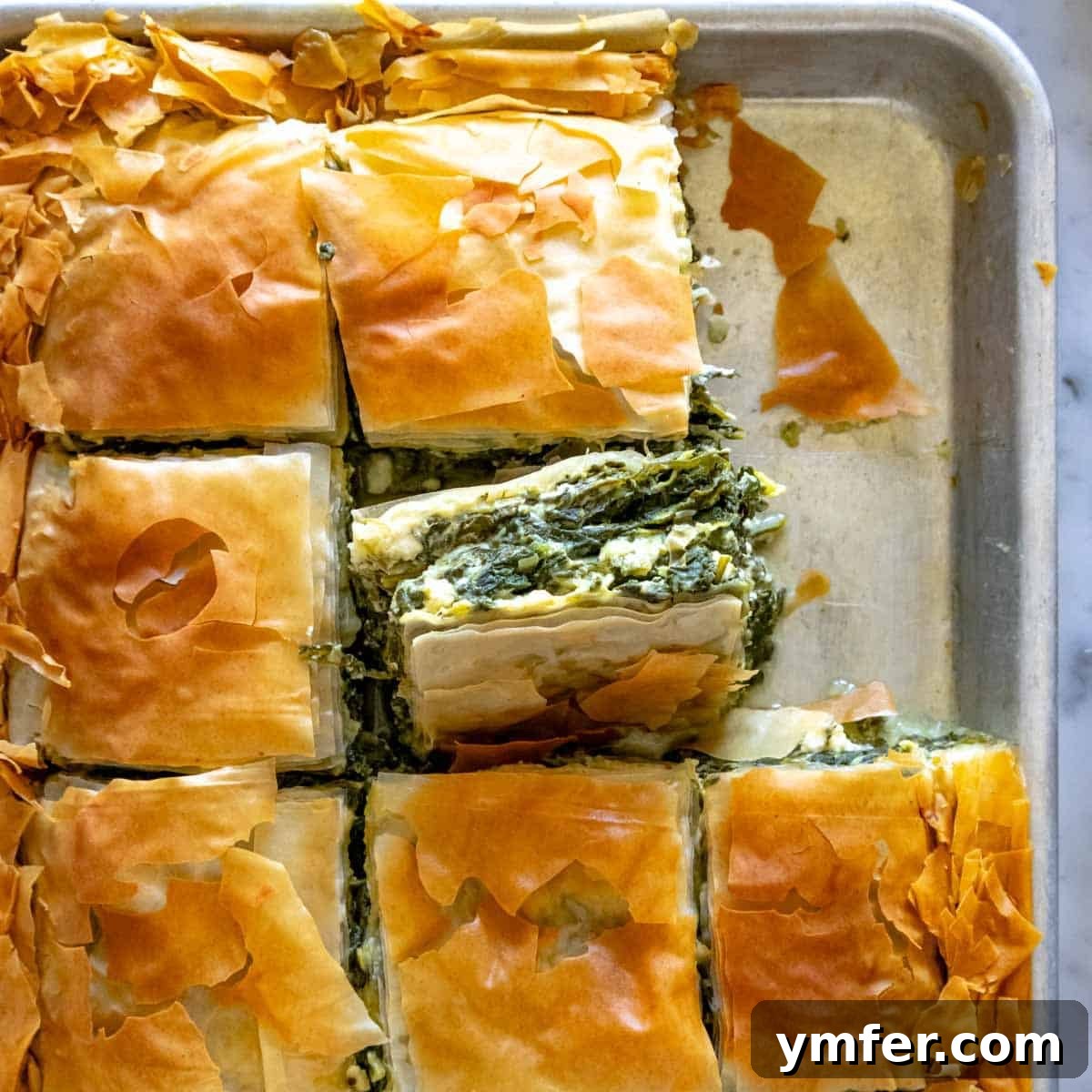
Spanakopita is a timeless Greek culinary treasure, a savory spinach and feta pie that captivates with its irresistible textures and rich flavors. Imagine layers of golden, shatteringly crisp phyllo dough embracing a warm, tender, and cheesy filling of fresh spinach and authentic Greek feta. This iconic dish is not just a meal; it’s an experience, embodying the heart and soul of Mediterranean cuisine.
Delve deeper into the vibrant flavors of the Mediterranean with these delightful recipes: explore our hearty spinach stew, refreshing cauliflower salad, cooling tzatziki, classic Horiatiki Greek salad, and our easy pita bread. These dishes perfectly complement the diverse offerings of a Mediterranean diet.
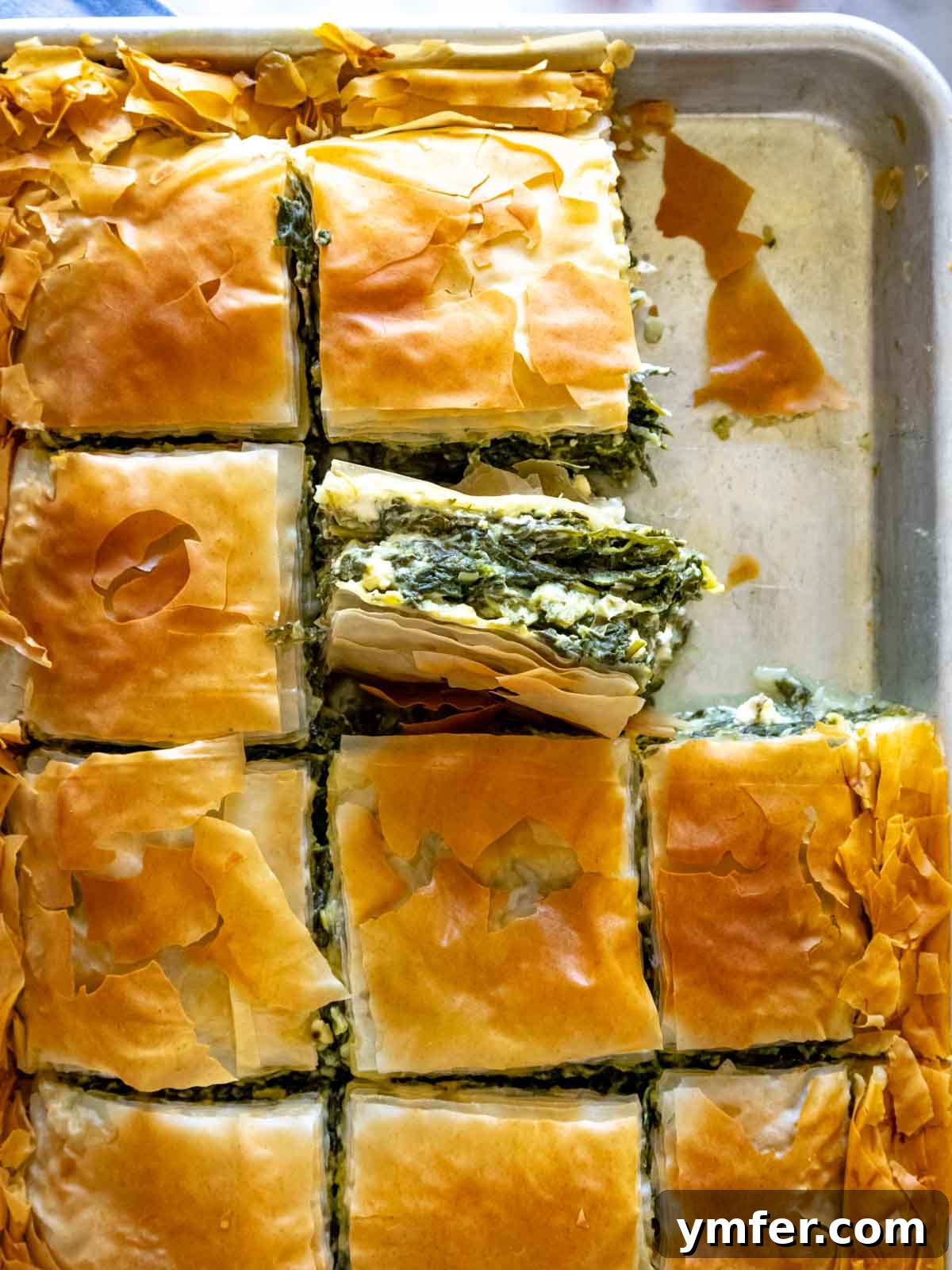
Introduction to Authentic Spanakopita: A Greek Culinary Icon
Spanakopita, often hailed as the queen of Greek pies, is a truly remarkable dish. It’s a savory masterpiece crafted from delicate, paper-thin phyllo dough and a lush filling of sautéed spinach, aromatic spring onions, tender leeks, fresh eggs, and a generous amount of tangy, creamy Greek feta cheese, all bound together with fragrant olive oil. What makes this pie truly special is its accessibility: despite its gourmet appeal, it’s surprisingly simple to prepare, especially when using readily available store-bought phyllo dough.
Phyllo dough, also known as filo, is a cornerstone of Mediterranean and Middle Eastern baking. Made traditionally with just flour and olive oil, it boasts a remarkably low fat content and transforms into an incredibly light, airy, and flaky crust when baked. Its ethereal texture and ability to crisp up beautifully are what give Spanakopita its signature charm, distinguishing it from pies made with other types of pastry. This versatile dough is also famously used in Turkish delights like Baklava and Börek, proving its wide culinary appeal.
This savory Greek spinach pie isn’t just delicious; it’s incredibly versatile. It shines as a fantastic option for picnics and potlucks, serving beautifully as a hearty appetizer or a standalone main course. It’s also a delightful addition to breakfasts and brunches, offering a savory alternative to sweeter pastries. Beyond these occasions, Spanakopita seamlessly integrates into a healthy Mediterranean meal, providing a wholesome and satisfying component.
We absolutely adore serving Spanakopita as the center piece of a vibrant Mediterranean spread. It pairs wonderfully with creamy dips like baba ganoush, spicy tirokafteri, and comforting swimming chickpeas. To complete the meal, we often include a fresh, herb-packed salad such as a Tabouli or a crisp Shirazi salad, adding a burst of freshness that perfectly complements the rich pie.
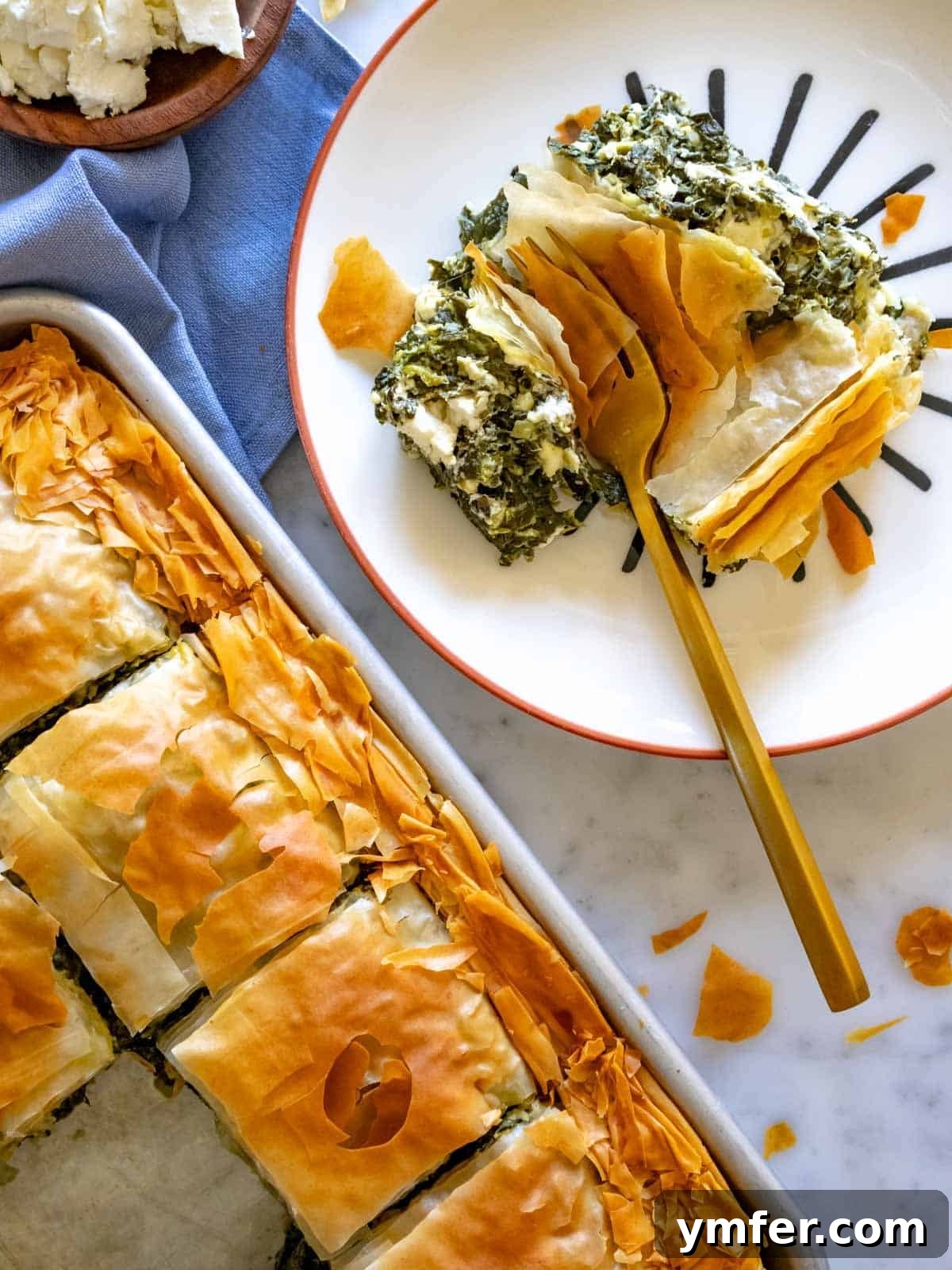
Crafting Your Homemade Spanakopita: A Step-by-Step Guide
Creating your own authentic Spanakopita is a rewarding process that yields incredibly delicious results. Here’s a detailed breakdown of each step to ensure your Greek spinach and feta pie turns out perfectly crispy, cheesy, and utterly delightful.
For a complete list of ingredients, exact quantities, and expert substitutions, please refer to the detailed recipe card at the bottom of this page.
Step 1: Preparing the Flavorful Greens Base
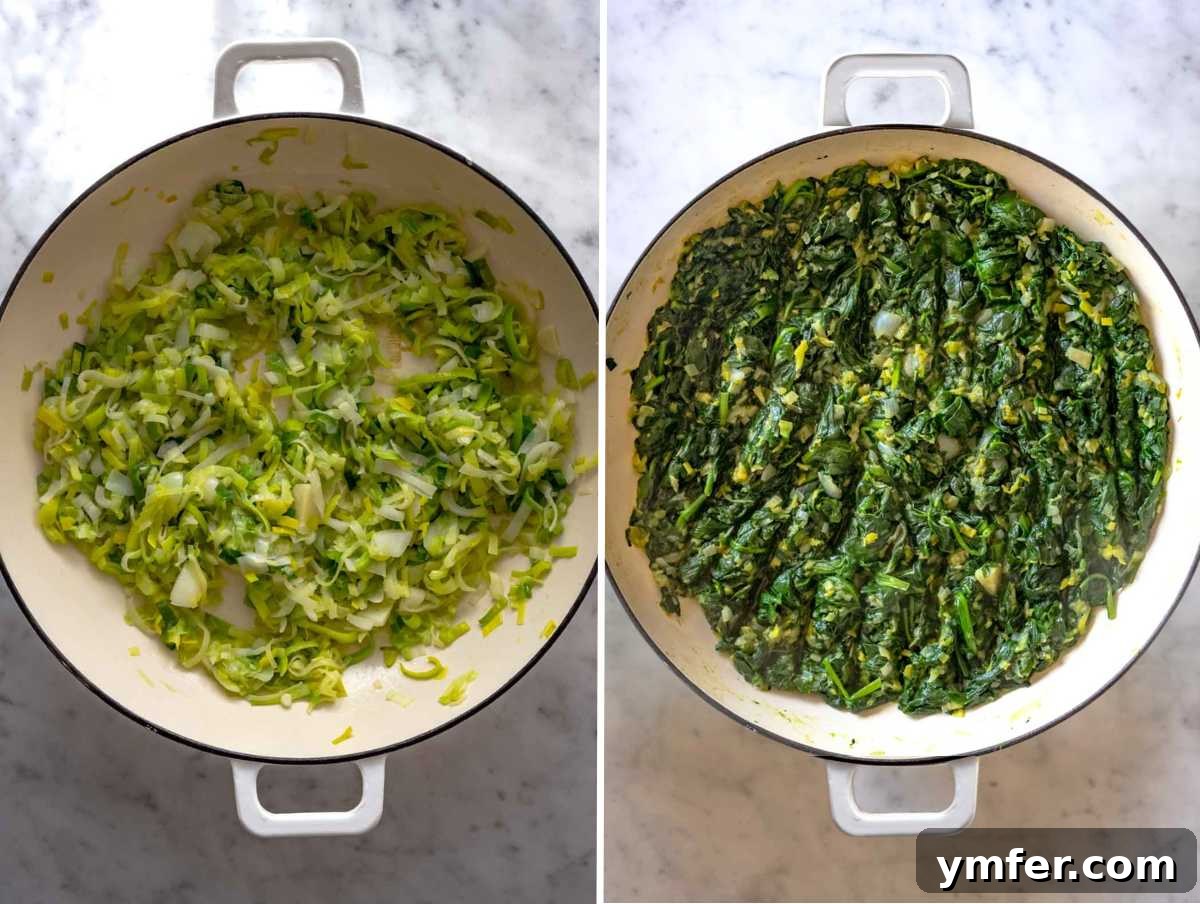
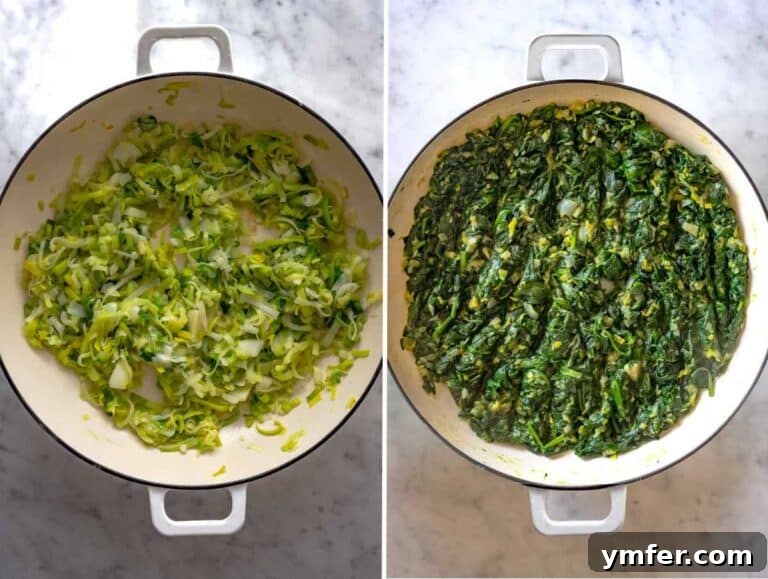
Begin by finely chopping your leeks and green onions. In a large, sturdy skillet, heat a generous amount of extra virgin olive oil over medium heat. Add the chopped leeks and green onions to the hot oil and sauté them gently for approximately 5 minutes, or until they have softened and become beautifully aromatic. This initial step builds a foundational layer of flavor for your pie.
Next, introduce your fresh or thawed frozen spinach to the skillet. Season generously with salt and freshly ground black pepper. Continue to cook the greens for several minutes, stirring occasionally, until most of the excess water released by the spinach has evaporated. This is a crucial step for preventing a soggy pie, ensuring your filling maintains a pleasant texture.
Step 2: Assembling the Rich Feta-Spinach Filling
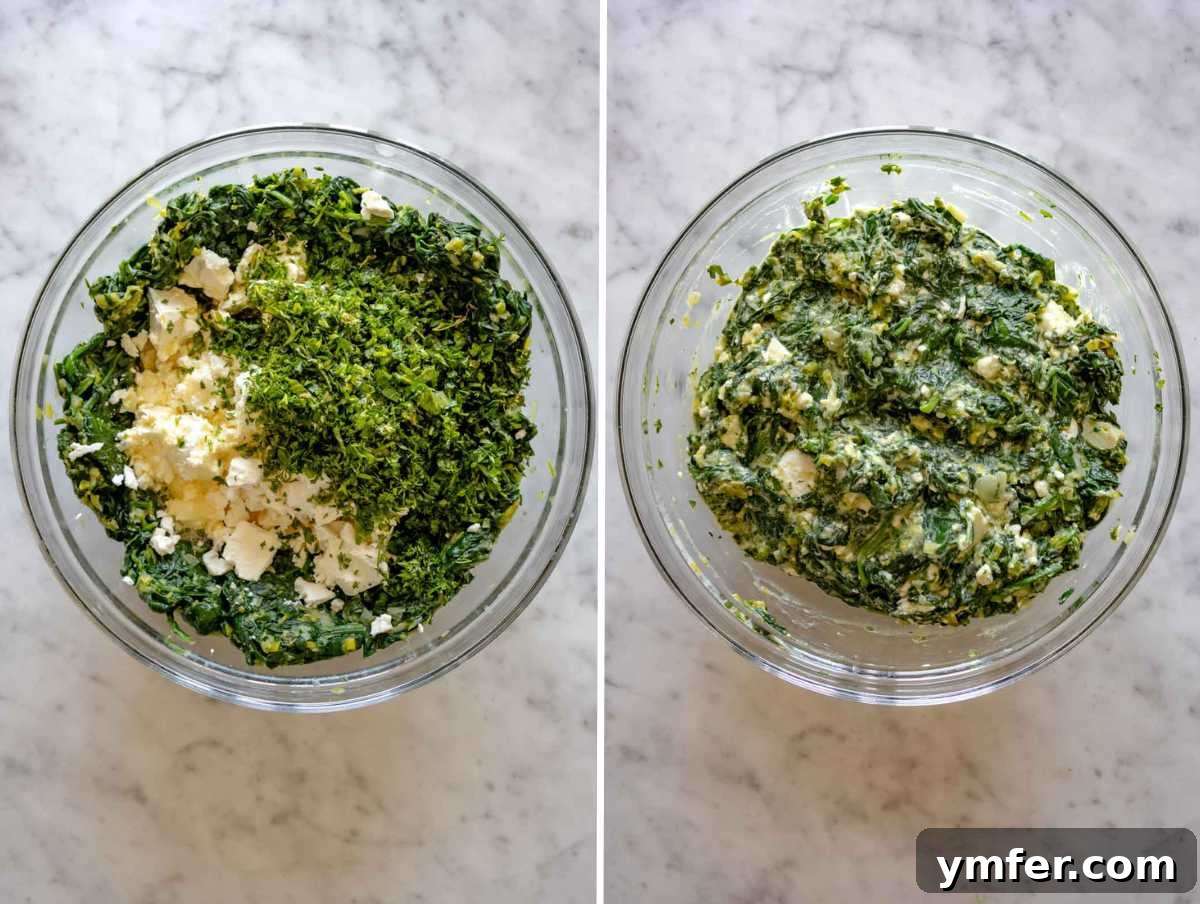
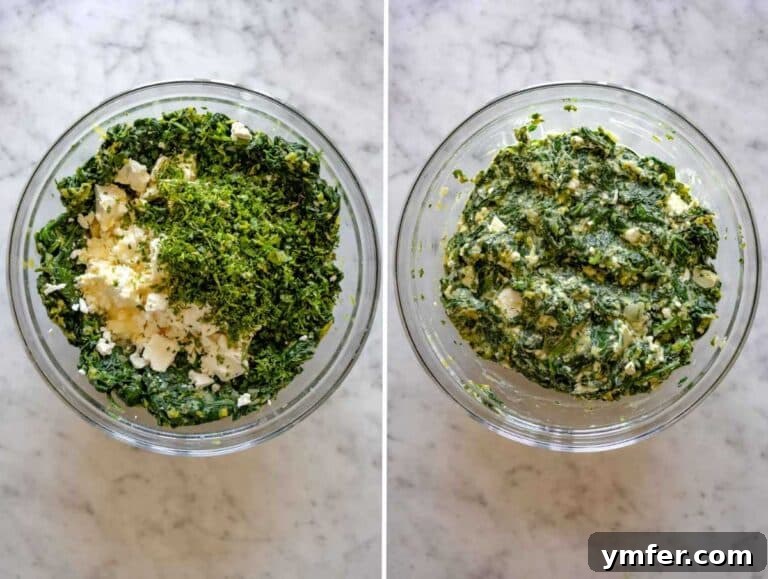
Once your greens are cooked and excess moisture has been removed, transfer them to a large mixing bowl. Allow the mixture to cool for about 10 minutes; this prevents the eggs from scrambling when added. To the cooled greens, add your crumbled feta cheese, which will melt into a creamy texture during baking. Incorporate the lightly beaten eggs, which act as a binder, and a generous selection of fresh herbs. Traditionally, a blend of chopped parsley, dill, and mint is used, providing bright, authentic Greek flavors. Mix all the ingredients thoroughly until well combined. Set this vibrant, aromatic filling aside while you prepare your phyllo dough.
Step 3: Layering the Phyllo Dough and Filling
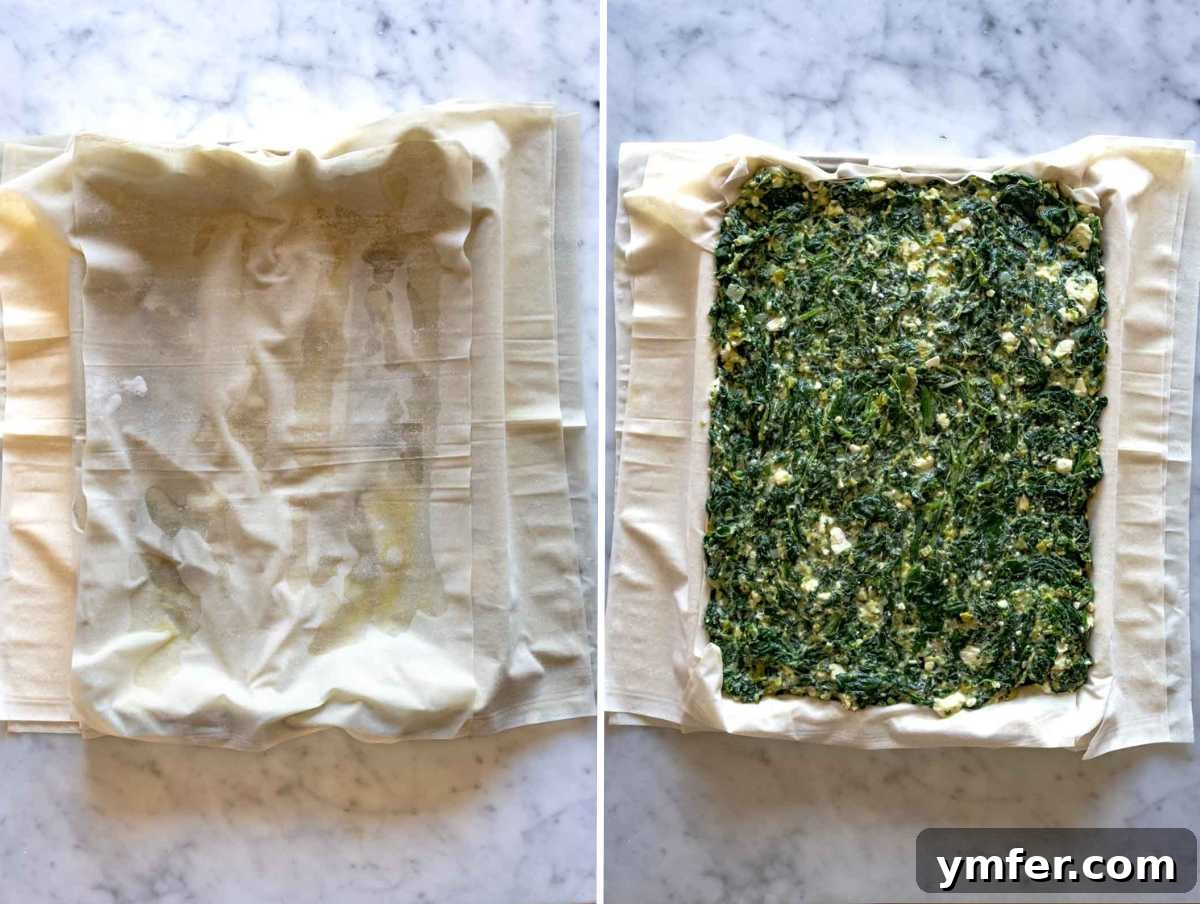
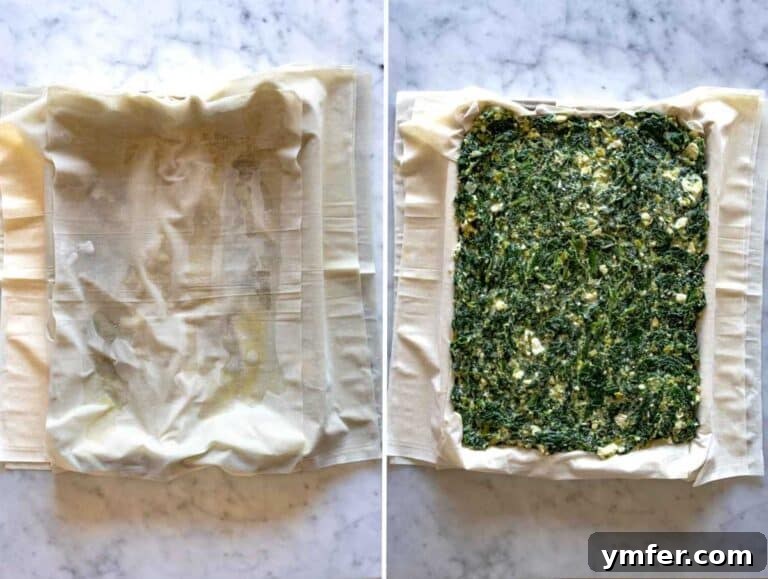
Prepare your baking pan by lightly oiling its bottom and sides to prevent sticking and encourage a golden crust. Carefully lay the first sheet of phyllo dough into the pan, allowing a portion of it to hang over the edges. Drizzle a thin stream of olive oil over the first sheet, then gently place a second sheet on top, repeating the olive oil drizzle. Continue this process, layering a total of 8 sheets of phyllo dough, ensuring a light brush or drizzle of olive oil between each layer for ultimate crispness. Don’t worry if the phyllo looks a bit crinkled; this actually helps hot air circulate, ensuring a perfectly cooked and crispy base.
Once your base layers are complete, carefully spread the prepared spinach and feta filling evenly across the phyllo dough in the pan, reaching all the way to the edges.
Step 4: Creating the Golden Top Crust
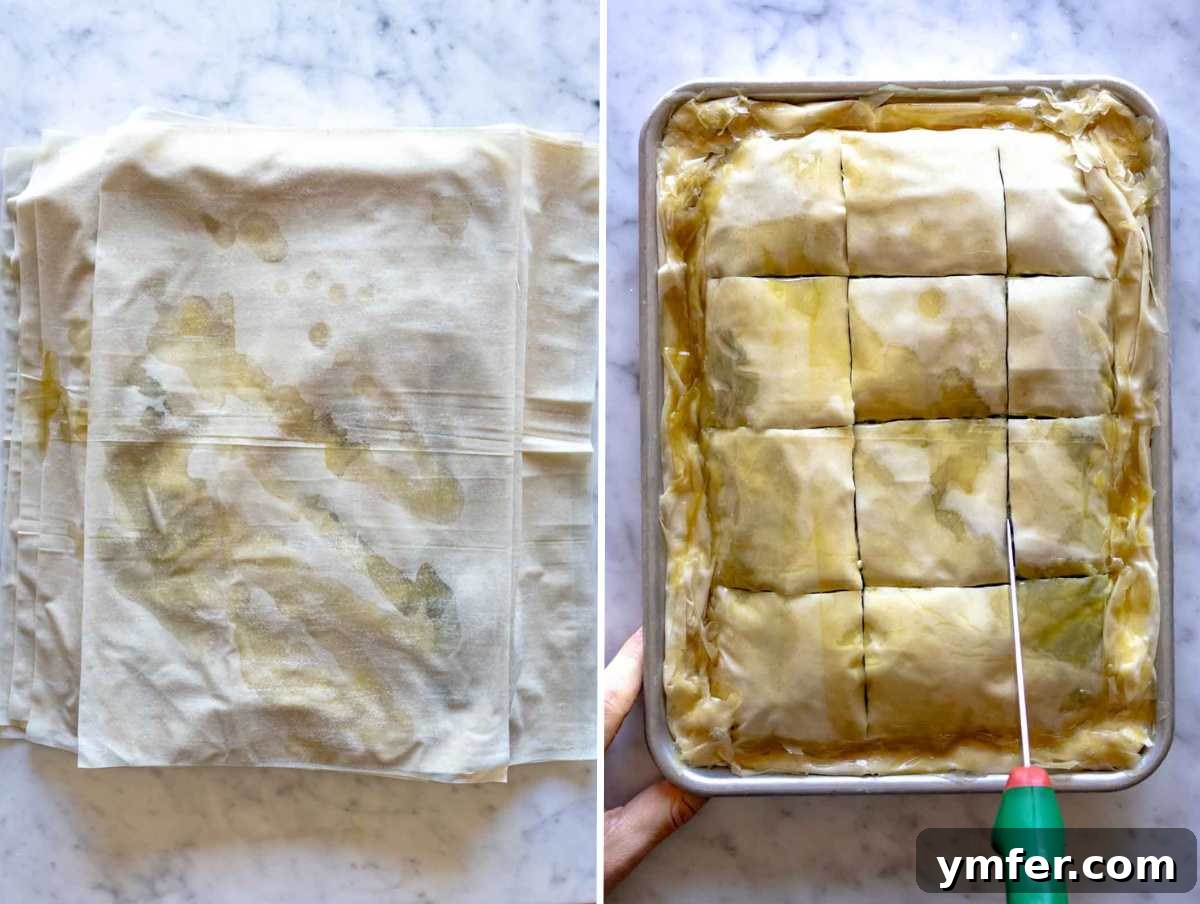
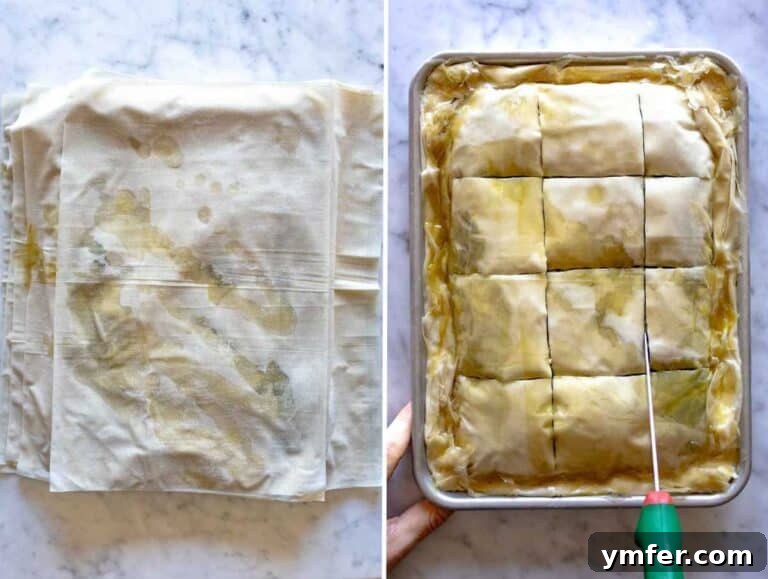
Now, cover the filling with another 8 layers of phyllo dough, repeating the same careful process as with the bottom layers: placing each sheet and drizzling with olive oil. Once all 8 top layers are in place, gently tuck the overhanging phyllo dough from both the bottom and top layers into the pan, creating a neat, slightly raised rim around the edges of the pie. This helps seal the filling and gives the pie a beautifully finished appearance. Brush the entire top surface of the pie, including the rim, with more olive oil to ensure a rich golden color and extra crispiness.
Using a sharp knife, carefully cut the top layers of phyllo into individual squares or diamonds. Be mindful not to cut all the way through to the bottom crust, as this will help hold the pie together during baking while still making it easy to slice and serve later.
Step 5: Baking to Golden Perfection and Serving
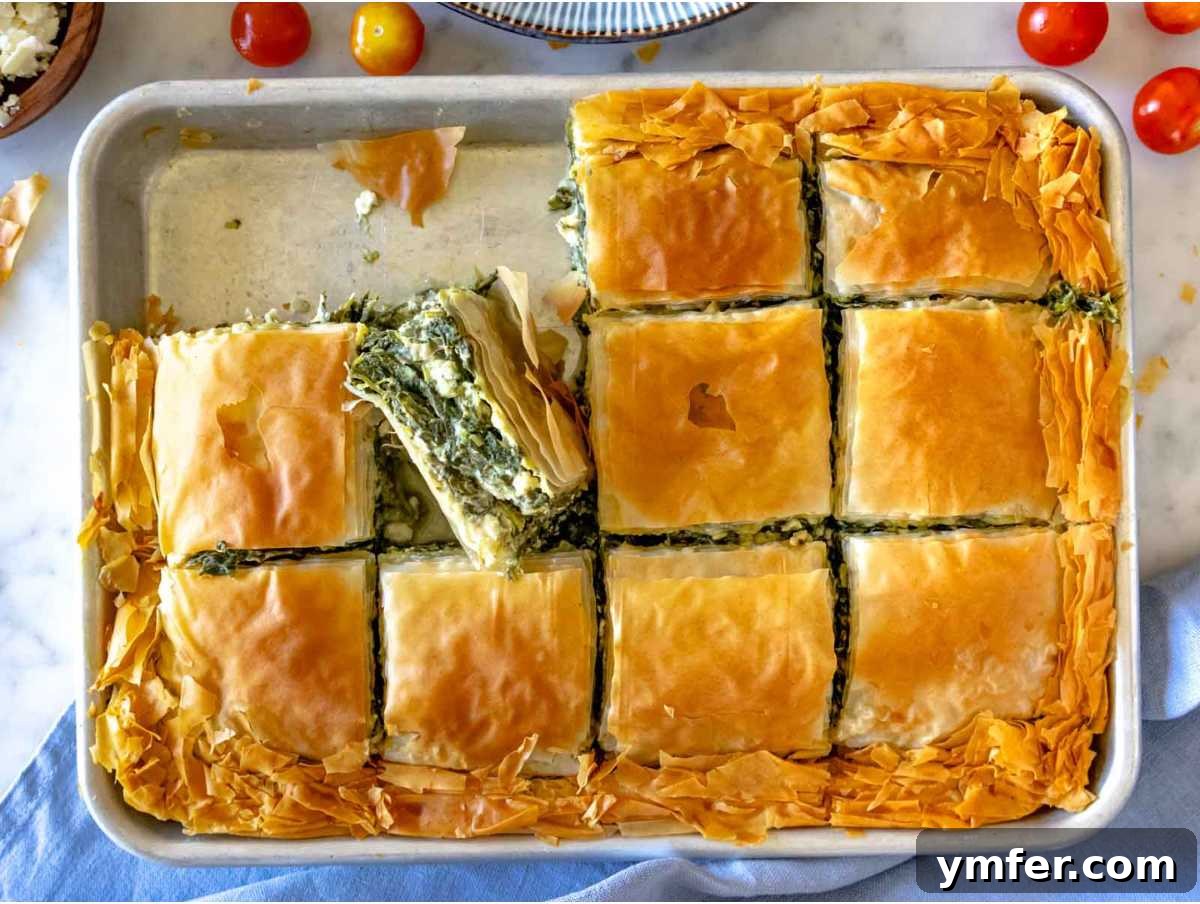
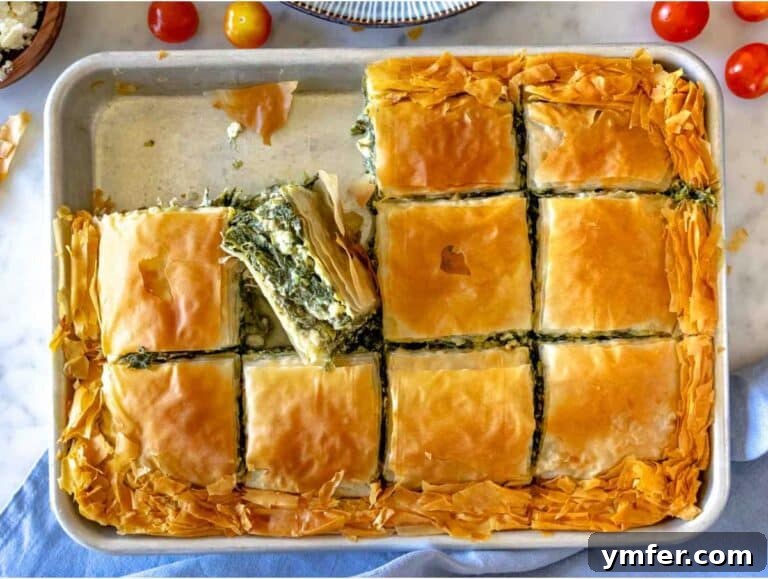
Preheat your oven to 340°F (170°C). Once hot, carefully place your assembled Spanakopita into the oven and bake for approximately 1 hour. The pie is ready when its phyllo crust is gorgeously golden brown and wonderfully crisp, and the filling is set and bubbling slightly. The aroma filling your kitchen will be an unmistakable sign of its readiness!
After baking, remove the Spanakopita from the oven and allow it to cool on a wire rack for about 10 minutes before attempting to cut into the pre-marked squares. This short resting period allows the filling to set further and the phyllo to firm up, making for cleaner cuts and preventing the pie from falling apart. Slice, serve, and savor this delightful Greek classic!
Expert Tips for the Perfect Spanakopita
Achieving a truly exceptional Spanakopita is easy with a few key considerations. Here are our top tips to ensure your pie turns out perfectly every time:
- Handling Phyllo Dough with Care: Phyllo dough is notoriously delicate and dries out very quickly when exposed to air. To prevent this, only open the phyllo dough package when you are absolutely ready to start layering. Keep any unused sheets covered with a damp (not wet) kitchen towel or plastic wrap while you work to maintain their flexibility.
- Choosing the Right Baking Pan: We highly recommend using a 9 ½” x 13″ (24 x 33cm) baking pan or one of a similar, slightly larger size. This dimension allows for an ideal ratio of crispy phyllo to a generous, flavorful filling.
- Thawing Frozen Phyllo Properly: If you’re using frozen phyllo dough, proper thawing is paramount for success. The best method is to thaw it overnight (6 to 10 hours) in the refrigerator while it’s still in its sealed package. Once thawed, bring it to room temperature by leaving it on the counter for about 2 hours before use. Again, keep the package sealed until you are ready to begin assembling to prevent drying.
- Preventing a Soggy Bottom: Ensure your spinach mixture is as dry as possible after cooking. Squeeze out any excess moisture using a cheesecloth or paper towels before mixing with the other filling ingredients. This prevents the phyllo base from becoming soggy.
- Even Oil Distribution: Don’t skimp on the olive oil between phyllo layers. It’s what creates that signature flaky, crispy texture. A light, even drizzle or brush is key.
Frequently Asked Questions About Spanakopita
Once your delicious Spanakopita has completely cooled down to room temperature, transfer it to an airtight container. Stored properly in the refrigerator, it will remain fresh and tasty for up to 3 days. For best texture, reheating is recommended.
For optimal results, we highly recommend freezing Spanakopita before it’s baked. Assemble the pie in your baking pan, then wrap it securely first in parchment paper and then in plastic wrap until it is solid. When you’re ready to bake, place the frozen pie directly into a preheated oven at 340°F (170°C) and bake for 60 to 70 minutes, or until golden and crisp.
Absolutely! While fresh spinach is often preferred due to its lower water content and quicker cooking time, frozen spinach works perfectly fine. The key is to ensure that you thoroughly drain and squeeze out most of the water from the frozen spinach after thawing and cooking. This step is crucial before you combine it with the feta and eggs to prevent a watery filling and a soggy pie.
If feta cheese isn’t available or if you’re looking for an alternative, you can create a delightful substitute using a mixture of other cheeses. We recommend combining 3/4 ricotta cheese with 1/4 grated parmesan cheese for a similar tangy and salty profile. For a plant-based option, non-dairy feta blocks (such as VioLife) are an excellent choice.
Transforming this Spanakopita into a delicious vegan version is straightforward! Simply substitute the dairy feta cheese with a high-quality non-dairy feta (brands like VioLife are highly recommended for their texture and flavor) or use our homemade vegan ricotta. Additionally, you can entirely omit the eggs from the recipe; the filling binds well without them, and the result is equally delicious and satisfying. That’s all it takes for a fantastic plant-based Greek spinach pie!
To ensure your leftover Spanakopita maintains its glorious crisp and flaky phyllo, reheating it in an air fryer is the ideal method. Heat it at 400°F (200°C) for about 10 minutes. Alternatively, a preheated oven at the same temperature for approximately 15 minutes also works wonderfully. We strongly advise against reheating Spanakopita in the microwave, as this will inevitably cause the delicate phyllo dough to become soft and soggy, losing its signature texture.
If you’ve had the pleasure of trying this authentic Greek Spanakopita recipe or any other delicious creation from our blog, we would absolutely love to hear from you! Please consider leaving a 🌟 star rating and sharing your experience in the comments section below. Your feedback truly brightens our day and helps others discover these wonderful dishes!
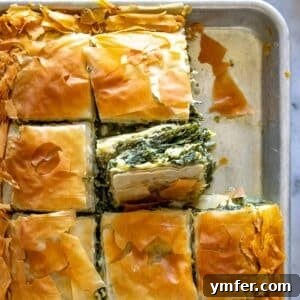
Spanakopita (Greek Spinach Pie)
By: Nico Pallotta
Spanakopita is a classic Greek spinach and feta pie. It boasts a perfectly crispy and flaky exterior, with a delightfully cheesy and tender filling on the inside.
Prep Time: 20 mins
Cook Time: 1 hr
Total Time: 1 hr 20 mins
Servings: 12 squares
Course: Appetizer, Main Course, Side dish
Cuisine: Greek
Print Recipe
Share on Facebook
Video Tutorial
Equipment
- 9 1/2″ x 13″ (24 x 33cm) baking sheet or pan
Ingredients
- 11 ounces phyllo dough (16 sheets) – fresh is easiest; frozen must be thawed overnight in the fridge in its sealed package before use.
- 2 pounds fresh spinach (can substitute frozen, ensure thoroughly drained)
- 2 tablespoons extra virgin olive oil
- 3 green onions, finely chopped
- 1 leek, finely chopped (white and light green parts)
- ½ cup fresh parsley, chopped
- ¼ cup fresh dill, chopped
- ¼ cup fresh mint, chopped
- 1 pound feta cheese, crumbled
- 2 large eggs, beaten
- ½ teaspoon salt
- ⅛ teaspoon black pepper
Instructions
-
COOK GREENS: In a large skillet, sauté 1 finely chopped leek and 3 finely chopped green onions in 2 tablespoons of olive oil for about 5 minutes until softened and fragrant. Add 2 pounds of fresh spinach, season with ½ teaspoon of salt and ⅛ teaspoon of black pepper. Cook for a few minutes until most of the water released by the spinach has evaporated. This step is crucial for preventing a soggy pie base.

-
MAKE FILLING: Transfer the cooked greens mixture to a large bowl and allow it to cool for 10 minutes. Once cooled, add 1 pound of crumbled feta cheese, 2 large beaten eggs, and the fresh herbs (½ cup parsley, ¼ cup dill, and ¼ cup mint, all finely chopped). Mix all ingredients thoroughly until well combined. Set this vibrant filling aside.
-
FILL PIE: Lightly oil your chosen baking pan. Lay the first sheet of phyllo dough in the pan, allowing some to hang over the edges. Drizzle olive oil over the sheet. Repeat this process for a total of 8 phyllo sheets, ensuring a light drizzle of olive oil between each layer. Allow the phyllo to crinkle naturally, as this promotes airflow and a crispier base. Evenly spread the spinach filling over the layered phyllo dough.
-
TOP AND TUCK IN: Cover the spinach filling with another 8 layers of phyllo dough, mirroring the previous layering process with olive oil drizzles between each sheet. Gently tuck any overhanging phyllo dough (from both bottom and top layers) into the pan’s edges to create a neat rim. Brush the entire top surface, including the rim, with more olive oil. With a sharp knife, score the top layers of the pie into squares, taking care not to cut all the way through to the bottom.
-
BAKE AND SERVE: Preheat your oven to 340°F (170°C). Bake the Spanakopita for 1 hour, or until the phyllo crust is golden brown and delightfully crisp. Let the pie cool for about 10 minutes before cutting along the pre-scored lines into individual squares. Serve warm and enjoy your homemade Greek spinach pie!
Recipe Notes & Expert Tips
SUBSTITUTIONS:
- Spinach: For a delicious twist, substitute kale to create a Greek-inspired kale and feta pie.
- Leek: A regular onion can be used in place of the leek if preferred.
- Spring Onions: Shallots offer a milder alternative to green onions.
- Phyllo Dough: While not traditionally Greek, puff pastry can be used for a different, richer texture if phyllo is unavailable.
- Feta Cheese: Replace feta with a mixture of ¾ ricotta cheese and ¼ grated parmesan cheese for a similar savory profile. Non-dairy feta blocks (such as VioLife) are excellent for a vegan version.
- Fresh Herbs: Use a combination of fresh parsley, dill, and mint. If you can’t find all three, parsley is the most important for authentic flavor.
- Eggs: Omit the eggs entirely to make this recipe vegan; the filling holds together well without them.
TIPS FOR SUCCESS:
- Phyllo Dough Handling: Phyllo dries out incredibly fast. Keep it covered with a damp cloth or plastic wrap as you work through the layers.
- Optimal Pan Size: A 9 ½” x 13″ (24 x 33cm) baking pan or a slightly larger size is ideal for the perfect pie thickness.
- Thawing Frozen Phyllo: Thaw frozen phyllo overnight in the fridge (6-10 hours) in its sealed package. Then, let it sit at room temperature for 2 hours before using. Keep it sealed until ready.
STORAGE:
Allow Spanakopita to cool completely at room temperature. Store leftovers in an airtight container in the refrigerator for up to 3 days. Reheat in the oven or air fryer for best crispness.
Nutrition Facts (per serving)
Serving: 1 of 12, Calories: 234kcal, Carbohydrates: 20g, Protein: 11g, Fat: 13g, Saturated Fat: 6g, Polyunsaturated Fat: 1g, Monounsaturated Fat: 5g, Trans Fat: 0g, Cholesterol: 61mg, Sodium: 728mg, Potassium: 523mg, Dietary Fiber: 3g, Sugar: 1g, Vitamin A: 7768IU, Vitamin B6: 0.4mg, Vitamin C: 27mg, Vitamin E: 2mg, Vitamin K: 419µg, Calcium: 283mg, Folate: 198µg, Iron: 4mg, Manganese: 1mg, Magnesium: 77mg, Zinc: 2mg
Tried this recipe?
We’d love to see your creations! Leave a comment below or mention @theplantbasedschool on Instagram. We love hearing from you ⭐️ 💚.