
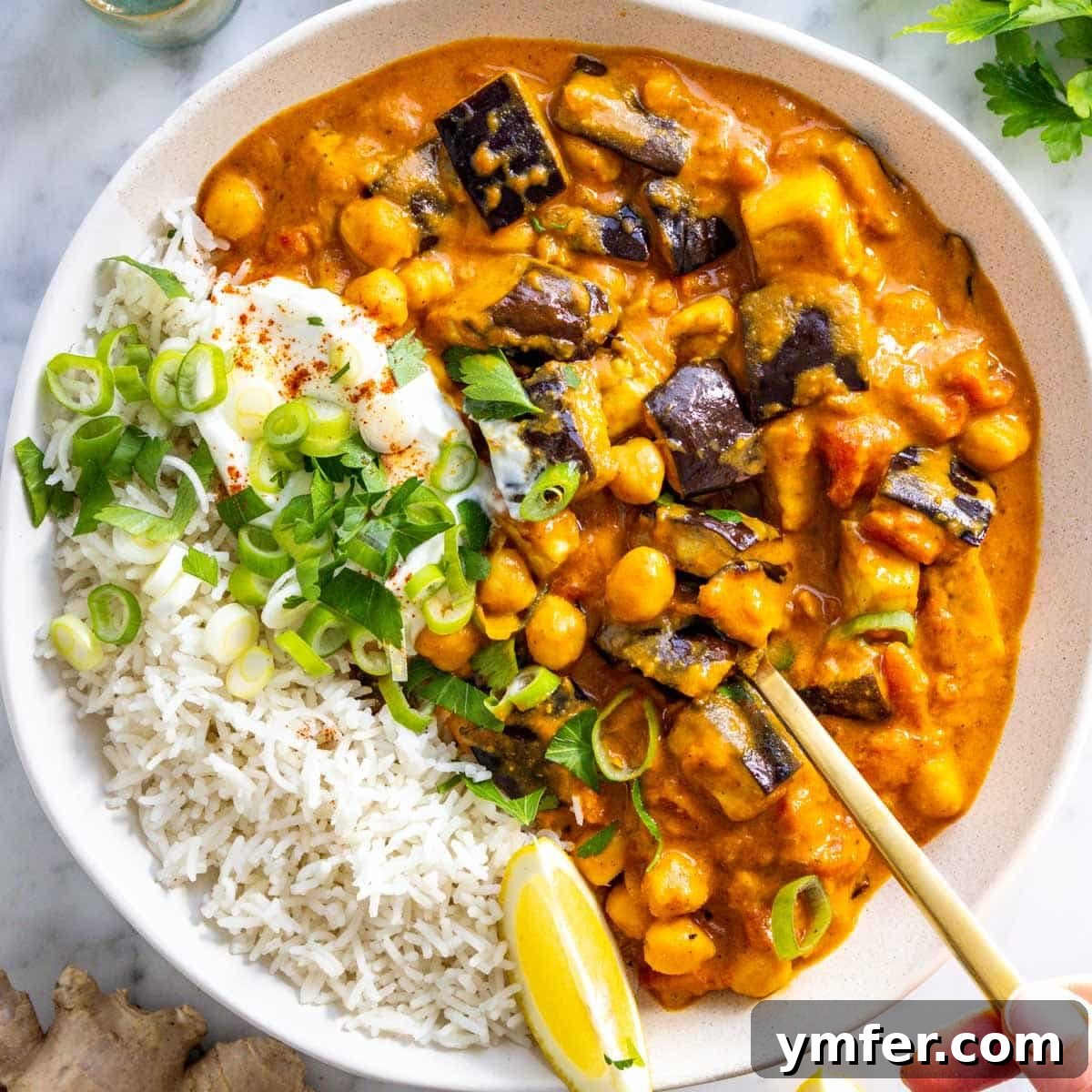
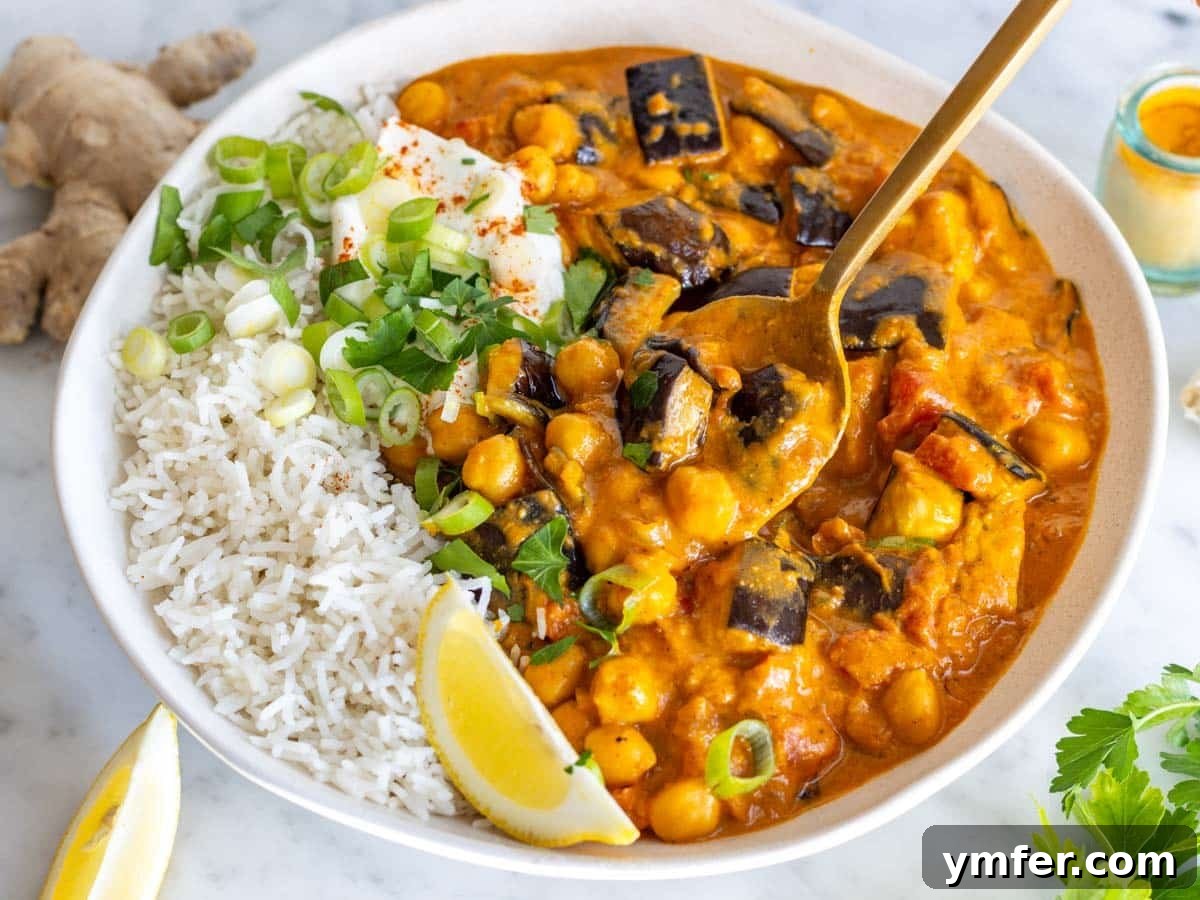
Transform your dinner routine with our incredibly **easy eggplant curry** recipe, where **buttery-tender eggplant cubes** are lovingly embraced by a **creamy, rich, and aromatic curry sauce**. This winning combination promises a flavorful **Indian-inspired dinner** that’s both satisfying and surprisingly simple to prepare, requiring only about **30 minutes of active cooking time**.
Whether you’re new to Indian cuisine or a seasoned enthusiast, this **vegan eggplant curry** is a delightful meal that brings vibrant flavors to your table. It pairs exquisitely with fluffy basmati rice or warm, chewy naan bread, making it a perfectly balanced and wholesome dinner option. Get ready to impress your taste buds and perhaps even convert an eggplant skeptic!
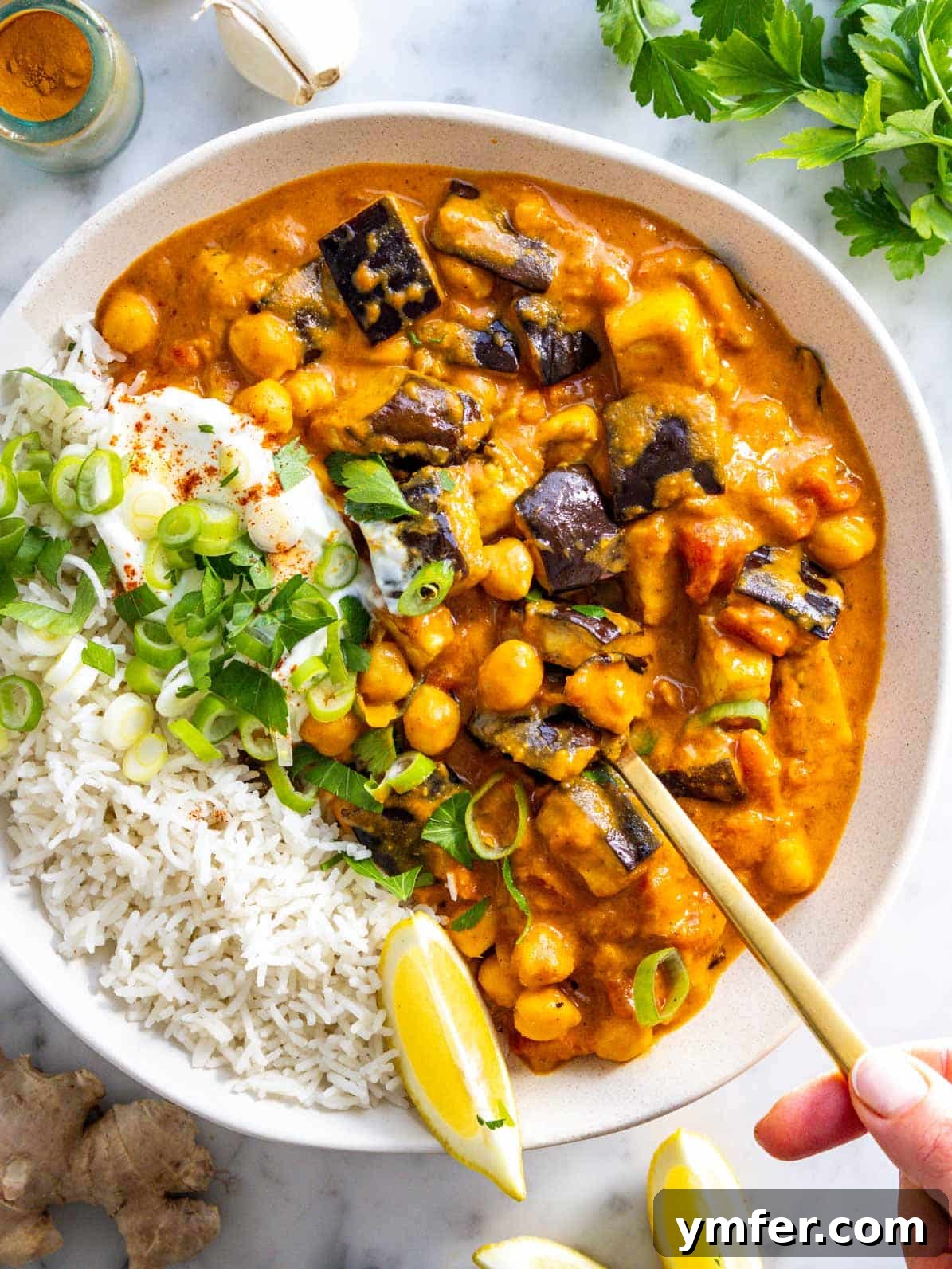
Table of Contents
- Why You’ll Love This Eggplant Curry
- Mastering the Art of Eggplant Cooking
- Key Ingredients for a Perfect Curry
- Variations & Protein Boosts
- Step-by-Step Instructions
- Storage & Meal Prep Tips
- Frequently Asked Questions
- More Indian-Inspired Curry Recipes
- Eggplant Curry Recipe Card
Why You’ll Love This Eggplant Curry
This **easy eggplant curry** isn’t just a recipe; it’s a revelation, especially for those who might typically shy away from eggplant. Take Louise, for example. She once declared her aversion to eggplant, but after tasting this curry, she was completely won over! The secret lies in transforming humble eggplant into tender, melt-in-your-mouth bites, enveloped in a **silky, creamy, and aromatic tomato gravy** that’s impossible to resist.
Eggplant is often misunderstood, yet it’s one of the **most versatile vegetables** available. The key is knowing how to prepare it properly, and this recipe guides you through exactly that. While my Italian roots often call for classics like eggplant parmigiana and pasta alla Norma, this Indian-inspired eggplant curry has undoubtedly earned its place as one of my absolute favorites (but don’t tell my nonna!).
Indian cuisine is renowned for its incredible depth of flavor, making it perfect for elevating everyday supermarket vegetables. In this recipe, we build a robust flavor base using an **Indian soffritto** of onion, garlic, ginger, and a symphony of aromatic spices. These spices are truly the heart of the dish, infusing the eggplant with layers of complex and delicious flavors that are simply irresistible.
Mastering the Art of Eggplant Cooking
Many people struggle with eggplant, often finding it spongy or bitter. This recipe tackles these common issues head-on, ensuring your eggplant is perfectly cooked every time. The secret to achieving that coveted **buttery-tender texture** and rich flavor in this curry is a simple, yet crucial step: **roasting the eggplant first**. Roasting before adding it to the curry helps draw out moisture, caramelizes its natural sugars, and significantly enhances its flavor, making it a delicious addition rather than a bland filler.
Beyond the eggplant itself, the magic of this dish lies in its **spices**. They are not merely seasonings but the very essence of Indian cuisine, transforming simple ingredients into an extraordinary meal. Don’t be intimidated by the list; these spices are widely available, affordable, and will last for a long time in your pantry. Plus, many of the same spices are used across a range of Indian and Middle Eastern recipes, so they won’t go to waste.
Once you fall in love with this **creamy eggplant curry**, you’ll be eager to explore more vibrant Indian dishes. We highly recommend trying our creamy lentil curry, a comforting curry lentil soup, a hearty chickpea curry, or a satisfying chickpea stew. All these recipes share a similar spice profile, are often made in one pot, and pair beautifully with fluffy basmati rice or warm naan bread. Let’s gather our ingredients and begin this culinary adventure!
Key Ingredients for a Perfect Curry
Crafting a truly flavorful eggplant curry begins with selecting fresh, high-quality ingredients. Each component plays a crucial role in building the rich, complex profile of this dish. Here’s a breakdown of what you’ll need and why:
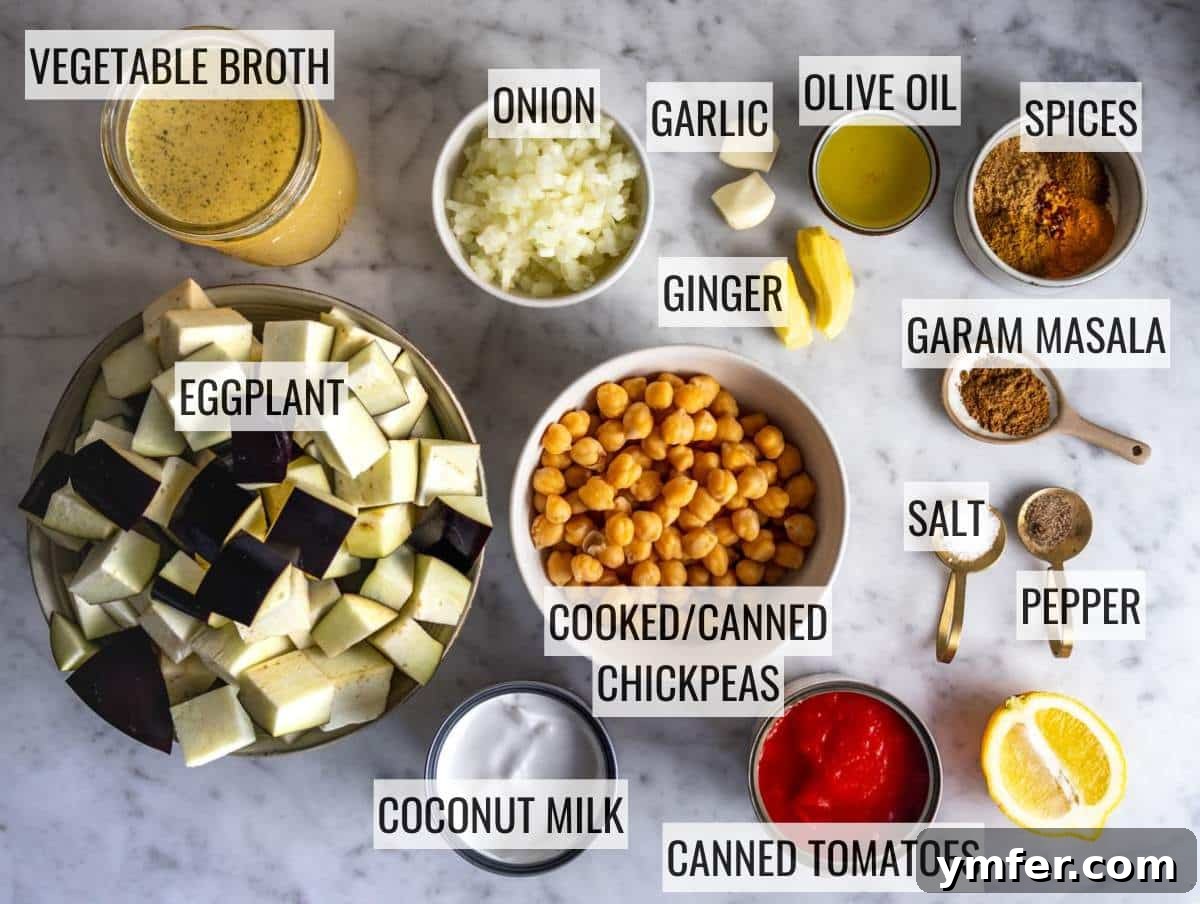
- Olive Oil: We recommend using a good quality olive oil for its flavor, but avocado oil or coconut oil are also excellent alternatives. For an **oil-free eggplant curry**, you can sauté the onion in a dry pan for 3 minutes until softened, then add garlic and ginger, stirring frequently. The natural moisture from the onion helps prevent burning.
- Aromatic Base (Onion, Garlic, Ginger): These three ingredients form the essential “soffritto” or flavor base of this Indian-inspired curry. Always opt for fresh garlic and ginger if possible, grating them for maximum flavor release. As a convenient substitute, you can use pre-made garlic and ginger paste.
- Spices: The soul of the curry! We use a blend of cumin (whole or ground), curry powder, ground coriander, turmeric powder, and red pepper flakes (or chili powder for a milder heat). The secret weapon is **garam masala**, which is added at the very end to infuse a wonderfully fragrant bouquet of aromas, elevating the dish to something truly special. If garam masala is unavailable, a ¼ to ½ teaspoon of cinnamon can offer a similar warming note.
For those with a well-stocked spice cabinet, consider adding mustard seeds, asafoetida (hing), and fresh curry leaves at the beginning. If using mustard seeds, wait for them to pop before adding other spices, and reduce the curry powder by half to balance the flavors.
- Eggplant: Versatility is key here. Standard American/globe eggplant, Italian eggplant, or slender Japanese eggplant varieties all work beautifully. If eggplant isn’t your preference or you’re looking for an alternative, cauliflower, potatoes, or sweet potatoes make fantastic substitutes, absorbing the rich curry flavors wonderfully.
- Chickpeas: These legumes add a delightful nutty flavor and a significant boost of wholesome plant-based protein, making the curry more satisfying and nutritious. You can use readily available canned chickpeas (rinsed and drained) or dried chickpeas that you’ve cooked beforehand. For those seeking even more protein, feel free to add firm tofu (pan-fried or baked), white fish, or chicken breast cut into bite-sized pieces.
- Vegetable Broth: This provides the liquid base for the curry, infusing it with savory notes. Water can be used as a direct substitute if broth is not on hand, though it may result in a slightly less rich flavor.
- Canned Tomatoes: Essential for the creamy, tangy gravy. Crushed tomatoes are our go-to, but diced tomatoes, whole peeled tomatoes (crushed with a fork), or tomato puree can also be used. Each offers a slightly different texture to the sauce.
- Coconut Milk: The star ingredient for creaminess! Full-fat coconut milk is highly recommended for its luxurious texture and rich flavor, which beautifully complements the eggplant and mellows the intensity of the spices. If you prefer a lighter curry, reduced-fat coconut milk works as well. Heavy cream or other non-dairy creams can be used as substitutes, but coconut milk provides that authentic Indian-inspired touch.
- Fresh Garnish (Lemon & Cilantro): A squeeze of fresh lemon (or lime) juice and a sprinkle of fresh cilantro are vital for brightening the flavors and adding a refreshing finish to the rich curry. Don’t skip these!
Variations & Protein Boosts
This eggplant curry is wonderfully adaptable, allowing you to customize it to your taste and dietary preferences. Adding extra protein is especially easy and highly recommended for a more filling meal. Here are some fantastic options:
- Tofu: For a plant-based protein boost, use firm or extra-firm tofu. You can crumble it or cut it into bite-sized cubes. For best results, either pan-fry the tofu with the spices for 3-5 minutes until golden, or bake it separately to achieve a chewier texture (see our baked tofu recipe for guidance). Add the cooked tofu towards the end, alongside the roasted eggplant, to allow it to absorb the curry sauce.
- Chicken: If you prefer a meat-based option, cut chicken breast or thighs into bite-sized pieces. Sauté them with the initial spices (onion, garlic, ginger) for 2-3 minutes until lightly browned before adding the other curry ingredients. This infuses the chicken with flavor from the start.
- Fish: Similar to chicken, firm white fish (like cod or halibut) can be added for extra protein. Cut it into chunks and gently pan-fry with the spices at the beginning. Be mindful not to overcook the fish, as it will continue to cook as the curry simmers.
- Other Vegetables: Feel free to toss in other vegetables like bell peppers, zucchini, green beans, or spinach during the simmering stage. Add heartier vegetables (like carrots or potatoes) earlier with the chickpeas to ensure they cook through.
Step-by-Step Instructions
Follow these simple steps to create a rich and flavorful eggplant curry that will become a staple in your recipe rotation.
1. Roast the Eggplant
Preheat your **oven to 430°F (220°C)**. Line a baking sheet with parchment paper to prevent sticking and make cleanup easier.
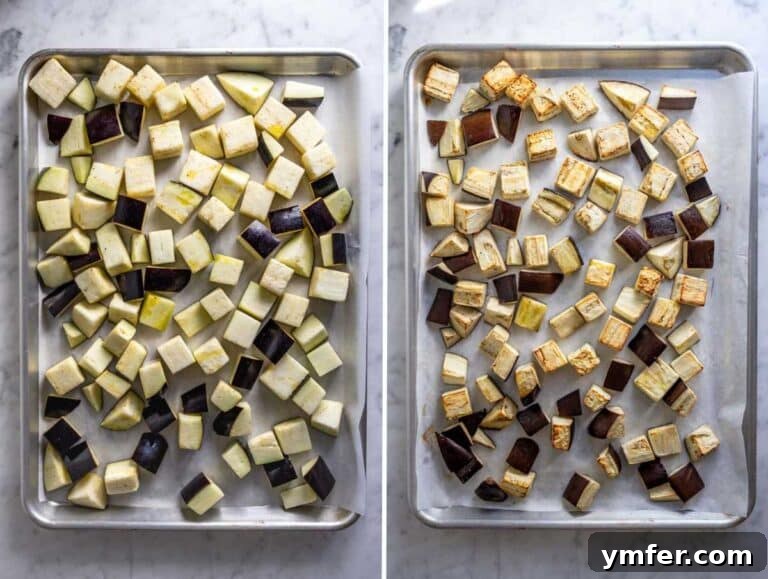
Cut the eggplant into uniform **1-inch (2.5-cm) cubes**. Consistency in size ensures even cooking.
Transfer the eggplant cubes onto the prepared baking sheet. Drizzle them generously with **olive oil**, then season with **salt** and **black pepper**. Toss gently to ensure all pieces are coated evenly.
Spread the seasoned eggplant in a **single layer** on the baking sheet. This allows for proper roasting and browning, preventing steaming. Roast in the preheated oven for **20 to 25 minutes**, or until the eggplant is tender when pierced with a fork and beautifully browned at the edges. While the eggplant roasts, you can begin preparing the curry base.
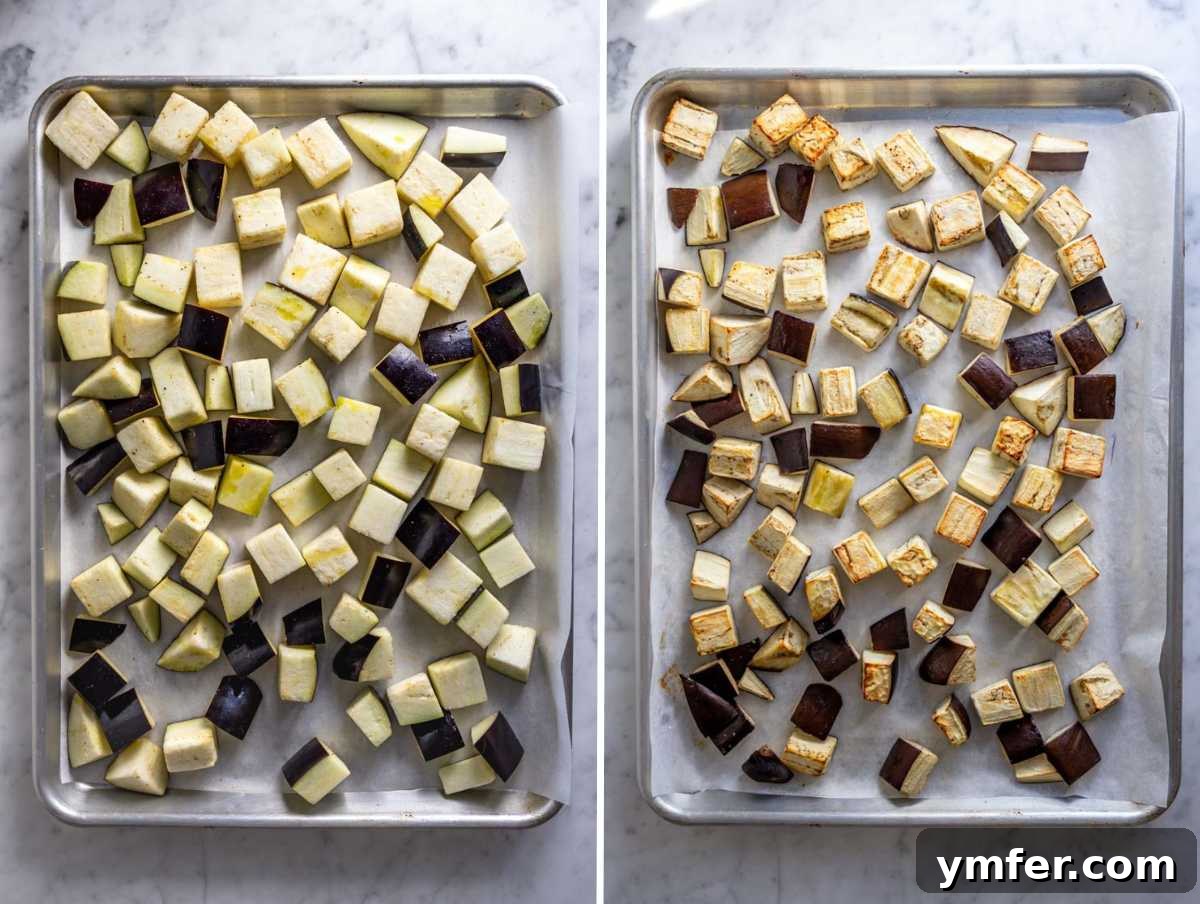
Chef’s Note: While roasting the eggplant is an optional step, we highly recommend it. This crucial technique adds a **ton of depth and flavor** to the eggplant itself, enhancing the overall taste of the curry significantly. If you’re short on time or prefer a simpler approach, you can skip roasting and add the raw eggplant cubes directly to the curry along with the chickpeas during the simmering stage, though the texture and flavor will be slightly different.
2. Prepare the Flavorful Curry Base
In a large skillet or a Dutch oven, heat the **olive oil** over medium heat.
Add the chopped **onion** to the hot oil and sauté for approximately 3 minutes, stirring occasionally, until it begins to soften and become translucent.
Stir in the grated **garlic** and **ginger**, continuing to sauté for one more minute until fragrant. Be careful not to burn the garlic.
Reduce the heat to low. Now, add your dry spices: **curry powder**, **cumin** (whole or ground), **ground coriander**, **red pepper flakes** (for a touch of heat), and **turmeric powder**. This is the Indian soffritto!.
**Toast the spices** gently for about one minute, stirring constantly, until their fragrant aroma fills your kitchen. This step is essential for unlocking their full flavor potential.
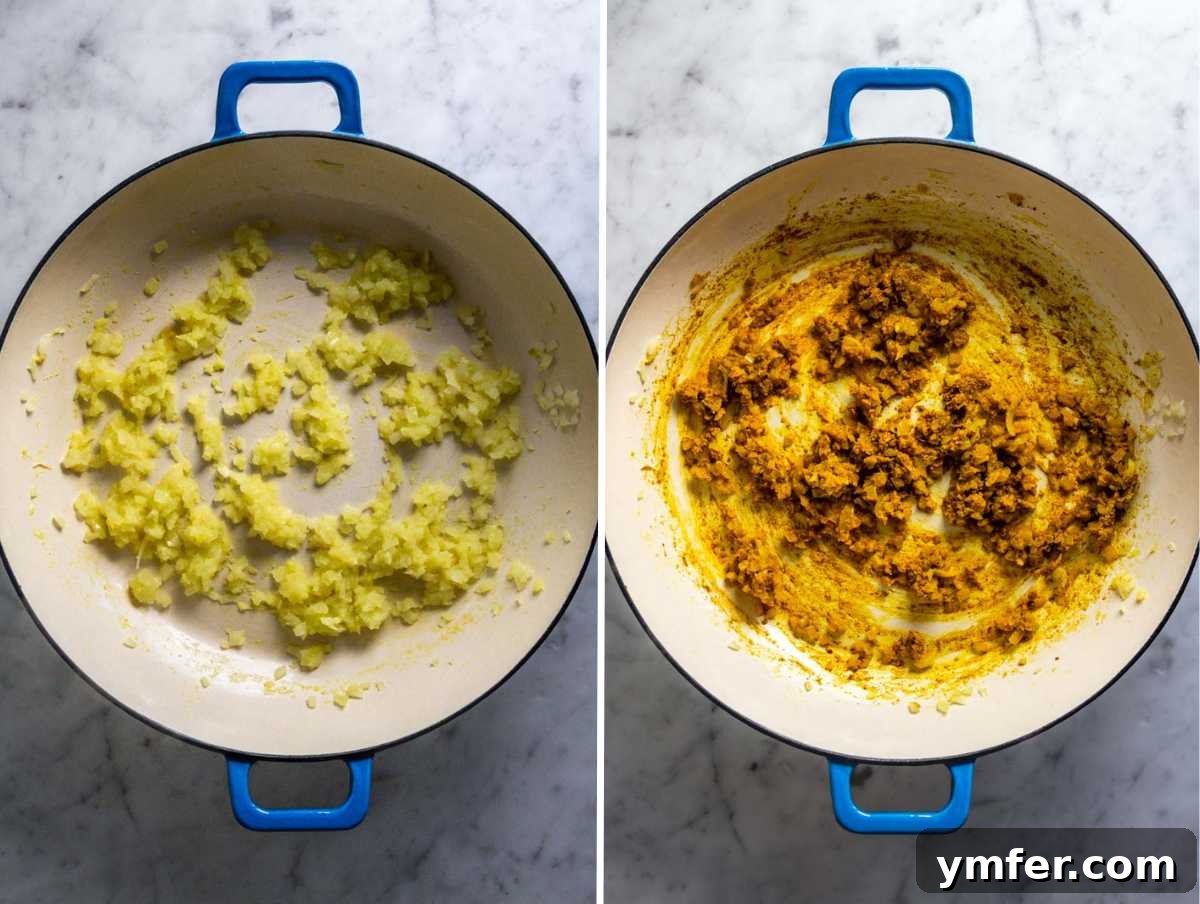
Pro Tip: If you’re incorporating extra protein like firm tofu, white fish, or chicken, this is the perfect moment to add it. Cut your chosen protein into bite-sized pieces and sauté it with the spices for a couple of minutes until lightly browned. Season with a pinch of salt and pepper, and add a splash of water if the pan appears too dry to prevent sticking.
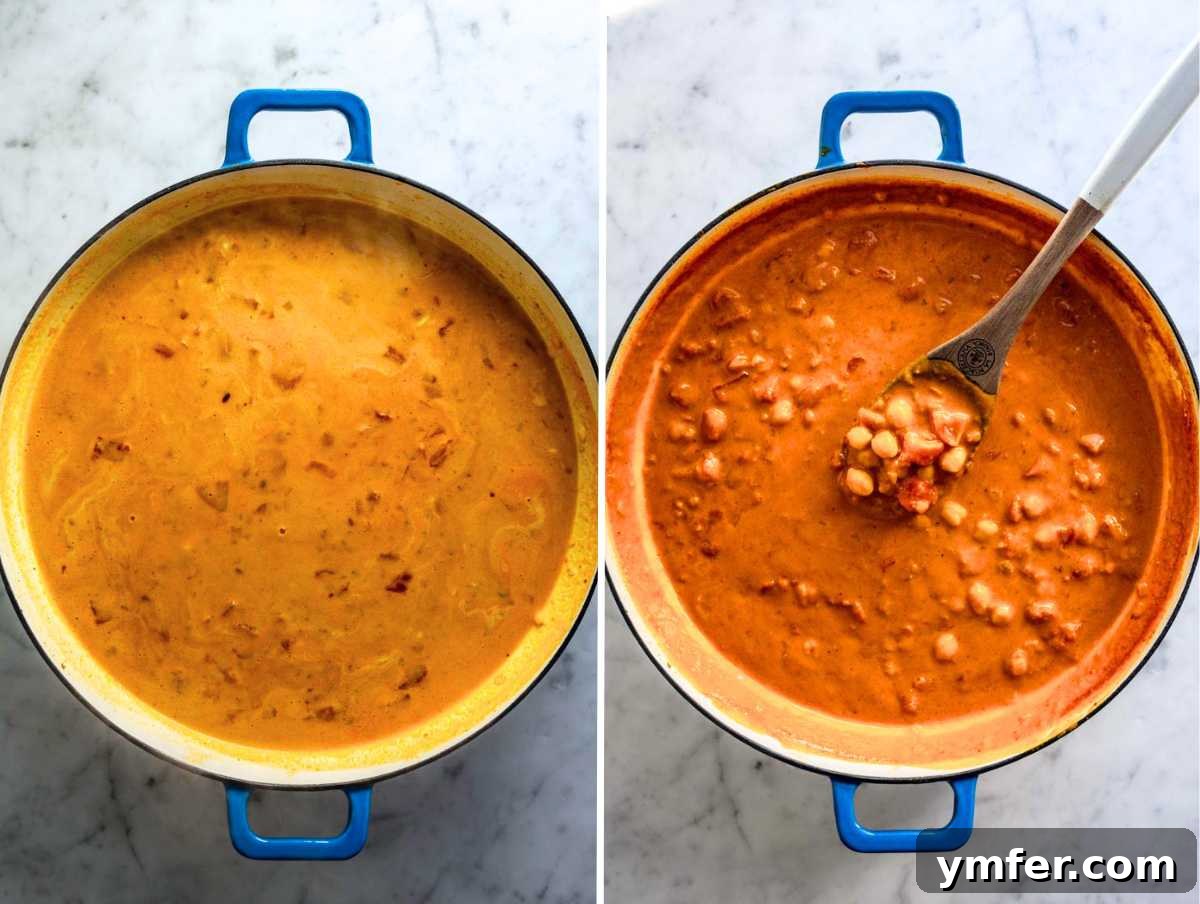
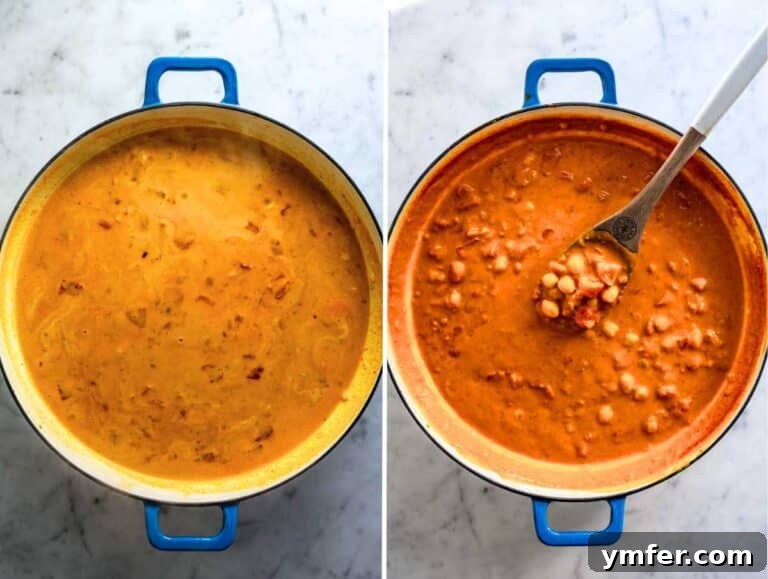
Pour in the **vegetable broth**, **canned tomatoes** (crushed or diced), **rinsed chickpeas**, and **coconut milk**. Stir everything together until well combined. Season the mixture with **salt** and freshly ground **black pepper** to taste.
Increase the heat to medium and bring the curry to a gentle simmer. Allow it to cook for **20 minutes**, stirring occasionally, to allow the flavors to meld and the sauce to thicken slightly.
3. Combine and Finish
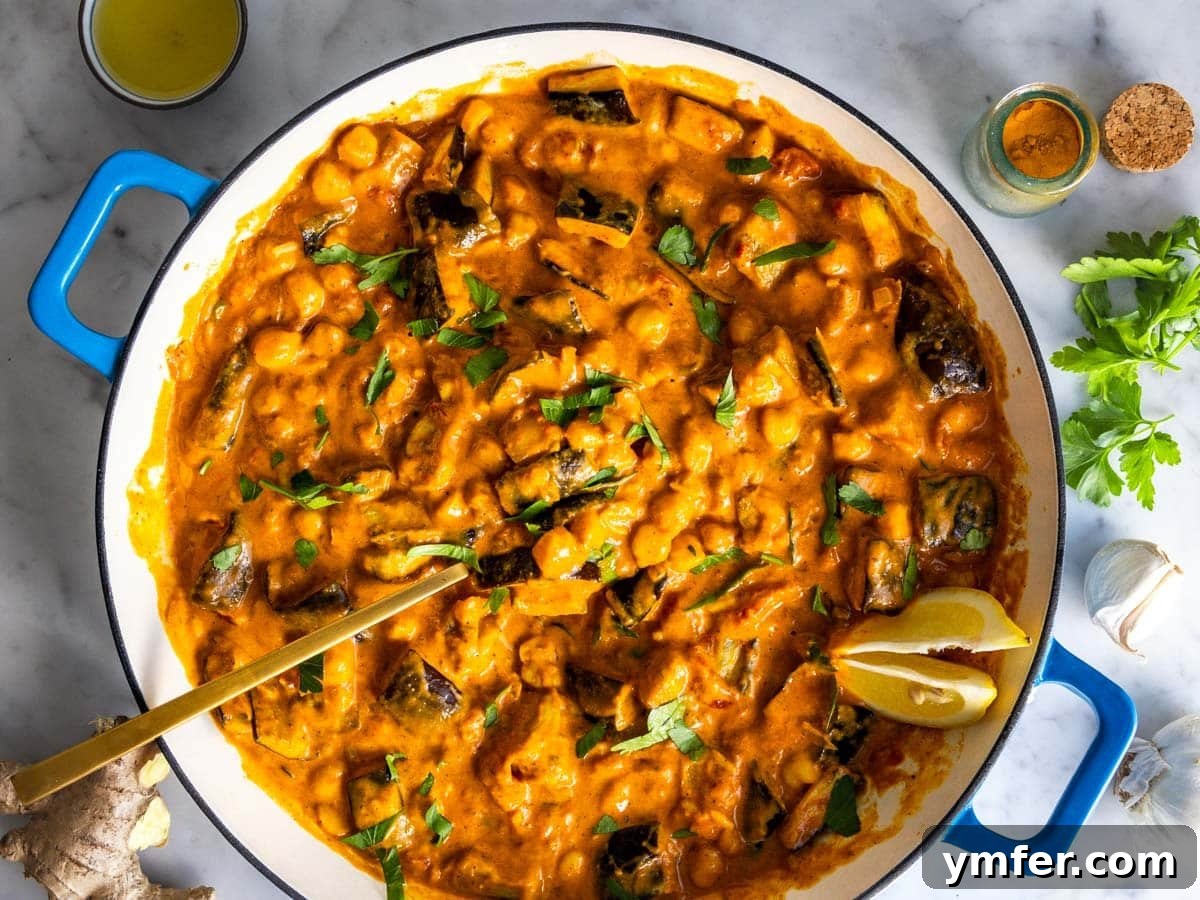
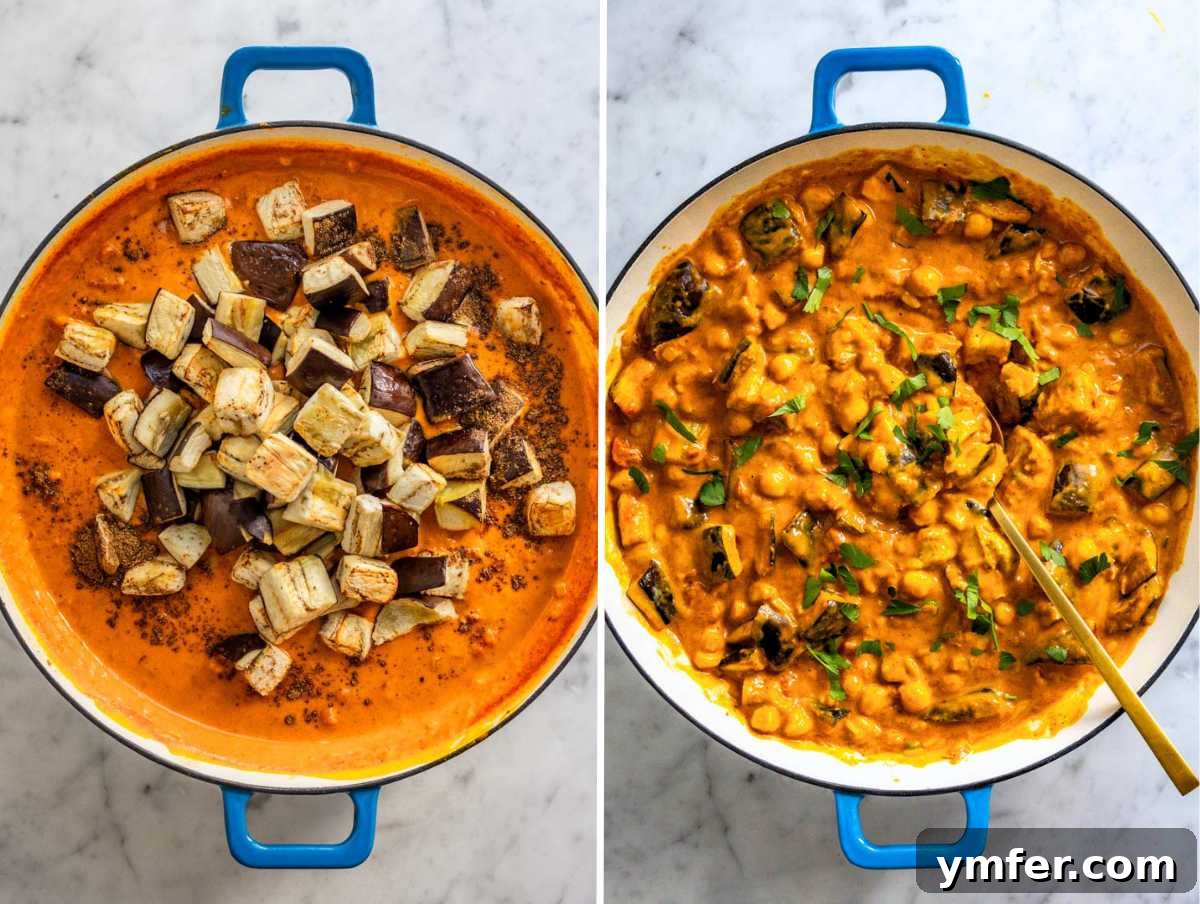
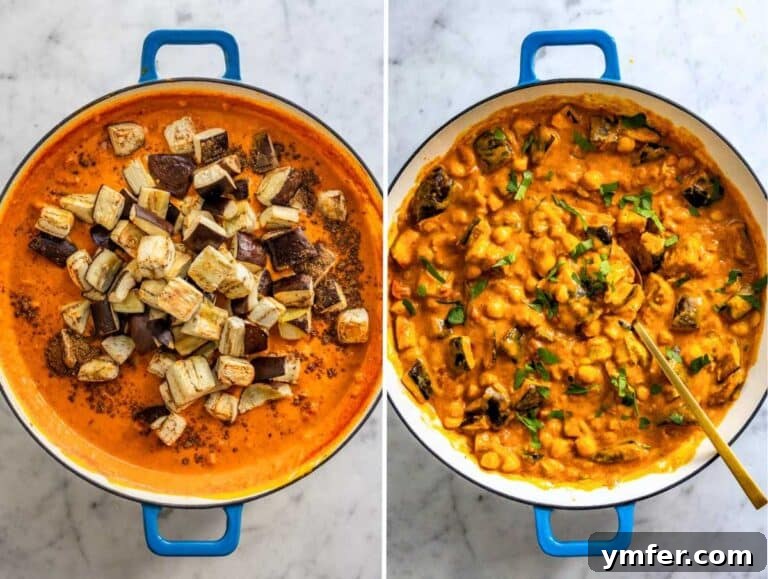
Once the curry has simmered, gently fold in the **roasted eggplant** cubes and the **garam masala**. Garam masala is usually added at the end of cooking to preserve its delicate, aromatic qualities.
Stir to combine, ensuring the eggplant is fully coated in the luscious sauce. Continue to simmer for **5 more minutes**, allowing the flavors to marry and the curry to reach your desired consistency. Taste and adjust the seasoning with additional salt or pepper if needed.
4. Serving Suggestions
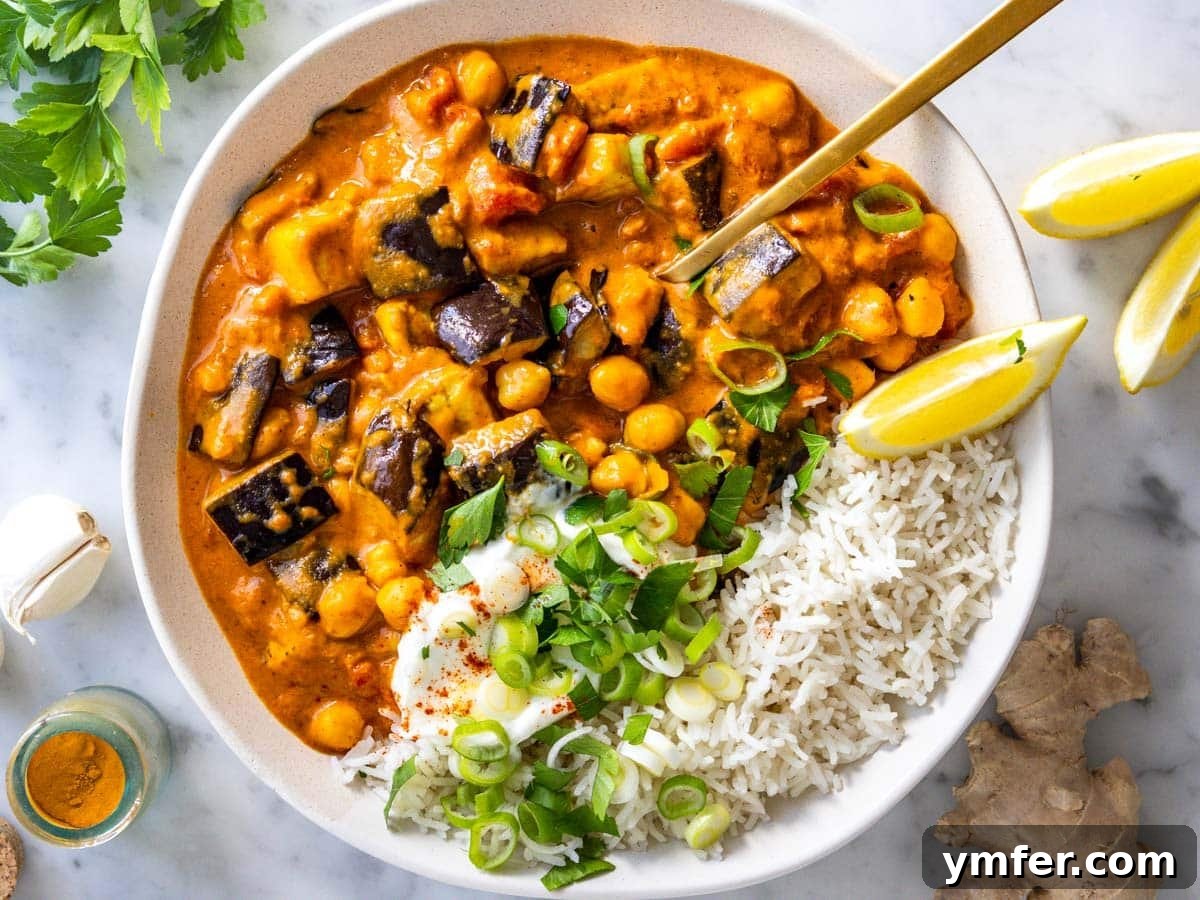
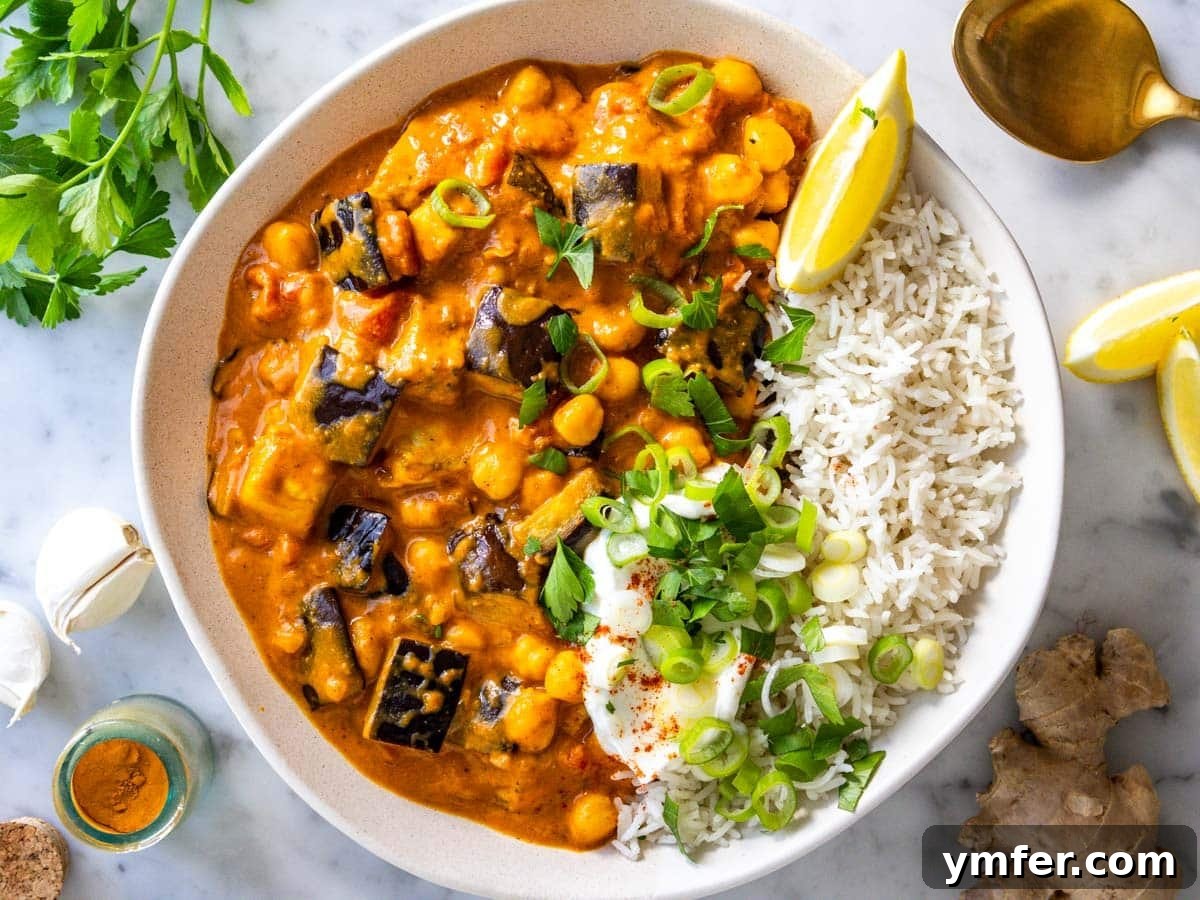
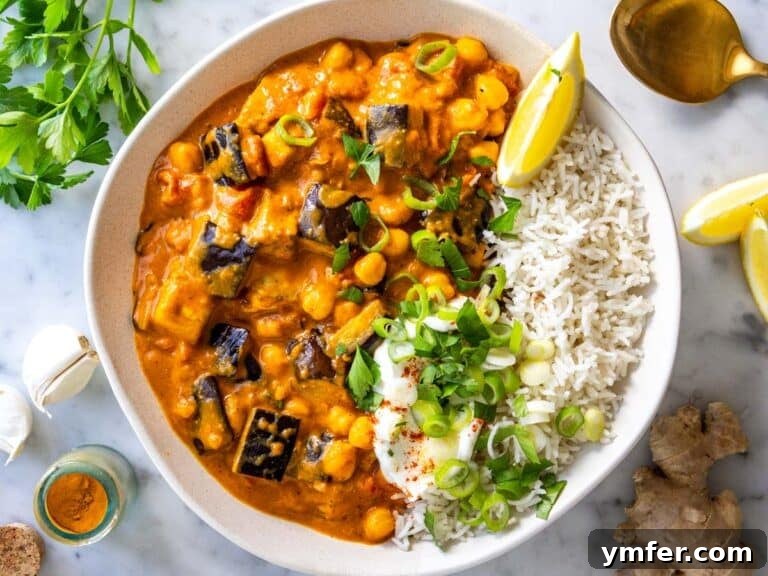
Serve your delicious eggplant curry immediately, alongside either fluffy basmati rice or warm, freshly baked naan bread to soak up every last drop of the flavorful sauce.
For an extra burst of freshness and a touch of creamy coolness, garnish each serving with a squeeze of fresh **lemon or lime juice**, a dollop of plain or Greek yogurt (dairy or non-dairy), and a generous sprinkle of **fresh cilantro**. These garnishes are not just for show; they significantly enhance the overall dining experience by adding bright, contrasting flavors.
Storage & Meal Prep Tips
This eggplant curry is a fantastic dish for meal prepping, as its flavors tend to deepen and improve even further on the second day!
- Make Ahead: This curry is ideal for preparing in advance. The spices meld and intensify, resulting in an even more delicious meal the next day.
- Refrigerator: Once the eggplant curry has cooled down to room temperature, transfer it to an airtight container. It can be stored safely in the refrigerator for up to 3-4 days. To reheat, simply warm it gently in a microwave or a saucepan on the stovetop, adding a splash of water or broth if the sauce has thickened too much.
- Freezer: For longer storage, let the curry cool completely. Then, transfer it into a freezer-friendly container or heavy-duty freezer bags. It can be frozen for up to 3 months. Thaw overnight in the refrigerator, then reheat as described above.
Frequently Asked Questions
- Do I need to salt the eggplant before cooking?
Traditionally, salting eggplant (sometimes called “degorging”) was done to remove bitterness and excess moisture. Modern eggplant varieties are typically less bitter, so salting is often unnecessary unless you are frying it and want to reduce oil absorption. For this roasting method, a simple seasoning with salt and pepper is sufficient. - Can I make this curry spicy?
Absolutely! The red pepper flakes in the recipe provide a mild heat. To increase the spice level, you can add more red pepper flakes, a pinch of cayenne pepper, or finely chopped fresh green chilies (like serrano or Thai chilies) to the aromatic base with the onion. - Is this recipe gluten-free?
Yes, this eggplant curry recipe is naturally gluten-free as long as you ensure your vegetable broth is gluten-free. Most spices and ingredients used are inherently gluten-free. - What if I don’t have all the listed spices?
While using all the recommended spices provides the best flavor, you can still make a delicious curry with fewer. The core spices (curry powder, cumin, coriander, turmeric) are most important. Garam masala adds depth at the end, and if omitted, cinnamon is a suitable alternative. Don’t let a missing spice deter you! - Can I use a different type of milk instead of coconut milk?
Full-fat coconut milk is highly recommended for its unique flavor and rich creaminess. However, if you’re looking for an alternative, other non-dairy creams (like cashew cream) or even dairy heavy cream can be used. Keep in mind that the flavor profile will shift slightly.
More Indian-Inspired Curry Recipes
If you’ve enjoyed this delightful eggplant curry and are eager to explore more vibrant Indian-themed dinners, we have a collection of easy-to-follow recipes that are sure to please your palate:
- Vegetable Curry: A colorful and nutrient-packed curry featuring a medley of your favorite seasonal vegetables.
- Aloo Gobi: A classic Indian dry curry with tender potatoes and cauliflower, simmered with aromatic spices.
- Chana Masala: A hearty and flavorful chickpea curry, perfect for a comforting and protein-rich meal.
- Dal with Split Lentils: A staple in Indian cuisine, this creamy lentil dish is both nourishing and incredibly satisfying.
If you tried this Eggplant Curry recipe or any other recipe on our blog, please leave a 🌟 star rating and let us know how it goes in the comments. We love hearing from you!

Easy & Creamy Eggplant Curry
Buttery-tender eggplant cubes in a creamy and aromatic curry sauce are a winning combination in this easy eggplant curry.
Serve it with basmati rice or naan bread for a balanced Indian-inspired dinner; it takes about 30 minutes to make.
Print Recipe
Share on Facebook
Video
Ingredients
- 2 medium eggplants (about 1¼ pound or 560 grams) (+ 1½ tbsp olive oil, ½ tsp salt, ¼ tsp black pepper for roasting)
- 1 tablespoon olive oil
- 1 medium onion, chopped
- 2 cloves garlic, grated
- 1 inch ginger, grated
- 2 teaspoons curry powder
- 2 teaspoons ground coriander
- 1 teaspoon cumin, ground
- 1 teaspoon turmeric powder
- ¼ teaspoon red pepper flakes
- ½ teaspoon black pepper
- 1 teaspoon salt
- 2 cups vegetable broth (or more to taste)
- 1 can (15 ounces) chickpeas (or 1½ cups of cooked chickpeas), drained
- 1 can (15 ounces) crushed tomatoes
- 1 can (14 ounces) coconut milk
- 1 teaspoon garam masala
Serving Suggestions
- 4 wedges lemon
- 1 handful fresh cilantro, chopped
- 1 to 2 cups basmati rice or naan bread
- 4 tablespoons plain or Greek yogurt (dairy or non-dairy)
Instructions
-
ROAST THE EGGPLANTS: Preheat oven to 430°F (220°C). Line a baking sheet with parchment paper.
Cut 2 medium eggplants into 1-inch (2.5-cm) cubes.
Transfer onto the baking sheet and toss with olive oil, salt, and black pepper.
Arrange in a single layer and roast for 25 minutes or until browned and tender.

-
MAKE FLAVOR BASE: Heat 1 tablespoon olive oil in a large skillet or Dutch oven.
Add 1 medium onion (chopped) and sauté on medium heat for 3 minutes.
Add 2 cloves garlic and 1 inch ginger (both grated) and sauté for one more minute.
Now lower the heat to low and add 2 teaspoons curry powder, 2 teaspoons coriander, 1 teaspoon cumin, 1 teaspoon turmeric powder, and ¼ teaspoon red pepper flakes.
Toast the spices for one minute or until you smell their fragrant aroma.
-
LET IT SIMMER: Add 2 cups vegetable broth, 1 can (15 ounces) chickpeas (drained), 1 can (15 ounces) crushed tomatoes, and 1 can (14 ounces) coconut milk.
Season with 1 teaspoon salt and ½ teaspoon black pepper.
Set the heat to medium, and simmer for 20 minutes, stirring occasionally.
-
ADD EGGPLANTS: Add the roasted eggplants and 1 teaspoon garam masala.
Stir them and simmer for 5 more minutes until the eggplants are fully covered in sauce and you reach your desired consistency. Taste and adjust for salt.
-
SERVING SUGGESTIONS: Serve eggplant curry with either fluffy basmati rice or warm naan bread.
Top with squeezed lemon or lime juice, a dollop of plain or Greek yogurt, and a pinch of fresh cilantro.

Notes
SUBSTITUTIONS
- Olive oil: substitute avocado oil, coconut oil, or another neutral vegetable oil.
- Onion: substitute shallots.
- Garlic and ginger: substitute garlic and ginger paste.
- Spices: try to use as many as you can for the best flavor. You can substitute 1/4 to 1/2 teaspoon of cinnamon for garam masala if needed.
- Eggplant: substitute cauliflower, broccoli, sweet potato, or pumpkin for a different vegetable base.
- Chickpeas: substitute any-color lentils, cooked or canned.
- Vegetable broth: substitute water.
- Crushed tomatoes: substitute diced tomatoes or tomato puree.
- Coconut milk: substitute light coconut milk for fewer calories, or use heavy cream, non-dairy cream, or 15 cashews blended with 1/2 cup of water for a creamy alternative.
- Lemon: substitute lime.
TIPS
Roasting the eggplant is optional, but we highly recommend it because roasting adds a significant amount of flavor and a desirable tender texture to both the eggplant and the overall curry.
If you choose not to roast the eggplant, simply cut it into cubes and add it to the curry along with the chickpeas. It will cook through as the curry simmers.
STORAGE
1. The dish works exceptionally well for meal prep as its flavors noticeably improve and deepen on the second day.
2. It can be refrigerated in an airtight container for 3-4 days after cooling to room temperature.
3. It can be frozen for up to 3 months in a freezer-safe container and thawed in the refrigerator overnight or gently in the microwave.
Nutrition information is an estimate for 1 portion of eggplant curry out of four, calculated with reduced-fat coconut milk, and without rice or additional toppings.
Nutrition
Calories: 304kcal,
Carbohydrates: 40g,
Protein: 9g,
Fat: 13g,
Saturated Fat: 7g,
Polyunsaturated Fat: 1g,
Monounsaturated Fat: 3g,
Trans Fat: 0g,
Cholesterol: 0mg,
Sodium: 815mg,
Potassium: 887mg,
Dietary Fiber: 12g,
Sugar: 14g,
Vitamin A: 322IU,
Vitamin B6: 0.4mg,
Vitamin C: 16mg,
Vitamin E: 3mg,
Vitamin K: 17µg,
Calcium: 102mg,
Folate: 154µg,
Iron: 4mg,
Manganese: 1mg,
Magnesium: 80mg,
Zinc: 2mg
Tried this recipe?Leave a comment below or mention @theplantbasedschool on Instagram. We love hearing from you ⭐️ 💚.
You might also like:
Collections
20 Easy Curry Recipes
Recipes
45 Easy Vegetarian Dinner Recipes
Collections
30 Eggplant Recipes
Mains
40 High Protein Vegetarian Meals