
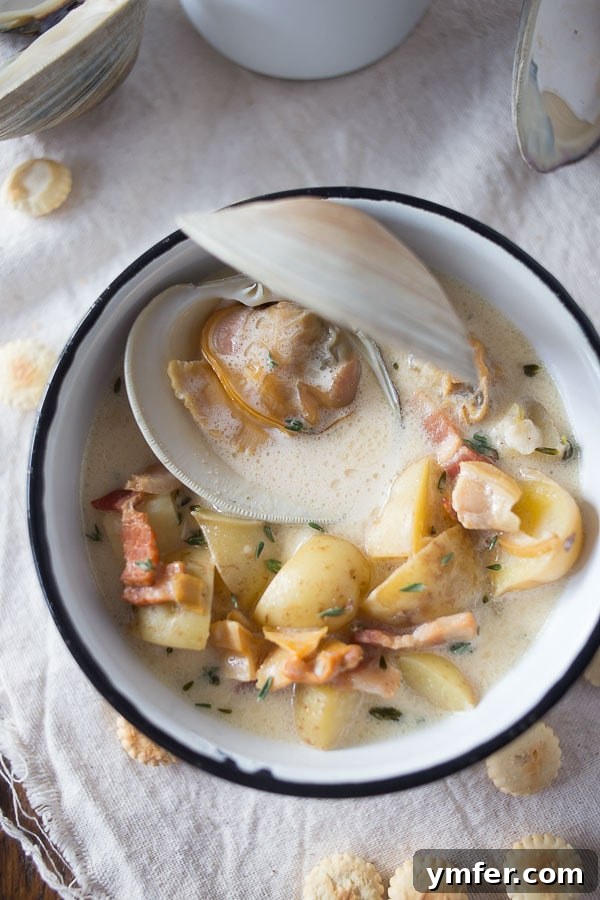
There’s an undeniable allure to a truly rich and creamy bowl of New England Clam Chowder, especially when the weather turns chilly. This classic dish, hailing from the coastal regions of New England, is more than just a soup; it’s a comforting embrace, a taste of tradition, and a hearty meal all in one. Our homemade New England Clam Chowder recipe delivers on every promise, featuring succulent clams, crispy bacon, tender, buttery yellow potatoes, and just the right touch of heavy cream to create an unparalleled velvety texture. It’s designed to be effortlessly delicious, allowing you to bring this iconic comfort food to your table with ease.
Why This New England Clam Chowder Recipe Stands Out
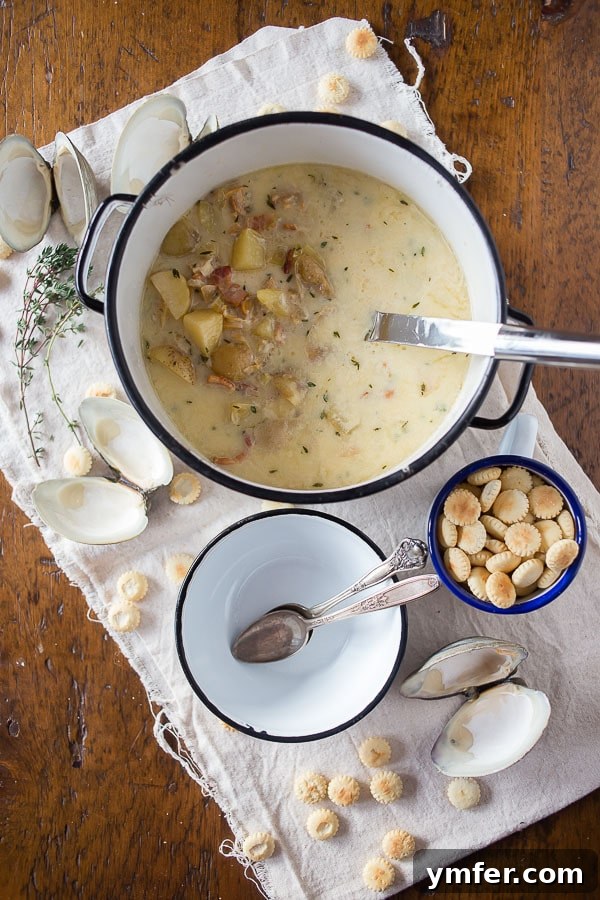
If you’ve been yearning for the quintessential winter soup, your search ends here. This homemade New England Clam Chowder recipe is not just hearty; it’s a culinary dream, packed with generous amounts of tender clams, perfectly cooked vegetables, savory bacon, and potatoes, all brought together with a luxurious touch of cream. What makes this recipe truly special is its accessibility without compromising on authentic flavor. While many clam chowder recipes might seem daunting, this one simplifies the process by intelligently utilizing canned clams. This means you can achieve that deep, satisfying clam flavor even if fresh clams aren’t readily available in your area. For those who do have access, we also provide options for using fresh, steamed clams, elevating the experience further.
Beyond its incredible taste, this soup is a lifesaver on busy days. It’s remarkably quick to prepare, typically ready in under an hour, making it an ideal choice for a weeknight dinner or a cozy weekend lunch. Serving it piping hot, garnished with a sprinkle of crisp oyster crackers, extra crumbled bacon, a dash of Old Bay seasoning, or even a hint of fresh parsley, transforms it into a meal that feels both gourmet and homey. Each spoonful is a journey of flavor and texture, from the briny clams to the sweet vegetables and the comforting creaminess.
The Essence of New England Clam Chowder: A Culinary Journey
New England Clam Chowder is a beloved staple, deeply ingrained in American culinary history. Unlike its tomato-based cousin, Manhattan Clam Chowder, the New England version is renowned for its dairy-rich, thick, and velvety broth, often studded with tender clams, diced potatoes, and savory pork (usually bacon). This iconic soup has roots tracing back to the 18th century, evolving from simple fisherman’s stews to the refined classic we cherish today. Its popularity grew steadily, becoming synonymous with coastal dining and comfort food across the United States.
The beauty of a homemade chowder lies in the control you have over each ingredient, ensuring optimal freshness and flavor. While many restaurants serve excellent versions, crafting it in your own kitchen allows for adjustments to richness, seasoning, and texture, making it perfectly suited to your palate. This recipe embraces that spirit, guiding you through creating a chowder that is both deeply traditional and uniquely yours. It’s a versatile dish that transitions seamlessly from a humble family dinner to an impressive meal for guests, always delivering warmth and satisfaction.
Essential Ingredients for the Best New England Clam Chowder
Creating an exceptional New England Clam Chowder starts with a careful selection of ingredients. Each component plays a crucial role in building the layered flavors and iconic creamy texture that define this dish:
- Thick-sliced Bacon: This isn’t just for flavor; rendering the bacon provides the foundational fat that enriches the soup base. The crispy bits also make a fantastic garnish. Using thick-sliced bacon ensures you get ample fat and a more substantial texture.
- Celery & Onions: These aromatic vegetables form the classic mirepoix base, sautéed in the bacon fat until soft and translucent. They contribute a subtle sweetness and depth of flavor that is essential for any good soup.
- Garlic: A few cloves of minced garlic add a pungent, aromatic kick that complements the other savory ingredients beautifully. It should be added towards the end of sautéing to prevent burning.
- Yellow Baby Potatoes: The choice of potato is key. Yellow baby potatoes (or Yukon Golds) are ideal because their waxy texture holds up well during simmering, preventing them from turning mushy. Their natural creaminess also contributes to the chowder’s body when some pieces break down.
- Fresh Thyme & Dried Oregano: These herbs impart a fragrant, earthy aroma that pairs wonderfully with seafood. Fresh thyme offers a brighter note, while dried oregano provides a deeper, more robust flavor.
- Crushed Red Pepper: Just a touch of crushed red pepper flakes adds a subtle warmth and a hint of spice, balancing the richness of the cream without overpowering the delicate clam flavor.
- Kosher Salt & Black Pepper: Essential seasonings to enhance all the flavors in the chowder. Always taste and adjust as you go, especially with the salt, considering the natural salinity of clams and clam juice.
- All-purpose Flour: This is the thickening agent, creating a roux with the bacon fat and forming the creamy backbone of the chowder. It ensures a smooth, luscious consistency.
- Canned Clams in Water: The hero of the dish! Using high-quality chopped clams packed in water is a convenient way to get tender clam meat and invaluable clam juice for the broth. Remember, it’s crucial NOT to drain the juice.
- Clam Juice: Bottled clam juice boosts the briny, oceanic flavor of the chowder, providing an authentic taste that ties all the ingredients together. This is especially important when using canned clams, as their juice may not be enough.
- Bay Leaf: A single bay leaf infuses the simmering broth with a subtle, aromatic layer, adding complexity and depth. Remember to remove it before serving.
- Heavy Cream: The crowning glory of New England Clam Chowder! Heavy cream provides the luxurious richness and silky smooth texture that is characteristic of this classic dish. Its high fat content prevents curdling during simmering.
Fresh Clams vs. Canned Clams: Making the Right Choice
While this recipe is designed to be incredibly easy and flavorful using canned clams, opting for fresh clams can elevate your New England Clam Chowder to an even more gourmet level, offering a vibrant, briny flavor and a slightly different texture. The choice largely depends on availability, time, and personal preference.
Using Fresh Clams
If you have access to fresh clams, such as cherrystone or littleneck clams, and are willing to take a few extra steps, the reward is a truly spectacular chowder. To prepare fresh clams:
- Cleaning: First, ensure your clams are clean. Soak them in a bowl of cold, salted water for about 20-30 minutes. This encourages them to spit out any sand or grit. Discard any clams that are open and do not close when tapped.
- Steaming: Place the cleaned clams in a large pot with about 1/2 to 1 cup of water or white wine. Cover the pot tightly and steam over high heat for 5-10 minutes, or until the clams open. Discard any clams that do not open.
- Extracting Meat & Juice: Once steamed, carefully remove the clams from their shells. Coarsely chop the clam meat and set aside. Crucially, strain the liquid from the pot through a fine-mesh sieve (preferably lined with cheesecloth) to remove any remaining grit. This liquid is your fresh clam juice, full of incredible flavor.
- Adjusting Clam Juice Quantity: When using fresh clams, you won’t have the pre-measured juice from canned clams. The juice from four 6.5-ounce cans is approximately 2 cups. You will need to supplement your fresh clam juice with additional bottled clam juice to reach the total amount specified in the recipe (approx. 5 cups total, combining fresh clam juice and bottled).
The Convenience of Canned Clams
Using canned clams is perfectly acceptable and yields a wonderfully delicious chowder. High-quality canned chopped clams are convenient, shelf-stable, and come with their own flavorful juice, which is vital for the chowder’s broth. They are a fantastic option for a quick and easy weeknight meal without sacrificing that authentic clam taste. Just remember the golden rule: DO NOT DRAIN THE CLAMS. The liquid in the can is essential for the base of your chowder.
Alternative Broth Bases for Your Chowder
The traditional New England Clam Chowder relies heavily on clam juice for its signature briny flavor. However, if you’re looking to moderate the “clammy” taste, prefer a different flavor profile, or simply can’t find clam juice, you have excellent alternatives:
- Chicken Stock: Replacing a portion or all of the bottled clam juice with chicken stock will result in a less intensely oceanic flavor. It adds a savory depth that many find appealing, creating a more universally palatable chowder while still being incredibly comforting. This is a popular choice for those who enjoy a milder seafood flavor.
- Vegetable Broth: For a lighter base or to make the chowder more adaptable for those who prefer plant-based options (though the bacon and cream would still need adjustment for a fully vegetarian version), vegetable broth can be a great substitute. Choose a low-sodium, flavorful vegetable broth to ensure your soup doesn’t fall flat.
- Fish Stock: If you want to maintain a strong seafood presence but perhaps vary the specific clam intensity, a good quality fish stock can be an excellent alternative or addition. It complements the clam flavor while adding another layer of marine richness.
Feel free to experiment with a combination of these broths to find the perfect balance for your taste preferences. The key is to use a flavorful liquid as the foundation for your chowder.
The Ultimate Toppings for New England Clam Chowder
While New England Clam Chowder is utterly satisfying on its own, a thoughtfully chosen topping can elevate the experience, adding texture, color, and an extra burst of flavor. I’m happy to eat my clam chowder any way I can get it, but my favorite toppings undeniably enhance every spoonful:
- Crispy Bacon: The reserved crispy bacon bits from rendering the fat are an absolute must. Their salty crunch provides a delightful contrast to the creamy soup, and it brings the flavor of the rendered fat full circle.
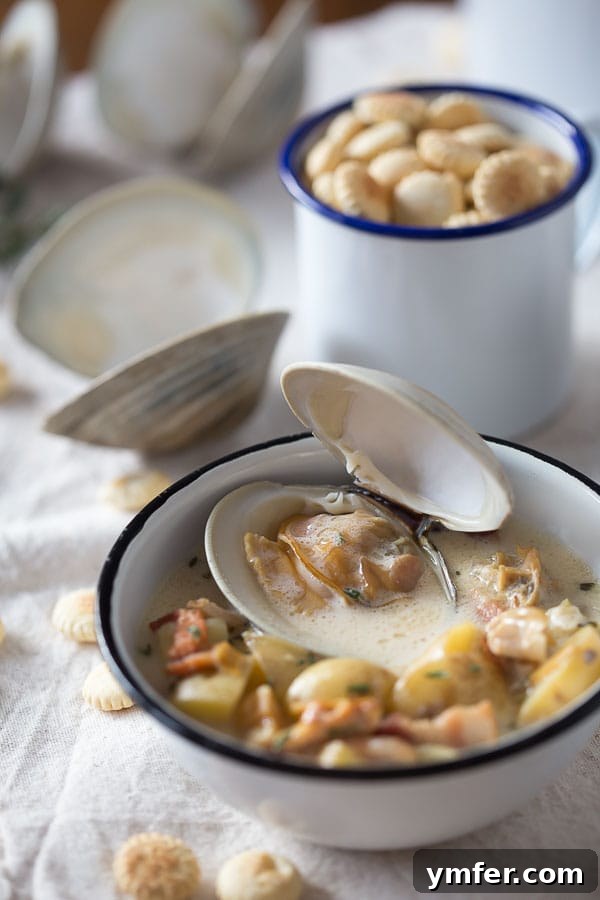
- Oyster Crackers: A classic pairing! These small, salty crackers absorb some of the chowder’s richness and offer a pleasant crunch that many find indispensable. They are specifically designed for soups and stews.
- Minced Fresh Parsley: A sprinkle of fresh, vibrant green parsley not only adds a beautiful pop of color but also a fresh, herbaceous note that brightens the rich flavors of the chowder.
- Sprinkle of Old Bay Seasoning: For those who love a bit more spice and a distinctive seafood-friendly blend, a light dusting of Old Bay seasoning on top can add an extra layer of savory, zesty flavor.
- Dash of Hot Sauce: If you enjoy a bit of heat, a tiny dash of your favorite hot sauce can awaken the palate and add an exciting kick to the creamy soup.
- Crusty Bread or Bread Bowls: While not strictly a topping, serving your chowder with a side of warm, crusty bread or in a hollowed-out bread bowl is a traditional and highly recommended way to soak up every last drop of the delicious broth.
More Comforting Soup Recipes to Explore
If this New England Clam Chowder has awakened your love for hearty, homemade soups, you’ll be delighted to explore some of our other favorite recipes:
- Instant Pot Beef Barley Soup
- Easy Ham and Bean Soup
- Peruvian Chicken Soup
- 20 Minute Seafood Stew
Homemade New England Clam Chowder
By: Brandy O’Neill
Servings: 6 servings
Prep Time: 10 mins
Cook Time: 40 mins
Total Time: 50 mins

This rich and creamy homemade New England Clam Chowder is packed full of meaty fresh clams, bacon, buttery yellow potatoes, and just a touch of heavy cream. This is the perfect soup for cold winter days and nights.
Ingredients
- 8 slices thick-sliced bacon, diced
- 2 celery stalks, small diced
- 1 large yellow onion, small diced
- 4 cloves garlic, minced
- 2 pounds baby yellow potatoes, cut into 1/2 inch chunks
- 1 tablespoon chopped fresh thyme leaves
- 1/2 teaspoon crushed red pepper flakes
- 1/2 teaspoon dried oregano
- 1/2 teaspoon kosher salt
- 1/4 teaspoon black pepper
- 1/3 cup all-purpose flour
- 4 (6.5 ounce) cans chopped clams in water (USE THE CLAM JUICE, DO NOT DRAIN)
- 3 (8 ounce) bottles clam juice (3 cups)
- 1 bay leaf
- 1 cup heavy cream
Instructions
- In a large soup pot set over medium heat, add the diced bacon. Cook until crispy, then remove the bacon with a slotted spoon and set aside, reserving the rendered fat in the pot.
- Once the bacon fat has rendered, add in the diced celery and onion to the pot.
- Cook over medium heat, stirring occasionally, until the vegetables are soft and translucent, about 5-7 minutes.
- Add in the minced garlic and sauté until fragrant, about 30 seconds. Be careful not to burn the garlic.
- If your bacon didn’t render enough fat (you need about 1/4 cup), drizzle in a little olive oil or a tablespoon of unsalted butter at this stage.
- Add the chopped potatoes, fresh thyme leaves, crushed red pepper flakes, dried oregano, kosher salt, and black pepper to the pot. Stir well to combine all ingredients.
- Sprinkle the all-purpose flour over the vegetables and stir continuously for 1-2 minutes until no dry flour is visible and it forms a light roux. This will help thicken the chowder.
- Add the canned clams WITH THEIR JUICE to the pan, along with the bottled clam juice and the bay leaf.
- Stir everything gently to combine, then bring the mixture to a simmer. Once simmering, reduce the heat to low, cover the pot, and let it cook for 15-20 minutes, or until the potatoes are fork-tender. Stir occasionally to prevent sticking.
- Once the potatoes are soft, remove the bay leaf. Stir in the heavy cream. Continue to cook on low heat for another 2-3 minutes until heated through (do not boil after adding cream). Taste and adjust seasoning with additional salt or pepper if needed. Serve hot with your favorite toppings, such as oyster crackers and crispy bacon.
Notes
- Using fresh clams: Steam 2 dozen cleaned cherrystone or littleneck clams until they open. Dice the meat and add it to the soup at the same step as canned clams. You will need to use approximately 2 more cups of bottled clam juice to make up for the absence of juice found in the cans. Be sure to strain any liquid from steaming the fresh clams and include it in your liquid measurement.
- Each can of diced clams typically provides about 1/2 cup of clam juice. Therefore, with 4 cans, you’ll get roughly 2 cups from the cans, meaning you’ll likely need 3 additional 8-ounce bottles of clam juice to reach the desired liquid volume for this recipe.
Nutrition
Calories: 412kcal
Carbohydrates: 43g
Protein: 16g
Fat: 20g
Saturated Fat: 11g
Polyunsaturated Fat: 8g
Trans Fat: 1g
Cholesterol: 74mg
Sodium: 861mg
Fiber: 4g
Sugar: 4g
Nutrition information is automatically calculated, so should only be used as an approximation.
Tried this recipe?
Mention @NutmegNanny or tag #nutmegnanny!
Storage and Reheating Tips for Your Clam Chowder
One of the best things about making a large pot of New England Clam Chowder is enjoying it over several days. Proper storage and reheating are key to maintaining its creamy texture and delicious flavor.
- Refrigeration: Allow the chowder to cool completely before transferring it to an airtight container. It can be safely stored in the refrigerator for up to 3-4 days. The flavors often meld and deepen overnight, making leftovers even more enjoyable.
- Freezing: Freezing dairy-based soups can sometimes lead to a slightly grainy or separated texture upon thawing. However, if you plan to freeze, it’s best to do so before adding the heavy cream. Freeze the potato and clam broth base in an airtight container for up to 2-3 months. When ready to serve, thaw overnight in the refrigerator, reheat the base, and then stir in the heavy cream until heated through. If you freeze the chowder with cream, whisk it vigorously during reheating to help re-emulsify the dairy.
- Reheating on the Stovetop: The best way to reheat clam chowder is gently on the stovetop over low to medium-low heat. Stir frequently to prevent scorching and ensure even heating. Avoid boiling the chowder, especially after adding the cream, as high heat can cause the cream to separate or curdle. If it seems too thick, you can add a splash of milk or clam juice while reheating.
- Reheating in the Microwave: While convenient, microwaving can sometimes lead to uneven heating and a higher risk of the cream separating. If using a microwave, reheat in short intervals (1-2 minutes at a time), stirring well between each interval until heated through.
With these tips, you can ensure that every bowl of your homemade New England Clam Chowder, whether fresh off the stove or from the fridge, is as comforting and delicious as the first.