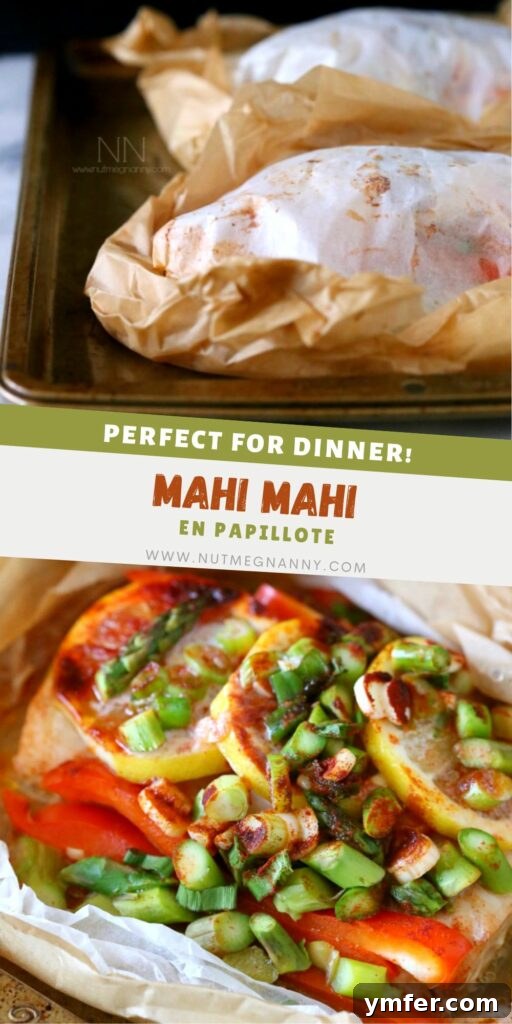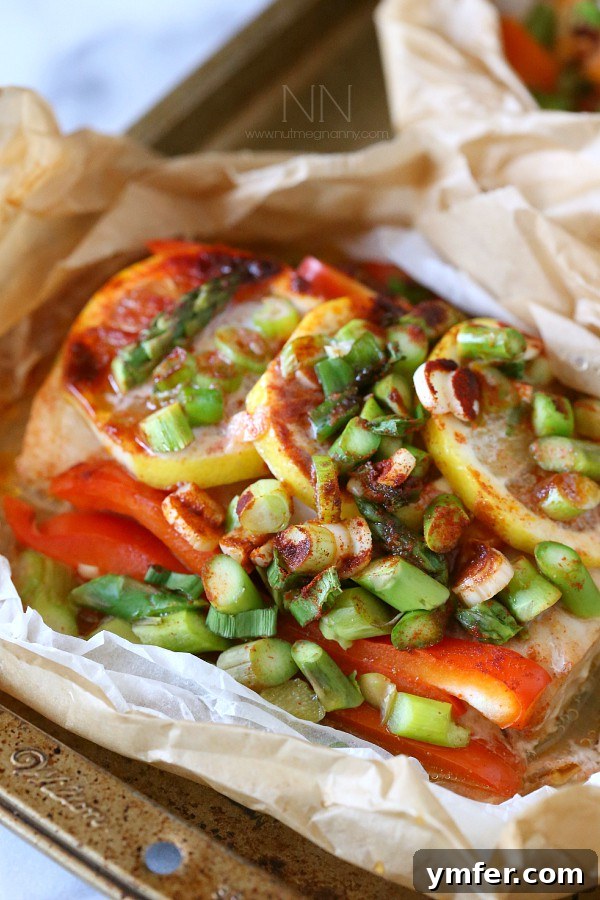
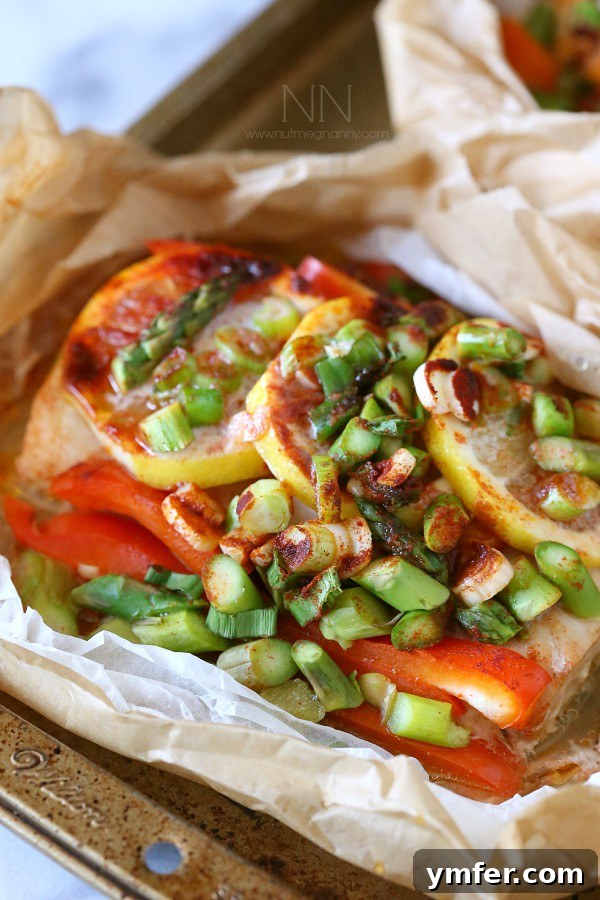
Unlock a world of exquisite flavor and effortless elegance with this delightful Mahi Mahi en Papillote recipe. Imagine succulent, flaky mahi-mahi fillets, infused with bright lemon, tender-crisp asparagus, vibrant red bell pepper, aromatic green onions, and a hint of smoky paprika, all perfectly steamed within individual parchment paper pouches. This culinary technique, originating from French kitchens, transforms simple ingredients into a gourmet meal with minimal fuss and an astonishingly easy cleanup. Each parchment packet, resembling a charming culinary gift, promises a burst of fresh, savory flavors and a truly delightful dining experience.
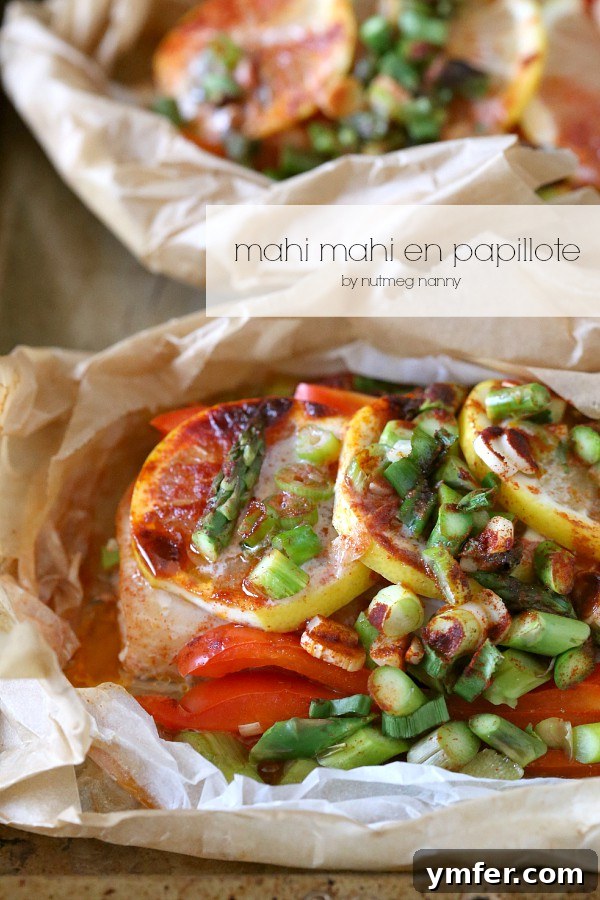
There’s a unique joy in unwrapping a perfectly cooked meal, especially when it’s as fresh and flavorful as this Mahi Mahi en Papillote. The moment you tear open the parchment, a cloud of fragrant steam rises, revealing beautifully cooked fish and vibrant vegetables, glistening in savory butter and citrus. This dish strikes the perfect balance between simple preparation and sophisticated presentation, making it an ideal choice for both busy weeknight dinners and impressive weekend entertaining. The individual portions ensure everyone gets a perfectly cooked meal, and the best part? Cleanup is an absolute breeze, leaving you more time to savor the moment rather than scrub pots and pans. If you’re looking for another fantastic mahi-mahi preparation, consider trying a classic baked mahi-mahi recipe.
What is the “En Papillote” Cooking Technique?
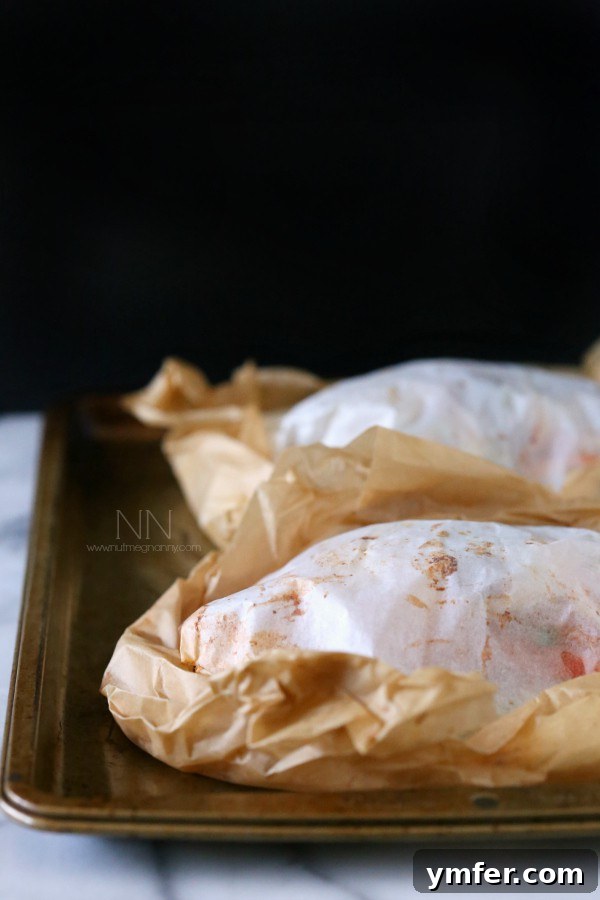
“En papillote” is a classic French culinary method that translates to “in parchment.” This technique involves wrapping food, most commonly fish or chicken along with vegetables and aromatics, in a sealed parcel of parchment paper (or sometimes foil) and baking it. The magic happens inside the sealed pouch: as the ingredients heat, they create steam, effectively cooking the food gently and evenly. This steaming process locks in moisture, ensuring that your fish remains incredibly tender and juicy, while the flavors from all the ingredients meld together beautifully. It’s a wonderfully healthy cooking method as it requires minimal added fat, relying instead on the natural juices and aromatics to flavor the dish. The sealed environment also prevents any valuable nutrients from escaping, making it a truly wholesome meal.
Why Mahi Mahi is the Star for En Papillote
Mahi Mahi, also known as dolphin fish (though unrelated to marine mammals), is an exceptional choice for en papillote cooking due to its firm yet flaky texture and mild, slightly sweet flavor. This white fish holds up well to the steaming process without becoming mushy, ensuring each bite offers a satisfying firmness that easily flakes apart. Its subtle flavor profile is wonderfully versatile, allowing it to absorb and complement the vibrant notes of lemon, herbs, and spices without being overpowered. Mahi Mahi typically has a faint pink undertone when raw, cooking to an opaque white, and its natural richness pairs beautifully with a touch of butter and citrus. Opting for fresh, sustainably sourced mahi-mahi ensures the best flavor and texture for your en papillote creation.
Essential Ingredients for Mahi Mahi En Papillote
Crafting the perfect Mahi Mahi en Papillote is all about combining fresh, high-quality ingredients that harmonize beautifully within the steaming pouch. Each component plays a vital role in creating a balanced and flavorful dish:
- Mahi Mahi Fillets: The cornerstone of our dish. Choose fresh, firm fillets that are free from strong odors. Their mild sweetness and firm texture are ideal for this delicate cooking method.
- Fresh Lemon: An absolute must! Thin slices of lemon directly on the fish, along with a squeeze of juice, provide a bright, zesty acidity that cuts through the richness of the fish and butter, enhancing all the other flavors.
- Vibrant Vegetables: We use a combination of fresh asparagus, red bell pepper, and green onions.
- Asparagus: Adds a delicate earthy flavor and a tender-crisp texture. When diced, it cooks perfectly alongside the fish.
- Red Bell Pepper: Brings a touch of sweetness, beautiful color, and a pleasant crunch.
- Green Onions: Offer a mild oniony bite that complements the fish without being overpowering.
- Chopped Parsley: While optional, a sprinkle of fresh parsley adds a herbaceous note and a vibrant splash of green, contributing to both flavor and visual appeal.
- Unsalted Butter: This is our fat of choice, and for good reason! A tablespoon of butter melting over the fish and vegetables creates a rich, luxurious sauce within the packet, keeping everything moist and adding incredible depth of flavor.
- Smoked Paprika: A secret weapon for adding warmth and complexity. Smoked paprika (not to be confused with hot paprika) imparts a lovely smoky, slightly sweet flavor that perfectly complements the fish and brightens the overall profile. It’s not spicy, making it family-friendly.
- Kosher Salt: Essential for seasoning the fish and vegetables to taste. Its coarse texture allows for even distribution and enhances the natural flavors of the ingredients.
- White Wine or Vegetable Stock: This liquid is crucial for generating the steam inside the parchment pouch. A dry white wine adds a subtle layer of sophistication and depth, while vegetable stock offers a clean, savory alternative, perfect for those who prefer to avoid alcohol. Both options ensure your fish and vegetables are perfectly steamed and incredibly moist.
Crafting Your Parchment Pouches: A Step-by-Step Guide
The art of creating the perfect parchment pouch is simpler than you might think, and it’s a technique that will serve you well for many other dishes. If you ever enjoyed cutting out heart shapes in elementary school, this will feel familiar! Here’s how to do it:
- Prepare your parchment: Take two pieces of parchment paper, approximately 15×24 inches each. Fold each piece in half, aligning the shorter ends.
- Create the heart shape: With a pencil, draw a large half-heart shape on the folded parchment, starting from the folded crease. Aim to utilize as much of the paper as possible to ensure a spacious pouch.
- Cut and open: Carefully cut along your half-heart line with scissors. Unfold the paper, and behold – a perfect heart shape! Repeat this for the second piece of parchment.
- Arrange on baking sheet: Place your parchment hearts on a baking sheet. This makes it easier to transfer them to and from the oven.
- Layer the ingredients: Position one mahi-mahi fillet in the middle of the right side of each parchment heart, close to the crease. Top each fillet with three thin slices of lemon, then equally divide the asparagus, red bell pepper slices, green onions, and chopped parsley between the two fillets.
- Add the finishing touches: On top of the vegetables, place one tablespoon of unsalted butter, sprinkle with one teaspoon of smoked paprika, and season generously with kosher salt to taste.
- Fold and crimp: Fold the other half of the parchment heart over the filled side. Starting from the rounded edge, begin crimping and cinching the two halves of the parchment together. Work your way around, folding the edges over themselves tightly to create a seal, but leave the last 2 inches at the pointed end open.
- Add the liquid: Carefully tilt the partially sealed packet slightly and pour in half of the dry white wine or vegetable stock through the open end.
- Seal tightly: Now, carefully fold the remaining 2 inches of the packet under itself and crimp it tightly to secure the liquid inside and prevent any steam from escaping during cooking. The tighter the seal, the more effectively the food will steam.
Baking Your Mahi Mahi En Papillote to Perfection
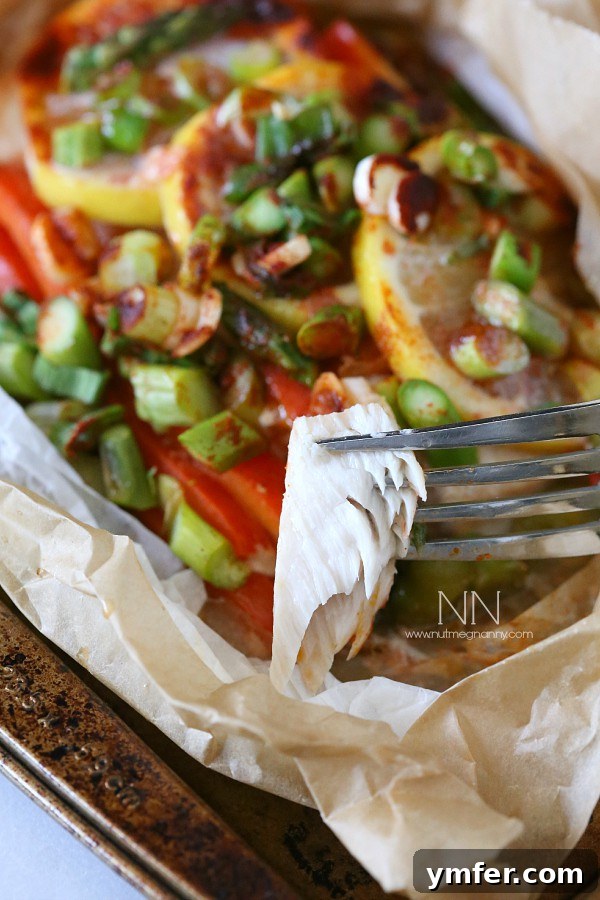
With your beautifully crafted parchment pouches ready, the baking process is incredibly straightforward. Preheat your oven to 375 degrees F (190 degrees C). Place the sealed packets on a baking sheet and slide them into the preheated oven. The beauty of the en papillote method is that the cooking time is relatively short. Bake for approximately 12 to 15 minutes. The exact time may vary slightly depending on the thickness of your mahi-mahi fillets and your oven, but a general rule of thumb is 10 minutes per inch of thickness for fish. Once cooked, remove the baking sheet from the oven and let the packets rest for 2 minutes. This resting period allows the flavors to further meld and the residual heat to finish cooking the fish to perfect flakiness. The packets will puff up like little balloons in the oven due to the steam, which is a good sign! Carefully open each pouch at the table, allowing the aromatic steam to escape and reveal your perfectly cooked, moist, and flavorful meal. Be mindful of the hot steam when opening.
Serving Suggestions for a Complete Meal
Mahi Mahi en Papillote is a complete meal in itself, thanks to the protein and vegetables cooked together. However, it pairs wonderfully with a few simple sides that complement its fresh flavors and light texture. Consider serving it alongside a fluffy bed of jasmine rice or quinoa to soak up the delicious juices. For a low-carb option, cauliflower rice or a simple green salad with a light vinaigrette would be excellent. Crusty bread is perfect for mopping up any remaining sauce within the pouch. Roasted potatoes or a side of couscous can also elevate the meal. The elegance of the individual packets means you can serve them directly from the oven to the table, allowing each guest to experience the joyful unveiling of their personalized gourmet dish.
Alternatives and Customization Options
One of the fantastic aspects of en papillote cooking is its incredible versatility. While mahi-mahi is superb, feel free to experiment with other proteins and vegetables based on availability and personal preference:
- Fish Alternatives: If mahi-mahi isn’t available, several other fish varieties work beautifully. Tilapia, haddock, or cod are excellent choices for their mild flavor and similar texture. Salmon is also a great option, though it has a stronger, richer flavor profile, so adjust your seasonings accordingly. For a shellfish twist, large shrimp (4-5 per pouch) can be used, and they cook even faster!
- Vegetable Swaps: Don’t limit yourself to just asparagus and bell pepper. Thinly sliced zucchini, cherry tomatoes (halved), spinach (which wilts down wonderfully), thinly sliced fennel, or even a handful of mushrooms can be added or substituted. Ensure vegetables are cut into small pieces so they cook through at the same rate as the fish.
- Herb and Spice Variations: Beyond smoked paprika, consider fresh dill, thyme, oregano, or a pinch of red pepper flakes for a little heat. Garlic cloves (minced or thinly sliced) are always a welcome addition. For an Asian twist, add a drizzle of soy sauce or sesame oil, a dash of ginger, and cilantro. For a Mediterranean vibe, include olives, capers, and sun-dried tomatoes.
- Different Liquids: Coconut milk can replace wine or stock for a creamy, tropical flavor. A splash of lemon-herb infused olive oil could also work well if you prefer less liquid.
Frequently Asked Questions (FAQ)
- Can I use aluminum foil instead of parchment paper? Yes, you can. Aluminum foil is more forgiving to seal. However, parchment paper is generally preferred for en papillote cooking as it prevents acidic ingredients (like lemon) from reacting with the foil, and many people prefer to cook without foil directly touching their food. Parchment also offers a better visual presentation.
- Can I prepare the packets ahead of time? You can assemble the packets up to a few hours in advance and keep them refrigerated. Add the liquid just before baking to prevent the parchment from getting soggy. This makes it a fantastic option for entertaining!
- How do I know when the fish is cooked? The mahi-mahi is cooked when it easily flakes with a fork and is opaque throughout. The packets will puff up in the oven, indicating the steam is doing its work.
- Is this recipe healthy? Absolutely! This dish is inherently healthy. It’s rich in lean protein from the mahi-mahi, packed with vitamins and fiber from the fresh vegetables, and cooked with minimal added fat, making it a great choice for a nutritious and delicious meal.
- Can I double the recipe? Yes, this recipe is easily scalable. Just ensure you have enough parchment paper and a large enough baking sheet (or multiple sheets) to accommodate all the individual packets without overcrowding them, which could affect even cooking.
More Delicious Fish and Seafood Recipes
- Looking for something with a spicy kick? Try invigorating your taste buds with flavorful Chipotle Shrimp Fajita Bowls.
- Want to keep your meal light and low-carb? Indulge in the freshness of Garlic Shrimp Pesto Zoodles.
- Craving the umami richness of tuna? Dive into vibrant and satisfying Tuna Poke Bowls.
- Love minimal cleanup like this recipe? You’ll appreciate the simplicity and deliciousness of Sheet Pan Lemon Salmon.
Mahi Mahi En Papillote
Share by Email
Print Recipe
Equipment
-
Smoked Paprika
-
Baking Sheet Pan
-
Parchment Paper Sheets
Ingredients
- 2 mahi mahi fillets
- 1 lemon, thinly sliced
- 6 asparagus spears, 1/2 inch dice
- 1 small red bell pepper, sliced
- 4 green onions, sliced
- 2 tablespoons chopped parsley
- 2 tablespoons unsalted butter
- 2 teaspoons smoked paprika
- Kosher salt, to taste
- 1/4 cup dry white wine or vegetable stock
Instructions
-
Preheat the oven to 375 degrees F.
-
Take 2 (15×24) pieces of parchment paper and fold them in half, short end to short end.
-
Draw half a heart (with pencil) on the parchment paper, keeping close to the edge when possible so you do not waste too much parchment paper.
-
Cut along the half heart and then open up. You should be looking at a heart. This process is very similar to many Valentine’s Day or art projects you may have done in elementary school.
-
Open your parchment hearts, place them on a baking sheet, and lay one fish fillet in the middle on the right side of the parchment near the crease.
-
Top each fish fillet with 3 thin slices of lemon and equal parts asparagus, bell pepper slices, green onions, and parsley.
-
Top the vegetables with 1 tablespoon butter, 1 teaspoon smoked paprika, and kosher salt to taste per fillet.
-
Fold the other half of parchment over the fish and start cinching together the parchment paper. Starting at the rounded end crimp the edges together, folding them over themselves and leaving the last 2 inches at the pointed end unfolded.
-
Tilt the package up and pour in the wine. Finish crimping the edges then twist the pointed end around once and fold the “tail” under. Remember you are trying to keep all that deliciousness inside the parchment package so it is important to crimp tightly.
-
Add packets to a baking sheet to the oven and cook for 12 minutes and then let rest out of the oven for 2 minutes.
-
Open packet and devour.
Nutrition
Calories: 361kcal
Carbohydrates: 15g
Protein: 41g
Fat: 14g
Saturated Fat: 8g
Polyunsaturated Fat: 5g
Cholesterol: 180mg
Sodium: 690mg
Fiber: 4g
Sugar: 6g
Nutrition information is automatically calculated, so should only be used as an approximation.
Additional Info
Tried this recipe?
Mention @NutmegNanny or tag #nutmegnanny!