
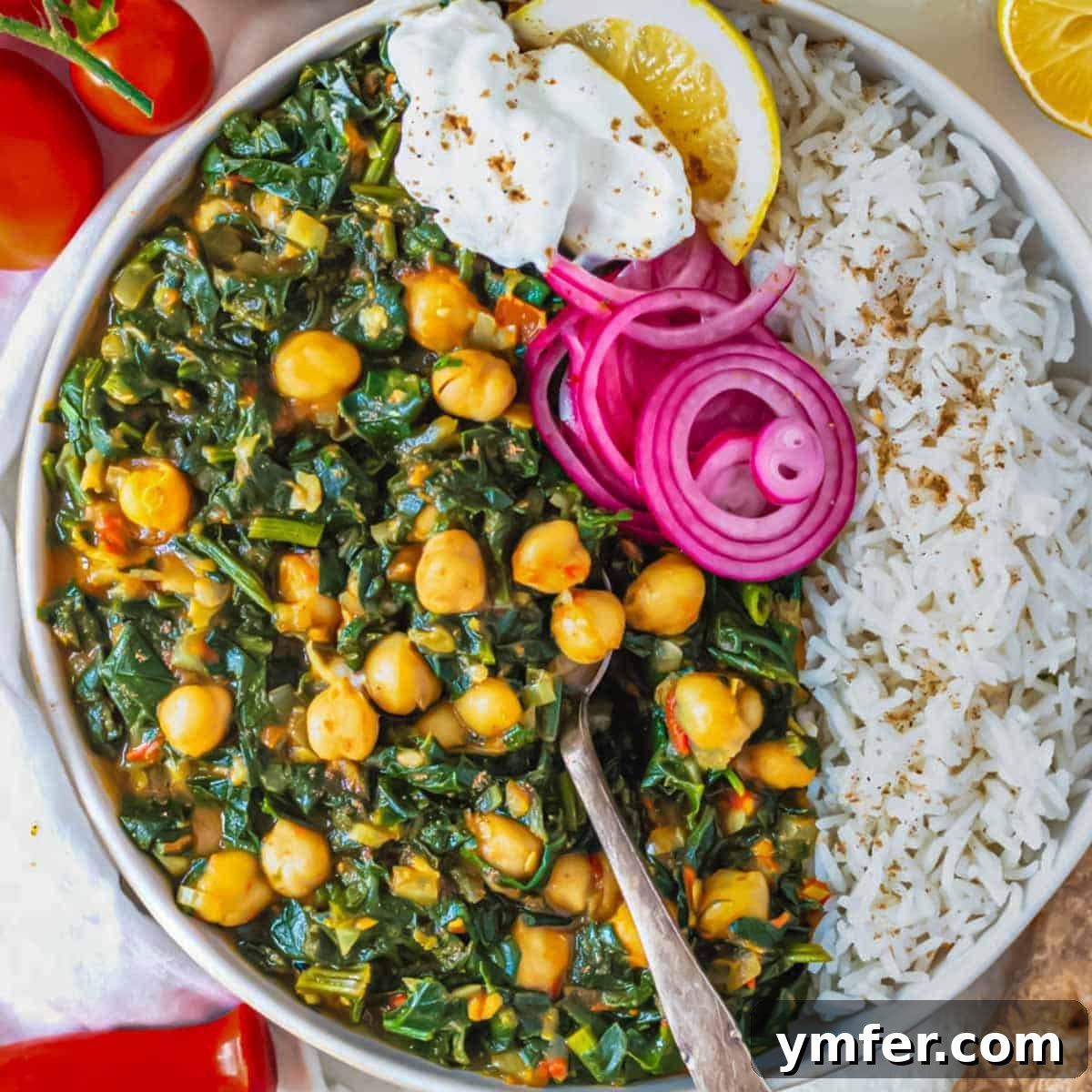
Chana Saag: Your Go-To Healthy & Flavorful Indian Chickpea and Spinach Curry
Discover the vibrant world of Indian cuisine with our easy and healthy Chana Saag recipe. This delightful one-pot curry brings together tender chickpeas (chana) and fresh spinach (saag) in a rich, aromatic tomato-based sauce, ready to serve in just 30 minutes. It’s an ideal choice for a quick weeknight dinner, packed with nutrition and authentic flavors.
For those eager to explore more plant-based Indian delights, be sure to try our hearty Rajma recipe, our classic Chickpea Curry, the creamy Dal Makhani, and our comforting Lentil Curry.
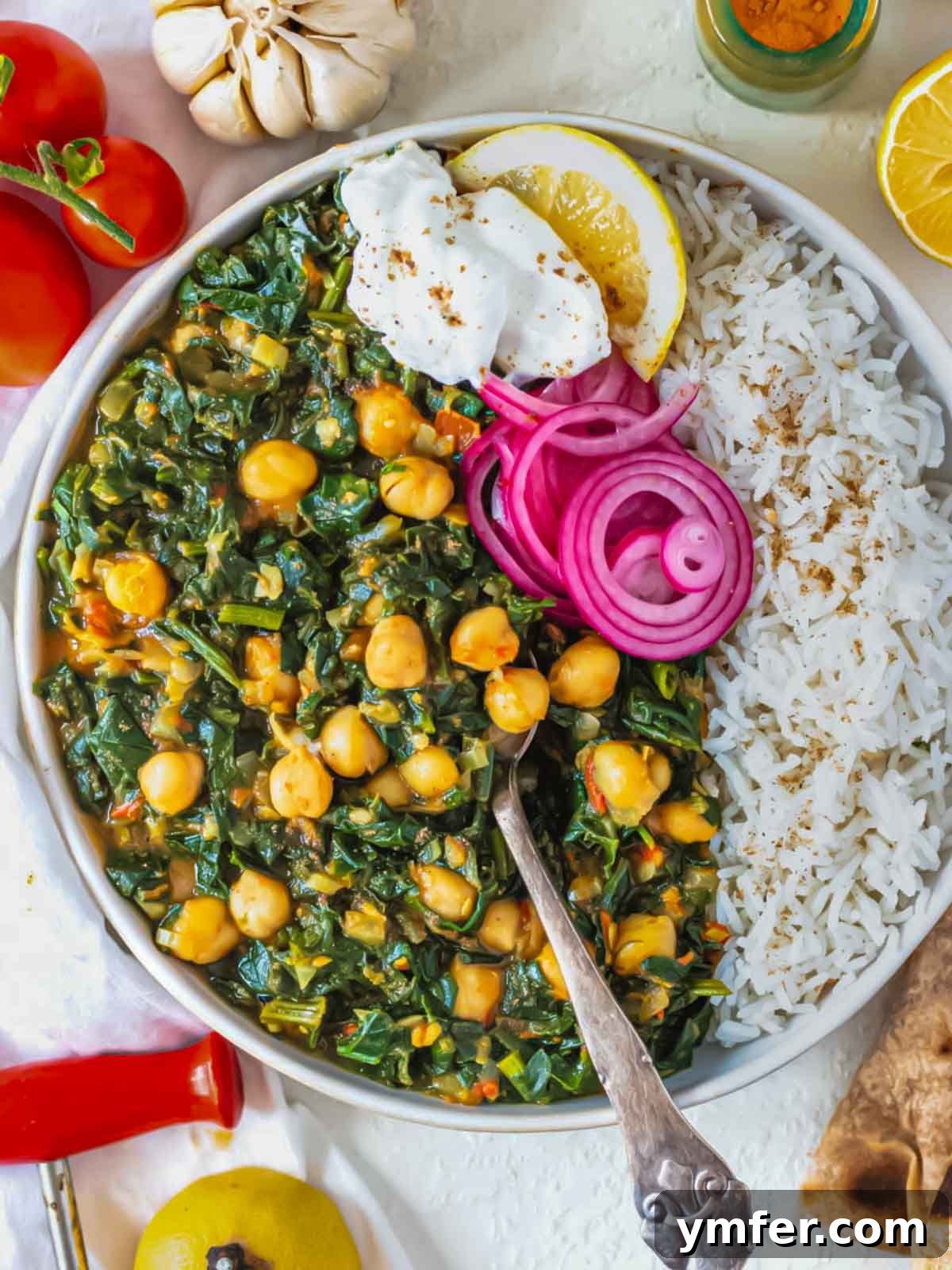
Chana Saag holds a special place in our hearts. As we embarked on our journey of plant-based cooking at home, this comforting Indian dish quickly became a beloved staple for Louise and me. It perfectly embodies the rich culinary traditions of India, where humble ingredients are transformed into deeply satisfying meals through the magic of spices.
This traditional Indian curry, often referred to as Chole Palak in some regions, is a delightful blend of protein-rich chickpeas (chana) and nutrient-dense leafy greens (saag), typically spinach. Like many authentic Indian recipes, its preparation boasts regional variations, each adding a unique twist to its flavor profile. Our simplified version aims to capture the essence of these traditional flavors while making it incredibly accessible for home cooks.
Chickpeas are truly a marvel in the kitchen – not only are they budget-friendly and incredibly filling, but their versatility makes them a star ingredient in countless dishes. You’ll find them at the heart of many Indian classics such as the tangy Chana Masala and the wholesome Chana Dal. In our Chana Saag, they beautifully complement the tender spinach, soaking up the fragrant spiced sauce to create a dish that’s both hearty and incredibly flavorful.
While Chana Saag is often enjoyed as a main course, its robust flavors also make it a fantastic side dish. We highly recommend serving it with fluffy basmati rice, which provides a perfect canvas for the curry’s rich flavors. Alternatively, warm Indian breads like paratha, roti, or naan are excellent for scooping up every last bit of the delicious sauce. For a more elaborate meal, pair it with other Indian favorites like the spiced potato and cauliflower dish, Aloo Gobi, or cool it down with a refreshing dollop of Raita.
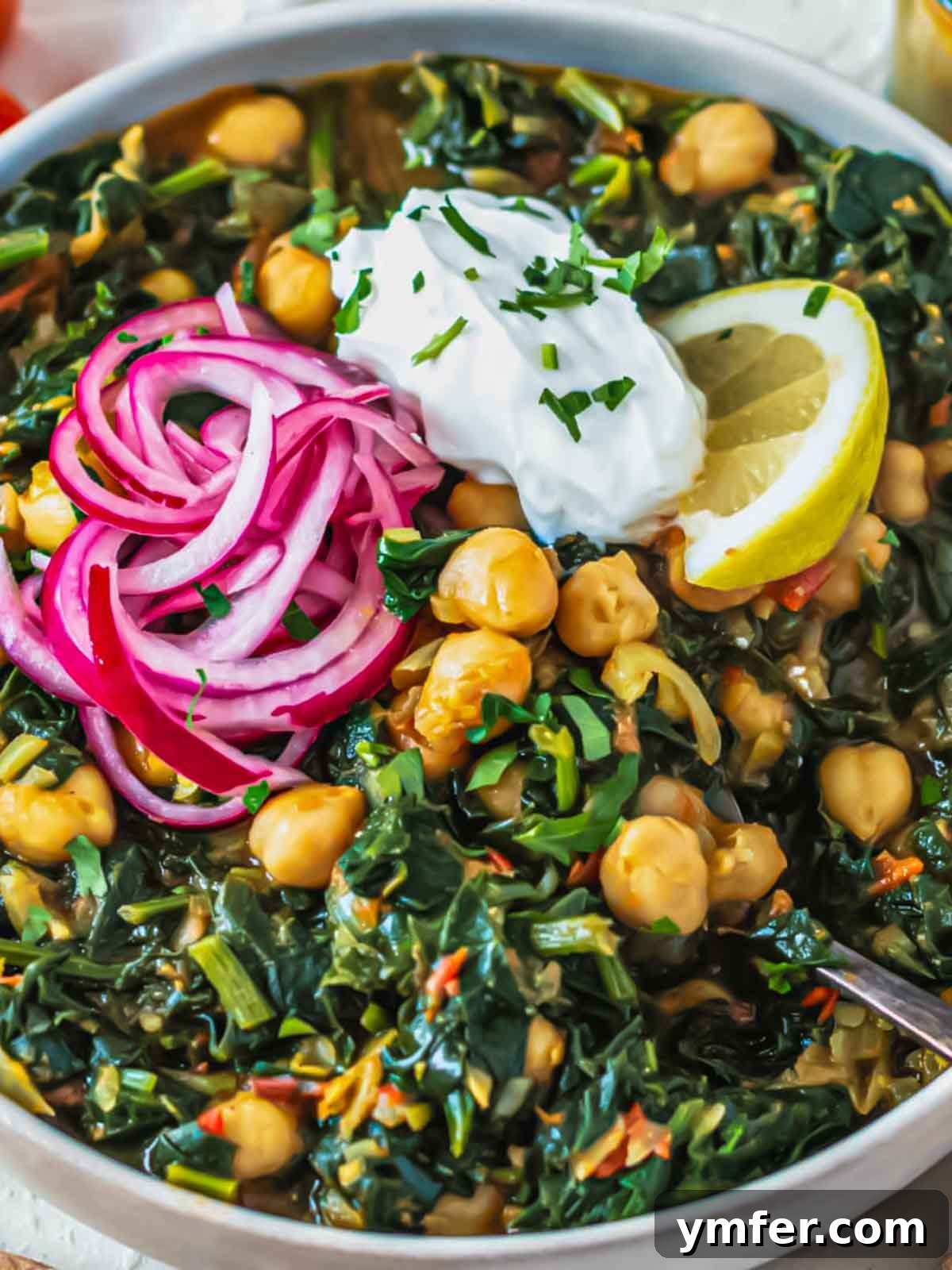
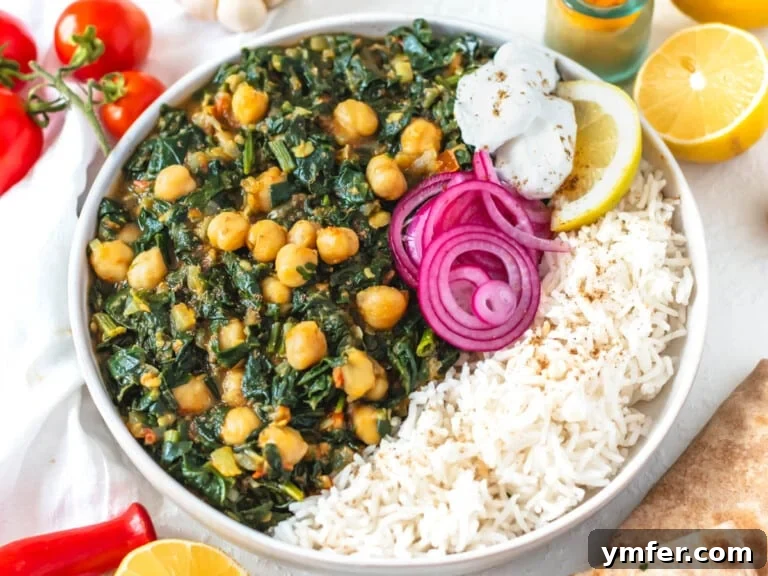
To elevate this dish to an extraordinary level, we love to finish it with a cooling dollop of plain yogurt (dairy or plant-based), a sprinkle of fresh cilantro, a handful of quick-pickled red onions for a tangy crunch, and a generous squeeze of fresh lemon juice. These garnishes add layers of texture and brightness that truly make this simple, soul-warming dinner an experience we crave again and again.
Essential Ingredients for Perfect Chana Saag
Crafting a delicious Chana Saag begins with selecting the right ingredients. Our recipe uses common pantry staples and fresh produce, ensuring vibrant flavors and wholesome goodness. Below is a detailed look at what you’ll need.
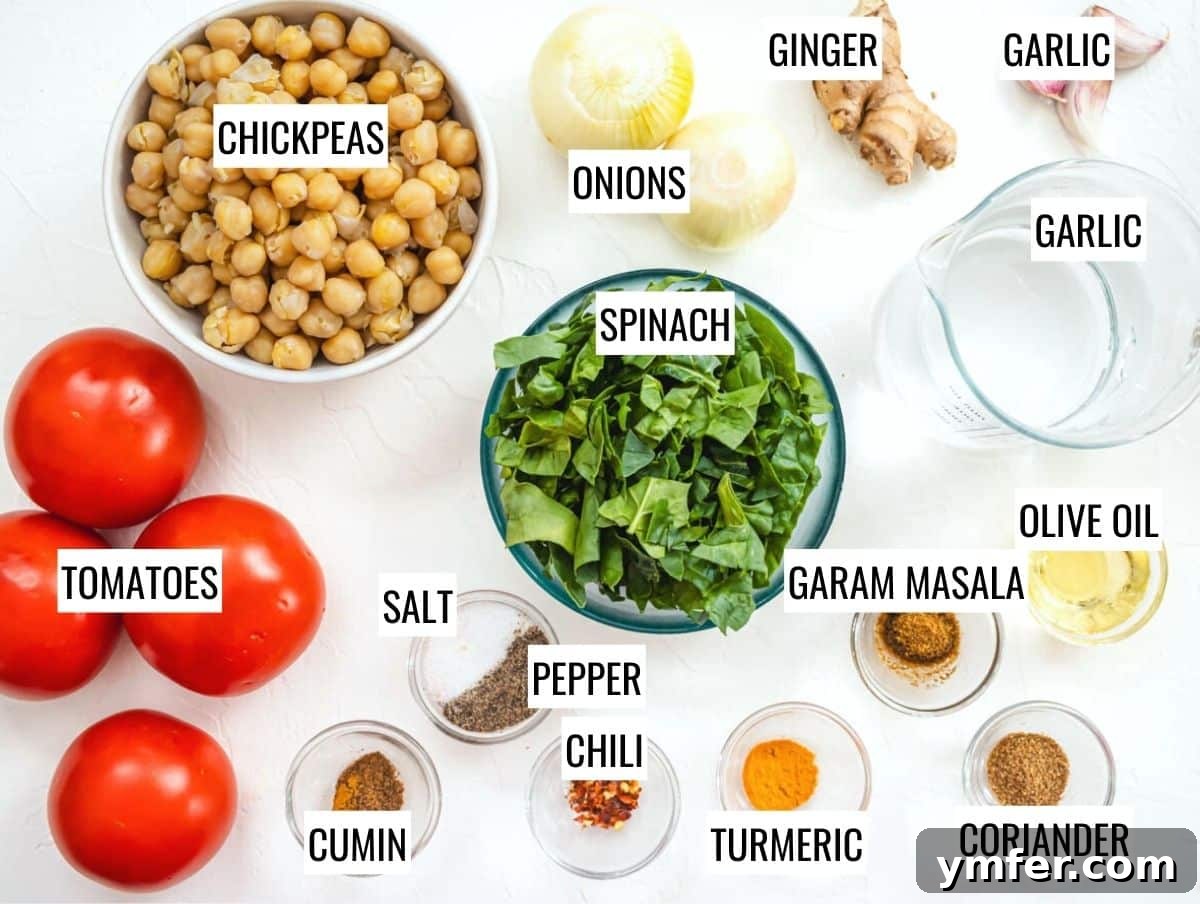
Exact quantities for each ingredient are provided in the comprehensive recipe card at the bottom of this page.
- Chickpeas (Chana): The star of our curry. Canned chickpeas are incredibly convenient – just drain and rinse thoroughly. If you prefer cooking from scratch, remember to pre-soak dried chickpeas for at least 12 hours before boiling them until tender (about 1-2 hours on the stovetop or 10 minutes in a pressure cooker). For a delightful variation, you can substitute chickpeas with diced paneer (Indian cheese) or firm tofu for added protein and texture.
- Leafy Greens (Saag): While spinach is the traditional choice, feel free to experiment. Baby spinach is particularly easy to use as it comes pre-washed and wilts quickly. Other excellent options include mustard greens, collard greens, fenugreek leaves (methi) for a slightly bitter note, Swiss chard, kale, or even finely chopped broccoli for a different nutrient boost.
- Aromatic Flavor Base
- Oil: Light olive oil is our recommendation for its balanced flavor, but avocado oil or any neutral vegetable oil like canola or sunflower oil works perfectly.
- Onion: White, yellow, or even sweeter shallots will form the foundational sweetness and depth of your curry. Fine chopping ensures they blend seamlessly into the sauce.
- Ginger: Freshly grated ginger adds a warm, pungent kick that is essential to Indian curries. A quality ginger paste can be used as a convenient alternative.
- Garlic: Grated fresh garlic provides a robust savory note. Like ginger, a good garlic paste can save time without sacrificing flavor.
- Indian Spices: These are the heart and soul of Chana Saag, transforming simple ingredients into an explosion of flavor.
- Cumin (ground or seeds): Offers an earthy, warm aroma. Ground cumin integrates easily, while cumin seeds can be tempered in hot oil for a deeper, nuttier flavor.
- Coriander (ground or grind seeds): Provides a citrusy, slightly sweet undertone that balances the other spices. Using freshly ground coriander seeds amplifies the aroma significantly.
- Turmeric powder: Known for its vibrant yellow color and mild, earthy flavor, it also boasts impressive health benefits.
- Garam Masala: This essential Indian spice blend typically includes cinnamon, cardamom, cloves, nutmeg, and black pepper. It adds a final layer of warm, complex flavor. If unavailable, a good quality curry powder can be a suitable substitute.
- Red pepper flakes: For a touch of heat, adjust to your preference. You can also use finely chopped fresh red chili, cayenne pepper, a pinch of chili powder, or the less fiery Kashmiri chili powder for color.
- Tomatoes: Fresh vine tomatoes, finely chopped, provide a fresh acidity and natural sweetness to the curry. For a richer, more robust sauce, especially when fresh tomatoes are not in season, a can of crushed tomatoes or tomato puree makes an excellent substitute.
- Optional Garnishes & Serving Suggestions:
- Greek yogurt (or plant-based alternative)
- Pickled red onions (or other quick pickles)
- Fresh cilantro (chopped)
- Lemon or lime wedges
How to Master Chana Saag: A Simple Step-by-Step Guide
Creating this flavorful Chana Saag is simpler than you might think. Follow these straightforward steps to achieve a perfectly spiced and comforting Indian curry in your own kitchen.
Detailed measurements in US cups and grams are available in the recipe box located at the very bottom of this page.
Begin your culinary journey by preparing your aromatics and vegetables. Finely chop your onions into small, even pieces. Next, dice your fresh vine tomatoes – consistency here helps them break down evenly into a smooth sauce.

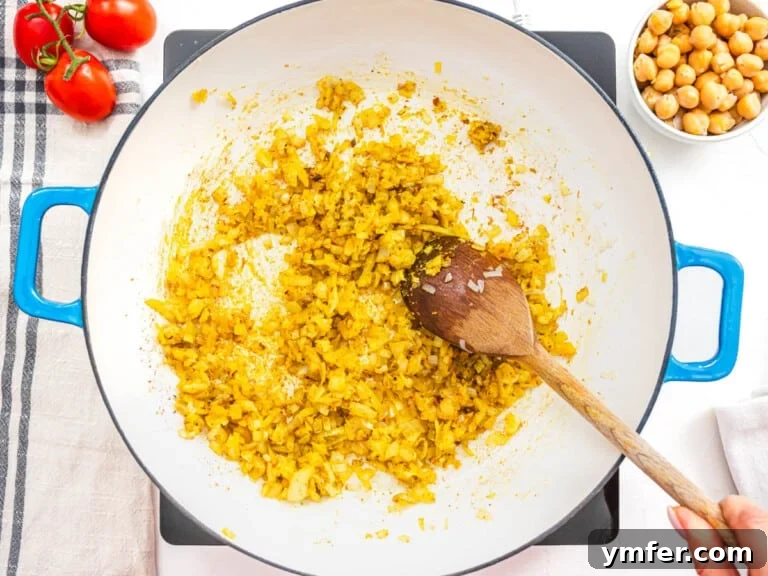
Heat the olive oil in a large, heavy-bottomed skillet or pot over medium heat. Once shimmering, add the chopped onions. Sauté them gently for about 5 minutes, stirring occasionally, until they become soft, translucent, and slightly golden. This step is crucial for building the foundational sweetness of your curry.
Now, it’s time to infuse the oil with rich spices. Add the freshly peeled and grated ginger and garlic to the skillet, along with the ground coriander, ground cumin, garam masala, turmeric powder, and red pepper flakes. The warmth of the oil will awaken their fragrant aromas.
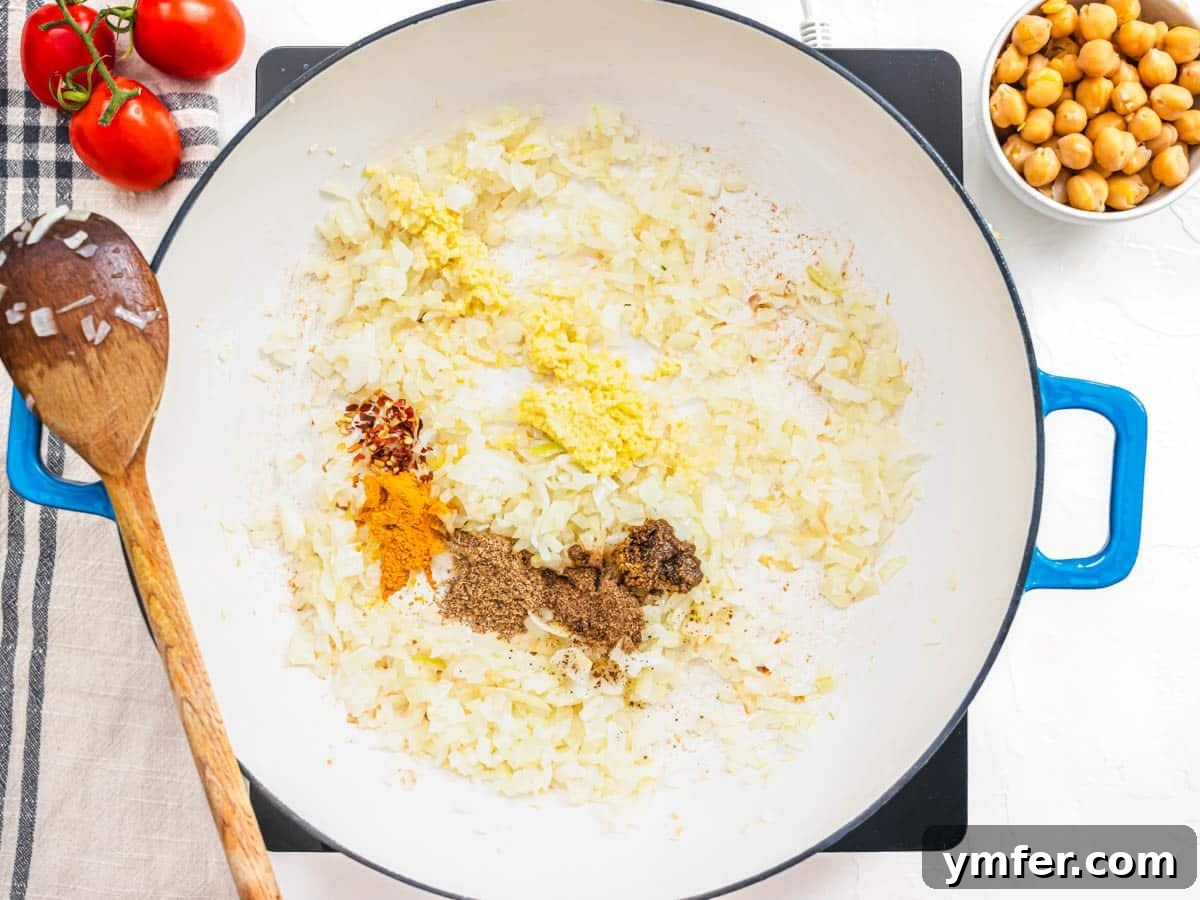
Continue to sauté, stirring constantly, for just 1 more minute. Be careful not to burn the spices; you’re looking for that moment when their intense, fragrant aroma fills your kitchen. This is called “blooming” the spices and it enhances their flavor significantly.
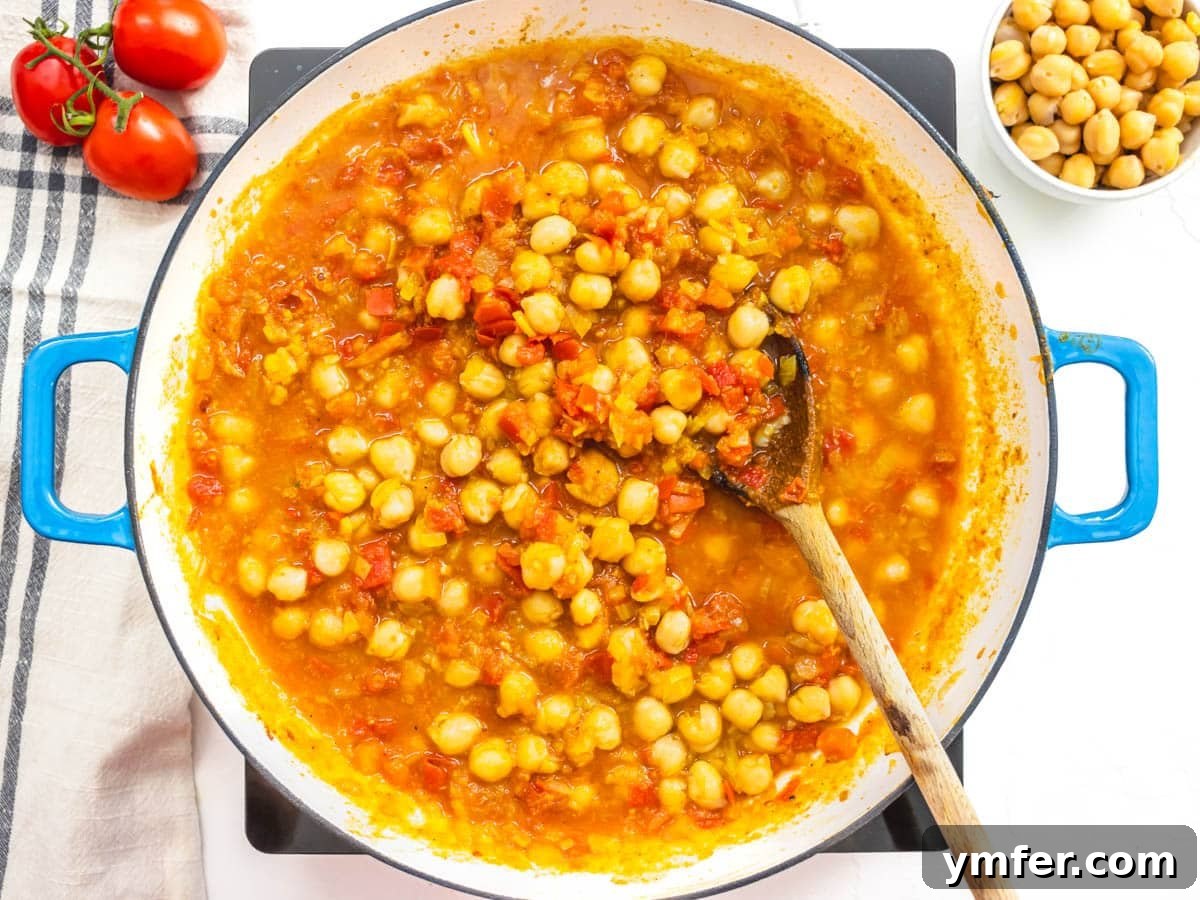
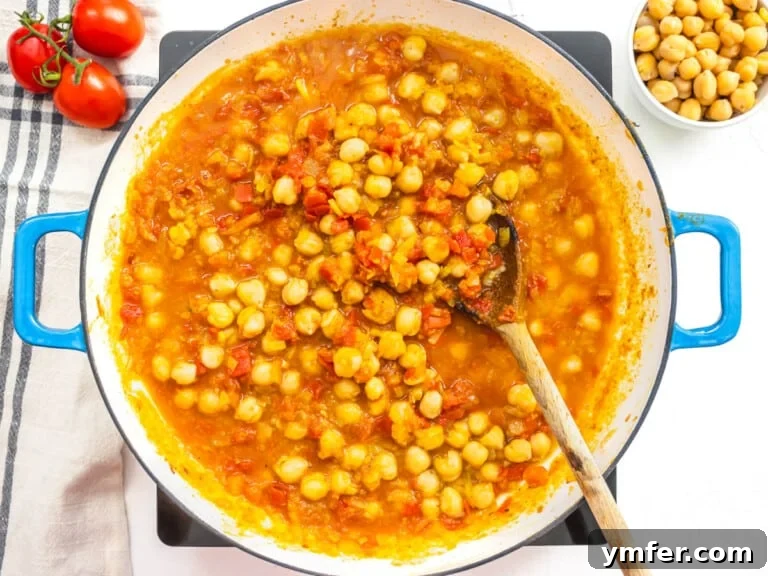
Next, add the chopped tomatoes and the drained and rinsed chickpeas to the skillet. Season generously with salt and freshly ground black pepper. Stir everything together to combine.
Cook this mixture for approximately 5 minutes on medium heat, stirring occasionally. The tomatoes will soften and begin to release their juices, creating a delicious base. If the pan appears too dry at any point, add a small splash of water to prevent sticking and aid in the cooking process.
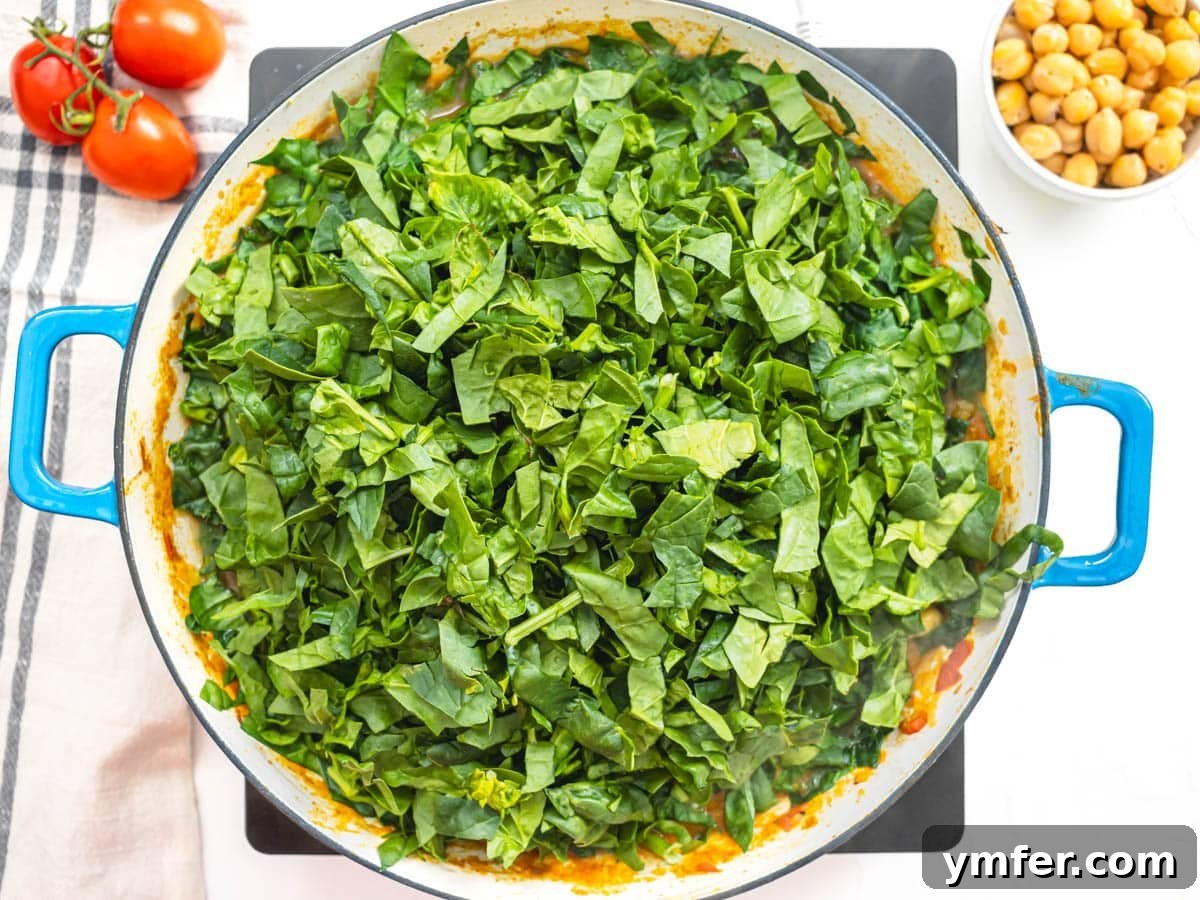
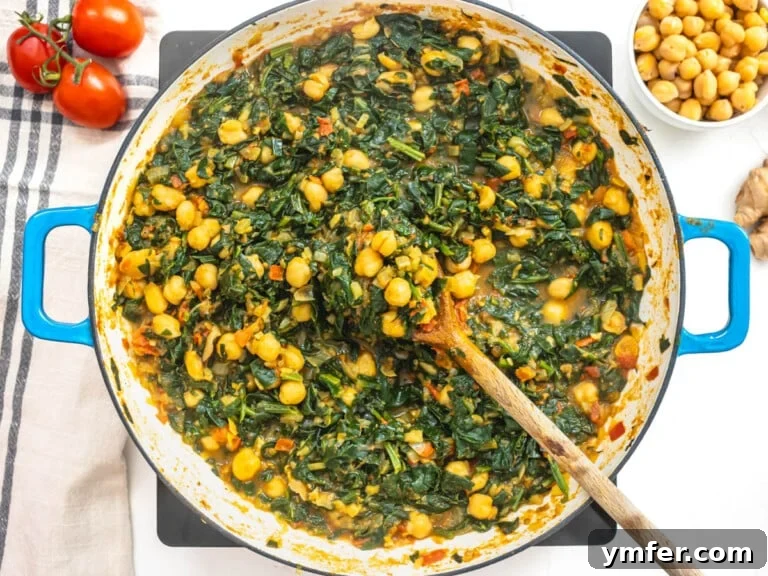
Finally, incorporate the water and the fresh spinach. You’ll notice it’s a generous amount of spinach, but don’t worry – it will dramatically reduce in volume as it cooks. You might need to add the spinach in batches, allowing each batch a few seconds to wilt down before adding more. This ensures all the greens fit comfortably in your pan.
Chef’s Tip: For an even smoother texture, especially if using mature spinach, you can roughly chop the spinach with a knife before adding it to the pot. If you’re using tender baby spinach, this step is entirely optional.
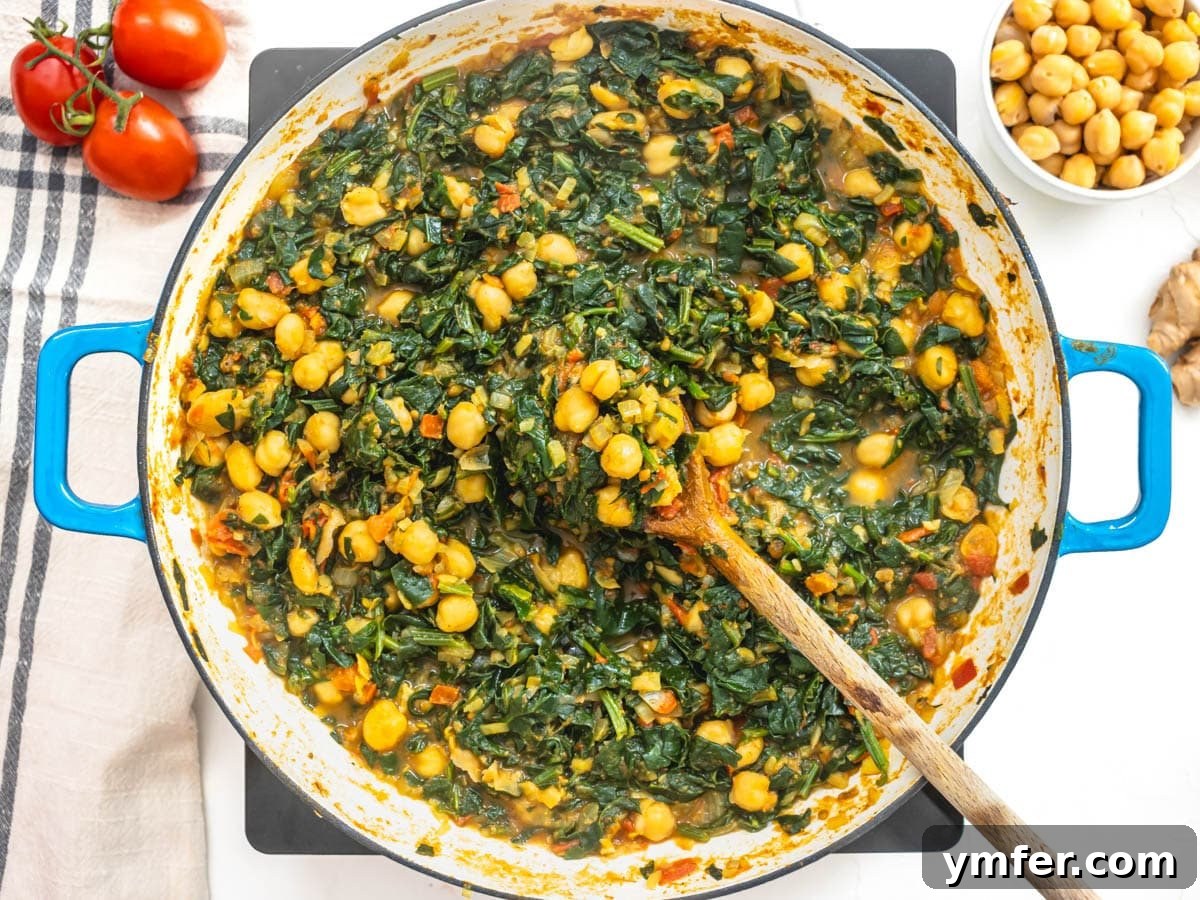
Continue to cook the spinach for about 10 minutes. It will soften considerably and release its natural water, contributing to the curry’s liquid. Stir occasionally to ensure even cooking. Before serving, taste the curry and adjust the seasoning for salt and spice level as needed. A final stir will bring all the beautiful flavors together.
Cooking Insight: While it might seem counterintuitive, you typically won’t need to add much extra water during the spinach cooking phase. The water released by the wilting spinach is usually sufficient to create a luscious sauce and prevent the curry from sticking to the bottom of the pan.
Serving Your Delicious Chana Saag
Chana Saag is incredibly versatile and can be enjoyed in various ways. It’s robust enough to be a standalone main dish but also makes a fantastic side. Here are some of our favorite ways to serve it:
Make Chana Saag a complete meal by pairing it with either a grain or a traditional Indian bread:
- Rice: The classic accompaniment. We highly recommend fluffy white or nutty brown basmati rice, which beautifully absorbs the curry’s rich flavors. You could also try brown rice or even quinoa for a healthier twist.
- Indian Breads: Perfect for scooping up the flavorful sauce. Our top recommendations include soft roti, chewy chapati, or a warm, pillowy naan bread. While not traditionally Indian, pita bread also works surprisingly well in a pinch.
Elevate the experience with garnishes: Don’t underestimate the power of fresh toppings! A dollop of creamy plain yogurt (dairy or plant-based), a sprinkle of fresh cilantro, a squeeze of fresh lemon or lime juice, and a handful of quick-pickled red onions add brightness, tang, and contrasting textures that truly complete the dish.
As a delightful side: Chana Saag pairs wonderfully with other Indian main courses. Consider serving it alongside a lighter dal or grilled paneer for a diverse spread.
Frequently Asked Questions About Chana Saag
Absolutely! Making Chana Saag in a pressure cooker or Instant Pot is a fantastic way to speed up the cooking process without compromising on flavor. To adapt the recipe, first, use the sauté function on your appliance to heat the olive oil and sauté the chopped onions for about 5 minutes until they are soft and translucent. Then, add the grated garlic and ginger, along with all the ground spices (cumin, coriander, garam masala, turmeric, red pepper flakes), and continue to sauté for an additional minute until fragrant. Next, stir in the chopped tomatoes, drained and rinsed canned chickpeas, fresh spinach, salt, and black pepper. If you have a large quantity of spinach, you might need to add it in batches, allowing each batch to wilt slightly before adding more. Once all ingredients are in, secure the lid, set the valve to sealing, and pressure cook for just 2 minutes. Once cooked, perform a quick release of the steam by manually opening the valve. Carefully remove the lid, give your Chana Saag a final stir, taste, and adjust seasonings if necessary. It’s that simple!
Yes, our Chana Saag recipe is naturally vegan and gluten-free, making it suitable for a wide range of dietary needs. Chickpeas and spinach are plant-based, and the spices and other ingredients used are typically free from animal products and gluten. Always double-check your garam masala blend or curry powder, as some rare brands might contain hidden ingredients, but generally, it’s a safe and delicious option for everyone.
Chana Saag is a powerhouse of nutrition! Chickpeas are an excellent source of plant-based protein and dietary fiber, which aids digestion and helps you feel full longer. Spinach is loaded with vitamins A, C, and K, as well as folate, iron, and magnesium, supporting bone health, immunity, and energy levels. The aromatic spices like turmeric and ginger also offer anti-inflammatory and antioxidant properties. This combination makes Chana Saag a highly nutritious and balanced meal.
Storage & Make Ahead Tips for Chana Saag
Chana Saag is an exceptionally great dish for meal prepping, as its flavors often deepen and improve after a day or two. This makes it a perfect candidate for batch cooking!
- Make Ahead: This curry keeps wonderfully, making it an ideal candidate for cooking in advance. Prepare a larger batch at the beginning of the week for quick and easy meals later on.
- Refrigerator Storage: Any leftovers can be stored in an airtight container in the refrigerator for up to 4 days. Ensure it cools completely before sealing the container.
- Freezer Storage: Chana Saag freezes beautifully. Once the curry has cooled down entirely, transfer it into a freezer-safe container or individual portions. It can be frozen for up to 3 months without significant loss of quality or flavor.
- Thawing & Reheating: To enjoy your frozen Chana Saag, transfer it to the refrigerator to thaw gradually over several hours, ideally overnight. You can also use the defrost setting on your microwave for a quicker thaw. For reheating, warm the curry in the microwave for approximately 3 minutes, stirring halfway through, or gently reheat it in a saucepan on the stovetop over medium-low heat for about 5 minutes, adding a splash of water or vegetable broth if the sauce appears too thick. Stir occasionally until heated through.
Chana Saag: Creative Variations for Every Palate
While our core Chana Saag recipe is delicious on its own, it’s also incredibly adaptable. Feel free to experiment with these variations to suit your taste or what you have on hand:
- Creamy Chana Saag: For an extra layer of richness, stir in a quarter cup of full-fat coconut milk or a few tablespoons of plant-based cream at the very end of the cooking process. This adds a lovely creaminess without overpowering the spices.
- Extra Veggies: Boost the nutritional content by adding other quick-cooking vegetables. Diced bell peppers, zucchini, green beans, or even small florets of cauliflower can be added along with the tomatoes or spinach.
- Protein Boost: Beyond paneer or tofu (as mentioned in ingredients), you could add cooked lentils (like red lentils that cook quickly), or a handful of roasted cashews for crunch and healthy fats.
- Spice Level: Easily adjust the heat by increasing or decreasing the red pepper flakes. For a milder flavor, omit them entirely. For a bolder kick, add a finely chopped green chili with the ginger and garlic.
- Tomato Alternatives: If fresh tomatoes aren’t available, a can of fire-roasted crushed tomatoes can add a smoky depth, or tomato paste can be used for a more concentrated tomato flavor.
- Herbaceous Freshness: While cilantro is typical, a sprinkle of fresh mint or a squeeze of lime juice at the end can offer a refreshing twist.
Explore More Plant-Based Indian Recipes
If you’ve enjoyed the delightful flavors of our Chana Saag, we invite you to continue your culinary journey through Indian cuisine with these other fantastic plant-based recipes:
- Hearty Mung Bean Soup
- Aromatic Cauliflower Curry
- Flavorful Eggplant Curry
- Comforting Curry Lentil Soup
- Cooling Cucumber Raita
If you tried this Chana Saag recipe or any other delicious dish from our blog, we would love to hear from you! Please consider leaving a 🌟 star rating and sharing your experience in the comments section below. Your feedback truly helps us grow and inspires other home cooks. Thank you for being a part of our community!

Chana Saag
Chana Saag is an easy, incredibly tasty, and highly nutritious Indian curry featuring chickpeas, fresh spinach, and ripe tomatoes, all simmered with aromatic spices like cumin and coriander.
It’s a fulfilling and delicious plant-based recipe perfect for serving with fluffy basmati rice or warm Indian breads such as roti or naan.
Print Recipe
Share on Facebook
Video
Ingredients
- 2 tablespoons olive oil
- 2 medium onions, chopped
- 3 cloves garlic, grated
- 1 inch (2½ cm) ginger, grated
- 1 teaspoon ground cumin
- 1 teaspoon ground coriander
- 1 teaspoon garam masala (substitute curry powder if needed)
- ½ teaspoon turmeric powder
- ¼ teaspoon red pepper flakes (or more to taste)
- 3 medium vine tomatoes, chopped (or 1 can of 15 ounces/400 grams crushed tomatoes)
- 2 cans chickpeas (15 ounces/230 grams each can, or 3 cups cooked chickpeas), drained and rinsed
- 1 pound (500 grams) fresh spinach
- ½ cup (120 grams) water
- 1 teaspoon salt (or more to taste)
- 2 twists of black pepper (freshly ground)
Serves well with
- Basmati rice, roti, or naan
- Garnish with a dollop of yogurt, fresh cilantro, lemon juice, and pickled red onions.
Instructions
-
Heat 2 tablespoons olive oil in a large skillet or pot over medium heat. Add 2 medium onions (chopped) and sauté for 5 minutes until soft and translucent.
Add 3 cloves garlic (grated) and 1 inch ginger (grated). Then add 1 teaspoon ground cumin, 1 teaspoon ground coriander, 1 teaspoon garam masala, ½ teaspoon turmeric powder, and ¼ teaspoon red pepper flakes. Sauté for 1 more minute, stirring often, until fragrant.

-
Add 3 medium vine tomatoes (chopped) and 2 cans chickpeas (drained and rinsed). Season with 1 teaspoon salt and 2 twists black pepper. Cook for 5 minutes on medium heat, stirring occasionally, until the tomatoes are tender. Add a splash of water if the pan gets dry.
-
Now, add 1 pound spinach and ½ cup water. Simmer on medium heat for 10 minutes, stirring occasionally, until the spinach is tender and fully wilted. Taste and adjust for salt and spice level as desired.
Tip: You might need to add the spinach in batches, waiting a few seconds for each batch to wilt before adding more. You can also chop the spinach with a knife before adding it, though this isn’t necessary for baby spinach.
MAKE IT A MEAL
-
Serve your Chana Saag with basmati rice, roti, or naan to make it a complete and satisfying meal.
For an elevated experience, garnish with a dollop of yogurt (dairy or plant-based), fresh cilantro, tangy quick pickled red onions, and a refreshing squeeze of lemon juice.
Notes
Nutrition information is an estimate for 1 serving of Chana Saag (out of 4 servings) and does not include any rice or toppings.
STORAGE & MAKE AHEAD
Make ahead: Chana Saag is an excellent recipe for meal prep as its flavors deepen and it keeps well in the fridge for days and in the freezer for months.
Refrigerator: Store leftovers in an airtight container for up to 4 days.
Freezer: Allow it to cool down completely, then transfer to a freezer-friendly container and freeze for up to 3 months.
Thaw & Reheat: Defrost in the refrigerator over several hours or use the thawing setting in the microwave. Reheat in the microwave for 3 minutes, or in a saucepan on the stovetop with a splash of water for 5 minutes, stirring occasionally until warmed through.
SUBSTITUTIONS:
- Chickpeas: Use canned, or substitute with diced paneer or firm tofu.
- Spinach: Swap with mustard greens, kale, chard, fenugreek leaves (methi), collard greens, or chopped broccoli.
- Oil: Use avocado oil or any neutral vegetable oil instead of olive oil.
- Onion: Replace with shallots for a milder, sweeter flavor.
- Ginger/Garlic: Use pre-made paste instead of fresh grated.
- Cumin: Substitute with whole cumin seeds, tempered in oil at the start.
- Coriander: Grind whole coriander seeds if needed for fresher flavor.
- Red Pepper Flakes: Use chopped fresh red chilies, cayenne pepper, a pinch of chili powder, or Kashmiri chili powder for varying heat and color.
- Tomatoes: Substitute fresh vine tomatoes with canned crushed tomatoes or tomato puree for a richer sauce.