
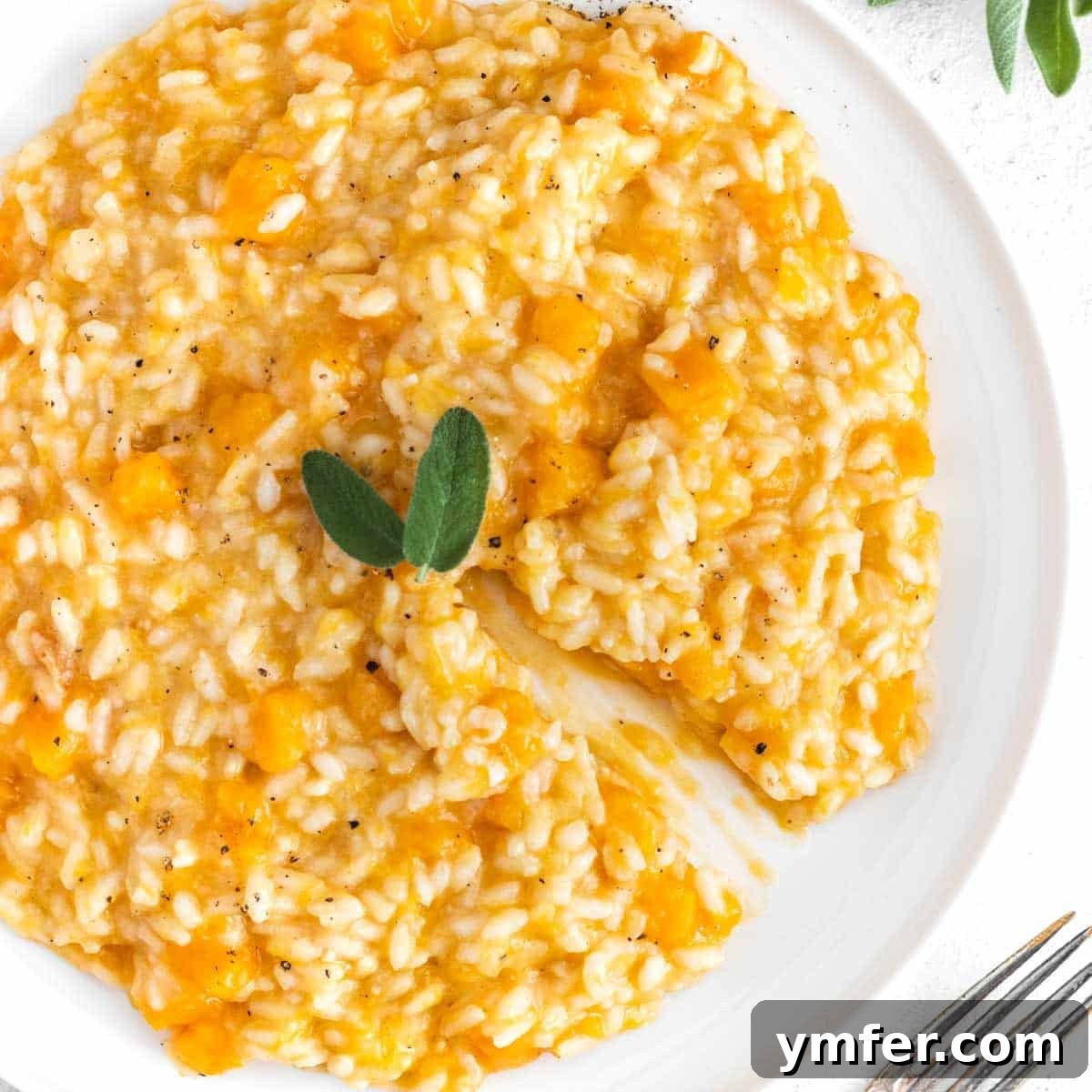
Creamy Butternut Squash Risotto: An Easy, One-Pot Vegetarian Delight
Indulge in the unparalleled comfort of a truly exceptional Butternut Squash Risotto. This recipe transforms humble ingredients into an ultra-creamy, profoundly cozy, and deeply flavorful one-pot main dish that’s perfect for a special weeknight dinner or a relaxed weekend gathering. Its vibrant color and rich aroma make it an instant hit, paying a delicious tribute to autumn’s bounty.
Designed for simplicity without compromising on taste, this naturally gluten-free recipe offers options for both dairy-free and traditional preparations. We’ll guide you through each step, ensuring you achieve that signature velvety texture and perfectly al dente rice that defines a superb risotto.
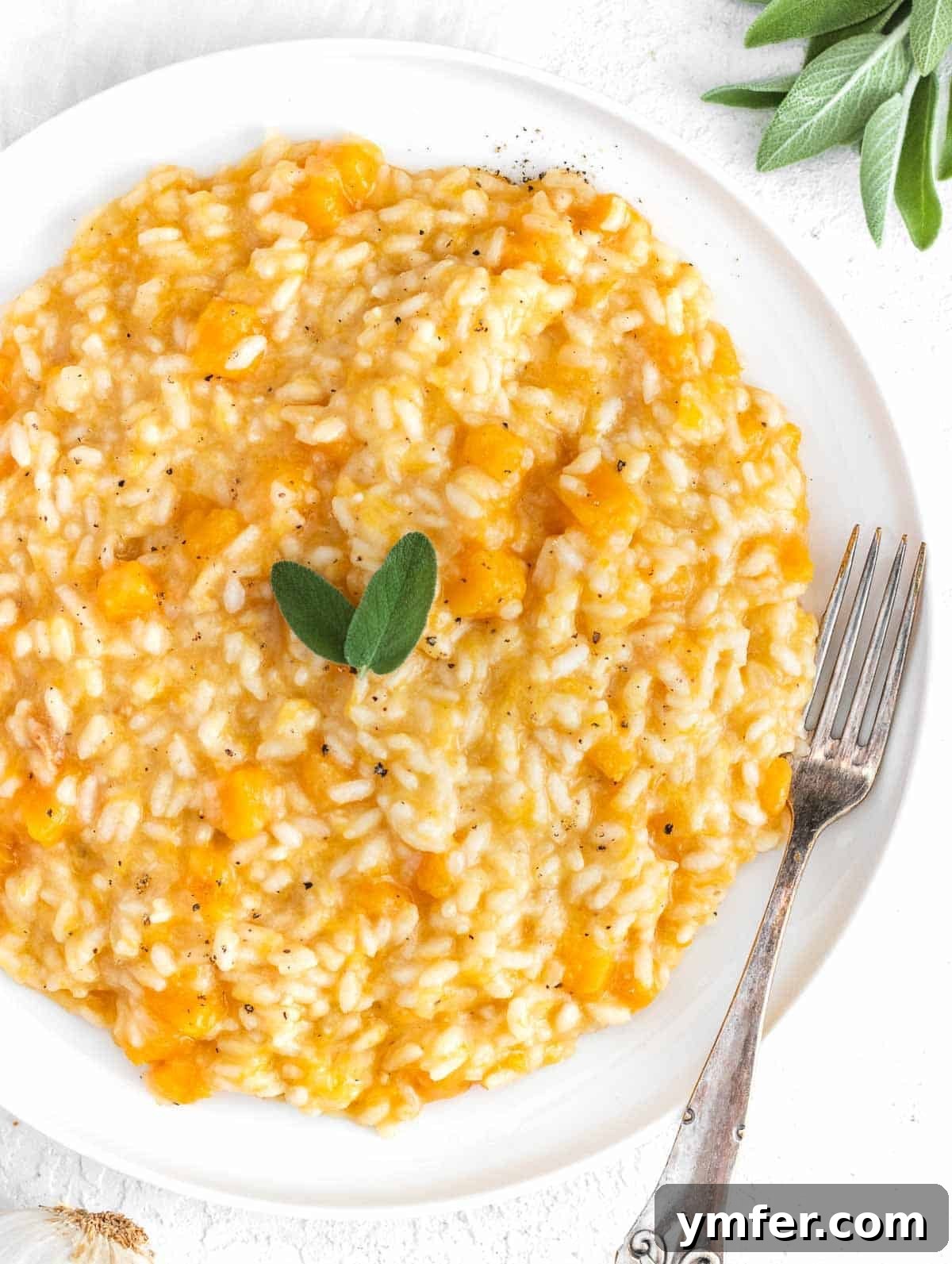
Table of Contents
- Why You’ll Love This Butternut Squash Risotto
- Embracing the Season: Butternut Squash in Risotto
- Essential Ingredients for a Perfect Butternut Squash Risotto
- Butternut Squash Risotto: Step-by-Step Guide
- Expert Tips for the Best Butternut Squash Risotto
- Serving Suggestions for Your Risotto Feast
- Creative Ways to Use Leftover Butternut Squash Risotto
- Storage and Reheating Tips
- Frequently Asked Questions About Butternut Squash Risotto
- More Creamy Risotto Recipes to Explore
- Butternut Squash Risotto Recipe Card
Why You’ll Love This Butternut Squash Risotto
This butternut squash risotto isn’t just a meal; it’s an experience. Here’s why it will quickly become a favorite in your kitchen:
- Incredibly Creamy Texture: The magic of risotto rice, combined with slow stirring and the natural starch from the squash, creates an unbelievably smooth and luxurious dish.
- Rich, Earthy, and Sweet Flavors: The delicate sweetness of butternut squash harmonizes beautifully with savory notes from fresh sage, garlic, and Parmesan, resulting in a perfectly balanced flavor profile.
- One-Pot Simplicity: All the cooking happens in a single pot, minimizing cleanup and making it an ideal choice for busy evenings.
- Naturally Gluten-Free: A delicious option for those with gluten sensitivities, allowing everyone to enjoy this classic Italian comfort food.
- Customizable: Easily adapted to be dairy-free or vegan with simple substitutions, making it suitable for various dietary needs.
- Impressive Yet Easy: Despite its gourmet appearance and taste, this recipe is straightforward, guiding even novice cooks to a restaurant-quality dish.
Embracing the Season: Butternut Squash in Risotto
As the leaves begin to turn and a crispness fills the air, butternut squash emerges as a culinary star. Its mild, sweet, and slightly nutty flavor, along with its beautiful orange hue, makes it an ideal ingredient for comforting autumn dishes. In this risotto, the squash not only lends its distinctive taste but also contributes to the dish’s silky texture as it gently breaks down during the cooking process. Instead of roasting it separately, we cook the diced squash directly with the rice, allowing its natural sugars and flavors to infuse every grain, creating a cohesive and deeply integrated taste experience. This method ensures maximum flavor extraction and simplifies the cooking process, embodying the true spirit of a rustic, yet refined, Italian meal.
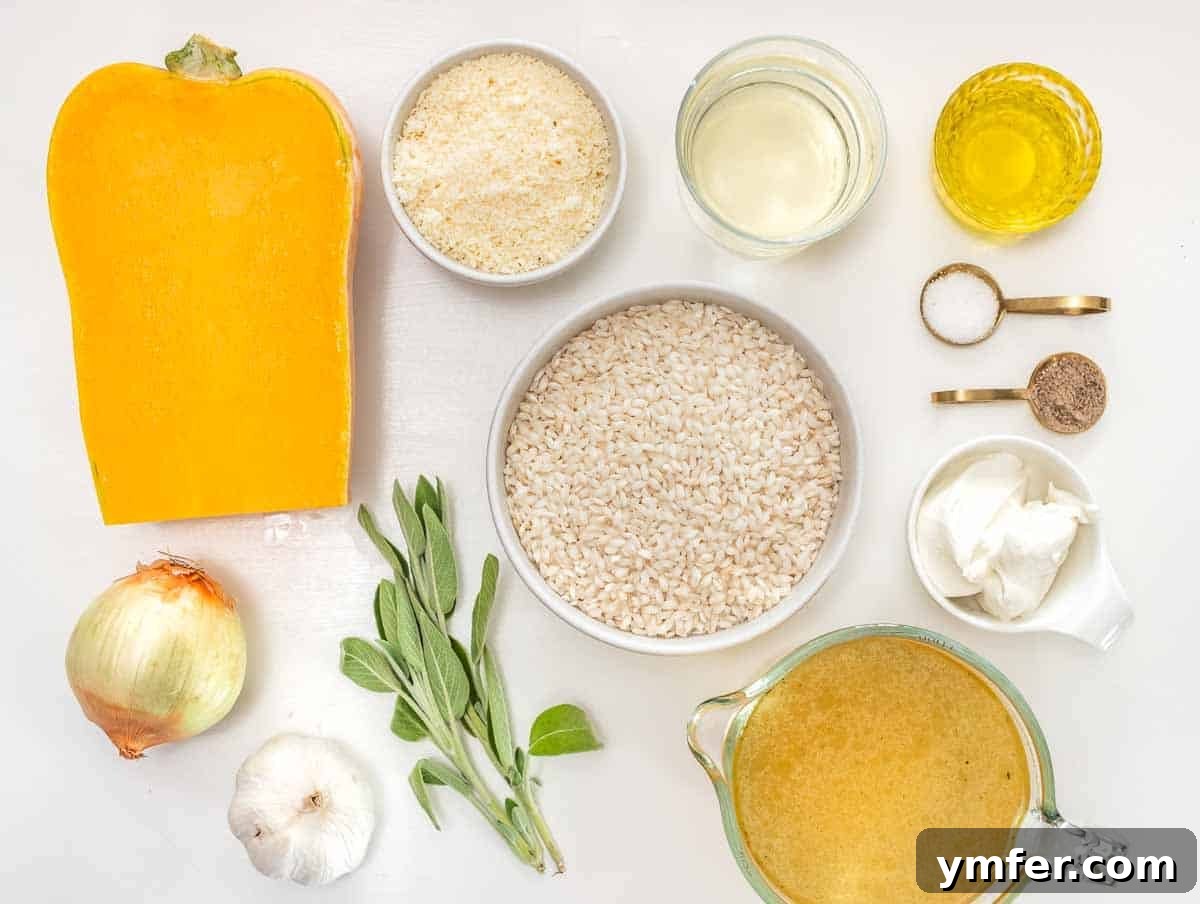
Essential Ingredients for a Perfect Butternut Squash Risotto
Risotto Rice: The Secret to Creaminess
For an authentic and incredibly creamy risotto, choosing the right rice is paramount. Arborio rice is the most widely available and popular variety in Italy, known for its short, plump grains and high starch content. Other excellent choices include Carnaroli, Roma, Baldo, and Vialone Nano. These varieties are distinct from regular long-grain rice because they release their starches slowly when cooked, creating the characteristic creamy texture of risotto while still maintaining a pleasant bite. If specific varieties are hard to find, simply look for a package labeled “risotto rice.” Avoid regular white or brown rice, as they lack the necessary starch to achieve the desired creamy consistency.
Butternut Squash: Sweetness and Texture
The star of our dish, butternut squash, brings natural sweetness and a beautiful golden color. You can opt for a whole squash, which you’ll peel, seed, and dice into small, uniform ¼-inch (0.6 cm) cubes. While pre-diced squash is a time-saver, we recommend dicing it yourself to ensure the pieces are small enough to soften and meld with the rice properly. Larger pieces tend to cook unevenly. In this recipe, we prefer cooking the squash directly with the rice in the same pot, allowing its flavors and juices to integrate fully into the risotto. For variations, you can substitute with other winter squashes like pumpkin, buttercup, hubbard, kabocha, or acorn squash, keeping in mind they might alter the sweetness and texture slightly.
Aromatic Base: Onion, Garlic, and Olive Oil
Every great risotto begins with a flavorful base, often called a “soffritto.” We build ours by gently sautéing a finely chopped white onion or shallot in a good quality extra virgin olive oil until translucent. This step releases the natural sweetness of the onion without browning it. Later, finely minced garlic is added to infuse the dish with its pungent aroma, providing depth and warmth to the overall flavor profile. Using extra virgin olive oil not only aids in cooking but also imparts a subtle fruity note.
White Wine: The Flavor Enhancer
A splash of dry white wine is a crucial ingredient in classic risotto, adding a layer of complexity and a touch of acidity that brightens the entire dish. When added to the hot pan, the wine quickly evaporates, leaving behind its concentrated flavor and balancing the richness of the other ingredients. Choose a dry, crisp wine like Pinot Grigio, Sauvignon Blanc, or an unoaked Chardonnay. If you prefer not to cook with alcohol, simply substitute the white wine with an equal amount of good quality vegetable broth.
Vegetable Broth: The Heart of the Risotto
The slow addition of hot vegetable broth is what transforms the rice from hard grains into a creamy, luxurious dish. Store-bought vegetable broth is convenient and speeds up the process, but if you have the time, a homemade broth made from simmering carrots, onions, and celery stalks will add an even richer flavor. The key is to keep the broth hot throughout the cooking process. Adding cold broth will drop the temperature of the risotto, slowing down the cooking and affecting the final texture. We opt for vegetable broth to keep this recipe meat-free and vibrant.
Fresh Sage: An Autumnal Touch
Fresh sage leaves are the quintessential aromatic herb for pairing with butternut squash and other autumnal vegetables. Their distinct, earthy, slightly peppery flavor perfectly complements the squash’s sweetness, adding a sophisticated depth to the risotto. You can gently tear a few fresh leaves and stir them in at the end, or for an intensified flavor and a delightful textural contrast, briefly fry them in a little olive oil until crisp before garnishing the finished dish.
Parmesan Cheese: Umami and Richness
A generous amount of grated Parmesan cheese is essential for the traditional “mantecatura” step, adding a salty, nutty, umami-rich flavor and contributing significantly to the risotto’s creamy finish. Its sharp notes beautifully cut through the sweetness of the squash. If you’re preparing a vegan version, a high-quality dairy-free Parmesan substitute works wonderfully, ensuring you don’t miss out on that cheesy goodness.
Butter: Velvety Smooth Finish
Similar to Parmesan, unsalted butter is another traditional component of the mantecatura, stirred in at the very end off the heat. It melts into the risotto, enriching it with a luxurious, velvety mouthfeel and a beautiful sheen. Using unsalted butter allows you to control the seasoning precisely. For a plant-based alternative, dairy-free butter works just as effectively, providing the same richness and smooth finish without any animal products.
Salt and Pepper: Elevating Flavors
Simple yet indispensable, sea salt or kosher salt is used to season the butternut squash and the risotto as it cooks, enhancing all the other flavors. A generous amount of freshly ground black pepper adds a subtle warmth and a peppery aroma. Don’t shy away from adding an extra twist of black pepper just before serving to heighten the sensory experience.
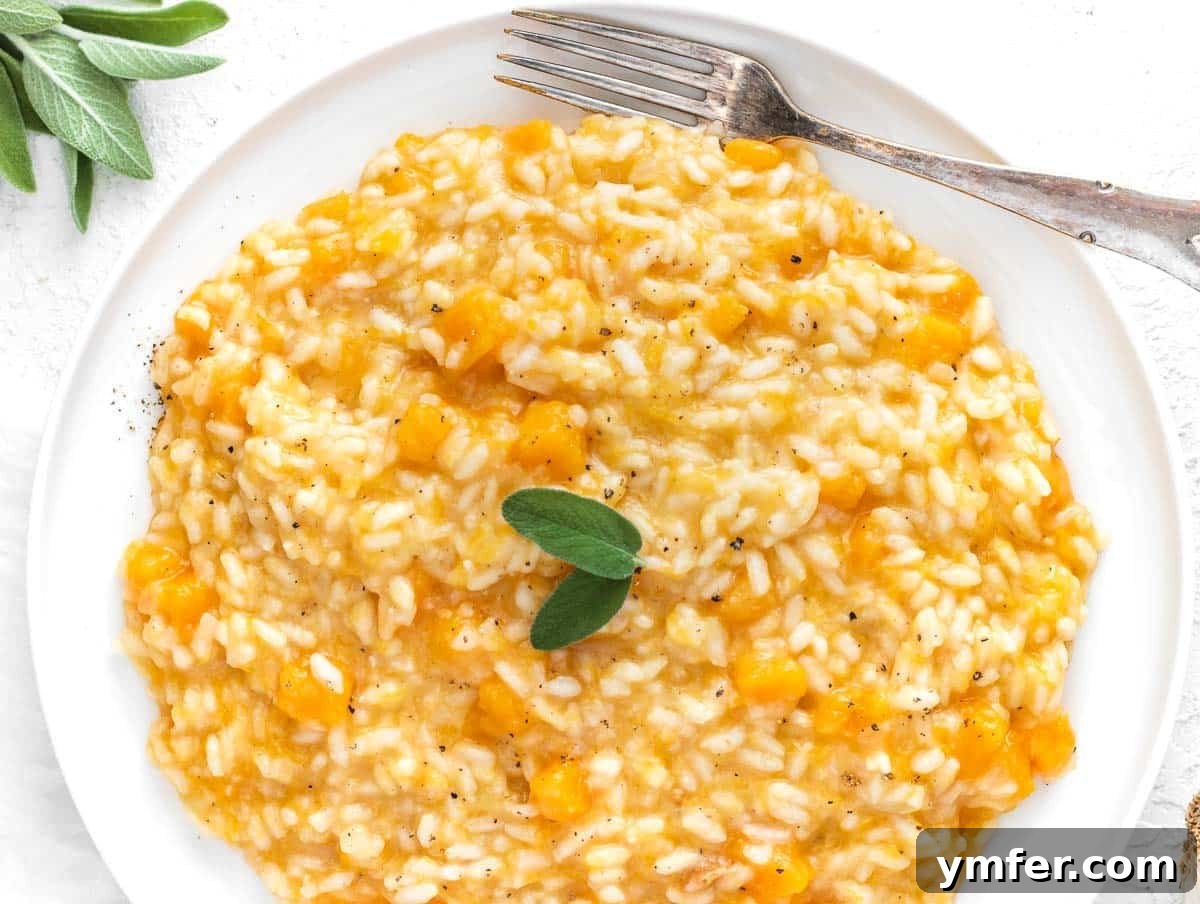
Butternut Squash Risotto: Step-by-Step Guide
1. Prepare Your Ingredients
Begin by meticulously preparing all your components. Peel the butternut squash, remove the seeds, and dice it into small, uniform ¼-inch (0.6 cm) cubes. Finely chop the white onion and mince the garlic. Have these ready in separate bowls. In a separate, large saucepan, heat your vegetable broth until it’s almost at a boiling temperature, then reduce the heat to a simmer to keep it hot throughout the entire cooking process. This is crucial for maintaining the risotto’s temperature and ensuring even cooking.
2. Toast the Rice for Texture
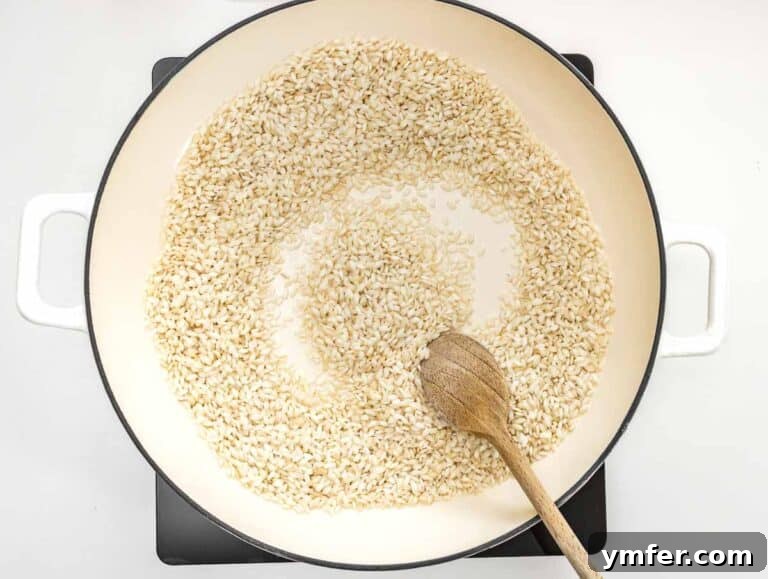
In a large Dutch oven or heavy-bottomed skillet, add the risotto rice (without any oil) and stir continuously over medium heat for about 1.5 minutes. You’ll hear a faint popping sound and the rice grains will become translucent around the edges. This essential step, known as “toasting” or “tostatura,” helps the rice grains retain their shape and a desirable al dente bite even after absorbing all the liquid. Transfer the toasted rice to a bowl and set it aside for later.
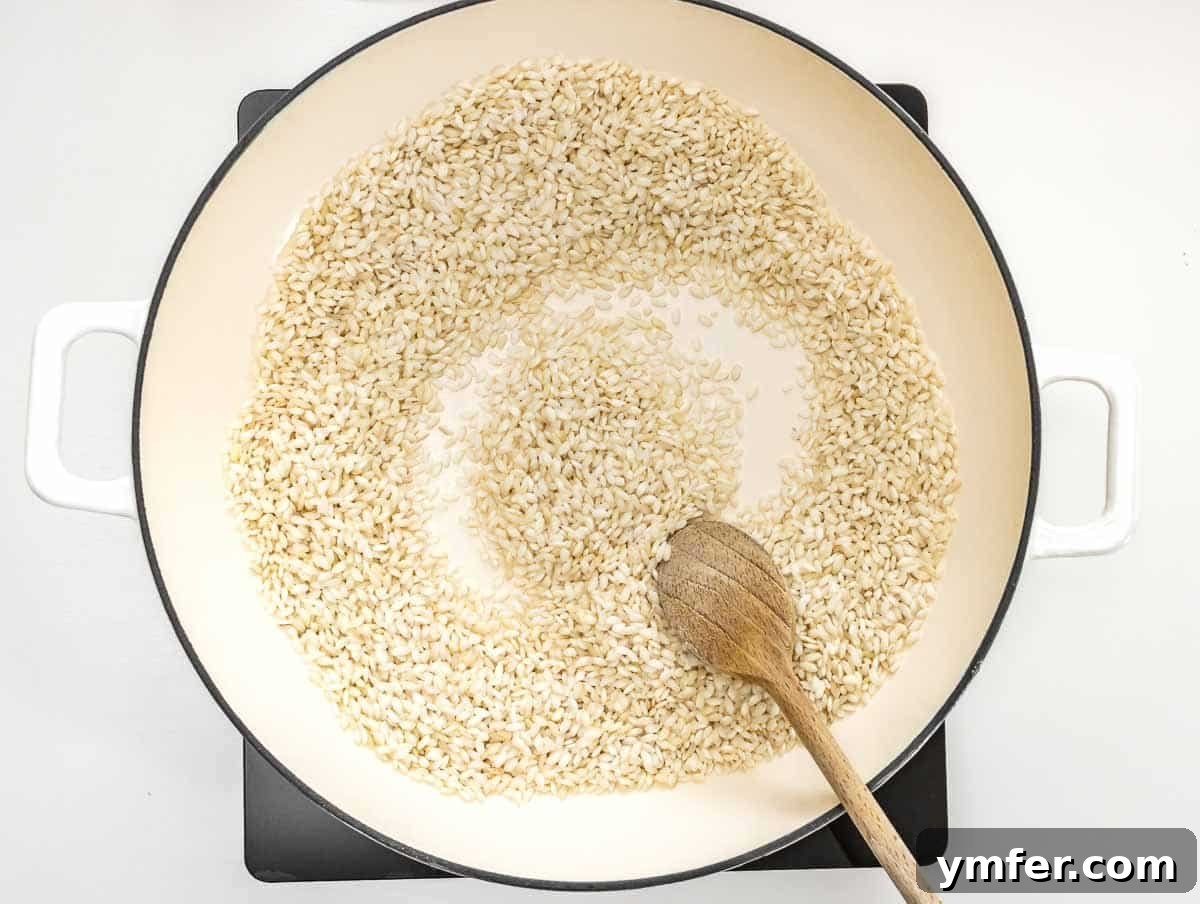
3. Building Layers of Flavor: Cooking the Risotto
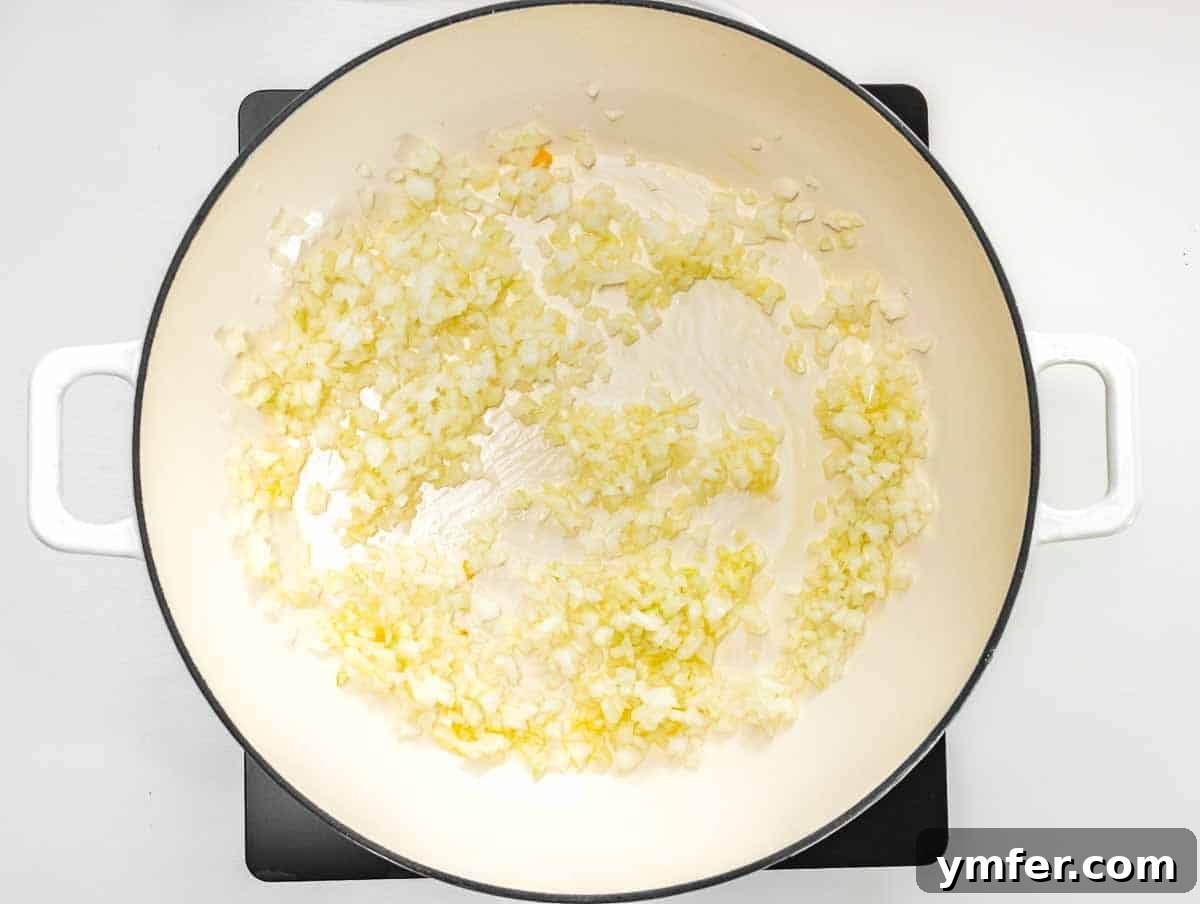
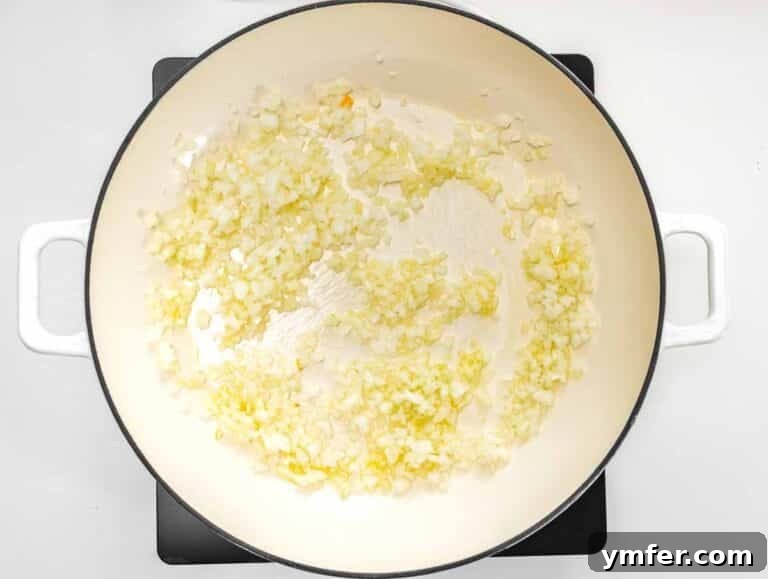
Return the same Dutch oven to medium heat. Add the olive oil and chopped onion. Sauté gently for about 2 minutes, stirring occasionally, until the onion becomes translucent and softens without browning. For an oil-free alternative, you can sauté the onion in a dry pan on low heat, stirring frequently; the onions will release their natural moisture and oils, preventing sticking.
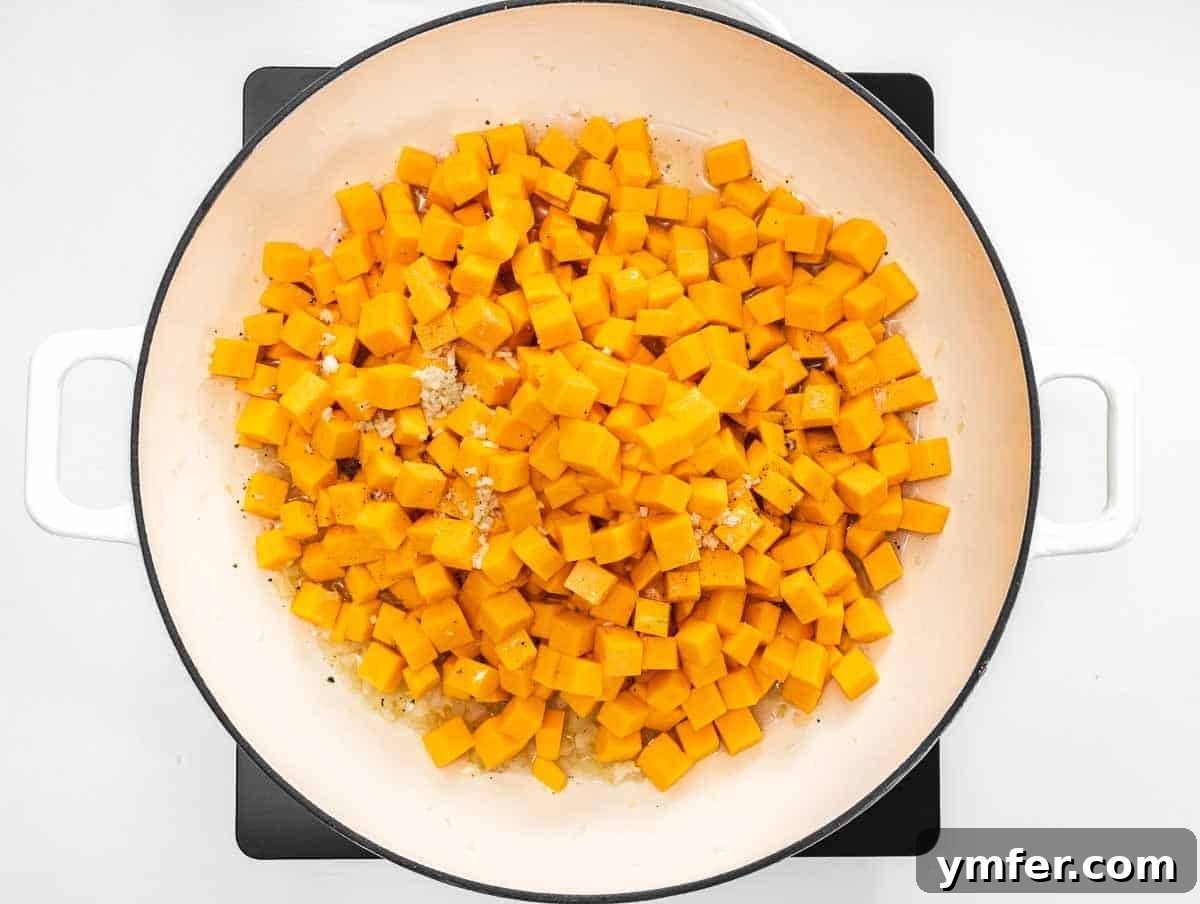
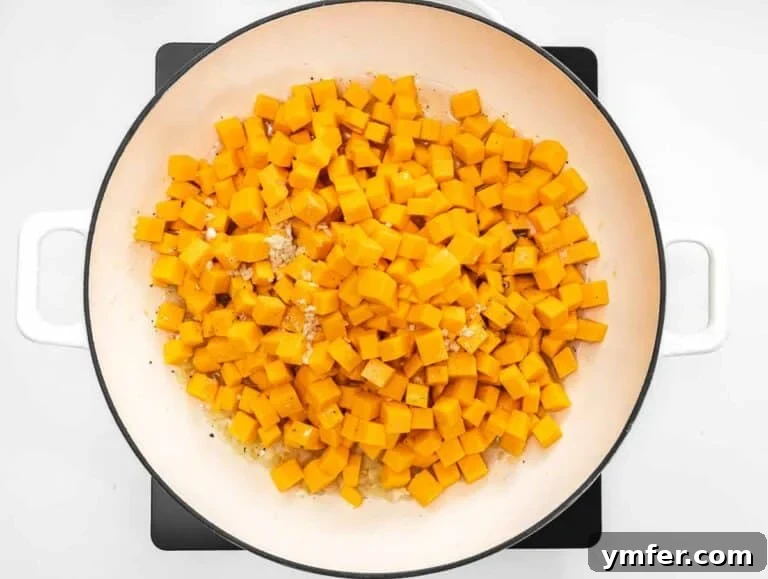
Next, add the diced butternut squash, minced garlic, ¼ cup of vegetable broth, salt, and pepper to the pot. Sauté this mixture over medium heat for 5 minutes, stirring occasionally. The squash will start to soften and release its sweet essence, creating a flavorful foundation for the rice.
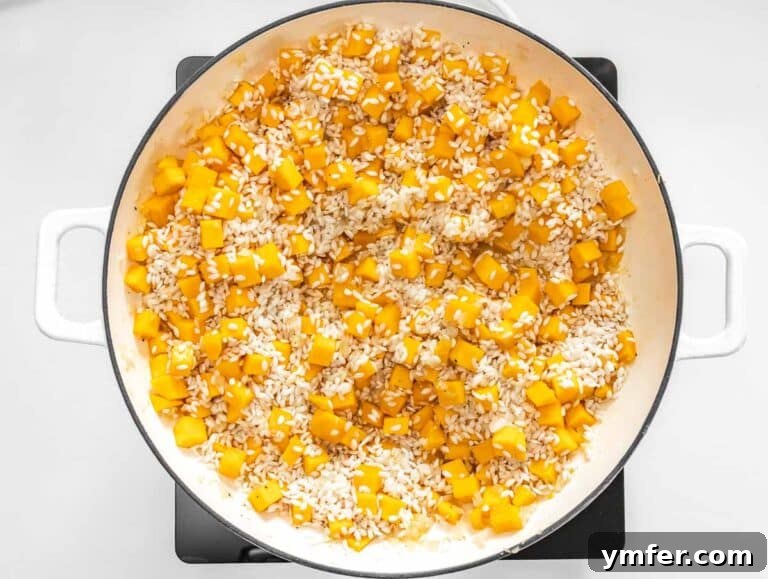
Now, add the toasted risotto rice back into the Dutch oven with the squash mixture. Stir on medium-high heat for about a minute. As the pan gets hot and the rice begins to stick slightly, pour in the white wine. This step, known as deglazing, adds a vital touch of acidity and depth to the dish. Stir until the wine has completely evaporated, its alcohol burning off and leaving behind only its concentrated flavors.
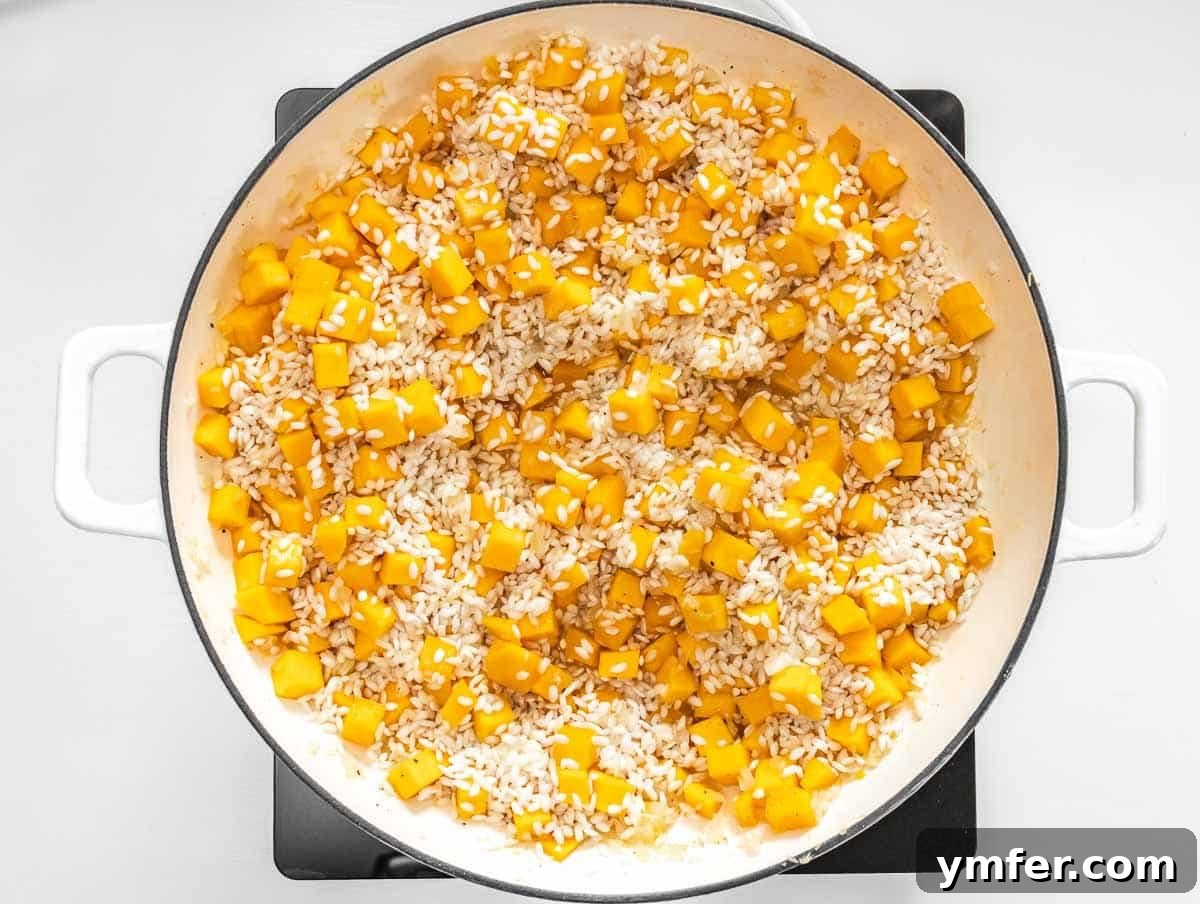
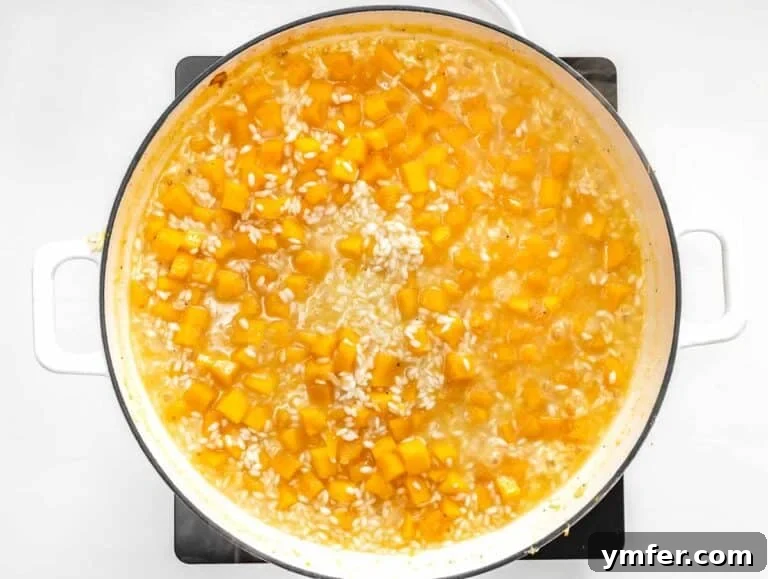
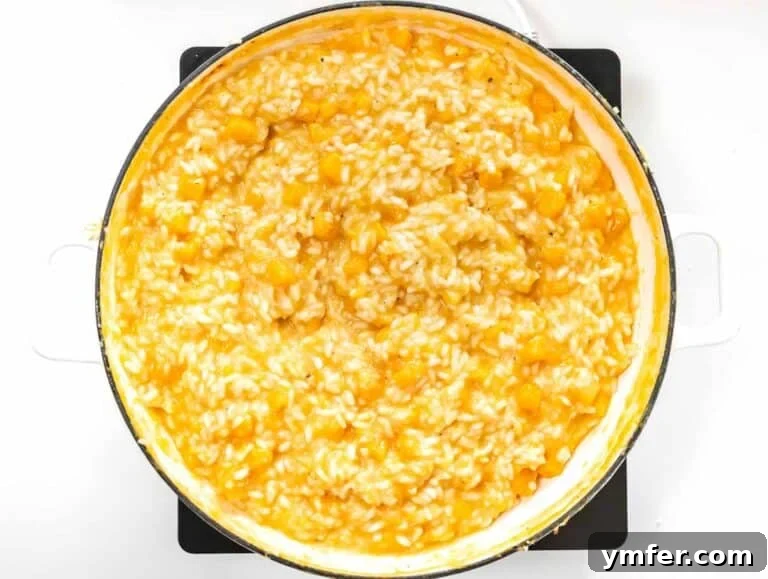
Once the wine has evaporated, begin adding the hot vegetable broth, two ladlefuls at a time. Stir gently but almost continuously until the rice absorbs most of the liquid before adding the next two ladlefuls. This gradual addition and constant stirring are key to coaxing the starch out of the rice grains, creating that signature creamy texture. Continue this process for 15 to 18 minutes, or until the rice is cooked al dente—soft on the outside but still firm and slightly chewy in the center. Taste a grain of rice to test for doneness. There’s no need to puree the butternut squash; some pieces will naturally break down and color the rice without making the risotto soupy.
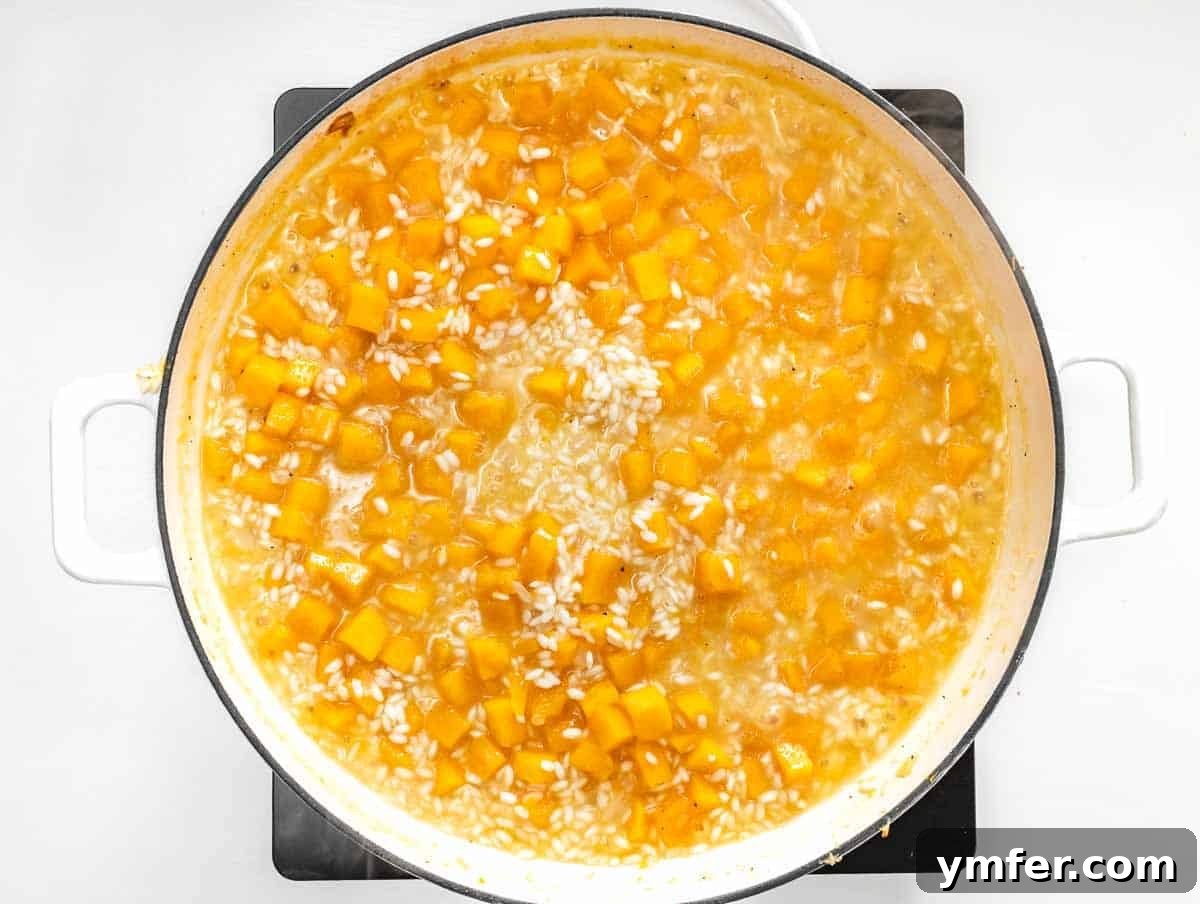
4. “Manteca” and Serve: The Final Touch
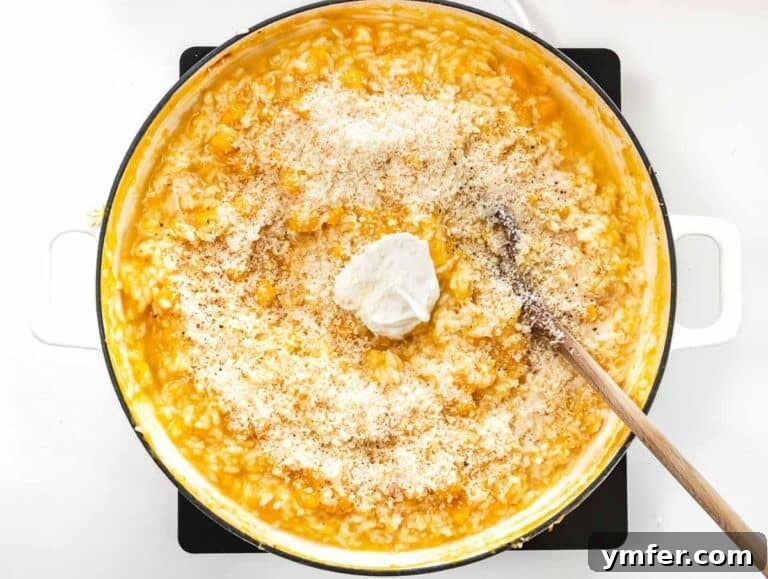
When the rice reaches al dente, turn off the heat. Let the risotto cool down for just one minute. Then, add the butter (or dairy-free butter) and grated Parmesan cheese (or vegan alternative) to the pot. This final enriching step is called “mantecatura.”
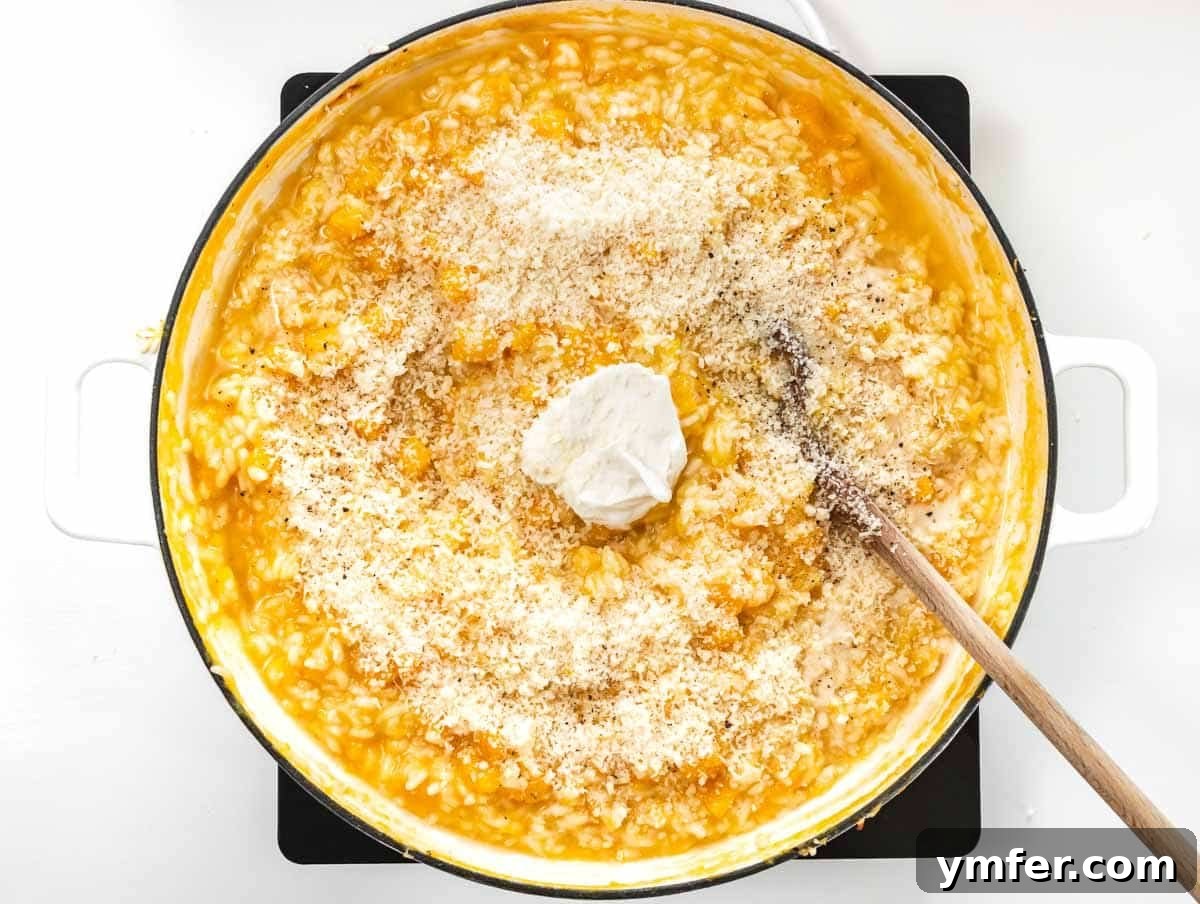
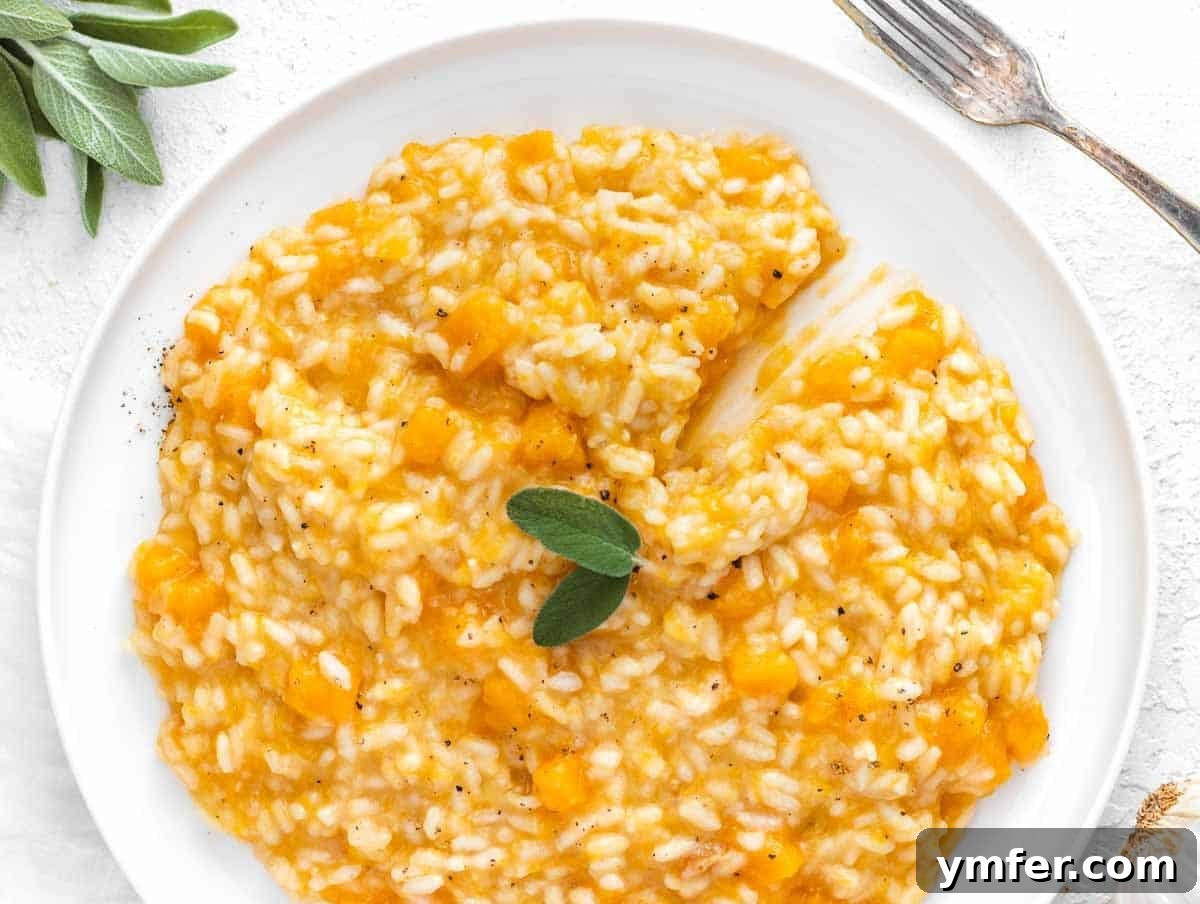
Stir vigorously until the butter and cheese are fully melted and incorporated, creating an incredibly smooth and glossy consistency. The risotto should be fluid enough to spread slowly on a plate but thick enough to be eaten with a fork. If it appears too thick, add an extra splash of hot vegetable broth to achieve the perfect consistency.
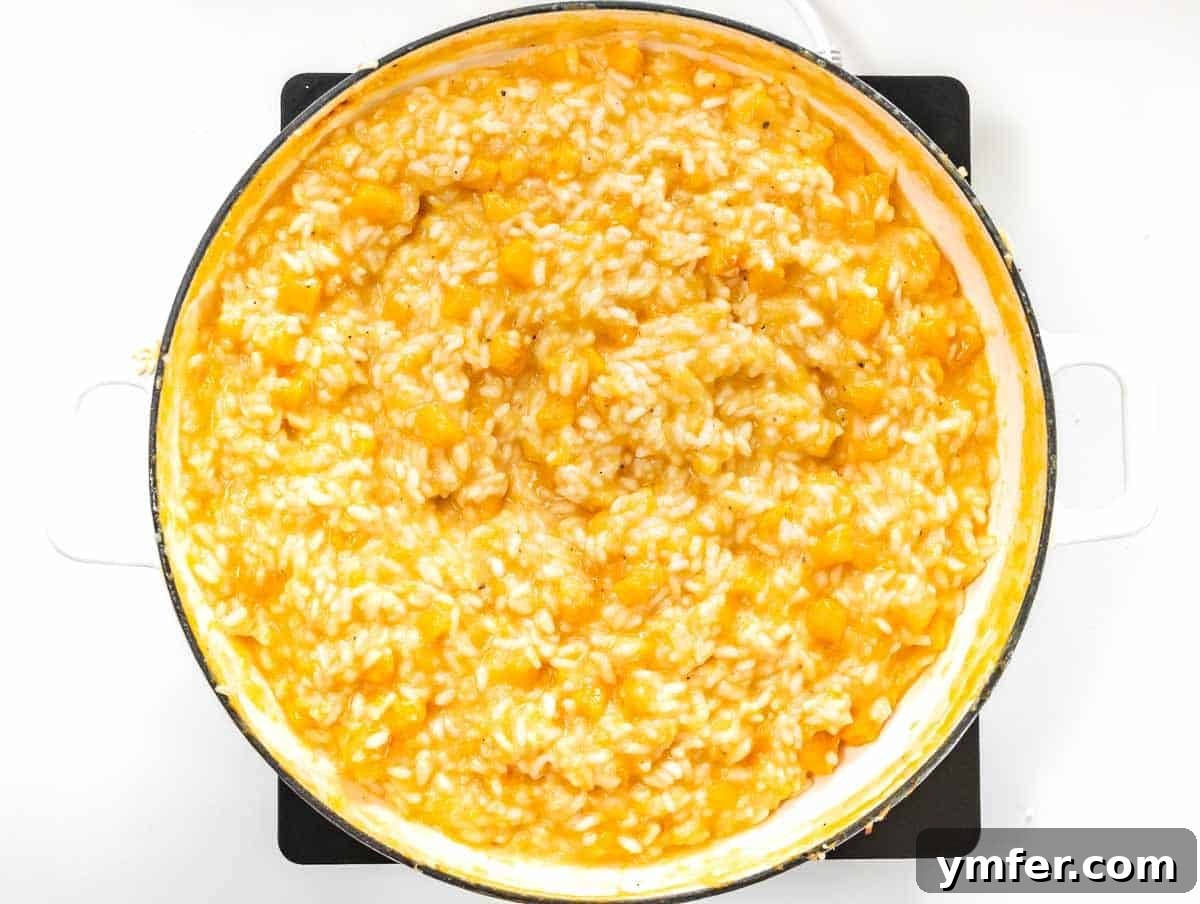
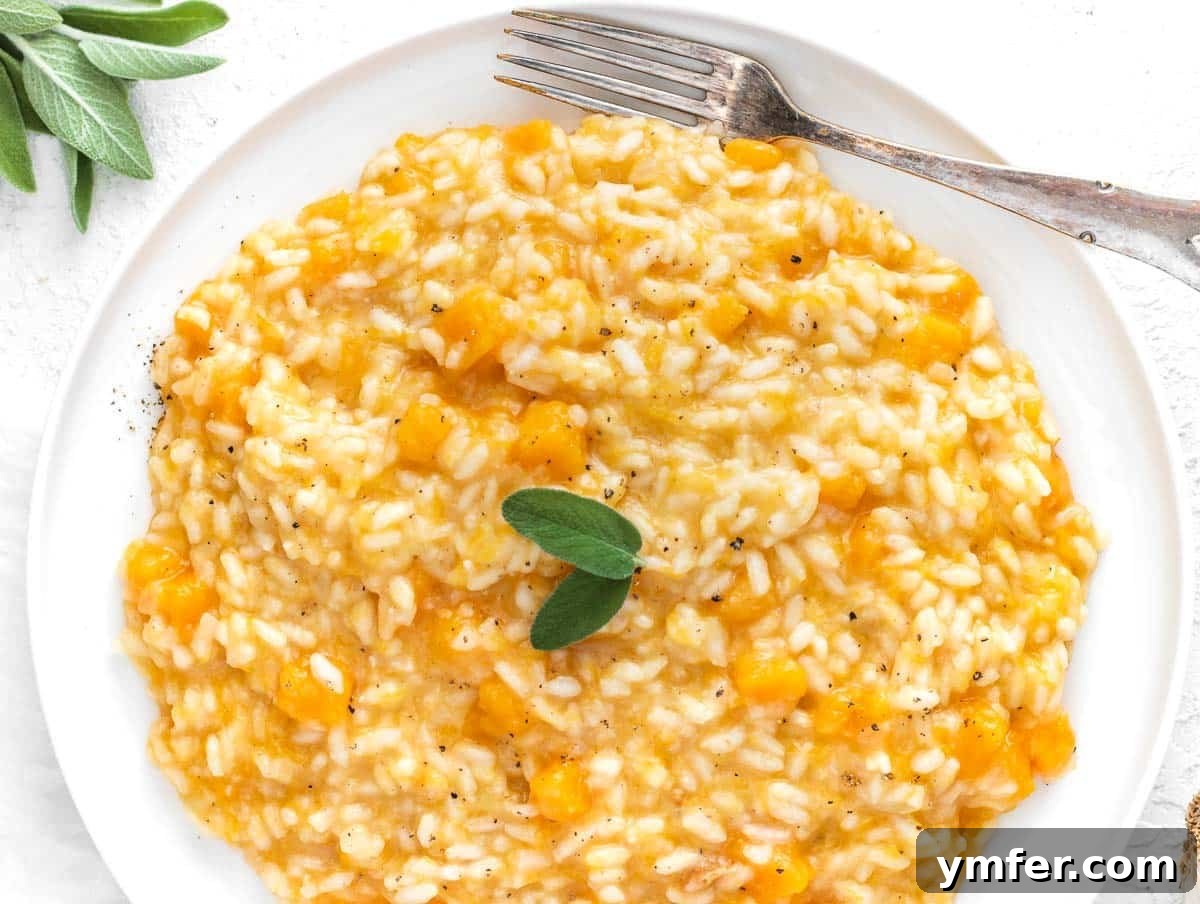
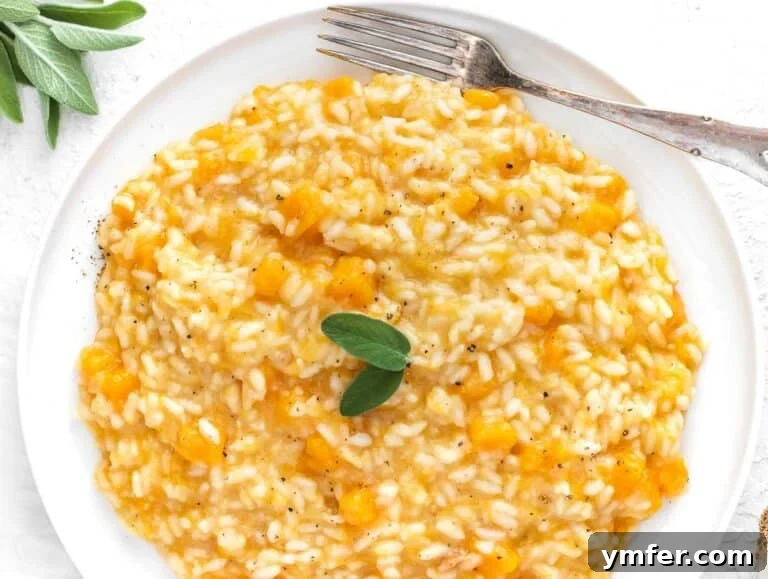
To serve, ladle one or two portions of the creamy butternut squash risotto onto the center of each plate, allowing it to spread naturally. Garnish with a few fresh sage leaves and a generous twist of freshly ground black pepper. For an elevated touch, you can quickly fry the sage leaves in a tablespoon of extra virgin olive oil for about a minute until crisp before placing them on top.
Expert Tips for the Best Butternut Squash Risotto
Achieving risotto perfection is easier with a few insider tricks:
- Keep Broth Hot: Always add hot broth to the risotto. Cold broth will shock the rice, extending cooking time and potentially affecting the creamy texture.
- Stir Constantly but Gently: Continuous stirring is vital for releasing the starch from the rice, creating creaminess. However, avoid aggressive stirring, which can break the grains.
- Toast the Rice Properly: Don’t skip the toasting step. It seals the outer layer of the rice, allowing it to absorb liquid slowly and maintain an al dente core.
- Taste for Doneness: Risotto is best when it’s “all’onda” (wavy) and the rice is al dente. Taste frequently towards the end of cooking to ensure it’s not mushy.
- Don’t Overcook the Squash: Dicing the squash small ensures it cooks down and integrates into the rice without becoming a chunky, separate component.
- “Mantecatura” is Key: Adding butter and Parmesan (or their dairy-free counterparts) off the heat at the end is crucial for that final velvety, emulsified texture.
- Adjust Consistency: Risotto should be creamy and flow gently on the plate, not too thick or too soupy. Adjust with a splash of hot broth if needed.
Serving Suggestions for Your Risotto Feast
Butternut squash risotto is a hearty and satisfying main course on its own, but it pairs beautifully with light, fresh side dishes to complete your meal. Here are some excellent companions:
- A simple side salad with crisp, fresh greens and a light vinaigrette.
- A vibrant Italian salad, featuring mixed greens, cherry tomatoes, and an oregano dressing.
- Healthy and delicious roasted cauliflower or quick air-fried cauliflower.
- A protein-rich cauliflower lentil salad for added texture and nutrition.
- A refreshing green bean salad with a creamy mustard dressing.
- Light and fresh zucchini salad for a touch of brightness.
- Delicate steamed artichokes or rich braised artichokes.
- An elegant fennel and orange salad for a contrasting flavor profile.
Creative Ways to Use Leftover Butternut Squash Risotto
While freshly made risotto is best, don’t let any leftovers go to waste! Cooled risotto transforms beautifully into other delicious dishes. Its sticky texture is perfect for shaping and frying. Here are four fantastic ideas:
Crispy Risotto Cakes

Transform your leftover risotto into a delectable main dish with crispy risotto cakes. These savory patties are formed from cooled risotto, coated in breadcrumbs, and then pan-fried or air-fried until perfectly golden brown and crisp on the outside, with a soft, flavorful interior. Serve them on a simple side salad with a rich homemade marinara sauce for an unforgettable meal. Find the full recipe here: Risotto Cakes Recipe.
Irresistible Italian Rice Balls (Arancini)

Italian rice balls, often known as arancini, are an iconic street food. Made with leftover or cooled risotto of any kind, these irresistible morsels are typically stuffed, coated in crunchy breadcrumbs, and deep-fried until perfectly crisp and golden brown. They make for an excellent appetizer or a fun, substantial snack. Explore our recipe: Italian Rice Balls Recipe.
Supplì: Roman Fried Rice Balls

Hailing from Rome, Supplì alla Romana are a beloved fried street food. These are distinct from arancini, typically made with a tomato-based risotto and famed for their “supplì al telefono” (telephone wire) effect—a stretchy strand of melted mozzarella cheese when pulled apart. Like arancini, they are breaded and deep-fried to a golden perfection. Perfect for a rich, cheesy bite. Discover how to make them: Supplì alla Romana Recipe.
Storage and Reheating Tips
While risotto is always best enjoyed fresh, you can store leftovers for a short period. Allow the butternut squash risotto to cool down completely before transferring it to an airtight container. Store it in the refrigerator for up to 3 days. When reheating, the risotto will have become much stickier and drier due to the rice continuing to absorb moisture. To restore some creaminess, reheat small portions in the microwave for one to two minutes, adding a splash of water or vegetable broth and stirring frequently until heated through. Alternatively, you can reheat it gently on the stovetop with a little added liquid. We do not recommend freezing butternut squash risotto, as the texture of the rice and squash can become mealy and unpleasant upon thawing and reheating.
Frequently Asked Questions About Butternut Squash Risotto
What does butternut squash risotto taste like?
Butternut squash risotto offers a delightful harmony of flavors. It has a mildly sweet taste from the squash, balanced by earthy notes from sage and a savory richness from Parmesan. The texture is incredibly creamy and velvety, yet the rice grains remain perfectly al dente, providing a satisfying bite. It’s often described as comforting, slightly nutty, and vaguely reminiscent of sweet potato, but with a unique Italian flair.
Can I use frozen butternut squash?
Yes, you can use frozen diced butternut squash to save on prep time. There’s no need to thaw it beforehand; simply add it to the pan with the onions and garlic as directed. It might release a bit more water initially, so ensure it cooks down before adding the rice.
What if I don’t have white wine?
If you prefer to avoid alcohol, simply substitute the white wine with an equal quantity of hot vegetable broth. The wine adds a touch of acidity and complexity, but the risotto will still be delicious and flavorful without it.
How do I get my risotto truly creamy and not mushy?
The secret to creamy, non-mushy risotto lies in two things: using the correct risotto rice (like Arborio or Carnaroli) and continuously stirring while gradually adding hot broth. The stirring helps release the starch from the rice, creating creaminess, while the hot broth ensures steady cooking. Stop cooking when the rice is al dente – soft on the outside but with a slight chew in the center. The final “mantecatura” with butter and cheese also significantly contributes to the silky finish.
More Creamy Risotto Recipes to Explore
If you’ve fallen in love with the comforting simplicity of risotto, you’re in luck! We have a collection of equally creamy, flavorful, and easy-to-make risotto recipes:
- Tomato Risotto: A bright and tangy classic.
- Mushroom Risotto: Earthy and deeply savory.
- Zucchini Risotto: Light, fresh, and surprisingly rich.
- Eggplant Risotto: A hearty and satisfying option.
- Easy Vegan Risotto: A foundational recipe for plant-based creamy risotto.
- Saffron Risotto: The iconic, golden Milanese classic.
- Asparagus Risotto: Perfect for spring, fresh and vibrant.
Butternut Squash Risotto Recipe
Nico Pallotta
You can make this recipe with or without dairy, it’s naturally gluten-free, and as usual, we’ll show you the simplest way to make it with step-by-step instructions.
15 mins
20 mins
35 mins
5 people
Main Course
American Italian
Ingredients
- 2 cups Arborio rice
- 1 tablespoon extra virgin olive oil
- 1 white onion, finely chopped
- 2 cloves garlic, minced
- 5 cups (1.5 pounds) butternut squash, peeled and cut into 1/4 inch dice
- ½ teaspoon salt
- ½ teaspoon black pepper
- ½ cup white wine (or vegetable broth)
- 8 cups vegetable broth, hot
- 4 tablespoons butter (or dairy-free butter)
- ½ cup grated parmesan (or dairy-free cheese)
- 1 handful sage leaves (3 or 4 per serving), fresh
Instructions
PREPARATION
-
Peel and dice the butternut squash into ¼ inch (0.6 cm) cubes. Finely chop the onion and mince the garlic. Set aside.
Heat vegetable broth in a large saucepan until almost boiling. Keep it hot on low heat throughout the recipe.
TOAST THE RICE
-
To a large Dutch oven or skillet, add the risotto rice (dry) and stir on medium heat for about 1.5 minutes until grains are slightly translucent. Transfer the rice into a bowl and set it aside. This “toasting” step is crucial for texture.

COOK THE RISOTTO
-
To the same Dutch oven, add the olive oil and chopped onion. Fry gently for 2 minutes until the onion is translucent. (For oil-free, sauté onion in a dry pot on low heat until soft).
-
Add the diced butternut squash, minced garlic, ¼ cup vegetable broth, salt, and pepper. Sauté on medium heat for 5 minutes, stirring occasionally.
-
Add the toasted risotto rice and stir on medium-high heat for 1 minute. When the rice starts to stick, add the white wine (or broth). Stir until the wine has evaporated completely. This step deglazes the pan and adds flavor.
-
Add two ladlefuls of hot vegetable broth and stir gently until the rice absorbs the broth. Continue adding two ladlefuls of liquid at a time, stirring almost continuously, until the rice is cooked al dente (15 to 18 minutes). Taste the rice; it should be soft but still have a firm bite, and the risotto should be creamy but not mushy.
ADD BUTTER AND CHEESE
-
Turn the heat off, let the rice cool down for one minute, then add butter (or dairy-free butter) and grated parmesan cheese (or dairy-free cheese).
-
Stir vigorously until butter and cheese melt into the rice, creating a creamy, glossy consistency. If the risotto gets too thick, add a little more vegetable broth until it reaches a fluid, “all’onda” texture.
-
Serve a ladleful or two of creamy butternut squash risotto per person, allowing it to spread naturally on the plate. Top with a couple of fresh sage leaves and a twist of freshly ground black pepper. (Optionally, fry sage leaves in olive oil for 1 minute for extra crispness).
Notes
TIPS:
1. Toasting the rice is important to ensure that the rice keeps its shape and bite once cooked. Toasting needs to be done in a dry pan before adding other ingredients.
2. If you want to make risotto oil-free, you can fry the onion in a dry Dutch oven on low heat, moving it around the pan often. The onions will release natural oils that prevent sticking.
3. Deglazing the pan with dry white wine adds acidity to the dish, making it more flavorful. Vegetable broth is a suitable non-alcoholic alternative.
4. There is no need to puree or blend the butternut squash. Some of the squash will naturally melt and color the rice without making it too soupy.
5. Risotto should have a creamy texture and a consistency that is not too thick nor too soupy, allowing it to spread gently. The rice grains should be creamy but not mushy, maintaining an al dente bite. You should be able to eat it with a fork.
6. To garnish, you can fry fresh sage in a tablespoon of extra virgin olive oil, on a nonstick pan, for one minute until crisp, then add it on top of the risotto.
Nutrition
Carbohydrates: 87g,
Protein: 10g,
Fat: 15g,
Saturated Fat: 4g,
Polyunsaturated Fat: 3g,
Monounsaturated Fat: 7g,
Trans Fat: 0g,
Cholesterol: 9mg,
Potassium: 608mg,
Dietary Fiber: 5g,
Sugar: 7g,
Vitamin A: 15771IU,
Vitamin B6: 0.4mg,
Vitamin C: 30mg,
Vitamin E: 3mg,
Vitamin K: 12µg,
Calcium: 177mg,
Folate: 224µg,
Iron: 5mg,
Manganese: 1mg,
Magnesium: 76mg,
Zinc: 2mg
Tried this recipe?
Leave a comment below or mention @theplantbasedschool on Instagram. We love hearing from you ⭐️ 💚.
If you liked this butternut squash risotto, you might also like these related recipes and collections:
Collections
What to Serve with Risotto: 25 Sides
Collections
45 Vegetable Side Dishes
Collections
30 Eggplant Recipes
Collections