
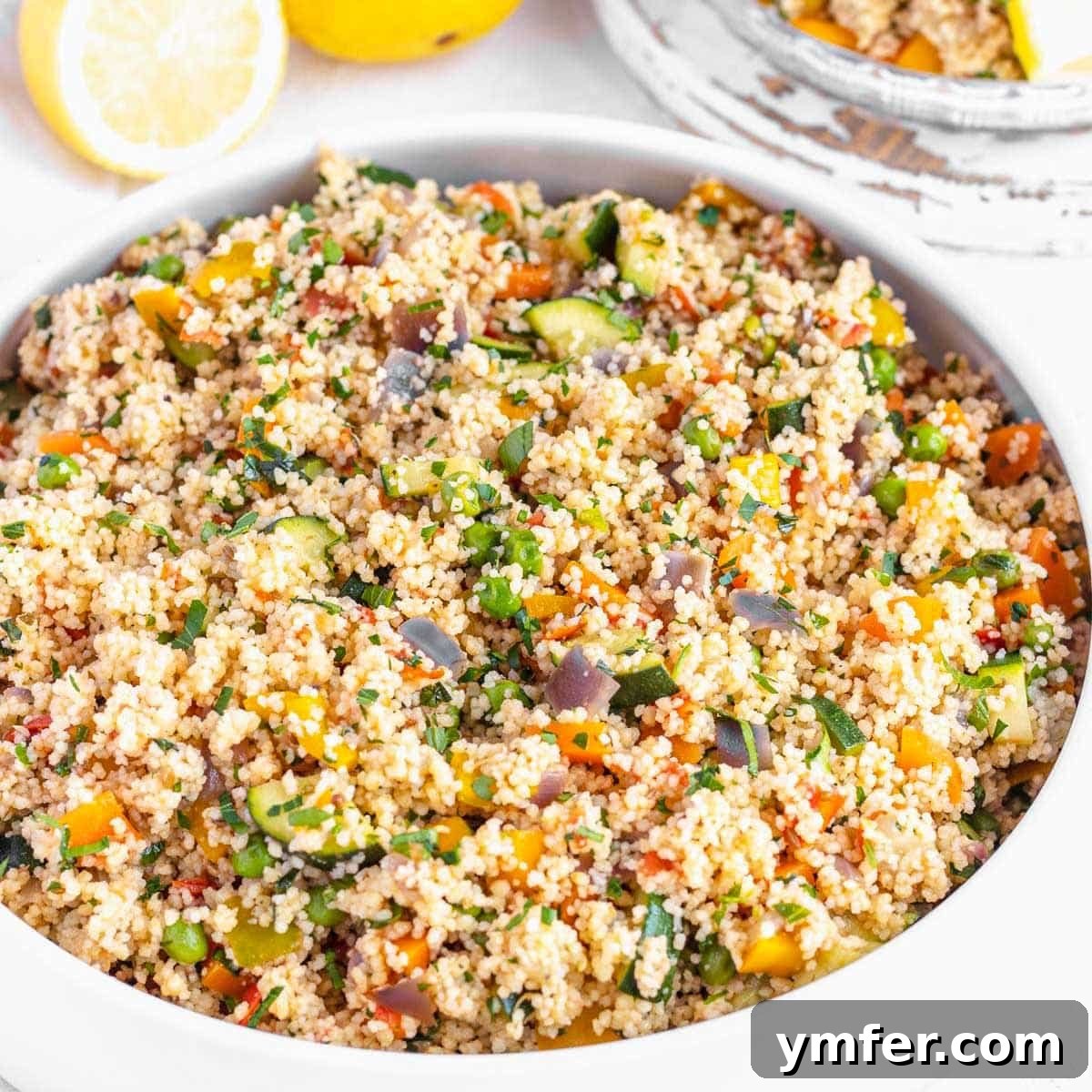
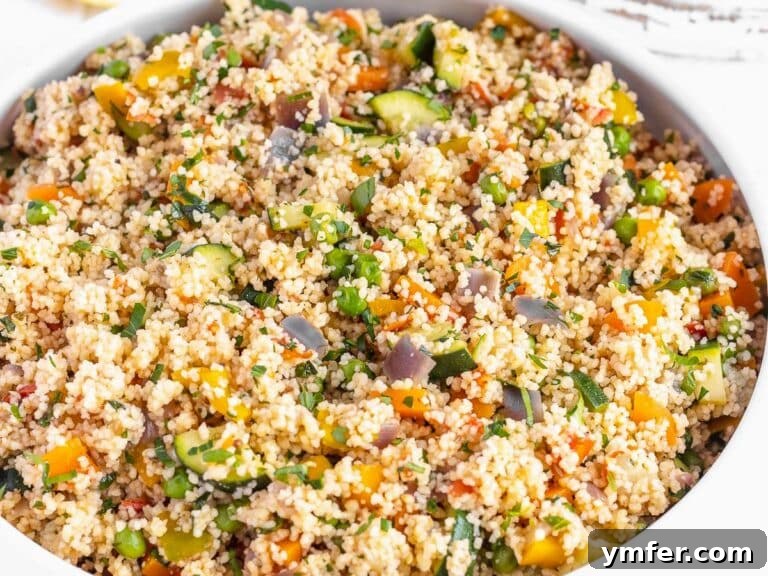
Vegetable couscous is a cornerstone of Mediterranean cooking, offering a delightful fusion of fluffy couscous and tender, seasonal sautéed vegetables, infused with aromatic spices. This wholesome dish is celebrated for its vibrant flavors, nourishing ingredients, and incredible versatility.
Crafting this flavorful recipe takes only about 30 minutes, making it an ideal choice for busy weekdays. You can easily adapt it using whatever fresh vegetables you have on hand, ensuring a unique and delicious meal every time. Perfect for either lunch or dinner, vegetable couscous also excels as a meal prep solution, as its flavors deepen and improve over several days in the refrigerator.
For an elevated culinary experience, we highly recommend serving your vegetable couscous warm, accompanied by a generous dollop of cool, creamy yogurt (dairy or plant-based), a drizzle of rich tahini sauce, or a refreshing blend of yogurt tahini sauce. These additions introduce a delightful textural and flavor contrast that beautifully complements the dish.
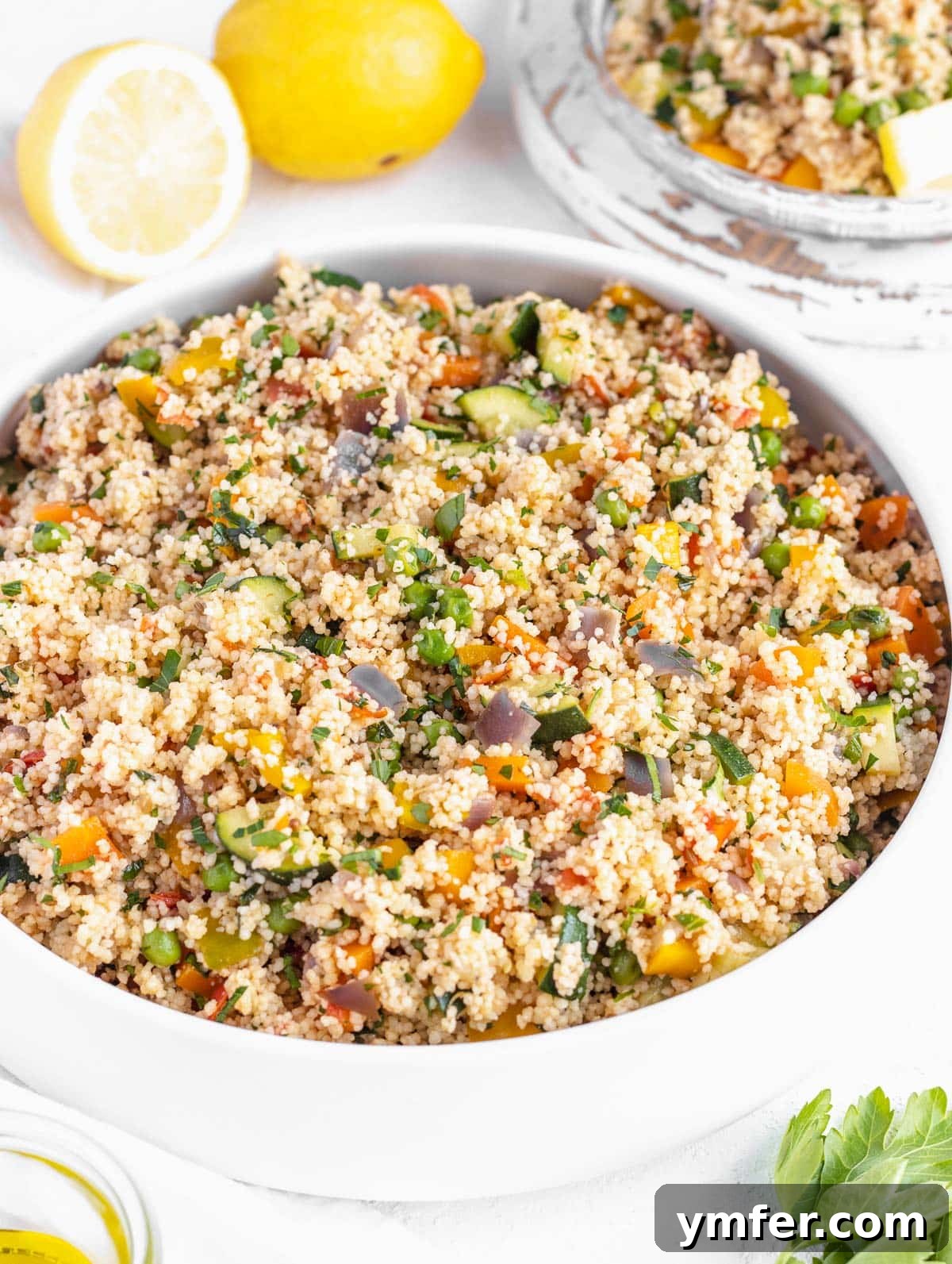
Table of Contents
- What is Vegetable Couscous?
- Why You’ll Love This Vegetable Couscous Recipe
- Ingredients and Substitutions for Vegetable Couscous
- How to Make Vegetable Couscous: Step-by-Step Guide
- Serving Suggestions for Vegetable Couscous
- Storage & Make Ahead Tips
- More Mediterranean Salads to Explore
- Vegetable Couscous Recipe Card
Dietary Note: This delightful recipe is suitable for vegetarian and vegan diets, naturally low in cholesterol and saturated fats, making it a healthy choice for many. Please note that it is not suitable for gluten-free diets, as traditional couscous contains gluten.
Short on time? JUMP TO THE FULL RECIPE CARD HERE!
What is Vegetable Couscous?
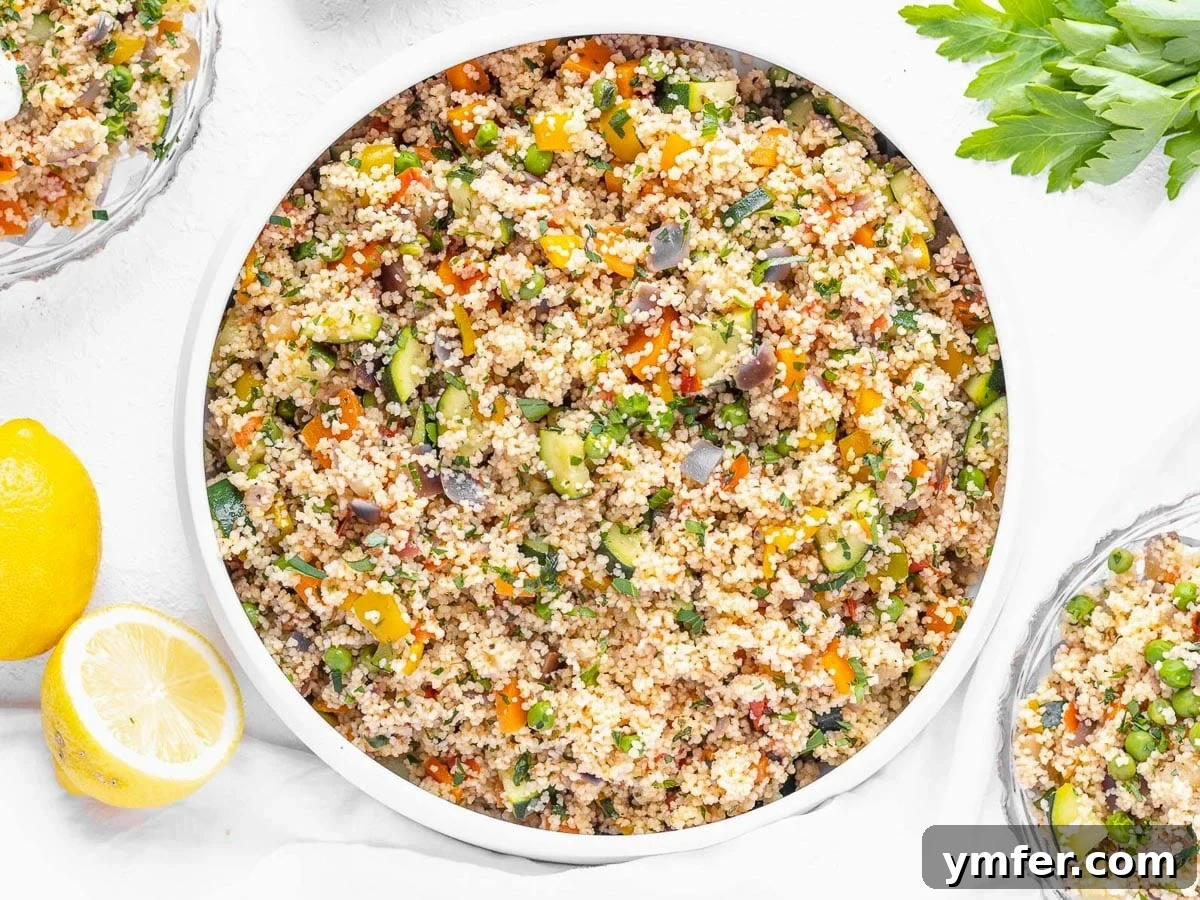
At its heart, vegetable couscous is a Mediterranean-inspired dish that elevates the simple grain (or rather, tiny pasta pearls) by pairing it with a medley of perfectly **sautéed vegetables and fragrant spices**. While often compared to a couscous salad, this dish distinguishes itself by cooking the vegetables in a pan for about 15 minutes before gently folding them into the prepared couscous. This crucial step extracts and melds the flavors of the vegetables, imparting a richness and depth that a raw salad often lacks.
This method of preparing couscous with cooked vegetables holds significant cultural importance in various Mediterranean countries. In **Morocco**, where couscous is revered as a national dish, it’s often served as a comforting and substantial staple. Similarly, in **Italy**, this vibrant creation is known as “couscous di verdure” – a testament to its popularity and deliciousness across diverse culinary landscapes. The Mediterranean diet, known for its emphasis on fresh produce, whole grains, and healthy fats, truly shines through in this dish.
You’ve likely enjoyed the harmonious pairings in our Moroccan carrot salad or the comforting lentil sweet potato salad alongside Moroccan couscous. This vegetable couscous recipe builds on that tradition, offering a new favorite that’s equally simple to prepare and bursting with flavor. Its straightforward nature makes it accessible for even novice cooks, while its robust taste satisfies discerning palates.
Beyond its delicious taste, vegetable couscous is an **excellent candidate for meal prep**. It keeps beautifully in the fridge for several days, and remarkably, its flavors tend to become even more pronounced and complex as it rests, allowing the spices and vegetable juices to fully permeate the couscous. This makes it a smart choice for healthy eating throughout the week, minimizing cooking time when you’re busy.
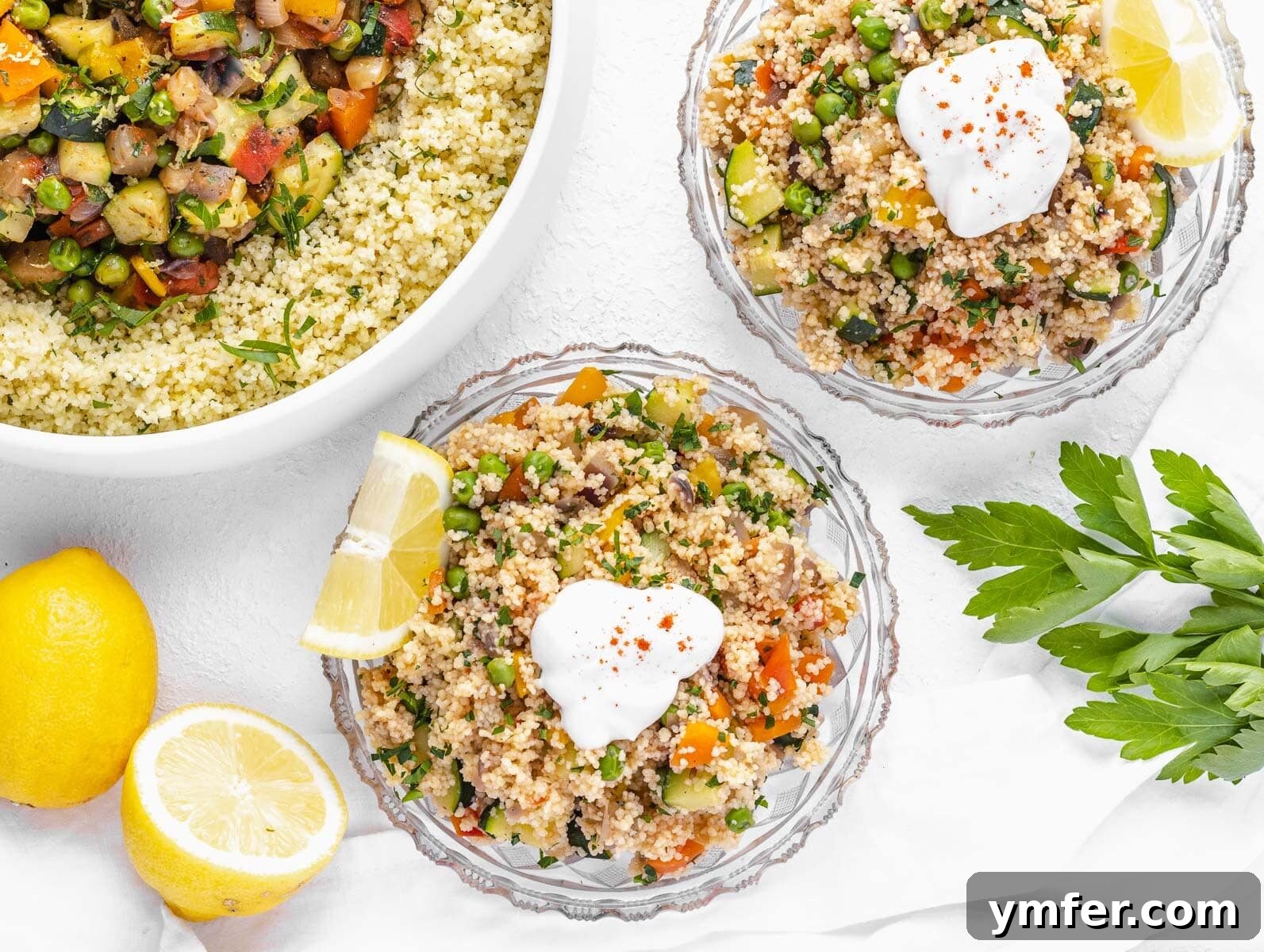
Whether you need a **quick and nutritious lunch** or a **healthy, satisfying dinner**, vegetable couscous delivers. To add an extra layer of zest and creaminess, we highly recommend serving it with our homemade yogurt tahini sauce and a sprinkle of tangy quick pickled red onions for that “oomph” factor.
For those who enjoy a touch of salty tang, **crumbled feta cheese** (dairy or plant-based) also pairs wonderfully, adding a Mediterranean authenticity to the dish.
For this specific recipe, you’ll want to use the **fine-grained, dry couscous**, often labeled as Moroccan couscous, rather than the larger pearl or Israeli couscous varieties. This choice is crucial for achieving the desired light and fluffy texture that rapidly absorbs flavors.
The beauty of this meal lies in its efficiency: the couscous itself takes only **5 minutes to cook**, and the vegetables are perfectly sautéed in just about 15 minutes. This means you can have a complete, wholesome, and delicious meal on your table in **less than 30 minutes** from start to finish.
If you’re interested in mastering the art of couscous preparation, our comprehensive guide on how to cook couscous offers essential **tips and diverse serving suggestions** for this incredibly versatile, healthy, and delicious ingredient. It covers everything from basic cooking methods to creative ways to incorporate couscous into your meals.
Why You’ll Love This Vegetable Couscous Recipe
This vegetable couscous recipe isn’t just another meal; it’s a culinary experience designed for modern, health-conscious lifestyles. Here’s why it will become a staple in your kitchen:
- Speed & Simplicity: In just 30 minutes, you can create a wholesome dish. It’s perfect for busy weeknights when you crave something nutritious without spending hours in the kitchen.
- Incredibly Versatile: This recipe is a blank canvas. Easily swap vegetables based on seasonality, what’s in your fridge, or your personal preferences. It’s forgiving and adapts to your taste.
- Healthy & Nutritious: Packed with fiber, vitamins, and minerals from a diverse range of vegetables, this dish supports a balanced diet. It’s naturally low in saturated fats and cholesterol, aligning perfectly with a plant-based or Mediterranean eating plan.
- Excellent for Meal Prep: One of its greatest strengths! Prepare a larger batch at the beginning of the week, and enjoy delicious, ready-to-eat meals for days. The flavors deepen and improve with time, making leftovers even more delightful.
- Mediterranean Flavors: Earthy cumin, aromatic oregano, and fresh parsley transport your taste buds to the sun-drenched coasts of the Mediterranean. It’s a comforting yet light dish that feels both exotic and familiar.
- Budget-Friendly: Made with common, affordable vegetables and couscous, this recipe is kind to your wallet while still delivering maximum flavor and nutrition.
Whether you’re a seasoned cook or just starting your culinary journey, this vegetable couscous offers an accessible, satisfying, and incredibly rewarding cooking experience.
Ingredients and Substitutions for Vegetable Couscous
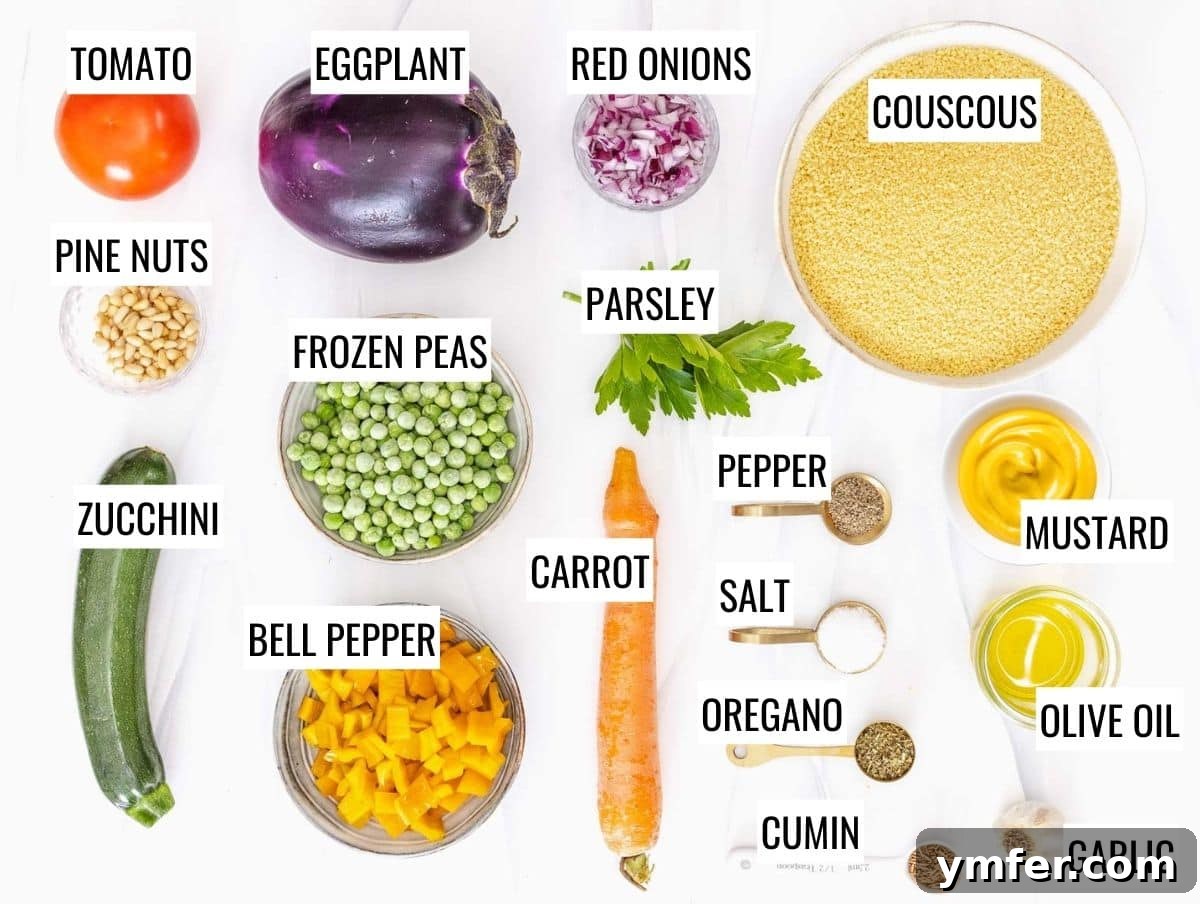
The beauty of this vegetable couscous recipe lies in its adaptability. While we provide a recommended list of ingredients, feel free to experiment and substitute with what’s fresh, seasonal, and available to you. Remember that precise quantities are detailed in the recipe card at the bottom of the page.
Couscous
For this recipe, we specify **regular couscous**, which is characterized by its small, granular texture, akin to tiny pasta. Its quick cooking time and ability to absorb flavors make it ideal. For an enhanced nutritional profile, consider using **whole-wheat couscous**, which offers more fiber and a slightly nuttier flavor that complements the vegetables beautifully. If you prefer or only have access to **pearl or Israeli couscous**, you can certainly use it. However, be aware that it has a larger grain and requires a longer cooking time—always follow the package instructions for preparation before combining it with the sautéed vegetables.
Water or Vegetable Broth
You’ll need **hot water** to quickly hydrate and cook the couscous. For a more profound and savory flavor base, particularly if you’re aiming for a richer vegetarian or vegan profile, we highly recommend substituting **vegetable broth** for water. It imparts an extra layer of umami without much effort.
Extra Virgin Olive Oil
As a staple in Mediterranean cuisine, **extra virgin olive oil** is essential for sautéing our vegetables. Its rich, fruity notes not only facilitate cooking but also add a distinctive flavor and healthy fats to the dish.
Onion & Garlic
These two ingredients form the aromatic foundation, or **soffritto**, of our sautéed vegetables. Finely chopped **onion** and grated or crushed **garlic** release their sweet and pungent flavors as they cook, providing an essential savory depth that ties all the other ingredients together.
Spices & Herbs
To infuse this dish with a quintessential **Mediterranean character**, we incorporate ground **cumin**, dried **oregano**, and fresh flat-leaf **parsley**. Cumin adds an earthy, warm note, oregano brings a classic herbaceous aroma, and fresh parsley brightens the entire dish with its clean, vibrant taste. However, feel free to customize the spices and herbs to your liking. Excellent substitutions for parsley and oregano include **fresh basil, thyme, dill, chives**, or even a hint of **mint** for a refreshing twist. If cumin isn’t a favorite or isn’t available, you can simply **omit it** or replace it with other warm spices such as **turmeric** for a golden hue and mild earthy flavor, or **paprika** for a smoky sweetness.
Seasonal Vegetables
Our list of vegetables serves as a flexible guide. We encourage you to embrace seasonal produce and what’s readily available in your region. The key is to aim for a variety of colors and textures for a visually appealing and satisfying meal. Here are our recommendations and possible substitutions:
- Carrot: Adds natural sweetness and a lovely orange hue. Can be substituted with **parsnip** for an earthy, slightly peppery flavor.
- Eggplant: Provides a tender, meaty texture when cooked. Replace with diced **potatoes or sweet potatoes** for a heartier dish, ensuring they are cut small enough to cook through properly.
- Bell Pepper: Offers a sweet crunch and vibrant color. If unavailable, **corn kernels** (fresh or frozen) make a great sweet substitute.
- Zucchini: Contributes a mild flavor and soft texture, absorbing the surrounding spices. **Pumpkin or various types of squash** can be used, adding a different depth of sweetness and creaminess.
- Tomatoes: Fresh ripe tomatoes add a burst of acidity and juiciness. In the off-season, **canned diced tomatoes** (drained) are an excellent and convenient alternative, offering robust tomato flavor.
- Frozen Peas: These little green gems add sweetness, color, and a pop of protein. For a more substantial protein boost, consider substituting with cooked **lentils, chickpeas, or black beans**.
Enhance Your Dish: Serving Well With…
While delicious on its own, vegetable couscous truly shines when paired with complementary toppings that add texture, creaminess, and an extra layer of flavor:
- Nuts: Toasted nuts provide a delightful crunch and nutty flavor. Options like **toasted pine nuts, chopped pistachios, or shaved almonds** are fantastic. Lightly toast them in a dry pan for a few minutes until fragrant.
- Yogurt-Based Dressings: A dollop of cool, creamy dressing contrasts beautifully with the warm, savory couscous. Simple, plain **Greek-style yogurt** is excellent, or elevate it with something more flavorful like our **yogurt tahini sauce (a creamy, tangy blend) or refreshing **tzatziki sauce** (with cucumber and garlic). For vegan options, opt for high-quality **non-dairy yogurt** alternatives.
- Fresh Herbs: Beyond parsley, a final sprinkle of fresh mint, dill, or basil can add a burst of freshness right before serving.
- A Squeeze of Lemon: A final squeeze of fresh lemon juice is non-negotiable! It brightens all the flavors and adds a zesty finish.
- Crumbled Feta: For non-vegan diets, a sprinkle of crumbled feta cheese adds a salty, tangy creaminess. Plant-based feta alternatives are also widely available and work well.
- Olives: Kalamata or green olives, sliced or whole, add a briny, savory punch that complements the Mediterranean theme.
How to Make Vegetable Couscous: Step-by-Step Guide
Creating this delicious vegetable couscous is incredibly straightforward and quick. Follow these simple steps to bring a taste of the Mediterranean to your table. Detailed US cups + grams measurements are available in the recipe card at the bottom of the page.
1. Prepare and Sauté the Vegetables
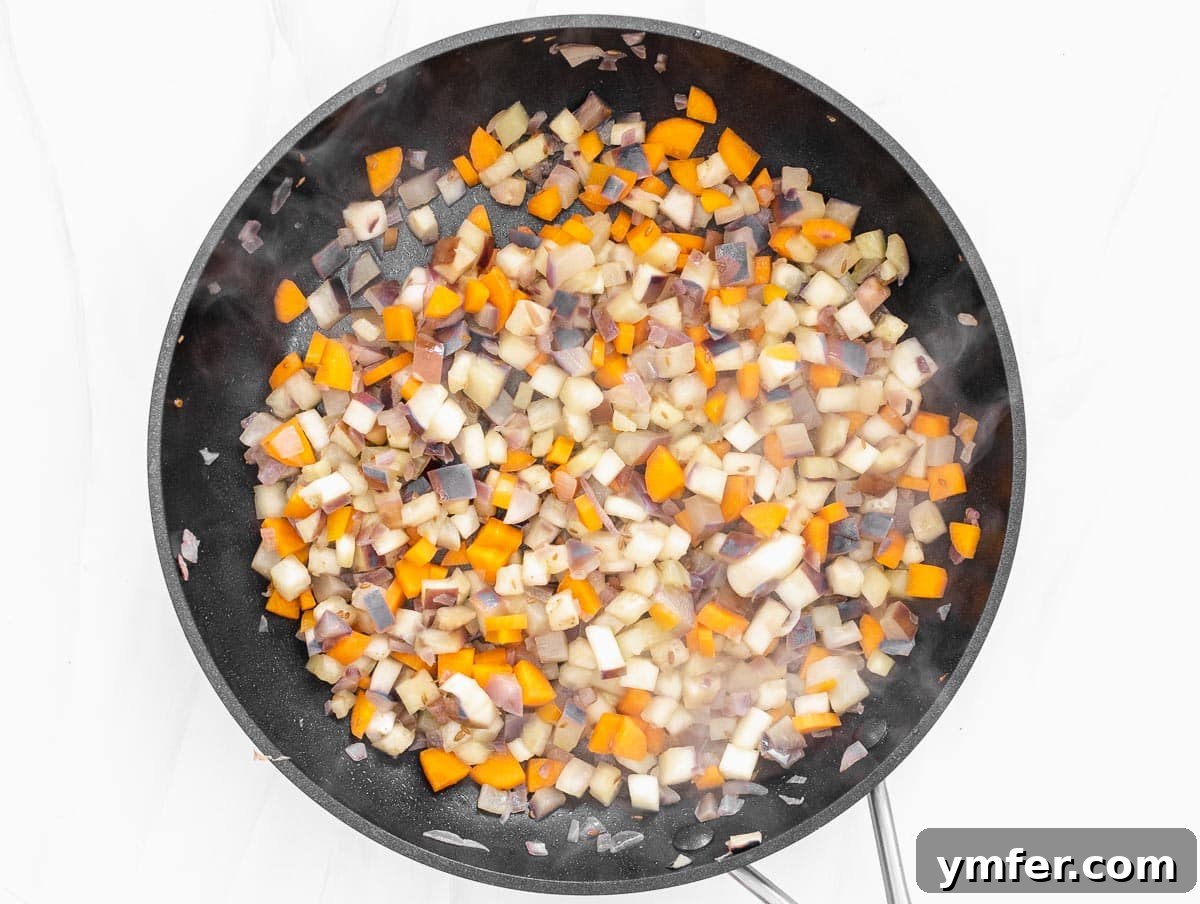
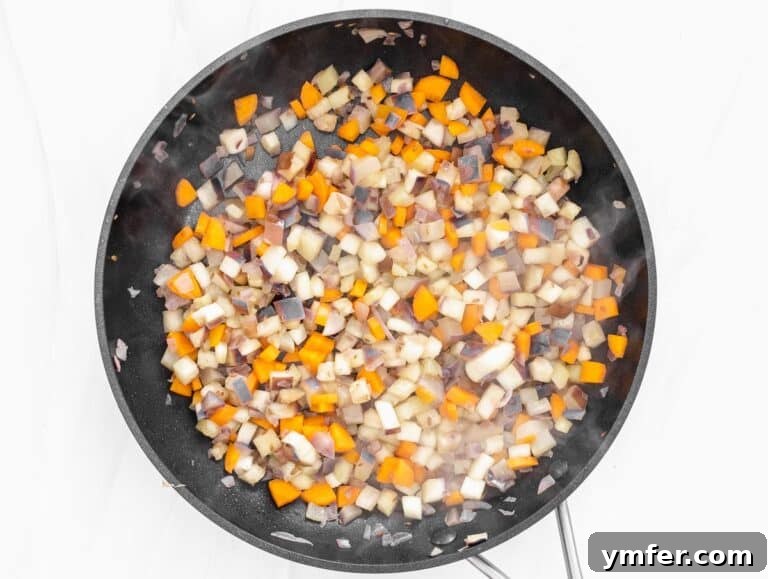
Begin by heating the **extra virgin olive oil** in a large skillet or frying pan over medium heat. Once shimmering, add the finely **chopped onion** and diced **carrot**. Sauté these for approximately 4 minutes, stirring occasionally, until the onion softens and becomes translucent, and the carrot starts to tenderize.
Next, add the **grated garlic** and ground **cumin** to the pan. Continue to sauté for just one more minute. This short burst of cooking will unlock their fragrant aromas without burning the garlic. Keep a watchful eye, as burnt garlic can turn bitter.
In the meantime, while the aromatics are cooking, dice the **eggplant** into small, uniform pieces. Add the diced eggplant to the pan along with a splash (about 3 tablespoons) of water. The water helps the eggplant cook without excessive oil and prevents sticking. Sauté on medium heat for about 5 minutes, stirring occasionally, until the eggplant begins to soften and absorb the flavors.
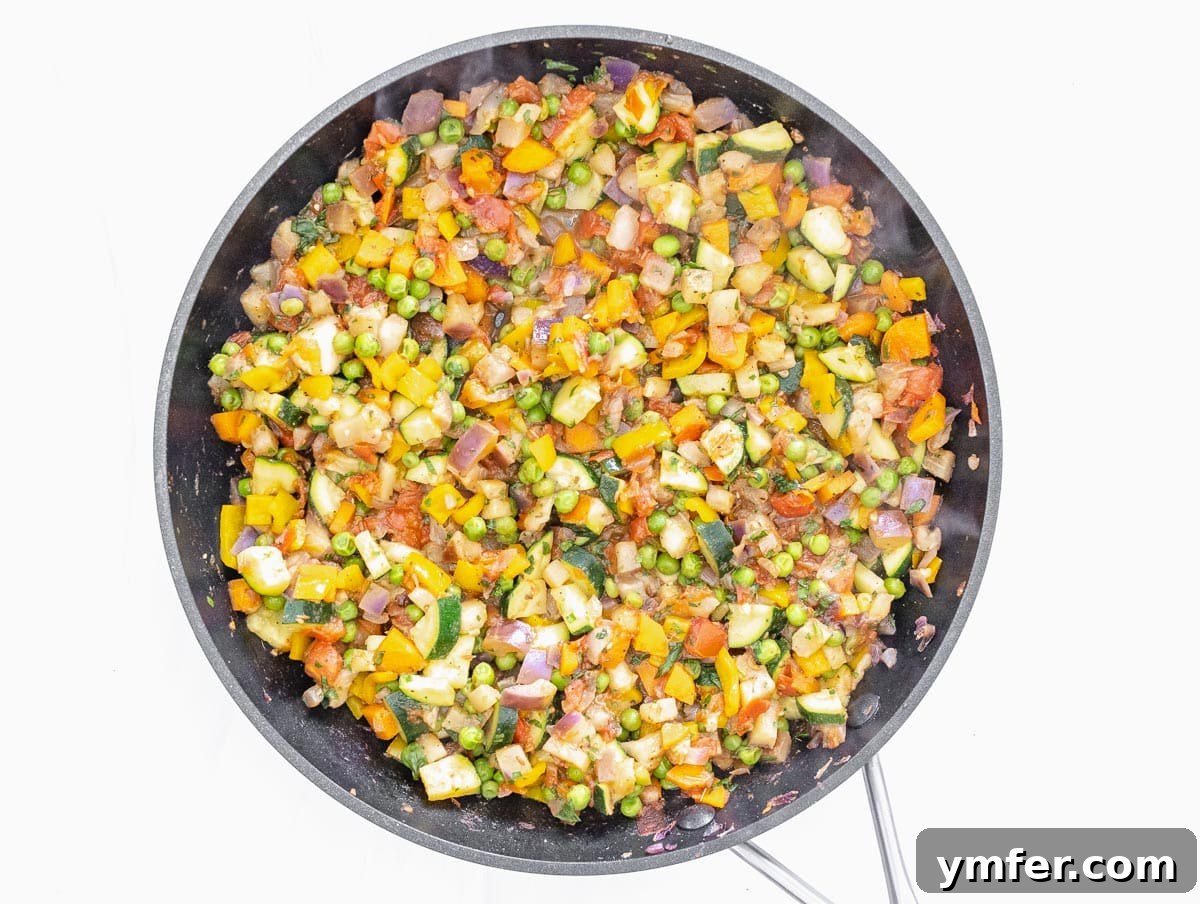
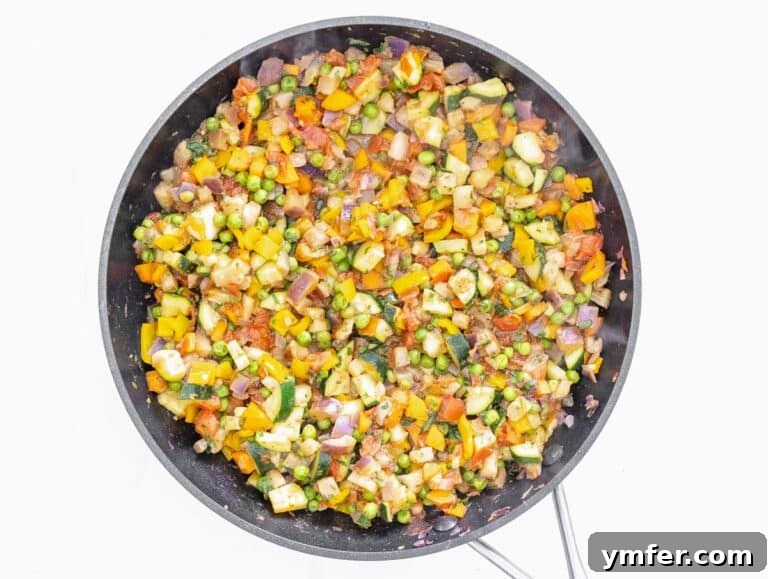
Now, chop the remaining vegetables: **bell pepper, zucchini, and ripe tomatoes** into small, consistent dice. Add these to the pan along with the **frozen peas**. Season generously with **salt, freshly ground black pepper, and dried oregano**. Continue to cook for another 10 minutes, stirring occasionally, until all the vegetables are tender-crisp – cooked through but still retaining a slight bite and their vibrant colors. Avoid overcooking to prevent them from becoming mushy.
2. Perfectly Prepare the Couscous
While your vegetables are busy sautéing and developing their flavors, turn your attention to the couscous. This step is quick and simple.
In a large mixing bowl, combine the dry **couscous** with a pinch of **salt**. If you desire a subtly warm, golden hue and an extra layer of mild earthy flavor, you can also add a tiny amount of **turmeric** at this stage (this is optional).
Pour **boiling water** (or hot vegetable broth for more flavor) over the couscous. Give it a quick stir to ensure all the grains are submerged and hydrated, then immediately cover the bowl tightly with a plate or lid. Let it stand undisturbed for precisely **5 minutes**. This allows the couscous to fully absorb the liquid and cook through steam.
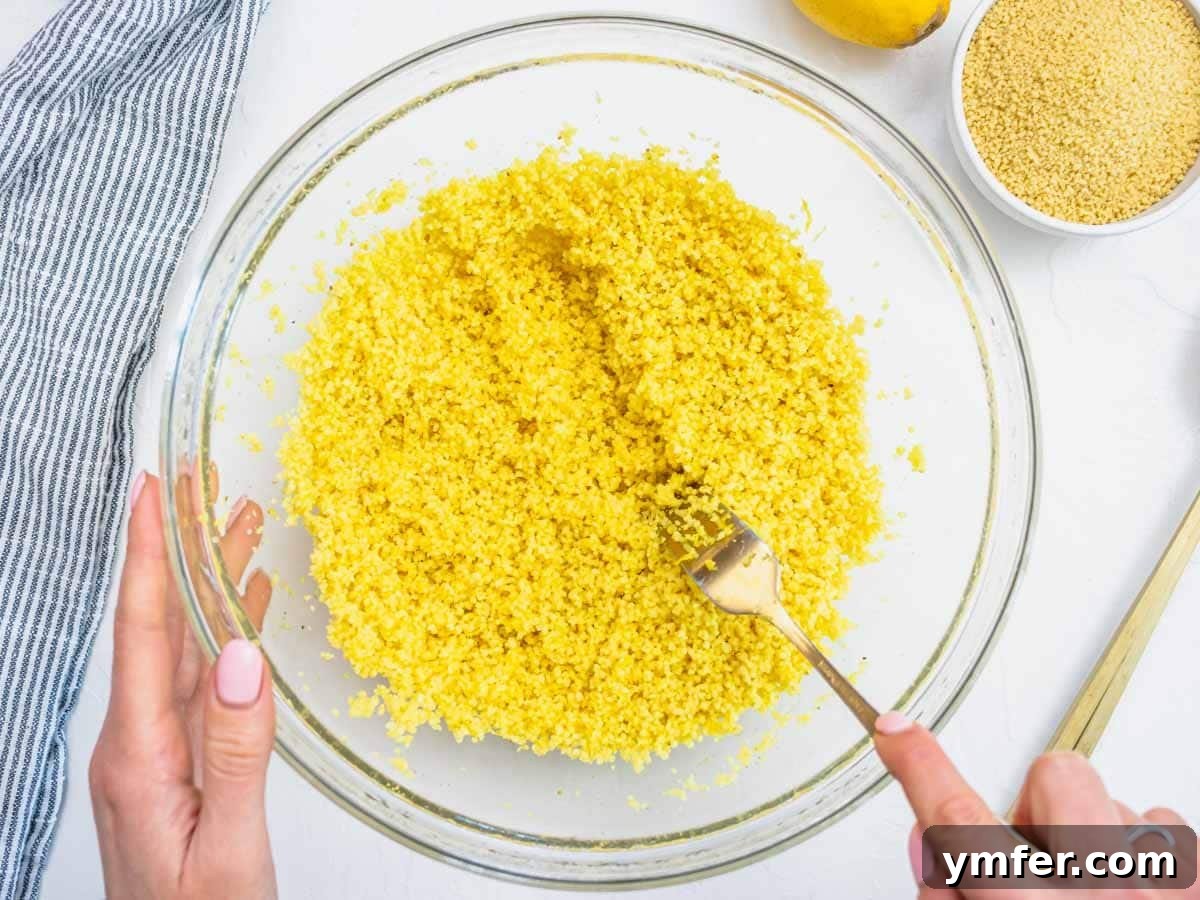
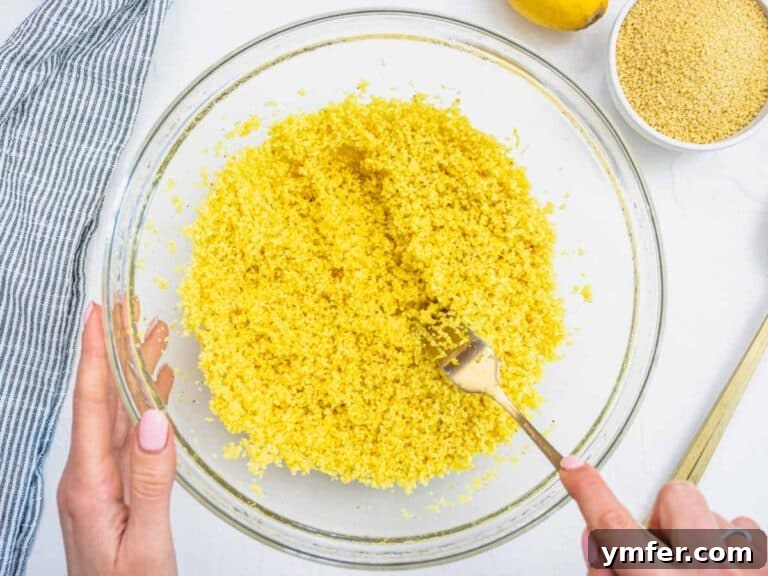
Once the 5 minutes are up and all the water has been completely absorbed, remove the cover. Using a fork, gently **fluff up the couscous**. Scrape the tines of the fork through the grains, separating them until all lumps are gone and the couscous is wonderfully soft, light, and fluffy. This step is crucial for achieving that signature airy texture.
3. Combine and Serve Your Masterpiece
Once both your aromatic vegetables are perfectly cooked and your couscous is light and fluffy, it’s time to bring everything together.
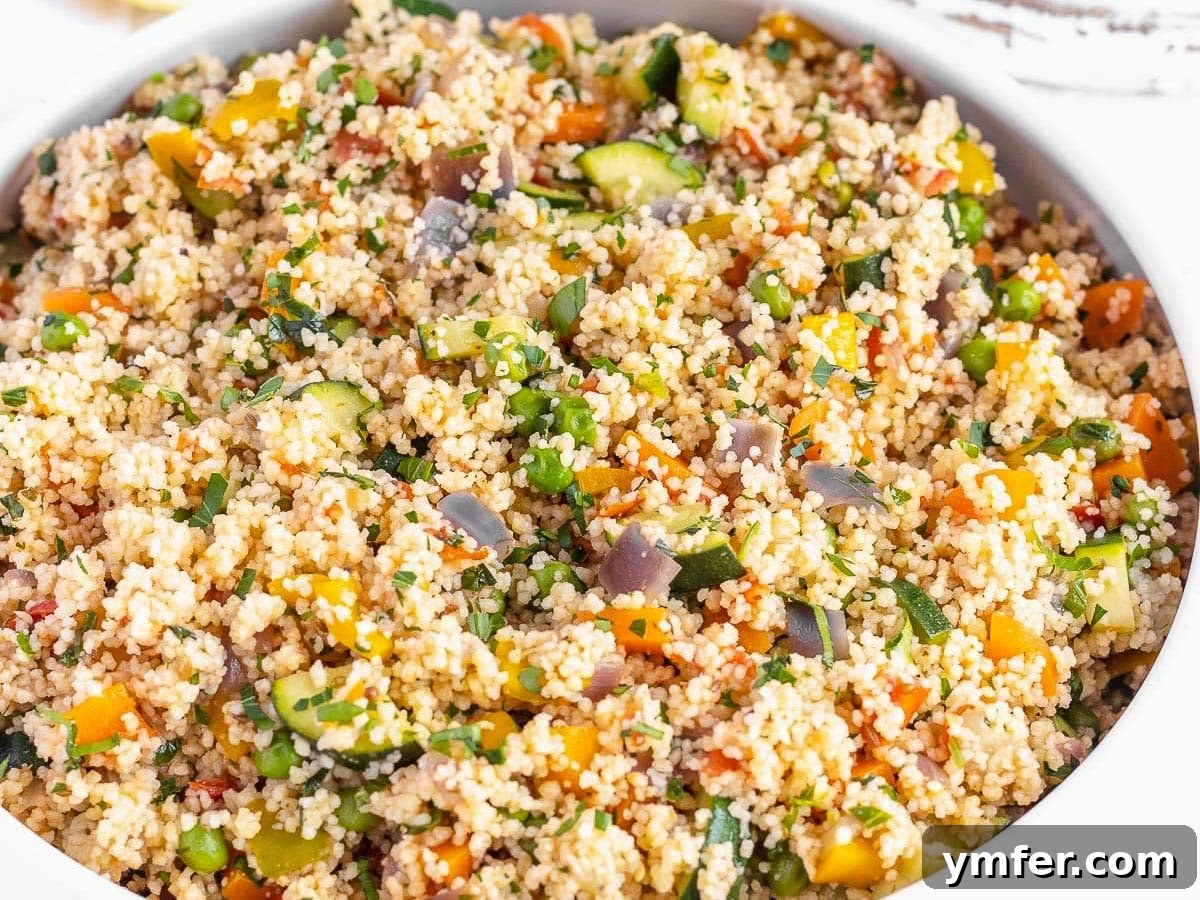
Carefully transfer the sautéed vegetables into the large bowl containing the prepared couscous. Add a generous amount of freshly chopped **flat-leaf parsley** and a good squeeze of fresh **lemon juice**. The parsley adds a burst of freshness, and the lemon brightens all the flavors, cutting through the richness of the vegetables.
Gently toss all the ingredients together until they are well combined, ensuring the couscous is evenly mixed with the vibrant vegetables and herbs. Before serving, always **taste and adjust for salt** and pepper if needed. You might also want an extra squeeze of lemon juice for brightness.
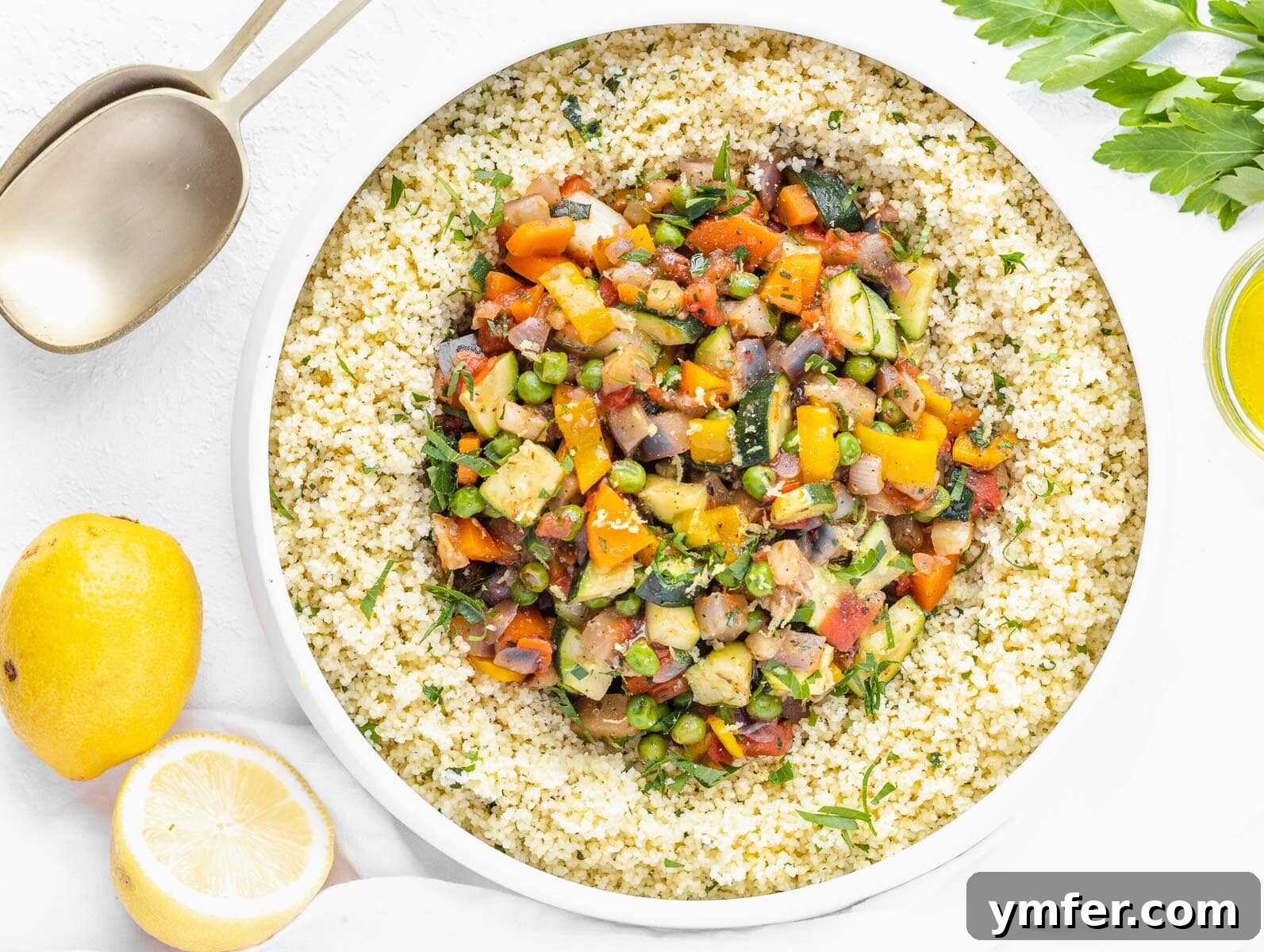
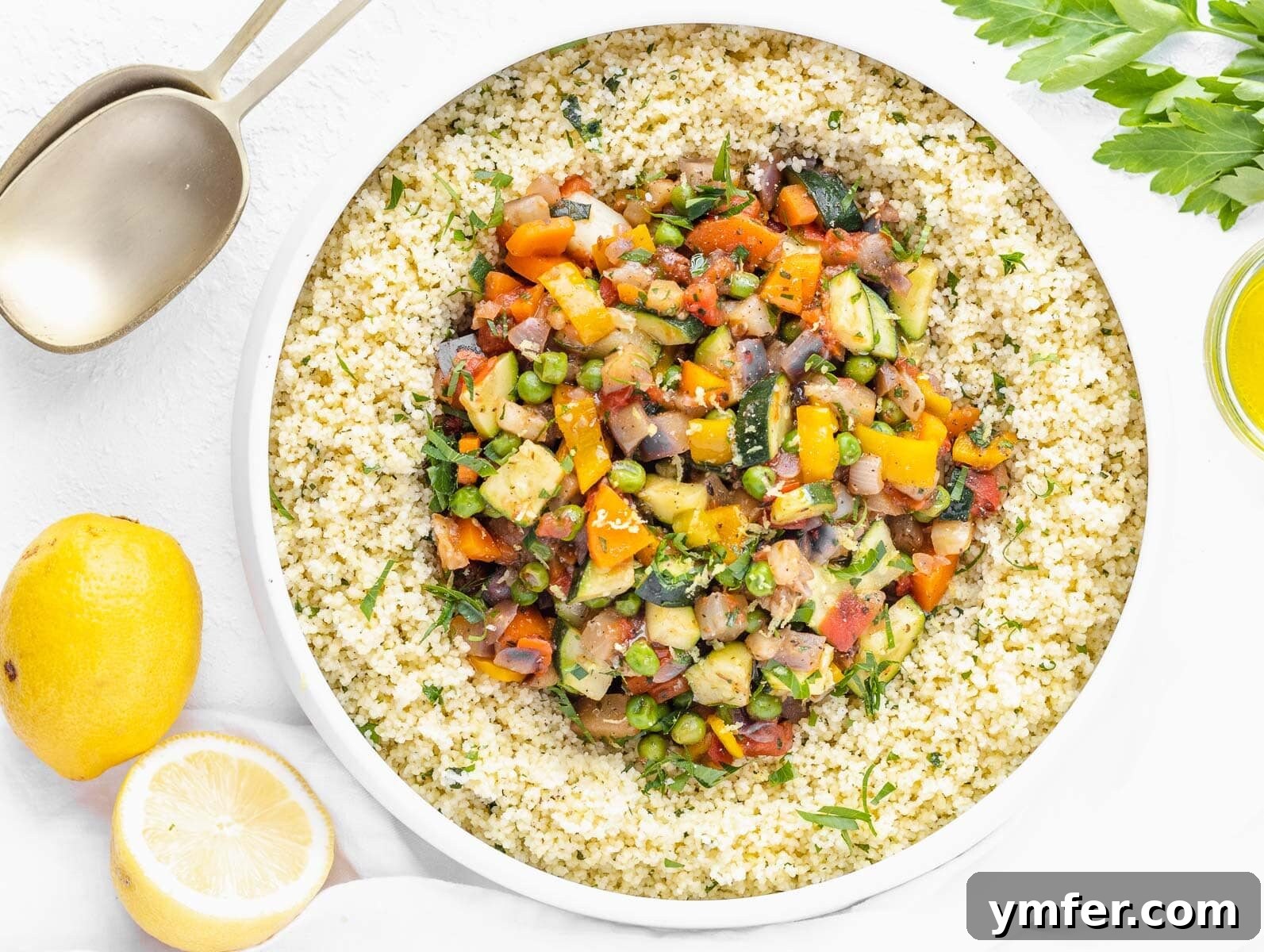
For an alternative, visually stunning presentation, arrange the plain couscous in a large serving bowl, creating a well or crater in the center. Then, spoon the cooked, vibrant vegetables into this well without mixing. This allows your guests to appreciate the individual components before combining them on their plate, offering a beautiful buffet-style option.
Serving Suggestions for Vegetable Couscous
Vegetable couscous is a truly versatile meal that adapts beautifully to various occasions and preferences. It can be enjoyed equally well **warm or cold**, making it a fantastic addition to any culinary repertoire.
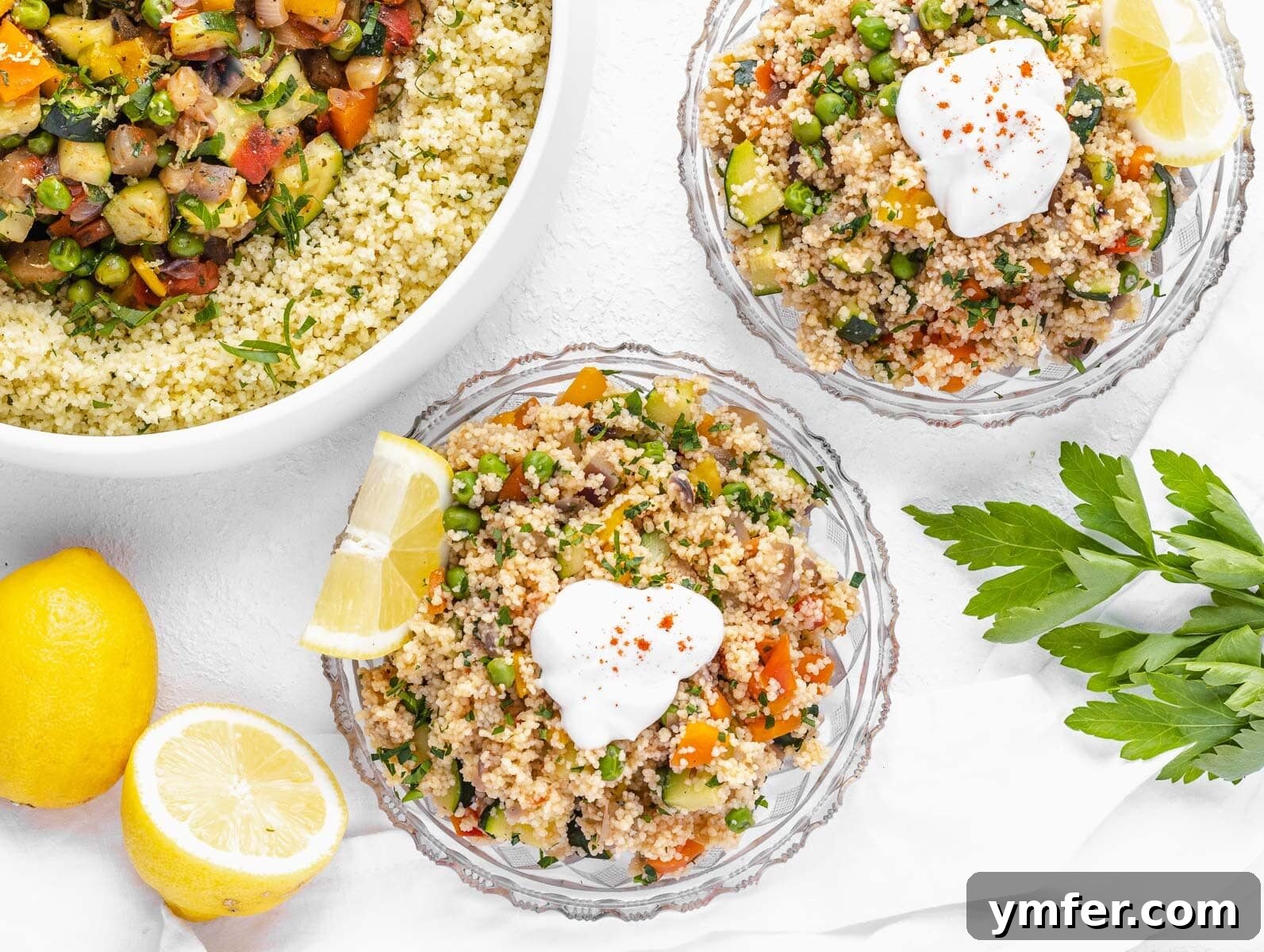
For instance, its quick preparation time makes it perfect for a spontaneous **lunch or a healthy weeknight dinner**. When served warm, a creamy accompaniment truly elevates the experience. Consider a generous **dollop of plain Greek yogurt**, our tangy yogurt tahini sauce, or the cooling freshness of tzatziki sauce. These creamy elements provide a delightful counterpoint to the savory vegetables and fluffy couscous.
One of the greatest benefits of this recipe is its suitability for **meal prep**. Because it **keeps exceptionally well in the refrigerator** for up to 3 to 4 days, you can prepare a large batch at the start of the week and have nutritious, ready-to-eat meals whenever you need them. As it sits, the couscous absorbs more of the delicious juices and spices from the vegetables, intensifying its flavor profile.
Pack it neatly into airtight containers for **lunch at work or school**, and enjoy it at room temperature for a refreshing midday meal. Alternatively, a quick warm-up in the microwave for 1 to 2 minutes will restore its warmth and aroma. This convenience makes vegetable couscous a smart choice for maintaining a healthy diet without compromising on taste or requiring extensive daily cooking.
Beyond daily meals, vegetable couscous shines as a vibrant dish for entertaining. It’s an ideal candidate for **brunch spreads, potlucks, picnics, or barbecues**, offering a wholesome, flavorful, and often plant-based option that caters to various dietary needs. Its appealing colors and fresh ingredients make it a crowd-pleaser on any buffet table, especially when paired with other beloved Mediterranean recipes such as:
- Hummus: A creamy, protein-rich chickpea dip that complements the couscous beautifully.
- White Bean Dip: Another wholesome dip, offering a different textural and flavor experience.
- Bruschetta: Fresh and tangy, these toasted bread slices with tomato topping provide a perfect contrast.
- Avocado Spread: A creamy, healthy fat-rich addition that pairs well with many Mediterranean dishes.
- Stuffed Bell Peppers: Hearty and flavorful, these can be a main course alongside the couscous.
- Stuffed Tomatoes: A classic Mediterranean dish, often filled with rice and herbs, offering another layer of flavor.
- Vegan Frittata: A light and fluffy egg-free option, great for brunch or a light meal.
- Chickpea Frittata Muffins: Portable and protein-packed, these are perfect for a grab-and-go option.
Dips and Spreads
Avocado Spread
Dips and Spreads
Hummus
Salads
Lentil Salad
Mains
Stuffed Tomatoes
Storage & Make Ahead Tips
This vegetable couscous recipe is a dream for efficient meal planning. Here’s how to store it and prepare it in advance:
Make Ahead: Vegetable couscous is an exceptional meal prep candidate. Its flavors marry and deepen over time, making it even more delicious a day or two after preparation. Feel free to make a larger batch on the weekend to enjoy throughout your busy week.
Refrigerator: To store leftovers, transfer the cooled vegetable couscous into an airtight container. It will keep beautifully in the fridge for 3 to 4 days. Ensure it’s fully cooled before sealing to prevent condensation.
Freezer: This recipe is generally not recommended for freezing. Couscous can become slightly mushy and the vegetables might lose their pleasant texture after thawing. For best quality, enjoy it fresh or refrigerated.
Reheat: You can serve vegetable couscous at room temperature – simply take it out of the fridge about 15 minutes before serving to allow it to lose its chill. If you prefer it warm, heat individual portions in the microwave for 1 to 2 minutes, or gently warm it in a skillet over low heat, adding a splash of water or broth if it seems dry.
More Mediterranean Salads to Explore
If you’ve enjoyed the fresh and vibrant flavors of this vegetable couscous, you’ll love exploring other healthy and delicious Mediterranean-inspired salads. These dishes are perfect for light lunches, side dishes, or adding to a larger buffet:
- Couscous Salad: A lighter, often cold version focusing on fresh, uncooked ingredients.
- Farro Salad: A hearty grain salad with a chewy texture, packed with vegetables.
- Lentil Salad: Protein-rich and satisfying, often featuring fresh herbs and a tangy dressing.
- Barley Salad: Another wholesome grain salad, offering a different bite and robust flavor.
- Orzo Salad: A pasta salad featuring tiny, rice-shaped pasta, often with vibrant Mediterranean ingredients.
- Pasta Salad: A classic, reinvented with fresh vegetables and a zesty plant-based dressing.
- Rice Salad: A refreshing salad showcasing various types of rice, often mixed with herbs, nuts, and dried fruit.
- Tabbouleh Salad: A fresh and herbaceous Middle Eastern staple made with finely chopped parsley, mint, tomatoes, and bulgur.
- Lentil Cauliflower Salad: A satisfying combination of roasted cauliflower and protein-packed lentils.
- Lentil Sweet Potato Salad: A comforting and hearty salad, perfect for cooler weather.
For even more inspiring ideas, take a look at our comprehensive collection of 45 best salad recipes, designed to keep your meals fresh, healthy, and exciting.
Salads
Greek Chickpea Salad
Salads
Barley Salad
Salads
Mediterranean Farro Salad
Salads
Rice Salad
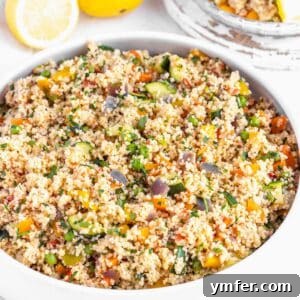
Vegetable Couscous
Nico Pallotta
Prepare this healthy and versatile dish in about 30 minutes using ingredients you already have. It’s ideal for a quick lunch or dinner, and perfect for meal prep as it tastes even better after a day or two.
15
15
30
4 people
Main Course, Salad, Starter
Italian, Mediterranean
Share
Video
Ingredients
For the Couscous
- 1 cup couscous
- 1 cup boiling water or vegetable stock
- ½ teaspoon salt + ⅛ teaspoon turmeric optional
For the Veggies
- 2 tablespoons extra virgin olive oil
- 1 medium onion chopped
- 1 large carrot cut in small pieces
- 2 cloves garlic crushed or grated
- 1 teaspoon cumin
- ½ medium eggplant chopped
- 1 zucchini chopped
- 2 ripe tomatoes chopped
- ½ bell pepper chopped
- ¾ cup frozen peas
- 1 teaspoon oregano
- 1 teaspoon salt or more to taste
- ⅛ teaspoon black pepper
- 4 tablespoons parsley chopped
- ½ squeezed lemon
Instructions
-
Heat 2 tablespoons extra virgin olive oil in a large skillet. Add 1 medium onion and 1 large carrot (chopped) and sauté on medium heat for 4 minutes.
Add 2 cloves garlic (grated) and 1 teaspoon cumin and sauté one more minute or until fragrant.
In the meantime, cut ½ medium eggplant into small dice and add it to the pan.
Add 3 tablespoons water and sauté on medium heat for 5 minutes, stirring occasionally.

-
Chop 1 zucchini, 2 ripe tomatoes, and ½ bell pepper into small dice and add them to the pan.
Add ¾ cup frozen peas, then season with 1 teaspoon oregano, 1 teaspoon salt, and ⅛ teaspoon black pepper, and cook for 10 minutes, stirring occasionally.
-
While the veggies cook, prepare the couscous.
Add 1 cup couscous, ½ teaspoon salt, and optionally ⅛ teaspoon turmeric to a large mixing bowl.
Add 1 cup boiling water, stir, then cover with a plate and set aside for 5 minutes.
When the water has been fully absorbed, fluff up the couscous with a fork, scraping it with the tips of the fork until all lumps are gone and the couscous is soft and fluffy.
-
When the veggies are cooked, add them to the bowl with couscous. Add 4 tablespoons parsley and ½ squeezed lemon, and toss well.
Taste and adjust for salt before serving.
Notes
STORAGE & MAKE AHEAD
Make ahead: Vegetable couscous is an excellent meal prep recipe. It keeps well in the fridge for days and gets more flavorful as the ingredients meld.
Refrigerator: Keep leftovers in an airtight container in the fridge for 3 to 4 days.
Freezer: This recipe is not suitable for freezing.
Reheat: Serve couscous with vegetables at room temperature by taking it out of the fridge 15 minutes before dinner, or serve it warm by heating it in the microwave for 1 to 2 minutes.
ALSO ON THIS PAGE
- What is vegetable couscous?
- Substitutions for vegetable couscous
- Serving suggestions
- More Mediterranean salads
Nutrition
Carbohydrates: 55g,
Protein: 10g,
Fat: 8g,
Saturated Fat: 1g,
Polyunsaturated Fat: 1g,
Monounsaturated Fat: 5g,
Trans Fat: 0g,
Cholesterol: 0mg,
Potassium: 566mg,
Dietary Fiber: 8g,
Sugar: 7g,
Vitamin A: 4652IU,
Vitamin B6: 0.3mg,
Vitamin C: 42mg,
Vitamin E: 2mg,
Vitamin K: 90µg,
Calcium: 71mg,
Folate: 68µg,
Iron: 2mg,
Manganese: 1mg,
Magnesium: 61mg,
Zinc: 1mg
Tried this recipe?Leave a comment below or mention @theplantbasedschool on Instagram. We love hearing from you ⭐️ 💚.
If you like this vegetable couscous, you might also enjoy:
Recipes
45 Easy Vegetarian Dinner Recipes
Mains
Mediterranean Diet Recipes
Mains
40 High Protein Vegetarian Meals
Collections
30 High Protein Vegan Meals