
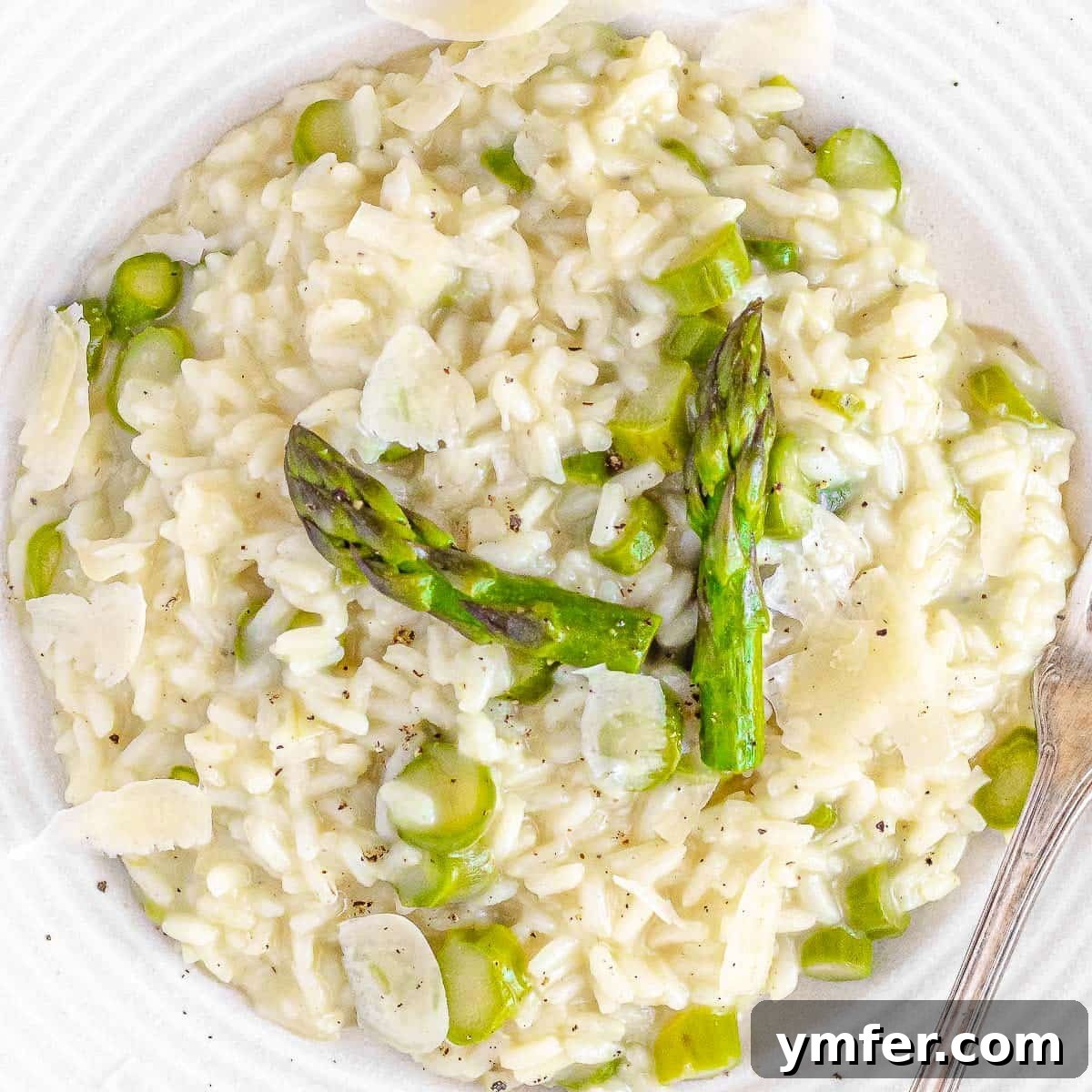
Asparagus risotto is a creamy, bright, and deeply satisfying Italian dish, perfect for an elegant dinner or a comforting family meal. This recipe promises a smooth, velvety texture and vibrant asparagus flavor that will impress everyone at your table.
Mastering risotto is simpler than you think, and with our detailed step-by-step instructions and helpful tips, you’re guaranteed a perfect, delicious result on your very first attempt.
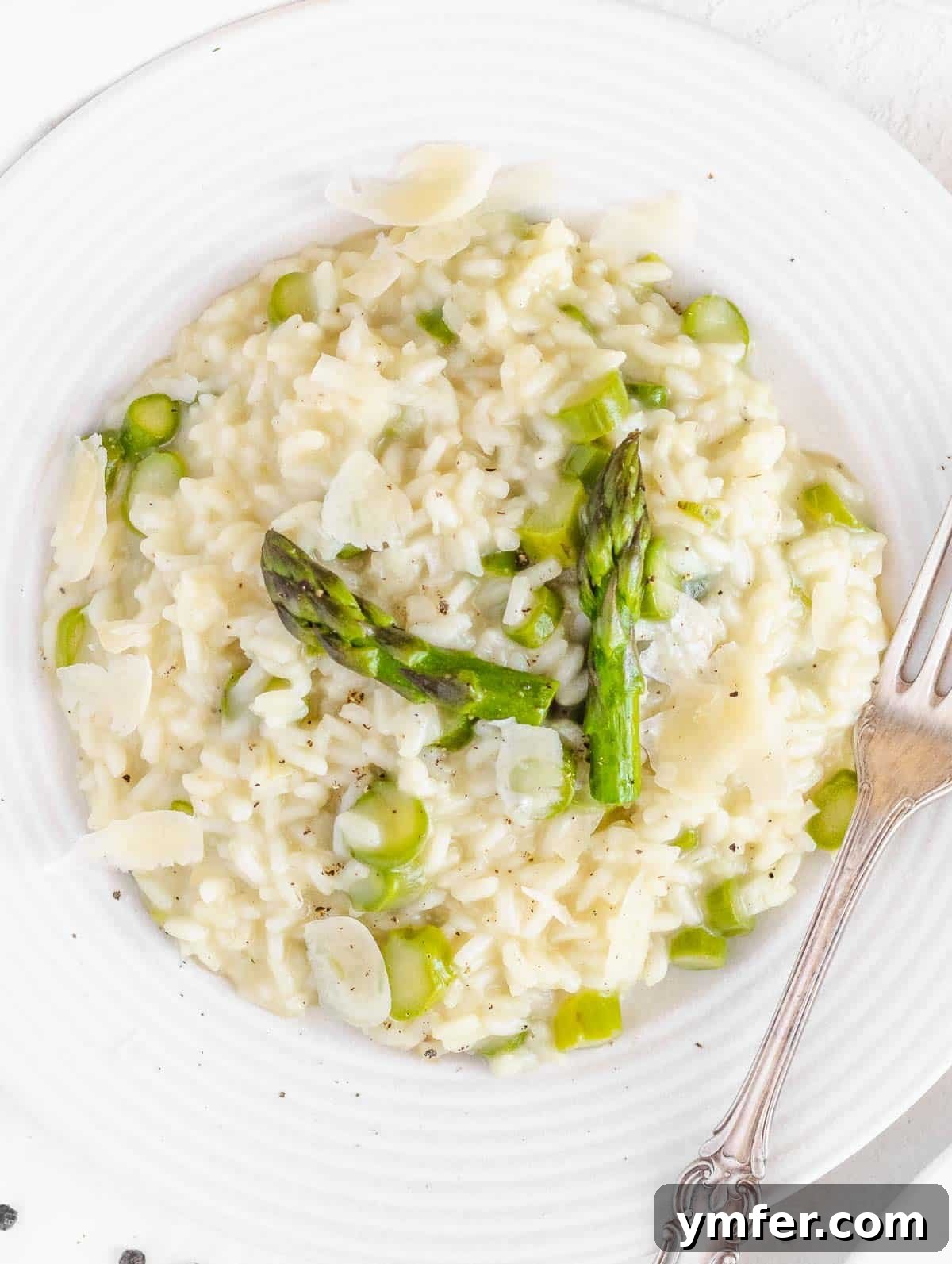
Table of Contents: Your Guide to Perfect Risotto
- The Art of Asparagus Risotto: A Culinary Journey
- Essential Ingredients: Building the Flavor Foundation
- Step-by-Step Perfection: How to Make Asparagus Risotto
- Creative Variations to Elevate Your Risotto
- Serving Suggestions: Complement Your Dish
- Pro Tips for Success & Storage
- Explore More Risotto Recipes
- Delight in More Asparagus Dishes
- Asparagus Risotto Recipe Card
The Art of Asparagus Risotto: A Culinary Journey
Asparagus risotto stands as a testament to Italian culinary elegance—a comforting and sophisticated dish that delights the senses. It’s a perfect choice for both intimate family dinners and special celebratory occasions, blending creamy indulgence with the fresh, verdant taste of spring asparagus.
This dish is universally loved, appealing to children and adults alike with its rich, cheesy goodness and satisfying texture. As a superb vegetarian recipe, it effortlessly wins over even the most dedicated meat-eaters, often leading to requests for second helpings. Furthermore, with a few simple dairy-free adjustments, it can easily be transformed to accommodate vegan guests, ensuring everyone can enjoy its deliciousness.
From start to finish, you’ll invest approximately 45 minutes in crafting this masterpiece. By meticulously following our clear, step-by-step instructions, you’ll not only find the process enjoyable but also achieve a consistently delicious outcome every single time. Having personally perfected countless risottos since childhood, I’m thrilled to share the culmination of years of cooking experience and passion for this wonderful Italian classic with you.
Essential Ingredients: Building the Flavor Foundation
Risotto Rice: The Heart of the Dish
The secret to an authentic, creamy risotto lies in using the right rice. Risotto rice is a specific medium-to-short grain variety, characterized by its high starch content. This starch is crucial because it slowly releases during cooking, creating that signature creamy texture without requiring additional cream. The most common and highly recommended varieties include Arborio, Carnaroli, Vialone Nano, and Roma.
If these specific types are unavailable, look for generic “risotto rice” at your local grocery store. A key point: never wash risotto rice before cooking! Rinsing will remove the precious surface starch, which is essential for achieving the desired creamy consistency.
Fresh Asparagus: Vibrant and Flavorful
For the best flavor and texture, we highly recommend using fresh asparagus, especially when it’s in season. Its crisp texture and subtly sweet, earthy notes are truly exceptional in this dish. When selecting asparagus, look for firm, bright green spears with tight tips. If fresh asparagus isn’t available, high-quality frozen asparagus can be a suitable substitute. Ensure it’s thawed and patted dry before use to prevent excess water from diluting your risotto’s flavor and texture. Asparagus is also a good source of vitamins K, A, C, and folate, adding a healthy boost to your meal.
Garlic & Shallots: The Aromatic Base (Soffritto)
A good risotto begins with a flavorful aromatic base, known in Italian cuisine as soffritto. We use garlic to perfectly complement the asparagus, creating a delicious flavor pairing that’s both robust and delicate. Finely chopped shallots are gently sautéed in olive oil, providing a sweet, mild onion flavor that forms the backbone of the risotto. This combination lays a complex, savory foundation for the entire dish. If shallots are hard to find, a small white or yellow onion, finely diced, makes an excellent substitute.
Premium Olive Oil: For Richness and Aroma
A good quality extra virgin olive oil is indispensable for building the initial flavor base (soffritto). It imparts a fruity, grassy, and slightly peppery note that enriches the overall taste of the risotto. We also use olive oil to lightly sauté the asparagus, enhancing its natural flavors and giving it a beautiful sheen. Investing in a good quality olive oil truly makes a difference in the final taste of your Italian dishes.
Dry White Wine: The Deglazing Secret
Dry white wine plays a vital role in deglazing the pan after the rice has been toasted. This step adds a crucial layer of acidity, which brightens the flavors, prevents the risotto from tasting flat, and contributes to the complexity of the dish. The alcohol evaporates, leaving behind only its nuanced flavor. Choose a crisp, dry white wine like Pinot Grigio or Sauvignon Blanc—one you enjoy drinking, as its flavor will concentrate in the risotto. If you prefer to avoid alcohol, an equal amount of vegetable stock can be used in its place without compromising the texture, though the flavor profile will be slightly different.
Hot Vegetable Broth: The Key to Creaminess
The cooking liquid for risotto is vegetable broth, and its temperature is paramount. It’s crucial that the broth is kept hot, simmering gently in a separate pot or saucepan throughout the entire cooking process. Adding cold broth would shock the rice, interrupting its cooking, causing the starch to seize, and potentially leading to an uneven texture. To infuse your risotto with even deeper asparagus flavor, consider adding the woody ends of the asparagus to your broth as it simmers; strain them out before adding the broth to the rice. A general rule of thumb is to use approximately 4 cups of vegetable stock for every 1 cup of risotto rice, though you might need slightly more or less depending on the specific rice variety and your heat management.
While this recipe is designed to be vegetarian, chicken broth can be substituted if dietary preferences allow, although we find vegetable broth provides a cleaner backdrop for the delicate asparagus to shine, making it truly vegetarian-friendly.
Salt & Freshly Ground Black Pepper: Essential Seasoning
For optimal flavor and a professional touch, use good quality sea salt or kosher salt and freshly ground black pepper. The difference fresh pepper makes is remarkable. It’s important to note that you should not add much salt at the beginning, as commercial vegetable broths often contain varying amounts of sodium. Always taste your risotto and adjust the seasoning towards the end of the cooking process to achieve perfect balance and ensure it’s not overly salty.
Butter: The Velvety Finish (Mantecatura)
Unsalted European-style butter is traditionally used at the very end to achieve the characteristic “mantecatura” – the final emulsification that gives risotto its luxurious, velvety texture and glossy sheen. The cold butter emulsifies with the starch and remaining liquid, creating an irresistible richness. For a vegan version, simply substitute with a high-quality vegan butter alternative or a drizzle of extra virgin olive oil to achieve a similar luscious consistency and mouthfeel.
Parmesan Cheese: Umami Richness
For unparalleled depth of flavor, opt for authentic Italian hard cheeses like “Parmigiano Reggiano” or “Grana Padano.” These mature cheeses are aged for months, developing a complex, nutty, and salty (umami) flavor that is difficult to replicate with other cheeses. They are naturally lactose-free and impart a profound savory note that is integral to a classic risotto finish. If you wish to keep your asparagus risotto vegan, there are excellent vegan parmesan alternatives available, or you can add a couple of tablespoons of nutritional yeast for a cheesy, umami boost, enhancing the savory profile without dairy.
Step-by-Step Perfection: How to Make Asparagus Risotto
1. Prepare and Sauté the Asparagus
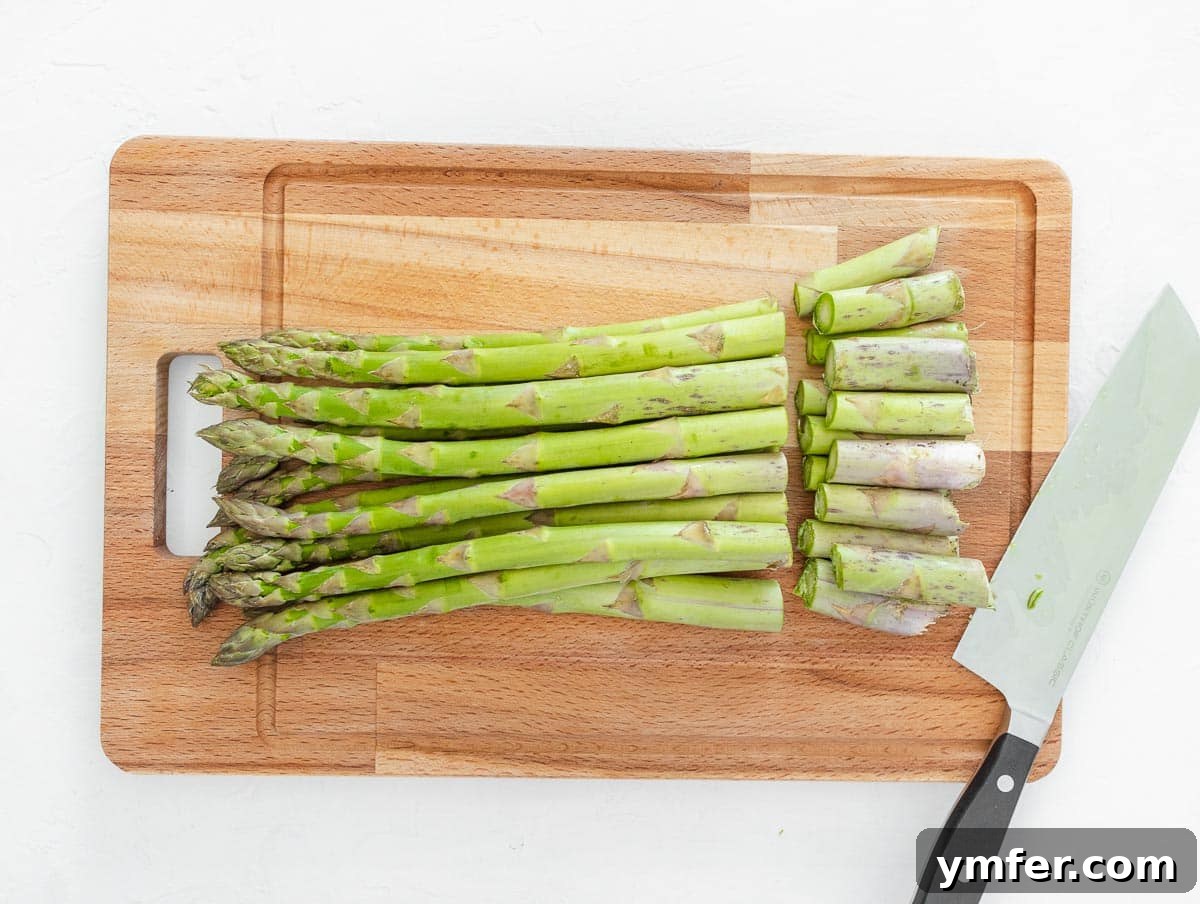
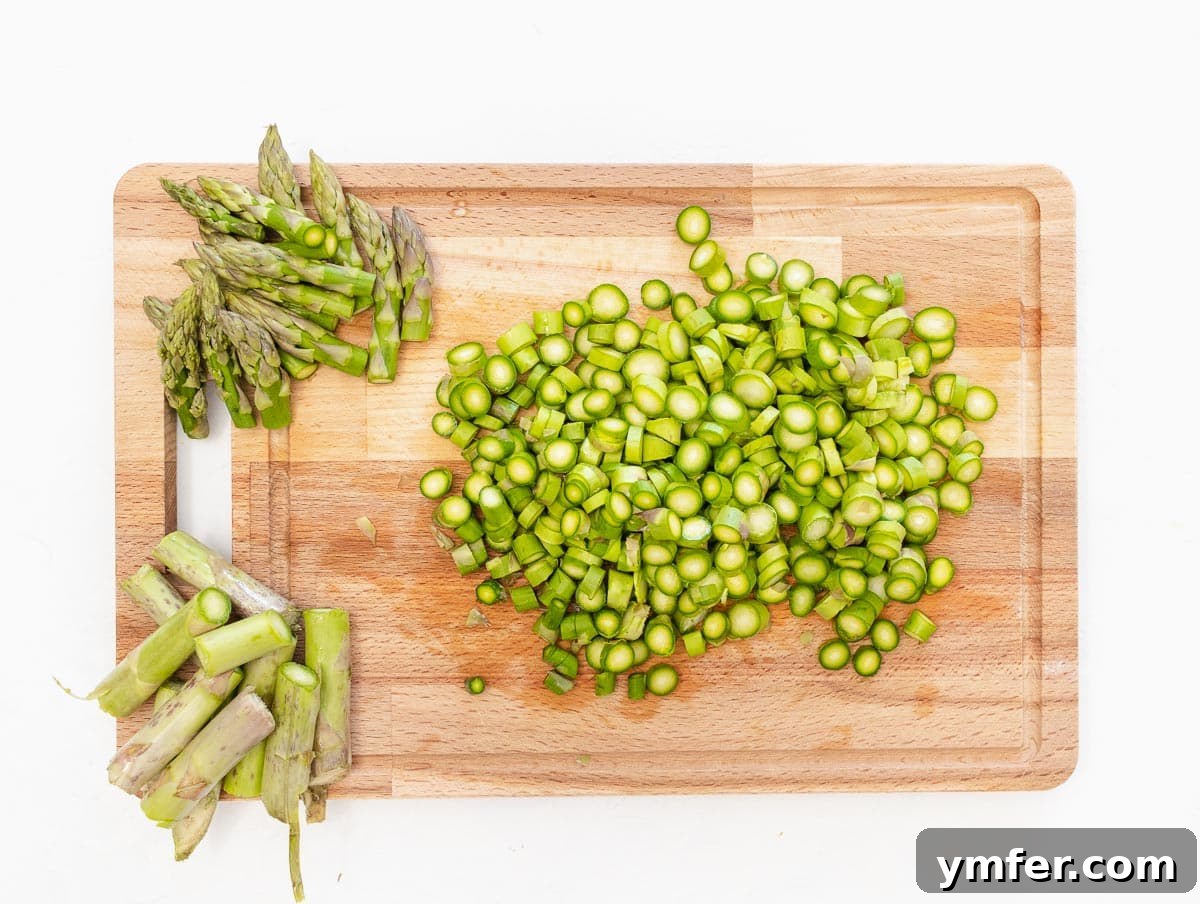
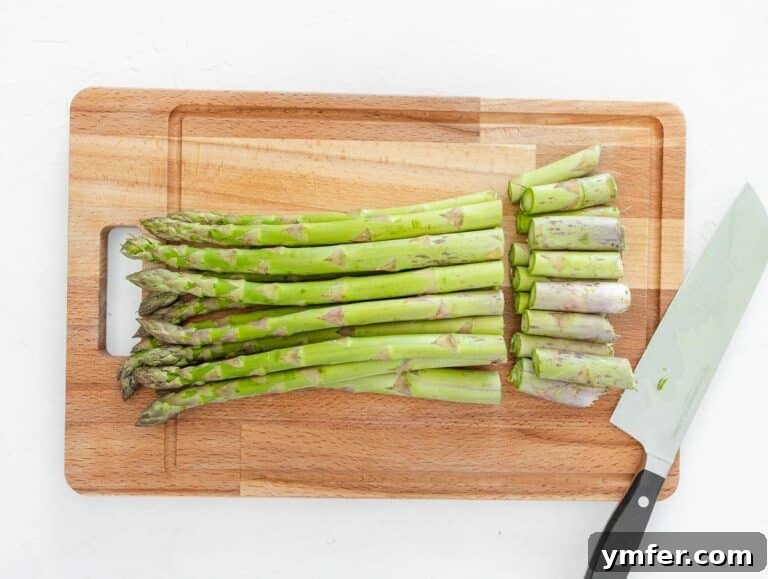
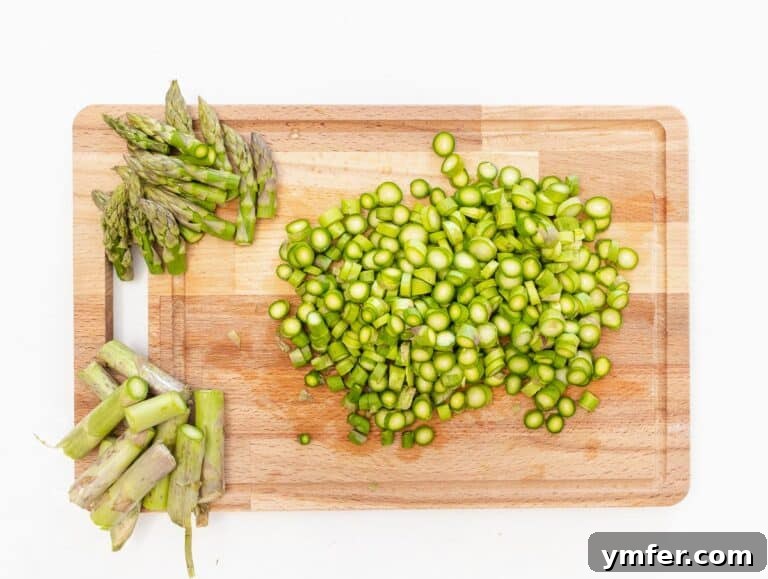
Begin by preparing your asparagus. Hold each stalk firmly and snap off the woody ends—they will naturally break at their tender point. These woody ends are fibrous and not pleasant to eat, but they are full of flavor! Set these trimmings aside; they’ll be used later to enhance your vegetable broth. Next, thinly slice the tender asparagus stalks into small disks, but reserve the delicate asparagus tips whole. Keeping the tips intact not only adds visual appeal but also provides a delightful textural contrast in the final dish.
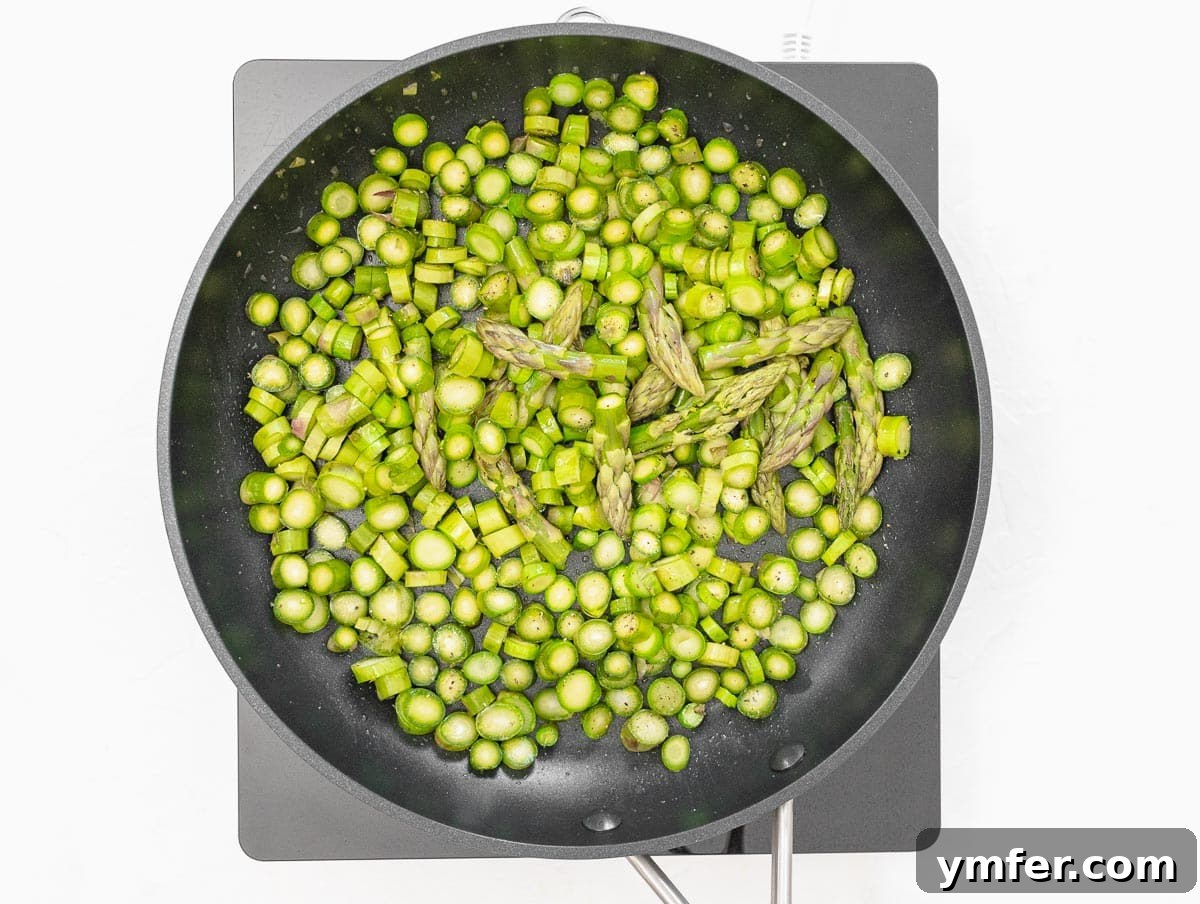
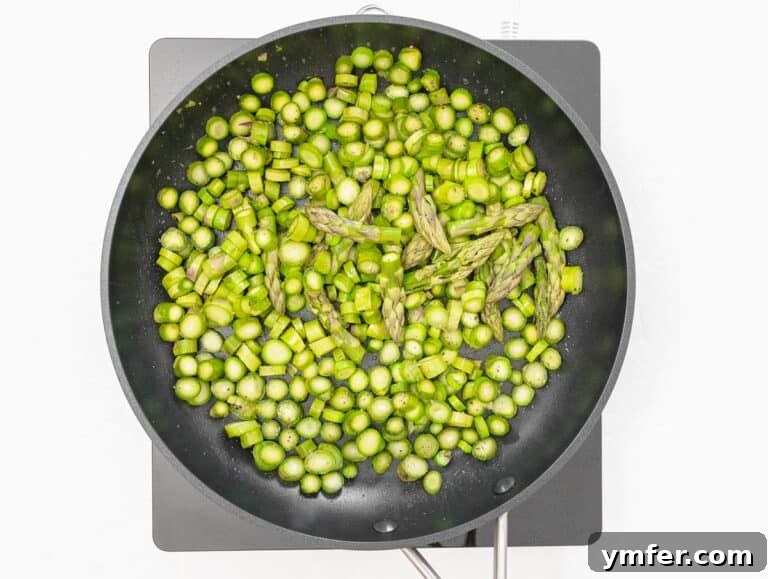
Heat one tablespoon of extra virgin olive oil in a non-stick pan or large skillet over medium heat. Add the sliced asparagus and whole tips (excluding the woody ends), a crushed garlic clove, ½ teaspoon of salt, and a few twists of freshly ground black pepper. Sauté the asparagus for approximately 5 minutes, stirring occasionally, until it is tender-crisp but not fully cooked. It should still have a slight bite, as it will continue to cook and soften in the risotto. This partial cooking ensures the asparagus retains its vibrant color and fresh flavor. Once ready, remove the asparagus from the pan and set it aside in a bowl.
2. Prepare Your Hot Vegetable Broth
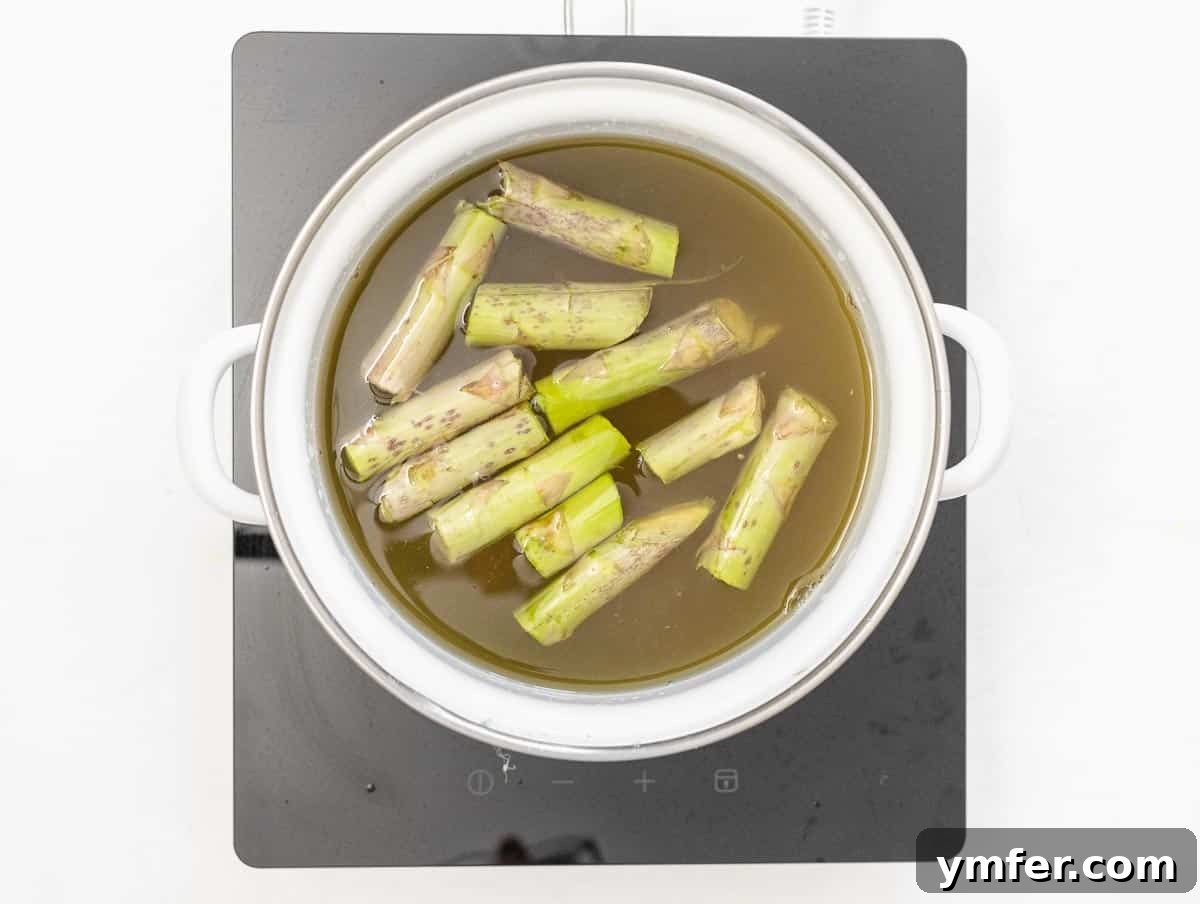
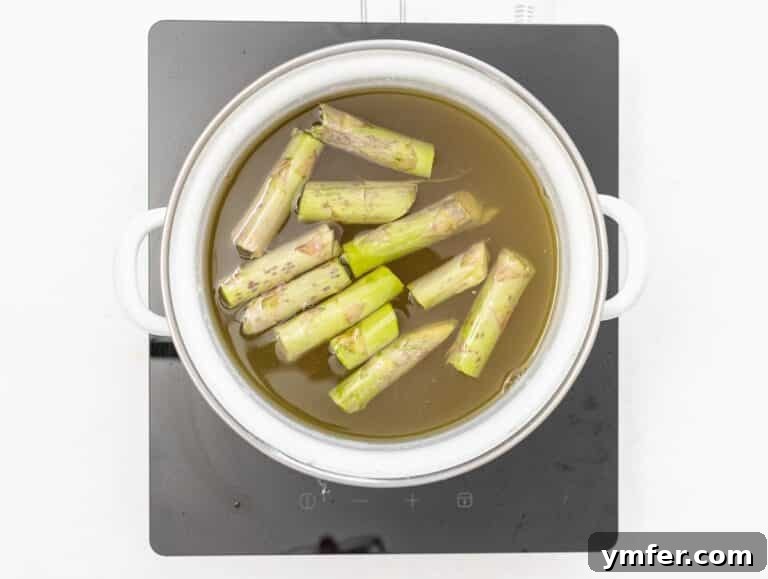
In a separate medium-sized pot or saucepan, combine your store-bought or homemade vegetable stock with the reserved woody ends of the asparagus. This simple step will subtly infuse your broth with an even deeper asparagus flavor, enhancing the overall taste of your risotto. Bring the broth to a gentle simmer over low heat and keep it consistently hot throughout the entire risotto cooking process. Before adding the broth to the rice, remove and discard the woody asparagus ends. This constant heat is crucial; adding cold broth would drastically lower the temperature of your risotto, interrupting its cooking, preventing proper starch release, and potentially leading to an uneven, gluey texture.
3. Craft the Risotto Base (Soffritto & Toasting Rice)
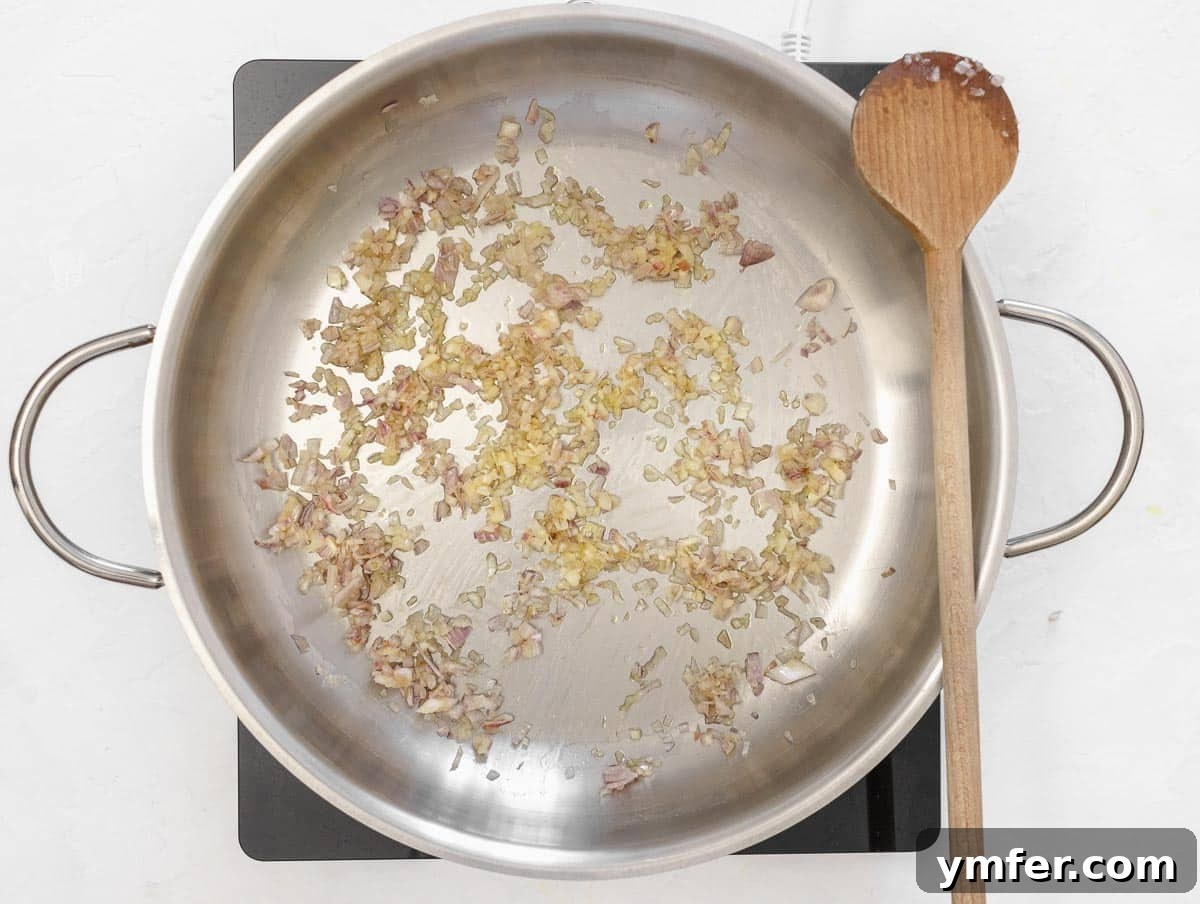
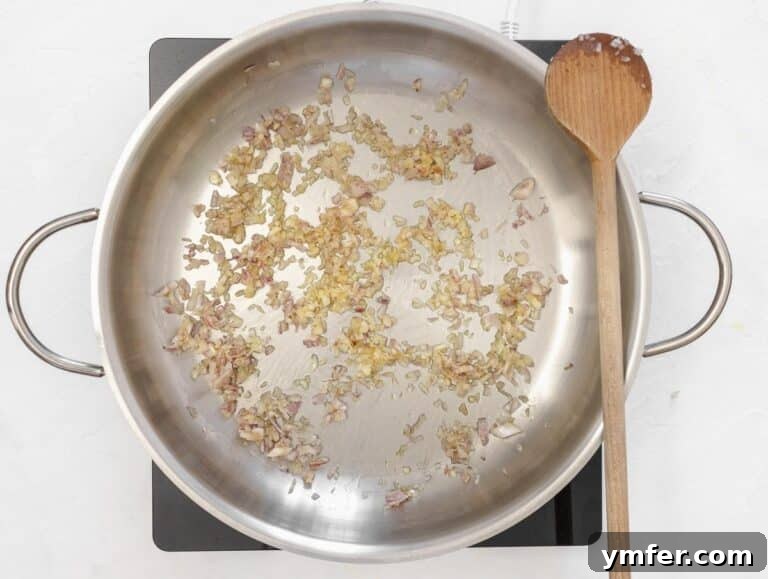
In the same large, heavy-bottomed skillet or Dutch oven (the one used for asparagus, if suitable, or a fresh one), add one tablespoon of extra virgin olive oil and set the heat to medium. Once the oil is shimmering and warm, add the finely chopped shallot. Sauté the shallot for about 2 minutes, stirring frequently, until it becomes translucent and fragrant, but not browned. This initial aromatic base, the soffritto, is essential for building depth of flavor in your risotto.
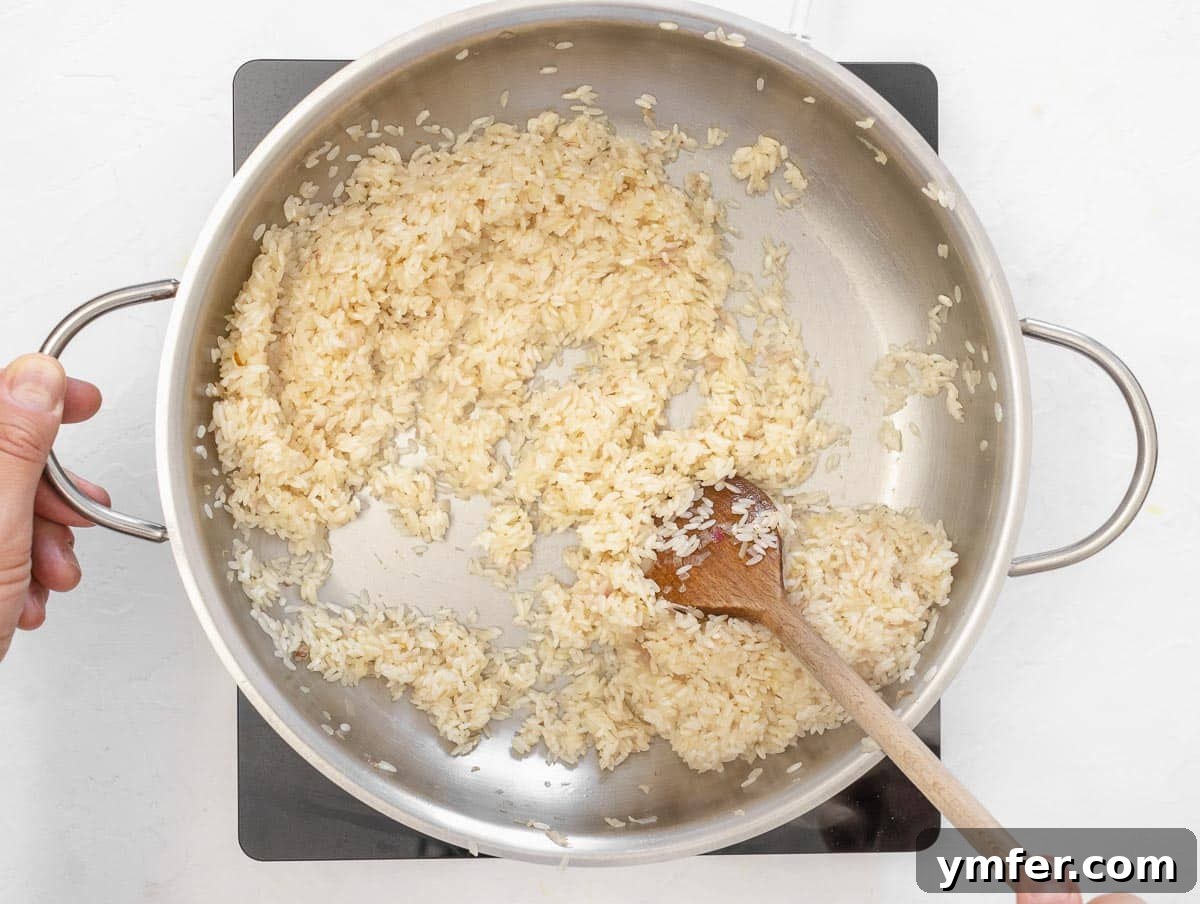
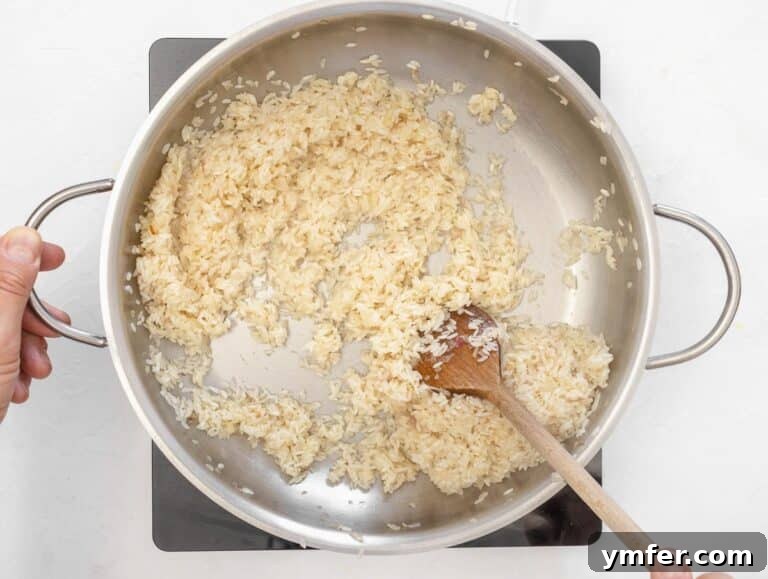
Now, add the risotto rice to the pan. Toast the rice for about 1 minute, stirring continuously with a wooden spoon. This crucial step, known as tostatura, slightly toasts the exterior of each grain, helping it hold its shape and ensuring even cooking without becoming mushy. Remember, do NOT rinse the risotto rice before this step, as you want to preserve its natural starch content. Next, pour in the dry white wine. Continue stirring until the wine is completely evaporated and its pungent alcohol aroma has cooked off, deglazing the pan and infusing the rice with its delicate acidity.
4. Gradually Add Broth and Cook the Rice
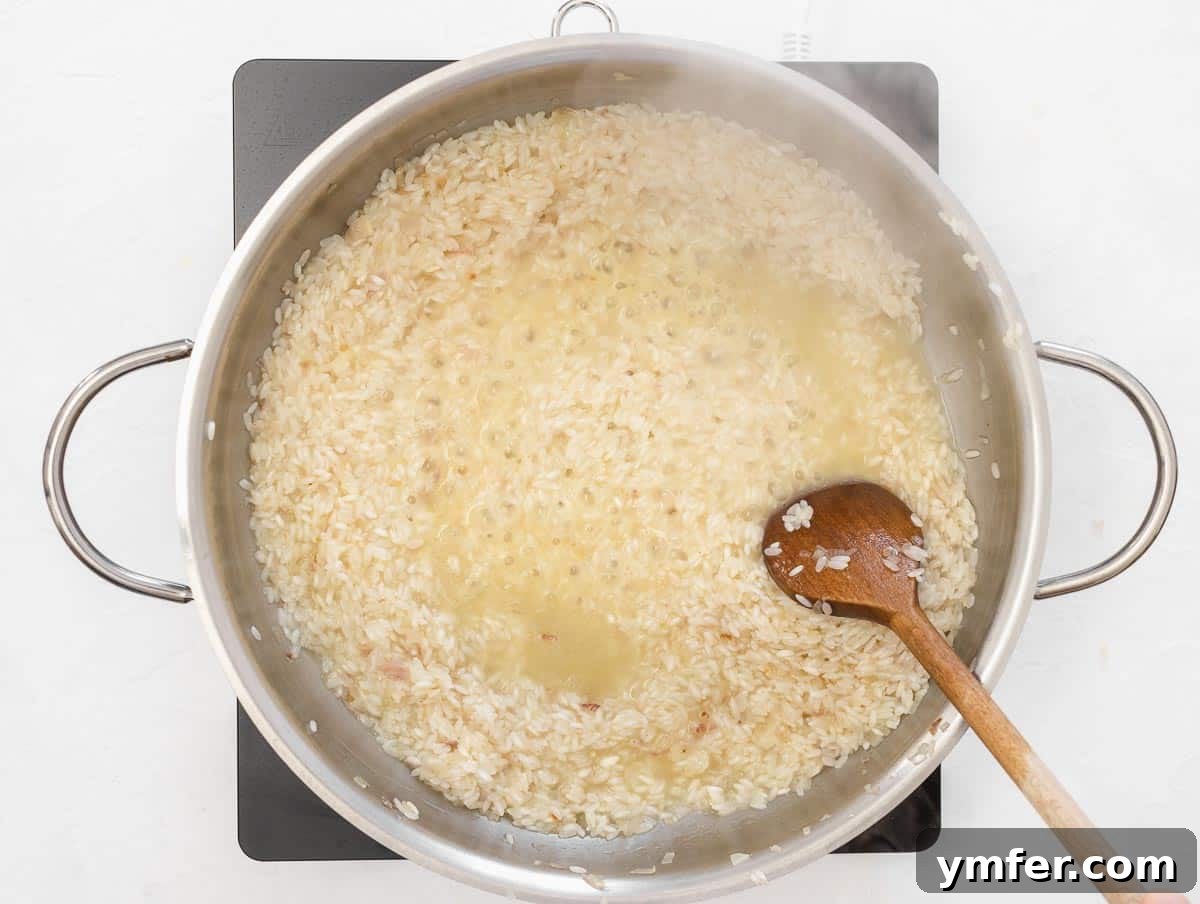
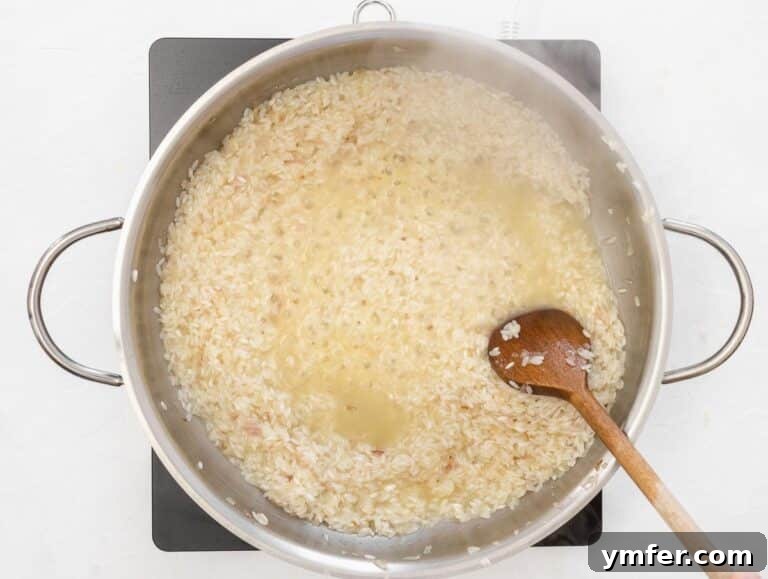
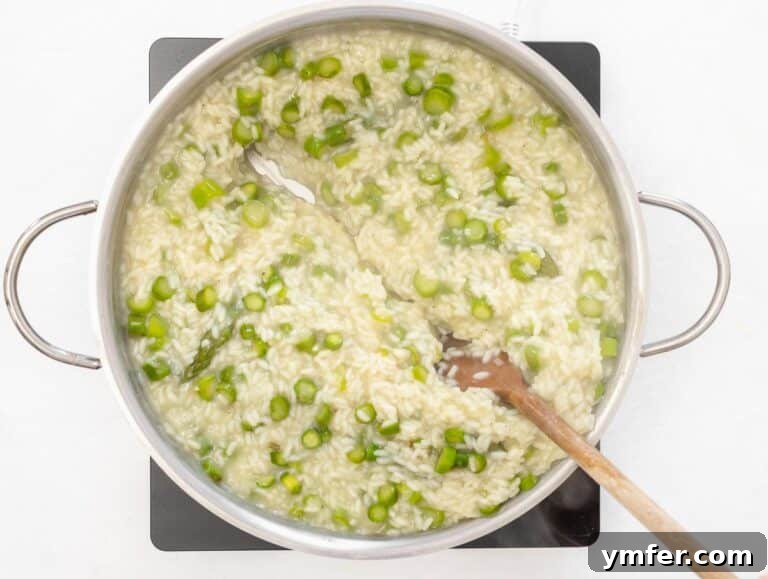
Once the wine has completely evaporated, it’s time to start adding the hot vegetable broth. Add two ladlefuls of hot broth to the rice, stirring gently but almost continuously. The constant stirring helps to release the starch from the rice grains, which is what creates the risotto’s signature creamy texture. As the liquid is absorbed and the pan begins to dry up (but before it’s completely dry and sticking), add two more ladlefuls of hot broth, continuing to stir. This gradual addition and constant agitation are fundamental to achieving a perfectly cooked risotto.
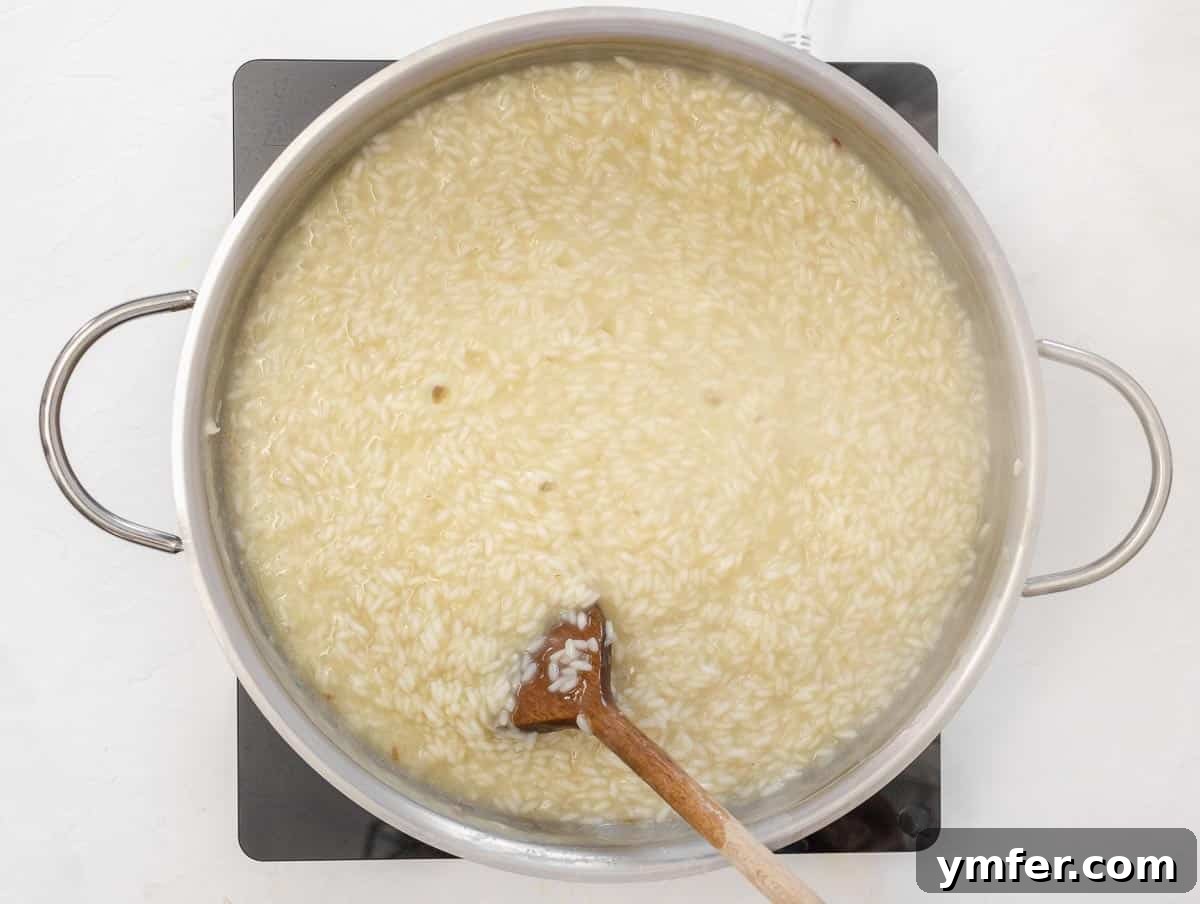
Repeat this process for approximately 12 minutes, consistently stirring and adding broth as needed. The rice should always be submerged in liquid, but avoid drowning it; small, controlled additions allow for better management of the texture and ensure even cooking. Maintain a medium heat to ensure a steady, gentle simmer that encourages starch release without overcooking the rice. Ensure the rice never sticks to the bottom of the pan – this is where your continuous stirring comes in handy!
5. Incorporate the Asparagus and Finish Cooking the Rice
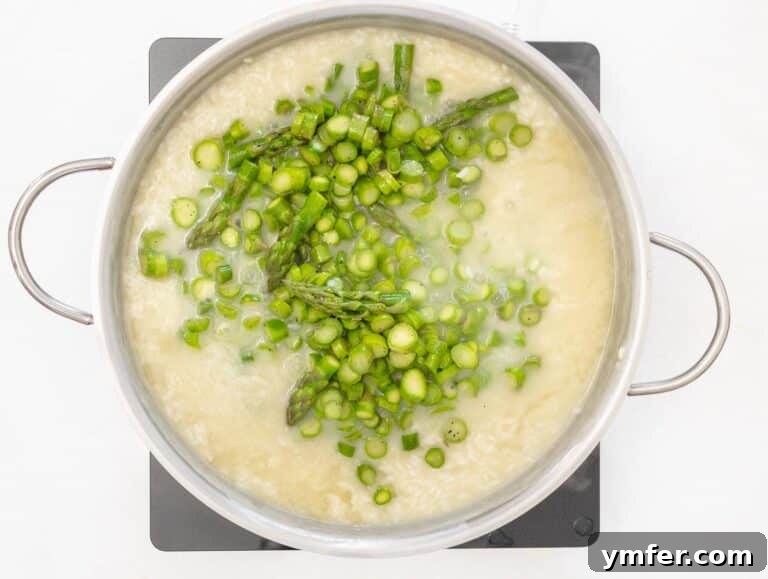
After the initial 12 minutes of cooking the rice, add the pre-sautéed asparagus (both disks and tips) to the rice. Continue stirring and adding hot vegetable stock as before. The asparagus will finish cooking in the risotto, absorbing its rich flavors and becoming perfectly tender-crisp, adding a wonderful freshness to each bite. This stage should take approximately 5 more minutes.
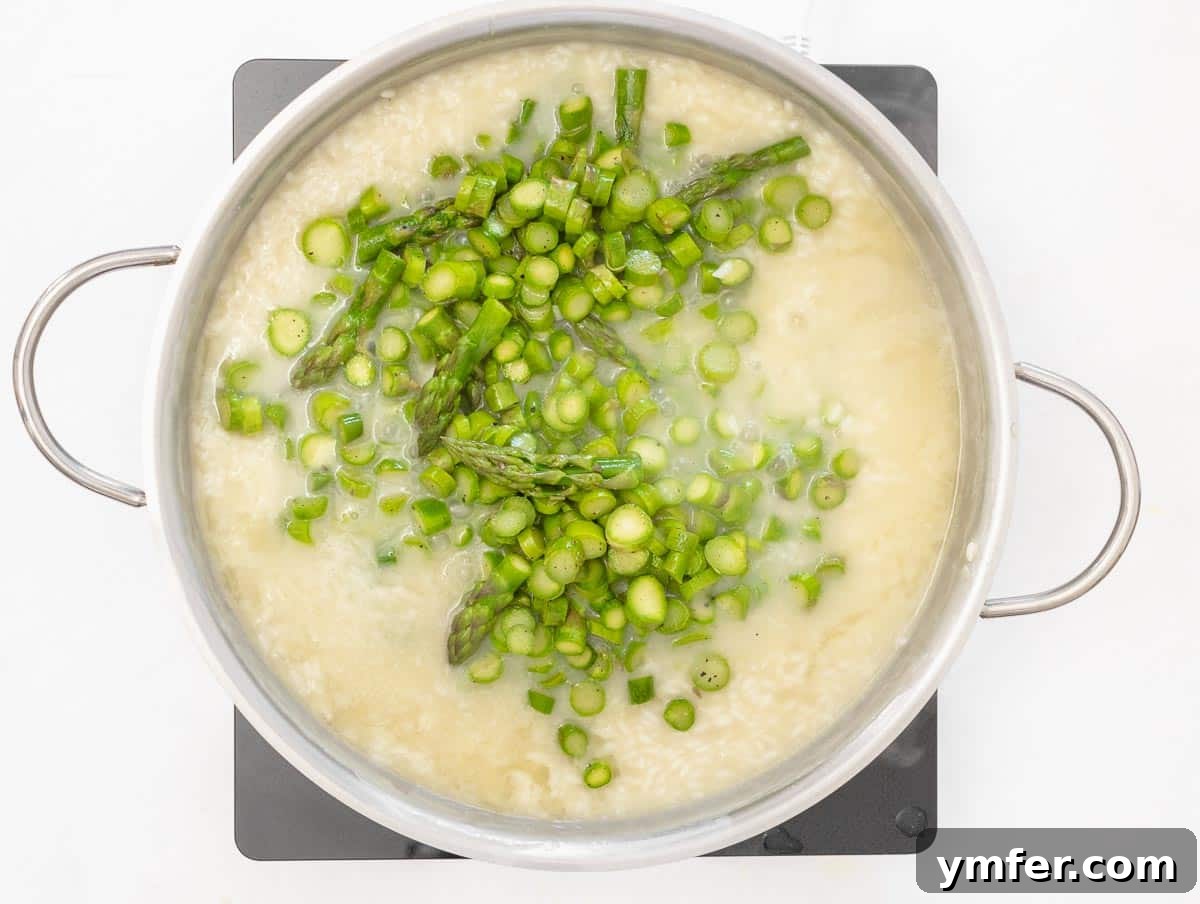
The total cooking time for risotto typically ranges between 16 and 18 minutes from the moment you add the first ladle of broth. Begin tasting the rice frequently from the 15-minute mark. When properly cooked, the rice should be al dente – meaning you should feel a slight resistance, a “heart” or firm core, in the center of the grain when you bite into it. It should not be mushy or excessively soft. At this crucial point, taste the risotto and adjust for salt and pepper as necessary, ensuring a well-balanced flavor profile that highlights the asparagus.
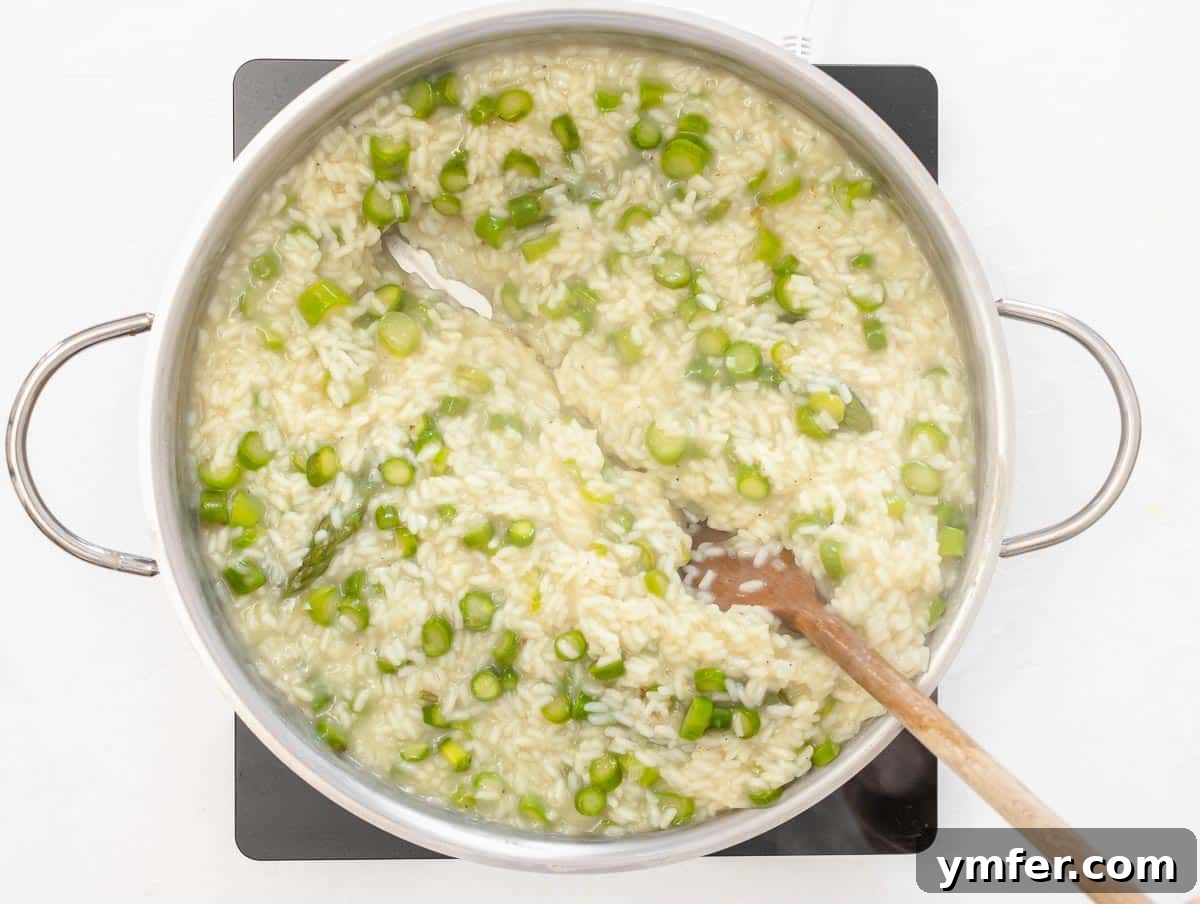
6. The Final Creamy Finish (Mantecatura)
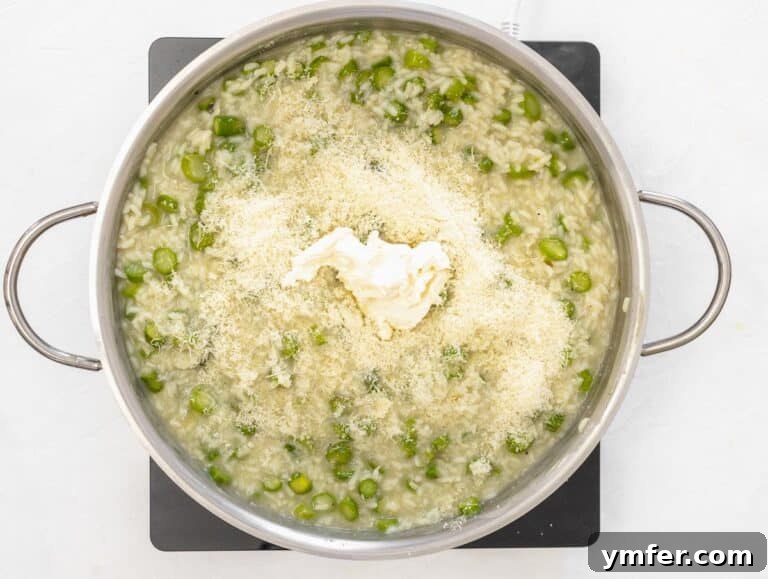
Once the risotto has reached the perfect al dente texture and most of the last ladleful of broth has been absorbed, turn off the heat. This is the stage for mantecatura, a crucial Italian technique for achieving ultimate creaminess and gloss. Add the cold butter (or vegan butter) and generous amounts of freshly grated Parmesan cheese (or your chosen vegan alternative) to the risotto.
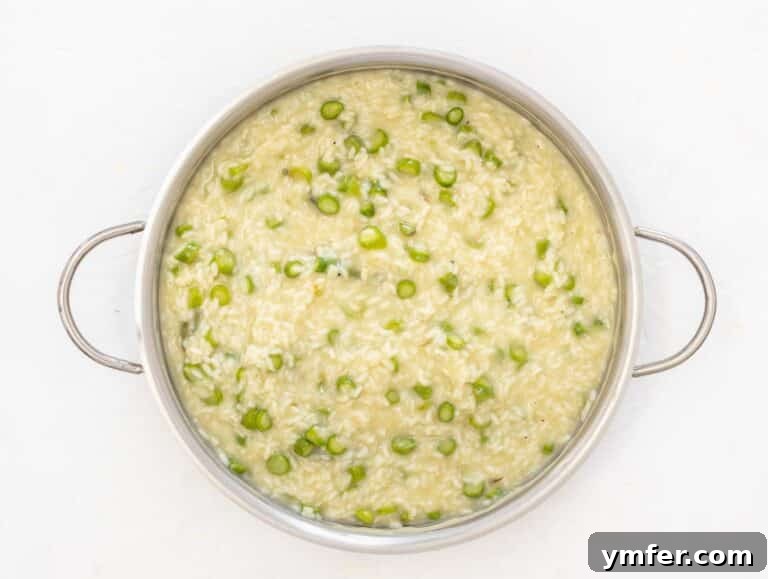
Stir gently but thoroughly, off the heat, allowing the cold butter and cheese to melt and emulsify into the hot rice. This creates the signature rich, glossy, and impossibly creamy consistency that defines a perfect risotto, all without adding actual cream. After stirring, cover the pan with a lid and let it rest for 2 minutes. Do not skip this resting period; it allows the flavors to meld, the starch to fully activate, and the risotto to become even creamier and more cohesive.
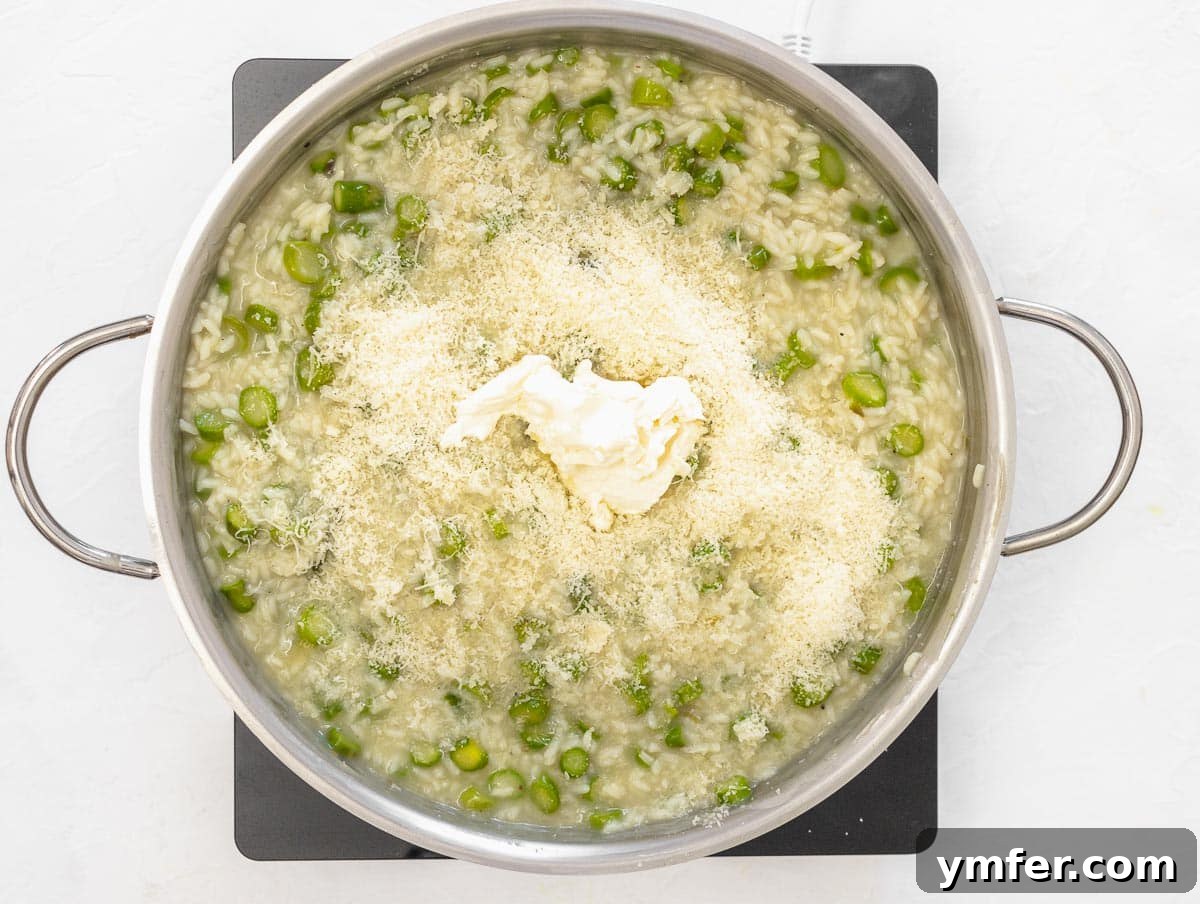
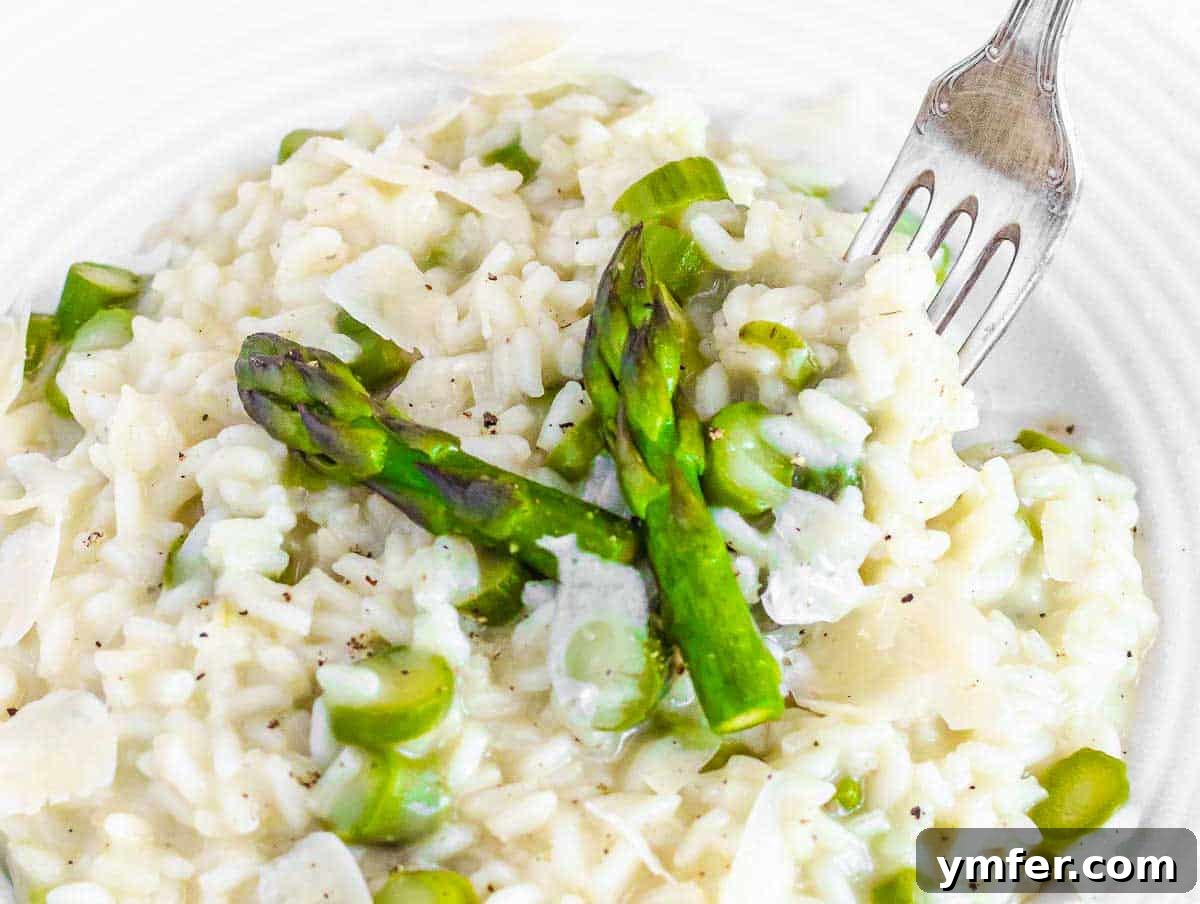
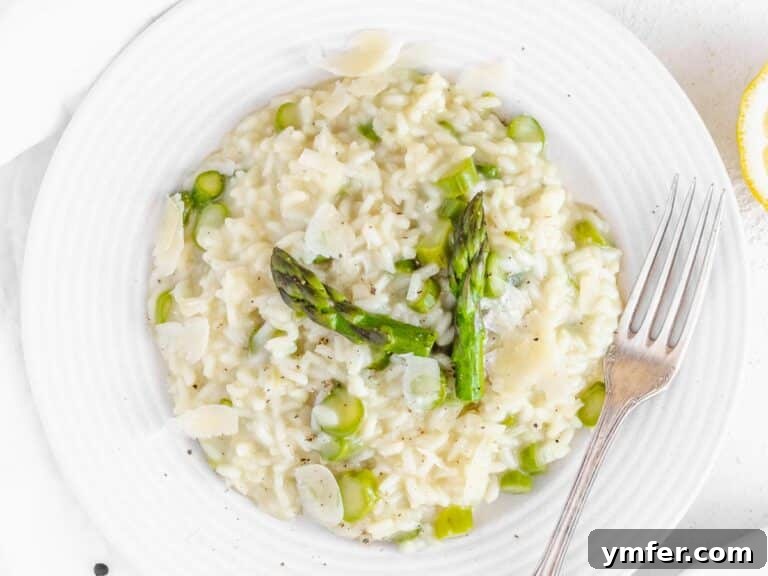
After the 2-minute rest, give the risotto one final stir. Its texture should be fluid and flowing, allowing it to spread slightly on a plate in a “wave” (all’onda). If it appears too dense, you can add a tiny splash more hot vegetable stock, stirring until it reaches your desired consistency. Remember, a perfect risotto should be neither too runny nor too thick; it should possess a wonderfully creamy, wave-like texture that oozes gently.
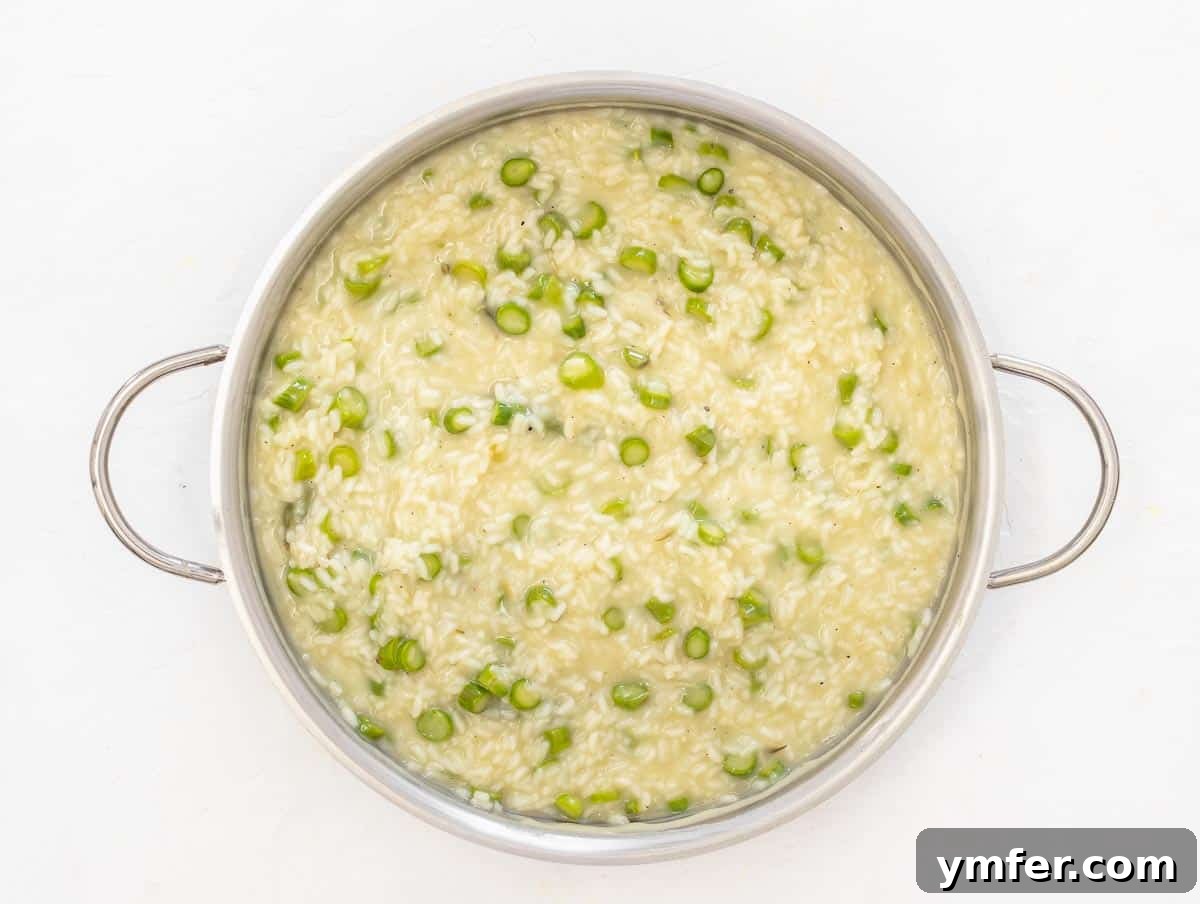
7. Serve and Enjoy Immediately
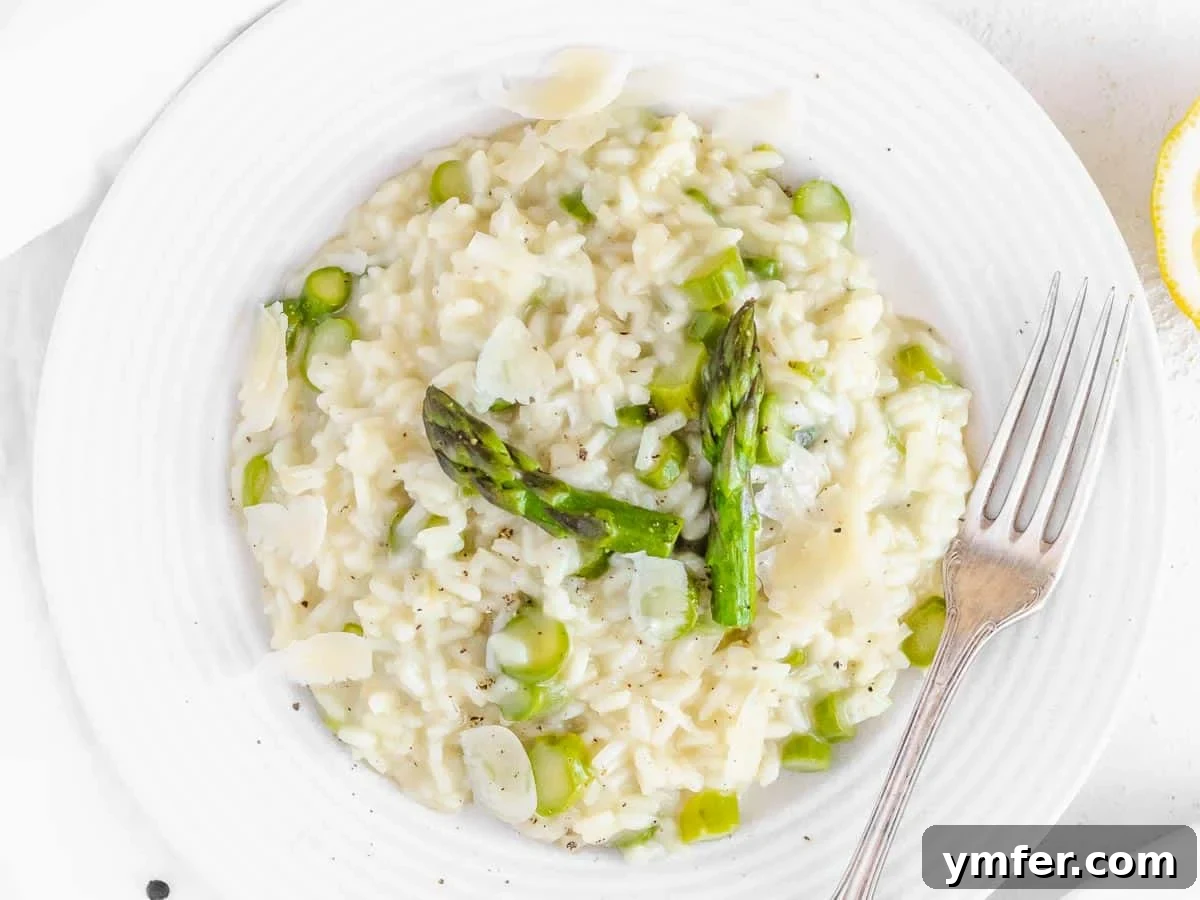
Serve your exquisite asparagus risotto immediately on a flat or slightly curved plate (avoid deep dishes or bowls to best appreciate its texture and prevent it from becoming too dense). Optionally, garnish with a sprinkle of extra Parmigiano Reggiano and a fresh twist of black pepper. For a touch of color and freshness, you can also add a small sprig of fresh parsley or chives. Savor each spoonful with a fork, enjoying the harmonious blend of flavors and textures that you’ve masterfully created.
Creative Variations to Elevate Your Risotto
Bright & Zesty: Lemon Asparagus Risotto
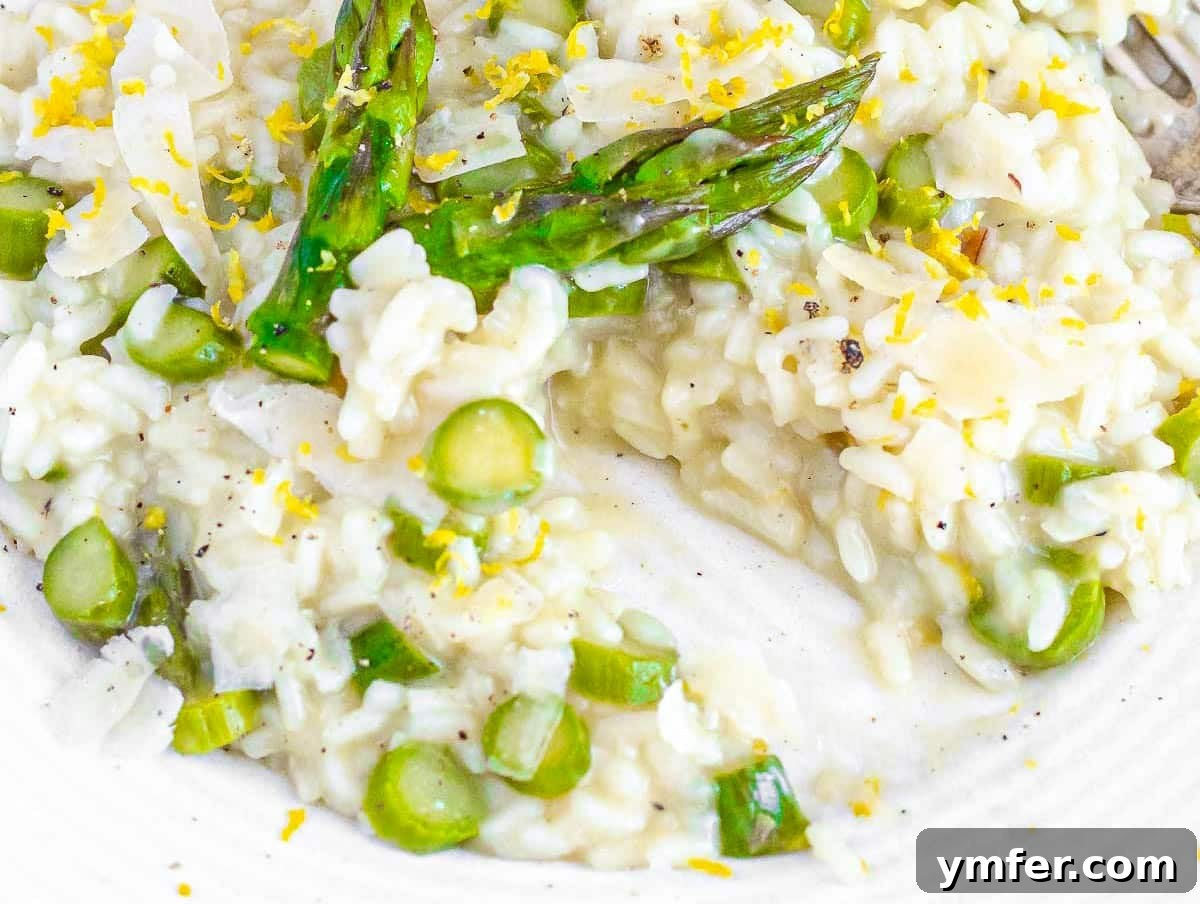
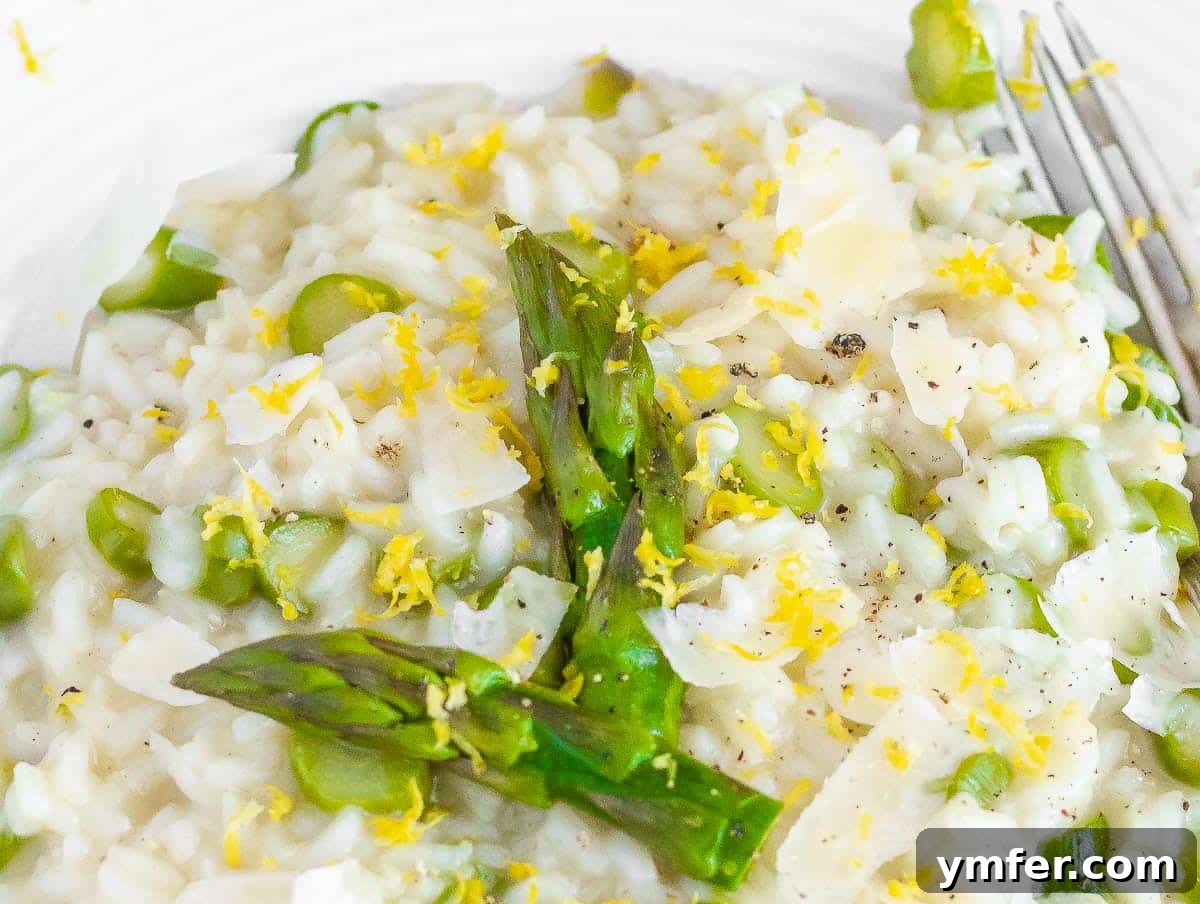
A simple yet impactful twist is to introduce the bright, tangy notes of lemon. Just before serving, garnish your creamy asparagus risotto with the finely grated zest of an organic lemon. Lemon and asparagus are a classic pairing, with the citrus cutting through the richness of the risotto and adding a wonderfully fresh and zesty dimension. The lemon brightens the entire dish, making it feel lighter and more invigorating. Since not everyone prefers lemon zest, consider offering it as an optional garnish at the table. Alternatively, you can sprinkle with finely chopped fresh herbs like fresh thyme or flat-leaf parsley for a different aromatic touch that still provides a beautiful contrast.
Gourmet Asparagus Risotto: A Touch of Elegance
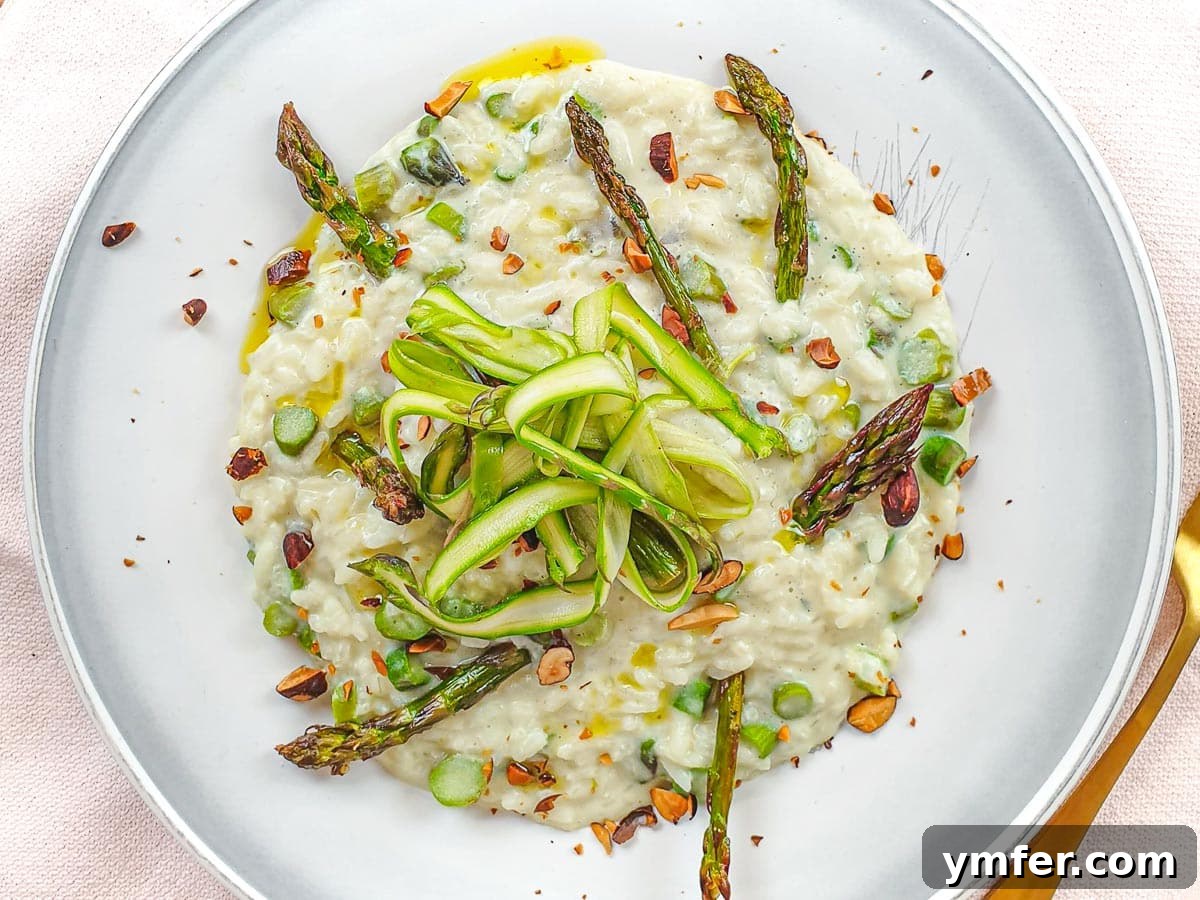
To transform this comforting dish into a truly gourmet experience worthy of a special occasion, consider these sophisticated additions:
- Toasted Almonds for Crunch: For an exquisite textural contrast and nutty depth, sprinkle a handful of toasted and coarsely chopped almonds over the finished risotto just before serving. The warmth of the risotto will enhance their aroma, and their crunch will be a delightful surprise.
- Oven-Roasted Asparagus Tips: Instead of sautéing, lightly toss some asparagus tips with a drizzle of olive oil, a pinch of salt, and freshly ground black pepper. Roast them in the oven at a high temperature (around 400°F / 200°C) until they are tender-crisp and slightly caramelized, about 8-10 minutes. Use these beautifully roasted tips as a vibrant and elegant garnish on top of each serving. This adds a different textural and flavor dimension compared to the cooked asparagus within the risotto.
- Delicate Shaved Raw Asparagus: For a surprisingly refreshing and delicate element, use a vegetable peeler to create delicate, paper-thin ribbons of raw asparagus. Gently toss these shavings with a tiny pinch of salt and a squeeze of fresh lemon juice. Scatter them sparingly over the hot risotto just before serving. The residual heat of the risotto will lightly tenderize them, offering a lovely fresh, slightly crisp bite and a beautiful visual appeal.
- Truffle Oil or Shavings: For the ultimate indulgence, a few drops of high-quality white truffle oil or a sprinkle of fresh truffle shavings (if in season and accessible) can elevate this risotto to an extraordinary level, adding an unparalleled earthy aroma.
Serving Suggestions: Complement Your Dish
Asparagus risotto is a hearty and satisfying meal in itself, making it an ideal main course. We often serve it after a light, refreshing starter or alongside a vibrant vegetable side dish to complete the meal. However, its versatility also allows it to shine as a refined side dish for other elegant main courses. The key is to choose accompaniments that either provide a contrasting texture, a refreshing acidity, or a complementary flavor profile.
Here are some excellent recipes that pair wonderfully with the rich flavor profile of asparagus risotto, ensuring a balanced and delightful dining experience:
- Tomato Confit: Slow-roasted cherry tomatoes with garlic and oregano, infused in olive oil, offer a burst of sweet and savory flavor that beautifully contrasts with the creamy risotto’s richness. Their slight acidity is a perfect palate cleanser.
- Caponata: This classic Sicilian sweet and sour eggplant stew, bursting with flavors from olives, capers, and tomatoes, provides a complex, tangy, and robust counterpoint to the risotto’s smooth texture.
- Eggplant Pizza: Individual eggplant rounds topped with fresh tomatoes, mozzarella (or vegan mozzarella), and fragrant oregano make a delightful and surprisingly light accompaniment, offering a different textural experience.
- Socca or Farinata: A simple, savory chickpea flour pancake, seasoned with olive oil, water, salt, and black pepper, offers a gluten-free, rustic bread-like element perfect for soaking up any leftover creamy goodness.
- Tomato Bruschetta: Toasted bread rubbed with garlic, topped with fresh diced tomatoes, extra virgin olive oil, salt, and basil, provides a refreshing and crunchy starter that awakens the palate before the main event.
Starters
Tomato Confit
Sides
Eggplant Caponata (Healthier)
For more delicious side dish inspiration, explore our comprehensive vegetable side dish roundup. Some of our top recommendations include:
- Shaved Brussels Sprout Salad: A refreshing salad with cranberries, walnuts, and a tangy mustard maple dressing that adds a wonderful crunch and zest, cutting through the richness of the risotto.
- Fennel and Orange Salad: The crisp anise notes of fresh fennel paired with sweet, juicy oranges and crunchy pine nuts, all dressed in a light vinaigrette, provides a refreshing palate cleanser.
- Panzanella – Italian Bread Salad: A rustic salad featuring stale bread, crisp lettuce, ripe tomatoes, cucumber, and a generous drizzle of olive oil, offering both texture and freshness. It’s a hearty salad that complements without overpowering.
- Zucchini Salad: Simple yet elegant, this salad combines tender zucchini, sweet tomatoes, crunchy pine nuts, a bright lemon juice dressing, olive oil, salt, and pepper for a light and flavorful complement.
Pro Tips for Success & Storage
General Risotto Making Tips for a Flawless Dish
Crafting the perfect risotto is an art, but these fundamental tips will guide you to consistent success:
- Use a Wide, Heavy-Bottomed Pan: A wide pan allows for better evaporation of liquid and more even cooking of the rice grains. A heavy bottom prevents sticking and scorching, ensuring your risotto cooks gently and thoroughly.
- Constant Attention and Stirring: Risotto is not a dish you can walk away from. Constant, gentle stirring is absolutely key to releasing starch from the rice, preventing it from sticking, and achieving that luscious, creamy texture.
- Hot Broth is Non-Negotiable: As emphasized in the instructions, always keep your broth simmering in a separate pot. Adding cold liquid will cool down the pan and slow down the cooking process, resulting in tough rice and a less creamy consistency.
- Taste, Taste, Taste: Don’t just follow the clock; taste the rice frequently, especially in the last few minutes of cooking, to achieve your preferred al dente texture. Risotto should have a slight bite in the center. Adjust seasoning (salt and pepper) as needed throughout the process.
- Don’t Overcook: Overcooked risotto becomes mushy and gluey. Aim for that perfect al dente bite and a flowing, “all’onda” consistency immediately after the mantecatura.
What to Do with Risotto Leftovers? Reinventing Your Meal!
While asparagus risotto is best enjoyed freshly made for its optimal creamy texture, leftovers can be delightfully transformed into other delicious dishes. Don’t throw them away!
You can effortlessly reshape cooled leftover risotto into savory risotto cakes (pan-fried patties) or traditional Italian rice balls (arancini). These are fantastic as a main course, served with a crisp simple side salad and a side of our rich marinara sauce for dipping. These repurposed dishes offer a completely new and exciting culinary experience from your original risotto.

Make Ahead and Storage Guidelines
Make Ahead: Asparagus risotto is truly best enjoyed immediately after it’s prepared. The delicate balance of creaminess, al dente rice, and fresh asparagus begins to change as it cools and rests. Therefore, we generally do not recommend making it ahead of time if you want to experience it at its peak perfection. Risotto is a dish that demands to be served fresh from the pan.
Refrigerator: Should you happen to have any leftovers (a rare occurrence with this delicious dish!), store them promptly in an airtight container in the refrigerator for up to 3 days. This will help maintain freshness and prevent drying, though the texture will naturally become firmer.
Reheat: To reheat, gently warm the risotto in the microwave or on the stovetop over low heat, adding a small amount of liquid. On the second day, risotto tends to become denser and less creamy as the starch continues to set. To restore some of its original luscious texture, you will likely need to stir in a splash of water or, even better, a little extra hot vegetable broth until it reaches a desirable, flowing consistency. Be patient and stir gently.
Freezing: We generally do not recommend freezing risotto. The freezing and thawing process can significantly alter the rice’s texture, making it mushy and less appealing. For best results, always aim to enjoy risotto fresh or as a repurposed leftover within a few days, rather than freezing.
Explore More Risotto Recipes
If you’ve fallen in love with the art and comfort of risotto, you’ll want to try these other fantastic variations from our extensive collection. Each recipe showcases the versatility of this beloved Italian dish:
- Mushroom Risotto: Earthy and rich, a timeless classic that brings deep umami flavors to your table.
- Tomato Risotto: A vibrant, tangy, and intensely comforting vegetarian option, perfect for a burst of Mediterranean flavor.
- Saffron Risotto: The iconic golden risotto from Milan, wonderfully aromatic and elegant, offering a delicate floral note.
- Eggplant Risotto: A unique and flavorful twist with tender, savory eggplant, adding a wonderful textural element.
- Zucchini Risotto: Light, fresh, and perfect for summer, highlighting the subtle sweetness of zucchini.
- Butternut Squash Risotto: Sweet, savory, and incredibly creamy, ideal for autumn meals with its warm, comforting flavors.
Pasta
Saffron Risotto
Mains
Butternut Squash Risotto
One-pot Meals
Mushroom Risotto
Mains
Eggplant Risotto
Delight in More Asparagus Dishes
If asparagus is one of your favorite seasonal vegetables, then you’ll love exploring various ways to prepare it beyond just risotto. Asparagus is incredibly versatile and delicious, whether roasted, steamed, or grilled. Check out our comprehensive guide on how to cook with asparagus, or dive into these specific recipes designed to celebrate this wonderful green spear:
- Air Fryer Asparagus: A quick, crispy, and incredibly flavorful method that brings out the best in asparagus with minimal oil. One of our favorite go-to preparations for a healthy side!
- Tofu Soup with Asparagus: A light, nourishing, and surprisingly simple soup that is both satisfying and healthy, featuring delicate asparagus for a fresh spring touch.
- Steamed Asparagus: The epitome of healthy cooking, resulting in perfectly tender-crisp, vibrant green, and juicy asparagus spears that retain all their nutrients.
- Grilled Asparagus: Enjoy the smoky, crisp, and lightly charred flavors that grilling imparts, often enhanced with a squeeze of fresh lemon juice for brightness.
- Boiled Asparagus: Perhaps the most straightforward way to cook asparagus on the stovetop, yielding perfectly tender results that are easy to incorporate into many dishes.
- Baked Asparagus: A universally beloved method that creates beautifully roasted, tender asparagus with minimal effort, making it a perfect easy side dish.
- Asparagus Frittata (Vegan): A delightful plant-based frittata made with chickpea flour, showcasing fresh asparagus as the star, perfect for a light brunch or dinner.
Asparagus Risotto Recipe
By: Nico Pallotta
Asparagus risotto is a creamy, bright, and delicious recipe for a special dinner with your family. Mastering risotto is easy, and with our step-by-step pictures and video, your risotto will be a guaranteed success on your first try.
Prep Time: 10 mins
Cook Time: 18 mins
Asparagus Cook Time: 5 mins
Total Time: 33 mins
Servings: 5 people
Course: Main Course, Side dish
Cuisine: Italian
Pin Recipe
Print Recipe
Share Recipe
Video
Watch this video for a visual guide on making creamy asparagus risotto.
Ingredients
For the Asparagus
- 1½ pound asparagus
- 1 tablespoon olive oil
- 2 cloves garlic
- ½ teaspoon salt
- 2 twists black pepper
For the Risotto
- 7 – 8 cups vegetable broth
- 1 tablespoon olive oil
- 1 shallot (finely chopped)
- 1¾ cups risotto rice (Arborio variety recommended)
- ½ cup dry white wine
- 2-3 tablespoons butter (sub dairy-free butter for vegan)
- ½ cup parmigiano reggiano (sub dairy-free cheese or nutritional yeast for vegan)
Instructions
-
Prepare Asparagus: Trim the woody ends of the asparagus stalks with a sharp knife and set them aside. Thinly slice the asparagus into disks, but keep the tips of the spears whole.

-
Sauté Asparagus: To a non-stick pan, add one tablespoon of olive oil, the sliced asparagus and tips, a crushed garlic clove, ½ teaspoon of salt, and a few twists of pepper. Sauté the asparagus on medium heat for 5 minutes until tender-crisp. It should not be fully cooked at this stage. Set aside.
-
Prep Broth: Add the vegetable stock and the woody ends of the asparagus to a pot. Bring to a simmer and keep hot throughout the recipe.
-
Start Risotto: Add one tablespoon of olive oil to a large skillet or Dutch oven. Set the heat to medium. When hot, add the finely chopped shallot and fry for 2 minutes until translucent.
-
Toast Rice & Deglaze: Add the risotto rice to the pan and stir continuously for about 1 minute to toast. Do NOT rinse the rice. Add the white wine and stir until fully evaporated.
-
Add Broth Gradually: Add 2 ladlefuls of hot vegetable stock. Stir almost continuously until absorbed. Repeat, adding 2 ladlefuls as the pan dries, for 12 minutes. Ensure rice never sticks to the bottom.
-
Add Asparagus & Finish Cooking: After 12 minutes, add the sautéed asparagus to the rice. Continue stirring and adding hot vegetable stock until the rice is creamy and al dente (about 5 more minutes). Total cooking time should be 16-18 minutes from the first broth addition. Taste and adjust salt if necessary.
-
Mantecatura (Final Finish): When risotto is al dente and broth mostly absorbed, turn off the heat. Add butter and grated parmesan cheese. Stir gently until melted and creamy. Cover and let sit for 2 minutes.
-
Serve: After resting, stir again. If too dense, add a bit more hot vegetable stock until it has a perfectly creamy, flowing texture. Serve immediately on a flat plate, optionally garnished with extra Parmigiano Reggiano.
Notes
Nutrition information is an estimate for 1 serving of asparagus risotto out of 5 servings.
SUBSTITUTIONS
- Shallots: Substitute with white or yellow onion.
- Butter: Substitute with extra virgin olive oil or dairy-free butter for a vegan option.
- Parmesan: Substitute with a non-dairy parmesan alternative or nutritional yeast for a vegan option.
MAKE AHEAD & STORAGE
- Make ahead: Asparagus risotto is best eaten right after making it; not ideal for making ahead.
- Refrigerator: Keep leftovers in an airtight container in the fridge for up to 3 days.
- Reheat: Warm in the microwave or on the stovetop. May need to add water or vegetable broth to restore creaminess.
- Freezing: Not recommended, as freezing can alter the texture of risotto.
Nutrition (per serving)
- Calories: 448 kcal
- Carbohydrates: 66 g
- Protein: 12 g
- Fat: 13 g
- Saturated Fat: 5 g
- Polyunsaturated Fat: 1 g
- Monounsaturated Fat: 6 g
- Trans Fat: 0.2 g
- Cholesterol: 19 mg
- Potassium: 291 mg
- Dietary Fiber: 6 g
- Sugar: 4 g
- Vitamin A: 908 IU
- Vitamin B6: 0.3 mg
- Vitamin C: 6 mg
- Vitamin E: 2 mg
- Vitamin K: 42 µg
- Calcium: 152 mg
- Folate: 212 µg
- Iron: 5 mg
- Manganese: 1 mg
- Magnesium: 38 mg
- Zinc: 2 mg
Tried this recipe? Leave a comment below or mention @theplantbasedschool on Instagram. We love hearing from you ⭐️ 💚.
If you liked this recipe, you might also like these collections:
Collections
35 Healthy Pasta Recipes
Collections
65 Plant-Based Italian Recipes
Collections
30 Vegan Appetizers
Collections
35 Easy Dinners