
The Ultimate 10-Minute Vegan White Sauce (Béchamel)
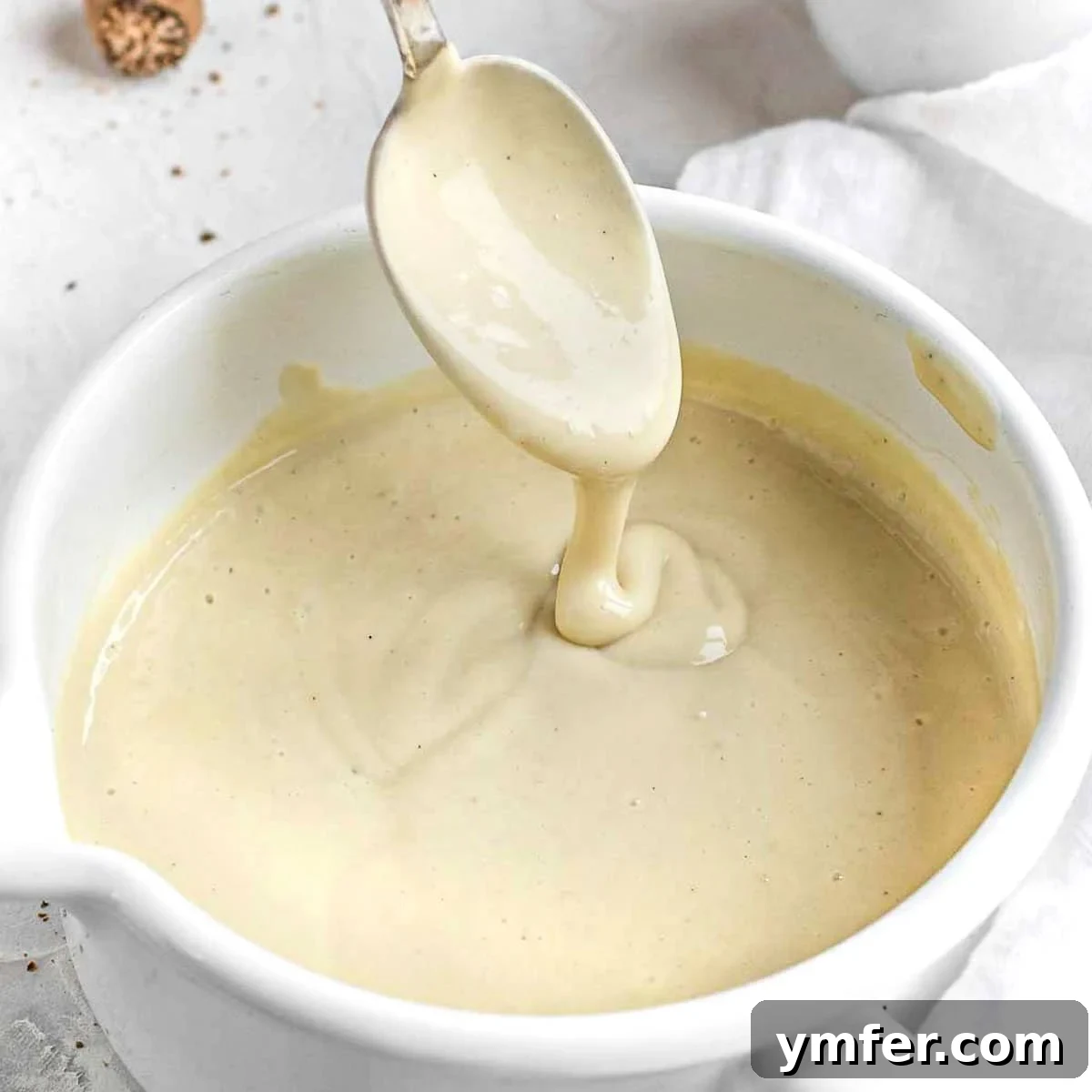
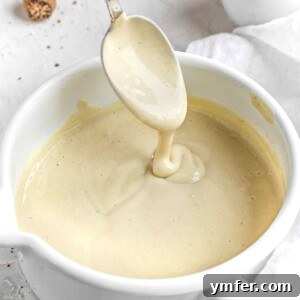
Transform your cherished comfort food dishes with our unbelievably easy and incredibly delicious vegan white sauce. This exceptional plant-based béchamel is the perfect dairy-free alternative to its classic counterpart, delivering the same rich, velvety texture and remarkable versatility. It’s an indispensable staple for anyone seeking to enjoy traditional flavors without animal products.
Whether you’re layering a luscious vegetable lasagna, preparing a hearty vegetarian lasagna, filling delicate savory crepes, stuffing wholesome cannelloni, baking bubbling casseroles, or creating comforting pasta bakes, this creamy vegan sauce is an absolute game-changer. Its adaptability makes it suitable for a wide array of recipes, effortlessly enhancing both flavor and texture.
Crafted with just a handful of wholesome ingredients – primarily olive oil, unsweetened non-dairy milk, all-purpose flour, and essential seasonings – our vegan white sauce comes together with remarkable ease in a single pot. You’ll be astonished by how quickly you can achieve a perfectly smooth, luscious sauce in just 10 minutes, making it an ideal choice for busy weeknights or more elaborate meal preparations. Embrace the simplicity and enjoy the incredible results!
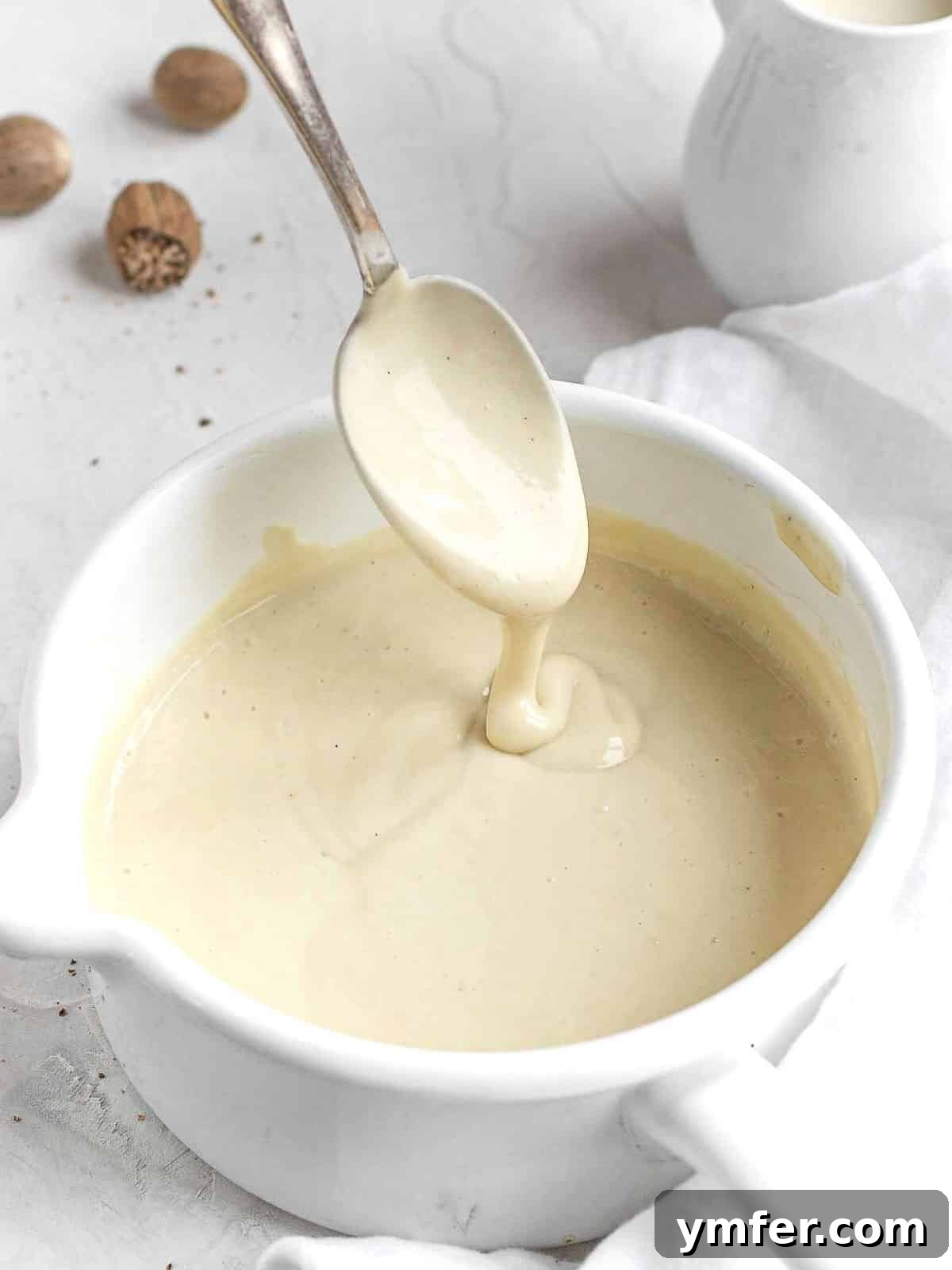
Table of Contents
- Why Choose Vegan White Sauce?
- Essential Ingredients for a Perfect Vegan Béchamel
- Step-by-Step Guide to Making Vegan White Sauce
- Mastering the Art of Cooling Your Vegan Sauce
- Storage and Reheating Tips
- Versatile Uses for Your Plant-Based Béchamel
- Vegan White Sauce Recipe Card
Why Choose Vegan White Sauce?
Traditional béchamel, a celebrated mother sauce in French cuisine, is fundamentally built upon butter and dairy milk. However, with the rising global interest in plant-based diets, dietary restrictions, and ethical considerations, a truly delicious and accessible vegan alternative has become an essential addition to modern kitchens. Our vegan white sauce (often affectionately referred to as vegan béchamel) offers all the comforting, creamy goodness without a single animal product.
Beyond being dairy-free, this plant-based sauce is naturally cholesterol-free and can be easily adapted to be gluten-free with simple flour substitutions. This makes it a healthier and more inclusive option, suitable for a wider range of diets and preferences. This recipe effortlessly demystifies the process of creating a rich, smooth sauce from scratch, proving that plant-based cooking can be both incredibly simple and profoundly flavorful. You’ll achieve a velvety consistency that truly rivals its dairy counterpart, ensuring your meals are always satisfying and delicious.
Essential Ingredients for a Perfect Vegan Béchamel
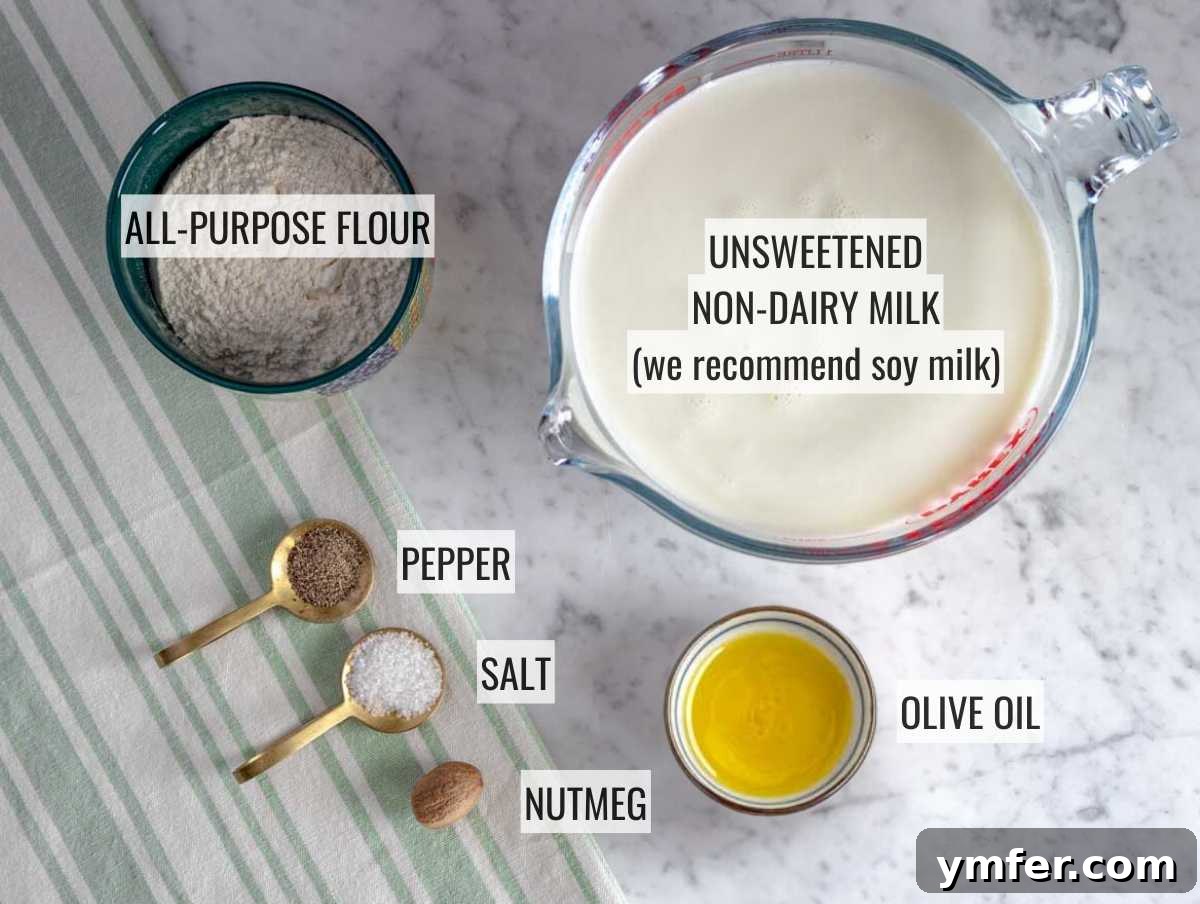
To craft this culinary marvel, you’ll need just a few fundamental ingredients. The precise quantities for each component are conveniently listed in the recipe card located at the bottom of this page. Let’s delve into the crucial role each ingredient plays in perfecting your vegan white sauce:
Flour: The Essential Thickening Agent
All-purpose flour is undoubtedly your best ally for achieving that characteristic smooth, velvety texture in your vegan white sauce. It forms the base of the roux, which is the foundational thickening agent for any béchamel. For those interested in a more wholesome and fiber-rich option, whole-wheat flour can certainly be used, though it might introduce a slightly nuttier flavor and a darker hue to your sauce. If you’re looking to create a gluten-free vegan béchamel, fret not! A good quality 1:1 gluten-free all-purpose flour blend works exceptionally well. Alternatively, a combination of rice flour and tapioca starch can also yield fantastic results. Regardless of your choice, remember to whisk vigorously during the roux formation to ensure a lump-free, perfectly smooth sauce.
Olive Oil: The Flavorful Fat Base
We enthusiastically recommend using high-quality olive oil or extra virgin olive oil to form the fat component of your roux. Its distinct fruity notes and renowned health benefits contribute a wonderful depth of flavor that beautifully complements the other ingredients. If you’re seeking a richer, more traditional “buttery” flavor, you can absolutely substitute the olive oil with an equal amount of your favorite vegan butter. This choice allows for a customizable flavor profile, enabling you to tailor the sauce precisely to your personal preference and dietary requirements, ensuring a béchamel that truly satisfies.
Non-Dairy Milk: The Creamy Liquid Foundation
The selection of your non-dairy milk is a critical factor influencing both the overall flavor and desired consistency of your vegan béchamel. We strongly advocate for using unsweetened soy milk. Its remarkably neutral flavor ensures that the sauce avoids any “beany” or overly sweet undertones, allowing the other carefully selected seasonings to truly shine. Moreover, soy milk’s inherent protein content contributes significantly to a creamier, more stable, and well-emulsified béchamel, mirroring the richness of its dairy counterpart.
While various other plant-based milks can be considered, it’s important to be mindful of their distinct flavor profiles. For instance, unsweetened oat milk can offer a delightful creaminess and a slightly sweet note, but might introduce a subtle oat-y taste. Unsweetened cashew milk, especially if homemade, can provide a wonderfully rich and thick texture. However, we generally do not recommend almond milk due to its typically watery consistency and occasionally prominent nutty flavor, both of which can detract from the desired neutral and luxurious taste of a classic béchamel.
Nutmeg: The Signature Aromatic Spice
While listed as optional, a delicate pinch of freshly grated nutmeg is, in our opinion, a non-negotiable for achieving an authentic béchamel experience. It’s a hallmark ingredient in the original Italian and French béchamel recipes, lending a warm, subtly sweet, and wonderfully aromatic complexity that elevates the sauce from merely good to truly extraordinary. Do not underestimate its power to impart that classic, comforting depth that defines a perfect béchamel.
Salt and Pepper: Essential Flavor Enhancers
No truly exquisite sauce is complete without proper seasoning. We highly recommend using fine sea salt or kosher salt, which readily dissolve and distribute flavor evenly throughout the sauce. Freshly ground black pepper adds a delightful subtle kick and an aromatic finish that brightens the overall profile. Remember, seasoning is a personal journey: taste your sauce as you go and adjust the salt and pepper as needed, ensuring your vegan béchamel is perfectly balanced and utterly delicious.
Step-by-Step Guide to Making Vegan White Sauce
Crafting this smooth and delectable vegan white sauce is incredibly straightforward. By following these simple, detailed steps, you’ll achieve a consistently perfect result every single time, making béchamel a stress-free addition to your culinary repertoire.
1. Prepare the Roux: The Foundation of Flavor and Texture
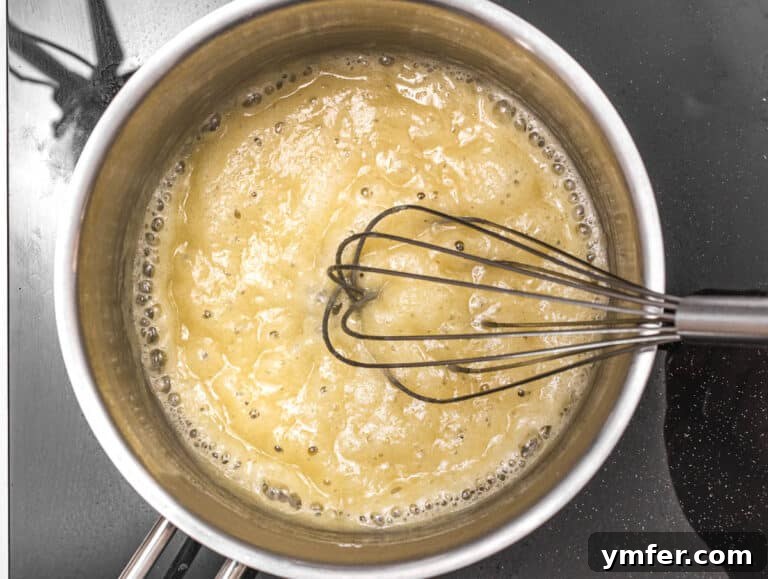
Begin by heating the 6 tablespoons of olive oil (or melting 100g / 3½ oz of vegan butter) in a medium saucepan over medium heat. Once the oil is shimmering slightly, signaling it’s warm enough, remove the pan from the heat. This brief moment off the heat is a crucial step that helps prevent the flour from burning prematurely. Carefully sift in the ⅔ cup of all-purpose flour directly into the warm oil. Sifting is highly recommended as it helps break up any clumps, ensuring a smoother initial mixture. Vigorously whisk the oil and flour together until a smooth, uniform paste, commonly known as a roux, forms. This thorough whisking at this stage is absolutely essential for creating a lump-free béchamel.
Return the saucepan to medium heat and continue to cook the roux, whisking continuously, for approximately 2 minutes. This cooking time is vital for “cooking out” the raw flour taste, which can otherwise leave a starchy or unpleasant flavor in your final sauce. During this process, the roux should remain pale in color, often referred to as a “white roux” or “blond roux,” which is precisely what we aim for in a classic white sauce like béchamel. Constant whisking prevents it from browning too much.
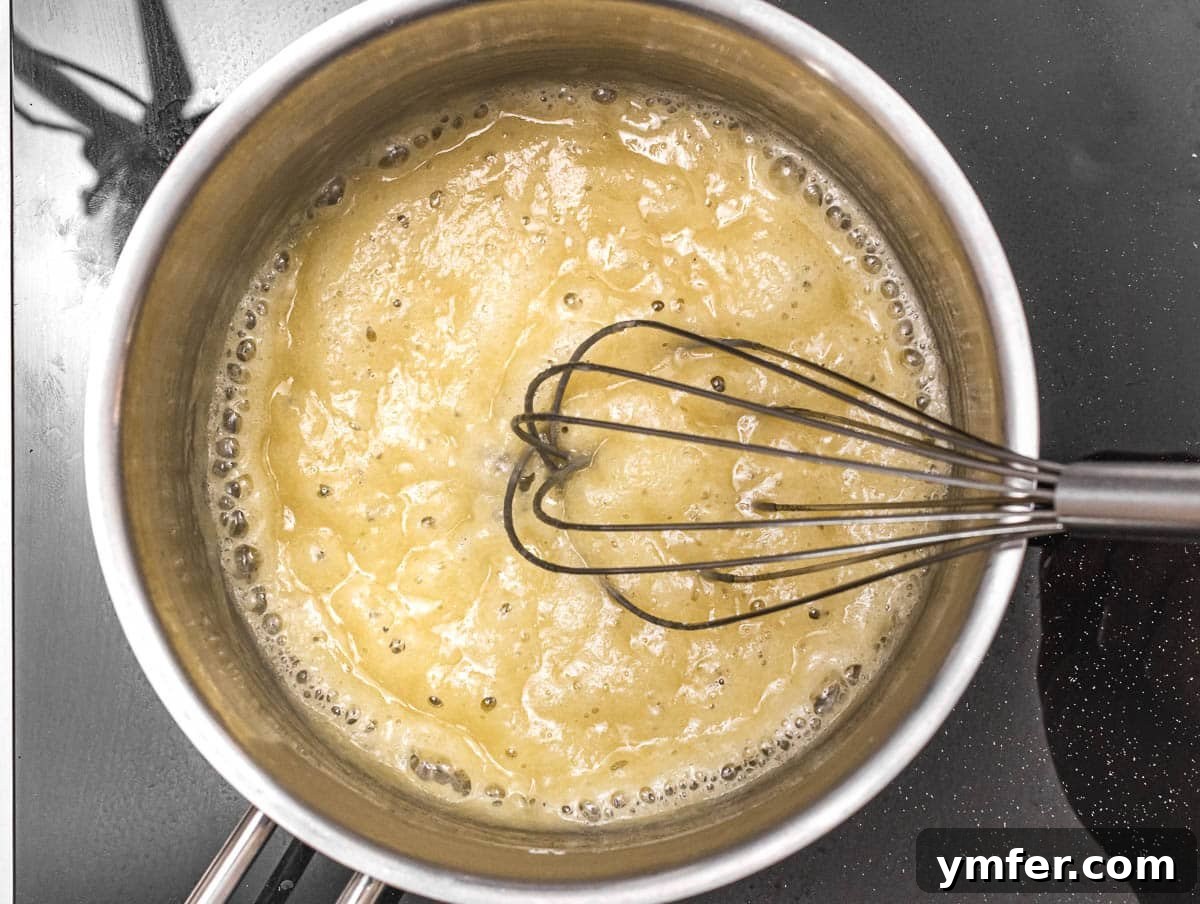
2. Gradually Add Milk and Achieve Perfect Thickness
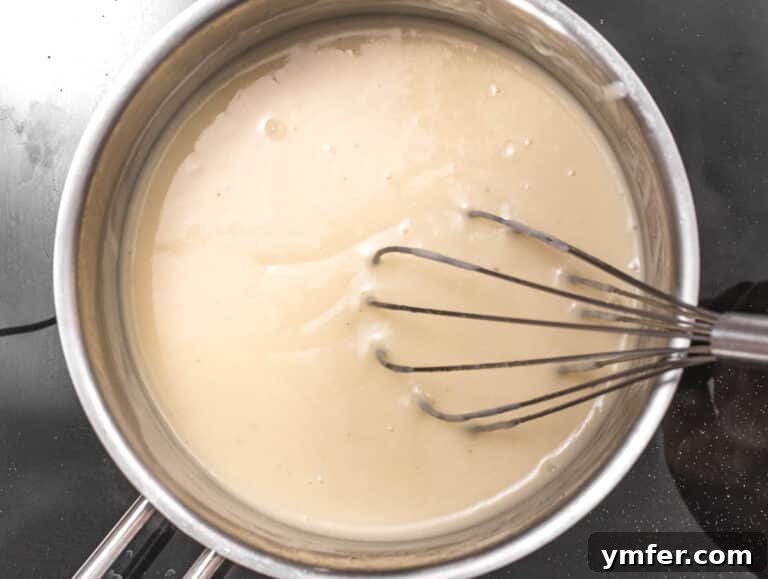
Once your roux is perfectly cooked, it’s time to introduce the liquid. Slowly pour the 4 cups of unsweetened non-dairy milk into the saucepan. Here, patience and continuous, vigorous whisking are paramount. Add the milk gradually, a little at a time, while whisking constantly and thoroughly. This methodical approach ensures that the roux emulsifies smoothly with the milk, preventing any lumps from forming and guaranteeing a wonderfully silky sauce. If you add the milk too quickly, it can be much harder to incorporate it evenly and achieve a perfectly lump-free consistency.
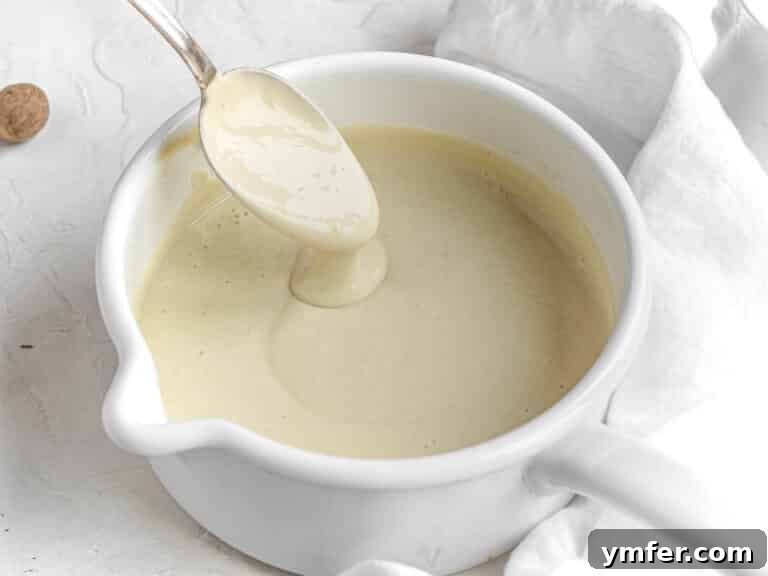
Continue to cook the sauce over medium heat, whisking frequently to prevent sticking and burning, for about 5 minutes. During this period, the sauce will gradually thicken as the flour absorbs the liquid. It’s crucial to keep a close eye on it and stir regularly, particularly scraping the bottom of the pan, to prevent scorching. The sauce should reach a consistency thick enough to generously coat the back of a spoon. If it appears too thin, continue cooking for an additional minute or two; conversely, if it becomes too thick, you can easily thin it out later with a splash more non-dairy milk.
Once your vegan white sauce reaches its ideal consistency, remove the saucepan from the heat. Stir in the ½ teaspoon of sea salt, 2 twists of freshly ground black pepper, and that essential pinch of grated nutmeg. Taste the sauce and adjust the seasoning as needed, ensuring it’s perfectly balanced and flavorful. Bear in mind that the vegan white sauce will naturally continue to thicken slightly as it cools, so aim for a consistency that is perhaps just a touch thinner than your final desired thickness when hot.
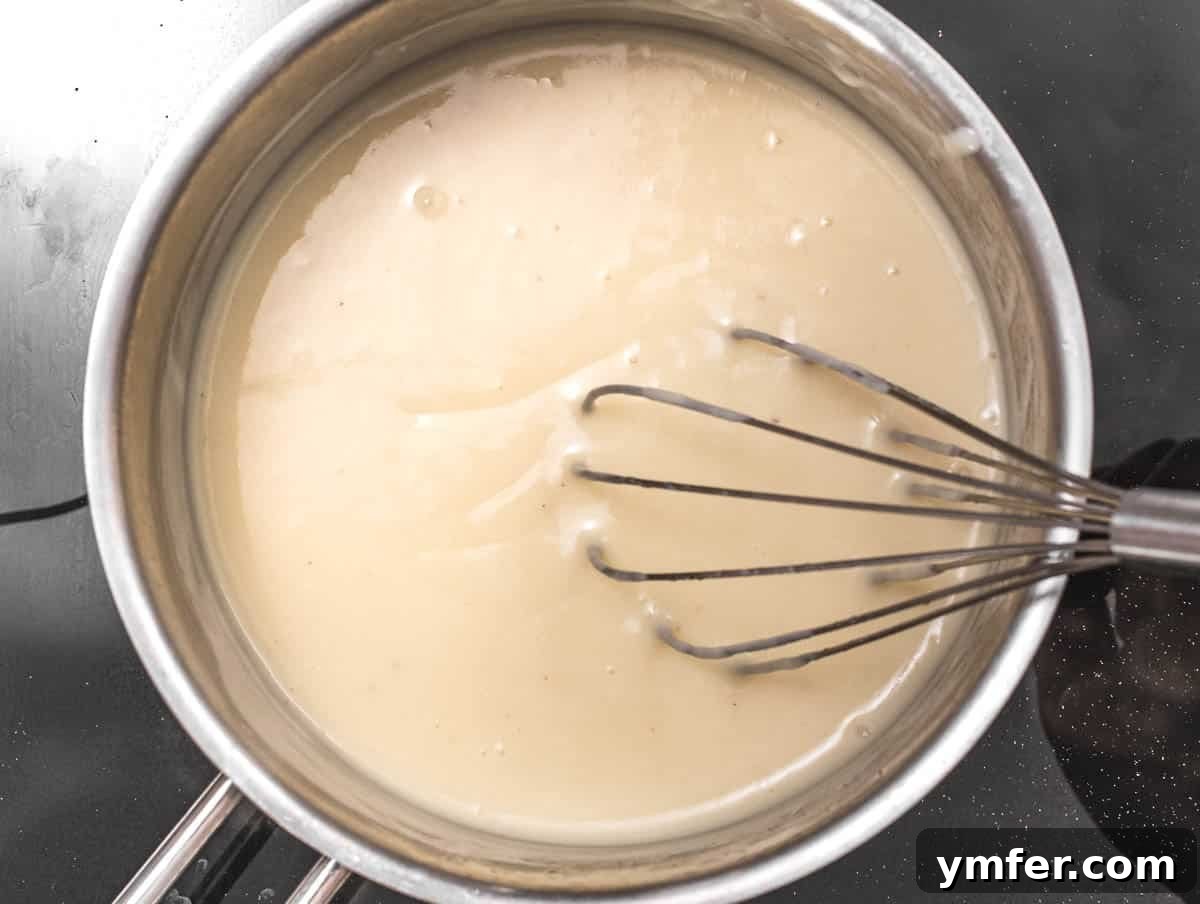
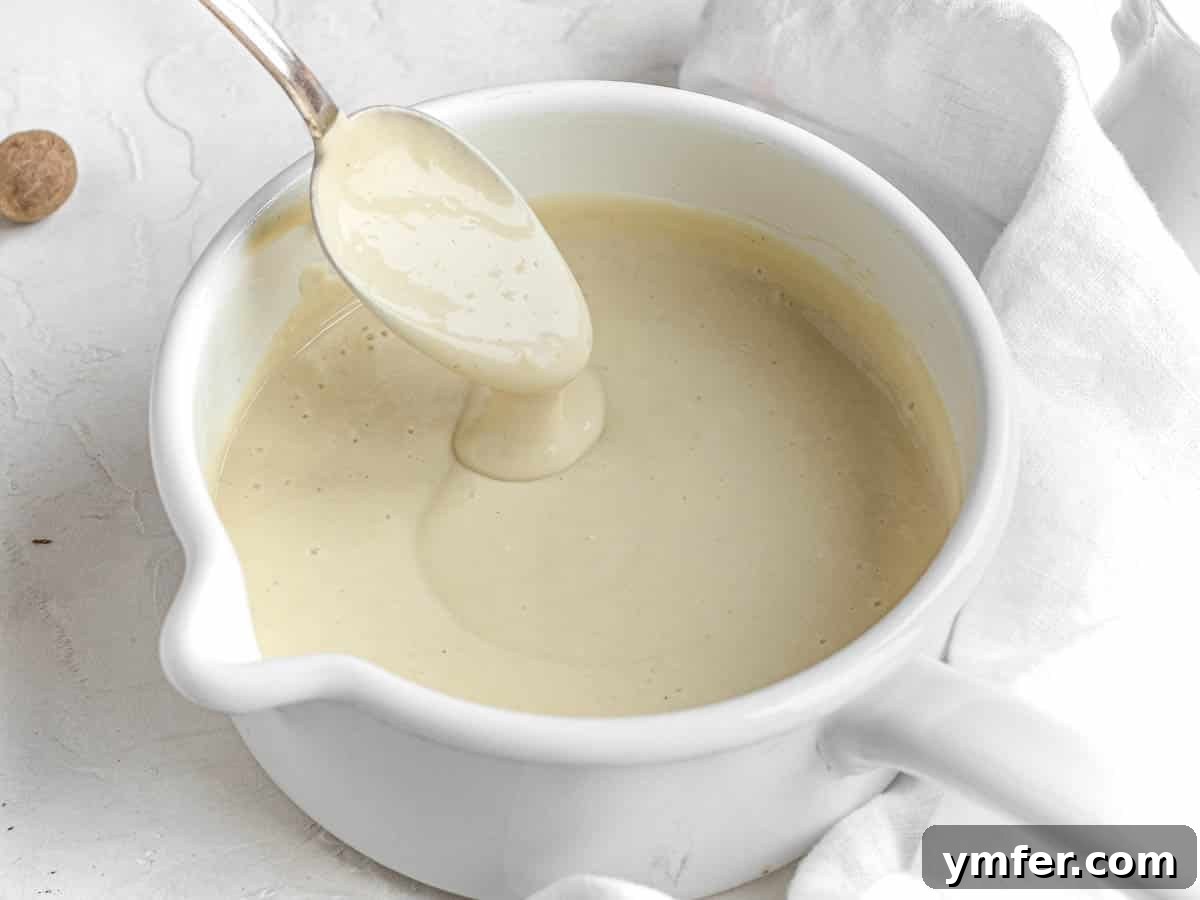
Mastering the Art of Cooling Your Vegan Sauce
Properly cooling your freshly made vegan white sauce is a critical step to prevent the undesirable “skin” from forming on the surface, which can lead to frustrating lumps and an unappealing texture. While often considered the trickiest part of béchamel preparation, with a few simple and effective techniques, you can ensure your dairy-free sauce remains perfectly smooth and silky.
You have two excellent, tried-and-true options to effectively prevent a patina (skin) from forming on your cooling béchamel:
Option 1: The Direct Contact Plastic Wrap Method
After removing the sauce from the heat, allow it to cool down slightly, perhaps for about 5 to 10 minutes, giving it an occasional whisk to release some steam. Then, immediately and carefully cover the entire surface of the sauce with a piece of plastic wrap, ensuring the wrap directly touches every part of the sauce. This creates an airtight barrier that effectively prevents air from coming into contact with the sauce, thereby inhibiting the formation of a skin and subsequent lumps. Once completely cooled, you can easily transfer it to an airtight container for longer storage in the refrigerator.
Option 2: Active Cooling with Continuous Stirring
Alternatively, for a slightly more hands-on approach, you can transfer the hot sauce immediately from its cooking pot into a clean, cold bowl. Continue to stir the sauce periodically as it cools. The constant movement, combined with the transfer to a cooler vessel, helps to dissipate the heat more evenly throughout the sauce and prevents a static surface layer from setting and forming a skin. This method requires a bit more attention but guarantees a beautifully smooth sauce.
Pro Tip for Rapid Cooling: The Bain-Marie (Ice Bath) Technique
If you find yourself in a rush and need to cool your vegan béchamel quickly for an immediate recipe, employ the highly efficient bain-marie or ice bath technique. Submerge the bottom half of your saucepan (or the cold bowl you transferred the sauce to) into a larger pot or sink filled with ice-cold water. While the pot is in the ice bath, continue to stir the sauce regularly. This rapid chilling, combined with the constant agitation, effectively prevents skin formation and ensures a perfectly smooth, lump-free béchamel in a fraction of the usual cooling time.
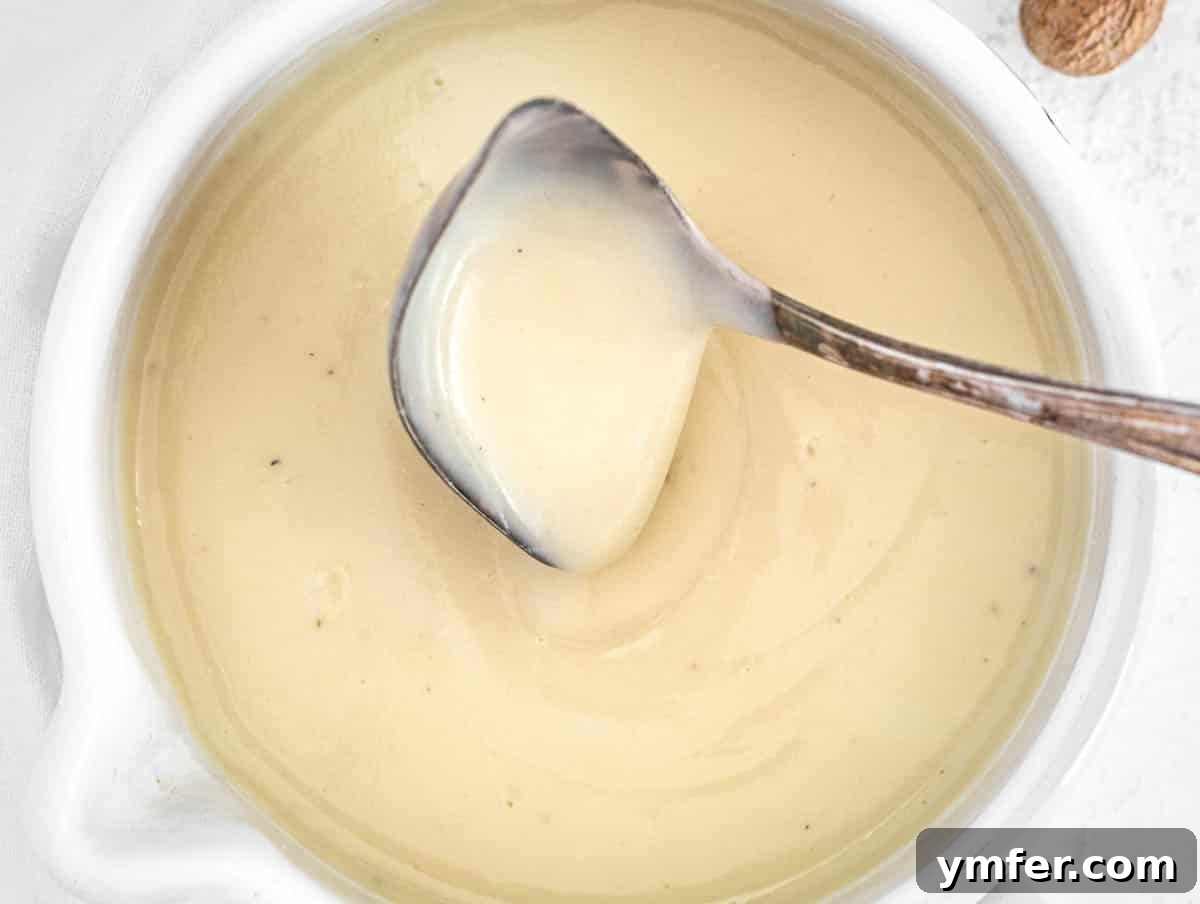
Storage and Reheating Tips
Proper storage is key to ensuring your delicious vegan white sauce remains fresh and readily available for your next culinary creation. Furthermore, understanding the correct way to reheat it will save you from any undesirable texture issues, keeping your béchamel consistently smooth.
Refrigerator: Your homemade vegan white sauce can be conveniently stored in an airtight container in the refrigerator for 2 to 3 days. This makes it an excellent candidate for advance meal preparation; you can easily make a batch ahead of time. However, it’s crucial to diligently follow our cooling tips (detailed in the section above) to prevent any lumps from forming. During refrigeration, it’s entirely normal for the sauce to become thicker. To restore it to a thinner, perfectly pourable consistency, simply add a splash of unsweetened non-dairy milk and gently warm it on the stovetop over low heat, whisking constantly until it becomes smooth again. If, despite your best efforts, any stubborn lumps do appear, an immersion blender is your secret weapon to quickly achieve a silky-smooth texture, making it as good as freshly made.
Freezer: Yes, vegan béchamel freezes remarkably well! To prepare it for freezing, first ensure the sauce is completely cooled using one of the methods described previously. Once chilled, portion the sauce into freezer-friendly containers or sturdy zip-top bags, removing as much air as possible to prevent freezer burn. It will maintain its excellent quality in the freezer for a generous period of 2 to 3 months.
To use the frozen sauce, transfer it to the refrigerator and allow it to thaw overnight until it becomes soft. Once thawed, transfer it to a saucepan and gradually warm it over low heat, adding a little non-dairy milk as needed and whisking continuously until it reaches your desired consistency. Just like with refrigerated sauce, if you notice any lumps after thawing and reheating, a quick blitz with an immersion blender will effortlessly restore its perfect, smooth texture.
Versatile Uses for Your Plant-Based Béchamel
The true brilliance of this vegan white sauce lies in its incredible versatility. Once you’ve mastered this fundamental recipe, a vast world of plant-based comfort food and sophisticated dishes opens up before you. This béchamel is far more than just a substitute; it’s a culinary foundation that can elevate countless meals:
- Lasagna & Pasta Bakes: The quintessential and perhaps most beloved application! Layer it generously in your favorite vegetable lasagna or mix it into a creamy, comforting pasta bake for an irresistible golden crust.
- Cannelloni & Manicotti: Perfect for filling pasta tubes with delicious plant-based mixtures, then smothering them in this rich sauce before baking to bubbly perfection.
- Gratins & Casseroles: An essential component for creating bubbling, golden-brown gratins featuring potatoes, cauliflower, broccoli, or any vegetable. It serves as the creamy, binding base for almost any vegan casserole imaginable.
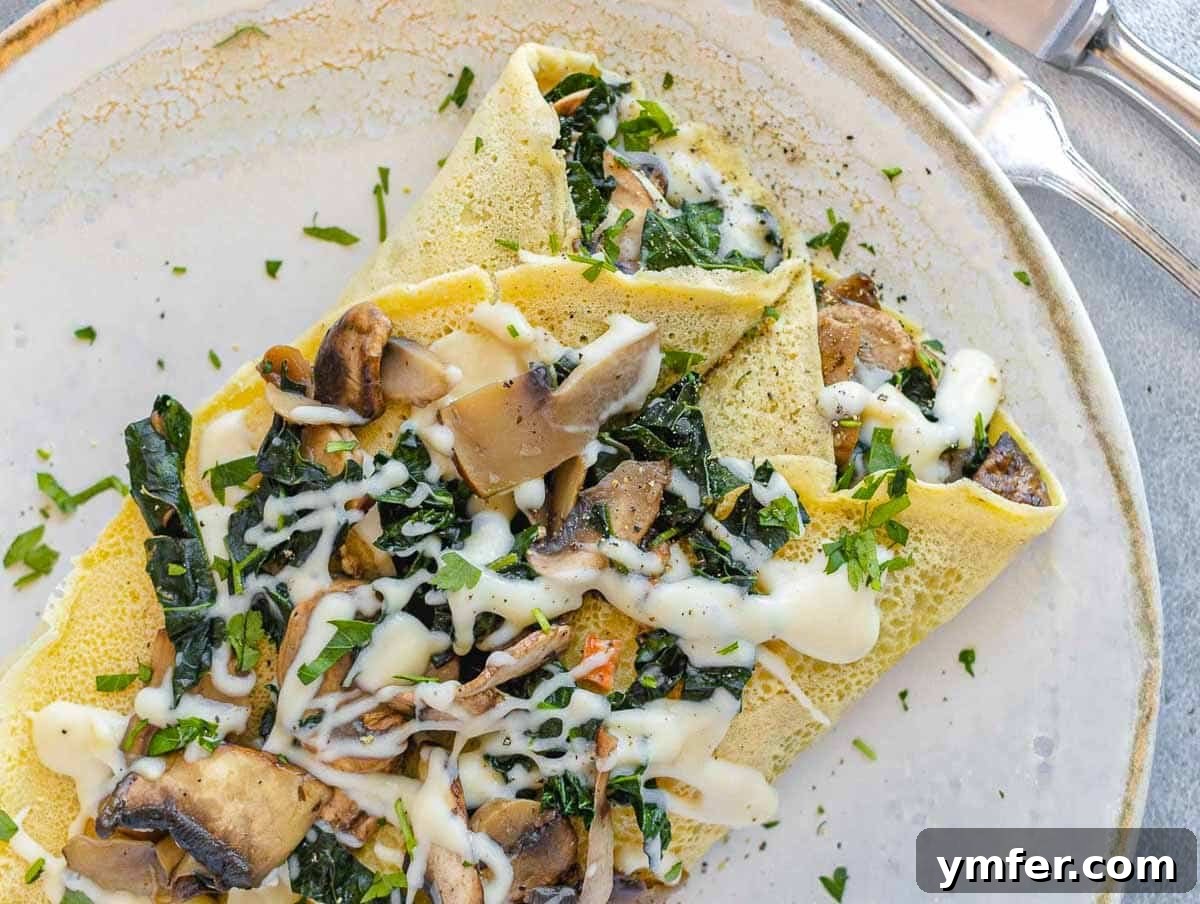
- Savory Crepes & Galettes: Lightly drizzle this silky sauce over delicate savory crepes filled with sautéed vegetables, plant-based cheeses, or mushrooms for an elegant brunch or dinner.
- Mac and Cheese: This béchamel is a fantastic and wholesome base for crafting an ultra-creamy, profoundly satisfying dairy-free macaroni and cheese that rivals any traditional version.
- Moussaka & Pastitsio: Absolutely essential for topping traditional Greek baked dishes like moussaka and pastitsio in their rich, plant-based interpretations.
- Croque Monsieur/Madame: Transform a classic French grilled cheese sandwich into a decadent vegan Croque Monsieur or Madame, showcasing the béchamel’s ability to create a luxurious coating.
- Vegetable Topping: For a simple yet elegant side dish, simply warm the béchamel and generously pour it over steamed or roasted vegetables such as asparagus, green beans, or Brussels sprouts.
- Cream Soups: Utilize this versatile sauce as a natural thickening agent or an enriching base for a variety of creamy vegetable soups, adding depth and silkiness.
- Pot Pies: Incorporate it into the filling of savory vegan pot pies for a comforting, hearty meal.
EXPLORE MORE DELICIOUS VEGAN SAUCES TO ELEVATE YOUR COOKING: Broaden your plant-based culinary repertoire and discover new dimensions of flavor with these other fantastic homemade sauces: Classic White Sauce (traditional version), Vegan Mayo, Marinara Sauce, Tahini Sauce, Chipotle Sauce, Olive Tapenade, Romesco Sauce, Tomato Pesto, Basil Pesto, Chermoula Sauce, Mushroom Gravy, Peanut Sauce, BBQ Sauce, Yogurt Tahini Sauce, Tzatziki, and Chimichurri.
For an even wider selection of delectable sauces, versatile emulsions, and fresh dressings, be sure to check out our comprehensive “Sauce Category Page.”
More Plant-Based Recipes You’ll Love:
Recipes
45 Easy Vegetarian Dinner Recipes
Mains
40 High Protein Vegetarian Meals
Collections
35 Plant-based Recipes for Beginners
Collections
35 Quick & Easy Dinner Ideas
Creamy Vegan White Sauce (Béchamel) Recipe
Nico Pallotta
Our simple recipe uses wholesome ingredients like olive oil, unsweetened non-dairy milk, all-purpose flour, and a touch of nutmeg and pepper to create a versatile plant-based béchamel that everyone will adore.
5 minutes
5 minutes
10 minutes
4 cups
Sauce, Dressing
French, Italian, Vegan
Print Recipe
Ingredients
- 6 tablespoons olive oil or 7 tbsp / 3½ ounces / 100 grams vegan butter
- ⅔ cup all-purpose flour
- 4 cups unsweetened non-dairy milk (soy milk recommended)
- ½ teaspoon sea salt
- 2 twists freshly ground black pepper
- 1 pinch grated nutmeg (optional, but highly recommended for authentic flavor)
Instructions
-
Heat 6 tablespoons olive oil (or melt 100g / 3½ oz vegan butter) in a saucepan over medium heat. Remove the pan from heat, then sift in ⅔ cup all-purpose flour. Whisk immediately and vigorously until a smooth roux forms, ensuring there are no lumps. Return to medium heat and cook, whisking constantly, for 2 minutes to cook out the raw flour taste.

-
Gradually pour 4 cups unsweetened non-dairy milk into the saucepan, whisking continuously and vigorously as you add it. Continue to cook the sauce on medium heat, stirring frequently, for about 5 minutes, or until it thickens to your desired consistency. Remove from heat and season with ½ teaspoon sea salt, 2 twists freshly ground black pepper, and 1 pinch grated nutmeg.
-
Taste the sauce and adjust salt and pepper as needed for perfect flavor balance. The vegan white sauce will continue to thicken slightly as it cools. If you are not using it immediately, please refer to the “Mastering the Art of Cooling Your Vegan Sauce” section above for essential tips to prevent a skin from forming and keep your béchamel perfectly lump-free.
Notes
Ingredient Substitutions:
Olive Oil: Can be substituted with an equal amount of good quality vegan butter for a richer, more buttery flavor profile.
Flour: For a gluten-free alternative, you can successfully use a 1:1 gluten-free all-purpose flour blend. Remember to whisk thoroughly to prevent any lumps from forming.
Non-Dairy Milk: Always ensure the non-dairy milk you choose is unsweetened. While soy milk is highly recommended for its neutral flavor and protein content, unsweetened oat milk can also be a viable option, though it might impart a subtle oat flavor. We advise against using almond milk due to its generally thinner consistency which can affect the sauce’s richness.
Cooling Down Tips to Prevent Lumps:
1. Direct Contact Plastic Wrap: After cooking, allow the sauce to cool slightly while whisking. Then, gently press a piece of plastic wrap directly onto the surface of the sauce. This prevents air contact and the formation of a skin.
2. Active Stirring: Transfer the hot sauce into a cold bowl and stir it periodically as it cools. This active cooling helps maintain a smooth, lump-free consistency throughout the process.
3. Ice Bath (Bain-Marie): For more rapid cooling, submerge the bottom of the saucepan (or bowl) containing the sauce into a larger pot filled with ice-cold water, while continuously stirring the sauce.
Nutrition
, Carbohydrates: 24g
, Protein: 10g
, Fat: 26g
, Saturated Fat: 4g
, Polyunsaturated Fat: 5g
, Monounsaturated Fat: 17g
, Trans Fat: 0g
, Cholesterol: 0mg
, Sodium: 387mg
, Potassium: 343mg
, Dietary Fiber: 2g
, Sugar: 1g
, Vitamin A: 535IU
, Vitamin B6: 0.1mg
, Vitamin C: 0.01mg
, Vitamin E: 3mg
, Vitamin K: 14µg
, Calcium: 325mg
, Folate: 46µg
, Iron: 3mg
, Manganese: 0.2mg
, Magnesium: 48mg
, Zinc: 0.2mg