
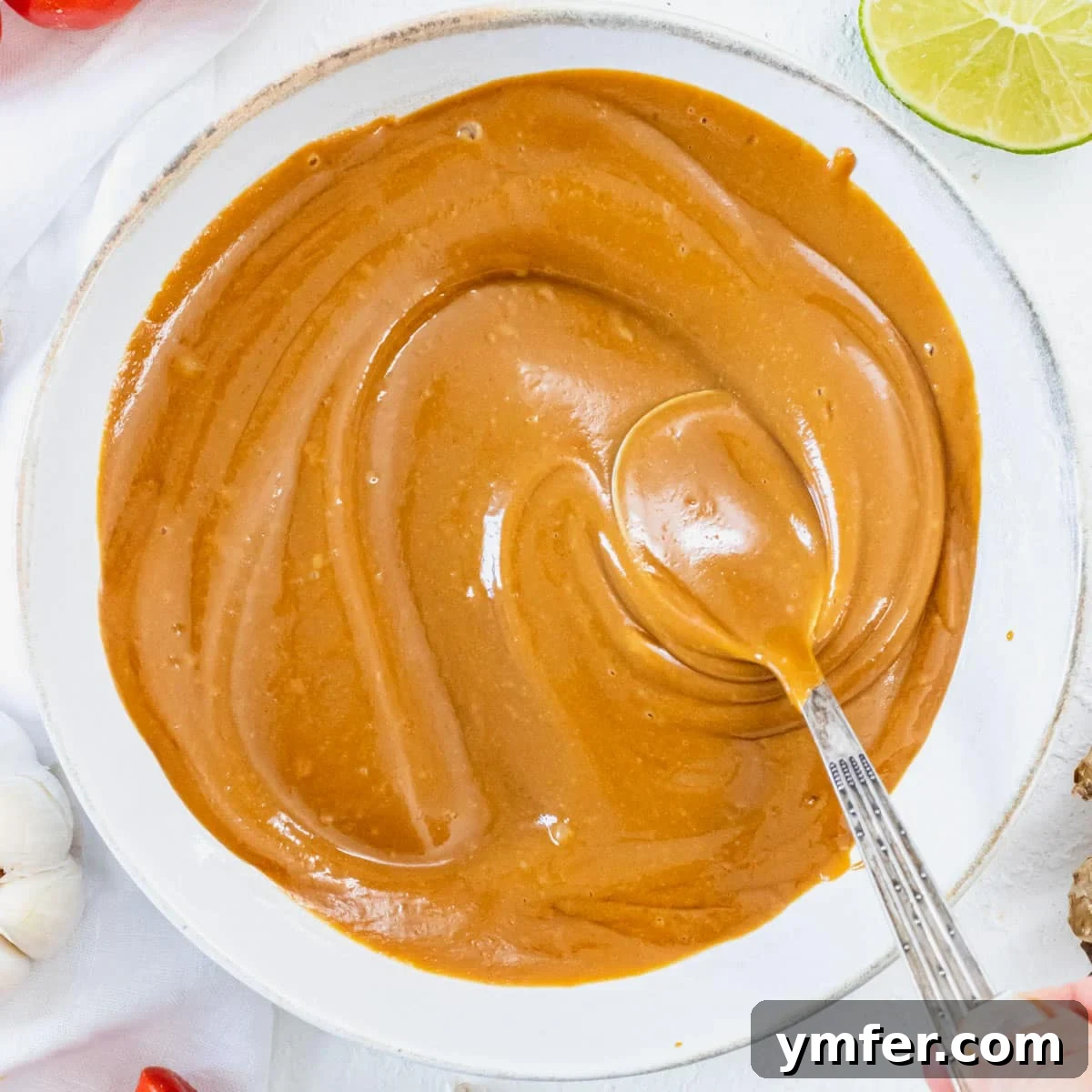
Welcome to your new favorite condiment! This incredibly versatile peanut sauce recipe masterfully blends the rich, creamy texture of peanut butter with the deep, savory notes of soy sauce, the bright zest of fresh lime, a delicate touch of sweetness, and a captivating hint of spiciness. It’s a flavor explosion that promises to elevate almost any dish.
Our rendition is a delightful Thai-inspired peanut sauce, brimming with authentic Southeast Asian flavors. What makes it truly exceptional is how effortless it is to prepare – absolutely no cooking required! In just minutes, you can create a luscious sauce ready to transform your meals, from vibrant Buddha bowls and refreshing salads to succulent skewers and comforting noodle dishes. Prepare to drizzle this irresistible sauce on everything!
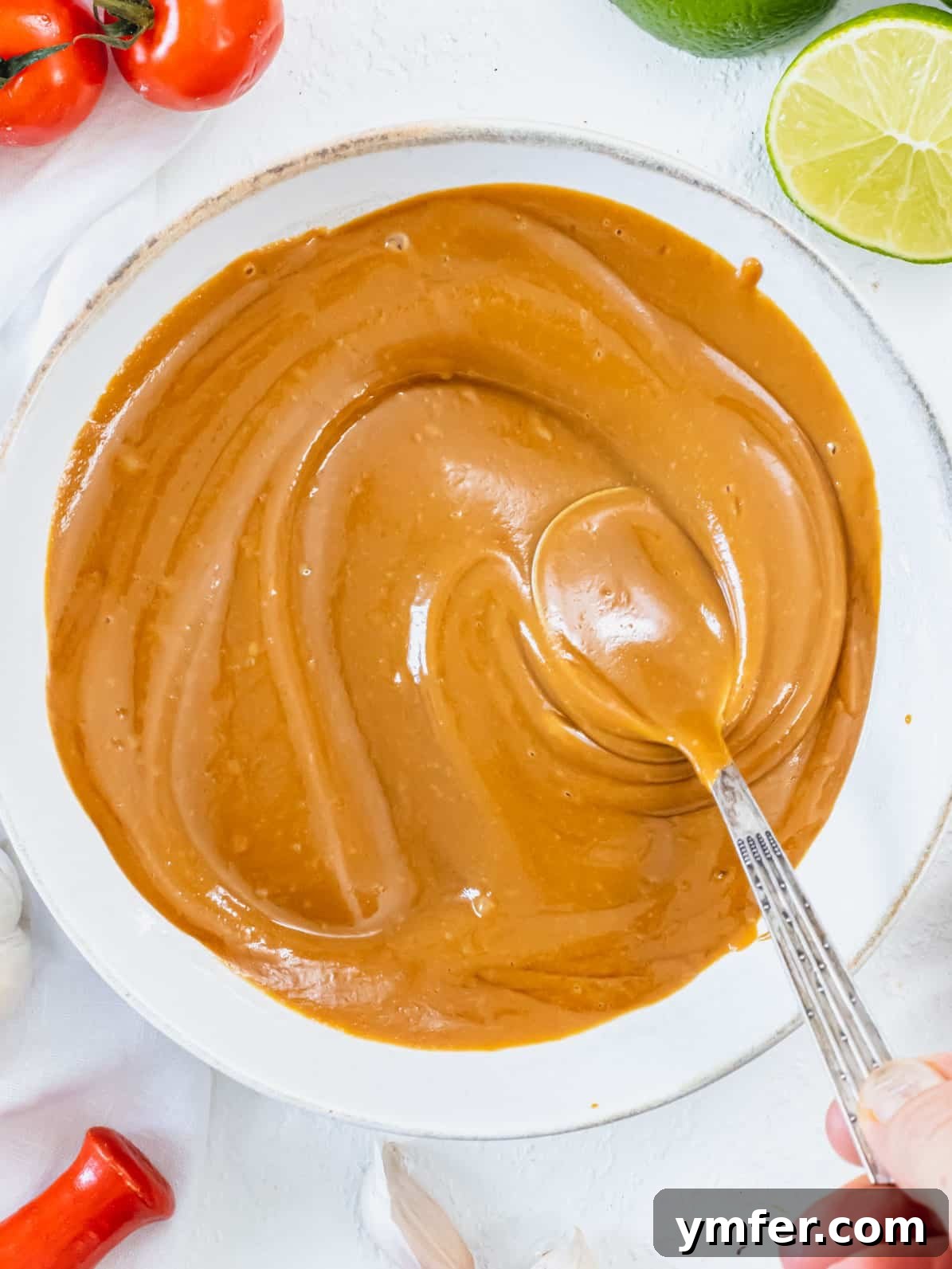
Table of Contents
- Why You’ll Love This Peanut Sauce
- Ingredients & Substitutions for Perfect Peanut Sauce
- How to Make Homemade Peanut Sauce (Step-by-Step)
- Exciting Peanut Sauce Variations
- Creative Serving Suggestions
- Frequently Asked Questions About Peanut Sauce
- Storage Tips for Freshness
- More Irresistible Sauce Recipes
- More Delicious Asian-Inspired Dishes
- Classic Peanut Sauce Recipe Card
Why You’ll Love This Easy Peanut Sauce
Our homemade peanut sauce recipe is designed to be your go-to for many reasons. First, it’s incredibly quick and easy to prepare; there’s absolutely no need for cooking, making it perfect for busy weeknights or when you need a delicious condiment in a flash. Secondly, it’s naturally dairy-free and crafted using common pantry staples that are readily available in most Western supermarkets, simplifying your grocery run.
This sauce boasts a fantastically creamy texture and a flavor profile so captivating, you’ll want to drizzle it on everything! Imagine it enhancing your meals as a rich sauce for peanut noodles, a vibrant dressing for Buddha bowls, or a savory accompaniment to grilled tofu. It also shines as a delightful dipping sauce for crispy air fryer tofu, fresh spring rolls, and a medley of colorful veggies.
While often associated with Thai cuisine, it’s important to note that our recipe is inspired by Thai flavors and differs from traditional Indonesian satay sauce. A key distinction is that our Thai-inspired peanut sauce is not cooked, and we purposefully omit coconut milk, which is often a component of satay sauce. This approach results in a lighter, yet equally rich and intensely flavored sauce that’s distinctly delicious.
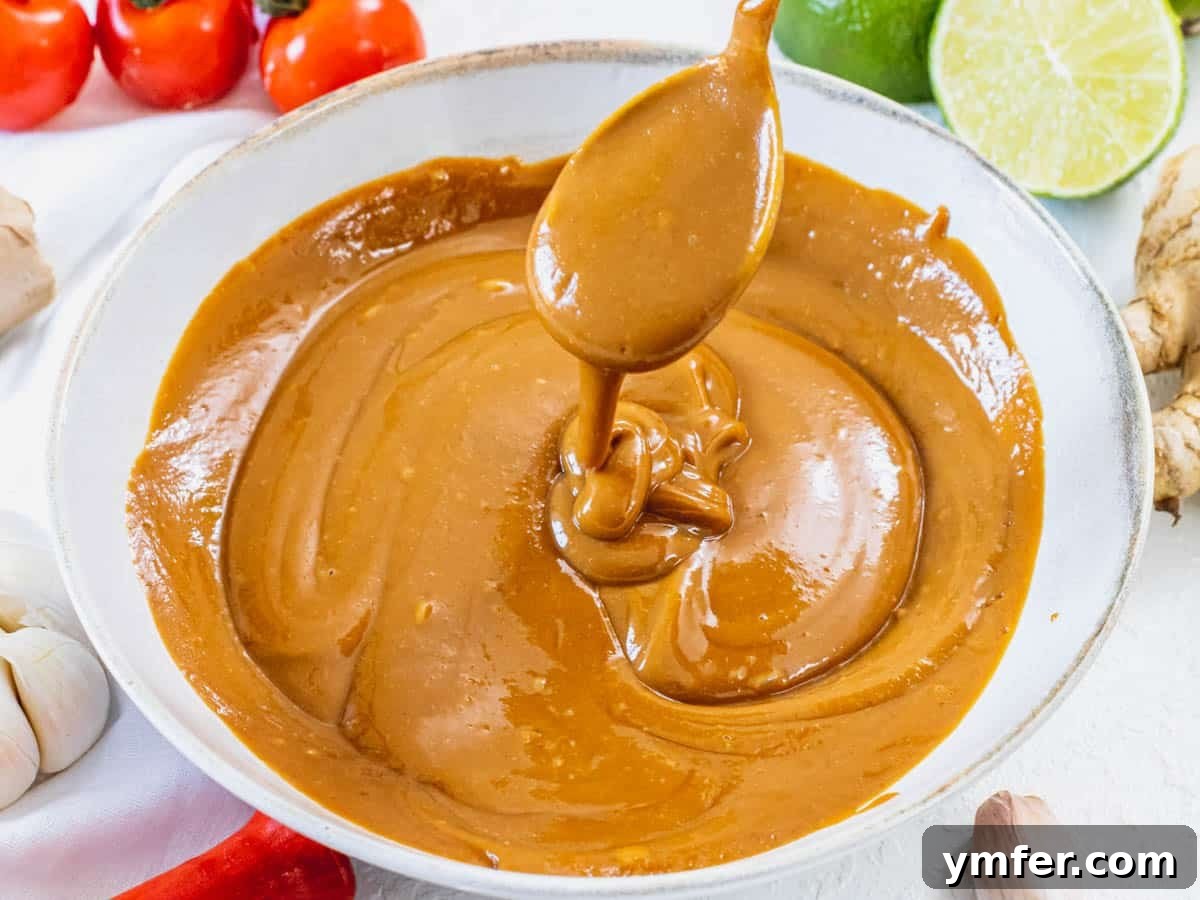
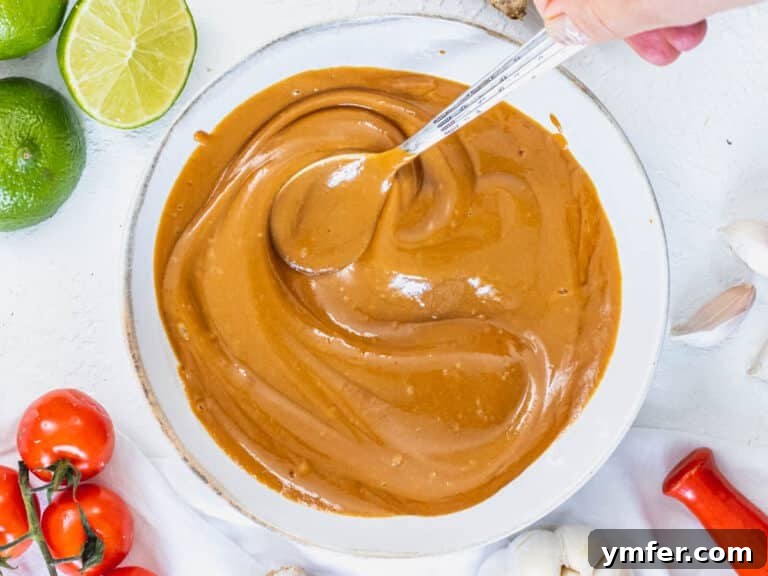
Achieving the perfect consistency is simple. You can effortlessly whisk the ingredients together in a bowl for a slightly rustic texture, or for an ultra-smooth, velvety finish, you can use a blender. Whichever method you choose, you can expect an ultra-creamy, rich, and deeply nutty sauce, beautifully balanced with hints of freshness from citrus and ginger, a pleasing sweetness, and a customizable level of spiciness. It’s truly a versatile powerhouse for your kitchen!
Ingredients & Substitutions for Perfect Peanut Sauce
Crafting the perfect peanut sauce starts with quality ingredients. Below, we break down each component and offer helpful substitutions to suit your dietary needs or preferences.
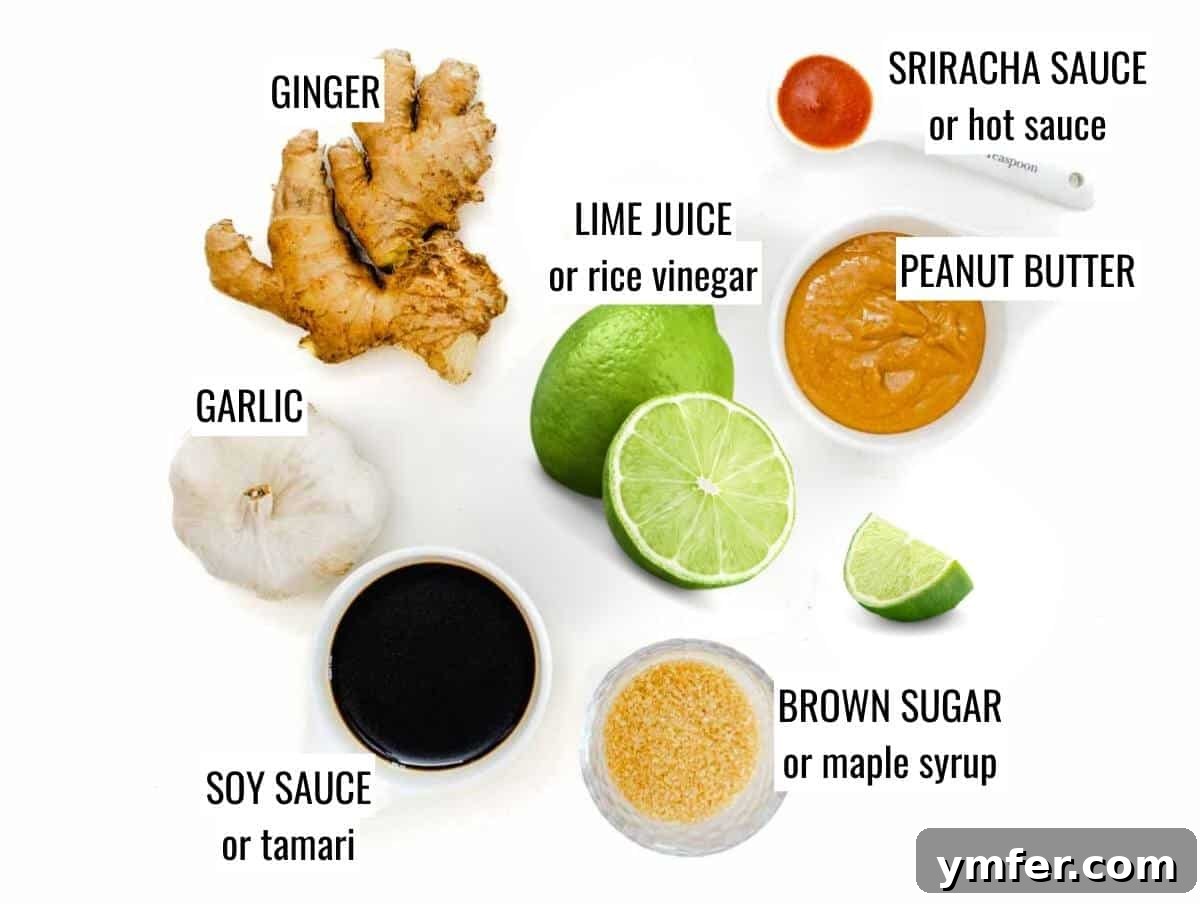
Exact quantities are provided in the recipe card at the bottom of the page.
Peanut Butter
The heart of this sauce! For the best flavor and texture, we highly recommend using 100% pure peanut butter. Always check the label; ideally, it should list only “peanuts” as an ingredient. Many commercial brands often include poor-quality oils, excessive sugar, and emulsifiers, which can compromise both the taste and health benefits of your sauce. You can use either smooth peanut butter for a silky finish or chunky peanut butter if you prefer a bit of texture. If opting for chunky, blending the sauce is advisable for a more uniform consistency.
Substitutions: For an alternative flavor profile, you can substitute almond butter for peanut butter, though this will subtly change the taste. Alternatively, try a blend of half tahini and half peanut butter to introduce a delightful, mild sesame essence to your sauce.
Soy Sauce
Soy sauce is crucial for imparting a rich, umami, and distinctly savory flavor to this recipe, perfectly balancing the sweetness and nuttiness. You can use either regular or low-sodium soy sauce based on your preference for saltiness.
Substitutions: To make this delicious recipe entirely gluten-free, simply substitute tamari or coconut aminos for the soy sauce. Both options provide a similar savory depth without the gluten.
Lime Juice
Fresh lime juice is essential. It provides a bright, acidic lift that adds refreshing freshness and expertly cuts through the richness of the peanut butter and soy sauce, preventing the sauce from becoming too heavy.
Substitutions: If fresh limes are not available, you can substitute rice vinegar for lime juice. It offers a similar tanginess, though with a slightly different aromatic profile.
Sugar
A touch of brown sugar is vital to this recipe. It adds sweetness and plays a critical role in balancing the rich, savory, and tangy flavors, creating a harmonious and well-rounded sauce. While we believe sugar is necessary for the authentic taste, feel free to omit it if you are following a strict sugar-free diet, though the flavor balance will be altered.
Substitutions: For alternative sweeteners, consider coconut sugar, palm sugar, maple syrup, or agave syrup as excellent substitutes for brown sugar. Each will impart a slightly different nuance to the sweetness.
Fresh Garlic
Just a small amount of finely grated fresh garlic is all it takes. It infuses the sauce with a mild, yet distinctly garlicky and zesty flavor that complements the other ingredients beautifully without overpowering them.
Fresh Ginger
Fresh ginger is included specifically for its invigorating freshness and subtle pungent kick. We highly recommend grating it finely to ensure its flavor is evenly distributed throughout the sauce, adding a wonderful aromatic quality.
Sriracha Sauce
For those who appreciate a bit of heat, Sriracha sauce or any other spicy condiment is perfect for adding a customizable spicy kick to this creamy peanut butter sauce recipe. Adjust the amount to your desired level of heat.
Substitutions: If Sriracha isn’t on hand, you can easily substitute Tabasco sauce, your favorite hot sauce, a pinch of red pepper flakes, or a dash of chili powder to achieve a similar spicy warmth.
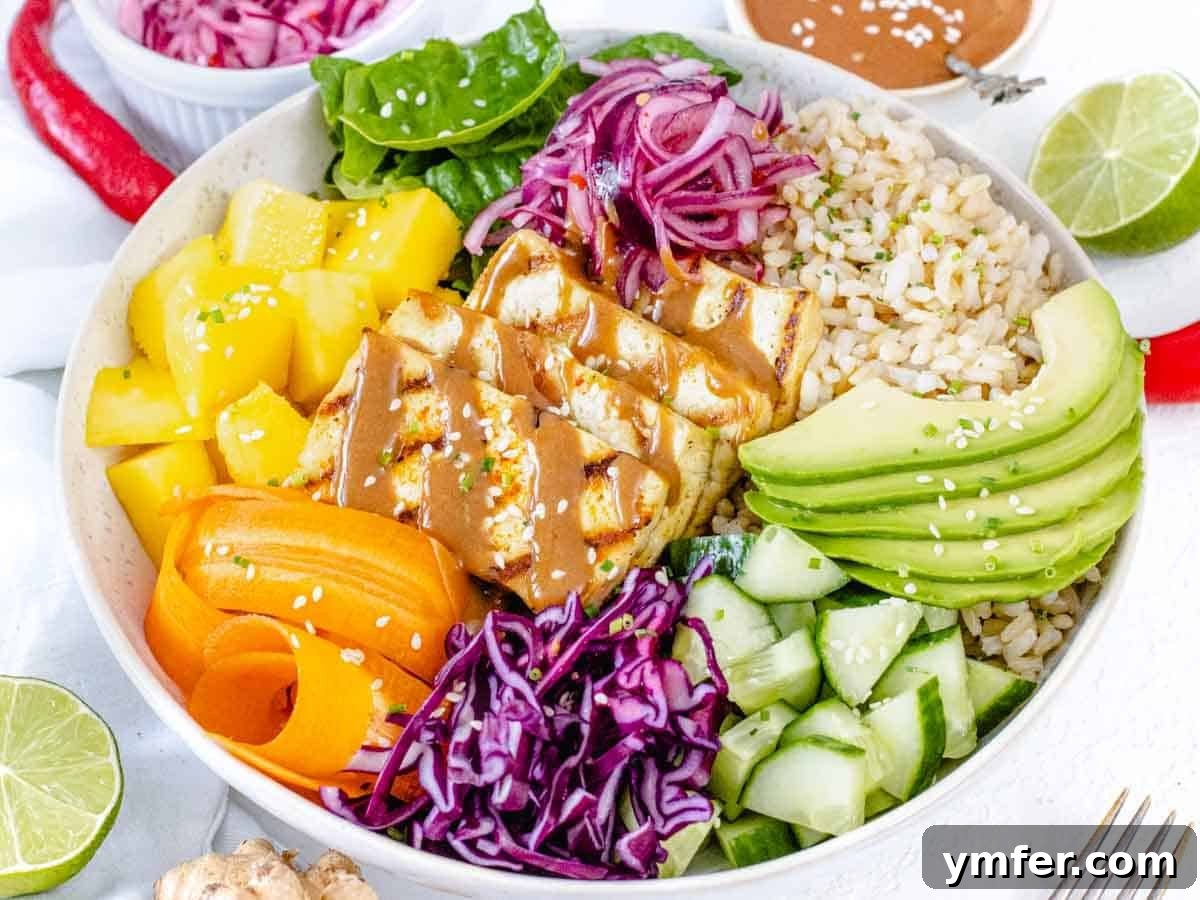
How to Make Homemade Peanut Sauce (Step-by-Step)
Creating this delicious peanut sauce is incredibly simple, requiring minimal effort and no cooking. Here’s how to achieve the perfect creamy consistency every time:
Step 1: Gather Your Ingredients
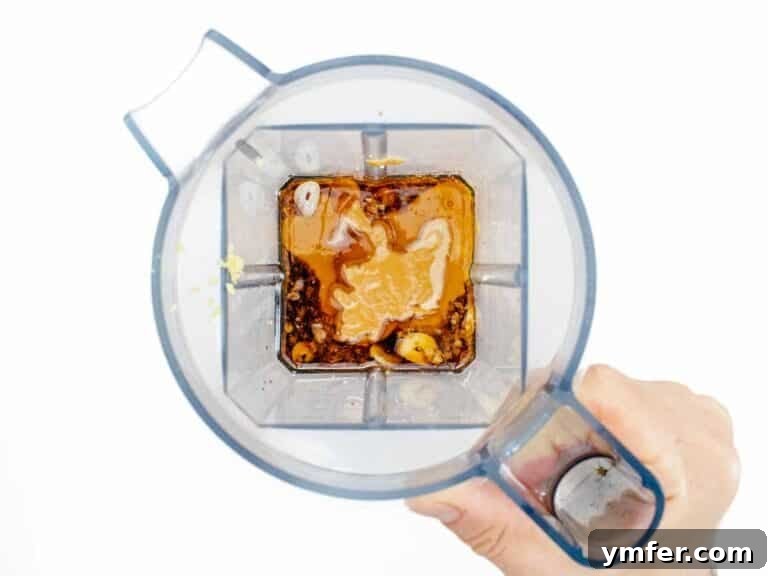
Ensure you have all your ingredients measured and ready. For best results, we recommend finely grating your fresh ginger and garlic to help them integrate smoothly into the sauce and release their full flavor.
Step 2: Blend for Ultimate Smoothness (Recommended Method)
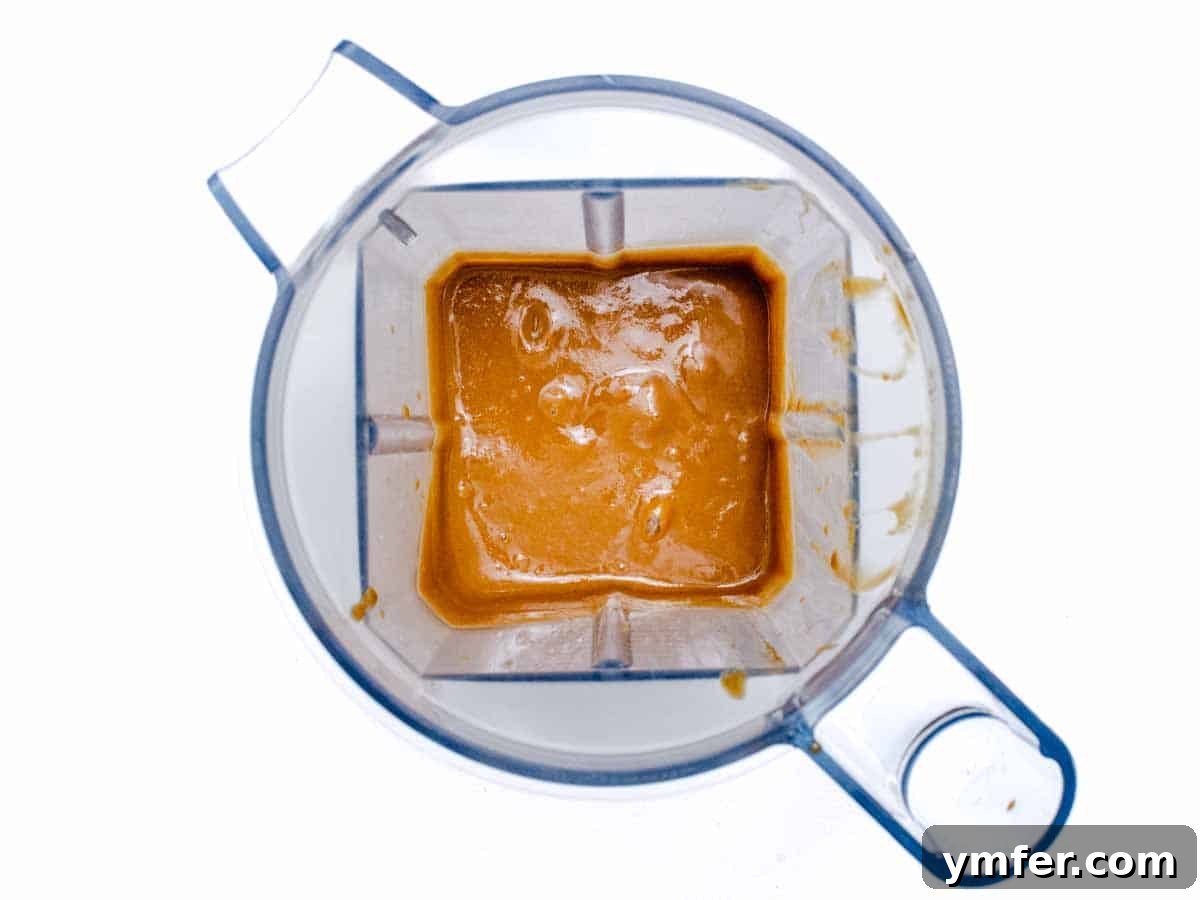
For an exceptionally smooth and emulsified peanut sauce, add all the ingredients to a blender. A high-speed blender will yield the silkiest texture, but a food processor can also work effectively, though it might produce a slightly less refined consistency. Blending ensures that all the flavors meld together beautifully and the sauce reaches its desired creaminess.
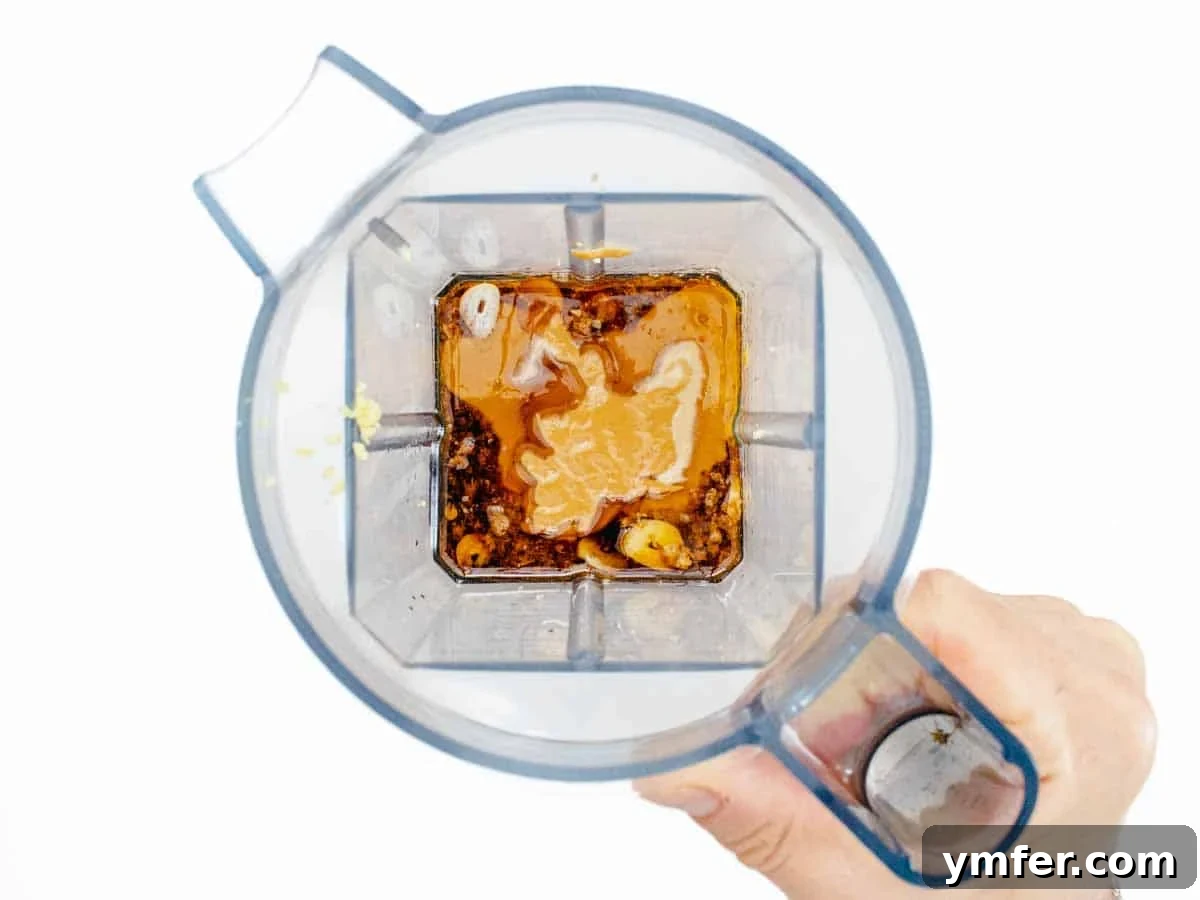
Step 3: Blend to Desired Consistency and Adjust Flavors
Blend the ingredients until you reach your desired consistency and texture. If the sauce is too thick, you can add a tablespoon of water at a time until it thins to your preference. Once blended, taste the sauce. This is your chance to adjust the flavors:
- For more tang: Add a squeeze more lime juice.
- For more sweetness: Stir in a bit more brown sugar or your chosen sweetener.
- For more heat: Add an extra dash of Sriracha or hot sauce.
- For more savory depth: A touch more soy sauce can do wonders.
Alternative Method: Whisking by Hand
Note: You can certainly make this peanut sauce by hand if you don’t have a blender. Simply add all ingredients to a small bowl and whisk vigorously until well combined and relatively smooth. Keep in mind that when made by hand, the sauce won’t achieve the same ultra-smooth consistency as one made with a blender, but it will still be incredibly delicious. Ensure your peanut butter is at room temperature to make whisking easier.
Once perfected, remember that the sauce has a strong, concentrated flavor and is generally best served as an accompaniment to other dishes, rather than consumed on its own.
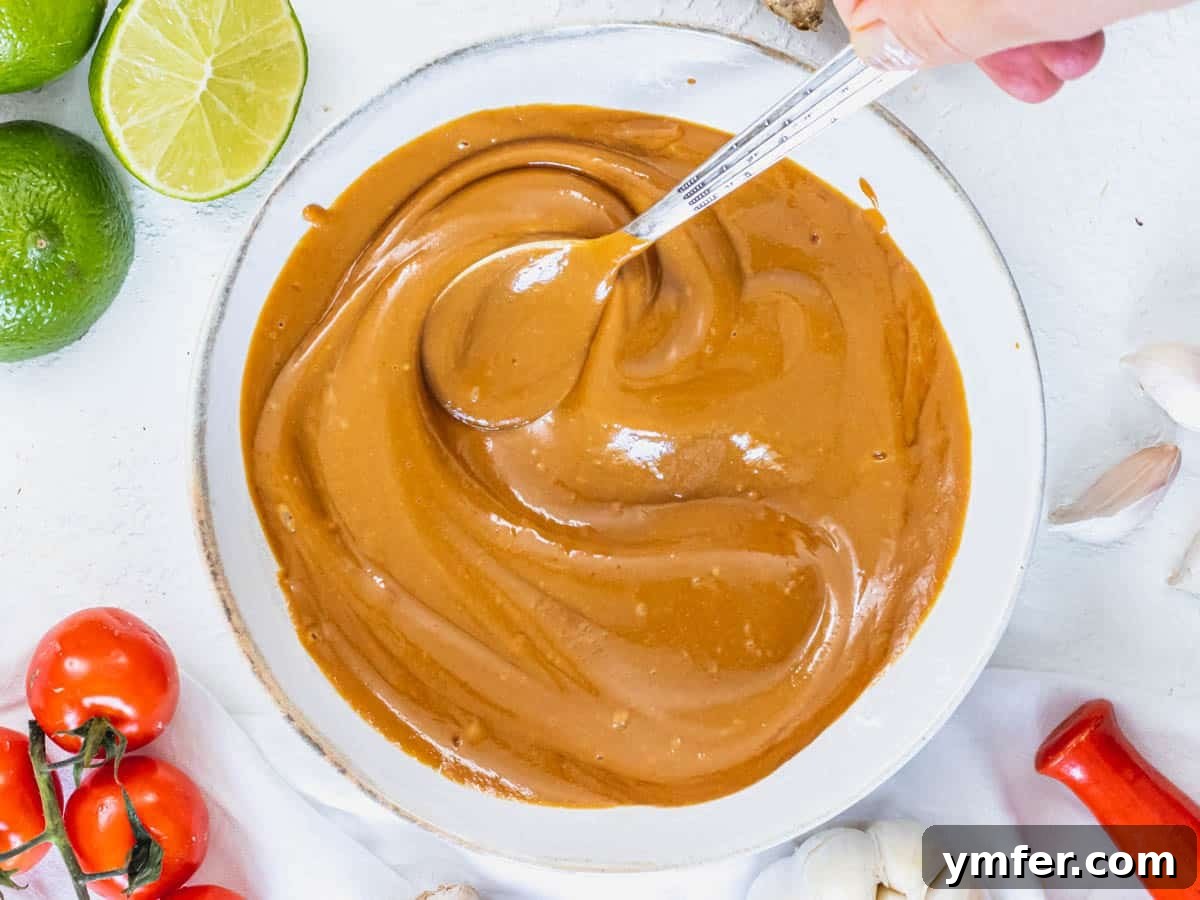
Exciting Peanut Sauce Variations
While our classic peanut sauce is truly outstanding, it also serves as a fantastic base for creativity. Here are a couple of delicious variations you can try to customize your sauce even further:
Tahini Peanut Sauce (Sesame Peanut Sauce)
This variation introduces the nutty, slightly bitter, and deeply aromatic notes of tahini, creating an unbelievably delicious and balanced sauce that’s perfect for sesame lovers. The addition of sesame oil further boosts that irresistible sesame flavor.
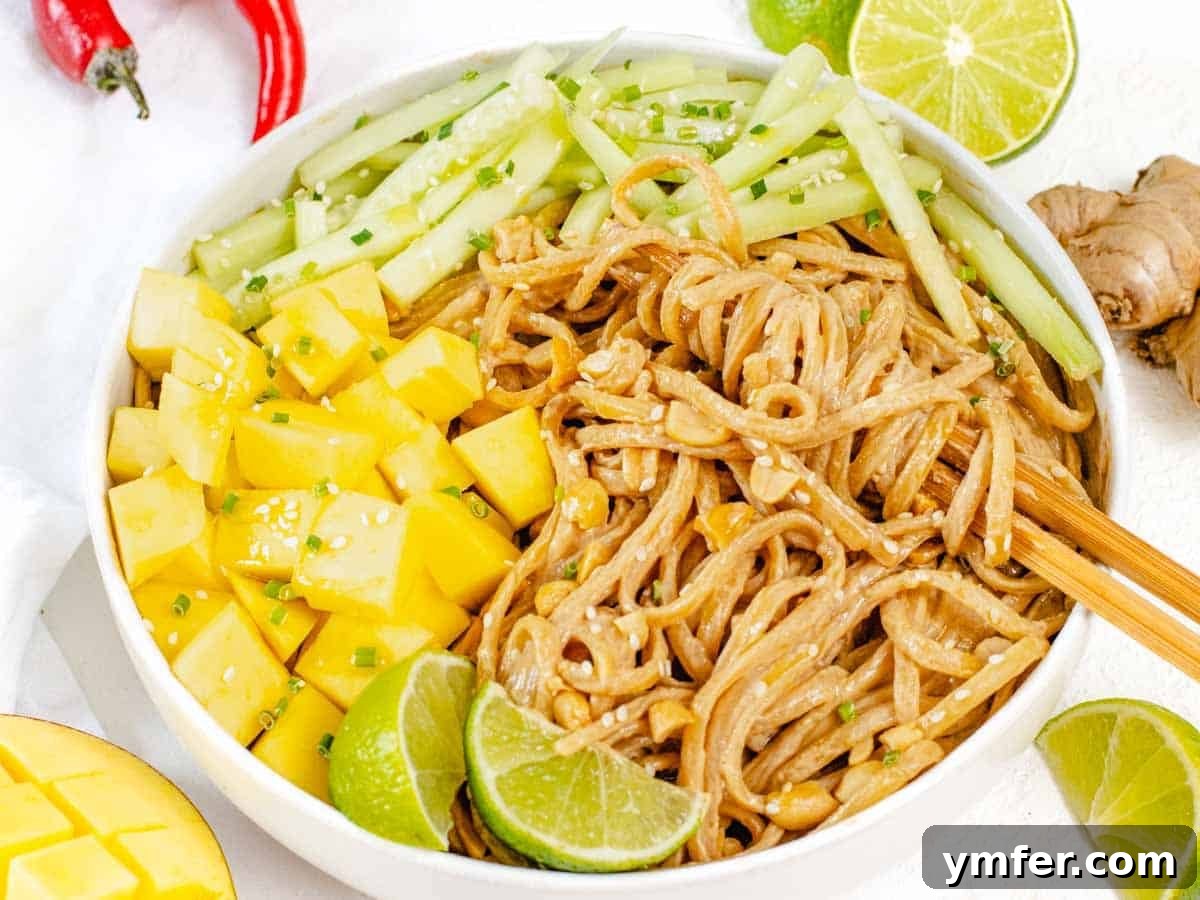
We are sure you’ll love it, especially when paired with savory sesame noodles!
To make this variation, simply blend:
- 3 tablespoons tahini (creamy)
- 3 tablespoons peanut butter
- 4 tablespoons soy sauce or tamari
- 2 tablespoons sesame oil (toasted for more flavor)
- 2 tablespoons rice vinegar or lime juice
- 2 tablespoons sugar or maple syrup
- 1 teaspoon ginger, freshly grated
- 1 clove garlic, freshly grated
- 2 teaspoons sriracha sauce or your favorite hot sauce (adjust to taste)
Extra Spicy Peanut Sauce
If you’re a fan of serious heat, don’t shy away from increasing the amount of Sriracha or hot sauce in the original recipe. For an even more intense kick, consider adding a pinch of dried chili flakes or a small amount of finely minced fresh bird’s eye chili when blending.
Fresh Herb Infusion
For an aromatic twist, blend in a small handful of fresh cilantro or mint leaves with your sauce. This adds a bright, herbaceous dimension that can be particularly refreshing for spring rolls or summer salads.
Creative Serving Suggestions
This easy peanut sauce recipe is exceptionally versatile, making it excellent for dipping, drizzling, or as a rich sauce for noodles and pasta. Its creamy texture and bold flavor can transform simple meals into culinary delights. Here are some of our favorite ways to enjoy it:
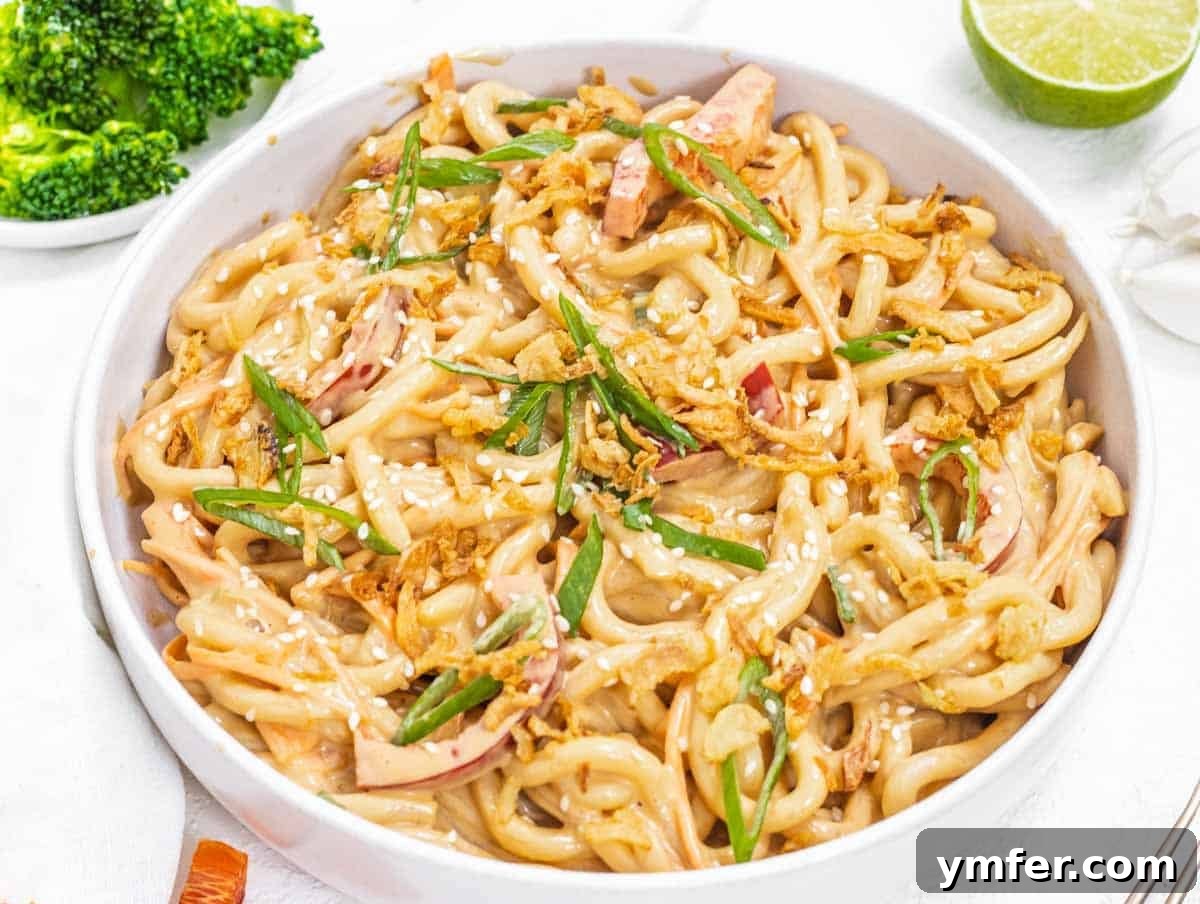
- Peanut Noodles: The most classic pairing! Simply toss warm or cold noodles with a generous amount of the sauce for a quick and satisfying meal. Enhance with fresh veggies and protein.
- Asian Cucumber Salad: Use it as a vibrant dressing for a refreshing cucumber salad, or offer it on the side for dipping crisp cucumber slices.
- Buddha Bowls (Grain Bowls): Drizzle liberally over your favorite Buddha bowl components, including grains, roasted vegetables, and plant-based proteins, to tie all the flavors together.
- Mango Salad: Add a tropical twist to your mango salad by drizzling this creamy sauce over it, complementing the sweet and tangy fruit.
- Grilled Tofu or Tempeh: It’s a perfect marinade or finishing sauce for grilled tofu or tempeh. The rich sauce adheres beautifully, enhancing the savory protein.
- Air Fryer Tofu: Elevate crispy air fryer tofu by dipping each piece or drizzling the sauce generously over a serving.
- Marinated Tofu: A fantastic companion to marinated tofu, adding another layer of complex flavor.
- Spring Rolls & Summer Rolls: The ultimate dipping sauce for fresh or fried spring rolls, offering a creamy, flavorful contrast.
- Vegetable Skewers: Brush this sauce over vegetable skewers before grilling or serve on the side for dipping.
- Sandwiches & Wraps: Spread a thin layer inside your wraps or sandwiches for an unexpected burst of flavor.
To further enhance your dishes, serve your peanut sauce with complementary garnishes such as finely chopped green onions (scallions), crispy fried onions, a sprinkle of toasted sesame seeds, or a side of tangy pickled red onions.
Pair With These Delicious Dishes
Tofu Recipes
Air Fryer Tofu
30-minute meals
Sesame Noodles
Salads
Mango Salad
30-minute meals
Buddha Bowl (Protein Bowl)
Frequently Asked Questions About Peanut Sauce
No, traditional Thai peanut sauce, as it’s often called in Western cuisine, is generally not the same as Indonesian Satay sauce (also known as bumbu kacang or sambal kacang). Indonesian Satay sauce is a rich, complex condiment typically made from roasted or fried peanuts, often cooked for several minutes with ingredients like coconut milk, soy sauce, tamarind, galangal, garlic, and various spices to allow the flavors to meld and deepen. It’s famously served with grilled meat skewers, especially chicken satay.
Conversely, the concept of a single, blended “peanut sauce” doesn’t traditionally exist in Thailand in the same way. In authentic Thai cuisine, you’ll frequently find ground peanuts used as a garnish on dishes, often accompanied by a wedge of fresh lime, a sour dipping sauce, a spicy chili sauce, and a side of sugar. These components are usually served separately for diners to mix and match according to their preference, rather than being combined into one pre-made sauce. Our specific easy peanut sauce recipe is designed to be Thai-inspired, utilizing a similar flavor profile of peanuts, lime, and spice to create a versatile condiment that captures the essence of Thai flavors in an accessible, no-cook format, without the addition of coconut milk or the cooking process typical of Indonesian satay.
To thin out your peanut sauce, simply whisk in a tablespoon of water, lime juice, or even a little unsweetened plant-based milk (like almond milk) at a time until you reach your desired drizzly consistency. For a thicker sauce, you can add more peanut butter, or if you prefer, a small amount of cornstarch slurry (1 tsp cornstarch mixed with 1 tsp cold water, then whisked in) which would require a brief heating, although our recipe is no-cook. A natural way to thicken is to let it sit in the fridge for a while, as it tends to firm up when chilled.
Yes, our recipe is inherently vegan as it contains no animal products. To ensure it’s gluten-free, make sure to use tamari or coconut aminos instead of traditional soy sauce, and always double-check your peanut butter label to confirm it’s 100% peanuts with no hidden gluten-containing additives.
We strongly recommend using natural, unsweetened 100% pure peanut butter, ideally one where the only ingredient listed is “peanuts.” This ensures the purest peanut flavor and avoids unwanted sugars, hydrogenated oils, or emulsifiers that can alter the taste and texture of your sauce. Both creamy and chunky varieties work, but a creamy blend will yield a smoother sauce without a blender.
Storage Tips for Freshness
One of the many benefits of this homemade peanut sauce is its excellent make-ahead potential, making it perfect for meal prepping throughout the week.
Make Ahead: This easy peanut sauce recipe can be prepared up to a week in advance. Its flavors tend to deepen over time, making it an ideal candidate for batch preparation for your weekly meals.
Refrigerator: To keep your sauce fresh, store it in an airtight jar or container in the refrigerator for 5 to 7 days. It’s natural for the sauce to thicken slightly and dry out a bit after a couple of days in the fridge. Before serving, simply give it a good stir. If it’s too thick, you can easily restore its creamy consistency by stirring in a dash of water or a small squeeze of fresh lime juice.
Freezer: We generally do not recommend freezing this recipe. The texture of peanut butter-based sauces can sometimes become grainy or separate upon thawing, losing its desirable creaminess. For best results, it’s always better to enjoy it fresh from the refrigerator within its recommended storage period.
More Irresistible Sauce Recipes
If you adore creamy sauces and flavorful condiments, you’re in the right place! Explore more easy-to-make recipes that will elevate your meals:
- Creamy Tahini Sauce: A versatile, lemon-garlic infused sauce perfect for bowls, salads, and wraps.
- Spicy Chipotle Sauce: Featuring smoky chipotle peppers in adobo, lime, and a creamy base for a fiery kick.
- Authentic Romesco Sauce: A Spanish classic made with roasted peppers, almonds, hazelnuts, and garlic – fantastic with vegetables or pasta.
- Zesty Cilantro Lime Dressing: Bright and refreshing, combining fresh cilantro, lime juice, olive oil, and a touch of sweetness.
- Refreshing Tzatziki Sauce: A cool and creamy Greek-style yogurt sauce with cucumber, mint, dill, and garlic.
Discover More Sauces and Dressings
Sauces and Dressings
Tahini Sauce
Sauces and Dressings
Romesco Sauce
Sauces and Dressings
Chipotle Sauce
Sauces and Dressings
Cilantro Lime Dressing
More Delicious Asian-Inspired Dishes
If you enjoy the vibrant flavors of this Thai-inspired peanut sauce, you’ll surely love exploring more of our Asian-inspired recipes. These dishes are perfect for complementing your new favorite sauce or simply expanding your culinary repertoire.
- Flavorful Braised Tofu: Tender tofu simmered in a rich, aromatic broth.
- Quick Tofu Stir-Fry: A colorful and customizable meal packed with veggies and savory tofu.
- Zesty Kung Pao Tofu: A spicy, sweet, and tangy classic with crispy tofu.
- Sweet & Tangy Orange Tofu: Crispy tofu coated in a vibrant, citrusy orange sauce.
- Comforting Tofu Soup: A light yet satisfying soup, perfect for any time of year.
Explore More Asian-Inspired Plant-Based Meals
Tofu Recipes
Orange Tofu
Tofu Recipes
Tofu Stir Fry
Tofu Recipes
Kung Pao Tofu
Tofu Recipes
Braised Tofu
Classic Creamy Peanut Sauce
Nico Pallotta
5
0
5
6 people
Dressing & Sauces
American, Thai-Inspired
Equipment
-
Blender (or whisk)
Ingredients
- ½ cup peanut butter
- ⅓ cup soy sauce low-sodium, or tamari sauce for gluten-free
- 3 – 4 tablespoons lime juice freshly squeezed
- 2 tablespoons brown sugar or maple syrup, adjust to taste
- 1 – 2 teaspoons sriracha sauce or other hot sauce, for desired spice level
- 1 small clove garlic finely grated
- 1 teaspoon ginger finely grated
Instructions
-
To a blender, add ½ cup peanut butter, ⅓ cup soy sauce, 3 – 4 tablespoons lime juice, 2 tablespoons brown sugar, 1 – 2 teaspoons sriracha sauce, 1 small clove garlic (grated), and 1 teaspoon ginger (grated).
Note: If you prefer to make peanut sauce by hand, combine all ingredients in a small bowl and whisk until smooth. The sauce may not be as ultra-creamy as a blended version.
-
Blend until you achieve your desired consistency and texture. If the sauce is too thick, add a small amount of water (1 tablespoon at a time) until it reaches your preferred drizzly or dipping consistency. Taste the sauce and adjust the lime juice and sugar as needed to achieve your perfect balance of sweet, sour, savory, and spicy flavors.
Notes
STORAGE
Make ahead: This peanut sauce recipe is excellent for meal prep and can be made up to a week in advance.
Refrigerator: Store in an airtight jar in the fridge for 5 to 7 days. The sauce may thicken; stir in a dash of water or lime juice before serving to restore consistency.
Freezer: Freezing is not recommended as it may alter the texture of the sauce.
Nutrition Information (per serving)
Carbohydrates: 10g,
Protein: 6g,
Fat: 11g,
Saturated Fat: 2g,
Polyunsaturated Fat: 3g,
Monounsaturated Fat: 5g,
Trans Fat: 0g,
Cholesterol: 0mg,
Potassium: 190mg,
Dietary Fiber: 1g,
Sugar: 6g,
Vitamin A: 5IU,
Vitamin B6: 0.1mg,
Vitamin C: 3mg,
Vitamin E: 2mg,
Vitamin K: 0.1µg,
Calcium: 20mg,
Folate: 26µg,
Iron: 1mg,
Manganese: 0.4mg,
Magnesium: 47mg,
Zinc: 1mg
Tried this recipe?
Leave a comment below or mention @theplantbasedschool on Instagram. We love hearing from you ⭐️ 💚.
If you loved this creamy peanut sauce recipe, you might also enjoy these related articles for further culinary inspiration:
More Plant-Based Inspiration
Collections
25 Easy Vegan Sauces
Mains
40 High Protein Vegetarian Meals
Collections
50 Best Salad Recipes
Collections
40 Meatless Dinner Ideas