
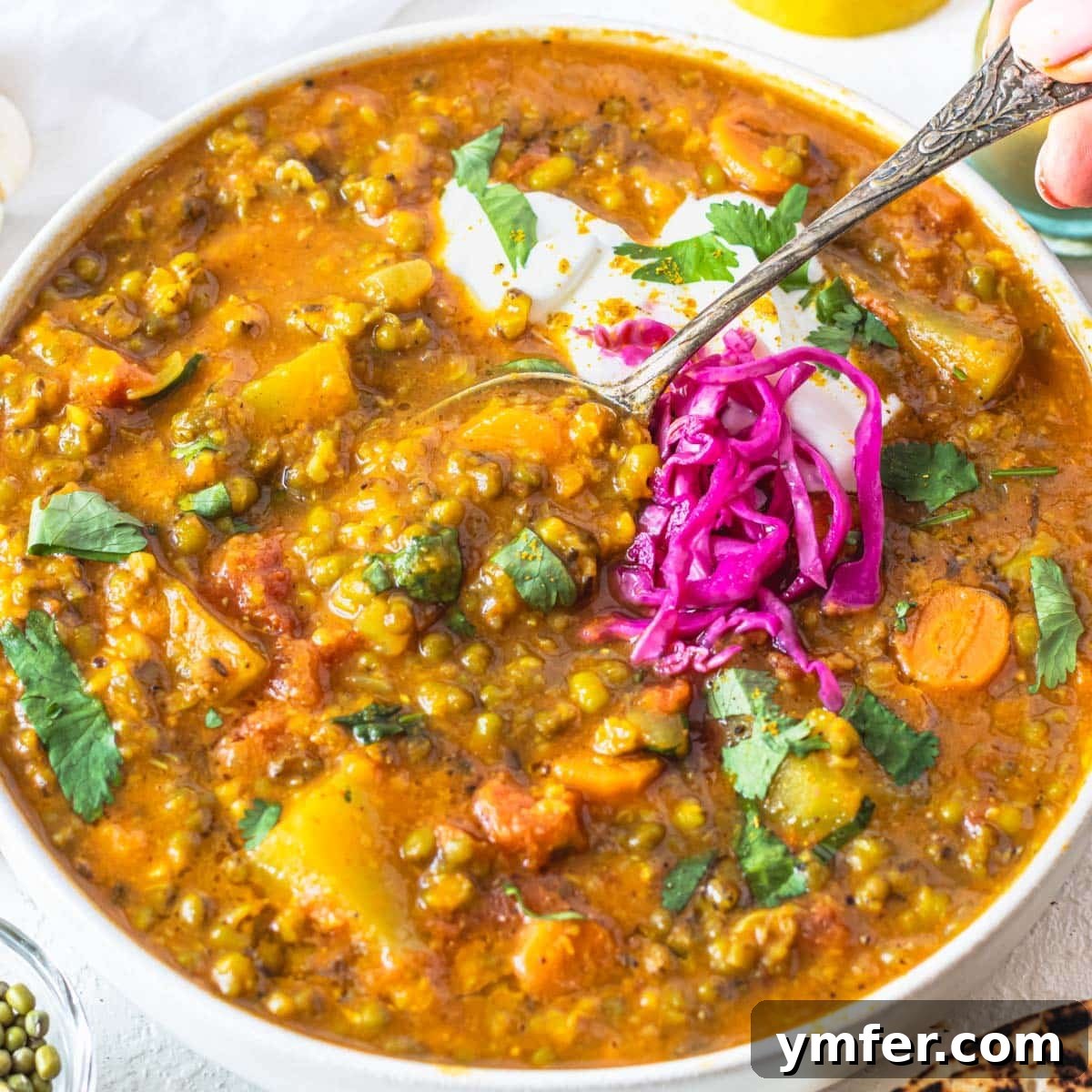
Wholesome Mung Bean Soup: A High-Protein, One-Pot Meal for Healthy Living
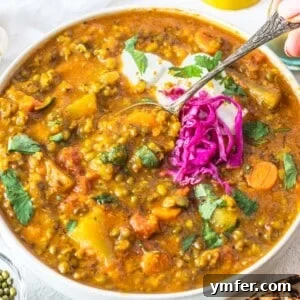
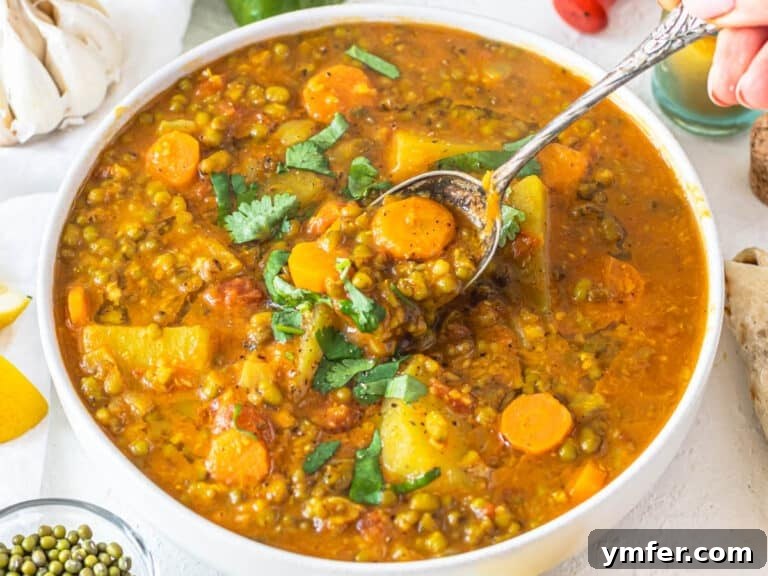
Discover the delightful simplicity of Mung Bean Soup – an effortlessly delicious and incredibly nourishing recipe perfect for a high-protein weeknight dinner or efficient meal prep. This one-pot wonder brings together vibrant flavors and wholesome ingredients, making it a staple for anyone seeking healthy, plant-based meals.
Looking for more protein-packed soup ideas? Explore our popular tofu soup, a hearty curry lentil soup, and our comforting split pea soup.
Short on time? Get straight to the recipe! JUMP TO RECIPE HERE!
Why This High-Protein Mung Bean Soup Will Become Your New Favorite
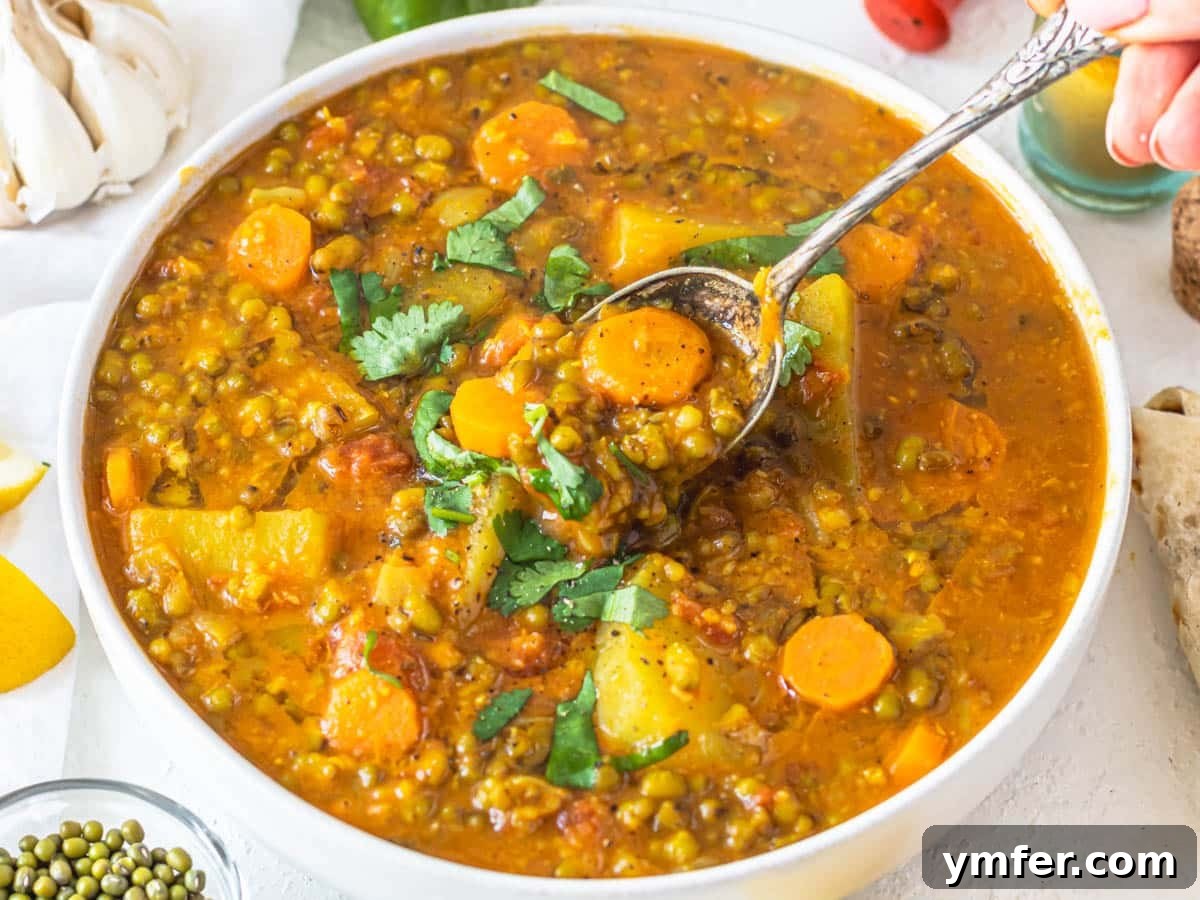
Our Mung Bean Soup recipe draws inspiration from our community’s beloved curry lentil soup, building on that foundation of flavor and simplicity. Made with whole mung beans, this recipe stands out as one of our top one-pot creations. With minimal fuss and readily available ingredients, you can have a deeply satisfying meal on your table in approximately 45 minutes.
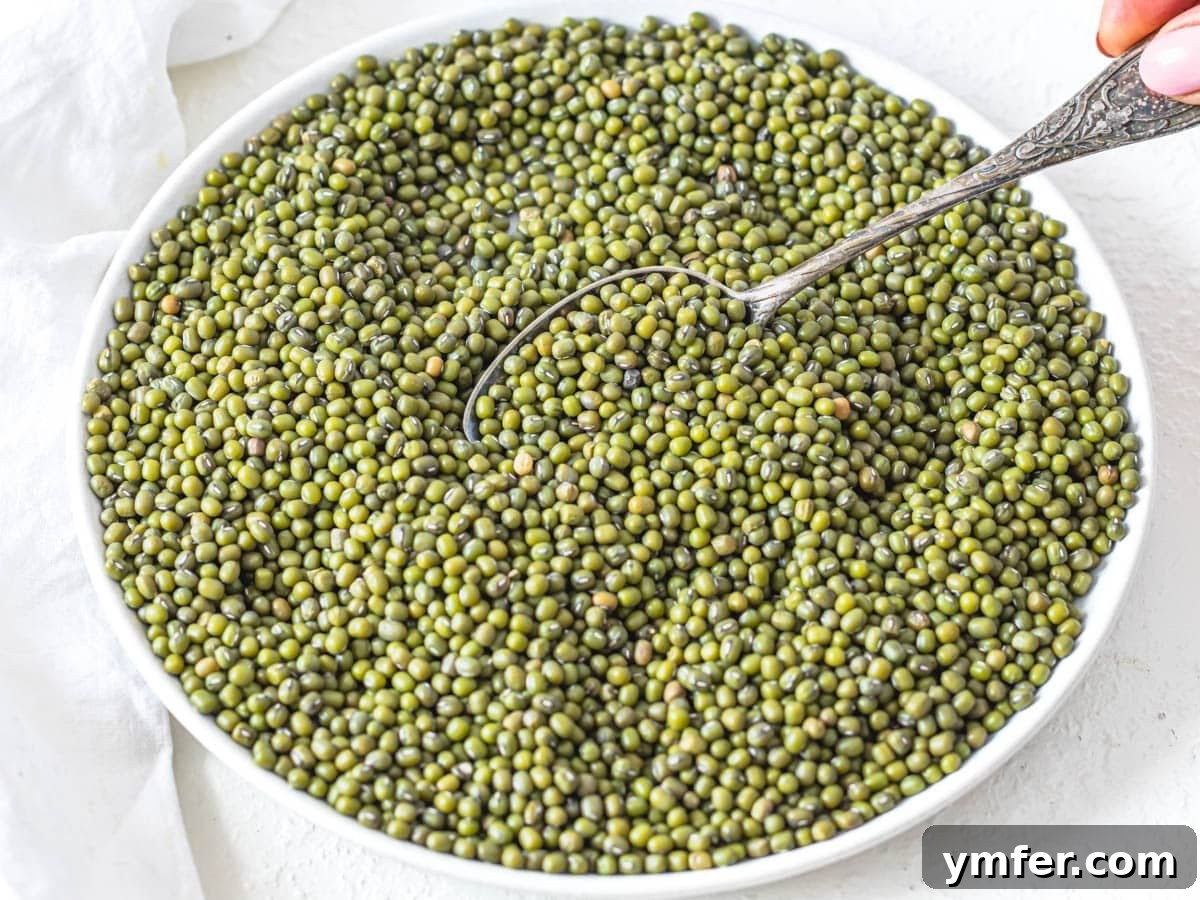
Whole mung beans are a powerhouse legume, boasting a beautiful green hue and a size slightly larger than typical lentils. Their flavor profile is subtly nutty and mild, reminiscent of green or brown lentils but with a unique sweetness. One of their greatest advantages is that they don’t require pre-soaking and cook to tender perfection in just 30 to 40 minutes, making them ideal for quick, nutritious meals.
This Mung Bean Soup is an excellent source of wholesome plant protein, making it a fantastic option for those aiming to reduce their meat consumption or simply incorporate more plant-based nutrition into their diet. As we delve deeper into global cuisines to develop recipes like this, we continually discover and fall in love with these traditionally valued, often underappreciated, plants.
What Exactly Are Mung Beans? Unpacking This Versatile Legume
Mung beans, scientifically known as Vigna radiata, are small, green legumes primarily cultivated in East and South Asia. They are known by various names such as Green Gram, Munggo, and Monggo, and form a dietary staple in countries like India, China, and the Philippines. Their mild flavor and incredible versatility make them a culinary delight.
You’ll commonly find mung beans in two main forms:
- Whole Mung Beans: These are the whole, unhulled green beans used in this hearty soup recipe. They retain their skin, which contributes to their fiber content and earthy flavor.
- Split Mung Beans (Moong Dal): These are mung beans that have been hulled and split, resulting in a quicker cooking time and a softer texture. They are typically yellow and commonly used in Indian dal dishes.
Whole mung beans are becoming increasingly available beyond specialty stores. You can often find them in the dry goods section of larger supermarkets, health food stores, Asian grocery stores, or conveniently order them online. If whole mung beans are not available, dry green, brown, or black lentils make excellent substitutes, offering a similar texture and nutritional profile, though their cooking times might vary slightly.
The Abundant Health Benefits of Mung Bean Soup
This delicious Mung Bean Soup isn’t just a treat for your taste buds; it’s a nutritional powerhouse. Incorporating mung beans into your diet offers a multitude of health advantages:
- Rich in Plant-Based Protein: Mung beans are an excellent source of plant protein, essential for muscle repair, growth, and overall bodily functions. This makes the soup particularly beneficial for vegetarians, vegans, or anyone looking to increase their protein intake without relying on meat.
- High in Fiber: Loaded with dietary fiber, mung beans promote healthy digestion, help prevent constipation, and contribute to a feeling of fullness, which can aid in weight management. Fiber also plays a role in regulating blood sugar levels.
- Packed with Vitamins and Minerals: Mung beans are a good source of various essential nutrients, including B vitamins (especially folate), magnesium, potassium, iron, zinc, and manganese. These nutrients are crucial for energy production, nerve function, blood formation, and immune support.
- Antioxidant Properties: Mung beans contain powerful antioxidants that help combat oxidative stress in the body, protecting cells from damage and reducing the risk of chronic diseases.
- May Lower Cholesterol: Studies suggest that mung beans can help reduce levels of “bad” LDL cholesterol, contributing to better heart health.
- Blood Sugar Regulation: The high fiber and protein content in mung beans helps stabilize blood sugar levels, making this soup a great option for individuals managing diabetes or looking to maintain stable energy throughout the day.
Combined with the array of fresh vegetables and aromatic spices, this Mung Bean Soup provides a holistic and balanced meal that supports your well-being in numerous ways.
Essential Ingredients for Your Mung Bean Soup
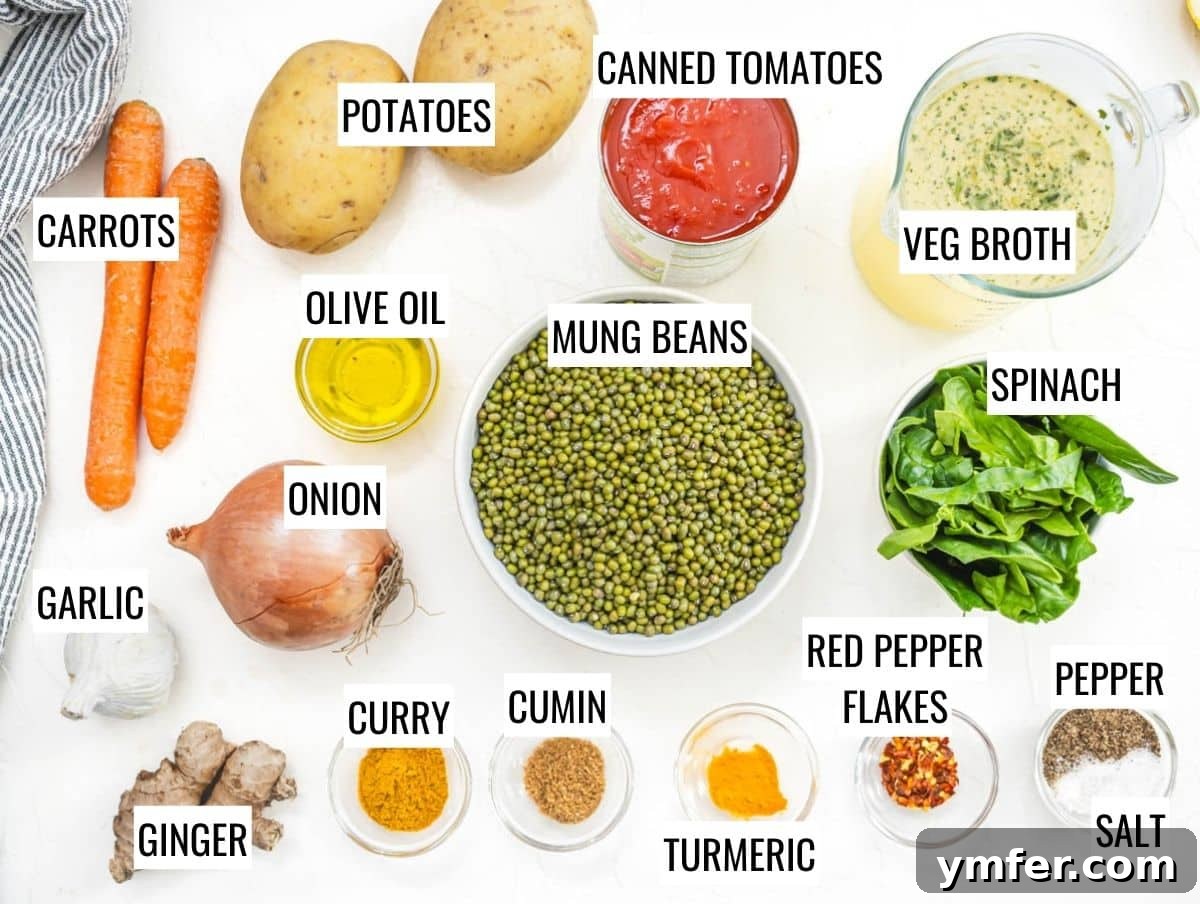
You’ll find precise quantities in the recipe card at the bottom of the page.
Mung Beans
As the star of our soup, whole mung beans provide a robust, earthy base and incredible nutritional value. They cook relatively quickly without pre-soaking. If you can’t find whole mung beans, dry green, brown, or black lentils are excellent substitutes, offering a similar texture and a delicious alternative flavor profile.
Aromatic Flavor Base
- Extra virgin olive oil: This forms the foundation of our sautéed aromatics. You can easily substitute with regular olive oil, avocado oil, or any neutral cooking oil.
- Yellow onion: Provides a sweet and savory depth once caramelized. White onion, shallots, or even red onion can be used in its place for a slightly different nuanced flavor.
- Carrots: Add natural sweetness and vibrant color.
- Garlic: Essential for its pungent aroma and depth of flavor. Freshly grated garlic is always best.
- Ginger: Offers a warm, slightly spicy kick that perfectly complements the mung beans and spices. Freshly grated ginger is highly recommended.
Warming Spices
Our spice blend creates a comforting and aromatic experience:
- Curry powder: A foundational spice blend that brings warmth and complexity. Choose your preferred mild or medium variety.
- Ground cumin: (Optional, but highly recommended) Adds an earthy, robust note that pairs wonderfully with legumes.
- Turmeric powder: Offers a beautiful golden color and mild, earthy flavor, along with its renowned anti-inflammatory properties.
- Red pepper flakes: For a gentle warmth. Adjust the quantity to your preferred level of heat.
For an extra layer of complexity, consider adding other complementary spices such as ground coriander, bay leaves, or garam masala.
Hearty Potatoes
Potatoes contribute a delightful creaminess and a satisfying, earthy richness to the soup. They make the soup more substantial and are incredibly delicious when cooked with mung beans. We highly recommend including some peeled and diced potatoes.
If you’re looking for alternatives or wish to vary the texture, sweet potatoes, cauliflower, broccoli florets, diced zucchini, butternut squash, or pumpkin can all be fantastic substitutes, each adding its unique flavor and nutritional benefits.
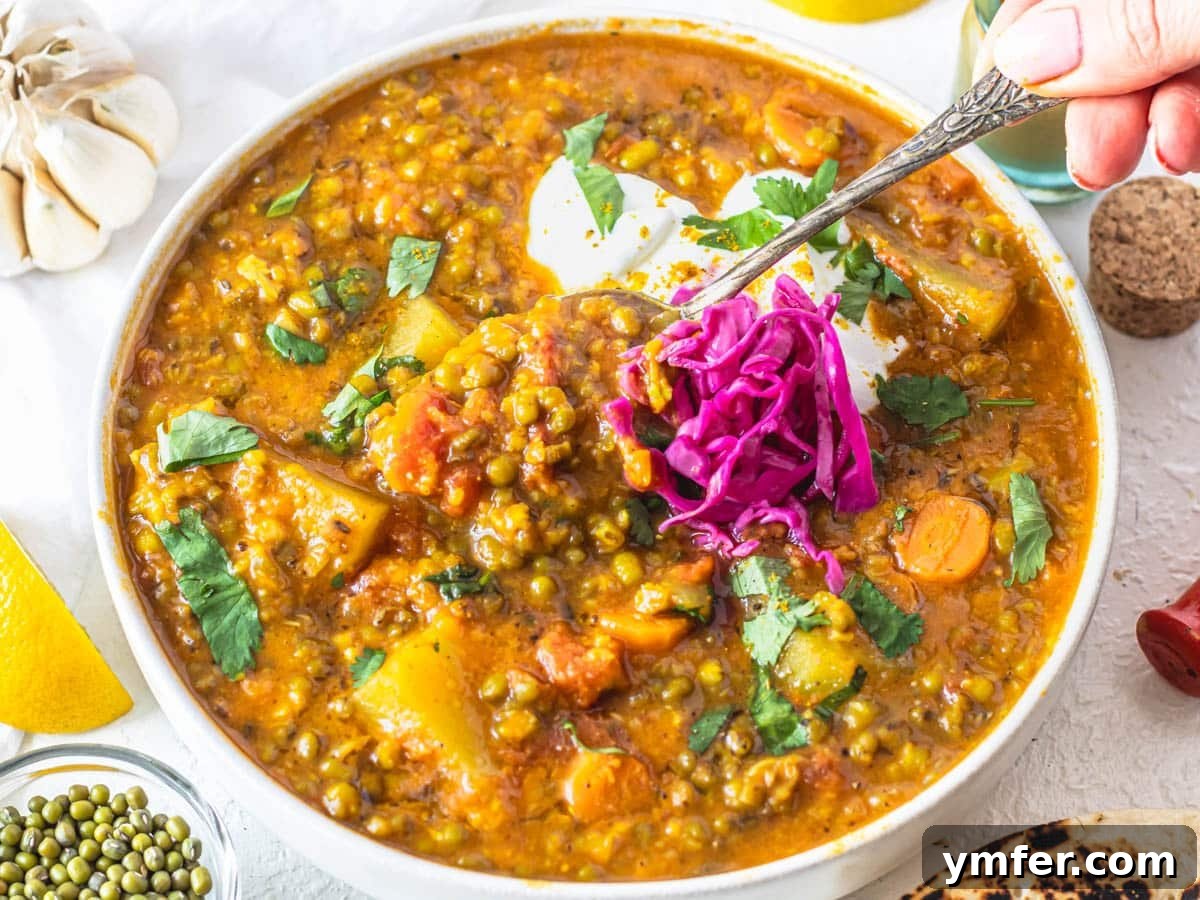
Crafting Your Mung Bean Soup: A Step-by-Step Guide
Find detailed US cups and grams measurements in the recipe card below.
Preparing this Mung Bean Soup is a straightforward process, making it perfect for busy weeknights:
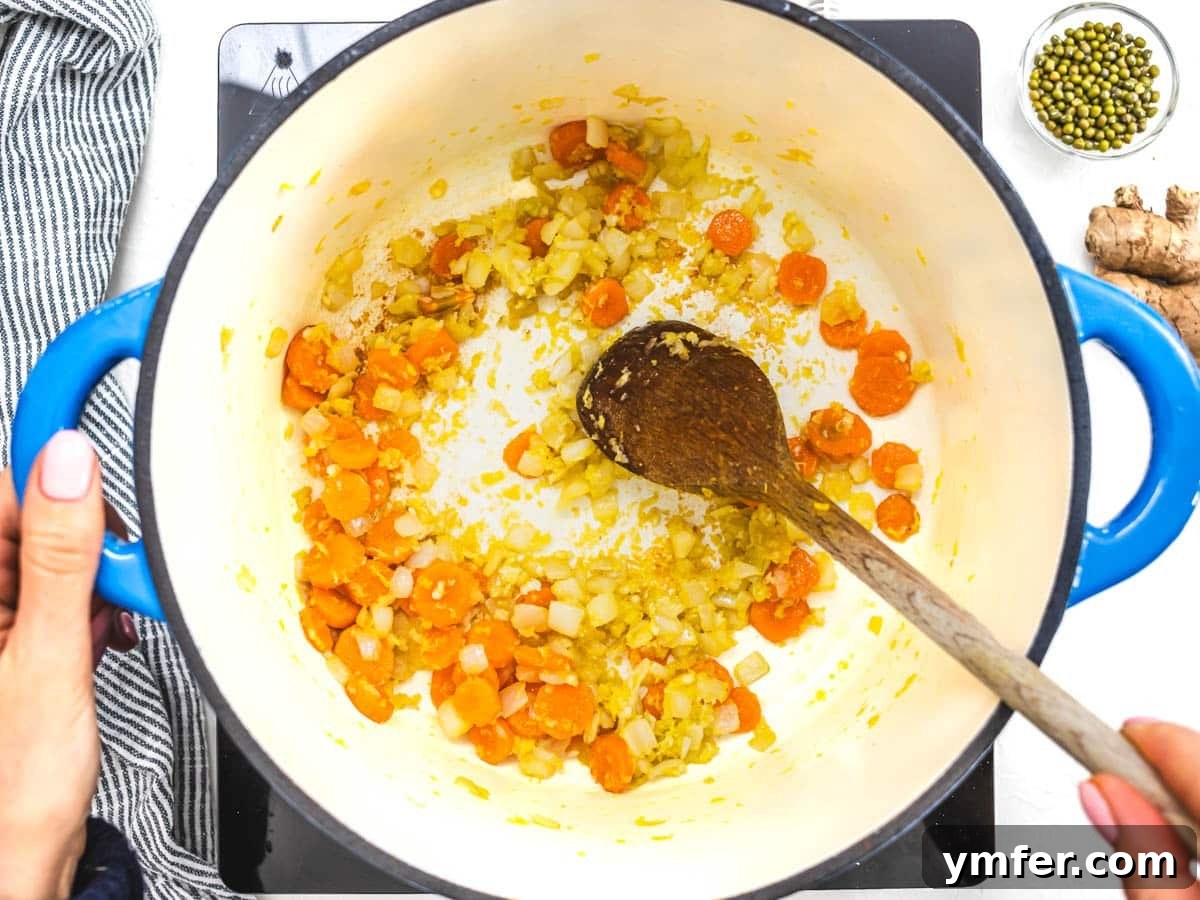
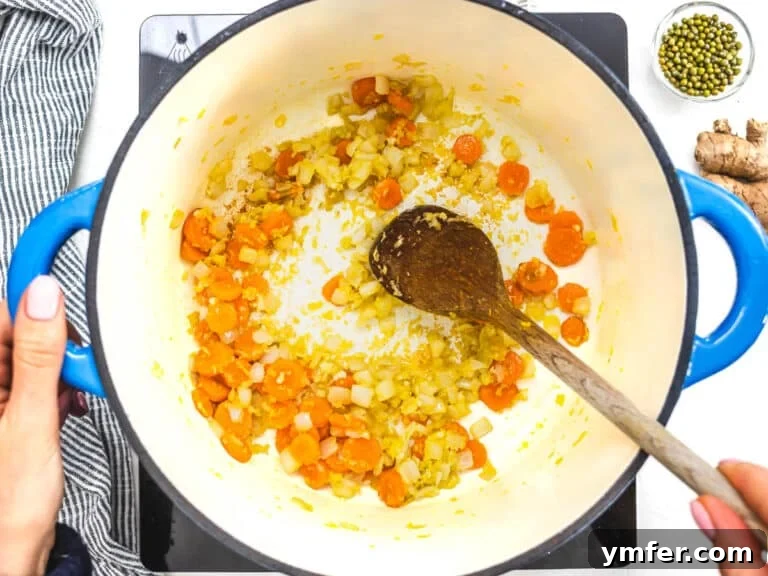
- Sauté the Aromatics: Begin by heating the extra virgin olive oil in a large pot or Dutch oven over medium heat. Add the chopped onion and sliced carrots, sautéing for about 5 minutes until the onion becomes translucent and fragrant. This step builds the foundational flavor of your soup.
-

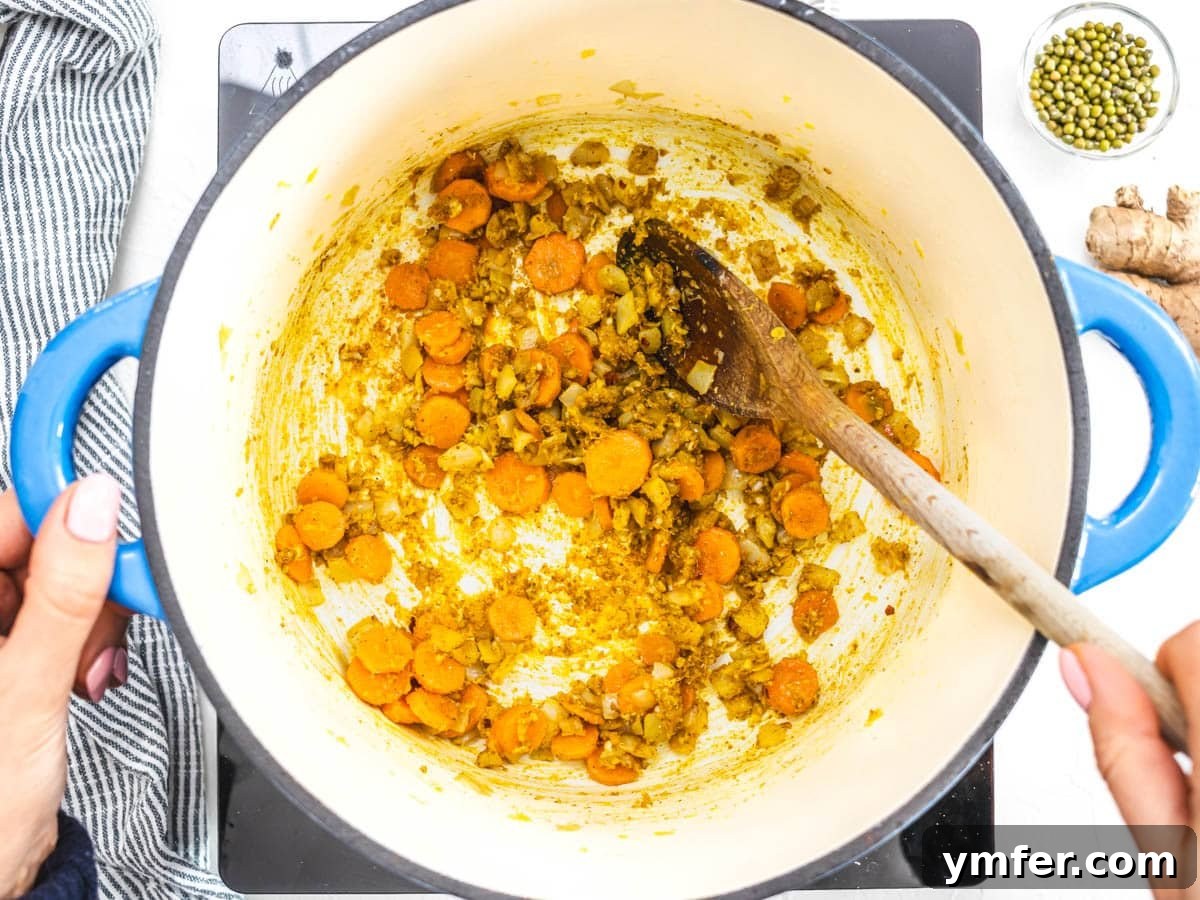
- Bloom the Spices: Introduce the grated ginger and grated garlic, followed by the dry spices: curry powder, turmeric powder, ground cumin (if using), and red pepper flakes. Continue to sauté for just one more minute. This brief cooking time “blooms” the spices, intensifying their aroma and flavor. Be careful not to burn them.
-
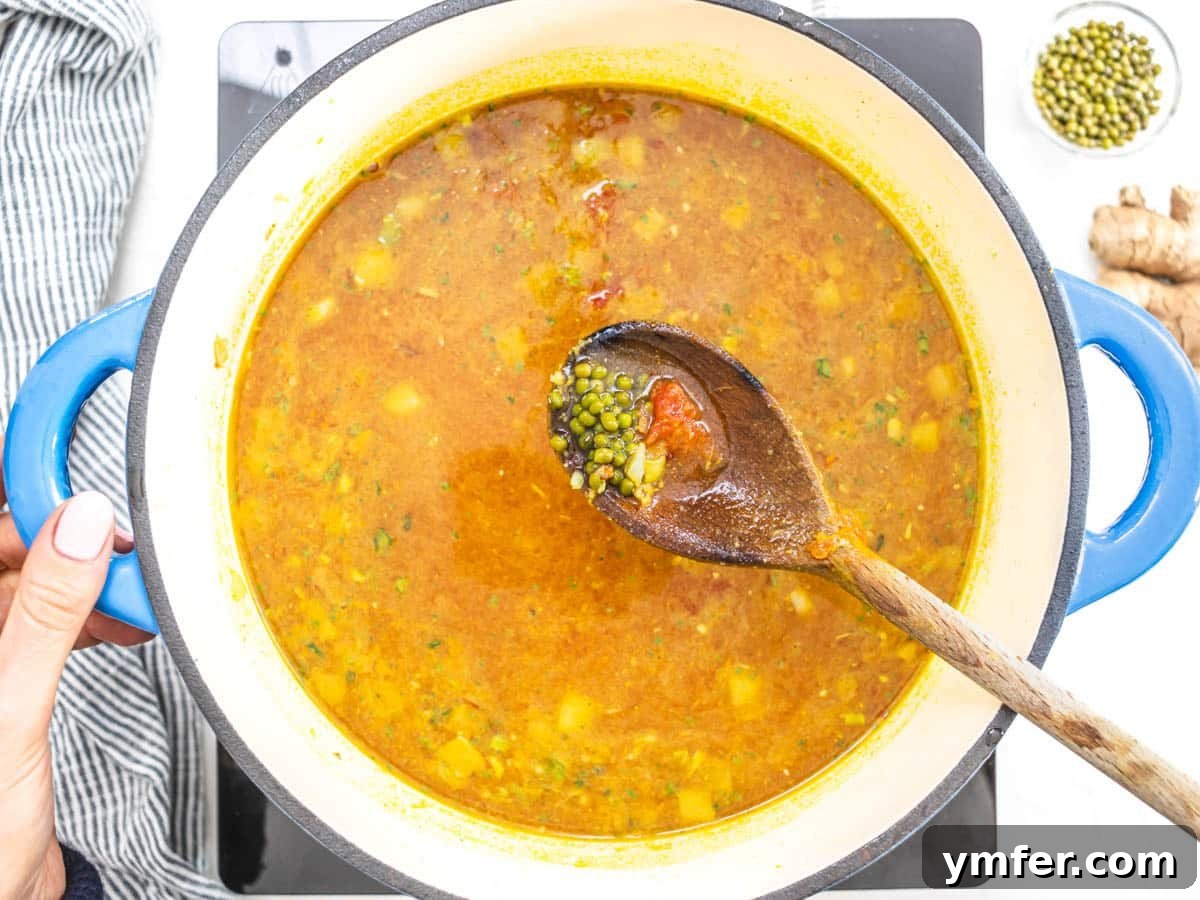
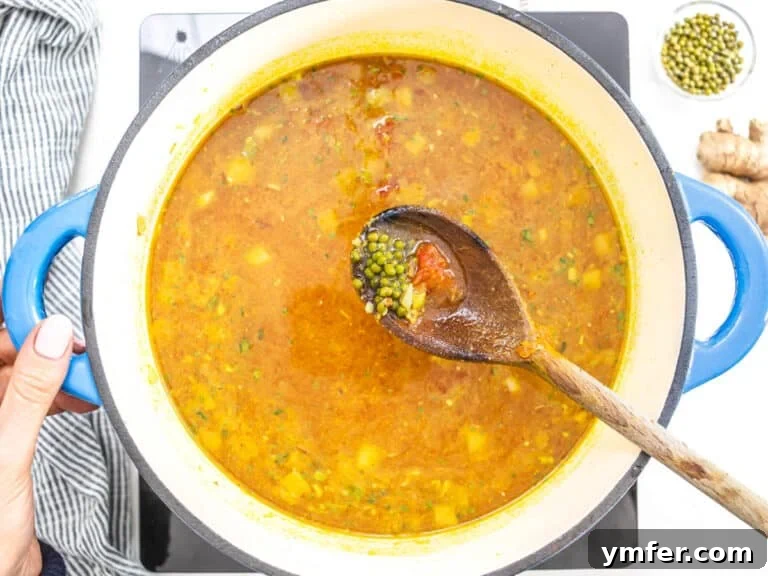
- Combine & Simmer Initial Ingredients: Pour in the vegetable broth and crushed tomatoes. Add the thoroughly rinsed mung beans, then season generously with salt and freshly ground black pepper. Stir everything together well. Cover the pot with a lid, bring the mixture to a boil, then reduce the heat to a gentle simmer. Slightly crack the lid open and let it simmer for 10 minutes. This initial simmer allows the mung beans to start softening and absorbing flavors.
-
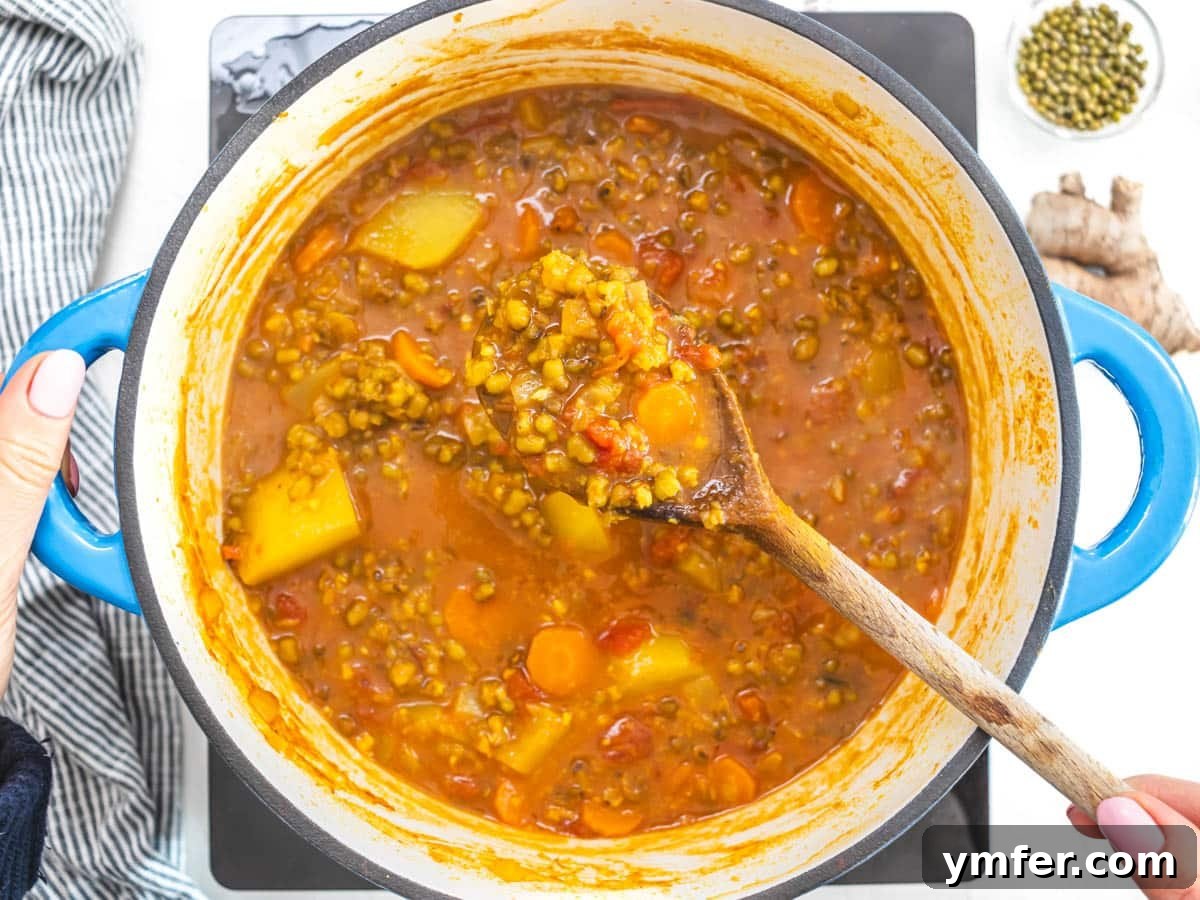
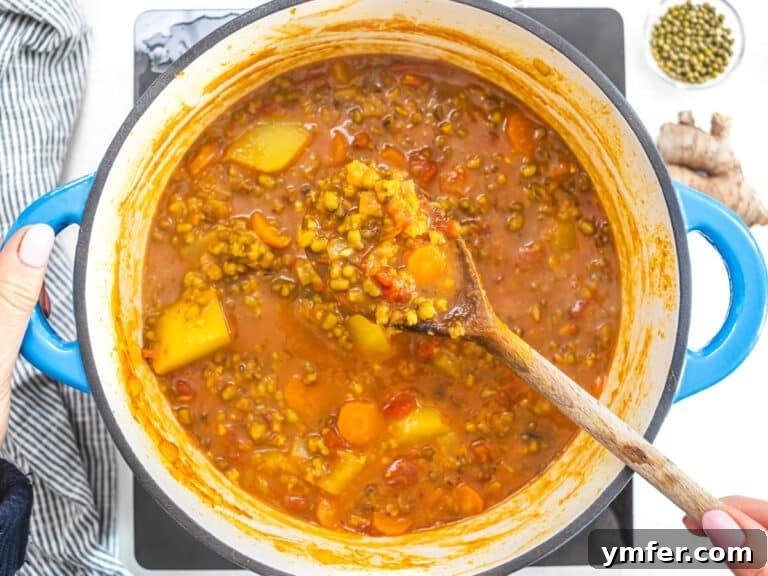
- Add Potatoes & Finish Cooking: While the soup is simmering, peel and cut your potatoes into bite-sized chunks. After the initial 10 minutes, add the potatoes to the pot. Continue to simmer for another 20 to 30 minutes, or until both the potatoes and the mung beans are completely tender. Stir occasionally to prevent sticking. Before serving, taste the soup and adjust the seasoning with more salt or spices if needed. If you prefer a thinner soup, you can always add a splash more vegetable broth at this stage.
-
- Optional Green Boost: For an extra boost of nutrients and freshness, consider adding a generous handful (about 5 ounces or 150 grams) of fresh spinach 5 minutes before the soup is fully cooked. Simply stir them in until they wilt into the hot soup.
Elevate Your Mung Bean Soup: Creative Serving Ideas
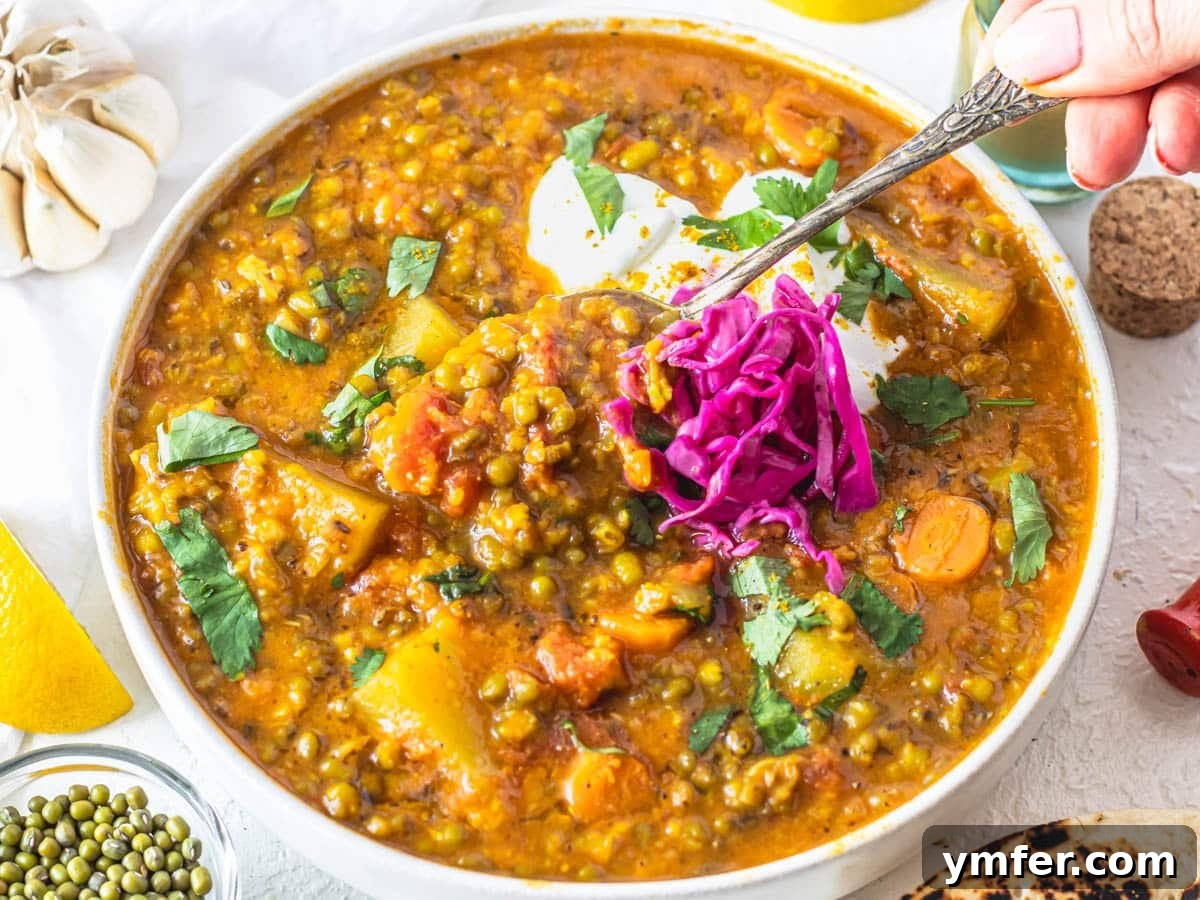
Mung bean soup is a truly satisfying and nutrient-dense meal on its own, requiring little else to make it a complete and fulfilling experience. However, a few thoughtful additions can elevate its flavors and textures even further:
- Fresh Citrus Brightness: Always finish your bowl with a generous squeeze of fresh lemon or lime juice. The acidity brightens the flavors of the spices and adds a refreshing zest.
- Fresh Herbs: A sprinkle of fresh cilantro (coriander) is a classic pairing that adds a burst of herbaceous freshness.
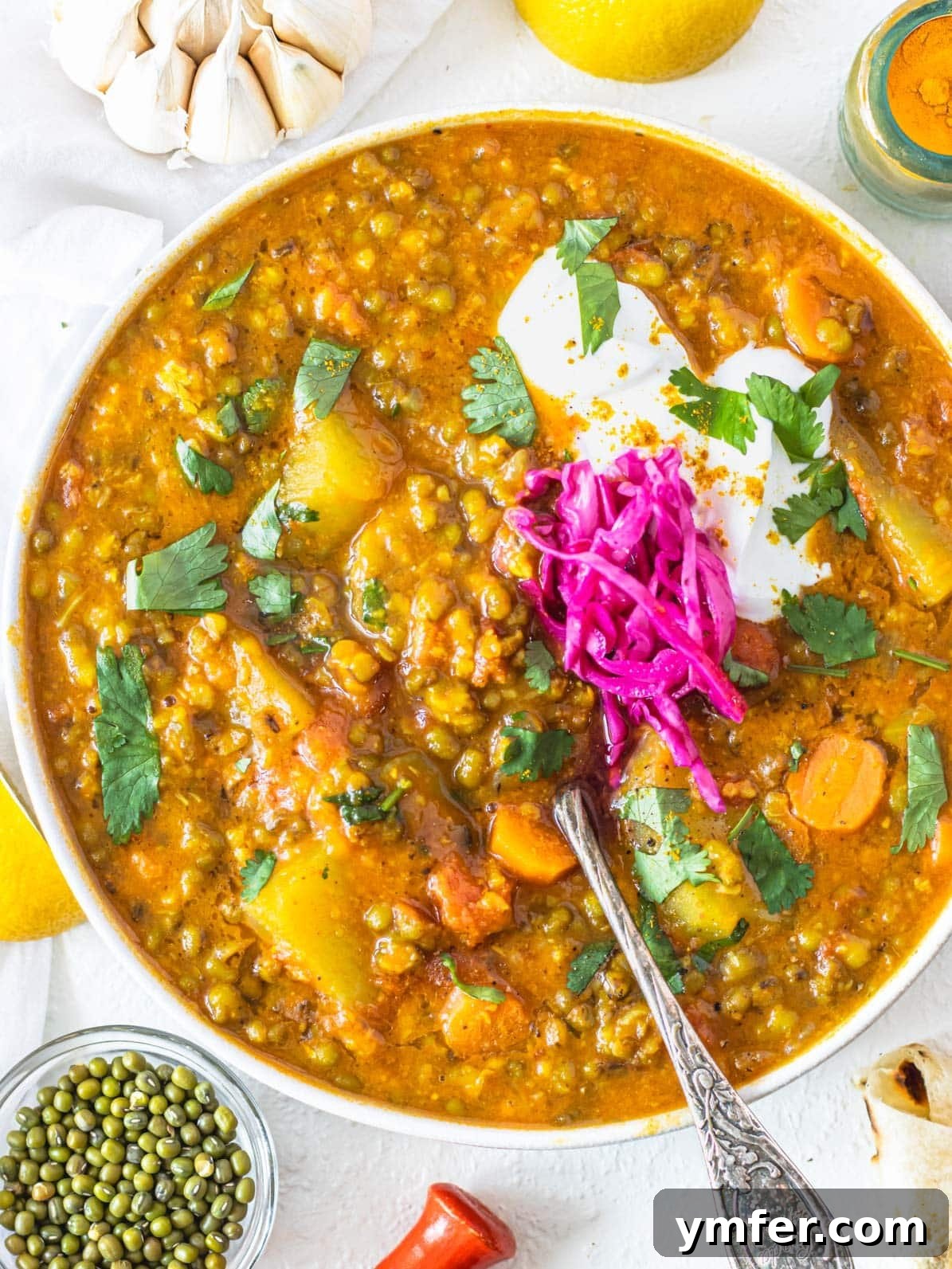
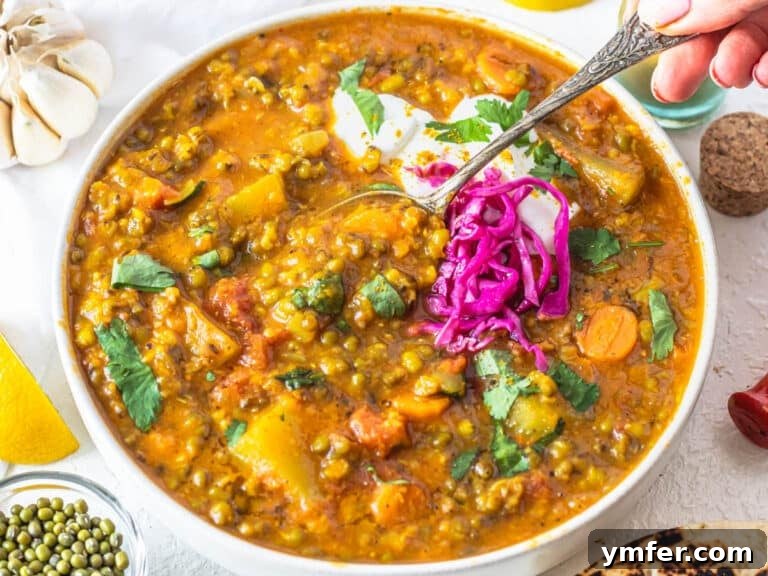
- Creamy Toppings: For a touch of richness and to mellow the spice, add a dollop of plain Greek yogurt or a non-dairy yogurt alternative (such as coconut or cashew-based yogurt).
- Tangy Pickles: The contrast of cold, tangy pickles against the warm, savory soup is simply divine. Try quick pickled red onions, pickled red cabbage, or even sliced jalapeños for a spicy kick. These acidic elements beautifully cut through the warmth of the spices.
- Hearty Breads: Serve your soup with a side of warm, crusty bread like pita bread, naan, roti, or chapati for dipping and soaking up every last drop.
Experiment with these combinations to find your perfect bowl of Mung Bean Soup!
Expert Tips for the Perfect Mung Bean Soup
- Mung Bean Freshness and Cooking Time: The cooking time for mung beans can vary based on how old they are. Fresher beans tend to cook faster. In general, expect them to be tender in about 30 to 40 minutes. We recommend tasting them at the 30-minute mark to assess their doneness and adjust simmering time accordingly. They should be soft but still hold their shape.
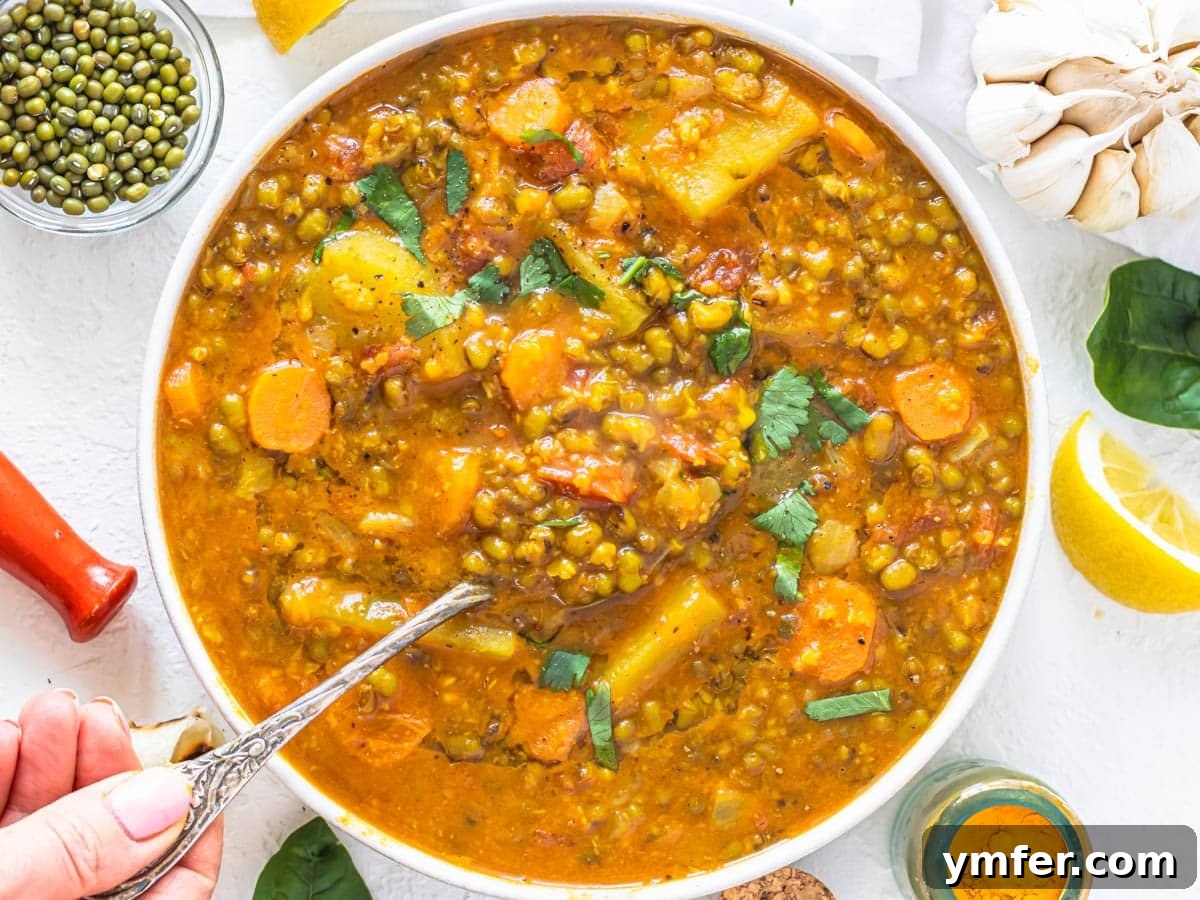
- Achieving Your Desired Soup Thickness: Soup consistency is a matter of personal preference. We enjoy our Mung Bean Soup on the thicker side, resembling a hearty stew. However, if you prefer a thinner, more liquid soup, feel free to add more vegetable broth during the simmering process or just before serving. Keep in mind that as the soup simmers longer, it will naturally thicken as the beans absorb liquid, so you might need to add more broth to maintain your desired consistency.
- Customizing Spice Levels: Our recipe aims for a medium spice level, making it enjoyable for most palates. Feel empowered to adjust the amount of curry powder, red pepper flakes, or any other spices to match your personal preference. For a milder soup, reduce the red pepper flakes; for more heat, add a little extra. Also, remember that spices lose potency over time. If your spices have been sitting in your pantry for a while, you might need to add a bit more than the recipe suggests to achieve a vibrant flavor.
- Rinsing Mung Beans: Always rinse your dry mung beans thoroughly under cold running water before cooking. This removes any dust or debris and ensures a clean flavor. You don’t need to soak whole mung beans for this recipe, making it incredibly convenient.
- The Right Pot: A large, heavy-bottomed pot or Dutch oven is ideal for this recipe. It ensures even heat distribution, preventing the soup from sticking and burning, and provides enough space for all the ingredients to simmer comfortably.
Storage & Meal Prep: Enjoying Your Mung Bean Soup Later
Mung Bean Soup is a fantastic candidate for meal preparation, as its flavors often deepen and improve a day or two after cooking. This makes it a perfect dish to cook in a larger batch and enjoy throughout the week.
- Make Ahead: This soup is excellent for preparing in advance. Its robust flavors meld and become even more delicious after a night in the fridge, making it an ideal choice for busy schedules.
- Refrigerator Storage: Allow any leftover soup to cool completely to room temperature before transferring it to an airtight container. Store it in the refrigerator for up to 5 days.
- Freezer Storage: Mung Bean Soup freezes beautifully. Once the soup has cooled completely, portion it into freezer-friendly containers or heavy-duty freezer bags. It can be safely frozen for up to 3 months. Label with the date for best practice.
- Thawing & Reheating: To thaw frozen soup, transfer it to the refrigerator several hours or overnight. For quicker thawing, you can use the defrost function on your microwave. Reheat the soup gently in a saucepan over medium heat for about 5-10 minutes, stirring occasionally, or in the microwave for 2 to 3 minutes, or until heated through. If the soup has thickened considerably, add a splash of water or vegetable broth to reach your desired consistency.
Embrace the convenience of this make-ahead, freezer-friendly meal that tastes just as good, if not better, the next day!
Variations and Customizations for Your Mung Bean Soup
This Mung Bean Soup recipe is wonderfully versatile and can be adapted to suit your taste preferences or whatever ingredients you have on hand. Here are some ideas to inspire your culinary creativity:
- Add More Vegetables: Boost the nutrient content and texture by incorporating other vegetables. Diced zucchini, bell peppers, green beans, or even a handful of chopped kale or collard greens can be added during the last 10-15 minutes of simmering.
- Spice It Up (or Down!): If you love heat, increase the red pepper flakes or add a pinch of cayenne pepper. For a milder soup, reduce the flakes or omit them entirely. Experiment with different curry powders – a Madras curry powder will give a different flavor profile than a mild Indian curry.
- Make it Creamier: For an extra rich and creamy texture, blend about 1-2 cups of the finished soup with an immersion blender or in a regular blender (be careful with hot liquids!). You can also stir in a splash of full-fat coconut milk or a dairy-free cream alternative at the end.
- Smoky Flavor: A pinch of smoked paprika can add a wonderful smoky depth to the soup, especially if you’re missing a meatier flavor.
- Lemon Grass or Kaffir Lime Leaves: For an even more aromatic, Southeast Asian flair, add a stalk of bruised lemongrass or a couple of kaffir lime leaves during the simmering process. Remove them before serving.
- Protein Boost: While mung beans are already high in protein, you could add cubed firm tofu or chickpeas along with the potatoes for an even more substantial meal.
- Garnish Galore: Beyond cilantro and yogurt, consider other garnishes like toasted pumpkin seeds for crunch, finely diced fresh chilies for extra heat, or a drizzle of your favorite chili oil.
Don’t be afraid to experiment and make this Mung Bean Soup truly your own!
Frequently Asked Questions About Mung Bean Soup
- Do I need to soak whole mung beans before cooking?
No, one of the great advantages of whole mung beans is that they typically do not require pre-soaking. They cook relatively quickly from dry, usually within 30-40 minutes, making them a convenient choice for last-minute meals. Just be sure to rinse them thoroughly before adding to the pot.
- Can I use split mung beans (moong dal) instead of whole mung beans?
Yes, you can. However, split mung beans cook much faster than whole ones (often in 15-20 minutes). If using split mung beans, add them later in the cooking process, perhaps alongside the potatoes, to prevent them from becoming too mushy. The texture of the soup will also be creamier.
- Is this soup spicy?
This recipe is designed with a medium spice level, primarily from curry powder and a small amount of red pepper flakes. You can easily adjust the heat to your preference by adding more or fewer red pepper flakes, or by incorporating a pinch of cayenne pepper for extra kick.
- Can I make this soup in an Instant Pot or pressure cooker?
Absolutely! An Instant Pot can significantly reduce the cooking time. After sautéing the aromatics and spices, add all the remaining ingredients (except perhaps fresh spinach, which can be stirred in at the end). Cook on high pressure for about 10-12 minutes, then allow for a natural pressure release for 5-10 minutes before quick releasing. The potatoes will cook very quickly in a pressure cooker, so you might add them directly with the beans.
- Is this soup suitable for a vegan or gluten-free diet?
Yes, this Mung Bean Soup is inherently vegan and gluten-free, provided you use vegetable broth and ensure any curry powder or other spice blends are certified gluten-free (though most pure spices are naturally gluten-free). It’s a fantastic, inclusive meal option!
- Why are my mung beans still hard after simmering for a long time?
This can happen if the mung beans are older. Older beans can take longer to soften. Ensure you’re simmering the soup consistently, and if needed, add a little extra broth and continue to cook until they reach your desired tenderness. A pinch of baking soda (about 1/4 teaspoon) added to the soup can also help soften stubborn legumes, but use sparingly as it can affect flavor if overused.
Explore More Hearty Bean and Lentil Soups
If you enjoyed this wholesome Mung Bean Soup, we’re confident you’ll love these other nutritious and flavorful bean-based recipes:
- Tuscan White Bean Soup: A rustic and robust soup packed with vegetables and savory herbs.
- Split Pea Soup: A comforting classic, creamy and satisfying.
- Hearty Vegetable Soup: Loaded with garden-fresh goodness.
- Nutritious Kale Soup: A vibrant and healthy option featuring leafy greens.
- Flavorful Black Bean Soup: A smoky and rich soup, often served with zesty toppings.
- Comforting Chickpea Soup: A simple yet deeply satisfying and protein-rich meal.
Soups
Tuscan White Bean Soup
Soups
Split Pea Soup
Soups
Black Bean Soup
Soups
Chickpea Soup
For even more inspiring soup ideas, be sure to check out our comprehensive collection of over 20 vegetarian soup recipes.
Mung Bean Soup
Whole mung beans are versatile, don’t require soaking, and cook in just 30 to 40 minutes.
Share
Ingredients
- 2 tablespoons extra virgin olive oil
- 1 large onion chopped
- 2 carrots cut into discs
- 3 cloves garlic grated
- 1 inch ginger grated
- 2 teaspoons curry powder
- ½ teaspoon turmeric powder
- ½ teaspoon ground cumin optional
- ¼ teaspoon red pepper flakes add more or less to taste
- 6 cups vegetable broth or more if needed
- 1 can (15 ounces) crushed tomatoes
- 1 cup mung beans whole, dry, uncooked
- 1 pound potatoes peeled and cut into bite-size chunks
- 1 teaspoon salt or more to taste
- 2 twists black pepper
- 1 lemon the juice. Optional: top with fresh cilantro, Greek or non-dairy yogurt, pickled cabbage or pickled red onion.
Instructions
-
Heat 2 tablespoons extra virgin olive oil in a large pot. Add 1 large onion (chopped) and 2 carrots (sliced into discs) and sauté on medium heat for 5 minutes until the onion is translucent.
-
Add 3 cloves garlic, 1 inch ginger (both grated), 2 teaspoons curry powder, ½ teaspoon turmeric powder, ½ teaspoon ground cumin, and ¼ teaspoon red pepper flakes. Sauté for 1 more minute until the spices are fragrant.
-
Pour in 6 cups vegetable broth, 1 can (15 ounces) crushed tomatoes, and 1 cup mung beans (rinsed). Season with 1 teaspoon salt and 2 twists black pepper.
Cover with a lid, bring to a boil, then lower the heat to a simmer, crack the top open, and simmer for 10 minutes.
-
Add 1 pound potatoes (peeled and cut into bite-size chunks) and continue to simmer for 20 to 30 minutes, or until both the potatoes and mung beans are tender. Stir occasionally.
-
Taste and adjust for salt and spices as needed.
Optionally, stir in 5 ounces/150 grams of fresh spinach 5 minutes before the soup finishes cooking, just until wilted.

MAKE IT A MEAL
-
Serve hot with a squeeze of fresh lemon, a sprinkle of fresh cilantro, a dollop of yogurt (Greek or non-dairy), and a side of pickled red onion or cabbage. Pair with warm naan or pita bread.
Notes
STORAGE & MAKE AHEAD
Make ahead: Mung bean soup is an excellent candidate for meal prep, as its flavors often deepen and improve a day after it’s cooked. It also stores exceptionally well for several days.
Refrigerator: Allow the soup to cool completely, then transfer it to an airtight container and store in the fridge for up to 5 days.
Freezer: This recipe is perfect for freezing. Let the soup cool completely, then transfer it to a freezer-friendly container and freeze for up to 3 months.
Thaw: Defrost frozen mung bean soup in the fridge overnight or use your microwave’s thawing function for a quicker approach.
Reheat: Warm the soup in the microwave for a couple of minutes or in a saucepan over medium heat. Add a dash of water or vegetable broth if necessary to reach your desired consistency.
ALSO ON THIS PAGE
- What are Mung Bean Soup?
- Ingredients & Substitutions for Mung Bean Soup
- Serving Suggestions
- Variations
- Tips
- More Bean Soup Recipes
Nutrition
If you liked this mung bean soup recipe, you might also enjoy these related collections:
Collections
40 Meatless Dinner Ideas
Collections
30 Bean Recipes
Collections
30 Lentil Recipes
Mains