
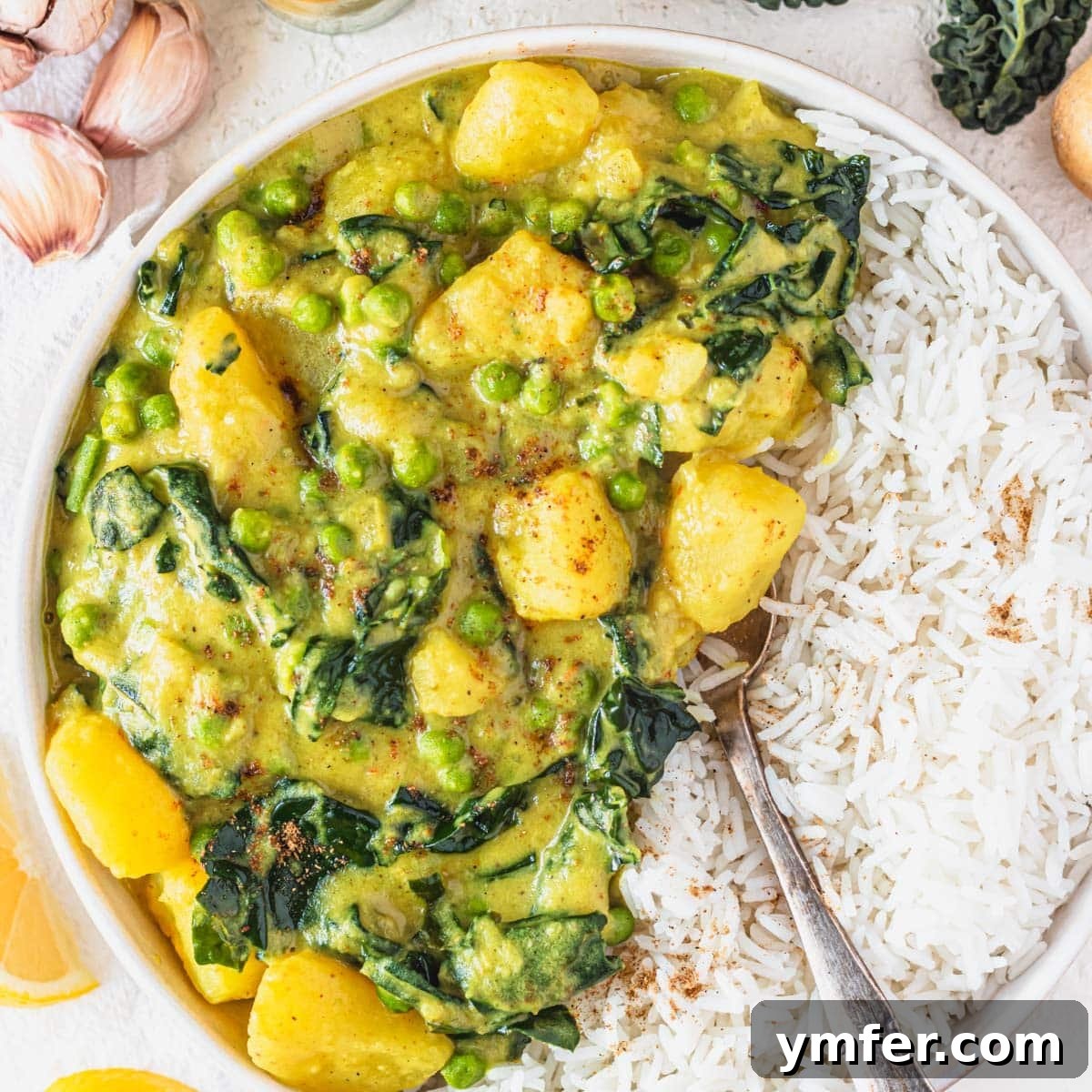
Creamy Indian Potato Curry (Aloo Curry): A Wholesome & Easy One-Pot Meal
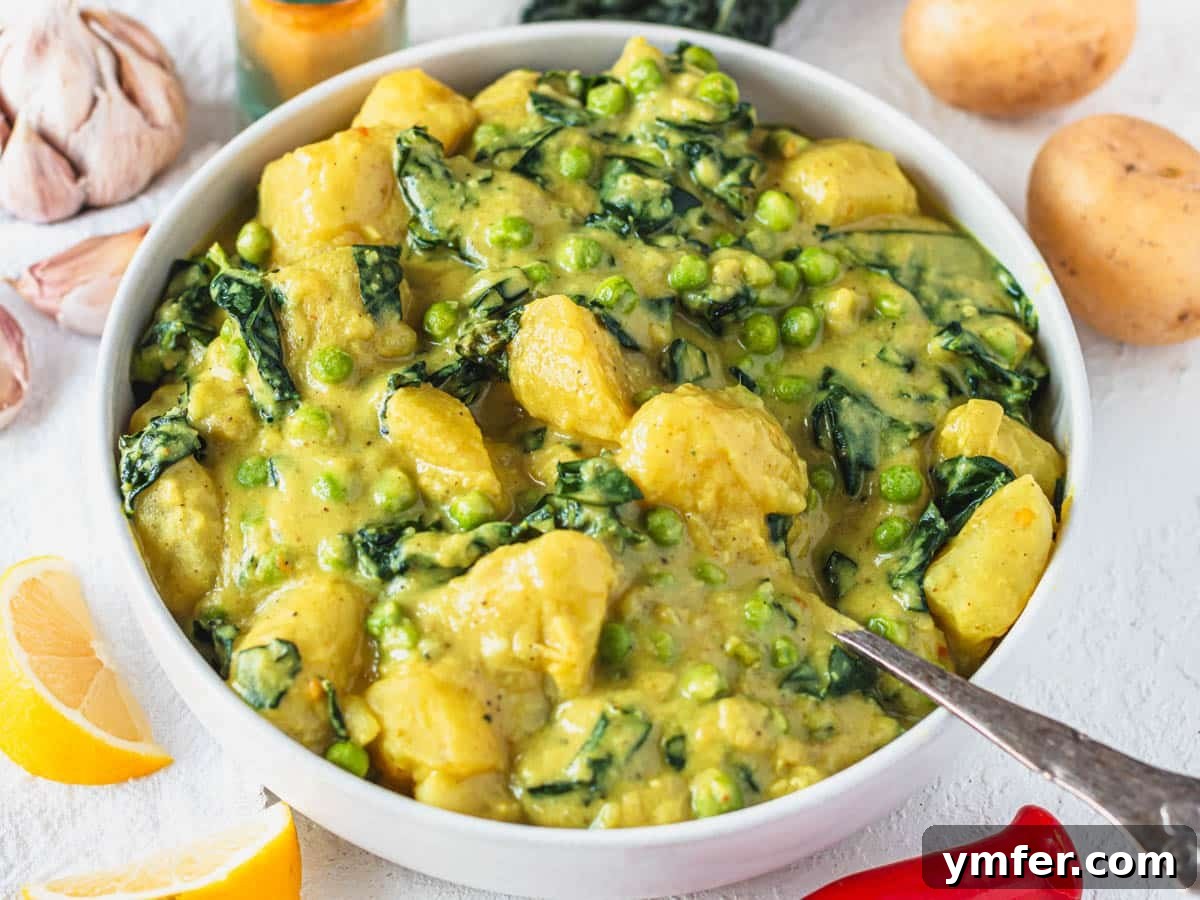
Embark on a culinary journey with this incredibly creamy, warm, and deeply comforting Potato Curry, traditionally known as Aloo Curry. Our recipe draws inspiration from the rich and diverse flavors of Southwestern Indian cuisine, featuring tender potatoes and vibrant vegetables bathed in a luscious, aromatic coconut milk-based sauce. It’s a naturally plant-based, gluten-free dish that promises both satisfaction and a burst of exquisite flavor.
Craving more delightful curry creations? Be sure to explore our other popular recipes, including a hearty Chickpea Curry, the classic Aloo Gobi, a subtly sweet Sweet Potato Curry, and our comforting Lentil Curry.
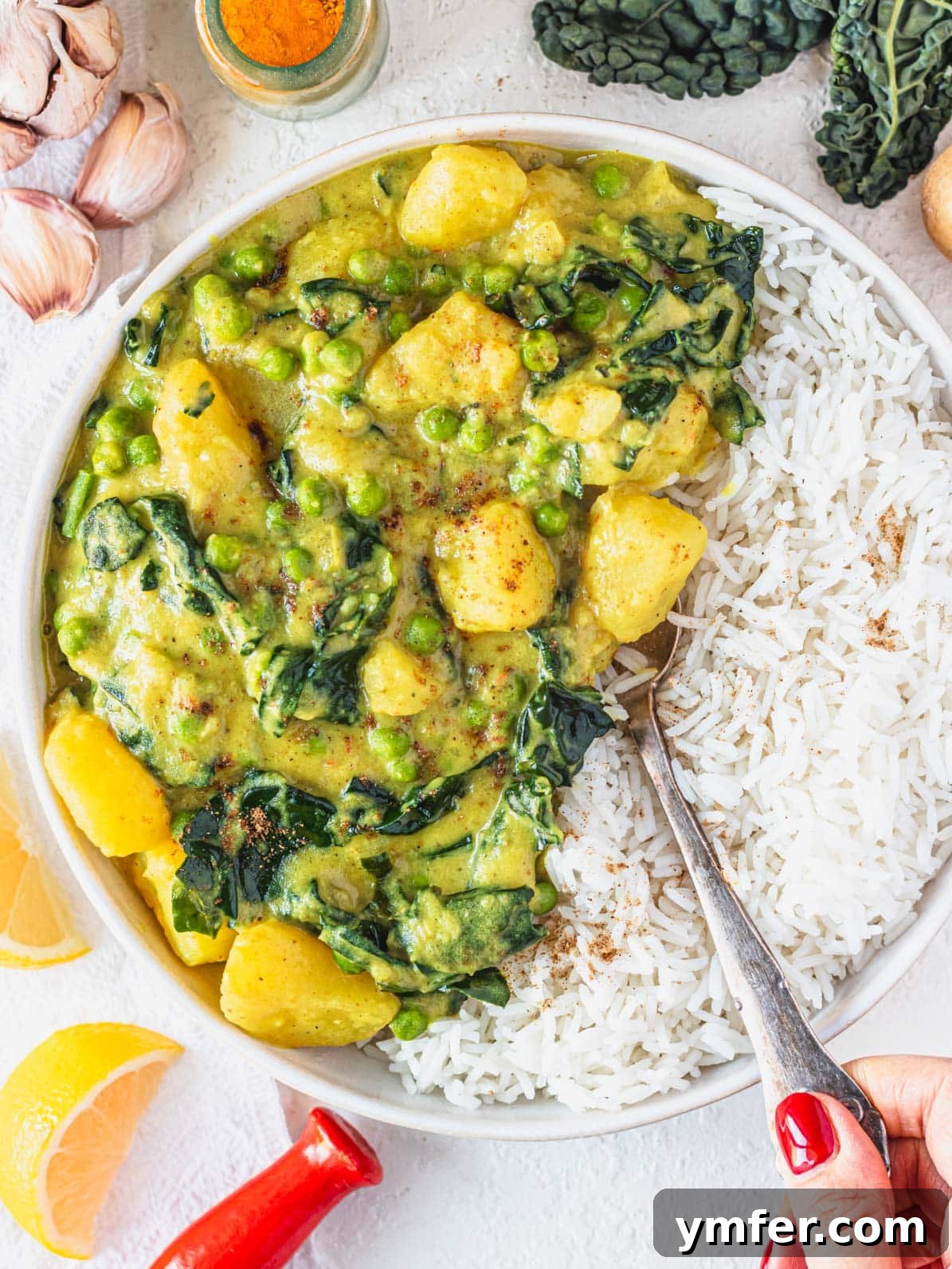
Why This Potato Curry Will Become Your New Favorite
This Aloo Curry isn’t just a meal; it’s a celebration of flavor and ease, designed to fit seamlessly into your lifestyle. Here’s why you’ll fall in love with this recipe:
- Effortlessly Simple: Crafted as a remarkably easy one-pot dish, it’s perfect for those busy weeknights when you desire something homemade and delicious without extensive effort.
- Unbelievably Creamy: The use of full-fat coconut milk creates an incredibly smooth, rich, and velvety sauce that beautifully coats every piece of potato and vegetable, offering a luxurious texture with every bite.
- Hearty & Satisfying: Packed with tender potatoes, sweet green peas, and nutrient-rich kale, this curry is genuinely wholesome and filling, providing sustained energy.
- Naturally Plant-Based: A fantastic vegan option that is inherently dairy-free and gluten-free, catering to a wide range of dietary preferences and needs.
- Aromatic & Flavorful: A harmonious blend of traditional Indian spices – cumin, turmeric, and garam masala – infuses the dish with an intoxicating aroma and a deeply complex flavor profile.
- Ideal for Meal Prep: Like many curries, its flavors gracefully meld and deepen overnight, making it an excellent candidate for batch cooking and enjoying throughout the week.
Every spoonful delivers a delightful balance of earthy spices, creamy richness, and fresh ingredients, promising a truly comforting and satisfying culinary experience.
At the core of an outstanding Aloo Curry lies a robust and carefully constructed flavor base. This fundamental foundation is meticulously built by gently sautéing a blend of aromatic ingredients: finely chopped onion, fresh garlic, fragrant ginger, and a subtle hint of red pepper flakes, all cooked to perfection in a quality oil. This initial, seemingly simple step is absolutely vital for developing the deep, warm, and intricate undertones that distinguish a truly exceptional curry.
Chef’s Secret for Maximum Flavor: For an unparalleled burst of vibrant aroma and intense flavor, we highly recommend taking a few extra moments to grate your fresh ginger and garlic. Using the smallest holes of a box grater or a zester transforms them into a fine, easily dispersible paste. This ensures their powerful essences thoroughly infuse the potato curry, distributing their aromatic magic evenly throughout the entire dish.
Our thoughtfully chosen spice blend includes the warming earthiness of ground cumin, the vibrant golden hue and distinct flavor of turmeric powder, and the complex, fragrant notes of garam masala. While these spices are our suggestions for a beautifully balanced curry, we wholeheartedly encourage customization! The true beauty of curry lies in its adaptability; feel free to adjust these quantities to your personal taste, or introduce other beloved spices. For instance, a touch of aromatic ground coriander or a well-rounded, classic curry powder would complement and deepen the flavors of this recipe wonderfully, adding delightful new dimensions to its captivating taste.
To truly elevate your Aloo Curry before serving, finish it with a bright, fresh flourish: a generous squeeze of invigorating fresh lemon or lime juice. This zesty addition instantly brightens the flavors and cuts through the richness of the coconut milk. For an added layer of creamy coolness and a delightful textural contrast, consider adding a dollop of cooling yogurt or traditional raita on top. A sprinkle of freshly chopped cilantro provides a final touch of herbaceous freshness, bringing the entire dish into perfect harmony.
For a truly complete, wholesome, and profoundly satisfying dinner, serve this incredible curry alongside light and fluffy warm naan bread, which is perfect for scooping up every last drop of the luscious sauce, or fragrant basmati rice, known for its ability to beautifully absorb the curry’s rich and complex flavors.
Essential Ingredients for Your Wholesome Aloo Curry
Creating an exceptional Aloo Curry begins with selecting the freshest and highest quality ingredients. Below, we provide a detailed breakdown of the key components that breathe life into this dish, along with helpful insights and adaptable substitution options to perfectly suit your pantry and culinary preferences.
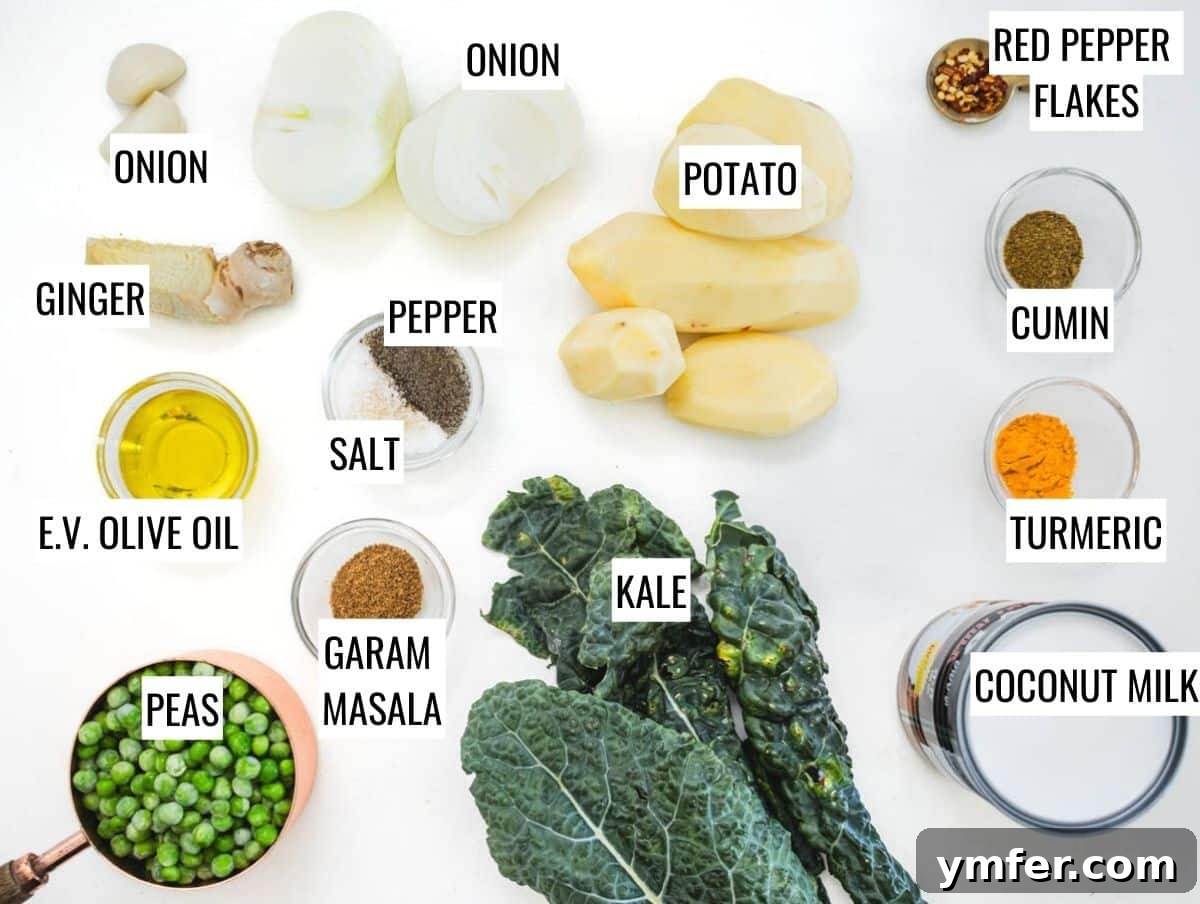
For precise measurements in both US cups and grams, please consult the comprehensive recipe card provided at the bottom of this page.
Building the Soul of Your Curry: The Aromatic Flavor Base
A well-developed, deeply aromatic flavor base is the cornerstone of any truly exceptional curry, robust soup, or hearty stew. This initial phase sets the entire stage for the dish, ensuring a rich, nuanced, and complex taste profile. It’s a step that should never be rushed or understated, as it profoundly impacts the final flavor. For our authentic Indian-inspired potato curry, we employ a timeless blend of foundational aromatics:
- Oil: This serves as the essential medium for sautéing and extracting flavors. You have several excellent and versatile options:
- Olive Oil: Our preferred choice for its subtle fruitiness and health benefits.
- Avocado Oil: A neutral-flavored oil with a commendable high smoke point, ideal for gentle sautéing.
- Coconut Oil: Imparts a delicate tropical hint that beautifully harmonizes with the coconut milk in the curry.
- Rapeseed Oil (Canola Oil): Another widely available and neutral option that works perfectly.
- Onion: Finely chopped white or yellow onion forms the sweet and savory foundation. Gently caramelizing the onion releases its natural sugars, adding a crucial layer of depth and sweetness to the base.
- Garlic: Always insist on fresh garlic when crafting curries; its pungent, vibrant, and unmistakable flavor is simply irreplaceable. For optimal flavor infusion, we highly recommend peeling and grating it into a fine paste using a box grater’s small holes or a zester. If fresh garlic is unavailable, a high-quality store-bought garlic paste can serve as a convenient alternative.
- Ginger: As vital as garlic, fresh ginger provides that signature Indian warmth, piquant zest, and a slightly spicy kick. Peel and grate the ginger to create a smooth paste, allowing its fiery essence to seamlessly meld with the other aromatics, enriching the entire dish.
The Heartbeat of the Dish: Aromatic Spices
Spices are the very essence of Indian cuisine, transforming humble ingredients into an explosion of captivating flavors. Our recipe offers a superb blueprint, but we encourage you to personalize the spice blend according to your individual preferences for flavor and heat. Here’s the aromatic quartet we utilize:
- Cumin: Whether you opt for ground powder or whole seeds, cumin delivers an earthy, warm, and subtly pungent flavor that is utterly fundamental to a vast array of Indian dishes. If using whole seeds, lightly toast them in the hot oil before adding the onions to unlock an even deeper, more complex aroma.
- Turmeric Powder: Celebrated for its striking vibrant golden color and its distinct earthy, slightly bitter, and peppery flavor. Beyond its culinary contributions, turmeric is also highly regarded for its potent anti-inflammatory and antioxidant properties.
- Red Pepper Flakes: These imbue the curry with a gentle warmth and a subtle, lingering heat. For those who prefer a more pronounced fiery kick, you can easily substitute with finely chopped fresh red chilies (such as serrano or Thai chilies) or a small pinch of potent cayenne pepper, always adjusting to your desired level of spice.
- Garam Masala: A quintessential Indian spice blend, typically a fragrant mixture of cinnamon, cardamom, cloves, cumin, coriander, and black pepper. We strategically add garam masala towards the very end of the cooking process. This preserves its delicate, rich aroma and complex, nuanced flavor profile, preventing the more volatile compounds from cooking off. You can readily find this essential blend online, in most well-stocked Asian markets, and specialty grocery stores.
Optional Spices for Enhanced Depth: To further customize and deepen the already complex flavor of your potato curry, consider incorporating these optional spices. Begin with one teaspoon, taste, and then add more if required:
- Ground Coriander: Offers a bright, citrusy, and subtly sweet note that exquisitely complements the earthiness of cumin.
- Curry Powder: While not a single spice, it is a pre-blended mix of various spices that provides a convenient and familiar “curry” flavor. Its exact composition can vary widely, so feel free to experiment to discover your preferred brand and blend.
- Mustard Seeds: Often used in tempering, these seeds add a pungent, slightly nutty flavor when allowed to pop and sizzle in hot oil.
- Fenugreek Leaves (Kasoori Methi): Dried fenugreek leaves introduce a unique, slightly bitter, and deeply aromatic depth, adding an authentic layer to the curry.
Wholesome Vegetables: Customizing Your Plant-Based Curry
This recipe is wonderfully versatile, allowing you to effortlessly incorporate your preferred vegetables or make intelligent substitutions based on what you have readily available. Consider our selection as a delightful and nutritious starting point:
- Potatoes: The undeniable star of our Aloo Curry! Virtually any potato variety will perform beautifully. We have consistently achieved excellent results with:
- Yukon Gold Potatoes: Prized for their buttery texture and rich, creamy flavor.
- Russet Potatoes: Starchy and highly absorbent, they break down slightly during cooking, contributing to the curry’s natural thickness.
- New Potatoes: These maintain their shape well and offer a delicate, fresh flavor.
Exciting Substitutions: If you’re keen to introduce a different character, consider using sweet potatoes for a sweeter profile, diced eggplant for a rich and hearty texture, or crisp cauliflower florets for a lighter, nutrient-dense alternative.
- Peas: We typically utilize convenient frozen peas, which add delightful pops of sweetness, a vibrant burst of color, and a fresh taste.
Versatile Pea Alternatives: Cooked or canned chickpeas (rinsed thoroughly) are an excellent addition for extra protein and a heartier texture. Fresh snap peas, tender green beans, or delicate snow peas can offer a crisp, fresh element. Edamame beans, shelled, would also be a lovely and unexpected addition. - Kale: Incorporating kale provides a generous dose of healthy greens and a subtle earthy bitterness that skillfully balances the richness of the coconut milk-based curry.
Leafy Green Substitutions: Feel completely free to substitute kale with other robust greens such as Swiss chard, fresh spinach (which should be added towards the very end as it wilts rapidly), or finely shredded cabbage.
The Creamy Foundation: Coconut Milk & Vegetable Broth
These liquids are the transformative elements that bind the spices and vegetables into a luxurious, simmering curry sauce:
- Coconut Milk: For the ultimate creamy texture and the richest, most authentic flavor, we wholeheartedly recommend using full-fat coconut milk, typically found in a can. While light coconut milk can be used for a lower-calorie option, be aware that it will result in a thinner, less decadent curry.
- Vegetable Broth: This liquid component adds significant depth, savoriness, and volume to the sauce. Both homemade vegetable broth (for maximum nuanced flavor) or a good quality store-bought vegetable broth will work perfectly. You can always add a splash more broth if you prefer a slightly thinner curry consistency.
In this particular potato curry, we intentionally omit canned tomatoes to showcase and celebrate the beautiful golden and vibrant green colors of the finished dish. However, if you enjoy a tangier, tomato-infused curry, you are certainly welcome to add one can of crushed tomatoes alongside the coconut milk and broth.
How to Make the Perfect Potato Curry: Your Step-by-Step Guide
For precise US cups and grams measurements for each ingredient, please refer to the detailed recipe card conveniently located at the bottom of this page.
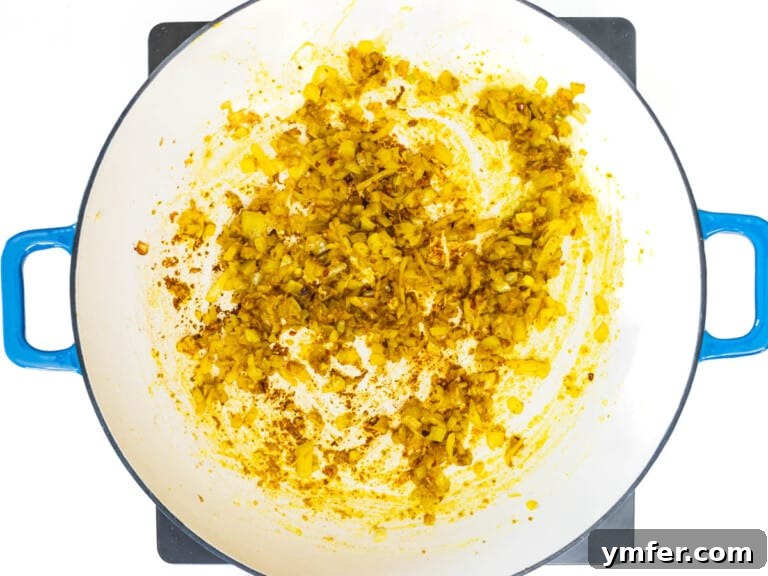
Step 1: Build the Aromatic Foundation. Begin by heating the specified amount of olive oil (or your preferred cooking oil) in a large, heavy-bottomed skillet or Dutch oven set over medium heat. Add the finely chopped onion and gently sauté it for approximately 5 minutes. Cook until the onion softens and becomes translucent, taking careful measures not to brown or burn it, as this slow cooking process allows its natural sweetness to fully develop.
Step 2: Bloom the Spices. To the softened onions, add the grated garlic, grated ginger, red pepper flakes, ground cumin, and turmeric powder. Continue to cook this highly fragrant mixture for an additional minute, stirring continuously to prevent sticking. This crucial step, known as “blooming” or “tempering” the spices, gently toasts them in the hot oil. This process releases their full, complex aromatic compounds, significantly intensifying the flavor of the entire curry before any liquids are added.
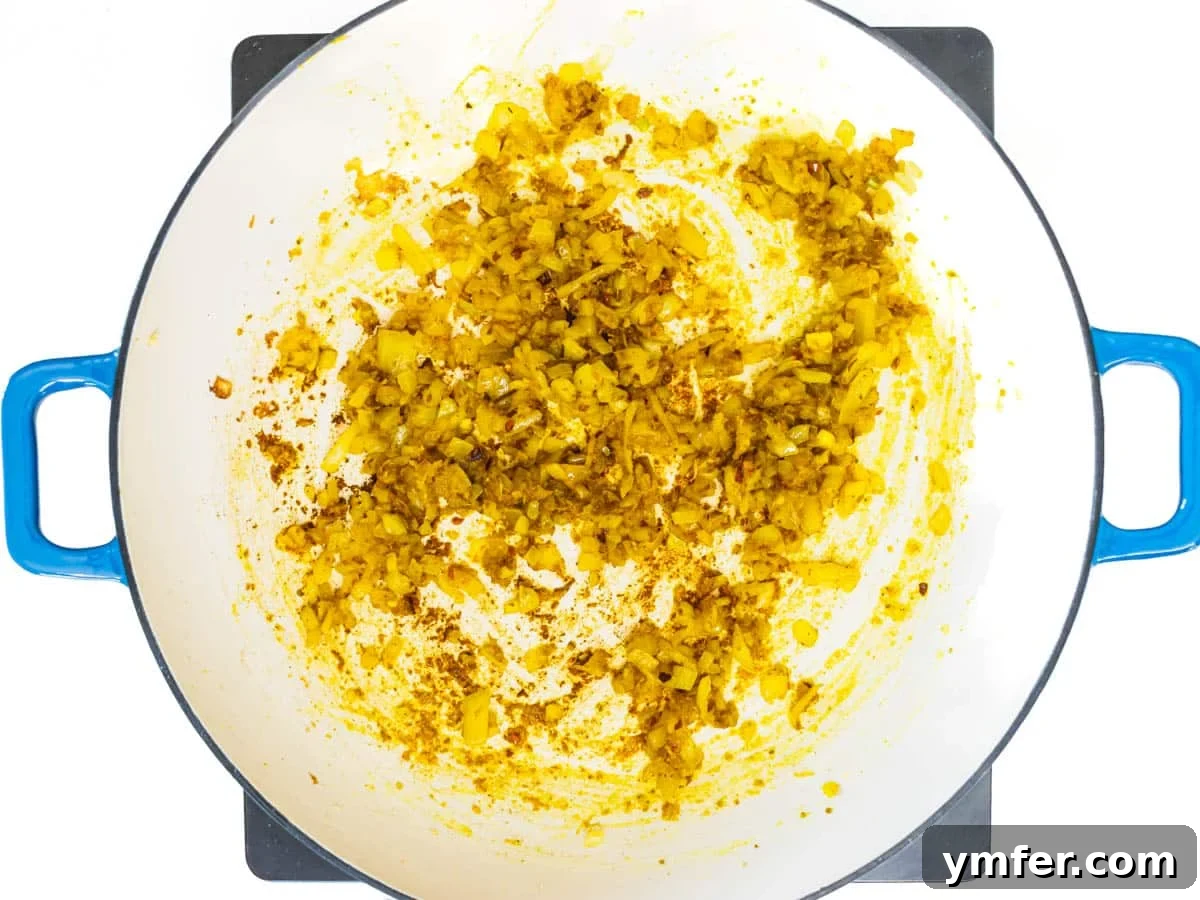
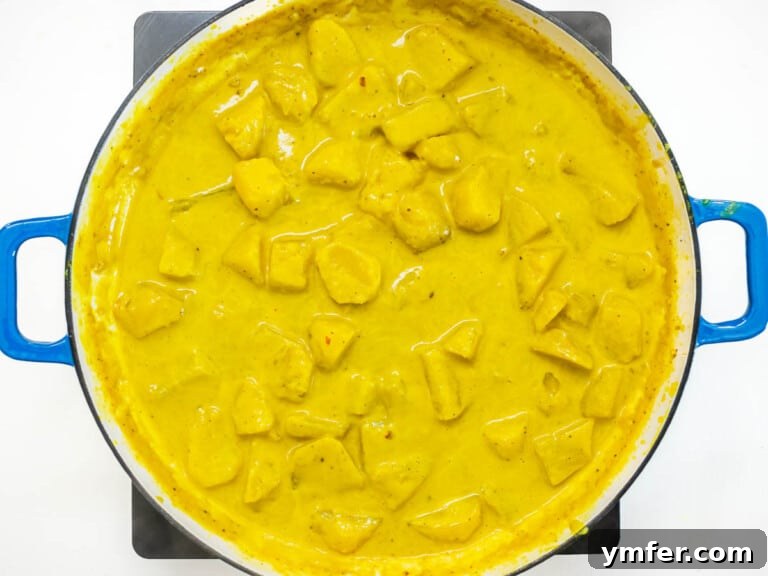
Step 3: Introduce Liquids and Potatoes. Carefully pour in the full-fat coconut milk and vegetable broth. Then, add the peeled potatoes, which should be uniformly cut into bite-size pieces to ensure even cooking. As you introduce the liquids, use a sturdy spoon or spatula to vigorously scrape up any browned bits (known as “fond”) that have accumulated at the bottom of the pan. These flavorful remnants are packed with concentrated umami and will dissolve into the sauce, enriching its depth beautifully.
Step 4: Simmer to Perfection. Season the curry generously with salt and freshly ground black pepper. Cover the skillet tightly with a lid, bring the mixture to a gentle boil, then immediately reduce the heat to medium-low. Allow the curry to simmer peacefully for approximately 15 minutes, stirring occasionally to prevent any sticking and to ensure the potatoes cook evenly. At this stage, the potatoes should begin to soften but will not yet be fully cooked through.
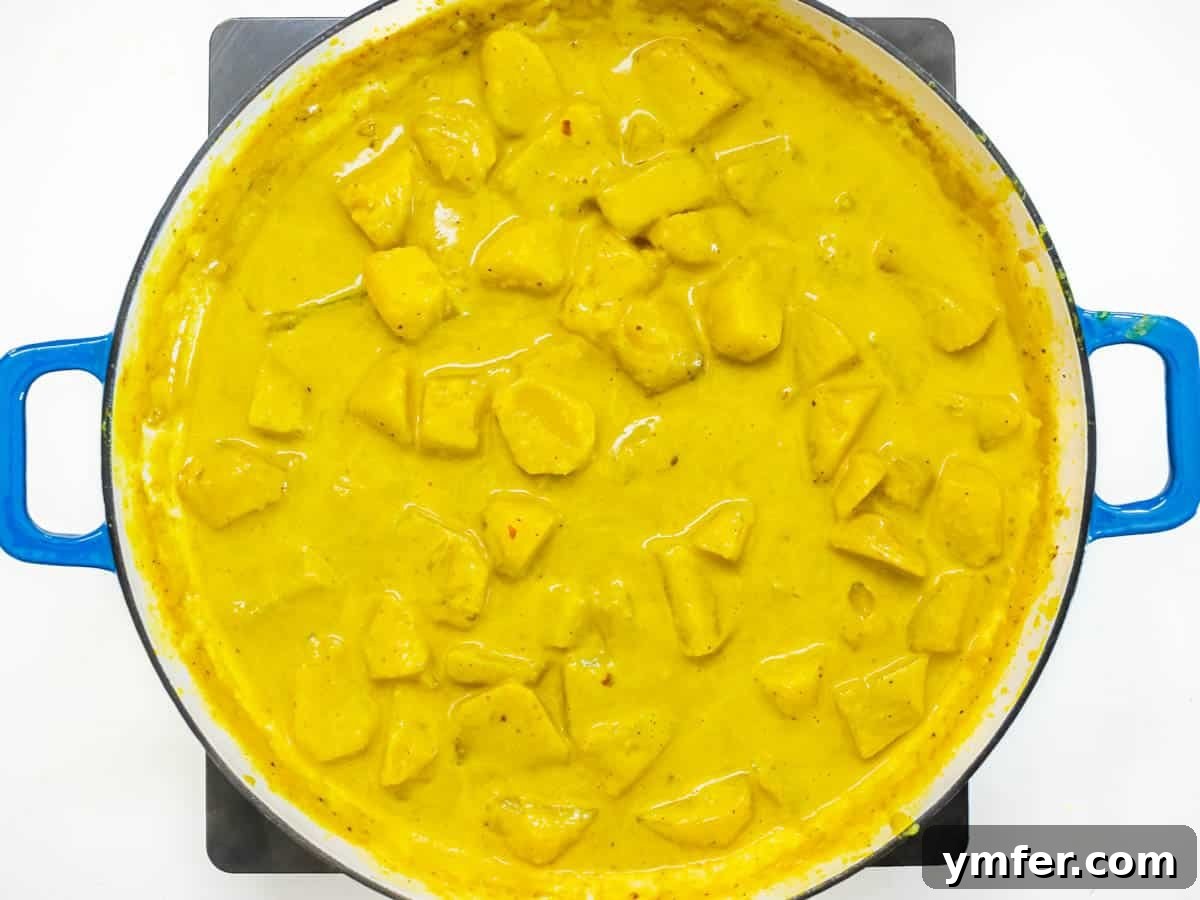
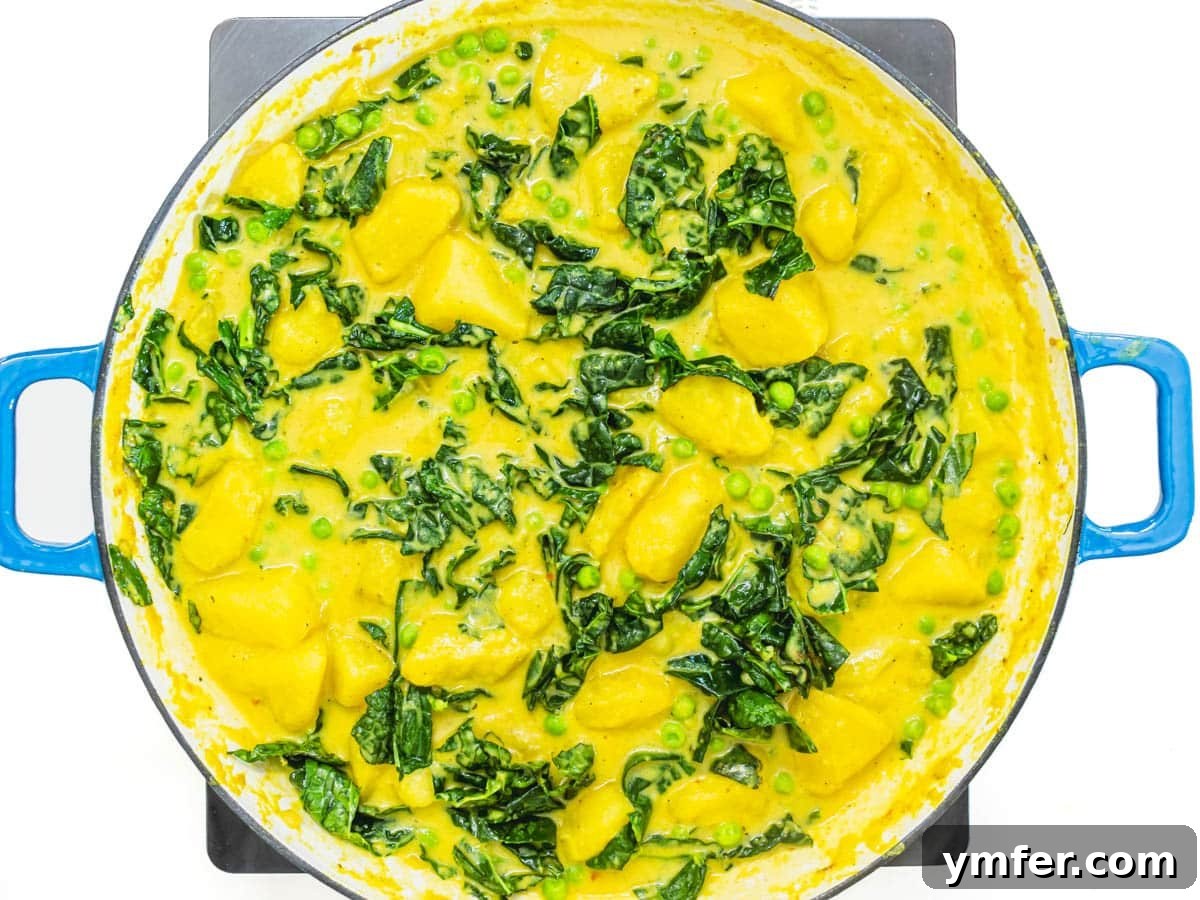
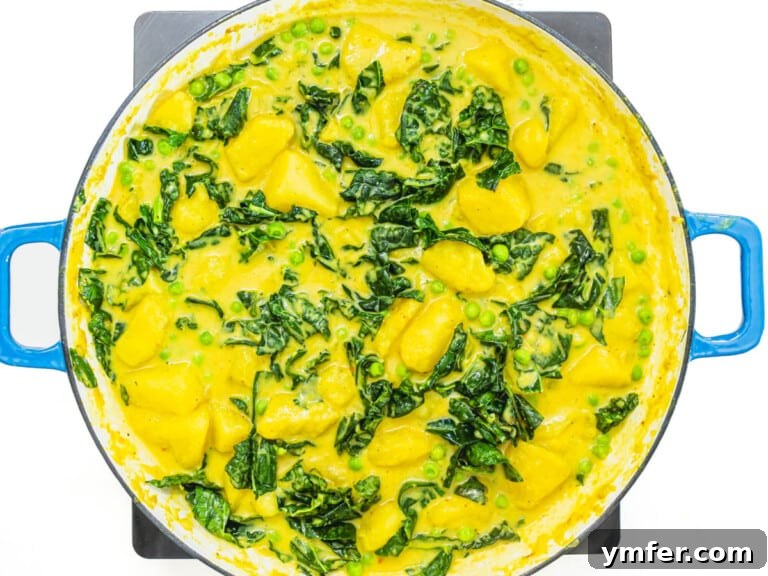
Step 5: Add Greens and Finish Cooking. Now, it’s time to incorporate the vibrant elements. Stir in the frozen peas and the thoroughly chopped kale leaves (ensuring any tough, harder stems have been carefully removed before adding). Continue to gently simmer the curry for about 10 more minutes, or until the potatoes have become perfectly fork-tender and the kale has wilted to your desired texture. The peas should be bright green and heated through, adding a fresh pop to the dish.
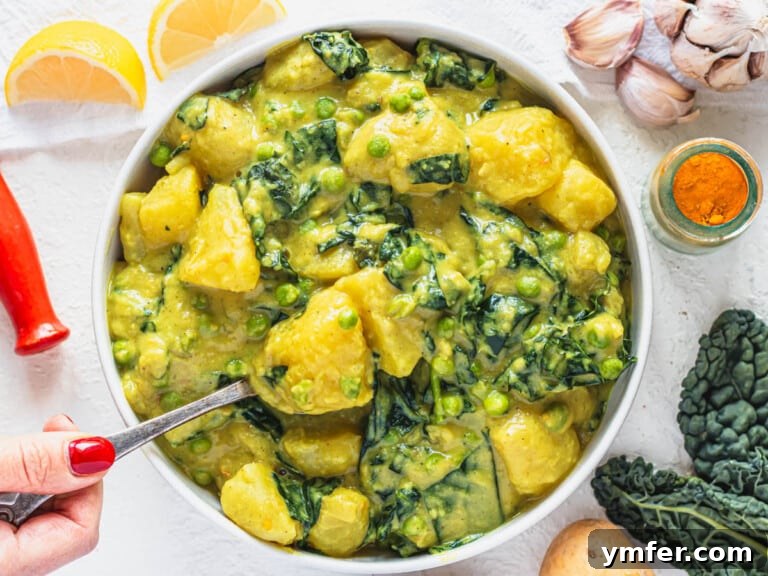
Step 6: Final Touches. Once all the vegetables are perfectly cooked and tender, turn off the heat. Stir in the garam masala. Adding it at this stage ensures its delicate, volatile aromas are preserved and release their magical essence just before serving. Allow the curry to rest, uncovered, for 3 to 5 minutes – this brief cooling period permits the flavors to further meld, deepen, and truly harmonize. Then, it’s ready to be served and savored!
Serving Suggestions: Completing Your Aloo Curry Feast
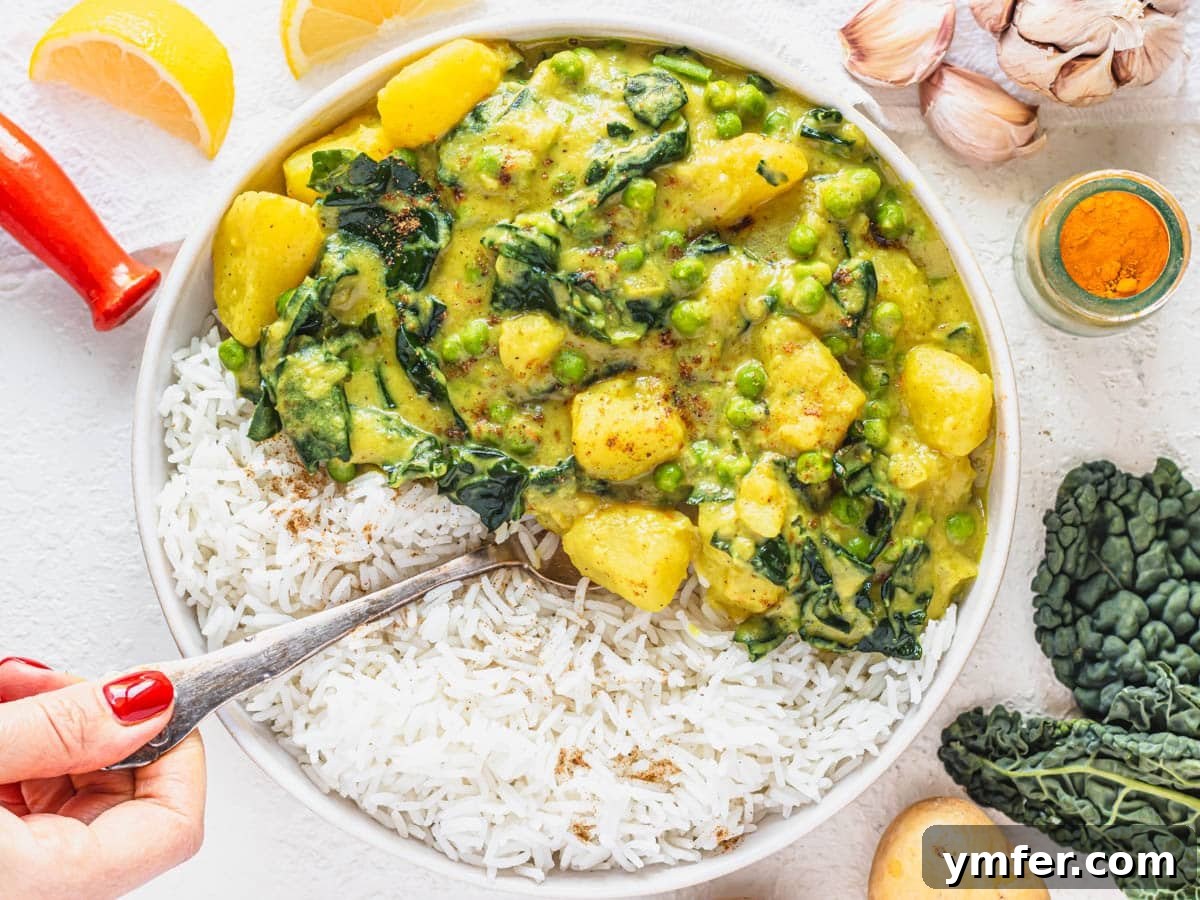
While this creamy potato curry is a delightful and complete meal on its own, pairing it with the right accompaniments will undoubtedly elevate your dining experience to new heights. Serve your warm and aromatic potato curry generously in a beautiful bowl, accompanied by:
- Fluffy Basmati Rice: The long, slender, and fragrant grains of basmati rice are the quintessential partner for curry, perfectly designed to soak up every drop of the rich, aromatic sauce.
- Warm Naan Bread: Soft, chewy, and slightly leavened naan bread is an absolute essential. It’s excellent for scooping up every last bit of the delicious gravy, serving as a perfect edible utensil. Consider trying our easy homemade naan recipe for an authentic and fresh touch.
Before you dive in, remember these essential finishing touches that brighten and balance the dish:
- A bright, invigorating squeeze of fresh lemon or lime juice instantly adds a zesty tang that beautifully cuts through the richness of the coconut milk, awakening and harmonizing all the complex flavors.
- Optionally, for a delightfully cooling and creamy contrast, add a generous dollop of thick Greek-style yogurt (or a high-quality non-dairy alternative) or a traditional Indian yogurt cucumber sauce like raita, or even our refreshing Tzatziki, right on top.
- A final sprinkle of fresh, vibrant cilantro leaves provides a flourish of bright green color and an herbaceous burst of freshness, truly rounding out the dish.
If you’re looking to complete your meal with a refreshing side dish, we highly recommend something light and crisp to perfectly complement the warm, savory flavors of the curry:
- A crisp Cucumber Tomato Salad or a vibrant and zesty Shirazi Salad
- A bright and flavorful Asian Cucumber Salad
- Light and fresh Lentil Tabbouleh or classic Middle Eastern Bulgur Tabbouleh
- A sweet and tropical Mango Salad or a creamy, rich Avocado Salad
Salads
Cucumber Tomato Salad
Salads
Asian Cucumber Salad
Dips and Spreads
Tzatziki
Salads
Tomato Salad
Health Benefits of This Wholesome Potato Curry
Beyond its incredibly satisfying taste, this Potato Curry offers a bounty of nutritional advantages, making it a truly wholesome meal choice:
- Potatoes: Far from being just a starchy side, potatoes are a fantastic source of essential nutrients, including Vitamin C, Vitamin B6, potassium, and beneficial dietary fiber, which aids in digestion and provides sustained energy.
- Turmeric: This vibrant golden spice is a powerful anti-inflammatory agent and a rich source of antioxidants. It’s widely studied for its potential benefits, including improved brain function and a reduced risk of various chronic diseases.
- Ginger & Garlic: Both ginger and garlic are culinary powerhouses renowned for their potent immune-boosting properties. They are also excellent digestive aids and contribute significantly to the dish’s overall health profile.
- Kale & Peas: These vibrant green vegetables are nutritional superstars, loaded with an abundance of vitamins (especially A, C, and K), vital minerals, and dietary fiber, all of which support overall health and vitality.
- Coconut Milk: While rich in healthy fats, particularly medium-chain triglycerides (MCTs), coconut milk also provides essential electrolytes. MCTs are easily metabolized by the body, offering a quick and efficient source of energy.
Indulge in a meal that not only tastes amazing but also actively nourishes your body from within, providing a delicious way to boost your well-being!
Creative Variations and Customizations for Your Curry
This Aloo Curry recipe is a wonderfully flexible canvas, inviting your culinary creativity to flourish. Feel empowered to experiment with different ingredients and modify the flavor profiles to suit your mood and what you have available:
- Amplify the Vegetables: Beyond the delightful peas and kale, consider enriching your curry with other diced vegetables. Bell peppers (any color), green beans, fresh spinach (add at the very end), cauliflower florets, or even finely diced carrots can add extra nutrition, texture, and visual appeal.
- Boost the Protein: For an even more substantial and heartier meal, stir in additional protein sources. Cooked lentils, canned and thoroughly rinsed chickpeas, cubes of pan-fried tofu, or seasoned tempeh can be added during the final 10-15 minutes of simmering.
- Elevate the Spice: If you adore a fiery kick, there are several ways to intensify the heat. Increase the amount of red pepper flakes, add one or two finely diced fresh green chilies (like serrano or Thai chilies) along with the ginger and garlic, or stir in a pinch of potent cayenne pepper with the other dry spices.
- A Tangy Twist: For a richer, tangier sauce, introduce a can of crushed tomatoes (added with the coconut milk and broth). Alternatively, a tablespoon of tamarind paste can impart an authentic Indian sourness and depth.
- Sweet and Sour Balance: To achieve a delightful sweet and sour profile, stir in a tablespoon of maple syrup or brown sugar along with a splash of apple cider vinegar or lime juice.
- Nutty Indulgence: For a lovely creamy, nutty depth, reminiscent of West African stews, a tablespoon of smooth peanut butter or almond butter stirred in at the very end of cooking can be a wonderful addition.
Frequently Asked Questions About Potato Curry
Yes, absolutely! You can certainly leave the skin on the potatoes when preparing potato curry; many cooks prefer this for added nutrients and fiber. However, it’s worth noting that some potato skins, particularly from older or larger potato varieties, may detach slightly during the simmering process, potentially altering the visual texture of the curry. If this doesn’t bother you, then leaving the skin on is perfectly acceptable and often recommended for both convenience and a nutritional boost.
For an Aloo Curry where the potatoes retain their shape well and offer a pleasant texture, waxy or all-purpose potato varieties are generally best. Excellent choices include Yukon Gold, new potatoes, or red bliss potatoes, as they tend to be less starchy and hold up well during simmering. While Russet potatoes can also be used, they are higher in starch and may break down more, resulting in a slightly thicker, more rustic sauce – which can be a desirable outcome depending on your preference.
Absolutely! If you crave more heat in your potato curry, you have several effective options:
- Increase the amount of red pepper flakes used in the initial flavor base to your desired level.
- Incorporate one or two finely chopped fresh green chilies (such as serrano or bird’s eye chilies) when you add the ginger and garlic.
- Stir in a small pinch of extra cayenne pepper or a bit more chili powder along with the other ground spices.
- For individual preference, serve the curry with a side of fresh, thinly sliced green chilies, allowing each diner to add extra heat as they wish.
Always remember to taste and adjust the spice level to achieve your perfect balance.
Chef’s Essential Tips for the Best Potato Curry
Achieving a truly outstanding and memorable curry involves a few key practices that can elevate your dish from good to exceptional:
- Always Taste and Adjust: This is arguably the most critical tip for any curry, or indeed, any cooking. Flavors can vary, so always taste your curry before serving and make necessary adjustments. The intensity of spices can differ significantly based on their brand, their freshness, and how long they’ve been stored in your pantry. Don’t hesitate to add more salt, black pepper, or even an extra dash of a specific spice if you feel it’s needed. A final squeeze of lemon or lime juice just before serving can also dramatically brighten and balance all the flavors.
- Prioritize Fresh Aromatics: While pre-minced garlic and ginger offer undeniable convenience, utilizing freshly grated garlic and ginger paste makes a truly remarkable difference in the depth, vibrancy, and overall aromatic quality of your curry’s flavor profile.
- Never Rush the Flavor Base: Allow the onions, garlic, and ginger to cook gently and patiently until they are perfectly softened and deeply fragrant. This unhurried process is fundamental for building the rich, foundational layer of flavor for your entire curry.
- Bloom Your Spices Effectively: The technique of briefly toasting the dry spices in hot oil before adding any liquids is essential. This crucial step enhances their aromatic compounds, releasing their full flavor potential and contributing to the curry’s complex taste.
- Monitor and Adjust Consistency: If you find your curry is too thick, simply add a splash more vegetable broth or hot water until it reaches your desired, luscious consistency. Conversely, if it’s too thin, you can simmer it uncovered for a bit longer to allow it to reduce and thicken naturally, or, for a quicker fix, gently mash a few of the cooked potatoes against the side of the pot to release their starch.
Storage & Make Ahead: Enjoying Your Curry Later
One of the many wonderful virtues of potato curry is that its flavors often intensify and meld even more beautifully after a day or two! This characteristic makes it an absolutely ideal candidate for meal preparation, ensuring you have delicious, ready-to-eat meals throughout the week.
- Make Ahead: This potato curry is an excellent recipe to prepare in advance. Its robust and complex flavors deepen and marry exquisitely over time, making it a perfect dish to cook on a Sunday afternoon for flavorful, satisfying meals to enjoy throughout the busy workweek.
- Refrigerator: Once the curry has cooled completely to room temperature, transfer it into an airtight container. It will keep wonderfully fresh and flavorful in the refrigerator for up to 4 days, ready for quick reheating.
- Freezer: For extended storage, ensure the curry is thoroughly cooled down. Then, transfer it to a freezer-safe container or sturdy, heavy-duty freezer bags. It can be safely frozen for up to 3 months without any significant loss of quality or flavor.
- Thaw & Reheat: To prepare your frozen curry, the best method is to defrost it slowly in the refrigerator over several hours, or utilize your microwave’s convenient thawing function. Once thawed, gently reheat it in the microwave for approximately 4 minutes (making sure to stir halfway through) or warm it on the stovetop in a saucepan over medium-low heat. If needed, add a splash of water or vegetable broth to restore its original creamy consistency and prevent it from becoming too thick.
Discover More Delicious & Wholesome Curry Recipes
Curries hold a truly special place in our hearts, especially when it comes to planning satisfying and easy weeknight meals. They are inherently comforting, often require just one pot for preparation, and are always bursting with irresistible, complex flavors. If you thoroughly enjoyed preparing and savoring this Aloo Curry, you are sure to love these other fantastic plant-based curry creations from our kitchen:
- Sweet Potato Curry: A delightful and naturally sweet take on classic curry, offering a unique flavor profile.
- Vegetable Curry: A versatile and vibrant curry that beautifully showcases a medley of fresh, seasonal vegetables.
- Lentil Curry: A hearty, protein-rich, and incredibly comforting option that is both nutritious and deeply satisfying.
- Chickpea Curry: A popular and immensely satisfying curry, perfect for a quick, flavorful, and easy meal.
- Tofu Curry: A delicious and protein-packed curry featuring savory, pan-fried tofu cubes.
- Eggplant Curry: A rich and succulent curry that highlights the unique, tender texture and robust flavor of eggplant.
Curry Recipes
Sweet Potato Curry
Curry Recipes
Lentil Curry
One-pot Meals
Vegetable Curry
Curry Recipes
Chickpea Curry

Creamy Indian Potato Curry (Aloo Curry)
Our easy one-pot recipe is perfect for a satisfying weeknight dinner, and also excellent for meal prepping. Leftovers are renowned for keeping well for days, with their flavors intensifying beautifully overnight.
10
30
40
4 people
Print Recipe
Share on Facebook
Video Tutorial
Watch a quick video tutorial on how to make this delicious Creamy Indian Potato Curry:
Potato Curry in 30 minutes⭐️ Get Recipe: https://theplantbasedschool.com/potato-curry/ This potato curry (aloo curry) is a creamy, warm, and comforting dish inspired by southwestern Indian cuisine, where vegetables are simmered in a rich and aromatic coconut-based sauce. Our recipe is easy to make in one pot and excellent for a weeknight dinner or meal prep. Leftovers keep well for days and become even more flavorful the day after. ❤️ Nico & Louise Theplantbasedschool.comClick here to watch on YouTube
Ingredients
- 1½ tablespoons olive oil (substitute coconut oil or avocado oil)
- 1 large onion, finely chopped
- 3 cloves fresh garlic, peeled and grated
- 1 inch fresh ginger, peeled and grated
- ¼ teaspoon red pepper flakes (adjust to your preferred heat level)
- 1 teaspoon ground cumin
- 1 teaspoon turmeric powder
- 1 can (15 ounces) full-fat coconut milk
- 2 cups vegetable broth (add more if a thinner consistency is desired)
- 1½ pounds potatoes, peeled and cut into bite-size pieces
- 1¾ cups frozen peas
- 7 ounces fresh kale, hard stems removed and chopped (substitute spinach or Swiss chard)
- 1½ teaspoon salt (or to taste)
- ⅛ teaspoon black pepper (freshly ground, or to taste)
- 1½ teaspoon garam masala (added at the very end of cooking)
Optional Garnishes & Serving Suggestions
- 4 wedges fresh lemon or lime
- 4 dollops Greek-style yogurt or a non-dairy yogurt alternative (or raita)
- 1⅓ cup cooked basmati rice or warm naan bread
- Fresh cilantro, chopped (for garnish)
Instructions
-
Heat 1½ tablespoons of olive oil in a large skillet or Dutch oven over medium heat. Add 1 large, finely chopped onion and sauté gently for 5 minutes until soft and translucent.
Add 3 cloves of grated garlic, 1 inch of grated ginger, ¼ teaspoon red pepper flakes, 1 teaspoon ground cumin, and 1 teaspoon turmeric powder. Cook for an additional minute, stirring constantly, to bloom the spices and release their full fragrance.

-
Stir in 1 can (15 ounces) of full-fat coconut milk, 2 cups of vegetable broth, and 1½ pounds of potatoes (peeled and chopped into bite-size pieces). Ensure to scrape any browned bits from the bottom of the pan to incorporate all the concentrated flavors into the liquid.
Season with 1½ teaspoon salt and ⅛ teaspoon black pepper. Cover the skillet with a lid, bring the mixture to a gentle boil, then reduce the heat to medium-low and simmer for 15 minutes, stirring occasionally to prevent sticking.
-
Add 1¾ cups of frozen peas and 7 ounces of chopped kale leaves (remember to remove any tough, harder stems). Continue to simmer for about 10 more minutes, or until the potatoes are completely fork-tender and the kale has softened to your liking.
-
Turn off the heat. Stir in 1½ teaspoon garam masala, allowing its delicate aromas to infuse the curry. Let the curry rest for 3 to 5 minutes to allow the flavors to deepen and meld. Serve warm with a generous squeeze of fresh lemon or lime juice, a dollop of yogurt (or dairy-free alternative), and a side of basmati rice or warm naan bread. Garnish with fresh cilantro if desired for an extra touch of freshness.
Notes
STORAGE & MAKE AHEAD
Make Ahead: This potato curry is exceptionally well-suited for preparing in advance. Its robust flavors develop and intensify beautifully over time, making it even more delicious the day after it’s cooked.
Refrigerator: Once the curry has cooled completely to room temperature, transfer it into an airtight container. It will keep wonderfully fresh and flavorful in the refrigerator for up to 4 days.
Freezer: For longer preservation, ensure the curry is thoroughly cooled down before transferring. Place it into a freezer-safe container or robust, heavy-duty freezer bags. It can be safely frozen for up to 3 months without significant loss of quality or taste.
Thaw & Reheat: To enjoy your frozen curry, the most effective method is to defrost it slowly in the refrigerator over several hours, or you can utilize your microwave’s convenient thawing function. Once thawed, gently reheat it in the microwave for approximately 4 minutes (making sure to stir halfway through), or warm it on the stovetop in a saucepan over medium-low heat. If needed, add a splash of water or vegetable broth to restore its original creamy consistency and prevent it from becoming too thick.
ALSO EXPLORE ON THIS PAGE:
- Ingredients & Detailed Substitutions
- Serving Suggestions & Sides
- Creative Variations & Customizations
- Frequently Asked Questions (FAQs)
- Chef’s Expert Tips
- More Delicious Curry Recipes
Nutrition Facts (per serving)
Calories: 482kcal
,
Carbohydrates: 52g
,
Protein: 11g
,
Fat: 28g
,
Saturated Fat: 20g
,
Polyunsaturated Fat: 1g
,
Monounsaturated Fat: 5g
,
Trans Fat: 0g
,
Cholesterol: 0mg
,
Potassium: 1320mg
,
Dietary Fiber: 10g
,
Sugar: 7g
,
Vitamin A: 6663IU
,
Vitamin B6: 1mg
,
Vitamin C: 93mg
,
Vitamin E: 1mg
,
Vitamin K: 223µg
,
Calcium: 210mg
,
Folate: 106µg
,
Iron: 8mg
,
Manganese: 2mg
,
Magnesium: 131mg
,
Zinc: 2mg
Tried this recipe?
We’d love to hear from you! Leave a comment below or mention @theplantbasedschool on Instagram. Your feedback means the world to us ⭐️ 💚.
If you loved preparing and enjoying this creamy Potato Curry, you might also find these related recipes and collections inspiring for your next plant-based meal:
Collections
20 Easy Curry Recipes
Recipes
45 Easy Vegetarian Dinner Recipes
Collections
40 Meatless Dinner Ideas
Mains