
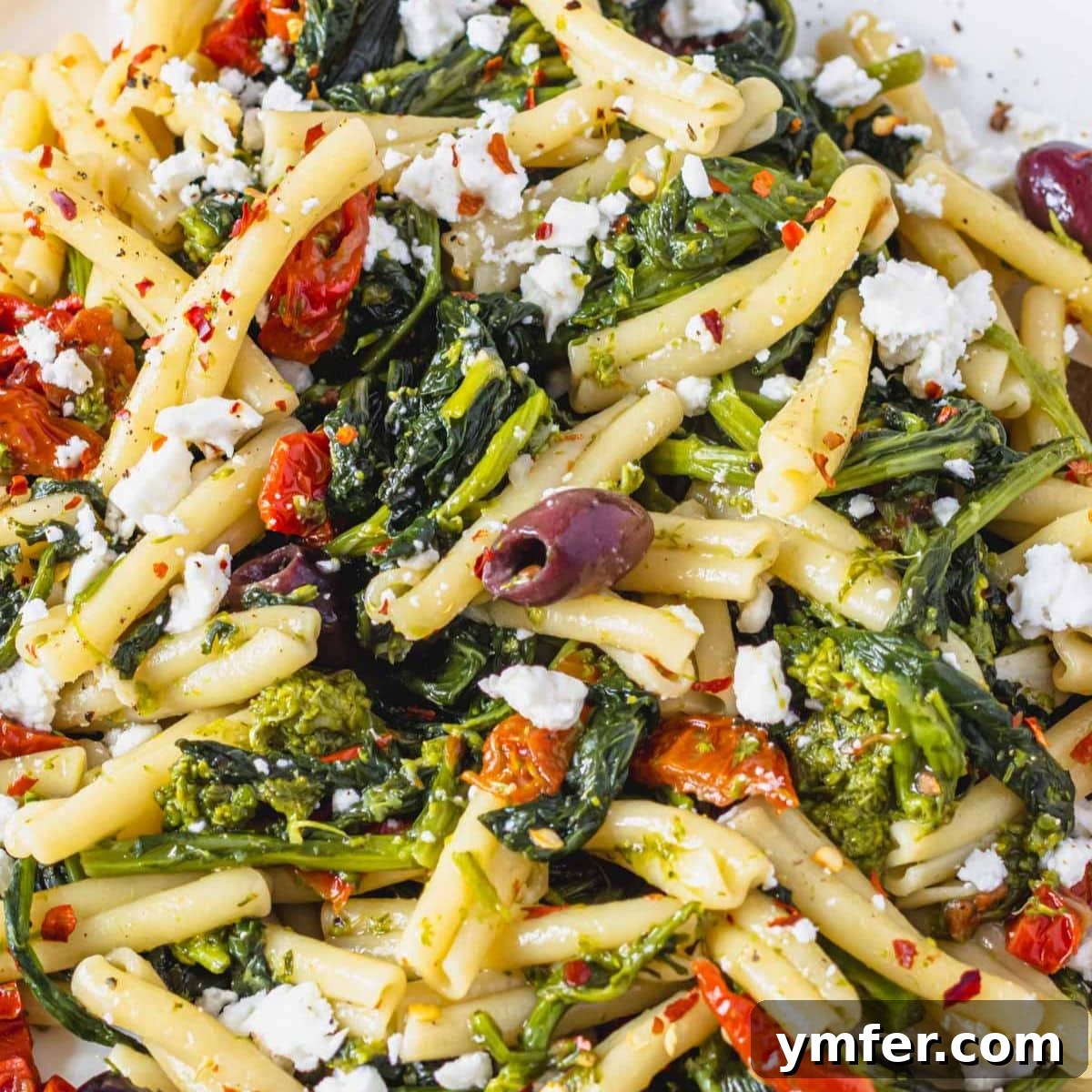
Exquisite Mediterranean Pasta with Broccoli Rabe, Olives & Feta: A Greek-Inspired Delight
Embark on a culinary journey to the sun-drenched coasts with this vibrant and incredibly satisfying Mediterranean pasta recipe. Featuring tender broccoli rabe, briny Kalamata olives, and creamy, tangy feta cheese, this dish is a testament to the simplicity and richness of Mediterranean cuisine. It’s a quick, healthy, and profoundly flavorful weeknight dinner that brings the essence of the Greek islands straight to your table.
Searching for more effortless Mediterranean meal ideas? Explore our collection including the comforting Mediterranean lentil soup, hearty cabbage bean stew, refreshing chopped chickpea salad, and delectable Greek chickpea patties for a taste of authentic regional flavors.
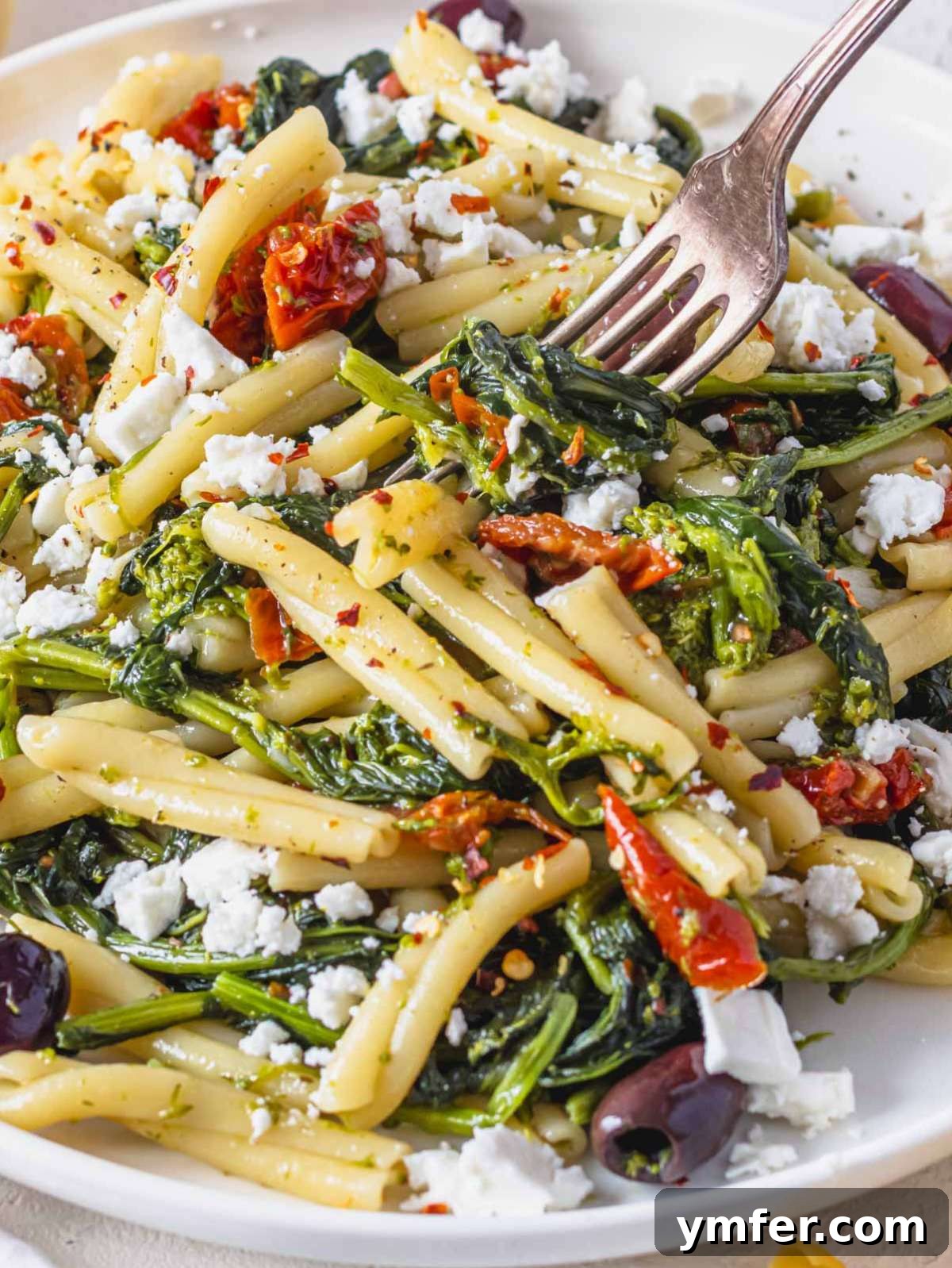
Why This Greek-Inspired Pasta Will Become Your New Favorite
If you cherish meals that are both fresh and bursting with flavor, this Mediterranean pasta is destined to become a beloved staple in your kitchen. It’s more than just a dish; it’s a simple, elegant ode to the vibrant culinary traditions of the Mediterranean, particularly drawing inspiration from Greek flavors. We craft this recipe by harmoniously blending tender broccoli rabe, the sharp saltiness of olives, and the delightful creaminess of feta for a wholesome, deeply satisfying, and healthy vegetarian dinner.
The inspiration for this particular recipe blossomed during our time in Pesaro, a charming Italian town where we often reside by the mesmerizing Mediterranean Sea. The local markets, overflowing with vivid sun-dried tomatoes, lush fresh greens, and the golden shimmer of local olive oil, ignited our desire to create a pasta dish that captures both comfort and lightness. This experience truly embodies the spirit of easy Mediterranean pasta, where quality ingredients shine without requiring extensive effort.
This exquisite pasta is a nutritional powerhouse, packed with fiber-rich vegetables that are crucial for a balanced diet. Naturally low in saturated fat and brimming with heart-healthy ingredients, it aligns perfectly with the renowned Mediterranean-style eating pattern. This lifestyle celebrates whole foods, emphasizes fresh produce, and encourages a mindful approach to eating, promoting overall well-being and longevity. Each forkful transports you to the serene shores of the Mediterranean, offering a delightful escape and a truly satisfying meal.
Whether you’re seeking a quick, flavorful dinner for a busy weeknight or a healthy, vegetarian option that doesn’t compromise on taste, this pasta delivers. It embodies the fresh, vibrant spirit of the sea, making it an ideal choice for anyone looking to incorporate more wholesome, delicious, and convenient Mediterranean dishes into their routine. Its versatility also means you can easily adapt it to your preferences, making it a truly customizable and enjoyable experience.
Key Mediterranean Ingredients
Crafting the perfect Mediterranean pasta begins with selecting the finest ingredients. Here’s a closer look at what makes this dish so special and how you can adapt it to your pantry and preferences. You’ll find the complete list of ingredients, precise quantities, and further substitution suggestions in the detailed recipe card at the end of this article.
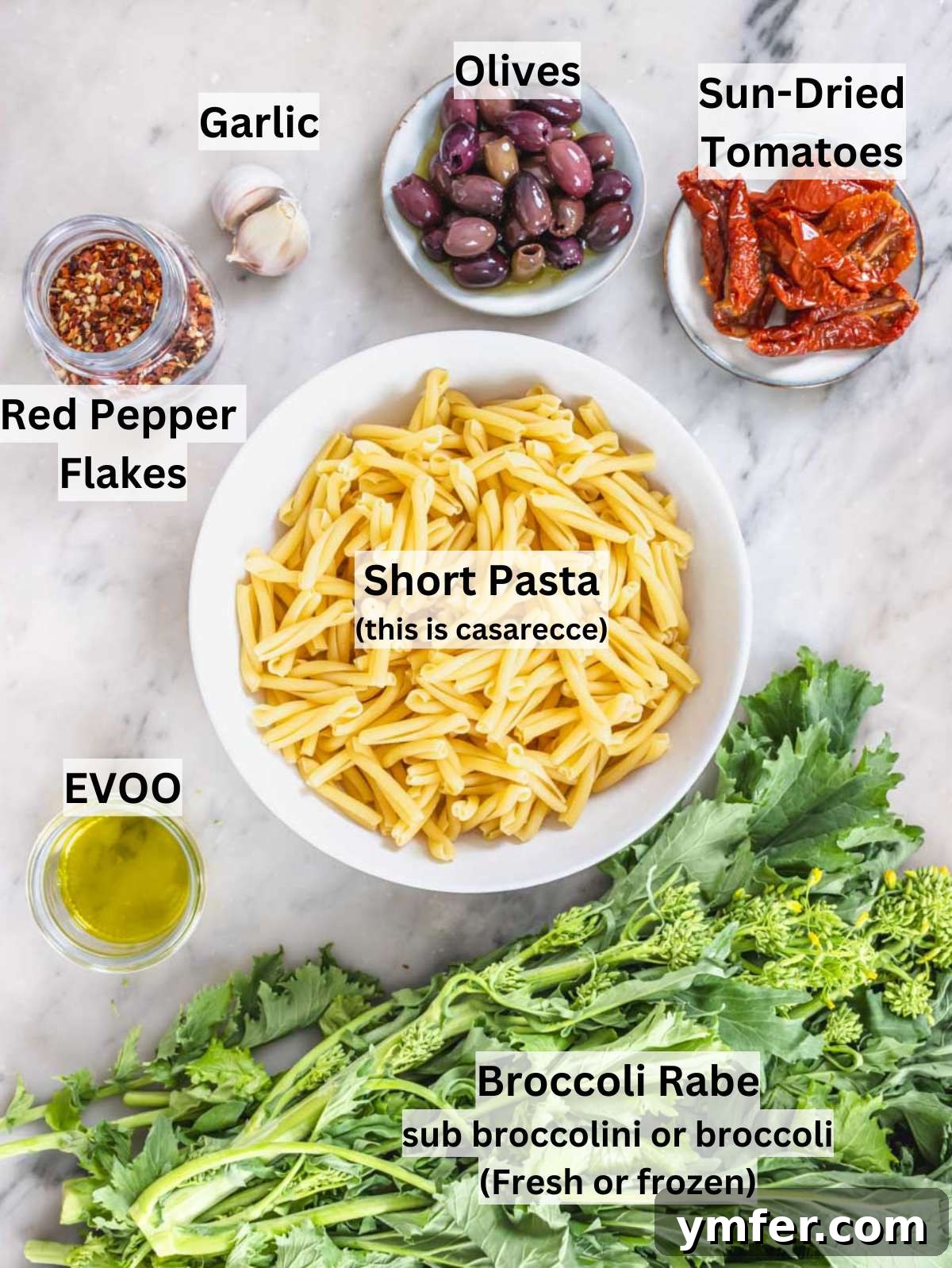
- Pasta: Casarecce is our top recommendation for this dish. Its unique twisted shape is exceptionally good at capturing and holding the savory sauce, ensuring every bite is flavorful. However, feel free to use other short pasta shapes like penne, fusilli, or rigatoni, which offer a similar satisfying chew. For those seeking a lighter or gluten-free alternative, whole wheat or gluten-free pasta varieties integrate seamlessly into this recipe without sacrificing taste or texture.
- Broccoli Rabe: This leafy green vegetable introduces a distinctive, slightly bitter, and earthy note that beautifully balances the other rich flavors in the pasta. It’s a hallmark ingredient in many authentic Mediterranean recipes. If broccoli rabe is not readily available, or if you prefer a milder taste, you can easily substitute it with traditional broccoli florets, elegant broccolini, or even nutrient-rich kale. These alternatives still provide excellent texture and a burst of green goodness, making for a wonderful Mediterranean broccoli pasta variation.
- Olive Oil: The cornerstone of Mediterranean cooking, extra virgin olive oil is indispensable. Its robust, fruity aroma and heart-healthy monounsaturated fats are crucial for building the foundational flavor of this dish. Opt for a high-quality extra virgin olive oil to truly elevate the overall taste and authenticity.
- Garlic: Freshly crushed garlic cloves are essential for adding depth, warmth, and an aromatic punch to the sauce. Its pungent flavor is a classic component of Greek-inspired pasta. If fresh garlic isn’t on hand, garlic powder can be used in a pinch, or for a sweeter, mellower flavor, roasted garlic is an excellent alternative.
- Red Pepper Flakes: A touch of red pepper flakes introduces a gentle, subtle heat that awakens the palate and balances the richness of the other ingredients. This warmth is characteristic of many Mediterranean dishes. For those who prefer a less spicy meal, simply reduce the quantity or omit them entirely. Alternatively, a pinch of cayenne pepper or a drizzle of chili oil can provide a similar spicy kick.
- Sun-Dried Tomatoes: These intensely flavored, chewy gems are best when packed in oil, as they retain more moisture and flavor. They contribute a delightful tangy sweetness and a meaty texture that adds complexity to the pasta. If you’re looking for a fresh twist, consider using roasted cherry tomatoes or finely chopped fresh tomatoes tossed with a little olive oil to achieve a vibrant, garden-fresh profile.
- Olives: For a bold, briny flavor that truly defines a Mediterranean dish, Kalamata or Taggiasca olives are unparalleled. Their deep, savory notes provide a wonderful contrast. For a different but equally delicious experience, try swapping them with milder green Castelvetrano olives or tangy capers to create an exciting variation on pasta with olives and feta.
- Feta Cheese: The quintessential Greek cheese, feta, offers a crumbly texture, a delightful saltiness, and a creamy finish that ties all the flavors together. Its distinct tang is irreplaceable. For those who prefer or require an alternative, goat cheese or ricotta salata can provide a similar crumbly texture and salty profile. For a vegan version of this healthy Mediterranean dinner, excellent non-dairy feta options are now widely available and work beautifully.
Crafting Your Mediterranean Pasta: A Step-by-Step Guide
Creating this flavorful Mediterranean pasta is incredibly straightforward, perfect for a quick weeknight meal or a leisurely weekend lunch. Follow these easy steps to bring the tastes of Greece to your kitchen.
Step 1: Prepare the Broccoli Rabe
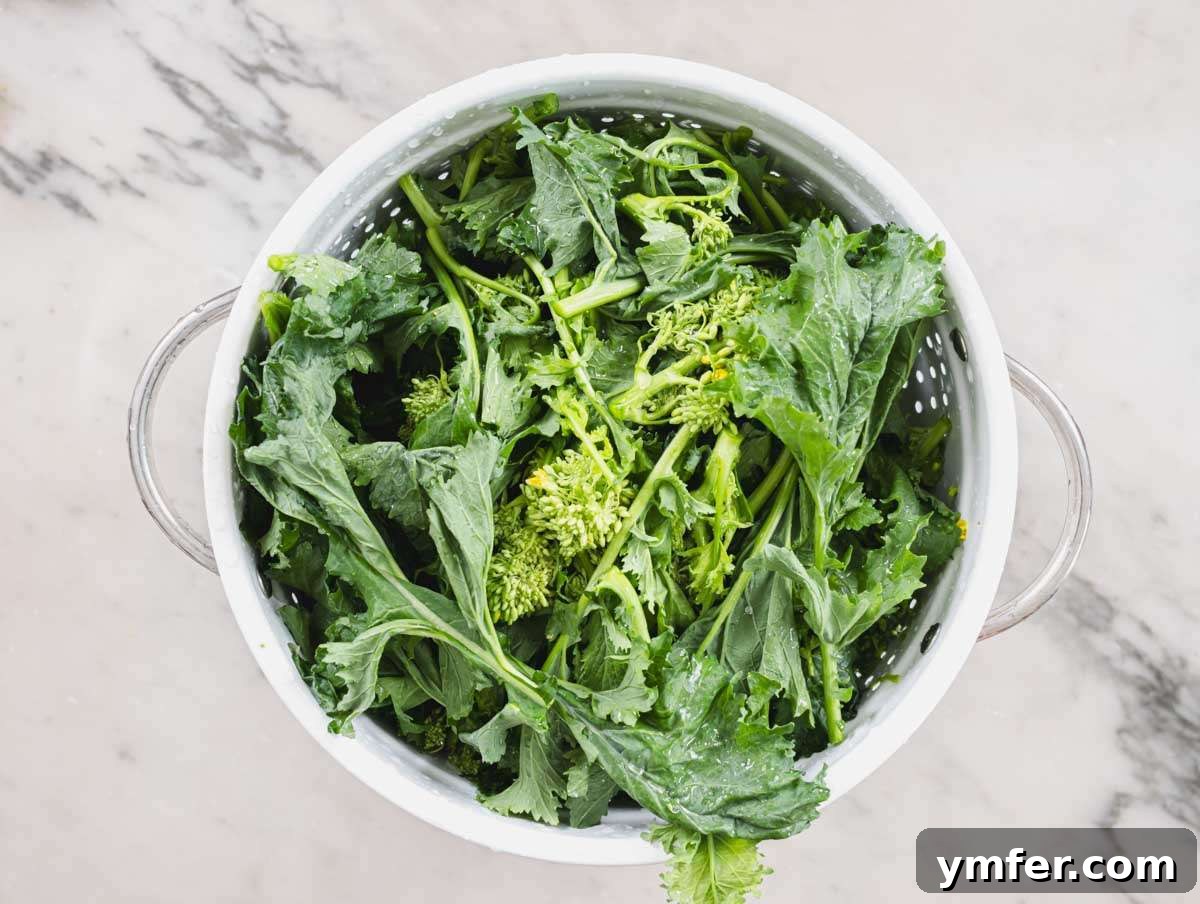
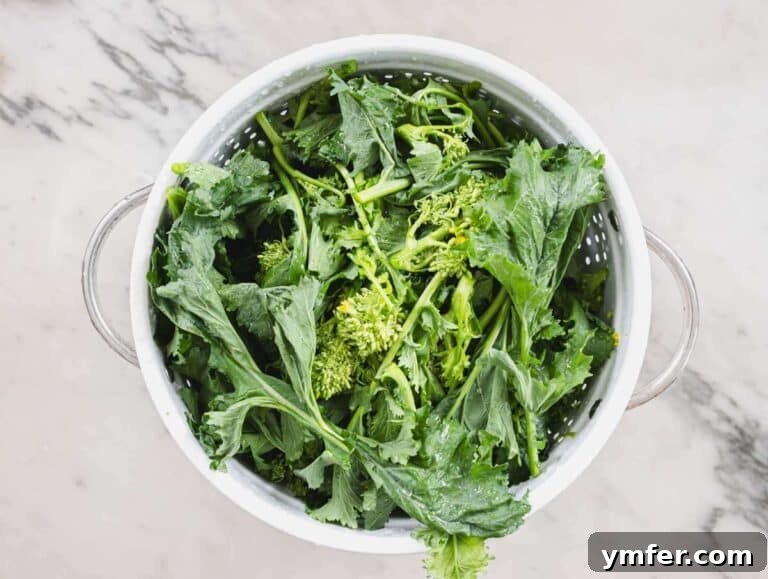
Begin by preparing your star green vegetable. If you’re working with fresh broccoli rabe, carefully trim away the thicker, tougher stems. Rinse the remaining leaves and florets thoroughly under cold water to remove any dirt or grit. Then, chop them into bite-sized pieces for even cooking and easier eating. If you’re opting for the convenience of frozen broccoli rabe, you can bypass the trimming and rinsing steps entirely, saving you valuable time.
Step 2: Sauté the Aromatic Vegetables
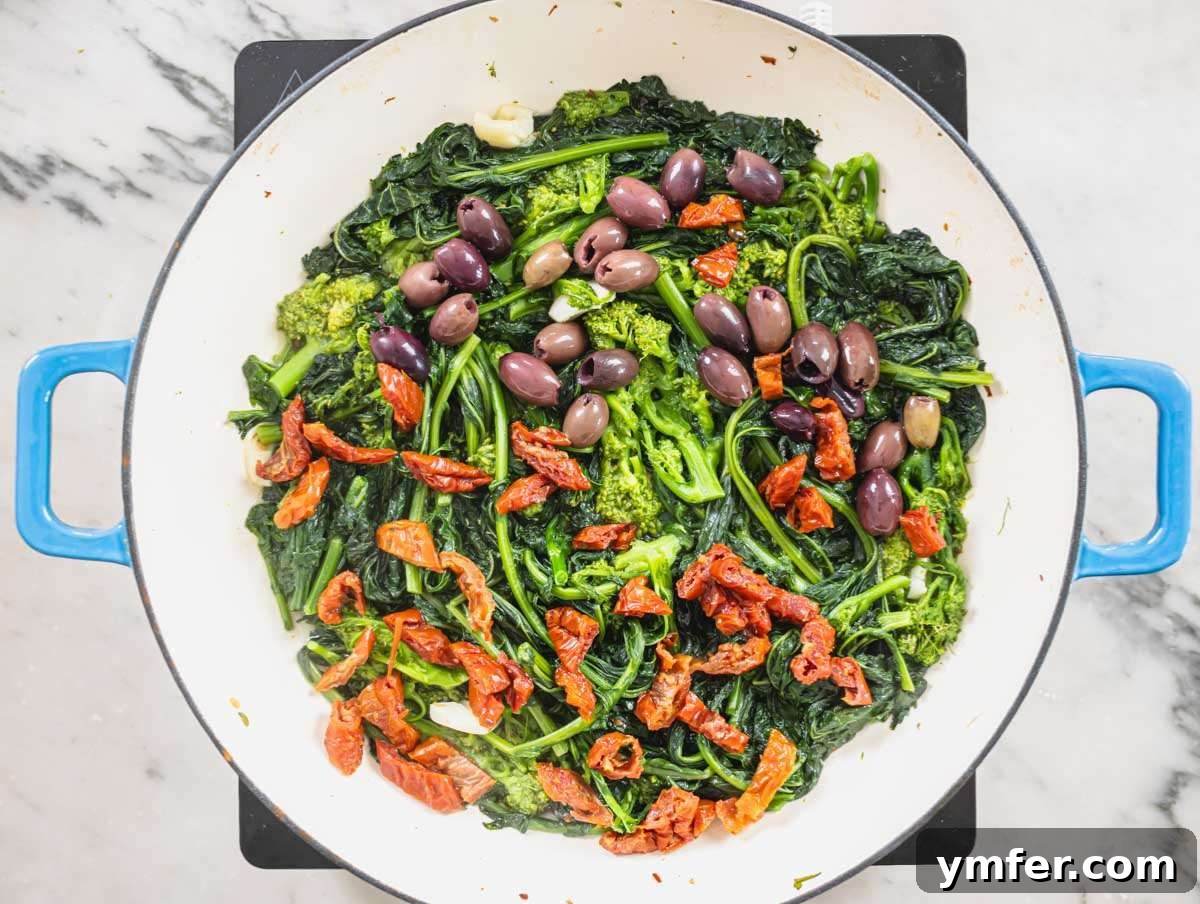
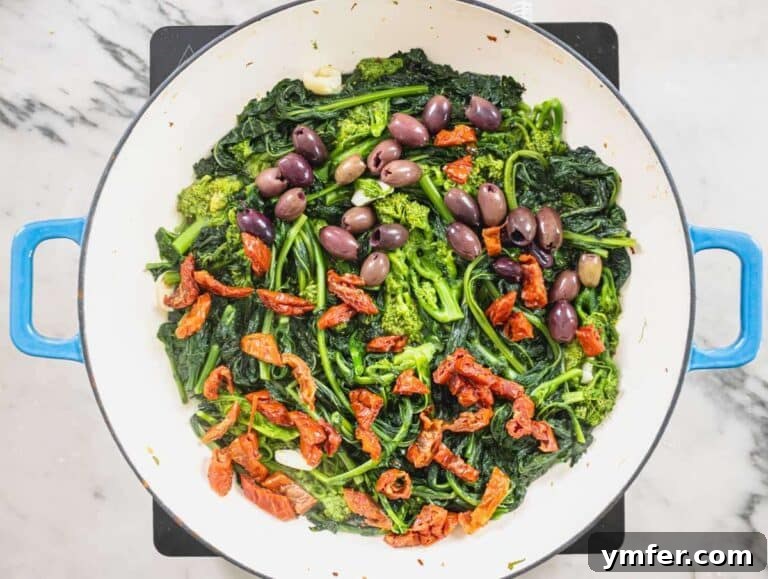
Heat a generous two tablespoons of extra virgin olive oil in a large, deep skillet or Dutch oven over medium heat. Once the oil is shimmering, add two cloves of freshly grated garlic and a quarter teaspoon of red pepper flakes. Sauté this aromatic mixture for about one minute, stirring constantly, until the garlic becomes fragrant and lightly golden – be careful not to burn it, as this can turn bitter. This initial step builds a flavorful base for your sauce. Next, add the prepared broccoli rabe, a half teaspoon of salt, and a splash of water to the skillet. Cover the skillet to trap the steam and allow the broccoli rabe to simmer for approximately 10 to 15 minutes, or until it is wonderfully tender. Stir occasionally to ensure even cooking. Finally, stir in the half cup of drained and chopped sun-dried tomatoes and the half cup of pitted Kalamata or Taggiasca olives, infusing the dish with that quintessential Mediterranean pasta flavor profile.
Step 3: Cook and Combine the Pasta
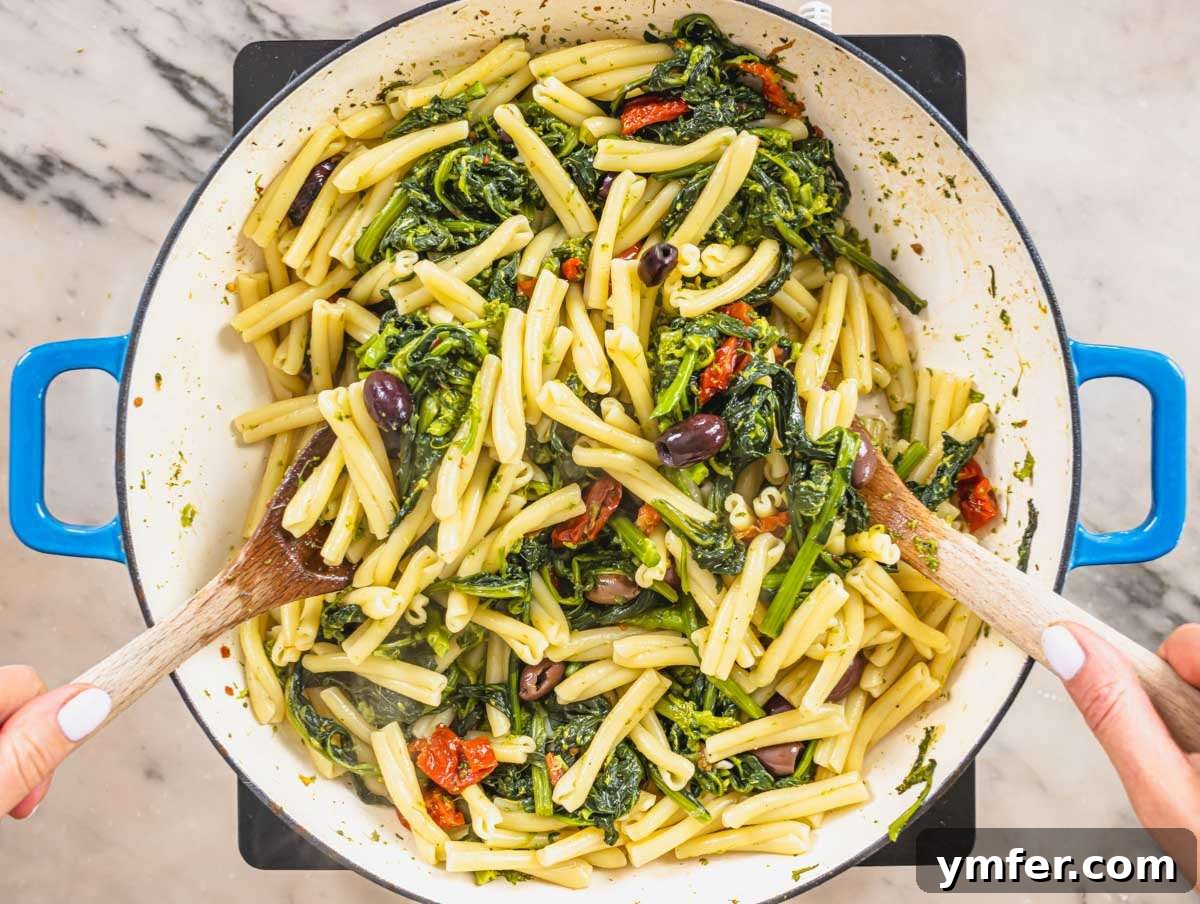
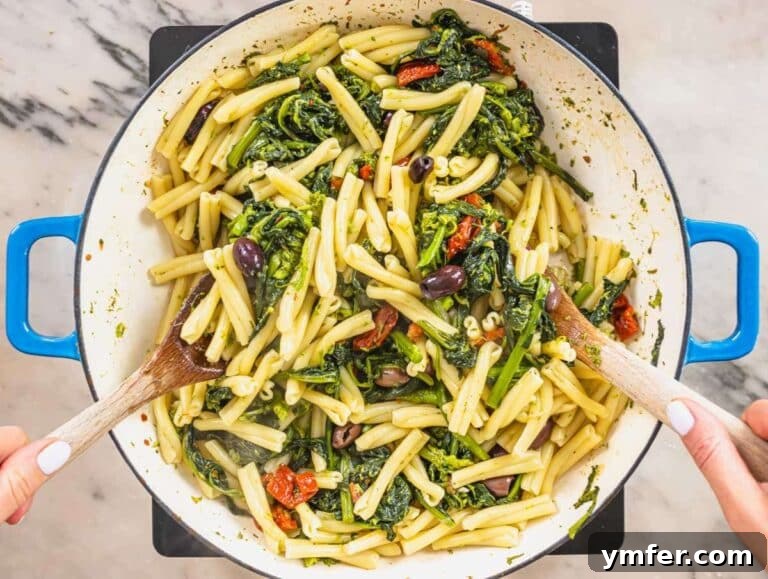
While your vegetables are cooking, bring a large pot of salted water to a rolling boil. Add your chosen pasta (12 ounces) and cook according to the package directions, but aim to stop one minute before it reaches al dente. This slight undercooking is crucial, as the pasta will finish cooking in the skillet and absorb the rich flavors of the sauce. Before draining, make sure to reserve one cup of the starchy pasta water – this liquid is a secret weapon for creating a luscious, emulsified sauce. Drain the pasta thoroughly and immediately transfer it to the skillet with the cooked vegetables. Pour in a little of the reserved pasta water, starting with about a quarter cup, and toss everything together vigorously for about a minute. The goal is for the sauce to lightly coat the noodles, creating a harmonious blend of flavors and textures.
Step 4: Incorporate Feta and Final Touches
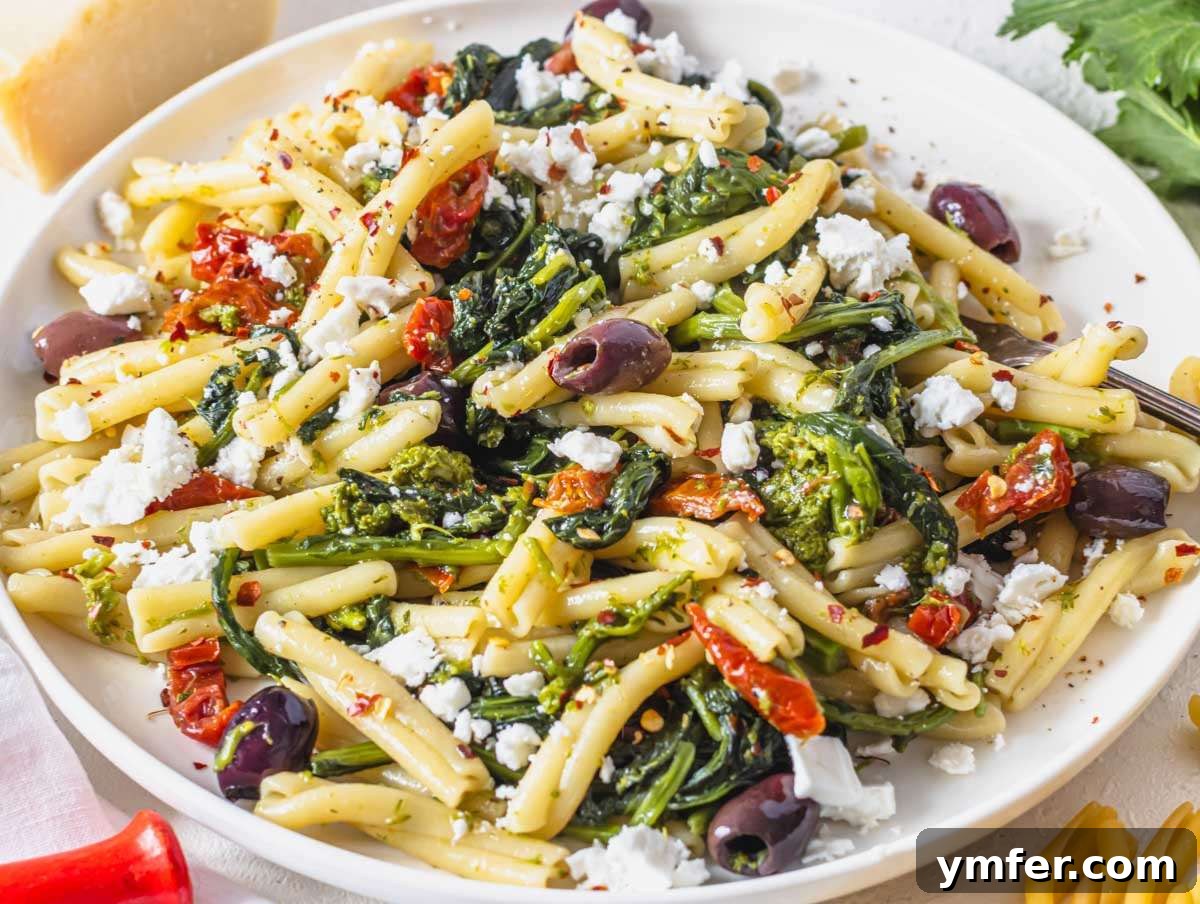
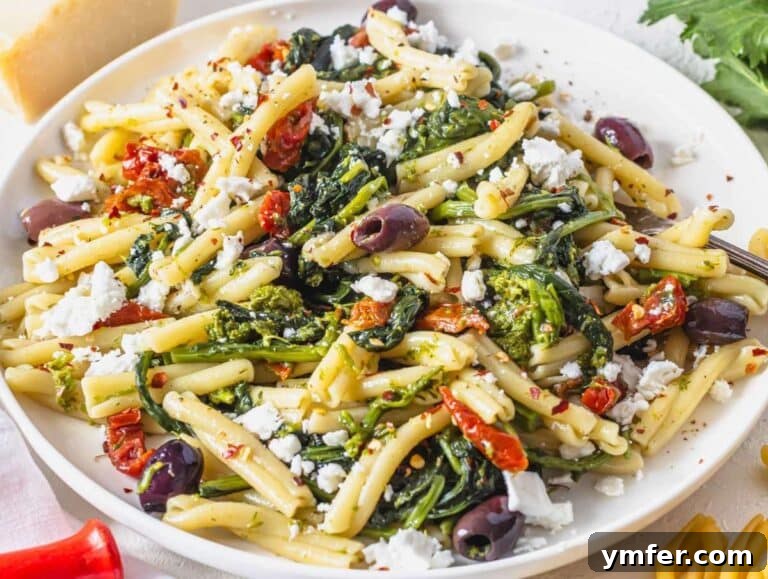
Once the pasta is coated and glistening, turn off the heat. This is important to prevent the feta from melting completely and losing its texture. Crumble in most of the feta cheese (4 ounces), reserving a little for garnish. Gently toss the pasta to combine, allowing the feta to soften slightly and impart its creamy, salty tang throughout the dish. Taste the pasta and adjust the seasoning as needed; you might want a drizzle more of good olive oil, a pinch more salt, or an extra sprinkle of red pepper flakes for more heat. Serve this vibrant healthy Mediterranean dinner immediately, garnished with the remaining crumbled feta, a crack of fresh black pepper, and a delicate touch of lemon zest. The lemon zest adds a bright, zesty finish that truly lifts all the flavors, making each bite incredibly refreshing.
Expert Tips for the Best Mediterranean Pasta
Achieving a restaurant-quality Mediterranean pasta at home is simpler than you think with these expert tips:
- Cook Pasta Al Dente: The secret to perfectly textured pasta lies in undercooking it slightly in the boiling water. Stop cooking your pasta about one minute before the package’s recommended time. This ensures it finishes cooking directly in the hot skillet with the sauce, allowing it to absorb all those wonderful Mediterranean flavors and achieve an ideal, firm-to-the-bite texture.
- Utilize Reserved Pasta Water: Don’t discard that starchy pasta water! It’s a culinary gem. Adding a splash or two to your sauce helps to emulsify it, creating a luxuriously silky coating that clings beautifully to every noodle. This technique delivers a rich, smooth finish without the need for heavy cream or additional fats.
- Layer Flavors Strategically: Build the depth of your sauce by adding ingredients in layers. Start by infusing your olive oil with fragrant garlic and a hint of red pepper flakes. Then, introduce the broccoli rabe, allowing its unique character to develop before adding the concentrated sweetness of sun-dried tomatoes and the briny kick of olives. This layering prevents flavors from becoming muddled and keeps each component vibrant and distinct.
- Invest in Quality Olive Oil: The quality of your extra virgin olive oil can profoundly impact the final taste of your Mediterranean pasta. A good quality oil offers a rich, sometimes peppery or fruity, flavor that ties all the individual ingredients together, enhancing the authentic Mediterranean profile. Think of it as the soul of your dish.
- Add Crumbled Feta Last: To preserve its delightful texture and creamy tang, always crumble the feta cheese into the pasta *after* you’ve turned off the heat. This allows it to soften slightly, becoming wonderfully melty and integrated, but prevents it from completely dissolving into the sauce, ensuring you get pockets of savory feta in every bite.
- Finish with Fresh Lemon Zest: A final sprinkle of fresh lemon zest is a simple yet transformative touch. The bright, citrusy aroma and flavor cut through the richness of the dish, adding an invigorating lift and a burst of freshness that is characteristic of authentic Greek and Mediterranean cuisine. It truly makes the flavors pop.
- Customize to Your Liking: This Mediterranean pasta recipe is incredibly versatile. Feel free to incorporate your favorite additions: stir in a can of chickpeas or white beans for extra protein and fiber, or add some fresh cherry tomatoes for a burst of juicy sweetness. It’s a forgiving recipe that encourages creativity based on what you have on hand or what your taste buds crave.
Frequently Asked Questions About Mediterranean Pasta
Absolutely! While broccoli rabe offers a distinct, slightly bitter flavor that many adore, standard broccoli florets or broccolini are excellent substitutes. They have a milder, more universally appealing taste, which can make this pasta a great option for families or those new to Mediterranean broccoli pasta. The cooking time will be similar, aiming for tender-crisp florets.
Casarecce is often preferred because its unique twisted shape captures and holds the delicious sauce exceptionally well. However, this recipe is quite flexible! Penne, fusilli, or rigatoni are fantastic substitutes, offering a satisfying texture. For a healthier twist or dietary preference, whole wheat or gluten-free pasta varieties can be used without compromising on the overall enjoyment of the dish.
Yes, making this recipe vegan is incredibly simple. The easiest way is to use a high-quality non-dairy feta cheese, which mimics the salty and creamy texture beautifully. Alternatively, you can omit the cheese entirely and instead add an extra drizzle of rich extra virgin olive oil at the end for added creaminess and flavor. Nutritional yeast can also be sprinkled for a cheesy umami note.
This recipe is wonderfully adaptable for adding protein. For a vegetarian or plant-based boost, consider stirring in a can of drained and rinsed chickpeas or white beans during the last few minutes of cooking with the vegetables. Grilled tofu or tempeh, diced and added at the end, also works well. If you are not vegetarian, shredded rotisserie chicken or sautéed shrimp would make delicious additions.
Leftovers of this Mediterranean pasta store beautifully. Transfer the cooled pasta to an airtight container and refrigerate it for up to 3 days. When reheating, the pasta might seem a bit dry; simply add a splash of water or vegetable broth to help revive the sauce and bring it back to its original silky consistency. Gently reheat on the stovetop or in the microwave until warmed through.
Explore More Easy Mediterranean Dinners
If you loved this Greek-inspired pasta, be sure to check out these other effortless and delicious Mediterranean dinner ideas that celebrate fresh ingredients and bold flavors:
- Hearty Mediterranean Chickpea Soup
- Vibrant Quinoa Salad with Life-Changing Marinade
- Comforting Quick Red Lentil Soup
- Creamy Mediterranean Pumpkin Soup
- Flavorful Spiced Lentil Soup (High-Fiber)
- Unique Smashed Broccoli Pasta
- Rich and Creamy Red Lentil Soup
- Savory Mediterranean Mushroom Pasta
We truly hope you enjoy making and savoring this delightful Mediterranean pasta recipe. If you tried this dish or any other recipe from our blog, please consider leaving a 🌟 star rating and sharing your experience in the comments section below. Your feedback means the world to us!
Mediterranean Pasta (Greek-Inspired Dinner)
Share
Ingredients
- 12 ounces pasta (we used casarecce – rotini, fusilli, rigatoni or another short pasta work too)
- 2 tablespoons extra virgin olive oil
- 2 cloves garlic (grated or minced)
- ¼ teaspoon red pepper flakes (plus black pepper to taste)
- 1½ pounds broccoli rabe (fresh or frozen, or substitute broccoli florets or broccolini)
- ½ teaspoon salt (or more to taste)
- ½ cup sun-dried tomatoes in oil (drained and chopped)
- ½ cup pitted olives (Kalamata or Taggiasca recommended)
- 4 ounces feta cheese (crumbled, or more to taste)
- 1 zested lemon (optional, for garnish)
Instructions
-
Prepare the Broccoli Rabe: If using fresh broccoli rabe, trim the thicker stems, then rinse thoroughly and chop the leaves and florets into smaller, manageable pieces. If you are using frozen broccoli rabe, this trimming and rinsing step can be skipped entirely.

-
Cook the Vegetables: Heat 2 tablespoons of extra virgin olive oil in a large skillet over medium heat. Add the 2 cloves of grated garlic and ¼ teaspoon of red pepper flakes. Sauté for about 1 minute until fragrant, being careful not to burn the garlic. Add the prepared broccoli rabe, ½ teaspoon of salt, and a splash of water. Cover the skillet and simmer for 10 to 15 minutes, stirring occasionally, until the broccoli rabe is tender. Stir in the ½ cup of drained and chopped sun-dried tomatoes in oil and the ½ cup of pitted olives.
-
Cook and Combine the Pasta: In the meantime, bring a large pot of salted water to a boil and cook 12 ounces of pasta until it’s just shy of al dente (one minute less than package directions). Reserve one cup of the starchy pasta water before draining the pasta. Add the drained pasta to the skillet with the vegetable mixture. Pour in a little of the reserved pasta water (start with ¼ cup) and toss everything together for about a minute, ensuring the sauce lightly coats the noodles.
-
Add the Feta and Finish: Turn off the heat and crumble in most of the 4 ounces of feta cheese (reserve some for garnish). Toss gently to combine. Taste and adjust seasoning as needed, adding more olive oil, salt, or red pepper flakes if desired. Serve warm, topped with the remaining feta, a sprinkle of fresh black pepper, and 1 zested lemon for a bright finish.
Notes
Substitutions
- Pasta: Penne, fusilli, or rigatoni work great too. For a lighter option, use whole wheat or gluten-free pasta.
- Broccoli rabe: Swap with broccoli florets, broccolini, or kale for a milder and more balanced flavor.
- Olive oil: Use avocado oil or light olive oil if you prefer a subtler taste, though extra virgin is recommended for authentic flavor.
- Garlic: Substitute with garlic powder, roasted garlic, or even shallots for a sweeter flavor.
- Red pepper flakes: Use cayenne, chili oil, or smoked paprika for a gentle spicy kick.
- Sun-dried tomatoes: Replace with roasted cherry tomatoes or chopped fresh tomatoes mixed with olive oil for a fresher profile.
- Olives: Try green Castelvetrano olives, black olives, or capers for a salty Mediterranean twist.
- Feta cheese: Replace with goat cheese, ricotta salata, or non-dairy feta for a vegan version.
Tips
- Cook pasta al dente: Stop one minute before the package time so it finishes cooking in the sauce and absorbs flavors.
- Save pasta water: The starchy water helps the sauce coat the noodles for a silky finish.
- Add ingredients in layers: Start with garlic and chili, then build flavor with broccoli rabe, sun-dried tomatoes, and olives for a vibrant taste.
- Use good olive oil: Extra virgin olive oil brings richness and ties all the Mediterranean flavors together.
- Crumbled feta last: Add feta at the end, off the heat, so it softens slightly without disappearing into the sauce.
- Finish with lemon zest: A sprinkle of lemon zest brightens and lifts the flavors of your quick Greek pasta dish.
- Customize it: Add chickpeas for protein or cherry tomatoes for sweetness depending on what you have at home.
Storage
Store leftovers in an airtight container in the fridge for up to 3 days. To reheat, add a splash of water or broth to revive the sauce. This dish is not ideal for freezing as pasta texture can change.
Nutrition
Calories: 510kcal,
Carbohydrates: 70g,
Protein: 20g,
Fat: 18g,
Saturated Fat: 5g,
Polyunsaturated Fat: 2g,
Monounsaturated Fat: 9g,
Trans Fat: 0g,
Cholesterol: 22mg,
Sodium: 679mg,
Potassium: 737mg,
Dietary Fiber: 8g,
Sugar: 3g,
Vitamin A: 4813IU,
Vitamin B6: 1mg,
Vitamin C: 48mg,
Vitamin E: 4mg,
Vitamin K: 386µg,
Calcium: 340mg,
Folate: 167µg,
Iron: 5mg,
Manganese: 1mg,
Magnesium: 97mg,
Zinc: 3mg
Tried this recipe?Leave a comment below or mention @theplantbasedschool on Instagram. We love hearing from you ⭐️ 💚.