
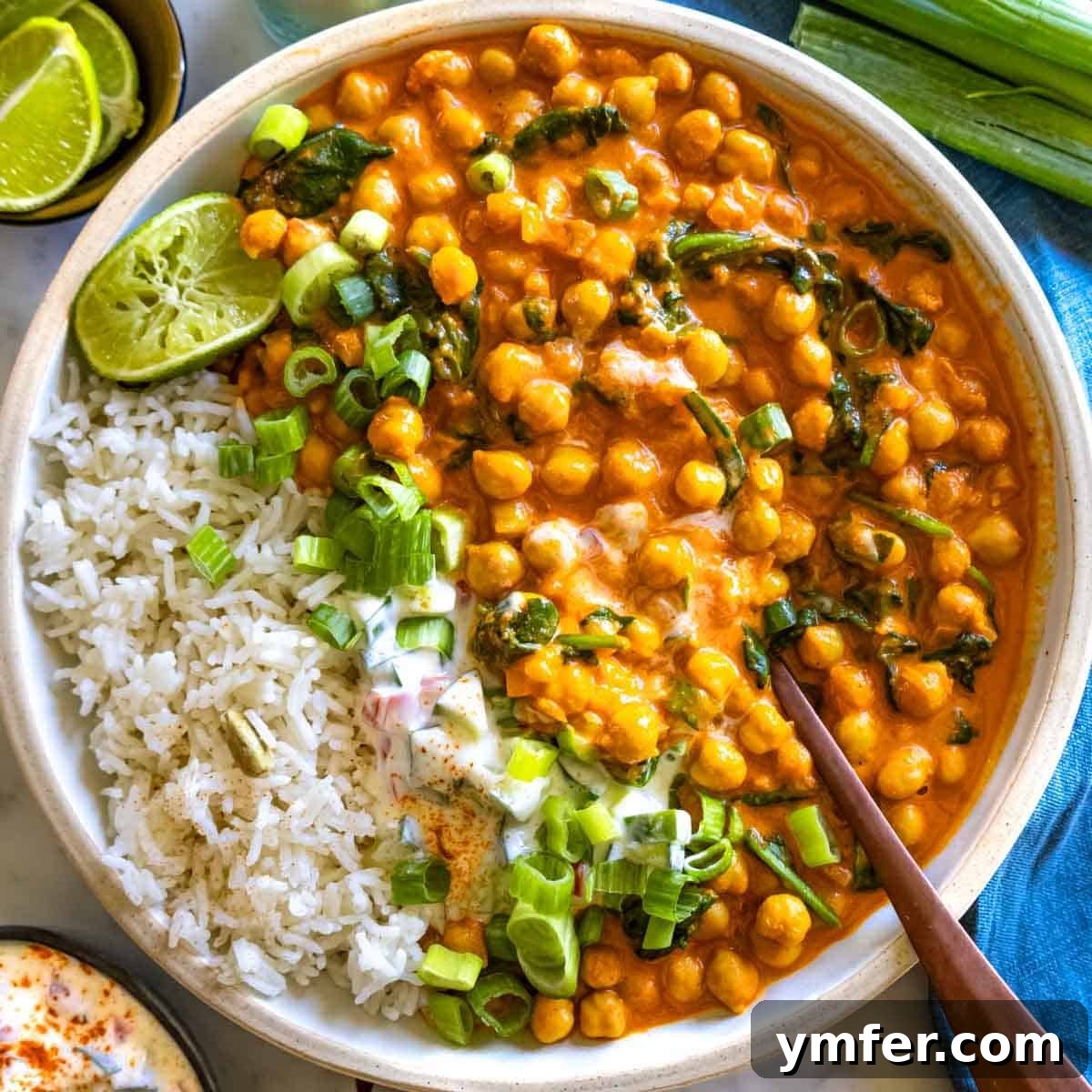
Embark on a culinary journey with this incredibly flavorful and comforting **chickpea curry**, a true testament to the magic of one-pot cooking. This vibrant dish delivers a symphony of rich, aromatic spices bathed in a luxuriously creamy tomato sauce, all coming together in just under **30 minutes**. It’s not just a meal; it’s a hearty, soul-satisfying experience that perfectly complements saffron rice, fluffy naan bread, or flaky paratha. Whether you’re a seasoned curry enthusiast or new to the world of Indian cuisine, this recipe promises to become a cherished staple in your kitchen.
For those eager to explore more delightful Indian-inspired recipes, we highly recommend trying our popular lentil curry, the rich and smoky dal makhani (black lentil curry), our simple yet delicious split lentil dal, and the classic chana masala.
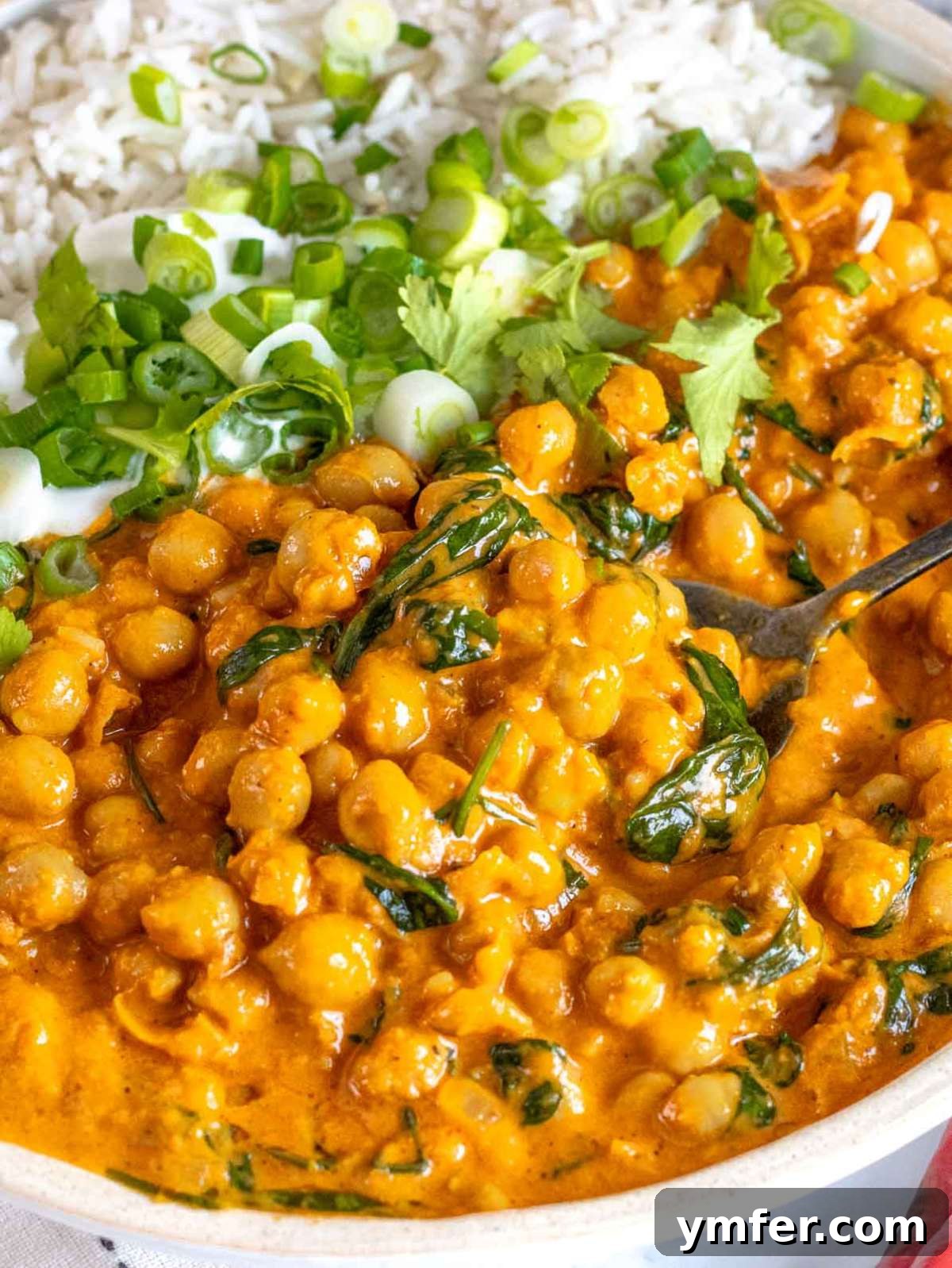
The Magic of Chickpea Curry: A Flavorful Journey
At our plant-based school, we (Louise and I) hold a special fondness for Indian recipes. They effortlessly transform humble legumes like chickpeas and lentils into something truly extraordinary, bursting with flavor, inherently vegetarian, and remarkably wholesome. This chickpea curry recipe is a shining example, marrying the robust flavors of North Indian chana masala with the luscious, coconut-infused notes often found in South Indian curries.
Imagine tender, protein-packed chickpeas lovingly simmered in a velvety, perfectly spiced tomato sauce. That’s precisely what awaits you with this bold, one-pot dish. Crafted using readily available pantry staples, it comes together in under half an hour, making it an ideal choice for busy weeknights without compromising on taste or nourishment.
The beauty of this curry lies in its adaptability. You can tailor the creaminess to your preference by using full-fat coconut milk for maximum richness, light coconut milk for a lighter touch, or even heavy cream or half-and-half for a dairy-based alternative. Serve it hot, topped with a traditional tempering of tadka or a cooling dollop of raita. It’s perfect for a quick dinner, an impressive meal for guests, or as a fantastic make-ahead option, as the flavors deepen and meld beautifully overnight. Simply pair it with fragrant basmati rice, soft paratha, or warm naan bread for a truly satisfying and complete meal.
Why You’ll Adore This Easy Chickpea Curry
This chickpea curry isn’t just another recipe; it’s a culinary revelation designed for modern life. Here’s why we believe you’ll fall in love with it:
- 🍛 **Big Flavor, Minimal Effort**: Prepare to be amazed by the depth of flavor packed into this dish. Bold, aromatic spices combine with a creamy texture to create a truly unforgettable meal, all achievable in less than 30 minutes. It’s the perfect solution for when you crave exotic flavors without spending hours in the kitchen.
- 🌿 **A Plant-Based Powerhouse**: Chickpeas are nutritional superstars, providing a significant source of plant-based protein and fiber. This curry is incredibly filling and satisfying, offering a wholesome meal that caters beautifully to vegetarian and vegan diets without any need for meat.
- 💰 **Budget-Friendly & Accessible**: You don’t need exotic ingredients to create this masterpiece. It relies on affordable pantry staples like canned chickpeas, crushed tomatoes, and common spices, making it a cost-effective choice for delicious home cooking.
- ⏳ **Your Meal Prep Dream**: This chickpea curry is a gift that keeps on giving! It tastes even better the next day as the spices have more time to infuse and deepen. Make a large batch and enjoy the convenience of healthy, ready-to-eat leftovers throughout the week.
- 🌍 **Incredibly Versatile**: From adding extra vegetables to adjusting the spice level or switching up the creamy base, this recipe is wonderfully flexible. It adapts to your taste preferences and whatever ingredients you have on hand, ensuring a unique experience every time.
Essential Ingredients for a Perfect Chickpea Curry
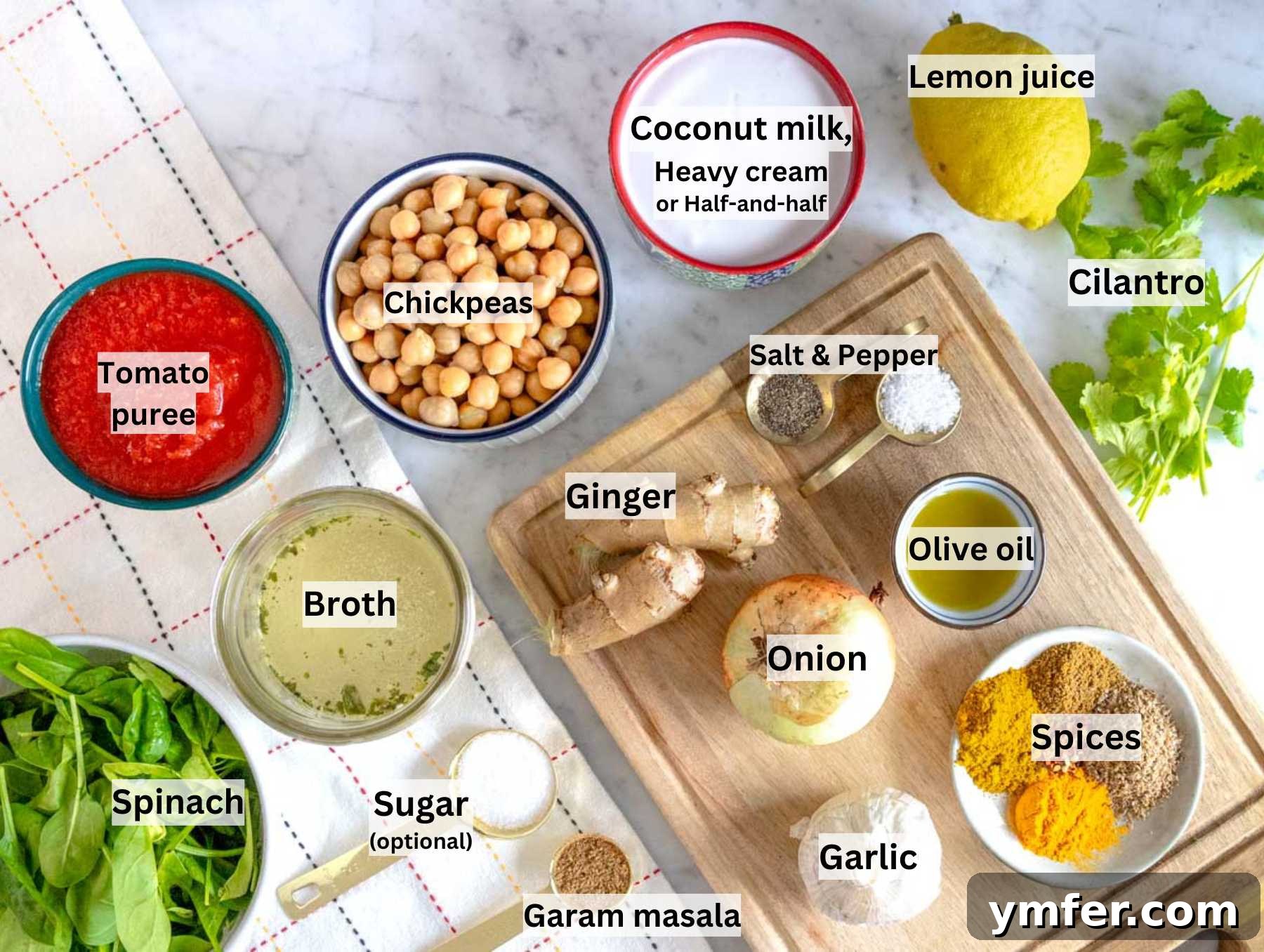
Crafting this delicious chickpea curry is surprisingly straightforward, thanks to a list of flexible ingredients. Here’s a closer look at what you’ll need and how you can easily make substitutions to fit your pantry and preferences:
- Olive Oil: The foundation for sautéing your aromatics. While olive oil works wonderfully, feel free to use coconut oil for an extra layer of flavor, traditional mustard oil, or any neutral cooking oil you prefer.
- Onion: Finely chopped onion creates the essential aromatic base, adding sweetness and depth as it caramelizes. Don’t skip this step for the best flavor.
- Garlic & Ginger: Freshly grated garlic and ginger are non-negotiable for that authentic, pungent aroma and spicy kick. Using fresh makes a noticeable difference compared to powders or pre-minced versions.
- Spices: This blend is where the magic happens!
- **Curry Powder**: A convenient blend that brings a complex, warm flavor profile.
- **Cumin**: Adds an earthy, warm undertone.
- **Turmeric**: Known for its vibrant color and mild, earthy flavor, plus its health benefits.
- **Coriander**: Imparts a subtle citrusy, floral note.
- **Red Pepper Flakes**: For a gentle warmth. Adjust to your desired spice level.
- Chickpeas: Canned chickpeas are a fantastic shortcut for this quick recipe. Ensure they are thoroughly drained and rinsed. If you prefer using dried chickpeas, remember to soak and cook them until tender beforehand. (Our guide on cooking chickpeas is very helpful!). Lentils also make a great alternative.
- Vegetable Broth: This liquid forms the base of your curry sauce. If you don’t have broth on hand, water will work, though broth adds more depth of flavor.
- Crushed Tomatoes: These contribute to the creamy texture and tangy tomato flavor. Diced tomatoes, tomato purée, or even fresh, ripe diced tomatoes can be used as substitutes.
- Coconut Milk: Full-fat coconut milk is highly recommended for achieving that rich, luxurious creaminess and authentic South Indian-inspired flavor. For a lighter version, use light coconut milk. Dairy alternatives like heavy cream or half-and-half can also be used if coconut is not preferred.
- Spinach: A wonderful way to sneak in some greens! It wilts beautifully into the curry, adding freshness and nutrients. Feel free to swap it out for other quick-cooking vegetables like cauliflower florets, diced eggplant, or sweet potato chunks.
- Garam Masala: This finishing spice blend is optional but highly recommended. Added at the end, it provides a warm, fragrant, and slightly sweet aroma that beautifully rounds out the curry’s flavor profile.
- Salt & Pepper: Essential for seasoning. Always taste and adjust to your preference.
- Sugar (optional): A small amount of sugar can help balance the acidity of the tomatoes and the heat of the spices, creating a more harmonious flavor.
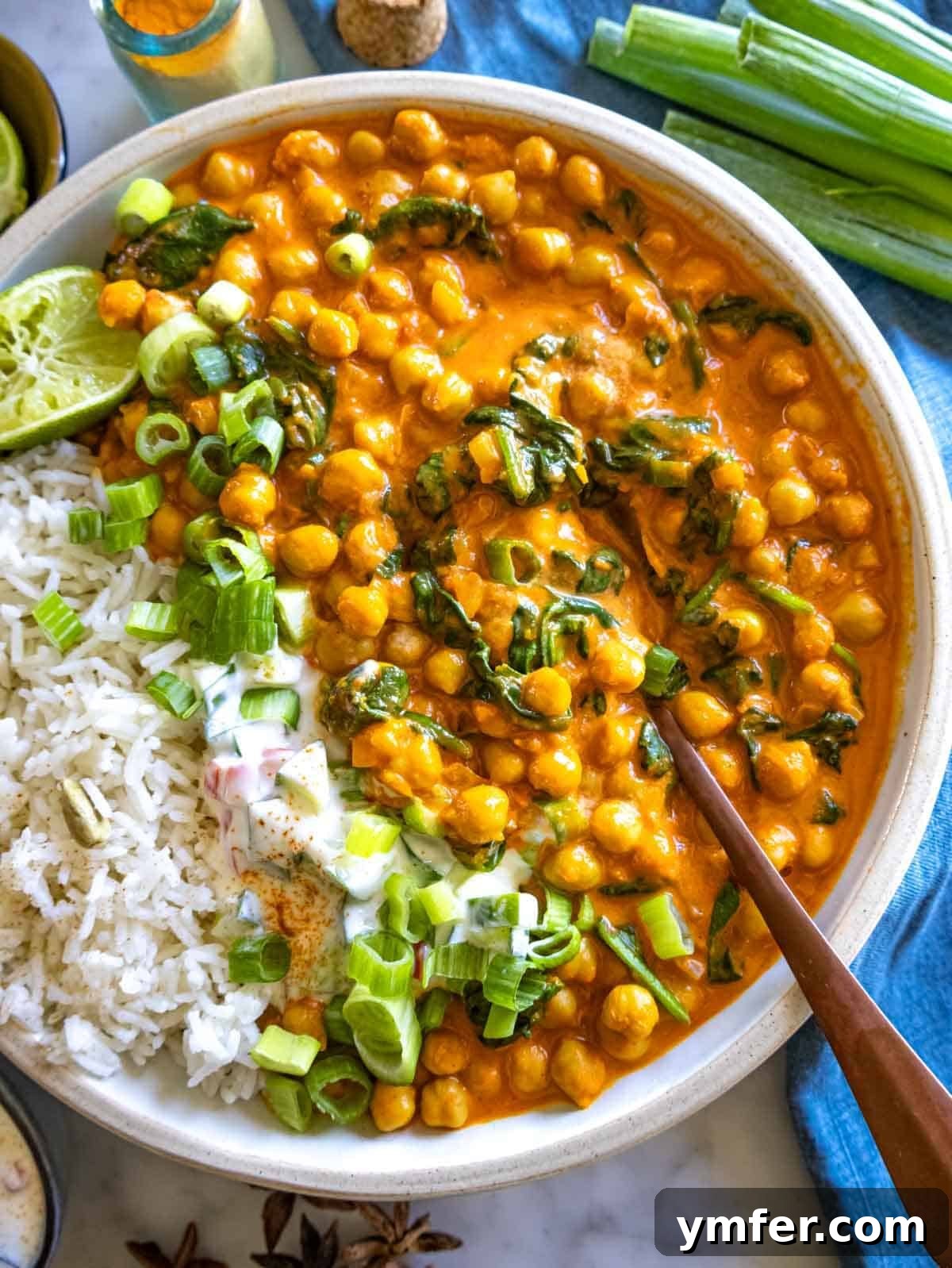
How to Make This Creamy Chickpea Curry: Step-by-Step
Creating this rich and creamy chickpea curry is simpler than you might think. Follow these easy steps to bring this delightful dish to life:
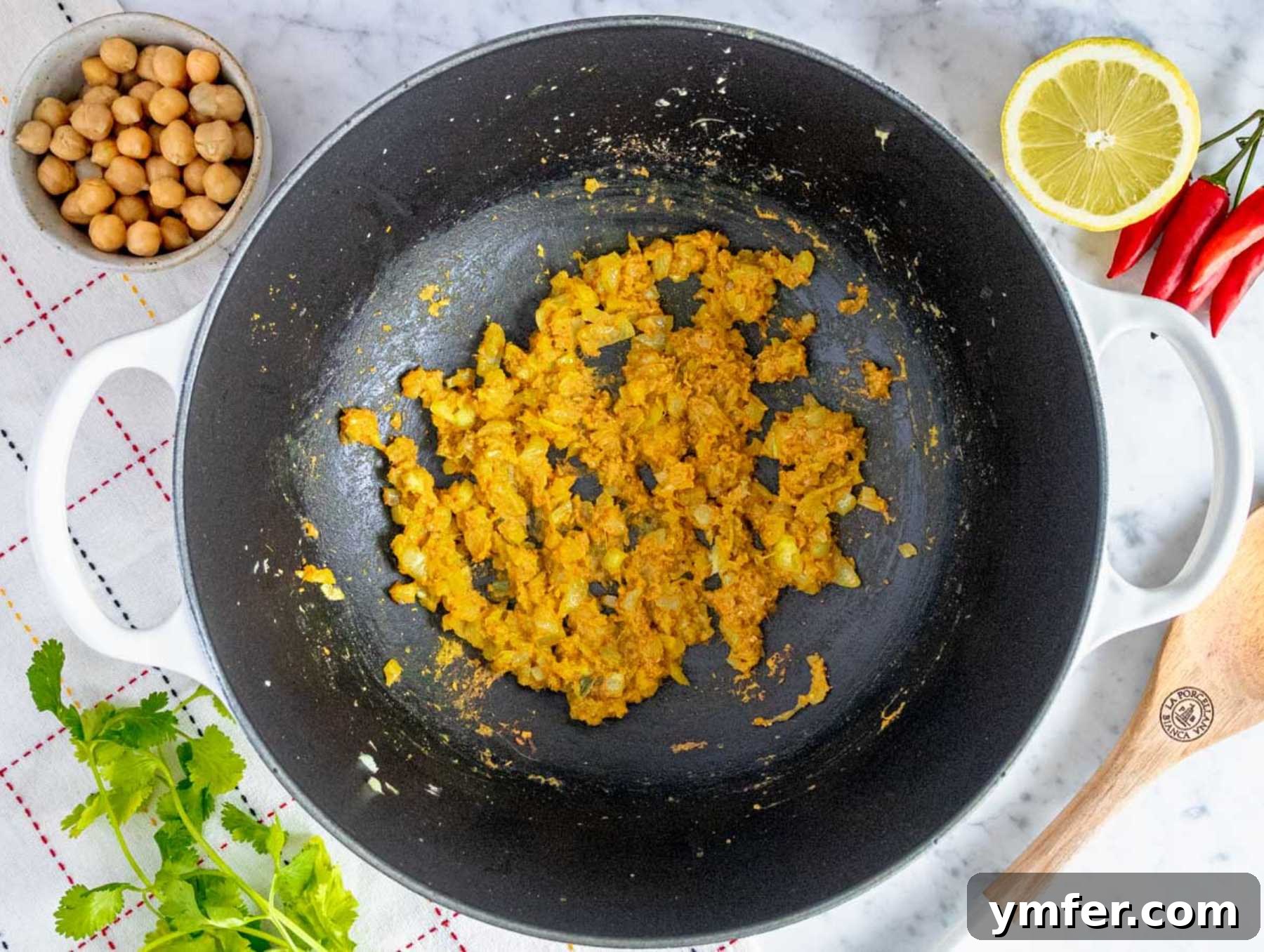
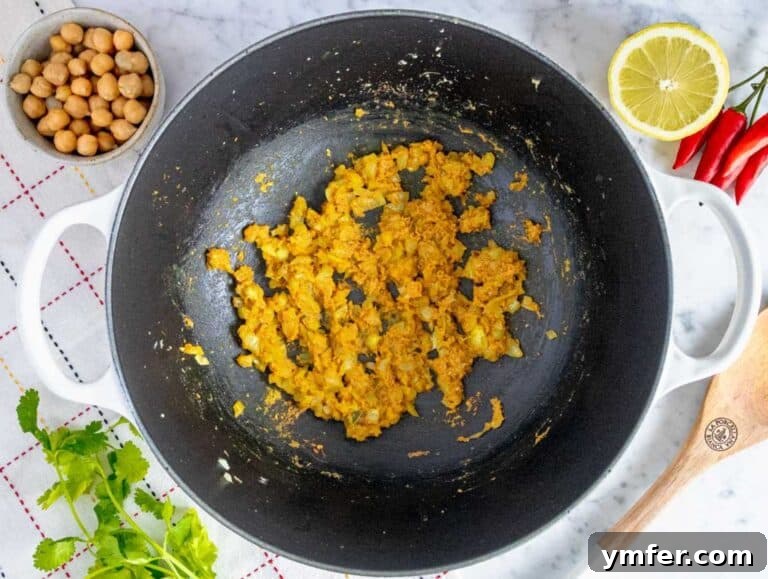
Step 1: Build the Flavor Base – Begin by heating a tablespoon of olive oil in a large skillet or Dutch oven over medium heat. Add your finely chopped onion and sauté for about 4 minutes, stirring frequently, until it softens and begins to turn translucent. This foundational step is crucial for developing deep flavor. Next, add the grated garlic, grated ginger, curry powder, ground cumin, turmeric powder, ground coriander, and red pepper flakes to the pan. Cook for just 1 minute more, stirring constantly, until the spices become fragrant and toasted. If the pan appears too dry, a small splash of vegetable broth will prevent burning.
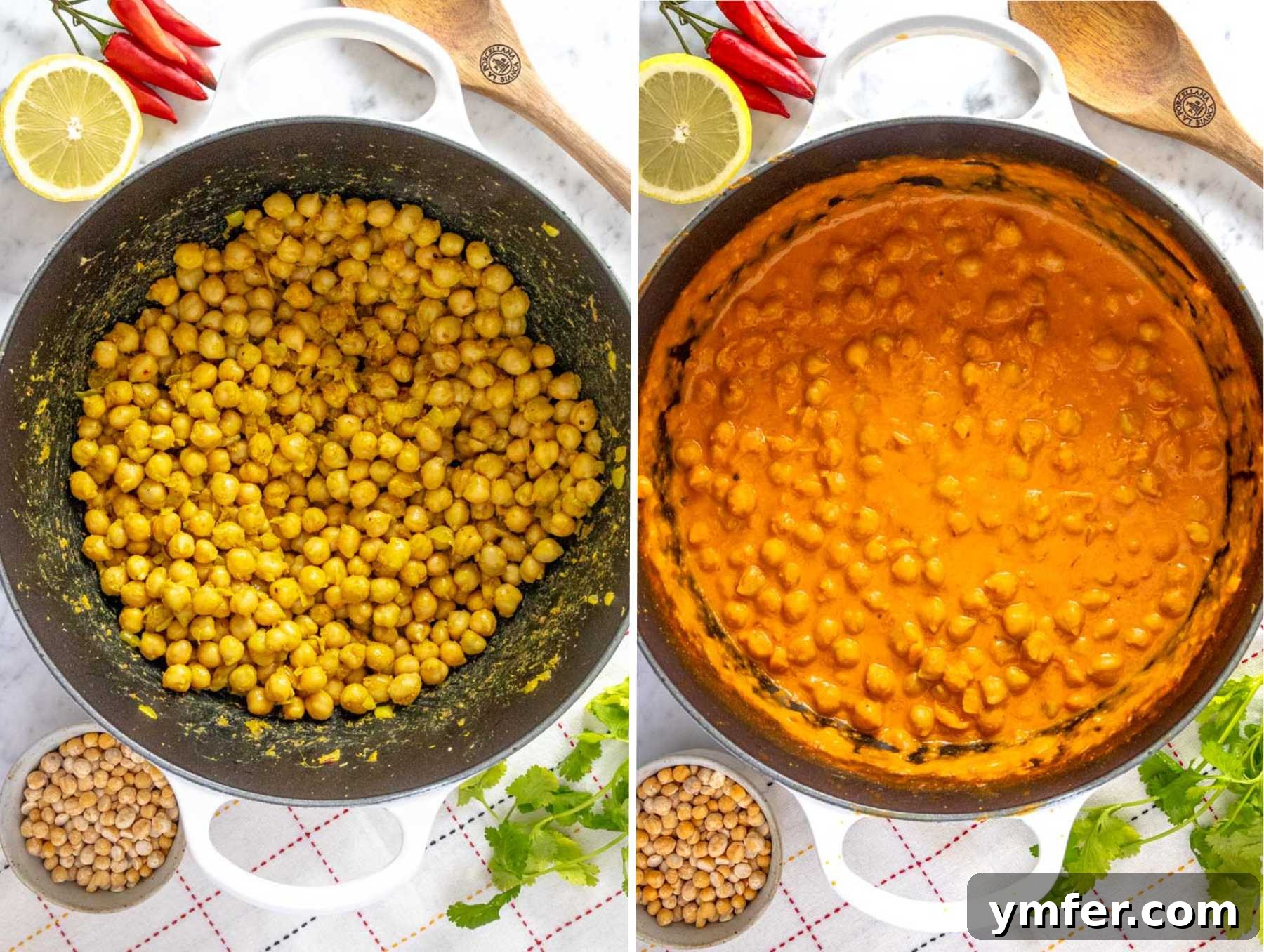
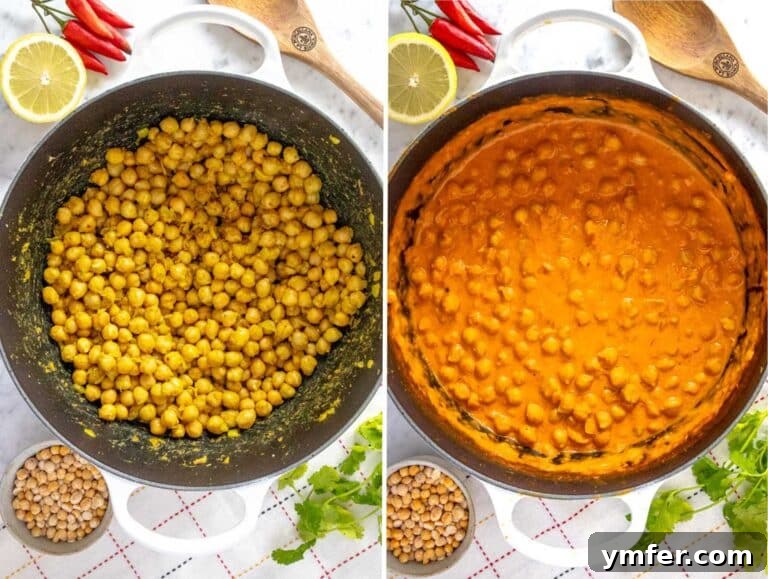
Step 2: Simmer It All Together for Creamy Perfection – Add the drained and rinsed chickpeas to the aromatic spice mixture and stir them gently for about a minute, ensuring they are well coated. Now, pour in the vegetable broth, crushed tomatoes, and your choice of full-fat coconut milk (or heavy cream/half-and-half). Season generously with salt and black pepper. Bring the mixture to a gentle boil, then reduce the heat to medium-low and let it simmer for 20 minutes. This simmering time allows the flavors to meld beautifully and the sauce to thicken into a rich, creamy consistency. Remember to stir occasionally to prevent sticking and ensure even cooking.
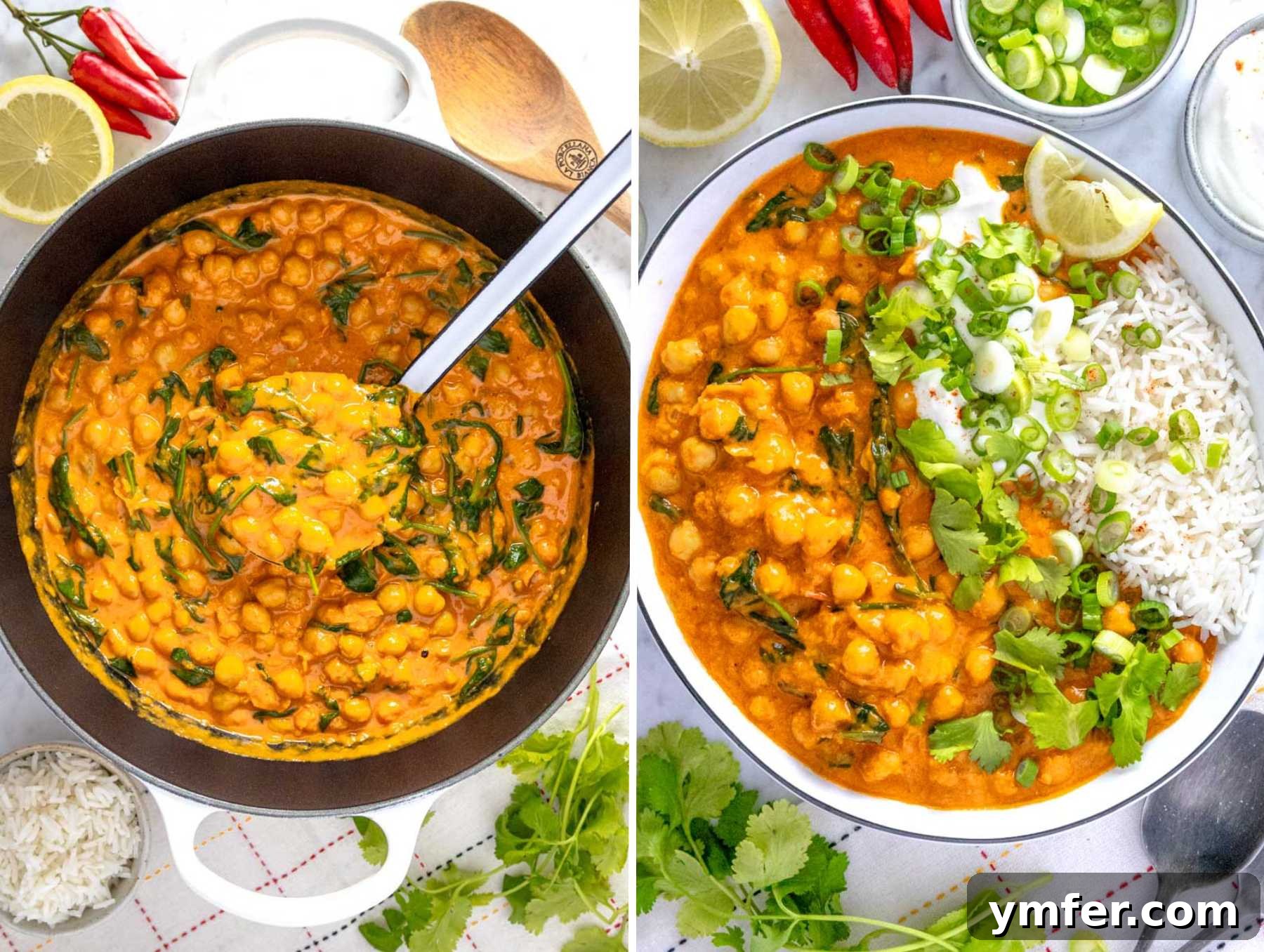
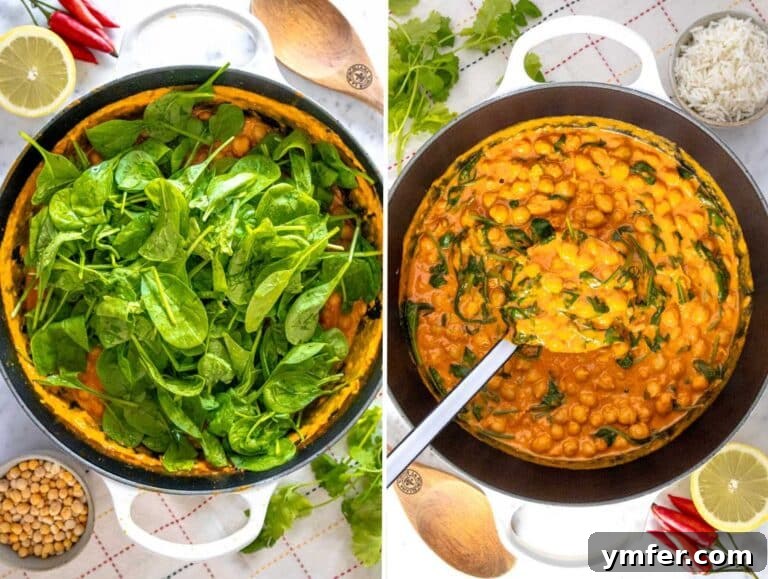
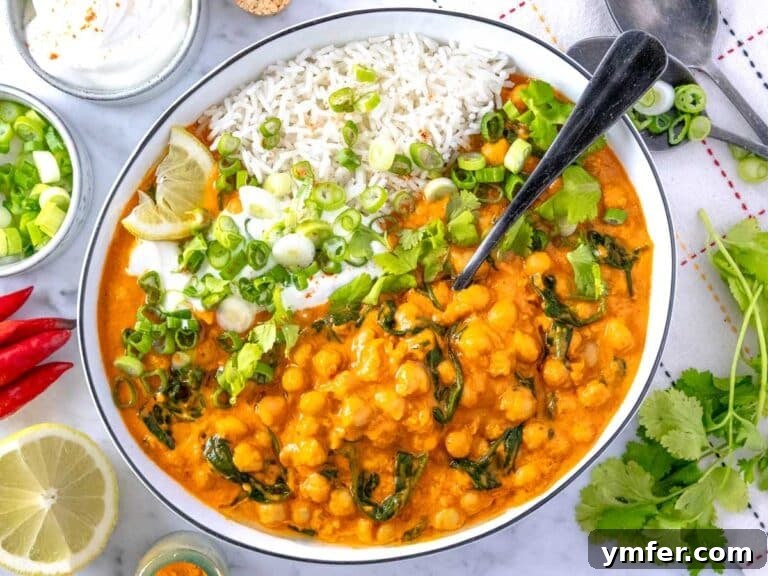
Step 3: Finish and Adjust Seasoning for Optimal Taste – Stir in the fresh spinach and continue to cook for just 2 minutes, or until the spinach has fully wilted into the curry. Finally, stir in the garam masala. Now comes the most important step: taste and adjust the seasoning. You might want to add more salt or pepper. If the curry tastes a little too acidic from the tomatoes or too spicy, a teaspoon or two of sugar can help balance the flavors beautifully. Once seasoned to perfection, your chickpea curry is ready to be enjoyed! Make it a complete and satisfying meal by serving it with your favorite accompaniments:
- Grains: Classic fluffy basmati rice, aromatic saffron rice, or healthy quinoa make excellent bases.
- Breads: Warm, chewy naan, flaky paratha, or simple flatbread are perfect for soaking up the delicious sauce.
- Toppings: Elevate your serving with a sprinkle of fresh cilantro, thinly sliced scallions, a bright squeeze of lime juice, a fragrant tadka, a cooling dollop of raita, or plain yogurt for a creamy contrast.
Expert Tips for the Best Chickpea Curry Every Time
Achieving a truly outstanding chickpea curry is simple with these key tips:
- **Sauté Your Aromatics Thoroughly**: The foundation of any great curry lies in its aromatic base. Take your time sautéing the onion, garlic, and ginger. Allow the onions to soften and lightly caramelize; this gentle cooking process builds a deep, sweet, and incredibly flavorful base that will permeate the entire dish. Don’t rush this step!
- **Toast Your Spices**: Once your aromatics are ready, add your ground spices (curry powder, cumin, turmeric, coriander, red pepper flakes) to the pan and stir them for about a minute. Toasting these spices in hot oil awakens their essential oils, intensifying their aroma and richness. This technique is crucial for developing complex, robust flavors in your curry.
- **Embrace Full-Fat for Creaminess**: For an irresistibly rich, creamy texture and a luxurious mouthfeel, always opt for full-fat coconut milk, heavy cream, or half-and-half. While light coconut milk can be used for a healthier option, be aware that the curry’s texture will be less decadent. The fat content contributes significantly to the sauce’s body and richness.
- **Adjust Consistency to Your Liking**: The consistency of your curry is a matter of personal preference. If you prefer a thinner curry, simply add a bit more vegetable broth or water during simmering. For a thicker sauce, allow it to simmer uncovered for a few extra minutes, letting some of the liquid evaporate.
- **Don’t Forget the Fresh Finish**: A squeeze of fresh lemon or lime juice at the end brightens all the flavors, adding a zesty counterpoint to the rich spices. Fresh cilantro or scallions also add a vibrant burst of freshness and a beautiful garnish.
Frequently Asked Questions About Chickpea Curry
Absolutely! While canned chickpeas offer convenience, dried chickpeas can definitely be used. You’ll need to cook them first until they are tender. As a general rule, for every 15-ounce can of chickpeas called for in the recipe, you’ll need about 1½ cups of cooked chickpeas. Keep in mind that dried chickpeas expand considerably during cooking; 1 cup of dried chickpeas will typically yield around 3 cups of cooked chickpeas. If you’re new to cooking dried chickpeas, our comprehensive guide on how to cook chickpeas at home provides easy, step-by-step instructions for perfect results every time!
If coconut milk isn’t your preference or isn’t available, there are several excellent substitutes to maintain the creamy texture of the curry. You can easily swap it with heavy cream, half-and-half, or even a homemade cashew cream for a dairy-free option. To replace one 14-ounce can of coconut milk, aim for approximately 1 cup of heavy cream or half-and-half to achieve a similar rich and velvety consistency. Cashew cream (made by blending soaked cashews with water) is a fantastic vegan alternative.
Definitely! This chickpea curry is incredibly versatile and welcomes a variety of vegetables. Beyond spinach, you can incorporate ingredients like roasted eggplant, sweet potato, cauliflower florets, bell peppers, or even green beans. To add heartier vegetables like sweet potato or cauliflower, you might want to add them earlier in the simmering process to ensure they cook through until tender. For inspiration on how to feature these ingredients, explore our other delicious curries such as the Sweet Potato Curry, Cauliflower Curry, or Eggplant Curry!
Absolutely! Chickpea curry is an ideal candidate for meal prep. In fact, it often tastes even better the next day, as the flavors have more time to fully develop and meld together. The sauce may thicken slightly in the refrigerator, but this is easily remedied. When reheating, simply add a splash of water or vegetable broth to achieve your desired consistency.
Storing your chickpea curry is simple and convenient. For refrigeration, transfer the cooled curry to an airtight container and store it in the fridge for up to 4 days. For longer storage, chickpea curry freezes beautifully. Allow it to cool completely before transferring it to a freezer-safe container. It can be frozen for up to 3 months. When ready to enjoy, thaw it overnight in the refrigerator or gently reheat it from frozen in the microwave. Reheat portions on the stovetop over low heat or in the microwave, adding a splash of water or broth as needed to loosen the sauce and restore its creamy texture.
More Easy and Delicious Indian Recipes
If you’ve enjoyed the flavors of this chickpea curry, be sure to explore more delightful Indian recipes from our collection:
- Aloo Gobi: A classic dry curry featuring potatoes and cauliflower.
- Rajma Masala: A hearty kidney bean curry that’s rich and satisfying.
- Lentil Dal: Simple yet incredibly flavorful creamy split lentils.
- Tadka: A flavorful tempering oil, perfect for garnishing dals and curries.
- Raita: A cooling yogurt condiment to balance spicy dishes.
If you tried this **Chickpea Curry** or any other recipe on our blog, please leave a 🌟 **star rating** and let us know how it goes in the comments. We love hearing from you and seeing your culinary creations!

Chickpea Curry
Share
Recipe Video
Ingredients
USAMetric
- 1 tablespoon olive oil
- 1 large onion finely chopped
- 3 cloves garlic grated
- 1 inch ginger grated
- 2 teaspoons curry powder
- 1 teaspoon ground coriander
- 1 teaspoon ground cumin
- 1 teaspoon turmeric powder
- ¼ teaspoon red pepper flakes
- 3 cans (15 ounces each) chickpeas or 4½ cups cooked chickpeas
- 2 cups vegetable stock add more if you want a thinner curry
- 1 can (15 ounces) crushed tomatoes
- 1 can (14 ounces) coconut milk sub 1 cup heavy cream or half-and-half
- 4 cups spinach optional
- 1 teaspoon salt
- 2 twists black pepper
- 1 teaspoon garam masala
- 2 teaspoons sugar optional, to balance the spices
Serve it with
- 1 squeeze of lemon or lime + fresh cilantro
- 4 servings basmati rice or naan or paratha
- 4 dollops raita or Greek yogurt, or tadka
Instructions
-
Heat 1 tablespoon olive oil in a large skillet or Dutch oven over medium heat.
Add 1 large onion (finely chopped) and sauté for about 4 minutes, stirring often, until softened.
Stir in grated 3 cloves garlic, grated 1 inch ginger, 2 teaspoons curry powder, 1 teaspoon ground coriander, 1 teaspoon ground cumin, 1 teaspoon turmeric powder, and ¼ teaspoon red pepper flakes.
Cook for another minute, stirring frequently, to toast the spices. If the pan gets too dry, add two tablespoons of vegetable broth.

-
Add 3 cans (15 ounces each) drained chickpeas and stir them into the spices for one minute, ensuring they are well coated.
Stir in 2 cups vegetable stock, 1 can (15 ounces) crushed tomatoes, and 1 can (14 ounces) coconut milk. Season with 1 teaspoon salt and 2 twists black pepper.
-
Bring the curry to a boil, then reduce heat to medium-low and simmer for about 20 minutes, stirring occasionally, until it reaches your desired creamy consistency.
Stir in 4 cups spinach and cook for two more minutes, or until the spinach has wilted. Finally, stir in 1 teaspoon garam masala. Taste and adjust the seasoning with more salt or pepper as needed. You may want to add 2 teaspoons sugar to balance the spices and acidity.
-
Serve your chickpea curry hot with accompaniments such as brown or basmati rice, naan, or roti.
For delicious toppings, we recommend a **squeeze of fresh lemon** or lime juice, a sprinkle of **fresh cilantro** or finely sliced scallions, and a dollop of **Greek-style yogurt** or raita.
Notes
- **Chickpeas**: Easily swap chickpeas with red lentils or yellow lentils for a different texture and flavor profile.
- **Spinach**: This recipe is highly adaptable to other vegetables. Replace spinach with diced pumpkin, potatoes, cauliflower florets, sweet potato chunks, or roasted eggplant. Add denser vegetables earlier in the simmering process.
- **Olive Oil**: Feel free to use coconut oil for a subtle tropical note, traditional mustard oil for a more authentic Indian flavor, or any neutral vegetable oil you have on hand.
- **Spices**: Most of the listed spices are widely available in grocery stores or online and have a long shelf life.
- **Red Pepper Flakes** can be substituted with chili powder, cayenne pepper, or fresh sliced red chili for varying levels of heat.
- **Garam Masala** is optional but recommended for its warming finish. If you don’t have it, a tiny pinch of cinnamon (about 1/8 teaspoon) can offer a hint of warmth.
- **Additional Indian Spices**: For an even deeper, more complex flavor, consider adding a few curry leaves during the sautéing of aromatics, a pinch of kasuri methi (dried fenugreek leaves) at the end, or a small amount of mustard seeds for a pop of flavor. A tiny pinch of hing (asafoetida) can also be added for an umami note, particularly if omitting onion/garlic.
- **Tomatoes**: Diced tomatoes or tomato puree work perfectly as alternatives to crushed tomatoes. If using fresh ripe vine tomatoes, dice them and cook them with the spices for about 5 minutes until they break down before adding the chickpeas and other liquids.
- **Vegetable Broth**: If vegetable broth is unavailable, water can be used, though the broth will add more depth to the curry’s flavor.
- **Coconut Milk**: For varying creaminess, you can use light coconut milk. Dairy alternatives like heavy cream or half-and-half are also excellent choices if you prefer a non-coconut base.
- **Sugar**: The sugar is optional and can be white, brown, palm, or coconut sugar, used to balance the curry’s acidity and spice level.
**TIPS FOR SUCCESS**
- **Sauté Your Aromatics Well**: Dedicate ample time to sautéing the onion, garlic, and ginger until they are soft and slightly caramelized. This step is fundamental for building a deep, rich flavor base for your curry.
- **Toast Your Spices**: Adding your ground spices to the pan and stirring for about a minute in the hot oil helps to release their full aroma and enhances their richness, leading to a more flavorful curry.
- **Choose Your Creaminess Wisely**: For the most luxurious and creamy texture, use full-fat coconut milk, heavy cream, or half-and-half. While lighter alternatives work, they may result in a less rich mouthfeel.
- **Adjust Consistency**: Feel free to add more vegetable broth or water for a thinner curry, or simmer a bit longer for a thicker sauce.
- **Finish with Freshness**: A squeeze of lemon or lime juice and fresh cilantro can brighten all the flavors of your curry right before serving.
**STORAGE & REHEATING**
- **Refrigerate**: Store any leftover chickpea curry in an airtight container in the refrigerator for up to **4 days**. The flavors often improve overnight.
- **Freeze**: For longer storage, cool the curry completely, then transfer it to a freezer-safe container. It can be frozen for up to **3 months**. Thaw it overnight in the fridge or reheat gently from frozen.
- **Reheat**: Warm the curry on the stovetop over medium-low heat or in the microwave. If the sauce has thickened, add a splash of water or vegetable broth to reach your preferred consistency.